Deepen your understanding of key success factors and optimize your strategies for success with Lark's tailored solutions designed to meet the unique demands of the marketing industry.
Try Lark for Free
Key success factors are pivotal elements that are crucial for the competitiveness and success of a business in a particular industry. In the context of marketing, identifying and understanding these factors is vital for devising effective strategies that drive business growth and sustained performance.
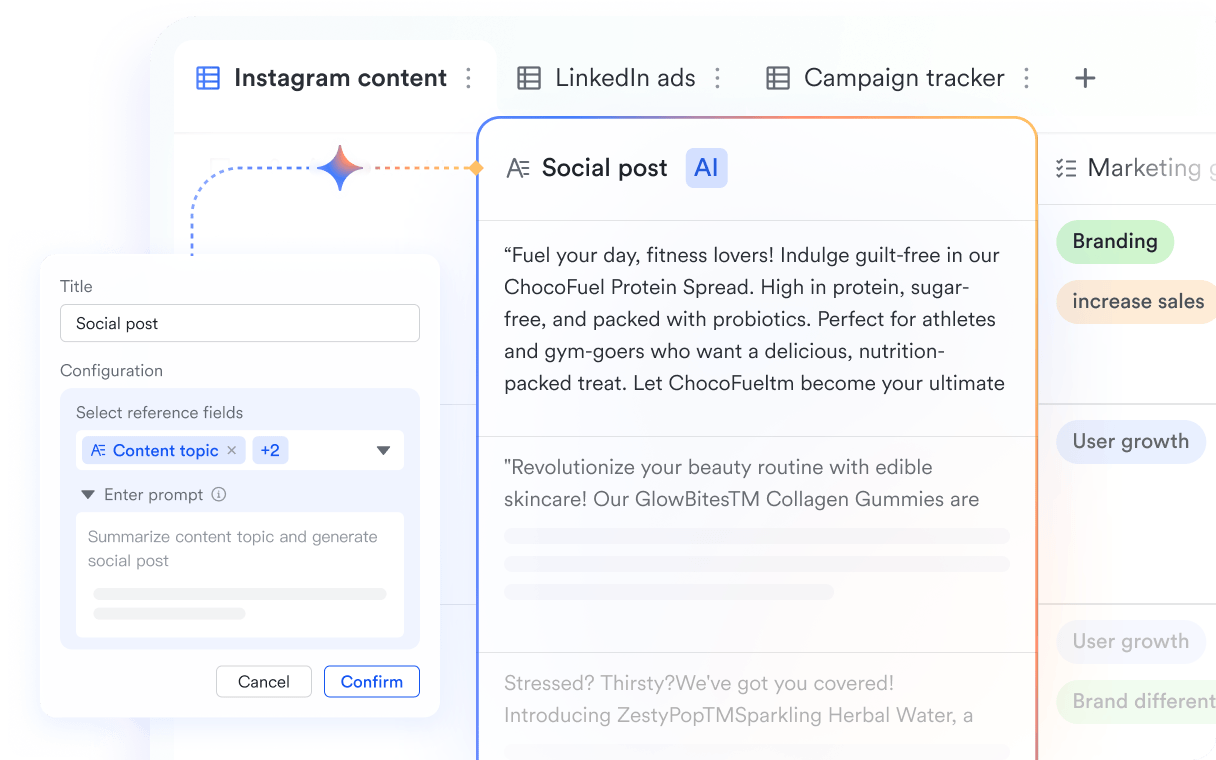
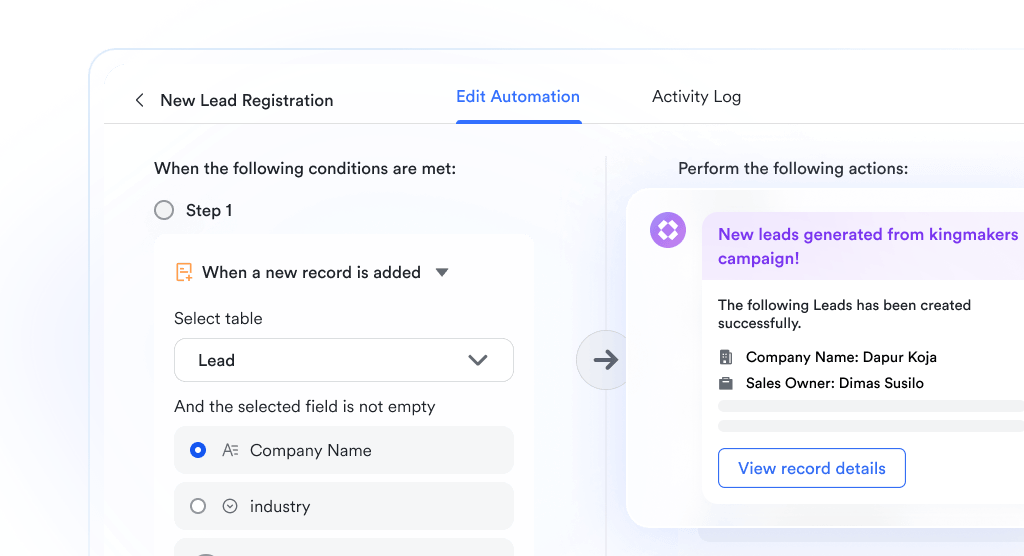
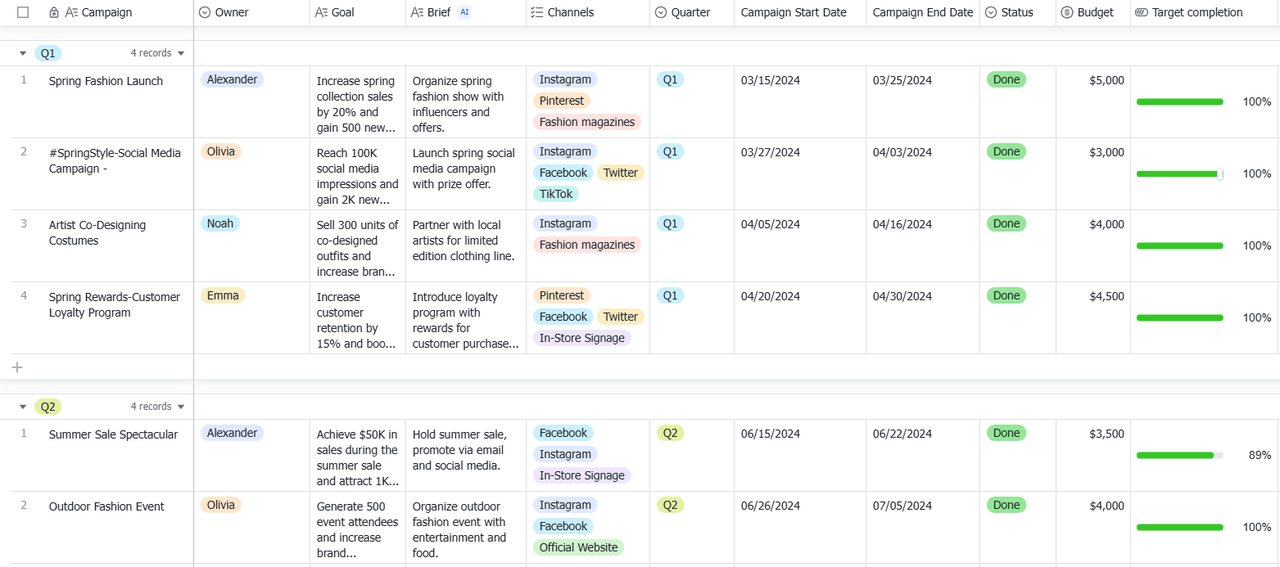
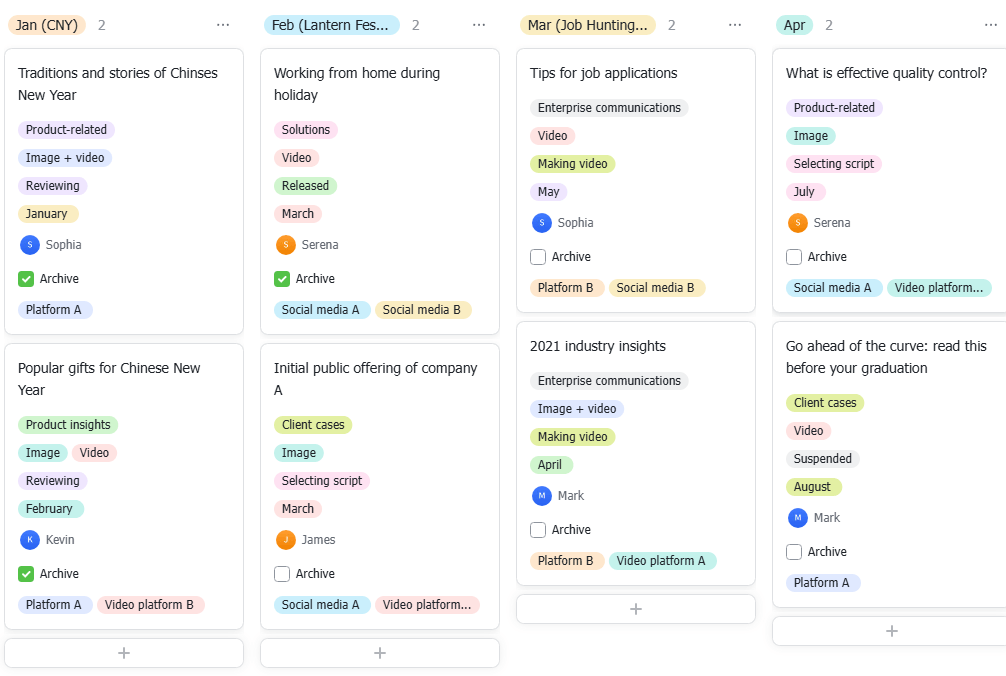
Use Lark Base for orchestrating, executing, monitoring, and delivering marketing initiatives.
Understanding key success factors
The term key success factors refers to the essential elements that are critical for the success and sustainability of a business. These factors vary across industries and are specific to individual organizations. Understanding these factors is imperative for businesses to effectively navigate the complexities of the market landscape, enabling them to gain a competitive edge.
Significance of key success factors in marketing
In the realm of marketing, the significance of key success factors cannot be overstated. These factors play a pivotal role in shaping a company's marketing strategies, influencing its positioning in the market, and ultimately impacting its overall success. Understanding the significance of these factors provides businesses with valuable insights for making informed decisions and crafting targeted marketing initiatives.
Stakeholders and key success factors
The impact of key success factors within the marketing ecosystem extends to various stakeholders, including businesses, consumers, and industry players. Each stakeholder is influenced by these factors in distinct ways, emphasizing the interconnectedness of the marketing landscape and the critical role that these elements play in shaping its dynamics.
Learn more about Lark x Marketing
Operationalizing key success factors
Operationalizing key success factors involves integrating these elements into the core functions of the business. Practical implications encompass various aspects such as market positioning, product development, customer relations, and operational efficiency. Let's explore some practical implications through specific examples.
One practical implication of key success factors is adopting a customer-centric approach. By understanding and catering to the needs and preferences of the target audience, businesses can effectively differentiate themselves in the market, leading to enhanced customer satisfaction and loyalty.
Another practical implication involves fostering a culture of innovation and adaptation. Embracing technological advancements and evolving market trends allows businesses to stay ahead of the curve, offering products and services that resonate with consumers in a rapidly changing landscape.
Operational efficiency is also a key practical implication of success factors. Streamlining internal processes, optimizing resource utilization, and implementing cost-effective measures contribute to overall business sustainability and competitiveness.
Best practices in key success factors
Embracing best practices in identifying and leveraging key success factors is crucial for achieving sustainable growth and maintaining a competitive edge in the market. These best practices encompass a range of strategic approaches that are instrumental in driving marketing success. Let's delve into some of these best practices along with specific examples.
Leveraging data analytics and market insights to drive decision-making processes is a fundamental best practice in identifying key success factors. By analyzing consumer behavior, market trends, and competitive dynamics, businesses can formulate targeted strategies that align with the identified success factors.
Establishing a unique and compelling brand identity is paramount in the realm of key success factors. Successful companies often exemplify how effective brand positioning and differentiation in the market can directly influence consumer perception and engagement.
Forming strategic partnerships and alliances with complementary businesses is another best practice that underscores the importance of collaborative efforts in aligning with key success factors. For instance, cross-promotional campaigns and co-branded initiatives can enhance market visibility and expand consumer reach.
Learn more about Lark x Marketing
Actionable tips for leveraging key success factors
To effectively leverage key success factors, businesses must adopt actionable strategies that align with these critical elements. These tips are designed to empower businesses in maximizing the potential of these factors, thereby driving marketing success and sustainable growth.
Developing a comprehensive understanding of the target market and segmenting it strategically allows businesses to tailor their marketing efforts, ensuring that they resonate with specific consumer groups. This targeted approach enhances the effectiveness of marketing strategies and optimizes resource utilization.
Engaging in continuous market research and analysis is essential for staying updated on evolving consumer preferences, market trends, and competitive landscapes. This proactive approach enables businesses to adapt their strategies in alignment with the dynamic nature of the market.
Adopting an agile approach to decision-making empowers businesses to swiftly respond to market changes and consumer demands. This flexibility is instrumental in seizing emerging opportunities and mitigating potential risks in a rapidly evolving marketing environment.
Related concepts and terms
Understanding key success factors in marketing entails familiarity with several related concepts and terms that are integral to this domain. Let's explore some of these concepts and their relevance within the broader framework of marketing success.
Competitive advantage refers to the unique attributes and capabilities that distinguish a business from its competitors. Identifying and leveraging key success factors contributes to creating a sustainable competitive advantage, positioning the business favorably in the market.
Market penetration involves expanding the market share of a business within its existing market through various strategies such as price adjustments, promotional initiatives, and product enhancements. Key success factors influence the efficacy of market penetration efforts, guiding businesses towards effective market expansion.
A company's value proposition encapsulates the value it offers to customers through its products or services. Understanding key success factors aids in developing compelling value propositions that resonate with the target audience, thereby enhancing brand appeal and market competitiveness.
Learn more about Lark x Marketing
Conclusion
In conclusion, the exploration of key success factors in the realm of marketing reveals their pivotal role in shaping business strategies and fostering sustainable growth. It is evident that a comprehensive understanding of these factors equips businesses with the insights, methodologies, and strategic approaches necessary for navigating the dynamic marketing landscape.
Learn more about Lark x Marketing
Examples
Customer-centric approach in product development
A leading consumer electronics company embraced a customer-centric approach in developing its flagship smartphone, aligning with the key success factor of understanding consumer needs. Through extensive market research and user feedback, the company integrated innovative features that addressed pain points and preferences, garnering significant market appeal and sales traction.
Strategic alliances for market expansion
In the retail industry, a renowned fashion brand established strategic alliances with popular lifestyle influencers, leveraging the key success factor of strategic partnerships. By co-creating exclusive collections and engaging in collaborative marketing campaigns, the brand expanded its market reach and enhanced brand visibility, resonating with diverse consumer segments and generating substantial growth.
Data-driven decision making in campaign optimization
A fast-growing e-commerce startup optimized its digital marketing campaigns through data-driven decision-making, aligning with the key success factor of leveraging market insights. By analyzing customer engagement metrics, channel performance, and campaign attribution data, the company refined its marketing strategies, achieving improved conversion rates, and sustained customer acquisition.
Step-by-step guide: leveraging key success factors in marketing
Comprehensive Analysis of Market Dynamics
Internal Evaluation and Capability Assessment
Strategic Planning and Alignment
Actionable Insights and Continuous Adaptation
Performance Monitoring and Optimization
Now, let's explore essential do's and don'ts for effectively leveraging key success factors in marketing strategies.
Learn more about Lark x Marketing
Do's and dont's for leveraging key success factors
| Do's | Dont's |
|---|---|
| Leverage data-driven insights for decision making | Neglect the significance of consumer feedback |
| Align marketing strategies with identified factors | Overlook competitive benchmarking opportunities |
| Foster a culture of innovation and adaptability | Rely solely on traditional marketing approaches |
| Continuously monitor and reassess market dynamics | Disregard emerging trends and consumer preferences |
This comprehensive guide underscores the critical role of key success factors in driving marketing success and business growth. By internalizing the importance of these elements and aligning strategies with them, businesses can navigate the ever-evolving marketing landscape successfully.
This informative guide provides a comprehensive understanding of key success factors in the marketing domain, offering actionable insights and best practices for businesses to leverage these critical elements effectively. Through the exploration of practical implications and real-world examples, businesses can gain valuable perspectives on integrating key success factors into their marketing strategies for sustained success and competitiveness.
Use Lark Base for orchestrating, executing, monitoring, and delivering marketing initiatives.