














Accelerate campaigns, from idea to revenue
From brainstorming to launch, Lark unifies marketing workflows so you can plan, create, and execute campaigns with precision and speed.

App store
4.9

Users love us
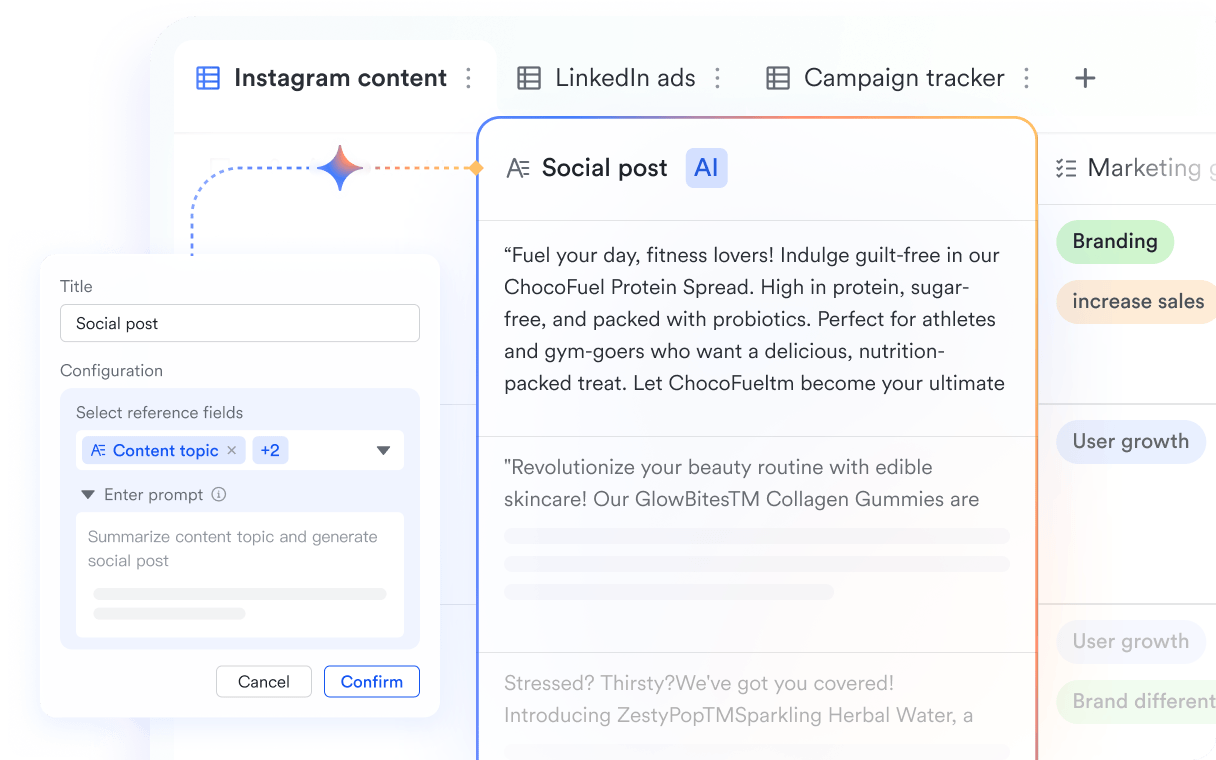
AI-powered superapp for marketing teams
Accelerate execution with AI that captures decisions, creates content, and turns feedback into action.
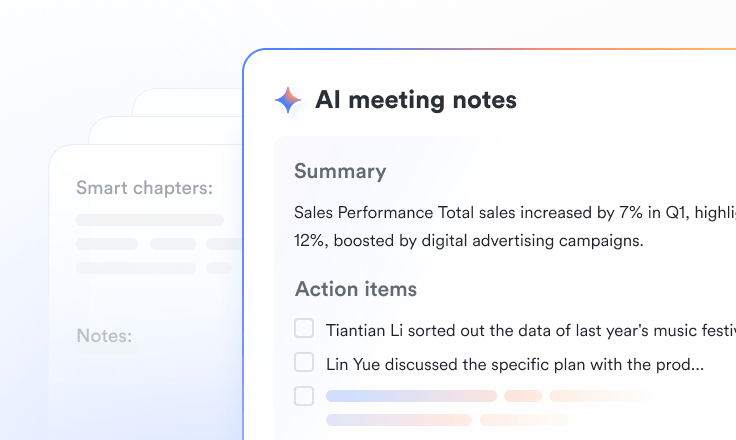
AI meeting summaries
Turn marketing meetings into clear next steps, keeping teams aligned without manual note-taking.
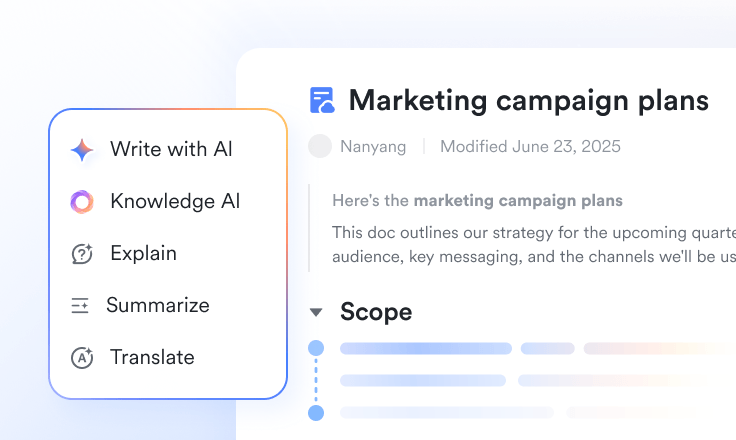
AI content creation
Speed up copywriting with on-brand headlines, captions, and drafts that are ready to review instead of starting from scratch.
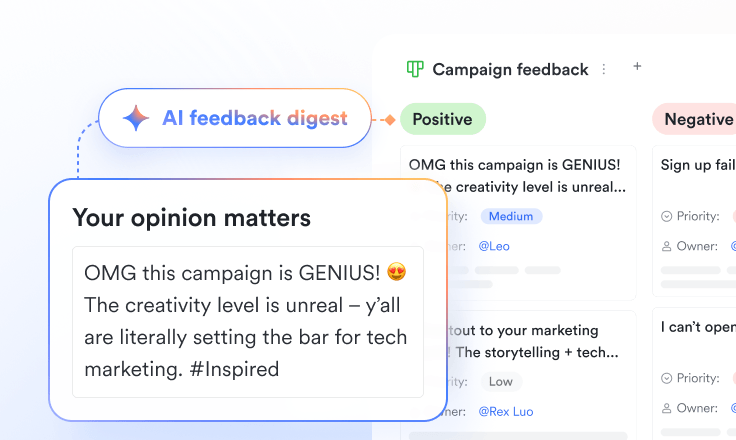
Smart feedback insights
Automatically analyze feedback from events, campaigns, or users so you know what worked and what to fix.
Campaign planning & execution
Faster launches, fewer delays
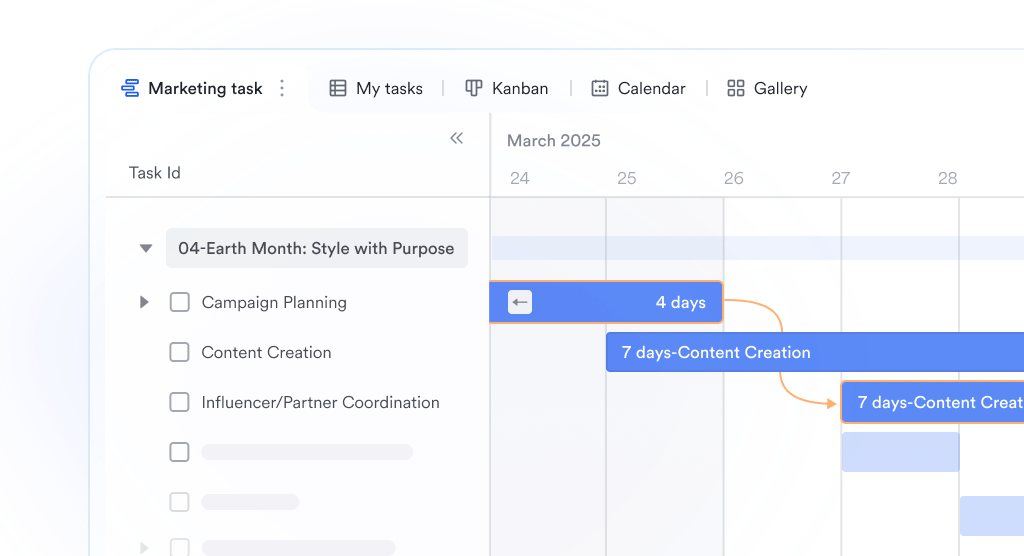
Align teams, manage timelines, and track campaign progress in one connected workspace.
Campaign planning hub
Timelines, budgets, tasks, and owners are managed in one shared space that stays visible and up to date for all teams.
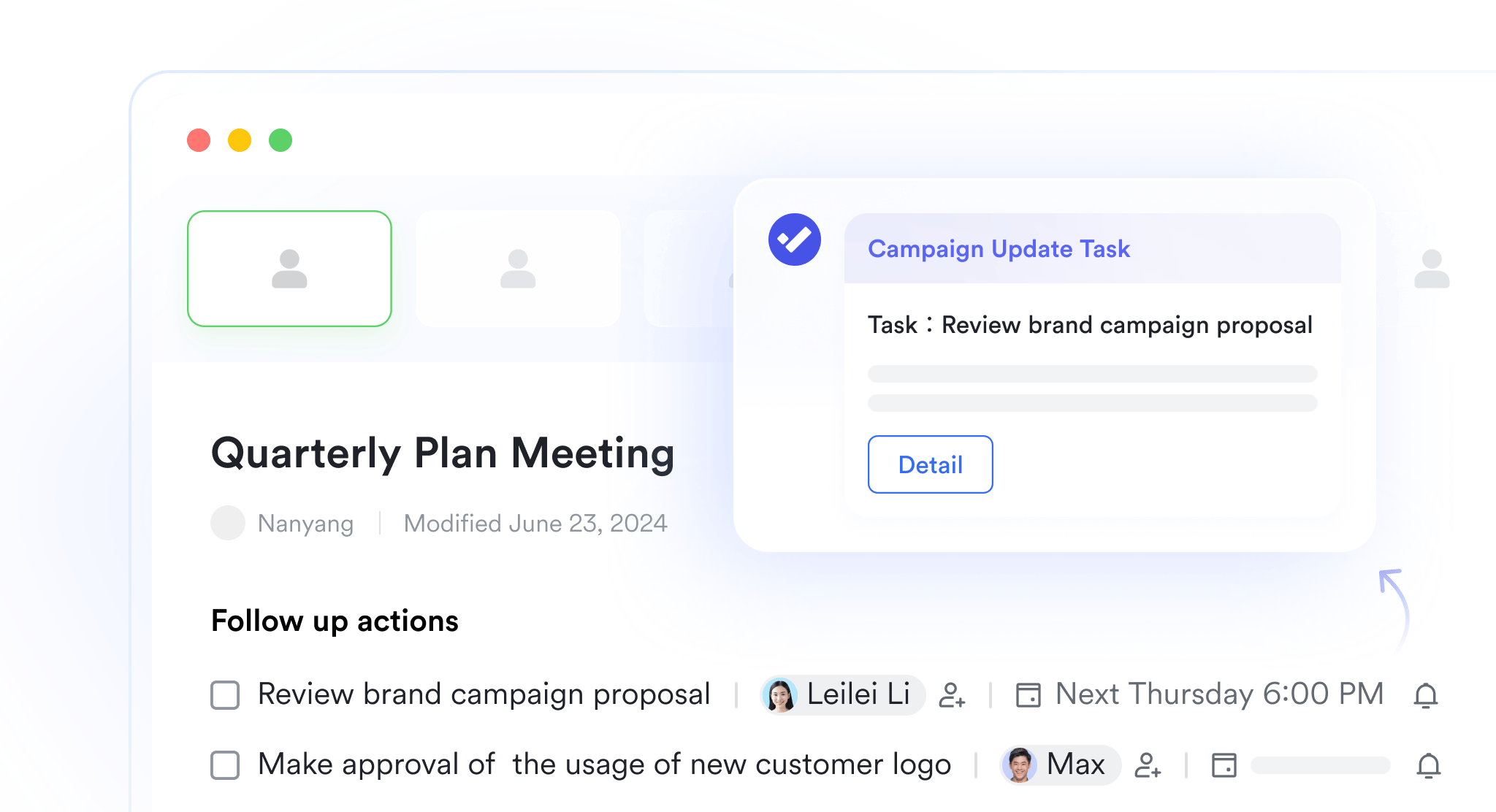
Task creation from meetings
Chats, notes, and meetings are linked directly to tasks so discussions lead to clear next steps.
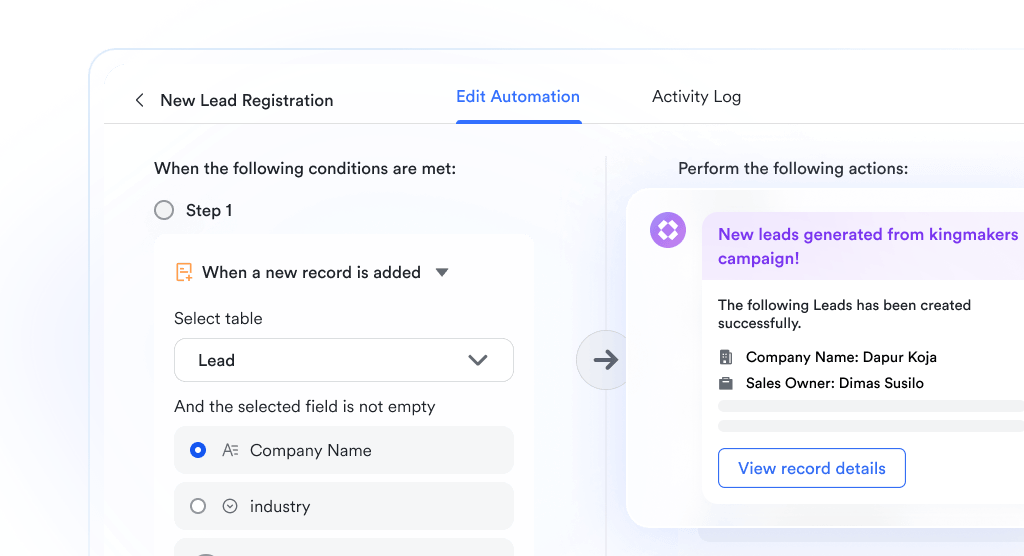
Campaign workflow sync
Each step, including tasks, leads, and reviews, is automatically routed to the right person, keeping execution smooth across teams.
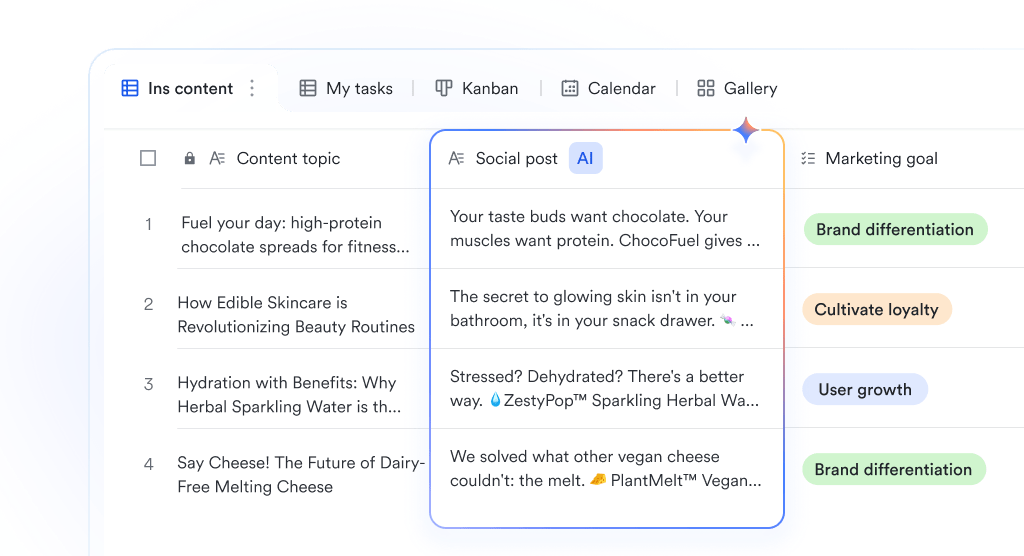
AI-powered content support
Headlines, captions, and campaign copy are generated instantly, guided by your tone of voice and creative brief.
Content creation & collaboration
Faster content, less back-and-forth
Create, review, and approve content without version chaos or scattered feedback.
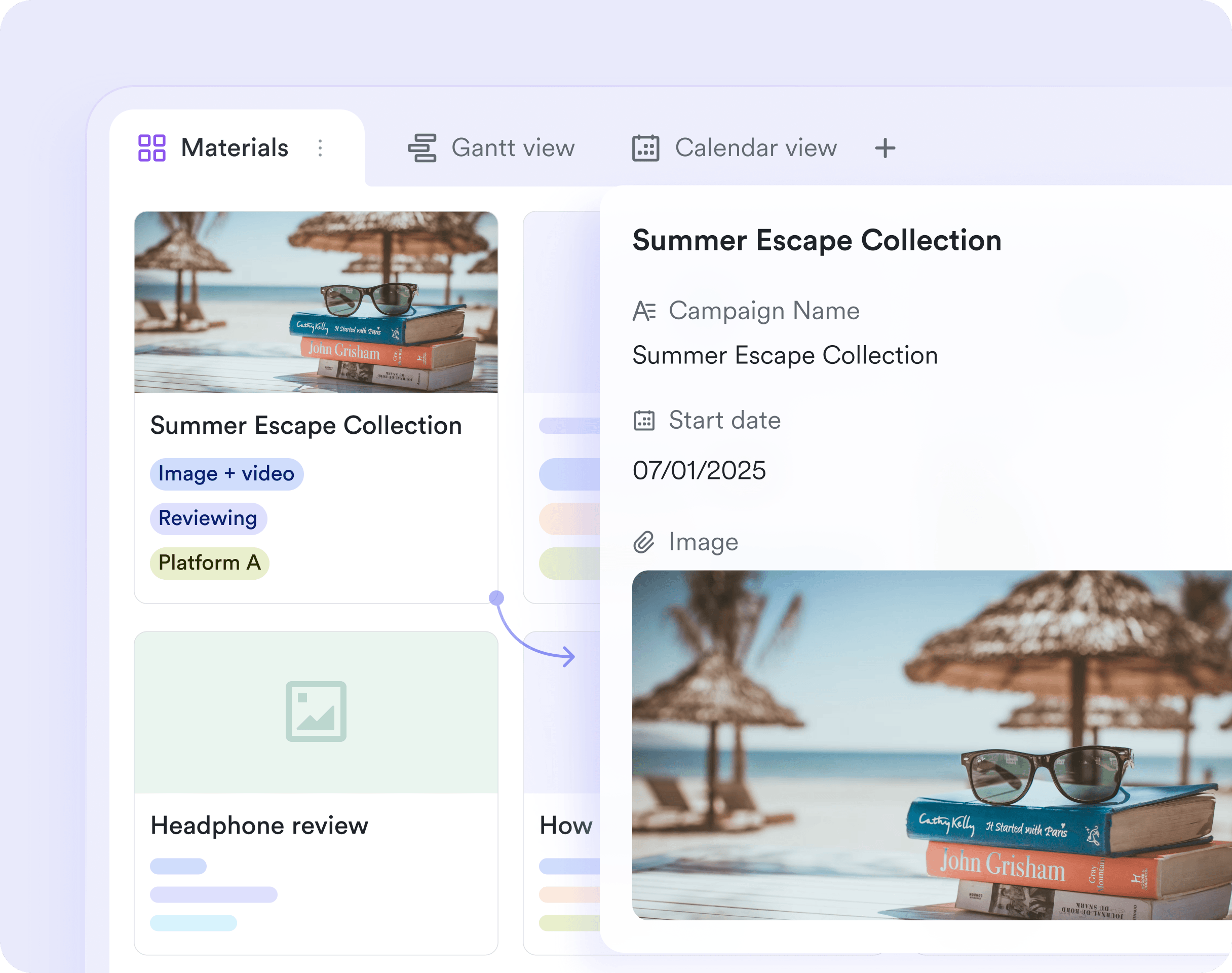
Central content library
Briefs, drafts, and final creatives are stored in one structured workspace that is accessible to internal teams and external partners.
Real-time review and approval
Teams edit, comment, and approve content in live documents, keeping feedback loops tight and transparent.
Events & webinars
Full visibility, start to finish
Plan, coordinate, and follow through on every event detail with real-time updates and a centralized workspace.
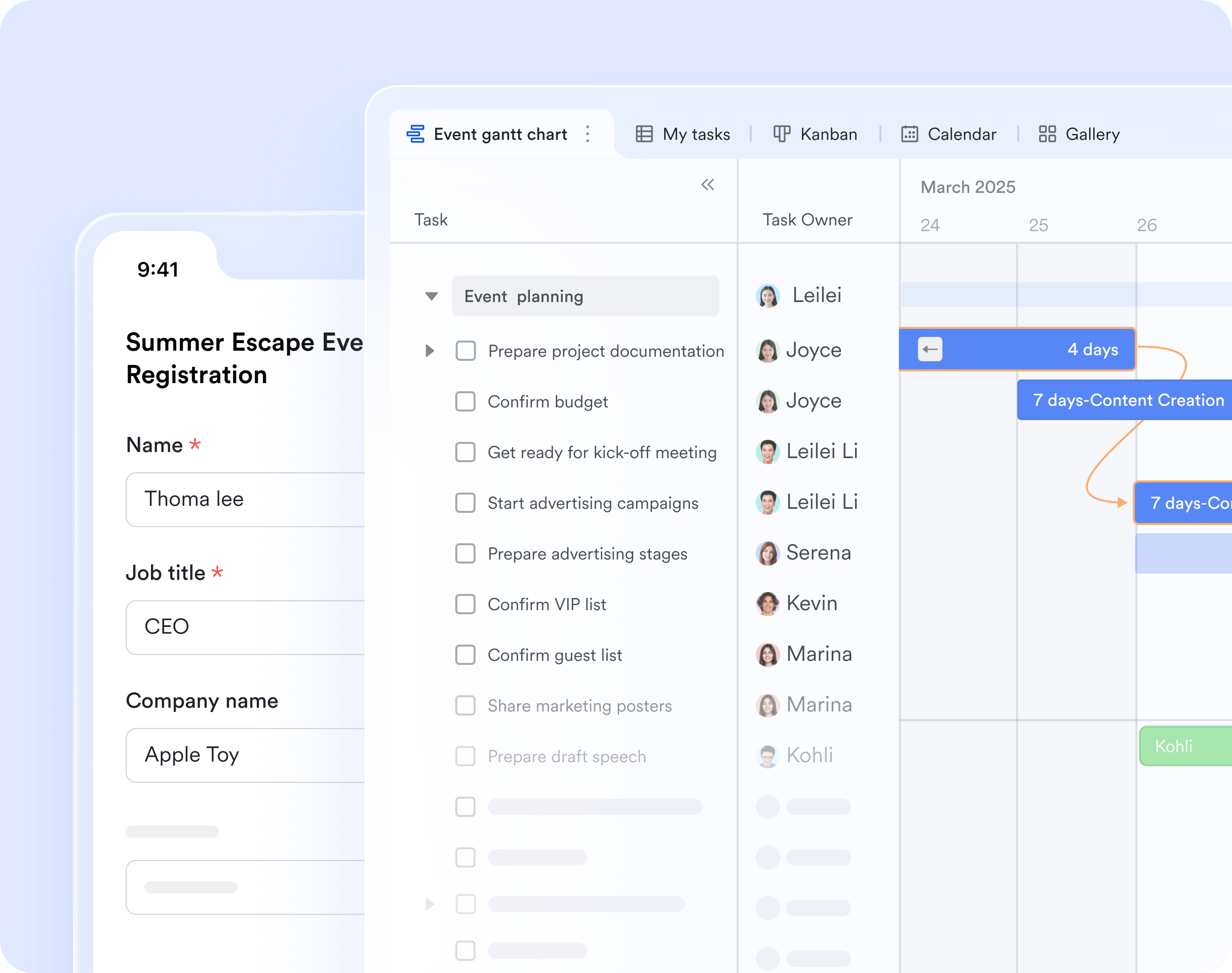
Event planning workspace
Timelines, budgets, assets, and registration forms are managed in one place and accessible across teams.
Real-time event coordination
Send live updates through group chat or voice messages so everyone stays aligned as event details change.
Post-event insights summary
Attendee feedback is collected and summarized, highlighting trends, sentiment, and follow-up actions.
Integrated webinar platform
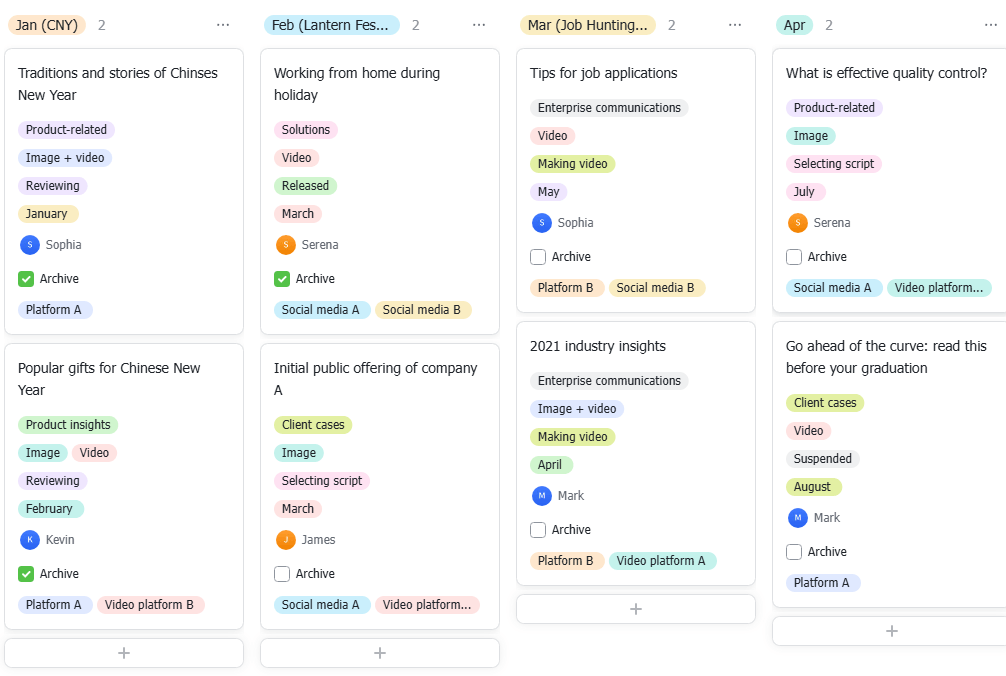
Templates for marketing success
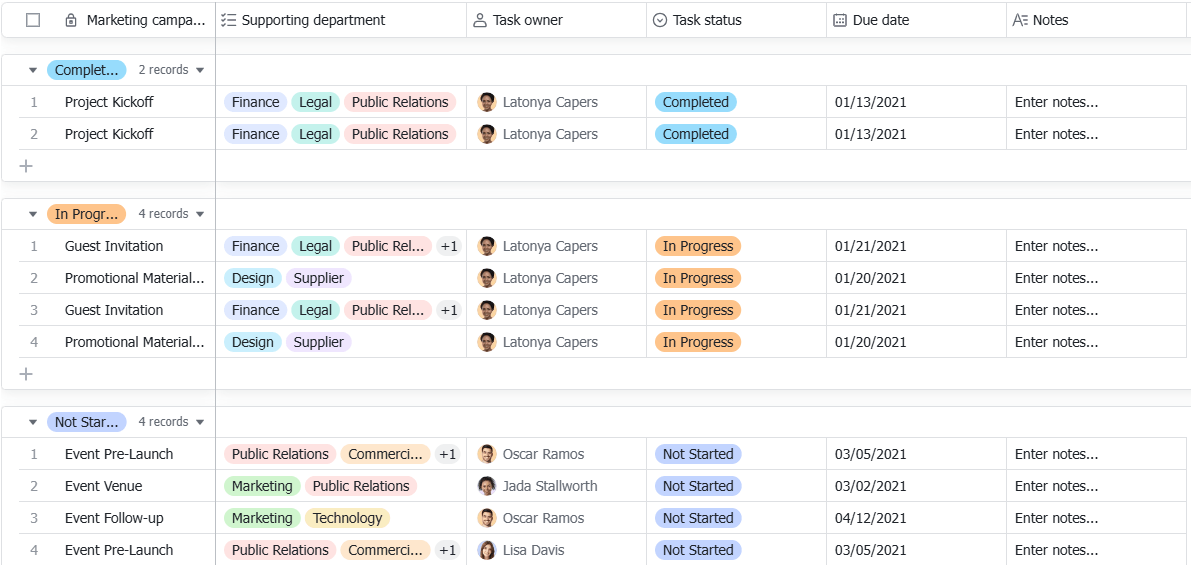
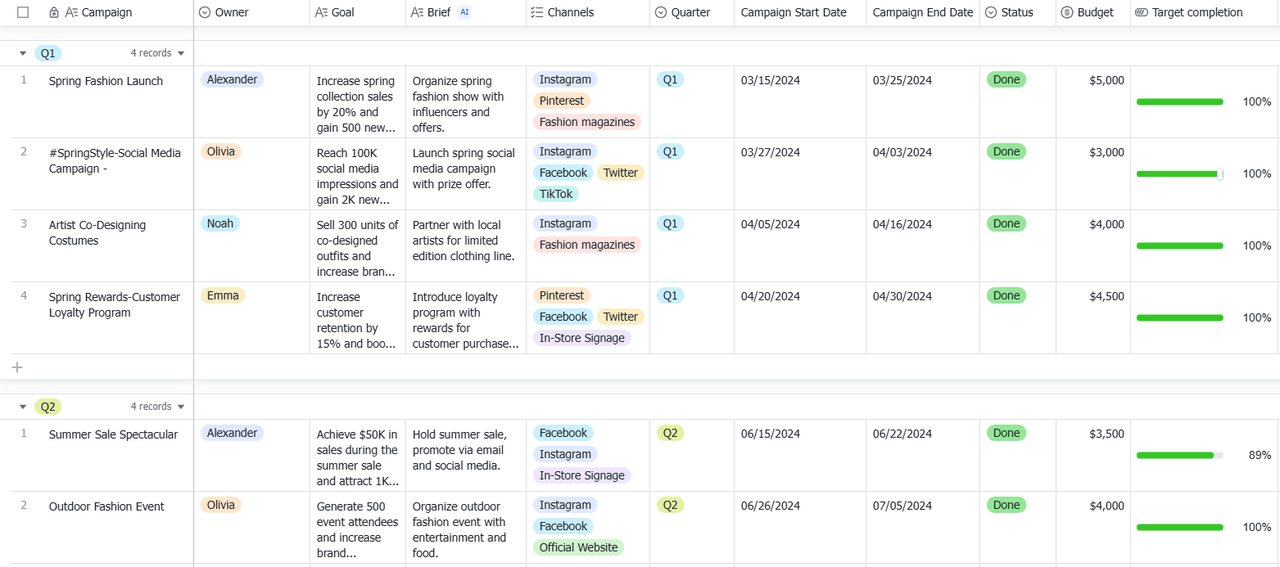
Lark replaces scattered tools with one unified superapp.


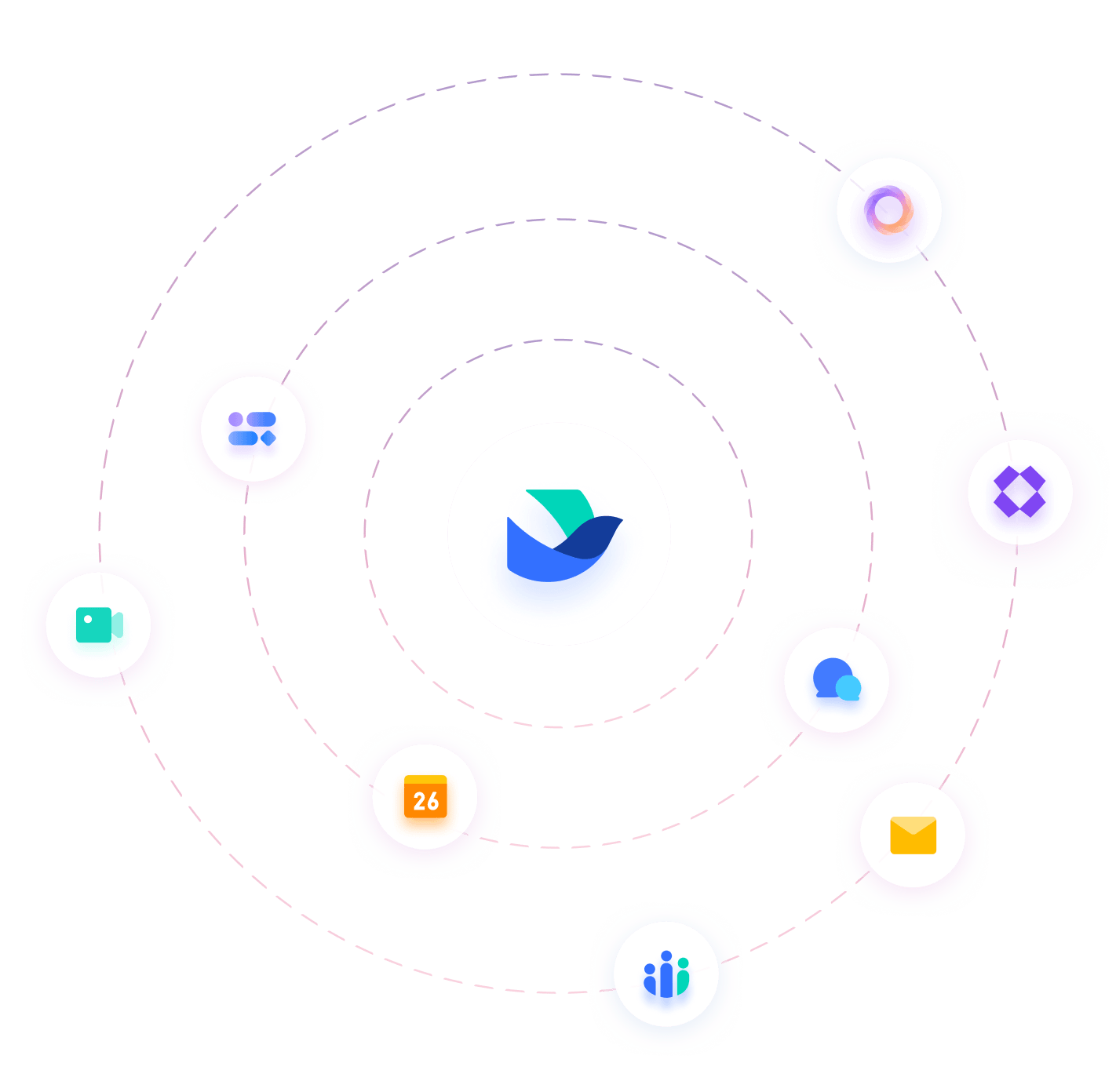
Fewer tools, fewer costs
Cut software bloat while keeping teams fast, clear, and connected.
Unlock your savings10
x
operational efficiency
39
%
more productive
70
%
cost savings
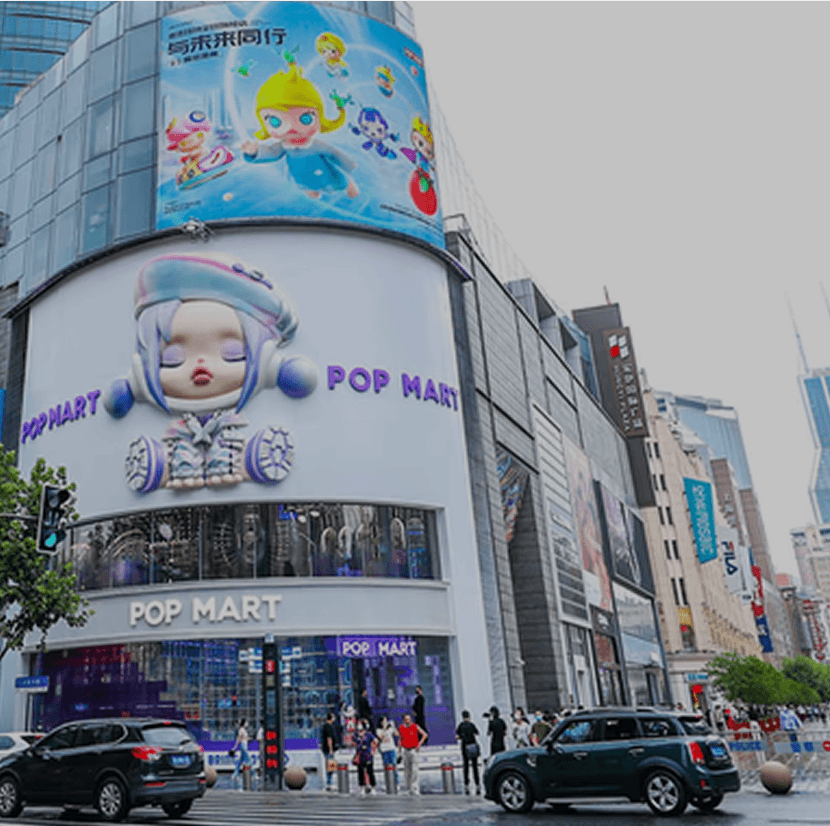


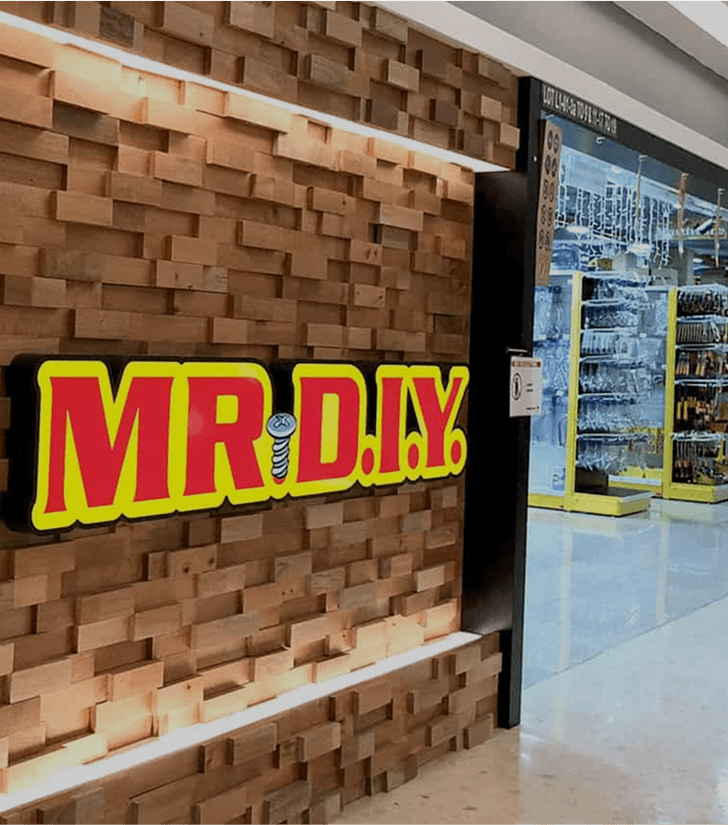


Learn how we can help your team reach its potential



2026 Lark Technologies Pte. Ltd.
Headquartered in Singapore with offices worldwide.





