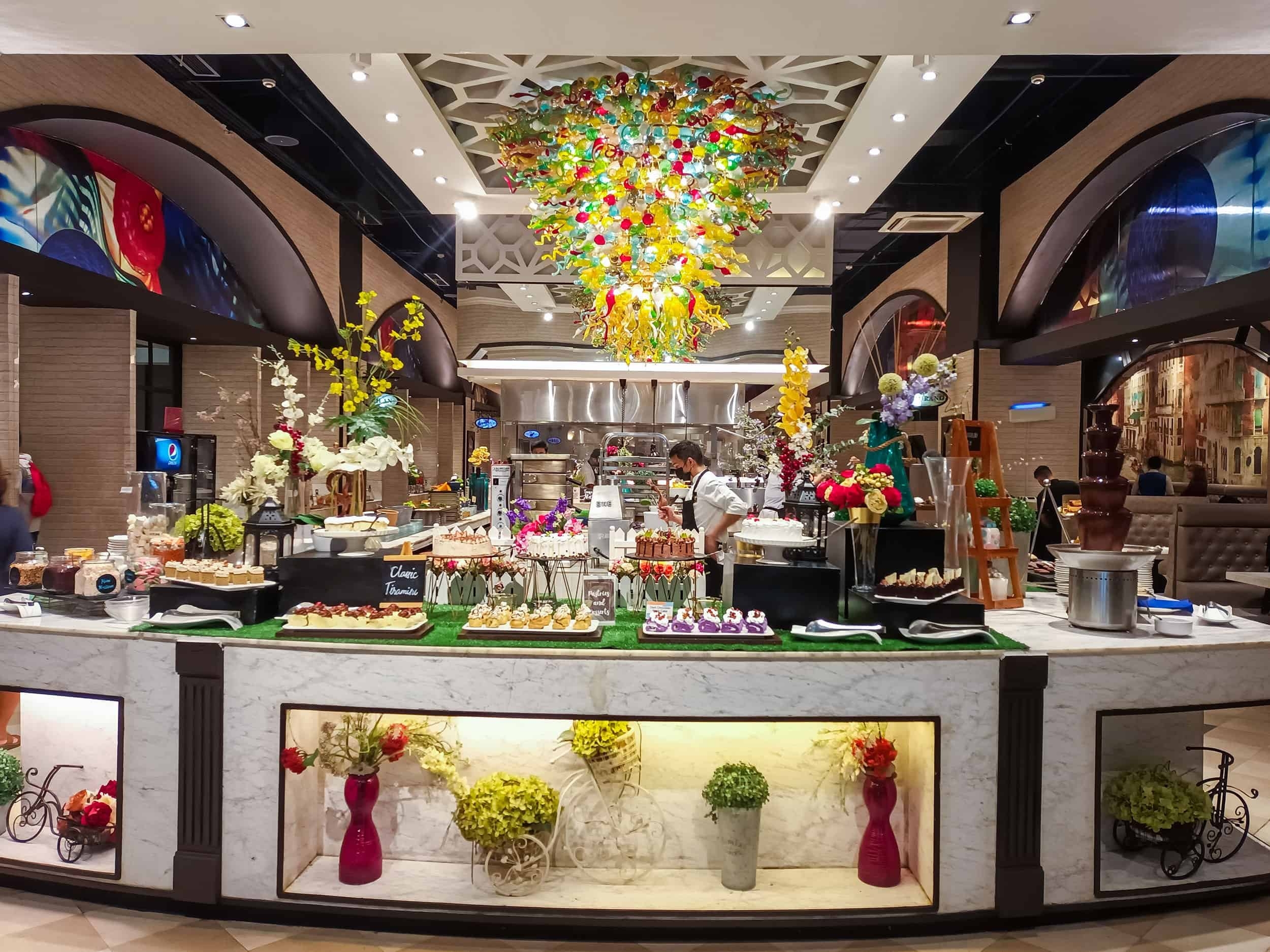
Production Scheduling

Enhance your understanding of production scheduling and transform your operations and create a recipe for success with Lark's innovative F&B solutions.

Lark Editorial TeamLark Editorial Team | 2023/12/24
Try Lark for Free
an image for production scheduling

In the fast-paced and dynamic realm of the food and beverage (F&B) industry, effective production scheduling plays a pivotal role in ensuring streamlined operations, optimal resource utilization, and overall business success. This comprehensive guide delves into the intricacies of production scheduling specifically tailored for the F&B sector, providing valuable insights, expert perspectives, practical examples, and actionable steps for seamless implementation.

Preface

In the realm of F&B, the precise orchestration of production activities is indispensable for meeting customer demands, managing inventory effectively, and maximizing operational efficiency. With the overarching significance of production scheduling in mind, this guide aims to elucidate the profound impact of strategic scheduling on F&B operations, offering an insightful exploration into this critical aspect of the industry.


What is production scheduling?

Production scheduling, in the context of the F&B industry, refers to the systematic planning and arrangement of various manufacturing or production processes to optimize resource utilization, minimize lead times, and ensure timely delivery of products. For F&B enterprises, this process encompasses the coordination of tasks, such as ingredient procurement, food preparation, cooking processes, packaging, and distribution, to meet consumer demand effectively. The allocation of resources, including human labor, equipment, and raw materials, is carefully calibrated to align with production targets and maintain high-quality standards within the F&B sector.

The Definition of Production Scheduling in F&B

In the F&B landscape, production scheduling encompasses the strategic organization of production activities to harmonize with market demand, preventing under or overproduction while fostering operational agility. Leveraging advanced scheduling methodologies, F&B establishments optimize their workflows, enhancing productivity and responsiveness to market trends. The intricacies of production scheduling in the F&B domain demand keen attention to perishable goods, seasonality, and consumer preferences, amplifying its significance as a critical operational component.

Exploring the Historical Significance of Production Scheduling in F&B

The evolution of production scheduling within the F&B industry reflects the growing complexity of consumer preferences, supply chain dynamics, and technological advancements. Historically, traditional F&B production scheduling primarily relied on manual processes and rudimentary resource planning. However, as globalization and digitalization reshaped the industry, modern F&B enterprises have embraced advanced scheduling tools and methodologies to optimize their production processes, illustrating the transformative journey of production scheduling in this sector.


Significance of production scheduling

The significance of production scheduling in the F&B industry is multifaceted, underpinning operational efficiency, cost management, and customer satisfaction. As the industry continues to navigate intricate supply chain challenges and consumer-driven demand fluctuations, the emphasis on effective production scheduling has heightened, driving F&B establishments to seek innovative strategies to maintain a competitive edge.

Importance of Production Scheduling in F&B

The strategic deployment of production scheduling holds immense importance in the F&B sector, enabling enterprises to minimize waste, synchronize production with demand, and optimize resource utilization. By aligning production activities with market dynamics, F&B businesses can also enhance service levels, reduce lead times, and adhere to stringent quality standards, fostering customer loyalty and bolstering brand reputation.

Evolution of Production Scheduling and Its Impact on the F&B Industry

The evolving landscape of the F&B industry has underlined the transformative impact of production scheduling, propelling enterprises to adopt agile, data-driven approaches. Through the integration of innovative technologies and predictive analytics, F&B businesses have revolutionized their scheduling paradigms, propelling sustainable growth, and facilitating seamless adaptability to market fluctuations.


Use Lark Base to transform your food and beverage business.

Try for free

How production scheduling works

The intricate workings of production scheduling in the F&B domain are underpinned by a spectrum of strategic considerations, operational imperatives, and technological enablers. Understanding the nuances of production scheduling provides invaluable insights into its functionality and the associated benefits for F&B enterprises.

Characteristics of Production Scheduling in F&B

Production scheduling within the F&B industry encompasses distinctive characteristics, including:

  • Demand Forecasting: Accurate prediction of consumer demand, considering seasonal variations, market trends, and regional preferences.
  • Resource Optimization: Efficient allocation of labor, raw materials, and equipment to streamline production processes and minimize costs.
  • Quality Assurance: Adherence to stringent quality standards and regulatory requirements to uphold product integrity and consumer safety.
  • Real-Time Adjustments: Flexibility to accommodate unforeseen market dynamics, demand spikes, or supply chain disruptions through agile production rescheduling.

Detailed Explanation of How Production Scheduling Functions in F&B

Production scheduling within the F&B sector hinges on meticulous planning, synchronized execution, and continuous monitoring. From integrated software solutions for demand forecasting to automated production line scheduling, F&B enterprises leverage advanced technologies to orchestrate seamless operational workflows, driving productivity, and resilience.


Common misconceptions about production scheduling

Despite its transformative potential, production scheduling in the F&B industry is often shrouded in misconceptions, necessitating a clear demarcation of its core principles and dispelling prevalent myths for holistic understanding.

Clarification of Common Misconceptions

  • Misconception: Production scheduling is solely a rudimentary time management tool.

    • Clarification: Production scheduling encompasses multifaceted resource optimization, demand synchronization, and operational harmonization.
  • Misconception: Automated scheduling tools render manual oversight obsolete.

    • Clarification: While automation augments efficiency, human oversight remains critical for strategic decision-making and unforeseen scenario navigation during production.

Regional differences on production scheduling

The implementation and nuances of production scheduling within the F&B sector exhibit regional disparities, influenced by diverse socioeconomic, cultural, and industrial factors. Understanding the regional variations in production scheduling is pivotal for global enterprises to tailor their strategies effectively.

Exploring the Geographical Disparities in the Implementation of Production Scheduling

From the celerity-driven practices in fast-paced urban hubs to the seasonality-influenced scheduling in rural agrarian regions, the diversity in production scheduling approaches mirrors the distinct regional dynamics and operational exigencies prevalent within the global F&B landscape.


Use Lark Base to transform your food and beverage business.

Try for free

Expert quotes on production scheduling

Insights from renowned industry experts shed light on the significance and transformative potential of production scheduling in the F&B domain.


Examples of production scheduling

Utilizing production scheduling to optimize inventory management

Efficient production scheduling enables F&B enterprises to maintain lean inventory levels, thereby curbing storage costs, reducing waste, and nurturing agile supply chain dynamics. By aligning production schedules with demand projections, notable reductions in excess stock and inventory obsolescence can be realized, driving cost efficiencies and bolstering financial resilience.

Implementing production scheduling to reduce wastage

Strategic production scheduling empowers F&B establishments to curtail surplus production, minimize food wastage, and support sustainability initiatives. By fine-tuning production schedules in alignment with demand dynamics, enterprises can mitigate the environmental impact, optimize resource utilization, and fortify their corporate social responsibility endeavors.

Enhancing productivity through efficient production scheduling

Exemplary instances demonstrate how proficient production scheduling engenders heightened productivity, synchronized operational workflows, and enhanced output quality. By leveraging advanced scheduling tools and methodologies, F&B enterprises can navigate market complexities, foster agility, and elevate their competitive positioning with enhanced productivity metrics.


Step-by-step guide to implementing production scheduling in f&b

  • Conduct a comprehensive assessment of existing operational workflows, resource allocation patterns, and production constraints.
  • Leverage data analytics to discern demand patterns, seasonal variations, and market dynamics influencing production scheduling requirements within the F&B enterprise.
  • Research and evaluate advanced scheduling software solutions tailored for the F&B sector, considering factors such as demand forecasting, inventory management, and real-time production scheduling capabilities.
  • Collaborate with industry peers and technology providers to gain insights into best-fit scheduling solutions for F&B operations.
  • Deploy selected scheduling solutions and customize them to embrace the F&B enterprise's unique operational intricacies, such as perishable inventory handling, quality assurance protocols, and recipe-based production scheduling requirements.
  • Integrate the selected tools with existing enterprise resource planning (ERP) systems to foster seamless data exchange and operational synergy.
  • Conduct comprehensive training programs to familiarize the F&B workforce with the utilization of scheduling tools, data interpretation, and responsive decision-making strategies.
  • Foster a culture of adaptability and continuous improvement, emphasizing the pivotal role of every team member in enhancing production scheduling effectiveness.
  • Establish robust monitoring mechanisms to track the efficacy of production scheduling strategies and their impact on operational performance indicators.
  • Leverage the data generated to iteratively refine and optimize production scheduling endeavors, encapsulating a culture of continuous improvement and operational excellence within the F&B enterprise.

Tips for do's and dont's

The effective implementation of production scheduling in F&B operations demands a keen awareness of key strategies and potential pitfalls, encapsulated in the following do's and dont's:

DoDon't
Utilize advanced scheduling toolsOverlook the importance of data
Regularly review and adjustRely solely on manual processes
Communicate clearly with the teamNeglect the impact on production

Use Lark Base to transform your food and beverage business.

Try for free

Conclusion

In conclusion, effective production scheduling serves as the lynchpin for driving operational excellence, sustainable growth, and competitive resilience within the F&B industry. By embracing advanced scheduling methodologies, leveraging cutting-edge technologies, and prioritizing agility, F&B enterprises can navigate the multifaceted operational landscape with finesse, ensuring optimal resource utilization, and customer-centric production orchestration.


Faq

The primary objective of production scheduling in F&B revolves around harmonizing production processes with demand dynamics, optimizing resource allocation, minimizing waste, and fortifying operational agility while ensuring compliance with stringent quality standards.

Production scheduling streamlines operational workflows, minimizes overproduction, reduces lead times, and optimizes inventory levels, fostering cost efficiencies and operational responsiveness within the F&B sector.

Indeed, the F&B industry is endowed with specialized scheduling software solutions equipped with features catering to demand forecasting, recipe-based production scheduling, inventory optimization, and real-time operational monitoring.

Common challenges encompass demand unpredictability, perishable inventory management, seasonality complexities, and the need for synchronizing production with fluctuating market dynamics.

Small-scale F&B businesses can derive substantial benefits from production scheduling, including waste reduction, cost efficiencies, enhanced market responsiveness, and meticulous resource utilization, bolstering their competitive resilience and operational sustainability.


This comprehensive guide exemplifies the transformative potential of production scheduling within the dynamic landscape of the F&B industry, underpinning operational efficiency, sustainability, and market resilience. By embarking on this strategic scheduling journey, F&B enterprises can navigate complexities with finesse, fostering enduring success and operational excellence.

Lark, bringing it all together

All your team need is Lark

Contact Sales