Return to Customer Stories
Flash Coffee: Making operations their advantage
Flash Coffee didn't just return with fresh funding and an expansion target. It came back with a tighter operation. This is how the chain rebuilt its foundation across product feedback, approvals, and compliance, and what that means for any operator planning their next phase of growth.

Bardon Matthew
CEO, Flash Coffee
When your teams are working from the same information at the same time, decisions are faster, problems surface earlier, and execution tightens across every store. That is what we are building with Lark.

Company Profile
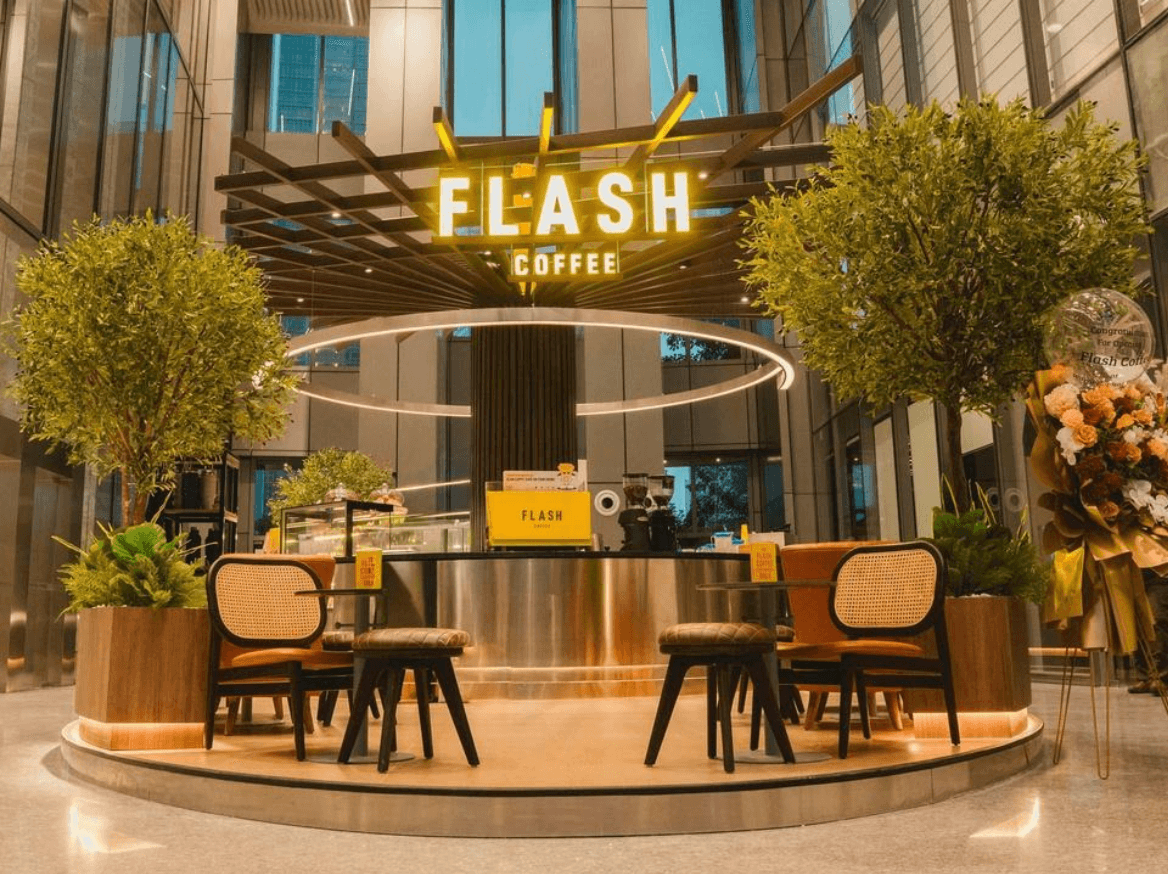
Flash Coffee is a technology-enabled coffee chain founded in Indonesia in 2019, built to make premium, high-quality coffee more accessible at scale. Backed by World Barista Champions, the brand combines craft and affordability across its signature yellow stores and digital-first app experience. Operating across multiple cities in Indonesia, Flash Coffee serves a new generation of customers through fast, consistent service in-store and via delivery platforms. With strong investor backing and regional expansion underway, it continues to grow as a modern, design-led lifestyle coffee brand.
Industry
Food & Beverage
Company Size
251-500
Location
Indonesia
Indonesia's cafe and bar segment is one of the fastest-growing in the region. Chained outlets are expanding at 13.76% a year through 2031. That growth raises the bar for every chain in the market. More locations means more touchpoints where the experience can slip. More competition means customers have no reason to return to a store that does not meet their expectations. The chains that last are not the ones that grow the fastest. They are the ones whose operations hold as the network grows.
Flash Coffee is building on that premise. Founded in Indonesia in 2019, the chain has a clear read on what the modern Indonesian consumer wants: quality coffee, well-designed stores, and a brand worth returning to. With fresh funding secured and an active expansion plan, the chain is growing again. But what leadership chose to fix before adding locations is what makes this phase different.
As executive chairman Jakob Angele put it:
"The past year has been about discipline. We focused on getting the fundamentals right: profitable stores, stronger teams, better menus, and spaces that reflect modern Indonesia. We didn't chase growth; we earned it."
Building the infrastructure first
A growing network does not fail all at once. It slips incrementally: a compliance issue that takes three days to surface, an approval that stalls because no one knows who owns it, a product insight that arrives too late to act on. Each gap is manageable in isolation. Across 20, 30, 50 locations, they compound into an operation that leadership cannot see clearly or move fast enough to manage.
Flash Coffee was running the tools most operators at their stage run: Google Workspace for HQ collaboration, Yoobic for store operations, WhatsApp for day-to-day communication. The problem was not the tools individually. It was that information moved at different speeds across different systems, and decisions that needed to happen the same day were delayed by the time it took to consolidate a clear picture.

Consolidating onto Lark put store communication, compliance, approvals, and product feedback in a single workspace. A store manager and the CEO look at the same data on the same day because the information no longer has to travel across systems to reach them.
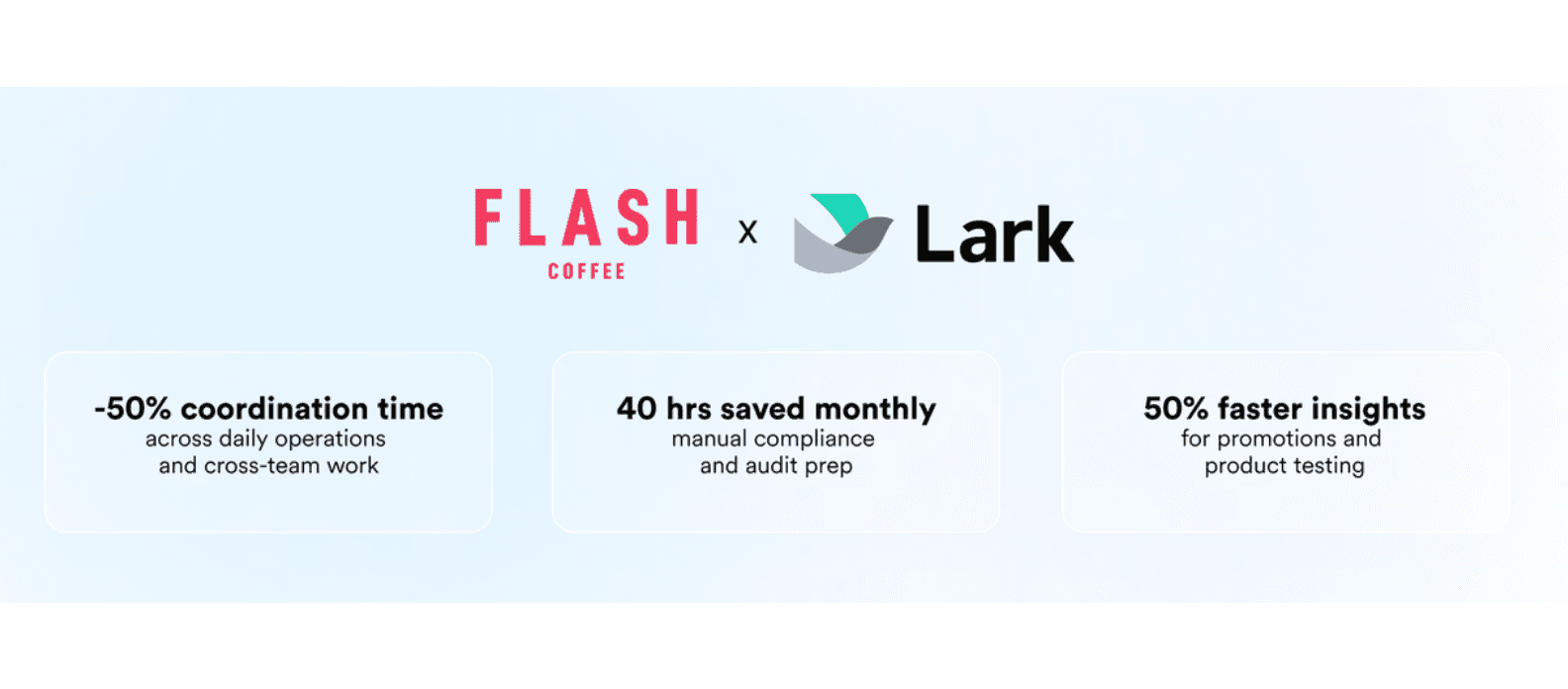
480 hours saved annually. Audit prep down 50%
When store operations and daily communication run on separate platforms, compliance activity is logged in one place and discussed in another. HQ has no live view into what is open, what is resolved, and what has been outstanding for three days.
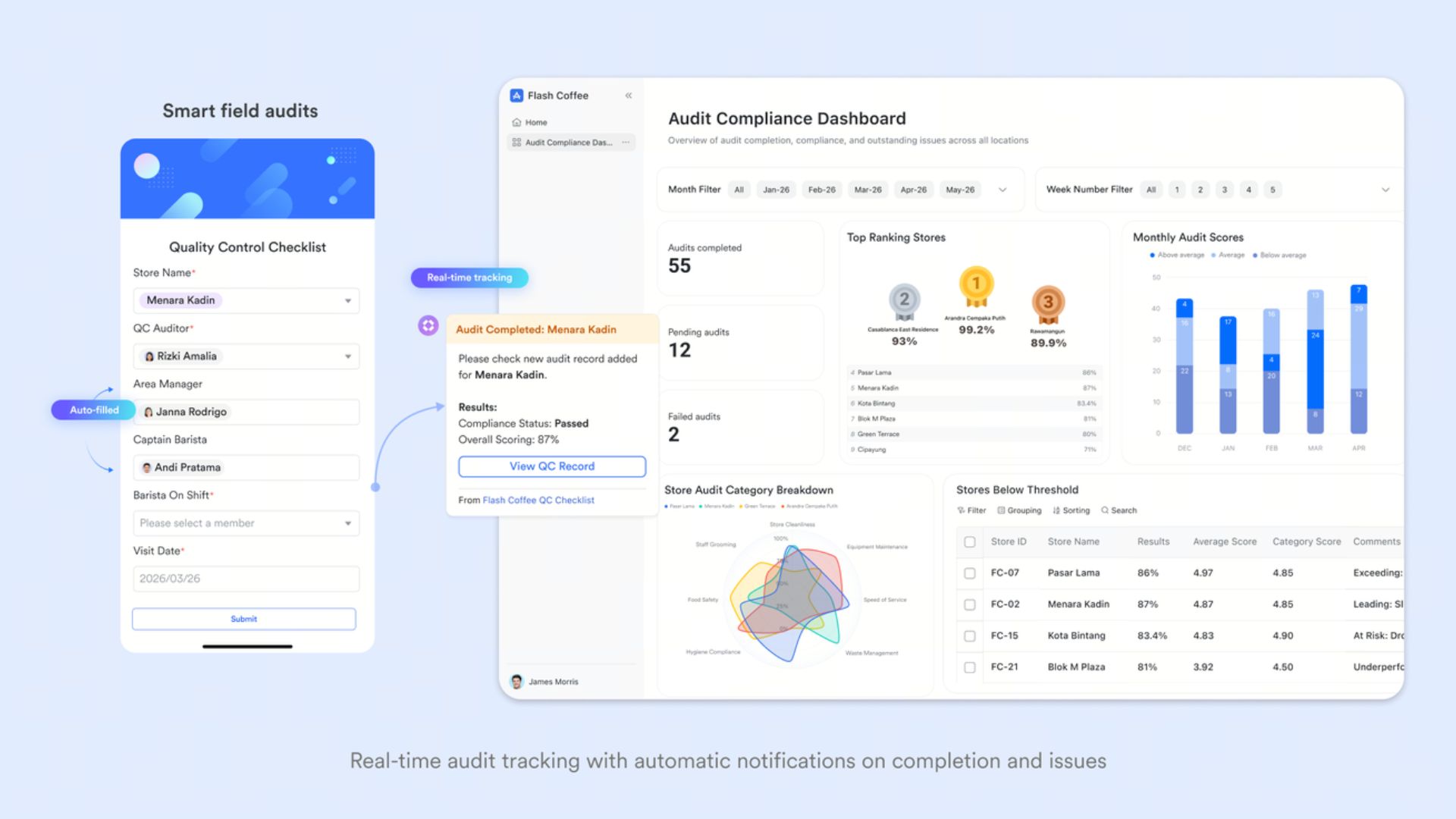
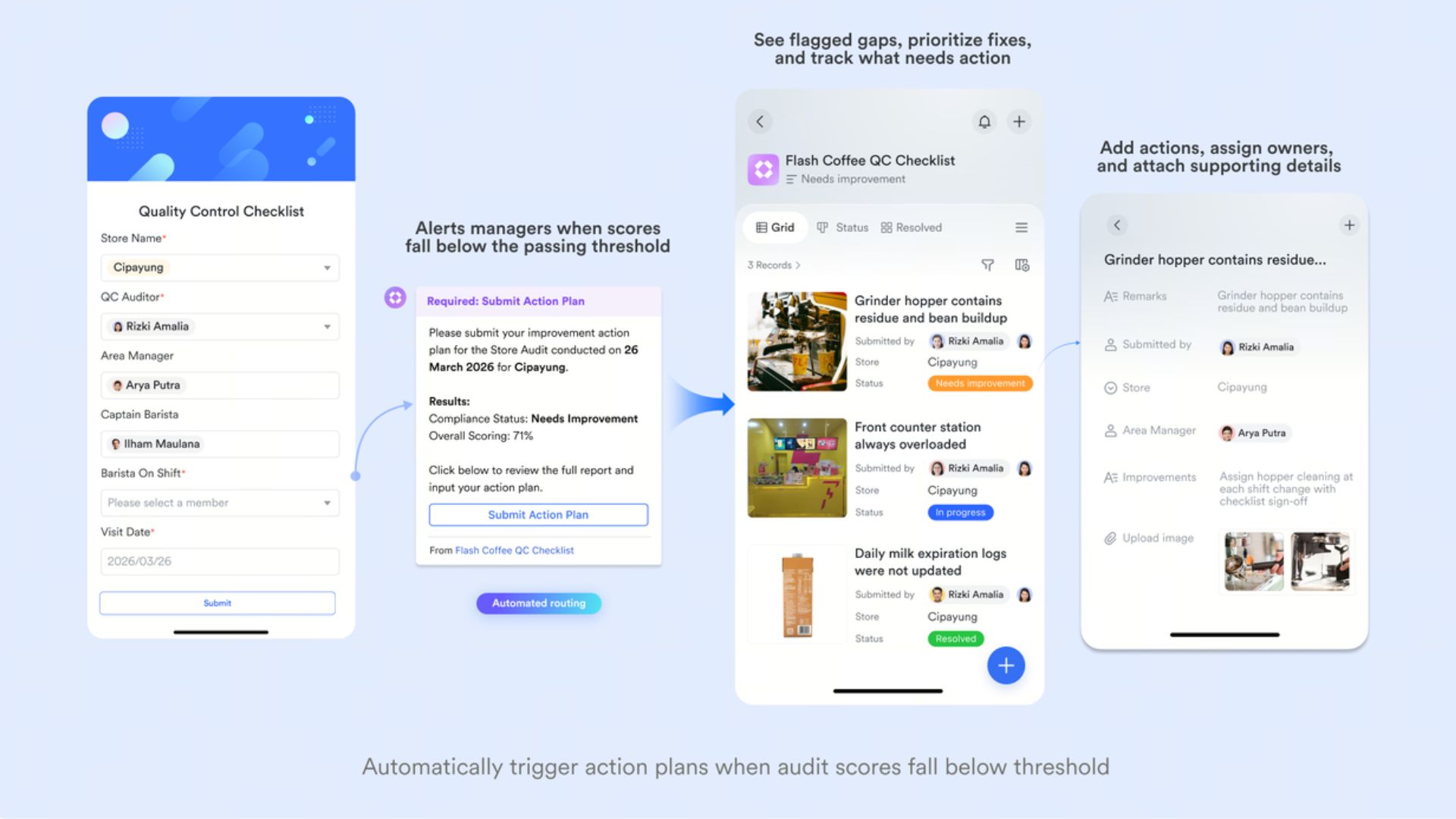
Daily checklists, QC audits, and store opening and closing procedures now run through Lark. Issues are raised and resolved in the same channel, with a full audit trail. HQ sees compliance rates across every outlet as they happen. The result: 40 hours recovered per month across the network, close to 480 annually, and audit preparation time cut by half.
Approval coordination time cut by nearly half
As Flash Coffee's network grew, so did the volume of requests: maintenance, marketing sign-offs, new opening coordination. Moving those through personal messaging and email threads meant ownership was unclear, status was invisible, and the history of what was decided and when existed only in someone's inbox.
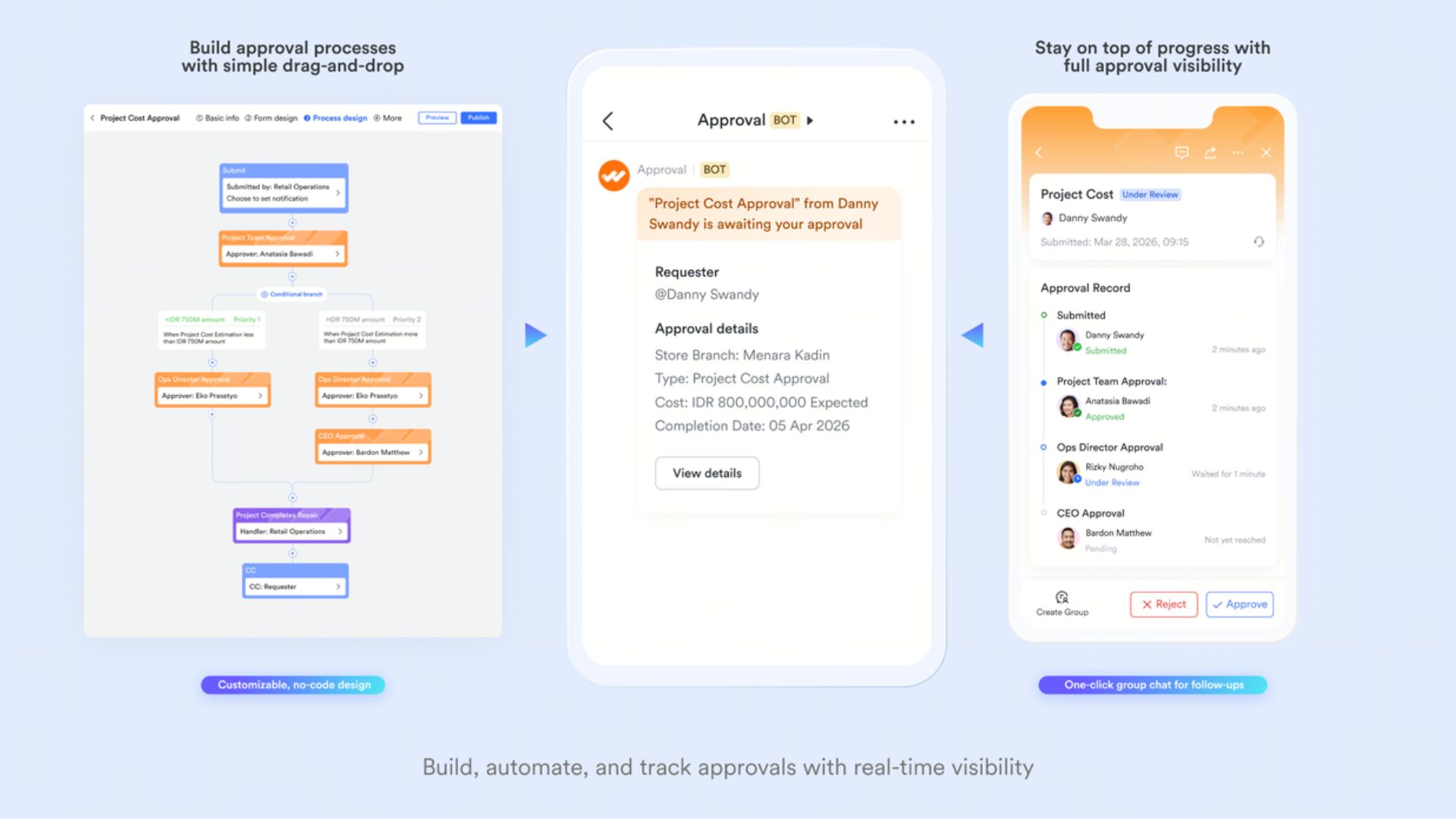
Every request now runs through a defined process with a named owner, escalation steps, and live status visible to anyone with access. The decision record is automatic. Coordination and follow-up time is cut by nearly half, and the process does not need to be rebuilt as new locations come on.
Product feedback cycles cut by 50%
Flash Coffee runs tasting sessions at HQ to inform menu decisions. Indonesia's market moves quickly and the menu has to move with it. With results previously captured and compiled manually, the team spent days consolidating submissions before any pattern was visible.
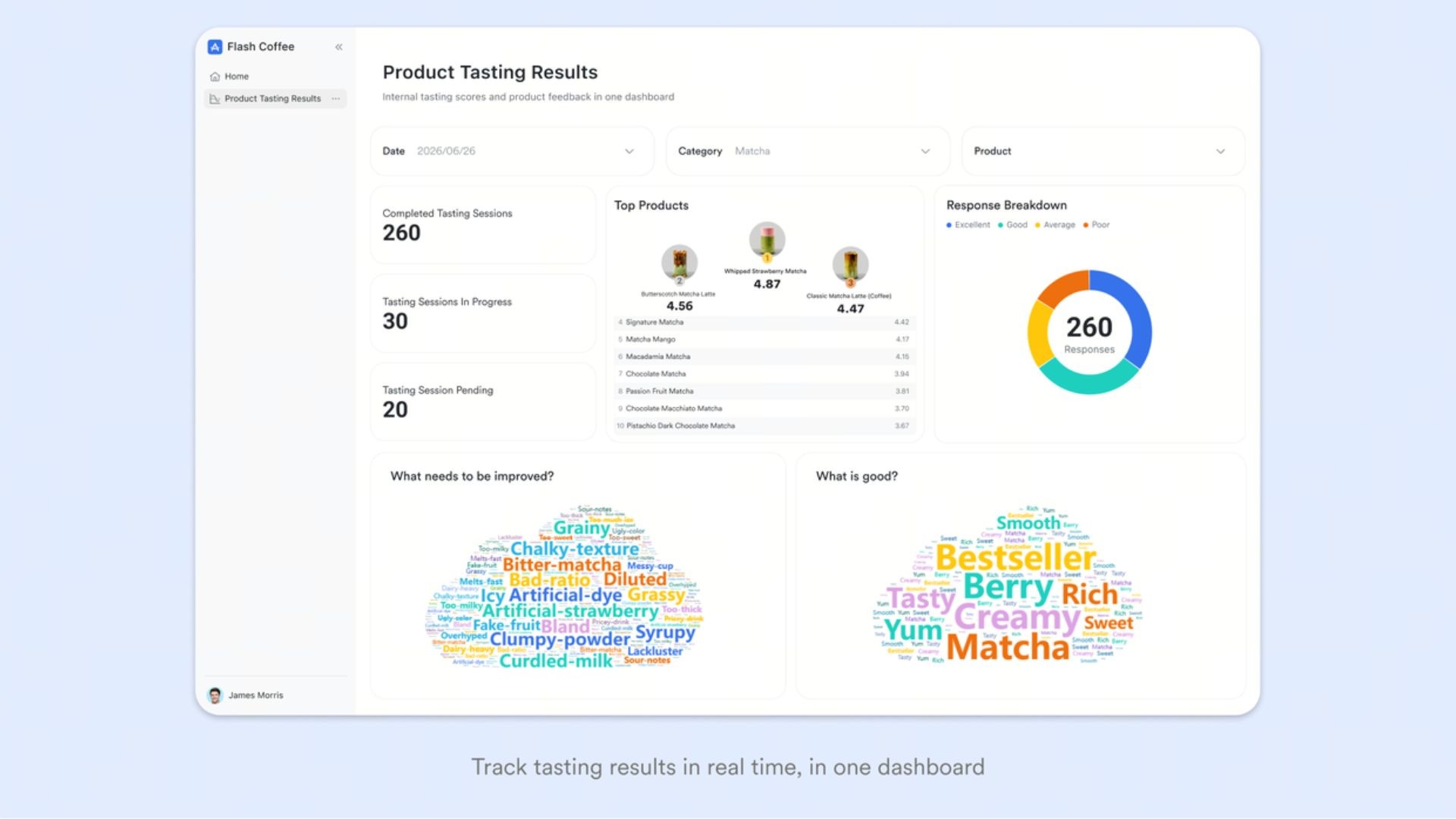
Tasting results now flow into a centralized Lark Base as submissions come in. The team has a consolidated view the same day, and follow-ups are handled in the same workspace. Feedback cycle time is down 50%.
What any operator can take from this
These are not three separate operational improvements. They are the conditions that allow a network to function as one business rather than a collection of locations. Compliance visible in real time. Decisions with clear ownership and a traceable record. Product insight that moves fast enough to act on. Together, they determine whether the standard a chain sets at five locations still holds at fifty.
Bardon puts it plainly:
"With the right systems, we don't just operate better. We unlock how far we can go"
Flash Coffee chose to build that structure before adding locations. Every new store opens into an operation already running to standard, with the same visibility and accountability across every outlet. That is what makes the next expansion credible, not just ambitious.
For other operators, every month these gaps stay open, they get harder to close.
Interested in how Lark supports retail and F&B operations at scale? Get in touch.