Return to Customer Stories
Built to scale: how Hypermart holds one operating standard across 130+ stores
A display issue flagged in Sulawesi, resolved the same day, no calls to the regional office. Across 130+ stores and 6,000+ staff, Hypermart runs that same process every shift. Here's how they built consistency into the system instead of the headcount.

Jerry Goei
Group COO, Lippo Group
Lark has transformed the way we work, bringing discipline, transparency, and collaboration into one integrated platform.
Company Profile
PT. Matahari Putra Prima Tbk (MPPA), part of Lippo Group, is one of Indonesia's largest retail operators, best known for its Hypermart brand. With a strong commitment to innovation and service, MPPA delivers value and quality to millions of Indonesian consumers every day.
Industry
Retail
Company Size
5000-9999
Location
Indonesia
A store in Sulawesi submits its morning audit. A display standard is flagged. By the same day, a follow-up is assigned, tracked, and resolved, without a single call to the regional office.
That is one store. The real question is whether the same process holds across every location, every shift, every day, from Java to Kalimantan to Sulawesi and beyond.
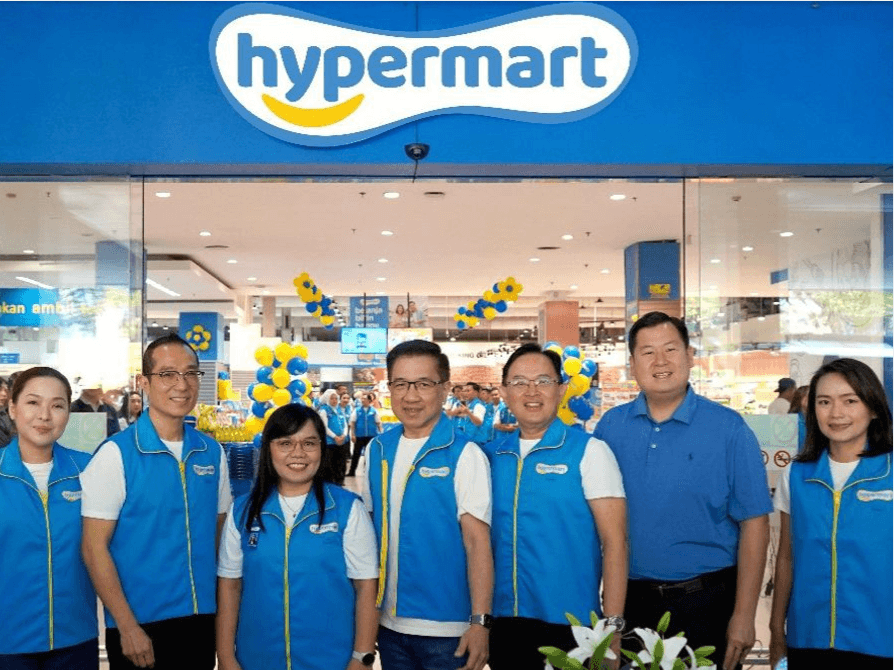
Part of the Lippo Group, Hypermart is one of Indonesia's largest hypermarket chains, with 132 stores and more than 6,000 staff across the archipelago. As the network grew, so did the complexity of keeping every store running to the same standard, without adding headcount or regional oversight to match.
"As we grow, the way we manage our standards, our compliance, and our communications has to grow with us. What we needed was one place where everything connects, from a decision made at headquarters to what our teams are doing on the floor."
– Jerry Goei, Group COO at Lippo Group
One standard across 6,000 employees
Maintaining operational consistency is one of retail's hardest problems. High employee turnover means standards are constantly passed from one person to the next. In practice, that means outdated guidelines, habits carried between shifts, and processes nobody has gotten around to updating. Across a network of stores, these small inconsistencies compound quickly. By the time they surface as a customer complaint or a failed audit, they have already been the norm for weeks.
When SOPs are distributed over email or chat, there is no way to confirm they were read, let alone applied. A guideline sent to a group chat looks identical whether one person saw it or a hundred did.
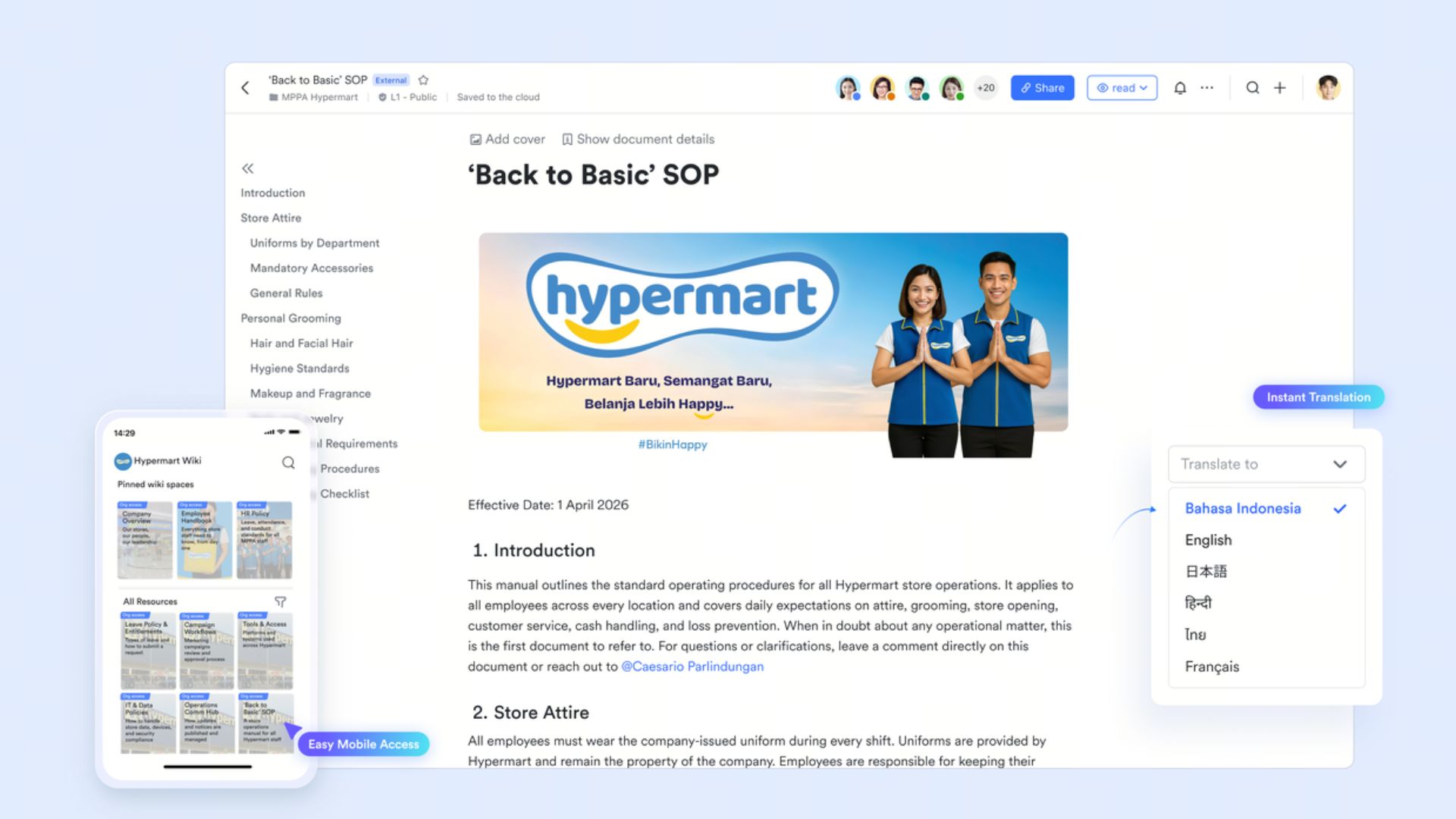
At Hypermart, guidelines are updated centrally and immediately visible to every store on the same platform employees use to communicate with HQ. A new hire on their first shift in Jayapura opens the same version as a team lead in Jakarta. When SOPs change, the update is announced directly in-platform via Announcements, reaching all 6,000 employees within minutes. Leaders can track exactly who has seen each announcement, so nothing gets missed in a busy shift or buried under other messages.
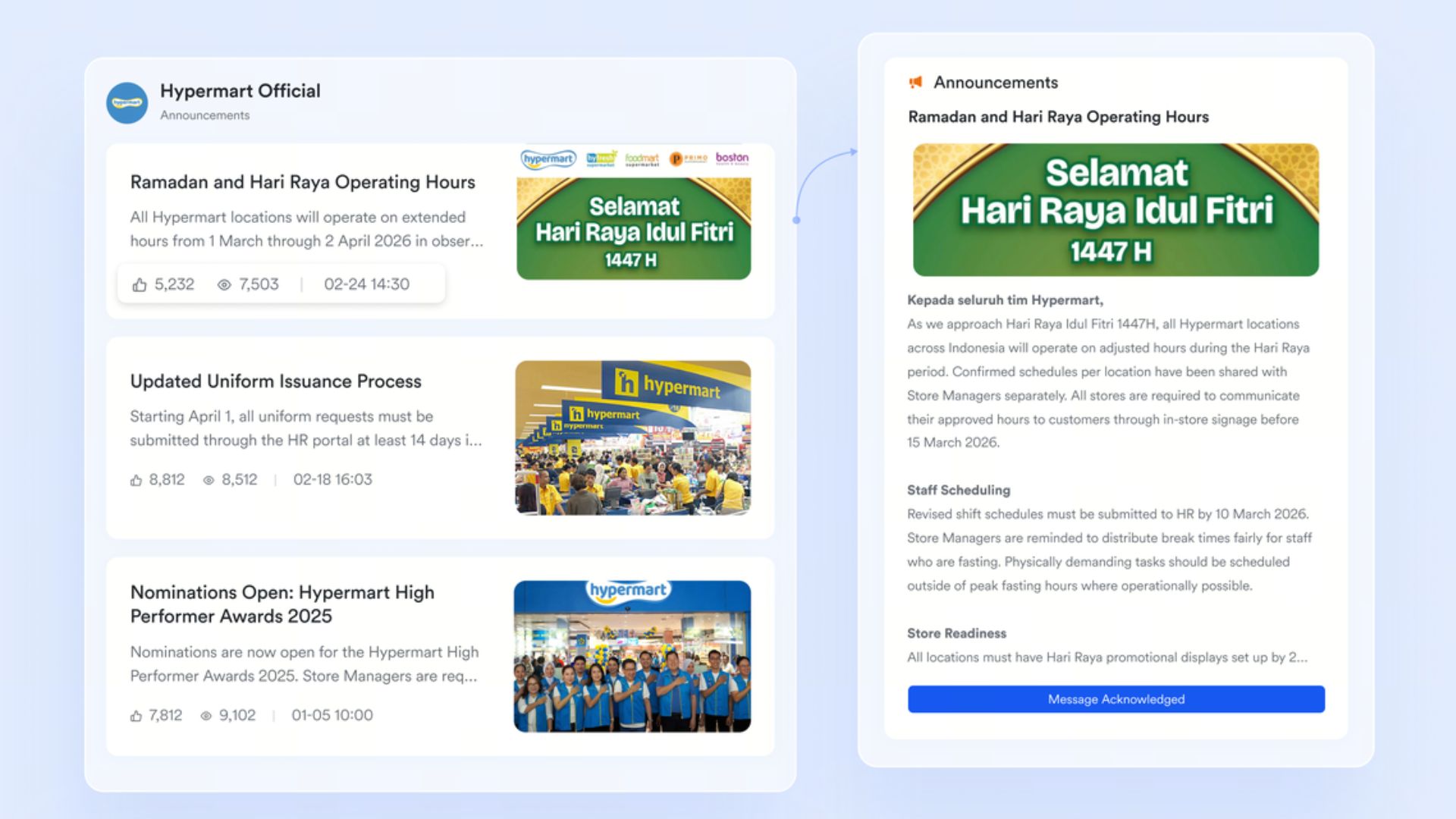
Because the platform is where store teams already communicate and receive tasks, standards are not a separate document employees have to go find. They are part of the same daily workflow.
From audit to action, every store, every cycle
Getting the standard to every employee is one part of the problem. The other is knowing it is being followed.
At that scale, sending managers to physically check every location is not viable. It is costly, slow, and covers only a fraction of stores at any given time. The practical shift is to have store teams run their own audits. But that only works if there is a structured process behind it. When the SOP, the checklist, and the follow-up each live in different places, a failed audit result is easy to miss. The finding gets logged, but no one is clearly assigned to fix it. The same issue shows up in the next cycle.
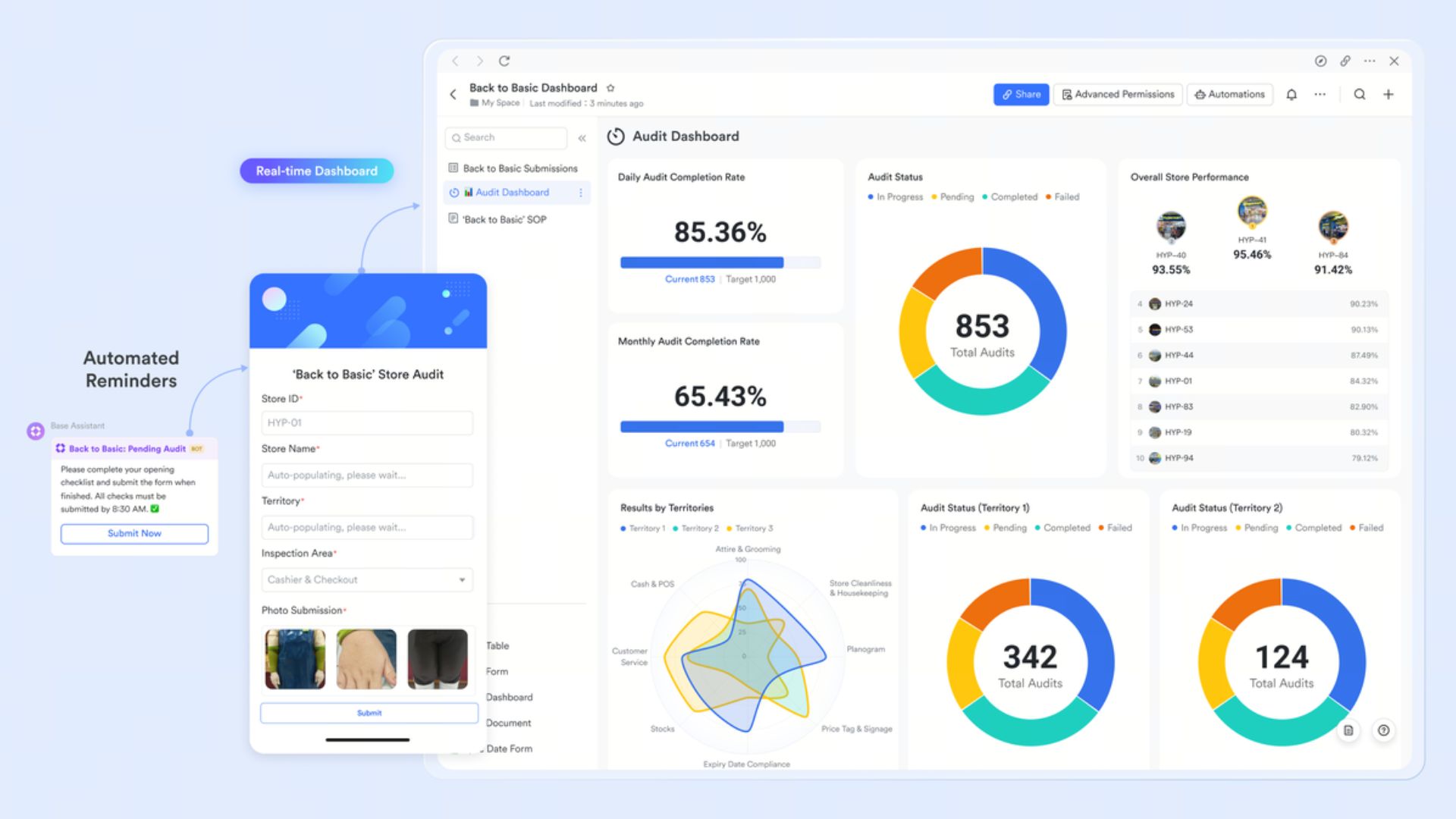
At Hypermart, the full cycle runs on one platform. Daily task completion is logged with a timestamp and automated pre-opening reminders keep teams on track without managerial follow-up. Store teams submit checklists from the floor with photo evidence attached. Overdue submissions are flagged automatically. When an audit finds a gap, a corrective action is assigned and tracked in the same place the standard was set. HQ, regional leaders, and store managers see the same picture at the same time, without calls, without waiting for someone to report back.
Teams run nearly 400 checks daily, each timestamped and visible to HQ in real time. Since moving audits in-platform, Hypermart has saved approximately IDR 800 million (~USD 50,000) in regional operational costs.
"Before, knowing where each store stood meant making calls and waiting for someone to report back. Now I can see the full picture across every region before my morning is done."
– Caesario Parlindungan, Retail Stores Operation Director at Hypermart
Issues caught before they become the leader's problem
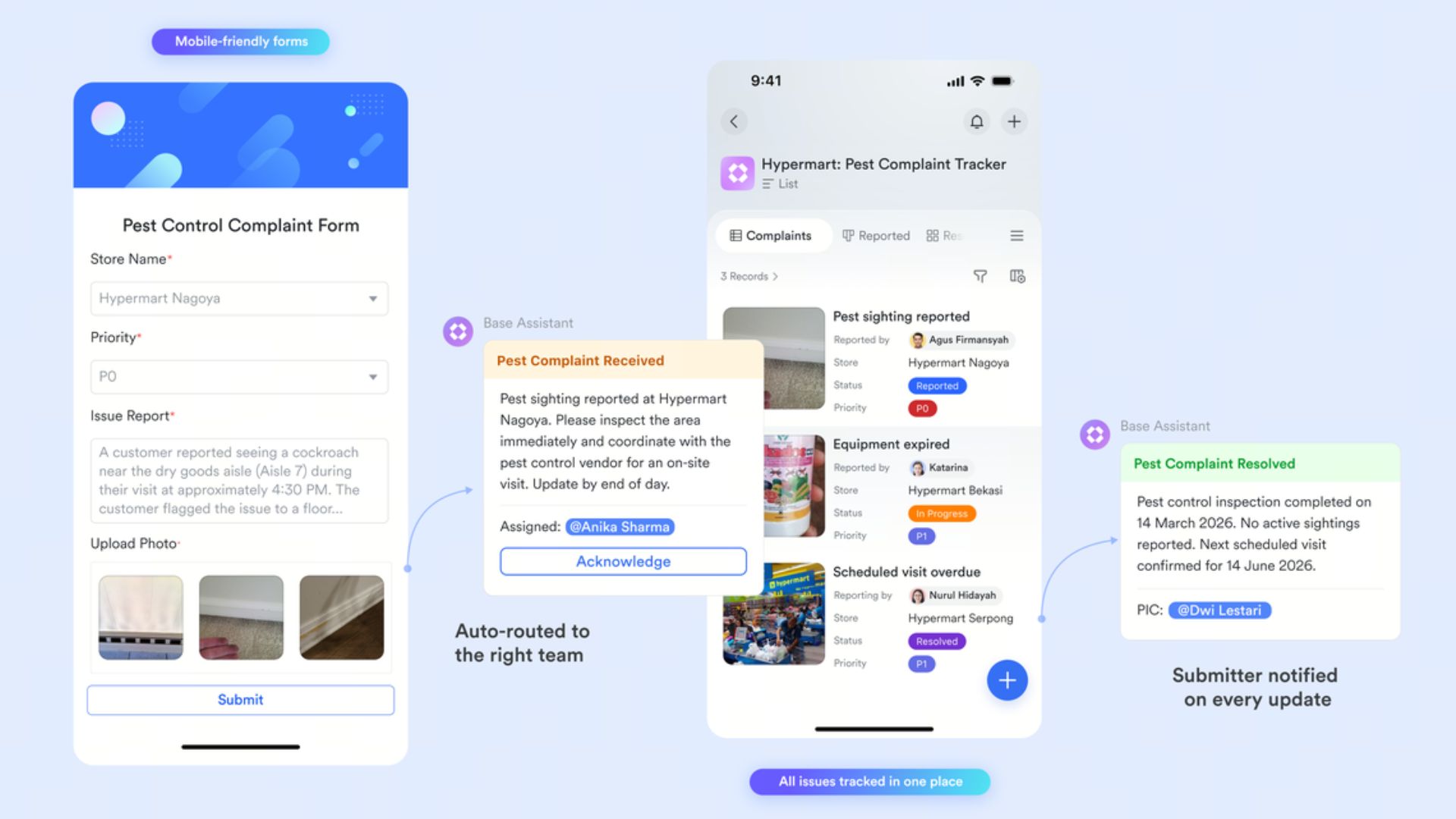
Audits are proactive by design. But not everything in a store follows a schedule. Pest sightings, stock discrepancies, supplier issues. They surface without warning, at the store level, far from whoever needs to act on them. In food retail, a two-day delay on a pest report is not just slow. It is a food safety risk and a compliance exposure. Most of these issues get raised in WhatsApp groups or over a call, where there is no assigned owner, no deadline, and no visibility beyond whoever is in the thread.
At Hypermart, any store team member can raise an incident directly on the same platform where their SOPs live and their audits are submitted. Each report has one owner, a clear escalation path, and a full history visible to the right leaders without anyone needing to chase for updates. Issues get resolved at the store level before they reach leadership as surprises.
What running a tight network actually looks like
Standards, audits, follow-ups, incident records: most retailers have all of these. What changes when they run on one platform is that nothing falls through the gaps between them.
For a COO overseeing a network that size, that is not just a tighter operation. It is the confidence that every store is held to the same standard, and that when something slips, the process catches it before it compounds.
For Lippo Group, this is where the transformation begins.
Interested in how Lark supports enterprise retail transformation? [Get in touch]