


Deal Flow: Meaning, Process, and Management Tools

Ryan Tanner
Product Marketing Specialist
Aug 5, 2026
Ryan Tanner
Aug 5, 2026

19 min read


Deal flow represents the continuous movement of potential business opportunities—from first contact to final investment or acquisition. It's a vital concept in venture capital, private equity, and corporate finance, reflecting how effectively firms source, assess, and close deals. A healthy deal flow increases access to promising investments, while a slow one can limit growth and portfolio expansion.
Managing this process efficiently depends on having clear systems, seamless communication, and dependable digital tools. Platforms like Lark, Affinity CRM, Zapflow, Airtable, HubSpot CRM, Carta, and Pipedrive help teams track leads, manage pipelines, and collaborate at every stage of the deal cycle. Let's explore each of these tools in this guide and see how they support smarter deal flow management.
1. Lark: Unified workspace for content, collaboration, and workflow
2. Affinity CRM: Relationship intelligence for investment teams
3. Zapflow: Deal flow software built for private equity and venture capital
4. Airtable: Customizable deal tracking with spreadsheet-style data
5. HubSpot CRM: Sales-focused pipeline tracking
6. Carta: Deal and equity management for investors
7. Pipedrive: Simplified pipeline tool for smaller deal teams

What is deal flow?
Deal flow refers to the rate at which investment opportunities are received and evaluated by firms such as venture capitalists, private equity groups, or corporate investors. In simple terms, it's the "pipeline stage" of potential deals that move through different stages—from sourcing to closing.
Understanding deal flow meaning helps investors measure how healthy and active their opportunity stream is. A strong flow indicates consistent access to high-quality prospects. Tools like deal flow CRM systems make it easier to organize, prioritize, and track these opportunities, helping teams manage every stage of the investment lifecycle efficiently.
Why deal flow matters for business success
A steady deal flow is essential for sustainable business growth. It ensures a constant pipeline of opportunities, helping organizations forecast revenue and plan resources with greater accuracy. Consistent deal flow also improves visibility, reducing the risk of missed prospects and allowing teams to focus on high-value opportunities.
Strong, structured deal flow management fosters collaboration between departments like finance, operations, and legal, keeping everyone aligned throughout the process. With the right systems in place, businesses can make faster, data-driven decisions—turning potential deals into successful outcomes more efficiently and confidently.
The deal flow process: From sourcing to closing
A well-managed deal flow process helps organizations identify, assess, and execute investment opportunities efficiently. From sourcing to closing, each stage demands structure, collaboration, and the right tools to maintain consistency and quality.
Sourcing opportunities
The process begins with finding the right opportunities. Deal sourcing can happen through professional networks, referrals, market analysis, or specialized investment platforms such as deal flow Xchange. A proactive sourcing strategy ensures a healthy and continuous stream of potential deals. For large firms like CBRE deal flow, this stage often involves a mix of relationship-driven sourcing and data-backed lead generation to maintain a steady pipeline of qualified prospects.
Screening and qualification
Once potential opportunities are identified, the next step is screening and qualification. This involves evaluating how well each deal fits the company's financial goals, risk appetite, and strategic direction. Using digital tools like deal flow CRM or deal flow management software makes this stage more efficient by centralizing information, automating scoring, and highlighting the most promising leads. Screening early prevents wasted time and resources on deals that don't align with investment objectives.
Due diligence
The due diligence stage is where opportunities are examined in detail. Investors analyze financial statements, company structure, market potential, and legal documentation to verify claims and assess risks. For firms managing multiple opportunities, private equity deal flow software or venture capital deal flow management software simplifies this process by organizing documents, tracking communication, and ensuring transparency across teams. Thorough due diligence reduces uncertainty and builds confidence before making major financial commitments.
Negotiation and structuring
After confirming a deal's viability, both parties move into negotiation. This phase involves defining terms, setting valuation, and determining equity structure or repayment conditions. A clearly defined deal desk process flow helps standardize approvals and ensure compliance with internal policies. Collaboration tools and deal flow management platforms make it easier for finance, legal, and executive teams to stay aligned, avoiding delays and misunderstandings.
Closing and post-deal tracking
Closing marks the formal agreement between parties—but effective deal flow doesn't end there. Once the deal is finalized, post-deal tracking becomes crucial. Organizations use deal flow management tools and analytics dashboards to monitor investment performance, track returns, and manage relationships with partners. Many investors also rely on deal flow software venture capital systems to maintain transparency and capture insights for future deals.
Post-closing visibility ensures that investments continue to align with strategic objectives. It also helps improve forecasting accuracy and strengthens long-term business relationships.
A structured deal flow management process allows companies to handle larger volumes of opportunities with precision and confidence. Whether through venture capital deal flow software or private equity deal flow platforms, digital solutions now make it easier to streamline operations, enhance collaboration, and close deals faster—all while maintaining clarity from start to finish.
Top 7 deal flow management tools
1. Lark: Unified workspace for managing deal stages, collaboration, and reporting
Managing deal flow efficiently requires coordination across teams, fast access to information, and clear visibility into every stage of the pipeline. Lark simplifies this process through its connected tools, which enable automation, structured tracking, and real-time collaboration. Together, they create a transparent environment where deals move faster and decision-making becomes easier.
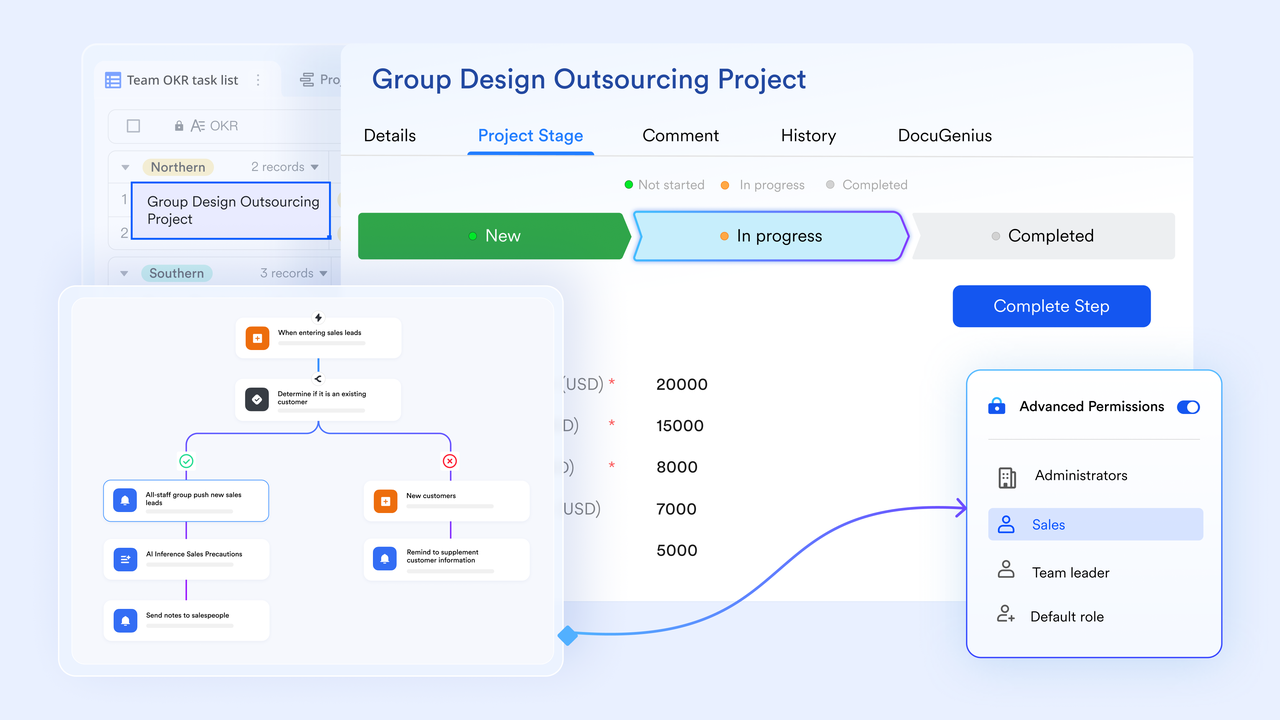
- Lark Base automations: Automate workflows and syncing
Deal flow often involves repetitive tasks—updating records, sharing follow-ups, or scheduling reviews. Lark eliminates these manual steps through automation. By connecting with over 2,000 apps via Zapier, teams can automatically sync data between systems like CRMs, spreadsheets, or finance tools.
For example, when a deal stage changes in an external CRM, Lark can instantly send a notification to the right channel, update a Base record, or trigger a task reminder. This level of automation reduces administrative workload, ensures consistency, and keeps the entire team aligned without switching between multiple tools.
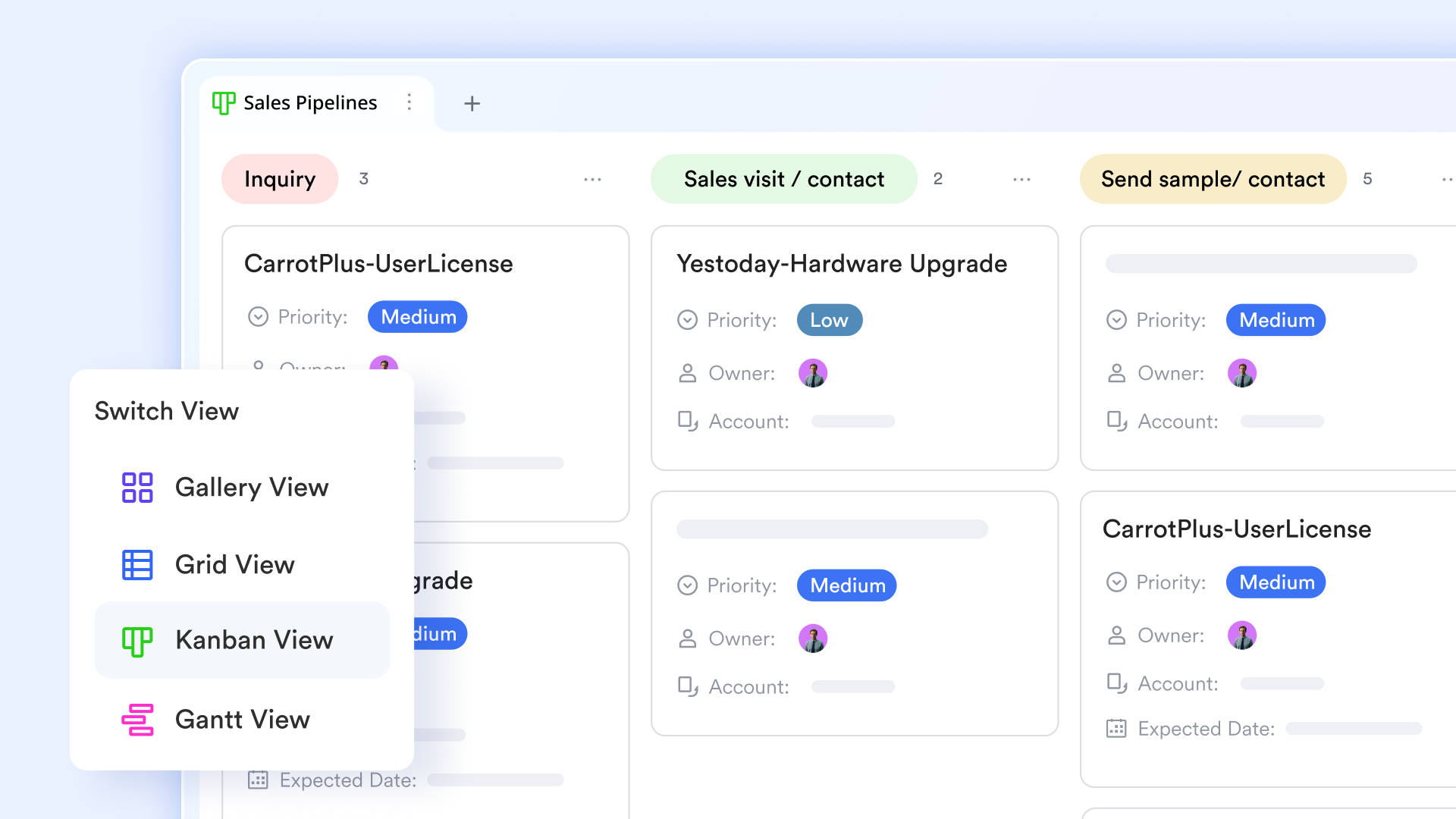
- Multiple views in Lark base: Have a full picture of deal progress
In Lark Base, teams can visualize deal flow from sourcing to closing using customizable templates and flow fields. Each record represents a deal, containing details like stage, owner, value, and expected close date. With Kanban or Gantt views, managers can see the overall pipeline status, while sales reps or investment analysts can focus on their assigned deals.
Flow fields automatically update totals or progress percentages, ensuring that performance metrics remain accurate. This real-time visibility helps teams identify stalled opportunities, reassign priorities, and optimize deal velocity—all within one connected workspace.
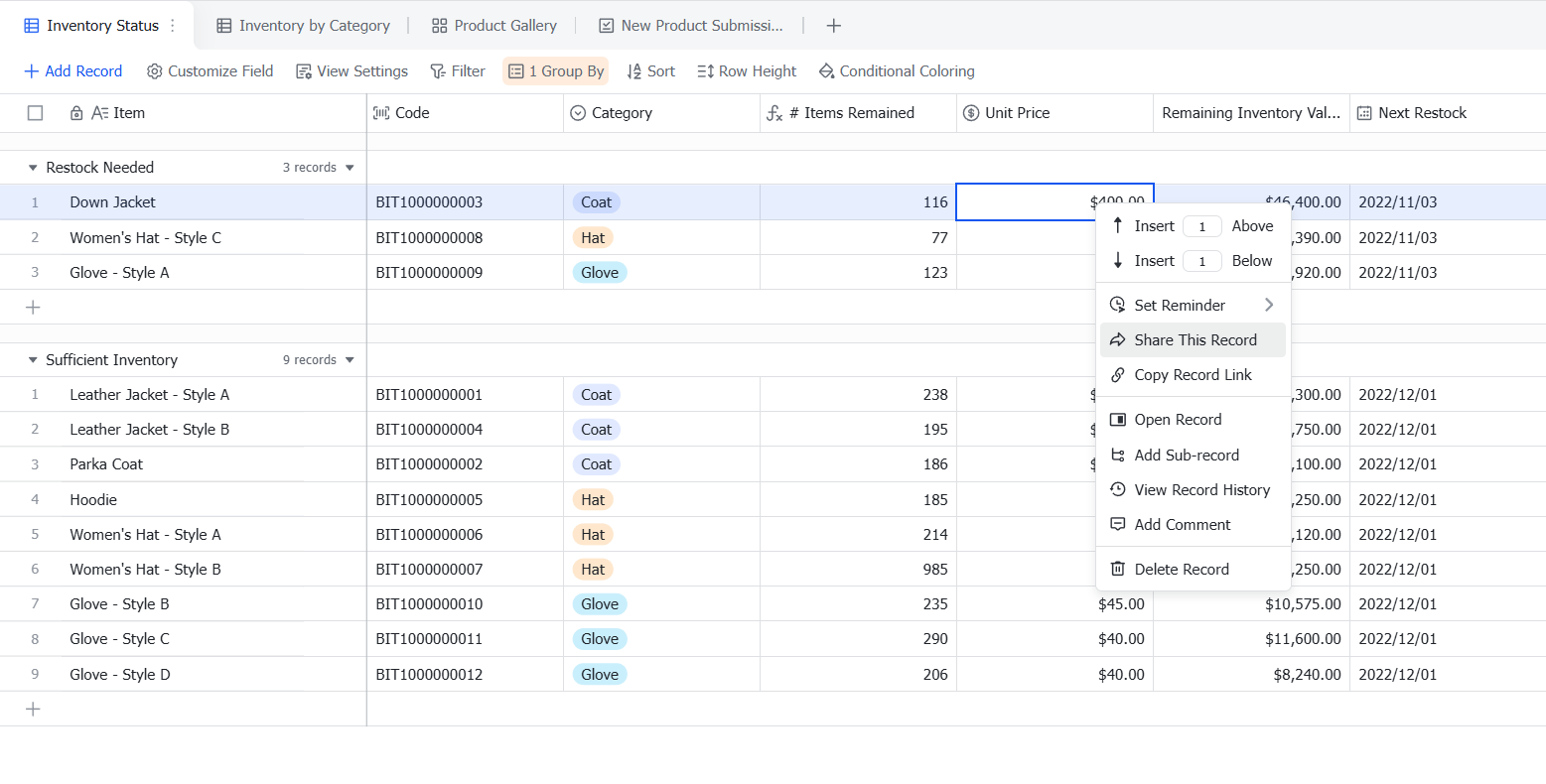
- Share Base record & Lark Messenger: Full-context discussion and record track
Deal-related data often becomes scattered across Lark email threads, documents, and chat apps. Lark resolves this by allowing teams to share and collaborate on Base records in a group chat.
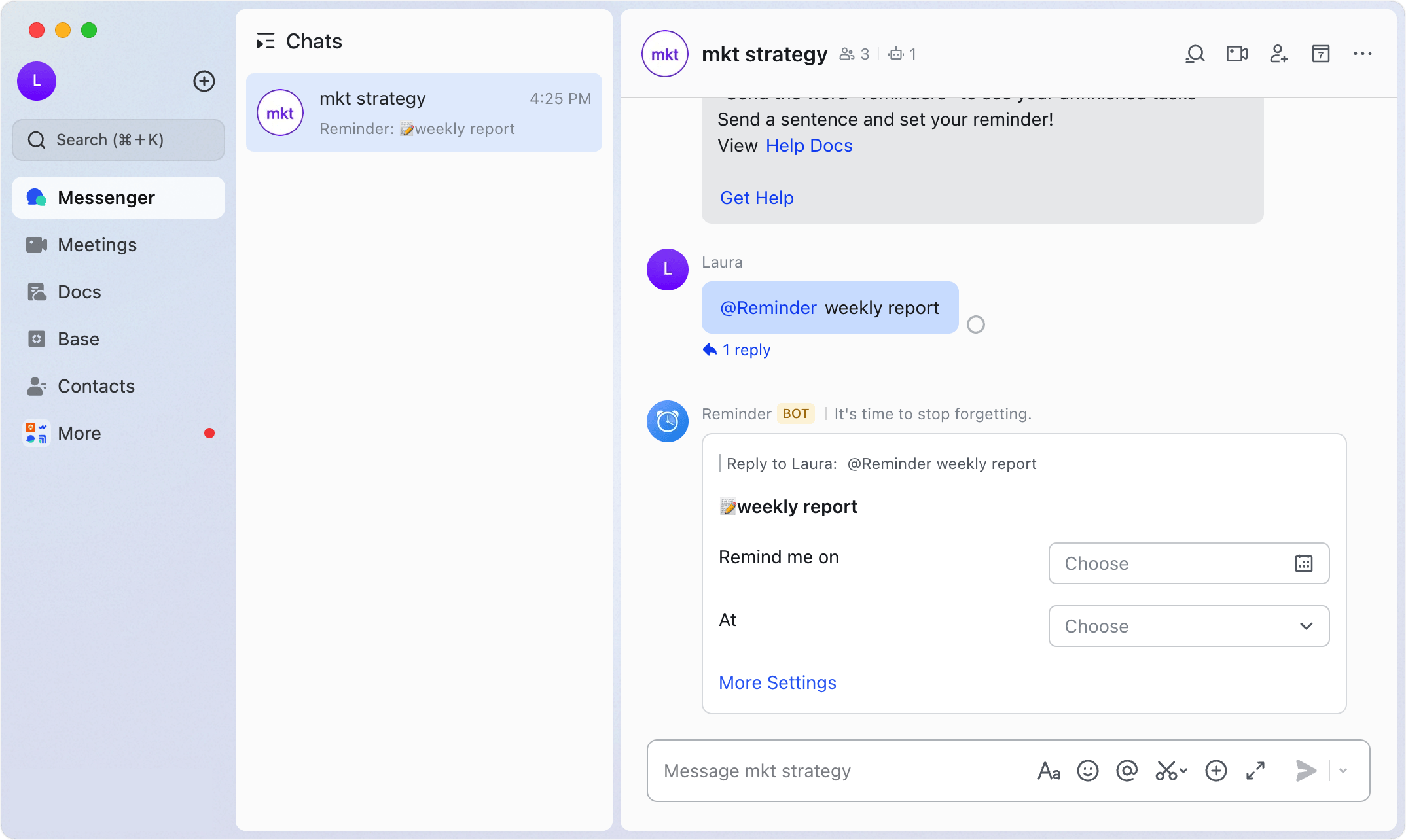
When you share a Base record as a preview card into Lark Messenger, recipients can view or edit the record directly in the chat, depending on their permissions. The preview card displays the first six fields of the record. If advanced permissions are turned off, recipients can preview and interact with the record in the chat. If advanced permissions are enabled, recipients must click the card to open the record details page for viewing or editing.
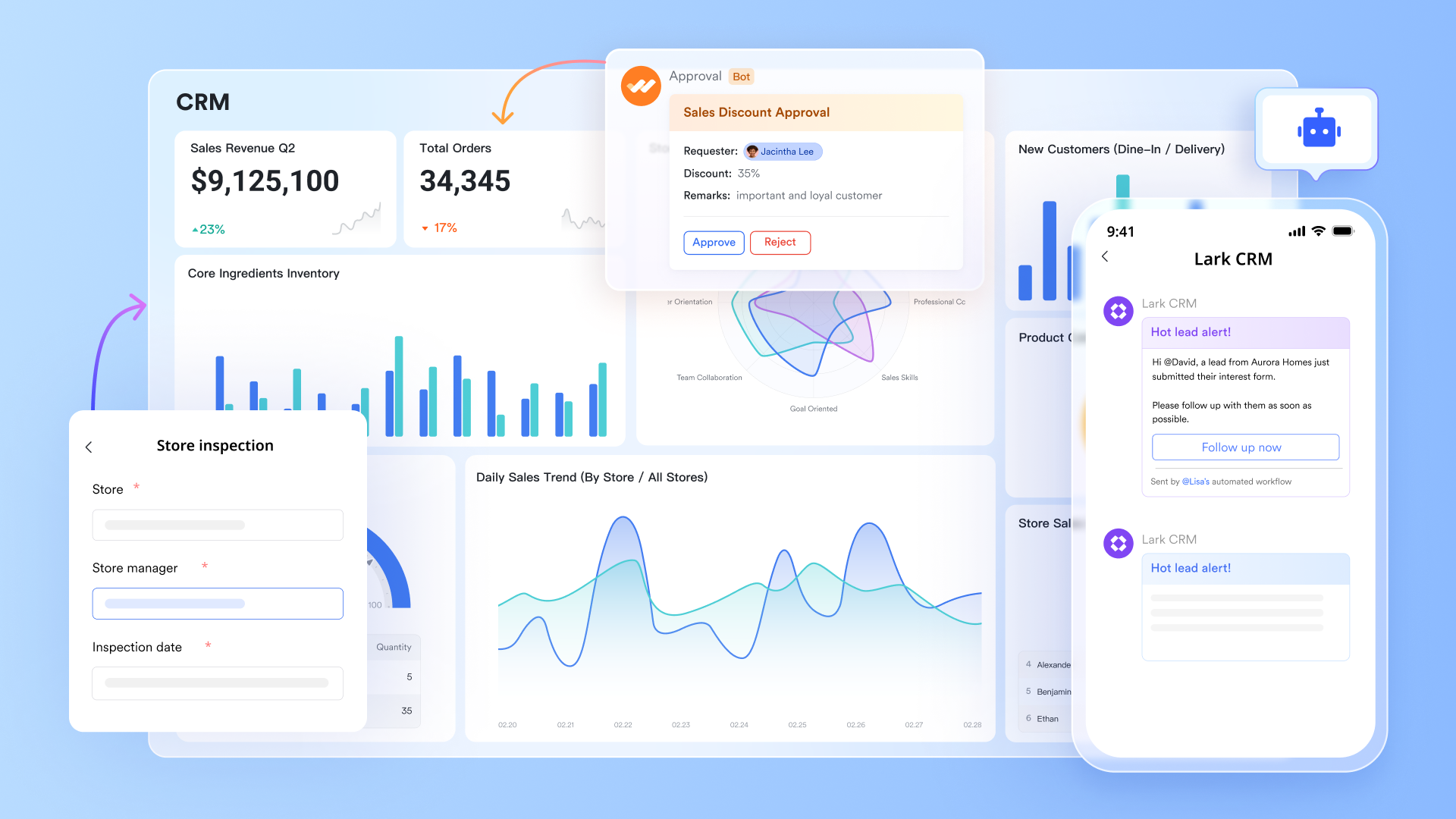
- Lark bots: Use bots to stay aligned
Lark's intelligent Bots act as proactive assistants within the deal management process. They can send timely reminders about approaching deadlines, alert managers when a deal stage changes, or notify stakeholders when approvals are completed.
Bots can also deliver scheduled summaries of deal activity—such as new opportunities added, deals progressing, or those requiring attention—directly to group chats or channels. These real-time alerts keep the workflow dynamic and help teams act quickly, preventing bottlenecks and missed opportunities.
- Starter plan: Free forever plan that includes 11 powerful tools for up to 20 users. It also comes with 100GB of storage, 1000 automation runs, AI translations, and more.
- Basic plan: $6/user/month (billed annually) for up to 500 users. Includes everything in Starter plus unlimited message history, 5TB storage, 1,000 automation runs, and more. Some users may need to contact sales to purchase.
- Pro plan: $12/user/month (billed annually) for up to 500 users. It includes everything in Starter plus group calling for up to 500 attendees, 15TB of storage, 50,000 automation runs, and more.
- Enterprise plan: Contact sales for custom pricing. Supports unlimited users and includes even more automation runs and advanced security, compliance, and management features.
2. Affinity CRM: Relationship intelligence for investment teams
Affinity CRM is a powerful relationship intelligence platform designed specifically for investors, venture capital firms, and dealmakers. It automatically captures interactions, tracks relationships, and maps networks to uncover valuable connections that drive better deal sourcing and decision-making. By combining CRM functionality with data analytics, Affinity helps teams manage relationships at scale while maintaining a personal touch. Its automation-first approach saves time, enhances visibility, and ensures no opportunity slips through the cracks.
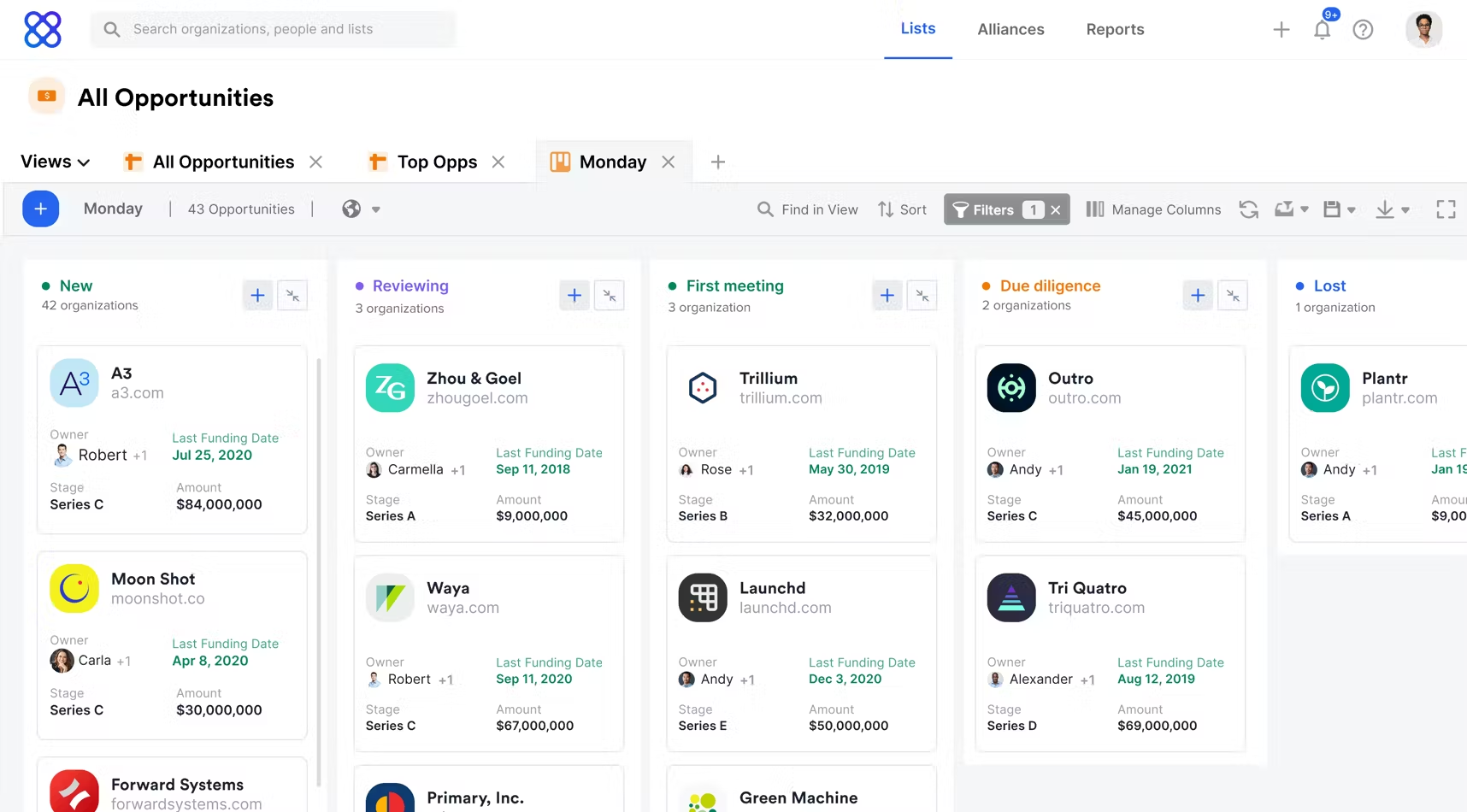
Image source: affinity.com
Key features:
- Automated contact and email data capture to maintain accurate records
- Relationship intelligence that visualizes networks and connection strength
- Pipeline tracking and deal management dashboards for clear visibility
- Integrations with Gmail, Outlook, LinkedIn, and other key tools
- Reporting and analytics for performance insights and deal flow tracking
Pros:
- Excellent for managing investor and founder relationships
- Streamlines deal flow and networking through automation
- Easy-to-use interface with powerful visualization tools
- Reduces manual data entry, freeing time for relationship-building
Cons:
- May feel feature-heavy for smaller firms with limited deal volume
- Pricing can be high for startups or small investment teams
Pricing:
- Starter: $53/user/month
- Professional: $69/user/month
- Business: $79/user/month
3. Zapflow: Deal flow software built for private equity and venture capital
Zapflow is a specialized deal flow management tool designed for private equity, venture capital, and corporate M&A teams. It helps investors streamline every stage of the deal lifecycle—from sourcing and screening to collaboration and reporting. The platform centralizes communication, due diligence, and document sharing, ensuring teams make faster, more informed decisions. With Zapflow, firms can manage pipelines securely, track performance metrics, and maintain transparency across stakeholders, all within one unified workspace.
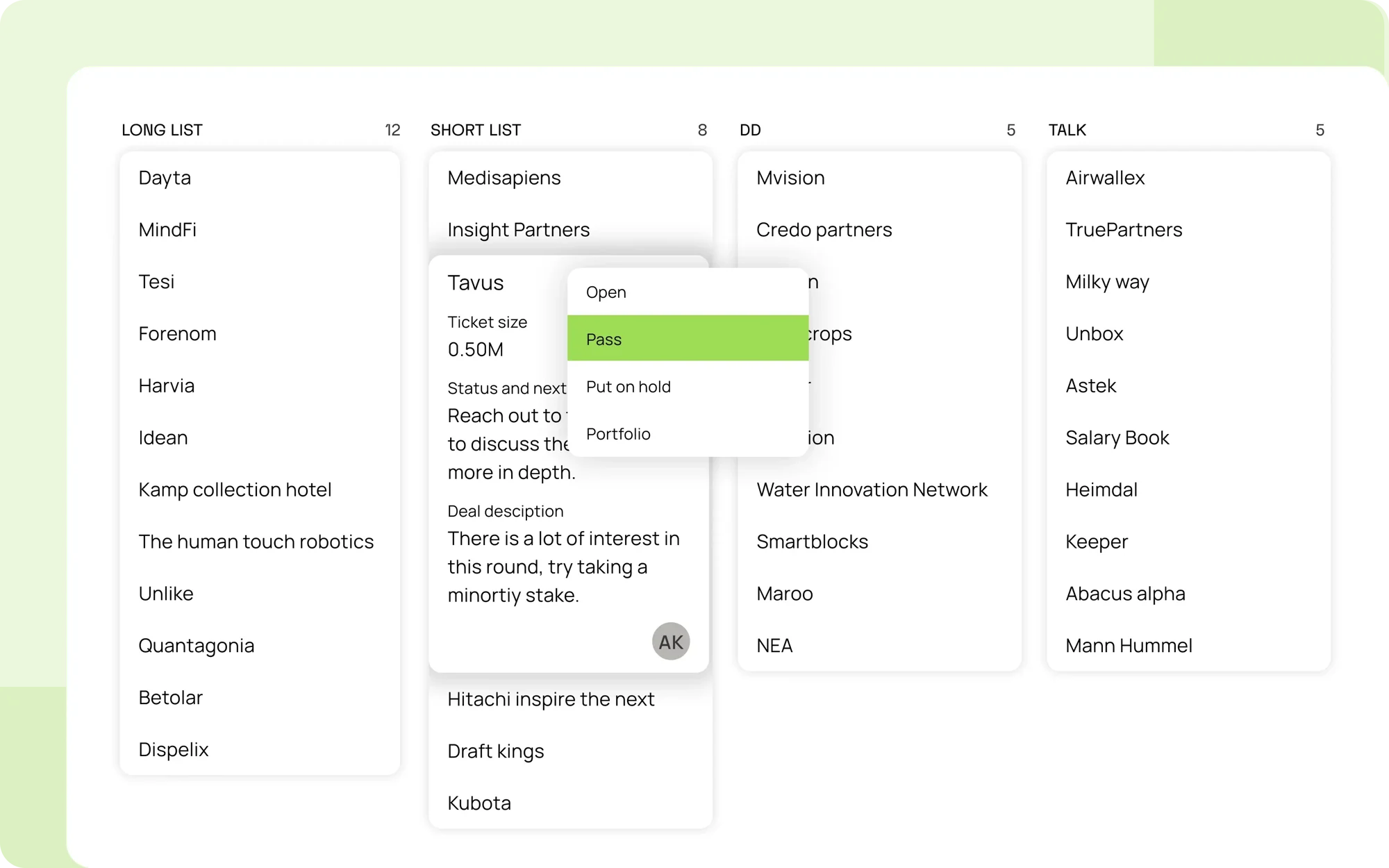
Image source: zapflow.com
Key features:
- End-to-end deal tracking and customizable pipelines
- Built-in collaboration tools for internal and external stakeholders
- Data-driven dashboards for performance insights and reporting
- Secure document sharing with role-based permissions
- Integrations with email, calendars, and third-party CRMs
Pros:
- Tailored specifically for private equity and venture capital teams
- Intuitive interface that simplifies deal management and communication
- Strong reporting and analytics capabilities for smarter investment decisions
- Excellent data security and compliance support
Cons:
- Limited customization options outside investment workflows
- Advanced features may require onboarding support or training
Pricing:
- Business: $15/user/month
- Business Plus: $25/user/month
- Enterprise: $35/user/month
4. Airtable: Customizable deal tracking with spreadsheet-style data
Airtable combines the simplicity of a spreadsheet with the power of a database, making it an excellent choice for teams that want flexible, visual deal tracking. It allows investors, analysts, and business teams to organize deal data, contacts, and workflows in one place without complex setup. With its drag-and-drop interface and customizable templates, Airtable adapts easily to different deal flow management needs—from early-stage venture capital tracking to enterprise-level portfolio management.
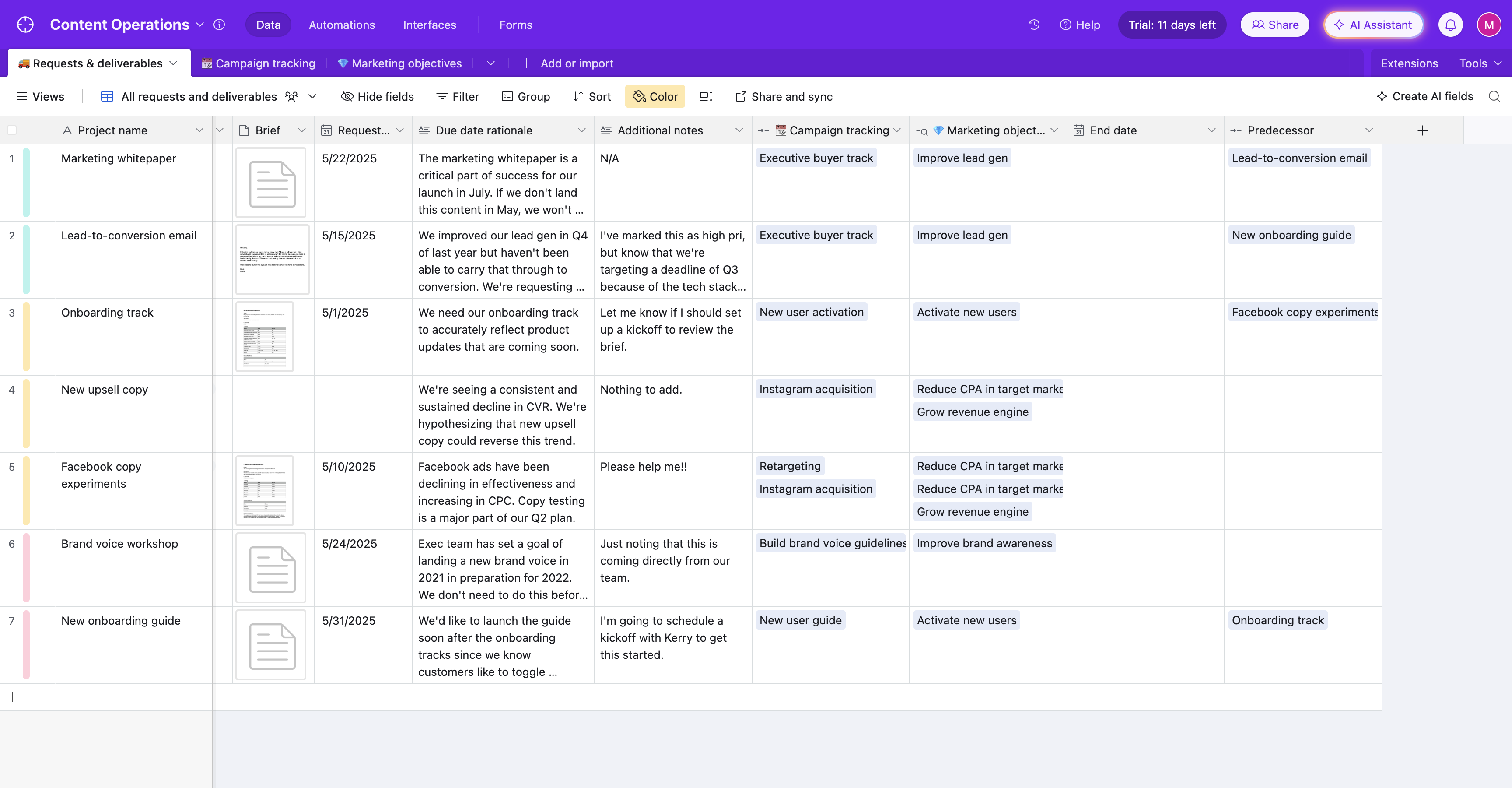
Image source: airtable.com
Key features:
- Spreadsheet-style interface with database functionality
- Customizable fields, views, and automation workflows
- Real-time collaboration and commenting on records
- Integration with tools like Slack, Gmail, and Zapier
- Ready-to-use templates for CRM, deal tracking, and pipeline management
Pros:
- Highly flexible and easy to customize for any workflow
- Ideal for teams new to deal flow software or those seeking simplicity
- Affordable and scalable for small and mid-sized organizations
- Strong automation and integration options to streamline workflows
Cons:
- Limited advanced analytics compared to dedicated private equity deal flow software
- Can become complex to manage at larger scales without proper structure
Pricing:
- Free plan: Basic features for individuals and small teams
- Plus: $10/user/month
- Pro: $20/user/month
5. HubSpot CRM: Sales-focused pipeline tracking
HubSpot CRM is a user-friendly, sales-focused platform that helps teams manage leads, track deals, and monitor performance in real time. While primarily designed for sales, it can be easily adapted for deal flow management thanks to its customizable pipelines, automation tools, and robust reporting. The system centralizes contacts, communications, and deal activities, giving users a complete view of every opportunity. For investment or business development teams seeking simplicity and speed, HubSpot CRM delivers an efficient, low-maintenance solution.
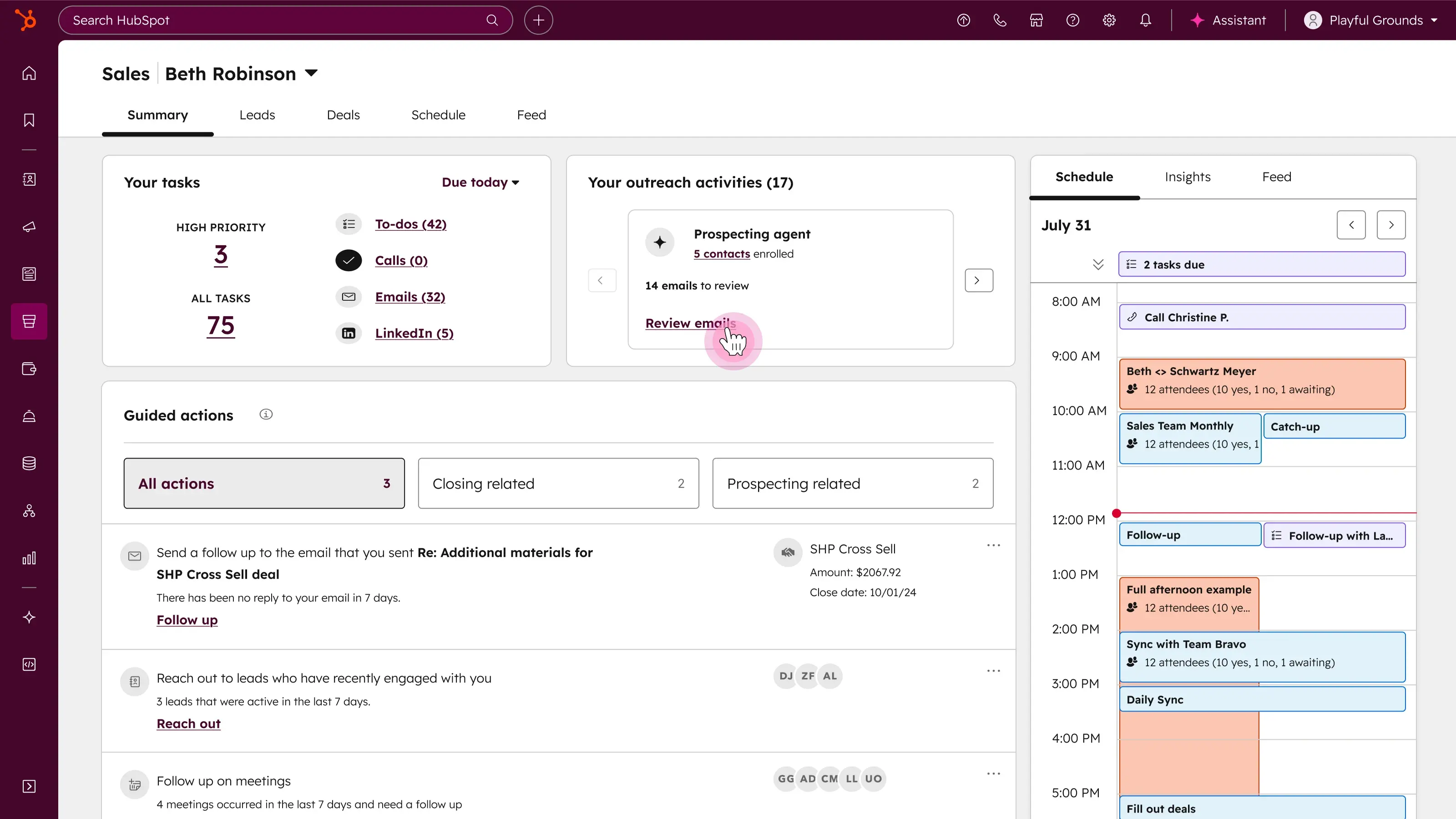
Image source: hubspot.com
Key features:
- Customizable pipelines for tracking deals and investment opportunities
- Built-in email integration and automated follow-ups
- Comprehensive dashboards for real-time visibility
- Contact and company management with engagement tracking
- Integrations with over 1,000 business tools and apps
Pros:
- Intuitive interface with minimal learning curve
- Excellent automation and email marketing capabilities
- Free version includes essential CRM features
- Strong reporting tools for sales and deal analytics
Cons:
- Limited flexibility for complex venture capital deal flow management software needs
- Advanced automation and analytics available only in paid tiers
Pricing:
- Free plan: Basic CRM features for individuals or small teams
- Starter: $20/user/month
- Professional: $100/user/month
- Enterprise: Custom pricing based on scale and integrations
6. Carta: Deal and equity management for investors
Carta is a leading equity and deal flow management platform designed to help investors, startups, and venture capital firms manage ownership, valuations, and fundraising activities in one place. It simplifies complex equity structures, cap tables, and deal tracking while ensuring compliance and transparency across stakeholders. Carta is widely used in venture capital and private equity for its ability to centralize financial data and automate reporting, making it easier to manage both current investments and new opportunities.
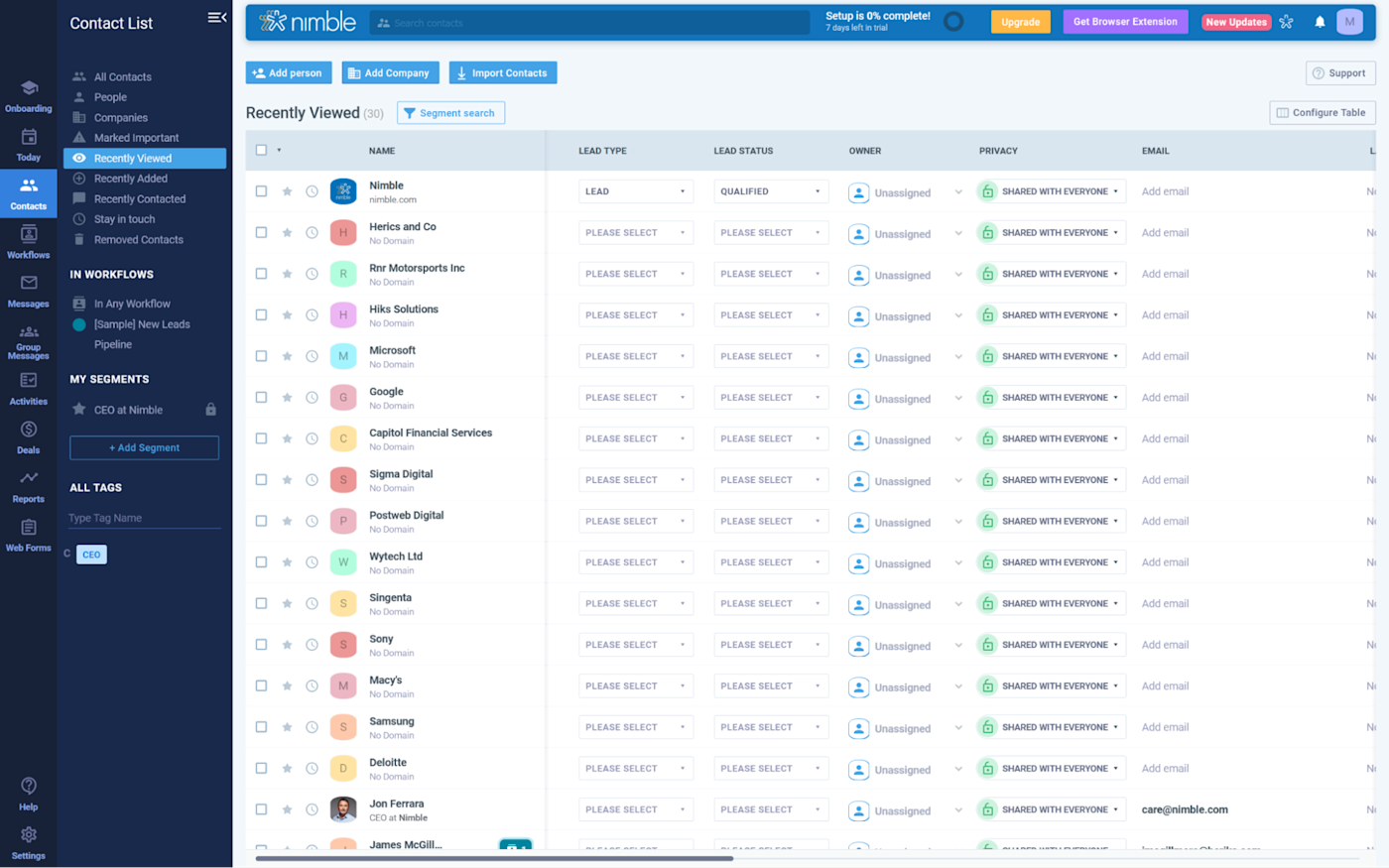
Image source: carta.com
Key features:
- Comprehensive cap table and equity management tools
- Fund administration for venture capital and private equity firms
- Real-time portfolio tracking and performance analytics
- Secure document storage and investor reporting
- Integration with accounting and compliance systems
Pros:
- Excellent for managing equity, ownership, and investor relationships
- Streamlines fund operations and post-deal tracking
- Reduces manual errors in reporting and compliance
- Trusted by top venture capital deal flow software users and investment firms
Cons:
- Can be complex for small startups or new investors
- Advanced fund management features come at a higher cost
Pricing: Custom pricing
7. Pipedrive: Simplified pipeline tool for smaller deal teams
Pipedrive is an easy-to-use CRM and deal flow management tool built for smaller sales or investment teams that need a straightforward way to organize leads and track progress. Its visual, drag-and-drop pipelines make it simple to manage deals from initial contact to close. Designed for speed and usability, Pipedrive helps teams stay focused on high-priority opportunities without getting lost in complex systems. It's ideal for early-stage firms or boutique investors seeking an affordable, intuitive platform to manage relationships and pipelines efficiently.
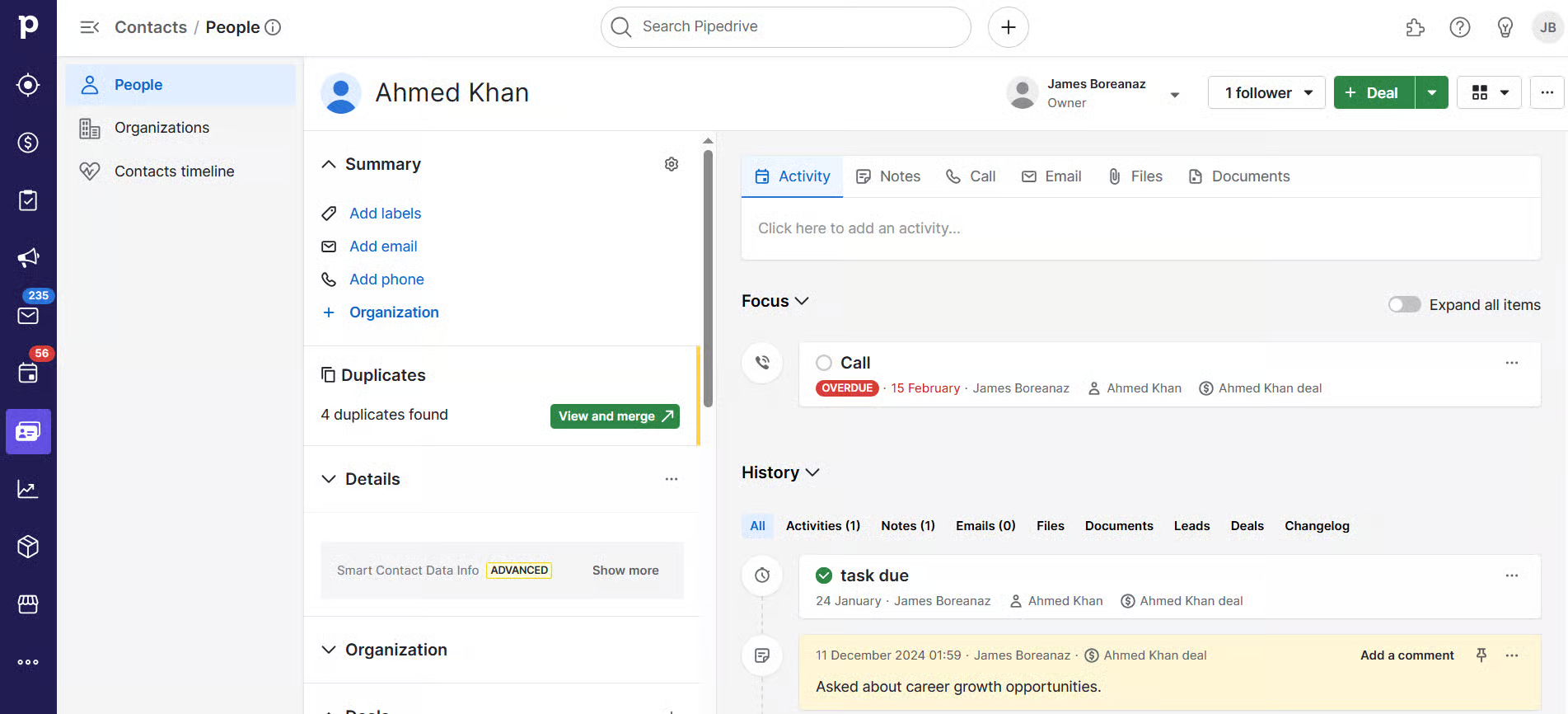
Image source: pipedrive.com
Key features:
- Customizable visual pipelines for tracking deals and stages
- Built-in activity reminders and email automation
- Real-time deal analytics and reporting dashboards
- Mobile app for deal management on the go
- Integrations with Google Workspace, Slack, and Zapier
Pros:
- Extremely user-friendly interface, perfect for small teams
- Fast setup with minimal training required
- Affordable pricing with solid automation features
- Clear visibility into deal progress and team performance
Cons:
- Lacks advanced features found in private equity deal flow software
- Limited scalability for large or complex investment workflows
Pricing:
- Essential: $15/user/month
- Advanced: $29/user/month
- Professional: $59/user/month
- Power: $69/user/month
- Enterprise: $99/user/month
Conclusion
Efficient deal flow management is the foundation of successful investing and sustainable growth. It ensures every opportunity—from sourcing to closing—is tracked, analyzed, and executed with precision. A structured process not only boosts visibility but also enables teams to make faster, data-driven decisions that lead to better outcomes.
Modern platforms like Lark simplify this even further by combining communication, document sharing, and workflow tracking in one place. Whether managing private equity deal flow or venture capital deal flow, using the right tools keeps the process transparent, collaborative, and ready to scale with your business.
FAQs
What does deal flow mean in business terms?
In business, deal flow refers to the rate and quality of incoming investment opportunities or potential business deals. It shows how actively a company or investor is identifying and evaluating prospects. A strong deal flow indicates a steady pipeline of qualified opportunities ready for review and potential investment.
How do venture capital firms track deal flow?
Venture capital firms often use specialized venture capital deal flow software to organize leads, manage due diligence, and monitor each deal's progress. These platforms centralize data, streamline collaboration, and improve visibility across teams, ensuring no opportunity slips through the cracks.
What is the difference between deal flow and sales pipeline?
While both track opportunities, deal flow focuses on investment or acquisition prospects, whereas a sales pipeline tracks potential customer sales. Deal flow involves evaluating company value and growth potential, while sales pipelines focus on converting leads into paying clients.
What are the best tools for managing deal flow?
The best tools include deal flow management software, CRMs, and automation platforms that help track sourcing, screening, and closing stages. Many firms use deal flow management tools like Affinity, Airtable, or even customized solutions designed for private equity deal flow tracking.
Can Lark be used to manage deal flow across departments?
Yes. Lark is an all-in-one workspace that helps teams manage deal flow seamlessly. It combines chat, documents, task tracking, and analytics, making cross-department collaboration simple. Finance, legal, and operations teams can stay aligned without switching between multiple apps.
How can automation improve deal tracking and evaluation?
Automation enhances deal tracking by reducing manual data entry and ensuring real-time updates across teams. It also supports smarter evaluation by integrating data sources, triggering alerts for status changes, and helping decision-makers act quickly. Automated workflows within platforms like Lark make the entire process more efficient and transparent.
Related reading
Table of contents
Start using Lark today

Manage all your work in one place
Boost team efficiency by 10x
Save up to 70% on software costs
Table of contents
Start using Lark today
Manage all your work in one place
Boost team efficiency by 10x
Save up to 70% on software costs
Keep reading







2026 Lark Technologies Pte. Ltd.
Headquartered in Singapore with offices worldwide.






Explore: