


What Is an RFP Template? Examples, Structure & Best Practices

Ryan Tanner
Product Marketing Specialist
Aug 5, 2026
Ryan Tanner
Aug 5, 2026

16 min read


Request for Proposal (RFP) templates help organizations manage complex purchases, vendor evaluations, and procurement decisions with structure and consistency. A clear, standardized template ensures every stakeholder aligns with requirements, timelines, and evaluation criteria, making vendor selection more transparent and efficient. However, RFPs often become slow and fragmented due to outdated files and scattered communication.
This guide explains what an RFP template is, when to use one, and the key components it should include—along with how modern collaboration tools like Lark make it easier to create, share, and manage RFPs across teams in real time.

What is an RFP template?
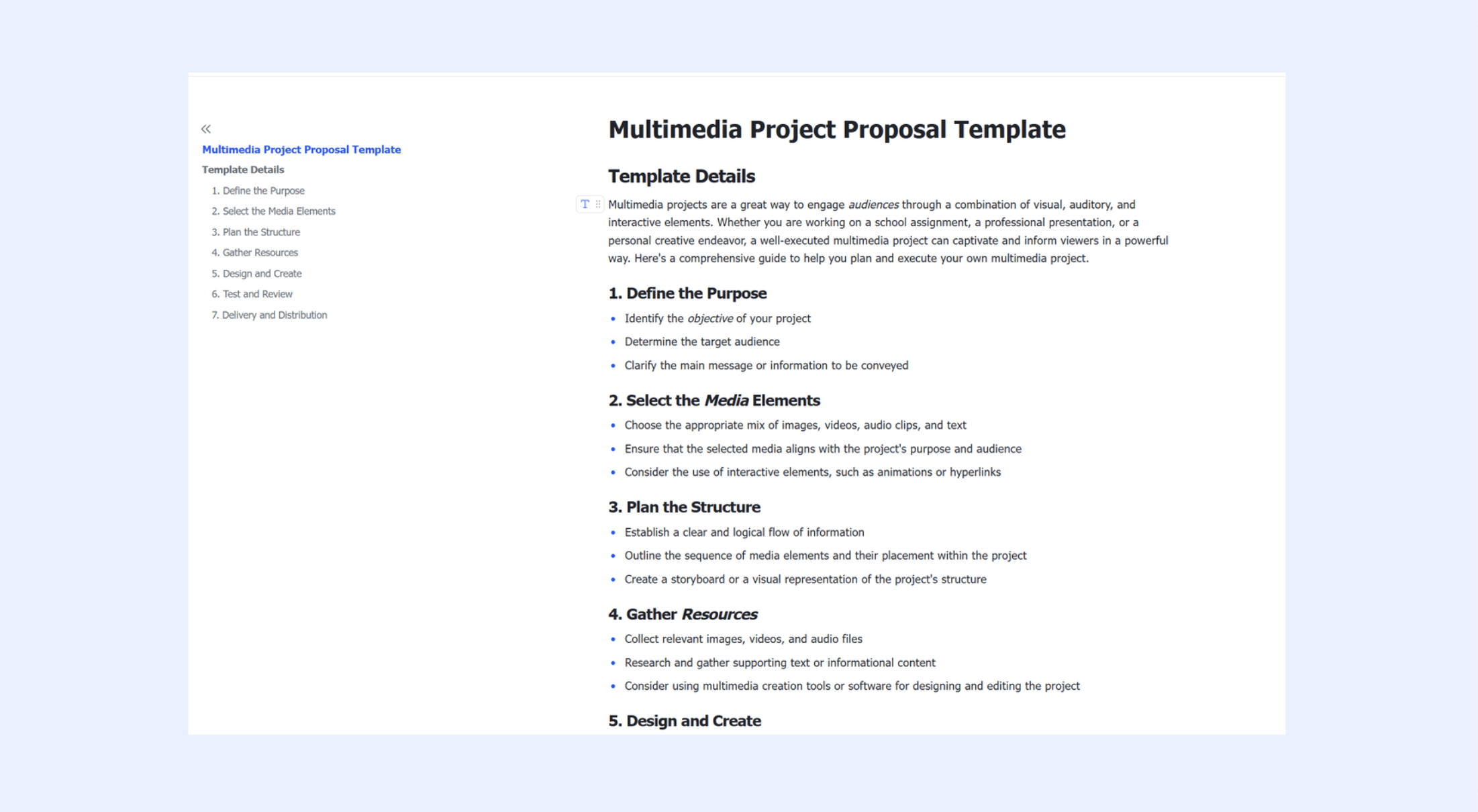
A Request for Proposal (RFP) template is a structured document used by organizations to invite vendors to submit detailed proposals for products, services, or projects. It provides a standardized format to outline project goals, scope, requirements, evaluation criteria, and submission instructions. Using a professional RFP template ensures consistency, fairness, and efficiency throughout the procurement process.
Different types of templates—such as a software RFP template, WMS RFP template, or hotel RFP template—help teams customize sections based on industry needs. Many businesses also use a simple RFP template or a free RFP template to streamline smaller purchases. For technology projects, a RFP template for software or an ecommerce RFP template can make comparisons easier across vendors.
By maintaining a clear structure, an RFP template saves time, minimizes confusion, and improves decision-making. Teams can even adapt a RFP response template in Word or digital formats for faster collaboration.
When should you use an RFP?
An RFP template is most valuable when decisions involve significant cost, complexity, or long-term impact. It brings structure to procurement, ensures transparency, and helps compare multiple vendors objectively. Whether you're evaluating new technology, selecting an agency, or upgrading infrastructure, using a clear RFP response template ensures consistent information and informed decision-making across stakeholders.
- High cost or high complexity purchases: When budgets or project risks are high, an RFP template provides a formal process for defining requirements, evaluating vendors, and ensuring accountability. It's essential for large-scale or strategic sourcing initiatives.
- Software vendor evaluations: For IT and SaaS solutions, a software RFP template or RFP template for software helps assess integrations, features, and security standards—ensuring a fair, data-driven comparison across providers.
- Facility upgrades, logistics partnerships: Use a WMS RFP template to evaluate warehouse systems, logistics vendors, or facility upgrades. Structured scoring ensures alignment between technical capabilities and operational goals.
- Digital service or agency selection: When hiring marketing, design, or technology partners, a simple RFP template clarifies objectives, deliverables, and evaluation criteria, reducing bias and improving vendor fit.
- Compliance or competitive sourcing requirements: In regulated or public sectors, a standardized free RFP template supports transparency, ensures audit readiness, and meets competitive bidding mandates efficiently.
Key components every RFP template must include
A well-structured RFP template ensures that every vendor receives the same information and that your internal team evaluates proposals consistently. Whether you're using a software RFP template, WMS RFP template, or hotel RFP template, the core components remain largely the same. Including these elements in your RFP response template or simple RFP template helps create a clear, complete, and comparable framework for decision-making.
- Project overview and objectives: Summarize the project's purpose, goals, and desired outcomes. This section sets the context for vendors and aligns their responses with your strategic needs. A clear overview strengthens communication from the start.
- Detailed requirements / technical scope: List all technical and functional needs, including integrations, performance, and compliance. In a RFP template for software, this ensures accurate responses and fewer assumptions. Precision here prevents delays and misaligned proposals.
- Vendor qualification checklist: Outline minimum eligibility criteria like certifications, experience, or references. This helps pre-screen potential vendors efficiently. A free RFP template with a built-in checklist saves evaluation time and improves accuracy.
- Pricing structure + contract terms: Define how pricing should be presented, including deliverables and payment milestones. A RFP template Word layout makes comparison across vendors easy. Standardization ensures fairness and simplifies negotiation later.
- Evaluation scoring model: Establish weighted criteria for scoring proposals, balancing cost, functionality, and compliance. Use structured scoring to ensure objectivity. This feature works especially well in digital tools like Lark Base.
- Submission instructions + timeline: Provide clear deadlines, contact details, and submission formats. This prevents confusion and any missed entries. A simple RFP template ensures every vendor follows the same process for timely reviews.
Common types of RFP templates for industries
Different industries require unique evaluation criteria, but the structure of an RFP template remains consistent across use cases. Whether you're sourcing SaaS tools, logistics partners, or training platforms, a well-defined template ensures clarity and comparability. Using industry-specific formats like a software RFP template, WMS RFP template, or LMS RFP template helps teams focus on the details that matter most. Here are common examples of how organizations tailor their RFP response templates for different sectors.
Software RFP template (SaaS, IT procurement): Ideal for evaluating technology platforms such as CRMs, ERPs, or analytics tools. This RFP template for software includes sections for integrations, uptime guarantees, data security, and customer support. It helps IT teams compare features objectively and ensure compliance with internal policies. To further accelerate this process, many organizations are now integrating AI RFP software to automate requirement matching and vendor scoring, significantly reducing manual data entry.
WMS RFP template (warehouse management systems): Used in logistics and retail to assess warehouse automation, inventory tracking, and order accuracy. A WMS RFP template standardizes data points for fair vendor comparison. It ensures that scalability, efficiency, and integration capabilities are clearly evaluated.
Ecommerce RFP (merchant and platform services): Essential for retailers and online businesses sourcing digital platforms or fulfilment partners. This e-commerce RFP template highlights payment gateways, inventory synchronisation, and omnichannel features. It enables transparent comparisons of vendor costs and service quality.
LMS RFP template (learning systems): Designed for educational institutions or HR teams selecting training software. The LMS RFP template focuses on course management, reporting, and learner engagement. It ensures each vendor meets content delivery, integration, and accessibility standards.
Hotel RFP template (facility + operations bids): Common in hospitality for sourcing event vendors, facility services, or catering contracts. A hotel RFP template includes cost breakdowns, service levels, and compliance requirements. It simplifies evaluation and ensures operational consistency across all bids.
Common types of RFP templates for industries
Different industries require unique evaluation criteria, but the structure of an RFP template remains consistent across use cases. Whether you're sourcing SaaS tools, logistics partners, or training platforms, a well-defined template ensures clarity and comparability. Using industry-specific formats like a software RFP template, WMS RFP template, or LMS RFP template helps teams focus on the details that matter most. Here are common examples of how organizations tailor their RFP response templates for different sectors.
Software RFP template (SaaS, IT procurement): Ideal for evaluating technology platforms such as CRMs, ERPs, or analytics tools. This RFP template for software includes sections for integrations, uptime guarantees, data security, and customer support. It helps IT teams compare features objectively and ensure compliance with internal policies.
WMS RFP template (warehouse management systems): Used in logistics and retail to assess warehouse automation, inventory tracking, and order accuracy. A WMS RFP template standardizes data points for fair vendor comparison. It ensures that scalability, efficiency, and integration capabilities are clearly evaluated.
Ecommerce RFP (merchant and platform services): Essential for retailers and online businesses sourcing digital platforms or fulfilment partners. This e-commerce RFP template highlights payment gateways, inventory synchronisation, and omnichannel features. It enables transparent comparisons of vendor costs and service quality.
LMS RFP template (learning systems): Designed for educational institutions or HR teams selecting training software. The LMS RFP template focuses on course management, reporting, and learner engagement. It ensures each vendor meets content delivery, integration, and accessibility standards.
Hotel RFP template (facility + operations bids): Common in hospitality for sourcing event vendors, facility services, or catering contracts. A hotel RFP template includes cost breakdowns, service levels, and compliance requirements. It simplifies evaluation and ensures operational consistency across all bids.
Free RFP templates to use in Lark
A strong RFP template library can speed up procurement cycles and ensure every evaluation follows consistent, auditable standards. Lark offers a suite of ready-to-use templates that go beyond static documents—each can be customized, shared, and collaboratively edited in real time:
Vendor compliance evaluation for tech projects
Ideal for assessing IT vendors' legal, security, and operational compliance. This RFP template tracks certifications, regulatory adherence, and performance benchmarks. It ensures technology partners meet enterprise-level governance standards.
Supplier evaluation form
A structured format to assess supplier reliability, cost efficiency, and service quality. This supplier RFP template captures both quantitative scores and qualitative feedback. It helps procurement teams make data-backed supplier selections.
IT security vendor assessment
Perfect for cybersecurity and infrastructure evaluations. This IT vendor RFP template standardizes checks for encryption standards, data protection policies, and access management. It ensures all vendors comply with internal IT security frameworks.
Third-party vendor compliance assessment
Used to verify regulatory and risk management standards across third-party vendors. The third-party RFP template includes fields for audit reports, certifications, and contractual clauses. It provides transparency for risk mitigation and compliance reviews.
Third-party service provider evaluation
Designed for businesses outsourcing specialized services. This RFP response template helps evaluate providers on performance, SLA adherence, and service scalability. It ensures measurable accountability for outsourced operations.
Local supplier assessment for procurement specialists
Focused on regional sourcing and community-based procurement. This local supplier RFP template captures delivery timelines, pricing structures, and sustainability criteria. It helps organizations promote local partnerships efficiently.
Decision matrix
A structured scoring model for comparing multiple vendor proposals. This RFP evaluation template organizes weighted criteria like cost, quality, and compliance. It supports transparent, data-driven vendor decisions.
Capability matrix
Helps assess vendor capacity and expertise across technical and operational domains. The capability matrix template visually compares supplier strengths and gaps. It's ideal for large, multi-phase project sourcing.
Customer service management & tracking base
Built for ongoing performance tracking post-selection. This service management template monitors support responsiveness, ticket resolution, and SLA performance. It ensures vendor accountability even after the contract is awarded.
Procurement management
Centralizes all sourcing activities—RFIs, RFPs, and vendor records—into one view. This procurement management template streamlines tracking, approvals, and audit readiness. It creates a transparent, repeatable purchasing workflow.
Purchase order management
Designed for finance and procurement teams handling high-volume transactions. This purchase order template automates order tracking, vendor confirmations, and payment milestones. It ensures timely delivery and accurate financial reconciliation.
Action time: Use Lark to arrange requests & needs with ease
Traditional RFP templates often collapse under the weight of version chaos, fragmented communication, and disjointed evaluations. Lark solves this by functioning as an all-in-one platform. Instead of juggling multiple tools for document editing, scoring, and communication, teams manage document workflow from a single workspace. Each function—from Docs to Base, Messenger, Tasks, and AI Meeting Notes—addresses a critical failure point in the RFP process, ensuring accuracy, accountability, and speed at every step.
Lark Docs: The single source of truth for fast-changing RFP requirements
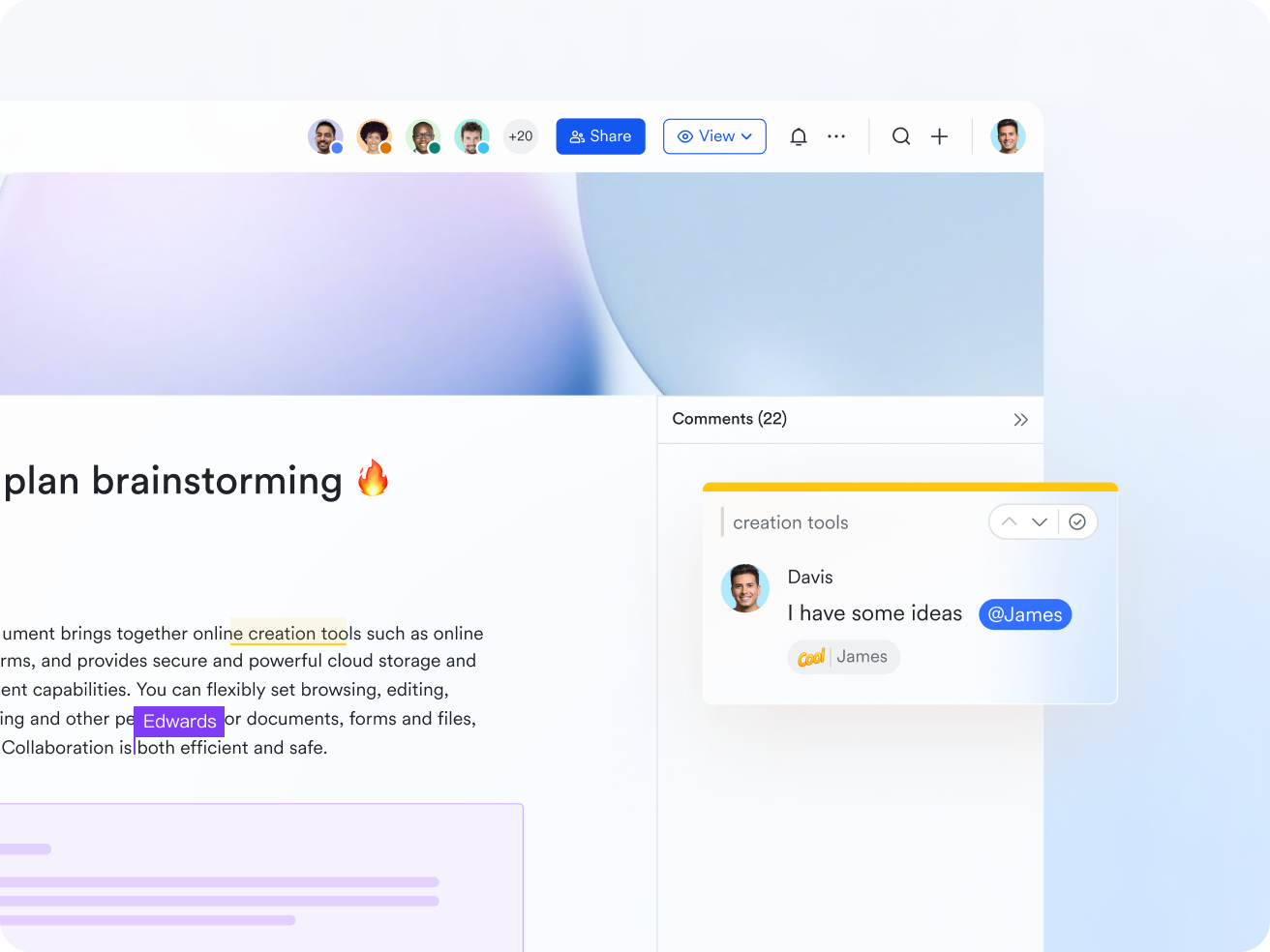
Procurement teams often face chaos when RFP templates are passed around in multiple versions. With Lark Docs, every update—whether it's to security terms, deliverables, or evaluation metrics—is reflected instantly across all users. Stakeholders can co-edit in real time, comment inline, and resolve clarifications directly within the document. This eliminates duplicate files and ensures that vendors only receive the latest, approved RFP version. Version history and access controls also add transparency and governance, reducing miscommunication and keeping the sourcing process clean and compliant.
Lark Base: Structured vendor comparison and scoring accuracy
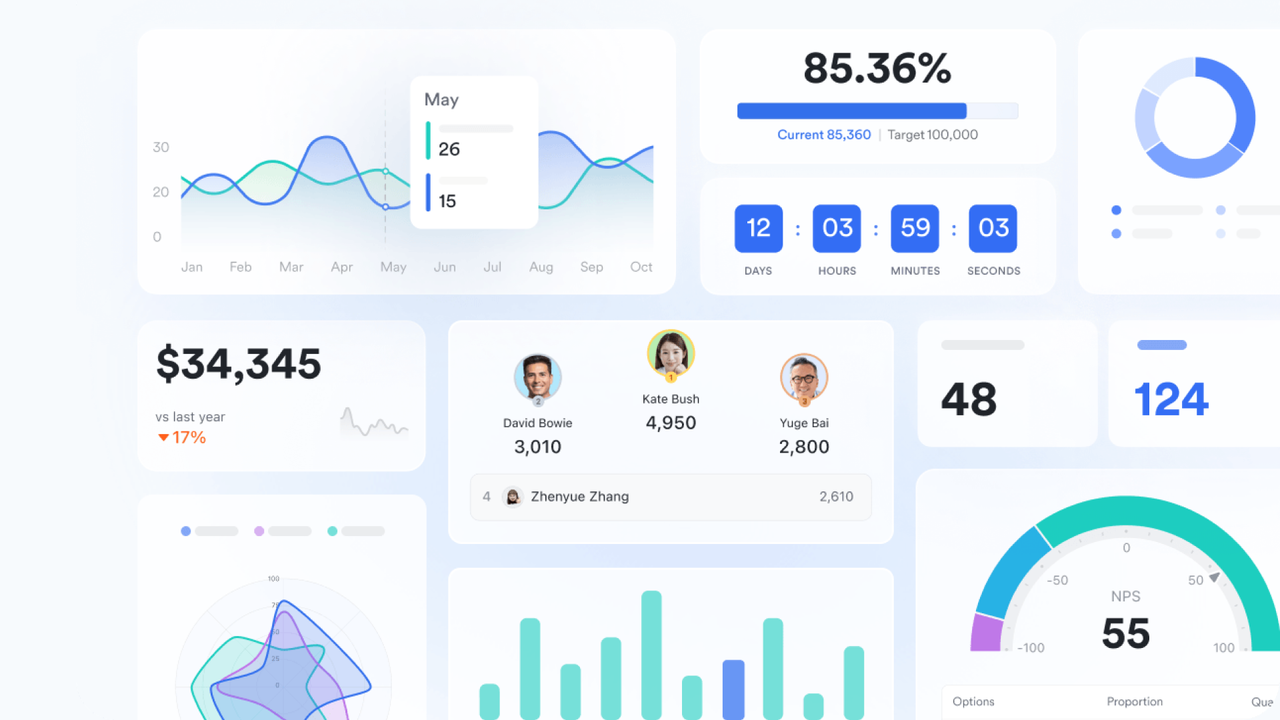
Vendor evaluation becomes complex when data lives in spreadsheets or emails. Lark Base turns the RFP response process into a structured database, capturing submissions in standardized fields—such as pricing, compliance, service levels, and feature availability. Evaluators can score vendors within Base itself, view comparative dashboards, and generate reports that reveal alignment with key procurement goals. The system removes subjective bias and manual errors, ensuring that every vendor decision is backed by consistent data rather than impressionistic judgment. The result is a transparent, fair, and auditable selection process that saves hours of manual collation.
Lark Messenger: Fast vendor Q&A without email bottlenecks
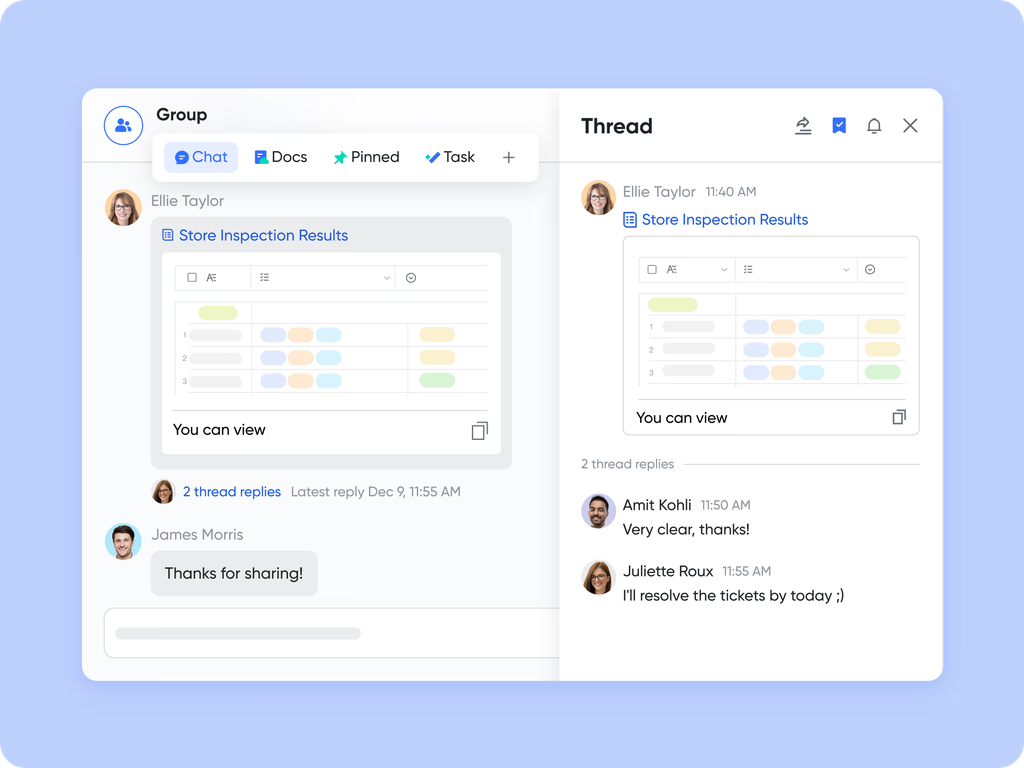
Email-based Q&A threads are notorious for creating confusion and lost context. Lark Messenger replaces that with organized communication channels for every RFP template project. Procurement teams, legal advisors, and subject matter experts can jump into vendor discussions instantly, discuss details in a , tag relevant participants, and respond to clarifications in real time. All exchanges remain searchable and linked to the relevant RFP record, creating a living repository of Q&A history. This ensures no vendor question is overlooked, accelerates response cycles, and builds a transparent dialogue that keeps projects moving toward timely completion.
Lark Tasks: Accountability that keeps evaluation on schedule
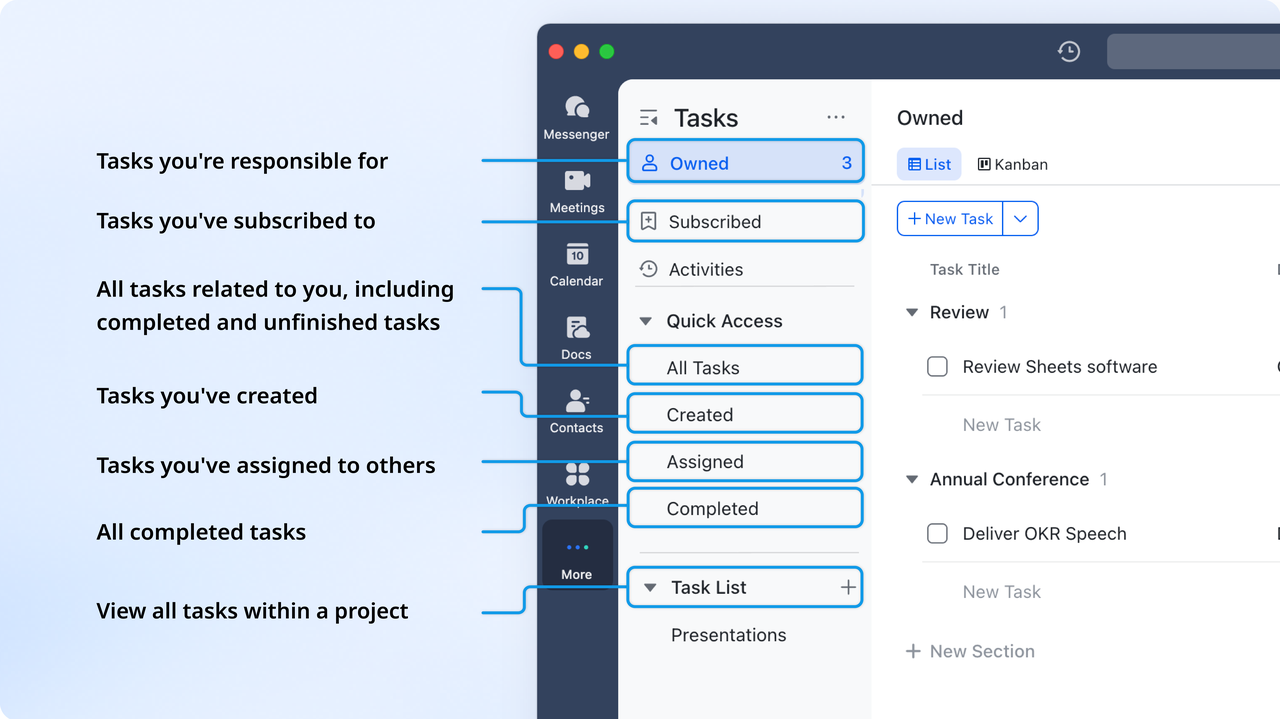
Missed deadlines and unclear ownership often delay procurement outcomes. Lark Tasks introduces structured accountability within the RFP evaluation process, assigning each stakeholder specific deliverables—like scoring sections, reviewing references, or validating compliance. Auto-reminders keep evaluations on track, while List, Kanban, and Gantt views give managers real-time visibility into bottlenecks. This coordinated workflow minimizes manual follow-ups and ensures that every reviewer stays aligned with project timelines.
AI Meeting Notes: Clear decision history that passes every audit
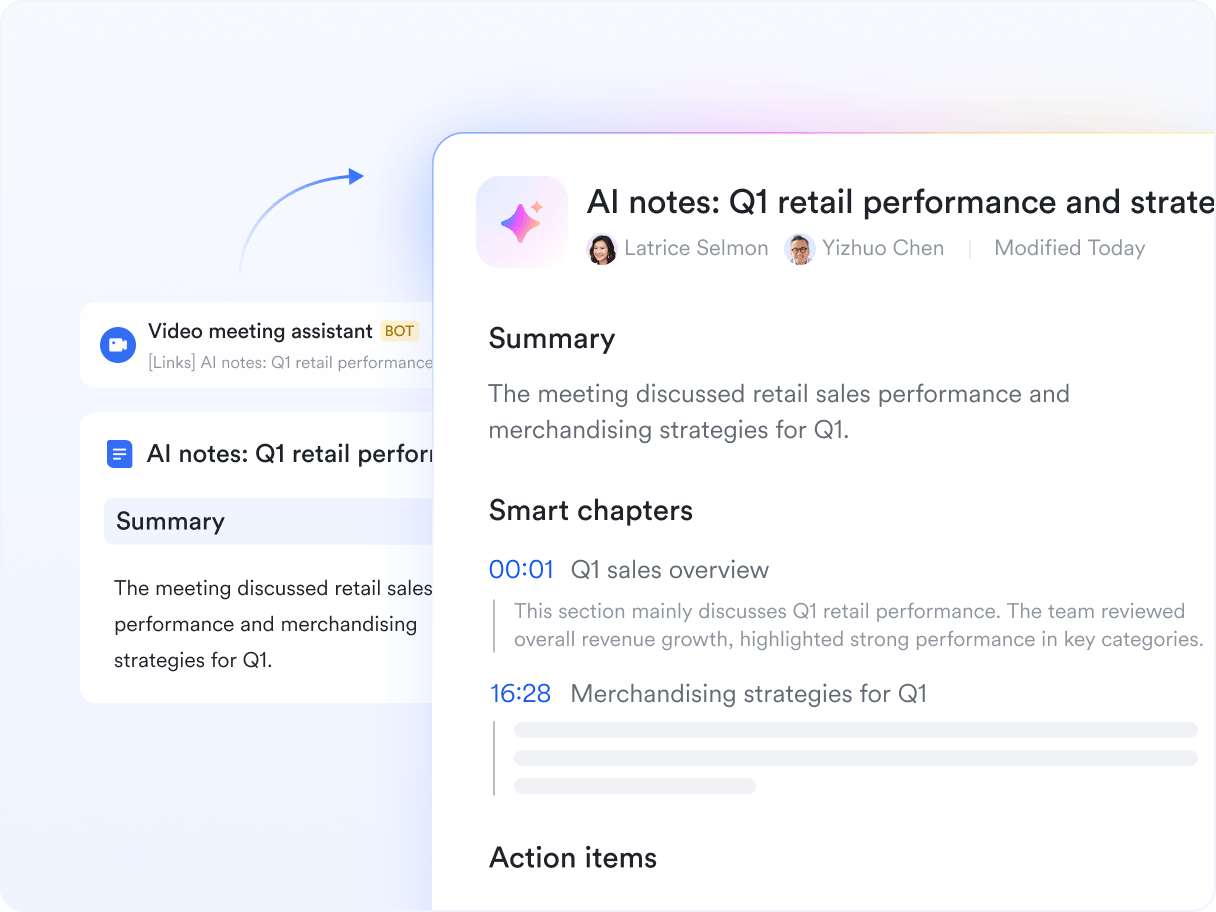
Procurement decisions involve multiple discussions, often lost in chat logs or calls. Lark's AI Meeting Notes automatically capture the essence of every RFP evaluation meeting, recording vendor pros, cons, and justification behind selections. These summaries are stored alongside vendor records, creating a complete audit trail required by compliance-driven industries such as government, finance, and healthcare. Instead of relying on memory or scattered notes, teams can retrieve past rationale instantly during audits or reviews. This structured knowledge base not only enhances transparency but also ensures future sourcing cycles benefit from institutional learning.
- Starter plan: Free forever plan that includes 11 powerful tools for up to 20 users. It also comes with 100GB of storage, 1000 automation runs, AI translations, and more.
- Pro plan: $12/user/month (billed annually) for up to 500 users. It includes everything in Starter plus group calling for up to 500 attendees, 15TB of storage, 50,000 automation runs, and more.
- Enterprise plan: Contact sales for custom pricing. Supports unlimited users and includes even more automation runs and advanced security, compliance, and management features.
Bonus tips: Where may RFPs go wrong (and how to avoid them)
Even the most detailed RFP template can fail if the process behind it isn't well managed. Common pitfalls arise from outdated documents, missed communication, and inconsistent evaluations. Whether you're using a software RFP template, a simple RFP template, or a free RFP template, version control and collaboration are often the weakest links. Understanding where things typically go wrong helps teams prevent inefficiencies and keep procurement on schedule.
- Requirements change, but docs don't update → version chaos: When project scopes evolve but your RFP template Word file doesn't, teams end up working on outdated information. This leads to confusion and mismatched vendor responses. Using centralized tools ensures everyone sees the latest version instantly.
- Vendor questions lost in email → delayed procurement: Email chains scatter vital clarifications, slowing progress and increasing risk. A structured RFP response template with a shared Q&A section keeps communication transparent. Real-time collaboration prevents missed deadlines and procurement delays.
- Scoring isn't aligned across stakeholders → slow approvals: Different evaluators may use inconsistent scoring methods, creating bias and delay. Embedding an evaluation model in your RFP template or digital database standardizes scoring. This ensures transparency and faster approvals.
- Poor collaboration → unclear outcomes: When departments work in silos, decisions become fragmented. Even a free RFP template can't help if discussions happen offline. Using connected tools like Lark fosters real-time updates, shared feedback, and clear accountability.
RFP evaluation best practices
Even the most detailed RFP template is only as effective as the evaluation process that follows it. Consistent, transparent, and data-driven assessments ensure vendors are chosen based on measurable value rather than persuasive sales pitches. A structured RFP evaluation process aligns all stakeholders, reduces bias, and strengthens procurement integrity. The following best practices help teams move from subjective impressions to objective, defensible vendor decisions.
- Score against business value, not vendor hype: Focus on how each proposal supports strategic goals, not just flashy features. Align your RFP scoring model with measurable business outcomes like ROI, scalability, or compliance. This ensures decisions are driven by tangible impact rather than marketing language.
- Require evidence for every claim: Every promise in a vendor response should be backed by documentation or real-world proof. Request demos, case studies, or references through your RFP response template to validate capabilities. This prevents overcommitment and ensures accountability post-contract.
- Keep feedback transparent: Encourage evaluators to document reasoning behind every score in a shared system. Transparent scoring in a collaborative RFP platform like Lark builds trust and traceability. It ensures stakeholders can review and understand how final decisions were made.
- Update templates after each project: Continuous improvement is key to efficient sourcing. After every procurement cycle, review what worked and where delays occurred in your RFP template. Incorporate lessons learned so your next RFP process runs faster, cleaner, and more effectively.
Conclusion
An effective RFP template does more than standardize procurement—it builds clarity, accountability, and fairness into every decision. From defining project scope to evaluating vendors, structured templates and transparent scoring create consistency and confidence. Yet, true efficiency comes when RFPs evolve from static files into collaborative, data-driven workflows.
With Lark, teams can co-edit documents in real time, compare vendors in structured dashboards, and automate evaluations seamlessly. Whether you're managing IT sourcing, logistics, or agency selection, Lark transforms RFP management into a connected, intelligent process — helping organizations move from paperwork to performance with clarity and speed.
FAQs
What is the difference between RFQ and RFP?
Lark helps simplify both RFQ and RFP workflows. An RFQ (Request for Quotation) focuses on price and quantity—used when requirements are clear. An RFP (Request for Proposal), however, seeks detailed solutions, methodologies, and value propositions from vendors. It's best for complex projects needing evaluation beyond cost.
Who creates an RFP? Procurement or business teams?
Both play key roles. Business teams define needs, objectives, and technical requirements, while procurement manages structure, compliance, and vendor outreach. Collaboration ensures that the RFP template reflects both operational goals and sourcing best practices.
How long should an RFP process take?
Typically, an RFP process runs from 4 to 12 weeks depending on project complexity, industry, and number of vendors. Using digital tools and RFP response templates helps streamline communication, automate scoring, and shorten review timelines significantly.
Do small businesses need RFPs?
Yes—especially when outsourcing critical services or software purchases. A simple RFP template helps small businesses compare vendors fairly, ensure transparency, and avoid costly mismatches. Even light-weight RFPs create clarity and protect investment decisions.
Can AI help write and evaluate RFPs?
Absolutely. AI tools can auto-generate RFP templates, suggest requirements, summarize vendor responses, and even score proposals based on pre-set criteria. This reduces manual effort, eliminates bias, and accelerates decision-making while maintaining accuracy and compliance.
Related reading
Table of contents
Start using Lark today

Manage all your work in one place
Boost team efficiency by 10x
Save up to 70% on software costs
Table of contents
Start using Lark today
Manage all your work in one place
Boost team efficiency by 10x
Save up to 70% on software costs



2026 Lark Technologies Pte. Ltd.
Headquartered in Singapore with offices worldwide.






Explore: