Understanding CRM pricing can be tricky—especially when plans vary by features, hosting options, and user minimums. SugarCRM stands out for its flexibility and powerful customization, but these strengths often come with added complexity and higher costs over time. Pricing can differ based on whether it's cloud-based or on-premise, and additional modules for marketing or service can quickly raise the total.
This guide breaks down SugarCRM pricing per user, compares key plans and hidden fees, and explores how provides a modern, unified alternative—combining CRM, communication, and workflow automation in one easy-to-manage platform.
Rethink what your CRM can do
SugarCRM pricing overview
Understanding SugarCRM pricing starts with its modular approach—each plan caters to different team sizes and complexity levels. The platform's costs vary depending on features, hosting options, and the number of users. Rather than just a single plan, SugarCRM offers four product families for you to choose from, namely Sugar Sell, Sugar Market, Sugar Serve, and Sugar Enterprise(On-Premises). Here is the pricing overview:
Sugar Sell pricing and features
Introduction:
Sugar Sell is SugarCRM's sales automation platform. It helps sales teams manage leads, contacts, accounts, opportunities, and pipelines, with analytics, forecasting, and workflow guidance to improve sales efficiency.

Image source: sugarcrm.com
Features:
Sugar Sell offers a comprehensive CRM suite that encompasses lead and contact management, sales forecasting, and pipeline tracking. Higher plans offer AI-based insights, email and calendar sync, and SugarBPM™ for workflow automation—ideal for streamlining quote approvals, follow-ups, and lead assignments. The system's built-in forecasting and territory management tools support complex sales operations, while its mobile app allows sales teams to work on the go.
Pricing:
- Standard: Accounts & contact management; lead & opportunity management; quote management; activity management; pipeline management; business process management; reporting & analytics; mobility; basic support.
- Advanced: Everything in Standard, plus mail & calendar integration; case management; bug tracking; intelligent lead prioritization; revenue intelligence; generative AI; sentiment analysis; chat & chatbot.
- Premier: Everything in Advanced, plus geo‑mapping; enhanced forecasting; 2× file managed storage; 2× data managed storage; enhanced support; news feeds; smart guides; LinkedIn connector.
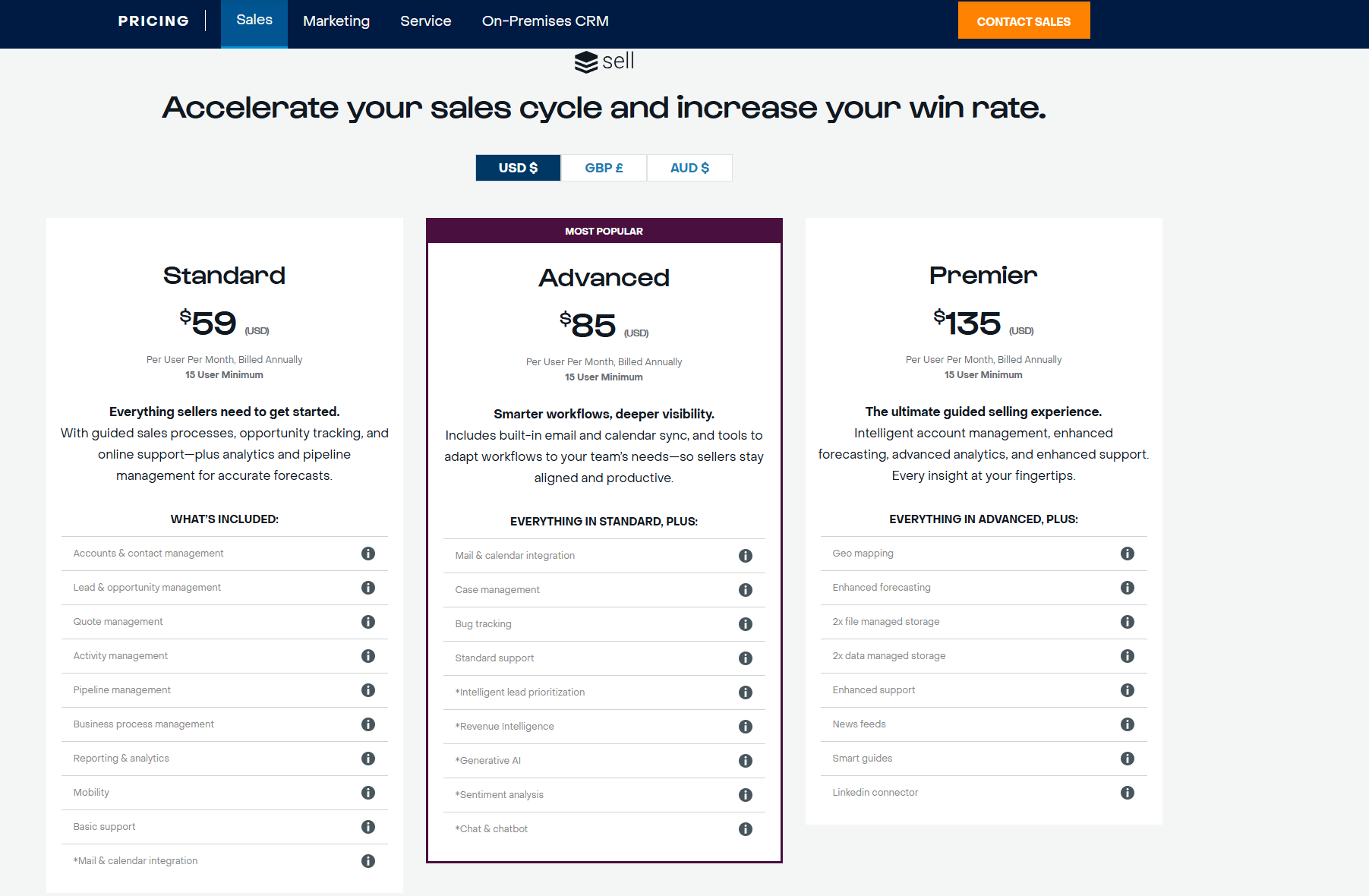
Image source: sugarcrm.com
Best for: Mid-to-large organizations with dedicated sales teams managing multiple pipelines and a need for automation.
Drawbacks: Smaller teams may find setup heavy, as customization and integration often require technical support.
Sugar Market pricing and features
Introduction:
Sugar Market is SugarCRM's marketing automation solution. It enables marketing teams to run campaigns, nurture leads, track engagement, and integrate marketing insights directly into the CRM to support sales conversions.
Features:
Sugar Market provides tools for campaign management, lead nurturing, landing page creation, email automation, and event tracking. The platform also integrates directly with Sugar Sell, aligning marketing efforts with sales data. Its analytics engine helps measure lead-to-revenue performance and ROI, giving marketers a clear picture of what drives conversions.
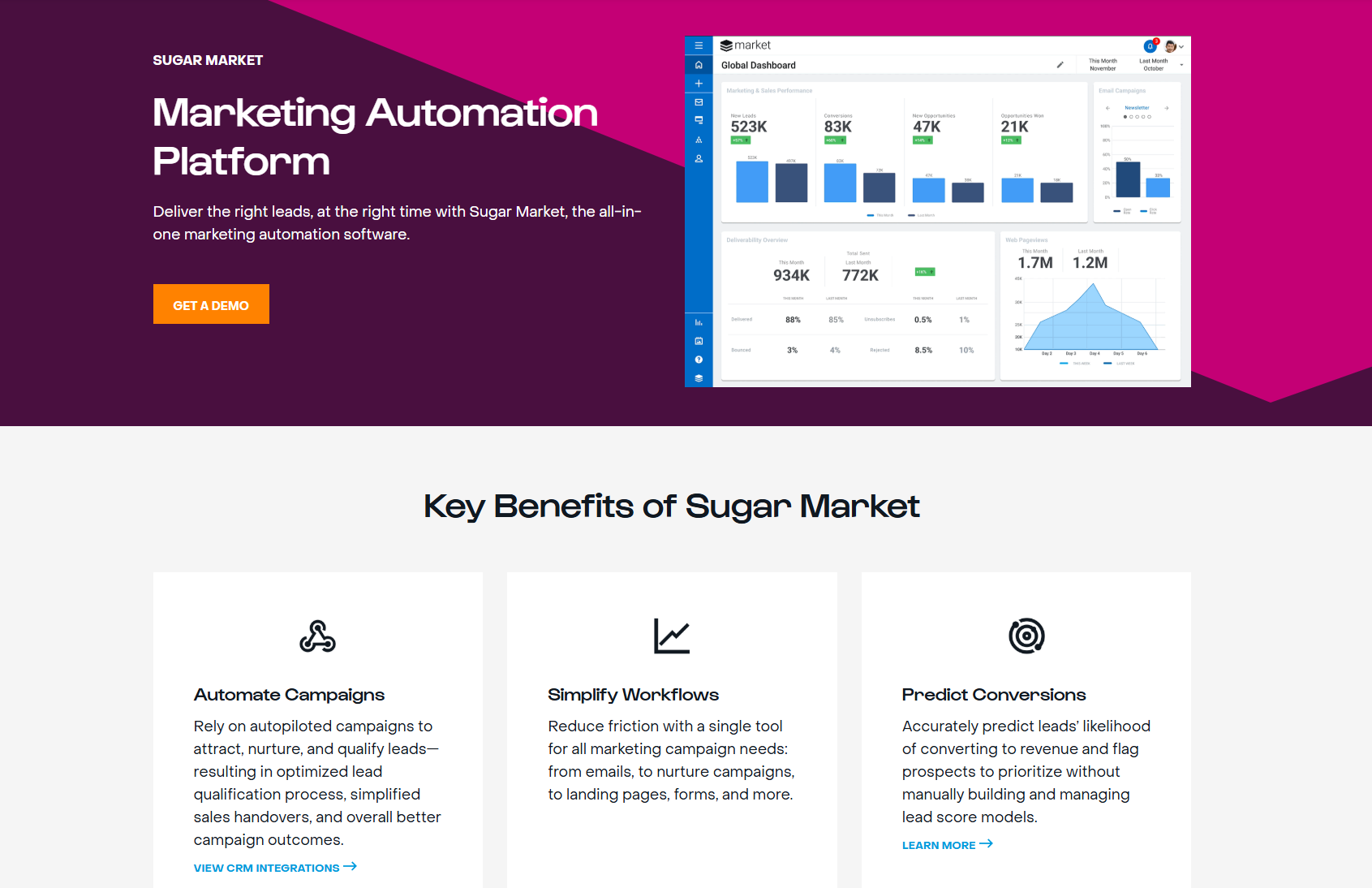
Image source: sugarcrm.com
Pricing:
- Market: Starting around US $1,000/month (for 10,000 contacts) for marketing automation. Features include landing pages & lead forms, nurture campaigns, webinars & events, dynamic email content, journey tracking, and analytics.
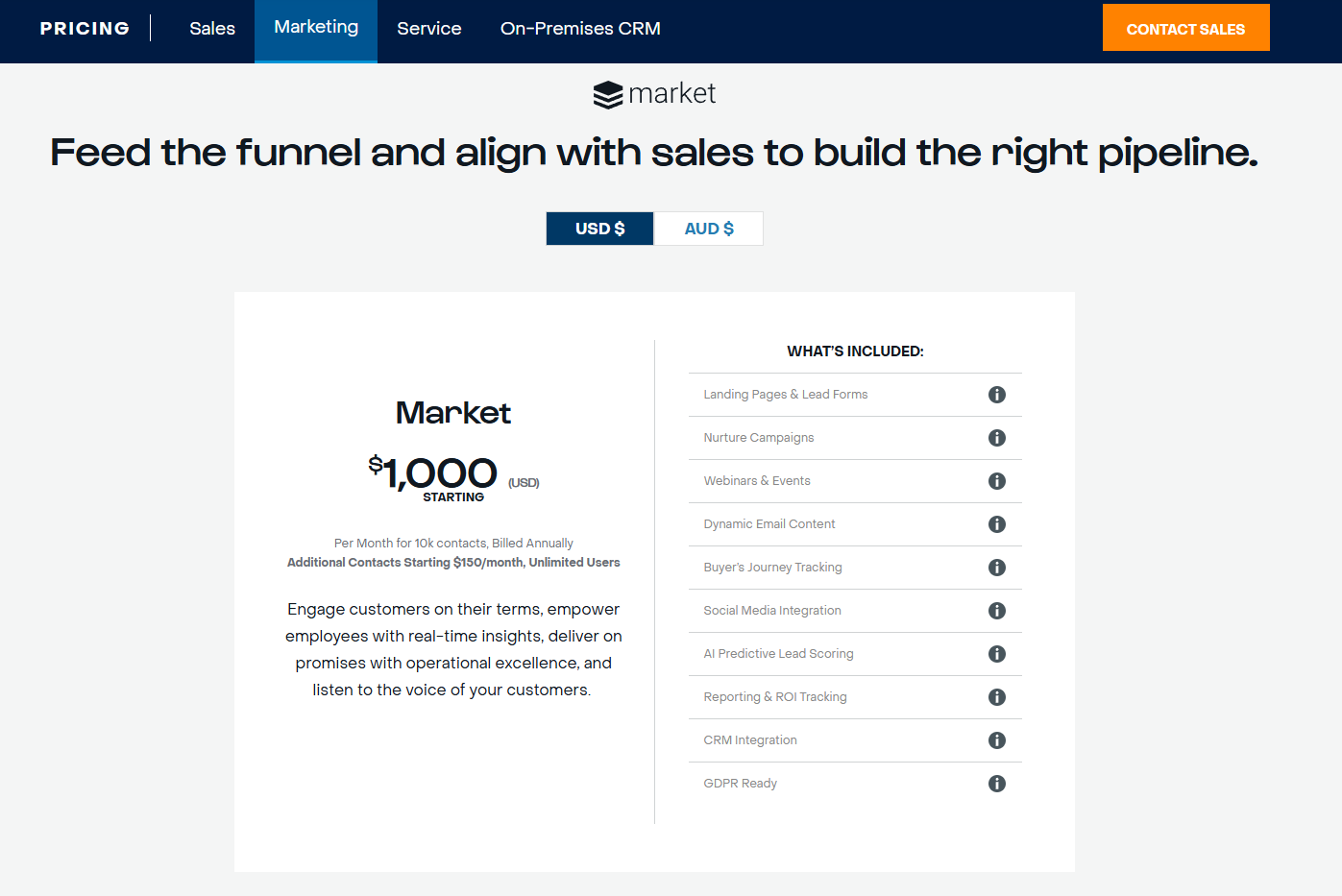
Image source: sugarcrm.com
Best for: Marketing teams running multi-channel campaigns who need deep integration with their CRM data.
Drawbacks: The pricing structure can be prohibitive for smaller organizations, and the setup process often requires technical expertise to align with other Sugar modules.
Sugar Serve pricing and features
Introduction:
Sugar Serve is SugarCRM's customer service automation platform. It supports case management, omnichannel support, SLA tracking, and self-service portals, enabling service teams to deliver faster and more consistent customer support.
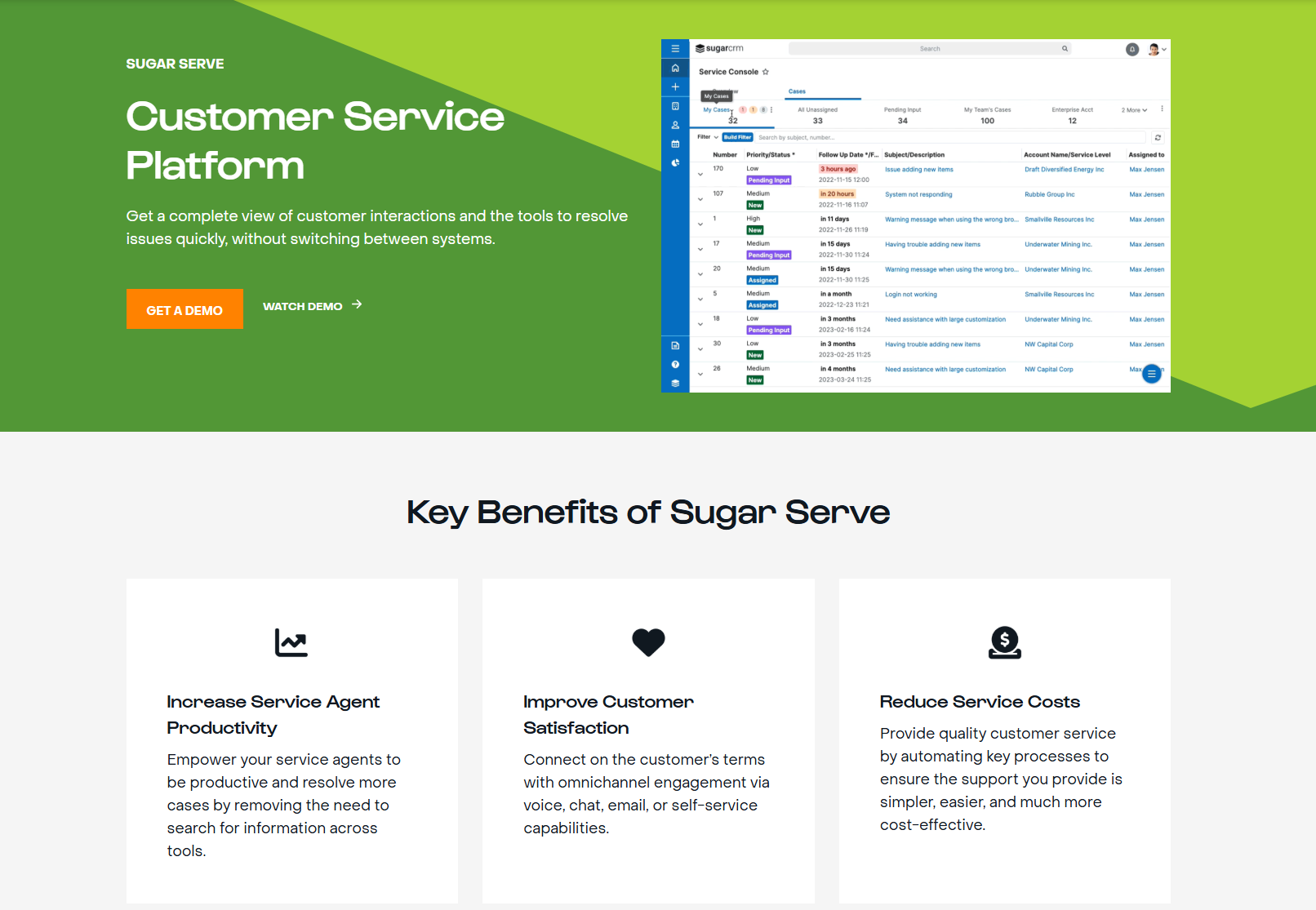
Image source: sugarcrm.com
Features:
Serve focuses on case management and SLA-driven workflows, offering ticket tracking, customer self-service portals, and omnichannel communication. Teams can route cases automatically based on priority or product type, ensuring customers receive timely resolutions. It also provides dashboards to monitor ticket volume, response times, and agent performance — crucial for maintaining service-level agreements and customer satisfaction.
Pricing:
- Serve: Starting around US $80/user/month (billed annually). Features include case management, omnichannel engagement, service‑agent workspace, SLA management, dashboards, and support workflows.
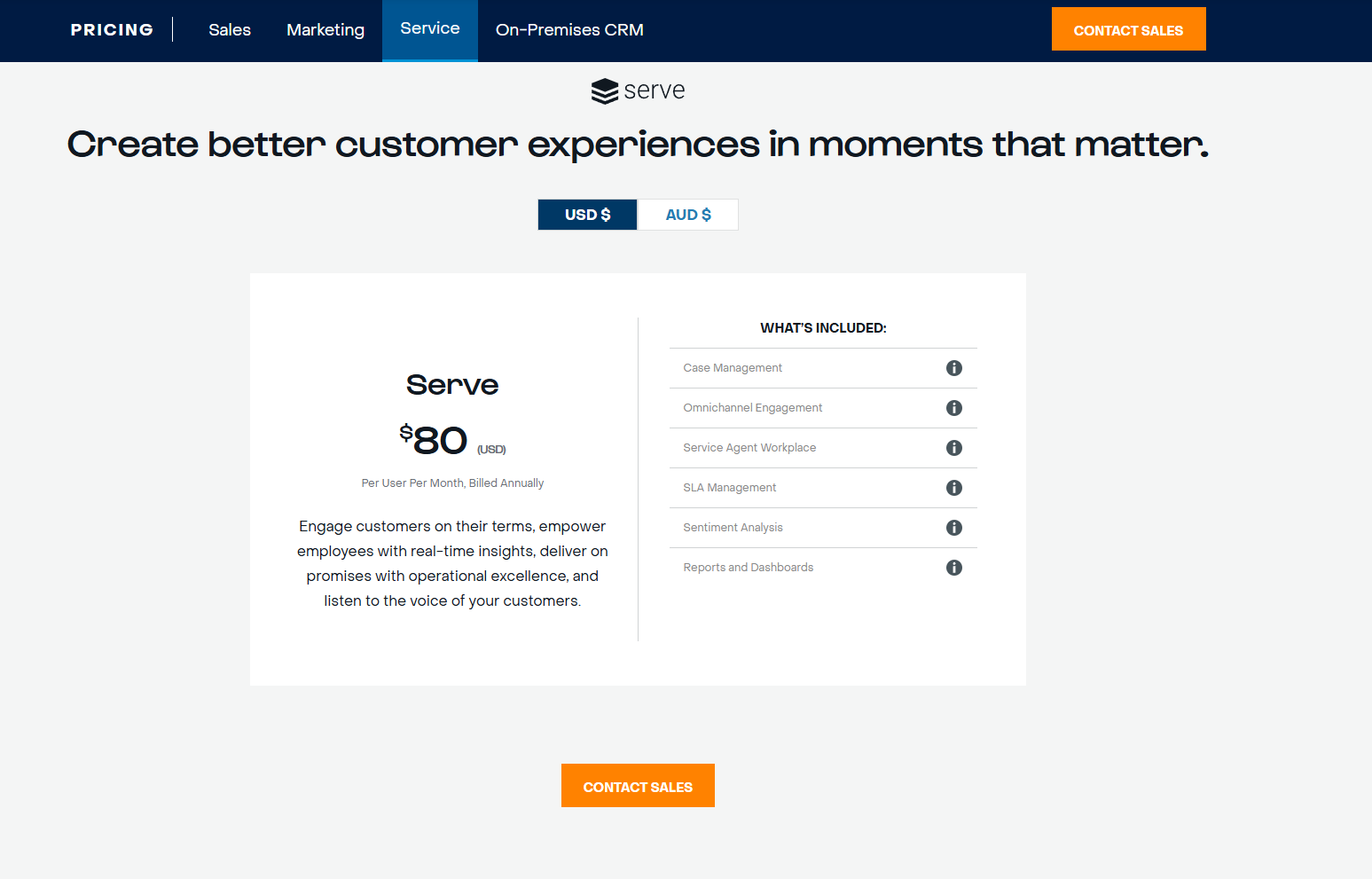
Image source: sugarcrm.com
Best for: Organizations that prioritize customer service operations or handle high ticket volumes across email, chat, or social platforms.
Drawbacks: While Serve is powerful for structured service workflows, adding marketing or sales functions requires subscribing to additional Sugar modules, which increases the total cost.
Sugar Enterprise/On-Premise pricing and features
Introduction:
Sugar Enterprise (or On‑Premises) is SugarCRM's self-hosted deployment option. Organizations can install SugarCRM on their own servers, giving full control over customizations, security, and infrastructure, while accessing the full CRM feature set.
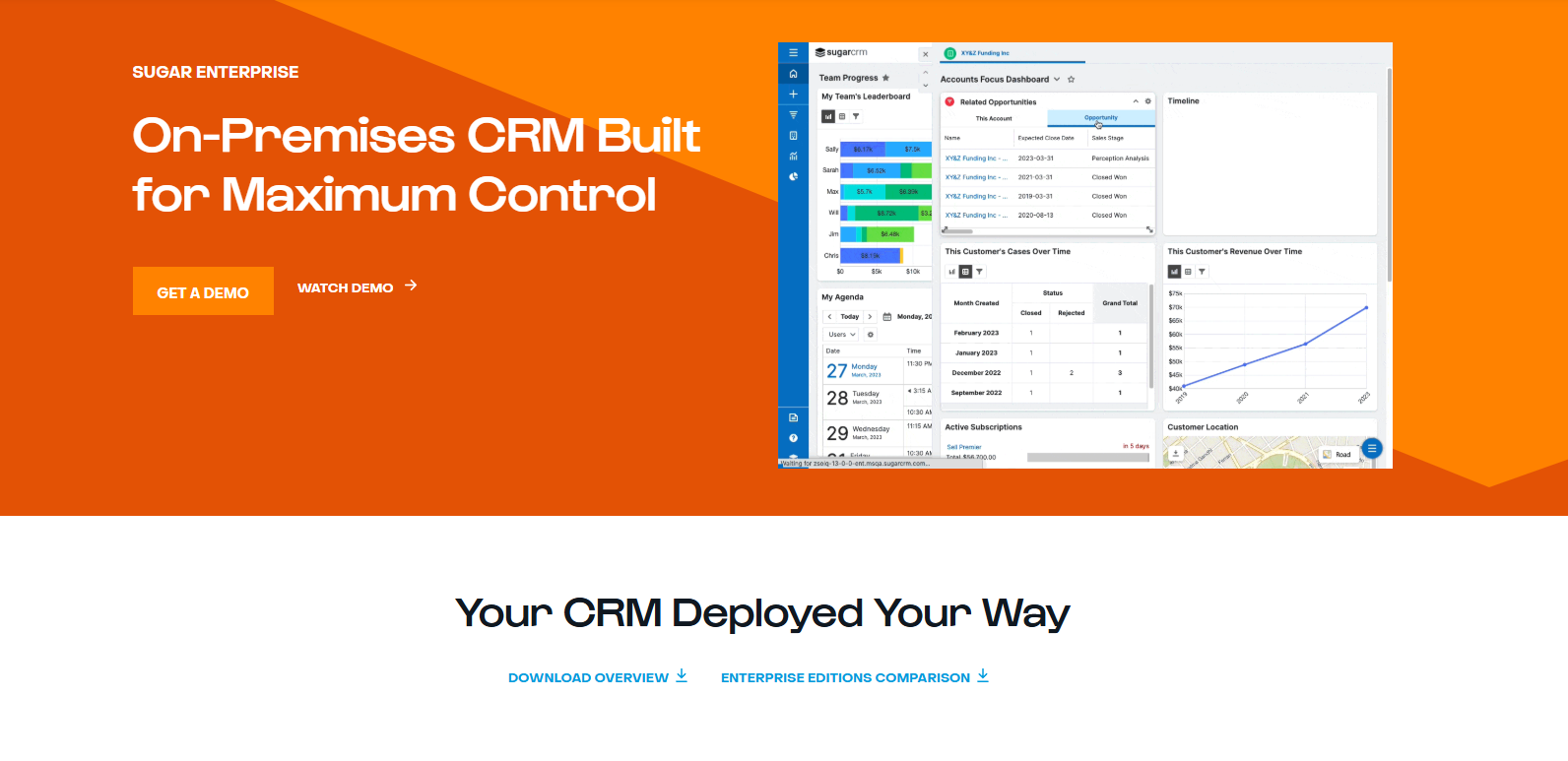
Image source: sugarcrm.com
Features:
On-premise deployment offers complete data ownership, advanced customization, and flexibility to integrate with internal systems. It's particularly suited for regulated industries such as finance or healthcare, where compliance and data sovereignty are critical.
Organizations can configure every aspect—from modules and fields to reporting dashboards—while maintaining their own servers.
Pricing:
- Enterprise: Starting around US $85/user/month (billed annually). Provides full CRM capabilities hosted on your own infrastructure, unlimited API access, deep customization, and sales & service automation.
- Enterprise+: Starting around US $120/user/month (billed annually). Includes all Enterprise features plus enhanced capabilities for large-scale deployments, premium support, and advanced customization options.
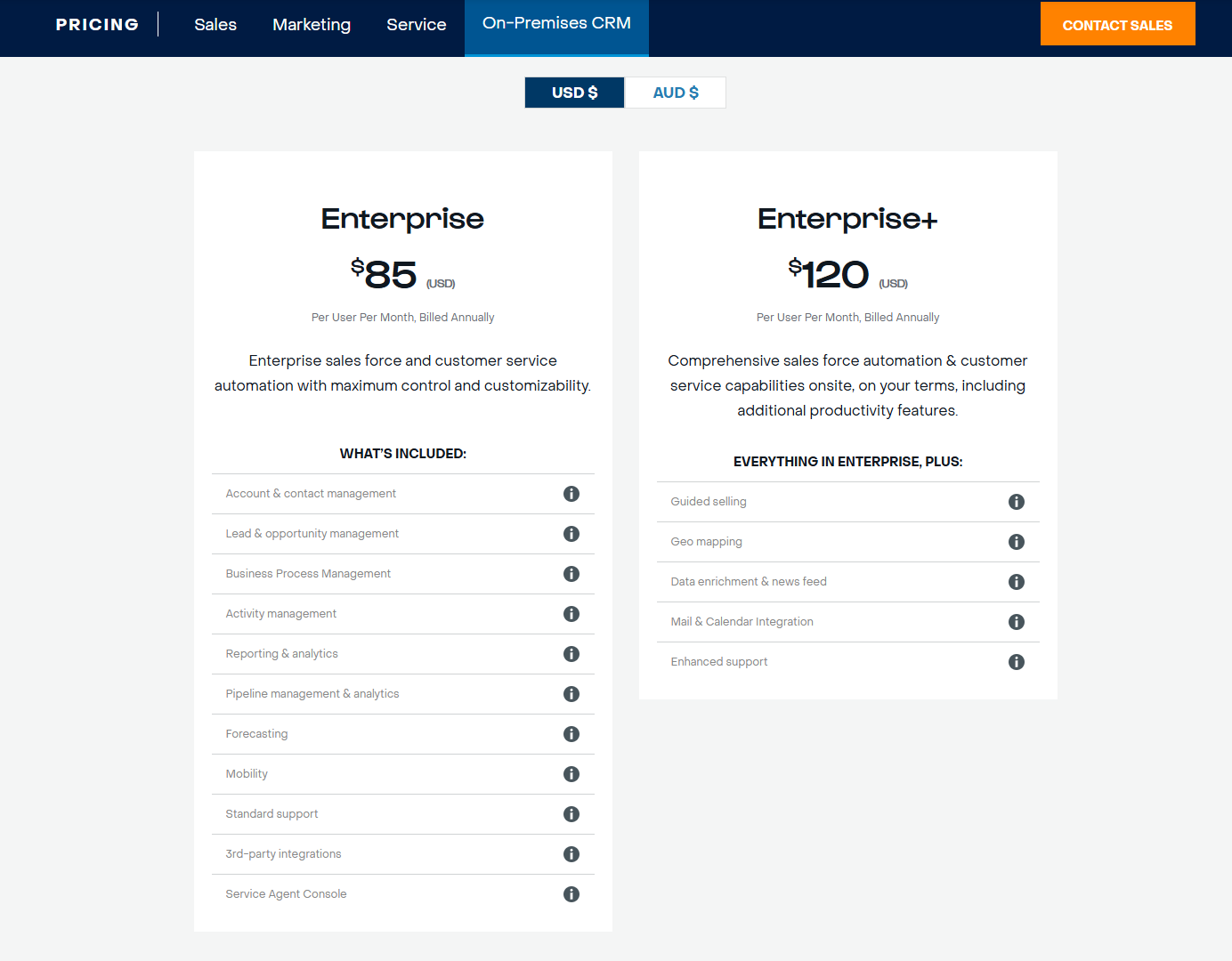
Image source: sugarcrm.com
Best for: Enterprises with in-house IT resources that need to host CRM data securely or meet compliance standards.
Drawbacks: High infrastructure and maintenance costs, as well as slower update cycles compared to cloud versions. Businesses are responsible for backups, patches, and system upkeep, which may demand specialized technical staff.
SugarCRM's hidden costs and limitations
While SugarCRM markets itself as a flexible, enterprise-grade CRM, several indirect costs often arise during adoption and scaling:
- Implementation and setup costs: Customizing modules, building workflows, and integrating with ERP or marketing tools frequently require paid consulting hours.
- Training and onboarding: The system's depth means longer ramp-up times. Many teams rely on external training programs or vendor-led onboarding, adding to total costs.
- Add-ons and premium modules: Advanced analytics, AI insights, or mobile optimization may not be included in lower-tier plans.
- User minimums and billing: Some tiers enforce 10-user minimums or annual contracts, which can make scaling down difficult for smaller teams.
- Maintenance and hosting (for on-premise): Infrastructure, updates, and backups fall under the company's responsibility—an ongoing cost in time and manpower.
- Complex integrations: Unlike modern connected platforms, SugarCRM often relies on API-based or partner-built connectors, which can slow deployment.
Bottom line:
While SugarCRM delivers enterprise flexibility, it demands a long-term investment in technical setup, user training, and ongoing customization. Businesses seeking a faster, connected, and collaborative experience often explore unified workspaces like Lark, where CRM, communication, and documentation exist in one ecosystem without the overhead of multiple modules. Looking for a flexible, collaboration-first alternative to traditional CRMs? Here's how Lark compares.
Switch from complexity to clarity
Lark: A modern alternative to SugarCRM
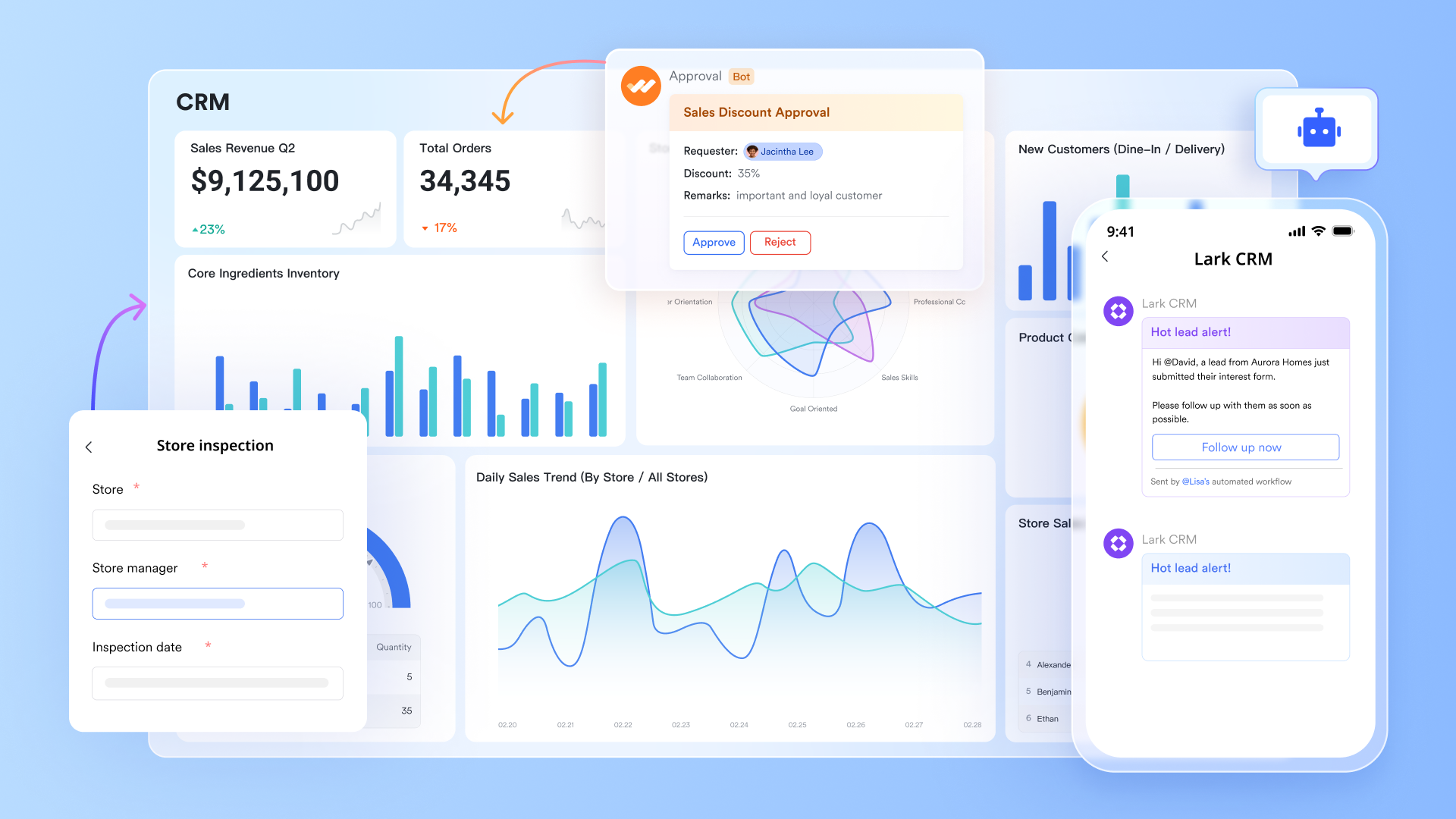
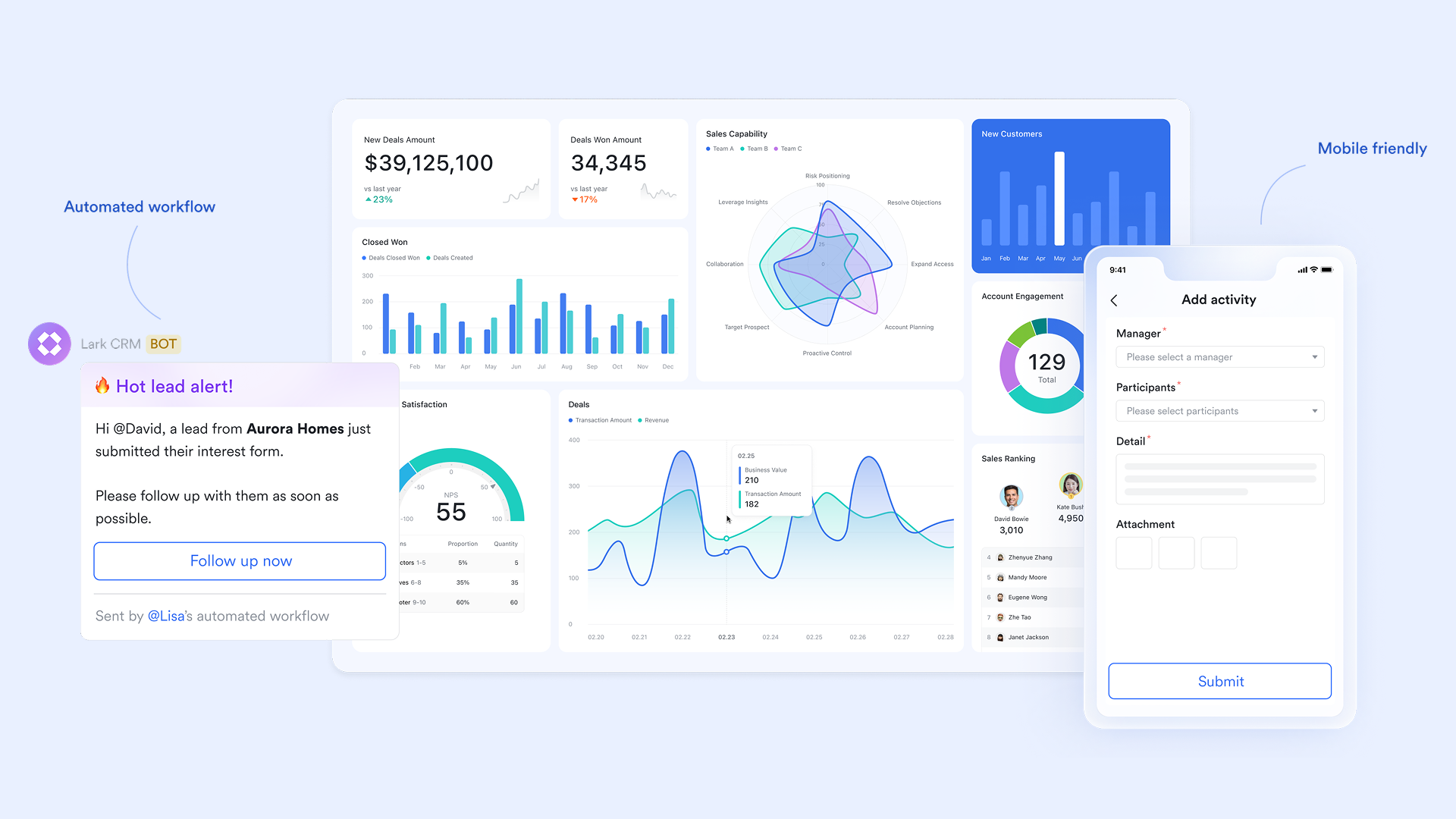
While SugarCRM focuses on modular CRM management, brings everything—, , and —into one connected workspace. It's designed for teams that want simplicity without sacrificing power. With Lark, you can easily build and customize your CRM, track customer data in real time, and collaborate directly where work happens—no extra setup required.
Lark Base: CRM and data tracking made simple
acts as the central hub for managing leads, deals, and customer data—similar to SugarCRM's "Sell" module but with a smoother, more flexible experience.
You can create customized databases for contacts, companies, and opportunities using simple drag-and-drop fields (e.g., lead stage, region, revenue, owner, probability). Automations can instantly trigger actions such as sending reminders, updating deal stages, or notifying team members when certain criteria are met. Example: When a lead moves from "Qualified" to "Negotiation," Lark Base automatically notifies the assigned sales rep in Messenger and creates a follow-up Task due in two days.
Why it's better than SugarCRM:
- No technical setup: Lark Base requires no developer assistance or admin-heavy customization.
- Built-in automation: SugarCRM often charges extra or requires scripting for workflow automation, while Lark includes it natively.
- Unified workspace: Every record links directly to Docs, Tasks, and Messenger—eliminating the need to switch between apps.
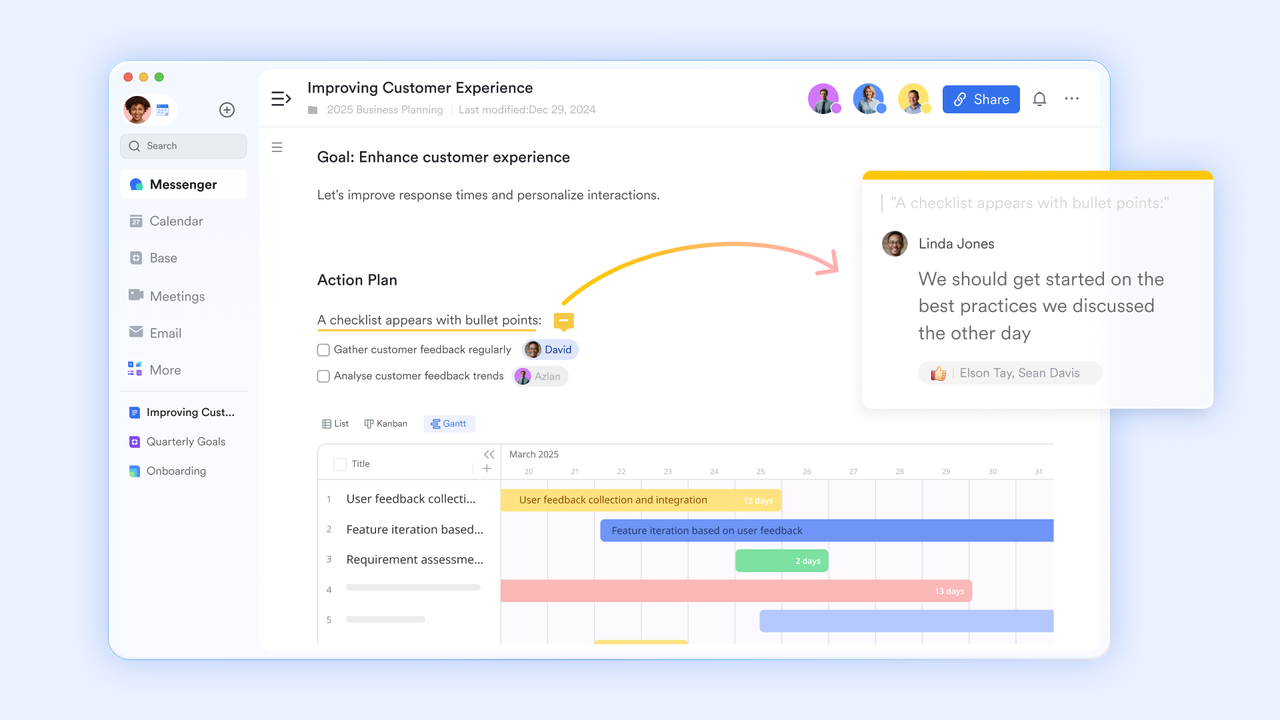
Lark Docs: Shared client proposals and communication plans
replaces disjointed document sharing with real-time collaboration. Instead of exporting data from SugarCRM into Word or PDF files, your team can co-create and edit proposals, materials, and campaign briefs in one shared workspace.
Team members can comment inline, tag colleagues, or embed live data from Base—ensuring every proposal or communication plan stays accurate and up to date.
Example: A sales manager drafts a client proposal in Docs, embedding live revenue forecasts from Base. The legal and marketing teams review and approve it collaboratively, all within Lark.
Why it's better than SugarCRM:
- Built-in document collaboration: SugarCRM relies on external tools like Google Docs or email attachments for collaboration, while Lark collaborates with its own cloud Docs and Mail.
- Real-time co-editing: Multiple users can edit simultaneously with version history.
- Contextual integration: Docs can pull data directly from Lark Base—something SugarCRM doesn't natively support.
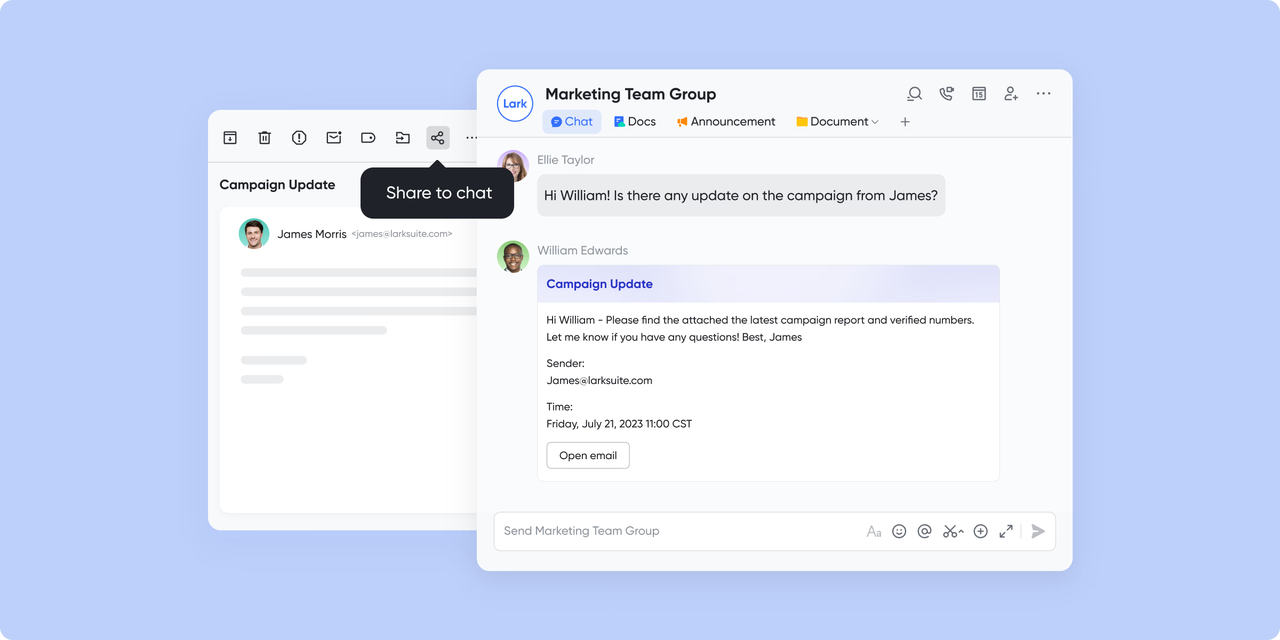
Lark Messenger: Contextual collaboration for every deal
In SugarCRM, communication typically happens outside the CRM—via emails or third-party integrations—which slows collaboration. solves this by bringing real-time chat directly into your workflow.
You can create group chats for each client, deal, or campaign and share live Base records or Docs directly in conversation threads. Every update remains linked to the data source, keeping discussions focused and traceable. Example: When a customer requests pricing adjustments, the sales rep shares the deal record from Base in a Messenger thread with finance and product teams. They finalize changes in minutes—no endless email loops.
Why it's better than SugarCRM:
- Native chat functionality: SugarCRM users depend on integrations with Slack or Outlook for communication.
- Instant updates: Notifications and file shares happen in real time.
- Data context: Conversations are tied to records, ensuring everyone discusses the same version of information.
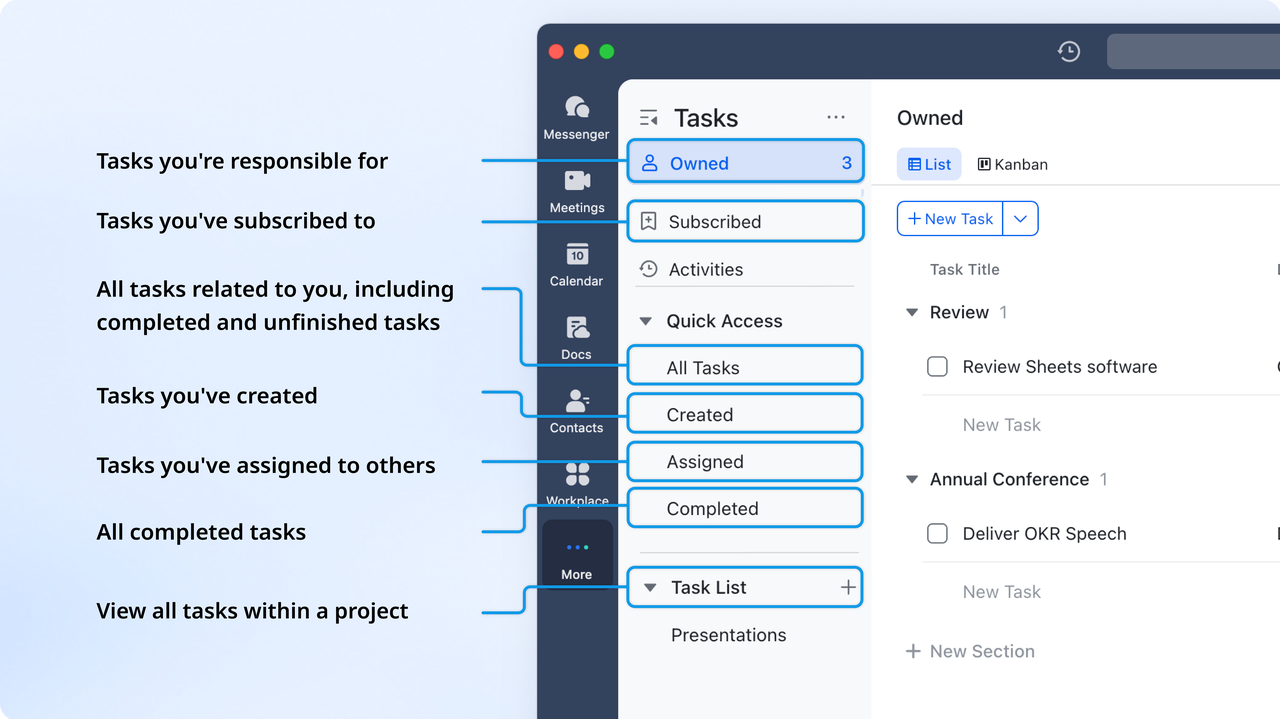
Lark Tasks: Accountability across sales and service teams
While SugarCRM provides task tracking inside its CRM modules, it often feels detached from daily team collaboration. Lark Tasks combines visibility, accountability, and automation to ensure follow-ups never fall through the cracks. Each Task can link to a client record, proposal, or campaign, showing clear ownership, , and progress. Managers can view overall task loads, assign responsibilities, and set reminders—all within one system.
Example: When a deal moves to "Proposal Sent" in Base, an automatic Task is created for the account manager to follow up after three days. Status updates sync with the CRM record for transparent tracking.
Why it's better than SugarCRM:
- Seamless workflow linking: Tasks connect naturally with Base, Docs, and Messenger.
- Team transparency: Everyone sees who's responsible for what, without extra dashboards.
- Automation built-in: Unlike SugarCRM, which often requires workflow add-ons, Lark automates assignments natively.
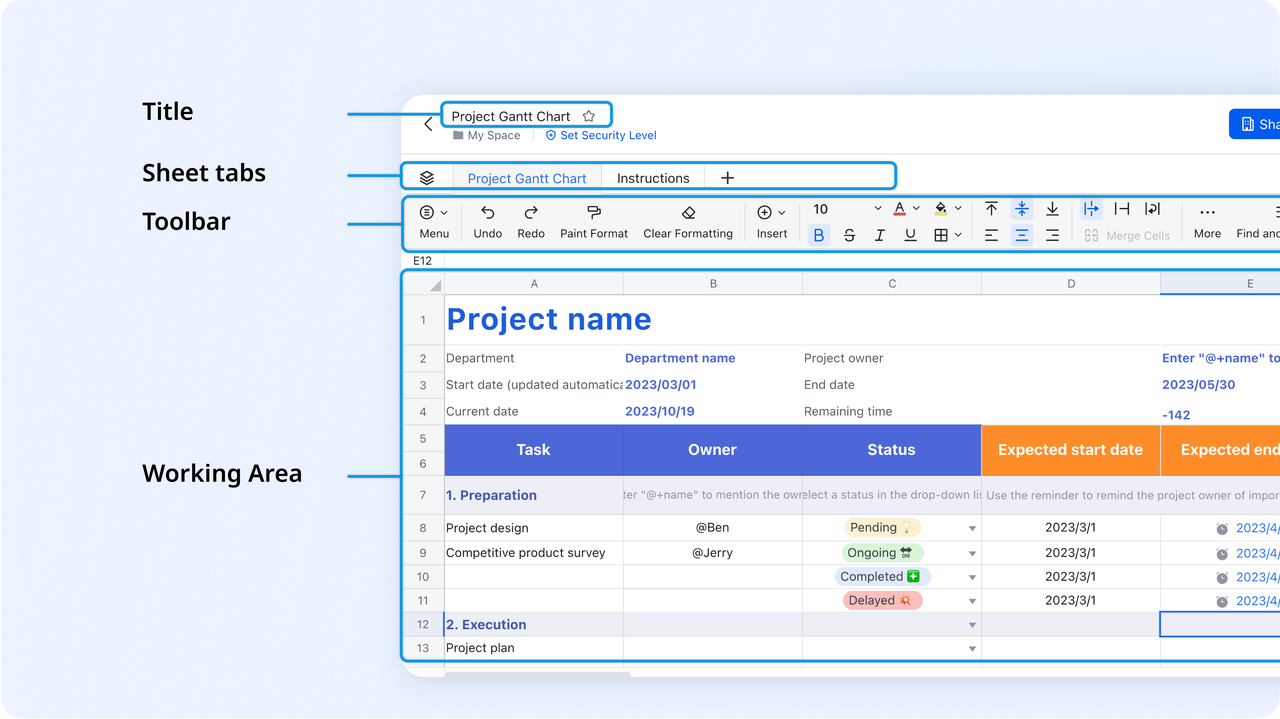
Lark Sheets: Manage sales data collaboratively
Lark Sheets serves as the analytical extension of your CRM records—allowing teams to organize and interpret data without exporting it to Excel. It's not a standalone dashboarding tool but a live, interactive workspace for tracking figures, performance summaries, or forecasts. Teams can create custom tables from Base data, calculate deal win rates, or prepare performance summaries in real time. Changes are instantly reflected across users, ensuring consistency and transparency. Example: A regional manager compiles data from Base into Sheets to analyze monthly revenue per sales rep. Because Sheets is connected to Base, new deals automatically appear in the summary without manual imports.
Why it's better than SugarCRM:
- No export needed: SugarCRM often requires users to export CSVs for analysis.
- Real-time data sync: Lark keeps numbers up-to-date automatically.
- Team collaboration: Multiple users can review, edit, and discuss performance data in the same Sheet—a level of interactivity SugarCRM lacks.
:
- Starter plan: Free forever plan that includes 11 powerful tools for up to 20 users. It also comes with 100GB of storage, 1000 automation runs, AI translations, and more.
- Pro plan: $12/user/month (billed annually) for up to 500 users. It includes everything in Starter plus group calling for up to 500 attendees, 15TB of storage, 50,000 automation runs, and more.
- Enterprise plan: for custom pricing. Supports unlimited users and includes even more automation runs and advanced security, compliance, and management features. Evaluating and alongside competing platforms can provide useful budgeting insights.
For small teams with simple communication needs

18 months message history
1000 Base automation runs/month
2000 rows per table in Base
Most POPULAR
For companies with comprehensive collaboration and management needs
Unlimited message history
500-participant video meetings
50k Base automation runs/month
20k rows per table in Base
For large companies with advanced security and organizational management needs
Get a personalized demo and pricing
Unlimited message history
500-participant video meetings
15 TB storage + 30 GB storage/user
500k Base automation runs/month
50k Base automation runs/month
Most POPULAR
For companies with comprehensive collaboration and management needs
Unlimited message history
500-participant video meetings
50k Base automation runs/month
20k rows per table in Base
Pricing comparison: Lark vs SugarCRM
Choosing between SugarCRM and Lark often comes down to striking a balance between flexibility and simplicity. While SugarCRM offers modular tools for sales, service, and marketing, it can become costly and complex as teams expand. Lark, on the other hand, delivers an all-in-one, where CRM, communication, and automation work seamlessly together. Here's how their pricing and capabilities compare.
Lark: Lark employs a freemium model, offering a Free Starter plan for small teams ($0 per user/month), a Pro plan (~$12/user/month) with enhanced storage, unlimited chat history, larger workflow execution limits, and an Enterprise plan with custom pricing for large organizations.
SugarCRM: SugarCRM pricing varies by product: Sell Standard ($59/user/month), Sell Advanced ($85/user/month), Sell Premier ($135/user/month), Market (~$1,000/month for 10,000 contacts), Serve ($80/user/month), and On‑Premises Enterprise+ (~$120/user/month), all billed annually.
Lark: Cloud-native (SaaS) only, providing fast setup, automatic updates, and easy scalability for teams of any size without the need for IT infrastructure management.
SugarCRM: Offers both cloud and on-premises deployments, allowing full CRM features hosted either by Sugar or on your own infrastructure.
Lark: Combining messaging, video meetings, shared docs, sheets, wikis, calendars, real-time co-editing, external collaboration, and AI-powered translation/transcription. enables teams to work seamlessly across locations, maintain contextual discussions, and minimize dependency on multiple external apps.
SugarCRM: CRM-centric collaboration, including shared dashboards, pipeline and opportunity management, customer data workflows, and service/project coordination.
Lark: for tasks, approvals, Base, with workflow execution limits depending on the plan. It streamlines internal processes, approval chains, and notifications, reducing manual effort and improving team efficiency.
SugarCRM: Automation for sales, marketing, and service processes, including lead scoring, case routing, forecasting, guided selling, AI insights, and campaign workflows.
Lark: Quick to start for teams thanks to its all-in-one collaboration and productivity suite. Setup is mostly intuitive, with prebuilt templates for tasks, meetings, and workflows that minimize onboarding time.
SugarCRM: Requires more configuration, especially for advanced workflows, marketing campaigns, or on-premises deployments.
Lark: Basic support for free users and enhanced support/security in paid plans, including enterprise-grade customer service, dedicated account management, and Help Center, Q&A bot, and AI Assistant. SugarCRM: Support levels vary by edition; Enterprise and On-Premises tiers receive premium assistance, including dedicated account management and SLA-backed service.
Bonus tips: Best practices for choosing a CRM
Selecting the right CRM goes beyond comparing price tags—it's about finding the system that supports your goals, scales with your growth, and delivers real value across teams. Whether you're comparing SugarCRM pricing or exploring alternatives like Lark, focus on long-term efficiency, not just upfront cost.
- Identify goals: Sales enablement, customer support, or . Before committing to a CRM, clearly define what success looks like. Are you trying to improve lead conversion, enhance customer service, or automate marketing workflows? Having clear objectives ensures you choose the right module or alternative that delivers measurable outcomes.
- Compare total cost of ownership, not just subscription price: CRM budgets shouldn't stop at the per-user fee. With platforms like SugarCRM, additional costs often arise from setup, customization, and maintenance. Factor in onboarding, integrations, and ongoing support to understand your true investment over time.
- Evaluate scalability and team adoption rate: A CRM is only effective if your team actually uses it. Consider how intuitive the interface is, how fast new members can onboard, and whether the platform can scale with business growth. Cloud-based systems like Lark make expansion seamless without technical bottlenecks.
- Choose tools that simplify collaboration, not add silos: Modern CRM success depends on connected workflows. Instead of juggling separate systems for communication, , and documentation, opt for unified platforms where everything—from deal discussions to customer data—stays in one workspace. Lark embodies this simplicity, helping teams move faster together.
Conclusion
SugarCRM provides a powerful, customizable CRM experience with modules for sales, marketing, and service—but its pricing, setup, and maintenance can quickly add up, especially for smaller teams. Costs often increase with add-ons, user minimums, and integration needs.
, by contrast, offers a unified, collaboration-first platform where CRM, communication, and workflow automation come built in. With affordable plans starting at just $12 per user/month—and a generous free plan—teams can manage leads, share documents, and automate tasks without switching tools. For businesses seeking simplicity, speed, and scalability, Lark is the smarter choice.
Tired of complex CRM setups?
FAQs
How does SugarCRM's pricing compare to all-in-one platforms like Lark or HubSpot?
SugarCRM uses a modular pricing model, with each module like Sell or Serve billed separately (around $49–$135 per user/month). Platforms like Lark or HubSpot bundle CRM, communication, and marketing in one plan, often starting lower or offering free tiers, making them more cost-effective for all-in-one functionality.
Is SugarCRM suitable for startups or small businesses?
While SugarCRM offers deep customization, its setup and minimum user requirements can be costly for startups. It's better suited for mid-sized or enterprise teams with dedicated admins. Smaller businesses may prefer lighter, affordable platforms like Lark that provide CRM, chat, and automation without complex deployment.
Does SugarCRM offer a free trial or demo version?
SugarCRM provides a limited trial and demo for evaluation but does not offer a free-forever version. After the trial, users must select a paid plan. This makes it less accessible for small teams that prefer testing tools extensively before committing.
What support options and SLAs are included in SugarCRM pricing?
Support varies by plan—ranging from basic email help to 24/7 premium assistance. Higher tiers include faster response times and dedicated account management. However, some support levels may require additional fees, which can increase the overall SugarCRM pricing per user.
Can SugarCRM pricing be customized for hybrid deployments or industry-specific needs?
Yes, SugarCRM offers flexible pricing for cloud, on-premise, or hybrid models. Enterprise customers can request tailored quotes for compliance-driven or industry-specific setups. While this flexibility is valuable, it also makes SugarCRM pricing less transparent compared to straightforward, all-inclusive plans like Lark's.
Related reading