


Task Dependencies in Project Management: Building Smarter Workflows

Ryan Tanner
Product Marketing Specialist
Aug 5, 2026
Ryan Tanner
Aug 5, 2026

12 min read


In project environments where multiple teams and deliverables intersect, success often depends on understanding how each task connects to another. That's where task dependencies in project management becomes crucial. It defines how activities are sequenced, ensuring that progress flows logically from one milestone to the next.
By mapping dependencies clearly, project managers can anticipate delays, allocate resources more effectively, and maintain realistic schedules. Modern platforms like Lark simplify this process by offering connected tools that visualize relationships, automatically update timelines, and promote collaboration across departments. This structure allows teams to handle even complex projects with confidence and agility.

Understanding task dependencies
Task dependencies describe the relationships between different activities in a project. They define how one task's start or finish influences another's, guiding the logical flow of work. Recognizing these dependencies early ensures better planning, prevents overlaps, and improves coordination among team members.
In project management, dependencies help establish the critical path, the sequence of essential tasks that determine the overall project timeline. By clearly mapping these links, teams can anticipate potential delays and assign resources efficiently. Understanding task dependencies in project management also allows managers to create contingency plans and track progress with greater accuracy.
Dependencies can be visualized through charts or diagrams that illustrate task order, relationships, and timing. These visuals help identify areas where delays might occur and allow project leads to take proactive measures before bottlenecks appear.
The four main types of task dependencies
Before setting up a project schedule, it's important to understand the main categories of dependencies. Each type determines how tasks interact and influences both planning and execution. The four key types of task dependencies in project management are Finish-to-Start (FS), Start-to-Start (SS), Finish-to-Finish (FF), and Start-to-Finish (SF).
Finish-to-Start (FS)
This is the most common type of dependency in project management. It means one task must finish before the next one can begin.
For example, the design approval must be completed before the development phase starts. This sequence prevents conflicts and ensures that every step is completed with the necessary input from the previous one. Finish-to-start dependencies help teams maintain order, but they can also become a source of delay if any upstream tasks face setbacks. Using a project management system that automates these transitions reduces manual coordination and keeps the schedule intact.
Start-to-Start (SS)
In a start-to-start relationship, two tasks begin simultaneously, though they can progress independently.
Consider the example of research and drafting for a whitepaper. Both activities can start at the same time, even if one takes longer to complete. This type of dependency supports parallel work and is particularly useful in agile environments, where tasks can overlap without disrupting flow. Effective tracking of start-to-start relationships helps balance workloads and maintain productivity across teams.
Finish-to-Finish (FF)
Here, two tasks must finish at the same time, regardless of when they start.
A typical example is testing and documentation closure both must reach completion together for the project to move forward. Finish-to-finish dependencies emphasize synchronization rather than sequence. They ensure that interrelated tasks conclude in harmony, supporting consistent project delivery. By monitoring these dependencies visually, project managers can identify mismatches in progress and reassign resources where needed.
Start-to-Finish (SF)
This is the rarest type of dependency, where the start of one task triggers the completion of another.
For example, the activation of a new system might signal the shutdown of the old one. Start-to-finish dependencies typically occur in maintenance or transition scenarios. Though less common, they are essential in projects involving operational switches or phased rollouts. Managing them effectively requires tools that can automate dependency tracking and update linked tasks dynamically.
How to create and manage task dependencies (step-by-step)
Defining and managing dependencies in a structured way helps teams minimize risk and maintain clarity across projects. The following steps outline how to build an effective dependency framework in project management.
Step 1: Identify all project deliverables
Start by breaking down your project into clear deliverables. Each deliverable represents a key outcome that can be tracked and measured. Once defined, divide these into manageable tasks and subtasks. This step provides the foundation for understanding where dependencies exist and how each piece connects to the larger goal.
Step 2: Break them into tasks and subtasks
After defining deliverables, create smaller, actionable items. Subtasks make large goals more manageable and easier to assign. This granular approach enhances accountability and allows for accurate tracking of progress. Using a task management tool helps maintain structure and prevents critical details from being overlooked.
Step 3: Define logical relationships between tasks
Determine how each task connects to others. Identify which one must finish before another begins or which can proceed simultaneously. Recognizing these relationships early avoids confusion and scheduling conflicts later. Use charts or visualization tools to illustrate these connections, the clearer the relationships, the smoother the workflow.
Step 4: Assign ownership and deadlines
Every task should have an owner and a due date. This transparency clarifies who is responsible and ensures accountability. By linking ownership directly with dependencies, teams can easily track which member's progress impacts others. Establishing this structure fosters collaboration and reduces miscommunication.
Step 5: Use a project management tool
Tools such as Lark Base provide dedicated features for visualizing and managing task dependencies. Gantt and Kanban views help illustrate relationships, automate updates, and ensure schedules remain aligned. Automated adjustments save time and prevent cascading delays when changes occur.
Step 6: Review dependencies regularly
Projects are dynamic, and so are dependencies. Reviewing them frequently ensures your project plan remains accurate. Regular check-ins help identify bottlenecks, adapt to scope changes, and maintain transparency. This proactive approach allows teams to stay on track and respond swiftly to evolving needs.
How modern tool helps manage task dependencies effortlessly
Managing multiple interrelated tasks can quickly become complex when timelines shift or team members change priorities. Modern project management tools like Lark simplifies this challenge through an all-in-one workspace designed to help teams handle task dependencies and project management with speed and accuracy. Whether it's a small marketing sprint or an enterprise-scale rollout, Lark ensures that every dependency remains visible, traceable, and easy to adjust.
Set and modify task relationships easily
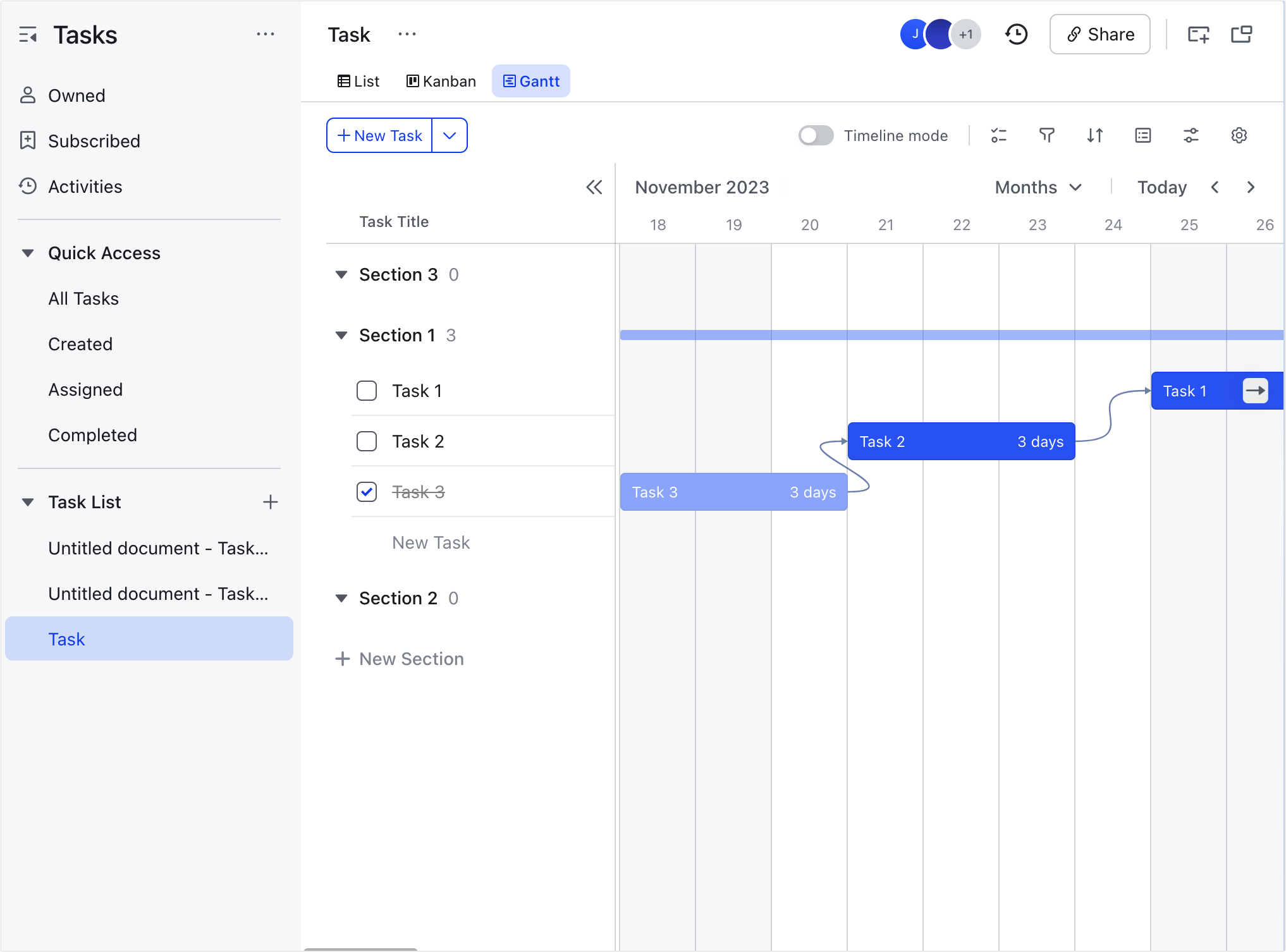
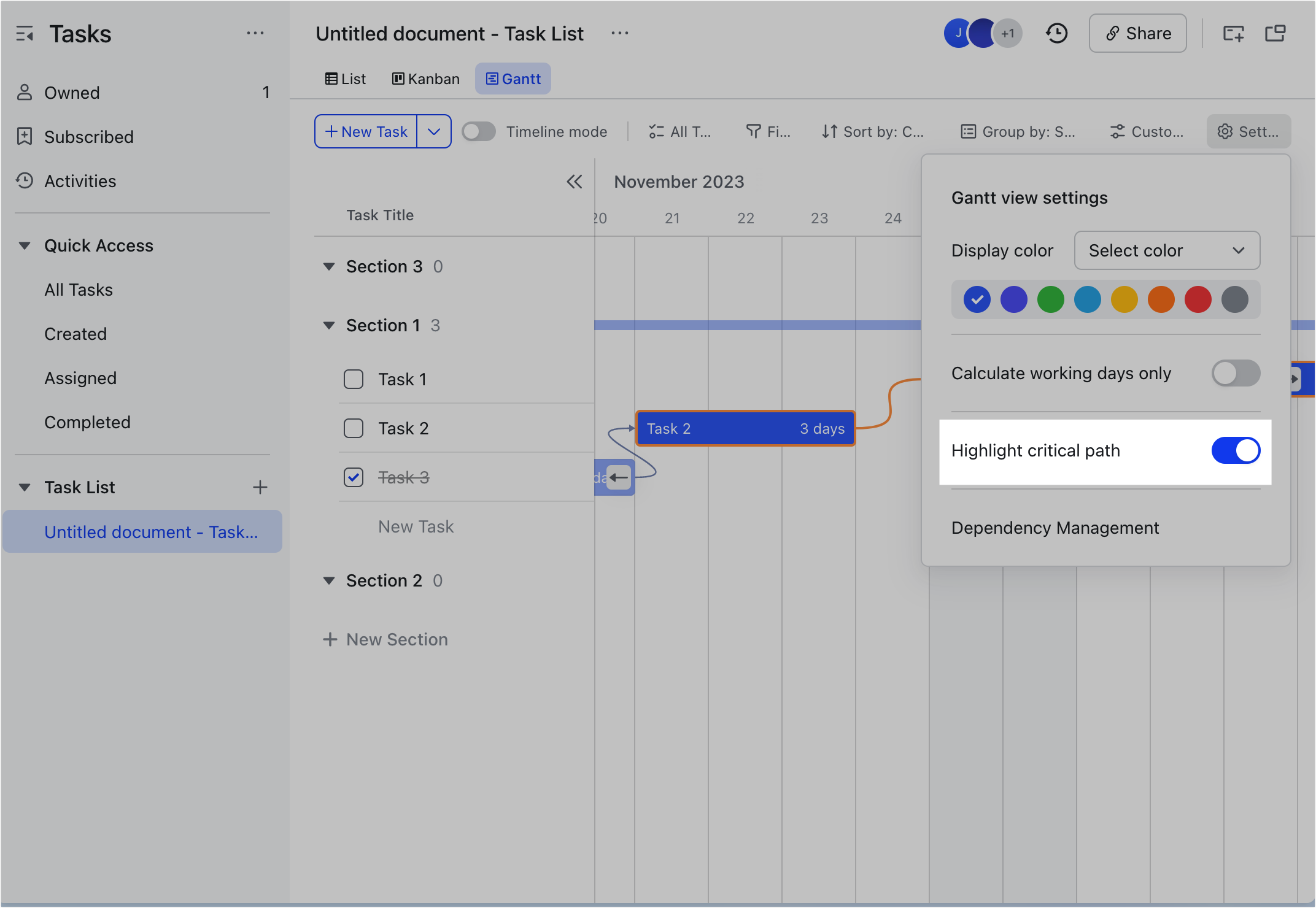
Lark Tasks simplifies dependency management by allowing teams to clearly define how tasks relate to one another. Users can easily link tasks in the timeline by dragging a dependency icon to indicate the completion order or set relationships, such as "Blocked by" and "Blocking," directly within task details. You can also highlight the critical path to pinpoint tasks that are vital to project success. Altogether, these features help teams stay organized, avoid delays, and keep projects moving smoothly.
Clear accountability: Assign ownership and maintain full project visibility
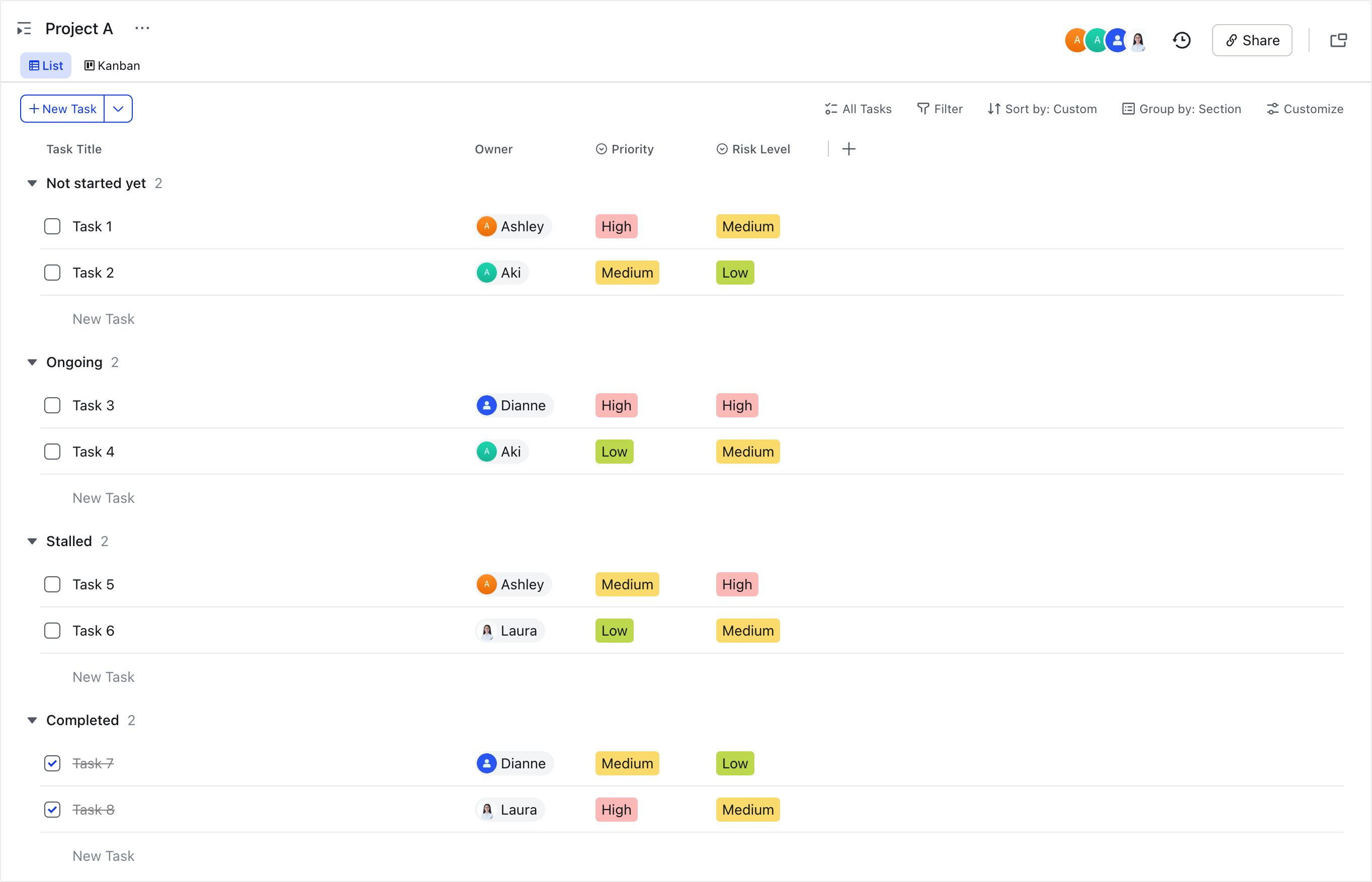
Clear accountability strengthens collaboration. In task dependencies project management, visibility into who owns each task and when it's due prevents misalignment. Tasks enables every task to display key details such as assignee, due date, status, and priority directly alongside its dependency links.
This structure enables every stakeholder to see how their work impacts others. By consolidating ownership, updates, and communication in one workspace, Tasks minimizes confusion and helps teams maintain consistent progress across departments.
Streamline repetitive tasks and notifications with automated workflows
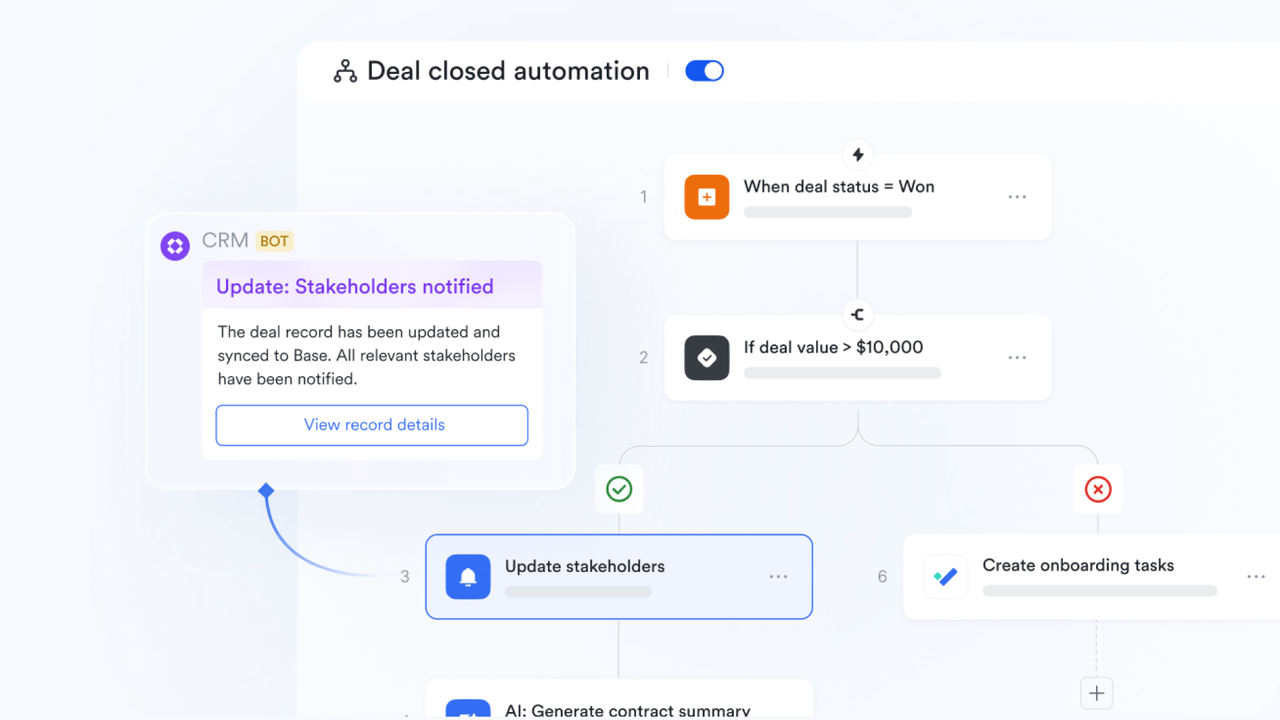
Lark Base automations streamline project management by reducing manual work and ensuring every process stays on track. Teams can automate routine actions such as sending reminders, updating task statuses, or syncing approval data across projects. These workflows keep everyone aligned without needing constant check-ins. Automated notifications ensure that deadlines, dependencies, and approvals progress smoothly, helping teams maintain momentum and focus on higher-value tasks.
All-in-one platform: Collaborate in real time across projects
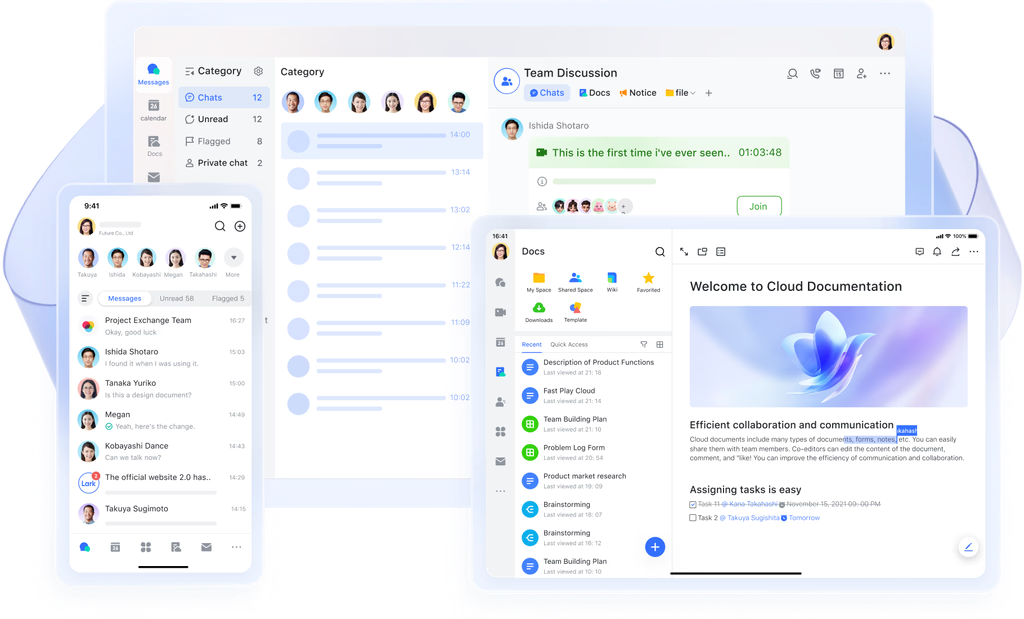
Dependencies aren't just about scheduling; they're about communication. Many project delays occur because updates are scattered across different tools. Lark addresses this by combining task management with communication features such as Lark Messenger, Lark Meetings, and Lark Docs.
Team members can comment directly within tasks, share files, and tag others for instant clarification. Discussions remain tied to the relevant work item, eliminating the need to search across email threads or chat history. This context-based collaboration ensures that dependencies remain transparent and that updates are shared instantly when changes occur.
- Starter plan: Free forever plan that includes 11 powerful tools for up to 20 users. It also comes with 100GB of storage, 1000 automation runs, AI translations, and more.
- Pro plan: $12/user/month (billed annually) for up to 500 users. It includes everything in Starter plus group calling for up to 500 attendees, 15TB of storage, 50,000 automation runs, and more.
- Enterprise plan: Contact sales for custom pricing. Supports unlimited users and includes even more automation runs and advanced security, compliance, and management features.
Benefits of managing task dependencies with connected tools
When dependencies are managed in a unified workspace, teams can focus on execution rather than coordination. Using task dependencies project management software like Lark offers several key advantages:
- Eliminates silos by connecting people, data, and timelines. With every stakeholder viewing the same real-time data, teams operate with shared awareness. This reduces redundant communication and minimizes misalignment between departments.
- Encourages proactive problem-solving. Dependency tracking allows managers to anticipate risks early. When one task faces delays, automatic updates highlight potential bottlenecks before they escalate.
- Strengthens accountability. Every dependency clearly displays ownership, deadlines, and progress, ensuring that responsibilities are visible across all levels of the organization.
- Improves forecasting accuracy. By understanding how each dependency impacts project duration, leaders can make better predictions about timelines, costs, and outcomes.
- Drives efficiency through automation. Lark's scheduling logic automatically adjusts timelines, reducing time spent on manual updates and repetitive coordination.
These benefits collectively improve project execution speed, accuracy, and transparency, the cornerstones of effective project management.
Common challenges in managing dependencies
Even with the right tools, teams often face recurring issues when handling dependencies. Recognizing these challenges helps managers mitigate them before they affect delivery.
- Miscommunication and unclear ownership. Without transparent task relationships, teams may not realize when their work blocks others. Clearly assigning responsibility helps prevent this.
- Dynamic priorities cause blocked tasks. When priorities shift, certain dependencies may no longer align with the overall project sequence. Frequent reviews ensure these changes are addressed promptly.
- Overreliance on manual tracking tools. Spreadsheets and static trackers increase the risk of human error. Automated systems maintain accuracy even as tasks change.
- Limited visibility across cross-functional teams. When information is fragmented across platforms, it's easy to lose track of linked work. A unified workspace like Lark centralizes updates and communication in one view.
By addressing these challenges early, organizations can ensure that task dependencies project management remains streamlined and resilient
Conclusion
Understanding task dependencies project management is fundamental to achieving consistent project success. When tasks are logically linked, responsibilities are clear, and schedules adjust intelligently, teams can operate at maximum efficiency.
Traditional methods of tracking dependencies often struggle to keep pace with today's project management practices. While systems like Hive project task dependencies management focus primarily on visualization, Lark Base combines automation, communication, and scheduling into one connected workspace. This structure helps organizations save time, reduce silos, and achieve alignment across every phase of execution.
By adopting a modern platform like Lark, teams can transform complexity into clarity, ensuring that every dependency strengthens collaboration, supports accountability, and drives measurable results.
FAQs
What are task dependencies in project management?
Task dependencies define how different activities connect within a project's structure. They show whether one task must finish or start before another can proceed, helping teams build logical sequences. In Lark Base, these dependencies are visualized clearly, allowing project managers to track relationships in real time and prevent scheduling conflicts across teams.
What are the four main types of task dependencies?
The four main types of dependencies in project management are Finish-to-Start (FS), Start-to-Start (SS), Finish-to-Finish (FF), and Start-to-Finish (SF). Each type governs how two tasks interact on a timeline. Within Lark Base, these relationships can be set visually, ensuring that connected tasks align automatically when schedules or deliverables change.
How do I visualize task dependencies in a project plan?
Visualization helps teams understand how tasks overlap or rely on each other. Tools like Gantt charts and Kanban boards make these relationships easy to see. Lark Base provides both views, automatically updating dependencies as changes occur, so teams always have an accurate picture of progress and potential bottlenecks.
Can I automate task dependencies in Lark Base?
Yes. Lark Base enables full automation of dependency management through "Blocked by" and "Blocking" relationships. When one task is delayed or rescheduled, all connected tasks adjust instantly. This automation saves time, maintains schedule accuracy, and reduces manual tracking efforts for project managers. Many teams that previously relied on systems like Hive project task dependencies management have switched to Lark for its unified automation and collaboration features.
How are dependencies different from milestones?
Dependencies show how tasks are connected, while milestones represent significant checkpoints in a project's journey. Both are critical for keeping work on track. With Lark Base, managers can map dependencies and mark milestones within the same view, ensuring teams stay focused on both sequence and achievement.
Related reading
Table of contents
Start using Lark today

Manage all your work in one place
Boost team efficiency by 10x
Save up to 70% on software costs
Table of contents
Start using Lark today
Manage all your work in one place
Boost team efficiency by 10x
Save up to 70% on software costs



2026 Lark Technologies Pte. Ltd.
Headquartered in Singapore with offices worldwide.






Explore: