


Top 15 Employee Engagement Platforms for Workplace Success
HRM Asia
Aug 5, 2026
HRM Asia
Aug 5, 2026

14 min read


Employee engagement platforms have become essential for building productive, motivated, and connected teams in today's dynamic workplace. These tools help organizations measure employee sentiment, gather real-time feedback, and improve the overall workplace experience through features such as surveys, recognition programs, and analytics.
By fostering better communication and transparency, they play a key role in boosting retention and performance. Modern platforms go beyond basic feedback systems by offering continuous insights, collaboration tools, and data-driven decision-making capabilities. In this guide, you'll discover the top 15 employee engagement platforms that can help drive workplace success and create a thriving organizational culture.
Key takeaways: 5 best software platforms for employee engagement
Choosing the right platform can improve communication, boost morale, and drive better performance. Here are five top tools that help create a more connected and productive workplace.
1. Lark: An all-in-one collaboration platform that combines communication, performance management, and engagement tools in a single workspace.
2. Workvivo: A social-style employee engagement platform designed to enhance company culture and internal communication.
3. Culture Amp: A people analytics and feedback platform focused on improving employee experience through data-driven insights.
4. Qualtrics: An advanced experience management platform that helps organizations measure and improve employee engagement at scale.
5. 15Five: A performance management and engagement tool that supports continuous feedback, goal tracking, and employee development.
Overview: Top 5 platforms for employee engagement
These top tools provide valuable insights through feedback, analytics, and performance tracking features. Here's an overview of five leading platforms that support better engagement and long-term organizational success.
Information source: Official vendor sites
Update time: 2026-03-23
Note: Pricing and plan details reflect publicly available data as of the update date and may vary based on region, billing cycle, and number of agents.

What is an employee engagement platform?
An employee engagement platform is a digital solution designed to measure, manage, and improve employees' connection to their work and organization. It brings together tools such as feedback systems, recognition features, communication channels, and analytics to help businesses understand employees' needs and boost satisfaction. Many employee engagement survey platforms focus on collecting real-time insights through pulse surveys and sentiment analysis.
At the same time, employee engagement software platforms offer a broader approach by combining performance tracking, collaboration, and development tools. Together, these platforms help organizations build a more motivated, productive, and engaged workforce.
How employee engagement platforms improve retention and productivity
Top employee engagement platforms play a key role in helping organizations understand their workforce management, address concerns quickly, and create a more connected environment. The best employee engagement platforms not only boost morale but also drive higher productivity and long-term employee retention.
- Increase visibility into employee sentiment: Employee engagement platforms provide real-time insights through surveys, feedback tools, and analytics. This helps managers understand how employees feel, identify trends, and take proactive steps to improve satisfaction before issues grow.
- Enable faster response to issues: Employee engagement platforms provide real-time insights through surveys, feedback tools, and analytics. This helps managers understand how employees feel, identify trends, and take proactive steps to improve satisfaction before issues grow.
- Improve communication across teams: These platforms streamline communication by offering centralized channels, updates, and collaboration tools. Clear and consistent communication helps teams stay informed, aligned, and more engaged in their daily work.
- Strengthen alignment with company goals: Employee engagement tools often include goal-setting and performance tracking features. This ensures employees understand their roles, stay aligned with organizational objectives, and feel more connected to the company's mission.
What defines a high-impact employee engagement platform
Understanding the benefits of employee engagement platforms helps businesses choose tools that truly drive results. A high-impact platform goes beyond basic surveys by combining feedback, communication, and analytics to create a more connected and productive workplace.
- Pulse surveys and feedback tools: Regular pulse surveys enable organizations to gather real-time employee feedback and continuously monitor sentiment. This helps identify concerns early, measure engagement levels, and make informed improvements.
- Recognition and rewards systems: Built-in recognition features enable companies to appreciate employee contributions through rewards, shout-outs, or incentives. This boosts morale, reinforces positive behavior, and encourages a culture of appreciation.
- Communication and collaboration features: Effective platforms provide centralized communication channels, team spaces, and updates that keep everyone aligned. This improves transparency, reduces silos, and strengthens team collaboration.
- Workflow automation for engagement processes: Automation workflow simplifies repetitive tasks such as survey distribution, onboarding check-ins, and performance reviews. This saves time and ensures consistency in engagement initiatives.
- Analytics and reporting capabilities: Advanced analytics provide actionable insights into employee behavior, engagement trends, and performance metrics. These project reports help leaders make data-driven decisions to enhance the overall workplace experience.
15 best platforms for employee engagement for modern workplaces
The following tools help organizations gather feedback, improve communication, and create a more positive work culture. From real-time analytics to recognition features, they offer everything needed to enhance employee performance:
1. Lark: Robust collaboration platform for connected team workflows
Lark is an all-in-one collaboration platform designed to improve employee engagement through better communication, transparency, and teamwork. It combines messaging, video meetings, shared documents, and workflow tools in a single workspace, helping teams stay connected and aligned. By centralizing communication and work processes, Lark supports a more engaged and productive work environment.
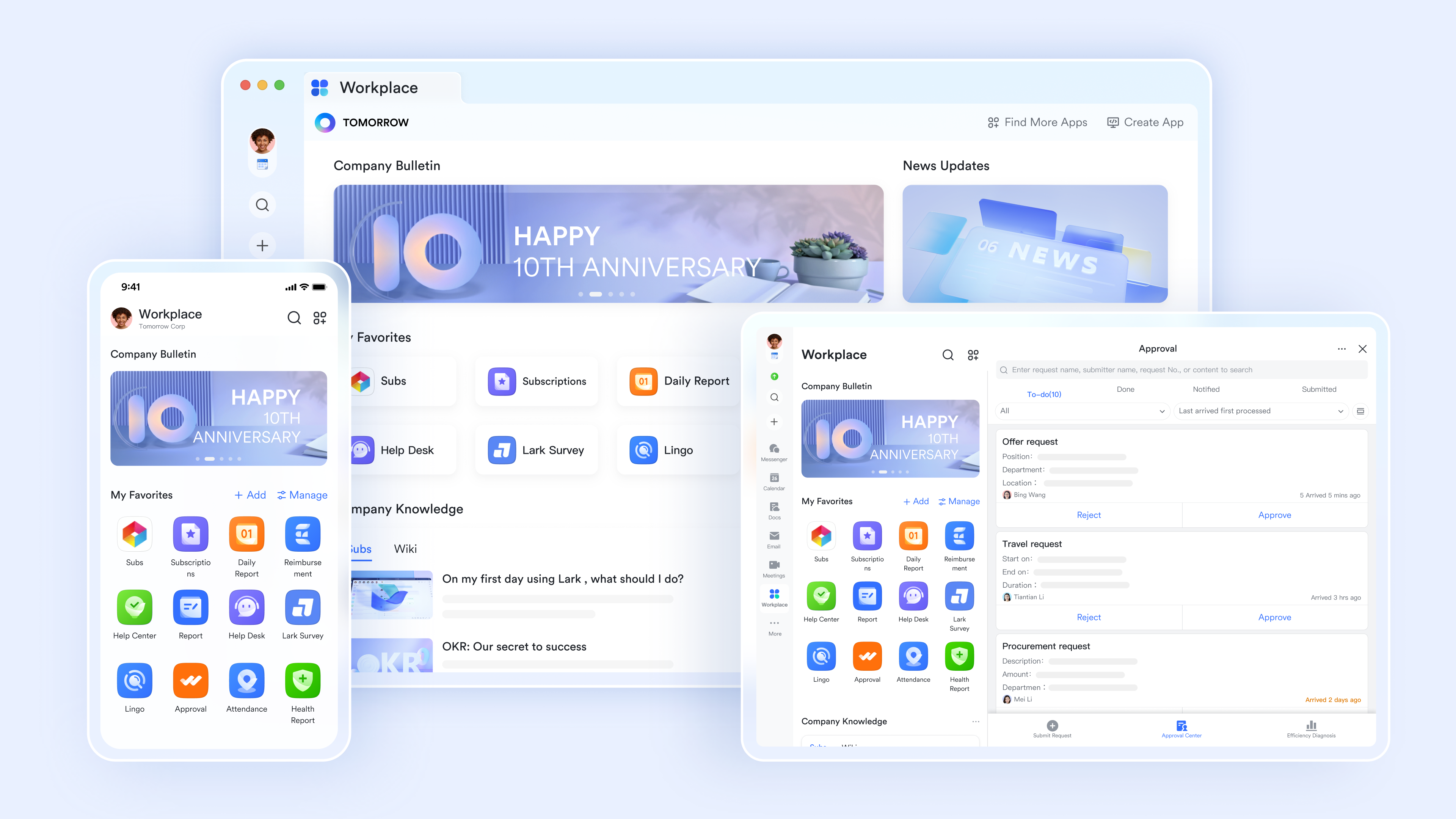
Unified hub for team operations
Lark Base functions as a flexible, no-code platform that centralizes internal workflows, team data, and operational processes into a single source of truth. Teams can use it to track employee feedback, manage internal projects, and organize engagement initiatives with structured databases. Instead of relying on scattered spreadsheets, Base provides automated workflows, real-time dashboards, and customizable tables that help teams monitor progress, improve transparency, and keep everyone aligned on shared goals.
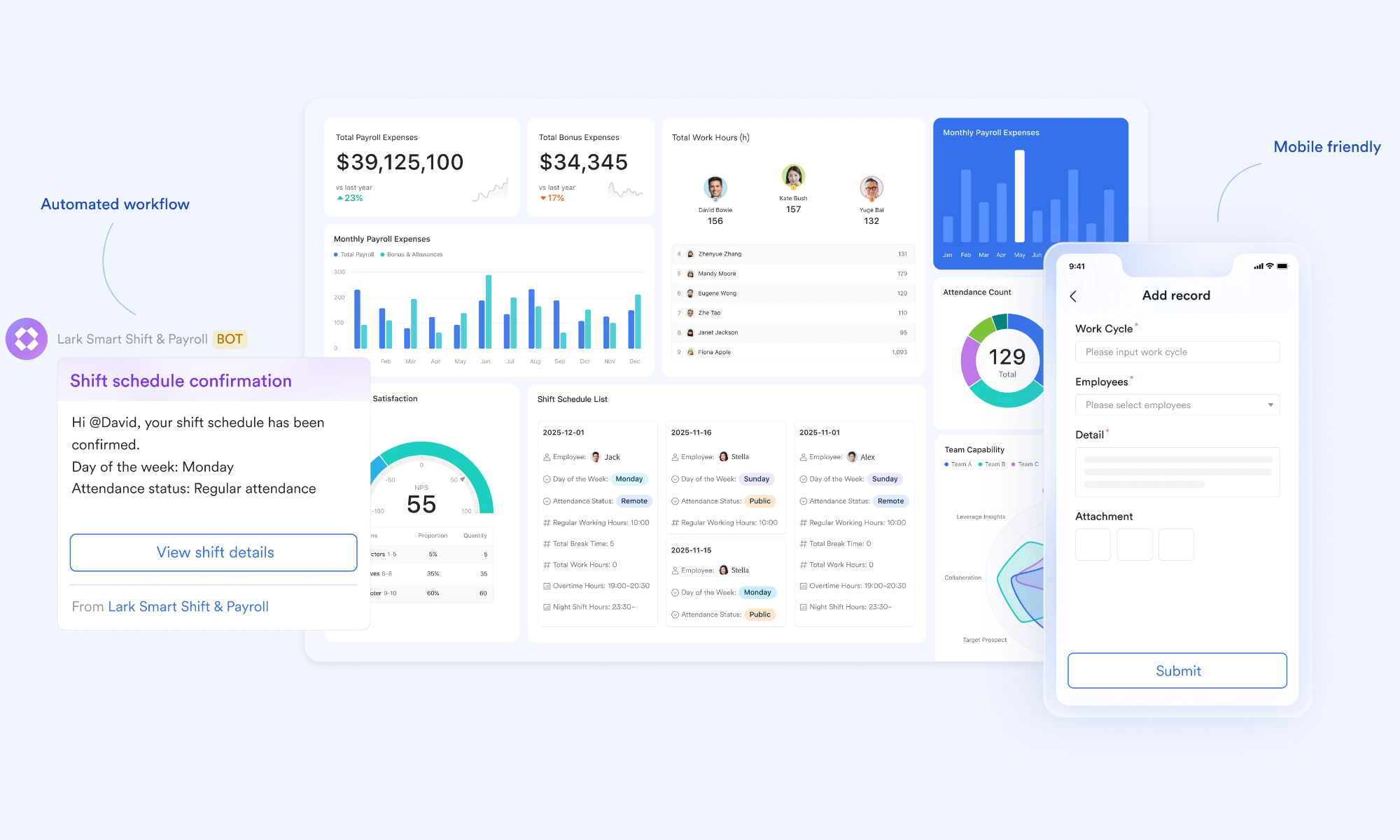
Employee feedback collection and routing
To support employee engagement, teams can create internal Lark Forms to collect feedback, pulse surveys, or suggestions from employees. When a response is submitted, the data flows directly into Lark Base, where it can be organized, categorized, and tracked in real time. Automated notifications in Lark Messenger ensure that managers or HR teams are alerted immediately, enabling them to respond quickly, address concerns, and take action while feedback remains relevant.
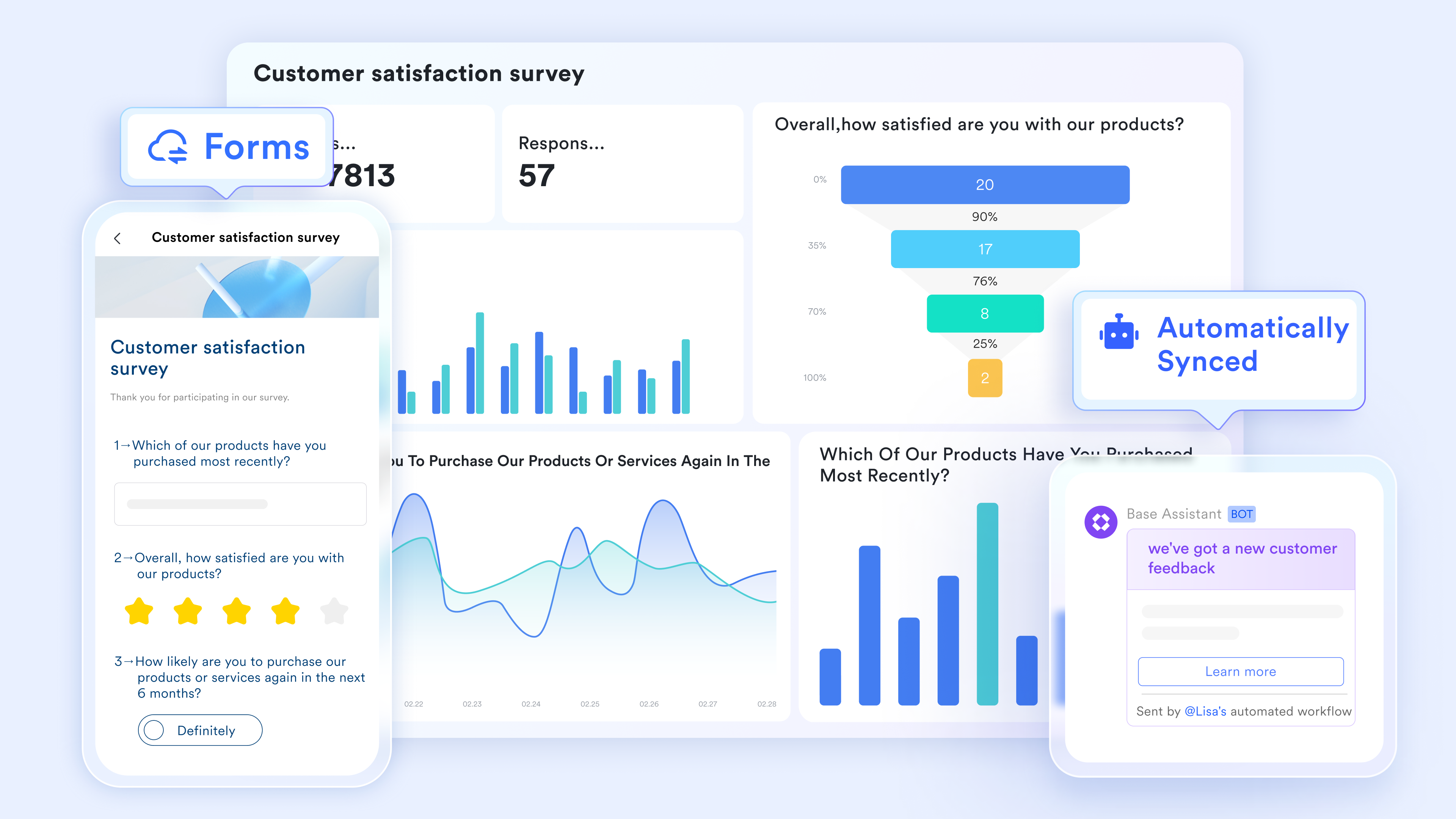
"Magic Share" for external demos
When a lead moves from the marketing phase to a live sales pitch, Lark Meetings provides the Magic Share feature. During a video call with an external guest, you can share a doc (such as a proposal or a case study) that the prospect can actually scroll through and interact with independently. This creates a much more engaging "collaborative discovery" session than a standard one-way screen share.
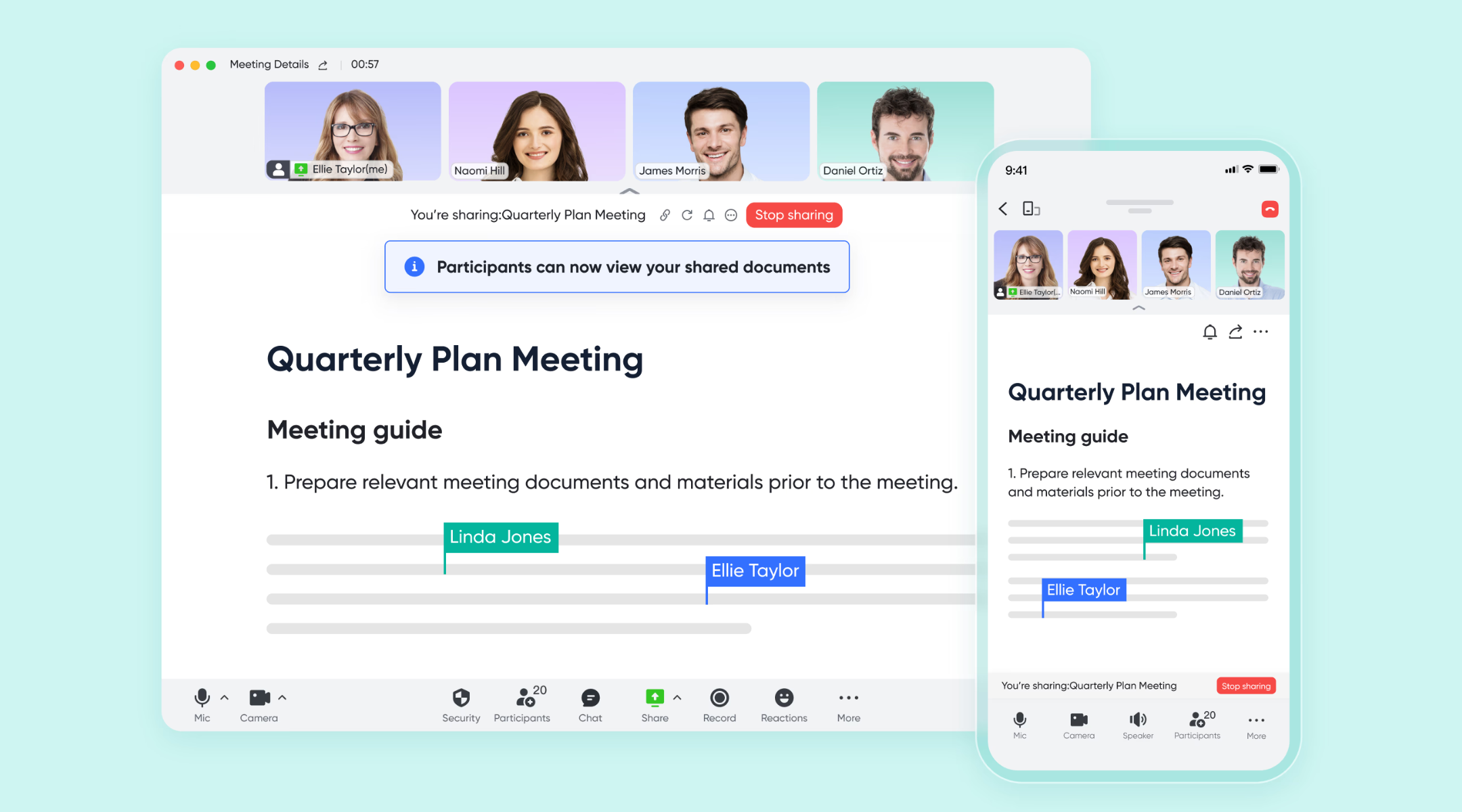
Centralized campaign playbooks
Lark Wiki serves as the marketing team's "Growth Encyclopedia." It hosts your brand guidelines, high-performing email templates, and sales scripts in a searchable, organized format. By keeping these resources on Lark Wiki, you ensure that both the marketing and sales teams use the most up-to-date messaging in all external communications, maintaining brand consistency across every customer touchpoint.
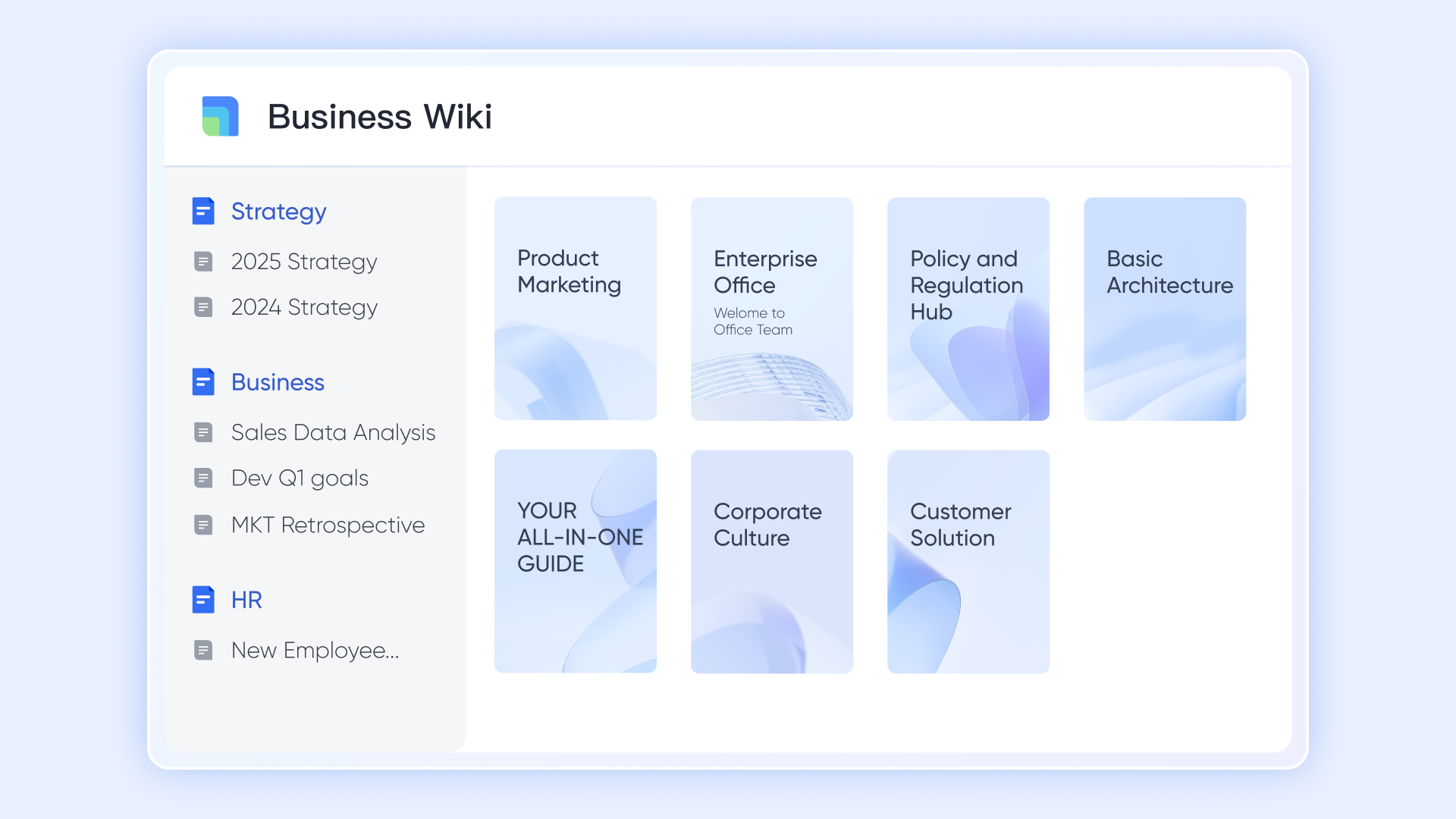
Pros:
- Unified workspace combines communication, workflows, and documentation for IT operations.
- Customizable IT asset management software workflows using Lark Base databases.
- Automated approvals and request workflows support IT governance processes.
- Real-time collaboration tools help IT teams respond quickly to incidents.
Cons:
- Some advanced configurations may require guidance from the Lark Help Center during initial setup.
- Starter plan: Free forever plan that includes 11 powerful tools for up to 20 users. It also comes with 100GB of storage, 1000 automation runs, AI translations, and more.
- Basic plan: $6/user/month (billed annually) for up to 500 users. It includes everything in Starter plus group calling for up to 500 attendees, 5TB of storage, 1000 automation runs, and more. For more details, please contact sales.
- Pro plan: $12/user/month (billed annually) for up to 500 users. It includes everything in Basic plus group calling for up to 500 attendees, 15TB of storage, 50,000 automation runs, and more.
- Enterprise plan: Contact sales for custom pricing. Supports unlimited users and includes even more automation runs and advanced security, compliance, and management features.

Starter
Pro
Enterprise
Starter
For small teams with simple communication needs
$0
/ user / month
20 users max
18 months message history
1-on-1 video meetings
100 GB storage
Lark Docs & Mail
1000 Base automation runs/month
2000 rows per table in Base
Pro
For companies with comprehensive collaboration and management needs
$12
/ user / month
500 users max
Unlimited message history
500-participant video meetings
15 TB storage
Lark Docs & Mail
50k Base automation runs/month
20k rows per table in Base
Enterprise
For large companies with advanced security and organizational management needs
Get a personalized demo and pricing
Unlimited users
Unlimited message history
500-participant video meetings
15 TB storage + 30 GB storage/user
Lark Docs & Mail
500k Base automation runs/month
50k Base automation runs/month
Single sign-on (SSO)
Pro
For companies with comprehensive collaboration and management needs
$12
/ user / month
500 users max
Unlimited message history
500-participant video meetings
15 TB storage
Lark Docs & Mail
50k Base automation runs/month
20k rows per table in Base
2. Workvivo: Social-first employee engagement platform for culture building
Workvivo focuses on creating a social and interactive workplace experience by combining communication, engagement, and recognition features. It helps organizations strengthen company culture, improve transparency, and keep employees connected through a familiar social media-style interface that encourages participation and collaboration.
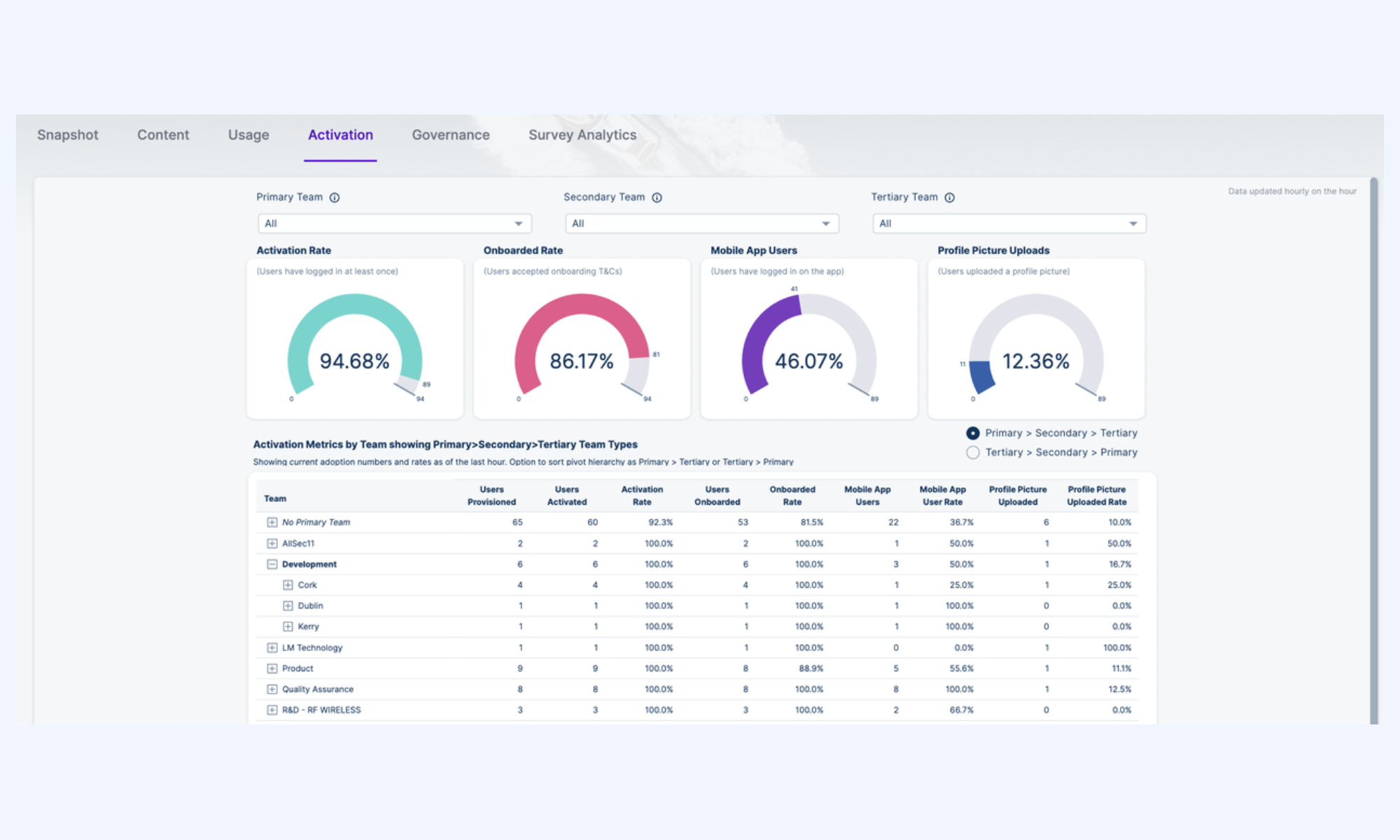
Image source: workvivo.com
Key features:
- Performance review workflows help organizations conduct structured employee evaluations.
- Goal tracking tools allow managers to monitor employee progress toward objectives.
- Talent management tools support employee development and workforce planning.
- Reporting dashboards provide insights into employee performance metrics.
Pros:
- Combines talent management and performance tracking tools.
- Flexible review workflows support different evaluation processes.
- Analytics dashboards provide insights into workforce performance.
- Integration options connect with HR and recruitment systems.
Cons:
- Implementation may require configuration for complex workflows.
- Pricing may increase as the workforce size grows.
- Some advanced analytics tools require premium plans.
Pricing:
- Custom pricing
3. Culture Amp: Data-driven employee engagement survey platform
Culture Amp is designed to help organizations measure and improve employee engagement using data-driven insights. It offers powerful survey tools, analytics, and reporting features that enable businesses to understand employee feedback, identify trends, and implement targeted strategies to enhance workplace experience and performance.
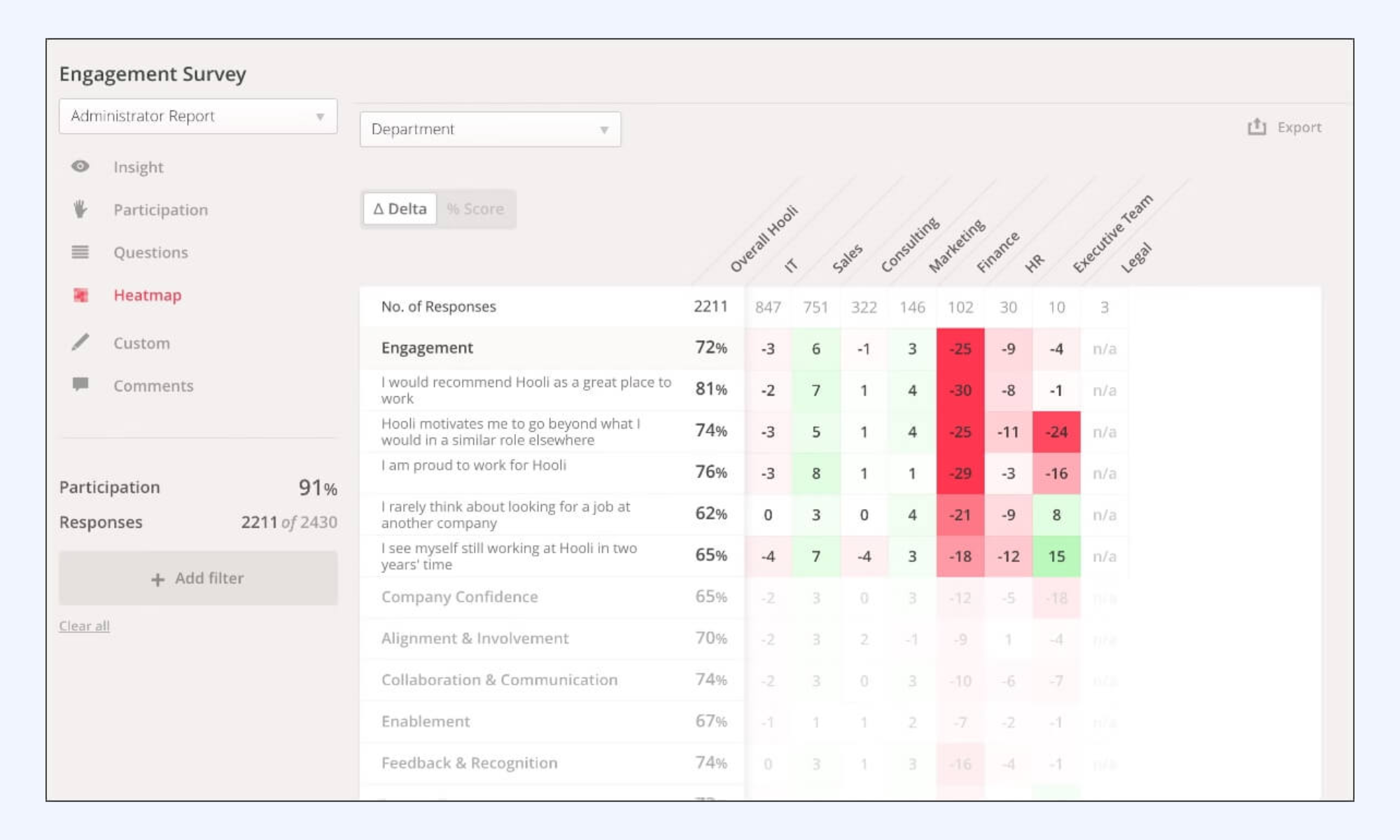
Image source: cultureamp.com
Key features:
- Engagement surveys collect employee feedback and organizational insights.
- Performance review management tools support structured employee evaluations.
- Goal-tracking features help employees align their work with company objectives.
- Analytics dashboards provide insights into workforce engagement trends.
Pros:
- Strong analytics capabilities support data-driven HR decisions.
- Engagement surveys help organizations measure employee satisfaction.
- Integrated performance management tools support review cycles.
- Scalable platform suitable for large organizations.
Cons:
- Implementation may require planning for large organizations.
- Pricing may be high for small businesses.
- Advanced features require enterprise plans.
Pricing:
- Custom pricing
4. Qualtrics: Enterprise employee engagement and experience platform
Qualtrics is a powerful experience management platform that helps large organizations measure and improve employee engagement at scale. It offers advanced survey tools, real-time feedback, and predictive analytics, enabling leaders to gain deep insights, track trends, and take data-driven actions to enhance employee experience.
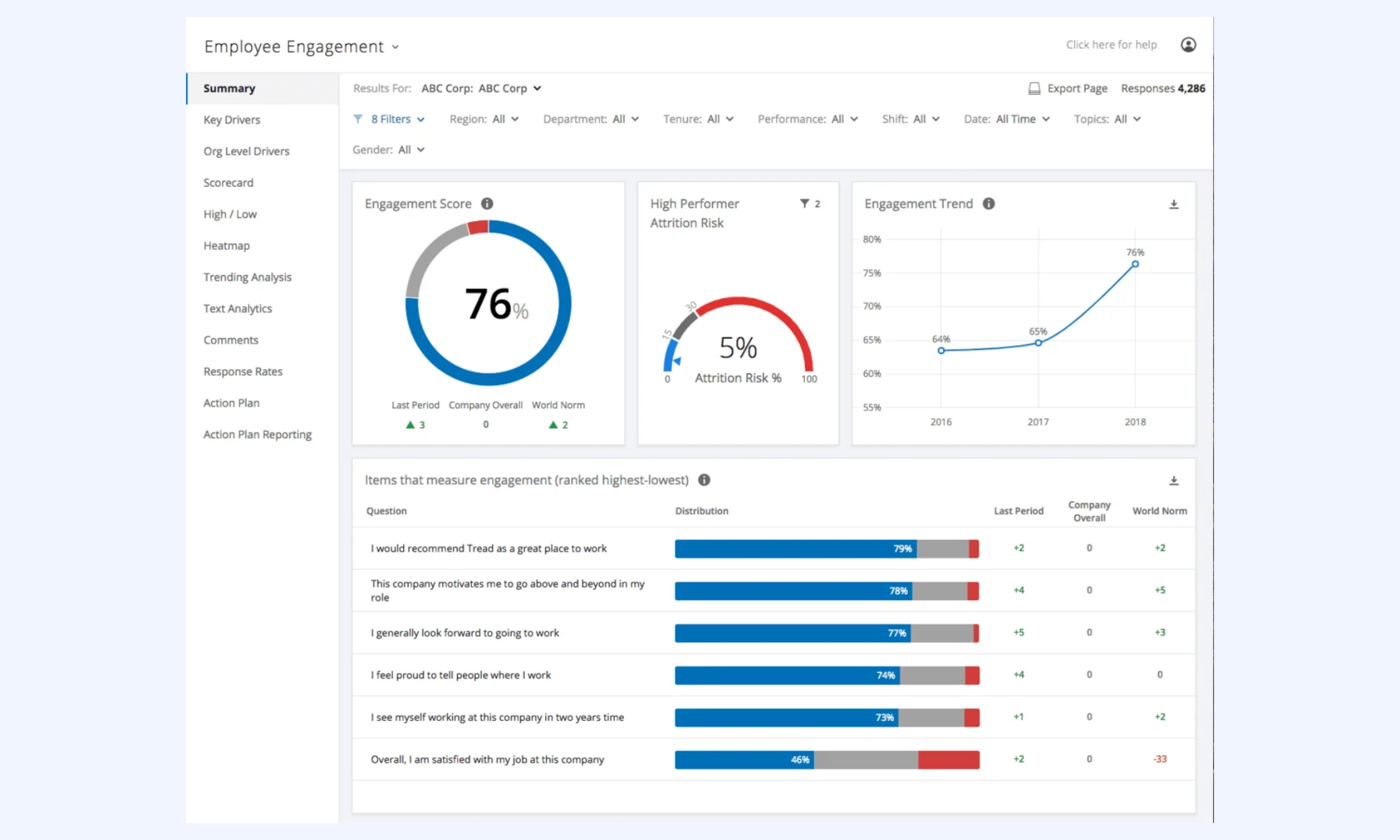
Image source: qualtris.com
Key features:
- Performance review tools support structured employee evaluation processes.
- Goal management systems align employee objectives with organizational strategy.
- Workforce analytics dashboards provide insights into employee productivity.
- Integration with HR modules supports workforce planning and development.
Pros:
- Comprehensive enterprise HR and performance management platform.
- Strong analytics capabilities support data-driven HR decisions.
- Scalable system suitable for large organizations.
- Integration across multiple HR functions improves operational visibility.
Cons:
- Implementation may require significant planning and resources.
- Pricing may be high for small or mid-sized organizations.
- The interface may require training for new users.
Pricing:
- Custom pricing
5. 15Five: Continuous feedback and engagement platform for teams
15Five focuses on continuous performance management and employee engagement through regular check-ins, feedback, and goal tracking. It helps managers stay connected with their teams, identify challenges early, and support employee growth, creating a more transparent, aligned, and high-performing workplace.
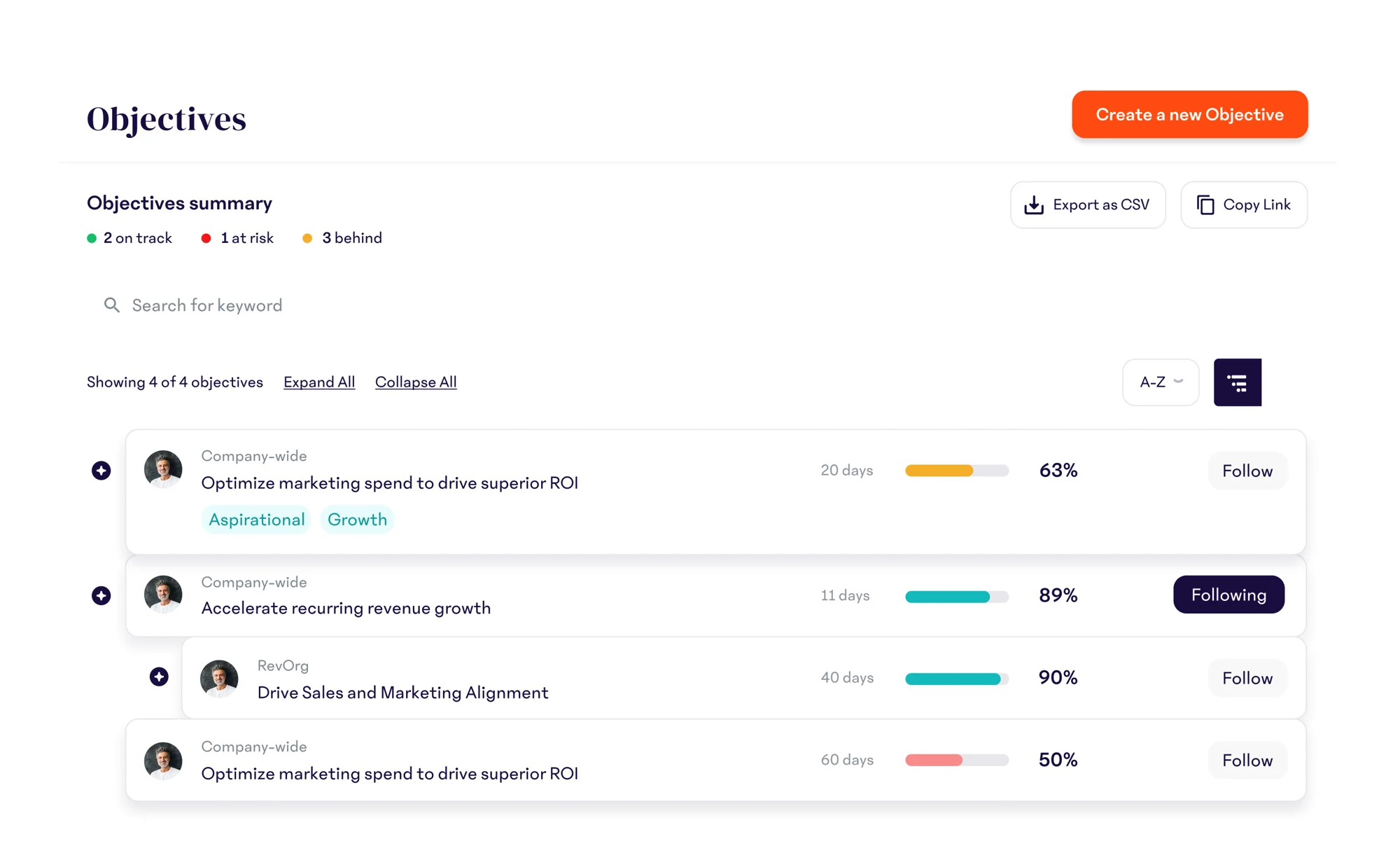
Image source: 15five.com
Key features:
- Weekly check-in tools allow employees to share updates and performance insights.
- OKR and goal tracking systems support performance management strategies.
- Performance review tools help managers conduct structured evaluations.
- Engagement surveys collect employee feedback and workplace insights.
Pros:
- Strong employee engagement features encourage feedback and recognition.
- Goal-tracking tools improve visibility into performance across teams.
- Intuitive interface simplifies performance management processes.
- Analytics dashboards provide insights into workforce engagement.
Cons:
- Pricing may increase as team size grows.
- Some advanced analytics features require higher plans.
- Integration options may require additional configuration.
Pricing:
- Engage: $4 per user per month (billed annually)
- Perform: $11 per user per month (billed annually)
- Total platform: $16 per user per month (billed annually)
6. Officevibe: Pulse survey platform for employee engagement insights
Officevibe helps organizations gather continuous employee feedback through simple pulse surveys and real-time insights. It enables managers to understand team sentiment, identify areas of improvement, and take timely action to boost engagement, trust, and overall workplace satisfaction.
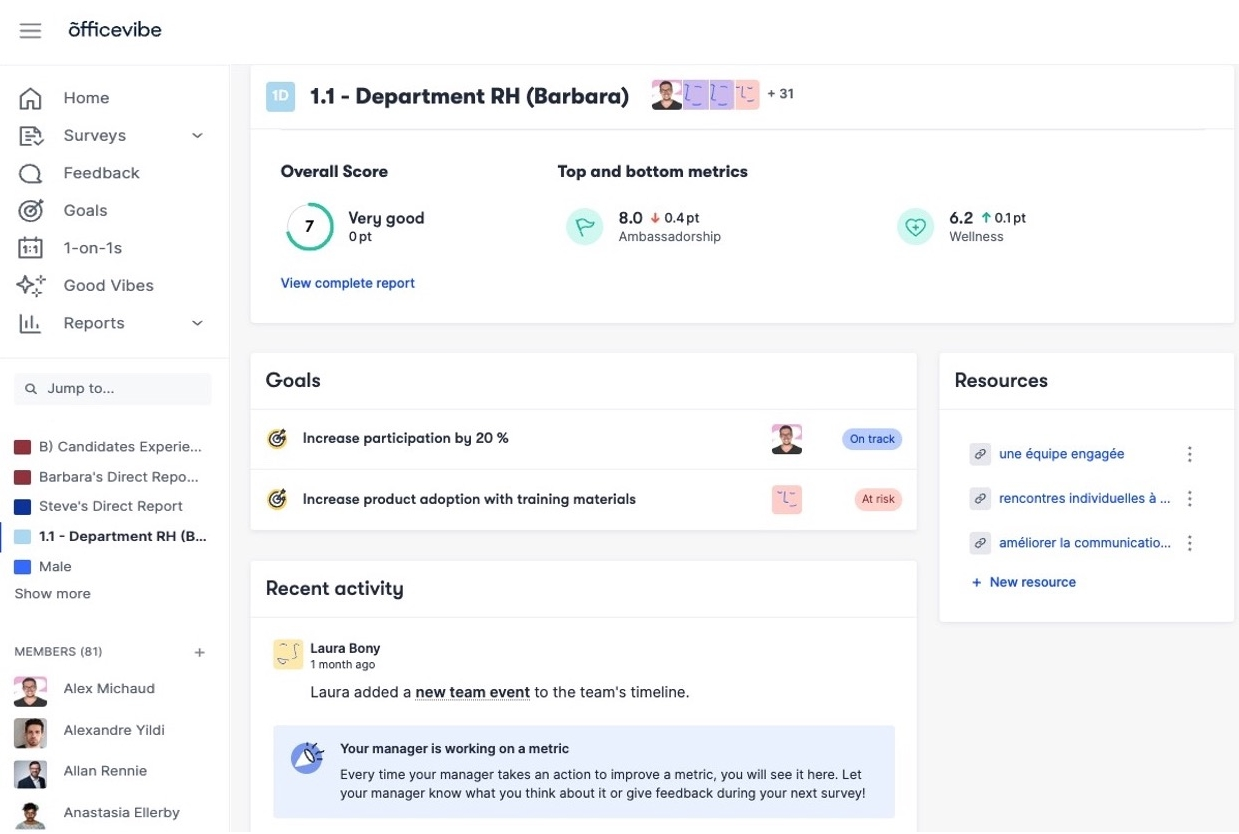
Image source: officevibe.com
Key features:
- Performance review templates allow organizations to conduct structured evaluations.
- Goal tracking systems help employees monitor progress toward objectives.
- Continuous feedback tools support regular performance discussions.
- Reporting dashboards provide insights into employee performance trends.
Pros:
- Flexible performance review workflows support different review styles.
- Goal-tracking tools improve visibility into performance across teams.
- Easy to implement compared with enterprise performance platforms.
- Dedicated support helps organizations configure performance systems.
Cons:
- Limited HR functionality compared with full HR platforms.
- Advanced analytics capabilities may be limited.
- Integration options may require additional configuration.
Pricing:
- Officevibe: $5 per user/month
- Performance: $5 per user/month
- Compensation: $5 per user/month
- Officevibe & performance: $8 per user/month
7. Leapsome: Performance and engagement platform for growing teams
Leapsome combines performance management, employee engagement, and learning tools in one platform. It supports growing teams with features like feedback, goal tracking, and development plans, helping organizations align employees with company objectives while fostering continuous improvement and engagement.
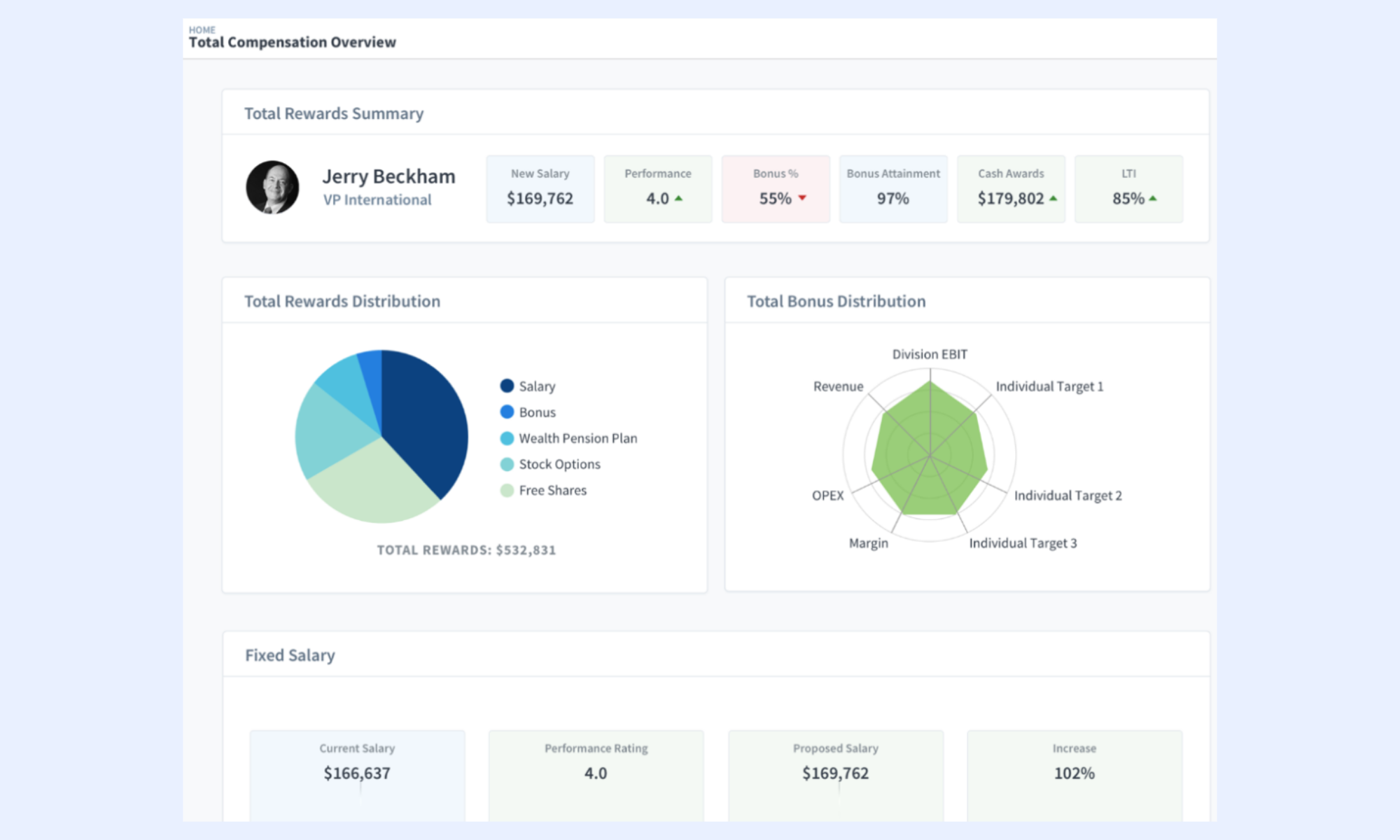
Image source: leapsome.com
Key features:
- Performance review tools support structured feedback and evaluation processes.
- Goal tracking and OKR systems help employees align work with company strategy.
- Learning management tools support employee development and training programs.
- Analytics dashboards provide insights into workforce performance trends.
Pros:
- Combines performance management and learning tools in one platform.
- Strong goal tracking features improve workforce alignment.
- Customizable review workflows support different evaluation processes.
- User-friendly interface simplifies performance tracking.
Cons:
- Advanced customization may require configuration effort.
- Pricing may increase with additional modules.
- Integration options may require technical setup.
Pricing:
- Custom pricing
8. BambooHR: HR-focused engagement platform with employee data tools
BambooHR combines core HR management with employee engagement features, offering tools for feedback, performance tracking, and data management. It helps organizations streamline HR processes while gaining insights into employee satisfaction, improving decision-making, and supporting a more organized and engaged workforce.
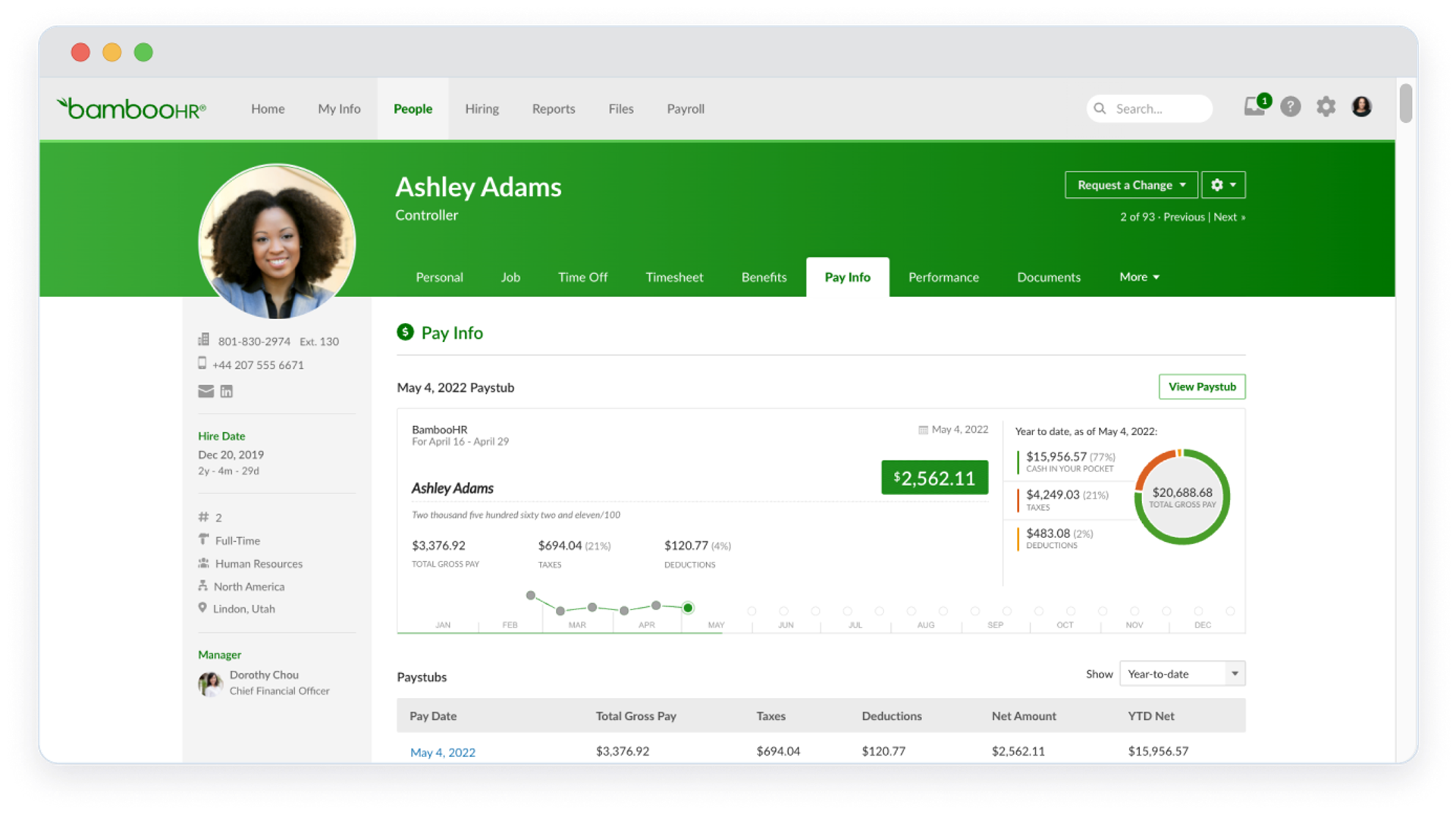
Image source: bamboohr.com
Key features:
- Performance review tools support structured employee evaluations and feedback cycles.
- Goal tracking features help employees and managers monitor progress toward objectives.
- Employee self-service portals allow staff to view performance records and development plans.
- Reporting dashboards provide insights into workforce performance and engagement.
Pros:
- User-friendly interface simplifies HR and performance management processes.
- An integrated HR platform centralizes employee data and performance records.
- Goal tracking tools support employee development initiatives.
- Strong reporting capabilities help HR teams analyze workforce performance.
Cons:
- Some advanced performance features require higher subscription plans.
- Customization options may be limited to complex performance workflows.
- Pricing may be higher for small businesses.
Pricing:
- Core: $10 per employee/month
- Pro: $17 per employee/month
- Elite: $25 per employee/month
9. HiBob: Modern HR platform with engagement features
HiBob is a modern HR platform designed to enhance employee engagement through tools like surveys, performance management, and communication features. It enables organizations to build a strong workplace culture, improve employee experience, and manage HR processes efficiently in a flexible and scalable way.
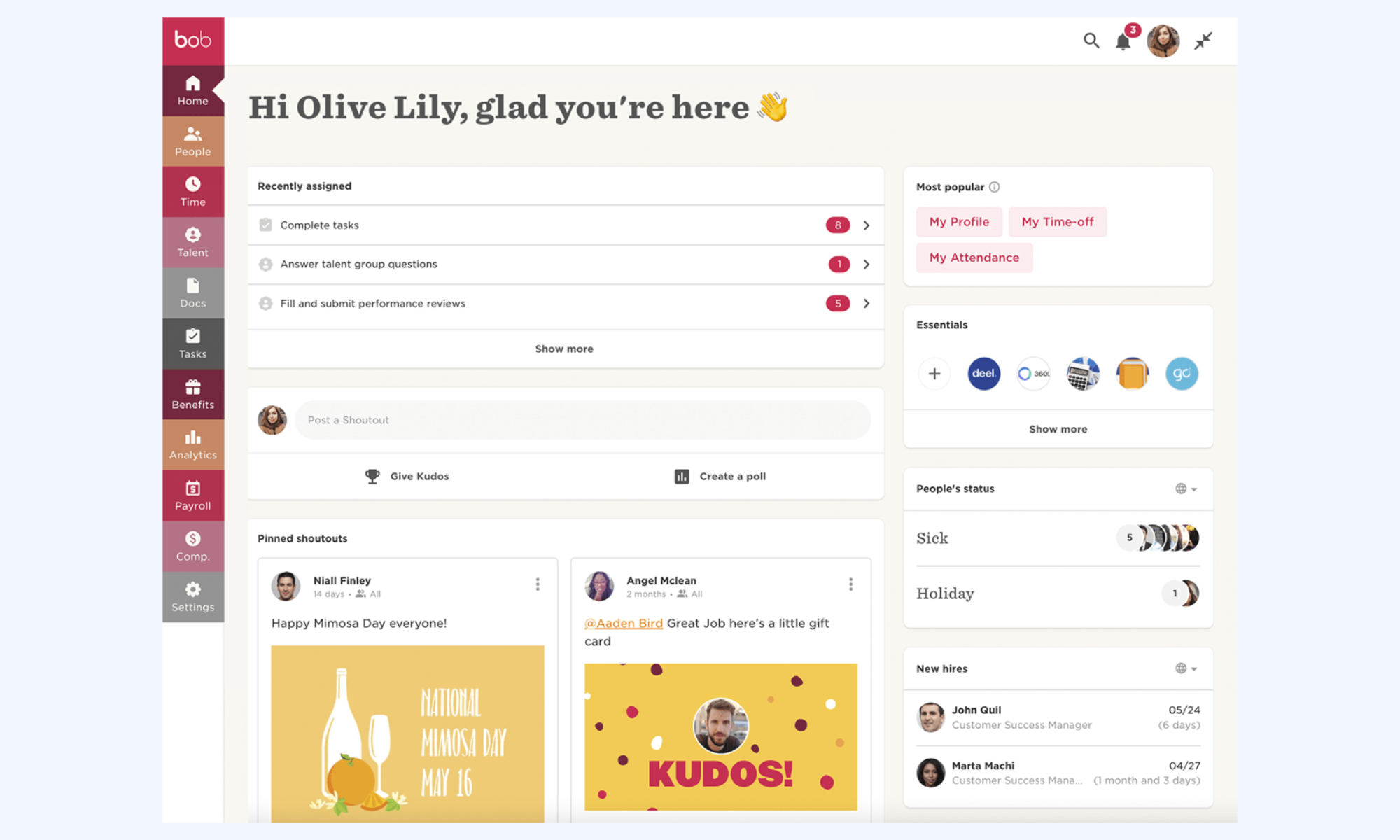
Image source: hibob.com
Key features:
- Performance review tools support structured evaluation cycles.
- Continuous feedback systems allow employees and managers to share insights regularly.
- Goal management tools help track employee progress toward performance targets.
- Learning and development features support workforce training programs.
Pros:
- Combines employee engagement and performance management tools.
- Continuous feedback features support modern performance management practices.
- Learning modules support employee development initiatives.
- Analytics dashboards help track workforce engagement.
Cons:
- Some advanced features require higher-tier subscriptions.
- Interface customization options may be limited.
- Integration capabilities may require configuration.
Pricing:
- Custom pricing
10. Nectar: Employee recognition platform for rewards and engagement
Nectar focuses on building a culture of appreciation through structured recognition and rewards programs. It allows employees and managers to celebrate achievements, offer incentives, and align recognition with company values, helping boost morale, increase engagement, and reinforce positive workplace behaviors.
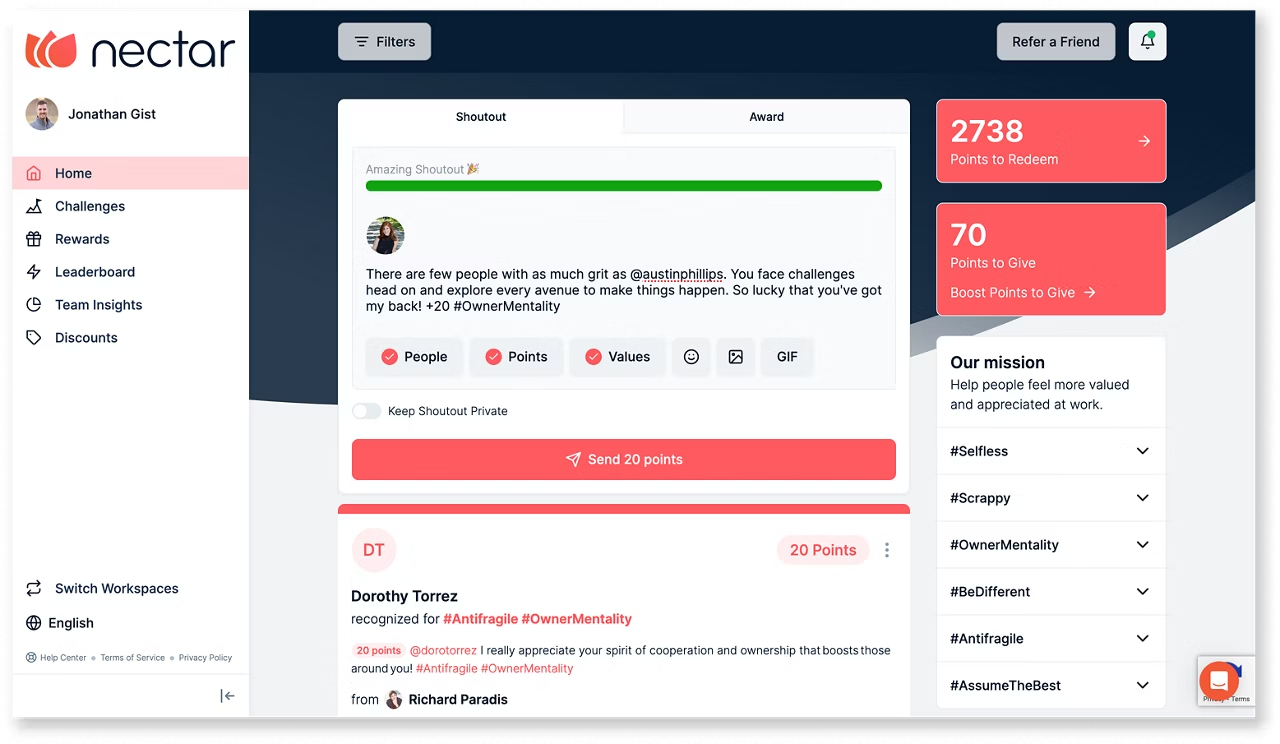
Image source: nectar.com
Key features:
- Continuous feedback tools provide employees with real-time performance insights.
- Goal-tracking systems help teams align their work with organizational objectives.
- Performance review workflows support structured evaluation processes.
- Analytics dashboards provide insights into workforce performance trends.
Pros:
- Strong continuous feedback features support ongoing development.
- Goal alignment tools improve organizational performance tracking.
- Analytics dashboards provide actionable workforce insights.
- Integration options connect with HR systems.
Cons:
- Pricing may be higher than that of smaller performance tools.
- Some configurations may be required during implementation.
- Interface complexity may require training.
Pricing:
- Custom pricing
11. Bonusly: Peer recognition platform for team motivation
Bonusly is a peer-to-peer recognition platform that encourages employees to appreciate each other's contributions in real time. With a points-based reward system and social features, it helps strengthen team relationships, improve motivation, and create a more positive and connected work environment.
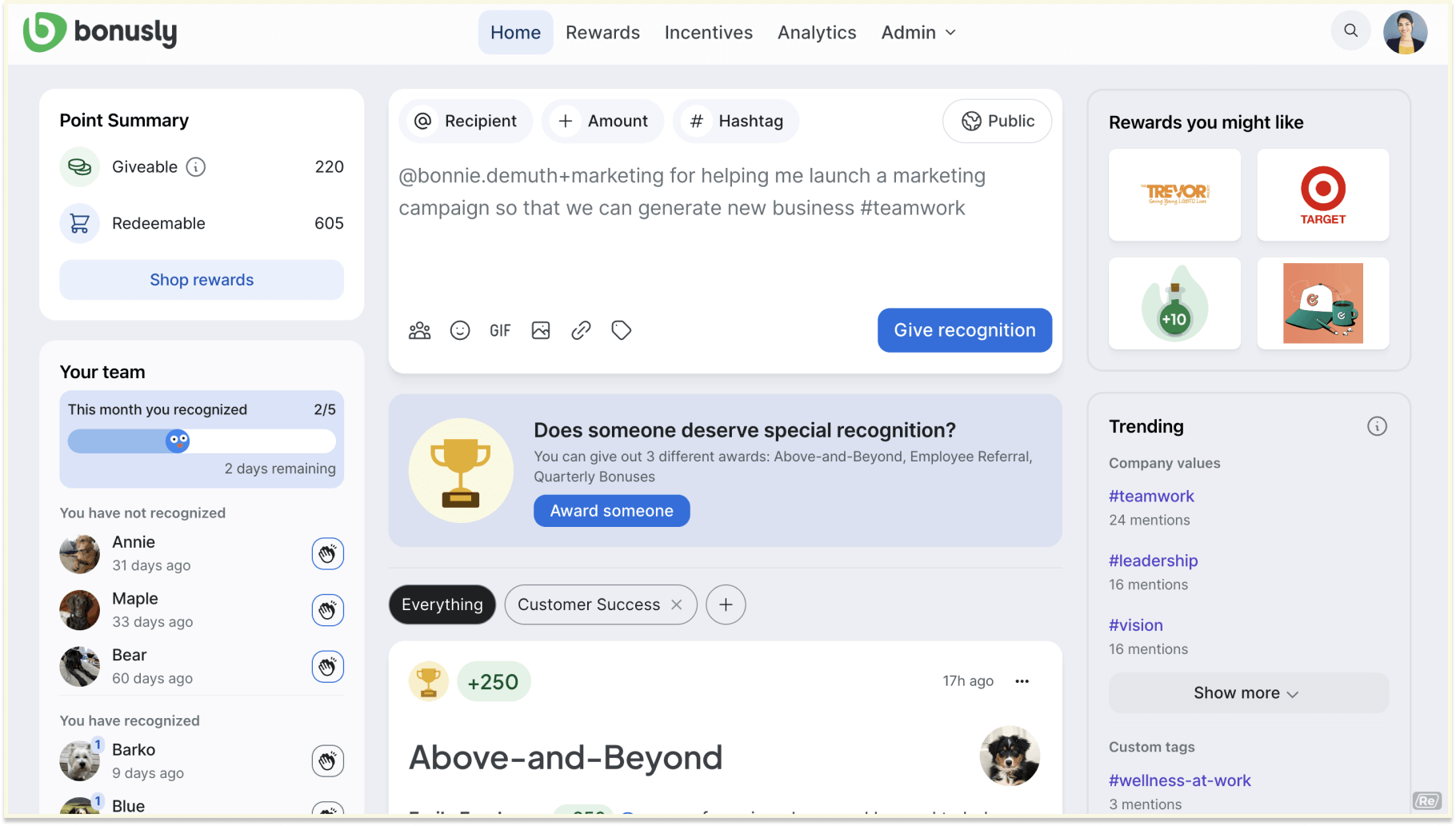
Image source: bonusly.com
Key features:
- Performance appraisal tools support structured employee evaluations.
- Goal-tracking features help employees monitor progress toward their objectives.
- Employee self-service portals allow staff to view performance records.
- HR analytics dashboards provide insights into workforce productivity.
Pros:
- Affordable HR and performance management platform.
- Integration with the ecosystem supports operational workflows.
- Easy to implement for small and mid-sized organizations.
- Customizable performance review workflows.
Cons:
- Advanced analytics features may be limited.
- Interface customization options may require configuration.
- Some integrations require higher-tier plans.
Pricing:
- Free: $0 (free forever)
- Team: $3 per seat (billed monthly)
- Organization: Custom pricing
12. Jostle: Internal communication platform for employee engagement
Jostle is designed to improve internal communication by connecting employees through a centralized digital workplace. It helps teams stay informed, aligned, and engaged with company updates, discussions, and collaboration tools, creating a more transparent and connected organizational culture.
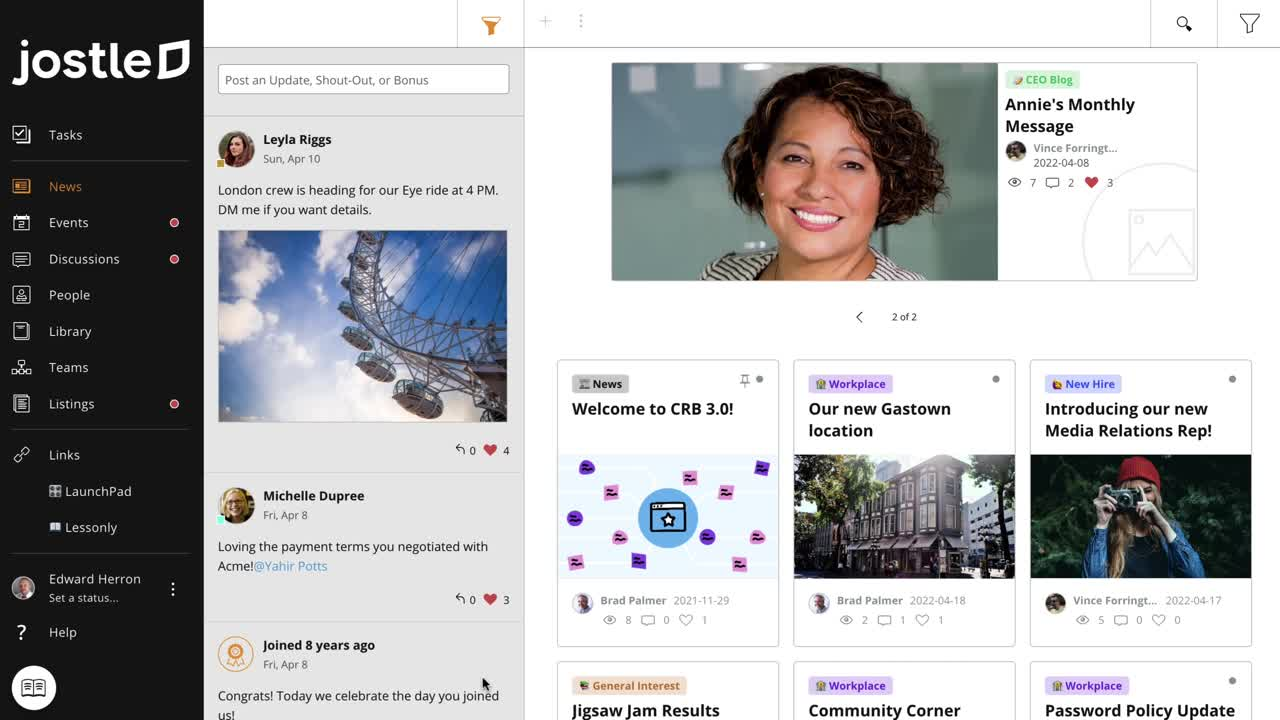
Image source: jostle.com
Key features:
- Performance review systems support structured evaluation cycles.
- Goal management tools align employee objectives with company strategy.
- Workforce analytics dashboards provide insights into employee productivity.
- Talent development features support training and career planning.
Pros:
- Comprehensive enterprise HR and performance management platform.
- Strong analytics capabilities support workforce planning.
- Scalable system suitable for global organizations.
- Integration with other enterprise systems.
Cons:
- Implementation may require significant resources.
- Pricing may be high for smaller organizations.
- Configuration complexity may require specialized expertise.
Pricing:
- Custom pricing
13. Simpplr: AI-powered employee intranet for engagement and knowledge
Simpplr offers an AI-powered intranet that enhances employee engagement by simplifying access to information, communication, and resources. It helps organizations improve knowledge sharing, streamline internal communication, and deliver personalized experiences that keep employees informed, productive, and connected.
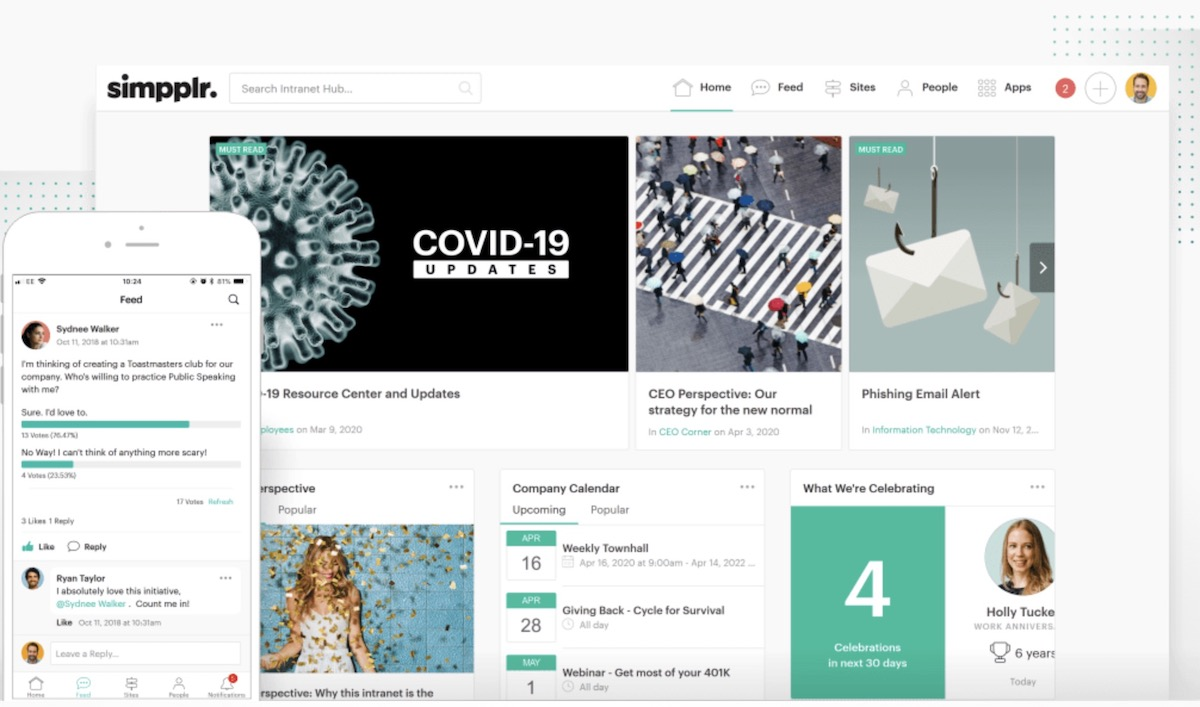
Image source: simpplr.com
Key features:
- OKR tracking tools help teams manage performance goals effectively.
- Continuous feedback systems support ongoing employee development.
- Performance review workflows support structured evaluation processes.
- Analytics dashboards provide insights into goal progress.
Pros:
- Strong OKR management capabilities for goal alignment.
- Continuous feedback features support modern performance management.
- Analytics tools help track performance trends.
- Integration options support HR and collaboration platforms.
Cons:
- Pricing may be higher for smaller organizations.
- Some customization options may require configuration.
- Limited HR functionality compared with full HR systems.
Pricing:
- Custom pricing
14. Staffbase: Internal communication platform for large organizations
Staffbase is a powerful internal communication platform designed for large organizations to streamline employee engagement and information sharing. It helps companies deliver personalized content, manage corporate communications, and connect distributed teams through mobile apps, intranet solutions, and digital signage—ensuring every employee stays informed, aligned, and engaged.
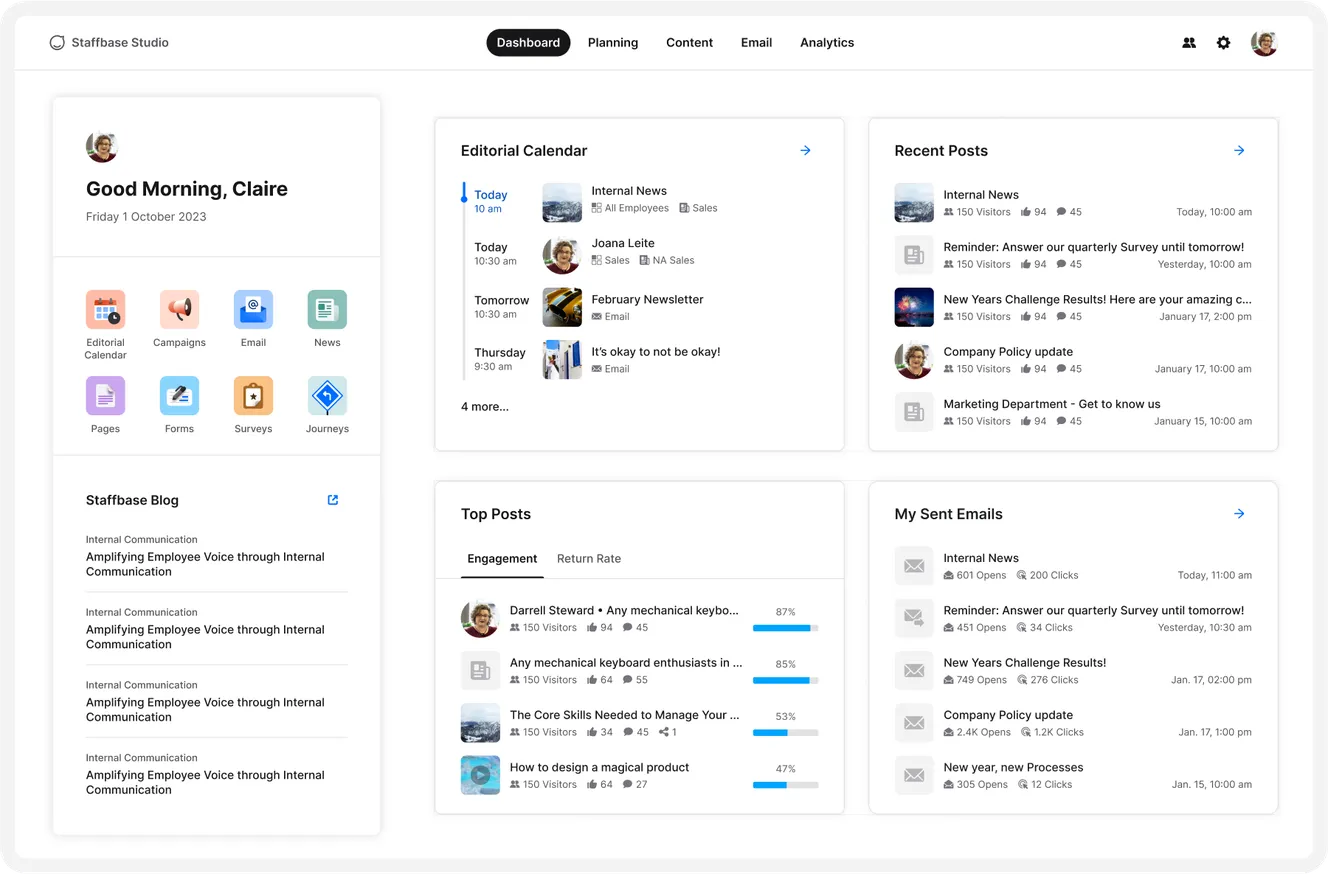
Image source: staffbase.com
Key features:
- Performance review tools support structured employee evaluation processes.
- Learning management tools support employee skill development.
- Goal-tracking systems help employees align their performance with company objectives.
- Analytics dashboards provide insights into workforce performance metrics.
Pros:
- Combines performance management with learning systems.
- Strong analytics tools support workforce development planning.
- Scalable platform suitable for large organizations.
- Integration with enterprise HR systems.
Cons:
- Implementation may require planning and configuration.
- Pricing may be high for small businesses.
- Some advanced features require enterprise plans.
Pricing:
- Custom pricing
15. TINYpulse: Feedback-driven employee engagement platform
TINYpulse is a feedback-driven employee engagement platform that empowers organizations to build a transparent and positive workplace culture. It enables continuous employee feedback through surveys, recognition tools, and performance insights, helping leaders understand team sentiment, boost morale, and drive meaningful improvements across the organization.
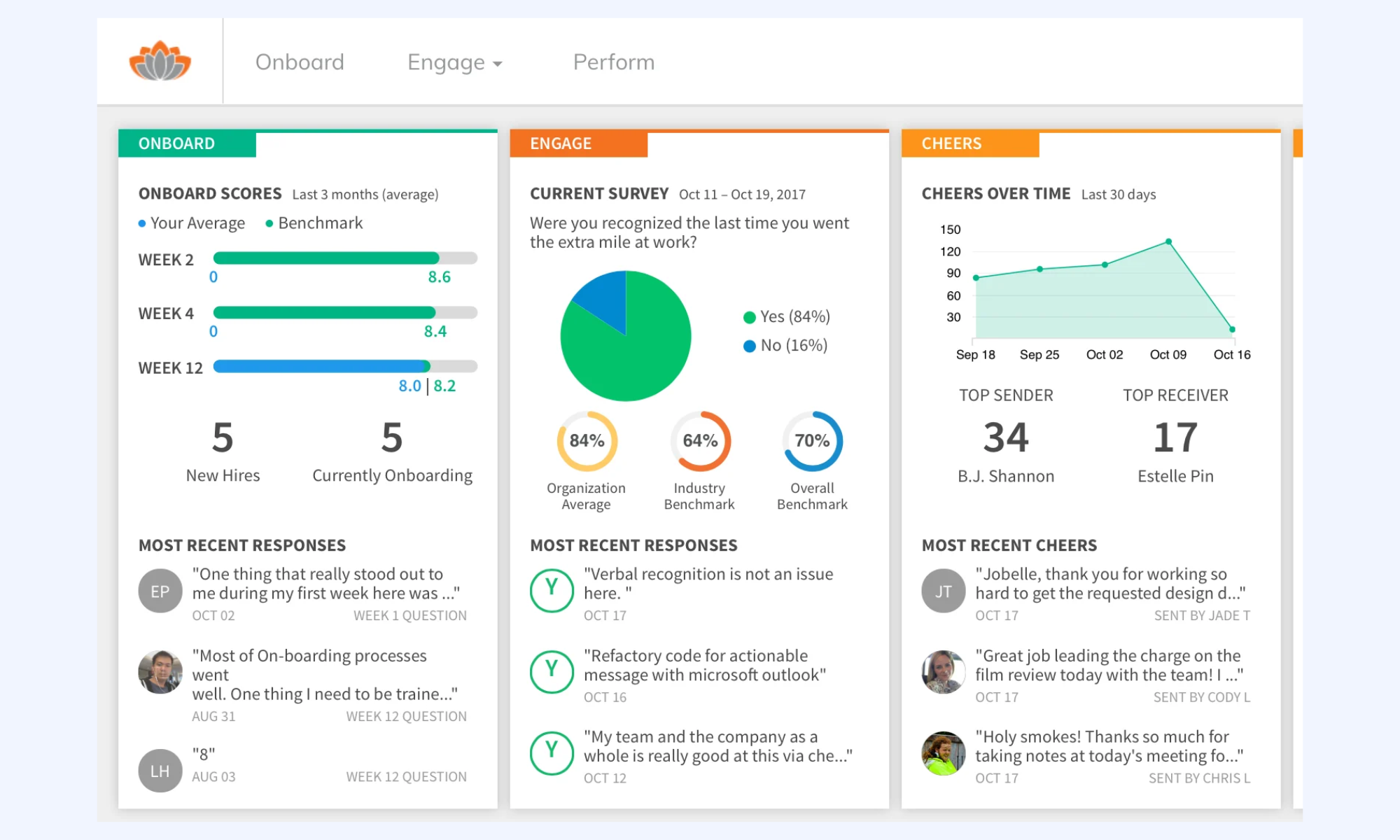
Image source: tinypulse.com
Key features:
- Continuous feedback tools help employees receive regular performance insights.
- Goal management systems track employee objectives and achievements.
- Performance review workflows support structured evaluation cycles.
- Analytics dashboards provide insights into workforce performance trends.
Pros:
- Strong goal tracking features support performance management strategies.
- Continuous feedback tools improve employee engagement.
- Easy to implement for small and mid-sized organizations.
- Analytics tools help HR teams monitor workforce productivity.
Cons:
- Advanced customization options may require configuration.
- Integration capabilities may be limited compared with larger HR systems.
- Some advanced features require premium subscriptions.
Pricing:
- Custom pricing
How to choose the right employee engagement platform for your team
Selecting the right platform is essential for building a motivated and productive workforce. With many options available, focusing on your team's needs and key features can help you make a smarter decision.
- Identify your team's specific needs: Start by understanding what challenges you want to solve, such as low engagement, poor communication, or lack of feedback. This helps narrow down platforms that align with your goals.
- Look for essential features: Choose a platform that offers key capabilities like surveys, recognition tools, performance management, and analytics. Make sure it covers both engagement and productivity needs.
- Check ease of use and adoption: A simple, user-friendly interface ensures employees can easily adopt the platform without extensive training, increasing overall participation.
- Evaluate integration capabilities: The platform should integrate smoothly with your existing tools, like HR systems, communication apps, or project management software, to avoid workflow disruptions.
- Consider scalability and pricing: Select a solution that can grow with your team and fits your budget. Look for flexible pricing plans and features that support long-term business expansion.
Common challenges in implementing employee engagement platforms
While employee engagement platforms offer clear benefits, organizations often face a few practical challenges during implementation. Addressing these early can improve adoption and ensure better results.
- Low employee participation: While employee engagement platforms offer clear benefits, organizations often encounter practical challenges during implementation. Addressing these early can improve adoption and ensure better results.
- Lack of actionable insights: Some platforms collect large amounts of data but fail to translate it into clear, actionable steps. This makes it difficult for managers to implement meaningful changes.
- Poor integration with workflows: If the platform does not integrate well with existing tools like HR software or communication apps, it can disrupt workflows and create extra work for teams.
- Resistance to adoption: Employees and managers may resist using a new system due to habit, lack of training, or uncertainty about its benefits. This can slow down implementation and reduce overall effectiveness.
Conclusion
Employee engagement platforms play a vital role in building a motivated, productive, and connected workforce. By choosing the right solution, organizations can improve communication, gather meaningful feedback, and enhance overall employee experience. While challenges may arise during implementation, the long-term benefits far outweigh the initial hurdles. Platforms like Lark offer a comprehensive approach by combining collaboration, performance tracking, and engagement tools in one place. Investing in the right platform not only strengthens workplace culture but also drives sustainable growth and long-term business success.
FAQs
What features should an engagement platform include?
An effective engagement platform should include pulse surveys, feedback tools, recognition systems, communication features, goal tracking, and analytics. These features help organizations understand employee sentiment, improve collaboration, and make data-driven decisions.
Are employee engagement platforms suitable for small teams?
Yes, employee engagement platforms are suitable for teams of all sizes. Many tools offer scalable plans and simple interfaces that make it easy for small teams to gather feedback, improve communication, and build a positive work culture.
How do engagement platforms improve retention?
Yes, employee engagement platforms are suitable for teams of all sizes. Many tools offer scalable plans and simple interfaces that make it easy for small teams to gather feedback, improve communication, and build a positive work culture.
What is the difference between engagement and experience platforms?
Engagement platforms focus on measuring and improving employee involvement and satisfaction, while employee experience platforms take a broader approach by covering the entire employee journey, including onboarding, development, and overall workplace experience.
Related reading
Table of contents
Start using Lark today

Manage all your work in one place
Boost team efficiency by 10x
Save up to 70% on software costs
Table of contents
Start using Lark today
Manage all your work in one place
Boost team efficiency by 10x
Save up to 70% on software costs
Keep reading








2026 Lark Technologies Pte. Ltd.
Headquartered in Singapore with offices worldwide.






Explore: