Effective Salesforce lead management is the backbone of predictable revenue growth, helping teams capture, track, and convert prospects efficiently. While Salesforce offers deep features and powerful customization, many organizations find it challenging to adapt quickly, maintain complex configurations, and ensure smooth usability. This guide breaks down Salesforce's lead management process, core features, and practical best practices for improving qualification and conversion. It also highlights the common obstacles teams face inside Salesforce best practices to streamline workflows.
Transform your lead management process today
Before starting: What is a sales lead?
A sales lead is an individual or organization that has shown interest in a product or service and may eventually become a paying customer. Leads typically enter the funnel through channels such as website forms, social media, referrals, events, or outbound outreach. They represent the earliest and most crucial stage of the revenue pipeline, where information remains limited, and qualification is just beginning. In Salesforce lead management, a lead is a record that captures essential details such as contact information, source, engagement history, and potential needs. Salesforce allows teams to organize, score, and track. These lead systematically to determine which prospects are ready for follow-up. Effective lead management in Salesforce processes ensures leads are identified early, routed to the right reps, and nurtured through . This reduces leakage, accelerates response times, and increases the likelihood of converting raw interest into meaningful sales opportunities.
What is a qualified sales lead
A qualified is a prospect who meets predefined criteria, indicating they are a strong fit for your product or service and are more likely to convert into a customer. Unlike general leads who only show initial interest, qualified leads demonstrate more apparent intent, buying readiness, or alignment with your ideal customer profile. Qualification typically considers factors such as budget, authority, need, timeline, engagement signals, and past interactions.
Sales teams use structured frameworks—like BANT, MEDDIC, or —to assess whether a lead should move forward in the pipeline. Marketing teams may first identify marketing-qualified leads (MQLs), which sales then validate as sales-qualified leads (SQLs). A well-defined qualification process ensures reps spend time on high-value prospects rather than chasing unproductive opportunities. It also improves forecasting accuracy, strengthens pipeline health, and supports smoother handoffs between marketing and sales, ultimately increasing the efficiency and effectiveness of overall lead management.
Types of sales leads used in Salesforce pipelines
Types of sales leads in Salesforce pipelines help teams segment prospects for faster qualification and smoother workflows. Understanding these categories is also essential for applying Salesforce lead management best practices throughout the funnel.
- Inbound vs. outbound leads: Inbound leads originate from high-intent actions such as content downloads or demo requests, making them ideal for fast engagement. Outbound leads come from proactive outreach, where strong Salesforce duplicate- prevent overlaps and improve targeting.
- Marketing-generated vs. sales-sourced leads: Marketing-generated leads come from campaigns, events, ads, and , requiring structured scoring for better prioritization. Sales-sourced leads rely on prospecting and research, benefiting from Salesforce lead management best practices to keep data clean and actionable.
- Partner and referral leads: Partner and referral leads often convert faster because trust is already established. Applying strong Salesforce duplicate management lead conversion rules ensures clean records and accurate attribution.
- Event and web form leads: Event and form submissions create high-volume lead inflows that need fast routing. With Salesforce lead management best practices, teams can process these leads efficiently and maintain high data quality.
Core Salesforce lead management features teams rely on
Understanding the core Salesforce lead management features helps teams optimize every stage of prospect handling. These capabilities form the foundation of an effective Salesforce lead management process and improve overall lead management in Salesforce.
- Lead scoring and field updates: Lead scoring assigns values based on behavior and fit, helping reps prioritize high-intent prospects. ensure the scoring logic stays accurate as new data flows into Salesforce.
- Assignment queues and approvals: Assignment queues distribute leads to the right reps based on rules such as territory or expertise. Approvals add oversight for exceptional cases, supporting a structured Salesforce lead management process.
- Campaign attribution: Campaign attribution tracks in which marketing activities influenced each lead, giving teams visibility into channel performance. This and strengthens lead management in Salesforce through data-driven decisions.
- Duplicate detection tools: Salesforce's matching rules and alerts help prevent duplicate records. These tools protect data accuracy and enhance overall Salesforce lead management features.
- Reporting dashboards: These metrics such as lead volume, velocity, and conversion progress. They play a key role in Salesforce lead management by helping managers monitor performance and refine strategies.
Salesforce lead management process explained step-by-step
Understanding the Salesforce lead management process step-by-step helps teams turn raw inquiries into predictable revenue. Below is a concise five-step workflow you can apply or adapt to inside Salesforce.
Step 1: Capture leads
Collect prospects from web forms, events, ads, and integrations into Salesforce as standardized lead records. Ensure key fields (source, contact info, interest) are captured to enable and scoring.
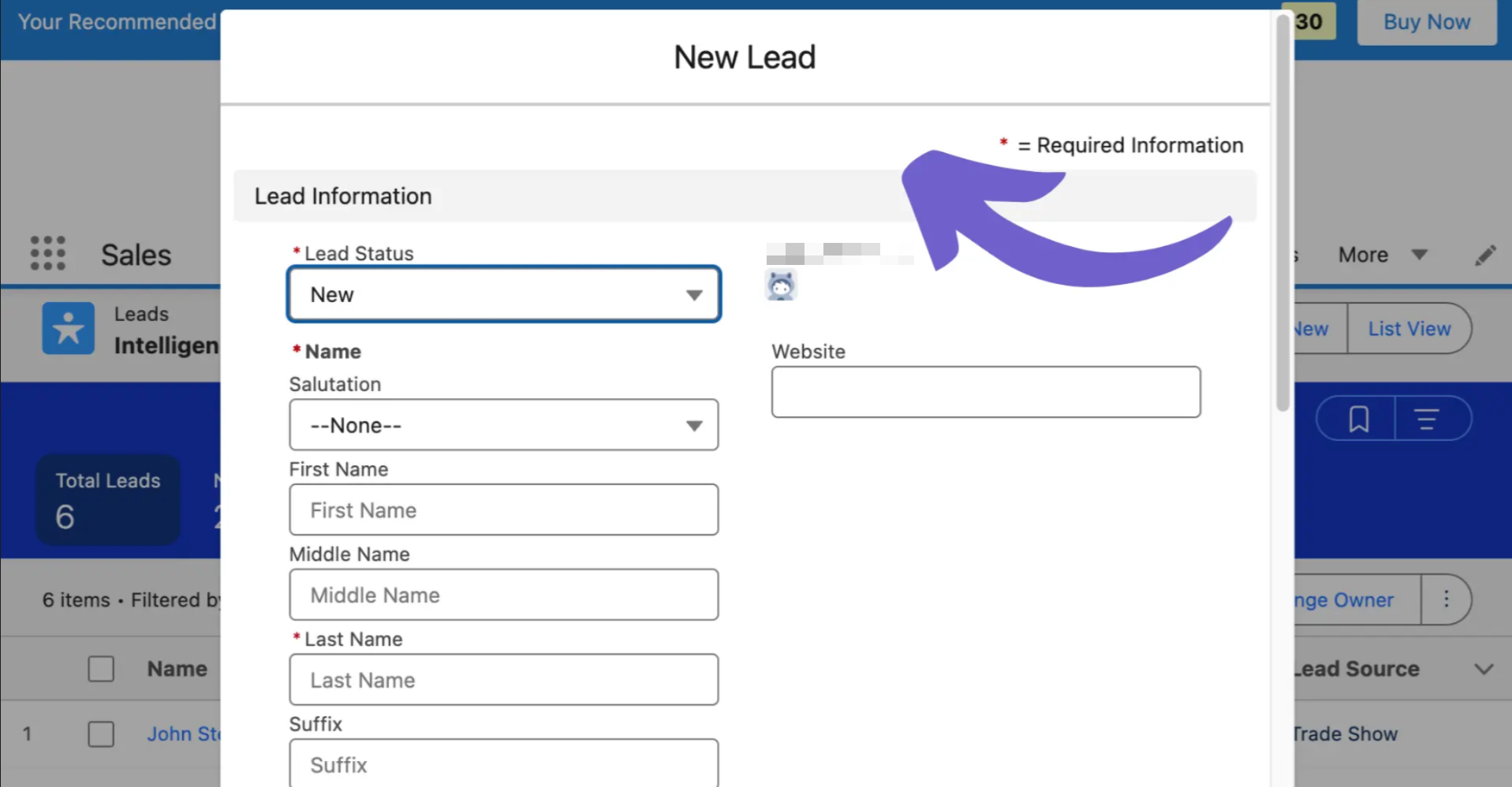
Image source: salesforce.com
Step 2: Qualify leads
Apply lead-scoring rules and qualification criteria (budget, authority, need, timeline) to separate high-value prospects from those needing nurture. Mark leads on MQLs or SQLs to clarify next steps and minimize wasted outreach.
Step 3: Assign and route
Using , queues, or territory models to route leads instantly to the correct reps or teams. Incorporate escalation and approval steps for exceptions to keep ownership clear and response times fast.
Step 4: Engage and nurture
Execute tailored outreach sequences via email, calls, and tasks, and log all activity in the lead record. For lower-intent leads, run nurture campaigns and re-score periodically until they meet conversion criteria.
Step 5: Convert and analyze
Convert qualified leads into accounts, contacts, and opportunities, and continue the sales process with . Regularly review conversion metrics, source attribution, and process bottlenecks to refine rules and improve outcomes.
Salesforce lead management best practices
Improving Salesforce requires clarity, consistency, and strong execution across teams. These best practices help ensure every lead moves smoothly from initial interest to qualified opportunity.
- Designing lead stages that mirror real buyer journeys: Lead stages should reflect how prospects actually evaluate and purchase, not just internal processes. Mapping stages to genuine behaviors creates and more precise next steps for reps.
- Shortening response times: Faster follow-ups dramatically increase conversion rates and reduce lead decay. Automated routing, reminders, and task triggers can help ensure no inquiry sits unaddressed.
- Consistent qualification criteria: Standardized scoring, fields, and definitions ensure all reps evaluate leads the same way. This improves forecast accuracy and between marketing and sales.
- Reducing conversion friction: Minimizing required fields, simplifying conversion screens, and reducing manual steps keeps reps moving quickly. Lower friction leads to faster handoffs and more accurate data.
- Enabling frontline collaboration across chat, tasks, and docs: Centralizing discussions, documents, and follow-ups prevents context switching and lost information. When reps collaborate in real time, qualification decisions become faster and more aligned.
Challenges and shortcomings of Salesforce lead management
Despite its feature depth, many teams encounter practical obstacles when using Salesforce for everyday lead management:
- Complex setup and heavy administration: , routing rules, and scoring models often requires technical support or dedicated admins, slowing down operational changes.
- Rigid workflows: Adapting pipelines to new campaigns, product lines, or regional sales processes can be time-consuming, limiting agility.
- High total cost of ownership: Licensing costs combined with implementation, training, and customization expenses make scaling expensive, especially for growing teams.
- Slower team collaboration: Lead discussions, , and follow-ups occur outside core CRM screens, leading to context switching and communication gaps.
- Duplicate record challenges: Even with built-in tools, detection and cleanup remain manual and disruptive, slowing lead conversion.
- Steep learning curve: Reps often struggle with usability and data entry requirements, reducing and data accuracy.
These challenges have led many businesses to explore more streamlined, collaboration-first platforms that allow sales teams to move faster with less operational friction—particularly solutions designed for flexible workflows and real-time coordination rather than heavy configuration.
Unlock better efficiency across your entire lead cycle
Lead management reimagined: How Lark outperforms Salesforce
Modern sales teams need tools that move as quickly as their buyers, but traditional CRMs often create more administrative overhead than they deliver in efficiency. Salesforce is powerful, yet its complexity, rigid workflows, and reliance on technical support limit agility for many organizations. As sales cycles tighten and becomes more critical, teams require platforms that adapt instantly to changing strategies. This is where a flexible, can dramatically transform how leads are handled end to end.
Below is how reimagines lead management to outperform Salesforce in speed, simplicity, and real-time execution.
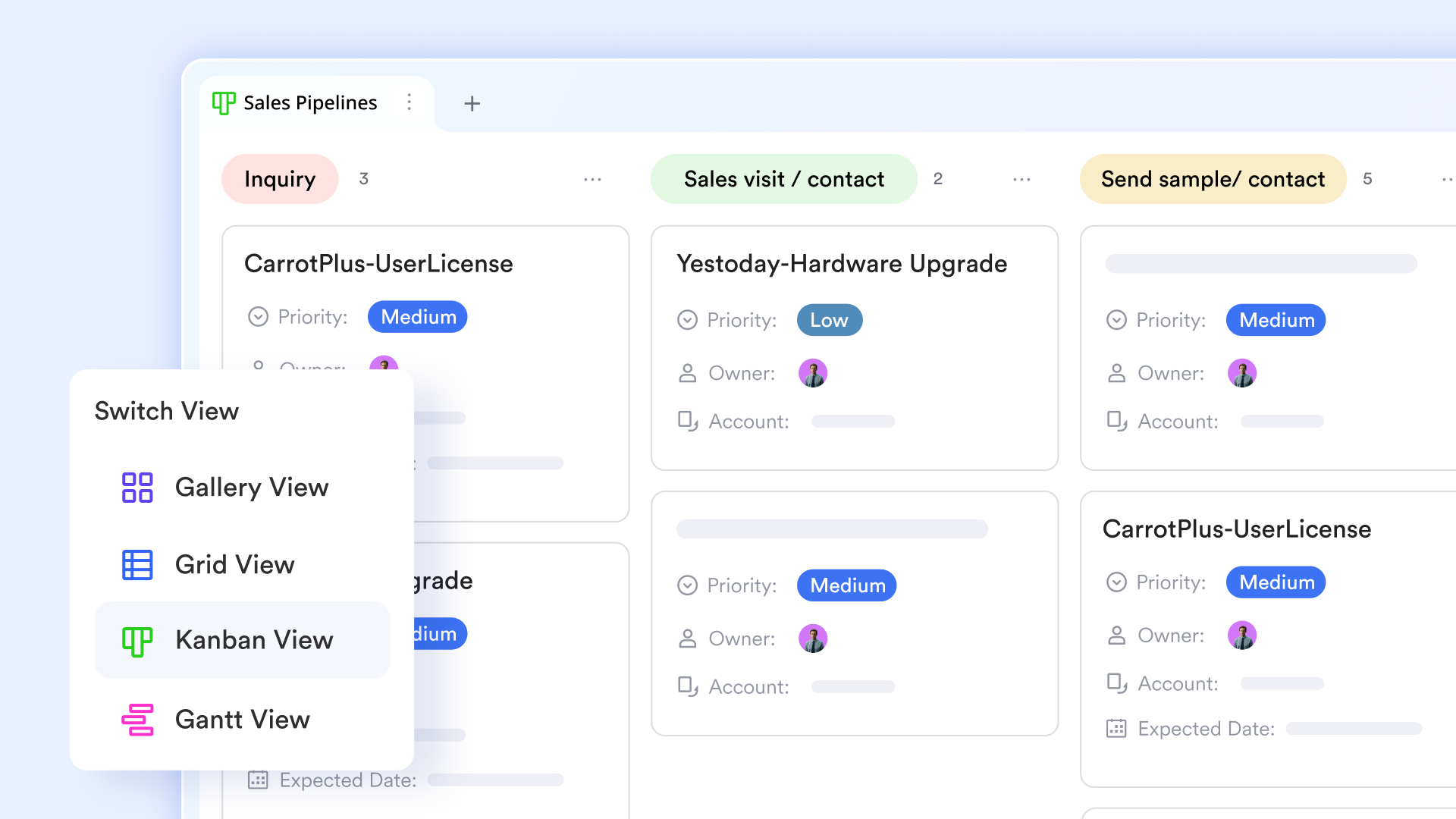
Flexible pipeline creation and updates
Salesforce shortfall: Pipeline setup in Salesforce depends on rigid objects, page layouts, and validation rules that often require admin or consultant involvement. Modifying deal stages or qualification workflows can take days or weeks, slowing response to changing sales strategies.
How Lark excels: With , sales teams build and adjust pipelines visually using tables, forms, and . New stages, scoring criteria, or routing logic can be added instantly by managers without technical support. This enables fast adaptation to new campaigns, markets, or product launches—keeping workflows aligned with real-world selling, rather than locked into preset CRM structures.
Rapid reporting and performance visibility
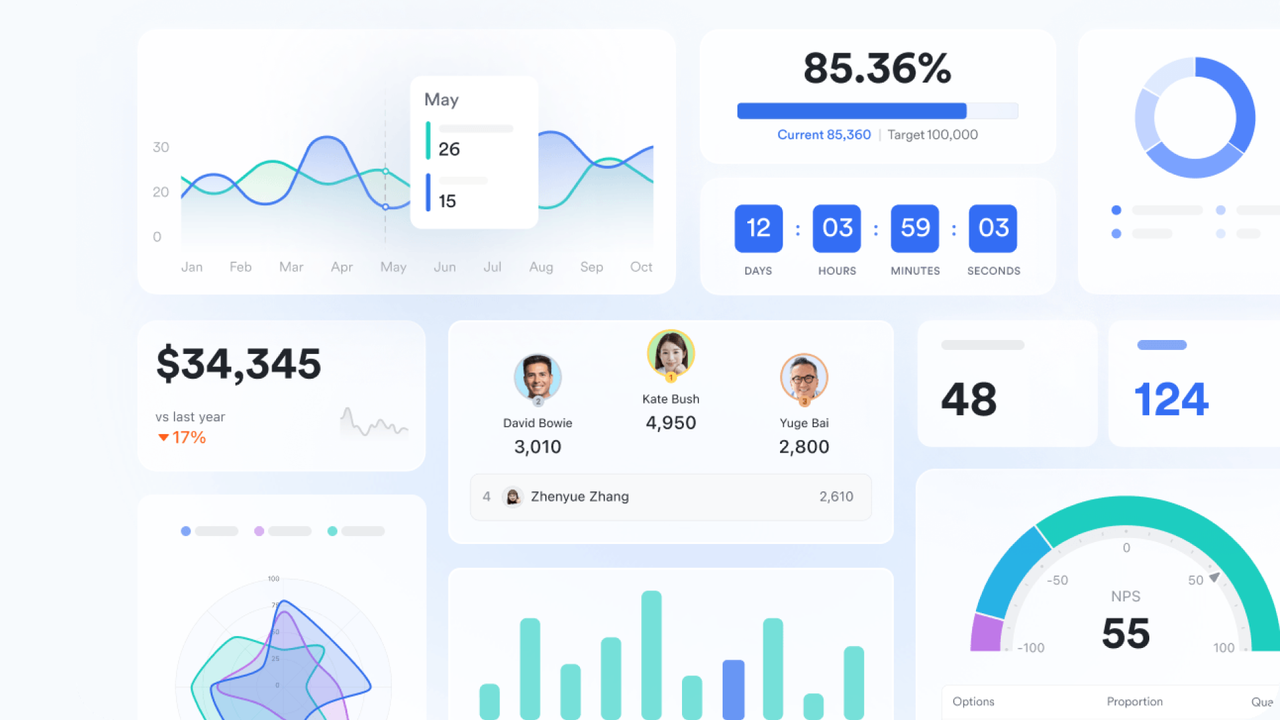
Salesforce shortfall: Customizing reports or pipeline views often requires complex setups and training. Managers typically depend on admin support to modify dashboards or generate new insights, creating delays between performance discovery and corrective action.
How Lark excels: allows sales leaders to build custom views and performance summaries instantly from live data. Lead velocity, follow-up compliance, and conversion progress can be tracked without waiting for backend changes or training sessions. This empowers faster coaching decisions and campaign corrections that Salesforce cannot provide at the same operational speed.
Lead routing and follow-ups via automated workflow
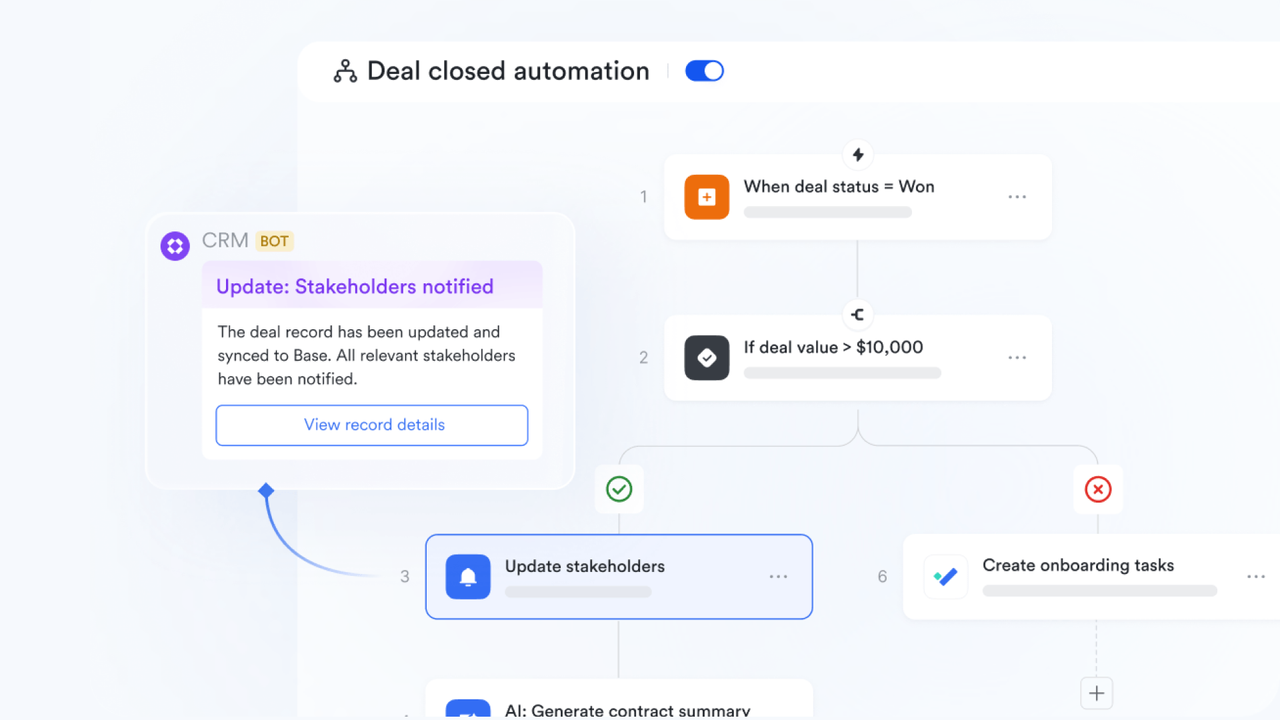
Salesforce shortfall: Salesforce assignment rules and workflow automation require careful configuration, testing, and backend updates. Changes often depend on technical administrators, delaying optimization and experimentation. Missed routing tweaks lead to slower responses and lost opportunities.
How Lark excels: Lark uses to instantly route leads based on location, interest level, ownership rules, or response priority. Follow-up tasks, reminders, and status updates trigger automatically when a lead is received or a stage changes. Teams can adjust workflows themselves in minutes, enabling continuous improvement and faster lead engagement—without IT gatekeeping.
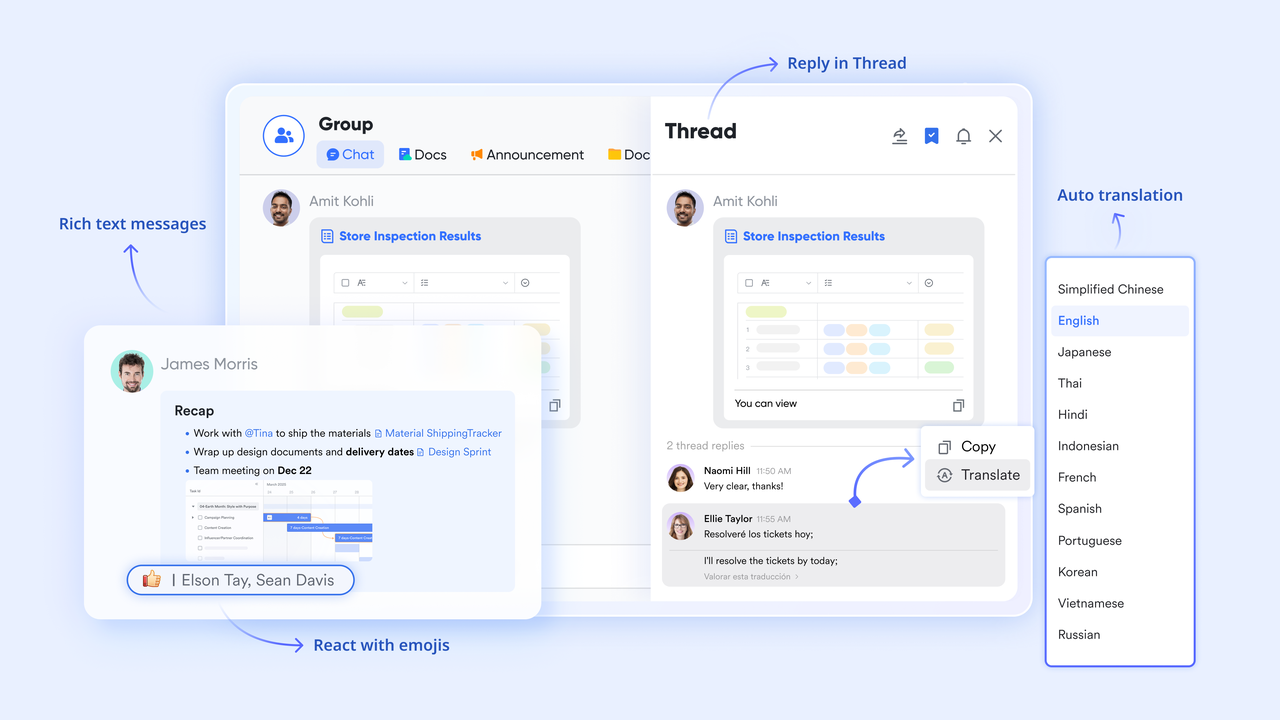
Real-time sales collaboration & communication
Salesforce shortfall: Communication exists outside core Salesforce screens—through email or separate chat tools—causing context loss and forcing reps to juggle platforms. Collaboration around deal qualification or urgent prospects is often delayed or incomplete.
How Lark excels: ties discussions directly to lead workflows. Sales reps instantly flag new prospects, start for complex deals, and share documents without leaving their pipeline workspace. This keeps conversations contextual, speeds decision-making, and reduces communication breakdowns that frequently slow Salesforce lead qualification cycles.
Through powerful task management capabilities
Salesforce shortfall: Follow-ups are frequently manual, and task tracking is disconnected from daily workflows. Reps forget actions, managers struggle to enforce deadlines, and accountability slips—negatively impacting response times and conversions.
How Lark excels: Lark Tasks assigns ownership and deadlines automatically when workflows trigger, such as when leads change stage or require contact. Reps receive instant notifications and reminders, while managers maintain visibility over completion status. This automation creates a reliable follow-up system that minimizes missed opportunities and improves response discipline beyond what Salesforce achieves with manual task handling. 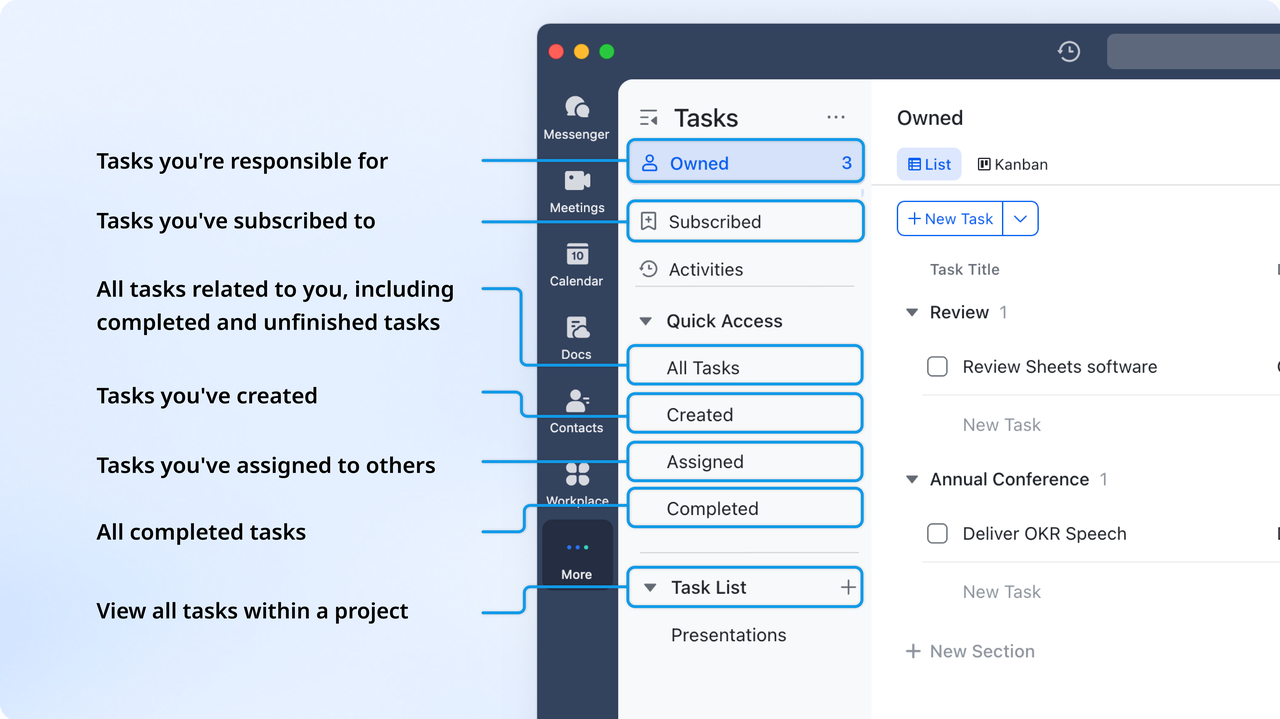
:
- Starter plan: Free forever plan that includes 11 powerful tools for up to 20 users. It also comes with 100GB of storage, 1000 automation runs, AI translations, and more.
- Basic plan: $6/user/month (billed annually) for up to 500 users. It includes everything in Starter plus group calling for up to 500 attendees, 5TB of storage, 1000 automation runs, and more. For more details, please .
- Pro plan: $12/user/month (billed annually) for up to 500 users. It includes everything in Basic plus group calling for up to 500 attendees, 15TB of storage, 50,000 automation runs, and more.
- Enterprise plan: for custom pricing. Supports unlimited users and includes even more automation runs and advanced security, compliance, and management features.
For small teams with simple communication needs

18 months message history
1000 Base automation runs/month
2000 rows per table in Base
Most POPULAR
For companies with comprehensive collaboration and management needs
Unlimited message history
500-participant video meetings
50k Base automation runs/month
20k rows per table in Base
For large companies with advanced security and organizational management needs
Get a personalized demo and pricing
Unlimited message history
500-participant video meetings
15 TB storage + 30 GB storage/user
500k Base automation runs/month
50k Base automation runs/month
Most POPULAR
For companies with comprehensive collaboration and management needs
Unlimited message history
500-participant video meetings
50k Base automation runs/month
20k rows per table in Base
Salesforce vs Lark: Feature comparison for lead management
In conclusion, Zoho Bug Tracker is built for structured, formal pipelines, offering robust control but requiring heavy setup and manual routing. Conversely, Lark prioritizes dynamic collaboration and speed, featuring instant visual workflow customization, automated routing, and real-time team chat. Essentially, choose Zoho for stable control and Lark for workflow flexibility and quick communication.
Conclusion
Effective lead management is essential for driving predictable growth, and while Salesforce provides a comprehensive framework for capturing, routing, and converting leads, many teams still struggle with complexity, rigid processes, and slow collaboration. This guide explored what sales leads are, how Salesforce's works, the features teams rely on, and the best practices that support stronger qualification and smoother conversions. We also reviewed the common challenges businesses face—ranging from administrative overhead to duplicate handling and limited real-time coordination.
For teams that want a faster, more flexible, and collaboration-first alternative, offers a unified workspace that brings pipelines, automation, chat, tasks, and documents into one. With instant workflow adjustments, automated routing, real-time communication, and effortless reporting, Lark empowers sales teams to move with the speed of modern selling demands.
Discover smarter ways to streamline your lead pipeline
FAQs
How can AI enhance lead qualification accuracy beyond rule-based scoring?
AI analyzes behavior patterns, intent signals, and historical outcomes to identify high-value prospects with far greater precision than fixed scoring rules. It continuously learns from conversions and rep interactions to update predictions in real time. With platforms like Lark, teams can pair AI insights with automated workflows to speed up and improve the accuracy of qualification.
What metrics best predict lead-to-revenue conversion?
Key indicators include lead response time, qualification rate, pipeline velocity, and multi-touch engagement depth. Tracking these metrics helps identify bottlenecks and highlight which channels produce the most sales-ready prospects. Lark simplifies performance monitoring through customizable views and fast, collaborative reporting.
How do distributed sales teams manage leads across time zones?
They rely on shared workspaces, automated routing, and clear ownership rules to maintain continuity across regions. Centralized prevents delays caused by asynchronous handoffs. Lark enhances this by unifying chat, tasks, and workflows, so global teams stay aligned in real time.
Can workflow automation replace manual sales coordinators?
Automation can handle routing, reminders, status updates, and task assignments, reducing repetitive coordination work. This frees teams from admin overhead and ensures no lead is delayed due to human gaps. Lark amplifies this with flexible, no-code workflows that adapt instantly to changing needs.
What common mistakes cause lead handoff failures between marketing and sales?
Inconsistent qualification criteria, unclear ownership, and poor communication often lead to dropped or mishandled leads. Missing context or incomplete data also slows follow-ups and hurts conversion. Lark solves these issues by centralizing , ensuring both teams share the same information and workflows.
Related reading