Managing third-party relationships has become more critical than ever as businesses increasingly rely on external vendors, suppliers, and partners to operate. The best vendor risk management software can help assess supplier vulnerabilities, monitor compliance, track contract obligations, and mitigate potential threats before they escalate. Many vendor risk management platforms offer intelligent automation, real-time risk scoring, and comprehensive reporting, making third-party oversight simpler and more reliable.
From basic vendor onboarding to advanced continuous monitoring and regulatory compliance, these solutions offer capabilities tailored to businesses of all sizes and across industries. This guide explores the ultimate comparison of the best vendor risk management software solutions businesses trust. Let's dive in.
Key takeaways: 5 leading tools for vendor risk management
Choosing the right vendor risk management software can significantly improve how effectively businesses identify, assess, and mitigate third-party threats. The following tools stand out for their ability to streamline , monitor vendor security posture, and maintain regulatory compliance across the supply chain.
1. Lark: Lark offers a collaborative workspace to organize vendor documentation, manage compliance workflows, and centralize third-party communications.
2. OneTrust: OneTrust provides comprehensive third-party risk assessments, automated vendor questionnaires, and privacy compliance management.
3. UpGuard: UpGuard delivers continuous vendor security monitoring, real-time risk scoring, and detailed breach detection capabilities.
4. BitSight: BitSight offers data-driven security ratings and performance analytics, giving businesses clear visibility into vendor cyber risk levels.
5. SecurityScorecard: SecurityScorecard provides instant security ratings across ten risk categories, enabling organizations to benchmark vendor performance.
Overview: Top 5 products used in vendor risk management
Choosing the best solution depends on business size, industry requirements, and the level of third-party oversight needed. Below is a quick comparison of five leading vendor risk management solutions that help businesses assess supplier vulnerabilities, strengthen third-party relationships, and maintain a more secure and compliant vendor ecosystem.
Information source: Official vendor sites
Update time: 2026-03-15
Note: Pricing and plan details reflect publicly available data as of the update date and may vary based on region, billing cycle, and number of agents.
Scale your third-party governance with Lark
What is vendor risk assessment software?
Vendor risk assessment software is a digital solution that helps businesses evaluate, monitor, and manage the risks associated with third-party vendors, suppliers, and partners on a single centralized platform. These tools allow organizations to conduct thorough , track compliance obligations, automate vendor questionnaires, and analyze security vulnerabilities through detailed dashboards and reporting features. By providing real-time visibility into vendor performance and risk exposure, they make it easier to identify potential threats before they impact business operations. Many companies rely on vendor risk management platforms to oversee large supplier networks without requiring extensive manual processes. These solutions often include features such as automated risk scoring, compliance tracking, contract monitoring, and continuous security assessments.
For organizations that need deeper third-party oversight, the best vendor risk assessment software can also support a structured , providing end-to-end visibility into vendor relationships, financial obligations, and procurement workflows, helping businesses make more informed sourcing decisions and build a stronger, more resilient supply chain.
Criteria for choosing software for vendor risk management
With so many platforms available, selecting the best vendor risk management software depends on your organization's size, industry requirements, and the complexity of your third-party relationships. The right solution should help you assess vendor risks efficiently, maintain compliance, and monitor supplier performance with minimal manual effort. Here are five important factors to consider when choosing the best vendor risk management software for your business.
- Look for comprehensive risk assessment capabilities: The most important feature of any vendor risk management platform is the ability to evaluate third-party risks accurately. Strong platforms apply principles to vendor oversight, systematically identifying vulnerabilities, categorizing threats by severity, and generating detailed reports so organizations can understand their full exposure across the entire supplier network.
- Choose a platform with automated monitoring and alerts: The best vendor risk management software should continuously monitor vendor security posture and send real-time alerts when new risks emerge. Automated monitoring reduces manual workload and ensures businesses can respond to potential threats before they escalate into serious operational or compliance issues.
- Check integration with existing business systems: Some organizations require seamless integration with procurement tools, ERP systems, or HR platforms. Choose a solution that connects with your existing technology stack and syncs vendor data automatically, so risk information stays accurate and accessible across all departments.
- Look for customizable workflows and reporting dashboards: A strong vendor risk platform should allow organizations to build customized assessment workflows, scoring models, and reporting dashboards. This flexibility helps the software align with your specific industry requirements and internal risk management policies rather than applying a rigid one-size-fits-all approach.
- Consider pricing, scalability, and data security: Before committing to a platform, evaluate whether it offers flexible pricing tiers that scale with your vendor portfolio. Also, applying sound risk analysis in principles, ensure the software includes enterprise-grade security features such as encrypted data storage, access controls, and audit trails to protect sensitive vendor and compliance information.
Master the entire vendor lifecycle without tool sprawl with Lark
Full list: 10 platforms for vendor risk management
1. Lark: Vendor collaboration and risk management platform
Lark is an all-in-one collaborative workspace designed to help businesses centralize vendor communications, streamline compliance workflows, and manage third-party documentation within a single connected platform. With integrated messaging, automated approval workflows, and real-time document collaboration, gives procurement and risk management teams a more organized and transparent way to oversee vendor relationships without switching between multiple disconnected tools.
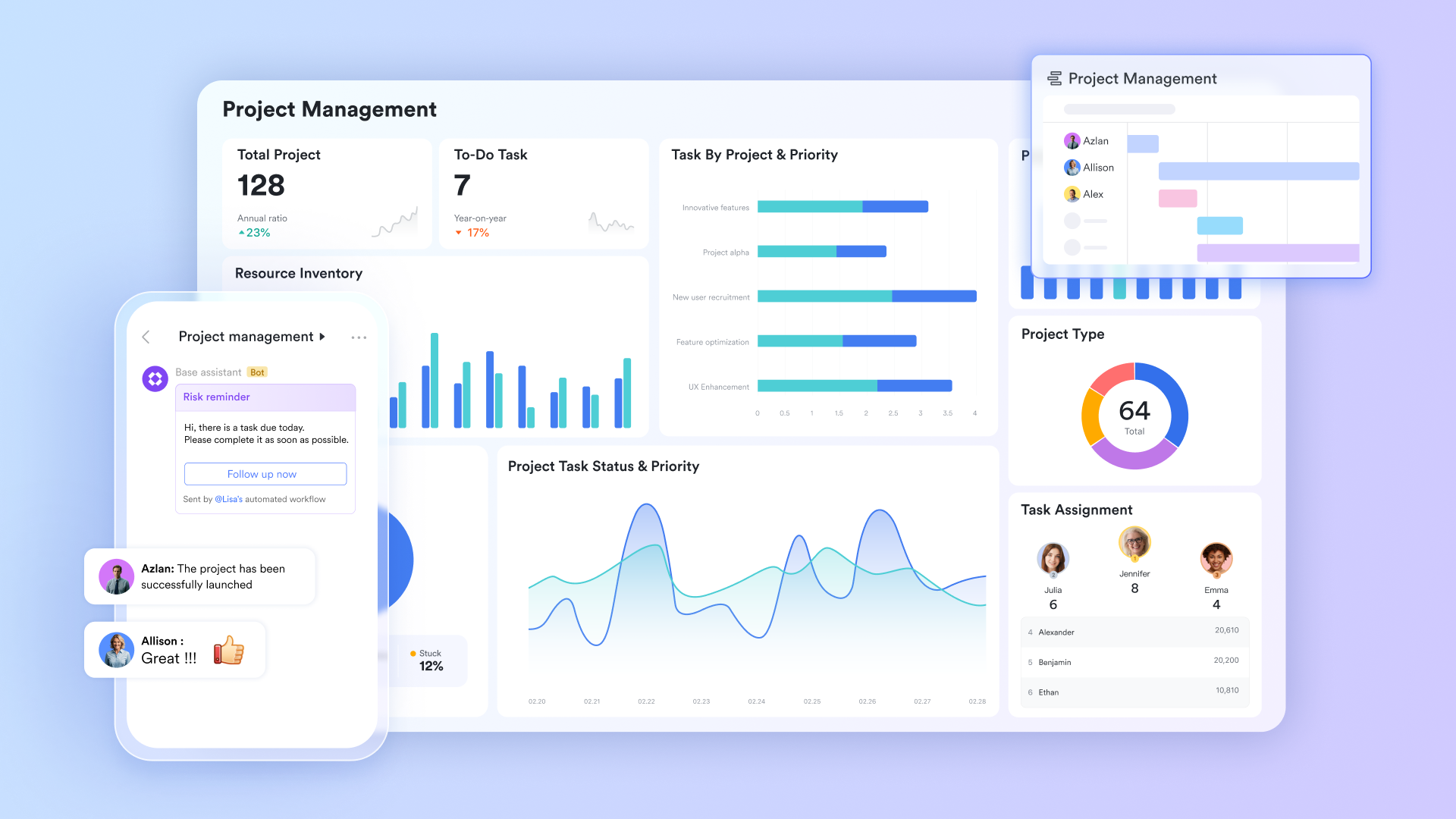
Standardized risk intake
allows organizations to create professional, external-facing intake forms specifically for vendor risk assessments. When a new vendor submits their security documentation and compliance details through Form view, the data is instantly mapped into a centralized, structured database. This ensures that every third-party entry follows a standardized risk-profiling process, eliminating manual data entry and ensuring that critical security questions are answered before a partnership begins.
Real-time risk analytics
Lark Base Dashboards offer a high-level visualization of the organization's entire vendor ecosystem and its associated risk surface. Leadership can use Lark Base dashboards to generate live charts that categorize vendors by risk level, geographic location, or spend. Because these dashboards pull data directly from the underlying records, they provide a "single source of truth" for board-level reporting and help identify systemic risks across the supply chain at a glance. 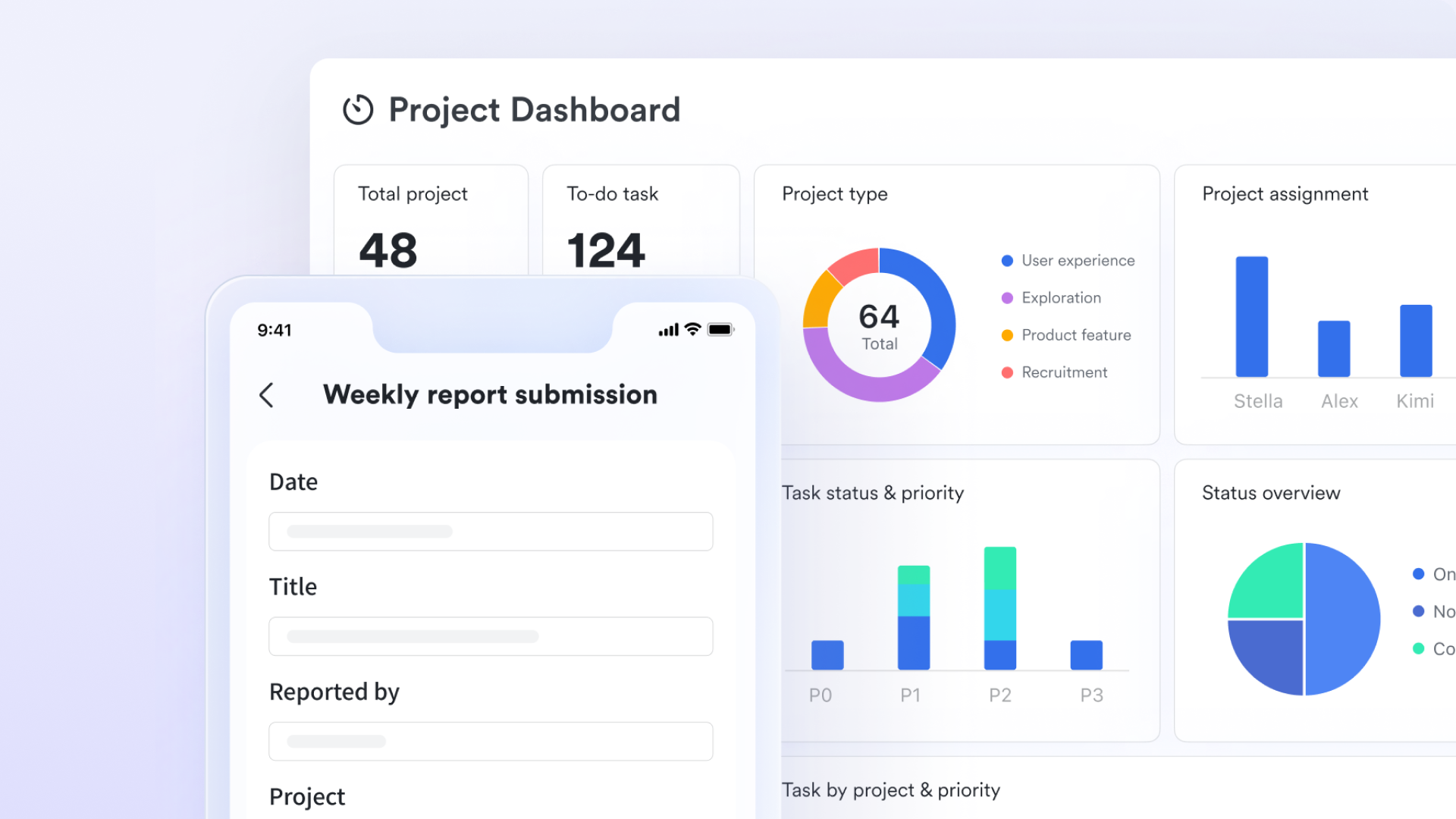
Proactive compliance monitoring
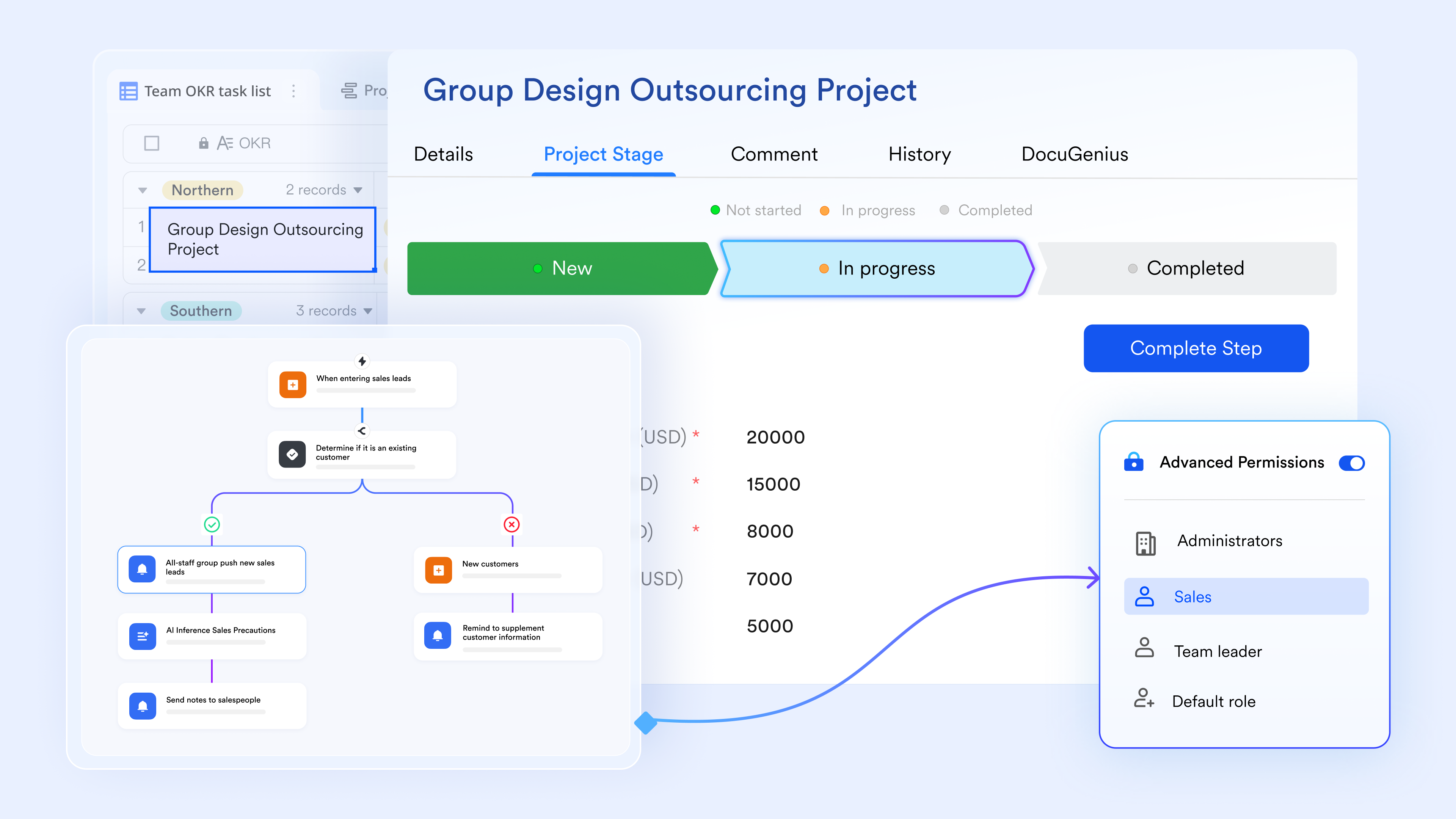
To mitigate the risk of outdated certifications, Lark Base uses built-in automation triggers to monitor the expiration dates of SOC 2 reports, ISO certificates, and insurance policies. can be configured to automatically send "Renewal Required" alerts to both internal owners and external vendors weeks in advance. If a document expires without a replacement, the system can autonomously update the vendor's status to "Non-Compliant," providing a real-time safety net for the procurement team.
Secure remediation channels
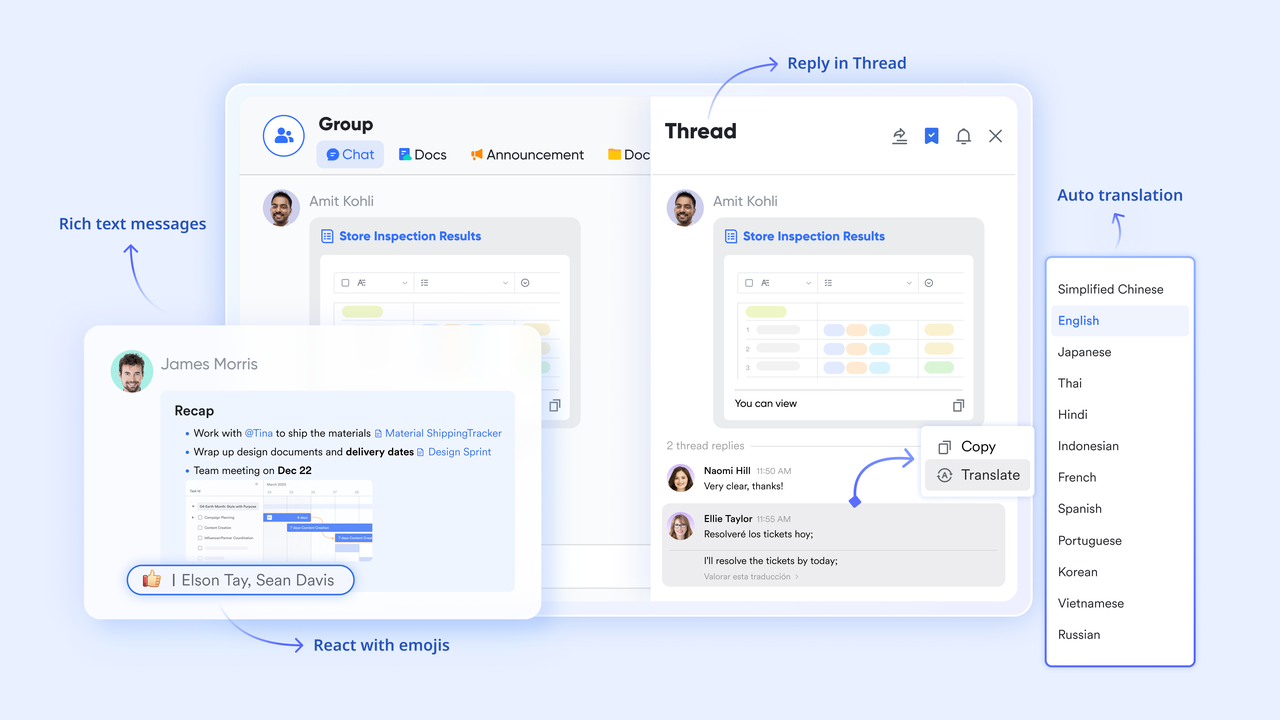
When a vulnerability is identified during a vendor audit, Lark Messenger provides a secure, encrypted environment for risk remediation. Teams can create "External Channels" within to invite vendor representatives into a dedicated chat. This enables the private exchange of sensitive Corrective Action Plans (CAPs) and real-time tracking of security patches, keeping all risk-related communication out of fragmented email threads and into a searchable, auditable record.
Automated risk mitigation workflows
engine enables teams to build sophisticated, multi-tier routing for vendor evaluations. For instance, if a vendor is flagged as "High Risk" due to data access levels, Lark Approval can automatically route the request to the Legal and IT Security heads for a mandatory audit. This creates a hard governance gate, ensuring that no contract is finalized until all risk-mitigation sign-offs are digitally recorded and archived within the system.
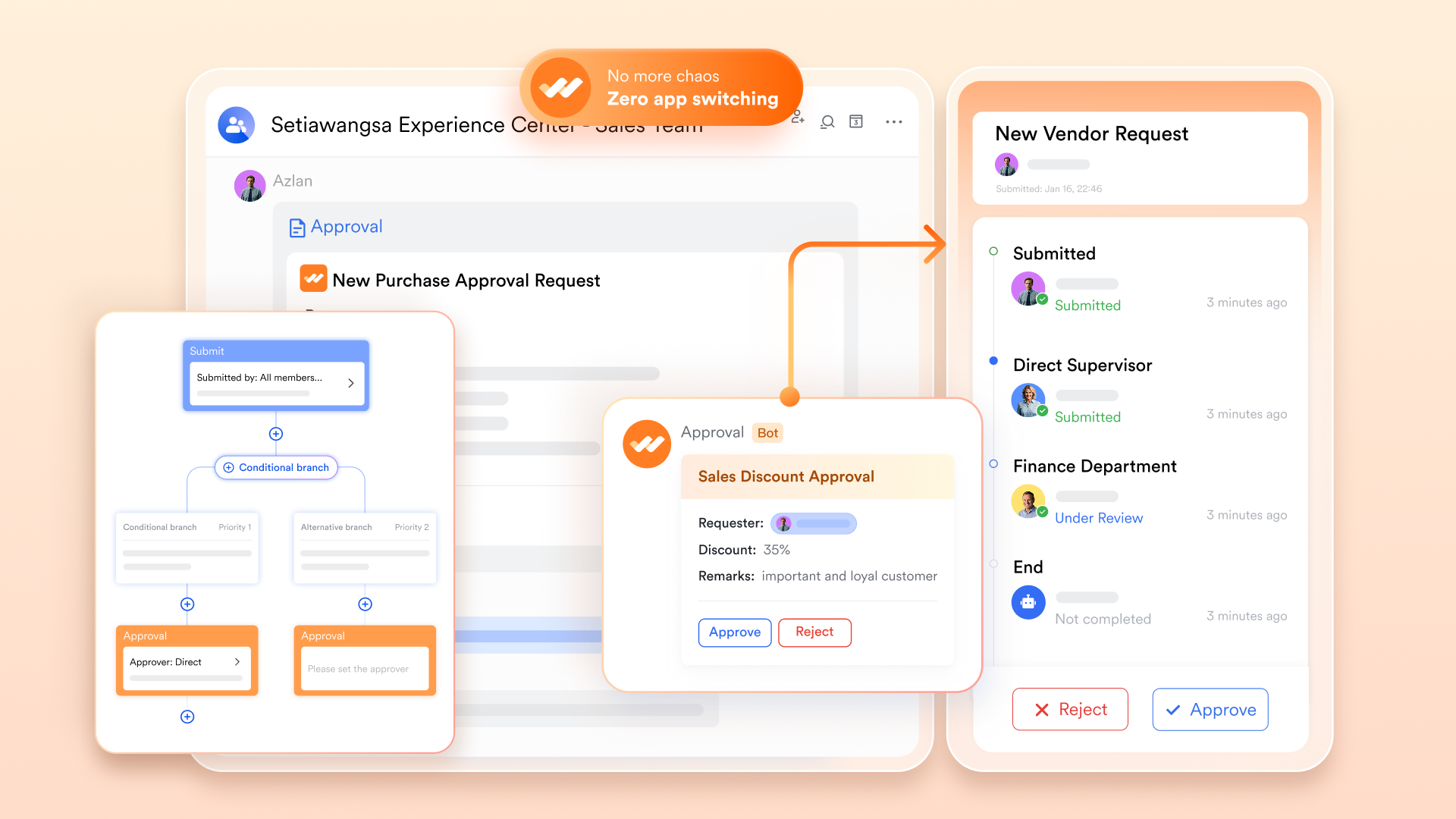
Pros:
- Centralized vendor documentation and communication tools
- Automated compliance workflow management
- Real-time team collaboration across departments
- Unified platform combining risk tracking, chat, and workflows
Cons:
- Advanced vendor risk workflow configuration and automation setup may require initial onboarding, though detailed guidance and setup resources are available through the Lark Help Center.
:
- Starter plan: Free forever plan that includes 11 powerful tools for up to 20 users. It also comes with 100GB of storage, 1000 automation runs, AI translations, and more.
- Basic plan: $6/user/month (billed annually) for up to 500 users. It includes everything in Starter plus group calling for up to 500 attendees, 5TB of storage, 1000 automation runs, and more. For more details, please .
- Pro plan: $12/user/month (billed annually) for up to 500 users. It includes everything in Basic plus group calling for up to 500 attendees, 15TB of storage, 50,000 automation runs, and more.
- Enterprise plan: for custom pricing. Supports unlimited users and includes even more automation runs and advanced security, compliance, and management features.
For small teams with simple communication needs

18 months message history
1000 Base automation runs/month
2000 rows per table in Base
Most POPULAR
For companies with comprehensive collaboration and management needs
Unlimited message history
500-participant video meetings
50k Base automation runs/month
20k rows per table in Base
For large companies with advanced security and organizational management needs
Get a personalized demo and pricing
Unlimited message history
500-participant video meetings
15 TB storage + 30 GB storage/user
500k Base automation runs/month
50k Base automation runs/month
Most POPULAR
For companies with comprehensive collaboration and management needs
Unlimited message history
500-participant video meetings
50k Base automation runs/month
20k rows per table in Base
2. OneTrust: Third-party risk and vendor compliance management platform
OneTrust is an enterprise-grade vendor risk and compliance management platform designed to help organizations assess third-party relationships, automate risk workflows, and maintain regulatory compliance at scale. It provides centralized vendor onboarding, automated questionnaire distribution, and detailed compliance reporting to give businesses a complete view of their third-party risk landscape. With powerful automation tools and extensive regulatory frameworks built in, OneTrust helps organizations reduce compliance gaps and make more confident vendor decisions.
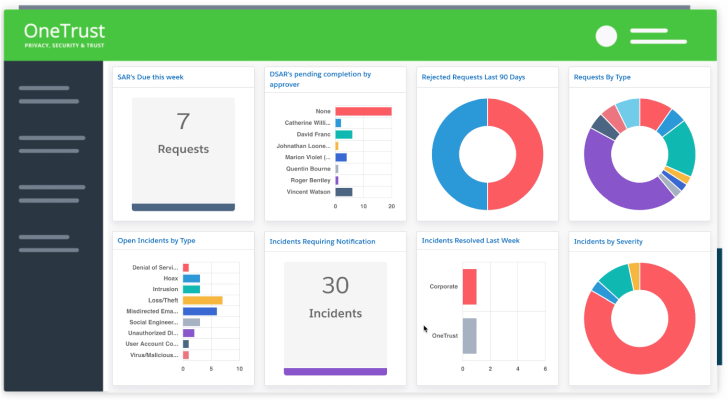
Image source: onetrust.com
Key features:
- Automated vendor risk assessments
- Pre-built GDPR, CCPA, and ISO frameworks
- Real-time third-party risk scoring
- Centralized vendor inventory and documentation
Pros:
- Comprehensive compliance management
- Supports global regulatory frameworks
- Scales for large enterprise portfolios
- Strong ERP and procurement integrations
Cons:
- Complex setup for smaller teams
- Higher pricing than mid-market tools
- Steep learning curve for advanced features
Pricing:
3. UpGuard: Vendor risk monitoring and cybersecurity assessment platform
UpGuard is a cybersecurity-focused vendor risk management platform designed to help organizations continuously monitor third-party security posture, identify vulnerabilities, and prevent data breaches across their supplier network. It provides automated security questionnaires, real-time risk scoring, and detailed vendor reports to give businesses a comprehensive view of their external attack surface. With powerful breach detection capabilities and intuitive dashboards, UpGuard helps organizations proactively manage cyber risk and maintain stronger vendor relationships.
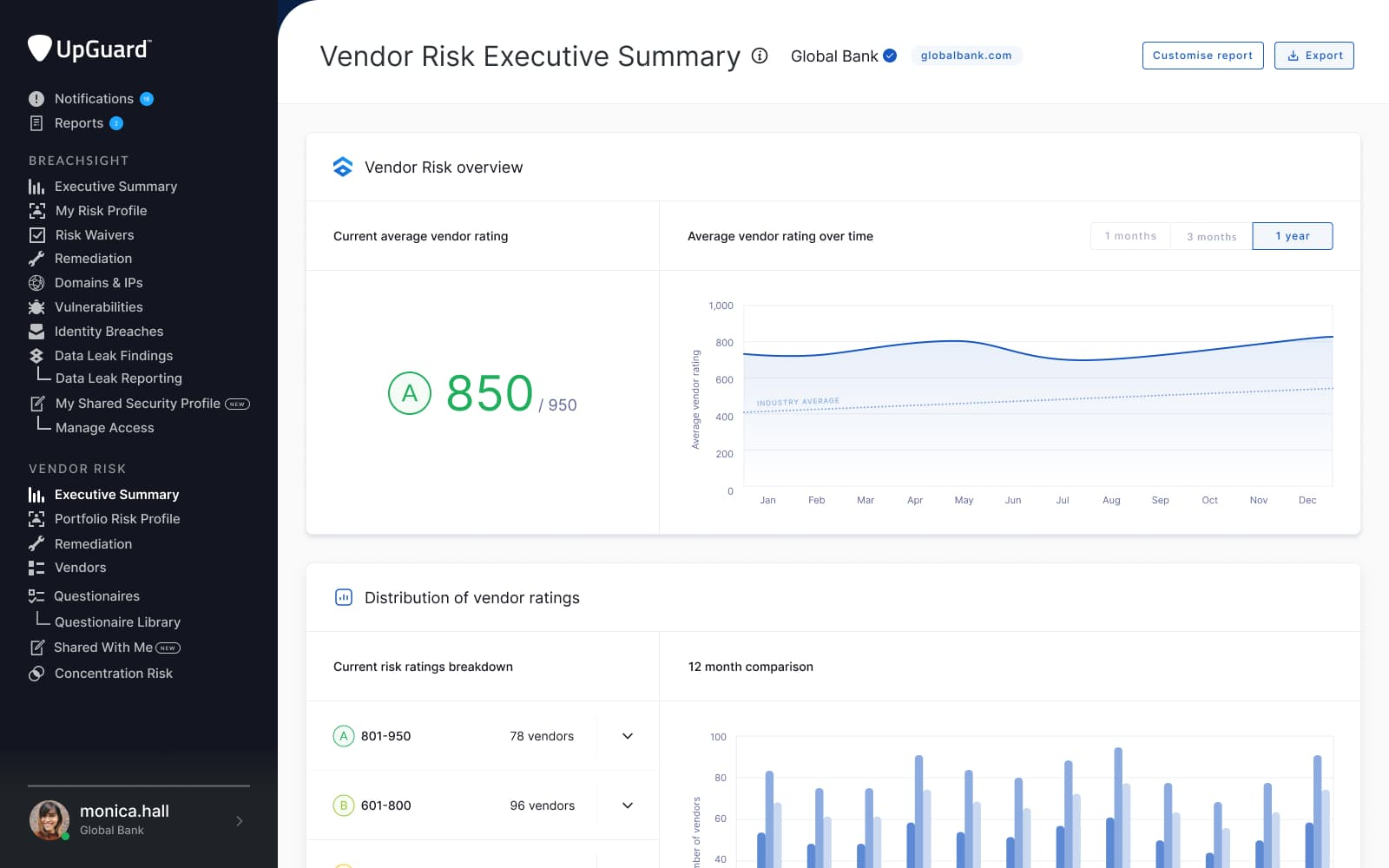
Image source: upguard.com
Key features:
- Continuous third-party security monitoring
- Automated security questionnaires and assessments
- Real-time vendor risk scoring and ratings
- Data breach detection and instant alerts
Pros:
- Intuitive and easy-to-navigate interface
- Strong breach detection capabilities
- Detailed vendor risk reporting
- Quick vendor onboarding process
Cons:
- Limited non-cybersecurity risk coverage
- Fewer compliance framework options
- Higher cost for smaller businesses
Pricing:
4. BitSight: Cybersecurity ratings platform for vendor risk monitoring
BitSight is a data-driven cybersecurity ratings platform designed to help organizations measure, monitor, and manage vendor security performance across their entire third-party ecosystem. It provides continuous security ratings, detailed risk analytics, and automated vendor assessments to give businesses clear visibility into supplier cyber risk levels. With performance benchmarking tools and actionable insights, BitSight helps organizations prioritize remediation efforts and make more informed vendor selection decisions.
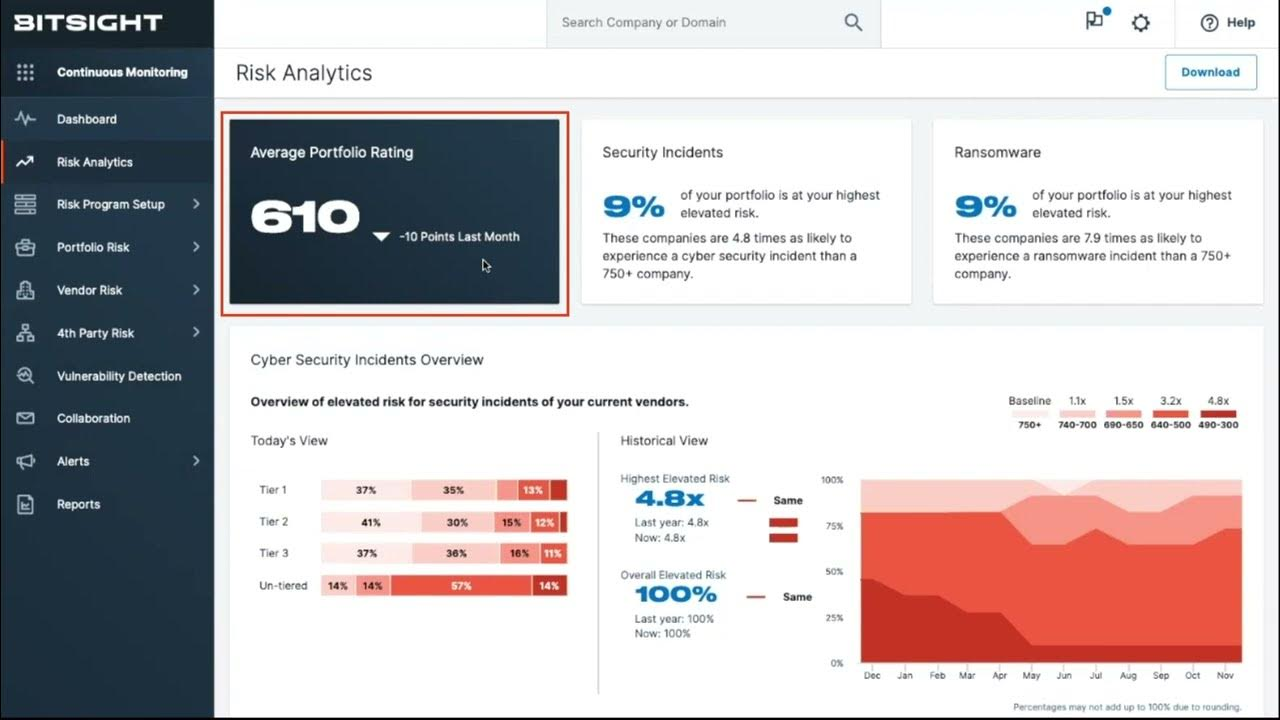
Image source: bitsight.com
Key features:
- Continuous cybersecurity ratings and monitoring
- Automated third-party risk assessments
- Vendor performance benchmarking and analytics
- Risk prioritization and remediation tracking
Pros:
- Industry-recognized security rating system
- Clear and actionable risk insights
- Strong benchmarking and comparison tools
- Scales well for large vendor portfolios
Cons:
- Limited beyond cybersecurity risk coverage
- Ratings can lack full context
- Premium pricing for advanced features
Pricing:
5. SecurityScorecard: Vendor cybersecurity rating and supply chain risk platform
SecurityScorecard is a comprehensive cybersecurity rating and supply chain risk management platform designed to help organizations assess, monitor, and improve vendor security performance across their third-party network. It provides instant security scorecards across ten risk categories, continuous monitoring, and detailed remediation guidance to give businesses complete visibility into their supplier risk landscape. With automated reporting tools and supply chain intelligence, SecurityScorecard helps organizations reduce third-party cyber exposure and build a more resilient vendor ecosystem.
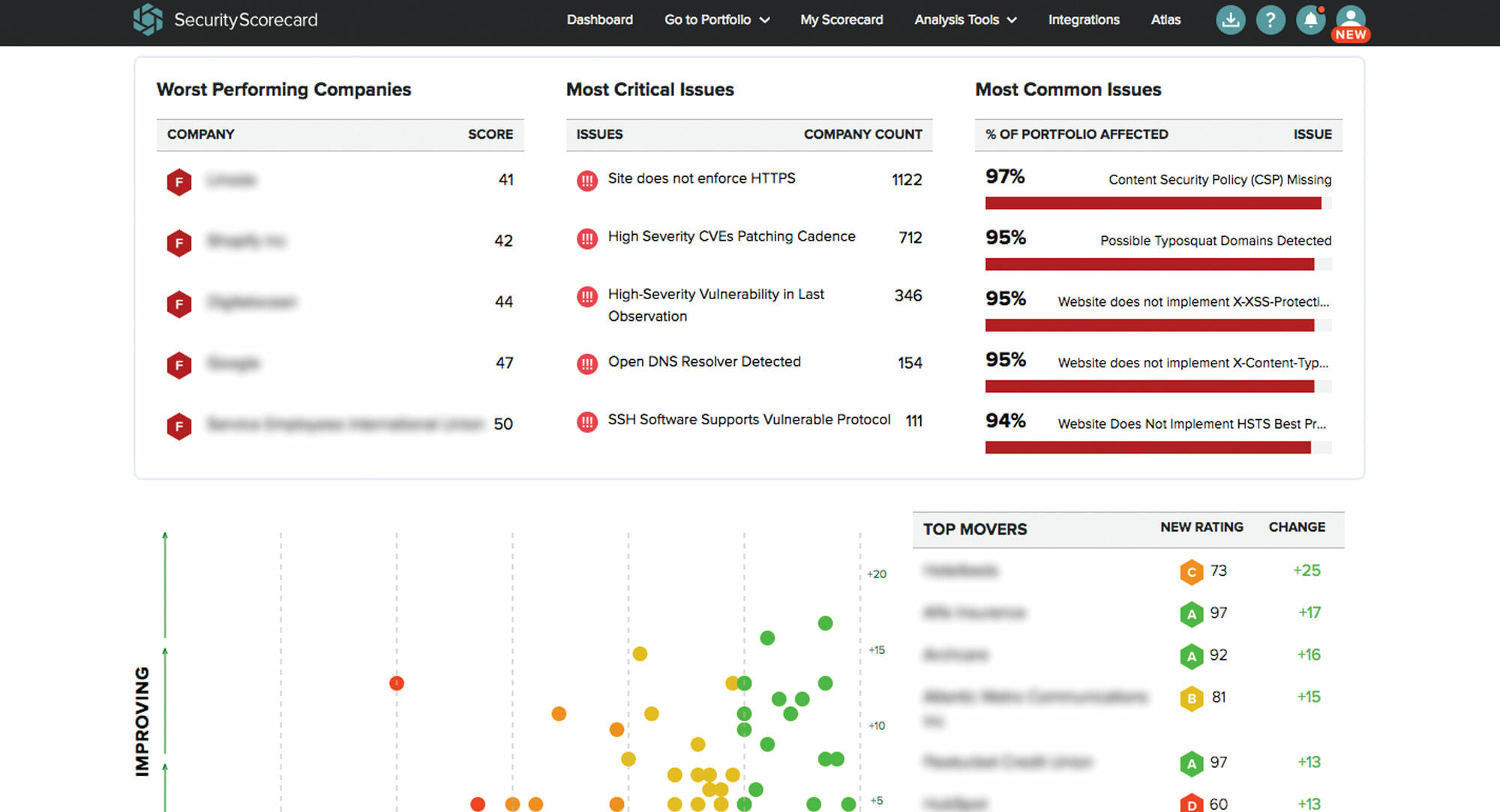
Image source: securityscorecard.com
Key features:
- Security ratings across ten risk categories
- Continuous vendor monitoring and alerts
- Automated supply chain risk reporting
- Remediation guidance and tracking tools
Pros:
- Instant and easy-to-understand scorecards
- Broad ten-category risk coverage
- Strong supply chain visibility tools
- Useful automated reporting features
Cons:
- Scores can occasionally reflect outdated data
- Limited compliance framework coverage
- Can be costly for smaller organizations
Pricing:
6. Prevalent: Third-party risk management and vendor assessment platform
Prevalent is a dedicated third-party risk management platform designed to help organizations automate vendor assessments, monitor supplier risks, and maintain compliance throughout the entire vendor lifecycle. It provides centralized risk intelligence, automated questionnaire workflows, and continuous threat monitoring to give businesses a structured and scalable approach to managing third-party relationships. With built-in risk libraries and detailed analytics, Prevalent helps organizations reduce vendor-related exposure and strengthen overall supply chain governance.
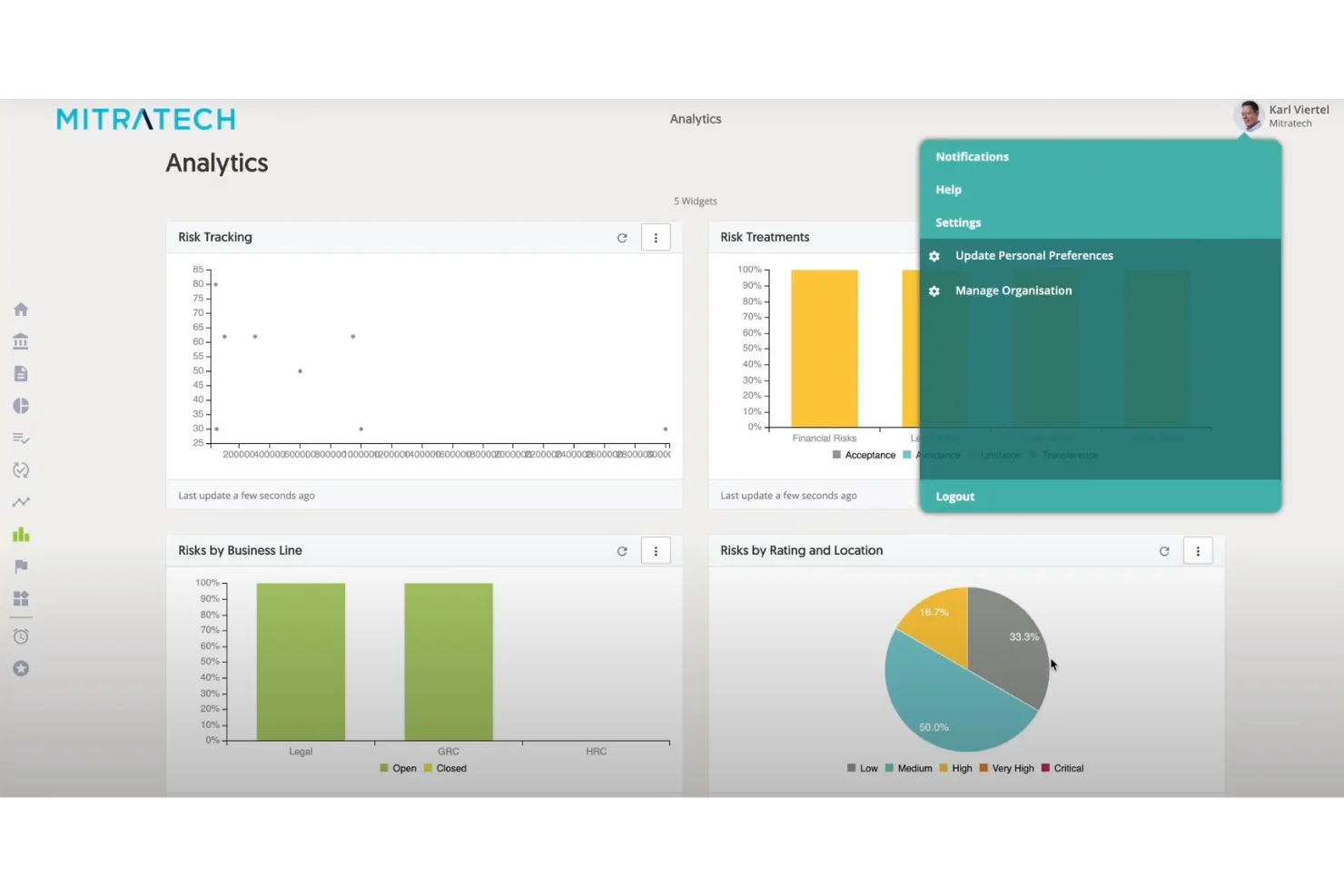
Image source: mitratech.com
Key features:
- Automated vendor assessments and questionnaires
- Continuous third-party threat monitoring
- Centralized risk intelligence and reporting
- Built-in risk libraries and compliance frameworks
Pros:
- Purpose-built for third-party risk management
- Strong automation of assessment workflows
- Comprehensive built-in risk content libraries
- Covers full vendor lifecycle management
Cons:
- Interface can feel dated for some users
- Limited cybersecurity rating capabilities
- Steeper learning curve for new users
Pricing:
7. ProcessUnity: Vendor risk lifecycle management and monitoring software
ProcessUnity is an enterprise vendor risk lifecycle management platform designed to help organizations streamline third-party onboarding, automate risk assessments, and monitor vendor performance throughout the entire supplier relationship. It provides configurable risk workflows, centralized vendor profiles, and continuous monitoring tools to give businesses a structured and efficient approach to managing third-party risk at scale. With flexible automation capabilities and detailed reporting dashboards, ProcessUnity helps organizations reduce manual effort, improve compliance oversight, and maintain stronger control over their vendor ecosystem.
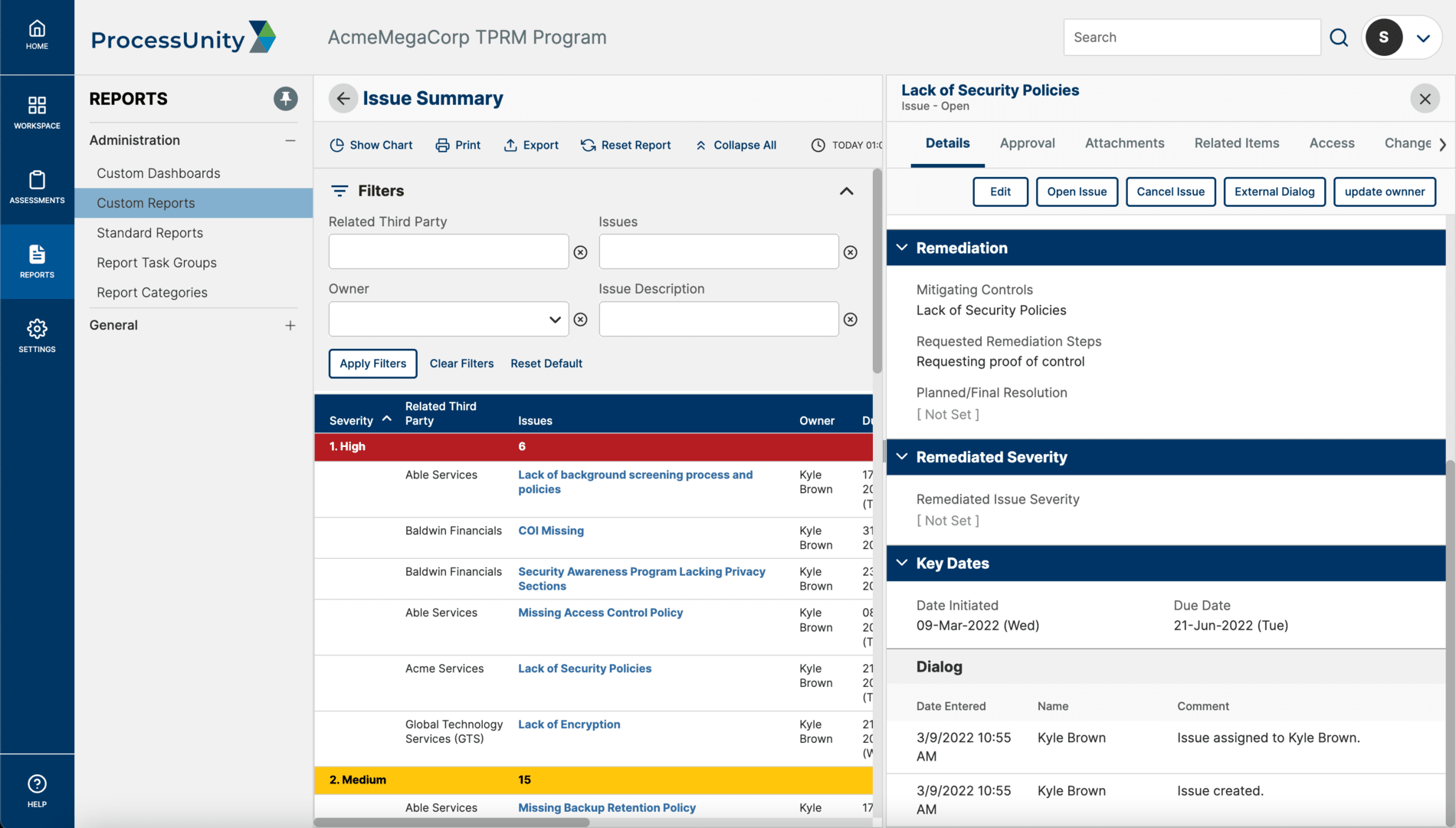
Image source: processunity.com
Key features:
- End-to-end vendor lifecycle management
- Configurable risk assessment workflows
- Continuous vendor performance monitoring
- Centralized vendor profiles and documentation
Pros:
- Highly configurable workflows and dashboards
- Strong end-to-end lifecycle coverage
- Efficient automation of manual risk tasks
- Scales well for large vendor portfolios
Cons:
- Implementation can be time-consuming
- Requires dedicated admin for configuration
- Limited out-of-the-box integrations
Pricing:
8. Venminder: Vendor risk assessment and compliance management software
Venminder is a specialized vendor risk assessment and compliance management platform designed to help organizations evaluate third-party risks, manage vendor contracts, and maintain regulatory compliance throughout the supplier lifecycle. It provides centralized vendor oversight, expert-reviewed risk assessments, and detailed compliance tracking to give businesses a reliable and structured approach to third-party risk management. With a unique library of pre-built vendor assessments and dedicated risk experts, Venminder helps organizations reduce assessment workload and make more confident vendor decisions.
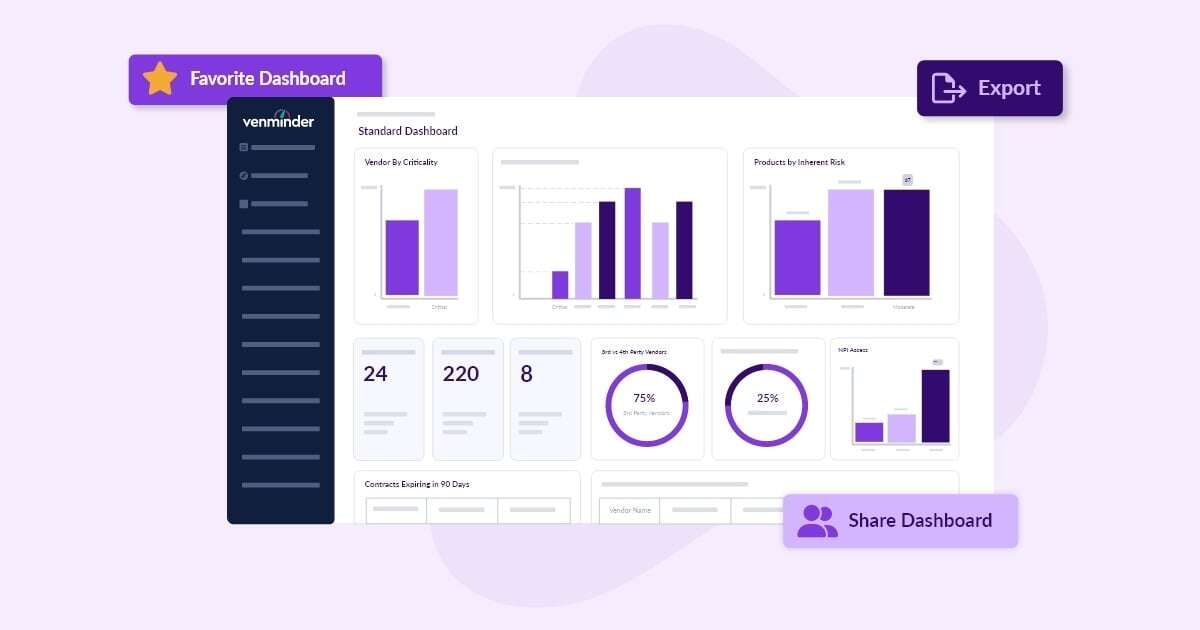
Image source: venminder.com
Key features:
- Expert-reviewed vendor risk assessments
- Centralized vendor contract and document management
- Regulatory compliance tracking and reporting
- Pre-built vendor assessment content library
Pros:
- Unique access to expert risk assessment reviews
- Strong compliance and contract management tools
- Extensive pre-built assessment content library
- User-friendly interface and easy onboarding
Cons:
- Less suited for large enterprise portfolios
- Limited advanced cybersecurity rating features
- Customization options can be restrictive
Pricing:
9. Panorays: Automated vendor security risk assessment platform
Panorays is an automated third-party security risk management platform designed to help organizations evaluate, monitor, and improve vendor cybersecurity posture across their entire supplier network. It provides combined internal and external security assessments, automated vendor questionnaires, and continuous monitoring to give businesses a fast and accurate view of third-party risk exposure. With smart automation and collaborative remediation tools, Panorays helps organizations accelerate vendor assessments, reduce manual effort, and build stronger security relationships with their suppliers.
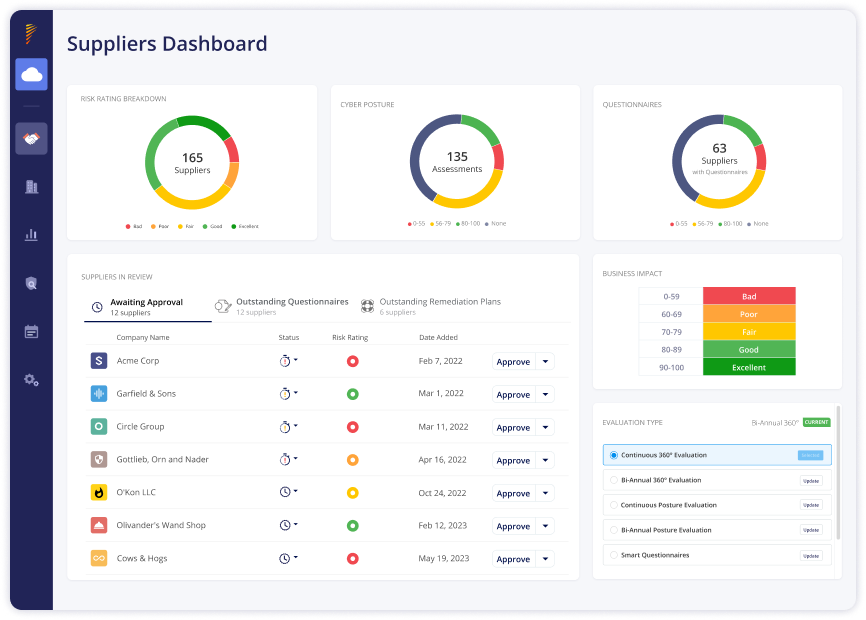
Image source: panorays.com
Key features:
- Automated internal and external security assessments
- Continuous vendor cybersecurity monitoring
- Smart automated vendor questionnaires
- Collaborative remediation tracking and guidance
Pros:
- Fast and highly automated assessment process
- Combined internal and external risk evaluation
- Strong collaborative vendor remediation tools
- Intuitive and easy-to-use interface
Cons:
- Limited non-cybersecurity risk coverage
- Fewer compliance framework options
- Less suited for non-technical risk teams
Pricing:
10. RiskRecon: External vendor cybersecurity risk monitoring platform
RiskRecon is an external cybersecurity risk monitoring platform designed to help organizations continuously assess and manage third-party security performance across their vendor and supply chain ecosystem. It provides automated security assessments, detailed risk prioritization, and actionable insights to give businesses clear and objective visibility into supplier cyber risk without requiring vendor participation. With data-driven risk scoring and portfolio-wide monitoring capabilities, RiskRecon helps organizations focus remediation efforts where they matter most and maintain a stronger third-party security posture.
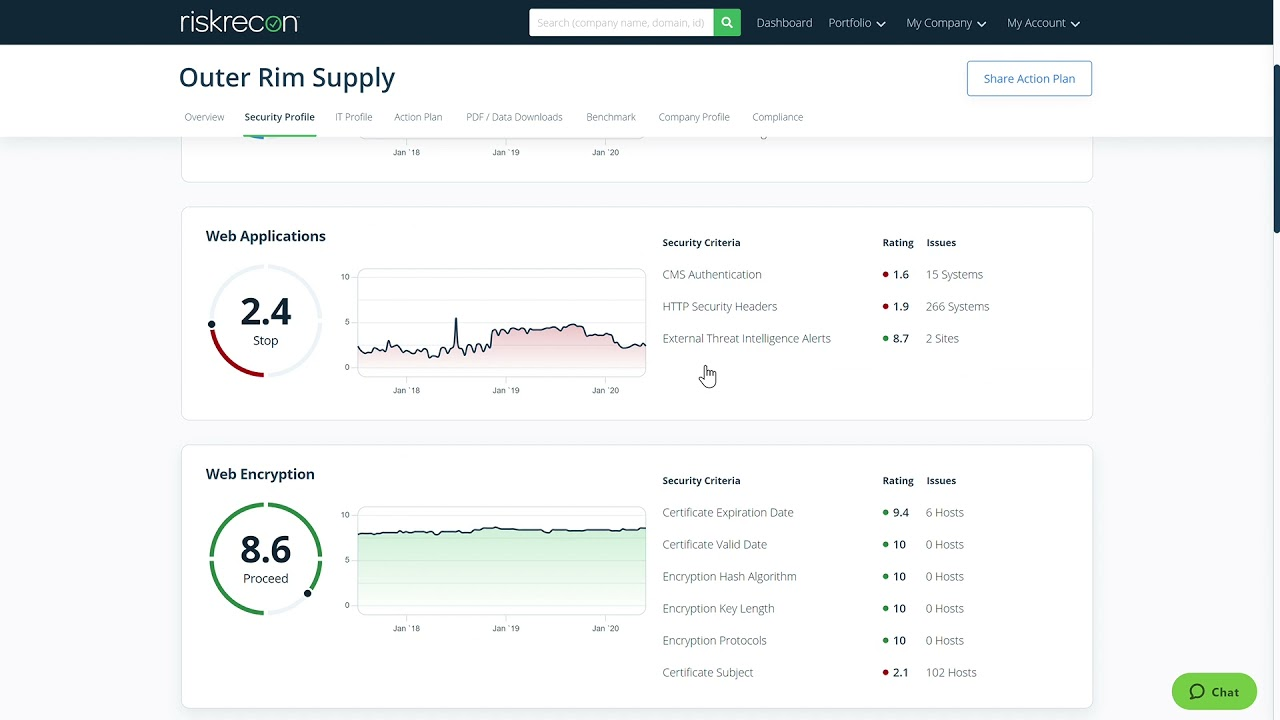
Image source: riskrecon.com
Key features:
- Continuous external cybersecurity monitoring
- Automated vendor security assessments
- Data-driven risk scoring and prioritization
- Portfolio-wide vendor risk visibility
Pros:
- No vendor participation required for assessments
- Clear and objective risk prioritization
- Strong portfolio-wide monitoring capabilities
- Actionable and easy-to-understand risk insights
Cons:
- Limited beyond external cybersecurity coverage
- Less suitable for compliance-focused risk teams
- Fewer vendor engagement and remediation tools
Pricing:
What businesses often overlook in vendor risk assessment software
Many organizations focus heavily on cybersecurity ratings and compliance checklists when evaluating vendor risk management software, often missing several critical factors that can significantly impact long-term effectiveness. While security scoring and regulatory frameworks are essential, there are deeper operational and strategic elements that businesses frequently underestimate during the selection process. Understanding these overlooked areas can help organizations make smarter software investments and build a more resilient third-party risk management program.
- Vendor lifecycle coverage beyond onboarding: Most businesses evaluate software based on initial vendor onboarding capabilities but overlook whether the platform supports ongoing risk monitoring throughout the entire vendor relationship. Effective vendor risk management requires continuous oversight, not just a one-time assessment at the start of a contract.
- Integration with procurement and financial workflows: Organizations often neglect to assess how well the platform connects with existing procurement systems. A solution that supports a structured ensures vendor risk data flows seamlessly into purchasing decisions, reducing blind spots in financial and operational exposure.
- Scalability for growing vendor portfolios: Many businesses select software based on their current vendor count without considering future growth. Platforms that cannot scale efficiently often create bottlenecks as supplier networks expand, leading to gaps in risk coverage and increased manual workload.
- Customizable risk scoring and assessment frameworks: Off-the-shelf risk scoring models do not always reflect the unique risk appetite of every organization. Businesses frequently overlook the importance of customizable assessment frameworks that align with their specific industry standards and internal policies.
- Alignment with broader project risk assessment practices: Vendor risk does not exist in isolation. Organizations often miss the value of platforms that integrate methodologies, connecting third-party risks to wider business operations, project timelines, and strategic goals for a more unified and comprehensive risk management approach.
Emerging trends shaping vendor risk management platforms
Vendor risk management software is evolving well beyond basic compliance checklists and periodic assessments into intelligent, proactive systems that support real-time decision-making across the entire organization. These trends define where vendor risk management platforms are genuinely headed in the coming years.
- AI-powered risk prediction: AI-powered risk prediction analyzes historical vendor data and behavioral patterns to flag potential threats before they materialize. Vendor risk platforms will increasingly deliver predictive alerts that give businesses more time to act rather than simply react to emerging supplier vulnerabilities.
- CRM-integrated vendor intelligence: CRM-integrated vendor intelligence connects third-party risk data directly with customer relationship workflows and business development processes. Platforms that align with systems will give organizations a unified view of how vendor performance and risk exposure directly impact client relationships and service delivery.
- Real-time continuous monitoring: Real-time continuous monitoring is rapidly replacing traditional annual or quarterly vendor assessments. Modern platforms are always moving toward surveillance of vendor security posture, compliance status, and operational health, ensuring businesses are never caught off guard by sudden supplier changes or incidents.
- Risk-aware procurement and cost management: Risk-aware procurement tools link vendor risk scores directly to sourcing and financial planning decisions. Platforms that factor into risk assessments will help organizations understand the true financial impact of vendor vulnerabilities and make smarter, more cost-conscious supplier selection decisions.
Conclusion
Vendor risk management software has become an essential part of running a secure, compliant, and resilient business in today's increasingly complex third-party landscape. These platforms help organizations assess supplier vulnerabilities, automate compliance workflows, monitor vendor performance in real time, and gain clearer visibility into the risks posed by third-party relationships. With capabilities such as continuous monitoring, intelligent risk scoring, and detailed reporting, the right software makes it significantly easier to stay ahead of potential threats and maintain greater control over the entire vendor ecosystem.
Tools like also demonstrate how integrated collaboration platforms can simplify vendor documentation, streamline internal workflows, and support more organized and transparent third-party oversight across teams. By applying structured to vendor selection and ongoing management, businesses can make more informed decisions, reduce costly exposures, and build third-party relationships grounded in trust and accountability. Choosing the right vendor risk management solution is not just a compliance decision; it is a strategic investment in the long-term security and stability of the entire organization.
Start managing vendor risks smarter with Lark today
FAQs
What is a vendor risk management program?
A vendor risk management program is a structured business process designed to identify, assess, monitor, and mitigate the risks associated with third-party vendors, suppliers, and partners. It covers the entire vendor lifecycle from initial onboarding and due diligence through ongoing performance monitoring and contract termination. A strong program typically includes risk assessments, compliance checks, security evaluations, and clearly defined policies that help organizations maintain control over their external relationships and reduce exposure to operational, financial, and regulatory risks.
What is the best vendor management software?
The best vendor management software depends on the size of the organization, industry requirements, and the complexity of its supplier network. Platforms like OneTrust, UpGuard, BitSight, SecurityScorecard, and Prevalent are widely trusted for their ability to automate risk assessments, monitor vendor security posture, and maintain compliance at scale. For organizations that also need collaboration and workflow management alongside vendor oversight, tools like Lark offer an integrated workspace that centralizes vendor documentation and internal communications in one connected platform.
What are 5 risk management tools?
There are several widely used tools that help businesses identify and manage risk effectively across their operations and vendor relationships. UpGuard provides continuous cybersecurity monitoring and vendor risk scoring. BitSight delivers data-driven security ratings and vendor performance benchmarking. SecurityScorecard offers instant risk ratings across ten security categories. Prevalent specializes in third-party risk assessments and compliance tracking throughout the full vendor lifecycle. Venminder combines expert-reviewed vendor assessments with centralized contract and compliance management, making it a reliable choice for organizations seeking both automation and human expertise in their risk management process.
Which GRC tool is best?
The best GRC (Governance, Risk, and Compliance) tool depends on the specific compliance frameworks, risk management needs, and operational scale of the organization. OneTrust is widely regarded as one of the strongest available, offering comprehensive privacy management, third-party risk assessments, and support for global regulatory frameworks including GDPR, CCPA, and ISO standards. ProcessUnity and Prevalent are also strong contenders for organizations focused specifically on vendor risk and third-party compliance management. The right choice ultimately comes down to how well the platform aligns with the organization's existing workflows, integration requirements, and long-term governance goals.
Related reading







![What Is a 2-2-3 Work Schedule? Explanation and More [2024]](https://framerusercontent.com/images/uKHRfkp4v7y4azRNTYUmuteNQz8.png)