














The Ultimate Guide to Risk Analysis in Project Management

Ryan Tanner
Product Marketing Specialist
Sep 18, 2026
Ryan Tanner
Sep 18, 2026

22 min read


Potential challenges that can impact project success. This complete guide explores proven methods, tools, and best practices to help you master risk identification, assessment, and mitigation. Whether you're managing complex projects or just starting out, understanding risk analysis in project management ensures better decision-making, resource allocation, and overall project control. Using Lark, teams can centralize risk tracking, collaborate in real time, and implement mitigation strategies efficiently across all projects. By the end of this guide, you’ll gain the skills to anticipate problems before they arise, reduce uncertainties, and enhance the success rate of your projects through effective risk management strategies.

What is risk analysis in project management?
Risk analysis in project management is a structured approach used to identify uncertainties that could affect a project’s success and to evaluate their potential impact. It’s a key component of the overall risk management process and plays a vital role in proactive decision-making. The main goal of risk analysis is to understand what might go wrong, how likely those events are, and how severely they could affect project outcomes such as cost, schedule, quality, or scope.
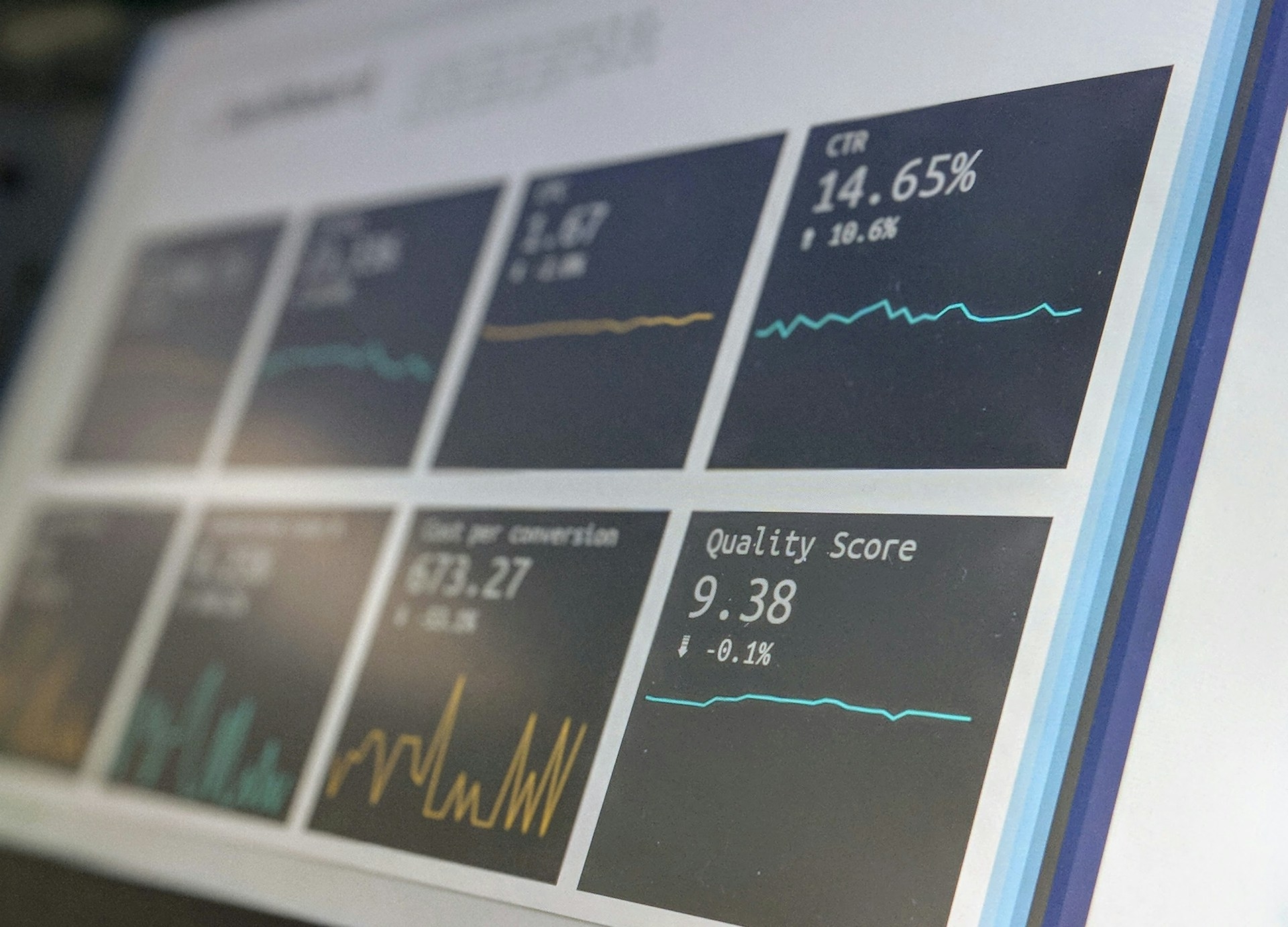
Image source: unsplash.com
There are two main types of risk analysis:
- Qualitative risk analysis: Qualitative risk analysis in project management focuses on assessing risks based on probability and impact using descriptive scales (e.g., high, medium, low).
- Quantitative risk analysis: Quantitative risk analysis in project management uses numerical data and models—such as Monte Carlo simulations or decision trees—to estimate the likelihood and financial effect of specific risks.
This process begins with risk identification, often through brainstorming sessions, historical data, expert judgment, or stakeholder input. Each identified risk is documented in a risk register, which includes details such as the risk description, potential impact, probability, and response strategy.
By conducting a thorough risk analysis, project managers can prioritize risks, prepare mitigation plans, allocate resources effectively, and establish contingency budgets or schedules. This proactive approach minimizes surprises, improves communication among stakeholders, and enhances the project’s resilience against uncertainties—ultimately leading to more predictable and successful project outcomes.
Why risk analysis is essential for project success
Effective risk analysis is a cornerstone of successful project management. It helps identify potential challenges, assess their impact, and prepare proactive strategies. Let’s explore why risk analysis is essential for project success:
- Improves decision-making: Risk analysis provides project managers with a clear picture of potential threats and opportunities. By understanding the likelihood and impact of each risk, leaders can make informed decisions about resource allocation, scheduling, and project priorities. This ensures that strategic choices are proactive rather than reactive, reducing the chance of costly surprises. Clear data on risks allows for prioritizing efforts on high-impact areas, improving overall project efficiency.
- Enhances project planning and forecasting: By identifying and assessing risks early, project teams can create realistic plans and timelines. Risk analysis helps anticipate delays, budget overruns, or quality issues before they occur. This foresight allows teams to implement contingency plans or adjust schedules and resources accordingly. Accurate forecasting reduces uncertainty and helps set achievable milestones for stakeholders. It ultimately contributes to smoother project execution and predictable outcomes.
- Minimizes financial and operational losses: Risk analysis helps quantify potential financial impacts and operational disruptions. By understanding which risks could affect costs or productivity, project managers can take preventive actions to reduce losses. This includes allocating contingency budgets or implementing mitigation strategies. Minimizing losses not only protects the project’s financial health but also strengthens stakeholder confidence and organizational credibility.
- Improves communication and stakeholder confidence: A structured risk analysis ensures that all stakeholders are aware of potential project challenges and the plans to address them. Transparent communication of risks fosters trust and collaboration across teams and departments. Stakeholders can make informed decisions and contribute proactively to risk mitigation strategies. Regular risk reporting also ensures that surprises are minimized, improving overall project governance.
- Supports continuous improvement: Risk analysis provides insights into recurring problems and potential weaknesses in processes. By analyzing past and current project risks, teams can implement lessons learned for future initiatives. This continuous feedback loop strengthens risk management practices, reduces repeat mistakes, and improves project resilience over time. Organizations that actively use risk analysis build a culture of preparedness and strategic foresight.
Start with Lark: How to manage risk analysis in project management
Effective risk management is at the heart of successful project delivery. From unforeseen cost escalations to resource shortages and schedule delays, identifying and responding to risks early determines whether a project meets its goals. With Lark, teams can conduct structured risk analysis, document mitigation strategies, and track follow-through—all without juggling multiple tools.
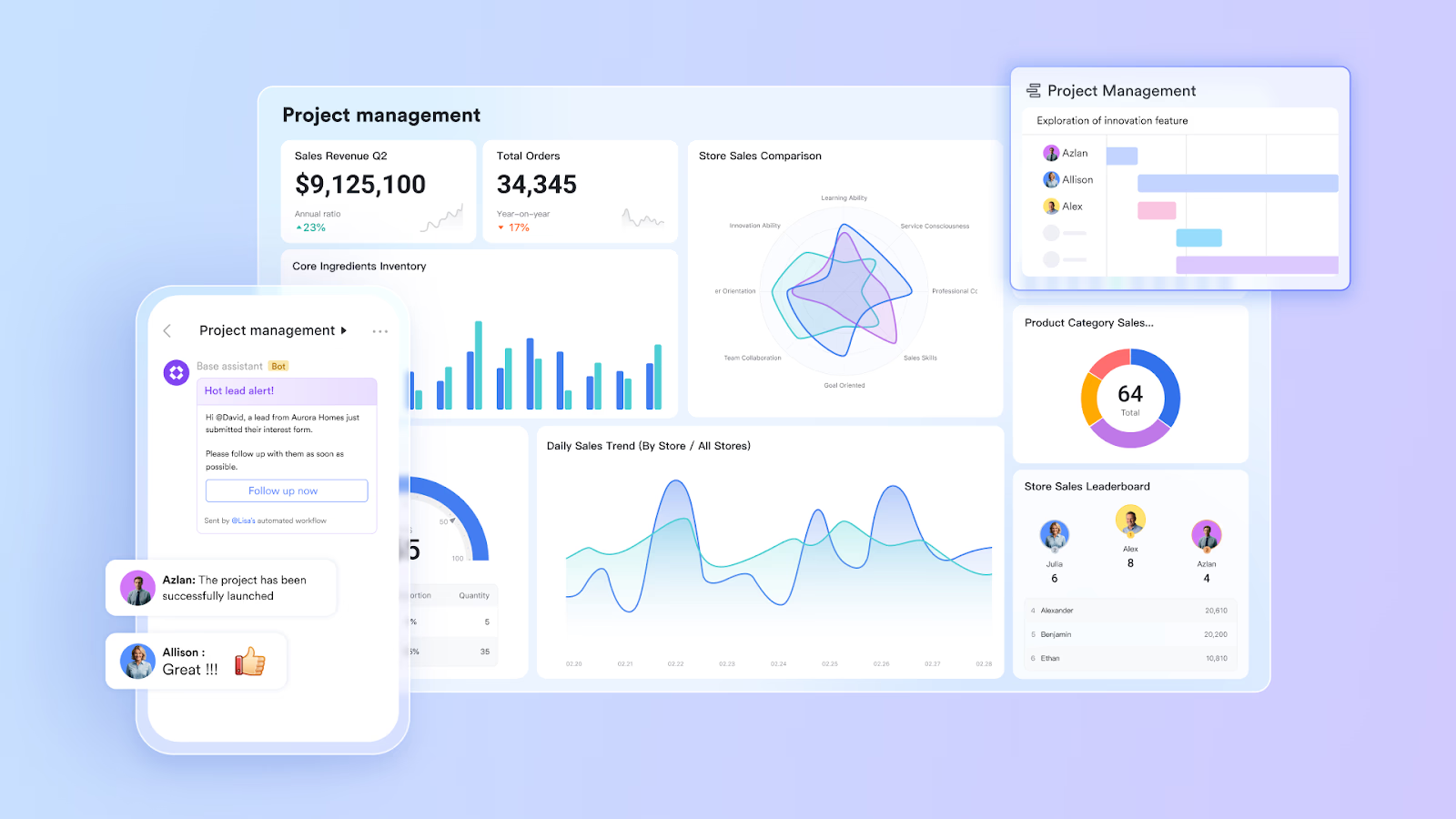
- Identify and categorize risks with Lark Base
Lark Base acts as the foundation for risk tracking and documentation. You can create a centralized Risk Register table where every potential risk is recorded and categorized by severity, likelihood, owner, and impact area (cost, schedule, resources, quality, etc.)
- How it works:
- Create columns for Risk ID, Description, Likelihood (1–5), Impact (1–5), Risk Score, Status, and Mitigation Owner.
- Use formula fields to calculate Risk Score = Likelihood × Impact.
- Add linked tables to connect risks with specific project tasks or departments.
- Example: In a construction project, the risk "Delay in raw material supply" is added with a high likelihood (4) and high impact (5), giving a score of 20. It’s linked to the procurement task in Base and assigned to the procurement lead for monitoring.
Why it matters: Having all risks in a single, shareable Base means that project managers, finance teams, and stakeholders can view, update, and track risks in real time—eliminating version confusion and ensuring accountability.
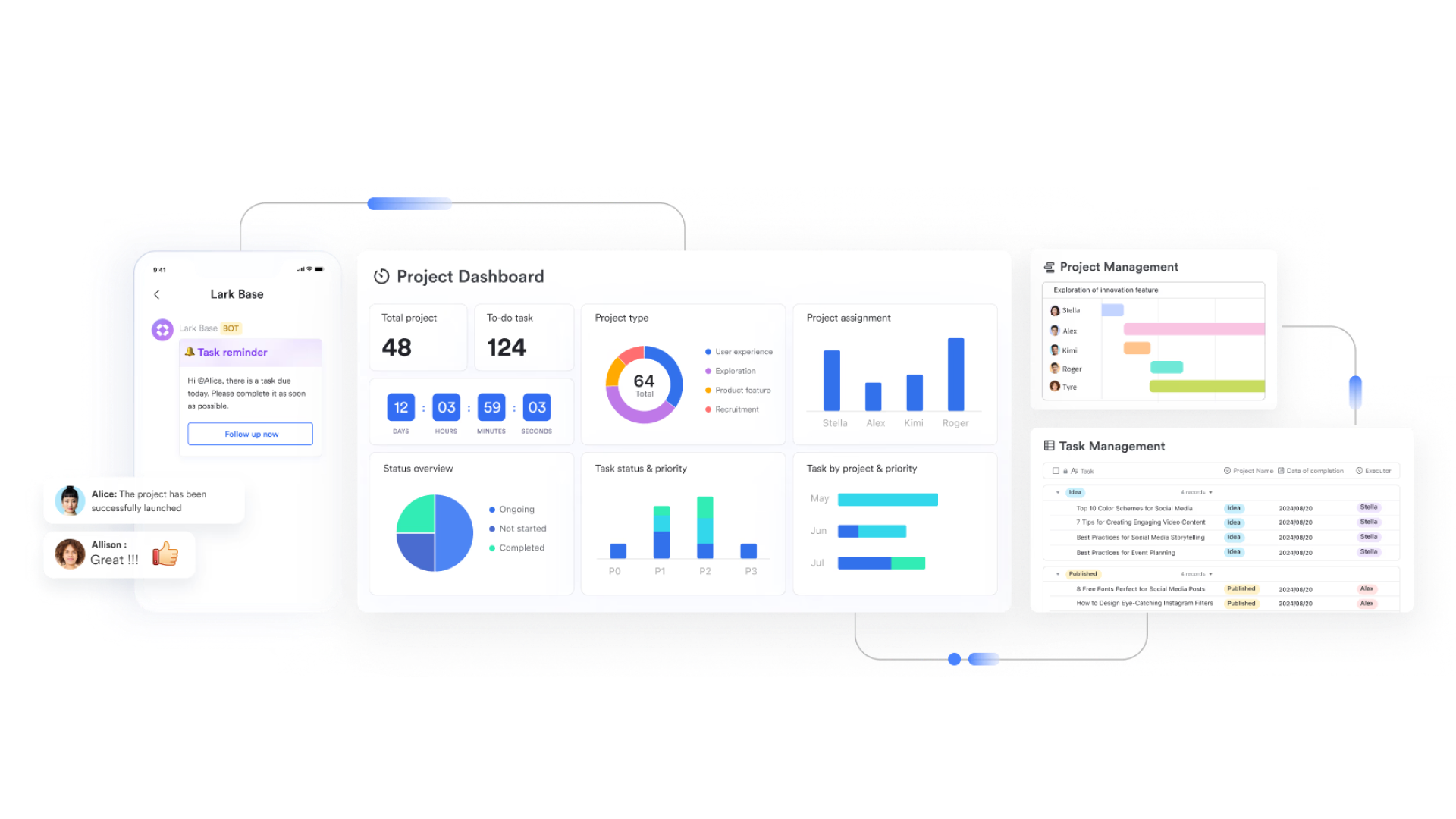
- Assess and prioritize risks collaboratively using Lark Docs
Lark Docs allows teams to perform qualitative and quantitative risk assessments collaboratively. You can embed live tables, charts, or images directly into a shared Doc to discuss scenarios, probability-impact matrices, or contingency plans.
- How it works:
- Create a shared "Project Risk Analysis" Doc.
- Embed the risk table from Lark Base.
- Use @mentions to bring in risk owners or subject matter experts to comment directly beside risk entries.

- Example: During the planning phase of an IT implementation, the project manager opens a shared Doc titled "Cybersecurity Risk Analysis" where the tech lead and compliance officer comment on each threat category. Inline discussions finalize mitigation strategies, and decisions are recorded in context.
Why it matters: Docs keeps decision-making transparent and traceable. Every edit or comment contributes to building a living record of the project’s evolving risk posture.
- Assign mitigation actions through Lark Tasks
Identifying risks is only half the battle—managing them requires follow-through. Lark Tasks transforms mitigation plans into actionable tasks, ensuring owners stay accountable and deadlines don’t slip.
- How it works:
- Convert mitigation measures into Tasks directly linked to Base entries.
- Set priorities (Critical, High, Medium, Low) and due dates.
- Assign responsible owners and add dependencies to related project milestones.
- Use labels like "Preventive," "Contingency," or "Transfer" to classify risk response strategies.
- Example: For the identified risk of "Server downtime during deployment", the IT lead creates a Task to "Deploy backup server before launch," assigning it a 3-day deadline before the go-live date.
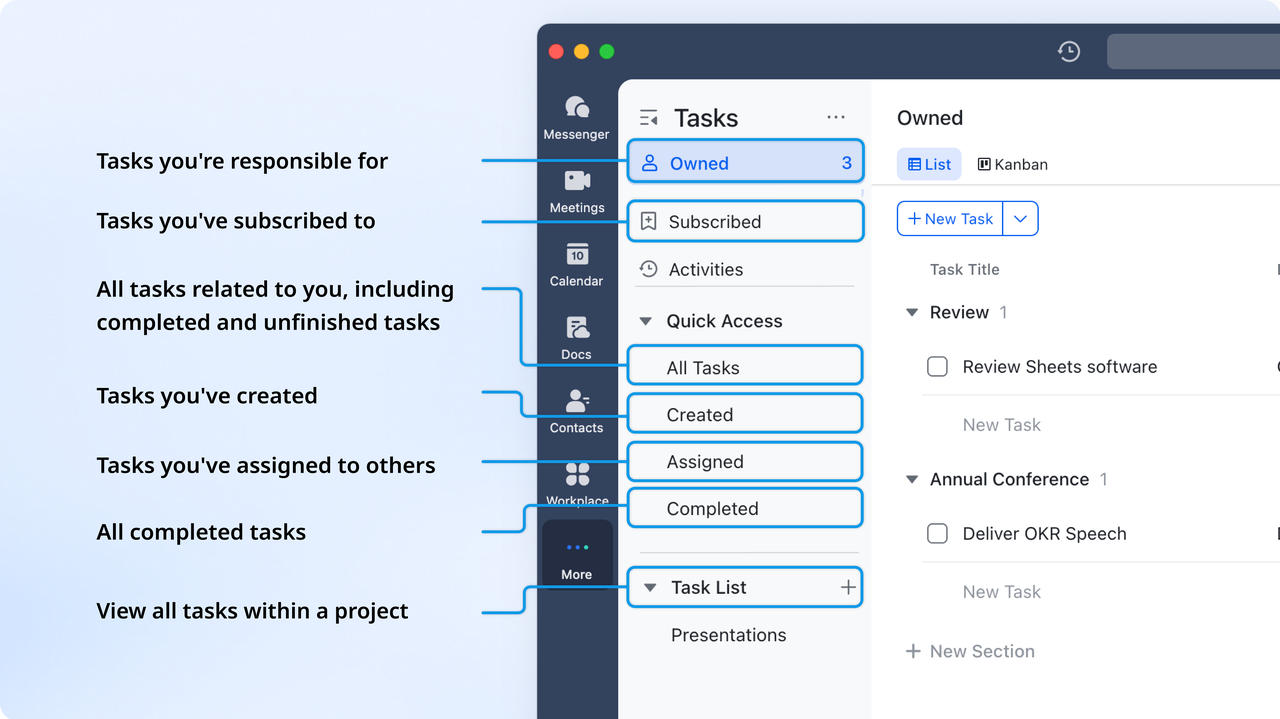
Why it matters: Every risk now has a visible owner and timeline. Task completion automatically updates project progress, reinforcing accountability across the team.
- Monitor and update risks with Lark Calendar
Keeping risks updated requires consistent reviews. Lark Calendar ensures these reviews happen regularly and that project teams stay informed.
- How it works:
- Schedule recurring "Risk Review Meetings" directly in Lark Calendar.
- Attach the latest risk register (from Lark Base) to each meeting event.
- Set automation in Base to remind owners to update risk statuses weekly.

- Example: In a product development project, Lark automation sends a reminder every Friday to risk owners: "Update your risk status and add mitigation progress." During Monday’s review meeting, the project manager uses the updated Base data to prioritize actions for the week.
Why it matters: Automated alerts and reminders eliminate manual follow-ups, reducing the chance of outdated or overlooked risk data.
- Communicate and escalate issues instantly with Lark Messenger
Risk management thrives on fast communication. With Lark Messenger, teams can discuss emerging risks, share updates, or escalate issues to stakeholders in real time.
- How it works:
- Create a dedicated "Project Risk Channel."
- Tag relevant teams or individuals (@Finance, @Procurement) for immediate visibility.
- Use threads to maintain discussions for each risk topic.
- Pin key updates or approved mitigation strategies for quick reference.
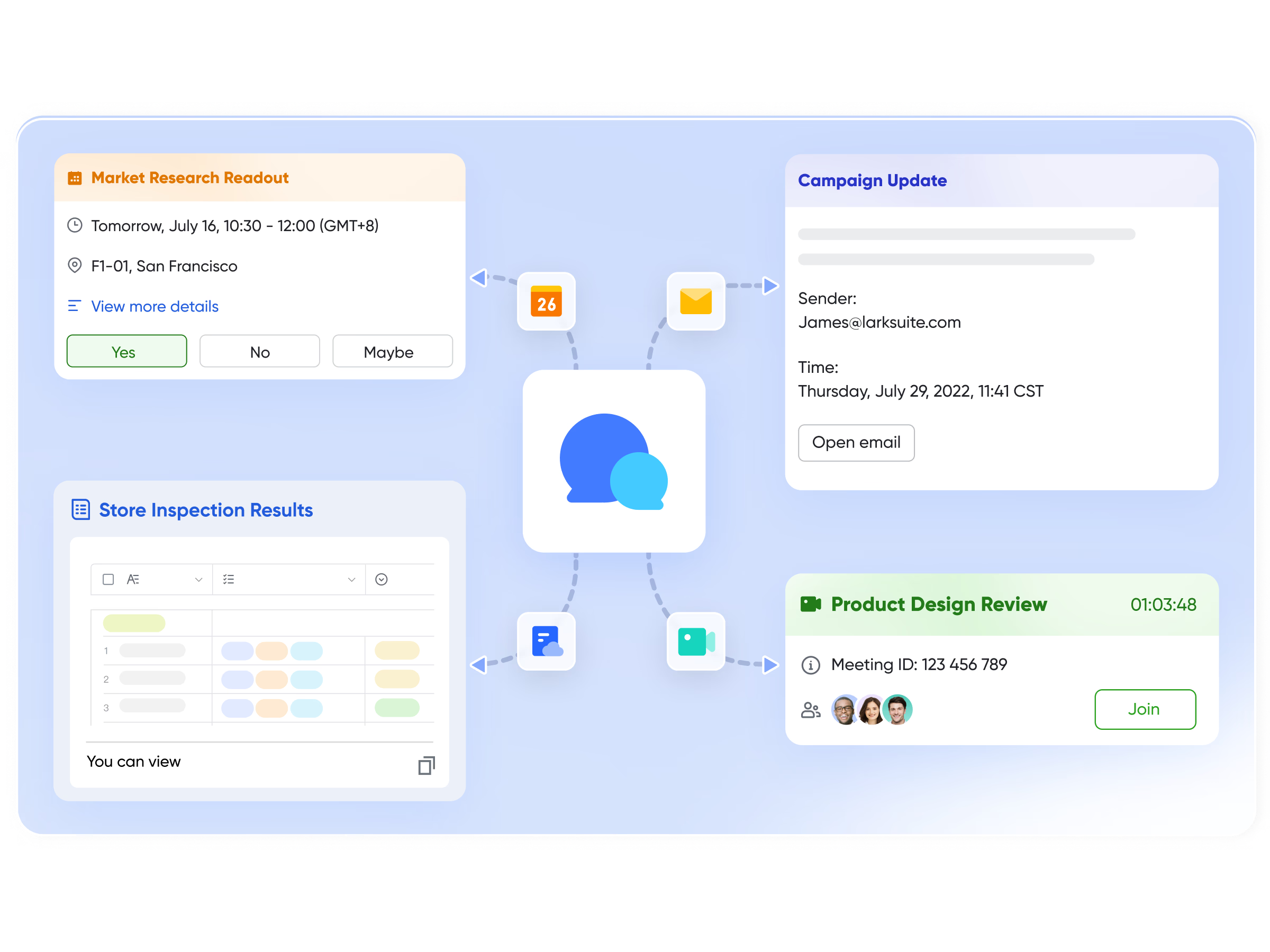
- Example: When a vendor shipment is delayed, the procurement team alerts the project manager via the "Risk Updates" chat group. The issue is logged in Base, and the finance team approves a temporary vendor switch within minutes through an inline Approval.
Why it matters: Instant communication shortens response time, helping teams mitigate risks before they escalate into project delays or cost overruns.
- Approve escalated actions with Lark Approval
Not all risk responses can be handled at the team level—some require management approval. Lark Approval provides a clear, automated path for escalating decisions that involve budget, schedule, or scope adjustments.
- How it works:
- Create multi-step approval workflows for change requests tied to risks.
- Automatically route approvals to department heads or project sponsors.
- Track time-stamped approval histories for compliance and audit.
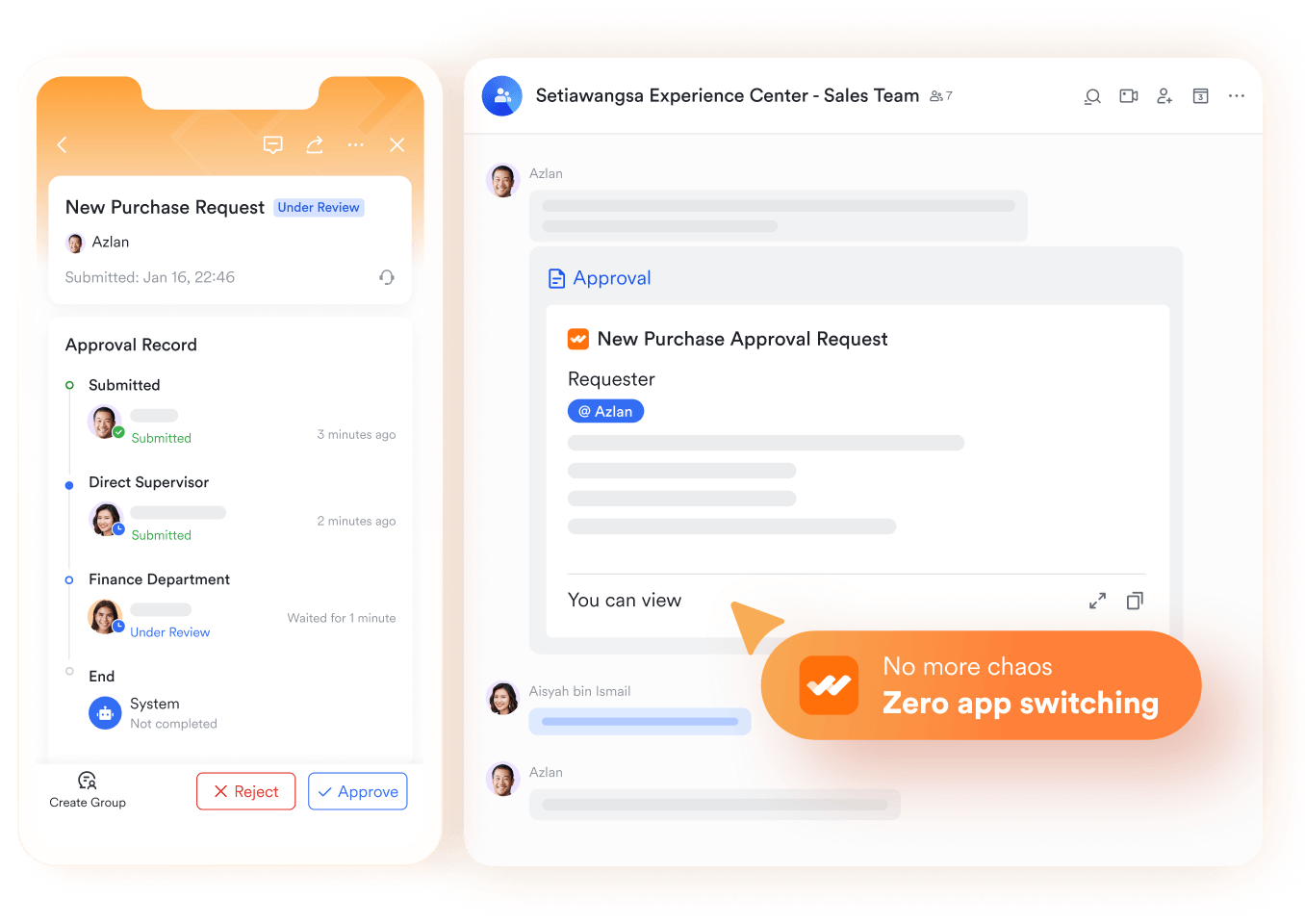
- Example: When a risk of equipment failure triggers an urgent procurement need, the project engineer submits a purchase approval in Lark. The request routes to the finance and operations heads sequentially; both approve within hours, avoiding costly downtime.
Why it matters: By automating escalation, Lark ensures critical decisions don’t get lost in email chains and that risk-related expenditures stay within governance controls.
- Review performance and lessons learned using Lark Meetings
After a project concludes, conducting a structured review is essential to identify what worked well and where improvements can be made. Lark Meetings provides a collaborative space for teams to reflect on project outcomes, review data, and document insights for future reference. Teams can host retrospective sessions with direct access to supporting materials from Lark Base and Lark Docs, ensuring every discussion is backed by accurate project data.
- How it works:
- Schedule a post-project review meeting in Lark Calendar and attach relevant reports or Base dashboards for context.
- During the meeting, use Magic Share to present data, discuss findings, and capture feedback in real time.
- After the session, the meeting summary — including key decisions, lessons learned, and next steps — is automatically stored in Lark Docs for easy access and organizational learning.

Example: During a quarterly project review, the team analyzes risk data from Base and identifies that 80% of potential issues were mitigated within the planned timelines. These insights are documented in the meeting notes, making it easy to share best practices and continuously improve project execution.
Why it matters: It closes the loop between planning, execution, and learning—turning each project’s risk data into a foundation for continuous improvement.
- Starter plan: Free forever plan that includes 11 powerful tools for up to 20 users. It also comes with 100GB of storage, 1000 automation runs, AI translations, and more.
- Pro plan: $12/user/month (billed annually) for up to 500 users. It includes everything in Starter plus group calling for up to 500 attendees, 15TB of storage, 50,000 automation runs, and more.
- Enterprise plan: Contact sales for custom pricing. Supports unlimited users and includes even more automation runs and advanced security, compliance, and management features.
Top methods and techniques for effective risk analysis
Effective risk analysis is crucial for identifying, assessing, and managing potential threats and opportunities in projects. The following methods and techniques are widely used to ensure comprehensive risk management:
- Qualitative risk analysis: This method involves subjective assessment of risks based on their probability and impact. It often utilizes project management tools like risk matrices to prioritize risks. While less data-intensive, it provides a quick overview of potential risks. It is particularly useful in the early stages of a project to quickly identify and rank risks that require immediate attention. Using Lark, teams can document these risks, collaborate on prioritization, and keep all stakeholders aligned in real time.
- Quantitative risk analysis: It uses numerical data and statistical methods to evaluate risks. Techniques like Monte Carlo simulations and decision tree analysis are employed to predict potential outcomes and their probabilities. This approach offers a more detailed understanding of risks. By integrating quantitative results into Lark dashboards, project managers can visualize risk impact, track mitigation actions, and make data-driven decisions. It helps project managers make data-driven decisions and plan appropriate contingencies for high-impact risks.
- Monte Carlo simulation: A computational technique that uses random sampling to obtain numerical results. It helps in understanding the impact of risk and uncertainty in prediction and forecasting models. By running thousands of scenarios, it provides a probability distribution of potential outcomes, allowing for more accurate project planning.
- SWOT analysis: A strategic planning tool that identifies internal strengths and weaknesses, along with external opportunities and threats. It aids in understanding the broader context of risks and formulating appropriate responses. SWOT analysis also helps teams leverage strengths and opportunities to mitigate or avoid potential threats.
- Delphi technique: A structured communication method that relies on a panel of experts. Through multiple rounds of questionnaires, it seeks to reach a consensus on risk assessments and mitigation strategies. This iterative process reduces bias and improves the reliability of risk evaluations by combining diverse expert opinions.
Advantages and limitations of risk analysis in project management
Effective risk analysis is a vital part of project management that helps teams anticipate potential challenges and make informed decisions. Understanding its benefits and limitations ensures a balanced approach to managing project risks:
Advantages of risk analysis
- Improved decision-making: Helps project managers make informed choices based on potential threats and opportunities.
- Proactive risk management: Identifies risks early, allowing for mitigation before issues escalate.
- Better resource allocation: Prioritizes high-impact risks to focus time, budget, and effort where it matters most.
- Enhanced project success rate: Reduces surprises and increases the likelihood of meeting project objectives.
- Increased stakeholder confidence: Transparent risk analysis fosters trust and collaboration among team members and stakeholders.
- Supports contingency planning: Provides a framework for preparing backup plans and budgets.
Limitations of risk analysis
- Time-consuming: Comprehensive risk analysis can be resource-intensive, especially for large projects.
- Requires accurate data: Quantitative methods depend on reliable historical data and estimates, which may not always be available.
- Subjectivity in qualitative analysis: Risk ratings may be influenced by personal judgment or bias.
- Cannot predict all risks: Unexpected or "black swan" events may still occur despite thorough analysis.
- May increase complexity: Detailed risk analysis can overwhelm teams if not managed properly.
Conclusion
Risk analysis in project management is a critical process that helps teams identify, assess, and mitigate potential challenges before they impact project success. By understanding both the advantages and limitations of risk analysis, project managers can make informed decisions, allocate resources effectively, and increase the likelihood of achieving project objectives.
Tools like Lark can further streamline this process by providing collaborative platforms for documenting risks, tracking mitigation plans, and communicating updates with stakeholders in real time. Integrating risk analysis into your workflow ensures projects stay on track and reduces surprises, driving consistent success.
FAQs
How can risk analysis reveal hidden project vulnerabilities?
Risk analysis goes beyond obvious threats by examining dependencies, assumptions, and weak points in a project plan. It uncovers hidden vulnerabilities that could escalate if left unaddressed. Using Lark, teams can map these risks visually, track critical areas, and implement mitigation strategies before they turn into major issues. This proactive approach ensures that even less obvious risks are considered and managed before they affect project outcomes.
How can small teams benefit from risk analysis without overcomplicating projects?
Even small projects face risks that can derail timelines or budgets. By focusing on high-priority risks and using simple qualitative methods, small teams can stay prepared without creating complex systems. Lark allows teams to centralize risk registers, assign owners, and maintain visibility without adding administrative burden. This ensures that small teams can manage risks efficiently without slowing down project progress.
Can risk analysis improve team collaboration and accountability?
Yes. By documenting risks and assigning owners, every team member knows their responsibilities for mitigation. Regular updates keep everyone engaged in proactive risk management. Lark enhances collaboration by providing shared dashboards, reminders, and communication tools to ensure accountability at every stage. It also creates a single source of truth, so teams can resolve issues faster and maintain alignment throughout the project.
How does risk analysis support decision-making under tight deadlines?
Risk analysis highlights critical uncertainties that could affect project success, enabling faster prioritization of tasks and resources. Even under time pressure, knowing which risks are most impactful allows leaders to make smarter decisions. With Lark, teams can access real-time risk data and quickly adjust plans based on the latest insights. This ability to quickly respond to emerging risks helps keep projects on track and prevents costly delays.
Can risk analysis help identify opportunities, not just threats?
Absolutely. Effective risk analysis looks at both negative and positive risks—opportunities that can accelerate timelines, reduce costs, or improve outcomes. By evaluating potential upsides, teams can plan to exploit or enhance these opportunities. Lark helps track both threats and opportunities in one platform, making it easy to act on them strategically. Leveraging these positive risks can lead to innovation, improved efficiency, and better project results.
Related reading
Table of contents
Start using Lark today

Manage all your work in one place
Boost team efficiency by 10x
Save up to 70% on software costs
Table of contents
Start using Lark today
Manage all your work in one place
Boost team efficiency by 10x
Save up to 70% on software costs
Keep reading







2026 Lark Technologies Pte. Ltd.
Headquartered in Singapore with offices worldwide.






Explore: