














Construction Risk Management: What It Is, Key Risks & Modern Technology to Manage Them

Ryan Tanner
Product Marketing Specialist
Sep 18, 2026
Ryan Tanner
Sep 18, 2026

23 min read


Construction projects move through multiple stages, stakeholders, and compliance requirements, which increases the potential for delays, disputes, and financial exposure. Construction risk management helps teams anticipate issues before they become costly problems by using structured processes, documentation, and digital tools. As construction management at risk approaches evolve, many organizations now rely on connected systems to improve safety, communication, and oversight. Lark appears later in the article as part of the technology stack that supports safer and more predictable execution.

What is construction risk management?
Construction risk management refers to the structured approach used to identify, analyze, prioritize, and reduce risks across construction projects. It ensures that teams prepare for uncertainties related to safety, contracts, finances, environment, and project delivery. As risk management in construction becomes more complex, many organizations turn to digital tools that help unify documentation, reporting, and communication. A construction risk management plan gives teams a clearer view of emerging risks and creates stronger alignment across executives, project managers, subcontractors, and field teams.
Construction management of risk models also relies on systematic risk evaluations, allowing firms to protect budget, schedule, and compliance. By implementing clear practices supported by construction risk management software, companies can reduce disputes, improve audit readiness, and create predictable project outcomes.
Types of risks in construction projects
Construction projects face multiple categories of risks. Each type affects timelines, budgets, safety, or contractual outcomes. The following categories capture the main areas where risk management tools in construction play an important role. Each section includes targeted insights to help teams understand why these risks matter and how they influence project delivery.
Financial risks
- Cost overruns and budget inaccuracies: Cost increases occur when estimates are incomplete or when scope evolves without proper documentation. These issues affect overall financial stability and may threaten profit margins. Risk management in construction projects requires updated financial records, transparent change orders, and reliable forecasting tools to control variances early.
- Payment delays and cash flow disruptions: Delayed payments from clients or slow billing cycles can halt operations. Construction firms rely on timely cash flow to pay subcontractors, suppliers, and workers. By using construction management at risk services with digital dashboards, managers can monitor payment statuses and reduce exposure to financial stress.
Safety risks
- On site hazards: Slips, falls, electrical contact, and equipment collisions represent common incidents on construction sites. A strong risk management construction workflow ensures hazards are documented and resolved promptly. Teams that use mobile tools can submit reports instantly, improving reaction time and safety outcomes.
- OSHA compliance: OSHA mandates strict safety measures for construction. Teams must perform inspections, maintain training records, and report incidents correctly. Construction risk management companies often rely on mobile safety tools to ensure compliance and protect workers while reducing penalties.
- Equipment misuse: Improper machinery handling increases the chance of accidents and project delays. Consistent training, monitoring, and reporting reduce misuse risks. Construction risk management tools help supervisors track certifications and ensure only authorized personnel operate sensitive equipment.
Operational risks
- Scheduling gaps: Poorly coordinated schedules lead to idle labor, resource clashes, or late milestones. Risk management tools in construction help synchronize timelines and update schedules continuously. Real time dashboards give managers clarity on sequencing and potential oversight gaps.
- Resource shortages: Construction requires a steady supply of materials, equipment, and skilled labor. Unexpected shortages can derail progress. Construction risk management software helps teams forecast needs, monitor usage, and coordinate procurement with fewer errors.
- Coordination failure: When teams work across sites, contractors, and offices, communication gaps can occur. Misaligned instructions or missed updates slow down execution. Digital systems provide structured communication channels that reduce misunderstandings and accelerate approvals.
Environmental risks
- Weather delays: Unpredictable weather conditions can halt outdoor work. Construction project risk management requires contingency plans, forecast tools, and site protection measures. Digital platforms help track conditions and adjust schedules proactively.
- Geological uncertainties: Soil instability, underground utilities, or unexpected ground conditions cause redesigns and added costs. Field reporting tools allow teams to document findings quickly and communicate with engineers before continuing work.
- Environmental compliance: Projects must meet environmental regulations related to waste disposal, erosion control, and emissions. Construction risk management plan workflows ensure teams capture evidence, maintain records, and stay compliant with minimal disruption.
Contractual and legal risks
- Contract disputes: Misunderstandings around scope, deadlines, or payment can escalate into disputes. Transparent records and clear approvals reduce exposure. Construction contract risk management frameworks help document terms and verify changes.
- Scope changes: Projects often evolve, but undocumented changes create confusion and cost disagreements. Digital tools capture change requests, approvals, and impacts to maintain clarity for all parties.
- Liability issues: If property damage, injuries, or compliance failures occur, liability risk increases. Construction management at risk services emphasize documentation, communication logs, and approval trails to reduce exposure.
- Business structure considerations: Choosing the right business structure also plays a role in reducing long-term risk. For instance, forming an LLC with the support of a registered agent, using platforms like ZenBusiness, can provide liability protection by separating personal and business assets. This becomes especially valuable when handling contracts, project disputes, or potential claims related to construction work.
Technological risks
- Poor software adoption: Construction teams benefit from digital systems, but low adoption limits effectiveness. Training programs and intuitive tools help increase participation and reduce technology related risks.
- Data inconsistency: When information spreads across separate platforms, the risk of outdated or conflicting data rises. Integrated construction risk management tools centralize communication, documentation, and forecasting.
- Fragmented communication systems: Disconnected apps make it harder to track updates. Unified communication platforms reduce delays and strengthen coordination across contractors, clients, and field crews.
Key steps in the construction risk management process
Construction risk management relies on a structured workflow that helps teams move from identifying risks to controlling them effectively. These steps create clarity for contractors, engineers, and field teams while improving coordination and compliance. As digital tools gain importance in risk management for construction, organizations now follow consistent processes supported by reporting systems and project dashboards.
Risk identification
Identifying risks early helps teams understand site challenges, stakeholder needs, and potential uncertainties that may affect delivery. A strong construction risk management plan begins with clear methods for recognizing hazards. Modern tools used in risk management in construction projects improve visibility and strengthen data accuracy across job sites.
- Site surveys: Thorough site surveys help uncover physical hazards, soil conditions, and access limitations before construction begins. Teams document surface conditions, utilities, and topographical issues to reduce uncertainty. With construction risk management software, survey findings can be uploaded instantly through photos, forms, and notes for real time visibility.
- Stakeholder assessments: Stakeholder assessments gather expectations from owners, subcontractors, architects, and inspectors. These conversations help identify gaps in design intent, scheduling expectations, or budget constraints. When used consistently, this step strengthens risk management in construction industry settings by aligning all parties early in the process.
- Software tools for hazard detection: Digital tools allow teams to record hazards, analyze patterns, and view incident trends. Construction risk management tools compile field reports into dashboards that highlight conditions likely to cause delays or safety issues. This improves accuracy and strengthens the foundation for effective risk mitigation.
Risk analysis
Risk analysis helps quantify the impact and likelihood of known risks, giving teams a clearer understanding of potential outcomes. This step supports informed decision-making and prevents reactive problem solving. Construction risk management companies rely heavily on digital scoring models to ensure fairness and consistency in evaluations.
- Probability and impact scoring: Scoring systems help teams gauge how likely a risk is to occur and how severely it may affect project goals. These scores guide decisions on resource allocation and mitigation urgency. Using digital tools ensures consistency and reduces human error in ranking risks.
- Digital simulations, dashboards, and historical analysis: Simulations help teams understand how risks may affect timelines, budgets, or safety. Dashboards visualize patterns clearly, while historical records reveal recurring issues. These methods strengthen construction project risk management by supporting decisions with reliable data.
Risk prioritization
Prioritizing risks ensures that teams address the most critical issues first. A structured approach allows organizations to plan effectively, allocate resources wisely, and keep schedules intact. Risk management construction workflows become more predictable when prioritization is handled using unified technology systems.
- Ranking risk severity: Teams categorize risks by severity to identify which ones need immediate attention. This creates clarity for managers, subcontractors, and field workers. Construction management at risk models rely on structured prioritization to maintain alignment throughout the project.
- Automated notifications for high impact risks: Automated alerts notify teams when high severity risks appear or change status. This helps supervisors take action quickly and reduces the chance of delays. Risk management for construction projects becomes more responsive when notifications flow through a centralized platform.
Risk mitigation
Risk mitigation focuses on taking preventive steps to reduce the impact of potential issues. This stage ensures that teams prepare responses before risks escalate. Construction management at risk services depend on strong mitigation strategies to control costs and protect timelines.
- Risk response planning: Teams develop specific strategies to prevent or minimize each risk. This includes assigning owners, defining actions, and preparing resources. Clear response plans improve risk management tools in construction by creating accountability for each identified issue.
- Technology-enabled monitoring: IoT sensors, mobile reporting tools, and project systems provide real time updates from the field. These tools help monitor conditions, verify compliance, and catch problems early. This strengthens construction risk management by reducing reaction time during critical moments.
Risk monitoring & control
Monitoring and control ensure that risks remain visible throughout the project lifecycle. Continuous oversight helps teams identify new hazards, verify progress, and maintain compliance. Risk management in construction projects becomes stronger when organizations rely on consistent reporting and structured documentation.
- Real-time tracking: Continuous tracking helps managers identify deviations from plans and take corrective action. Dashboards make it easier to review active risks, pending tasks, and unresolved hazards. This improves coordination across distributed teams.
- Digital approvals: Digital approval workflows ensure that changes, inspections, and safety tasks follow a clear path. Approvals prevent delays by keeping documentation organized and accessible. Construction risk management software plays an important role in capturing these records.
- Audit trails and change documentation: Detailed audit logs help teams understand how decisions were made, who approved changes, and when updates occurred. These trails support compliance reviews, dispute resolution, and project accountability. Construction contract risk management becomes more reliable with complete documentation.
Technology in construction risk management
Technology has become a central part of modern construction risk management because projects now depend on accurate reporting, real time coordination, and secure documentation. Digital platforms help unify communication, track field activities, and reduce gaps that typically lead to delays or disputes. As construction risk management software continues to evolve, teams gain better visibility into safety, costs, and subcontractor performance across every job site.
Risk management software
Risk management software gives construction teams a structured system for tracking hazards, prioritizing tasks, and maintaining visibility across projects. These tools centralize reporting, support data driven decisions, and strengthen overall governance. They also help streamline risk management in construction industry settings by reducing manual processes.
- Centralized dashboards: Dashboards present risks, owners, deadlines, and status updates in one place. This helps managers stay ahead of emerging issues and coordinate responses efficiently. Construction project risk management becomes stronger when teams can review all active risks in a single view.
- Risk registers: Risk registers maintain detailed entries of risks, mitigation actions, and responsible team members. They help organizations record every step of the process clearly. These registers support risk management for construction projects by ensuring that all issues remain visible and traceable.
- Probability matrices: Probability matrices visually map each risk based on severity and likelihood. This helps teams quickly understand which risks require attention first. Construction risk management tools benefit from these simple visual frameworks that guide strategic decisions.
Construction project management tools
Construction project management tools help teams manage tasks, schedules, resources, and approvals. These systems support clearer communication and stronger alignment between field teams and office staff. They also play an important role in construction management of risk models by improving predictability and minimizing disruptions.
- Scheduling and resource allocation: Scheduling tools coordinate crews, equipment, and material deliveries. They help avoid overlaps, reduce idle time, and maintain a balanced workload. This increases overall efficiency and improves risk management in construction projects.
- Change order tracking: Change order tools document updates to plans, costs, and timelines. This keeps stakeholders informed and reduces disputes about scope or responsibilities. Construction contract risk management improves when change logs are stored centrally.
- Progress documentation: Daily logs, photos, and written updates help track progress throughout the project. Clear documentation supports risk management construction practices by providing evidence for inspections, audits, or claims.
Mobile field reporting tools
Mobile tools improve the speed and accuracy of data collection from job sites. Field teams can capture incidents, observations, and updates directly through mobile devices. This allows construction risk management companies to operate with real time visibility across multiple sites.
- Daily site logs: Field workers record daily activities, conditions, and observations instantly. Daily logs help managers track progress and detect early signs of risk. This strengthens risk management for construction teams working across dispersed locations.
- Photo and video documentation: Photos and videos provide visual proof of events, hazards, or completed tasks. These files support incident investigation and compliance reporting. Construction risk management tools rely heavily on visual documentation for accuracy.
- Safety compliance tracking: Mobile apps allow supervisors to verify safety checks, track training completion, and document incidents. This ensures ongoing compliance and reduces the likelihood of violations during inspections.
CRM style Tools for subcontractor and stakeholder coordination
CRM style tools help construction companies manage subcontractor relationships, approvals, and communication logs. These tools improve accountability and structure, helping teams monitor performance and document decisions. This approach enhances overall risk management in construction industry environments.
- Subcontractor management: CRM systems store subcontractor details, certifications, compliance records, and performance history. This helps teams make informed decisions and improves construction project risk management.
- Communication logs: Logs provide a complete record of messages, instructions, and clarifications shared with subcontractors. These logs reduce miscommunication and help teams resolve disputes effectively.
- Approval workflows: Approval workflows ensure that subcontractors receive verified plans, documents, and instructions. This prevents unauthorized work and improves risk management construction processes.
AI and predictive analytics
AI and predictive analytics assist construction teams by identifying patterns, forecasting risks, and suggesting mitigation actions. These capabilities help organizations transition from reactive management to proactive planning. They also support construction management at risk strategies that rely on early intervention.
- Anomaly detection: AI models detect deviations in schedules, quality, or field reports. Early detection allows teams to take corrective action and avoid disruptions.
- Predicting delays or safety incidents: Predictive systems analyze historical and real time data to forecast potential delays or safety issues. This helps managers adjust plans and allocate resources strategically.
- Forecasting cost risks: AI tools predict budget overruns by analyzing labor patterns, material trends, and previous change orders. This strengthens financial risk management in construction projects.
Document management & audit trail systems
Document management tools ensure that construction teams maintain organized, secure, and traceable records. These systems support compliance, reduce disputes, and help teams manage complex documentation requirements. They are essential for construction risk management companies that operate across multiple projects.
- Digital contracts: Digital contract systems store drawings, agreements, and specifications in a single location. Centralized access improves coordination and prevents outdated files from circulating.
- Version control: Version control tools maintain a history of changes, edits, and approvals. This prevents confusion and ensures that teams follow the correct documents.
- Compliance libraries: Compliance libraries store permits, certificates, safety manuals, and regulatory documents. These libraries make audits easier and support stronger risk management for construction teams.
Take your steps: Use Lark to manage risk smartly in construction
Lark provides a secure, connected workspace that helps construction teams manage risk across documents, communication, access control, and compliance workflows. From safeguarding sensitive data to standardizing project-wide policies, Lark supports modern construction organizations with robust security and operational clarity.
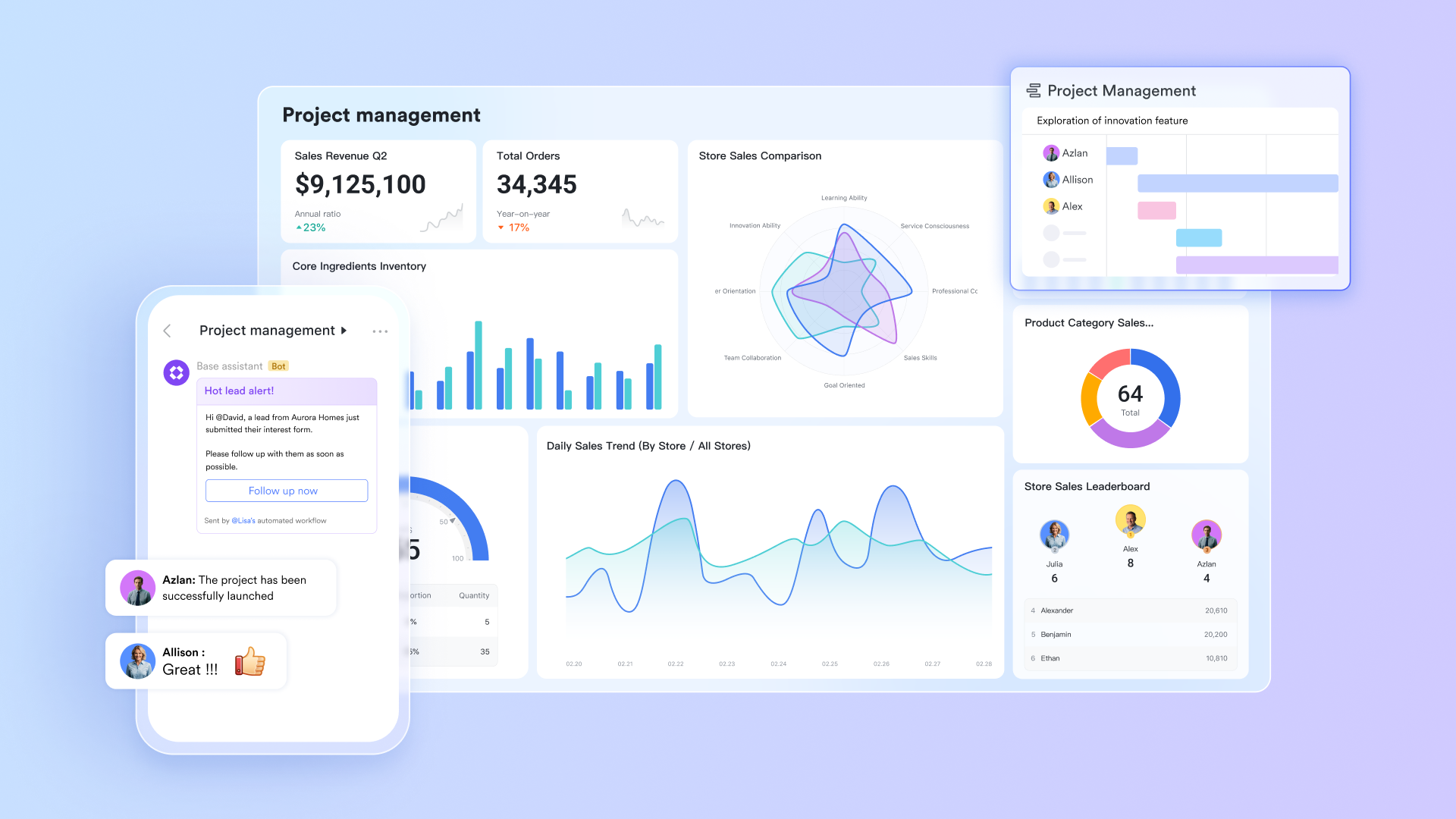
Collaborative project document editing platform
Lark Docs helps construction teams manage risks by clearly documenting project requirements, plans, and specifications in text, images, Sheets, and MindNotes. Real-time collaboration and commenting allow engineers, contractors, and managers to identify potential issues early. Version tracking ensures changes are logged and accountability is clear. Teams can assign risk items, monitor progress, and integrate updates from site meetings, helping prevent delays, errors, and cost overruns.
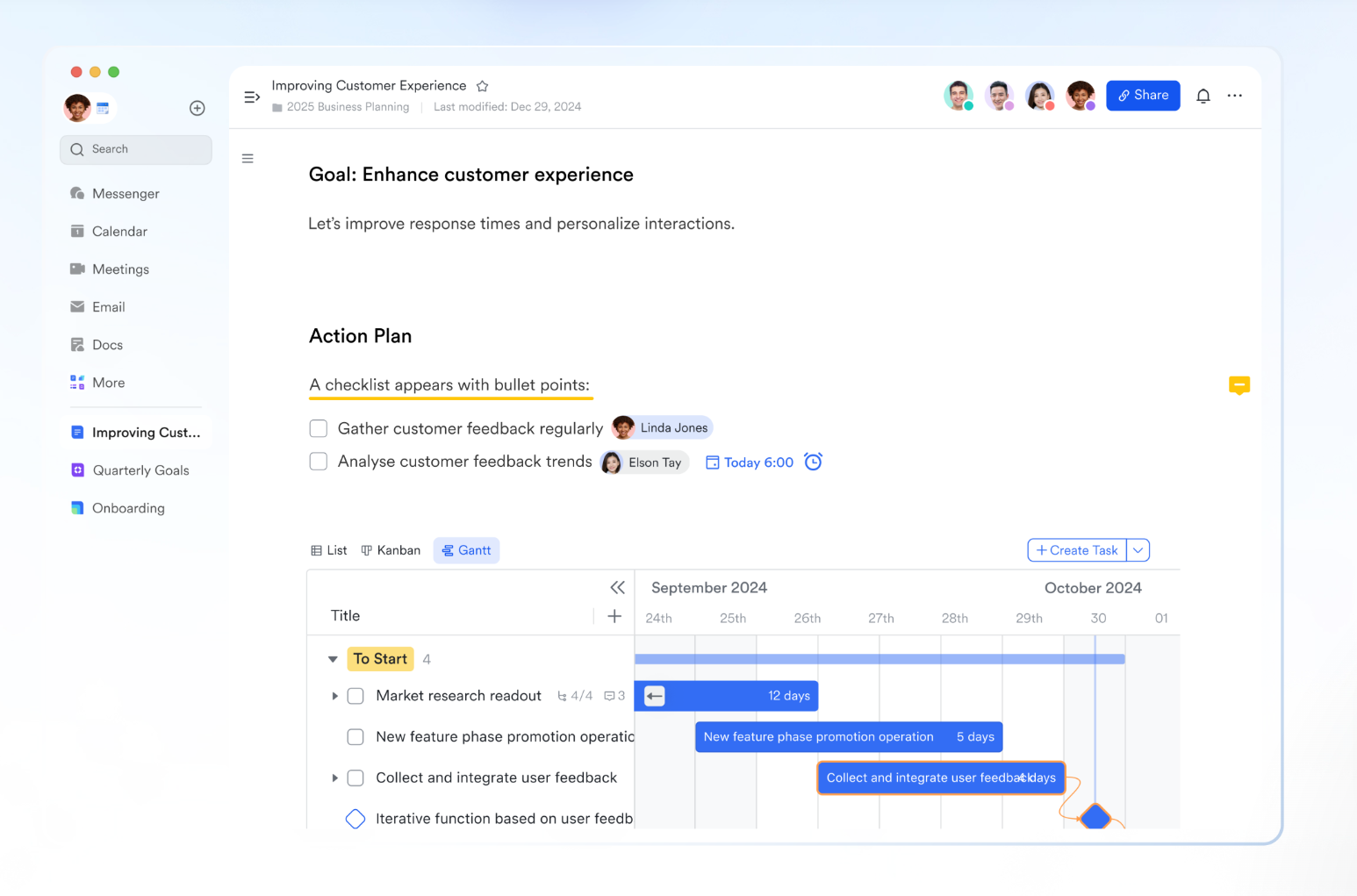
Centralized policy and compliance documentation
Lark Wiki enables companies to build a structured hub for all safety procedures, operational guidelines, and risk-management policies. Construction firms can store SOPs, incident-response protocols, subcontractor requirements, and project compliance rules in one organized library. Version history, search, and permission controls ensure that teams on-site and in the office always reference the latest approved procedures reducing miscommunication.
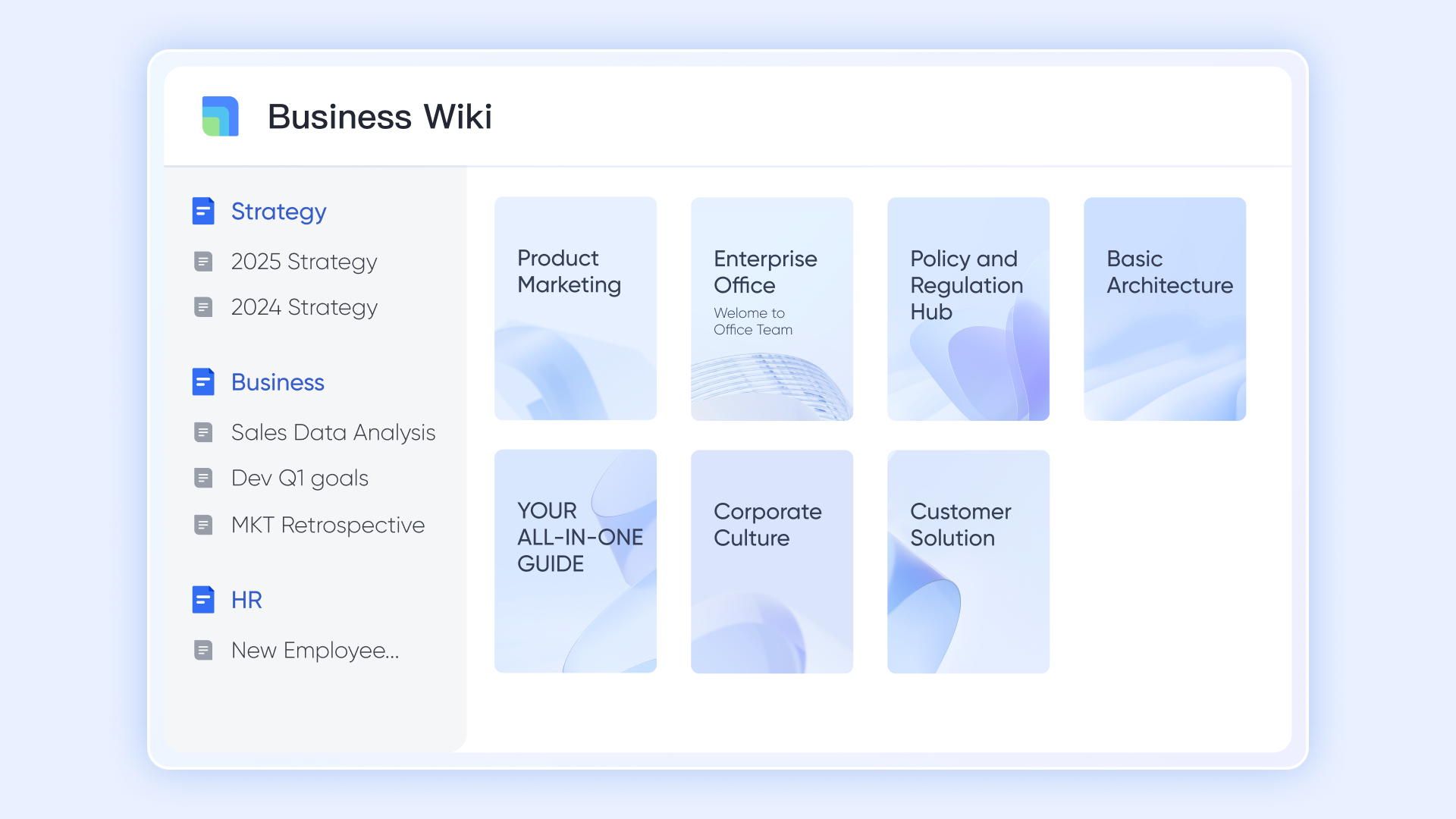
Smart project scheduling and regular checkpoints
Lark Calendar helps construction teams manage project risks by publishing key milestones, deadlines, and release dates in a shared, public calendar. Teams across departments can subscribe to stay updated, ensuring alignment and reducing miscommunication. By clearly visualizing critical stages, it promotes accountability and helps prevent delays, cost overruns, and coordination issues on-site.
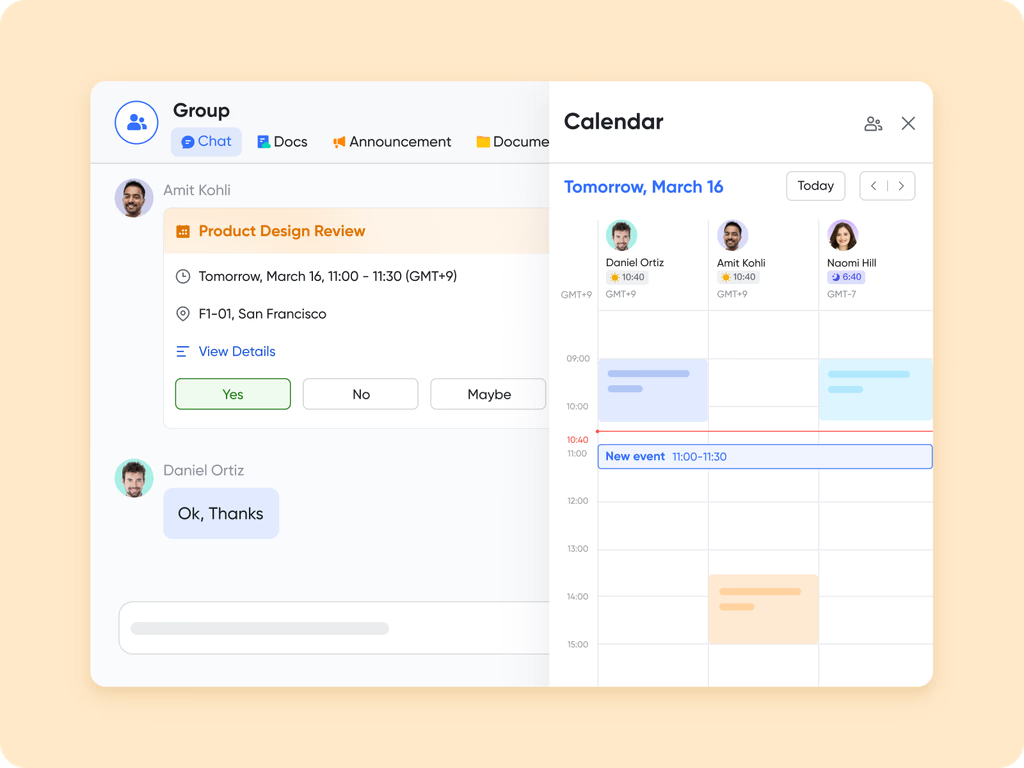
Specialized group chat for construction projects
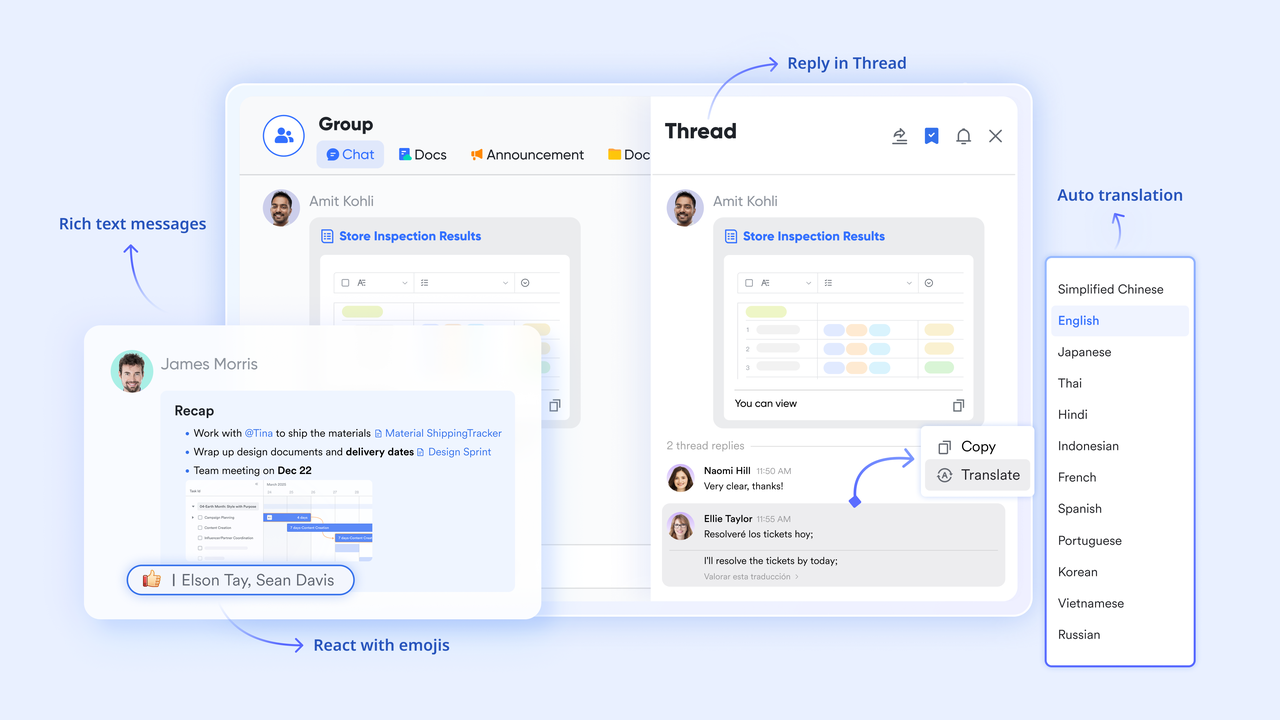
Lark Messenger helps construction teams manage risks by sharing real-time updates, announcements, and key project information. Critical messages can be pinned for easy access, ensuring nothing important is missed. Reviewing chat history allows teams to track past decisions, monitor workflows, and onboard new members efficiently. This keeps all stakeholders informed, reduces miscommunication, and promotes accountability across the project.
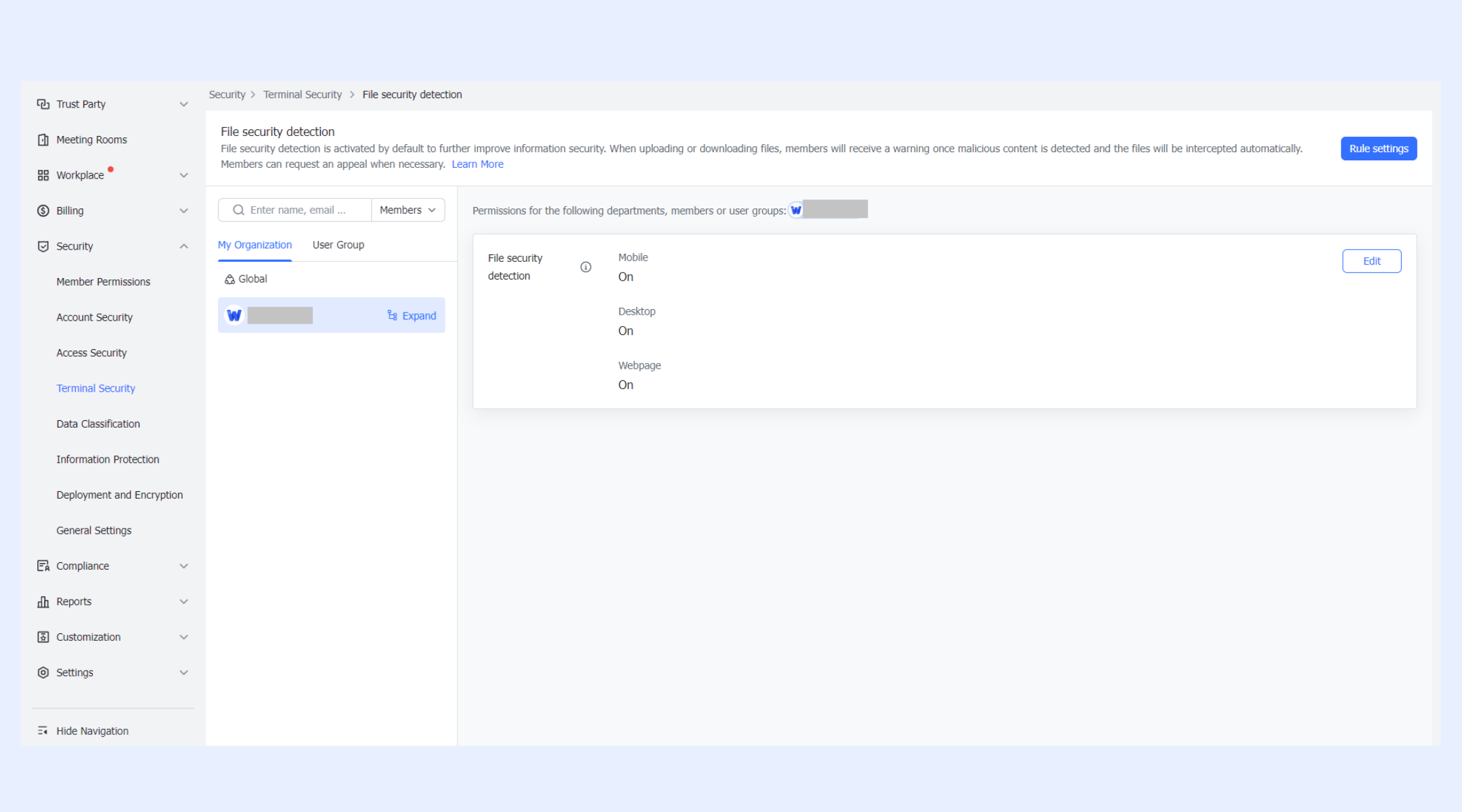
File security detection
Construction teams often exchange drawings, contracts, reports, and subcontractor documentation that may originate from external or unknown sources. Lark's file security detection automatically scans all uploaded or shared files for malicious content such as viruses, ransomware, or embedded threats. When a file is deemed unsafe, Lark blocks downloads and alerts the user. This safeguards laptops, tablets, and mobile devices used in field operations and ensures that no harmful file compromises project continuity.
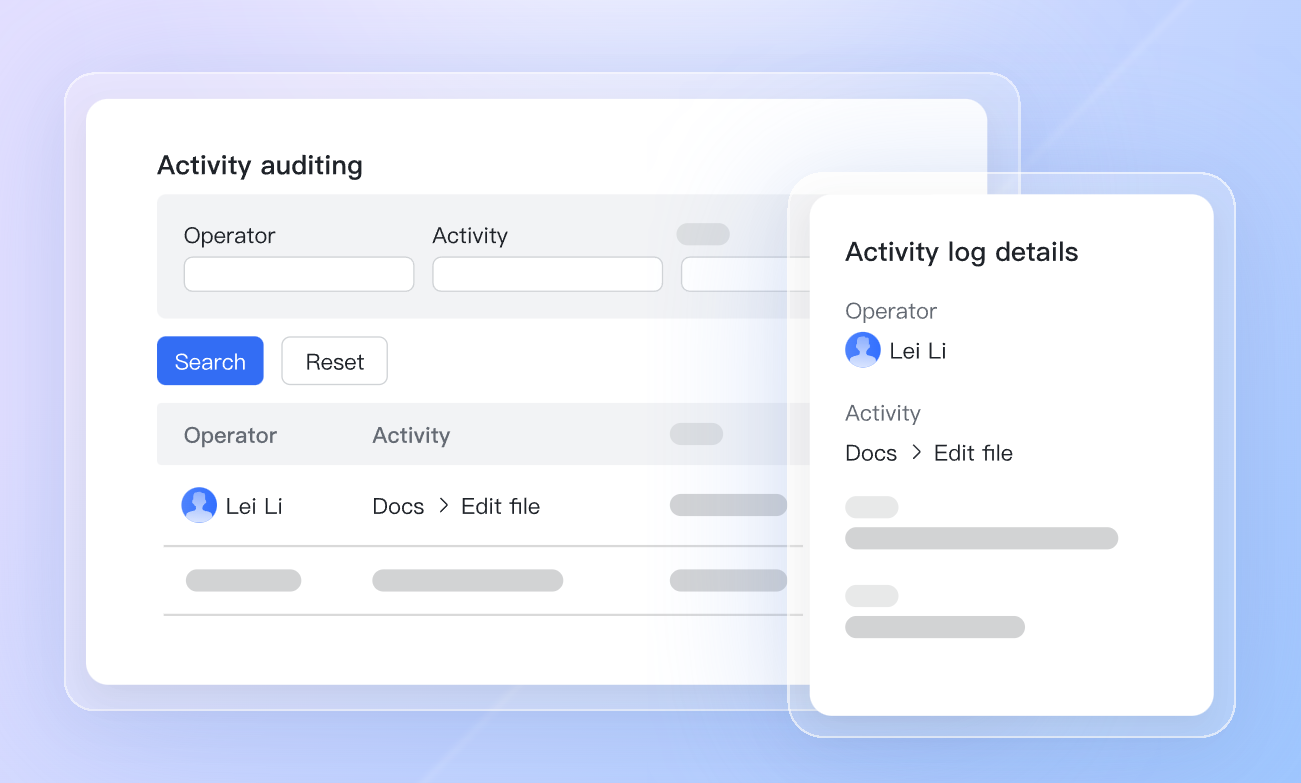
Audit logs for full traceability
Lark maintains detailed audit logs that capture administrative actions, permission changes, data access, and file operations. This creates a transparent record of who accessed or modified critical documents essential for construction firms that must demonstrate compliance, investigate incidents, or maintain accountability across multiple subcontractor groups. Audit logs support governance requirements and help organizations resolve disputes or conduct internal reviews with clear historical tracking.
- Starter plan: Free forever plan that includes 11 powerful tools for up to 20 users. It also comes with 100GB of storage, 1000 automation runs, AI translations, and more.
- Basic plan: $6/user/month (billed annually) for up to 500 users. It includes everything in Starter plus group calling for up to 500 attendees, 5TB of storage, 1000 automation runs, and more.
- Pro plan: $12/user/month (billed annually) for up to 500 users. It includes everything in Starter plus group calling for up to 500 attendees, 15TB of storage, 50,000 automation runs, and more.
- Enterprise plan: Contact sales for custom pricing. Supports unlimited users and includes even more automation runs and advanced security, compliance, and management features.
Why risk management in construction is critical
This section highlights why risk management in construction projects is essential for predictable delivery. With rising project complexity, construction teams need visibility into safety, compliance, finances, and subcontractor performance. The following areas show how a structured approach prevents setbacks and improves coordination across the construction industry.
- Safety and compliance: Construction sites involve heavy machinery, moving vehicles, elevated work areas, and live electrical systems. Without proper risk management in construction, small hazards can escalate into serious incidents. Safety plans, training, and documentation help keep teams compliant with OSHA and local regulations. Using digital reporting tools increases visibility and allows supervisors to track issues in real time across every job site.
- Minimized delays and cost escalations: Delays often stem from poor scheduling, late materials, design changes, or subcontractor slowdowns. Risk management for construction projects helps teams forecast potential disruptions and mitigate them early. When firms maintain updated cost records, change logs, and contractor communication, they reduce the likelihood of budget overruns. Construction contract risk management adds further protection by clarifying roles, milestones, and expectations.
- Better subcontractor and workforce visibility: Construction teams rely heavily on subcontractors, specialists, and temporary labor. Risk management in construction industry settings requires clear records of responsibilities, performance, and compliance. Digital coordination tools create an organized workflow where subcontractor communication, approvals, and tasks remain traceable. This helps general contractors improve delivery predictability and prevent scope overlaps.
- Documentation readiness for audits and disputes: Construction often involves inspections, permits, certifications, and contract reviews. A strong construction risk management plan ensures that teams maintain accurate records of conversations, approvals, and field activities. This improves audit readiness and reduces the time spent searching for documents during disputes. Digital logs and photo documentation also strengthen protection when claims arise.
- Stronger client confidence and communication: Clients value transparency and consistency in updates. Risk management construction workflows help communicate progress clearly, show how issues are addressed, and maintain trust throughout the project lifecycle. When digital systems track risks and resolutions, clients gain visibility into decision making and overall project health.
Conclusion
Construction risk management plays a critical role in ensuring that projects stay safe, predictable, and compliant. Each phase of the risk process helps teams identify issues early, evaluate their impact, and respond with clarity. As projects grow more complex, the need for accurate documentation, consistent reporting, and clear communication becomes more important. Strong risk management in construction projects allows organizations to deliver work efficiently while minimizing delays, disputes, and financial exposure.
Digital solutions now support construction companies with unified tools that improve visibility across field teams, subcontractors, and management. Lark gradually becomes part of this process by offering a connected environment that helps teams organize documents, manage permissions, and maintain secure communication. These capabilities strengthen planning, reduce information gaps, and support construction management at risk models that rely on transparency. By adopting the right tools and structured workflows, construction firms can operate with more confidence and deliver projects more effectively.
FAQs
What is a construction risk management plan?
A construction risk management plan outlines how project teams identify, analyze, prioritize, and control risks throughout a project. It documents roles, workflows, communication steps, and reporting expectations to keep projects predictable. The plan helps teams reduce delays, cost escalations, and safety incidents by creating structure around every phase of risk. Many organizations now use digital platforms to organize documents and approvals, with tools like Lark gradually supporting clearer information flow and more dependable documentation.
What tools help with construction risk management?
Construction risk management benefits from project management software, field reporting tools, risk registers, document control systems, and communication platforms. These tools work together to improve visibility, standardize workflows, and reduce miscommunication between office and field teams. Digital reporting also helps managers track progress and address issues proactively. Platforms such as Lark are increasingly used to centralize documents, streamline communication, and maintain consistent records across all stakeholders.
How does software reduce construction risk?
Software reduces construction risk by consolidating information, improving accuracy, and enabling faster communication among teams. Real time dashboards highlight hazards, scheduling conflicts, or compliance issues before they escalate. Digital workflows ensure that change orders, safety checks, and approvals follow a clear path, reducing confusion and delays. When platforms like Lark are introduced, teams gain secure storage, audit trails, and organized communication that support stronger decision making.
What is construction management at risk (CMAR)?
Construction management at risk is a delivery approach where the construction manager commits to delivering the project within a guaranteed maximum price. This method allows the construction manager to participate early in planning, helping identify risks related to design, cost, and scheduling. CMAR teams rely heavily on transparent communication and detailed documentation to maintain predictability. Many firms slowly incorporate connected platforms such as Lark to keep information centralized and ensure that project decisions remain traceable.
What is the difference between risk assessment and risk analysis?
Risk assessment involves identifying potential risks that may affect a project, while risk analysis evaluates the likelihood and impact of those risks. Both steps work together to help teams understand threats and prioritize their responses effectively. Clear assessment and analysis improve construction risk management by creating structured planning and informed decisions. As digital tools become more common, platforms like Lark help teams maintain organized records and ensure that assessments stay accessible across the entire project lifecycle.
Related reading
Table of contents
Start using Lark today

Manage all your work in one place
Boost team efficiency by 10x
Save up to 70% on software costs
Table of contents
Start using Lark today
Manage all your work in one place
Boost team efficiency by 10x
Save up to 70% on software costs
Keep reading







2026 Lark Technologies Pte. Ltd.
Headquartered in Singapore with offices worldwide.






Explore: