Project risk assessment is the foundation of proactive project management. It helps teams identify potential threats early, evaluate their likelihood and impact, and plan effective responses before issues disrupt timelines, budgets, or outcomes. Instead of reacting to problems after they occur, a structured project risk assessment enables informed decision-making, better prioritization, and stronger stakeholder confidence. From construction and IT projects to enterprise transformation initiatives, risk assessment ensures uncertainties are visible, measurable, and manageable. By systematically analyzing risks across strategic, operational, financial, and technical areas, organizations can protect project value, reduce surprises, and increase the chances of delivering successful, predictable results.
What project risk assessment really means
At its core, in project management is the process of identifying potential hazards and evaluating the likelihood and impact of those events. It is a proactive discipline that transforms "unknown unknowns" into "known variables." Instead of reacting to problems as they arise, teams use assessment data to build contingency reserves and mitigation strategies.
A robust assessment goes beyond a simple list of worries. It involves assigning numerical values or categorical rankings to risks so that the project team knows exactly where to focus their limited resources.
5 common types of project risks
To ensure a comprehensive evaluation, you must categorize your threats. Most project management risk assessment frameworks look at five primary areas:
- Strategic risks: These are high-level threats that could prevent the project from achieving its intended business value. Examples include shifts in market demand, competitor moves, or a change in the organization's long-term goals.
- Operational risks: These involve the day-to-day execution of the project. Poor resource allocation,, and supply chain disruptions fall under this category. A construction project risk assessment checklist often focuses heavily on operational safety and material availability.
- Financial risks: Budget overruns are the most common financial risk. This also includes currency fluctuations for international projects, interest rate changes, and the risk of a project losing its funding source—often referred to in high-stakes environments through a project cancellation risk assessment scale.
- Compliance risks: Legal and regulatory hurdles can halt a project in its tracks. This includes ensuring your project meets GDPR requirements, local building codes, and industry-specific safety standards.
- Technology risks: In our digital-first world, hardware failures, software bugs, and cybersecurity breaches are constant threats. Assessing technical debt and the learning curve for new tools is essential for
5 key time points to start project risk assessment
Risk management is not a "one and done" task. It is a continuous loop that should occur at these critical junctures to ensure the project remains viable and protected:
- During project initiation: Before the first dollar is spent, you need a baseline understanding of the landscape to determine if the project is even feasible. This initial assessment helps set a realistic budget and for high-level uncertainties early on.
- Before : Each new phase brings unique challenges, such as transitioning from the design stage to physical implementation. Re-assessing at these points ensures the team is prepared for the specific technical or operational hurdles associated with the upcoming work.
- After scope changes: If the scope creeps, the risk profile changes instantly, often introducing new threats to the deadline and budget. Never accept a "small change" without checking how it impacts your risk assessment project management plan to avoid compounding hidden issues.
- During vendor selection: Third-party partners introduce external variables, such as financial instability or delivery delays, that are outside your direct control. Assessing these risks during the bidding process allows you to choose partners that align with your and security standards.
- At phase gates: Formal reviews at the end of project stages are the perfect time to retire old, expired risks and identify new ones emerging in the next phase. This structured hand-off ensures that the risk register remains a living document rather than an outdated checklist.
Don't let hidden risks derail your projects
5 risk assessment methods used in project management
Project teams use a mix of analytical and strategic techniques to evaluate uncertainty throughout the project lifecycle. These methods support effective risk assessment in project management by helping teams identify threats, understand their potential impact, and decide where preventive actions are most needed.
- Qualitative risk scoring: This method evaluates risks using relative scales such as low, medium, or high based on probability and impact. It is commonly applied in project management risk assessment when reliable data is limited or speed is essential. Qualitative scoring enables quick prioritization and among stakeholders.
- Quantitative analysis (Monte Carlo, EMV): Quantitative techniques rely on numerical data to estimate overall risk exposure and cost impact. Approaches like Monte Carlo simulation and Expected Monetary Value are often used in complex programs where accuracy is critical. This form of risk assessment in project management supports informed budgeting and contingency planning.
- SWOT risk analysis: , weaknesses, opportunities, and threats to understand internal and external risk factors. It helps teams connect business strategy with project-level risks during early planning. This approach adds strategic context to project risk assessment decisions.
- Risk breakdown structures: A risk breakdown structure organizes risks into logical categories such as technical, operational, or financial. This improves completeness and clarity by ensuring all major risk areas are reviewed. It is a practical framework for consistent risk assessment project management practices.
- Scenario planning: Scenario planning explores how different future conditions could affect project outcomes. Teams analyze best-case, worst-case, and most-likely scenarios to test response strategies. This method strengthens risk awareness and adaptability in project management risk assessment.
How to start a project risk assessment
A structured, step-by-step approach ensures risks are identified early, evaluated consistently, and managed proactively throughout the . This process helps teams move from uncertainty to control by turning potential threats into clearly defined, actionable items.
Step 1: Identify risks
Begin by systematically identifying anything that could negatively affect the project's objectives. This includes risks related to scope, schedule, budget, resources, technology, vendors, and compliance. Inputs from team workshops, historical data, and stakeholder interviews help surface both obvious and hidden risks.
Step 2: Categorize risks
Once risks are identified, group them into categories such as strategic, operational, financial, technical, or regulatory. Categorization improves clarity and ensures balanced coverage across all risk areas. It also makes ongoing monitoring and reporting more manageable.
Step 3: Score probability and impact
Evaluate each risk based on how likely it is to occur and the severity of its potential impact. Teams may use numerical scales or qualitative ratings to maintain consistency. This step provides the foundation for objective comparison between risks.
Step 4: Prioritize risks
Using the probability–impact scores, rank risks to determine which ones require immediate attention. High-likelihood, high-impact risks should be addressed first. Prioritization ensures limited resources are focused where they deliver the greatest risk reduction.
Step 5: Assign owners
Every significant risk should have a clearly defined owner responsible for monitoring and response actions. improves accountability and ensures risks are actively managed rather than passively documented. Owners also report status changes as conditions evolve.
Step 6: Define mitigation plans
For each priority risk, develop a clear mitigation or response strategy, such as avoidance, reduction, transfer, or acceptance. Define specific actions, timelines, and triggers for escalation. Well-defined mitigation plans turn risk assessment into practical, preventive project control.
Turn risks into clear actions with a reliable tool
Action time: Streamline project risk assessment with Lark
stands out for project risk assessment by combining collaboration, structured data, and automation in one platform. It centralizes risk registers and RAID logs, making it easy for teams to track threats and link them to milestones in real time. Custom scoring and visual heat maps bring clarity to risk prioritization, while automated alerts and AI tools keep stakeholders aligned and proactive. With and intelligent insights, Lark helps teams manage uncertainty more effectively and confidently.
Centralized risk intelligence: The collaborated RAID log
serves as the definitive single source of truth for your project's health by housing your risk register and RAID logs in a structured, relational environment. Using two-way link records, you can connect a specific risk directly to the it threatens, ensuring full traceability. Unlike isolated files, these tables feature role-based views, allowing team members to see only the risks relevant to their workstreams while providing the PMO with a comprehensive overview of every assumption, issue, and dependency across the portfolio. 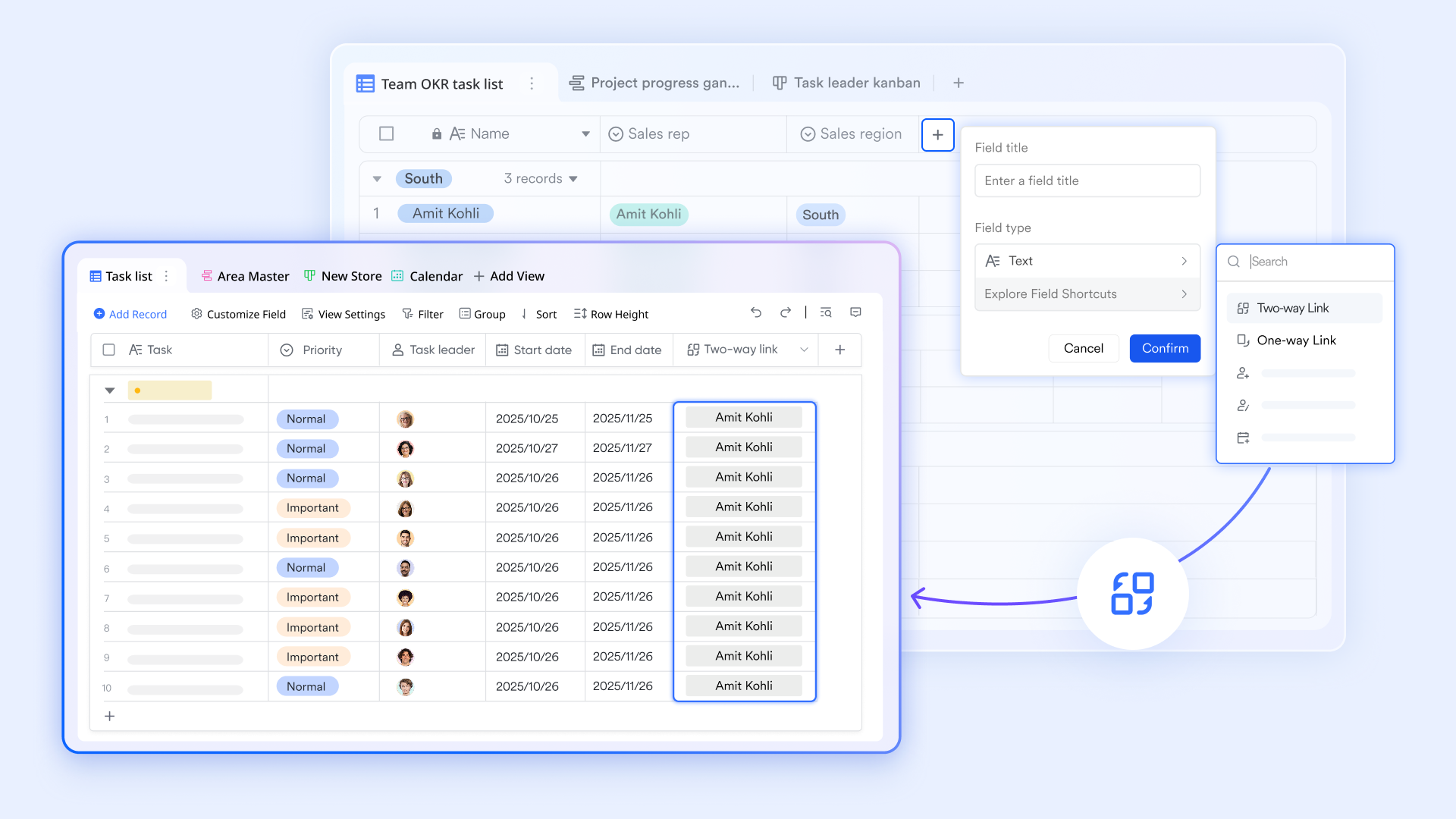
Quantitative precision: Custom scoring and heat mapping
To move beyond subjective guesswork, Lark enables you to build custom scoring formulas within your risk tables. By creating fields for Probability, Impact, and Urgency, you can use a formula to compute composite risk scores and ($EMV$) automatically. To make these insights actionable, you can apply color rules and conditional highlighting; for instance, any risk with a "High" composite score can automatically turn red, creating an instant visual heat map that allows teams to rank priorities consistently. 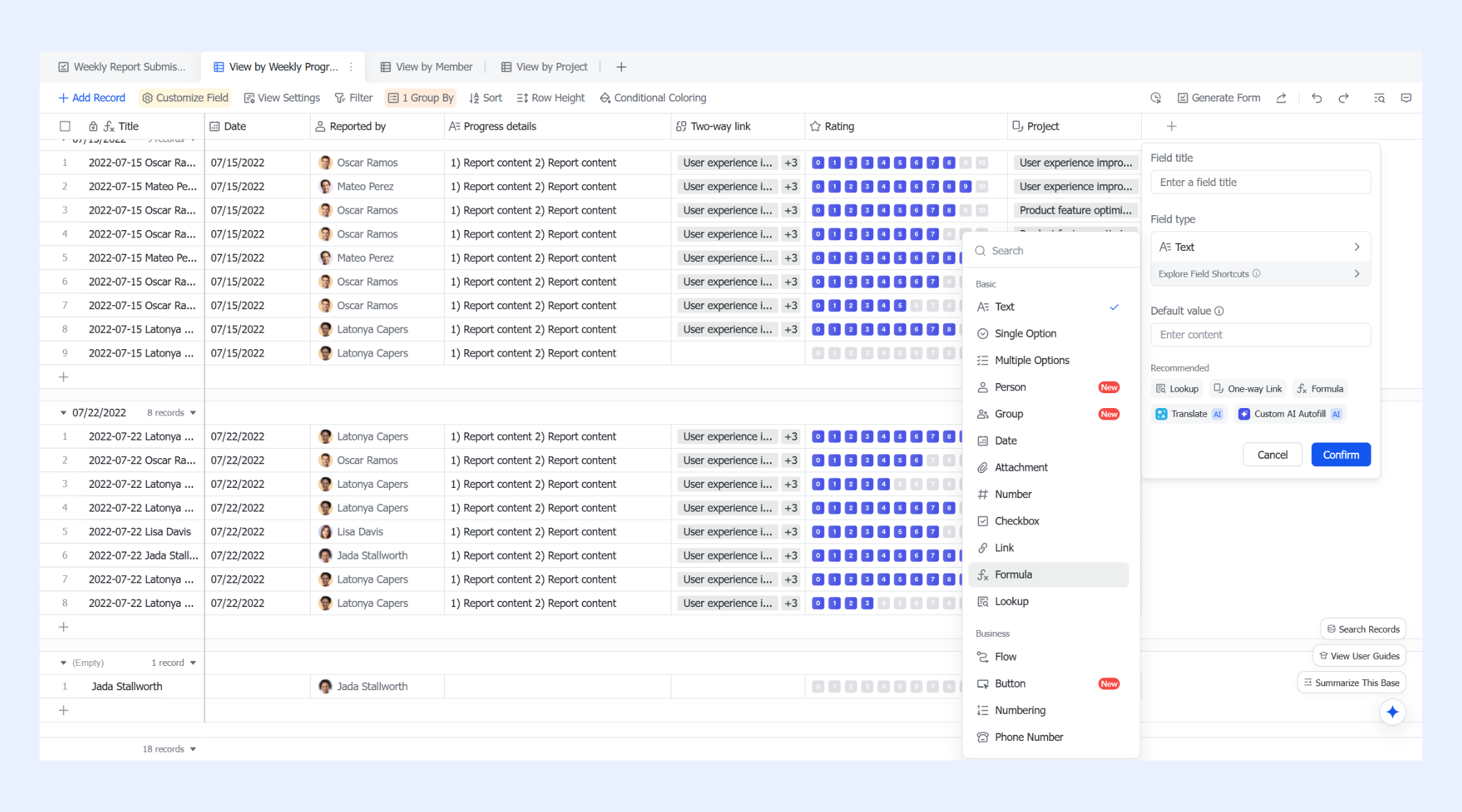
Executive oversight: Portfolio roll‑up dashboards
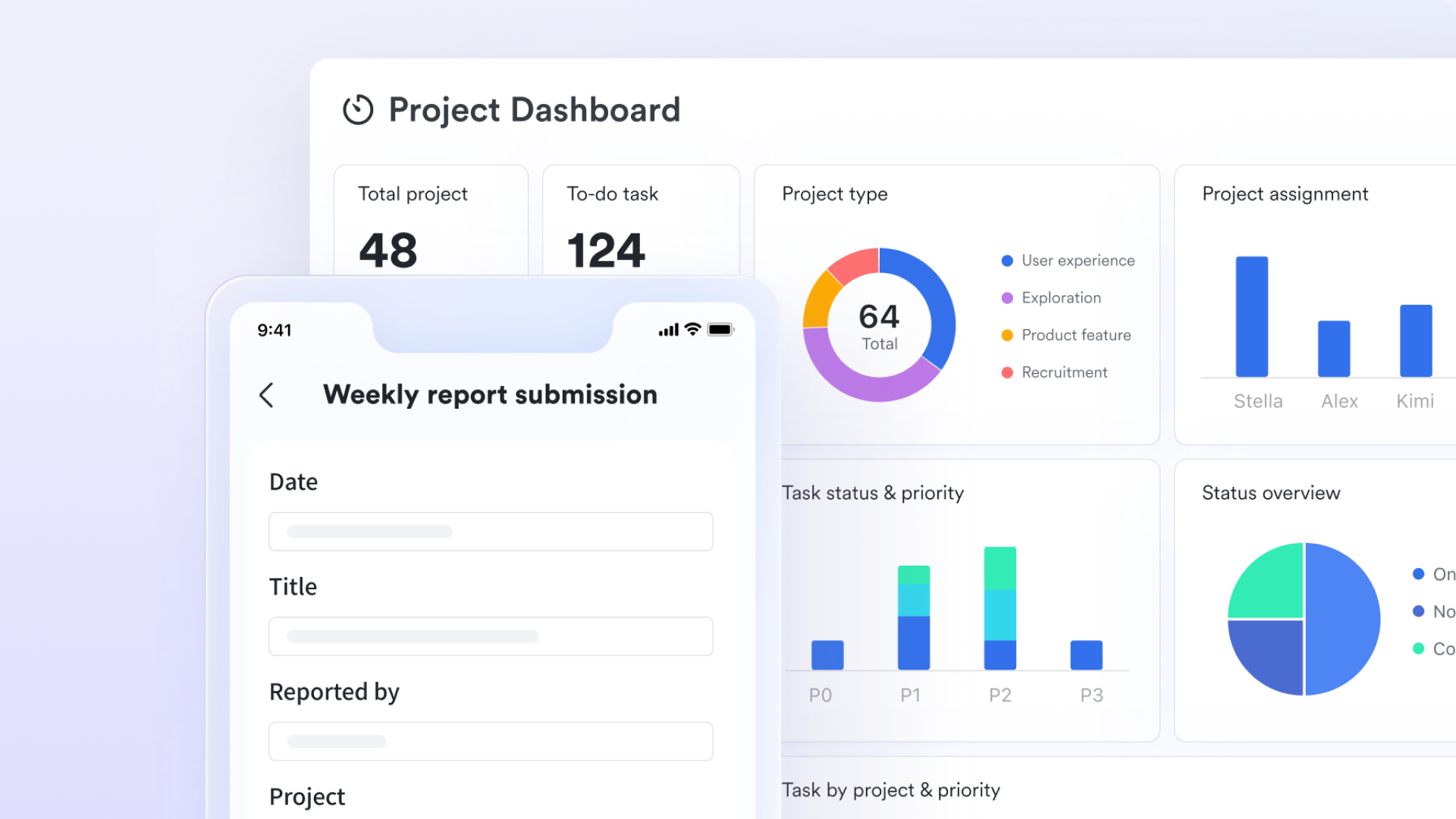
For senior leadership, you can easily monitor granular risk data in high-level . These dashboards utilize Pivots, trend charts, and heat maps to summarize risk exposure across multiple programs or departments simultaneously. This "roll-up" capability allows executives to see at a glance whether risk levels are trending upward over time or if specific categories—such as "Technical Debt" or "Vendor Dependency"—are becoming a systemic threat to the organization's strategic goals.
Proactive governance: Trigger‑based escalations
Through Base automations, users can move risk management from "reactive" to "proactive." You can configure specific escalation triggers that fire the moment a risk threshold is met—such as a risk score moving from "Medium" to "High" or a mitigation due date slipping. These automations send immediate proactive alerts via and to the assigned risk owners and stakeholders. This ensures that critical threats are never buried in a database but are instead pushed directly to the people who have the authority to intervene. 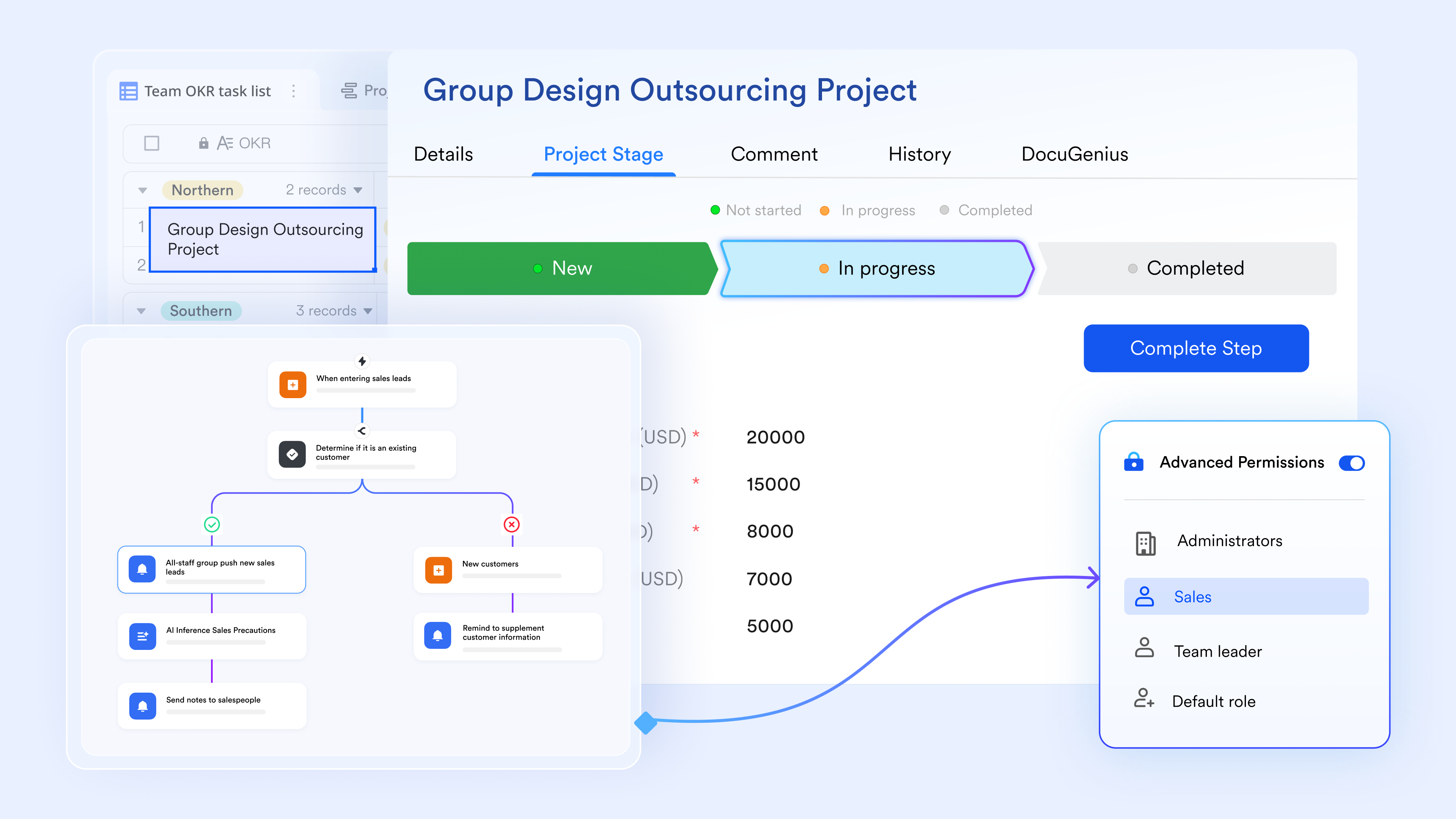
:
- Starter plan: Free forever plan that includes 11 powerful tools for up to 20 users. It also comes with 100GB of storage, 1000 automation runs, AI translations, and more.
- Pro plan: $12/user/month (billed annually) for up to 500 users. It includes everything in Starter plus group calling for up to 500 attendees, 15TB of storage, 50,000 automation runs, and more.
- Enterprise plan: for custom pricing. Supports unlimited users and includes even more automation runs and advanced security, compliance, and management features.
For small teams with simple communication needs

18 months message history
1000 Base automation runs/month
2000 rows per table in Base
Most POPULAR
For companies with comprehensive collaboration and management needs
Unlimited message history
500-participant video meetings
50k Base automation runs/month
20k rows per table in Base
For large companies with advanced security and organizational management needs
Get a personalized demo and pricing
Unlimited message history
500-participant video meetings
15 TB storage + 30 GB storage/user
500k Base automation runs/month
50k Base automation runs/month
Most POPULAR
For companies with comprehensive collaboration and management needs
Unlimited message history
500-participant video meetings
50k Base automation runs/month
20k rows per table in Base
Bonus: Ready-to-use project risk assessment templates
Ready-to-use templates simplify project risk assessment by giving teams a structured starting point without building everything from scratch. These templates help standardize how risks are identified, scored, and tracked across projects. By using proven formats, teams can focus more on mitigation and decision-making rather than setup and administration.
Risk assessment template
Risk is an inevitable part of any business. However, with the right , you can manage and mitigate these risks effectively. Our provides a comprehensive overview of potential risks, their likelihood, impact, and severity; current controls; additional mitigation measures; responsible parties; and target resolution dates. This template helps you identify, assess, and prioritize risks, and develop strategies to manage them.
4x4 Risk assessment template
The is a comprehensive tool designed to help you identify, assess, and manage risks in your organization. It allows you to categorize risks based on their severity and likelihood, and assign them to specific departments for management. The template also includes fields for risk description, the date it was reported, and the person who created the entry. This way, you can keep track of all potential risks and ensure they are addressed promptly and effectively.
Financial risk assessment for tech projects template
Financial risks are inherent in any project, especially in the tech industry, where costs can escalate quickly. This template helps you identify, assess, and manage financial risks associated with tech projects. It includes a detailed description of each risk, its probability, impact, severity, mitigation strategies, responsible party, status, and review date. By using this template, you can proactively address potential financial challenges and ensure the success of your tech projects.
Risk assessment for new initiatives template
Launching a new product comes with its own set of risks that need to be carefully assessed and managed. From technical issues to market saturation, each risk can have a significant impact on the success of the product. This template helps you identify potential risks, evaluate their likelihood and impact, and develop mitigation strategies to minimize their effects.
Risk assessment manufacturing
This risk assessment template provides a systematic framework for identifying and mitigating operational hazards within the manufacturing facility to ensure personnel safety and regulatory compliance. By evaluating machinery, chemical, and environmental risks, we aim to prevent workplace injuries and minimize costly production downtime.
Risk assessment matrix for risk managers
This template provides a structured framework for risk managers to identify and mitigate inherent industrial hazards, from machinery malfunctions to supply chain disruptions. By evaluating specific threats and implementing proactive control measures, the document ensures operational continuity and high safety standards.
Best practices for ongoing risk assessment
Effective risk assessment does not end after initial planning. To stay ahead of emerging threats, teams must continuously monitor, review, and adapt their approach throughout the project lifecycle.
- Weekly risk reviews: Conduct regular risk review meetings to reassess existing risks and identify new ones. Weekly check-ins help teams detect changes in probability or impact early. This keeps the risk register current and actionable.
- Assign clear risk owners: Each significant risk should have a designated owner responsible for monitoring and response actions. Clear ownership improves accountability and avoids delays in decision-making. It also ensures risks are actively managed rather than passively recorded.
- Track mitigation effectiveness: Monitor whether mitigation actions are actually reducing risk exposure over time. Comparing risk scores before and after mitigation provides valuable insight into what strategies work. This supports in risk management practices.
- Escalate early: Risks that exceed defined thresholds should be escalated without delay. Early escalation allows leadership to intervene before issues become crises. It also prevents teams from absorbing risks beyond their authority or capacity.
- Keep leadership informed: Provide leadership with clear, high-level risk summaries and trends. Regular reporting builds transparency and trust while supporting timely strategic decisions. Informed leaders are better positioned to and remove roadblocks.
Conclusion
Project risk assessment is a critical discipline for delivering projects on time, within budget, and with confidence. By identifying risks early, prioritizing them effectively, and continuously monitoring changes, teams can reduce uncertainty and make better decisions at every stage. However, sustainable risk management requires the right tools to turn insight into action.supports this process by centralizing risk data, enabling real-time collaboration, and automating escalation and reporting. With structured risk registers, visual dashboards, and AI-powered insights, Lark helps teams move from reactive problem-solving to proactive risk control, ensuring stronger outcomes across projects.
Build resilient project plans
FAQs
What are the 5 things a risk assessment should include?
A should include risk identification, risk description, probability, impact, and mitigation or response plans. Together, these elements help teams evaluate and manage threats systematically.
What are the 4 P's of risk assessment?
The 4 P's typically refer to People, Processes, Projects, and Performance. They help teams examine risks across human, operational, delivery, and outcome-related dimensions.
How often should project risks be reassessed?
Project risks should be reassessed regularly, ideally weekly or at major milestones. Reassessment is also essential after scope changes or unexpected events.
What KPIs measure risk management success?
include risk exposure reduction, mitigation completion rate, number of escalated risks, and schedule or cost variance caused by risks. These metrics show how effectively risks are being controlled.
Related reading