CLM contract management has evolved from a back-office administrative task into a strategic discipline that shapes how organizations close deals, control costs, and manage risk. In this guide, we explore what contract lifecycle management CLM really means, walk through the core stages of the contract lifecycle, examine the benefits for sales, procurement, and legal teams, and provide practical guidance on choosing the best CLM tool for contract management. By the end, you will have concrete examples and actionable steps to improve how your organization manages contracts.
What is CLM contract management?
(CLM) is the end-to-end process of managing contracts from initial request, drafting and negotiation, through execution, performance monitoring, and renewal or termination. Unlike treating contracts as static filed documents, CLM views them as active business assets that demand ongoing cross-team and cross-system coordination. Far beyond a digital filing cabinet, it streamlines workflows, approval routing, contract data capture, and departmental collaboration, turning contract management into a competitive advantage when done well.
Modern CLM uses integrated platforms that unify chat, docs, e-signatures, approvals, and analytics in one place, allowing teams to access needed information quickly without searching emails or shared drives. It impacts sales, procurement, finance, legal, HR, and operations across mid-sized and enterprise organizations, where contracts represent high-value commitments tied to revenue, spend, and risk exposure:
- Process: The structured stages of contracts move through from creation to close-out
- People: Cross-functional teams including legal, sales, procurement, finance, and operations
- Software: Integrated platforms that centralize contract data, automate workflows, and enable collaboration
- Data: Metadata, obligations, and analytics extracted from the contract portfolio
Why CLM contract management matters for modern businesses
CLM has evolved from a legal task into a strategic capability that influences revenue, costs, and risk across the business. Strong contract management improves competitiveness and financial performance across industries and delivers value to any organization with a high volume of contracts.
- Revenue acceleration and deal velocity: Efficient CLM speeds up sales cycles and revenue recognition. Automated workflows, templates, and e-signatures reduce delays, and contract data helps spot upsell chances. Lark keeps contract discussions, drafts, and approvals unified to sustain deal progress.
- , vendor management, and savings: CLM improves visibility into vendor contracts and spending, helping enforce negotiated terms, find consolidation opportunities, and capture savings. Lark centralizes sourcing projects, vendor agreements, and spending tracking for better control.
- Compliance, risk mitigation, and audit readiness: CLM supports compliance, lowers contract risks, and simplifies audits using standard terms and complete audit trails. Lark's approval logs and document history help strengthen risk and compliance management.
- Collaboration and productivity gains: Modern CLM removes information silos and replaces messy email workflows. Cloud tools like Lark support distributed teams, enabling smooth cross-regional collaboration and more efficient contract processes.
Simplify your contract management today
CLM vs traditional contract management
The contrast between traditional contract management and CLM-driven approaches reveals why so many organizations are making the shift. Understanding these differences helps clarify where manual methods fall short and where modern systems deliver value.
Traditional methods often leave contracts scattered across systems, making it difficult to answer basic questions about obligations, renewals, or compliance status.
- Email attachments and shared drives: Traditional teams rely on sending Word documents back and forth, with each party making changes and saving new versions locally
- Version confusion: Without centralized tracking, teams struggle to identify which version is current, leading to negotiations based on outdated terms
- Missed renewals: A two-year SaaS subscription renewal buried in someone's inbox can result in auto-renewal at unfavorable rates
- Audit gaps: When regulators or internal auditors ask for contract history, teams scramble to reconstruct approval chains from scattered emails
- No obligation tracking: Once signed, contracts often disappear into file shares with no systematic monitoring of commitments
CLM systems address these challenges directly through structured processes and integrated tooling:
- Centralized repository: All contracts live in a single, searchable location with proper access controls
- Template libraries and clause libraries: Legal teams govern standardized language, reducing risk and speeding drafting
- : Contracts move through defined workflows based on value, risk, or contract type
- Integrated e-signatures: Execution happens within the system, automatically syncing metadata to the repository
- Obligation alerts: Systems track notice periods and trigger reminders before critical dates like renewal windows
Consider a concrete example: a procurement team renewing a multi-year software agreement. In a traditional setup, the renewal notice might arrive via email, sit in a manager's inbox, and get overlooked until after the auto-renewal deadline passes. The organization ends up locked into another term at the original pricing, missing an opportunity to renegotiate based on actual usage. With a CLM system, automated alerts fire months before expiration, usage data is readily accessible for negotiation leverage, and the entire renewal conversation happens in a tracked workspace.
Core concepts in contract lifecycle management CLM
Before diving into specific stages, it helps to understand the foundational concepts that make CLM work. These concepts appear throughout the contract lifecycle and inform how teams structure their processes and select their tools.
- Single source of truth: All executed contracts, drafts, amendments, and related discussions live in one permissioned repository, eliminating version sprawl and ensuring everyone works from current information
- Standardized templates and clause libraries: Legal teams curate pre-approved contract language, with variants for different jurisdictions, industries, or risk levels, enabling consistent contract creation
- : Automated routing handles drafting assignments, internal approvals, external negotiations, and signature collection based on defined rules
- Obligation tracking and performance monitoring: Post-signature, systems extract and monitor commitments like SLAs, pricing tiers, delivery schedules, and notice periods to ensure contracts deliver promised value
- Portfolio analytics and reporting: Dashboards and reports provide visibility into renewal pipelines, spend concentration, contract cycle time, and risk scores, guiding strategy and decision-making
Key stages of CLM contract management
While frameworks vary, most enterprise CLM uses a practical seven-stage model that covers core activities and fits different contract types and organizations. The seven stages are: request and intake, authoring and drafting, negotiation and redlining, review and approval, execution, performance and compliance, and renewal or termination, with amendments allowed at any point in the lifecycle.
Many of these stages can be managed within collaboration platforms like , using Docs for drafting, Approvals for governance, integrated email for external communication, and chat for real-time coordination. Each stage includes real examples and best practices to help you optimize your contract workflows.
Stage 1: Request and intake
The contract lifecycle begins when a business need arises. Someone in sales needs a customer agreement, procurement needs a vendor contract, or HR needs an employment offer. The goal of intake is to convert this business need into a structured contract request that can be routed appropriately.
Effective intake prevents downstream problems by capturing essential information upfront and ensuring the right teams are involved from the start.
- Standardized request forms: Capture counterparty details, commercial terms, jurisdiction, risk level, and urgency using consistent forms rather than free-form emails
- Ownership and routing: CLM tools automatically route different contract types to the appropriate teams—NDAs to legal self-service, high-value MSAs to senior legal review, procurement agreements to sourcing specialists
- Triage by complexity: Low-risk, standard agreements can follow expedited paths while unusual or high-value deals receive deeper scrutiny
Stage 2: Authoring and template-driven drafting
Once a request is approved, authoring begins. This stage transforms business requirements into contract language, ideally using pre-approved templates rather than starting from scratch each time. Template-driven drafting dramatically reduces manual effort while improving consistency and reducing risk.
- Template libraries: Legal teams curate pre-approved templates for common contract types, including NDAs, sales agreements, procurement contracts, and data processing agreements
- Dynamic clause insertion: Rules can automatically insert jurisdiction-specific or industry-specific clauses based on metadata from the intake form, ensuring regulatory compliance without manual checking
- : First drafts should be created in collaborative docs where sales, legal, and finance can comment in real time, reducing handoff delays
- Guided authoring: Modern CLM tools prompt users with recommended contract language depending on deal characteristics, ensuring business users can draft within appropriate guardrails
Stage 3: Negotiation, redlining, and version control
Negotiation is where contracts meet reality. Counterparties propose changes, internal stakeholders weigh in, and the document evolves through multiple rounds of discussion. Disciplined version control during this phase prevents the confusion and risk that come from managing multiple document versions across email threads.
Redlining—the practice of marking proposed changes to contract text—requires careful tracking to ensure nothing falls through the cracks.
- Redlining fundamentals: Track changes, clause swaps, and suggested edits should all be visible in a single document rather than scattered across separate files
- Internal playbooks: Build negotiation playbooks that define fallback positions, identify risky clauses, and specify non-negotiable terms like liability caps or IP ownership provisions
- Single negotiation workspace: CLM tools maintain one authoritative thread linking chat, comments, and document versions so everyone can see the current state and full history
- External collaboration: Share controlled access to documents with counterparties rather than sending attachments that create version divergence
Stage 4: Review, approval, and governance
Before any contract can be executed, it must pass through appropriate reviews and approvals. This stage ensures compliance with company policies, , and maintains accountability for contract commitments. Effective approval workflows balance speed with control, ensuring deals move forward without bypassing necessary oversight.
- Approval matrices: Create rule-based flows that route contracts based on value thresholds, discount levels, term length, jurisdiction, or deviation from standard terms
- Sequential vs parallel approvals: Sequential workflows (legal, then finance, then executive) ensure each reviewer has complete context, while parallel approvals speed up deals by running reviews simultaneously
- Policy enforcement: CLM systems can block signature collection until mandatory reviewers have approved and compliance requirements are met
- Delegation of authority: Define which roles can approve which contract types and values, with clear escalation paths for exceptions
Stage 5: Execution and e-signatures
Contract execution transforms a negotiated document into a binding agreement. This stage carries legal significance and requires proper documentation of who signed, when, and with what authority. Modern execution workflows have largely moved to digital signatures, which offer convenience, security, and comprehensive audit trails.
- Digital signatures: CLM integrates with e-signature providers supporting multifactor authentication, timestamping, and tamper-evident sealing
- Execution packets: Bundle all referenced documents, including exhibits, SOWs, and annexes, into a single execution package so signers can review the complete agreement
- Repository sync: Upon signing, the system should automatically create or update the contract record in the centralized repository with key metadata like effective dates, term, value, and owner
- Audit trail creation: Capture the complete signing sequence with timestamps and IP addresses to support audit trails and potential disputes
Stage 6: Performance, obligations, and compliance
The signature is not the end of the contract lifecycle—it is where value realization begins. This stage focuses on ensuring that both parties deliver on their commitments and that the organization captures the benefits negotiated into the agreement. Post-execution tracking transforms contracts from static documents into active tools for managing business relationships.
- Obligation catalog: Extract and track key obligations, including delivery schedules, service level commitments, notice periods, pricing tiers, audit rights, and data handling requirements
- Cross-team visibility: Keep sales, customer success, procurement, and finance teams aligned around what each contract actually commits the organization to deliver and receive
- Automated alerts and tasks: for milestones like price increases, contract review dates, renewal notice windows, and compliance certifications
- Performance monitoring: Track actual performance against contracted SLAs and key performance indicators to identify issues early and build leverage for future negotiations
Stage 7: Renewal, renegotiation, and termination
Every contract eventually reaches a decision point: renew, renegotiate, or terminate. How organizations handle these transitions significantly impacts overall contract value and business relationships. Proactive renewal management prevents unfavorable auto-renewals while creating opportunities to improve terms based on relationship history and market conditions.
- Renewal window tracking: Track notice periods precisely, especially for auto-renewing multi-year agreements where missing a notice deadline locks in existing terms
- Renegotiation preparation: Review usage data, spend history, and performance records before entering renewal discussions to build a fact-based negotiation position
- Termination workflows: Track termination rights, exit costs, data deletion obligations, and transition requirements to ensure smooth wind-down when ending relationships
- Lessons learned: and what did not during the contract term to inform future negotiations with similar counterparties or contract types
Streamline your entire contract lifecycle with Lark
Key capabilities of contract lifecycle management CLM software
When evaluating CLM software, core capabilities set effective solutions apart from basic document storage. The focus is on practical, workflow-friendly features rather than unused impressive functions, aligned with the CLM stages and benefits covered earlier.
Centralized repository and intelligent search: A secure, centralized repository acts as the single source of truth for all contracts and related documents. It supports fast full-text and filtered search, structured metadata for key contract details, and role-based access control to protect sensitive information.
Template, clause library, and playbook management: Reliable CLM systems standardize contract language through governed templates, flexible clause versions, and negotiation playbooks. Modern tools also include guided drafting prompts based on contract type, value, and risk level.
and approvals: Automation streamlines routine work, including deadline alerts, conditional approval routing, automatic escalations for delayed contracts, and dashboard tracking to identify workflow bottlenecks.
Collaboration, comments, and redlining tools: These features support real-time co-editing, inline comment threads, complete version history, and secure external sharing, making cross-team negotiation and review smooth and efficient.
Analytics, reporting, and dashboards: Contract analytics turns stored data into actionable insights, covering operational efficiency, commercial performance, risk and compliance, as well as simplified executive reports for leadership oversight.
Transforming contract management from static files to dynamic workflows with Lark
Contract management is more than just storing signed PDF files. It covers the entire lifecycle from drafting, negotiation, approval, signing, to archiving and fulfillment. Traditional approaches often rely on email exchanges and disconnected systems, leading to version chaos, approval delays, and audit difficulties. connects all these stages through an integrated collaboration platform, turning contract management into a trackable, collaborative, and optimized business process.
Move from round-robin reviews to real-time collaborative drafting
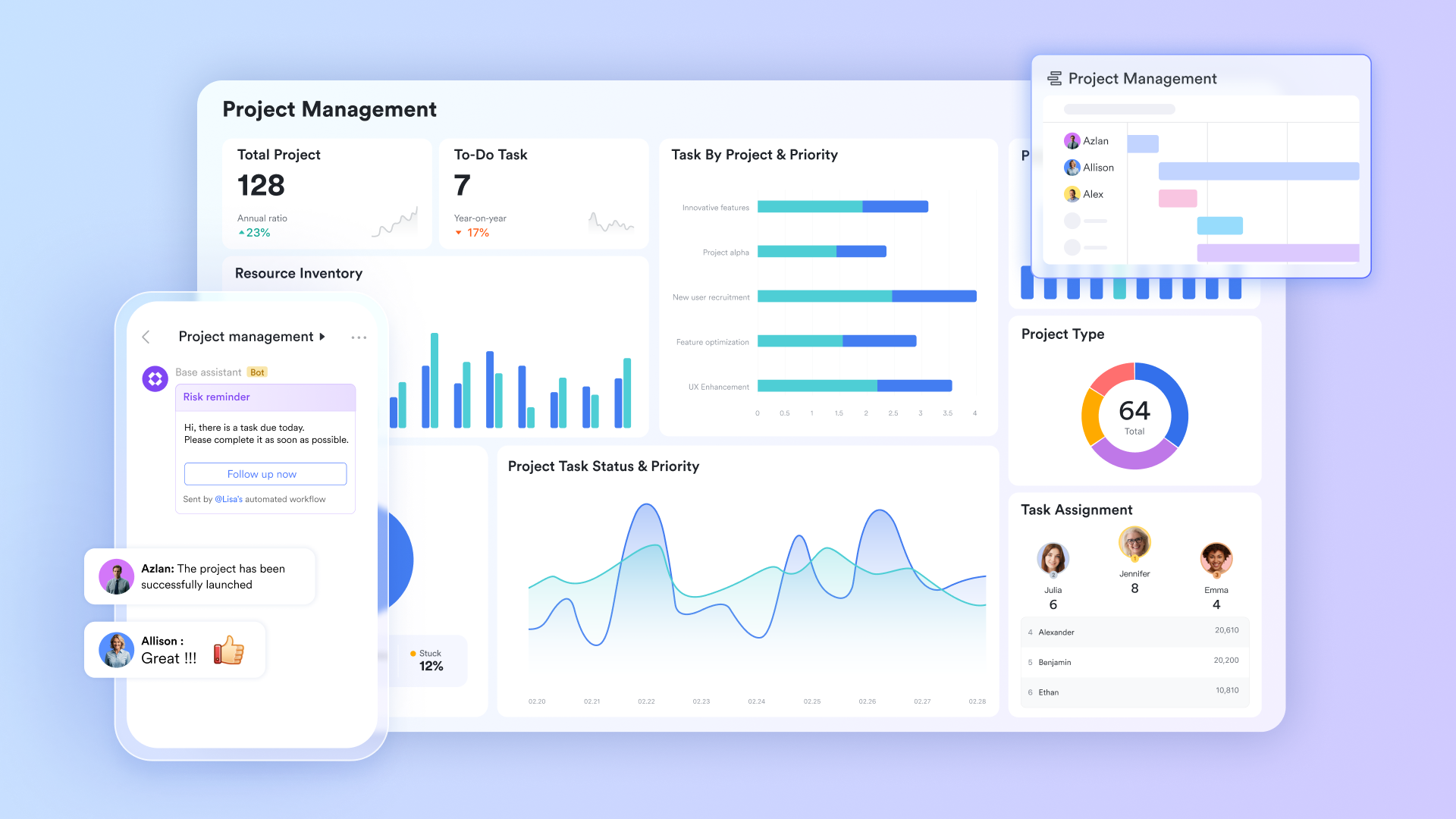
The biggest headache in contract drafting is version control. Sending drafts back and forth via email often creates chaos with filenames like "final_v2_really_final.docx." In , contract drafting becomes a real-time collaborative process. Legal, sales, finance, and all other stakeholders can edit the same contract document simultaneously, with every change and comment visible instantly. This means the drafting team no longer needs to manually merge feedback from different people. All discussions happen right next to the contract text itself, keeping context intact and communication efficient.
Let contract approvals flow automatically
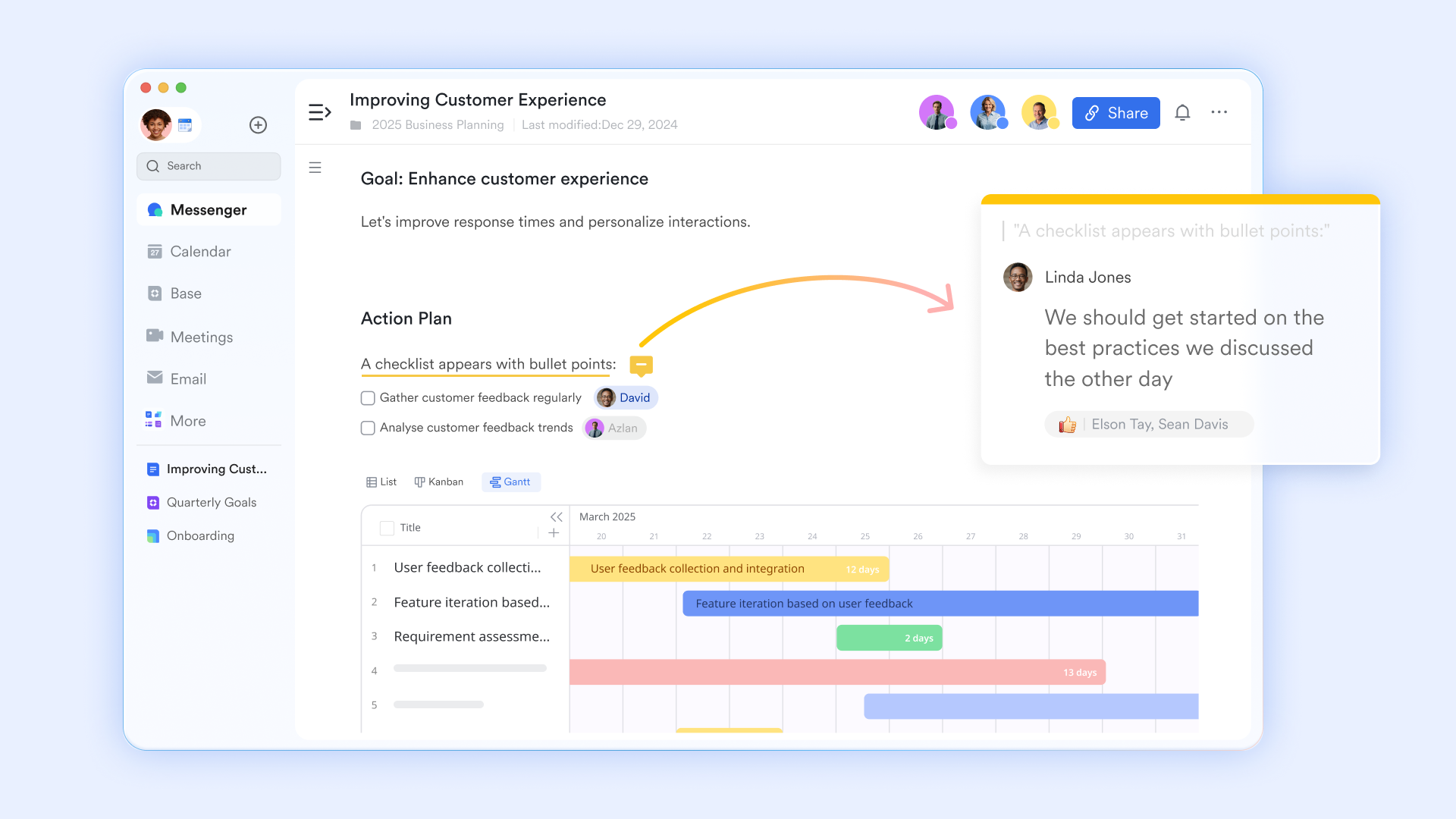
Contract reviews often get stuck because documents need to be manually passed to the next person, or approvers have to switch between email, chat, and files to get complete information. With , you can design custom approval flows for different contract types. The system automatically routes requests to the right approvers based on preset rules, such as contract amount or department. Approvers receive notifications directly in L, click to view the full contract and related background information, and approve or reject with one click. Every approval action is recorded, creating a complete audit trail. This automation eliminates manual chasing and email tracking, shortening contract approval cycles from days to hours.
Track the full contract lifecycle with structured tables
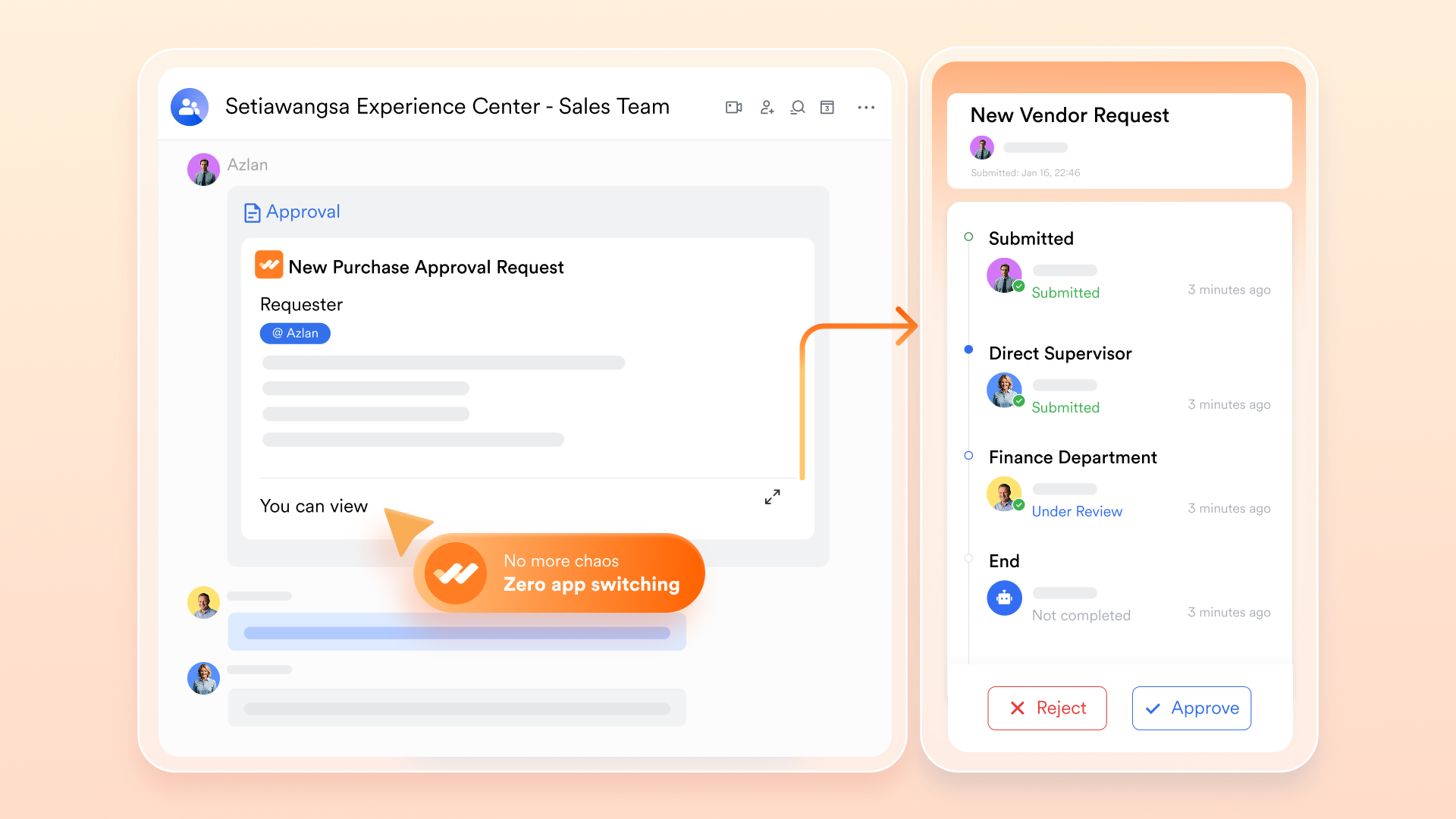
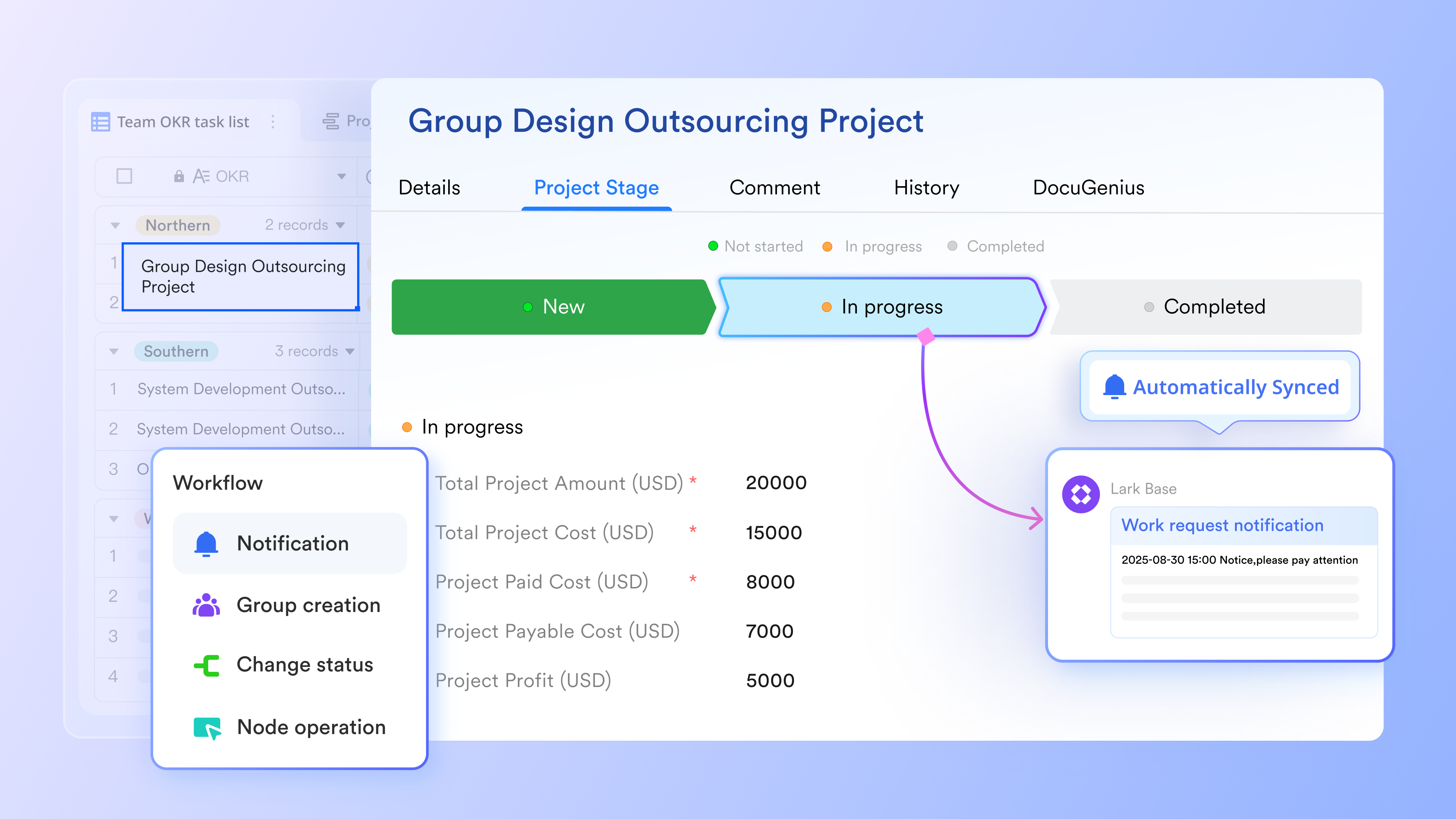
After contracts are signed, new challenges arise: tracking fulfillment status, reminding about renewals, and managing amendments. provides a structured contract management database. You can create records for each contract with custom fields like contract name, counterparty, amount, validity period, responsible department, and signing status. Through relation fields, each contract record can link to related approval documents, scanned PDFs, and negotiation files, forming a complete contract archive. More importantly, you can set up automated reminders: when a contract nears expiration, the system automatically sends a renewal notification to the responsible person's chat. When a contract's fulfillment status changes, relevant parties receive real-time updates. This structured, visual approach turns contracts from static files into actively tracked business assets.
Turn contract knowledge into reusable team assets
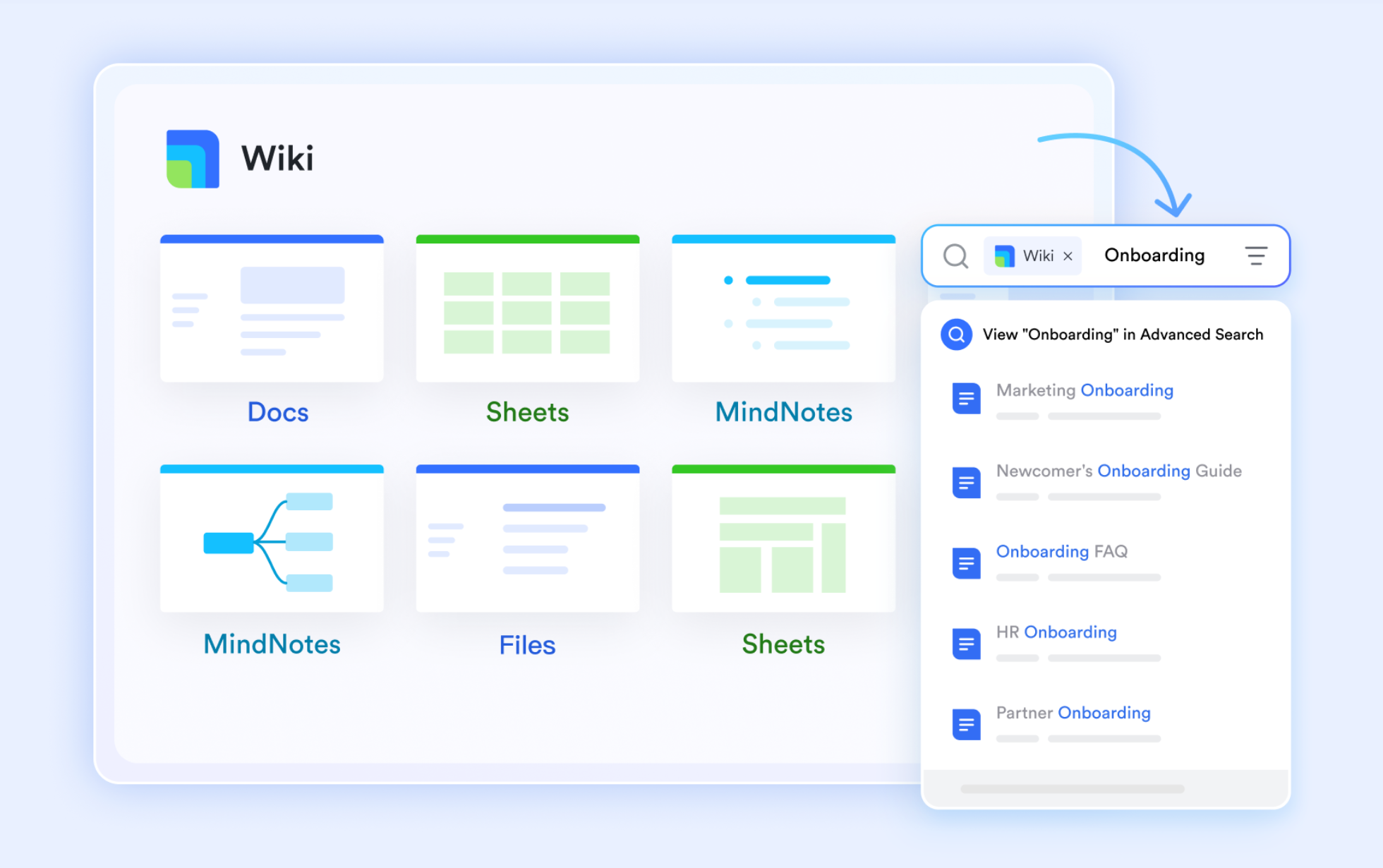
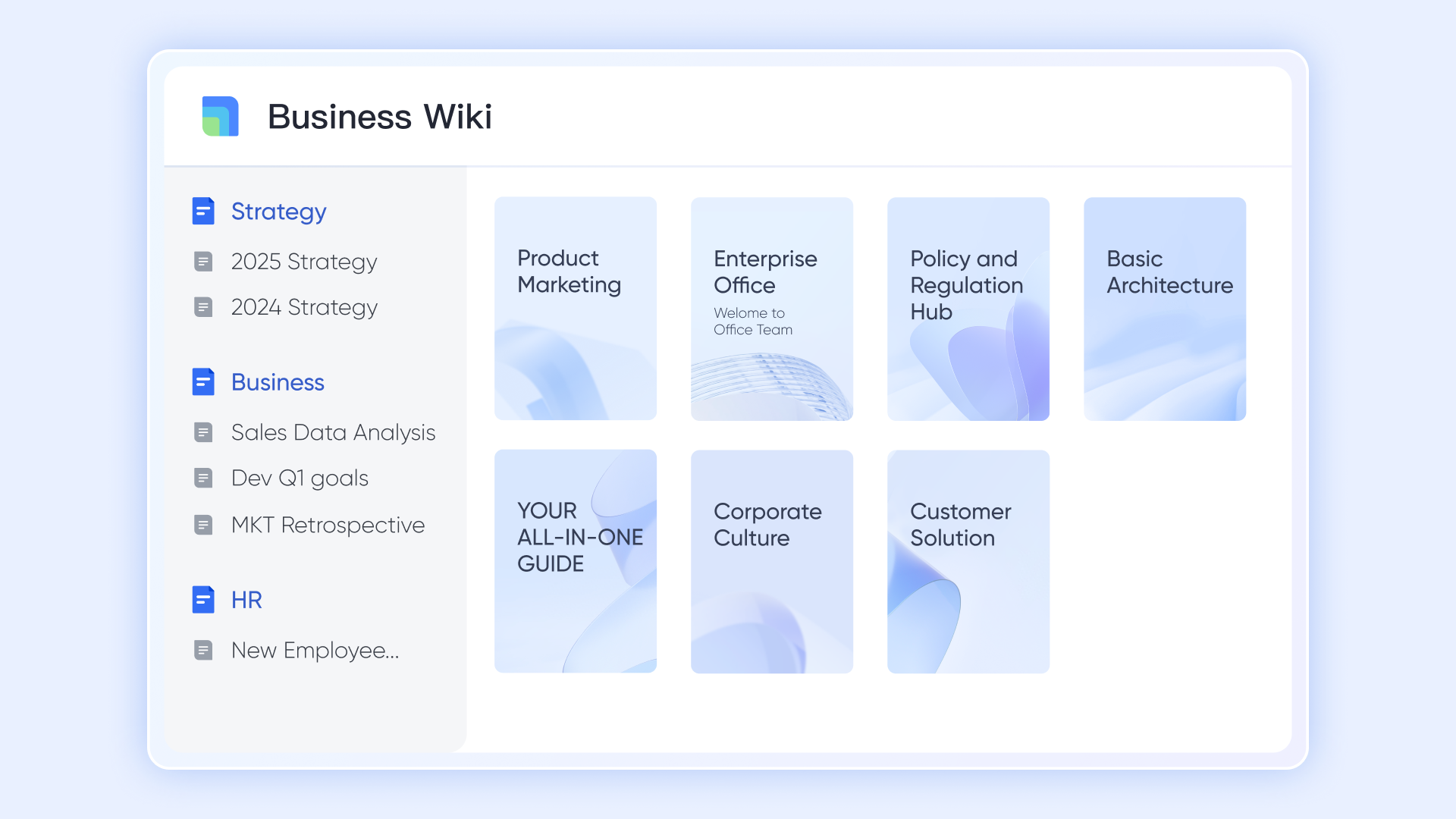
Every contract negotiation, clause revision, and final version contains valuable business insights. provides a centralized contract knowledge base for your organization. You can create dedicated knowledge spaces by supplier, client, or contract type. All related contract templates, standard clause libraries, approval guidelines, and past cases can be organized in this space. When new employees take over contract management tasks or need to reference historical contracts, they can search quickly in Wiki and get all the necessary context at once. This knowledge capture ensures contract management becomes a skill the whole team can inherit, not just one person's expertise.
for Lark:
- Starter plan: Free forever plan that includes 11 powerful tools for up to 20 users. It also comes with 100GB of storage, 1000 automation runs, AI translations, and more.
- Pro plan: $12/user/month (billed annually) for up to 500 users. It includes everything in Starter plus group calling for up to 500 attendees, 15TB of storage, 50,000 automation runs, and more.
- Enterprise plan: for custom pricing. Supports unlimited users and includes even more automation runs and advanced security, compliance, and management features.
For small teams with simple communication needs

18 months message history
1000 Base automation runs/month
2000 rows per table in Base
Most POPULAR
For companies with comprehensive collaboration and management needs
Unlimited message history
500-participant video meetings
50k Base automation runs/month
20k rows per table in Base
For large companies with advanced security and organizational management needs
Get a personalized demo and pricing
Unlimited message history
500-participant video meetings
15 TB storage + 30 GB storage/user
500k Base automation runs/month
50k Base automation runs/month
Most POPULAR
For companies with comprehensive collaboration and management needs
Unlimited message history
500-participant video meetings
50k Base automation runs/month
20k rows per table in Base
Future of contract lifecycle management CLM
CLM is evolving quickly with advances in AI, deeper system integrations, and broader enterprise ownership. Organizations that build CLM as an ongoing capability, rather than a one-time software purchase, will gain the most from future developments.
- AI-assisted drafting, review, and risk detection: AI supports legal and business teams across the contract lifecycle by accelerating drafting, identifying risks and non-standard terms, automatically extracting key obligations and data, and improving continuously as it processes more contracts. AI features built into collaborative tools like Lark Docs can also assist with real-time contract drafting and review.
- Deeper integration with revenue, : CLM is becoming more closely connected to core business systems, creating end-to-end visibility for quote-to-cash and procure-to-pay workflows, aligning contract commitments with project delivery, and reducing errors from duplicate data entry. Lark's project and goal management tools can also link team deliverables directly to contract obligations.
- From legal tool to enterprise-wide discipline: CLM is moving beyond a legal-only tool to a company-wide discipline with cross-functional ownership, using contract data to guide business strategy and empowering business users through guided workflows. Collaboration platforms like Lark embed CLM into daily work, making contract management a natural part of team operations.
Conclusion
Structured contract lifecycle management (CLM) transforms contracts from administrative burdens into strategic assets. Throughout the entire contract lifecycle, from request through final renewal, effective CLM improves speed, ensures compliance, provides visibility, and enables collaboration across business units. Organizations that manage contracts efficiently gain advantages in deal velocity, cost control, and risk management that compound over time.
Start by mapping one high-impact contract process—perhaps sales agreement execution or vendor renewals—and pilot improvements with . With built-in docs, approvals, automation, and team communication, Lark provides a unified workspace where CLM processes can run without requiring teams to adopt yet another siloed tool.
Start building a better contract management process
FAQs
What is CLM in contract management?
CLM (Contract Lifecycle Management) is the end-to-end process of overseeing contracts across their entire lifecycle. It includes drafting, negotiation, approval, execution, compliance tracking, and renewal or termination. It transforms contracts from administrative paperwork into strategic, value-driven business assets.
What does CLM mean in contracts?
In contracts, CLM stands for Contract Lifecycle Management. It represents a structured approach to handling every stage of a contract's life. It helps improve efficiency, ensure compliance, and strengthen collaboration across teams.
What are the 5 stages of CLM?
The five core stages of CLM are request and intake, drafting and negotiation, review and approval, execution, and renewal or termination. This streamlined cycle simplifies contract workflows and reduces delays. Teams can run these stages smoothly using a unified collaboration platform like Lark.
What is CLM management?
CLM management is the practice of optimizing contract processes to support business objectives. It focuses on controlling costs, reducing risks, and speeding up contract cycles. It unifies legal, sales, procurement, and finance teams around clear, consistent contract practices.
Related reading