


10 Best CRM For Ecommerce Platforms You Need to Know

Ryan Tanner
Product Marketing Specialist
Aug 5, 2026
Ryan Tanner
Aug 5, 2026

22 min read


Ecommerce is one of the most competitive industries today. With countless online stores competing for the same audience, brands face ongoing challenges such as high cart abandonment rates, low repeat purchase numbers, and the need to deliver personalized experiences at scale. Customers expect fast service, seamless buying journeys, and loyalty rewards—all of which require strong data and streamlined workflows.
This is where a CRM for ecommerce comes in. By centralizing customer data, automating marketing campaigns, and integrating directly with ecommerce platforms like Shopify, a CRM helps brands boost sales, improve retention, and build long-term customer loyalty. In this guide, we'll explore the challenges ecommerce businesses face, the must-have features of CRM software for ecommerce, and review the 10 best CRM for ecommerce platforms:
1. Lark: Collaboration-first ecommerce CRM
2. HubSpot CRM: Best for startups
3. Zoho CRM: Best for SMBs
4. Salesforce Commerce Cloud: Best for enterprise brands
5. Freshsales (Freshworks CRM): Best for growth-focused SMBs
6. Pipedrive: Best for sales-heavy ecommerce stores
7. Insightly CRM: Best for ecommerce agencies
8. Agile CRM: Best for small businesses on a budget
9. Voyado: Best for loyalty, retention & omnichannel personalisation
10. Drip: Best for personalised campaign automation at scale

What is CRM for ecommerce?
A CRM for ecommerce is a customer relationship management system designed specifically to help online businesses track, manage, and nurture customer interactions. Unlike traditional CRMs that focus mainly on sales pipelines, ecommerce CRMs integrate directly with online stores to centralize customer profiles, order history, and engagement data. This helps brands reduce cart abandonment, personalize marketing campaigns, and increase repeat purchase rates by giving them a complete view of their buyers' journeys.
Modern ecommerce CRMs go beyond simple contact management by offering automation, collaboration, and analytics. Tools like Lark combine CRM functions with built-in collaboration features—such as instant chat, shared docs, and task management so marketing, sales, and support teams can work together seamlessly. This ensures businesses not only understand their customers better but also execute campaigns and customer service efficiently, driving loyalty and long-term growth.
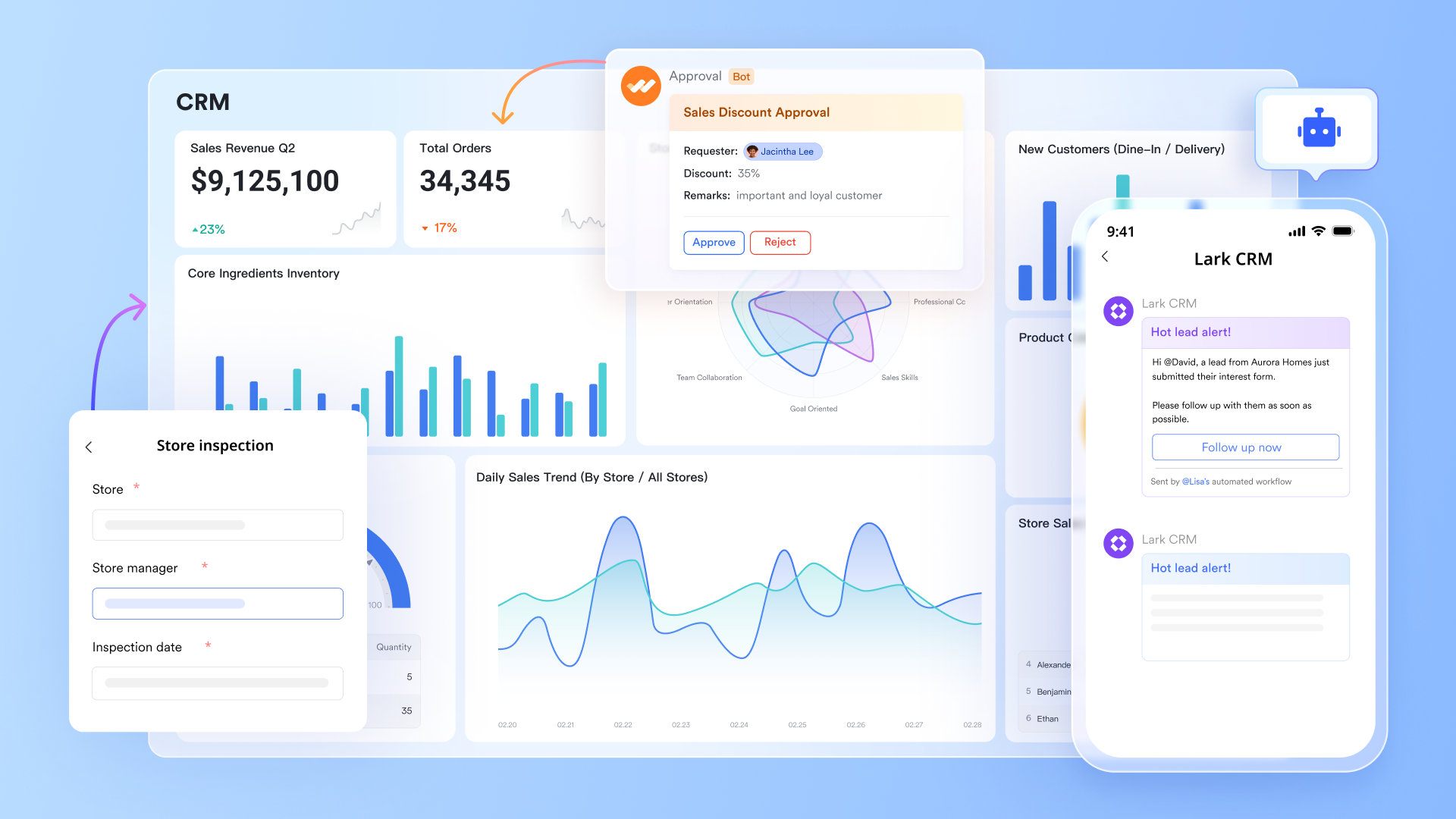
Challenges ecommerce businesses face without a CRM
Running an ecommerce business without a dedicated CRM for ecommerce can quickly expose critical gaps in customer experience and revenue growth. From missed sales opportunities to poor retention, these challenges highlight why adopting the best CRM for ecommerce is essential.
- Cart abandonment and poor follow-up
Without a CRM, abandoned carts often go unnoticed, leading to lost revenue. CRM software for ecommerce enables automated reminders, discount offers, or follow-up emails to bring customers back. This personalized engagement can significantly recover potential sales.
- Low repeat purchase rates due to weak personalization
When customer data is scattered, businesses struggle to personalize campaigns. The best CRM software for ecommerce centralizes order history and preferences, making it easier to send tailored offers. This boosts repeat purchases and long-term loyalty.
- Siloed sales, marketing, and support data
Ecommerce teams often work in isolation, with no unified view of customers. With a CRM for ecommerce, all data—sales, marketing, and support is integrated into one hub. This ensures smoother handoffs and consistent customer communication.
- Inefficient handling of returns and refunds
Without proper systems, returns and refunds become slow and frustrating for customers. The best CRM for ecommerce automates workflows, assigns tasks, and tracks refund status. This reduces errors and keeps customers satisfied.
- Limited visibility into customer lifetime value (CLV)
Businesses without a CRM lack insights into who their most valuable customers are. A strong CRM software for ecommerce provides real-time analytics on CLV, helping brands identify VIPs and create loyalty campaigns. This drives sustainable growth.
Must-have CRM features for ecommerce brands
To grow in a competitive online marketplace, ecommerce businesses need more than just customer tracking—they need smart automation, seamless connections, and actionable insights. The best CRM for ecommerce should unify sales, marketing, and support while enabling team collaboration. Tools like Lark stand out because they combine CRM with real-time communication and workflows.
- Order history and customer profiles
A CRM for ecommerce stores customer purchase history, preferences, and interactions in one place. With Lark Base, businesses can create custom views to track customers, orders, and loyalty campaigns in detail.
- Automated email/SMS campaigns
The best CRM for ecommerce supports abandoned cart reminders, order updates, and loyalty messages. Using Lark Approval, teams can automate workflows like follow-ups and marketing outreach.
- Segmentation for loyalty and upsell campaigns
With CRM software for ecommerce, segmentation ensures that VIPs, repeat buyers, and first-time customers get personalized offers. In Lark, customer data can be tagged and filtered to create highly targeted campaigns.
- Connection with ecommerce platforms (Shopify, WooCommerce, Magento)
A robust ecommerce CRM integrates smoothly with platforms like Shopify or WooCommerce. For example, by leveraging WooCommerce custom fields, businesses can pass specialized data—such as unique gift messages or technical product specs—directly into the current tool set via APIs, allowing teams to centralize orders and customer communication more effectively.
- Return/refund workflows
The CRM software for ecommerce streamlines refunds through automated tasks. With Lark Approval, refund requests can be routed, tracked, and closed faster—improving customer experience.
- Real-time analytics on sales, campaigns, and CLV
Modern CRM for ecommerce solutions offers dashboards that track customer lifetime value and campaign ROI. Dashboards in Lark Base give teams a visual overview of sales, repeat purchase rates, and team performance in real time.
Quick overview of best CRM software for ecommerce businesses
10 best CRM for ecommerce software reviewed
1. Lark: Collaboration-first ecommerce CRM
Lark is an all-in-one collaboration platform that combines CRM functionalities with team communication and project management tools. Designed for ecommerce teams, Lark enables businesses to manage customer relationships, track orders, and collaborate efficiently within a unified workspace. By combining features like customer and order tracking, task management, document collaboration, and real-time messaging, Lark streamlines workflows and enhances team productivity.
Key features:
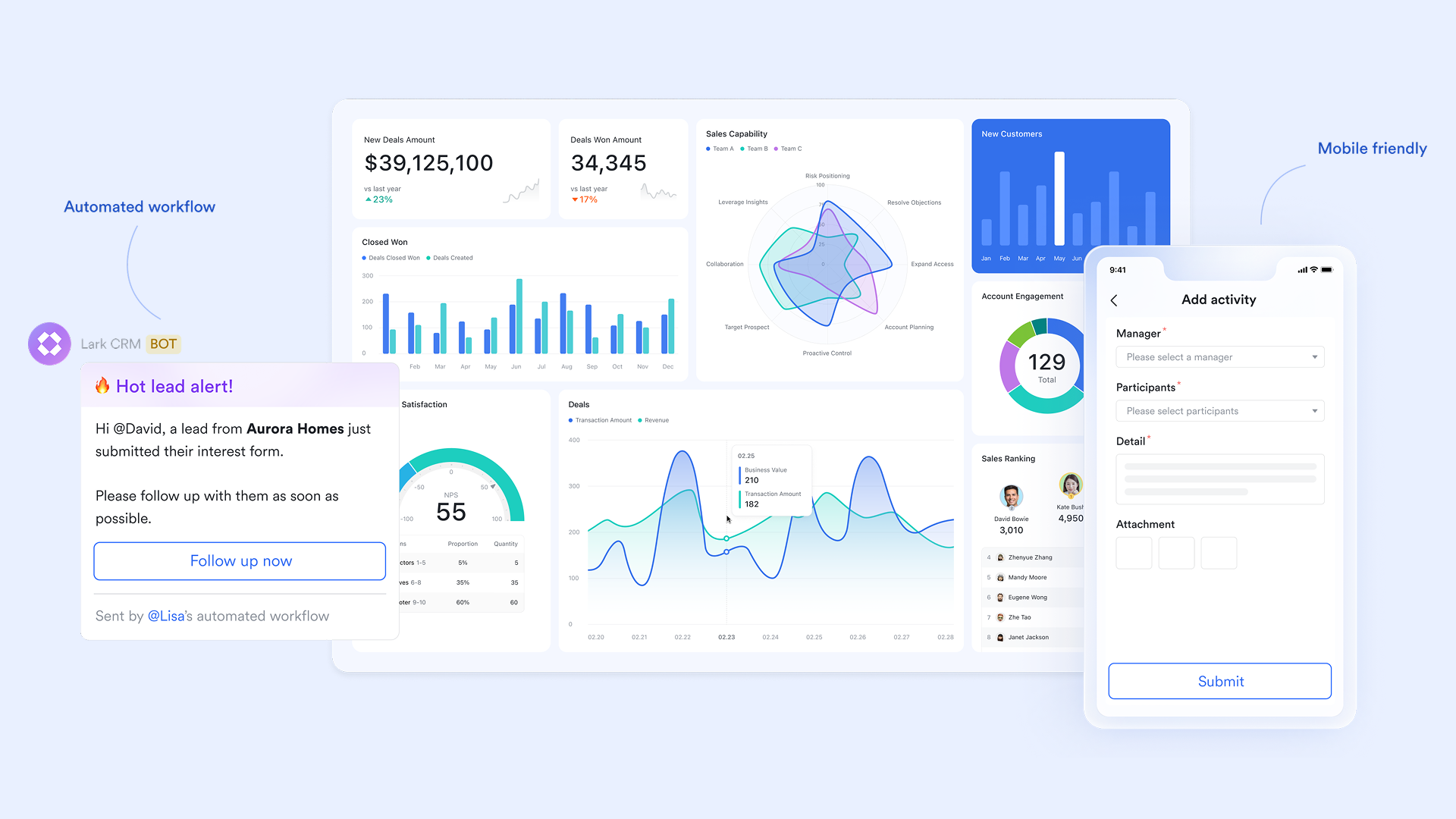
Customer & order tracking in Base
Lark Base offers a customizable database interface that allows ecommerce teams to track customer information and order statuses. For instance, an online retailer can create a table to monitor customer details, purchase history, and delivery status. This centralized tracking ensures that all team members have access to up-to-date information, facilitating timely responses to customer inquiries and efficient order management.
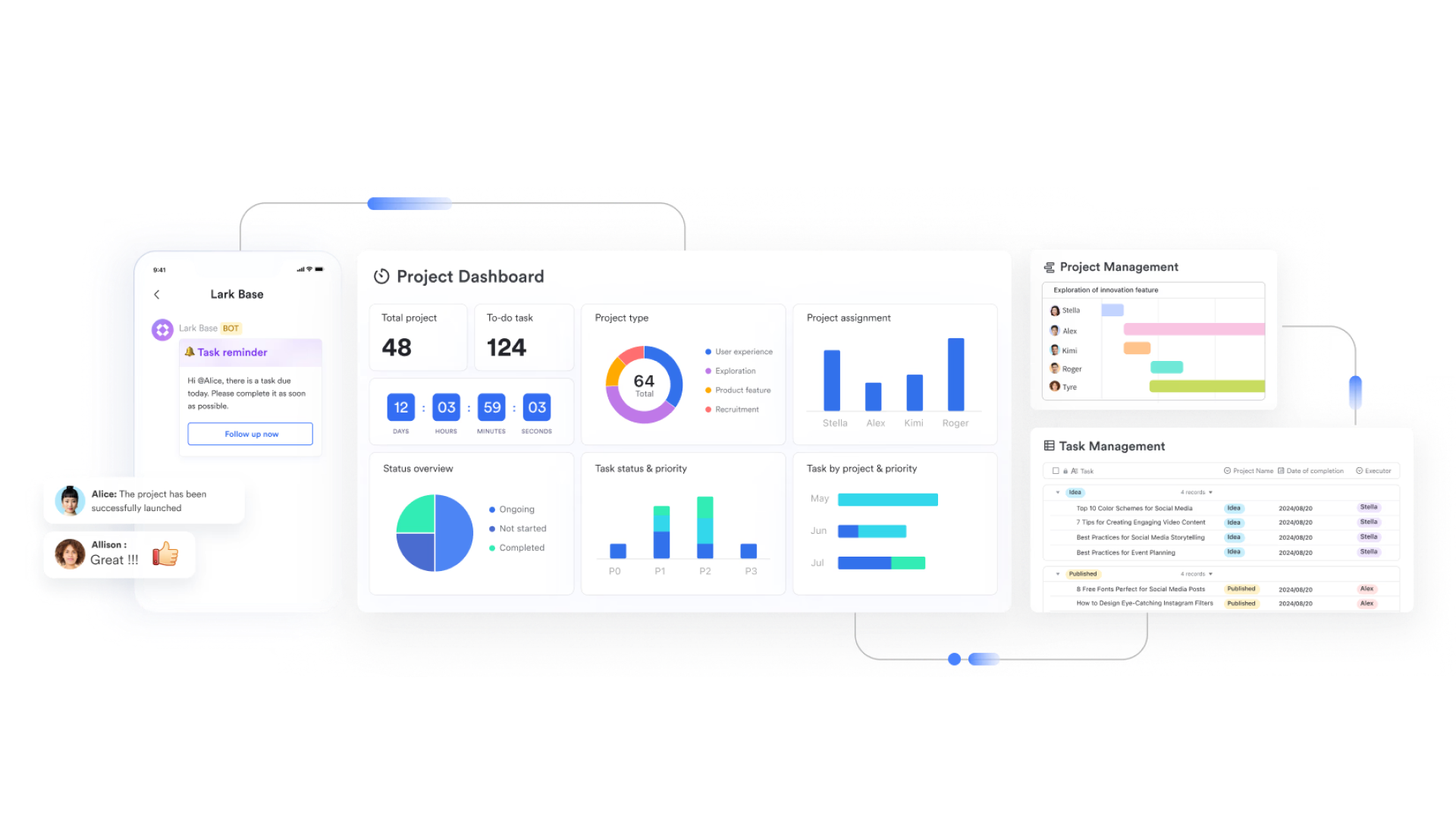
Tasks & Approval for refunds
The Tasks feature in Lark enables teams to assign and manage tasks related to customer service, such as processing refunds. When a refund request is submitted, a task can be created and assigned to the appropriate team member. The Lark Approval feature ensures that all refund processes are reviewed and authorized before execution, maintaining control and accountability within the team.
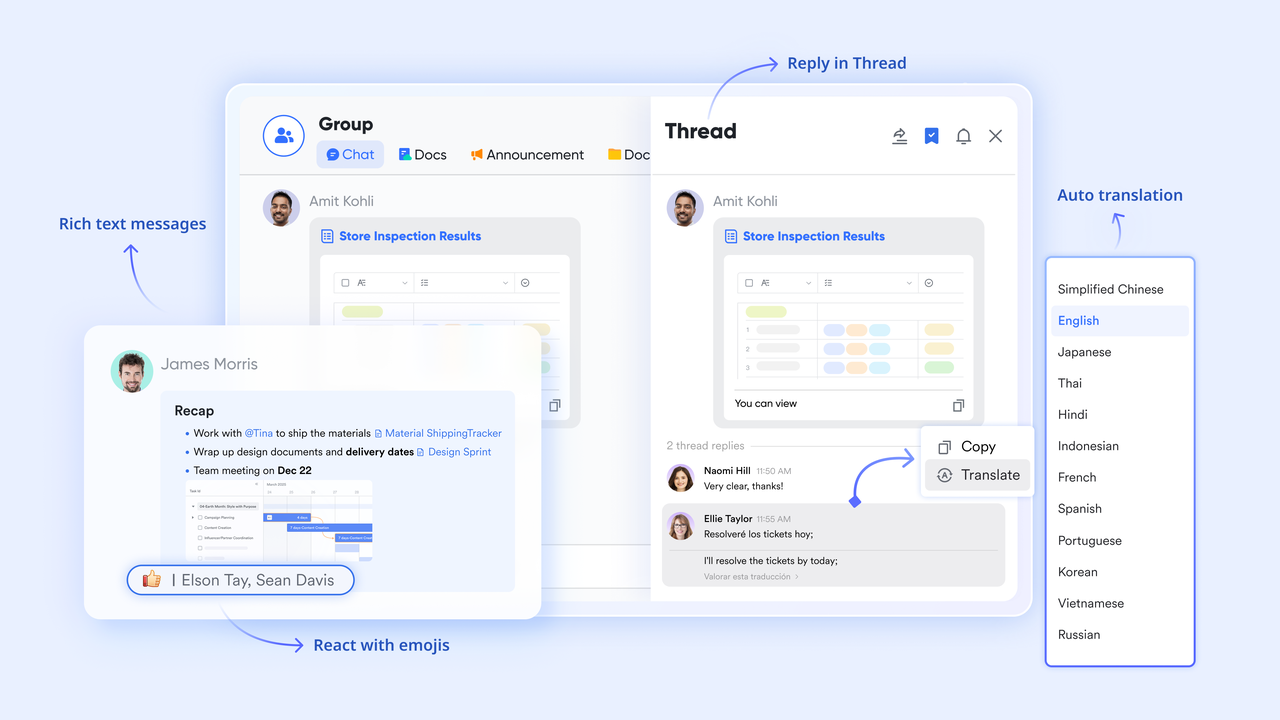
Lark Messenger for team sync
Lark Messenger facilitates instant communication among team members. Collaborating with other features, it allows for quick discussions, file sharing, and real-time updates. During a product launch, team members can use Messenger to coordinate tasks, share updates, and resolve issues promptly, ensuring a smooth execution and timely responses to customer needs.
Lark Docs & Lark Calendar for campaigns
Lark Docs allows teams to collaboratively create and edit documents, such as promotional content or campaign strategies. Combined with Lark Calendar, teams can schedule and track campaign timelines, ensuring all members are aligned. For example, a marketing team can draft a seasonal sale campaign in Lark Docs, set deadlines in Lark Calendar, and collaborate in real-time to finalize the plan, ensuring timely execution.
- Starter plan: Free forever plan that includes 11 powerful tools for up to 20 users. It also comes with 100GB of storage, 1000 automation runs, AI translations, and more.
- Pro plan: $12/user/month (billed annually) for up to 500 users. It includes everything in Starter plus group calling for up to 500 attendees, 15TB of storage, 50,000 automation runs, and more.
- Enterprise plan: Contact sales for custom pricing. Supports unlimited users and includes even more automation runs and advanced security, compliance, and management features.
Why ecommerce teams choose Lark:
Ecommerce businesses often face challenges in managing customer relationships across multiple platforms. Lark addresses this by providing a centralized hub where teams can track customer interactions, collaborate on tasks, and manage campaigns without switching between different tools. This combination enhances efficiency, reduces errors, and fosters better communication, ultimately leading to improved customer satisfaction and business growth.
2. HubSpot CRM: Best for startups
HubSpot CRM is a popular choice for startups and small ecommerce businesses looking for an easy entry point into CRM for ecommerce. It comes with a free plan that includes contact management, deal tracking, and basic marketing automation, making it accessible for teams with limited budgets. The platform's clean, intuitive interface lets teams set up pipelines, send marketing emails, and track performance without heavy onboarding or technical expertise.
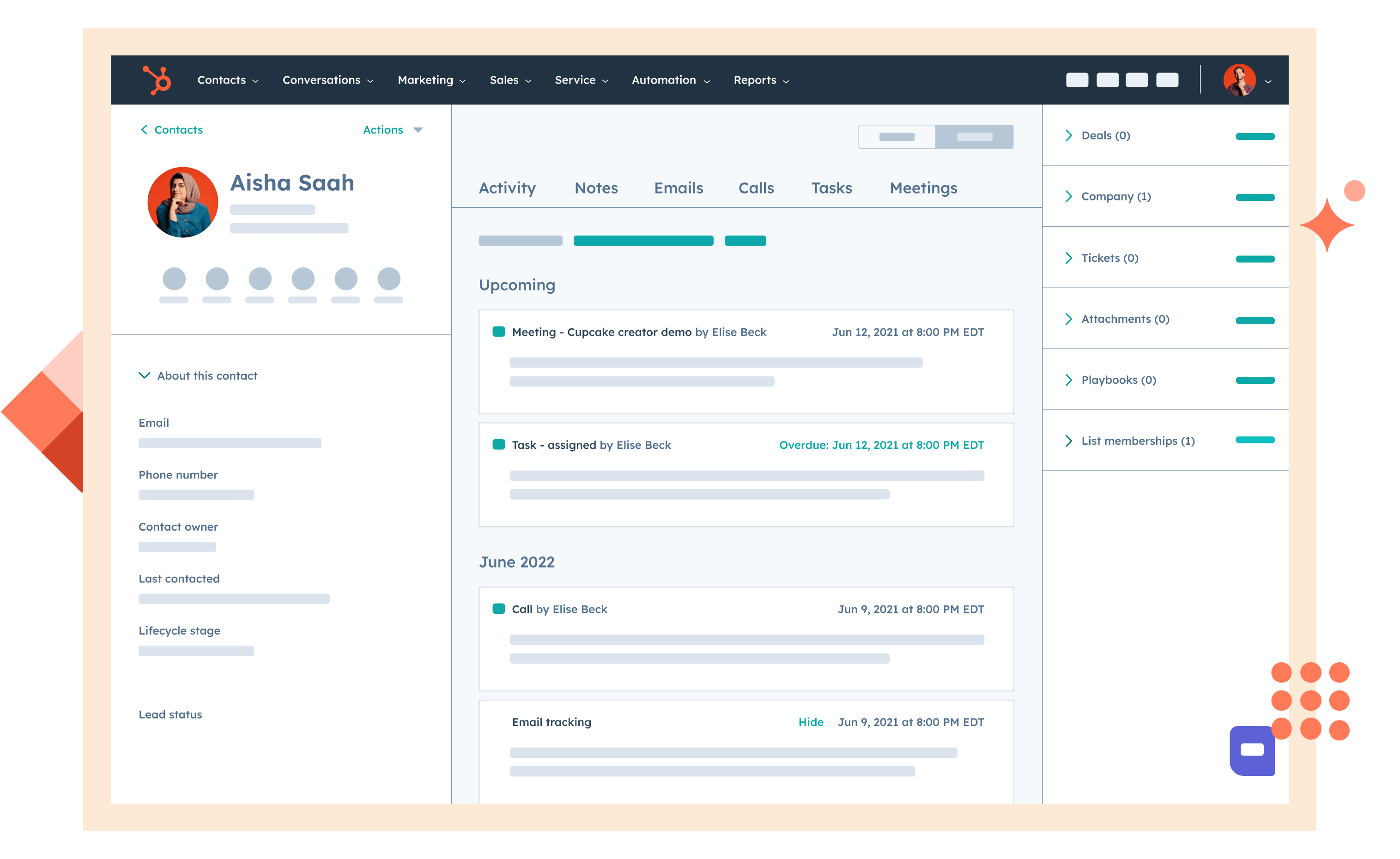
Image source: hubspot.com
Features:
- Centralized contact management for leads and customers.
- Deal tracking to monitor sales pipelines with ease.
- Marketing automation for emails, follow-ups, and workflows.
- Email campaign tools to design and send promotional messages.
- Scalable with advanced features like email sequencing, forecasting, and Shopify/WooCommerce integration.
Pricing: Free plan available; Starter plan at $20/user/month, with discounts available for annual commitments.
Why you'll like it: You'll like HubSpot because it makes getting started with CRM for ecommerce simple and affordable, with a powerful free plan. It lets small teams manage leads, run email campaigns, and track performance without needing technical expertise. As your store grows, HubSpot scales seamlessly with advanced automation and integrations.
3. Zoho CRM: Best for SMBs
Zoho CRM is a cost-effective solution designed for small to medium-sized ecommerce businesses that need flexibility and automation without overspending. It offers customizable pipelines, strong workflow automation, and robust lead management tools that help teams streamline sales processes. With features like segmentation, AI-driven insights, and omnichannel communication, Zoho makes it easier for SMBs to engage customers across email, chat, and social platforms. For ecommerce brands using Shopify or WooCommerce, Zoho's integrations simplify syncing customer data and order histories.
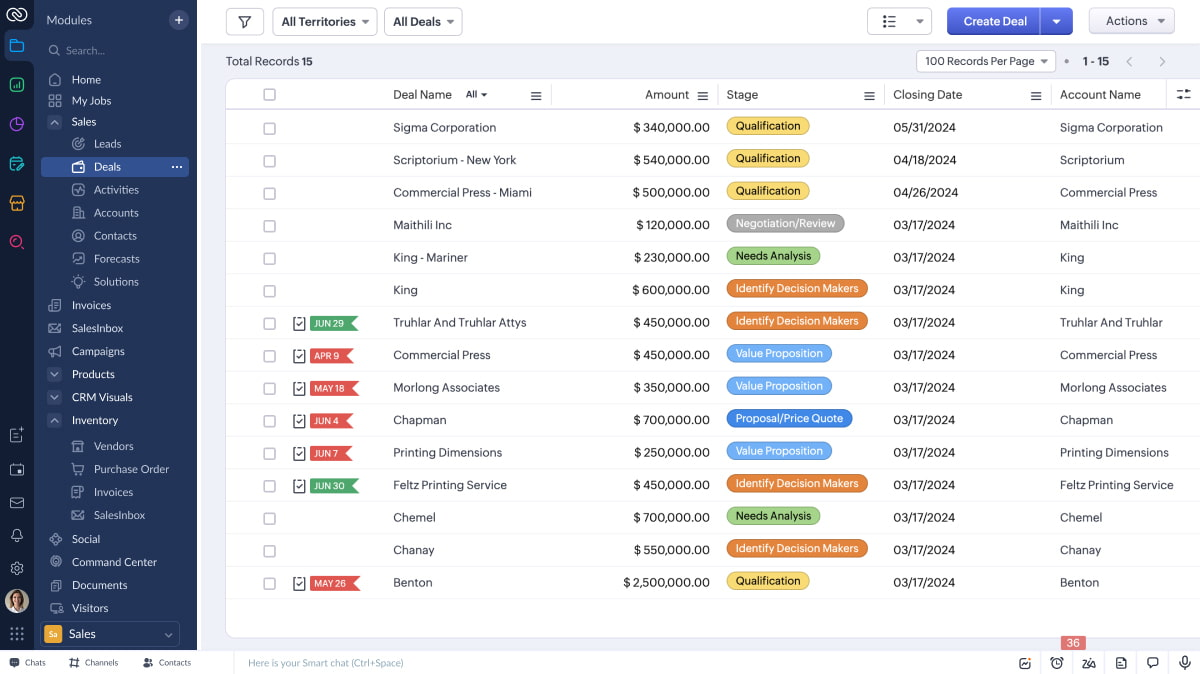
Image source: zoho.com
Features:
- Custom pipelines to manage different product categories effectively.
- Workflow automation to simplify follow-ups, alerts, and notifications.
- Customer segmentation for personalized marketing campaigns.
- AI-driven insights to predict sales opportunities and trends.
- Omnichannel communication to engage customers via email, chat, and social.
Pricing: Free plan for up to 3 users; paid plans start at $20/user/month.
Why you'll like it: You'll like Zoho because it balances affordability with flexibility, making it ideal for small to mid-sized ecommerce brands. Its customizable pipelines and workflow automation give SMBs full control over sales and marketing. With Shopify and WooCommerce integrations, Zoho helps teams personalize campaigns and build stronger customer relationships.
4. Salesforce commerce cloud: Best for enterprise brands
Salesforce Commerce Cloud is built for large-scale ecommerce enterprises that need a powerful and highly customizable CRM for ecommerce platform. It provides advanced analytics, AI-powered insights, and a 360° view of customer interactions across multiple channels. With its enterprise-grade workflows, brands can manage complex sales cycles, automate marketing campaigns, and deliver personalized experiences at scale. For global ecommerce operations, Salesforce ensures seamless coordination across teams, markets, and customer touchpoints.
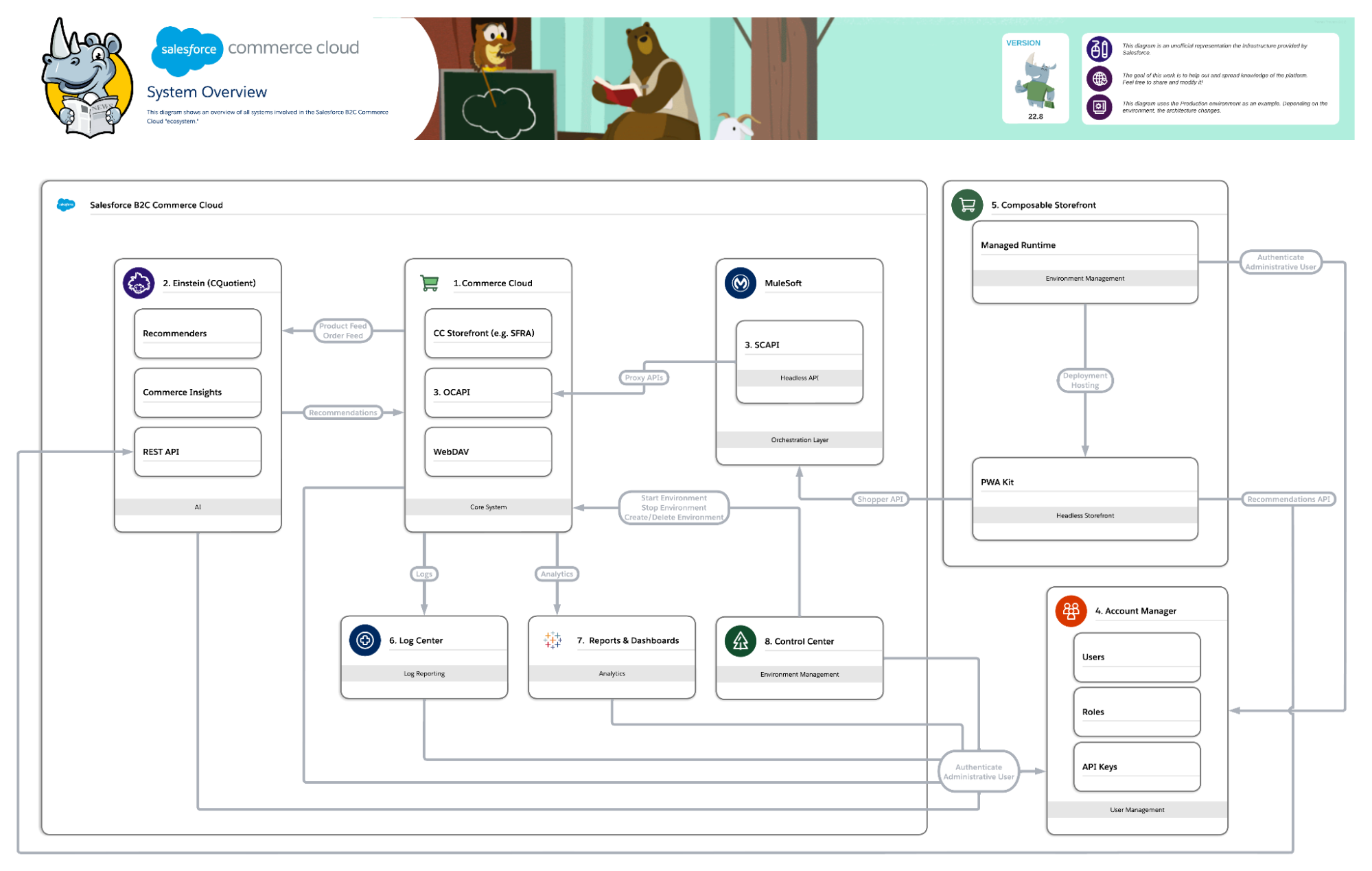
Image source: salesforceben.com
Features & Use Cases:
- Advanced analytics to track sales performance in detail.
- AI-powered insights to forecast customer behavior and buying patterns.
- 360° customer profiles to unify orders, interactions, and preferences.
- Enterprise workflows to manage large-scale global operations.
- Multi-channel integration to deliver seamless customer experiences.
Pricing: Pricing is based on Gross Merchandise Value (GMV), typically around 1% of GMV, plus additional costs for add-ons.
Why you'll like it: You'll like Salesforce because it gives enterprise ecommerce teams advanced AI insights, analytics, and a 360° customer view. It's designed for brands managing complex, global operations and large sales cycles. With its scale and customization, Salesforce ensures businesses deliver personalized experiences to millions of customers.
5. Freshsales: Best for growth-focused SMBs
Freshsales is an AI-powered CRM for ecommerce tailored for small to mid-sized ecommerce businesses looking to scale quickly. It simplifies lead management with features like AI lead scoring, automated workflows, and built-in calling for instant customer follow-ups. The platform supports omnichannel engagement across email, phone, chat, and social, ensuring brands can meet customers wherever they are. With affordable pricing and intuitive setup, Freshsales is a strong option for SMBs aiming to boost conversions and customer retention without heavy technical overhead.
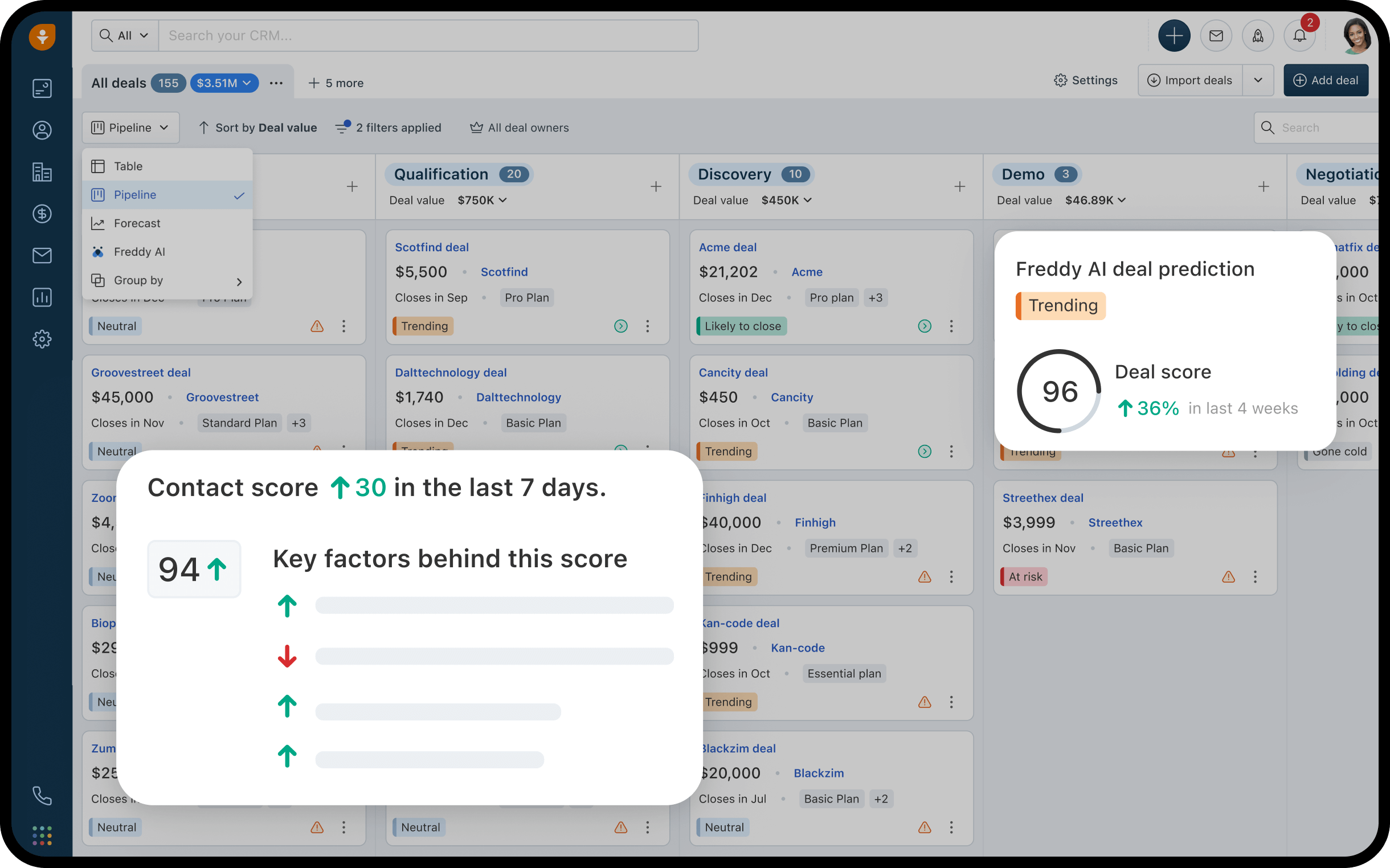
Image source: freshworks.com
Features:
- Built-in calling to connect with customers directly from the CRM.
- AI lead scoring to prioritize high-value prospects.
- Automated workflows to reduce repetitive manual tasks.
- Omnichannel engagement to interact across email, chat, and phone.
- Scalable setup to support SMBs as they grow.
Pricing: Free plan available; paid plans start at $9/user/month.
Why you'll like it: You'll like Freshsales because it combines AI, automation, and omnichannel engagement at a price SMBs can afford. Its built-in calling and lead scoring make sales faster and more efficient. For growing ecommerce teams, Freshsales removes technical barriers while providing tools to scale conversions and customer loyalty.
6. Pipedrive: Best for sales-heavy ecommerce stores
Pipedrive is a sales-driven CRM designed for ecommerce teams that prioritize deal tracking and revenue growth. Its visual pipelines give a clear overview of where each lead or order stands, making it easier to manage large sales volumes. Workflow automation helps reduce manual tasks like follow-ups, deal updates, and reminders, allowing sales reps to focus on closing. For ecommerce stores with high-value or bulk orders, Pipedrive provides an efficient way to monitor opportunities and keep the sales process moving smoothly.
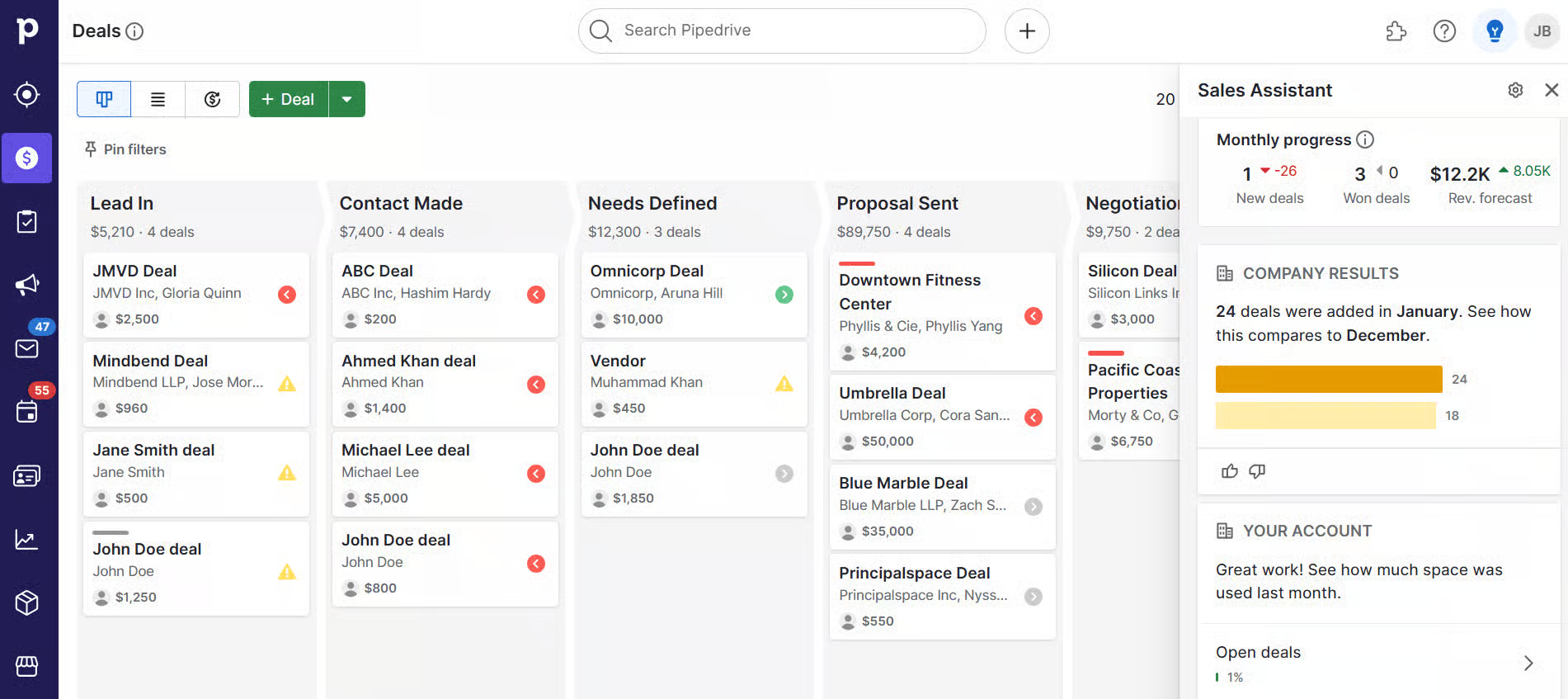
Image source: pipedrive.com
Features & Use Cases:
- Visual pipelines to track leads and orders with clarity.
- Deal tracking to monitor sales opportunities at every stage.
- Workflow automation to handle reminders and follow-ups.
- Sales forecasting to estimate revenue and performance.
- Custom dashboards to display key sales metrics.
Pricing: Plans start at $14.90/user/month.
Why you'll like it: You'll like Pipedrive because it gives sales teams clear visibility into every lead and order with its visual pipelines. By automating follow-ups and reminders, it frees reps to focus on closing more deals. For ecommerce stores with high-volume or high-value orders, it's a straightforward way to maximize revenue.
7. Insightly CRM: Best for ecommerce agencies
Insightly is a dual-purpose platform that combines CRM for ecommerce with project management, making it ideal for ecommerce agencies handling multiple client accounts. It allows teams to track leads, manage pipelines, and automate workflows while also coordinating client projects in the same system. With its integrated approach, agencies can oversee sales campaigns, track deliverables, and align internal teams without switching tools. For ecommerce service providers, Insightly ensures smooth collaboration across sales, marketing, and project execution, helping deliver consistent results to clients.
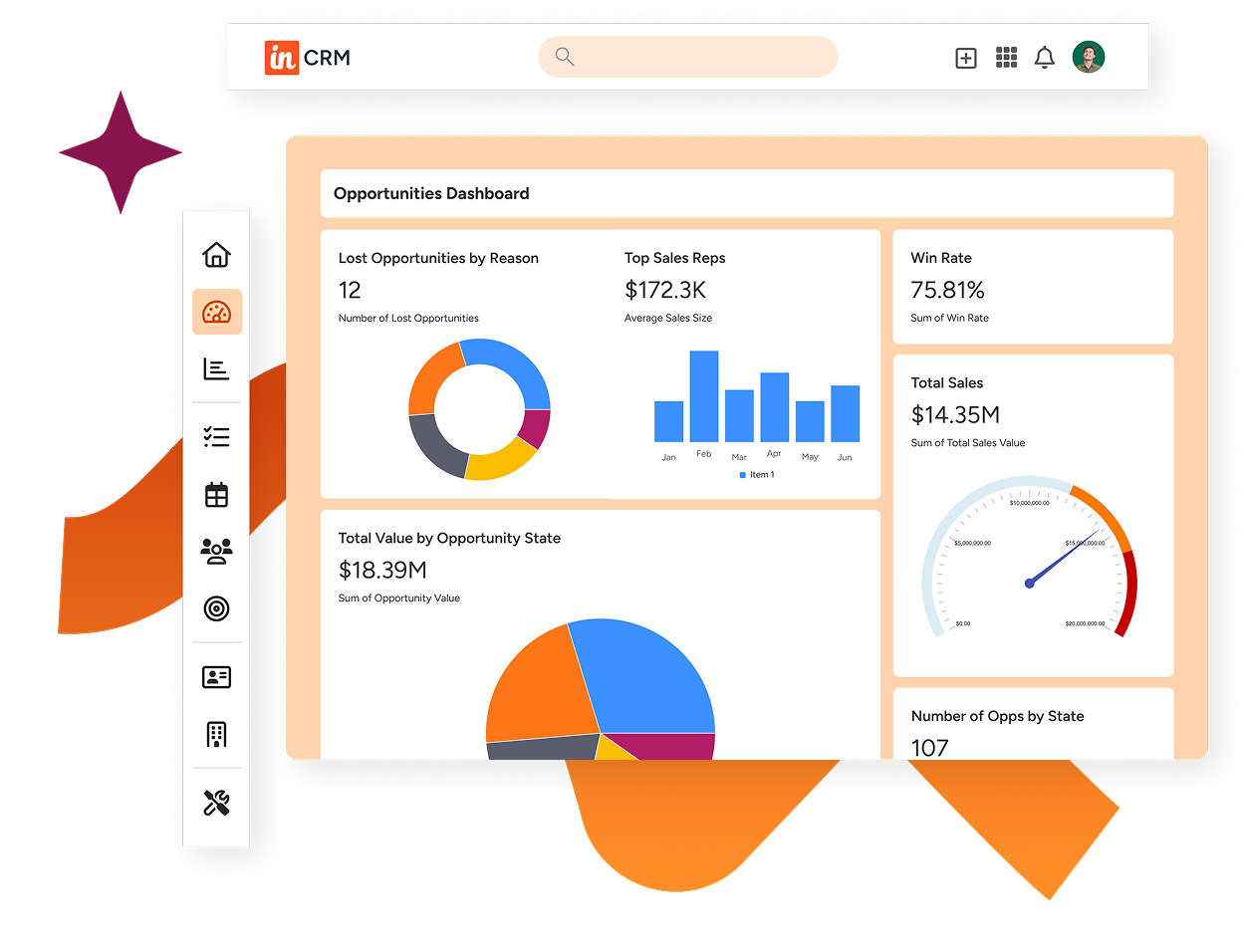
Image source: insightly.com
Features:
- CRM and project management combined into one system.
- Workflow automation to assign tasks and deadlines automatically.
- Seamless integrations with tools like G Suite, Slack, and Mailchimp.
- Pipeline management to oversee multiple client accounts.
- Collaboration tools to align sales, marketing, and project teams.
Pricing: Plans start at $29/user/month.
Why you'll like it: You'll like Insightly because it blends CRM with project management, making it ideal for agencies serving multiple ecommerce clients. It streamlines client tracking, sales, and project execution in one system. This ensures smoother delivery, less tool-switching, and consistent results across campaigns.
8. Agile CRM: Best for small businesses on a budget
Agile CRM is a cost-friendly solution designed for small CRM for ecommerce businesses that need core CRM functions without the expense of enterprise tools. It combines sales, marketing, and service features into one lightweight platform, making it easier to manage contacts, campaigns, and support tickets in a single place. With tools like email tracking, lead scoring, and simple marketing automation, Agile CRM helps smaller teams improve efficiency and customer engagement.
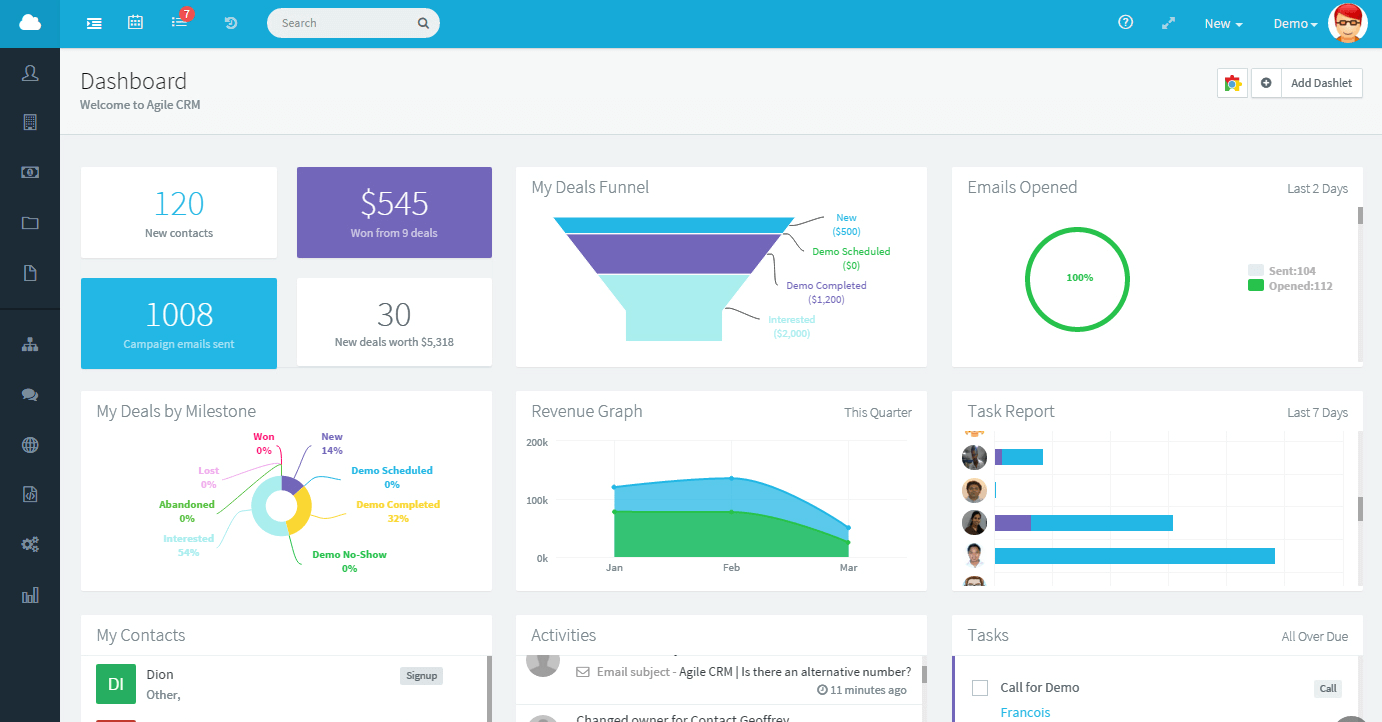
Image source: agile.com
Features:
- Contact management to store and organize customer details in one place.
- Marketing automation to run email campaigns and set up web triggers.
- Helpdesk tools to manage support tickets and customer service.
- Email tracking to monitor engagement and responses.
- Lead scoring to identify and prioritize the best prospects.
Pricing: Free plan for up to 10 users; paid plans start at $8.99/user/month.
Why you'll like it: You'll like Agile because it packs sales, marketing, and support features into one cost-friendly platform. Small ecommerce teams can manage contacts, send campaigns, and track support requests without overspending. It's an affordable entry point into ecommerce CRM that still boosts efficiency and customer engagement.
9. Voyado: Best for loyalty, retention & omnichannel personalisation
Voyado is built specifically for e-commerce & retail brands that want more than just sales tracking—emphasizing customer lifetime value, loyalty, and personalized marketing. Instead of only monitoring contacts and orders, it centralizes all customer data—browsing behavior, purchase history, email engagement, and loyalty status—into one profile, so brands can act on it in real-time.
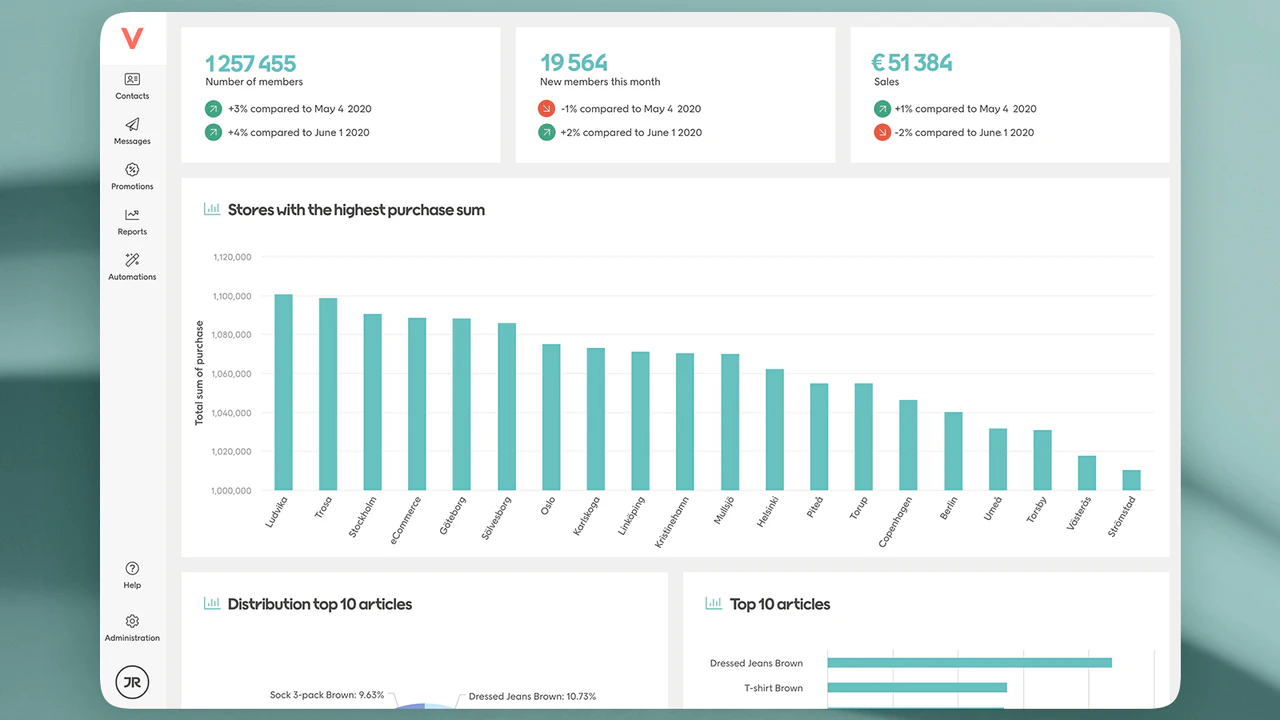
Image source: shopify.com
Features:
- Real-time customer behaviour tracking to trigger campaigns.
- Built-in loyalty program engine & reward/gamification tools.
- AI-powered churn prediction to identify customers likely to drop off.
- Advanced segmentation & multi-market support (currencies, languages).
- Visual campaign builder for non-technical marketing teams.
Pricing: Best for mid-size to enterprise-level ecommerce brands with marketing or CRM teams dedicated to retention. Might be overkill (and more expensive) for very small stores.
Why you'll like it: If you're trying to reduce churn, build repeat purchase behaviour, run loyalty schemes, or do fine-grained lifecycle marketing, Voyado gives you tools especially for those.
10. Drip: Best for personalised campaign automation at scale
Drip is an e-commerce-oriented CRM/automation tool that particularly shines in personalized marketing workflows. Where traditional CRMs focus mainly on pipelines and deals, Drip zeroes in on behaviour-driven marketing: it automatically collects what each shopper browses, buys, and abandons, then lets you design automated campaigns to win them back or upsell them. It's great if you want to send highly targeted campaigns based on customer behavior.
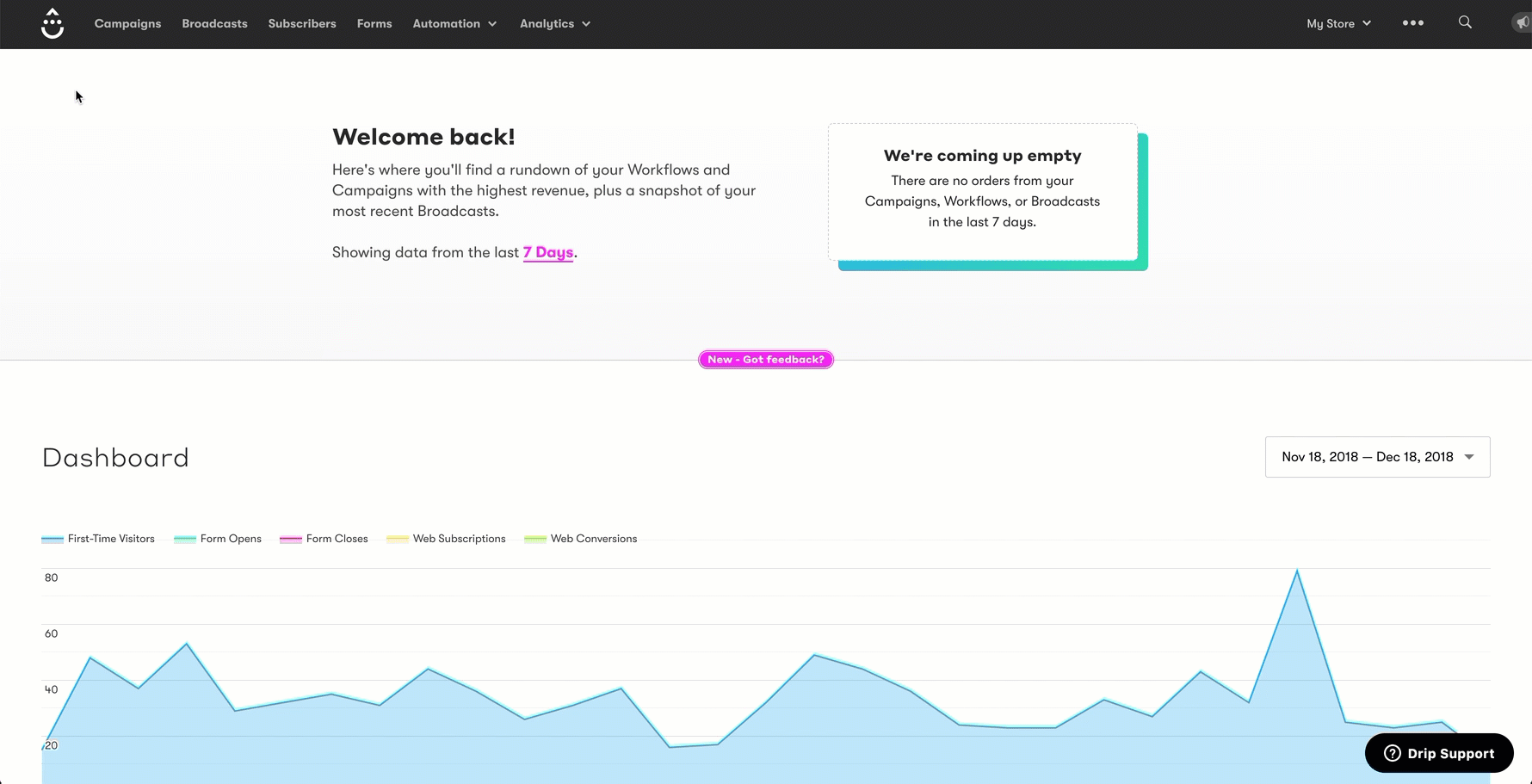
Image source: platforms.com
Features:
- Deep integration with Shopify (and other ecommerce platforms) to track product views, carts, and purchases.
- Strong tagging, segmentation and lead scoring tools.
- Personalized messaging (email and SMS) to re-engage lapsed customers.
- User-friendly dashboards to see performance and ROI of campaigns.
Pricing: Starts from about US$39/month for smaller stores, with price increasing according to number of contacts. Suitable for stores that have enough volume to benefit from segmentation and automation but might not need full enterprise CRM features.
Why you'll like it: Because it's built with ecommerce behavior in mind, you can run very relevant campaigns with relatively low effort. For example, automating reminders, cross-sells, product recommendations, etc. It helps increase average order value and retention without needing a huge marketing team.
Spotlight: Why Lark is different for ecommerce CRM
Instead of being just another CRM, Lark combines customer management with collaboration, giving ecommerce teams a single workspace to handle sales, service, and campaigns. Unlike traditional CRMs that focus only on data storage, Lark ensures that customer insights translate directly into action across teams.
- Lark Base: Organize Profiles, Purchases, and Returns
Ecommerce teams can create databases in Base to manage customer profiles, order histories, and return requests. For example, a support agent can log a refund case in Lark Base, and it will automatically notify finance for approval and update the customer record for future reference.
- Docs & Sheets: Plan campaigns and manage SOPs
Marketing teams can use Lark Docs and Sheets to draft campaign strategies, budget plans, or promotional calendars. A holiday sales campaign can be outlined in Lark Docs, linked to ad creatives, and shared instantly with the sales and design teams for faster execution.
- Messenger & Meetings: Sync sales, marketing, and support
When sudden changes happen—like a product stockout—teams can quickly align using Lark Messanger and Lark Meetings. The sales team can notify marketing to pause promotions, while support can prepare customer communication, all without leaving Lark.
- Dashboards: Visualize sales KPIs, repeat customer rates, and campaign results
Dashboards in Lark give real-time visibility into ecommerce performance. A sales manager can check metrics like abandoned cart recovery rates or repeat purchase trends and instantly decide whether to adjust campaigns or loyalty programs.
By bringing together CRM data, workflows, and communication, Lark removes silos and ensures ecommerce teams act on customer needs quickly and collaboratively.
Best practices for implementing ecommerce CRM
Implementing a CRM for ecommerce effectively can significantly boost customer engagement, repeat purchases, and overall sales efficiency. Following best practices ensures your team leverages the platform to its full potential and avoids common pitfalls.
Start with clean customer data import
Before you begin using a CRM, ensure all customer data is accurate and up-to-date. Importing clean data avoids duplicates, missing details, and errors that can disrupt campaigns. For example, uploading a verified email list ensures marketing automation reaches the right customers.
Set up segmentation early (VIPs, repeat buyers, one-time buyers)
Segmenting your audience in your CRM helps deliver personalized campaigns that resonate with different customer groups. VIPs can receive exclusive offers, repeat buyers loyalty rewards, and one-time buyers targeted re-engagement emails. Early segmentation saves time and ensures messaging is relevant from the start.
Automate abandoned cart campaigns
Use your CRM software for ecommerce to automatically remind customers who leave items in their carts. Timely, personalized follow-ups increase the chance of completing the sale without manual intervention. For example, sending a discount code within 24 hours can convert hesitant shoppers into buyers.
Use dashboards to track loyalty metrics
Dashboards in your best CRM for ecommerce provide real-time insights into repeat purchase rates, customer lifetime value, and engagement levels. Monitoring these metrics helps teams refine strategies and identify opportunities for improvement. For instance, a sudden drop in repeat purchases can trigger a targeted retention campaign.
Train teams to use collaboration tools, not just data entry
A CRM is most effective when teams actively collaborate using integrated tools like messaging, tasks, and shared calendars. Training staff ensures they leverage automation, track campaigns, and communicate efficiently rather than just entering data. This approach improves campaign execution and overall team productivity.
Conclusion
Ecommerce success depends on choosing the right CRM to manage customers, sales, and marketing efficiently. From startups using HubSpot to enterprises on Salesforce, each platform serves different business needs, while SMBs can leverage Zoho, Freshsales, or Agile CRM for cost-effective solutions. Sales-heavy teams benefit from Pipedrive, and agencies managing multiple clients thrive with Insightly. Among all options, Lark stands out by combining CRM features with real-time collaboration, workflows, and team communication. By unifying data and teamwork in a single platform, Lark helps ecommerce businesses boost efficiency, improve customer retention, and drive repeat sales effectively.
FAQs
How does a CRM improve repeat purchase rates?
A CRM improves repeat purchases by centralizing customer data, tracking interactions, and enabling personalized campaigns. Automated follow-ups, loyalty rewards, and targeted offers keep customers engaged. For ecommerce teams, Lark combines CRM functionality with collaboration tools, helping teams act quickly on insights to encourage repeat sales. This ensures campaigns are coordinated and effective across marketing, sales, and support.
Can small Shopify or WooCommerce stores use CRMs affordably?
Yes, many CRMs offer free or low-cost plans suitable for small stores, providing essential features like contact management and marketing automation. Affordable options let businesses automate workflows without heavy investment. Lark's free and Pro plans give small ecommerce teams access to CRM and collaboration tools in one platform. This helps them scale operations efficiently while keeping costs manageable
How does Lark compare to HubSpot or Salesforce for ecommerce?
Lark differs by combining CRM features with real-time collaboration, messaging, and task management in one workspace. While HubSpot is easy to start with and Salesforce offers enterprise-level analytics, Lark streamlines both customer management and team workflows. Ecommerce teams can track orders, manage campaigns, and communicate instantly without switching tools. This approach accelerates decision-making and improves customer experience.
What features should ecommerce CRMs always include?
This connection enhances efficiency, reduces errors, and fosters better communication, ultimately leading to improved customer satisfaction and business growth. Workflow automation and collaboration tools enhance efficiency across teams. Lark includes all these features: Lark Docs, Lark Messenger, and Dashboards, enabling ecommerce teams to manage sales, marketing, and support in a unified platform.
Related reading
Table of contents
Start using Lark today

Manage all your work in one place
Boost team efficiency by 10x
Save up to 70% on software costs
Table of contents
Start using Lark today
Manage all your work in one place
Boost team efficiency by 10x
Save up to 70% on software costs
Keep reading









2026 Lark Technologies Pte. Ltd.
Headquartered in Singapore with offices worldwide.






Explore: