


Customer Relationship Guide: How Teams Build Trust and Loyalty

Ryan Tanner
Product Marketing Specialist
Aug 5, 2026
Ryan Tanner
Aug 5, 2026

15 min read


Every successful business depends on how well it manages its connection with customers. A customer relationship is built through repeated interactions, trust, and shared value over time. These relationships determine whether a customer stays loyal, becomes an advocate, or moves to a competitor. In a world where communication happens across many platforms and teams, managing these relationships requires structure, clarity, and collaboration. In this guide, we will understand what a customer relationship actually stands for and how to build it step by step. Let's dive in now.

What is a customer relationship?
Customer relationship refers to the ongoing connection between a business and its customers. It encompasses every interaction from marketing and sales to support and product feedback. A healthy customer relationship ensures that customers feel valued and understood, not just sold to. When managed well, it creates long-term satisfaction and retention rather than short-term transactions.
Strong customer relationships depend on consistency and trust. When customers receive timely updates, honest support, and meaningful engagement, they tend to continue doing business with the same company. These relationships are not built overnight but through cumulative positive experiences that make customers feel like partners in growth rather than passive buyers.
Image source: unsplash.com
Why customer relationships matter for business growth
Customer relationships are the backbone of sustainable growth. Every loyal customer brings repeated business, referrals, and invaluable feedback. For modern teams, strengthening customer ties directly translates to increased efficiency and lower marketing costs. When customers trust a brand, they're more willing to share insights, join communities, and advocate publicly for the brand's success.
- Loyalty and lifetime value: Loyal customers are worth far more than one-time buyers. They return frequently, spend more per purchase, and remain less sensitive to competitors' prices. By maintaining ongoing relationships, businesses can extend the customer lifetime value and reduce the pressure of acquiring new leads constantly. A loyal base also provides stability during market changes or product transitions.
- Word-of-mouth and referral impact: Satisfied customers often become natural promoters. Their recommendations carry greater credibility than any advertisement. A strong relationship inspires customers to share their experiences through testimonials, reviews, and referrals. This organic promotion helps attract new customers at a fraction of typical marketing costs while boosting brand reputation.
- Lower costs compared to acquisition: Retaining customers is significantly cheaper than acquiring new ones. Nurtured relationships require fewer marketing efforts because customers already know and trust the brand. Businesses that invest in after-sales engagement, proactive communication, and personalized outreach save money while deepening loyalty.
- Better product insight via customer feedback: Customers who feel heard provide feedback that helps refine products and services. These insights lead to innovation based on real needs rather than assumptions. Engaged customers are more open to sharing opinions, allowing teams to identify pain points early and respond effectively, strengthening both product quality and relationships.
What makes modern customer relationships challenging?
Building strong relationships today is harder than ever. Customers expect fast, personalized responses, yet teams are often scattered across different tools. When communication, data, and follow-ups live in separate places, delays and misunderstandings occur. Managing relationships efficiently now requires unified systems and real-time coordination across teams.
- Delayed responses: Slow replies can erode customer confidence. When multiple departments are involved, updates often get lost or delayed between channels. These gaps make customers feel ignored or undervalued, weakening trust over time. Real-time communication is now an expectation, not a luxury.
- Fragmented communication: Modern businesses use multiple apps for chat, email, and project tracking. This fragmentation leads to misaligned updates and repeated work. A message shared in one tool might not reach the right person in another, creating a poor experience for both teams and customers.
- Data scattered between teams and tools: Without centralized customer data, sales, support, and product teams operate on incomplete information. When insights are locked in different platforms, it becomes impossible to see the full customer journey. This disconnection leads to inconsistent service and missed opportunities.
- Hard to personalize at scale: Personalization matters, but managing it across hundreds or thousands of customers is difficult when tools don't communicate. Without automation and shared visibility, personalization becomes manual and inconsistent. This reduces engagement and makes interactions feel transactional instead of genuine.
These challenges highlight the need for a connected workspace where teams share data, communicate instantly, and act in sync setting the stage for how Lark approaches modern customer relationship management.
Top tools for customer relationships and how Lark goes further
Most businesses use CRM software like HubSpot, Salesforce, and Zendesk for tracking interactions and improving follow-ups. While powerful, these often separate communication from collaboration, forcing teams to juggle CRMs, spreadsheets, and chat apps. Lark bridges this by integrating communication, data, and teamwork into a single workspace. This contrasts with many Google Workspace alternatives or even how effectively a CRM integrates with the various features covered by Google Workspace pricing. For businesses seeking truly unified operations beyond just CRM functionalities, considering a platform like Lark, which inherently combines communication with CRM, can be more efficient than trying to force integrations across different tools, even those offered within other standalone CRM software.
Lark: The workspace built to strengthen customer relationships
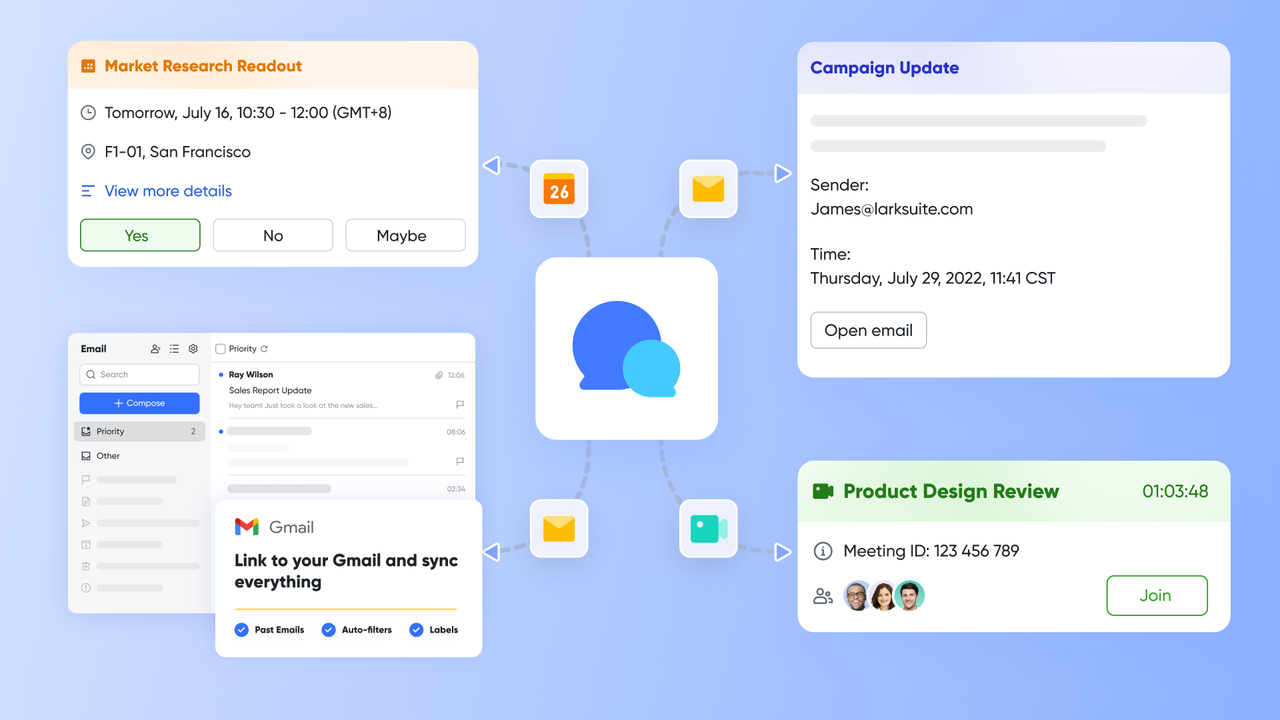
Customer relationships require timely communication, shared visibility, and consistent follow-through qualities that break down quickly when information is scattered across tools. Lark brings everything together in one workspace, so sales, support, and product teams can move as one. Instead of jumping between apps or losing updates in email chains, teams stay aligned on what customers need, who's handling what, and which actions will strengthen the relationship next.
- Lark Base for shared customer records, renewals, and lifecycle tracking
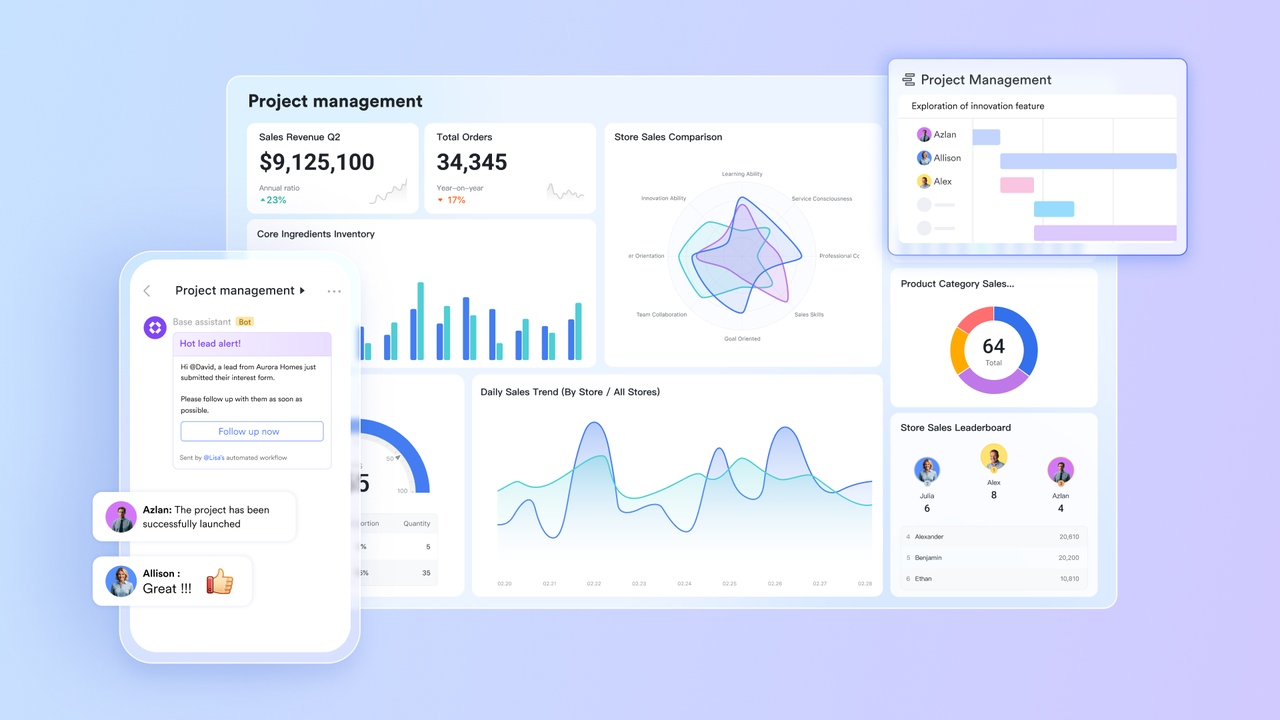
Instead of scattered spreadsheets or siloed CRMs, Lark Base centralizes customer data in a visual, customizable workspace. Teams can track lifecycle stages, engagement signals, order history, renewal dates, and risk indicators all in one place. Multiple views like Kanban, List, or Dashboard make it easy to monitor progress and quickly surface customers who need attention. When behavior changes, such as reduced product usage, Base can alert success teams automatically. This visibility enables proactive retention instead of reactive firefighting.
- Lark Tasks for ownership and automated follow-ups
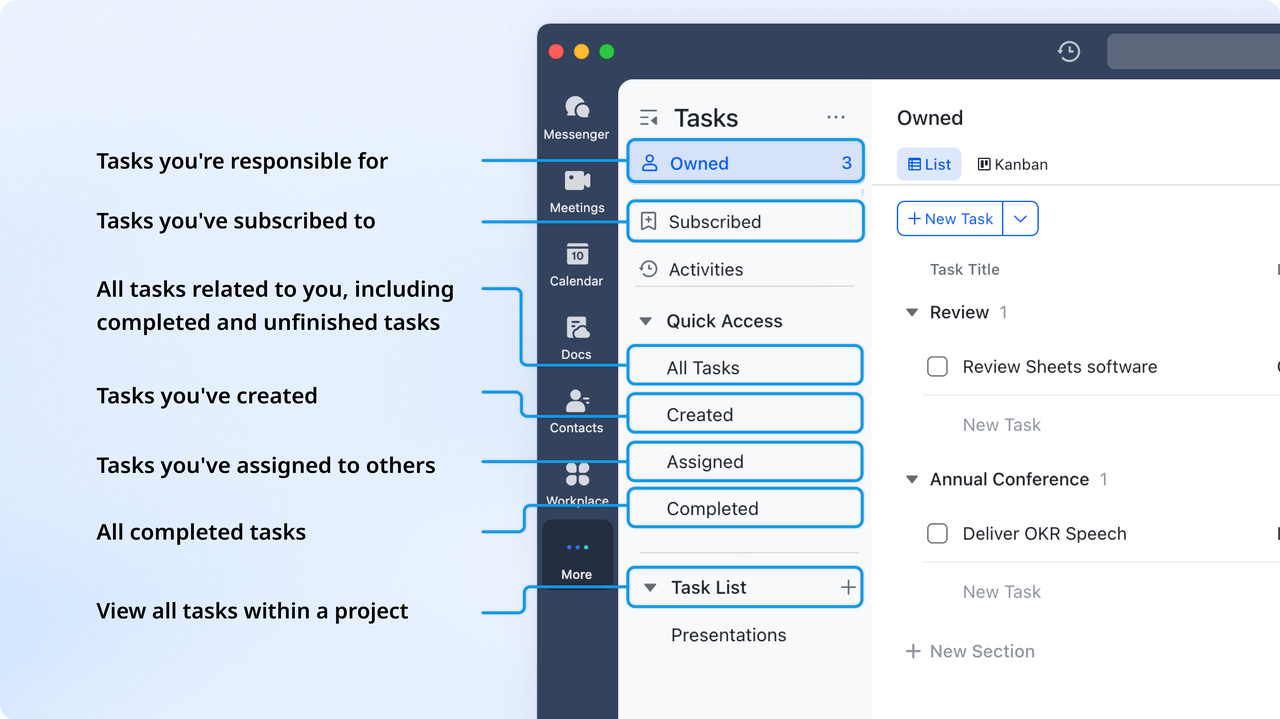
Every commitment made to a customer matters and forgetting just one can damage trust. Lark Tasks ensures actions are assigned clearly, with due dates, priority tags, and automated reminders that prevent delays. Tasks link back to the customer record, so anyone can see what's done, what's pending, and who is responsible. Managers gain transparency into execution without micromanaging. It brings structure to customer care, turning promises into results and relationships into revenue growth.
- Lark Meetings + Magic Share for real-time customer review discussions
Customer calls often involve multiple stakeholders and decisions that need instant alignment. During meetings, Magic Share allows teams to open customer Docs or Base records directly inside the call and update them live with the customer watching. Everyone sees the exact same information, eliminating confusion caused by outdated files or misheard details. Approvals happen faster, next steps are defined clearly, and the relationship benefits from a professional, well-coordinated experience.
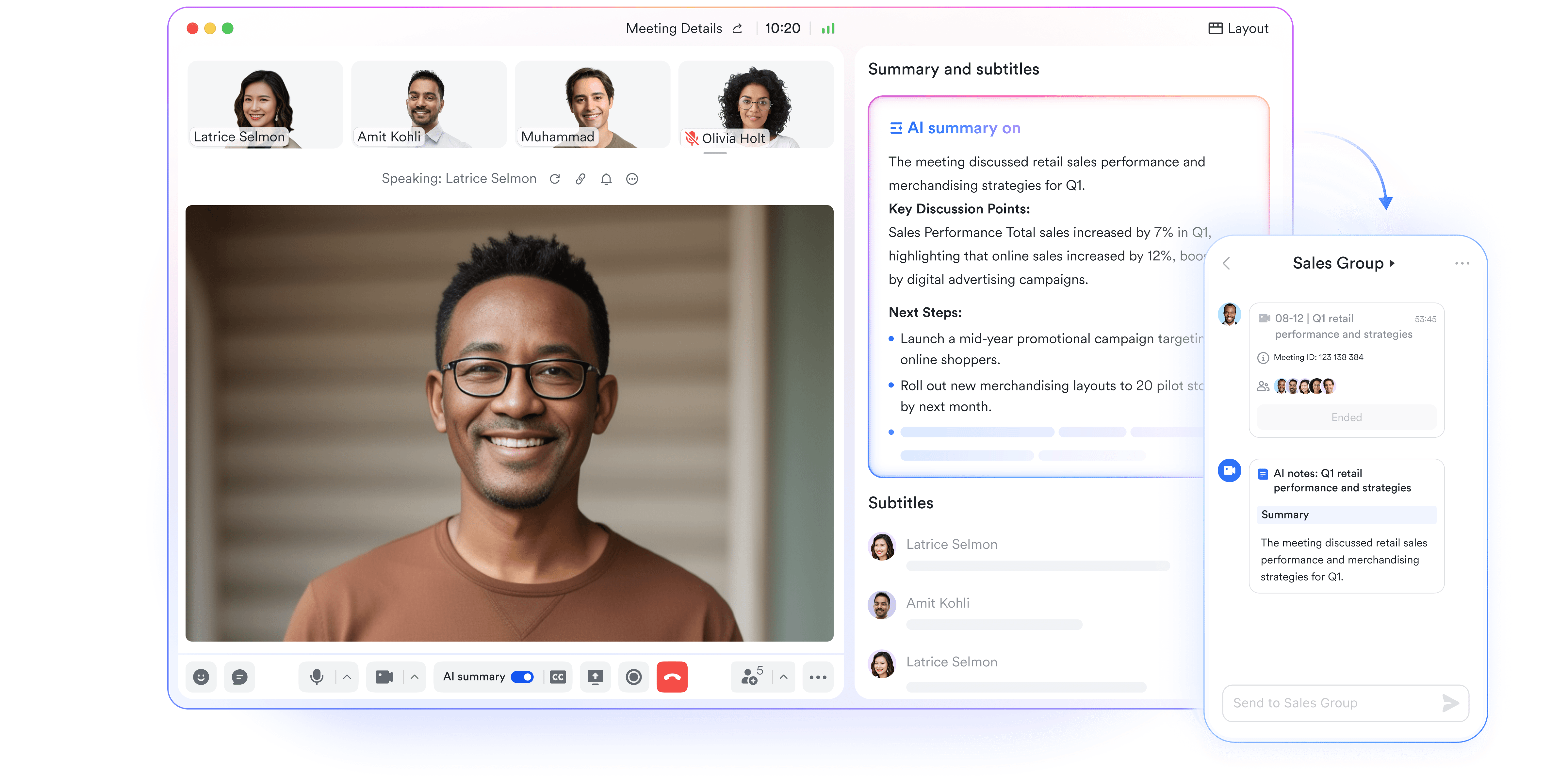
- AI Summary for automatic documentation of customer needs and next steps
After every call, customer insights and decisions must be captured accurately but manual note-taking is error-prone and slow. Lark's AI Meeting Notes' AI Summary automatically generates a structured recap of key discussion points, including concerns, requests, and assigned actions. These summaries link back to the customer's record for future reference, giving teams a reliable memory of every interaction. It ensures consistency and accountability, especially when multiple people handle the same customer over time.
- Starter plan: Free forever plan that includes 11 powerful tools for up to 20 users. It also comes with 100GB of storage, 1000 automation runs, AI translations, and more.
- Pro plan: $12/user/month (billed annually) for up to 500 users. It includes everything in Starter plus group calling for up to 500 attendees, 15TB of storage, 50,000 automation runs, and more.
- Enterprise plan: Contact sales for custom pricing. Supports unlimited users and includes even more automation runs and advanced security, compliance, and management features.
Customer relationship templates in Lark-ready to use
Templates help teams organize workflows faster without starting from scratch. They guide teams through structured processes, ensuring every step of customer engagement is consistent. Lark offers several ready-made templates designed for sales, support, and customer success teams to manage relationships efficiently.
Customer feedback tracker
Collect feedback in a structured format, categorize responses, and monitor satisfaction trends over time. The template connects directly to Base and can automatically notify teams when a recurring issue appears, making responses faster and data-driven.
Lead follow-up planner
Keep track of leads, interactions, and follow-up actions across team members. The planner ensures no potential customer is overlooked by assigning tasks and deadlines automatically. This structure helps maintain discipline in nurturing prospects until conversion.
Account renewal dashboard
Track subscription renewals, contract values, and upcoming expirations visually. The dashboard view highlights at-risk accounts early, allowing success teams to engage before the renewal date. This proactive approach improves retention rates significantly.
Customer onboarding checklist
Standardize onboarding steps for every new customer. From setup calls to training materials, this checklist keeps both sides aligned on timelines and responsibilities. It ensures customers start their journey smoothly and feel supported immediately.
Post-sale communication tracker
Manage customer check-ins, support escalations, and feedback loops after purchase. This tracker helps maintain consistent engagement, ensuring that long-term customers continue to feel valued beyond the sale.
Proactive tactics to build trust and long-term loyalty
Trust is at the center of every strong relationship. To build loyalty, businesses must go beyond transactions and provide meaningful, consistent experiences. Proactive relationship management involves anticipating customer needs and delivering value before issues arise.
- Personalization with business value: Customers expect relevance. Personalizing communication based on their goals and history makes interactions more authentic. It's not about using names in emails but tailoring content and solutions that fit their exact context and challenges.
- Proactive communication: Reaching out before a problem occurs shows commitment and attentiveness. Teams can use automated reminders or check-in messages to maintain steady contact. This ongoing dialogue prevents small issues from turning into churn risks.
- Consistency across every touchpoint: Whether through email, chat, or meetings, consistency builds confidence. When every department communicates in the same tone and follows the same information, customers experience reliability that strengthens their trust in the brand.
- Building emotional loyalty: Emotional loyalty arises when customers feel aligned with a brand's values. Transparency, empathy, and genuine appreciation go a long way. Recognizing milestones or celebrating success with customers helps deepen this bond.
- Customer education and community models: Sharing knowledge through webinars, tutorials, and communities empowers customers. It transforms them into advocates and co-creators of value. Engaged communities help brands sustain growth while creating peer-to-peer support ecosystems.
Conclusion
Customer relationships form the core of every thriving business. They influence loyalty, reputation, and long-term profitability. A well-managed relationship turns customers into advocates who not only stay but also help a brand grow through referrals and feedback. However, as teams grow and communication spreads across multiple tools, maintaining this connection becomes increasingly difficult. Misaligned updates, scattered data, and delayed responses can quickly weaken even the strongest relationships.
This is where connected digital workspaces like Lark bring structure, speed, and collaboration together. By combining data, communication, and automation, teams can serve customers better and build trust that lasts.
FAQs
What is the difference between a customer relationship and customer retention?
Customer relationship refers to the ongoing interaction between a business and its customers, while retention measures how long those customers continue doing business. Relationships create the foundation for retention by building trust and engagement through consistent communication.
How can small businesses strengthen customer relationships without a large budget?
Small businesses can focus on personalized communication, timely responses, and proactive follow-ups. Using all-in-one platforms like Lark helps teams manage customer information and communication efficiently without paying for multiple tools.
What are customer relationship metrics I should track?
Key metrics include customer satisfaction scores, renewal rates, churn percentage, and average response time. Tracking engagement patterns in shared dashboards helps teams spot issues early and maintain healthy relationships.
How do customer relationships impact product development?
Strong relationships encourage honest feedback, which informs product improvements. When teams document and share customer insights collaboratively, new features and updates align better with real needs, improving satisfaction.
Can AI improve customer relationships?
Yes, AI can help automate follow-ups, summarize meetings, and predict customer behavior. In Lark, AI tools assist by generating meeting summaries and highlighting action items, allowing teams to stay focused on delivering value.
Related reading
Table of contents
Start using Lark today

Manage all your work in one place
Boost team efficiency by 10x
Save up to 70% on software costs
Table of contents
Start using Lark today
Manage all your work in one place
Boost team efficiency by 10x
Save up to 70% on software costs



2026 Lark Technologies Pte. Ltd.
Headquartered in Singapore with offices worldwide.






Explore: