














Top 10+ Marketing Automation Platforms For Small Businesses

Ryan Tanner
Product Marketing Specialist
Sep 18, 2026
Ryan Tanner
Sep 18, 2026

15 min read


For small businesses, marketing is all about maximizing impact with limited resources. The right small business marketing software can help automate repetitive tasks, streamline campaigns, and measure results—without the need for a full-scale enterprise system. By choosing the right platform, SMBs can save time, reduce costs, and run campaigns that deliver measurable growth.
Yet, with so many marketing automation tools for small business competing for attention, the decision can feel overwhelming. Should you focus on ease of use, pricing, automation depth, or integrations? The best choice depends on your goals and business stage. In this guide, we’ll explore the
Snapshot: Top 10+ small business marketing software
best marketing platforms for small businesses in 2025—covering tools like Mailchimp, Brevo, ActiveCampaign, and Lark—so you can find the solution that fits your needs:
- Lark: Best all-in-one marketing platform for small businesses
- Mailchimp: email marketing automation software
- Brevo (Sendinblue): email platforms & SMS
- Flodesk: design-first email marketing tool for creators & small businesses
- ActiveCampaign: automation software for small businesses
- Zoho Campaigns: budget marketing software for SMBs
- Moosend: affordable email automation tools
- GetResponse: marketing automation service with webinars
- Omnisend: event email marketing software for e-commerce
- HubSpot Starter: sales and marketing software for small businesses
- Klaviyo: marketing automation tools for ecommerce SMBs

Why small business marketing software matters
For small businesses, every resource counts, which makes efficiency the key to sustainable growth. This is where small business marketing software proves invaluable. By combining campaign management, email outreach, and collaboration tools into a single platform, it helps SMBs achieve more with less. Teams can plan, execute, and track campaigns while staying aligned, even with limited staff. Automation is another major benefit—it reduces repetitive tasks like follow-ups or abandoned cart reminders, saving time while ensuring consistent customer engagement.
In addition, automation improves ROI by delivering the right message at the right time, creating smoother customer journeys that build loyalty. On the other hand, relying on fragmented tools often leads to inefficiencies, data silos, and increased costs. Consolidated marketing platforms for small businesses eliminate this problem, giving teams better visibility, streamlined workflows, and the ability to scale without the complexity of managing multiple disconnected apps.
Common challenges with marketing automation for small businesses
- Budget limits: Evaluating the best marketing software for small business often comes down to pricing. Premium plans can be costly, and SMBs must weigh affordability against essential features.
- Tool overload: Many small businesses juggle separate apps for email, chat, and analytics. This fragmented approach slows workflows and makes it harder to get a complete view of campaigns.
- Lack of in-house expertise: Not every SMB has trained staff to handle advanced automation or reporting. Without experience, even powerful marketing automation tools for small businesses can be underutilized.
- Scaling campaigns with lean teams: Expanding customer engagement while running on limited staff can be overwhelming, especially when managing multiple platforms at once.
- Data management challenges: Disconnected systems often lead to scattered insights. Without unified data, it’s difficult to track customer journeys or measure ROI accurately.
- Customer support limitations: Many marketing software companies provide limited support at lower pricing tiers, leaving small teams without help when technical issues arise.
How to choose the best marketing platform for small business
Ease of use
For SMBs, ease of use is often the deciding factor when selecting small business marketing software. A platform with drag-and-drop templates, intuitive dashboards, and simple onboarding helps teams get started without technical expertise. This reduces the learning curve and allows small businesses to launch campaigns quickly. The best tools make complex marketing feel accessible, even for first-time users.
Marketing automation tools for small businesses
The right marketing automation tools for small businesses provide features like autoresponders, workflows, and reminders that simplify customer engagement. For example, automation can trigger welcome emails, abandoned cart follow-ups, or re-engagement campaigns with minimal manual effort. These tools save valuable time for lean teams and ensure communication is consistent. Automation also helps SMBs nurture relationships while focusing on growth.
Pricing and scalability
Affordability is crucial when considering the best marketing software for small business. Many SMB-friendly platforms offer entry-level plans with core features, while premium tiers unlock advanced options. Scalability matters just as much—businesses should choose tools that grow with their needs, avoiding expensive migrations later. The ideal software balances cost-effectiveness today with flexibility for tomorrow’s expansion.
Sales and marketing software for small businesses
Platforms that combine sales and marketing functions are becoming essential for SMBs. Sales and marketing software for small businesses unifies customer data with campaigns, ensuring leads are nurtured from the first interaction to conversion. This integration reduces silos between marketing and sales teams, improves lead tracking, and strengthens ROI. For growing SMBs, it ensures campaigns drive measurable business results.
Support and reliability
Small businesses need platforms that don’t just provide features, but also dependable support. Marketing platforms for small businesses should offer live chat, onboarding resources, or knowledge bases to help teams resolve issues quickly. Reliable uptime and strong customer support reduce the risk of campaign disruptions. For SMBs with limited technical staff, responsive help can make the difference between smooth execution and missed opportunities.
Snapshot: Top 10 small business marketing software
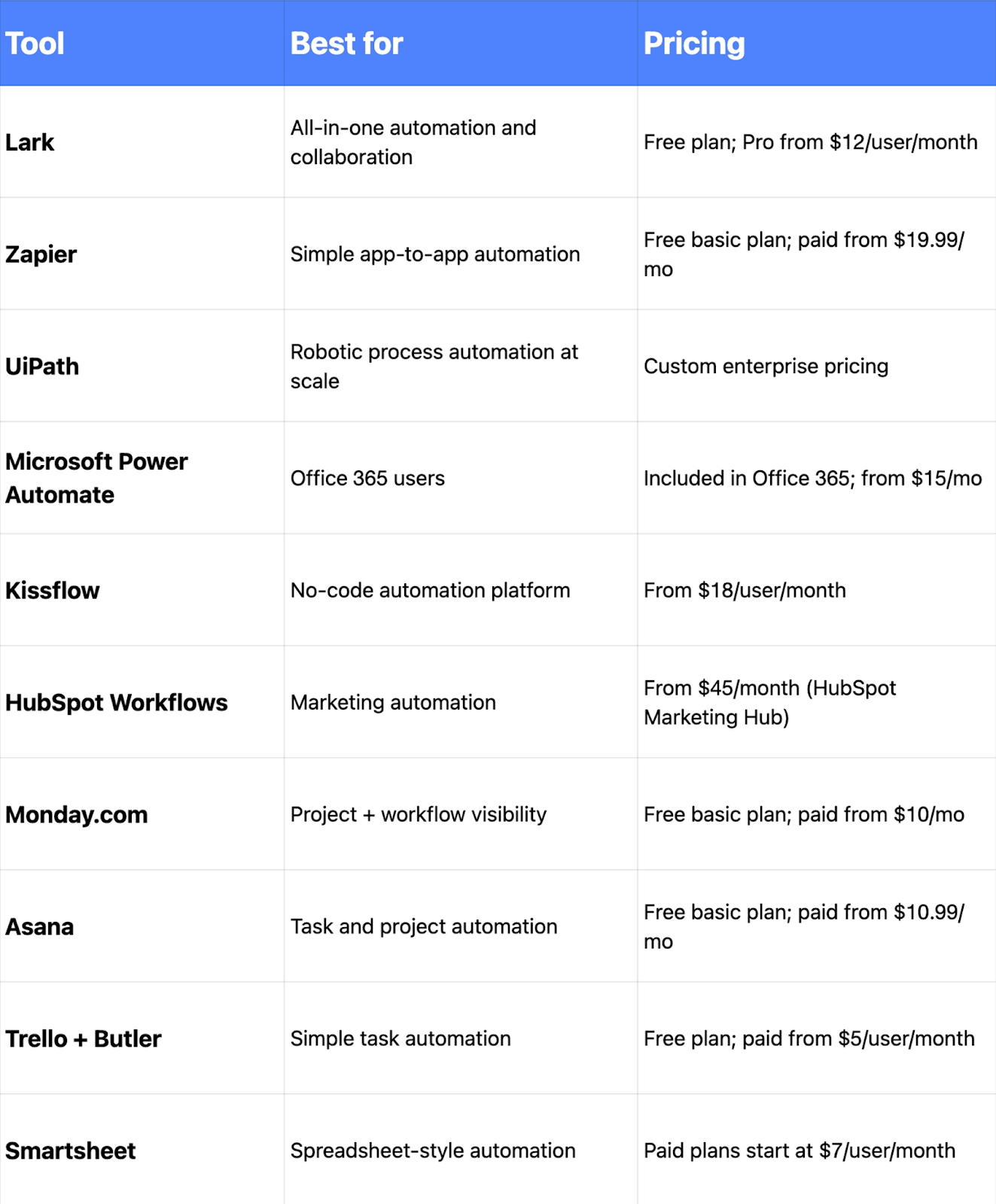
10+ best small business marketing software in 2026
1. Lark: Best all-in-one marketing platform for small businesses
Lark has quickly emerged as one of the best small business marketing software solutions, offering more than just email automation. Designed for SMBs that want to replace multiple disconnected tools, Lark combines communication, project management, and marketing automation in a single workspace. Instead of juggling separate apps for chat, approvals, and campaign tracking, teams can plan, execute, and analyze their efforts seamlessly. For lean businesses, this means fewer silos, faster workflows, and greater productivity. By aligning campaign execution with collaboration, Lark delivers the unified experience small businesses need to scale smarter.
Key features:
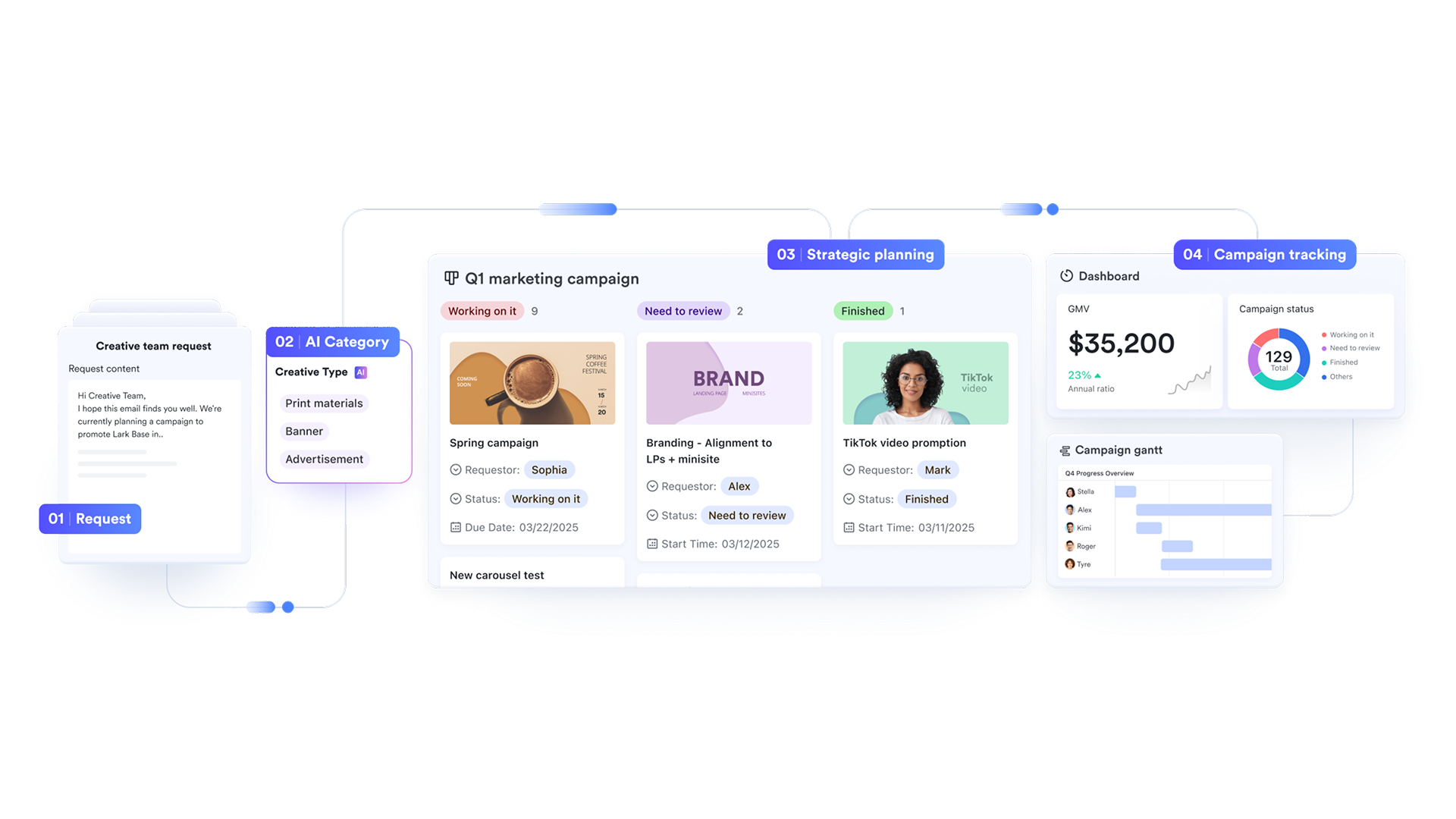
- Campaign (project) management: Lark Base
Lark Base gives small businesses a powerful way to manage marketing campaigns like projects. Teams can create databases for leads, campaigns, or tasks, assign responsibilities, and track progress in real time. Automation rules can trigger reminders, update task statuses, or notify stakeholders when deadlines are near. For example, moving a task to “Ready for Review” can automatically alert the approval team. This ensures campaigns stay on schedule while reducing manual follow-up.
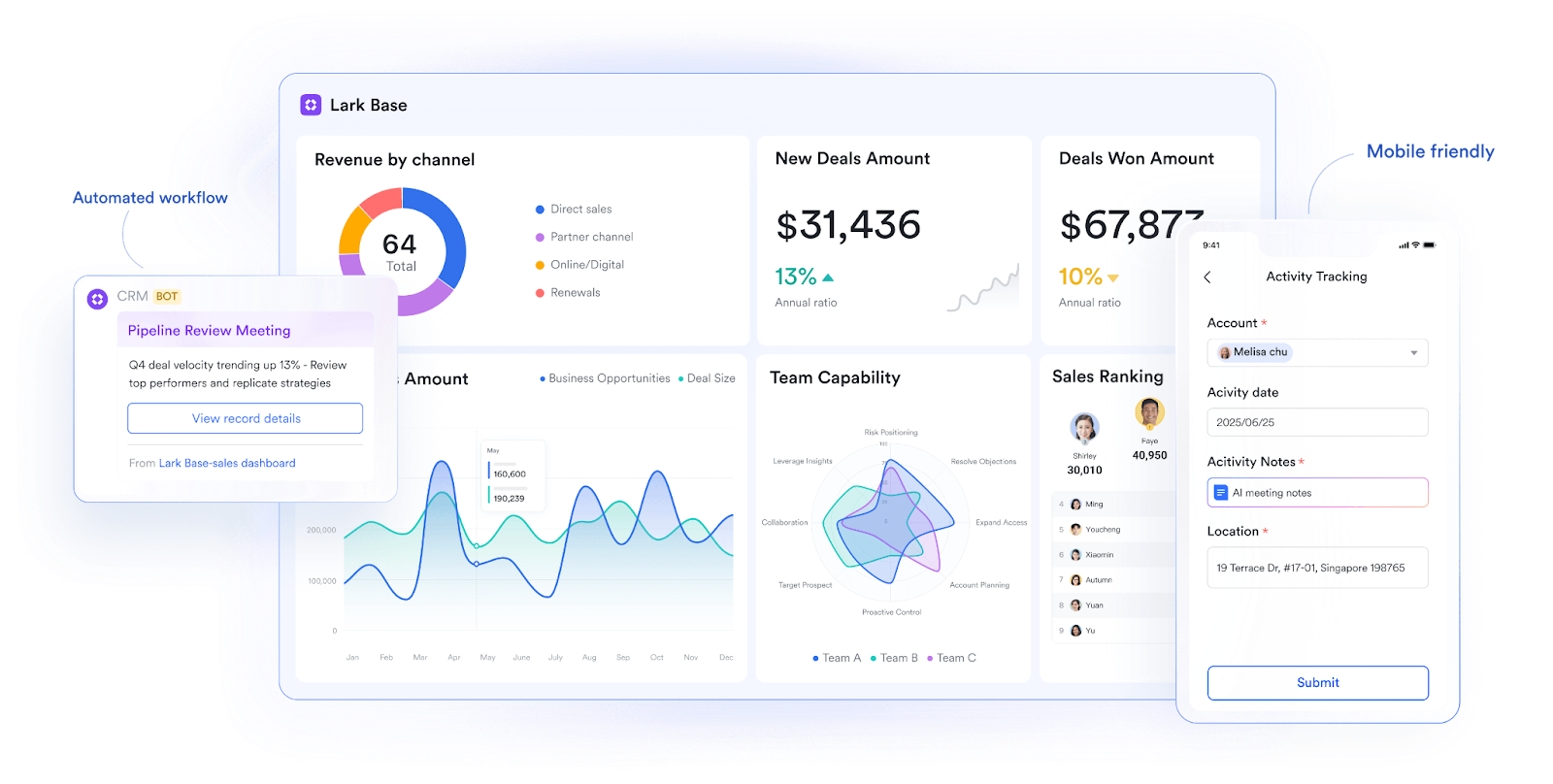
- Brainstorming and content creation: Lark Docs
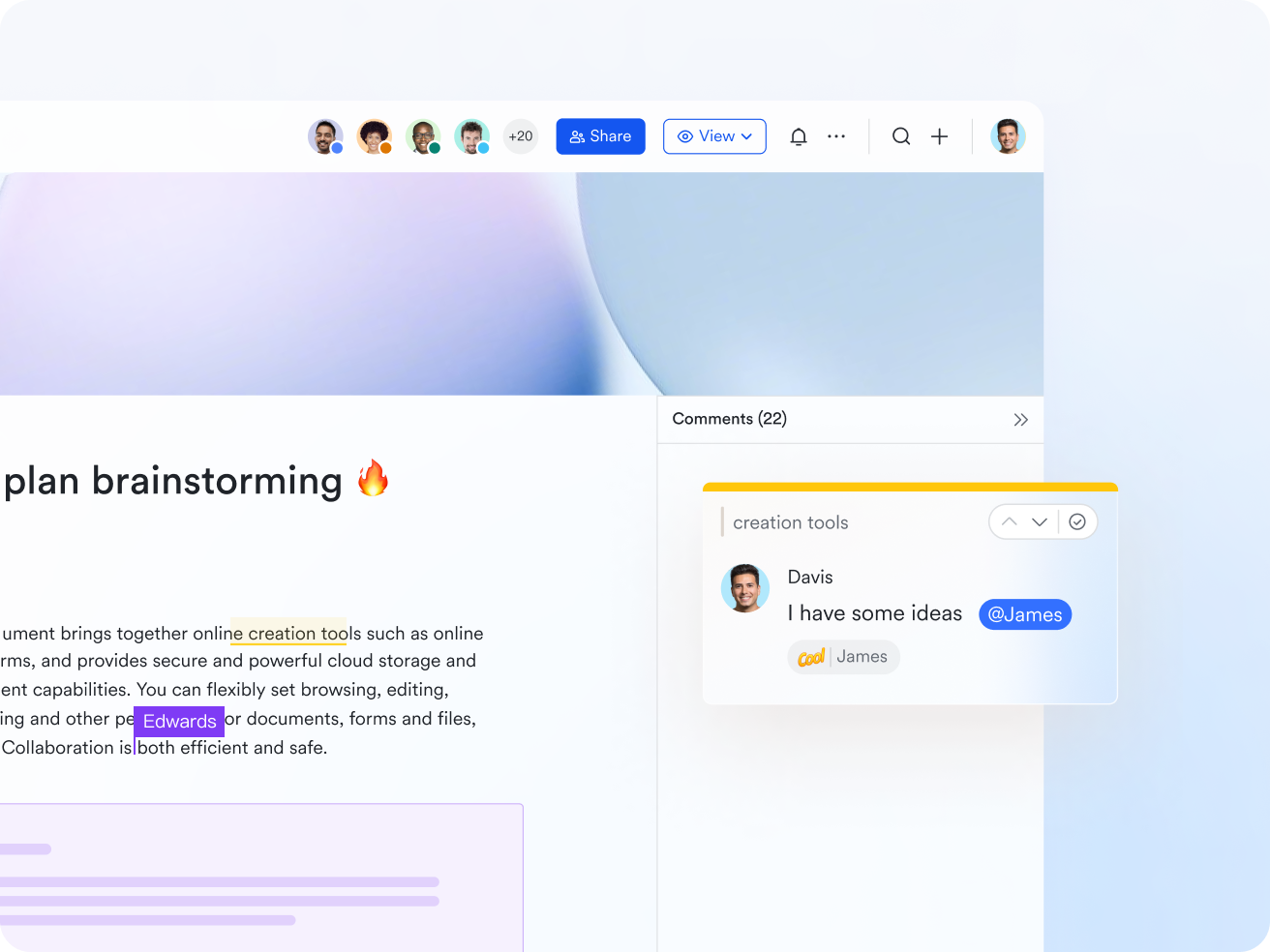
With Lark Docs, teams can brainstorm ideas, draft email copy, and build campaign content collaboratively. Multiple users can co-edit documents, leave comments, and resolve feedback in real time, cutting out delays caused by endless email threads. Docs also connect directly to Base or Messenger, meaning approved content can be linked into campaign workflows instantly. This tight collaboration ensures that marketing automation always pulls from the most up-to-date and consistent assets.
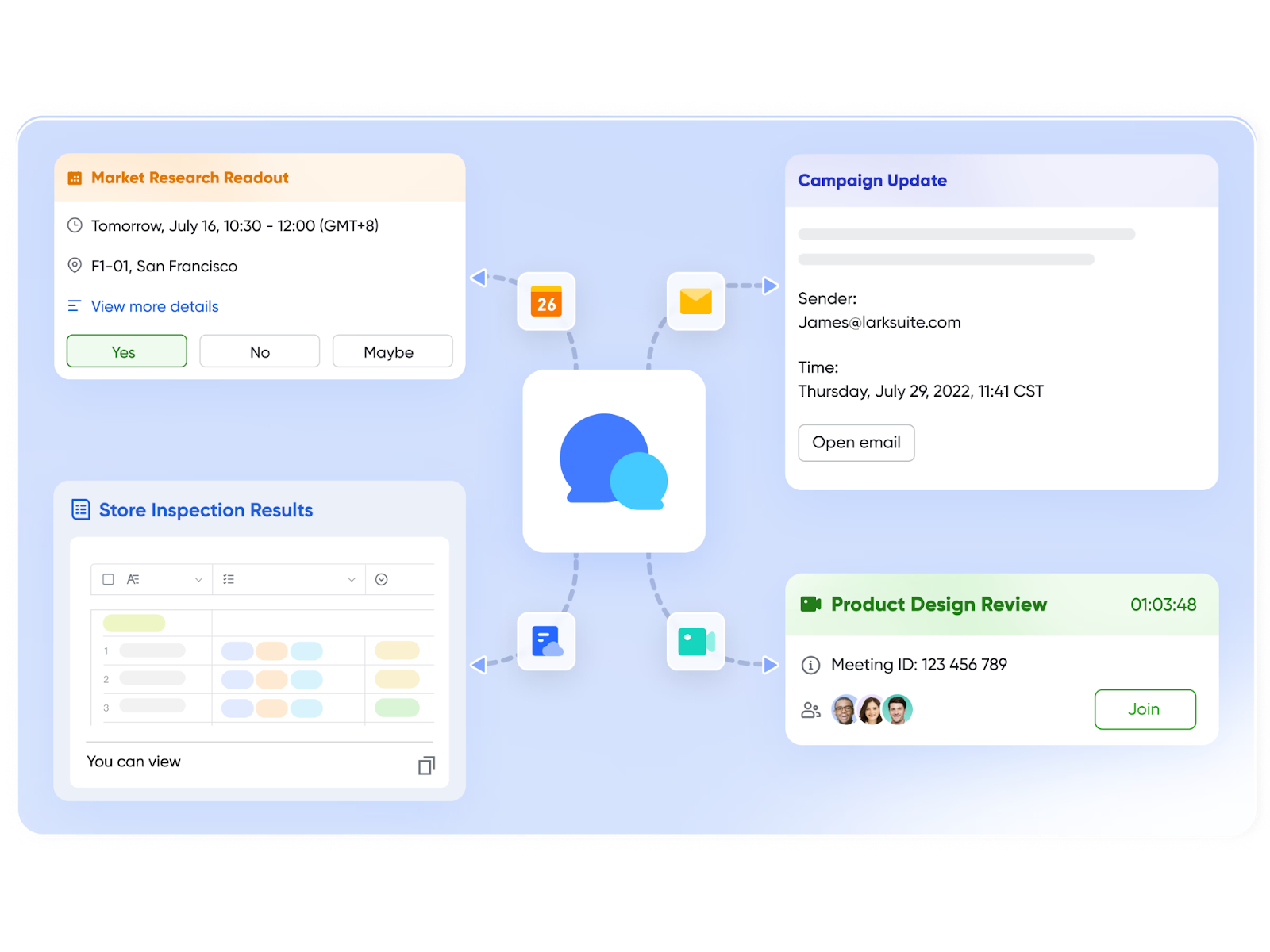
- Collaboration and communication: Lark Messenger
Marketing automation is only as effective as the teamwork behind it. With Lark Messenger, teams can share campaign updates, attach files, and mention colleagues to keep everyone aligned. Instead of switching between apps, marketers can push email drafts or campaign reports directly into chat threads for discussion. Messenger also supports group announcements, helping teams coordinate campaign launches across departments. This reduces miscommunication and speeds up execution.
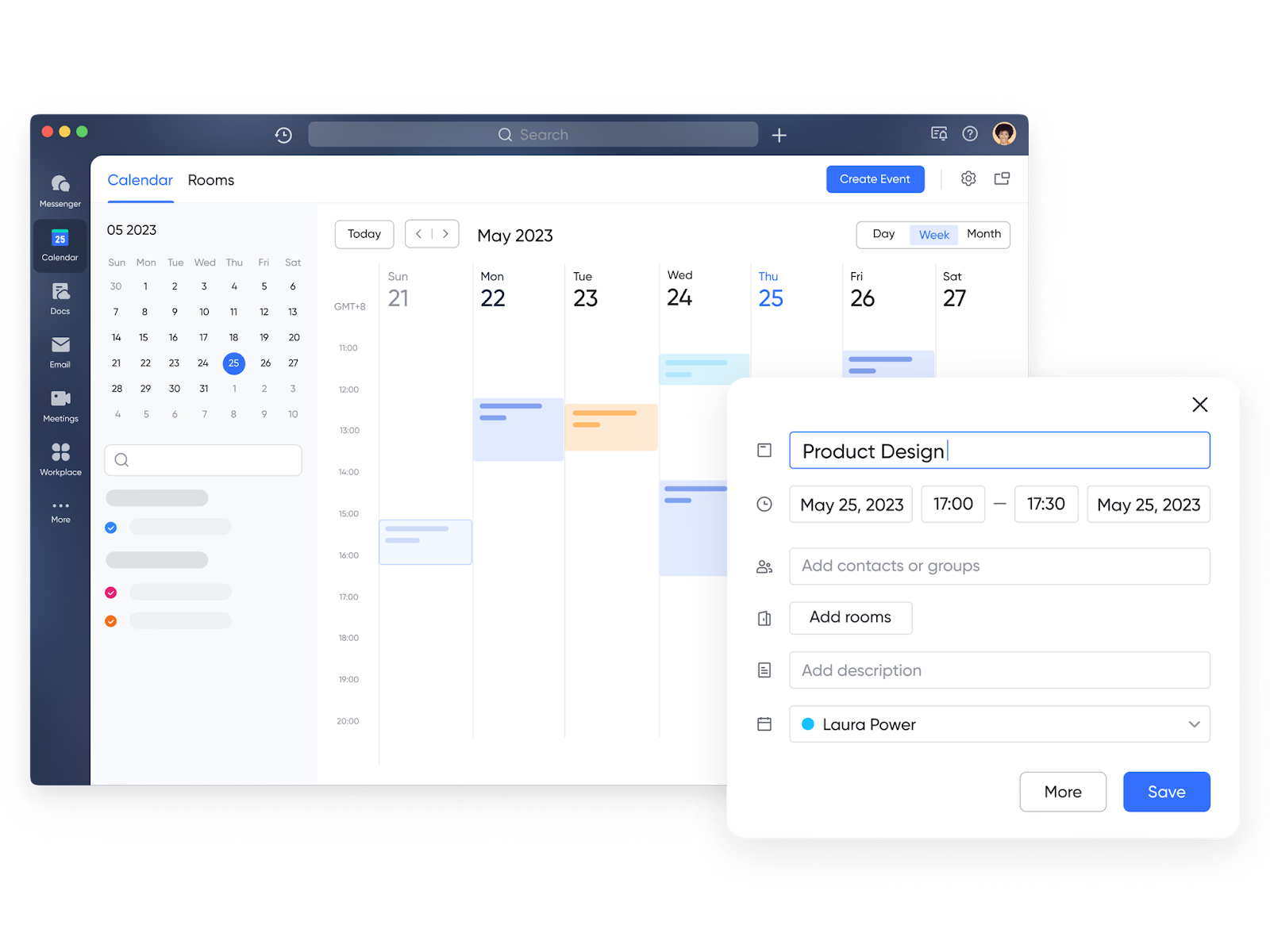
- Scheduling and alignment: Lark Calendar & Lark Meetings
Lark Calendar helps small businesses organize campaign timelines, deadlines, and review meetings in one view. Teams can align schedules to avoid conflicts and set reminders for key milestones like campaign launches or webinars. Lark Meetings go a step further, letting marketers host virtual discussions with screen sharing and recording. Notes and action items can be linked directly back to campaign tasks, creating a closed loop between planning, execution, and follow-up.
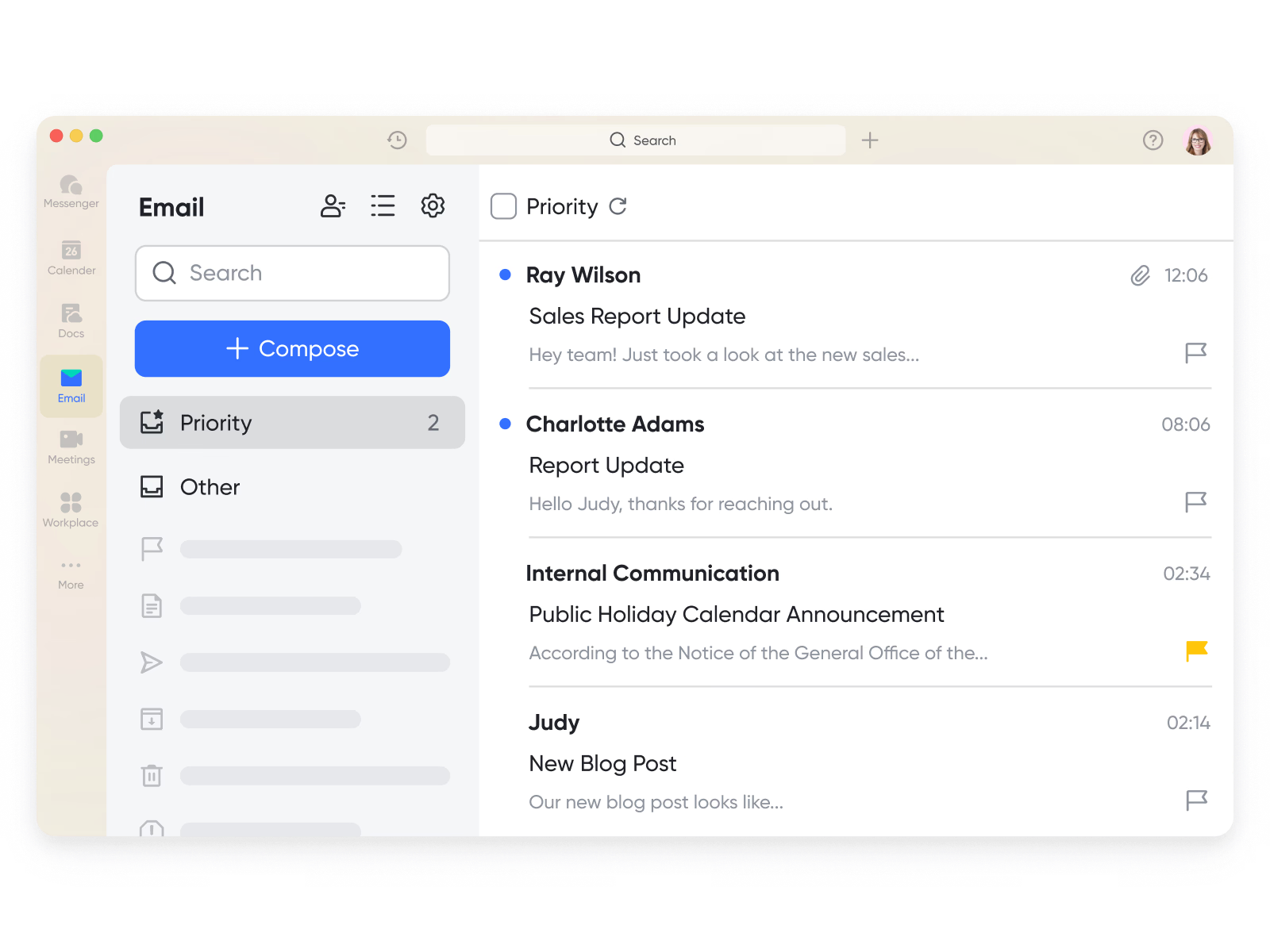
- Email and approvals: Lark Mail & Lark Approval
Lark Mail functions as a professional email client that syncs across devices while combined into the wider Lark workspace. Emails can be shared into chat for quick collaboration or linked with Docs for content review. On top of this, Lark Approval streamlines compliance workflows by routing campaign drafts or assets through a structured approval process. Automated notifications ensure nothing goes live without the necessary sign-offs. This reduces risks and keeps campaigns consistent with brand and regulatory standards.
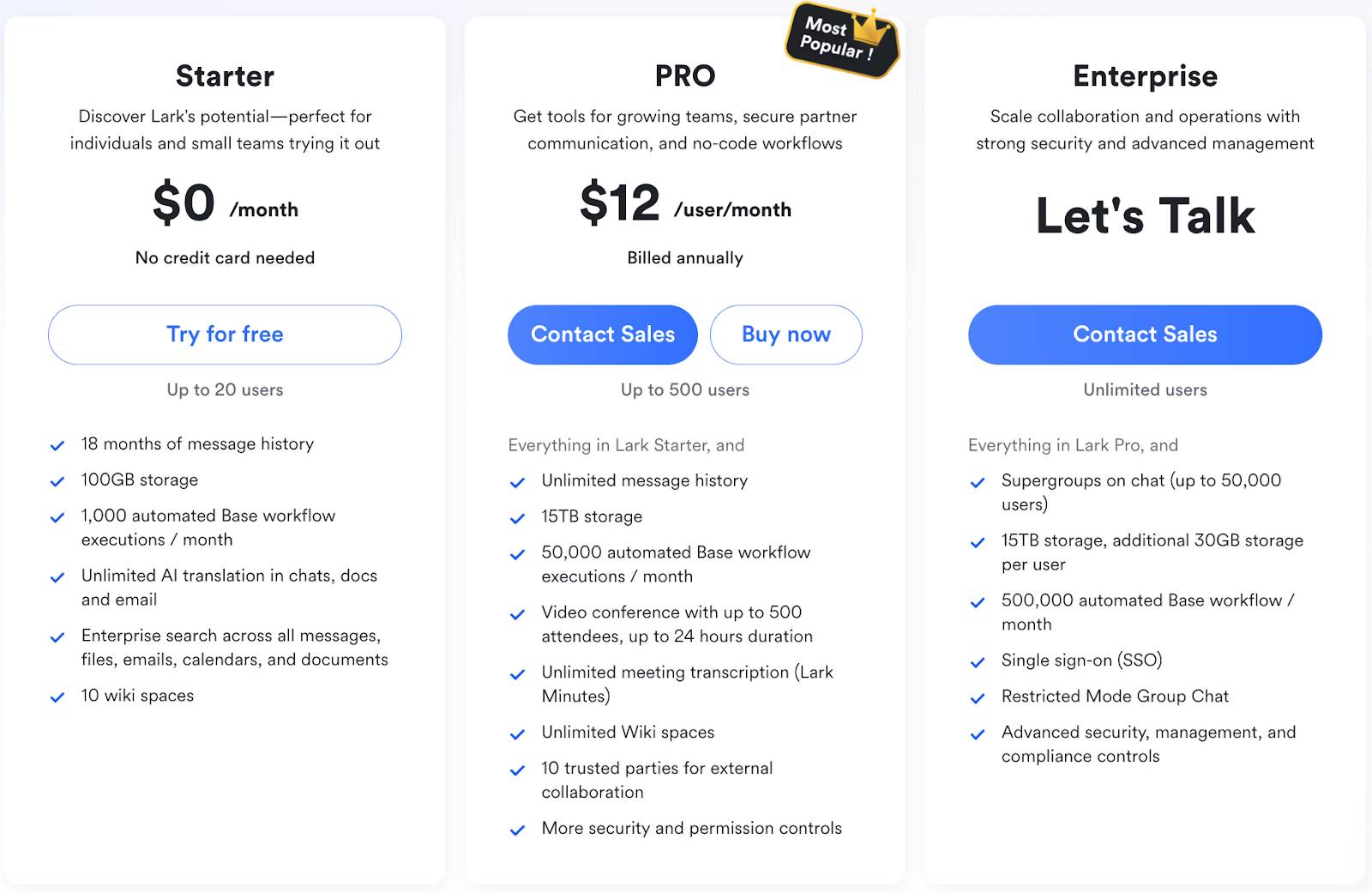
- Free: Includes a comprehensive suite of 11 free tools like Base, Messenger, Calendar, unlimited AI translation in chats and more, 100 GB of cloud storage, task management, and collaborative docs for up to 20 users.
- Pro: Starts at $12 per user/month, offering more storage, advanced features, and increased administrative controls.
- Enterprise: Custom pricing for larger organizations requiring advanced security and dedicated support.
Best for: SMBs looking to consolidate multiple tools into one collaboration-first marketing automation platform.
Pros
- Offers a comprehensive free plan suitable for startups and growing SMBs.
- Provides a unified hub combining email, chat, docs, approvals, and campaign tracking.
- Enables real-time collaboration that speeds up content creation and campaign execution.
- Scales easily as businesses expand, with advanced features for larger teams.
- Reduces tool overload, saving costs on separate marketing and collaboration apps.
Cons
- The platform’s wide range of features may feel overwhelming to first-time users.
- Advanced customization requires time for setup and adoption.
2. Mailchimp: email marketing automation software
Mailchimp is one of the most popular names in small business marketing software, known for making email automation accessible to beginners and growing teams. Its user-friendly design, free tier, and strong analytics make it a go-to tool for SMBs starting their digital marketing journey. Beyond newsletters, Mailchimp supports audience segmentation, automation workflows, and customer journeys. With integrations across e-commerce and CRM systems, it connects marketing with sales and customer data. For small businesses looking to scale email efforts quickly, Mailchimp remains a trusted choice in 2025.
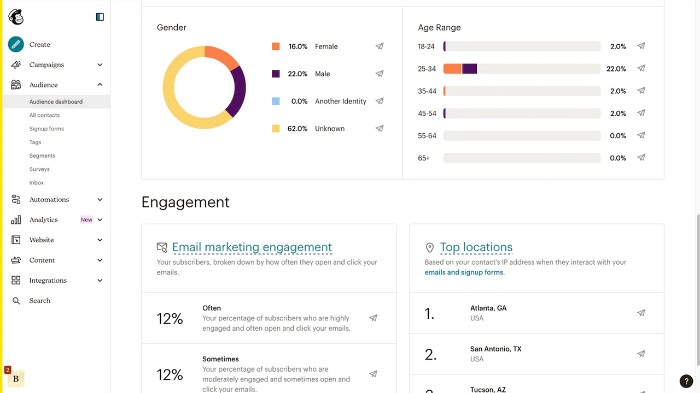
Image source: mailchimp.com
Key features:
- Drag-and-drop email builder: Design campaigns easily without coding knowledge.
- Automation workflows: Trigger personalized emails based on user behavior and milestones.
- Audience segmentation: Group subscribers by demographics, purchase history, or engagement.
- Analytics dashboard: Track open rates, click-throughs, and conversions to optimize campaigns.
- E-commerce integrations: Connect with platforms like Shopify, WooCommerce, and BigCommerce.
Best for: Freelancers and SMBs that want easy-to-use email marketing automation with strong analytics.
Pros
- Beginner-friendly interface that simplifies campaign creation.
- Offers a free plan with essential features for small businesses.
- Provides detailed analytics for tracking campaign performance.
- Supports a wide range of third-party integrations.
- Strong deliverability rates to ensure emails reach inboxes.
Cons
- Pricing escalates quickly as contact lists grow larger.
- Advanced automation features can be limited compared to specialized platforms.
3. Brevo (Sendinblue): email platforms & SMS
Brevo, formerly Sendinblue, has become one of the most reliable email platforms for small businesses, offering affordable multi-channel marketing. It allows SMBs to combine email campaigns with SMS, WhatsApp, and transactional messages in one system. Its built-in CRM helps small businesses track and manage customer relationships alongside their marketing. With flexible pricing, even budget-conscious teams can access advanced tools. Brevo is a practical choice for SMBs that want value-driven automation without breaking the bank.
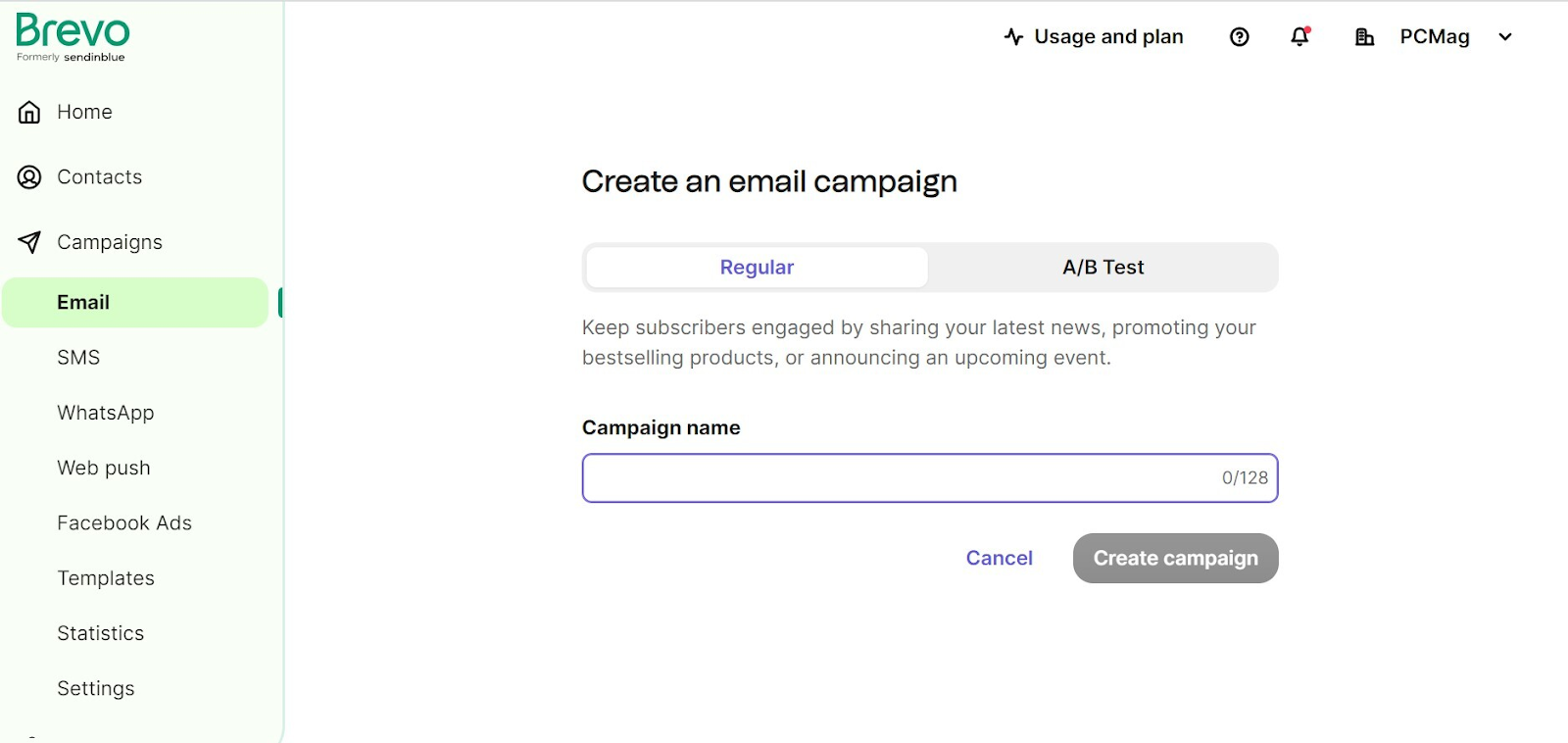
Image source: brevo.com
Key features:
- Email and SMS campaigns: Run email, SMS, and WhatsApp campaigns from a single dashboard.
- Built-in CRM: Manage contacts, segment lists, and track customer engagement.
- Marketing automation workflows: Automate welcome emails, re-engagement campaigns, and follow-ups.
- Transactional emails: Send order confirmations, receipts, and shipping updates automatically.
- Flexible pricing tiers: Affordable plans, including a free tier with 300 daily emails.
Best for: SMBs seeking cost-effective multi-channel automation with email, SMS, and CRM in one tool.
Pros
- Very affordable, especially compared to larger marketing software platforms.
- Multi-channel communication keeps customers engaged across email and SMS.
- Built-in CRM simplifies customer management for small teams.
- Offers a generous free tier for startups and growing SMBs.
- User-friendly interface makes campaign setup easy for beginners.
Cons
- Analytics and reporting are less detailed than some premium competitors.
- Interface can feel less polished for advanced users.
4. Flodesk: design-first email marketing tool for creators & small businesses
Flodesk is a design-first email marketing platform built specifically for small businesses, solopreneurs, and creators who want professional, on-brand emails without a design team. Founded in 2019 by Rebecca Shostak and Martha Bitar, Flodesk is bootstrapped and serves over 100,000 businesses globally. Unlike most email platforms that treat design as an afterthought, Flodesk is built around your visual identity — your fonts, colors, and brand assets shape every email, form, and sale. The platform maintains approximately 99% deliverability, nearly 10 points above the industry average, and has confirmed that image-rich, beautifully designed emails do not negatively impact inbox placement.
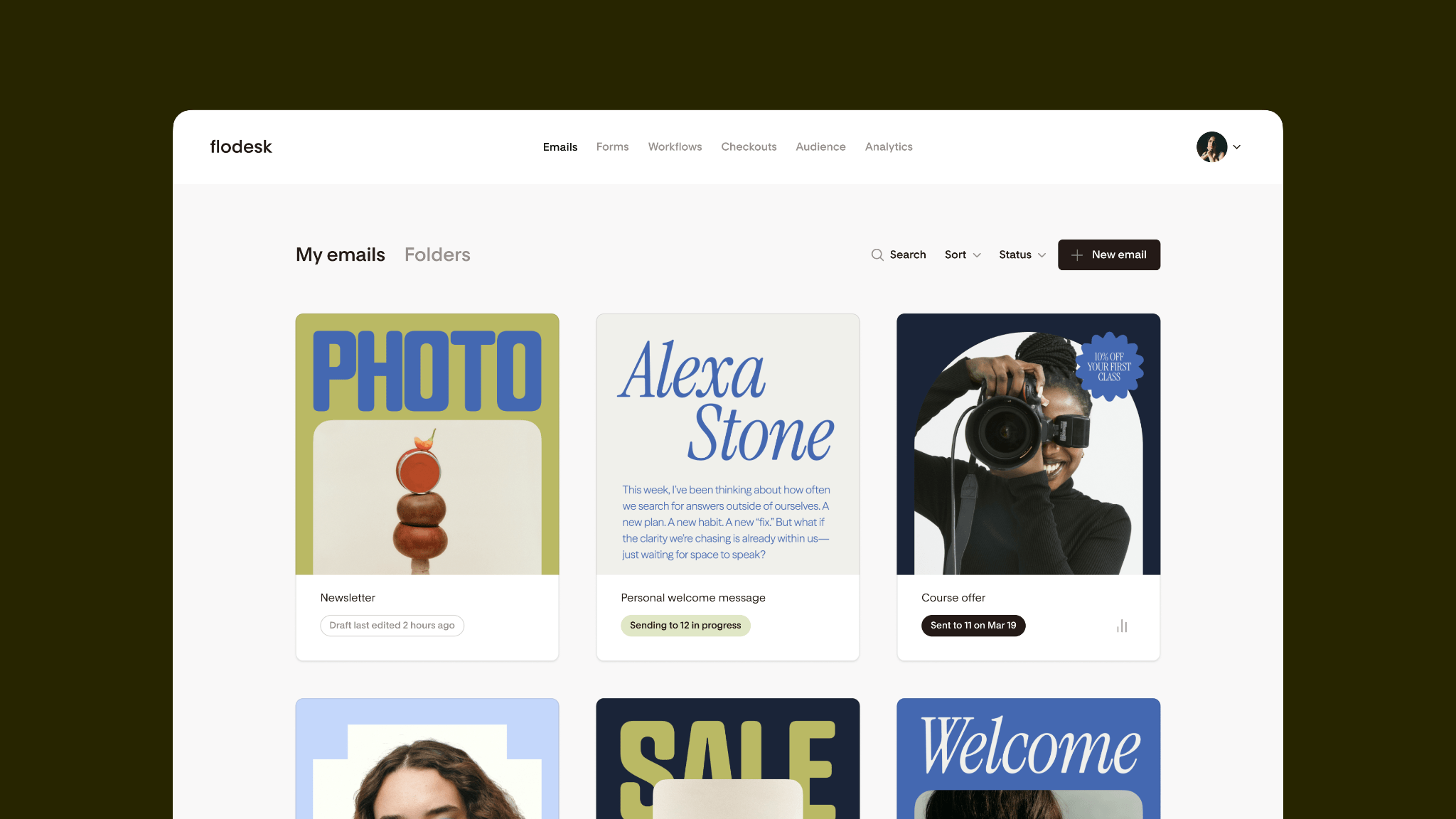
Image source: flodesk.com
Key features:
- Visual automation builder: Create complex, multi-step workflows with drag-and-drop functionality.
- Lead scoring: Prioritize prospects based on engagement and readiness to buy.
- Advanced segmentation: Target audiences with highly specific, behavior-driven campaigns.
- Integrated CRM: Align sales and marketing to manage pipelines more effectively.
- Site and event tracking: Trigger automations based on website visits and user actions.
Best for: SMBs that need advanced automation, segmentation, and CRM linkage for complex customer journeys.
Pros
- Offers some of the most powerful automation tools for small business marketing.
- High deliverability rates ensure emails land in customer inboxes.
- Integrates CRM and email to align sales and marketing efforts.
- Advanced segmentation enables hyper-targeted campaigns.
- Provides hundreds of pre-built automation templates to speed up setup.
Cons
- Pricing can rise quickly as contacts and advanced features are added.
- The platform has a steeper learning curve for beginners.
Pricing
4. ActiveCampaign: automation software for small businesses
ActiveCampaign is a leading choice for SMBs looking to scale with advanced automation. Known for its powerful workflows and CRM features, it helps small businesses create personalized customer journeys with ease. As one of the most trusted tools for SMB marketing automation, ActiveCampaign connects email, sales, and customer data seamlessly. Its segmentation and lead scoring features make it ideal for businesses aiming to nurture leads more strategically. For SMBs ready to go beyond basic campaigns, ActiveCampaign offers the sophistication of enterprise platforms at an SMB level.
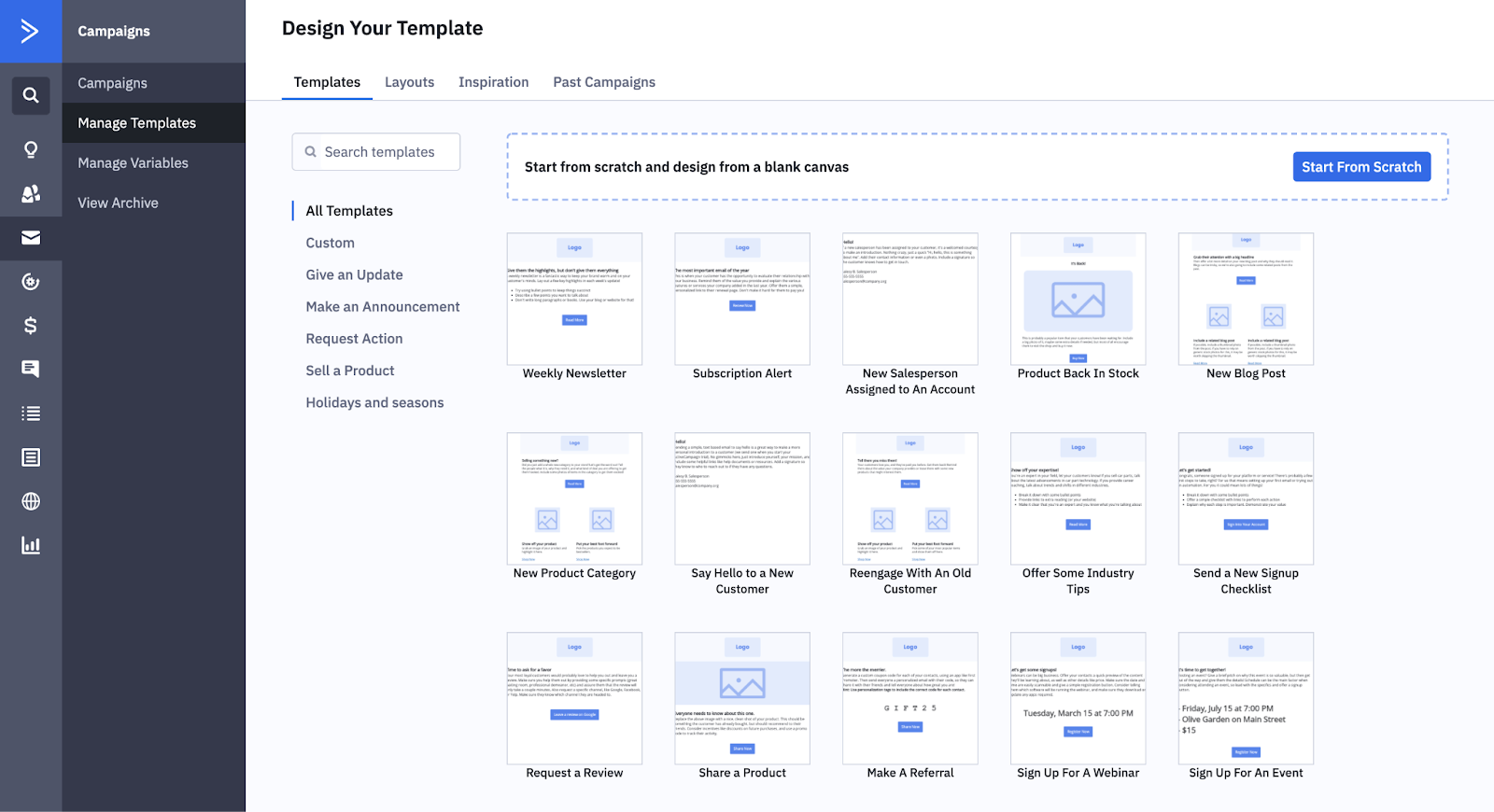
Image source: activecampaign.com
Key features:
- Visual automation builder: Create complex, multi-step workflows with drag-and-drop functionality.
- Lead scoring: Prioritize prospects based on engagement and readiness to buy.
- Advanced segmentation: Target audiences with highly specific, behavior-driven campaigns.
- Integrated CRM: Align sales and marketing to manage pipelines more effectively.
- Site and event tracking: Trigger automations based on website visits and user actions.
Best for: SMBs that need advanced automation, segmentation, and CRM linkage for complex customer journeys.
Pros
- Offers some of the most powerful automation tools for small business marketing.
- High deliverability rates ensure emails land in customer inboxes.
- Integrates CRM and email to align sales and marketing efforts.
- Advanced segmentation enables hyper-targeted campaigns.
- Provides hundreds of pre-built automation templates to speed up setup.
Cons
- Pricing can rise quickly as contacts and advanced features are added.
- The platform has a steeper learning curve for beginners.
5. Zoho Campaigns: budget marketing software for SMBs
Zoho Campaigns is part of the wider Zoho ecosystem, designed to give SMBs affordable yet powerful email marketing tools. It focuses on simplicity and cost-efficiency, making it one of the most accessible options in the market. As a practical marketing management software for small business, it helps teams manage campaigns, track performance, and connect with customers without overspending. With seamless integration into Zoho CRM and other Zoho apps, it’s particularly effective for SMBs already using the Zoho suite. For small teams with limited budgets, Zoho Campaigns delivers solid value.
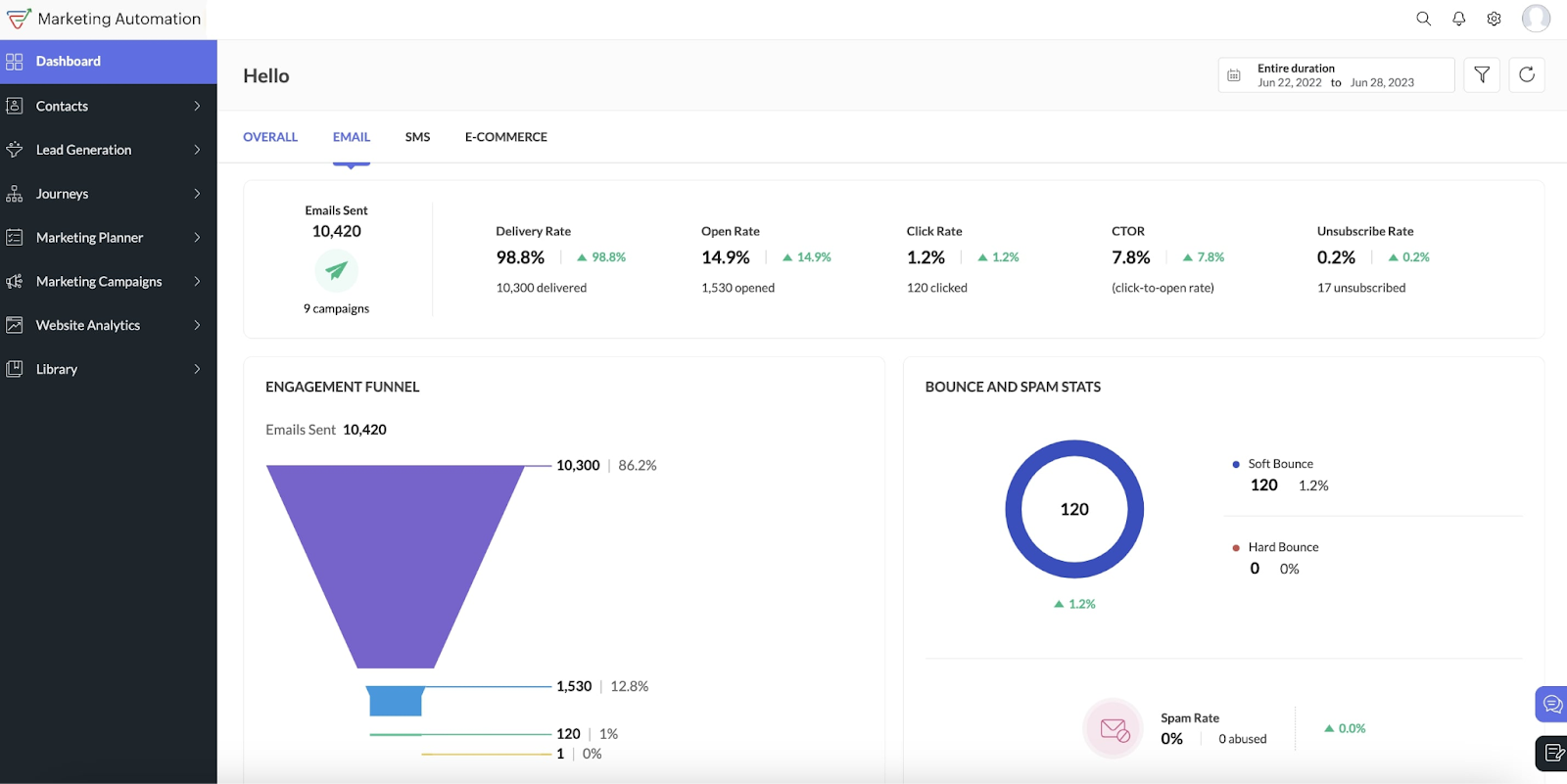
Image source: zoho.com
Key features:
- Email campaign builder: Create and send professional campaigns with drag-and-drop templates.
- CRM integration: Sync directly with Zoho CRM for unified sales and marketing.
- Automation workflows: Set up autoresponders and drip campaigns with ease.
- Advanced reporting: Track performance with open rates, CTR, and ROI metrics.
- Affordable pricing plans: Budget-friendly tiers that suit startups and growing SMBs.
Best for: SMBs already using the Zoho suite that want low-cost, easy-to-manage marketing software.
Pros
- Highly affordable, ideal for small business budgets.
- Smooth integration with Zoho CRM and other Zoho tools.
- Simple interface makes it beginner-friendly.
- Provides reliable automation for essential marketing tasks.
- Offers detailed analytics to measure campaign performance.
Cons
- Limited integrations outside the Zoho ecosystem.
- Lacks advanced features compared to more robust competitors.
6. Moosend: affordable email automation tools
Moosend is one of the best marketing tools for small business owners who need powerful automation without the high price tag. It focuses on simplicity, affordability, and advanced personalization, making it a great option for startups and lean teams. Moosend helps businesses create automated workflows, manage lists, and track campaign results with ease. Its budget-friendly pricing makes it attractive to SMBs that want enterprise-level features at small business costs. For companies just starting with marketing automation, Moosend offers the perfect balance of value and performance.
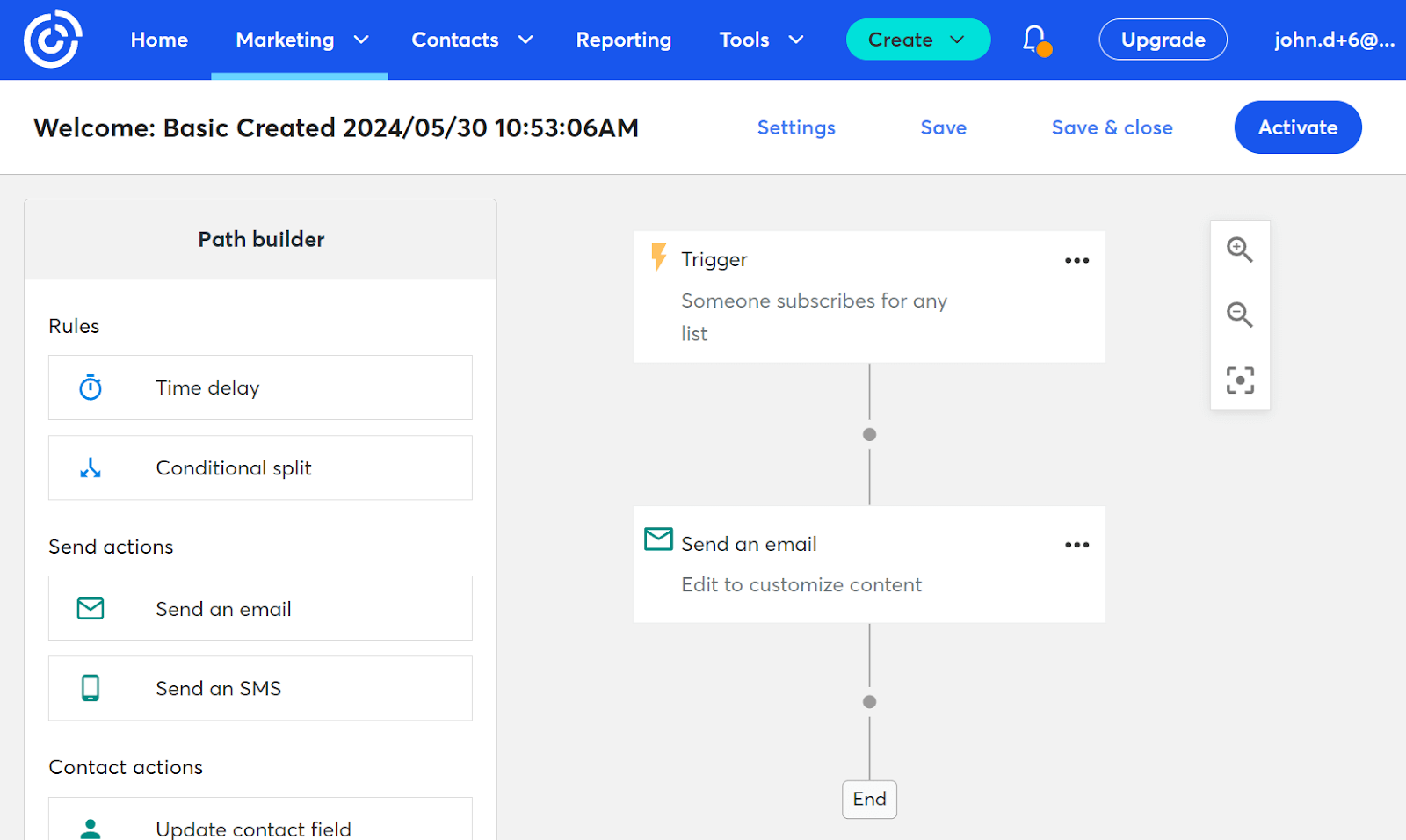
Image source: moosend.com
Key features:
- Drag-and-drop editor: Quickly build professional email campaigns without technical skills.
- Automation builder: Create customer journeys with triggers, conditions, and personalized workflows.
- Advanced personalization: Customize content based on subscriber behavior and preferences.
- Analytics and reporting: Track campaign performance with detailed metrics.
- Affordable pricing tiers: Low-cost plans tailored to SMB budgets.
Best for: Cost-conscious SMBs that need automation-rich marketing software at an affordable price.
Pros
- Extremely affordable compared to most competitors.
- Provides advanced automation features, even at entry-level plans.
- Offers easy-to-use design tools suitable for beginners.
- Strong personalization improves customer engagement.
- Transparent, SMB-friendly pricing with no hidden costs.
Cons
- Limited integrations compared to larger platforms.
- Customer support options are less extensive than top-tier competitors.
7. GetResponse: marketing automation service with webinars
GetResponse stands out in the crowded field of marketing automation software for small business by combining email marketing with built-in webinar hosting. This makes it an excellent choice for SMBs that rely on virtual events to engage and convert their audiences. Beyond webinars, GetResponse offers automation workflows, autoresponders, and landing page builders that simplify campaign creation. Its all-in-one design saves small businesses from relying on multiple separate platforms. For companies looking to connect education with marketing, GetResponse provides a unique value proposition.
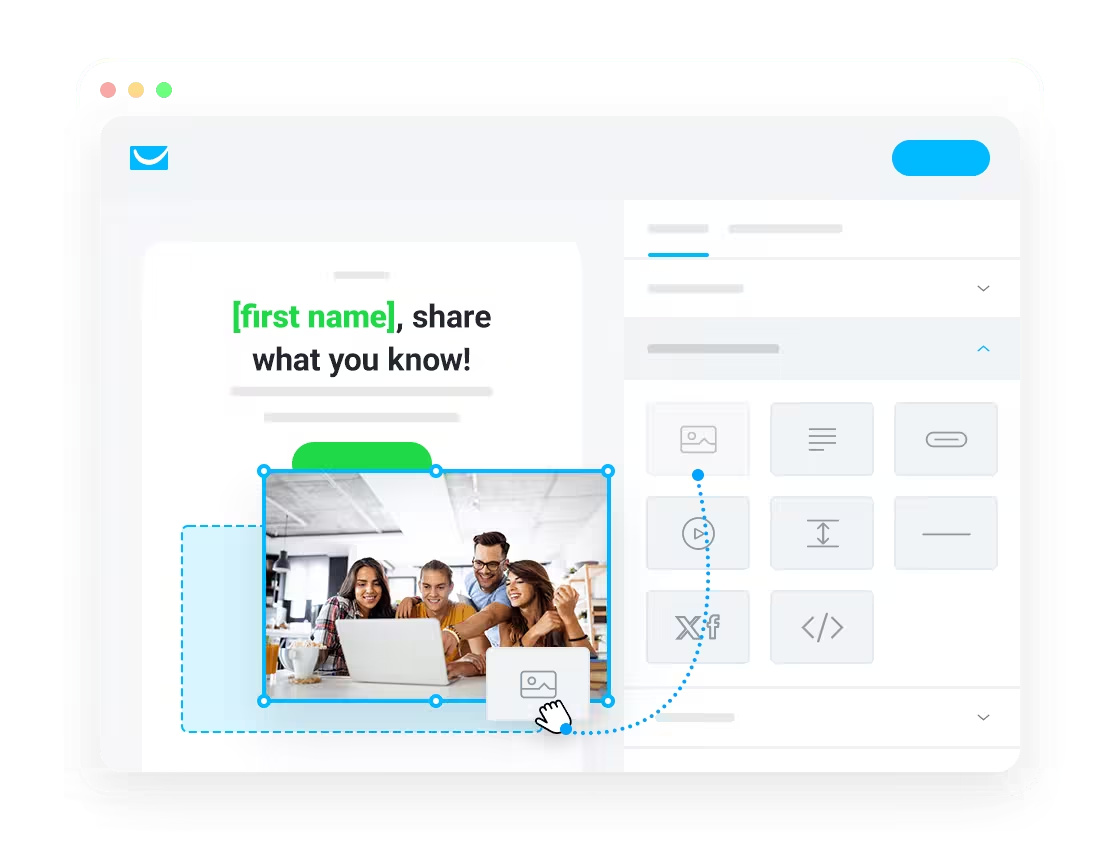
Image source: getresponse.com
Key features:
- Webinar hosting: Run live or on-demand webinars directly within the platform.
- Automation workflows: Trigger personalized campaigns based on customer behavior.
- Autoresponders: Schedule welcome sequences, follow-ups, and nurturing emails.
- Landing page builder: Create lead capture pages to grow your audience.
- Ad management: Manage Facebook, Instagram, and Google Ads from one dashboard.
Best for: SMBs that want to combine webinars with email marketing automation to boost customer engagement.
Pros
- Unique built-in webinar feature not found in most competitors.
- Provides strong automation workflows and autoresponders.
- Offers solid deliverability rates for email campaigns.
- Includes landing page and ad tools for end-to-end marketing.
- User-friendly interface supported by 24/7 customer service.
Cons
- The interface can feel dated compared to newer competitors.
- Pricing increases quickly as subscriber lists grow.
8. Omnisend: event email marketing software for e-commerce
Omnisend has established itself as one of the top event email marketing software options for e-commerce SMBs. Built specifically for online retailers, it combines email, SMS, and push notifications into a single platform. Its automation features allow businesses to set up event-driven campaigns like cart recovery or product launches with ease. With strong integrations for Shopify, WooCommerce, and BigCommerce, Omnisend makes multichannel selling simple. For small businesses in retail, it’s a specialized solution that drives engagement and sales.
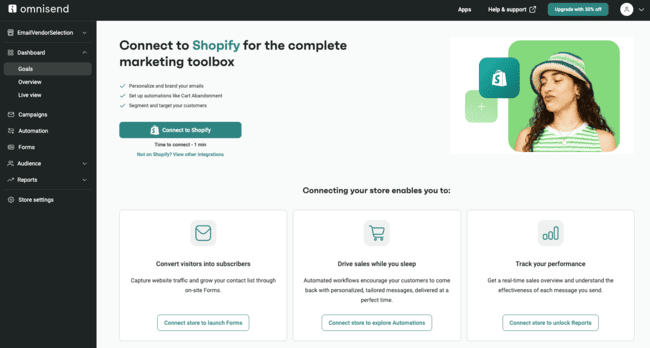
Image source: omnisend.com
Key features:
- Event-triggered automation: Send campaigns based on customer actions such as cart abandonment or product views.
- Multi-channel marketing: Combine email, SMS, and push notifications in one workflow.
- E-commerce integrations: Connect with Shopify, WooCommerce, and Magento for smooth campaign management.
- Pre-built workflows: Access ready-made automations for cart recovery, welcome series, and product recommendations.
- Advanced segmentation: Target customers with tailored offers based on behavior and purchase history.
Best for: Small e-commerce businesses that need multichannel event-driven marketing to boost conversions.
Pros
- Designed specifically for e-commerce, making it highly specialized.
- Strong Shopify and WooCommerce integrations.
- Multi-channel communication improves customer engagement.
- Easy-to-use automation templates save setup time.
- Affordable entry-level pricing for small businesses.
Cons
- Less suited for SMBs outside the retail and e-commerce sector.
- Reporting features are more basic compared to enterprise platforms.
9. HubSpot Starter: sales and marketing software for small businesses
HubSpot Starter provides small businesses with an affordable entry point into one of the most powerful sales and marketing software for small businesses ecosystems. It combines CRM functionality with marketing automation, helping SMBs manage customer relationships and campaigns in one place. With built-in dashboards, workflows, and lead tracking, it simplifies marketing for teams without dedicated technical staff. HubSpot Starter is also scalable, allowing SMBs to start small and upgrade as their business grows. For companies looking for a balance between simplicity and advanced tools, HubSpot delivers.
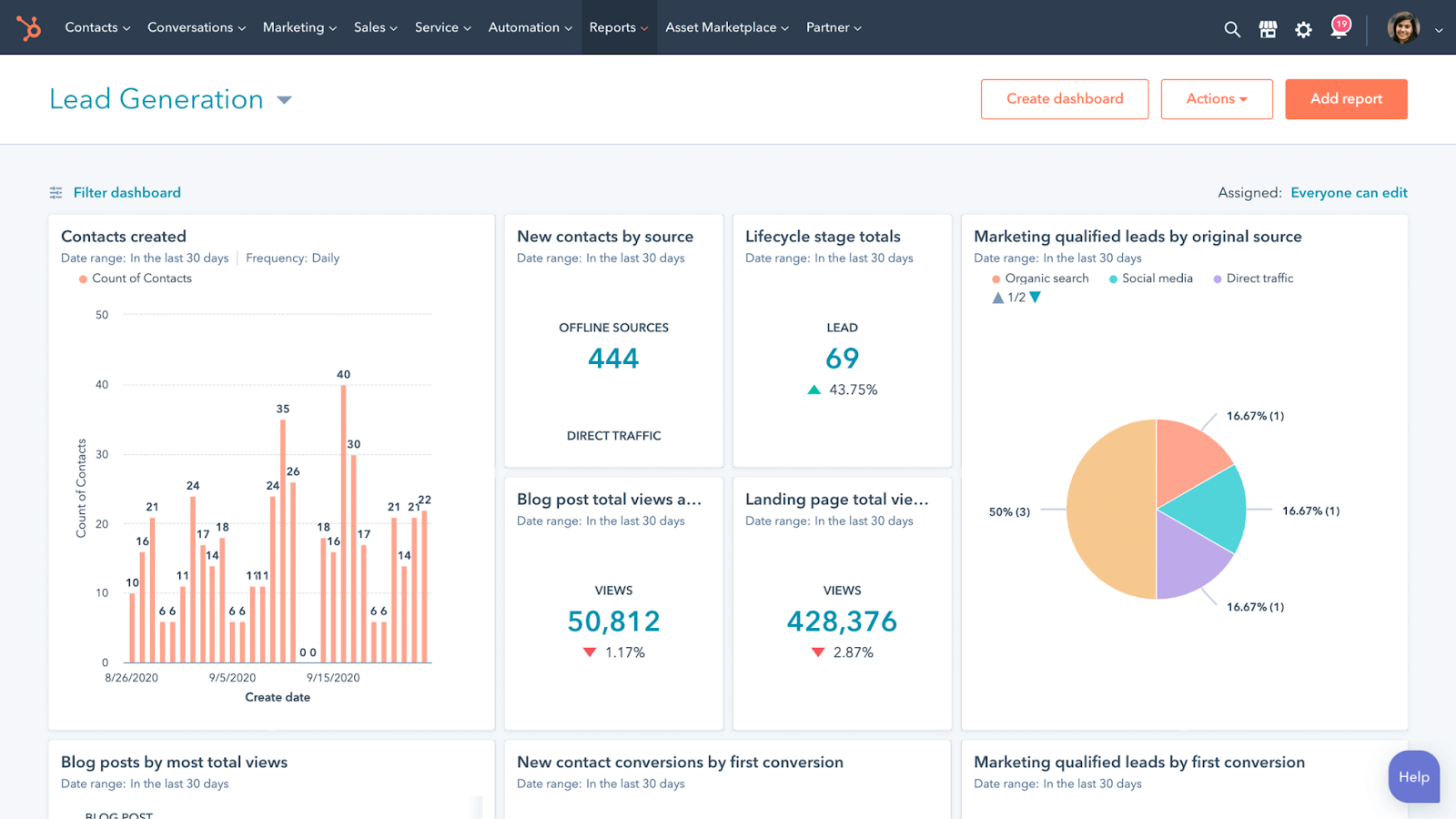
Image source: hubspot.com
Key features:
- CRM integration: Manage contacts, deals, and customer data alongside marketing campaigns.
- Marketing automation: Build workflows for nurturing leads and following up automatically.
- Email marketing tools: Use templates and personalization to run professional campaigns.
- Analytics dashboards: Track campaign performance, ROI, and lead activity in real time.
- Scalable ecosystem: Upgrade easily to HubSpot’s higher tiers as your business grows.
Best for: SMBs that want CRM and marketing automation in one platform with room to scale.
Pros
- Combines sales and marketing features into one integrated system.
- Easy to use for SMBs with limited technical resources.
- Strong analytics dashboards for campaign tracking.
- Entry-level pricing makes it accessible for small businesses.
- Seamless scalability into HubSpot’s more advanced plans.
Cons
- Pricing rises significantly as features and contacts increase.
- Some advanced features are locked behind higher-tier plans.
10. Klaviyo: marketing automation tools for ecommerce SMBs
Klaviyo is one of the most advanced marketing automation tools for small business e-commerce brands, built to deliver highly personalized customer experiences. It excels in segmentation, predictive analytics, and multi-channel messaging, making it a favorite among fast-growing online stores. With strong Shopify, WooCommerce, and Magento integrations, Klaviyo connects store data directly with campaigns. Its AI-driven tools help forecast customer behavior and recommend tailored products. For SMBs focused on scaling e-commerce, Klaviyo brings enterprise-level personalization within reach.
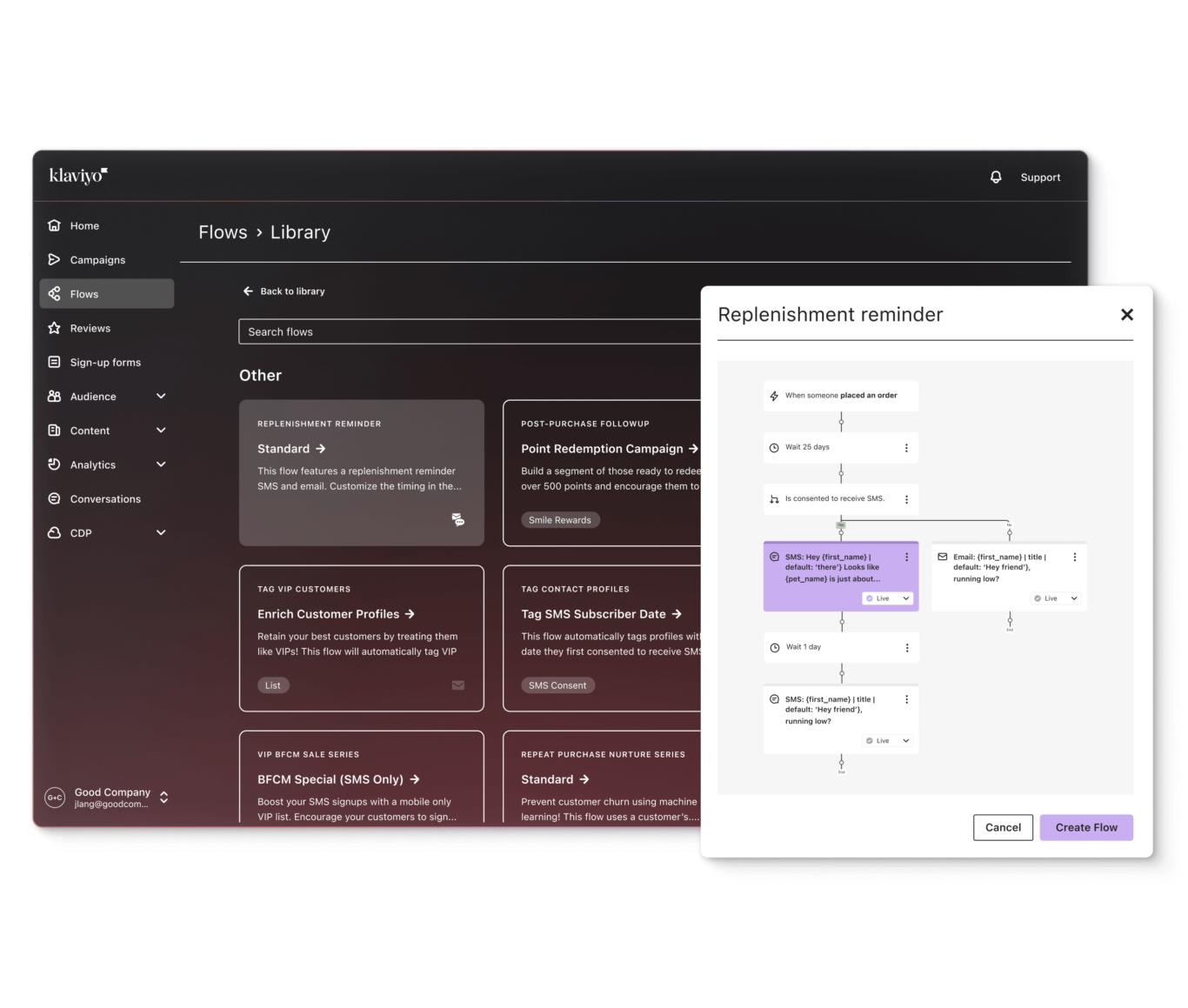
Image source: klaviyo.com
Key features:
- Advanced segmentation: Target customers based on purchase history, behavior, and demographics.
- Automation flows: Access pre-built templates for abandoned carts, product follow-ups, and re-engagement.
- Predictive analytics: Use AI to forecast churn risk and customer lifetime value.
- Multi-channel marketing: Run email and SMS campaigns in one platform.
- E-commerce integrations: Sync seamlessly with Shopify, WooCommerce, and Magento.
Best for: E-commerce SMBs that want powerful personalization and automation to scale customer engagement.
Pros
- Exceptional personalization features tailored to e-commerce.
- Robust segmentation options improve targeting and engagement.
- Predictive analytics help forecast customer trends.
- Strong e-commerce integrations with major platforms.
- Scales well for high-growth online stores.
Cons
- Pricing can become expensive as contact lists grow.
- Has a steeper learning curve for SMBs new to automation.
Tips to maximize marketing automation tools for small businesses
Maximizing the value of small business marketing software isn’t just about using the features—it’s about applying them strategically. Here are practical ways SMBs can get more from automation while keeping workflows simple and effective.
- Automate onboarding and follow-up emails
Automating onboarding emails helps new customers feel welcomed, while follow-up sequences keep them engaged over time. This not only saves time but also ensures consistency in customer communication. With Lark Mail, businesses can set up structured communication while linking messages with Lark Base workflows to track follow-ups across teams.
- Repurpose content across multiple channels
Creating fresh content for every campaign can be overwhelming for lean teams. Repurposing blog posts, presentations, or social content into emails or ads extends the value of your work. Lark Docs makes this process easy by letting teams collaborate in real time on campaign drafts and adapt the same content for different formats.
- Share campaigns internally for fast approvals
Delays often occur when campaigns sit in review queues for too long. Streamlining approvals ensures your messages reach customers on time. With Lark Approval, marketing teams can route campaign drafts directly to managers for sign-offs, track progress, and receive instant notifications once a decision is made.
- Use analytics to optimize ROI
Tracking performance metrics like open rates, conversions, and ROI is critical for improving campaigns. Data-driven insights allow small businesses to refine what works and drop what doesn’t. With Lark Sheets, teams can centralize performance data, build dashboards, and visualize campaign outcomes for better decision-making.
- Keep tech stacks lean with marketing management software for small businesses
Too many disconnected apps can slow down campaigns and create silos. Leaning on unified marketing management software for small businesses reduces complexity and saves costs. Lark’s all-in-one platform—combining Mail, Messenger, Calendar, Docs, and Base—eliminates tool overload, giving SMBs a single workspace to manage everything from campaigns to collaboration.
Future of SMB marketing automation
The landscape of smb marketing automation is evolving rapidly, driven by customer expectations and smarter technology. For small businesses, staying ahead means embracing tools that make campaigns more personalized, connected, and efficient. Here are the key trends shaping the future:
- Rise of AI-driven personalization for SMBs
Artificial intelligence is making it easier for small businesses to deliver the right message at the right time. From predicting customer behavior to recommending products, AI is transforming how SMBs build relationships. As these tools become more accessible, even lean teams will be able to create enterprise-level personalization at scale.
- Multi-channel campaigns blending email, SMS, and chat
Customers today expect businesses to reach them across multiple channels. The future of automation lies in seamlessly blending email platforms for small businesses, SMS, and chat into a single workflow. This multi-channel approach improves engagement, builds trust, and ensures no opportunity to connect with customers is missed. Platforms like DialMyCalls make this easy, combining voice broadcasts, SMS, and email in one tool with flexible pay-as-you-go pricing ideal for SMBs.
- Consolidation toward unified sales and marketing software for small businesses
Managing separate tools for email, analytics, and customer data is costly and inefficient. The future will favor unified sales and marketing software for small businesses that eliminates silos and reduces tool overload. Consolidation ensures data flows seamlessly, enabling SMBs to measure ROI and scale campaigns without complexity.
How Lark aligns with the future in marketing automation
Lark is designed to meet the evolving needs of SMBs by addressing the very trends shaping the future of marketing automation.
- Unified workspace: Combines AI-powered translation, multi-channel collaboration, and campaign management in one platform.
- Connected tools: Lark Mail manages emails alongside Messenger, while Docs and Base support content creation, campaign planning, and workflow automation.
- Alignment features: Calendar and Meetings keep timelines on track, and Approval ensures campaigns move forward only after structured sign-offs.
- Efficiency & scale: This consolidation reduces tool overload, maintains speed and accuracy, and enables SMBs to work smarter, scale efficiently, and stay future-ready in a competitive digital landscape.
Conclusion
The world of small business marketing software is rich with options, from beginner-friendly tools like Mailchimp to advanced automation platforms like ActiveCampaign and Klaviyo. Each tool brings strengths, but standalone solutions often leave teams juggling fragmented workflows across email, chat, and analytics. For SMBs, this creates inefficiencies and unnecessary costs. Lark offers a different approach—combining email, collaboration, approvals, and project management into one connected hub. With its scalability, SMB-friendly design, and comprehensive free plan, Lark gives businesses the ability to run campaigns smarter and faster. For small teams aiming to maximize impact with fewer resources, Lark is more than just a tool—it’s a growth partner.
FAQs
How does Lark compare with Mailchimp or Zoho Campaigns?
Mailchimp and Zoho Campaigns are excellent for email marketing, offering templates, segmentation, and automation at affordable tiers. However, they primarily focus on email alone. Lark not only provides Lark Mail but also connects it with Messenger, Docs, and Approval, giving SMBs one workspace where campaigns, collaboration, and approvals come together seamlessly.
What’s the role of sales and marketing software for small businesses?
Sales and marketing software helps SMBs unify customer data with campaigns, ensuring leads are nurtured from first contact to conversion. It bridges the gap between marketing and sales, improving ROI. Lark fits into this role by using Base for campaign management, Docs for content, and Mail + Calendar for outreach, making it a complete sales and marketing software for small businesses.
Can Lark replace multiple SMB marketing tools?
Most small businesses rely on a patchwork of apps for email, chat, project tracking, and approvals. While this works short-term, it creates inefficiency and higher costs. Lark consolidates these functions into one platform—combining Mail, Messenger, Calendar, Docs, Base, and Approval—so SMBs can replace multiple tools with a single, unified system.
How can automation help lean teams grow faster?
Automation allows small teams to focus on strategy while routine tasks like onboarding, reminders, or follow-ups run in the background. This makes scaling campaigns much easier with fewer people. Lark supports this through Base automation workflows and Approval automation, helping teams reduce manual work while keeping campaigns on track.
Which SMB marketing software is easiest for beginners?
Beginner-friendly platforms like Mailchimp or Moosend make it simple to design campaigns with templates and drag-and-drop editors. But as teams grow, they often outgrow these tools. Lark balances ease of use with scalability—its Docs for drafting, Messenger for collaboration, and Mail for campaigns make it intuitive for beginners, while automation and workflows support long-term growth.
Related reading
Table of contents
Start using Lark today

Manage all your work in one place
Boost team efficiency by 10x
Save up to 70% on software costs
Table of contents
Start using Lark today
Manage all your work in one place
Boost team efficiency by 10x
Save up to 70% on software costs
Keep reading








2026 Lark Technologies Pte. Ltd.
Headquartered in Singapore with offices worldwide.






Explore: