Nowadays, project management should consider more than just tracking tasks. You need to work together with people from engineering, marketing, and sales. These people often speak different 'languages' in terms of habit and goal.
Teams consisting of people with different interests can create new solutions. However, without management, they can create a lot of problems. In some situations, a complex project can quickly become disorganized and hard to manage.
The trick is to handle the differences between departments so problems do not happen. You should bring together the different work models, order and adapt different priorities, and create the necessary understanding between the designer and the developer, the salesperson, and the limitations of the product.
This is a guide that will help you successfully manage teams, keeping everyone focused so that all can work efficiently.
Outline goals and how to measure success
The most important part of any project is to make a plan first. Usually, it helps stop "scope creep," which means the project keeps growing without clear limits or clear goals.
Someone wants to add another feature. Someone wants to add a different market. So, at this point, the project is not likely to be done only overdue but also well above budget. Starting projects is about creating a firm foundation.
Everyone should know what success looks like. If engineers want no bugs and marketing wants to launch quickly, that creates a disconnect. One team is going left, and the other is going right. You want everyone on the same team, on the same path.
Make sure everyone uses the same types of goals. Use SMART criteria to develop goals that are Specific, Measurable, Achievable, Relevant, and Time-bound. Instead of saying "improve the app," say "reduce user churn by 10% by September." When a goal has a measurable outcome, it is hard to argue. Precise goals simplify the daily decision-making process for all the players.
Get stakeholders' buy-in first
Stakeholders are all the people who have a say in the work that is to be done. This includes upper management, the owners of the divisions, and sometimes even the clients. If you leave them out for too long, they can put a stop to you. If they contribute too late in the game, they will feel left out and ignored.
Engage stakeholders during the planning stages. Find out what their concerns are before building anything. As Kos Chekanov, CEO at , says, "Alignment is not a one-time event. It is a continuous pulse. It keeps the project's heart in sync with the company's vision." When people are involved in the planning process, they are more likely to support your efforts. They become your collaborators instead of your hurdle.
Define milestones and deliverables
Managing a complex project is like running a marathon. It is a mistake to fixate only on the finish line. If the end of the project is six months away, people will become unfocused and wait until the deadline nears. It is important to break the process down into a series of smaller sprints.
Establish milestones. Completing a first draft of a prototype is a milestone. Securing legal approval is another. These small wins are great for the morale of the group. They give people on the team a reason to celebrate.
Each milestone should have a defined "deliverable." A deliverable is a digital object that you can show. It shows that the work is done and that it meets the required standards.
Strengthen your team's performance with Lark now
Clarifying roles and responsibilities within teams
When teams consist of individuals from different organizations, roles can become unclear. People can accidentally duplicate work. Alternatively, people can overlook important tasks, believing that someone else is addressing them. This situation can waste resources and cause deadlines to be missed.
Taking responsibility and assigning tasks
When teams do not have an example, progress is slow. It is important that people describe being assigned tasks, and that there is no sharing of responsibility for one item. Many successful teams structure their work in a for :
- Responsible: This refers to the person completing the work. These are the doers.
- Accountable: This is a person who is responsible for ensuring that the work is done correctly. This person approves the work.
- Consulted: These are individuals who are responsible for providing input and guidance.
- Informed: These are individuals who simply need to know the status of the work. They have no responsibilities related to the work.
When everyone knows their roles, the team runs like a well-oiled machine. There are no "I thought that you were doing that" incidents. Everyone knows their contribution.
Identifying decision hierarchy
Projects tend to break down when there are no decision-makers. Does the designer get to choose the color, or the manager? If every decision requires a collaborative effort, project closures will be delayed.
Determine who concludes what in what domains. Delegate to your leads to call it. If it's a tech issue, it's a call by the lead dev. If it's a brand issue, it's a call by the lead creative. You don't need a meeting for every single update. You just need one 'yes'/'no' to allow progress.
Implement escalation procedures
Occasionally, teams reach a deadlock. Two teams might disagree and become stuck; maybe marketing wants a certain capability that engineering considers unattainable. You need a way to reach out for assistance that does not involve screaming.
Don't allow disputes to drag on for weeks. Make a rule: if a disagreement lasts more than two days, it goes to the project lead. This is not about punishing someone. It is about getting a choice to enable movement on the project. It reduces the chances of bottlenecks, and people stay on good terms. It sustains a positive atmosphere.
Improve communication and collaboration
Communication is the glue that holds the team together. But more communication is not always better. Excessive messages can be just as damaging as a lack of messages. What you need is communication that is effective and streamlined.
Align cross-functional teams' collaboration with Lark
Unifying tools and channels: Try Lark
The exchange of information gets hindered when some colleagues use emails and others use chat tools. This results in files getting lost in conversations and the need to have a definitive spot for all project information.
Having a "superapp" is becoming an industry standard and allows for comprehensive, powerful tools.
is an all-in-one super app that brings messaging, video calls, document collaboration, file sharing, project management, approvals, and AI-powered workflows into a single platform to support cross-functional teams managing complex projects. No more app switching and the friction of looking for meeting links in emails, or searching for tasks across several tools.
enables real-time communication through group conversations and direct messages, helping team members from different departments stay connected and share updates instantly, reducing communication silos.
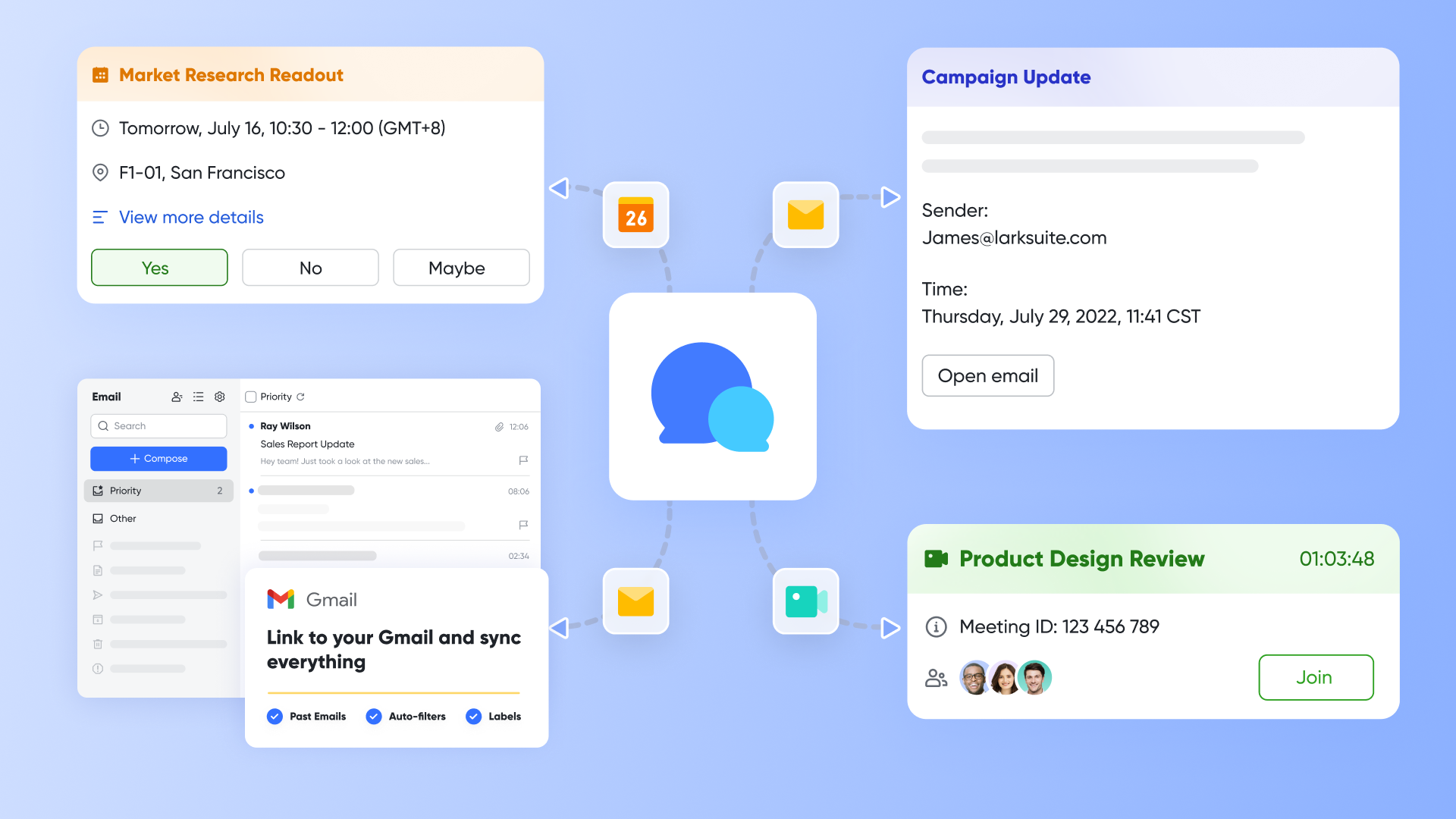
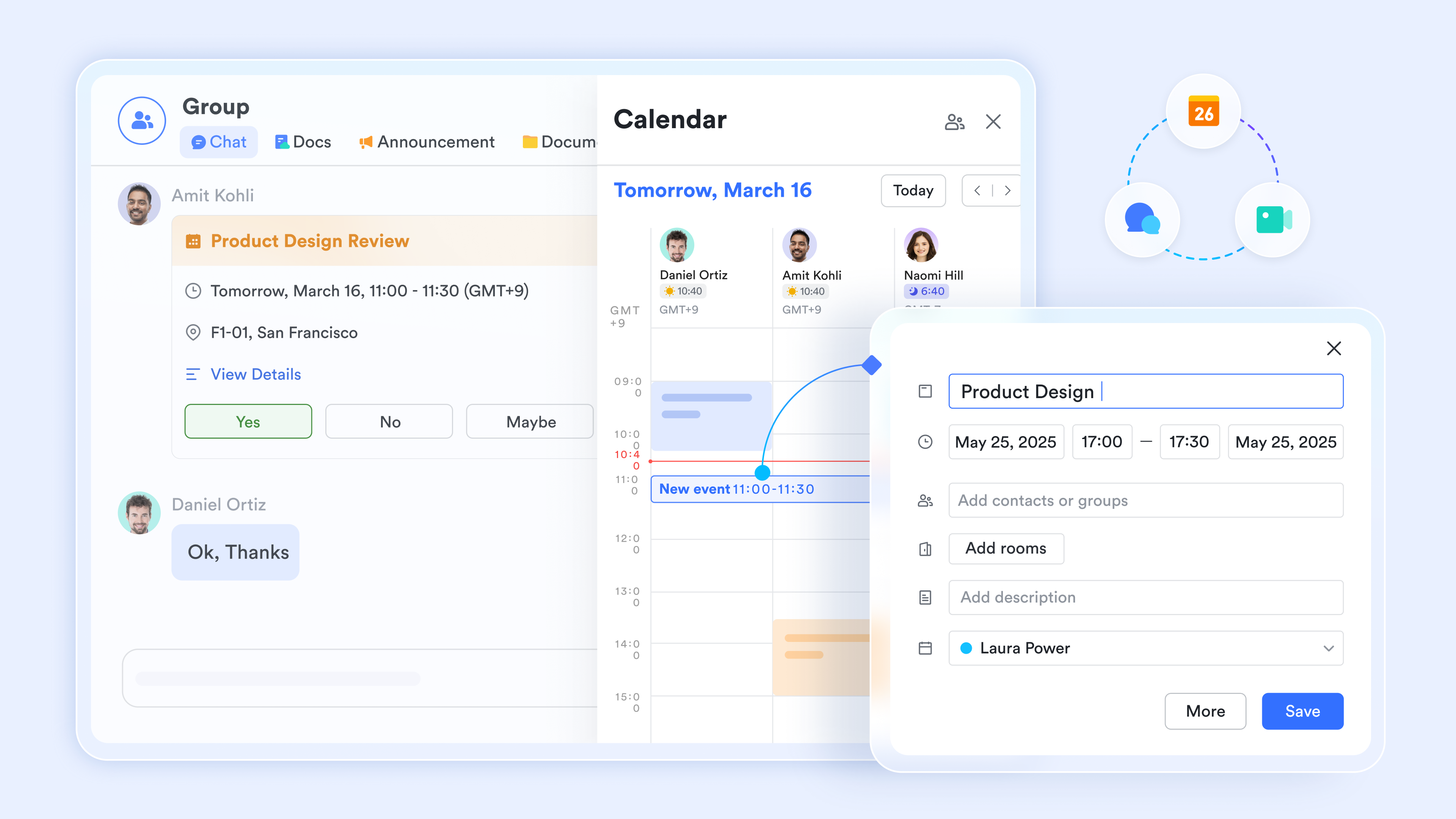
provides high-quality video conferencing with screen sharing and recording capabilities, facilitating effective virtual meetings that keep distributed teams aligned regardless of location or time zone.
Lark Tasks offers robust task management tools to assign tasks, set due dates, track progress, and automate reminders, helping teams coordinate responsibilities and meet deadlines efficiently within complex projects. 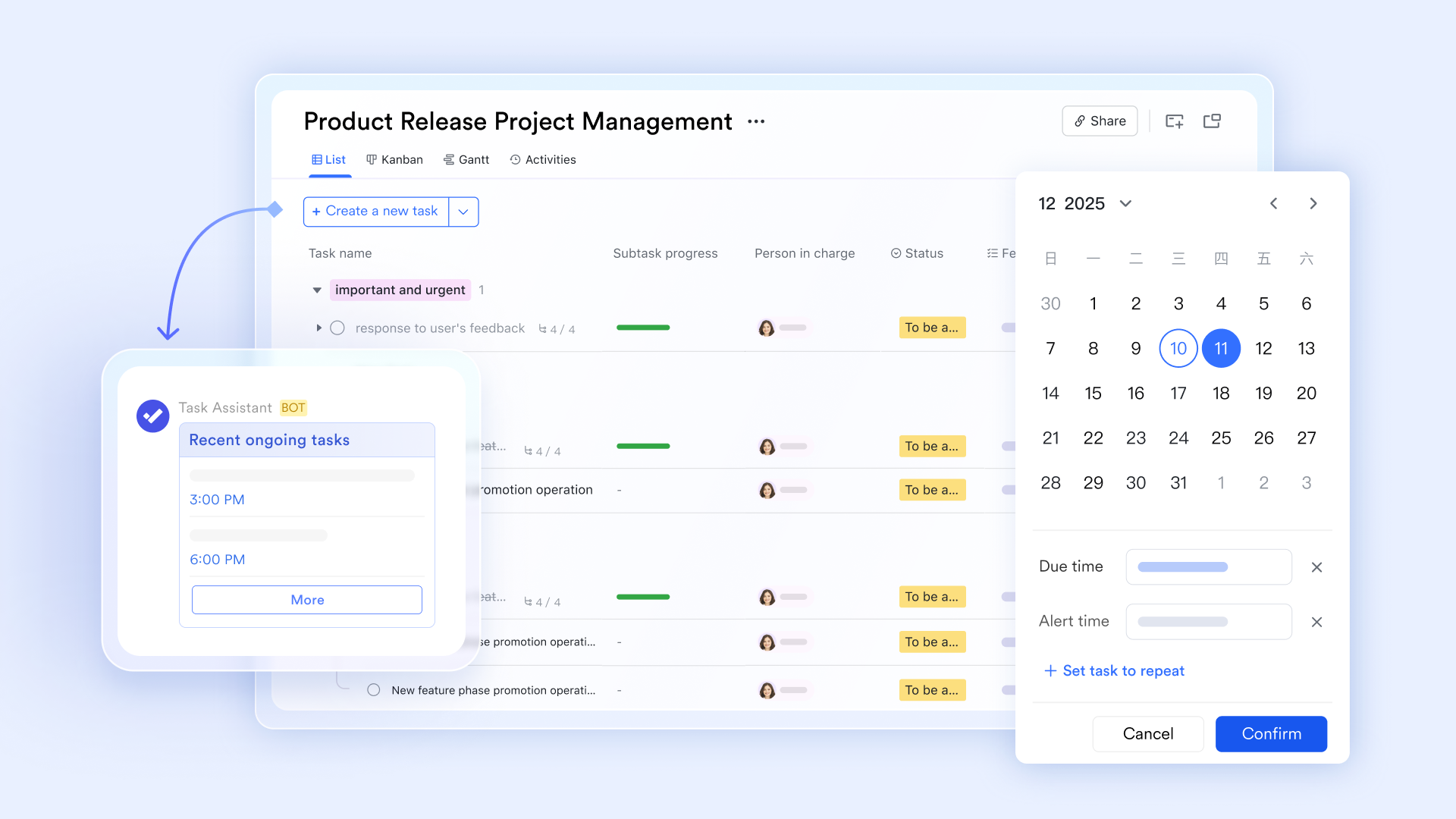
supports cloud-native document and sheet collaboration, enabling multiple team members to co-edit in real time, provide feedback, and maintain version control, which is essential for transparent and agile project planning.
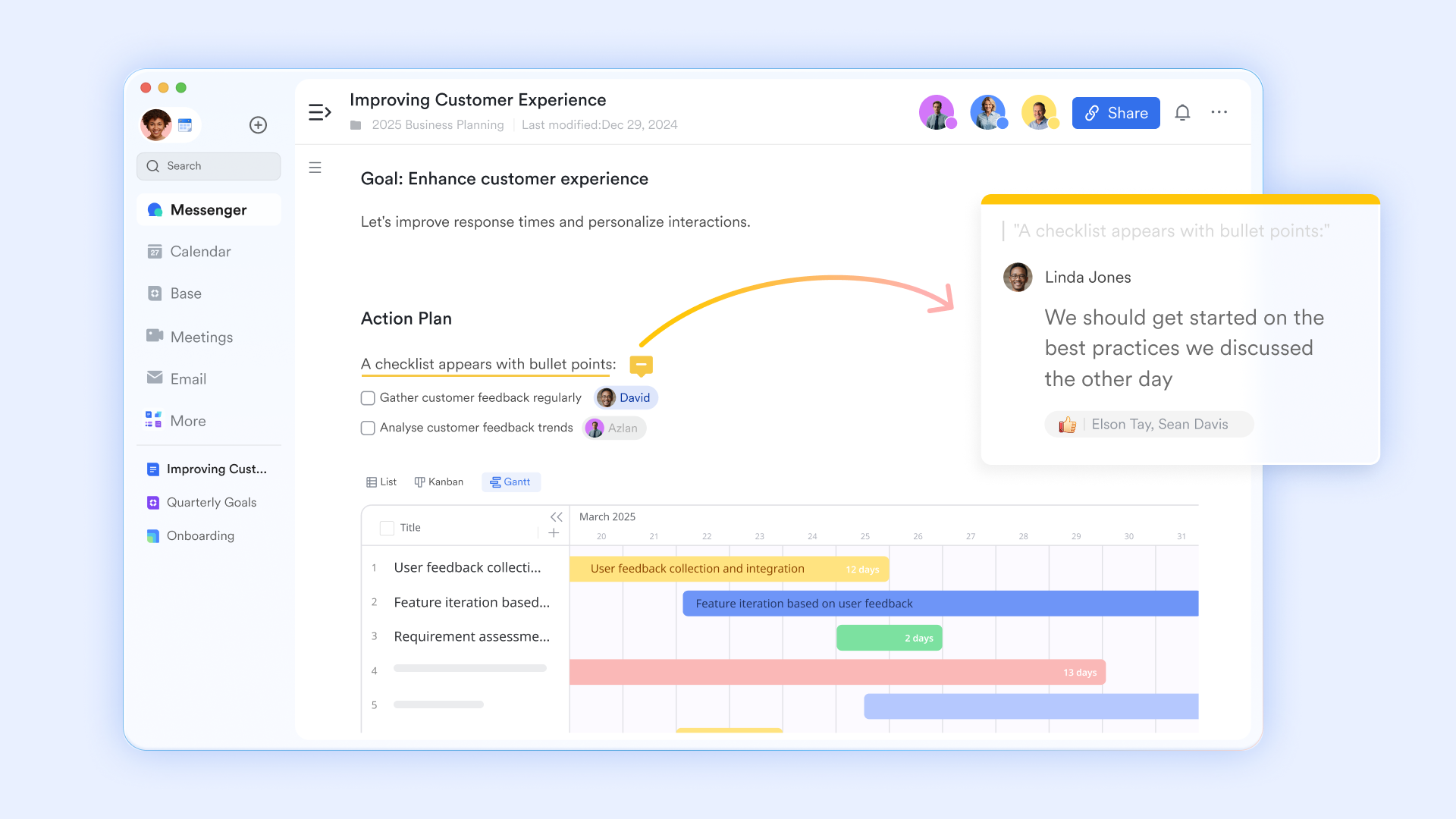
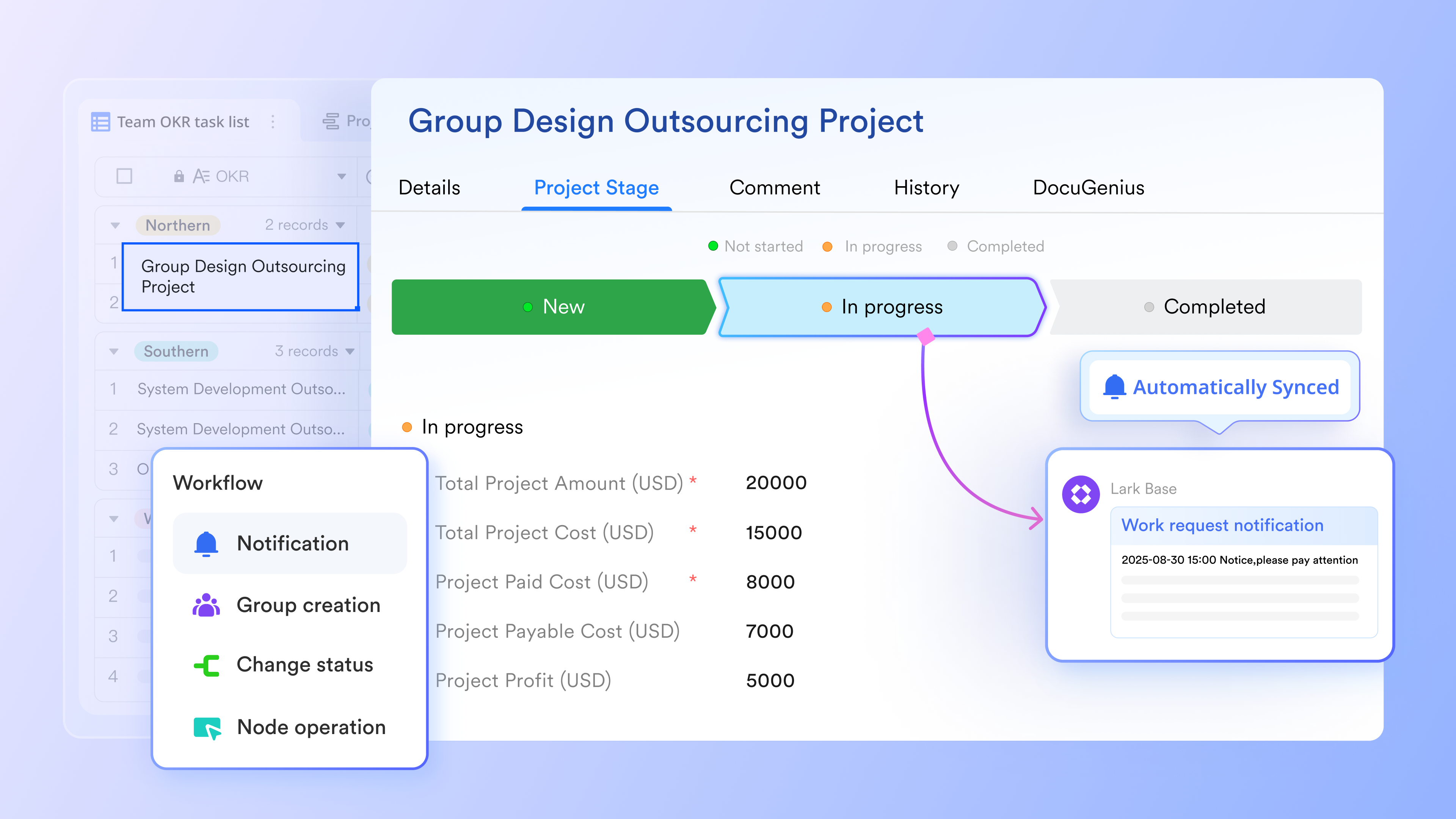
serves as a customizable workspace where teams can organize project data, track workflows, and visualize progress using flexible views and custom fields, making it easier to manage multiple projects and cross-functional dependencies.
unifies email with other collaboration features, allowing users to manage messages alongside tasks and documents without switching apps, streamlining workflows and ensuring timely responses across teams.
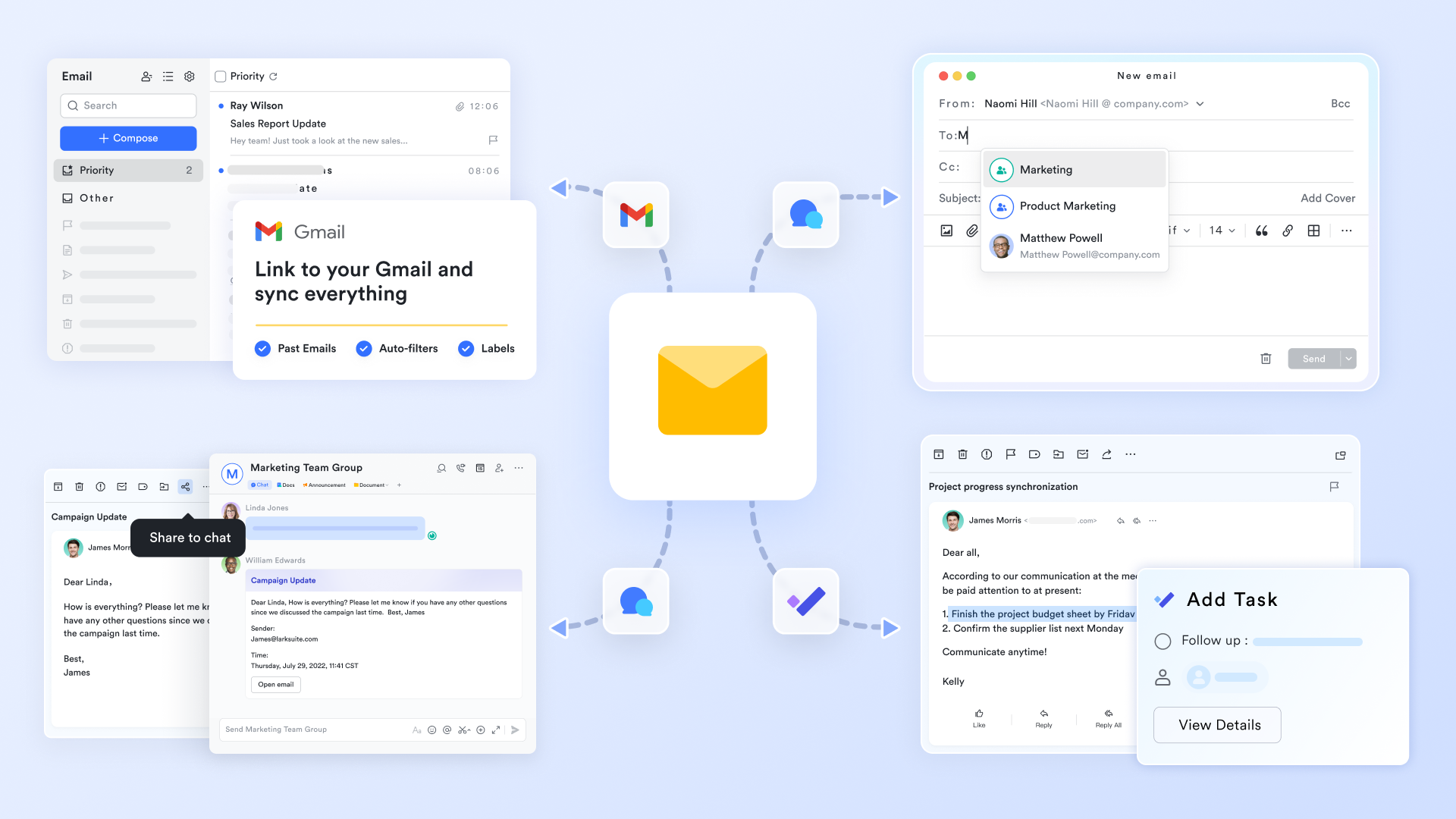
Together, these integrated tools provide a unified platform that enhances productivity, improves team communication, and supports the dynamic needs of cross-functional teams working on complex projects.
:
- Starter plan: that includes 11 powerful tools for up to 20 users. It also comes with 100GB of storage space, 1000 automation runs, AI translations, and more. No credit card needed.
- Pro plan: (billed annually) for up to 500 users. It includes everything in Starter plus group calling for up to 500 attendees, 15TB of storage space, 50,000 automation runs, and more.
- Enterprise plan: for custom pricing. Supports unlimited users and includes even more automation runs and advanced security, compliance, and management features.
For small teams with simple communication needs

18 months message history
1000 Base automation runs/month
2000 rows per table in Base
Most POPULAR
For companies with comprehensive collaboration and management needs
Unlimited message history
500-participant video meetings
50k Base automation runs/month
20k rows per table in Base
For large companies with advanced security and organizational management needs
Get a personalized demo and pricing
Unlimited message history
500-participant video meetings
15 TB storage + 30 GB storage/user
500k Base automation runs/month
50k Base automation runs/month
Most POPULAR
For companies with comprehensive collaboration and management needs
Unlimited message history
500-participant video meetings
50k Base automation runs/month
20k rows per table in Base
Set continuous meetings
Long meetings are demotivating and an absolute waste of time. Try to break the day up with shorter meetings, and do try to hit the bull's eye on the objectives to keep energy levels up. Ask these questions that might help:
"Please tell me what you finished yesterday." "What are your plans for today?" "What are the obstacles keeping you from progressing?"
Make it a point to stay specific and to the point while presenting, including standing while speaking, to help keep the talking pace up. If the subject you want to cover is too lengthy, please do not include it in the main agenda; it is best to arrange a 'breakout' meeting afterwards with only the relevant stakeholders. This way, you are valuing the time of the rest of the group.
Support inter-team collaboration
Trust is formed through misinformation. The involvement of other teams lacking knowledge is what creates suspicion. When the sales team has the product roadmap, they are better positioned to speak with customers. When the developers have the marketing road map, they understand the urgency of the deadlines.
It is important to use a dashboard that is sufficiently transparent to allow the team to see the progress, and it is good for all members to report progress. Maintaining a group mindset when the members keep sight of the end goal and the available tasks is a win-win situation.
The prevailing mindset is that 'us versus them, which is the reason for the collapse of productive cooperation.
Use the correct management method
It is advisable to consider that not all projects are the same; a new application development is not the same as a new office construction. An appropriate methodology to be used should be in accordance with the work style of the team and the nature of the project.
Choose between Agile, Waterfall, and Hybrid
is software-oriented and is focused on iterative development of short timeframes with a flexible approach to requirements and changes.
Waterfall – Strict steps in building construction. One cannot do step five before step one.
Hybrid – A mix. You plan the big dates like a waterfall, but work in fast agile cycles.
Consider your culture when choosing. Avoid imposing a rigid approach on a creative group; they'll be frustrated. On the other hand, don't be overly flexible on a project that has tight legal or safety constraints. Right tool for the right job.
Handle dependencies and timelines
In larger projects, one task often has to wait for another task to be done first. These are called "dependencies." If the first task is late, everything else that needs that first task done is also late. This is the domino effect.
Example: Think about building a house. You can't paint the walls if the drywall isn't up. The drywall can't go up before the electrical wiring is done. If the electrician is three days late, the painters have nothing to do. The entire move-in date is pushed back because of this one delay. You have to manage these relationships carefully.
are helpful to visualize these dependencies. You are able to identify delays and move resources to remedy the situation. You are also able to inform the teams that are further down the line about the delay, preventing surprises for them.
Monitoring risks and altering plans
Every project comes with potential risks. The board could cut funding. An important team member could resign. A piece of equipment could break. These risks are not worth hoping for and ignoring.
Start creating notes for risks. Possible negatives should be documented and ranked based on the likelihood of occurrence. Create alternative plans for the most serious risks. Remaining flexible is not a sign of weakness. A good manager is prepared for sudden changes.
Monitoring outcomes and adding accountability
How do you judge your success? It should be based on data. Just saying that everyone looks busy is not good enough. People can have a lot of activity and be achieving something that is not important.
Using KPIs to measure work
are a source of measurable data. They allow people to speak about things without sentiment. KPIs help keep things objective and neutral. Consider these KPIs for your team:
- Velocity: How many weekly completion goals are being hit by the team?
- Quality: How many errors or bugs are being discovered?
- Budget: Is money being depleted quicker than work is being completed?
Using these metrics will make a conversation more of an objective analysis of any low performance. High performance will be encouraged with the right support structures. Deep cause analysis is where the solution lies.
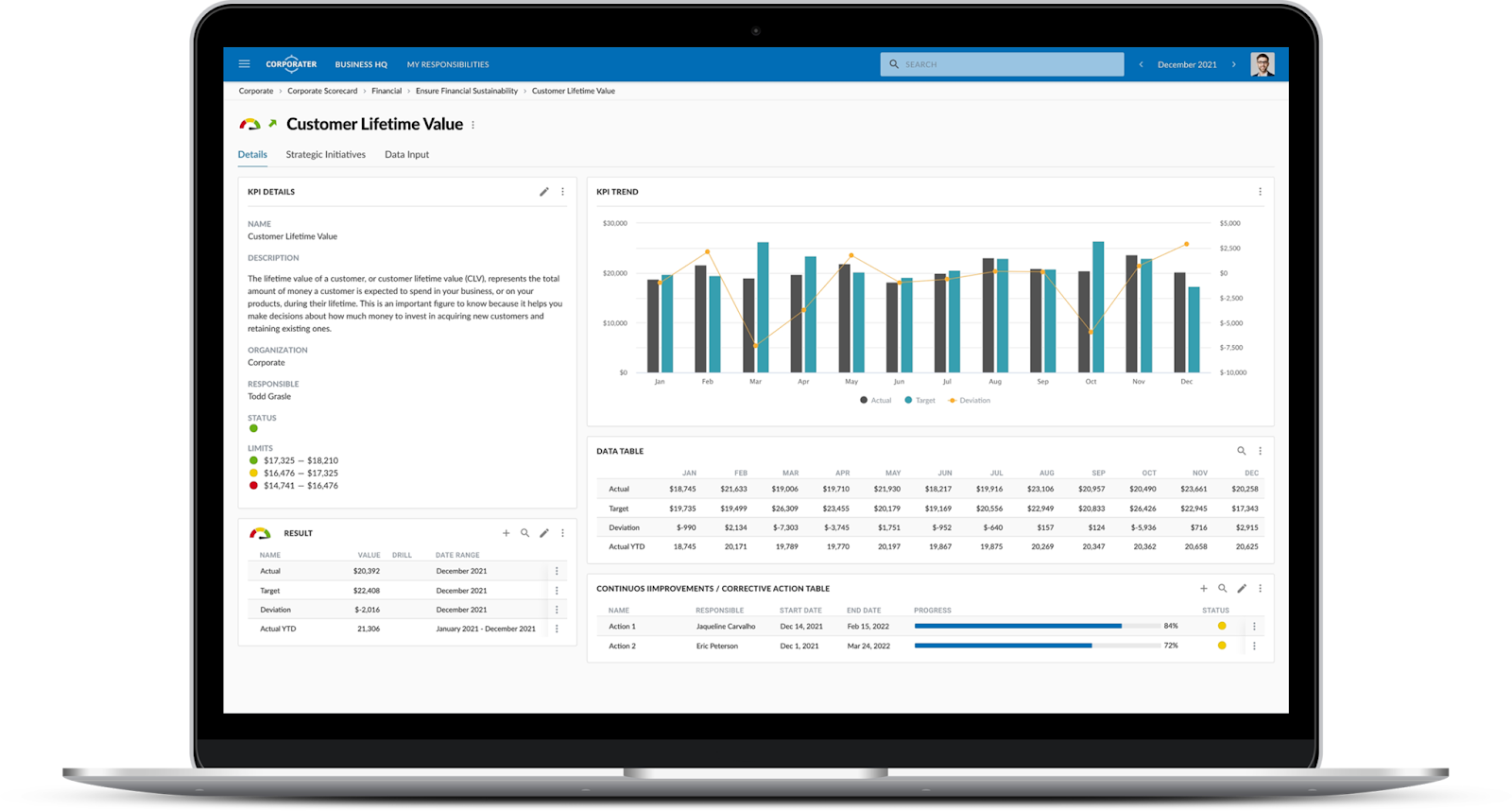
Image source: corporater.com
Conflict and bottleneck avoidance
When work is delayed, do it immediately. Work will not complete itself. If someone is stuck, usually it is due to a lack of tools, examples, or time. If a single person is the sole user of a certain program, that is a bottleneck.
Workload should be easily changeable and spread among the team. Rachel Sinclair, Acquisitions Director at US Gold and Coin, states, "Great managers don't avoid conflict. They address it early and directly. They identify bottlenecks before they harden into barriers and redistribute workload to keep teams agile, aligned, and moving forward." Addressing a single issue today will help avoid a multitude of issues tomorrow. Conduct post-project reviews
When the project ends, take a moment to reflect. Don't rush to the next task. Schedule a "wrap-up" or "retrospective" meeting. This is the most important part of the learning process.
Talk about the wins and losses. Being honest about failures is important. Being gentle with teammates is okay, too, just don't become lazy. Record the lessons so the failures aren't repeated. This is how the team improves. Every project is a chance to develop. It transforms individuals into a collective, high-performing team.
Manage projects before, during, and after each projects
Conclusion
Managing these teams is not simple, but it is worth your time. With different minds working collaboratively, the opportunities to solve world-altering problems are limitless. A cross-functional team is strong because it has people with different skills and ideas.
Consider goal setting, role definition, and selective communication tools as a way to win simplified connectivity. Maintain your goals. Focus your team. With effort and example, your team can accomplish anything.
FAQs
What is team collaboration?
Team collaboration is when a group of people work together toward a shared goal by coordinating tasks, sharing information, and supporting each other’s efforts. Effective collaboration includes clear roles, open communication, mutual accountability, and regular feedback. SEO keywords: team collaboration definition, what is team collaboration, collaboration vs. cooperation.
What are the 3 C's of collaboration?
The 3 C's commonly refer to Communication, Coordination (or Collaboration), and Commitment. These elements ensure information flows, work is organized, and team members stay aligned with project goals. SEO keywords: 3 C's of collaboration, collaboration C's, communication coordination, commitment.
What are the 7 keys of collaboration?
The seven keys often cited are: shared goals, defined roles, open communication, trust, adequate resources, continuous feedback, and a clear decision-making process. Together, they improve efficiency, accountability, and outcomes. SEO keywords: keys of collaboration, 7 keys of collaboration, effective team collaboration.
Which is the best example of team collaboration?
A top example is a cross-functional product team—product manager, designers, engineers, and marketers—working together from discovery to launch. This shows shared goals, role clarity, real-time communication, and joint accountability. SEO keywords: team collaboration example, best team collaboration case, cross-functional collaboration.
Related reading







![What Is a 2-2-3 Work Schedule? Explanation and More [2024]](https://framerusercontent.com/images/uKHRfkp4v7y4azRNTYUmuteNQz8.png)