Stop me if this sounds familiar: your team spends months planning, only for the market to shift by launch day. In today's business world, rigid plans are liabilities. This is why the Agile methodology is the gold standard for high-performing teams. It's a mindset shift from "perfect planning" to "continuous delivery," allowing you to ship work in increments and pivot based on feedback. In this guide, you will learn what Agile methodology is, how it functions in practice, and how to choose the right framework to ensure your team doesn't just survive change but thrives on it.
What is Agile methodology?
At its core, what is ? It is not just a set of rules, but a philosophical shift in how work is approached. In traditional management, projects are treated like a train on a fixed track—once it starts, it's very hard to change direction. Agile, however, treats a project like a startup: a series of experiments designed to find the most value in the shortest amount of time. The Agile methodology definition focuses on an iterative, incremental framework for that helps teams deliver value to their customers faster and with fewer headaches.
Instead of a "big bang" launch where everything is delivered at once after months of secluded work, an Agile development methodology breaks projects into small, digestible pieces. These pieces are prioritized based on user needs and delivered in short cycles. This allows teams to gather real-world feedback early and often. If a feature isn't working or a customer's needs change, the team doesn't have to scrap months of work; they simply pivot in the next cycle.
This adaptability is why Agile methodology in software development became the industry standard. It acknowledges a fundamental truth of the modern world: we rarely know exactly what the final product should look like until we start building it. By focusing on "working software" (or a working "unit" of value) over exhaustive documentation, Agile ensures that the team's energy is always spent on what matters most to the end user.
Practice Agile methodology right in your projects
Core values and principles behind Agile methodology
The success of any Agile implementation depends on more than just using the right software; it requires a deep commitment to the four core values of the Agile Manifesto and its supporting principles. Rather than viewing as a series of rigid checkboxes, these values prioritize the human element and the reality of changing markets. When a team moves beyond the Agile methodology definition and starts living these values, they stop just "doing" tasks and start delivering actual outcomes. This shift is what allows Agile methodology in software development to be so effective—it acknowledges that a perfect plan on paper is worthless if it doesn't solve a real-world problem.
4 core values of Agile
- Individuals and interactions over processes and tools: No matter how sophisticated your is, it cannot replace a five-minute face-to-face conversation. Agile encourages teams to prioritize human communication and trust over strict adherence to a specific tool or bureaucratic workflow.
- Working software over comprehensive documentation: In many types of Agile methodology, the goal is to produce something functional as quickly as possible. While documentation has its place, it should never come at the expense of building a product that actually works. A 100-page manual is useless if the software itself fails to launch.
- Customer collaboration over contract negotiation: Traditional models often treat the customer as an outsider once the contract is signed. Agile brings the customer into the room. Through every week, teams ensure they are building what the customer needs, not just what they thought they wanted six months ago.
- Responding to change over following a plan: A traditional Agile project methodology is not about being "plan-less," but about being "plan-flexible." It gives the team permission to change direction when better information becomes available, turning change into a competitive advantage rather than a setback.
Key principles for Agile success
- Satisfy the customer: The highest priority is to satisfy the customer through early and continuous delivery of valuable software.
- Welcome changing requirements: harness changes for the customer's competitive advantage, even late in the development cycle.
- Deliver frequently: Ship working software at intervals ranging from a couple of weeks to a couple of months, with a preference for shorter timescales.
- Work together daily: Business people and developers must work together daily throughout the project to eliminate silos and misunderstandings.
- Build projects around motivated individuals: Give team members the environment and support they need, then trust them to get the .
- Promote sustainable development: The sponsors, developers, and users should be able to maintain a constant pace indefinitely, avoiding the "burnout" common in "crunch-time" Waterfall projects.
How Agile methodology actually works with examples
To see Agile methodology in action, you have to move away from the theory and look at the actual rhythm of a working team. Agile doesn't just happen; it is practiced through a series of repetitive cycles that turn a vague idea into a polished product. This process is designed to strip away the "guesswork" that plagues traditional management. Instead of assuming you know what the user wants, you build a small piece, show it to them, and let their reaction guide your next move.
Step 1. Vision and backlog creation
Every Agile implementation begins with a goal, but not a rigid one. A product team might set a target to "increase mobile checkout speed by 30%." Instead of writing a massive requirements document, they create a Backlog—a prioritized list of every feature, bug fix, and improvement needed to reach that goal. These are often written as "User Stories," such as: "As a customer, I want to save my credit card info so I can check out faster."
Step 2. Sprint planning and focus
The team looks at the top of the backlog and decides what they can realistically achieve in a short window, usually two weeks. This is called a Sprint. In Agile methodology project management, are crucial because they create a "frozen" period where the team can focus on a few high-value items (like "one-click payments") without the distraction of new requests constantly shifting their priorities.
Step 3. The daily sync (stand-up)
Once the sprint begins, the team meets for 15 minutes every morning. This isn't a status report for the boss; it's a huddle for the players. Each person answers three questions: What did I do yesterday? What will I do today? Are there any blockers? This ensures that Agile methodology steps are actually being followed and that no one is stuck waiting for an approval or a design asset for more than 24 hours.
Step 4. Iterative development and delivery
During the sprint, developers, designers, and testers work in parallel. Instead of waiting for a "testing phase" at the end of the year, testing happens every single day. The goal of this Agile development methodology is to have a "potentially shippable increment" ready by the end of the two weeks. Even if it's just one new button, it must be fully functional and ready for real users.
Step 5. Review, retrospective, and pivot
At the end of the cycle, the team demonstrates the work through a . They gather feedback—"The button is fast, but the font is too small"—and feed that back into the backlog for the next sprint. Finally, the team holds a Retrospective to discuss their internal process. If a communication tool was too slow or a requirement was unclear, they fixed it immediately before starting the next cycle. This is the "continuous improvement" that makes Agile methodology in software development so powerful.
6 popular types of Agile methodology and when to use them
While the core values of Agile remain constant, the way a team applies them can vary significantly based on their goals and industry. Choosing the right types of Agile methodology is about finding a framework that matches your team's pace, whether you need the structured intervals of a sprint or the continuous flow of a visual board. Below are the most effective frameworks and the specific scenarios where they shine.
1. Scrum: Best for complex product development
As the most widely used Agile methodology, the organizes work into fixed-length "Sprints" (usually 2–4 weeks). It relies on specific roles like the Scrum Master and Product Owner to keep the team focused. Use Scrum when your project has evolving requirements but requires a clear structure, regular planning meetings, and a high level of accountability to deliver functional increments.
2. Kanban: Best for continuous workflows
Unlike the time-boxed nature of , Kanban is all about visualizing work on a board to manage flow. It is the ideal Agile methodology project management style for teams with fluctuating priorities, such as IT support, operations, or content marketing. Use when your primary goal is to limit "Work in Progress" (WIP) and ensure tasks move smoothly from "To-Do" to "Done" without the pressure of a fixed deadline.
3. Extreme Programming (XP): Best for technical excellence
XP is a specialized Agile software development methodology that prioritizes high-quality code and developer well-being. It introduces practices like pair programming, continuous testing, and simple design. This is the right choice when the technical stakes are high, and your team needs to release code frequently while maintaining extreme reliability and responding to rapid user feedback.
4. Lean: Best for efficiency and waste reduction
Rooted in manufacturing principles, focuses on "eliminating waste"—meaning anything that doesn't add direct value to the customer is removed. This approach works best for mature teams looking to streamline their Agile development methodology by maximizing speed and deferring major decisions until they have enough data to act.
5. SAFe (Scaled Agile Framework): Best for large enterprises
When an organization needs to coordinate hundreds of people across dozens of teams, safe Agile methodology provides the necessary governance. It aligns multiple Agile teams under a single strategic roadmap. Use SAFe when your business requires high-level alignment, centralized planning, and complex cross-team dependencies that a single Scrum team couldn't handle.
6. Hybrid Agile: Best for regulated industries
A hybrid approach blends the structure of the with Agile flexibility. This is often necessary in industries like healthcare or finance, where strict regulatory documentation is required alongside the need for iterative development. Use a Hybrid model if you must satisfy "big-picture" stakeholders with long-term deadlines while allowing your execution teams to remain Agile.
Simplify your sprint planning and execution today
Action time: How Lark supports Agile methodology workflows
Most teams struggle with Agile because their tools don't talk to each other. You end up with a project board in one app, a group chat in another, and meeting notes scattered everywhere else. fixes this by acting as a single, unified workspace where your planning and your execution live in the same place.
Your centralized Agile command center
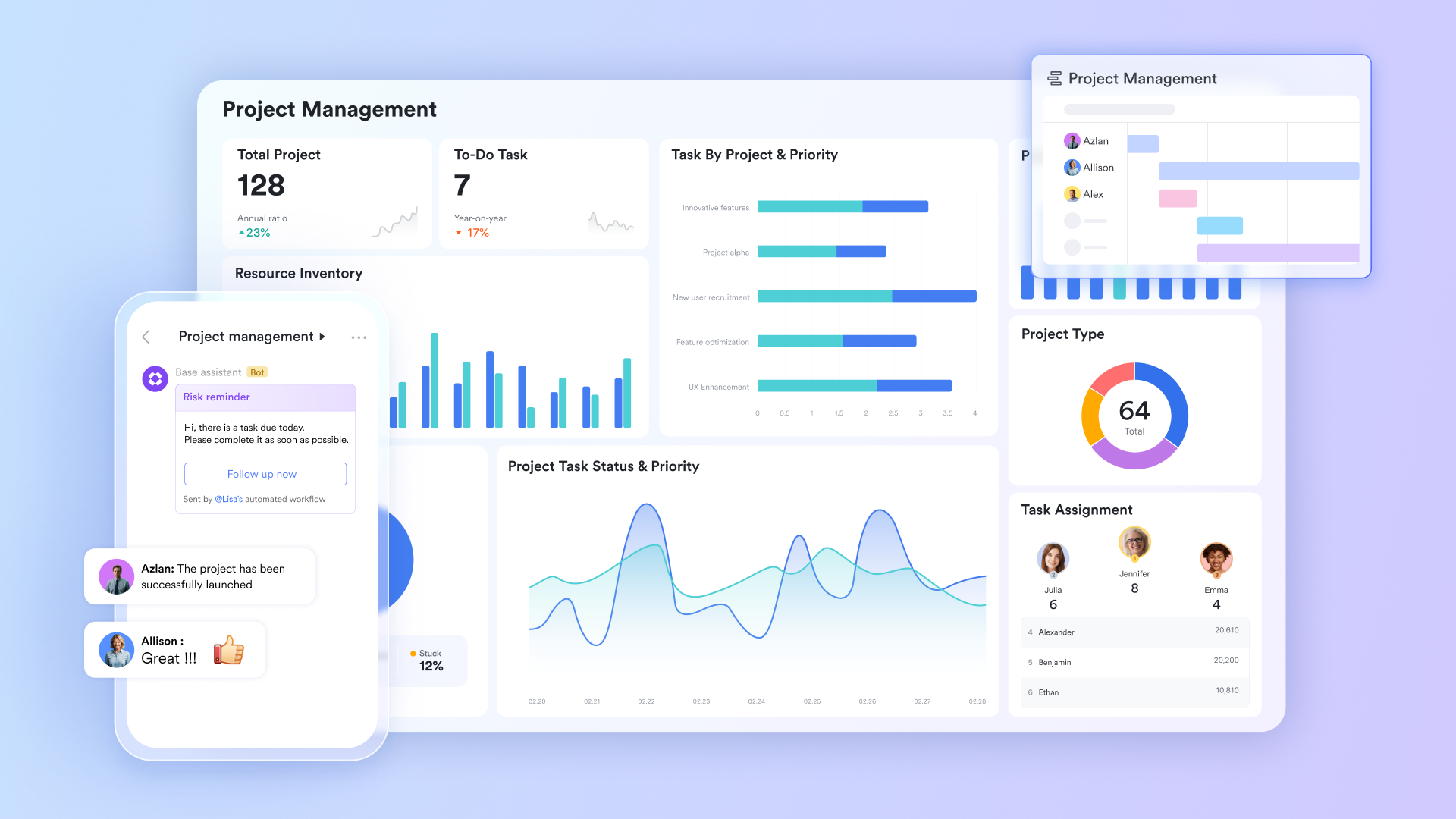
Lark Base is more than just a spreadsheet; it's a flexible no-code database that powers your entire workflow. You can switch between , , and Grid views with one click, making it easy to manage everything from a granular sprint backlog to a high-level product roadmap. Its powerful can even notify team members when a task status changes or a deadline is approaching, ensuring the "flow" in your Agile cycle never hits a snag.
Living documentation for dynamic plans
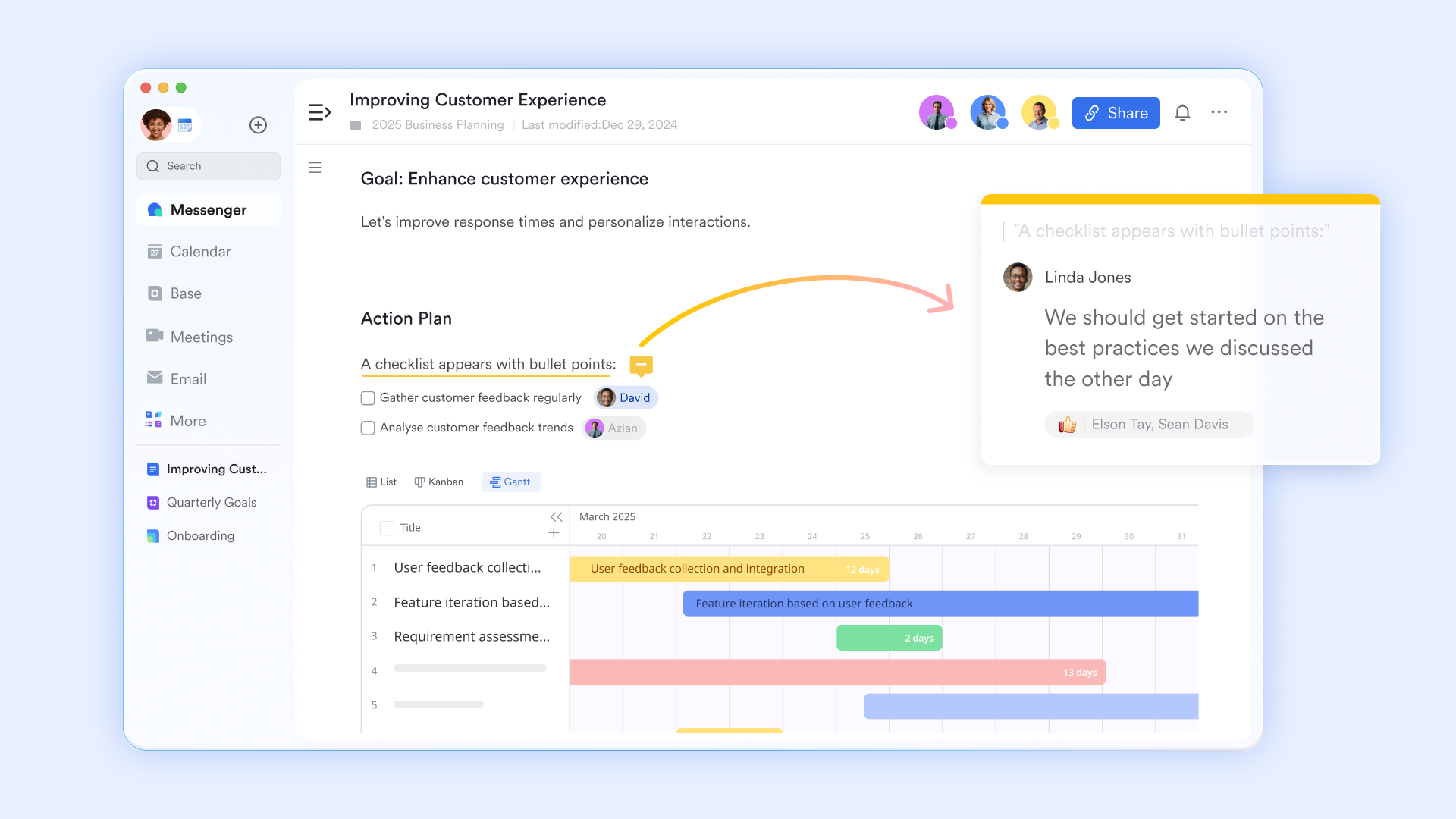
Static PDFs are where Agile ideas go to die. are "living" workspaces where your team can co-edit sprint plans, technical specs, and retrospectives in real time. You can embed live Lark Base views directly into a document, so if a developer updates a task on the board, that update shows up everywhere else instantly. This creates a "single source of truth" that actually stays true.
Streamlined Agile scheduling
Agile ceremonies like sprint reviews and retrospectives are more productive when everyone is literally on the same page—literally. With Magic Share, everyone on a video call can co-edit the same document simultaneously within the meeting window. To keep the momentum going afterward, generates an automated, searchable transcript. This allows teams to efficiently review the discussion and manually tag or extract key action items, ensuring that post-meeting tasks are accurately recorded and assigned without the burden of traditional note-taking. 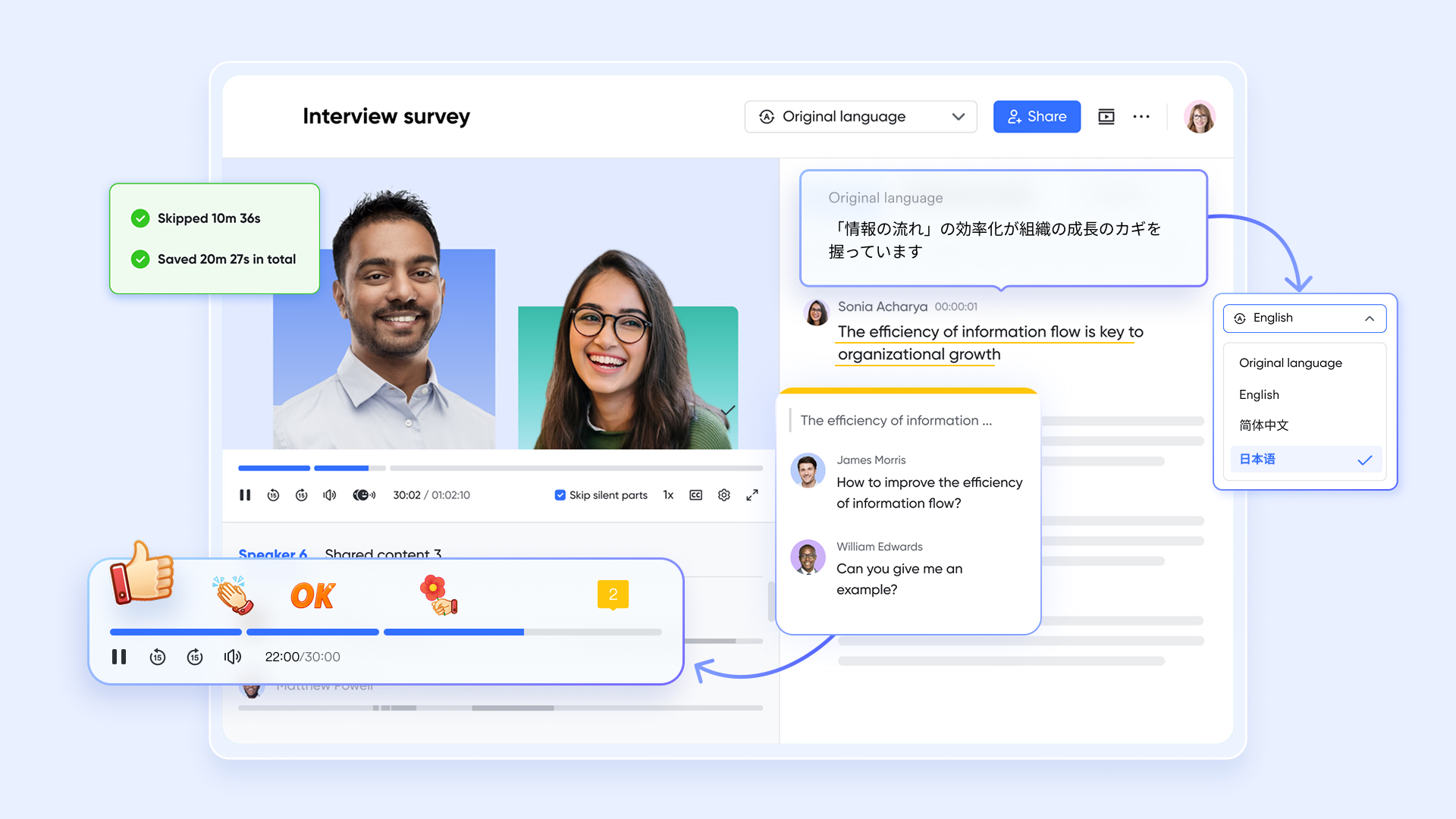
Contextual collaboration without the noise
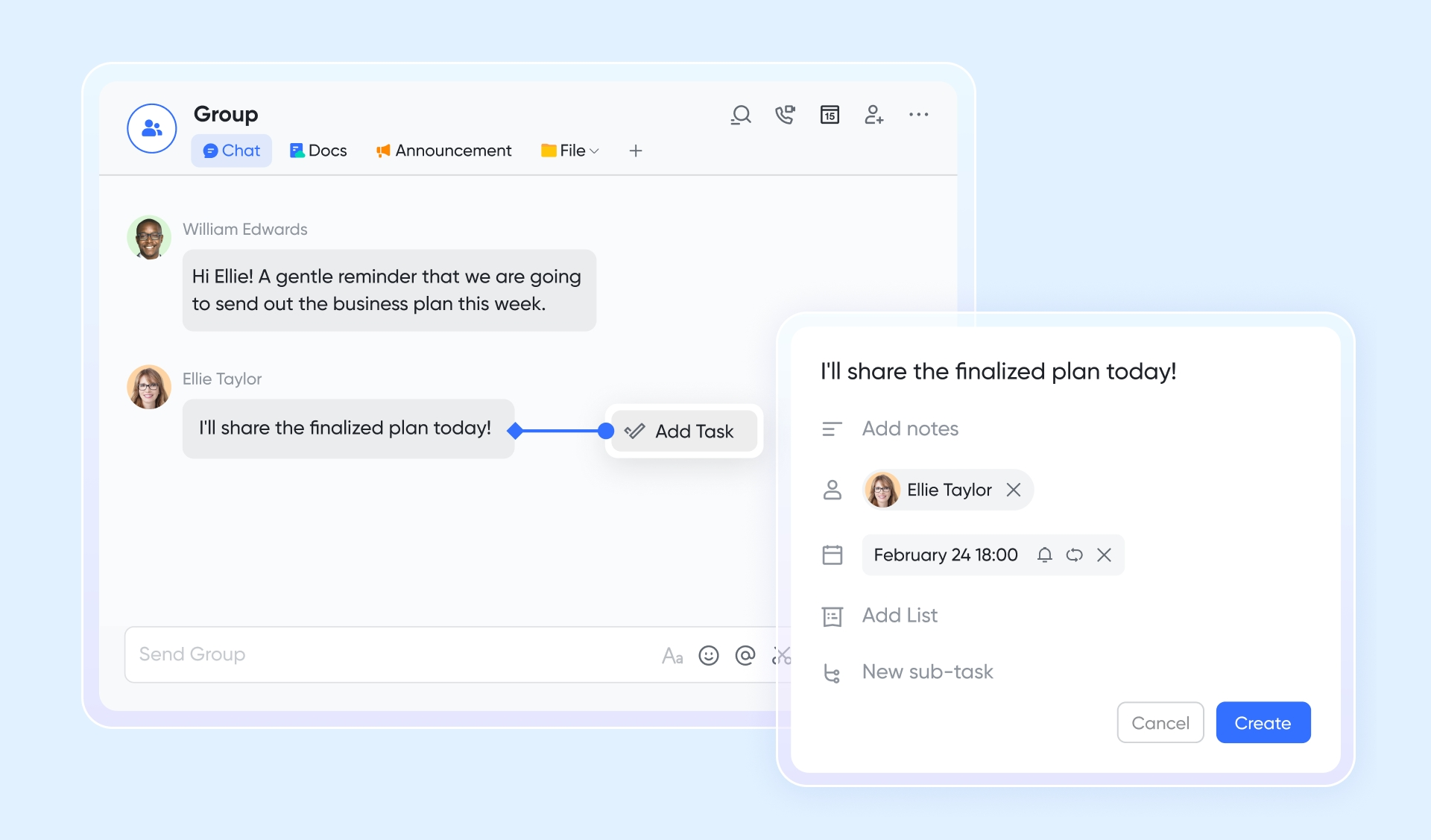
In an Agile environment, speed is everything. keeps conversations focused on topic-based threads, so you don't lose key decisions in a sea of "FYIs." Because it's fully unified, you can instantly turn a message into a task or link a conversation directly to a record in Lark Base. This means your daily stand-ups and quick syncs lead to immediate action, not more follow-up meetings.
Speeding up decisions and sign-offs
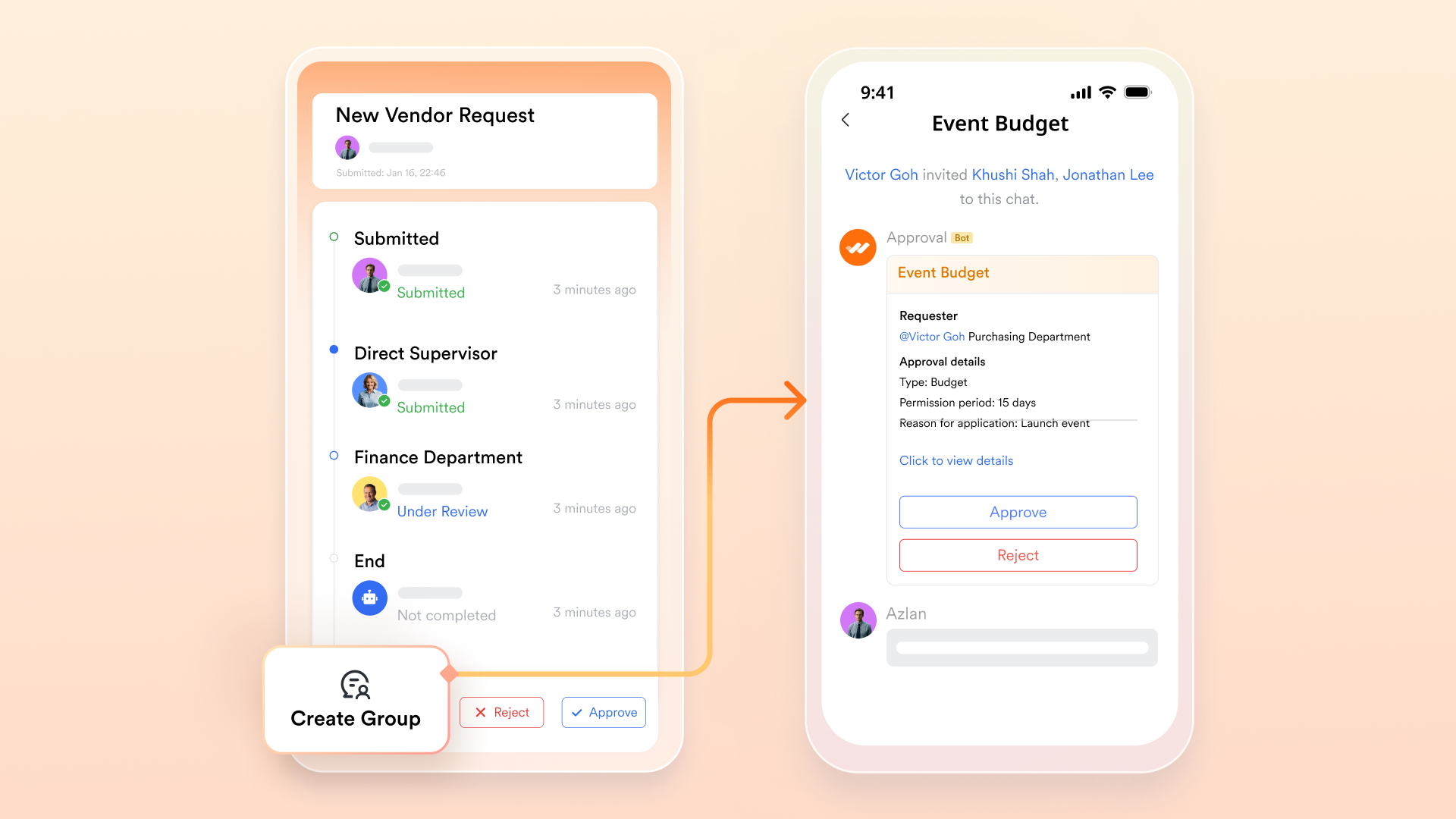
Agile teams often get bogged down by slow approvals for budget changes or feature releases. moves these requests into a streamlined digital workflow. Managers can review and sign off on requests directly from their mobile device or chat feed, preventing bottlenecks. This ensures that the "Definition of Done" isn't delayed by paperwork, keeping your team's velocity high.
:
- Starter plan: Free forever plan that includes 11 powerful tools for up to 20 users. It also comes with 100GB of storage, 1000 automation runs, AI translations, and more.
- Pro plan: $12/user/month (billed annually) for up to 500 users. It includes everything in Starter plus group calling for up to 500 attendees, 15TB of storage, 50,000 automation runs, and more.
- Enterprise plan: for custom pricing. Supports unlimited users and includes even more automation runs and advanced security, compliance, and management features.
For small teams with simple communication needs

18 months message history
1000 Base automation runs/month
2000 rows per table in Base
Most POPULAR
For companies with comprehensive collaboration and management needs
Unlimited message history
500-participant video meetings
50k Base automation runs/month
20k rows per table in Base
For large companies with advanced security and organizational management needs
Get a personalized demo and pricing
Unlimited message history
500-participant video meetings
15 TB storage + 30 GB storage/user
500k Base automation runs/month
50k Base automation runs/month
Most POPULAR
For companies with comprehensive collaboration and management needs
Unlimited message history
500-participant video meetings
50k Base automation runs/month
20k rows per table in Base
How to decide if Agile methodology fits your team
While Agile methodology has become a near-universal standard in the corporate world, it is not a "magic pill" that guarantees success for every project. Deciding whether to pivot your team toward an Agile framework requires an honest assessment of your goals, your stakeholders, and your organizational culture.
- You have high requirements uncertainty: If your project involves a high degree of innovation or "newness," you likely don't know exactly what the final product should look like. An Agile project methodology allows you to discover the requirements through execution rather than guessing during a three-month planning phase.
- Stakeholders are highly available: Agile is a collaborative sport. It requires "Product Owners" and stakeholders who can meet every few weeks to review progress and provide feedback. If your leadership team is "set it and forget it" and only wants to see the final result, the iterative nature of Agile development methodology will likely frustrate them.
- The cost of change is low: In software and digital services, changing a line of code or a marketing strategy is relatively inexpensive. In construction or , changing the foundation of a building is catastrophic. Choose Agile methodology project management when your "materials" are flexible enough to allow for pivoting without breaking the bank.
- You have a cross-functional team: Agile works best when the people doing the work—the designers, developers, and writers—can talk directly to each other without going through layers of . If your organization is heavily siloed and requires "memos" for a simple task handoff, you'll need to restructure your team before an Agile software development methodology can truly take flight.
Bonus knowledge: Agile vs Waterfall methodology
When comparing , the core decision centers on whether your project requires a rigid, predictable path or a flexible, evolving one. While Waterfall is a veteran of the industrial age, Agile is built for the rapid shifts of the digital world.
The planning clash: Fixed paths vs. evolving needs
- Waterfall's linear descent: Operating on the premise that "perfect planning" leads to perfect execution, Waterfall follows a strict, sequential path. This is ideal for physical construction, where the cost of change is astronomical.
- Agile's flexibility: In the digital space where users need to shift overnight, the "all-or-nothing" approach of Waterfall often results in products that are obsolete by launch. Agile allows for constant pivots based on real-time data.
The risk strategy: Front-loading vs. back-loading
- Waterfall's back-loaded risk: The biggest dangers—integration errors, user rejection, or technical hurdles—are pushed to the very end of the timeline. You don't know if the system truly works until the final stage.
- Agile's de-risking focus: flips the script by delivering a "Minimum Viable Product" (MVP) within weeks. You address risks immediately, enabling the team to fail fast, learn, and adjust while the budget remains intact.
The cultural shift: Command vs. collaboration
- Waterfall's silos: Relies on a "command and control" structure. Specialized teams (designers, developers, testers) hand off work like a relay race, often leading to a "waiting game."
- Agile's team sport: works on features simultaneously. This ensures everyone, from stakeholders to junior developers, shares the same goal and maintains a competitive "velocity."
Stop guessing and start delivering value faster
Conclusion
Mastering Agile methodology is about more than just changing your calendar—it's about fostering a culture of resilience and speed. By embracing iterative growth and prioritizing customer value over rigid documentation, your team can navigate market shifts with confidence. Whether you choose Scrum, Kanban, or a , the goal remains the same: delivering better results, one cycle at a time.
To truly unlock Agile methodology project management, you need a workspace that moves as fast as your ideas. eliminates friction by unifying Kanban boards, sprint docs, and team chats in one place. Don't let fragmented tools stall your progress; centralize your communication and execution with Lark to keep your team's velocity at its peak.
Empower your team with the ultimate Agile tool
FAQs
Can Agile methodology work without sprints?
Yes. While many associate Agile with the time-boxed sprints of Scrum, the Kanban framework focuses on a continuous flow of work. In this model, work is pulled from the backlog whenever capacity allows, making it ideal for support or operations teams that can't predict their workload two weeks in advance.
How long does it realistically take for Agile adoption to show results?
Most teams see an increase in "velocity" and team morale within 3 to 4 cycles (roughly 2 months). The first few sprints are usually spent "learning how to estimate," but by the third iteration, the team typically finds a sustainable rhythm and a clearer "Definition of Done."
Is Agile methodology suitable for non-software teams like marketing or operations?
Absolutely. Many marketing departments now use Agile project methodology to manage campaign launches. By treating an ad campaign as an "iteration," they can test small batches of creative, gather data, and pivot their strategy weekly based on what actually converts, rather than spending a quarterly budget on a single unproven idea.
How do Agile teams handle long-term planning without fixed roadmaps?
Agile teams use "Themes" and "Epics" for long-term planning. While the granular tasks (the backlog) change frequently, the high-level roadmap remains focused on broad outcomes. This allows stakeholders to see the strategic direction while giving the execution team the freedom to decide how to best achieve those goals.
What are the biggest early warning signs that Agile adoption is failing?
The most common sign is "Zombie Scrum"—where teams go through the motions (daily stand-ups, sprints) but never actually change their behavior. If decisions still require weeks of approval or if "sprints" are constantly extended to finish work, you are likely still following a Waterfall process disguised as Agile.
Related reading





























