Imagine spending thousands of dollars on a marketing campaign. The ads are perfect, the copy is compelling, and the traffic is flowing to your website. But then, silence. You know people are interested, but the revenue isn’t reflecting the traffic. This is the classic "leaky bucket" syndrome.
This is where lead management services come into play. The true competitive advantage lies in how you capture, track, nurture, and convert that interest. If your team is overwhelmed by spreadsheets or struggling to follow up fast enough, you aren't just losing time; you are handing market share to your competitors.
This comprehensive guide will walk you through the ecosystem of lead management. We will identify the red flags in your current process, and compare the best lead management software available today. Whether you are a startup founder or a sales director managing a global team, mastering this workflow is the key to unlocking sustainable growth.
Key takeaways: Top 5 lead management services in 2026
1. Lark: The collaborative superapp for real-time lead response
2. Salesforce Sales Cloud: The enterprise standard for deep customization
3. HubSpot Sales Hub: The user-friendly choice for inbound sales
4. Zoho CRM: An affordable all-in-one suite for growing businesses
5. Pipedrive: Visual pipeline management built for salespeople
What are lead management services?
The term services is often used interchangeably with lead management software, but it encompasses much more than just a database of names and emails. In its truest sense, it is the architectural bridge between and . It is a combination of strategies, workflows, and human interventions designed to move a potential customer from their first interaction with your brand all the way to a closed deal.
When we discuss these services, we are generally looking at a holistic lead management system. This system isn't just about storage; it is about action. It involves the precise coordination of marketing and sales teams to ensure that every opportunity is maximized. It draws heavily on the principles of but focuses specifically on the pre-sales phase of the relationship.
To effectively manage leads, you must look at the lifecycle in four distinct stages. First is lead capture, the automated process of gathering intelligence. Second is qualification, often assisted by lead scoring, to filter the noise. Third is distribution, ensuring sales reps get the right opportunities instantly. Finally, there is nurturing, which keeps potential customers engaged until they are ready to buy. When these four pillars work in harmony, your business stops leaking revenue and starts building a predictable sales pipeline.
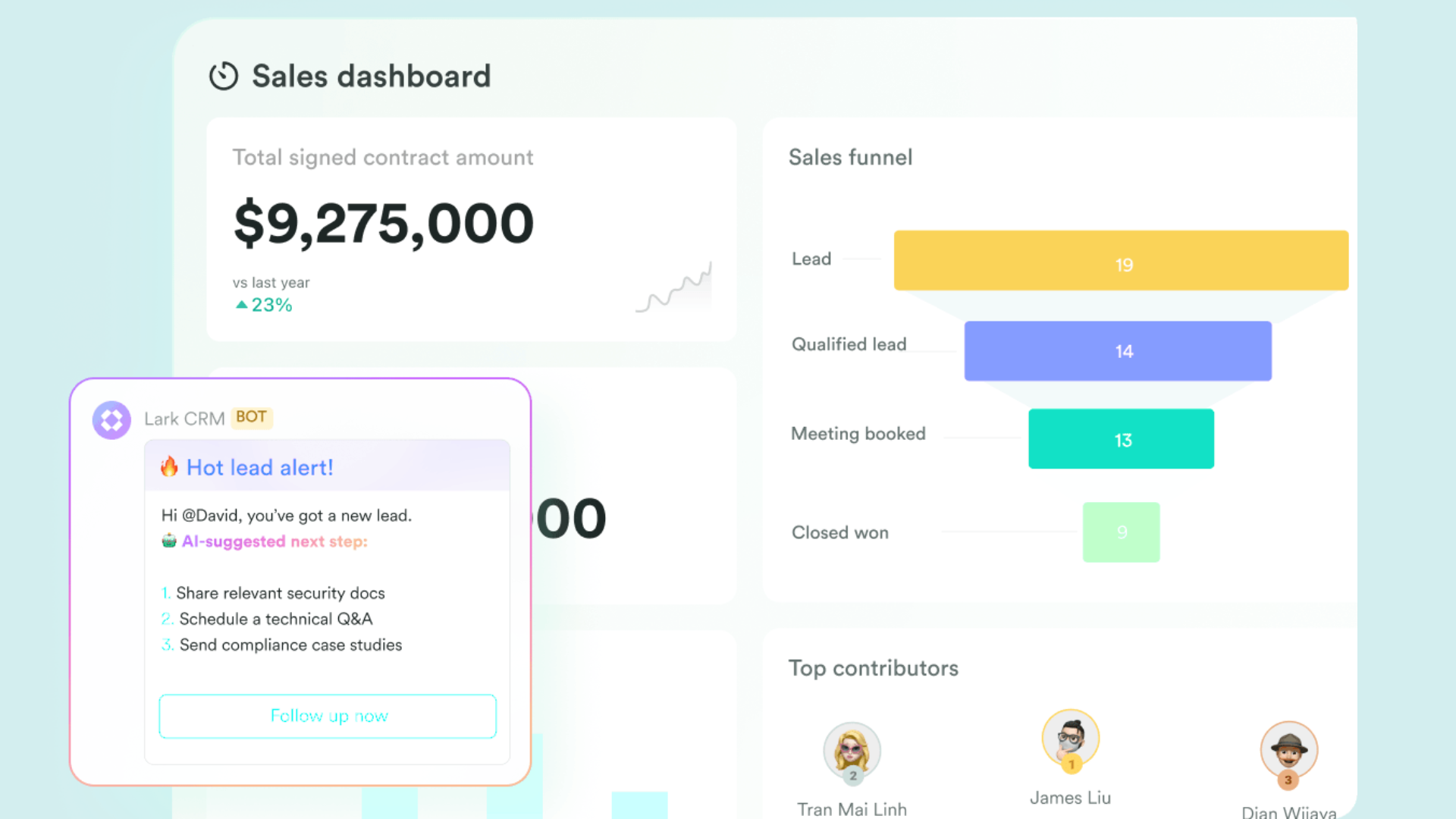
Track every lead from capture to close
Top 10 lead management service tools for 2026 (20 tools tested)
Choosing the right technology is the foundation of your service strategy. The market is flooded with options, ranging from simple lead tracking software to complex enterprise ecosystems. Below is a curated list of the top 10 tools that facilitate effective lead management, catering to different business sizes and needs.
1. Lark: The collaborative superapp for real-time lead response
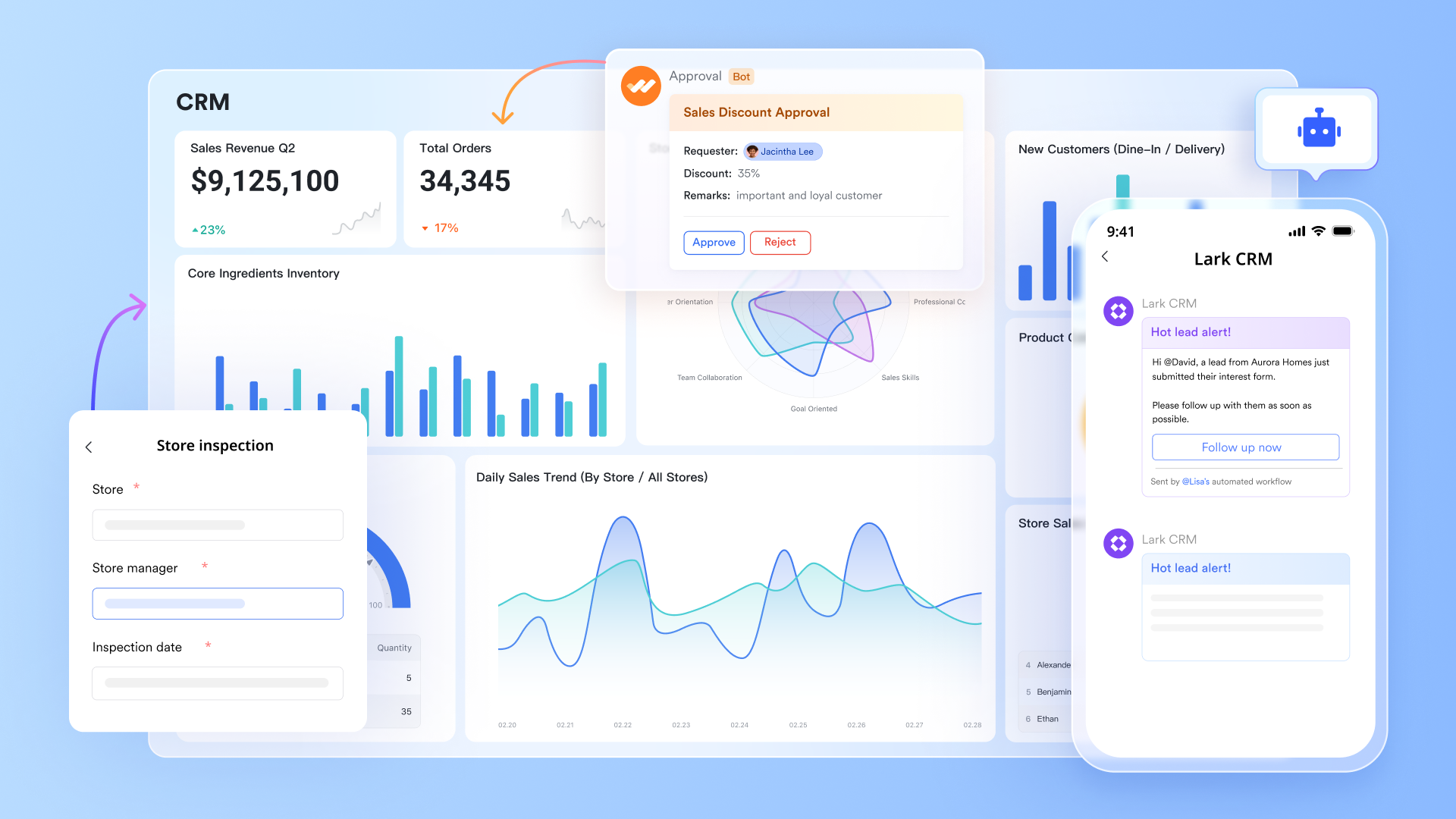
Overview:
Lark takes a unique "Superapp" approach. Rather than being just a database, it is a collaborative workspace that combines your (customer relationship management) functions with chat, video meetings, and documents. It is ideal for teams that want to break down silos and manage leads through real-time conversation. Watch the video below to see how Lark transform your lead management experience:
Key features:
Customizable no-code CRM: Build a bespoke lead management system from scratch. Add custom fields for deal stages and contacts, then visualize your data with advanced dashboards to manage leads your way. 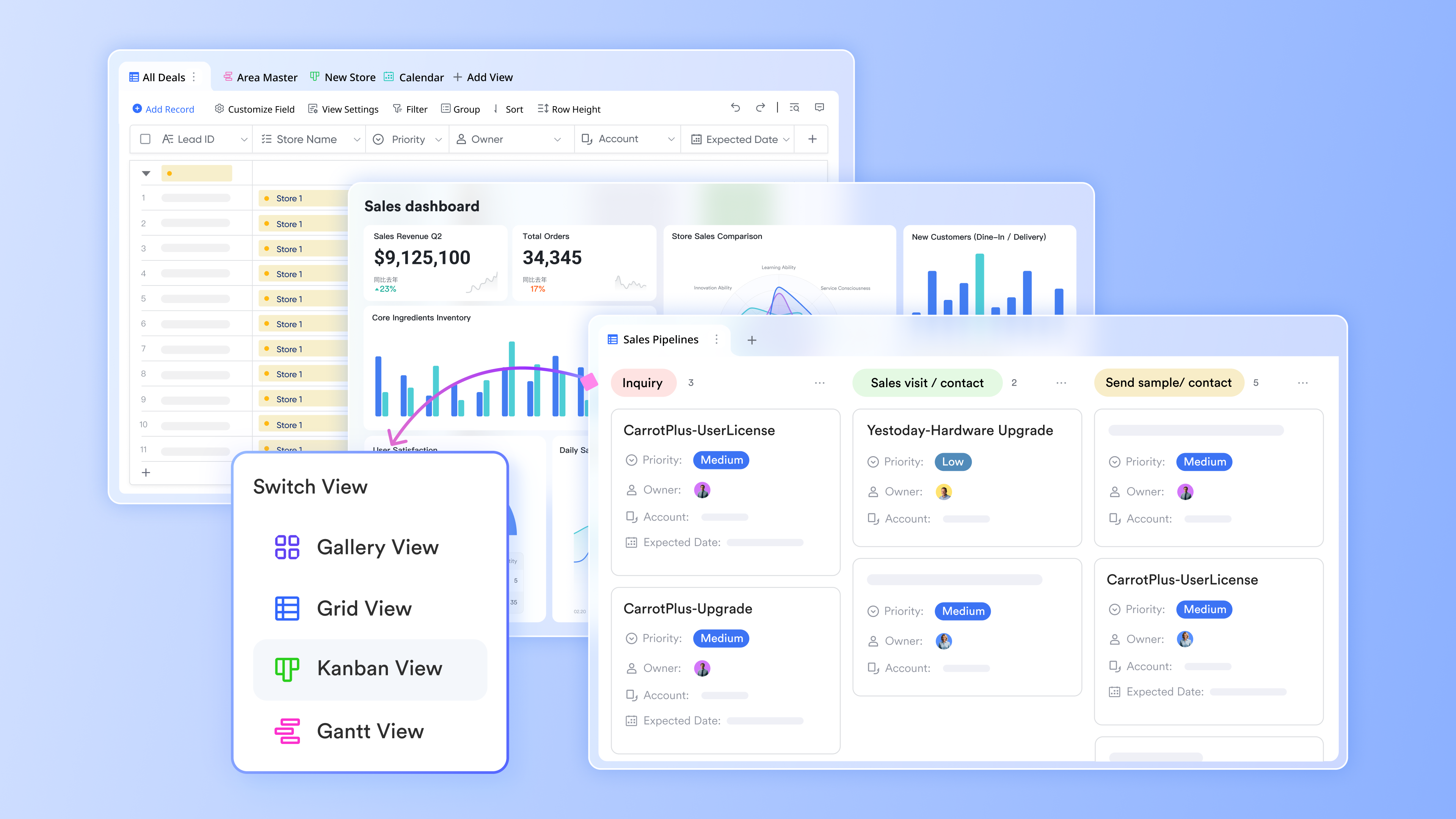
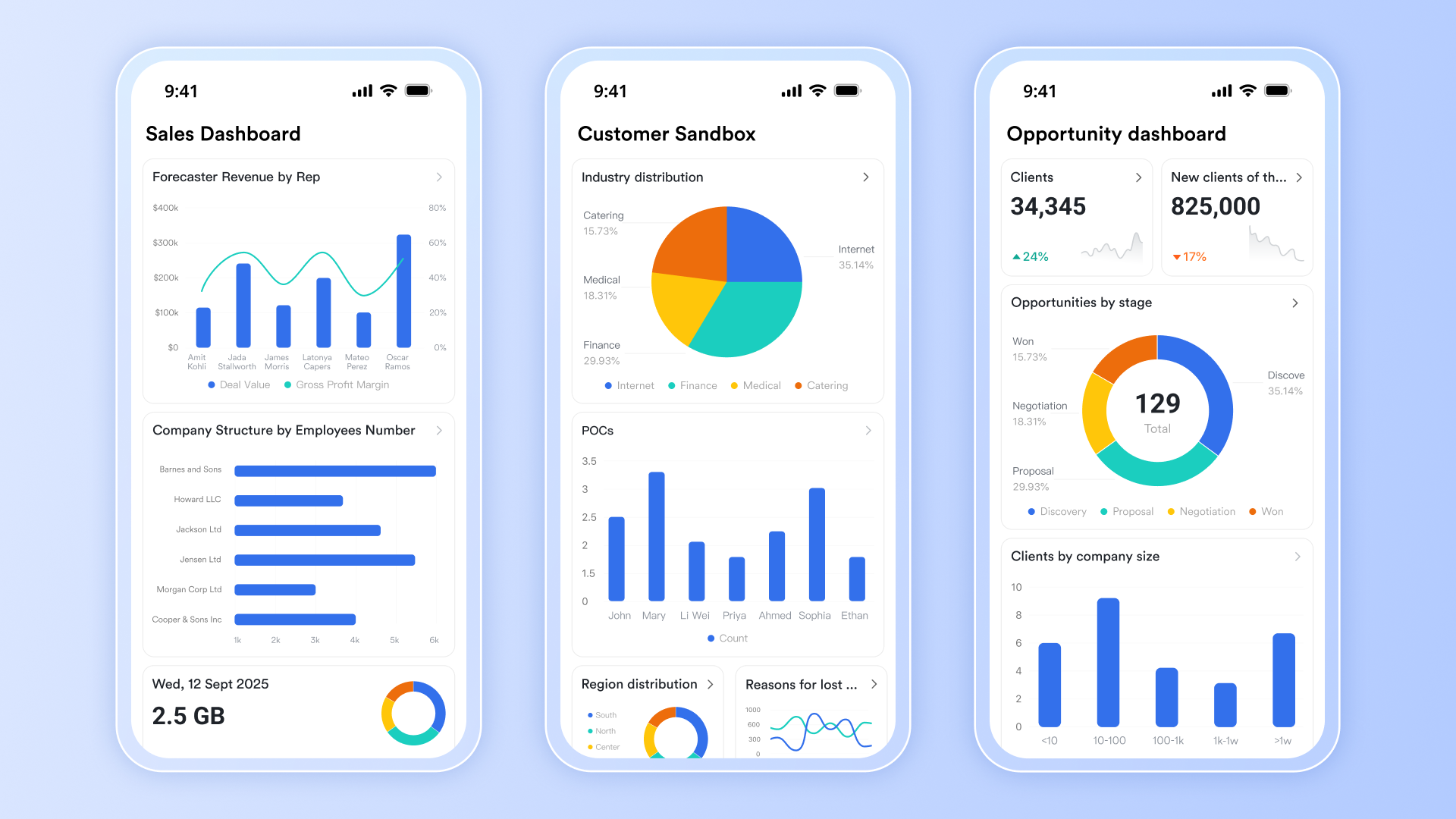
Seamless mobile action: Sales reps can update records, message teammates, and join meetings directly from the , ensuring timely follow ups even when they are out in the field.
Contextual automation: When a CRM record changes, relevant teammates are notified instantly in chat. They can take action in one tap—start a discussion or edit a linked doc—eliminating delays in lead qualification.
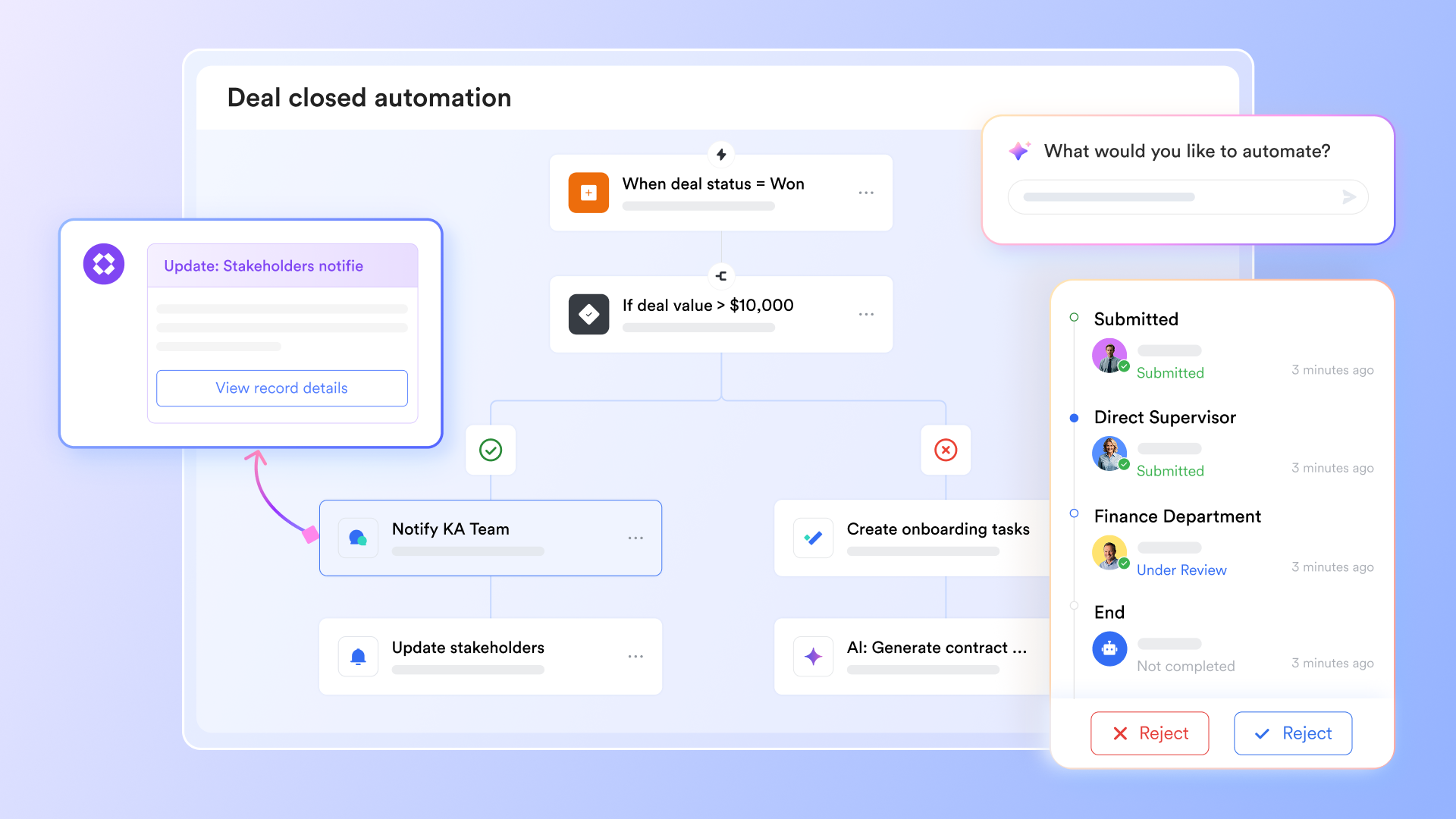
AI-powered insights: Use to compile account profiles, summarize sales activities, and even prepare call scripts, empowering your team to deliver personalized customer experiences.
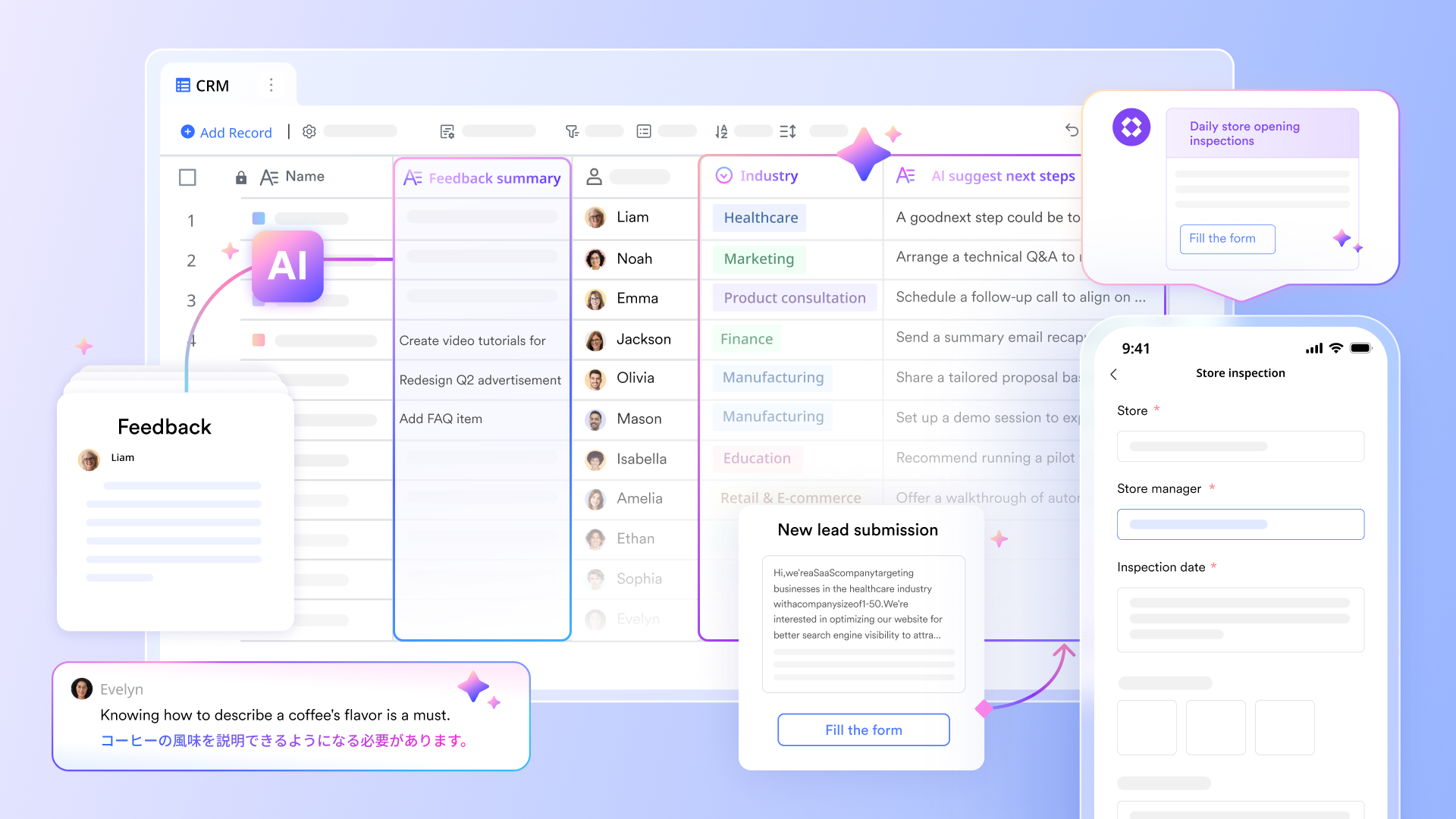
Unified workflow: Trigger real-time actions like sending updates or launching video meetings directly from CRM records, streamlining the sales process and reducing app switching.
- Starter plan: Free forever plan with 11 powerful tools for up to 20 users, 100GB storage, 1,000 automation runs, AI translations, and more. No credit card needed.
- Basic plan: $6/user/month (billed annually) for up to 500 users. Includes everything in Starter plus unlimited message history, 5TB storage, 1,000 automation runs, and more. Some users may need to to purchase.
- Pro plan: $12/user/month (billed annually) for up to 500 users. Includes everything in Basic plus group calling for up to 500 attendees, 15TB storage, 50,000 automation runs, and more.
- Enterprise plan: for custom pricing. Supports unlimited users and includes advanced automation, security, compliance, and management features.
For small teams with simple communication needs

18 months message history
1000 Base automation runs/month
2000 rows per table in Base
Most POPULAR
For companies with comprehensive collaboration and management needs
Unlimited message history
500-participant video meetings
50k Base automation runs/month
20k rows per table in Base
For large companies with advanced security and organizational management needs
Get a personalized demo and pricing
Unlimited message history
500-participant video meetings
15 TB storage + 30 GB storage/user
500k Base automation runs/month
50k Base automation runs/month
Most POPULAR
For companies with comprehensive collaboration and management needs
Unlimited message history
500-participant video meetings
50k Base automation runs/month
20k rows per table in Base
2. Salesforce Sales Cloud: The enterprise standard for deep customization
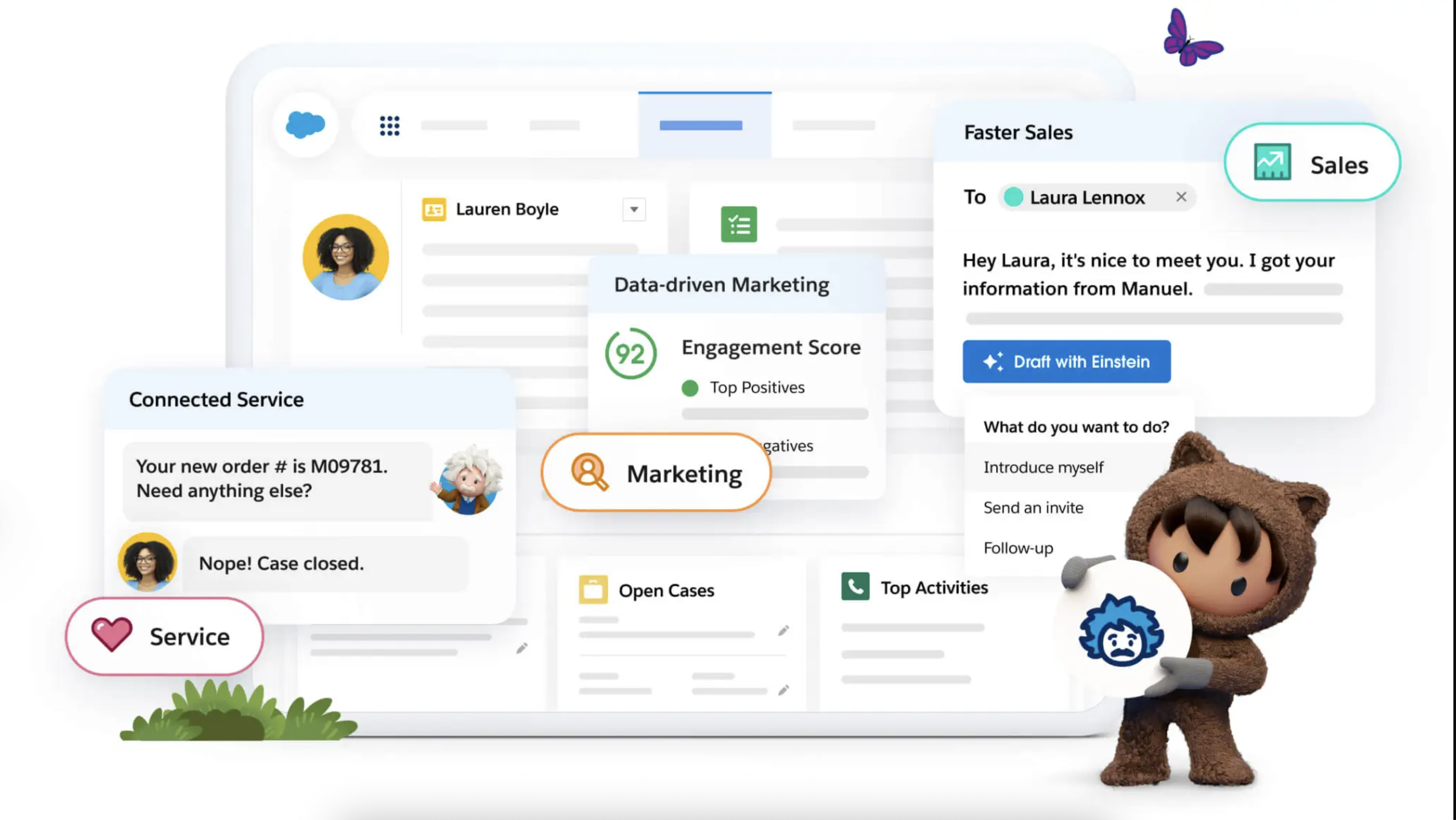
Image source: salesforce.com
Overview:
Salesforce is the industry giant and arguably the most famous lead management software. It offers unparalleled depth for managing the entire sales cycle.
Key features:
- Einstein AI: Uses artificial intelligence to help prioritize leads, analyze sentiment, and predict win rates based on historical data.
- AppExchange: A massive ecosystem of thousands of marketing tools and third-party extensions that plug directly into your dashboard.
- Process builder: A powerful visual tool that allows admins to create complex workflows to automate sales efforts and approvals.
Pricing:
There is no free plan for Salesforce Sales Cloud. Paid plans start at $25/user/month.
3. HubSpot Sales Hub:The user-friendly choice for inbound sales
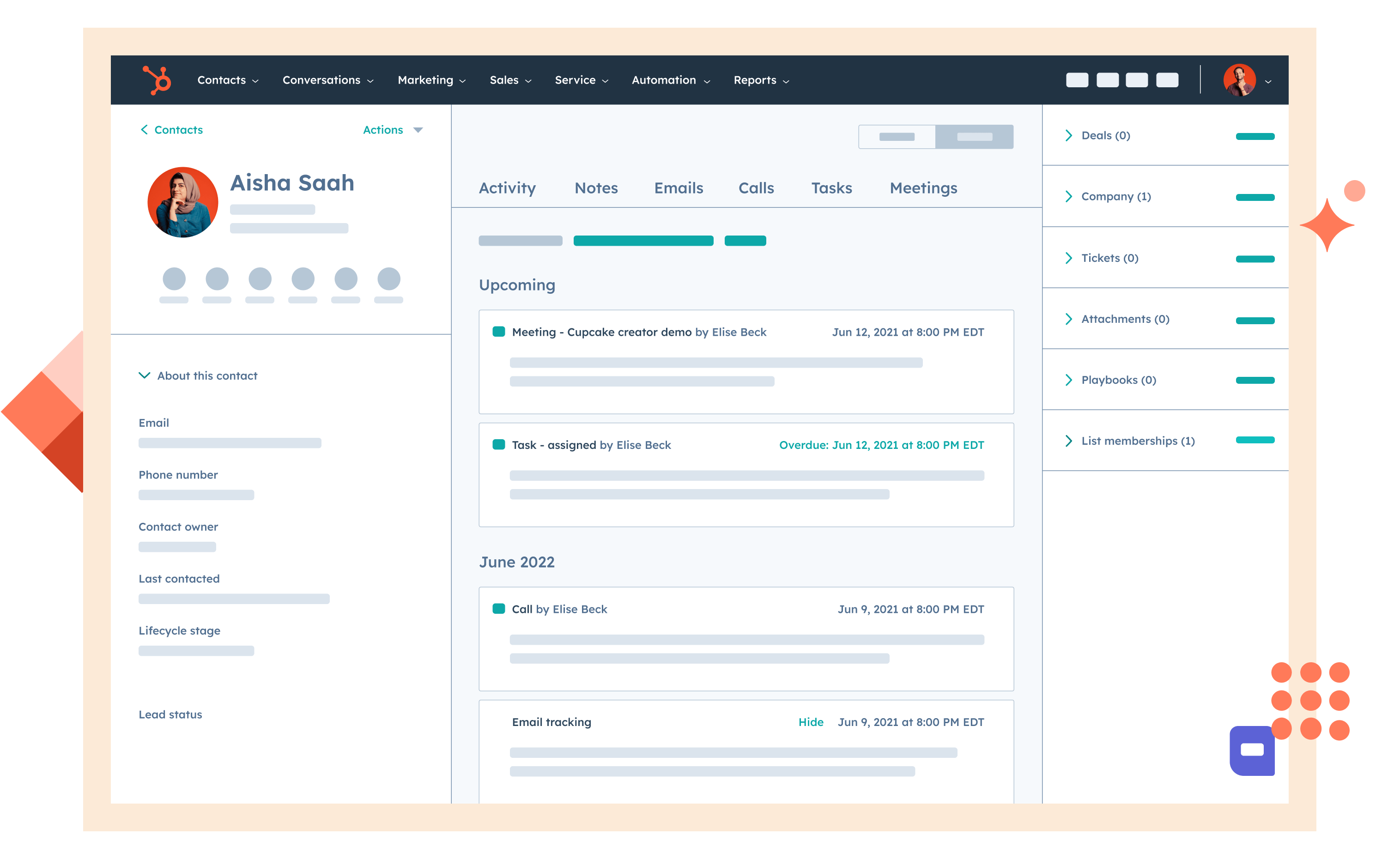
Image source: hubspot.com
Overview:
HubSpot is renowned for its user-friendly interface and its dominance in Inbound Marketing. It is excellent for delivering personalized customer experiences.
Key features:
- Email tracking: Notifies sales reps the instant a prospect opens an email or downloads an attachment.
- Sequences: Automates follow-up emails and tasks to ensure consistent communication without manual effort.
- Meeting scheduler: A direct calendar link that prospects can use to book time, reducing friction in the sales process.
- Deal pipeline: A drag-and-drop visual interface that makes it easy to track deals across different stages of the customer journey.
Pricing:
HubSpot offers a free entry-level CRM, but costs escalate as you add more qualified leads to the database.
4. Zoho CRM: An affordable all-in-one suite for growing businesses
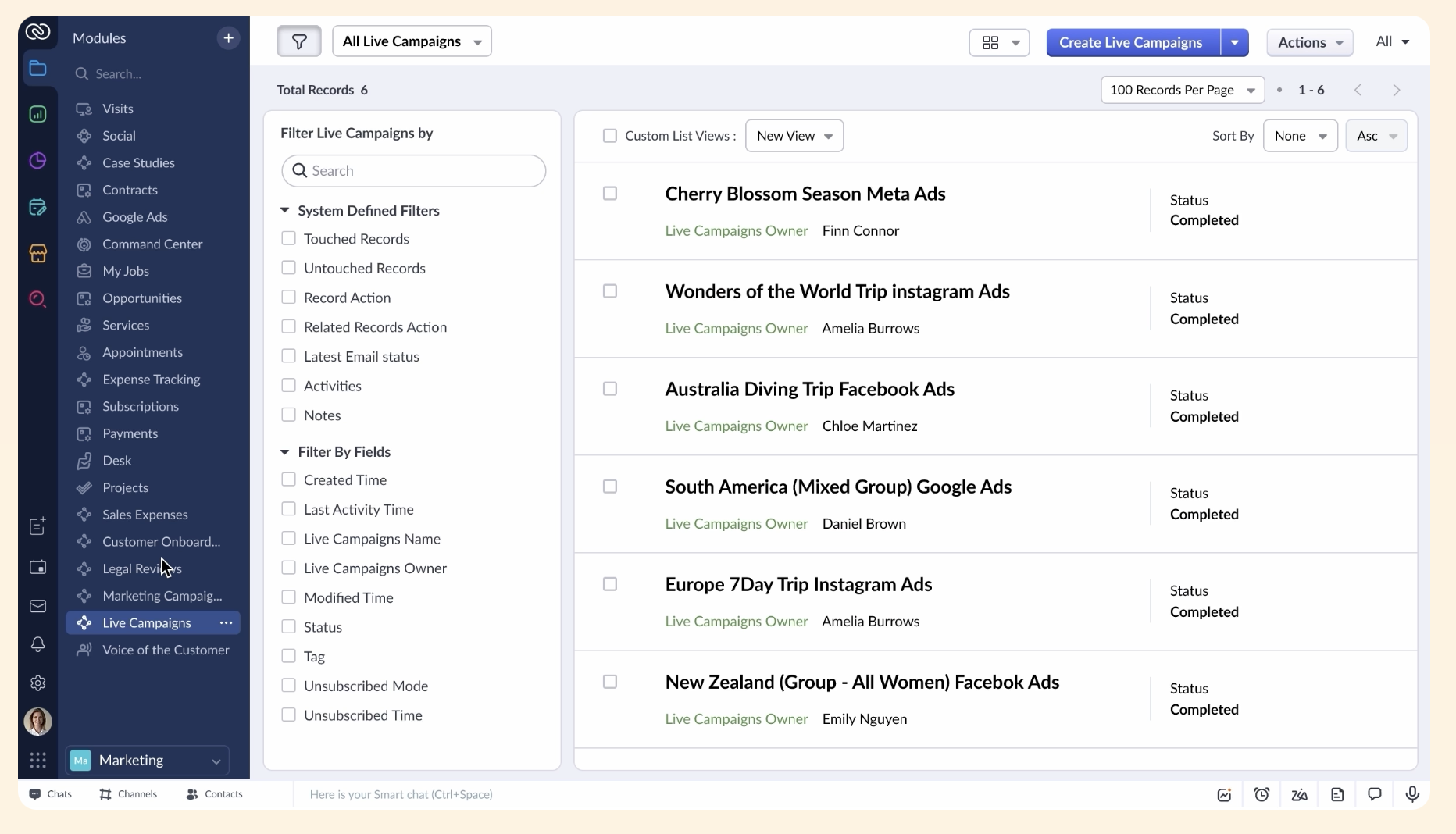
Image source: zoho.com
Overview:
Zoho offers a comprehensive suite of business applications. It is a strong lead management solution for SMBs looking for an all-in-one tool.
Key features:
- Zia AI: An AI assistant that helps with data driven decision making.
- Canvas: Allows you to customize the lead management experience visually.
- Omnichannel: Manages customer interactions across email, social, and phone.
- Journey builder: Orchestrates complex customer journeys to ensure nurturing leads happens automatically based on triggers.
Pricing:
With a free trial. Paid plans start at $14/user/month.
5. Pipedrive: Visual pipeline management built for salespeople
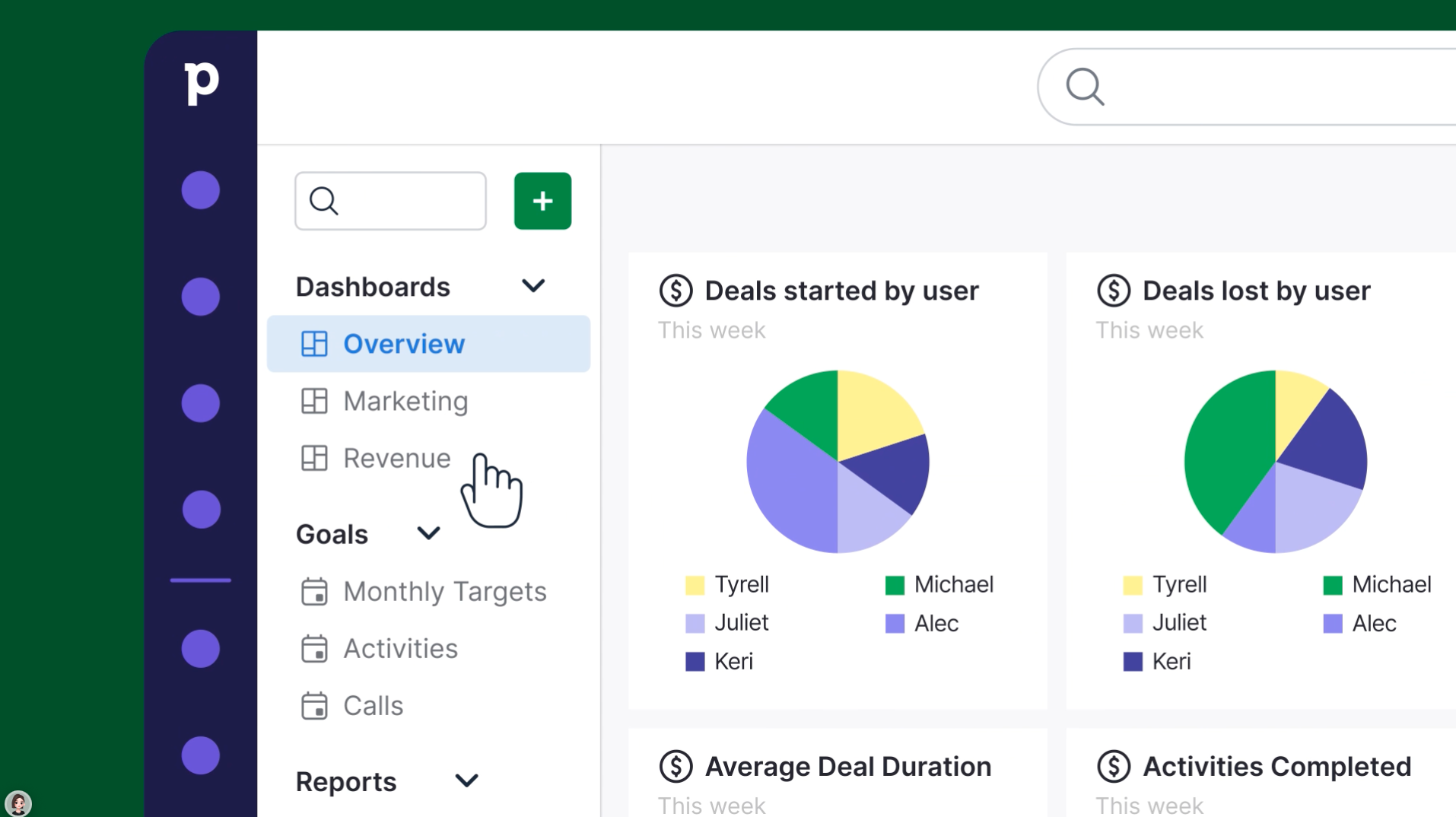
Image source: pipedrive.com
Overview:
Pipedrive was built by salespeople, for salespeople. Its philosophy focuses entirely on activity-based selling and visualizing the sales pipeline.
Key features:
- Visual pipeline: A clean, intuitive interface that lets you see exactly where every potential customer stands in the deal flow.
- Activity reminders: Automatically schedules next steps to ensure timely follow ups are never missed.
- Web forms: Customizable, simple lead capture forms that feed directly into your pipeline.
- AI sales assistant: Offers personalized tips and performance recommendations to improve your results.
Pricing:
With a free plan. Paid plans start at $14/user/month.
6. Monday.com: A flexible Work OS for custom lead workflows
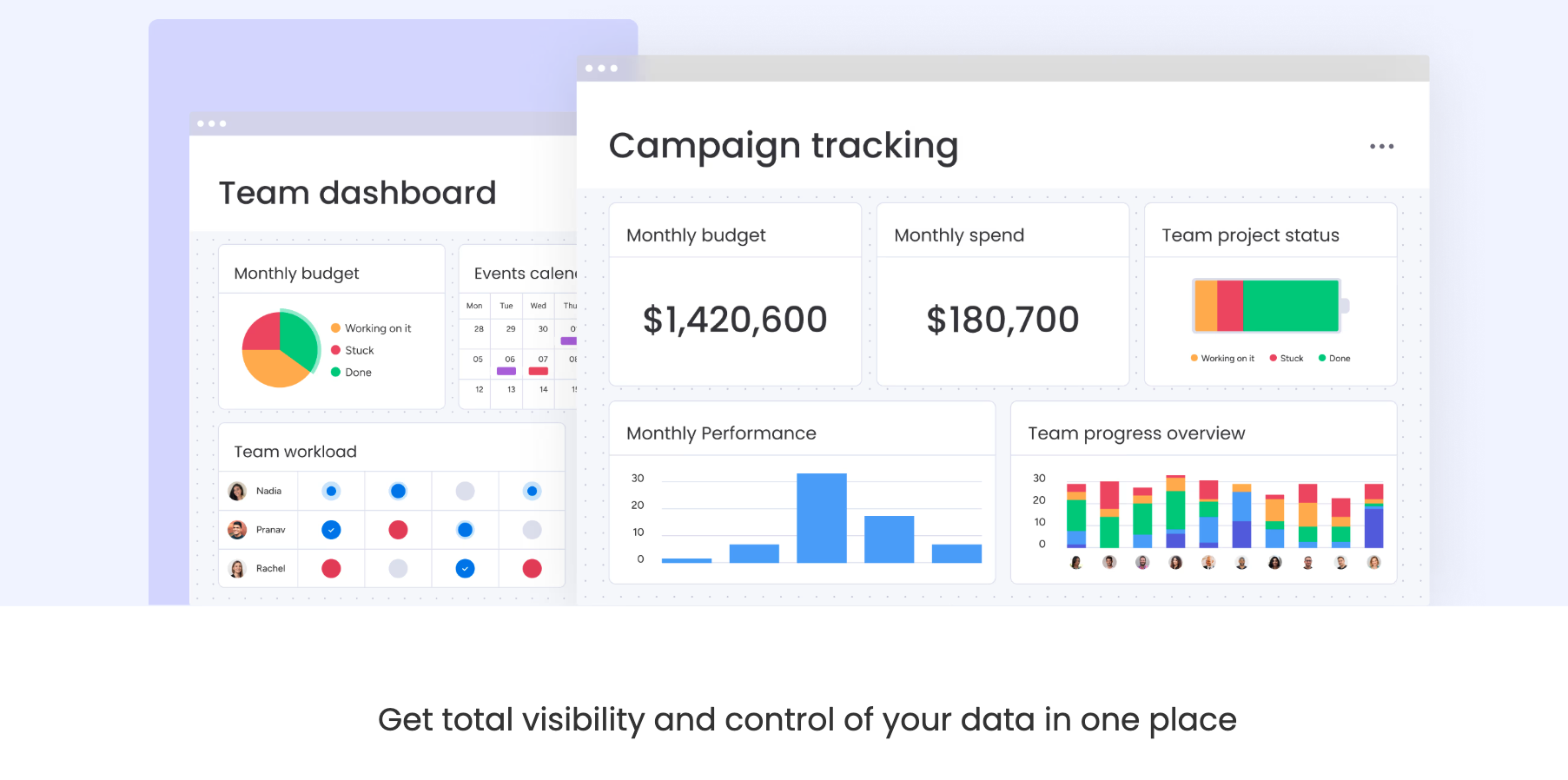
Image source: monday.com
Overview:
While primarily a project management tool, Monday.com acts as a flexible Work OS that can be customized into a lead management system.
Key features:
- Custom boards: Build your lead tracker from scratch with colorful columns and status tags to match your specific lead management strategy.
- Automation recipes: Easy-to-use "if this, then that" advanced automation features to move leads between stages or notify team members.
- Dashboards: Visual reporting tools that provide high-level overviews of team performance and deal progress.
- Form views: Turn any board into a shareable form to collect data from website visitors.
Pricing:
With a free plan for 2 users. Paid plans start at $9/user/month.
7. Zendesk Sell: Unified sales and support for long-term relationships
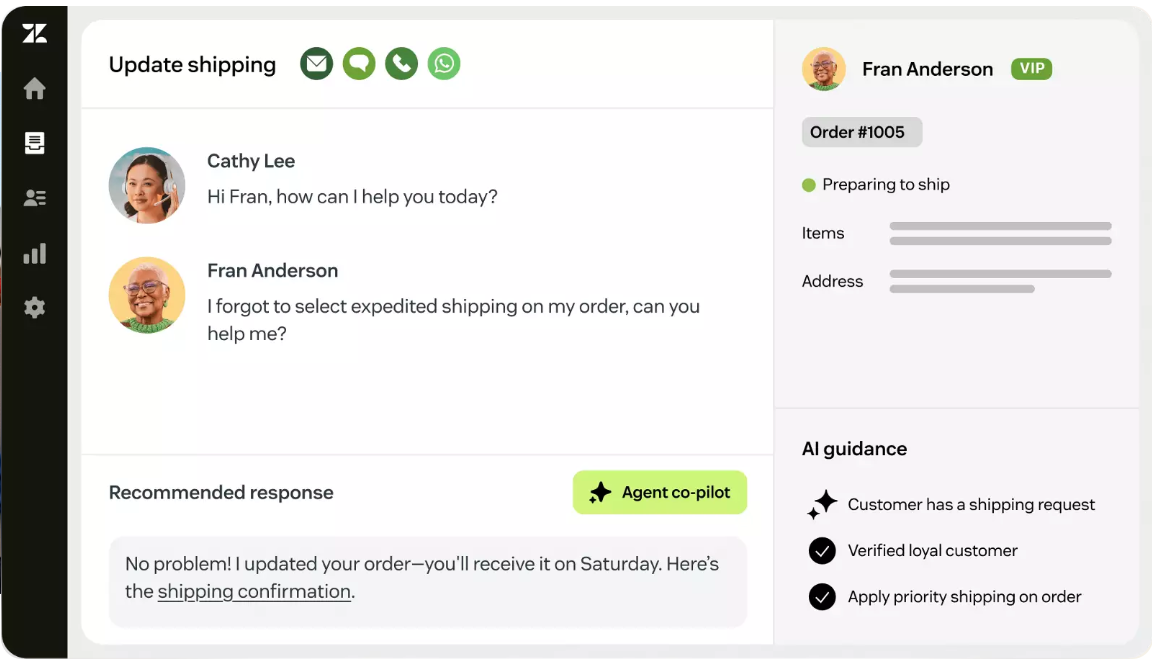
Image source: zendesk.com
Overview:
Zendesk Sell helps teams bridge the gap between sales and support, ensuring high customer satisfaction by providing a complete view of the account history.
Key features:
- Integrated dialer: Make calls directly from the browser.
- Smart lists: Dynamic lists to filter for qualified leads.
- Unified view: See support tickets and sales history for existing customers.
- Email intelligence: Tracking and notifications that tell you when leads engage with your outreach.
Pricing:
No free plan. Paid plans start at $19/user/month.
8. LeadSquared: High-velocity execution for field and remote teams
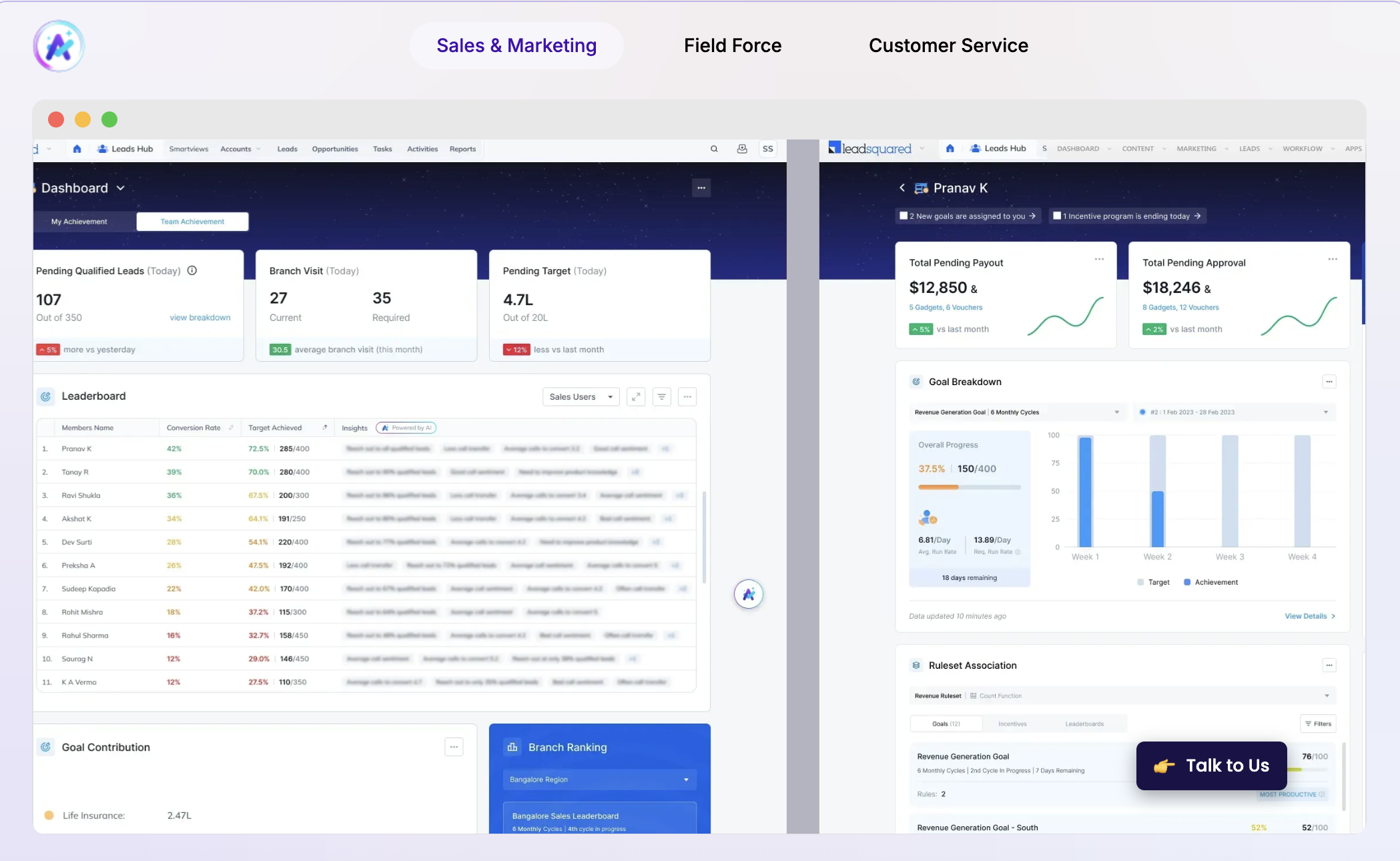
Image source: leadsquared.com
Overview:
LeadSquared positions itself for high-velocity sales environments. It focuses on reducing turnaround time and managing massive volumes of sales leads.
Key features:
- Mobile field force app: Excellent for field sales reps who need to check in, track locations, and update data on the go.
- Marketing automation: Built-in tools to create landing pages and run targeted marketing campaigns.
- Developer API: A flexible environment for building complex custom management solutions and integrations.
- Lead scoring: Assigns quality scores to leads based on their profile and online behavior.
Pricing:
No free plan. Paid plans start at $40/user/month.
9. ActiveCampaign: The powerhouse for email marketing and automation
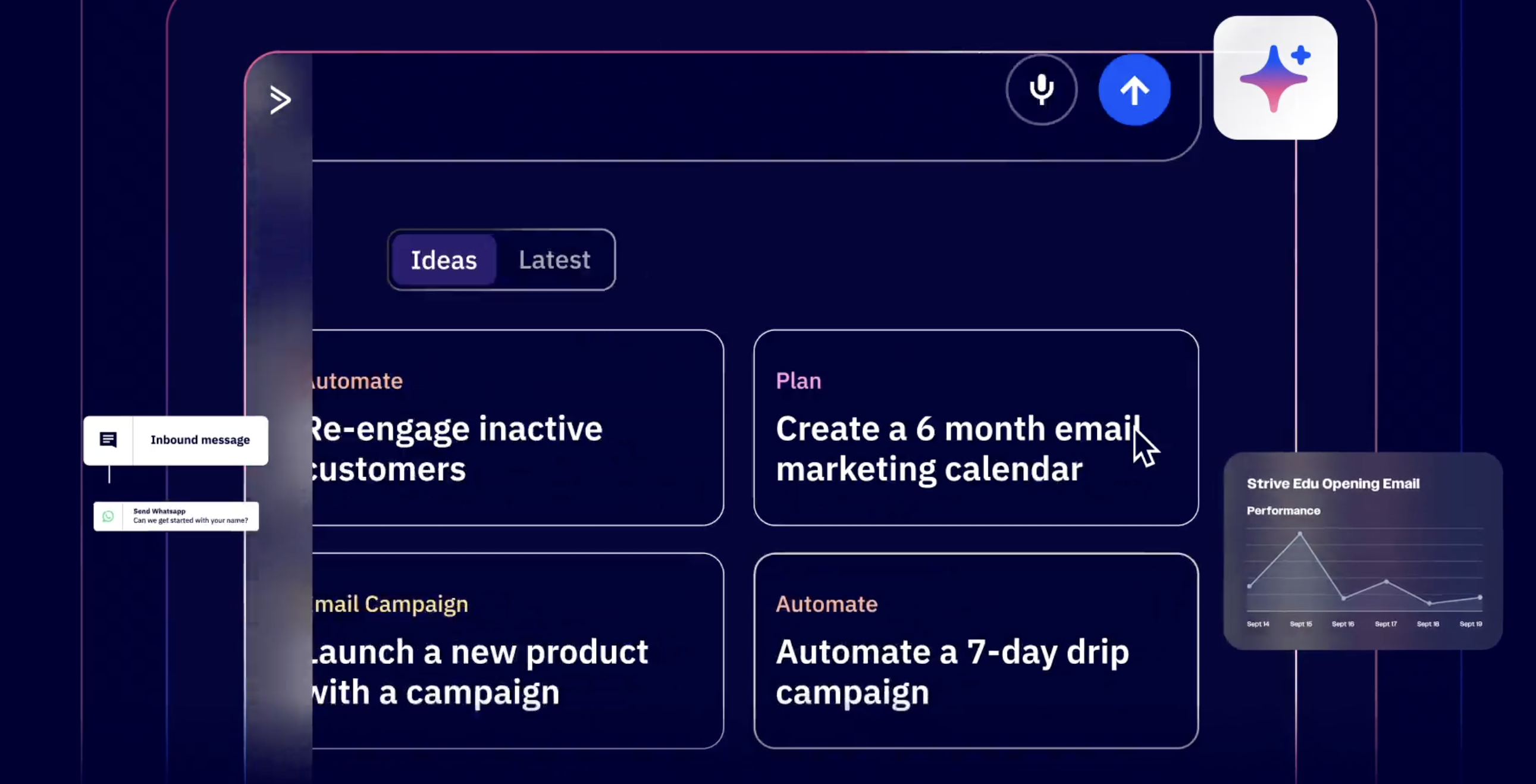
Image source: activecampaign.com
Overview:
If your strategy relies heavily on email, ActiveCampaign is a powerhouse for lead nurturing that goes far beyond basic autoresponders.
Key features:
- Automation builder: One of the most visual and powerful workflow builders for creating personalized marketing campaigns.
- Lead scoring: Sophisticated methods to score leads based on email opens, clicks, and site behavior.
- Predictive sending: Uses machine learning to send emails at the exact time a contact is most likely to open them.
- Dynamic content: Change the text and images in your emails based on the recipient's interests or past actions.
Pricing:
Paid plans start at $15/user/month.
10. ClickUp: The productivity hub replacing scattered sales apps
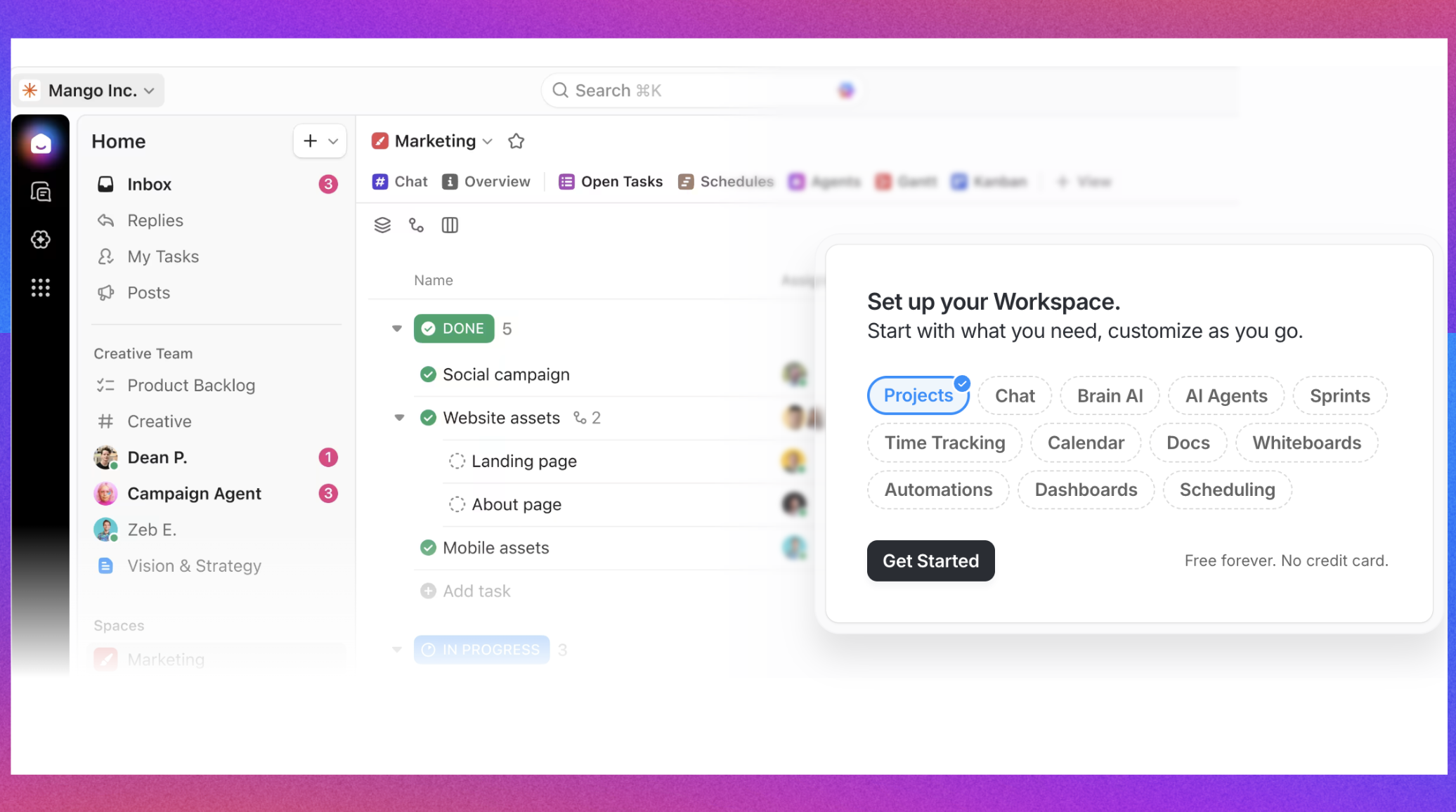
Image source: clickup.com
Overview:
ClickUp is a productivity platform that can replace separate apps, offering a highly customized lead management setup.
Key features:
- Multiple views: View your leads as a List, Board, Table, Calendar, or even on a Map.
- Email in ClickUp: Send and receive emails to manage customer relationships without ever leaving the app.
- Docs: Integrated document creation for wikis, sales scripts, and proposals linked to tasks.
- Custom fields: Add any type of data field to your leads, from dropdowns to progress bars.
Pricing:
With a free plan for limited features. Paid plans start at $7/user/month.
Explore the best lead management service
Why a structured lead management strategy is crucial
The cost of chaos in sales is quantifiable. Without a structured approach, businesses suffer from "lead leakage," where valid inquiries are lost simply because there is no process to catch them. This makes important not just for efficiency, but for survival. Research consistently shows that a significant percentage of new leads are never followed up on, often due to disorganized lead data or unclear responsibilities.
Speed-to-lead is another critical factor that necessitates a professional lead management solution. in the digital age, consumer patience is non-existent. If you cannot deliver immediately after a form submission, you risk losing the prospect. A manual process—checking emails, copying data to a spreadsheet, and then typing a response—cannot compete. You need management software that triggers human action instantly.
Furthermore, a structured lead management strategy provides a "Single Source of Truth." One of the greatest points of friction in business is the misalignment between sales and marketing. Marketing believes they are delivering gold; Sales believes they are receiving dust. A robust lead management process provides objective data on lead quality and attribution, ending the blame game and fostering true revenue alignment.
4 core components of the lead management process
To understand how to build the best lead management framework, we must break down the specific components that drive the entire sales cycle. This is not just about having tools; it is about how those lead management tools are utilized to influence lead behavior.
1. Lead capture and data centralization
It starts with generating leads. Whether they come from social media, email campaigns, or website visitors, all data must flow into a central repository. Effective ensures that you aren't just getting a name, but valuable lead information such as company size, industry, and specific pain points. This foundation of customer data is what fuels the rest of the process.
2. Lead qualification and scoring
Not all interest is equal. Your sales teams should not be wasting time on prospects who have no intention or budget to buy. This is where lead scoring comes in. By assigning points to actions (e.g., visiting the pricing page, downloading a whitepaper), you can score leads based on their engagement level. This separates qualified leads from casual browsers, ensuring your high-value resources focus on potential buyers.
3. Lead nurturing and engagement
Most leads are not ready to buy immediately. They are in the research phase of the customer journey. If you ignore them, they will go to a competitor. involves using marketing automation to send relevant content over time. This keeps warm leads warm and builds trust, so when they are ready to purchase, your brand is top-of-mind.
4. Pipeline management and conversion
Once a lead is handed off to sales, it enters the active sales pipeline. Here, through various stages (Discovery, Demo, Negotiation) is vital. Pipeline management ensures that deals don't stall. It provides visibility into the sales efforts and helps managers forecast revenue accurately.
5 signs your current lead management process is broken
Recognizing the need for change is the first step toward improvement. Many organizations grow so accustomed to their inefficiencies that they don't realize how much revenue they are leaving on the table. Here are five clear indicators that your current lead management experience requires an overhaul.
1. You are plagued by manual data entry
High-performing salespeople should be selling, not typing. If your team spends a significant portion of their day manually entering data from business cards, copying emails into notes, or updating spreadsheet cells, you are wasting expensive talent. Modern management solutions utilize to handle this grunt work, eliminating manual data entry.
2. Marketing and sales are at war
When lead management is poor, communication breaks down. Marketing teams feel unappreciated because they don't see the ROI of their campaigns, while sales teams feel unsupported. If your weekly meetings consist of arguing over the quality of sales leads rather than strategizing on how to convert leads, your infrastructure is likely the culprit.
3. You cannot calculate true ROI
Can you trace your latest closed deal back to the specific blog post that generated it? If the answer is no, you are flying blind. Without end-to-end lead tracking, you cannot optimize your budget. You might be cutting spending on your most profitable channels simply because your tracking software doesn't carry the attribution data through to the sale.
4. Leads are ghosting you
If you get an initial response but then silence, it often indicates a failure in the lead nurturing phase. A lead might be interested but not ready to buy today. A broken process lacks the consistent communication required to guide them through the entire customer journey.
5. Slow response times
If a lead sits in an inbox for hours before being assigned, your lead response time is too slow. In a world of instant gratification, timely follow ups are non-negotiable. If your management system doesn't alert reps immediately, you are losing .
Stop losing revenue to slow responses
Key metrics to measure success
To improve your lead management services, you must measure them. Focus on these critical KPIs to gauge the health of your system.
- Response time: The time between lead capture and first contact. Automation in management software can help reduce this significantly.
- Conversion rate by stage: Identify where leads drop off. Are you losing them during lead qualification or negotiation?
- Lead velocity: How fast does a lead move through the sales funnel? A slow pipeline indicates a need for better lead nurturing.
- Cost per acquisition: Ensure your sales efforts are profitable by tracking the cost relative to new leads acquired.
Best practices for evaluating lead management services
If you are in the market for new lead management tools, it is crucial to look beyond the initial price tag. To ensure a high return on investment and long-term success, keep these three critical best practices in mind during your evaluation process.
Prioritize scalability and growth potential
Your business goal is growth, so your software must be able to grow with you without forcing a painful platform migration later. A system that works perfectly for 100 leads often crumbles under the weight of 10,000. When evaluating services, ask specific questions about data limits, storage costs, and performance speed as database volume increases. You need a solution that remains fast and responsive whether you are a small team or a global enterprise. Look for that allow you to add features and user seats incrementally, ensuring you aren't paying for enterprise features you don't need yet, while knowing they are available when you scale.
Ensure seamless integration or seek an all-in-one ecosystem
Lead management cannot exist in a vacuum; it must act as the central hub that connects all your other business tools. Typically, you should look for tools that offer native integrations with your essential apps like email, calendars, and marketing platforms to prevent manual data entry and information silos.
However, an even more efficient approach is to choose like Lark. Instead of relying on fragile connections between disparate apps, an all-in-one platform inherently unifies your CRM, chat, email, and calendar within a single interface. This eliminates the need for "syncing" entirely, reduces the friction of constantly switching tabs (), and ensures your team works from a single source of truth without the headache of managing multiple software subscriptions.
Demand full mobile accessibility
In the modern sales environment, deals are rarely closed strictly from a desk. Speed is a competitive advantage, and your sales representatives need the ability to work from anywhere—whether they are at a trade show, in a client lobby, or commuting. Reps must be able to access customer history, update deal stages, log calls, and respond to new leads in real-time . This "pocket office" capability ensures that critical follow-ups happen immediately, preventing hot leads from going cold due to travel or time away from the computer.
Conclusion
Lead management is no longer just a back-office task; it is the frontline of your revenue strategy. In an era where loyal customers are hard to win, the businesses that succeed are those that combine smart technology with responsive service. It is not enough to just capture interest; you must honor it with a fast, seamless experience that spans the entire customer journey.
You don't need another expensive database. You need a workspace that brings your marketing and sales teams together. By breaking down silos and automating the busy work, you empower your team to focus on what matters: building relationships. Ready to stop lead leakage? Start building your custom sales pipeline in today and turn your lead management into your competitive advantage.
Visualize stakeholder influence with dynamic maps
FAQs
What does lead management do?
Lead management acts as the operational bridge between marketing and sales. It automates the entire lifecycle of a potential customer, including capturing their data, qualifying their intent, and distributing them to the right sales representatives. Beyond simple tracking, it ensures consistent nurturing, helping businesses organize their pipelines, prevent data leakage, and ultimately convert more raw inquiries into closed revenue through structured workflows.
What is the 3-3-3 rule in sales?
The 3-3-3 rule is a popular framework for structuring follow-up cadences to maintain engagement without overwhelming prospects. It typically suggests checking in with a lead three days after the initial contact, then three weeks later if they remain unresponsive, and finally three months later. This strategy ensures your brand remains on their radar throughout a long decision-making process without becoming a nuisance.
How much should you pay for lead generation?
Costs vary significantly by industry and lead quality. On average, a B2B lead might cost anywhere between $30 and $400. However, raw Cost Per Lead (CPL) is less important than your Cost Per Acquisition (CPA). Ideally, you should pay an amount that ensures your Customer Lifetime Value (CLV) is at least three times your acquisition cost to maintain a healthy profit margin.
What is the 5-minute rule for leads?
The 5-minute rule states that sales representatives should attempt to contact a new lead within five minutes of form submission. Industry data shows that the odds of qualifying a lead drop by nearly 80% after this brief window closes. Instant response times catch prospects while they are still psychologically engaged with your brand, preventing them from moving on to research competitors.
Related reading