














Lead Nurturing Made Easy: Build Trust and Drive Sales

Ryan Tanner
Product Marketing Specialist
Sep 18, 2026
Ryan Tanner
Sep 18, 2026

15 min read


Lead nurturing is the ongoing process of engaging, educating, and building trust with potential buyers throughout their journey. Many businesses focus on capturing leads but neglect developing them. Effective lead nurturing bridges this gap by turning initial interest into meaningful relationships through timely, personalized interactions. It ensures prospects stay engaged, informed, and confident as they move toward a purchase decision. Let's understand lead nurturing and practice this process step by step.

What is lead nurturing?
Lead nurturing is the structured process of developing relationships with potential buyers at every stage of the sales funnel. Instead of pushing for quick conversions, it focuses on consistent, value-driven engagement that builds trust and guides prospects toward a decision. In B2B lead nurturing, this often involves educational content, personalized communication, and timely follow-ups across multiple channels.
Modern teams use lead nurturing software and automated lead nurturing workflows to deliver the right message at the right time—whether through email, chat, or events. A strong lead nurturing strategy combines data insights with automation, ensuring every lead receives relevant attention. This approach improves conversion rates, shortens sales cycles, and enhances customer loyalty.
Platforms like Lark, help unify these efforts by connecting data, communication, and tasks in one place—giving sales and marketing teams the visibility and coordination needed for effective lead nurturing campaigns.
Why lead nurturing matters for revenue growth
Effective lead nurturing directly impacts a company's revenue by ensuring potential buyers receive timely, relevant, and personalized communication. It bridges the gap between interest and purchase, helping businesses build trust and long-term relationships. With data-driven insights and automation, teams can move leads through the funnel more efficiently.
Here's why lead nurturing matters for growth:
- Slow response = lost buyer: In competitive markets, delayed responses often result in lost opportunities. Teams that reply quickly are more likely to connect and convert. Automated follow-ups help maintain consistency and keep leads engaged.
- Nurtured leads buy more and faster: Leads that receive personalized and consistent communication are more likely to purchase. Research shows nurtured leads convert faster and spend more. Regular engagement builds confidence and speeds up decisions.
- Shorter sales cycles with higher win rates: A well-planned nurturing process keeps prospects informed and reduces uncertainty. The result is a faster decision-making process and improved conversion rates. Steady engagement shortens the overall sales cycle.
- Builds credibility for complex B2B decisions: In B2B lead nurturing, multiple stakeholders are often involved in evaluating solutions. Sharing relevant insights, case studies, and success stories builds trust. Over time, this credibility leads to stronger, data-backed decisions.
- Strengthens relationship for renewal + expansion later: Nurturing extends beyond the first sale into post-purchase engagement. Regular communication helps maintain satisfaction and loyalty. Strong relationships built early make renewals and expansions more natural.
Lead nurturing vs. lead generation—key differences
Lead generation and lead nurturing are often mentioned together but serve very different purposes in the sales process. Lead generation focuses on attracting and capturing new prospects, while lead nurturing develops those leads into ready-to-buy customers. Both are essential for a healthy pipeline—one fills the funnel, and the other ensures it flows efficiently. Understanding how they differ helps teams balance outreach and relationship-building for better conversions.
Lead generation | Lead nurturing |
Capturing leads | Developing leads |
Marketing-focused | Cross-team execution |
First impression | Relationship over time |
Volume | Quality + conversion |
- Capturing vs. Developing leads: Lead generation focuses on the first interaction—collecting data from website forms, downloads, or events. This step fills the database with potential buyers. It's about reach and visibility rather than readiness to buy. Lead nurturing focuses on deepening the relationship by sharing valuable information and addressing buyer needs. It helps qualify leads based on intent and readiness. This stage transforms potential interest into active demand.
- Marketing vs. Cross-team: Lead generation is primarily handled by the marketing team using campaigns, ads, and social media outreach. The objective is to generate traffic and awareness at scale. It's a volume-driven approach to discover new leads. Lead nurturing involves joint effort from marketing, sales, and support to guide leads through the funnel. Collaboration ensures consistent messaging and timing. Shared visibility helps teams act on real buyer signals.
- One time vs. Continuous: Lead generation establishes initial awareness of your product or service. The focus is on attracting attention and delivering a compelling reason to learn more. It's the starting point of the buyer's journey. Lead nurturing builds trust and credibility through ongoing, meaningful communication. It ensures leads remain engaged even during longer decision cycles. Over time, it converts awareness into commitment.
- Volume vs. Quality: Lead generation measures success by the number of new leads captured. High volume doesn't always equal high quality. The emphasis is on scale and visibility. Lead nurturing measures success by engagement, lead quality, and conversion rates. The emphasis is on nurturing fewer but more qualified leads. Quality-driven processes lead to stronger customer relationships and higher revenue.
Lead nurturing strategies that actually convert
Successful lead nurturing depends on strategy, timing, and personalization. It's not about sending generic follow-ups but creating meaningful interactions that guide buyers naturally through the funnel. The most effective programs combine automation, data, and human connection to build trust.
Here are strategies that help turn leads into loyal customers:
- Personalized messaging based on lifecycle stage: Every lead is at a different stage in the buyer journey, from awareness to decision. Tailor communication to match their intent and readiness. Personalized content shows relevance and keeps leads moving forward.
- Value-driven education: webinars, case studies, feature updates: Educate prospects with valuable insights instead of sales pitches. Share success stories, webinars, and product updates to demonstrate impact. Consistent education builds confidence and positions your brand as a trusted advisor.
- Scheduled follow-ups aligned to buyer timeline: Timely follow-ups prevent leads from going cold. Automate reminders based on actions like downloads or demo requests. Aligning communication with the buyer's pace improves engagement and conversion.
- Behavior-based outreach (e.g., demo page visits): Use behavioral data to trigger targeted actions. When a prospect revisits key pages, sends personalized messages or assign follow-ups. Responding to real-time intent increases the chances of meaningful conversations.
- Multi-channel consistency: email + chat + meetings: Engage leads across multiple channels for stronger recall. Combine email, chat, and meetings to create a cohesive experience. Consistency reinforces trust and ensures messages don't get lost in a crowded inbox.
- Clear ownership and accountability for every touchpoint: Assign clear responsibilities across teams for every lead interaction. Shared visibility helps track progress and avoid duplicate efforts. Accountability ensures no lead is left unattended throughout the journey.
How Lark helps teams nurture leads into customers
Turning leads into customers requires speed, context, and collaboration—and that's where Lark brings everything together. By unifying data management, communication, and automation, teams can manage every stage of the lead nurturing process within a single workspace. Sales and marketing no longer work in silos; instead, they share real-time visibility into lead progress. With Lark, nurturing becomes a seamless, coordinated effort that turns interest into lasting relationships.
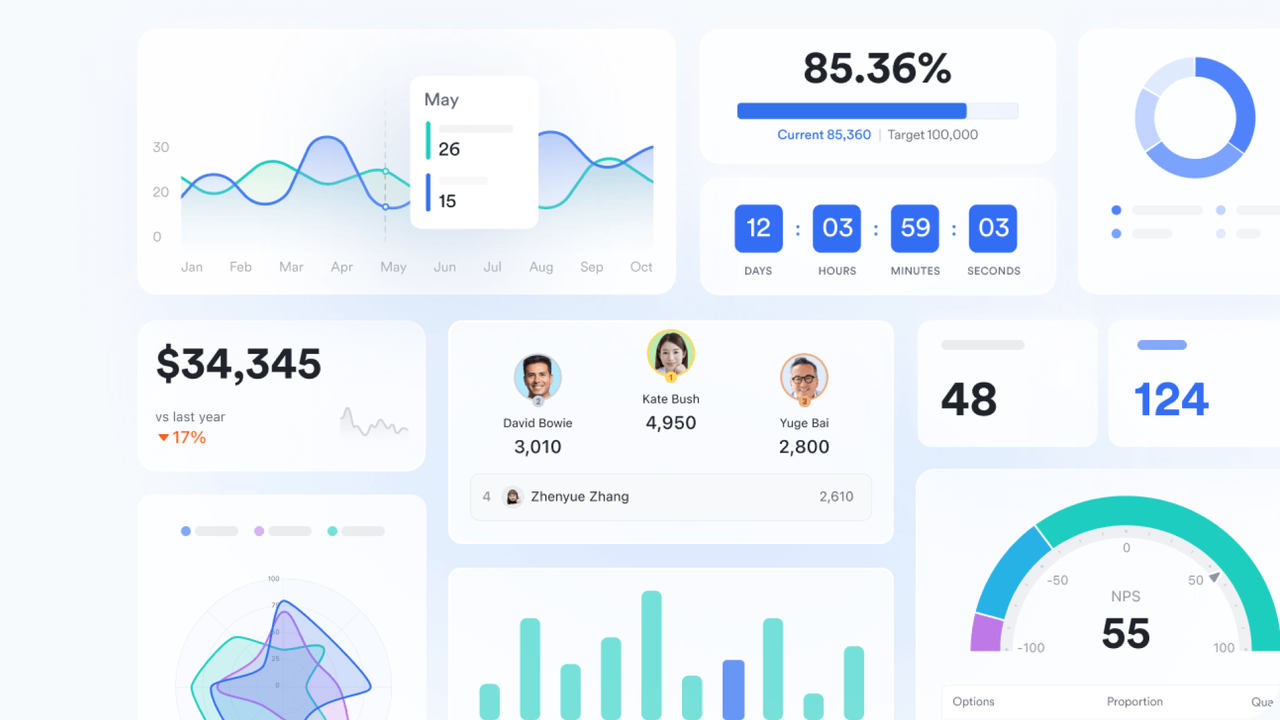
- Lark Base: Lifecycle visibility and qualification clarity
Every lead's information—profile, behavior signals, conversation history, and funnel stage—is stored in one shared Lark Base workspace. Teams see exactly who is still evaluating, who requested a demo, and who is stuck. Multiple views, like Kanban, Grid, and Gantt, help monitor movement through the nurturing journey. Stagnant leads can be flagged automatically, ensuring no one is forgotten. With unified context, sales and marketing finally operate from the same truth—improving conversions at every touchpoint.
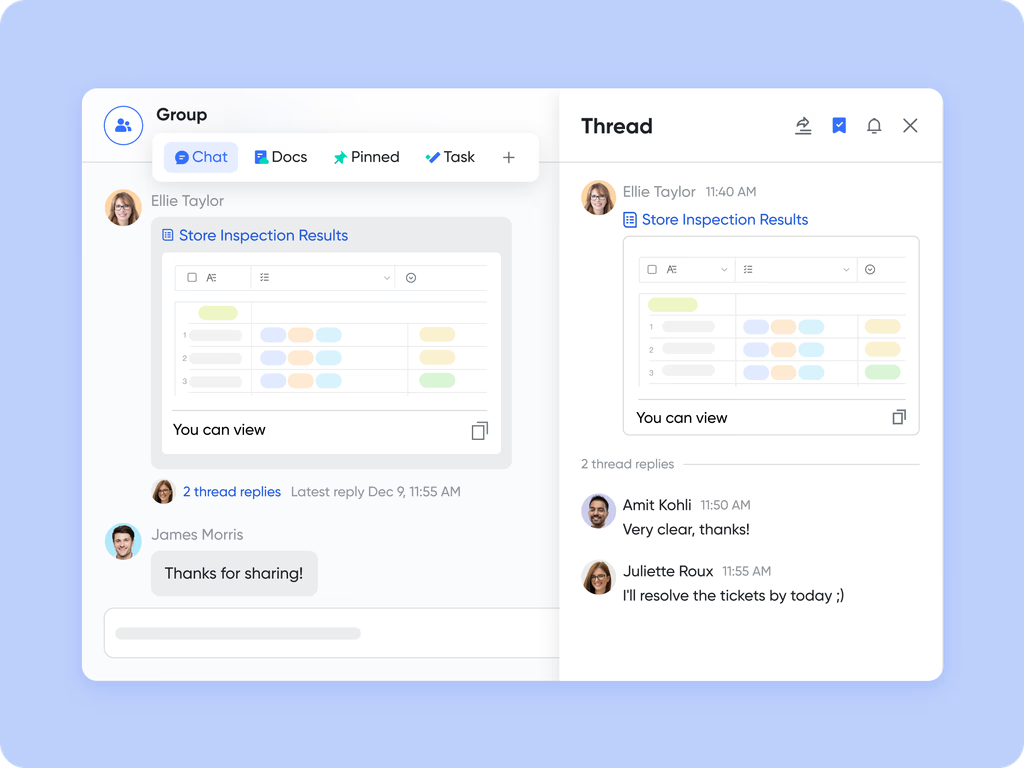
- Lark Messenger: Respond faster and strengthen buyer trust
Immediate follow-up is the heart of nurturing. Lark Messenger channels keep every conversation tied to the exact lead record—so when prospects ask questions, teams can respond fast with the right information. Internal collaboration happens instantly: a rep can tag product or legal for clarification in the same thread. The result is fewer delays, fewer drop-offs, and prospects who feel supported instead of chased.
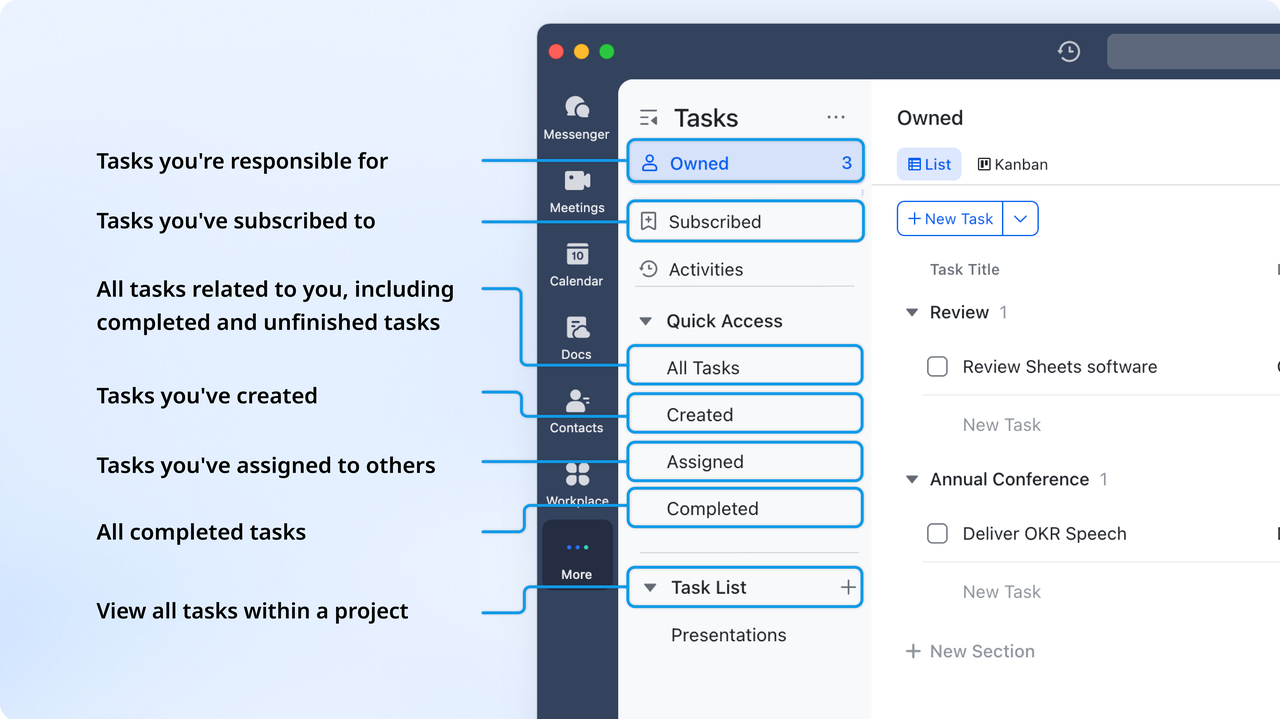
- Lark Tasks: Automate next steps so momentum never breaks
Every lead requires scheduled touchpoints—follow-up calls, content delivery, POC status checks. Lark Tasks assigns owners, sets deadlines, and sends reminders automatically based on funnel progress. When a prospect opens pricing or attends a webinar, a task is triggered to check in while interest is high. This consistency turns unpredictable nurturing into repeatable success.
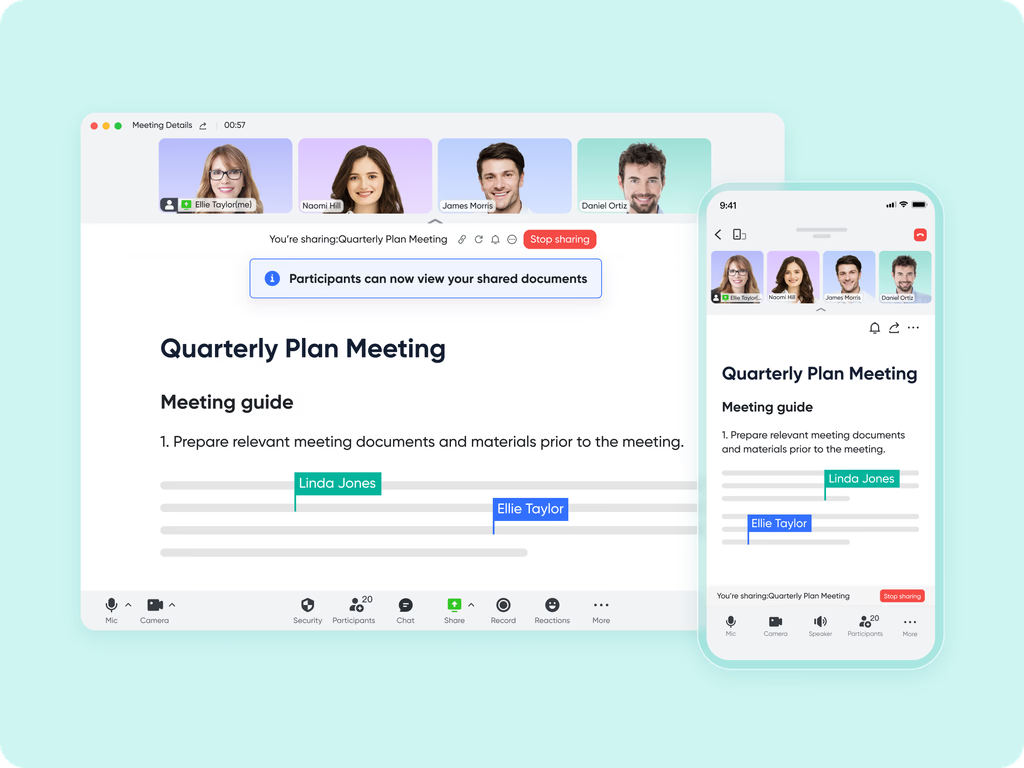
- Lark Meetings & built-in Magic Share: Convert nurture calls into decisions
Discovery meetings should push the lead forward—not end with "We'll update the deck later." Magic Share in Lark Meetings lets teams open the lead plan or Q&A log directly inside the call and edit it together. On the shared living document, everyone sees real-time updates, and discussions happen instantly. This turns nurture calls into clear progress—not postponed decisions.
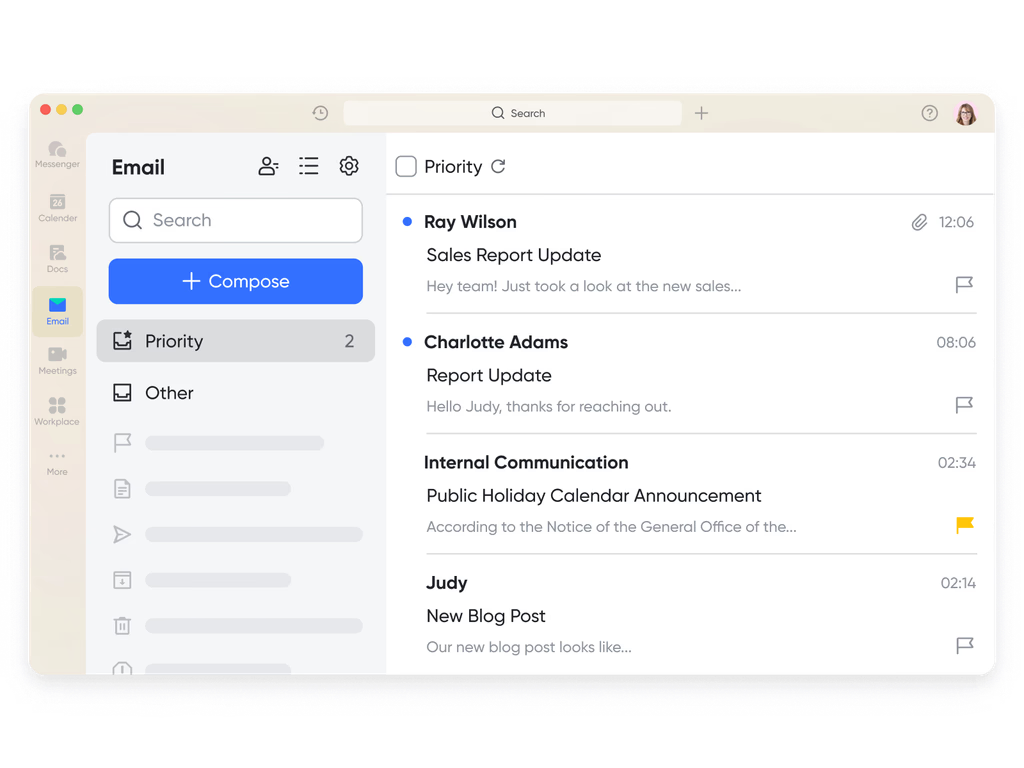
- Lark Mail: Manage external outreach without losing context
Email remains a major nurturing channel—but it becomes a black box when handled separately from CRM data. Lark Mail keeps messages next to lead details, timelines, follow-ups, and notes. When prospects reply, the team sees the history, not just a single email. Communication stays seamless—perfect for long evaluation cycles.
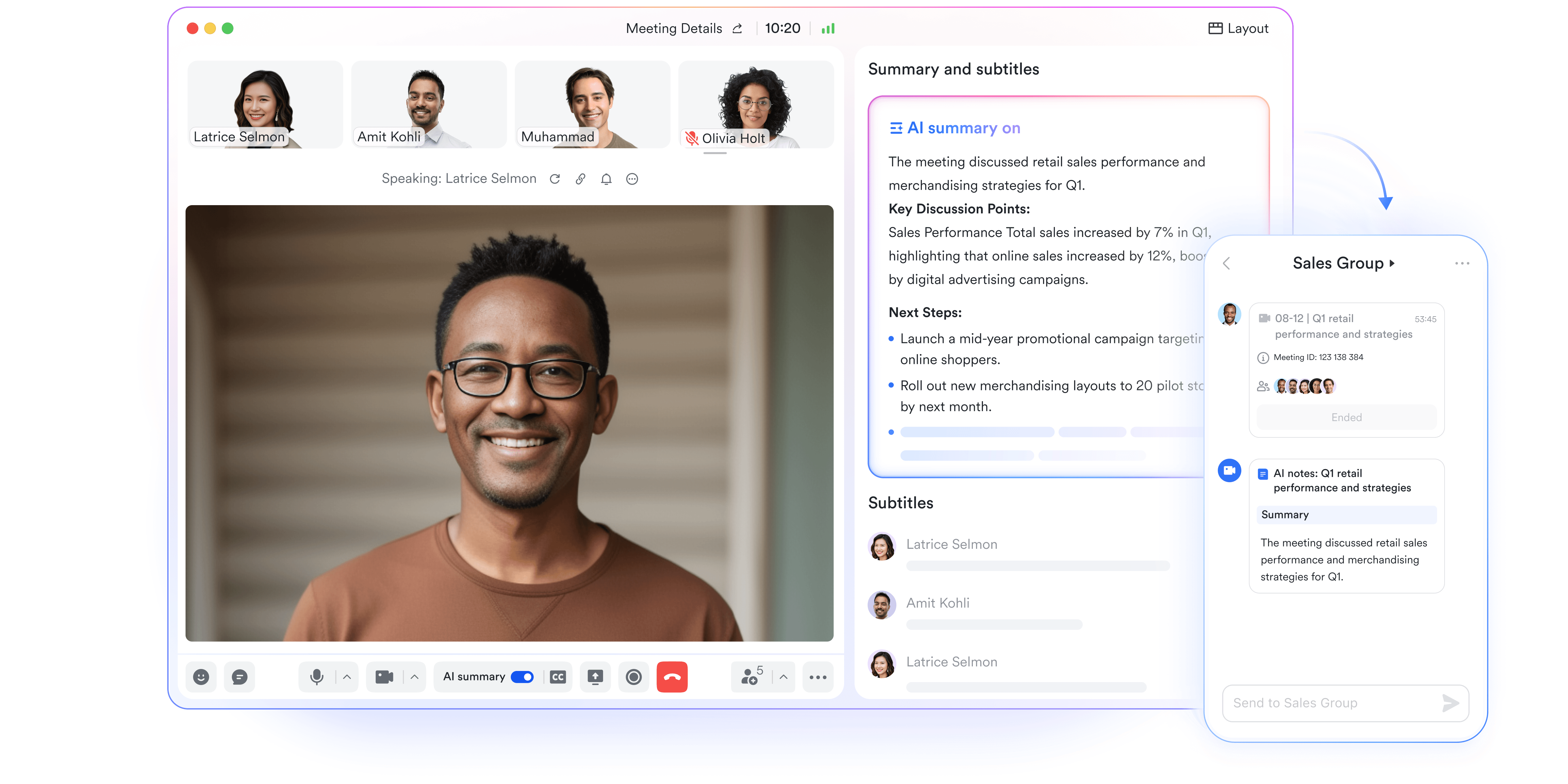
- Lark AI Meeting Notes: Automatically record buyer needs and commitments
Qualification notes, objections, and promised follow-ups often get lost after the call ends. AI Meeting Notes generates a structured recap including what the buyer wants next, stakeholders involved, and deadlines. These summaries sync back to the lead record—so anyone stepping in can nurture with full context. No miscommunication, no lost momentum.
- Starter plan: Free forever plan that includes 11 powerful tools for up to 20 users. It also comes with 100GB of storage, 1000 automation runs, AI translations, and more.
- Pro plan: $12/user/month (billed annually) for up to 500 users. It includes everything in Starter plus group calling for up to 500 attendees, 15TB of storage, 50,000 automation runs, and more.
- Enterprise plan: Contact sales for custom pricing. Supports unlimited users and includes even more automation runs and advanced security, compliance, and management features.
Lead nurturing templates to start fast
Getting started with lead nurturing is easier when you have ready-to-use templates that streamline tracking, follow-ups, and engagement. Lark offers customizable templates designed to help teams organize leads, automate workflows, and monitor progress from first contact to conversion. These templates save time, reduce manual effort, and ensure no lead is forgotten.
Here are some useful options to build your nurturing process faster:
- Lead conversion tracker: Track every stage of your lead's journey, from first inquiry to final sale. This template helps visualize conversion rates and pinpoint where prospects drop off. It's ideal for optimizing the overall nurturing funnel.
- Real estate lead tracker: Perfect for real estate teams managing multiple listings and prospects. Keep property interests, client preferences, and communication history organized. It ensures timely follow-ups and stronger client relationships.
- Sales leads management: Centralize all lead data, assign owners, and track engagement across the pipeline. This template makes it easy to prioritize high-intent leads. It improves coordination between marketing and sales teams.
- Lead generation form for sales leads managers: Capture leads efficiently with pre-designed fields and automation. Submissions instantly flow into your workspace for follow-up. It simplifies lead collection while ensuring clean, structured data.
- Lead generation effectiveness: Measure how well your campaigns attract and convert leads. This template highlights source performance and ROI for each initiative. Use it to identify which efforts drive the best-quality leads.
- Sales tracker lead analysis and follow up: Monitor sales activities, outreach efforts, and response outcomes in one place. It helps maintain visibility across the entire sales team. Consistent tracking ensures timely, effective nurturing at every step.
- Marketing lead scoring sheet: Evaluate leads based on behavior, engagement, and readiness to buy. This scoring system helps prioritize where to focus efforts. It brings clarity to decision-making and improves overall conversion efficiency.
Lead nurturing best practices
Strong lead nurturing depends on consistency, collaboration, and timing. The best teams combine automation with a human touch—ensuring that every prospect receives the right message at the right time. Following structured best practices helps maintain momentum and improves both conversion rates and customer trust.
Here are key principles to build a practical nurturing framework:
- Respond within minutes: Speed is critical in converting interest into engagement. Quick replies show professionalism and commitment to helping the buyer. A fast response also prevents competitors from stepping in first.
- Align with buyer goals at every stage: Each interaction should reflect the buyer's evolving needs and priorities. Tailor messages and resources to their current decision stage. Alignment builds trust and strengthens long-term relationships.
- Data + tasks + conversations in one place: Centralizing all lead information avoids confusion and duplication. When teams share context, collaboration becomes seamless. Unified visibility improves accuracy and shortens response times.
- Weekly pipeline and engagement review: Regular reviews help identify stalled leads and new opportunities. Teams can adjust messaging or follow-up strategies based on data. Consistent evaluation keeps the nurturing process proactive and focused.
- Automate routine steps to focus on value conversations: Automation handles repetitive tasks like reminders and scheduling. This frees up time for personalized, high-impact interactions. By focusing on value-driven conversations, teams build stronger buyer connections.
Conclusion
Effective lead nurturing turns initial interest into lasting customer relationships through timely communication, personalized engagement, and consistent follow-ups. It's not just about generating leads but developing them with care and strategy to maximize conversions and retention. When teams align around shared insights and clear workflows, nurturing becomes a predictable growth driver.
With Lark, businesses can bring every part of this process together—from data and communication to automation—enabling teams to collaborate seamlessly and move leads through the funnel with speed and precision.
FAQs
How long does lead nurturing take in B2B?
Lark makes B2B lead nurturing faster and more efficient by keeping communication, data, and workflows in one place. Typically, nurturing can take anywhere from a few weeks to several months, depending on deal complexity. The process continues until a lead is ready to buy, driven by steady engagement and personalized outreach. Patience, consistency, and trust are key to success.
Which channels work best for nurturing leads?
A combination of email, chat, social media, and meetings delivers the best results. Each channel contributes to maintaining interest and building credibility with prospects. Consistent, coordinated outreach across platforms keeps communication active. This multichannel approach ensures no opportunity is missed.
How do you measure success of lead nurturing?
Success is measured through conversion rates, engagement metrics, and deal progression. Tracking response time, lead score growth, and win rates provides valuable insights. These indicators help identify what's working and where to improve. Regular analysis keeps the nurturing process effective and adaptive.
Does AI improve lead nurturing?
AI enhances nurturing by automating follow-ups, scoring leads, and predicting buying intent. It helps teams focus on high-potential opportunities while saving time. Smart insights enable more targeted, timely communication with prospects. The result is higher efficiency and better conversion outcomes.
What role does Product/CS play in nurturing?
Product and Customer Success teams extend nurturing beyond the initial sale. Their involvement drives product adoption, satisfaction, and long-term loyalty. By sharing customer insights, they support cross-sell and renewal opportunities. Continuous engagement ensures stronger relationships and sustained growth.
Related reading
Table of contents
Start using Lark today

Manage all your work in one place
Boost team efficiency by 10x
Save up to 70% on software costs
Table of contents
Start using Lark today
Manage all your work in one place
Boost team efficiency by 10x
Save up to 70% on software costs
Keep reading







2026 Lark Technologies Pte. Ltd.
Headquartered in Singapore with offices worldwide.






Explore: