Every team encounters setbacks—systems fail, launches miss expectations, campaigns underperform, and deadlines slip. What truly differentiates high-performing teams from those that repeat mistakes is how they learn once things go wrong. This is where post-mortem meetings matter. A post-mortem meeting isn't about blame, excuses, or surface-level damage control. At its core, it's a structured learning ritual that helps teams clearly understand what happened, why it happened, and how to prevent similar issues in the future. When executed well, post-mortems transform short-term failures into long-term operational improvements.
In this guide, we explore the meaning of post-mortem meetings, when to run them, what makes them effective, practical agendas, real-world examples, and how tools like Lark can quietly support turning insights into action—without letting lessons fade into forgotten documents.
Strengthen team learning after every project
What post-mortem meetings really mean
Post-mortem meetings really mean creating a deliberate pause after an incident, project, or missed outcome to learn before moving on. They are not about assigning blame or defending decisions, but about building a shared, of what actually happened. A good post-mortem examines timelines, assumptions, dependencies, and handoffs to uncover why results differed from expectations. It focuses on systems and processes rather than on individuals, recognizing that most failures arise from complex interactions, not from single mistakes. Post-mortems also foster psychological safety by giving teams a structured space to speak openly without fear of judgment.
At a deeper level, they signal that learning is more important than appearance. When practiced consistently, post-mortem meetings become a mechanism for organizational memory—capturing insights that inform future planning, reduce repeated errors, and . In essence, post-mortems turn failure from liability into a source of long-term improvement and operational resilience.
When teams should run post-mortem meetings
Post-mortem meetings are most effective when deliberately triggered, not emotionally. Running them at the right moments ensures teams extract learning while events are still fresh and decisions are grounded in facts rather than assumptions.
- After incidents, outages, and missed deadlines: When systems fail or timelines slip, teams should revisit what happened as soon as stability is restored. This is where the meaning of the post-mortem meeting becomes clear—understanding root causes, dependencies, and decision gaps before similar failures recur.
- Following major launches or projects: Large launches deserve review regardless of success or failure. Running effective post-mortem meetings after identify what scaled well, what created friction, and what should change before the next initiative.
- As part of continuous improvement cycles: Post-mortems don't need dramatic failures to be valuable. When embedded into , they help teams refine processes incrementally and build long-term operational maturity without waiting for something to go wrong.
Effective post-mortem meetings: What separates good from bad
Not all post-mortem meetings lead to improvement. The difference between and frustrating discussions lies in how conversations are structured, facilitated, and focused.
- Psychological safety and neutral facilitation: Teams need confidence that speaking honestly won't lead to blame or consequences. A neutral facilitator helps keep discussions constructive, balanced, and centered on learning rather than defensiveness.
- Evidence-based discussion vs opinions: Strong post-mortems rely on timelines, data, logs, and documented decisions instead of personal interpretations. Facts reduce bias, align participants with reality, and prevent debates from turning subjective.
- Focusing on systems and decisions, not individuals: Effective meetings , assumptions, and constraints that shape outcomes. By analyzing systems instead of people, teams uncover repeatable fixes rather than isolated explanations.
A practical post-mortem meeting agenda
A clear agenda keeps post-mortem meetings focused, balanced, and outcome-driven. It ensures teams move logically from understanding events to agreeing on concrete improvements.
- Incident or project summary: Begin with a shared, factual overview of what happened and when. This aligns participants with scope, impact, and before analysis begins.
- What went well: Identify actions, decisions, or systems that worked as intended. Recognizing strengths prevents overcorrection and reinforces practices worth repeating.
- What didn't go as expected: Discuss gaps between plans and reality without assigning blame. This step surfaces friction points, breakdowns, and unexpected dependencies.
- Root causes and contributing factors: Analyze why issues occurred, looking beyond surface symptoms. Focus on process design, assumptions, and systemic constraints that shape outcomes.
- Action items and owners: End with , assigned owners, and timelines. This turns reflection into accountability and ensures lessons lead to change.
Examples of post-mortem meetings in real teams
Post-mortem meetings apply across functions, not just technical teams. The structure remains similar, but the focus shifts based on goals, risks, and outcomes unique to each domain.
- Engineering incident post-mortem: Engineering teams review outages by reconstructing timelines, system behavior, and decision points. The goal is to identify technical and process weaknesses that could lead to recurring failures.
- Marketing campaign post-mortem: Marketing post-mortems against goals, audience response, and channel effectiveness. Teams analyze messaging, timing, and execution gaps to improve future campaigns.
- Operations or customer support post-mortem: Operations and support teams examine service breakdowns, response times, and escalation paths. These reviews focus on improving workflows, staffing models, and consistency in .
Identifying lessons is only the first step; the real challenge is making sure those insights don't get lost once the meeting ends. Post-mortem discussions often span documents, chats, meetings, and follow-up tasks across multiple teams. Without a shared workspace, context fragments and accountability weaken. This is where a unified platform like Lark helps teams move from reflection to coordinated, sustained action.
Make post-incident reviews more effective
How Lark supports structured, actionable post-mortem meetings
Post-mortem meetings are most effective when insights, discussions, and follow-ups live in one connected place. Without structure, even well-run reviews can turn into scattered documents and forgotten action items. supports post-mortem meetings , and execution tightly linked. Teams can capture what happened, discuss why it happened, and assign next steps without switching . This continuity helps ensure post-mortems remain practical, traceable, and focused on long-term improvement rather than one-time reflection.
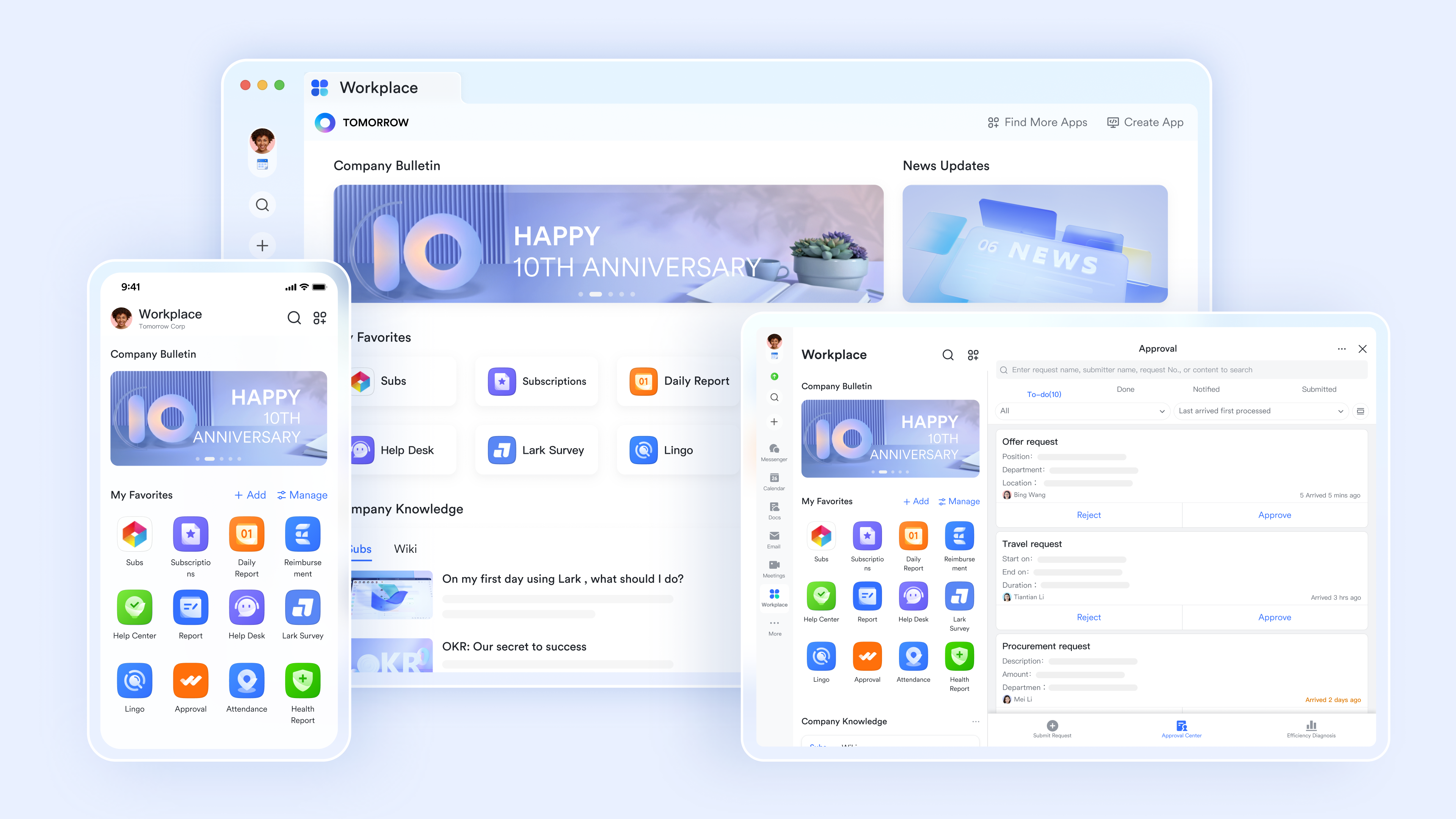
Seamless communication with robust conference features
As your main virtual conferencing hub, allows you to open meetings directly from group chats. During the session, interactive polls allow for the collection of anonymous, real-time feedback on incident causes and team sentiment, which can later be exported for data-driven analysis. To maintain a focused yet inclusive environment, in-meeting chat and emoji reactions let participants share insights or show support without interrupting the speaker, while live translation and subtitles break down language barriers, ensuring every team member can exchange ideas smoothly. 
Interactive review, comment, and brainstorming
During the post-mortem meeting, Lark Meetings' Magic Share feature transforms the experience from a passive presentation into a collaborative workshop. When a presenter shares a document in a Lark Video Call, it doesn't just broadcast their screen; it lets every participant scroll, click, and independently within the meeting window. This is critical for post-mortems because it allows team members to jump to specific sections of the timeline or add their own "Lessons Learned" in real time without interrupting the speaker's flow. 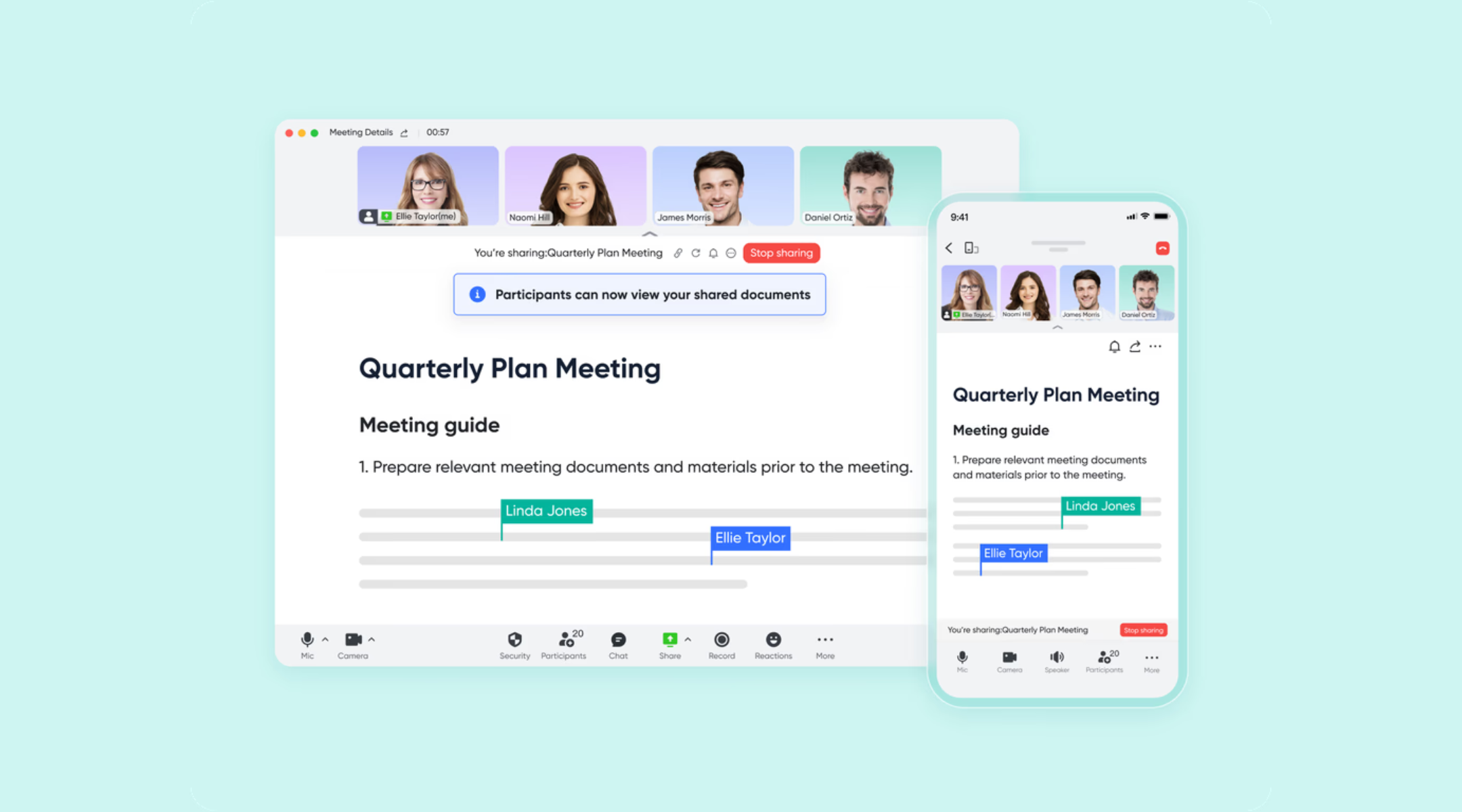
Automated meeting transcripts for deep insights
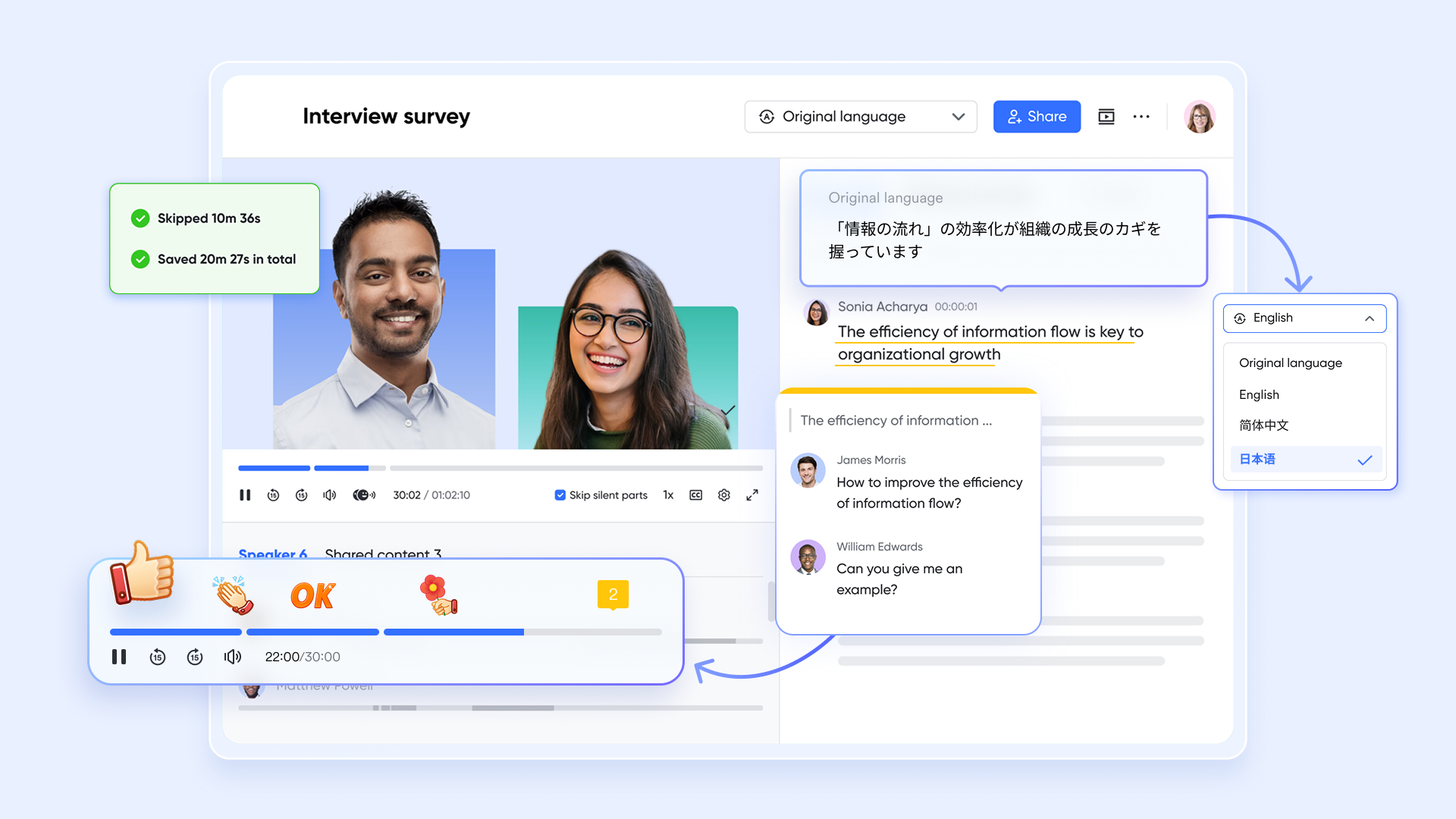
To ensure the "why" behind an incident is captured without distracting the team, provides AI-powered recording and transcription, creating a searchable, timestamped record of the entire discussion. By enabling AI summary, can automatically summarize the meeting into digestible insights for post-session reflection. These tools identify key themes and highlight "Action Items," allowing absent team members to quickly catch up on the technical logic used to determine the root cause.
Centralized knowledge platform for document collaboration
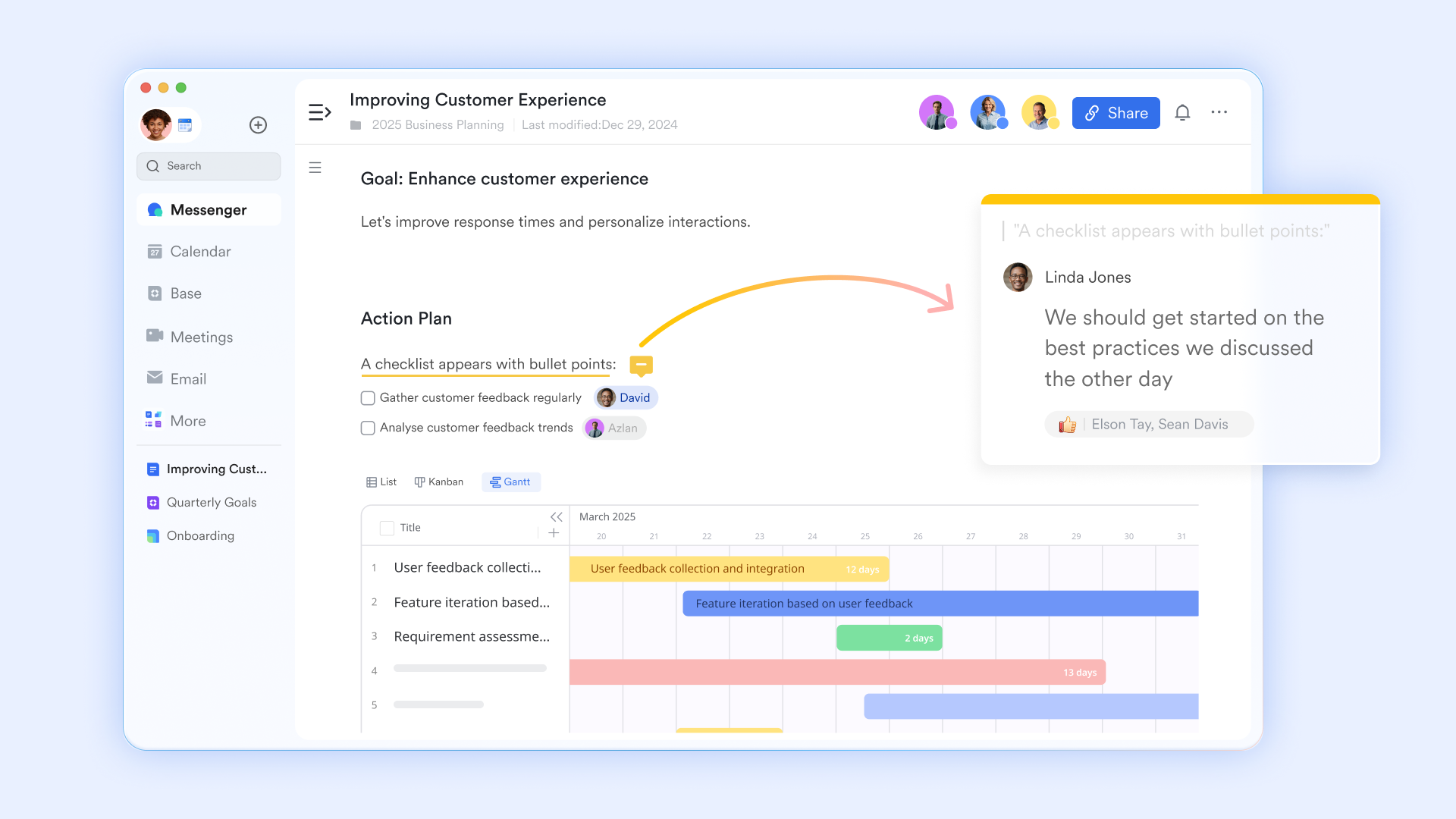
The foundation of a good post-mortem is a single source of truth. allows teams to move beyond static text by embedding rich media, code blocks, and interactive widgets. Instead of just writing what happened, engineers can embed the actual code snippets or system logs directly into the document. Because , the doc becomes a living record where multiple stakeholders can contribute to the "Incident Timeline" simultaneously during the investigation phase, ensuring no perspective is missed.
Direct accountability and granular task execution
The most common failure of a post-mortem is the lack of follow-through. Lark solves this through in-doc tasks, which allow you to highlight any text in your post-mortem report and instantly convert it into a formal task. These tasks are not just text; they are linked to the Lark Tasks system, meaning the assignee receives a notification in their chat and the task appears in their . This creates a direct bridge between the "Lesson Learned" from the meeting and the actual work required to prevent the issue from recurring. 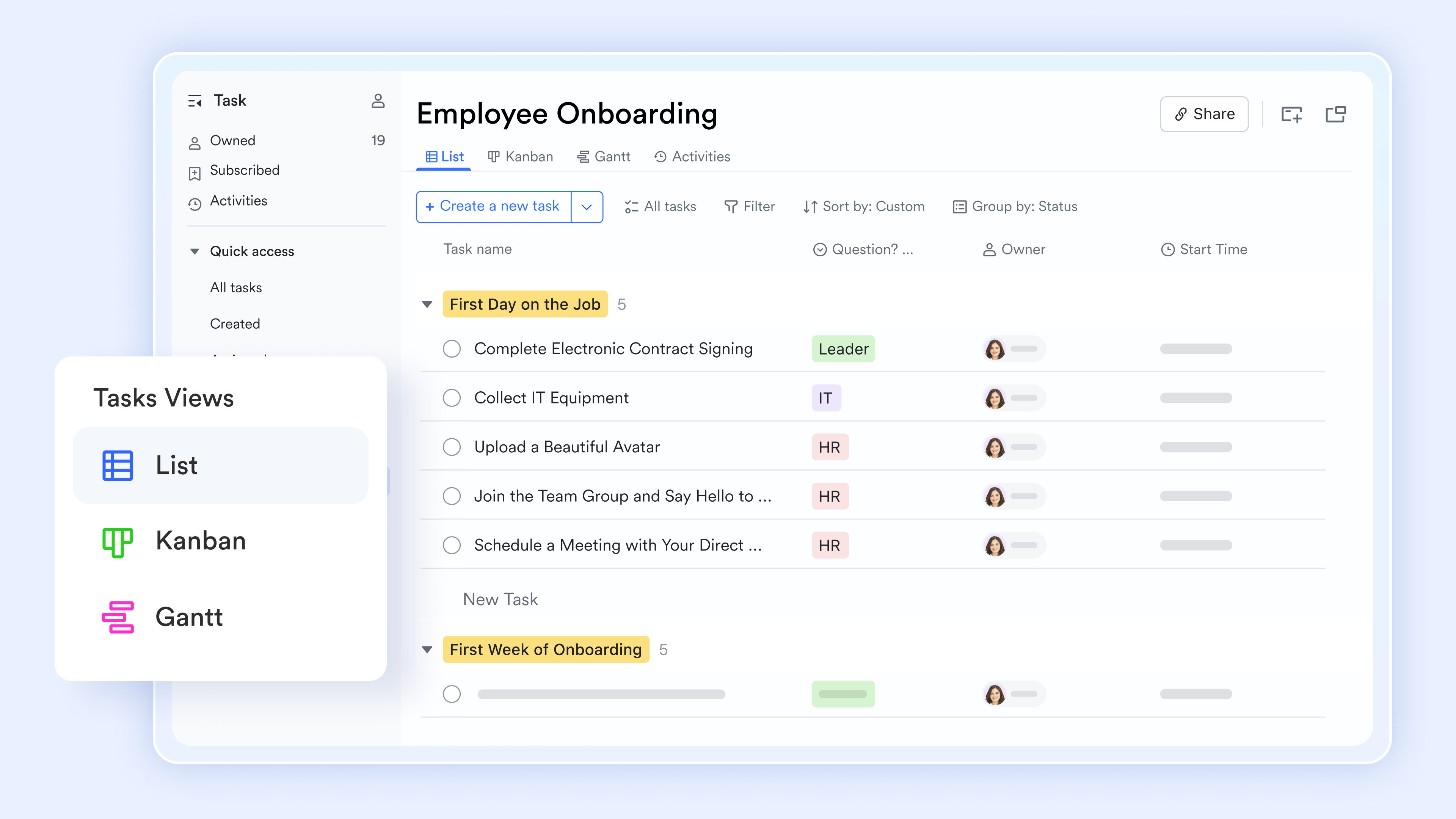
:
- Starter plan: Free forever plan that includes 11 powerful tools for up to 20 users. It also comes with 100GB of storage, 1000 automation runs, AI translations, and more.
- Pro plan: $12/user/month (billed annually) for up to 500 users. It includes everything in Starter plus group calling for up to 500 attendees, 15TB of storage, 50,000 automation runs, and more.
- Enterprise plan: for custom pricing. Supports unlimited users and includes even more automation runs and advanced security, compliance, and management features.
For small teams with simple communication needs

18 months message history
1000 Base automation runs/month
2000 rows per table in Base
Most POPULAR
For companies with comprehensive collaboration and management needs
Unlimited message history
500-participant video meetings
50k Base automation runs/month
20k rows per table in Base
For large companies with advanced security and organizational management needs
Get a personalized demo and pricing
Unlimited message history
500-participant video meetings
15 TB storage + 30 GB storage/user
500k Base automation runs/month
50k Base automation runs/month
Most POPULAR
For companies with comprehensive collaboration and management needs
Unlimited message history
500-participant video meetings
50k Base automation runs/month
20k rows per table in Base
Turning post-mortem insights into lasting change
Post-mortem meetings only create value when insights lead to . Turning reflection into results requires deliberate follow-through beyond the meeting itself.
- Tracking corrective actions: Clear action items with owners and timelines ensure lessons translate into real change. Regular follow-ups prevent post-mortems from becoming documentation exercises without impact.
- Reviewing patterns across post-mortems: Looking at multiple post-mortems together helps teams spot recurring issues and systemic weaknesses. Pattern analysis enables proactive fixes rather than repeated reactive responses.
- Embedding learning into future planning: Insights should inform roadmaps, , and process design. When lessons feed directly into planning, post-mortems strengthen long-term decision-making and resilience.
Conclusion
Post-mortem meetings are one of the most effective ways teams can turn setbacks into progress. When run with clarity, psychological safety, and a focus on systems rather than blame, they help organizations understand what truly happened and why. A clear agenda, real-world context, and defined follow-up actions ensure post-mortems move beyond discussion to . Most importantly, consistent post-mortem practices build organizational memory—reducing repeat failures and improving decision-making over time. The real challenge is not identifying lessons, but ensuring they lead to lasting change. This requires shared visibility, clear ownership, and continuity between reflection and execution.
Platforms like support this by keeping discussions, documentation, and follow-up actions connected in one place, making it easier for teams to act on insights rather than lose them. If your team wants post-mortems that actually drive improvement, it may be time to rethink how those insights are captured and carried forward.
Convert failures into long-term improvements
FAQs
What is another name for a post-mortem meeting?
A post-mortem meeting is frequently called a Retrospective (or "Retro") in Agile environments, or a Debrief in general business settings. In high-stakes industries like the military or healthcare, they are often referred to as After-Action Reviews (AAR) or Incident Reviews.
How long should a post-mortem meeting last?
Most post-mortem meetings last between 30 and 90 minutes, depending on incident complexity. The goal is depth without fatigue, aligned with the post-mortem meaning of . Lark helps keep discussions focused by organizing context and follow-ups in one place.
What is the purpose of a post-mortem meeting?
The core objective is to facilitate blameless learning by identifying what went wrong and how to prevent it from happening again. It serves to document root causes, improve internal processes, and provide the team with a sense of closure after a major event or milestone.
When should a post-mortem meeting be held?
Ideally, these sessions should occur within 24 to 72 hours after an incident is resolved to ensure memories remain sharp while emotions have had time to settle. For long-term projects, scheduling them immediately following a major milestone or project wrap-up ensures that critical technical lessons are captured before the team moves on.
Related reading












