Artificial intelligence is profoundly changing how businesses operate, from content creation to decision-making. The promise of AI for business is no longer theoretical. Teams are already using AI to write faster, summarize information, support decision-making, and keep work moving across functions.
This article explores common AI for business use cases, explains why many teams outgrow standalone AI tools, and shows why integrated AI platforms are often better suited to modern collaborative work.
What is AI for business?
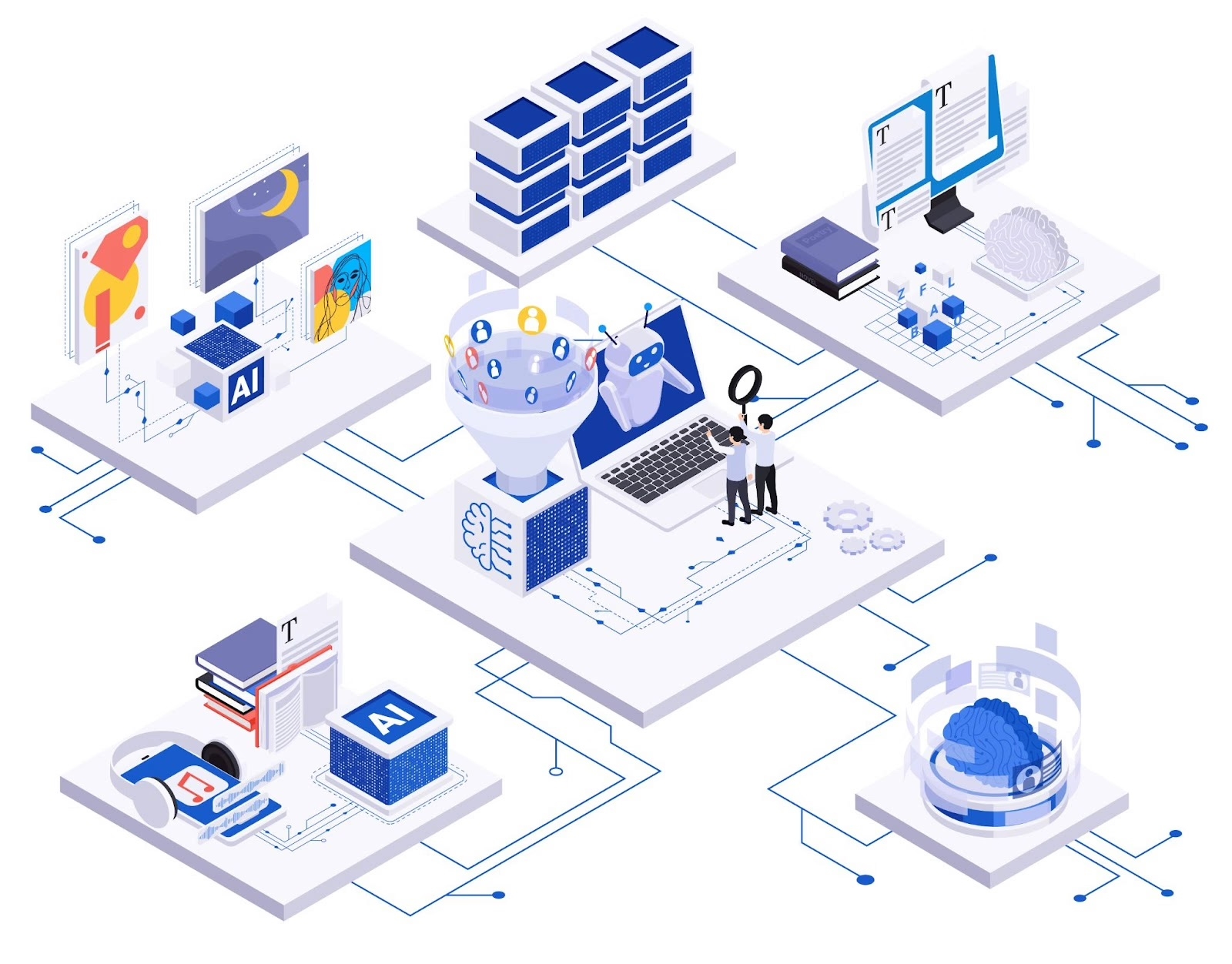
Image source: freepik.com
For business leaders, AI is not simply about advanced models or algorithms; it's about how these technologies improve work execution. AI for business involves the strategic application of artificial intelligence to enhance operational efficiency, automate processes, improve communication, support data-driven decision-making, and drive growth. It leverages capabilities such as machine learning, natural language processing, and generative AI to transform business functions and elevate employee productivity. The aim is to make work more intelligent and less manual, helping businesses adapt and succeed in an increasingly complex landscape.
AI for business goes beyond chatbots
AI for business is not simply the use of AI tools at work. It extends far beyond conversational interfaces or isolated AI applications. It means using AI to reduce friction in communication, knowledge access, and execution across an organization. This encompasses sophisticated algorithms that analyze vast datasets for insights, , predict market trends, personalize customer experiences, and even generate creative content. It’s about integrating intelligent capabilities into the core functions of an enterprise, allowing technology to augment human potential and address intricate business challenges.
AI for business is about better work, not more tools
Companies rarely seek out more individual software solutions for their own sake. Instead, they seek improvements in how their work gets done. The ultimate goal for any business embracing AI is , smoother collaboration, and a meaningful reduction in manual, repetitive tasks. The strongest business value appears when AI supports work across teams, not just isolated tasks. AI is a means to achieve these outcomes by automating routine activities, providing intelligent insights, and facilitating smarter interactions. When AI is viewed as a catalyst for better work rather than just another item in the tech stack, its potential for organizational transformation becomes clearer.
AI for business works best where work already happens
The full potential of AI for business is often unlocked not when it exists as a separate application, but when it’s embedded directly into the daily work environment. When AI capabilities are integrated within messaging platforms, document editors, spreadsheets, meeting tools, project management, and , they become truly accessible and impactful. This native integration means AI assistance is available precisely when and where it's needed, whether drafting a memo, summarizing a meeting, or analyzing project data. This approach fosters genuine adoption, moving AI beyond experimental stages and into practical, consistent use across the organization.
Why businesses are turning to AI now
The current business landscape is characterized by rapid change, heightened competition, and constant pressure to innovate. In this environment, AI has emerged as a crucial strategic asset for companies. Several key factors are driving this accelerated adoption, all pointing towards the need for greater agility, deeper insights, and more integrated operations.
Teams need to move faster with fewer resources
Small teams, growing startups, and cross-functional departments often operate under significant resource constraints, yet face increasing demands for speed and output. AI helps teams reduce repetitive work, move faster, and get more done without adding headcount. This ability to achieve more with fewer resources is particularly appealing to organizations striving for operational agility and , making a high-value investment.
Businesses need better decisions, not just more data
While modern businesses collect vast amounts of data, the sheer volume can be overwhelming. The challenge isn't a lack of data, but the difficulty in transforming raw information into actionable insights and . at processing complex datasets, identifying patterns, and summarizing key information. By providing clarity and actionable intelligence, AI empowers leaders to make more informed and timely decisions, moving beyond intuition to . Businesses are seeking the best AI for business not just for data collection, but for genuine insight generation.
Businesses need better coordination across teams
As work becomes more cross-functional, businesses need AI that helps teams stay aligned across planning, communication, and execution. Marketing, sales, operations, and management rarely work in isolation, so the value of AI increases when it helps information move clearly across teams. This is one reason companies are not just exploring isolated AI features, but looking for solutions that can support coordination at the workflow level.
Common AI for business use cases
AI is now being used across nearly every business function, not just for experimentation but for real day-to-day work. The most valuable use cases are usually the ones tied to frequent tasks, shared information, and decisions that need to move quickly across teams.
AI for marketing and content creation
AI can help marketing teams draft blog posts, repurpose existing content for different channels, write social copy, summarize campaign notes, and speed up the early stages of planning. This makes it easier to , especially when teams are working across multiple campaigns at once.
AI for operations and project coordination
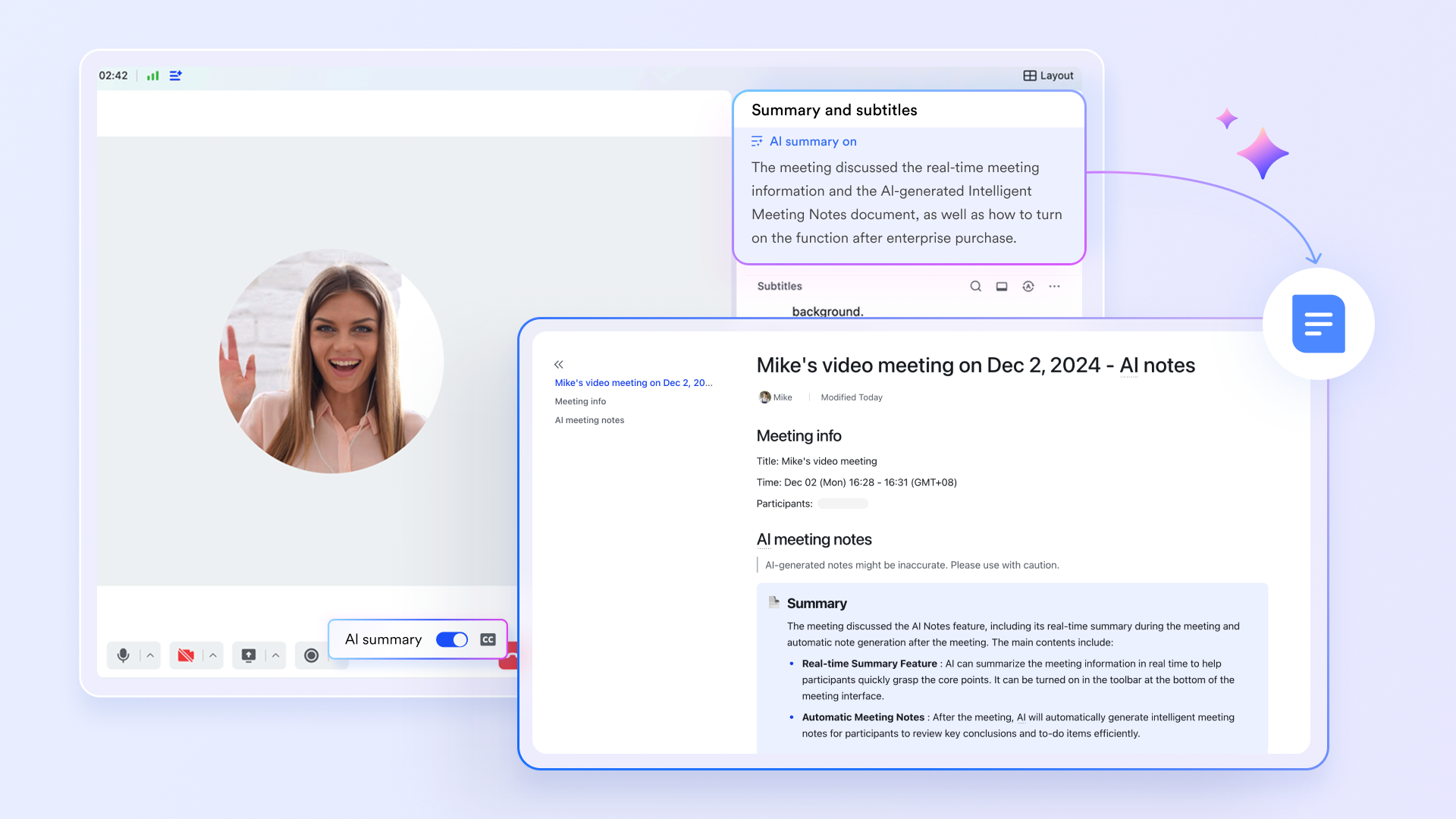
AI is increasingly useful in operations for , action item tracking, status updates, workflow reminders, and project coordination. It can help teams keep work moving by making it easier to capture decisions, assign ownership, and surface next steps without relying entirely on manual follow-up.
AI for internal knowledge and decision-making
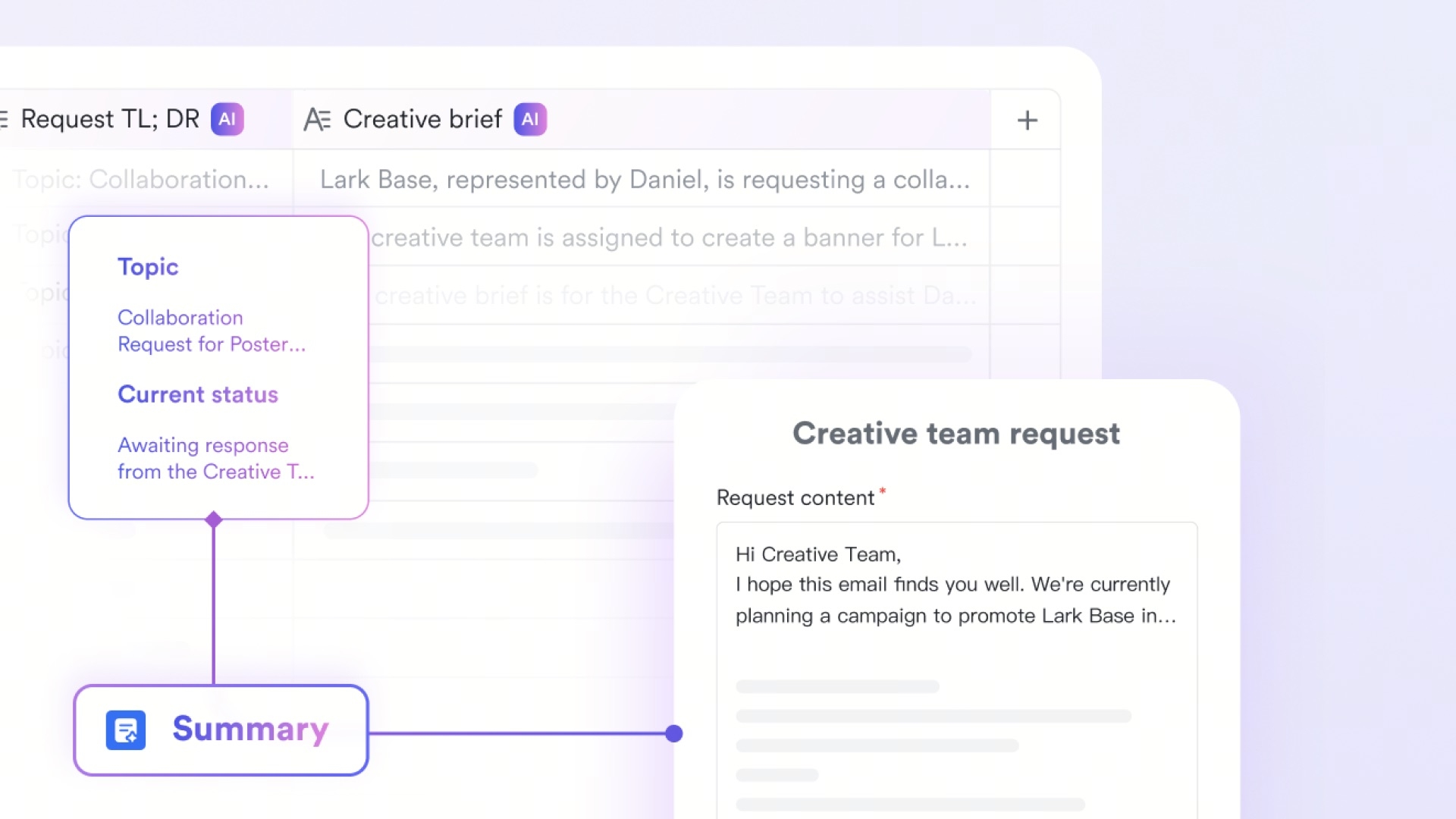
AI also supports by helping teams search for information faster, summarize long documents, turn raw information into clear takeaways, and reduce the time spent gathering context before making decisions. This is especially useful in fast-moving organizations where important knowledge is spread across meetings, documents, and ongoing discussions.
Why standalone AI tools fall short for modern teams
While AI is clearly useful in many business scenarios, using separate AI tools for separate tasks often creates a new problem: the work becomes faster in small moments, but not necessarily smoother across the full workflow. The issue is usually not the quality of the AI output itself, but the fact that the surrounding work still happens across disconnected systems.
Too many tools, too little shared context
Many teams use one AI tool for writing, another for meeting notes, another for search, and another for analysis. Each tool may perform well on its own, but the surrounding context often lives elsewhere—in chat threads, documents, project trackers, spreadsheets, or internal knowledge bases. When AI does not have access to that broader context, its usefulness becomes narrower and teams still spend time piecing information together manually.
Output is faster, but execution still breaks down
Generating a draft, summary, or recommendation is only one part of the work. Teams still need to review, discuss, edit, approve, assign, and act on that output. If those next steps happen in different systems, the speed gained from AI is often lost in handoffs, duplication, and context switching. In practice, execution remains harder than generation.
Modern teams need AI where work already happens
For AI to deliver consistent business value, it needs to be embedded in the systems where teams already communicate, collaborate, document, and coordinate work. When AI is built into a connected workspace, it can work with richer context, support collaboration more naturally, and help teams move from idea to action with less friction. That is why many businesses are shifting from isolated AI tools toward integrated AI platforms, like , that support the full flow of work.
How Lark supports AI for business in real work
is designed to transform the way teams leverage AI by embedding it directly into the daily operational flow. It's an AI platform for business that understands the intricacies of teamwork, offering powerful AI solutions for business challenges and directly addressing the use cases where teams typically get stuck.
AI-powered collaboration in one workspace
Lark redefines AI for business by offering an all-in-one suite that brings together , , , , , and into a single, cohesive environment. This integrated approach drastically reduces the need for app switching, a common productivity drain that fragmented tools create. By centralizing all work elements, Lark ensures that AI has immediate access to rich context—from ongoing discussions about a marketing campaign to project specifications for an operational task—enabling it to provide more relevant and timely assistance. This holistic integration helps teams push work forward faster, creating a truly AI-powered collaborative experience that eliminates the back-and-forth common with disconnected tools.
Faster writing, summarizing, and knowledge work
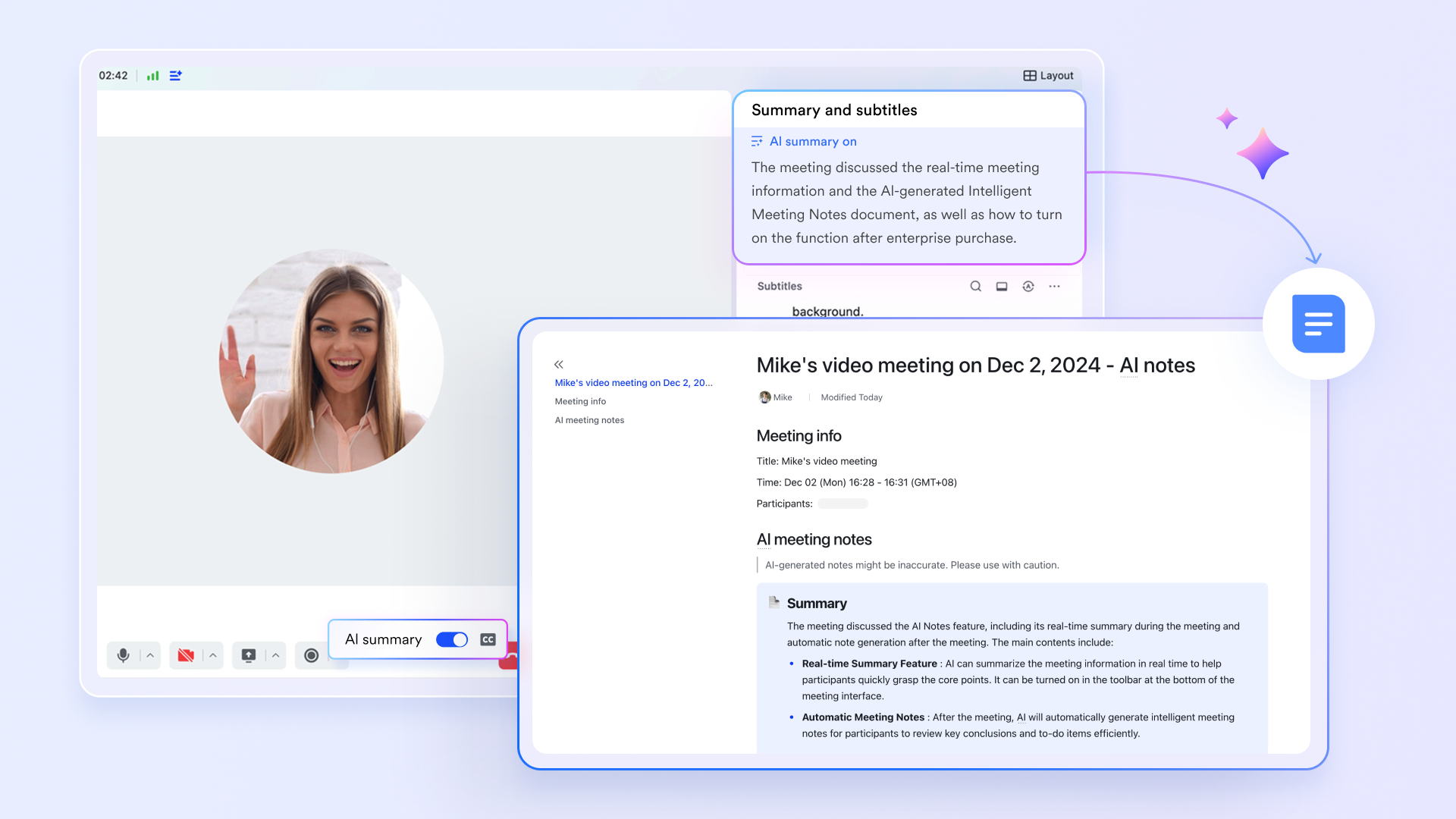
Within Lark, AI functions as an intelligent assistant for a multitude of tasks, directly combating the friction in , , and . It helps draft content for various purposes, from marketing copy to internal communications, speeding up the initial creation phase that marketers often struggle with due to dispersed efforts. For meetings and discussions, Lark's AI can , ensuring clarity and accountability without scattered notes. It also excels at , making it quicker for team members to grasp critical information and reducing time spent searching for internal knowledge. This capability to accelerate content creation, summarize communications, and distil knowledge significantly enhances cross-team information synchronization and overall productivity.
Better coordination across teams
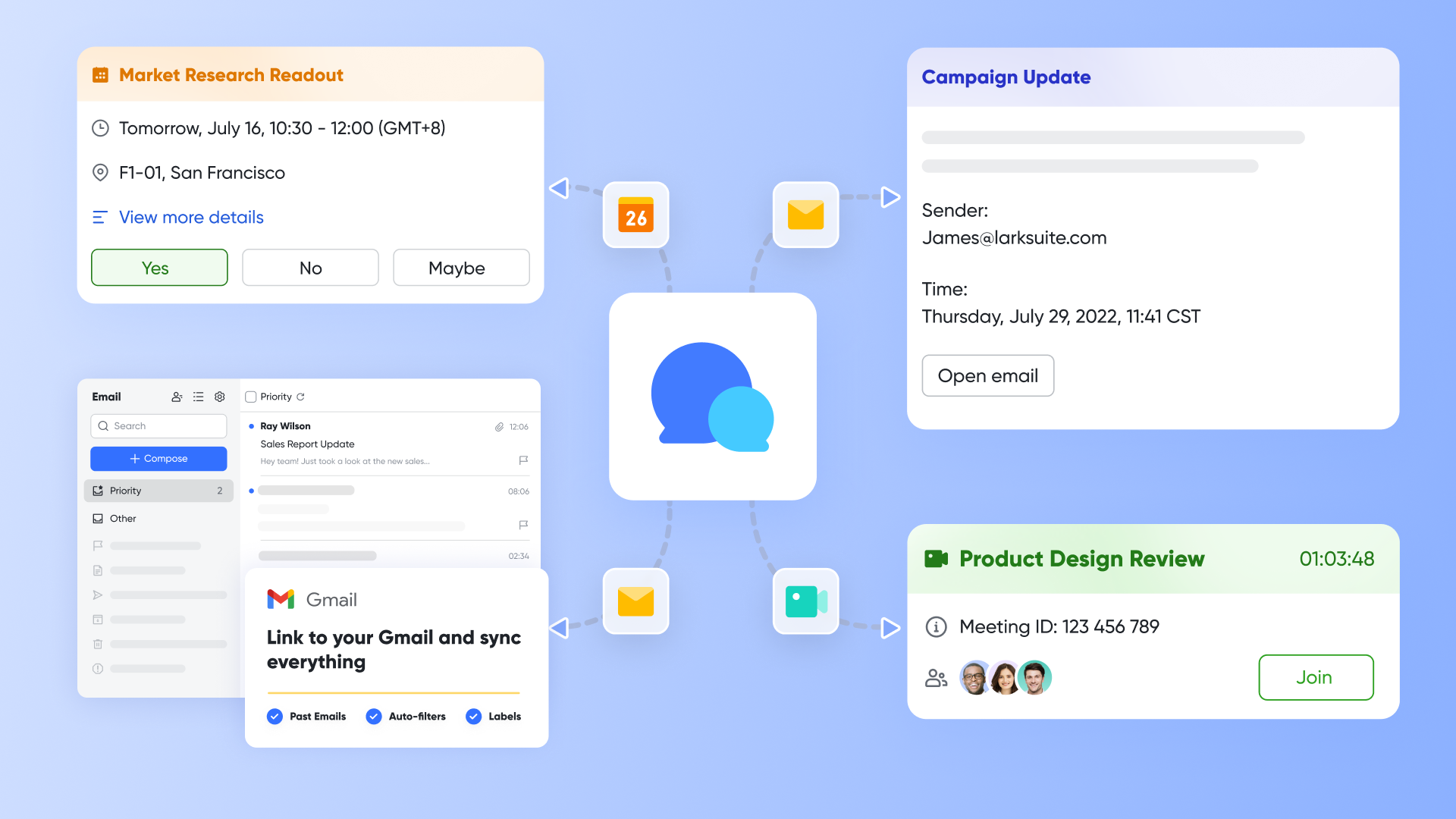
Lark’s unified environment inherently improves coordination across diverse teams—marketing, sales, operations, and management—by directly addressing the problem of information silos and inefficient sales collaboration. By , it eliminates the silos created by using multiple, disconnected tools. Decisions, executions, and tracking become more coherent and fluid when all relevant context is available in one place. This integrated approach allows teams to align faster, track progress more effectively, and ensure that everyone is working from the same, up-to-date information, powered by AI that understands the collective context. Sales teams, for instance, can access all customer insights and internal discussions in one place, avoiding the scattered information pain point.
Built for workflows, not just prompts
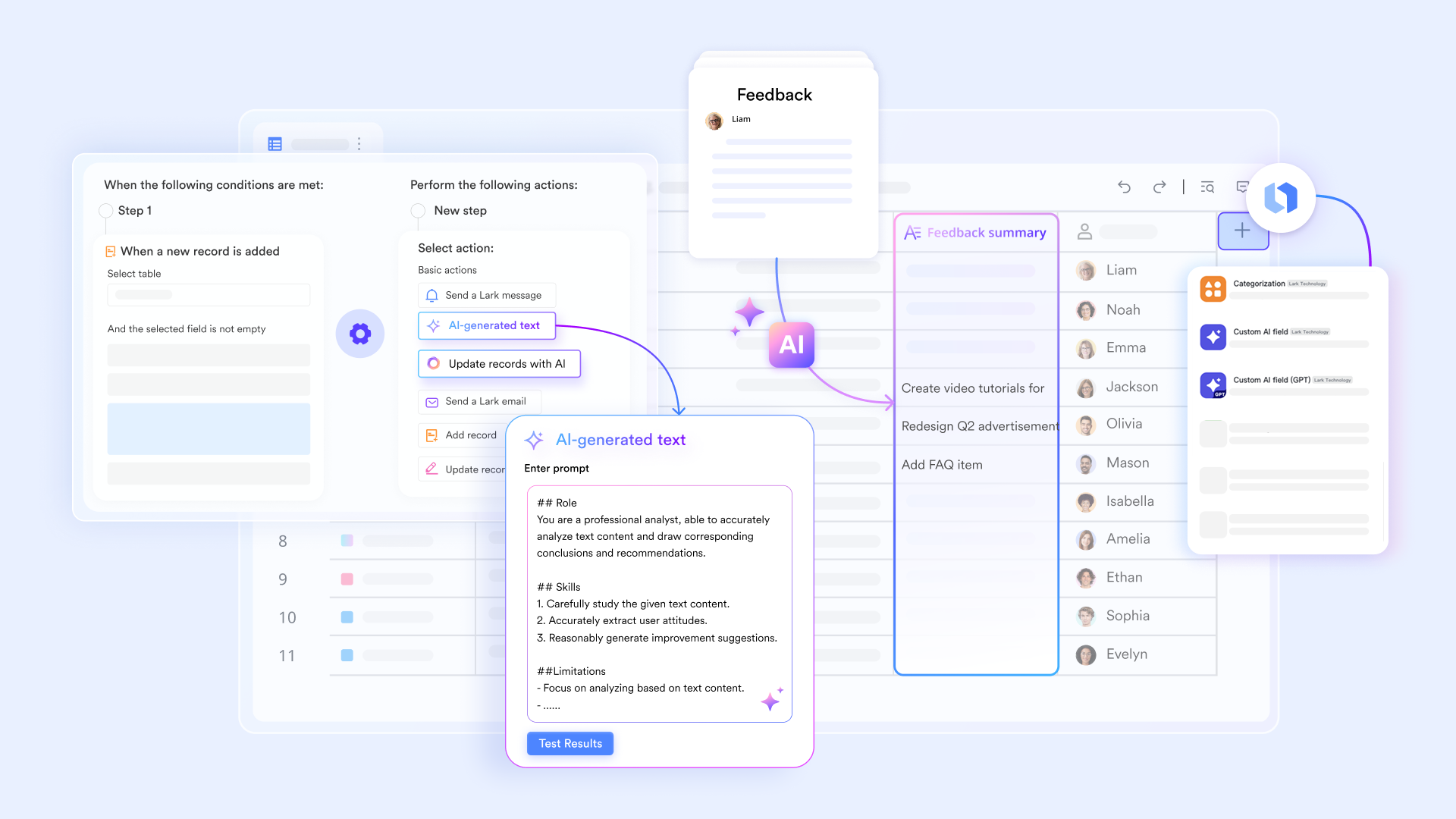
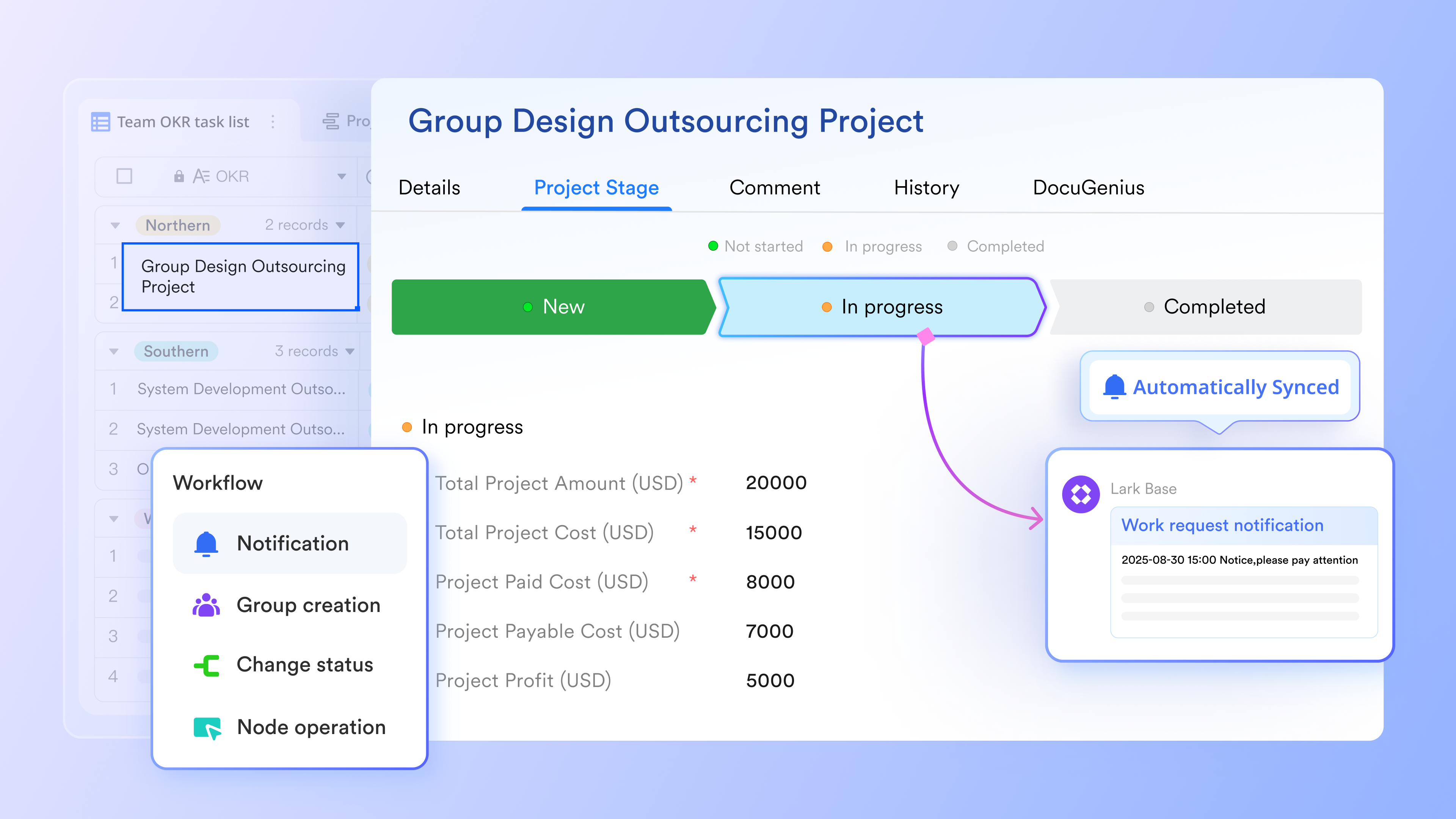
A key differentiator for Lark is its emphasis on integrating AI into real business processes, rather than just providing a prompt-response mechanism. Lark isn't just about asking AI for text; it's about embedding AI capabilities directly into the workflow itself, solving the "output is easy, execution is harder" dilemma. For instance, AI can be used within to brainstorm ideas, in to summarize a long discussion, or within to generate sub-tasks based on a project brief. This holistic integration ensures that from initial communication to documentation and final execution, AI acts as a consistent accelerator, creating a dynamic, intelligent work cycle that reduces context breaks in operations and project coordination.
Affordable to start, easier to scale
For many businesses and teams, adopting AI is not just about capability, it is also about cost. Lark's free plan supports up to 20 users, which lowers the barrier to getting started, while paid plans start at $6 per user per month. That makes it a practical option for teams that want to scale AI-supported collaboration without committing early to a more expensive multi-tool setup.
- Starter plan: Free forever plan with 11 powerful tools for up to 20 users, 100GB storage, 1,000 automation runs, AI translations, and more. No credit card needed.
- Basic plan: $6/user/month (billed annually) for up to 500 users. Includes everything in Starter plus unlimited message history, 5TB storage, 1,000 automation runs, and more. Some users may need to to purchase.
- Pro plan: $12/user/month (billed annually) for up to 500 users. Includes everything in Basic plus group calling for up to 500 attendees, 15TB storage, 50,000 automation runs, and more.
- Enterprise plan: for custom pricing. Supports unlimited users and includes advanced automation, security, compliance, and management features.
For small teams with simple communication needs

18 months message history
1000 Base automation runs/month
2000 rows per table in Base
Most POPULAR
For companies with comprehensive collaboration and management needs
Unlimited message history
500-participant video meetings
50k Base automation runs/month
20k rows per table in Base
For large companies with advanced security and organizational management needs
Get a personalized demo and pricing
Unlimited message history
500-participant video meetings
15 TB storage + 30 GB storage/user
500k Base automation runs/month
50k Base automation runs/month
Most POPULAR
For companies with comprehensive collaboration and management needs
Unlimited message history
500-participant video meetings
50k Base automation runs/month
20k rows per table in Base
Bring AI, communication, and execution into one workspace
How to choose the best AI for business
Choosing the best AI for business is a strategic decision that goes beyond simply comparing feature lists. It requires a deep understanding of your organization's unique needs, workflows, and growth aspirations. The "best" AI solution is not a universal constant, but rather the one that most effectively empowers your specific team to achieve its goals. This section helps clarify what to look for among various AI solutions for business.
Don’t ask which AI tool is best in general
There is no single "best AI for business" that suits every company universally. The market is full of innovative AI tools, each designed to solve particular problems. What might be revolutionary for a large enterprise focused on deep data analytics could be excessive or irrelevant for a small business prioritizing streamlined communication. Generic rankings or popular choices may not align with your operational realities. Instead of seeking a one-size-fits-all answer, the focus should shift to a more personalized evaluation based on internal context.
Ask which solution helps your team do real work better
The critical question to ask when evaluating AI solutions is: "Which solution genuinely helps my team perform their real-world tasks more effectively?" This involves assessing several key criteria:
- Look for solutions that minimize the need to jump between multiple applications, keeping all relevant information within a single interface.
- An effective AI solution should understand the ongoing conversations, project histories, and documented knowledge to provide relevant assistance.
- AI should enhance team collaboration, making it easier to share, edit, and act on information collectively, rather than generating outputs in isolation.
- The chosen AI should not just create outputs but also integrate into the workflow to support the subsequent steps of review, approval, and implementation.
- Is it suitable for your team's size and stage? Consider whether the solution can scale with your growth and fit your current operational scale without introducing unnecessary complexity.
Look for a platform, not just a feature
For many teams, the best AI for business is not a standalone assistant but a platform that combines communication, documentation, coordination, and AI support in one place — which is where stands out. A platform approach offers a unified environment where AI can truly thrive, drawing from a rich, interconnected context to provide more meaningful assistance. It moves beyond individual features to offer an integrated ecosystem where AI accelerates entire workflows, making it a more comprehensive and impactful investment for sustainable business growth. For this reason, many are exploring integrated AI platforms for business.
Best practices for using AI in business responsibly
While AI offers immense benefits, its deployment in business comes with inherent responsibilities. Adopting a mindful and ethical approach is crucial to maximize advantages while mitigating risks, ensuring that AI serves as a positive force within the organization.
Keep humans in the Loop
AI tools are powerful, but they are assistive, not infallible. It's paramount to maintain human oversight and judgment in all AI-driven processes, especially those involving critical decisions or sensitive information. Humans should review AI-generated outputs, validate conclusions, and intervene when necessary to correct biases or errors. This "human-in-the-loop" approach ensures accountability, enhances accuracy, and builds trust in AI systems.
Protect sensitive business information
The integrity and confidentiality of business data are non-negotiable. When deploying AI, organizations must implement robust data governance policies. This includes understanding how AI tools handle data, ensuring compliance with privacy regulations (like GDPR or CCPA), and choosing platforms that offer strong security features like encryption and access controls. It's crucial to avoid feeding sensitive or proprietary information into public AI models without proper safeguards or anonymization.
Review outputs for accuracy, tone, and compliance
AI models, particularly generative ones, can sometimes produce outputs that are inaccurate, inappropriate in tone, or non-compliant with internal policies or external regulations. Before any AI-generated content or analysis is used externally or for critical internal processes, it must be thoroughly reviewed. This vetting process ensures factual correctness, alignment with brand voice, and adherence to legal and ethical standards, preventing potential reputational damage or legal repercussions.
Start with practical, high-frequency use cases
To build confidence and demonstrate value, we recommend beginning AI adoption with practical, high-frequency use cases that offer clear, measurable benefits. Automating routine tasks, summarizing internal communications, or providing quick data insights are excellent starting points. This focused approach allows teams to adapt to AI, understand its limitations, and refine their usage before tackling more complex or mission-critical applications. A platform approach, like Lark, can also make it easier to manage AI use consistently across teams, ensuring a unified and responsible deployment strategy.
Conclusion
The journey into AI for business requires rethinking how work gets done. True success isn't just about smarter outputs, but more efficient collaboration and execution within daily workflows. Modern teams gain most not from isolated AI tools, but from integrating AI directly into a connected workspace. This unified environment, where communication, documentation, knowledge, and processes intertwine, ensures AI enhances, rather than complicates, daily tasks. If your enterprise aims to genuinely connect these elements and unlock productivity, is a solution worth considering. Its comprehensive, AI-powered platform empowers teams to work smarter, collaborate effectively, and achieve more. Explore how Lark can consolidate your tools and elevate your team's potential.
Make AI more useful across your team
FAQs
Which AI is good for business?
There isn't a single "best AI for business" for everyone. The most effective AI solutions are those that help your team do real work better by reducing context switching, preserving context across tasks, enhancing collaboration, and facilitating execution within your workflows. Instead of focusing on isolated features, look for integrated AI platforms that connect communication, documentation, and processes in one place
What is the 30% rule for AI?
The "30% rule for AI" is a principle suggesting that roughly 30% of tasks, especially repetitive or preparatory work, can be automated or accelerated by AI, freeing up human effort for more complex or strategic work. This allows businesses to focus on amplifying human capabilities in the remaining work. However, the blog emphasizes that the true value of AI comes from its integration into daily workflows, not adhering to a specific percentage.
Can I use AI to run my business?
AI can significantly augment and enhance various aspects of running your business by automating tasks, providing insights, and streamlining workflows. However, the blog emphasizes that AI tools are assistive, not infallible, and maintaining "humans in the loop" is crucial for oversight, judgment, and accountability. AI empowers better decision-making and efficiency, but it does not replace the strategic thinking, creativity, and ethical judgment that human leaders and teams provide.
How do AI platforms for business differ from individual AI tools?
Individual AI tools typically address a specific need, like generating text or transcribing meetings. While useful, they often operate in isolation, leading to fragmented workflows and a loss of context. AI platforms for business, like Lark, integrate multiple functions (chat, documents, meetings, tasks) and embed AI directly within these, providing richer context and supporting entire workflows from communication to execution 9. This integration makes AI more impactful and easier for teams to adopt.
What are the key benefits of using an integrated AI platform for business?
Integrated AI platforms offer several key benefits: they reduce context switching by centralizing work elements; they provide AI with more context, leading to more relevant assistance; they improve collaboration by keeping all information in one place; and they facilitate execution by embedding AI directly into workflows, moving beyond just generating outputs. Ultimately, they make AI more useful by ensuring it's part of how teams already work.
How can small businesses best leverage AI for business, given limited resources?
Small businesses can best leverage AI for business by choosing integrated AI software for small business that offers less complexity and more leverage 14. Platforms that combine multiple essential functions in one place simplify IT management and reduce overhead. Embedding AI into everyday tools ensures higher adoption rates, making AI more useful. Starting with practical, high-frequency use cases, like automating routine tasks or summarizing communications, can help small teams see clear benefits and scale effectively.
Related reading