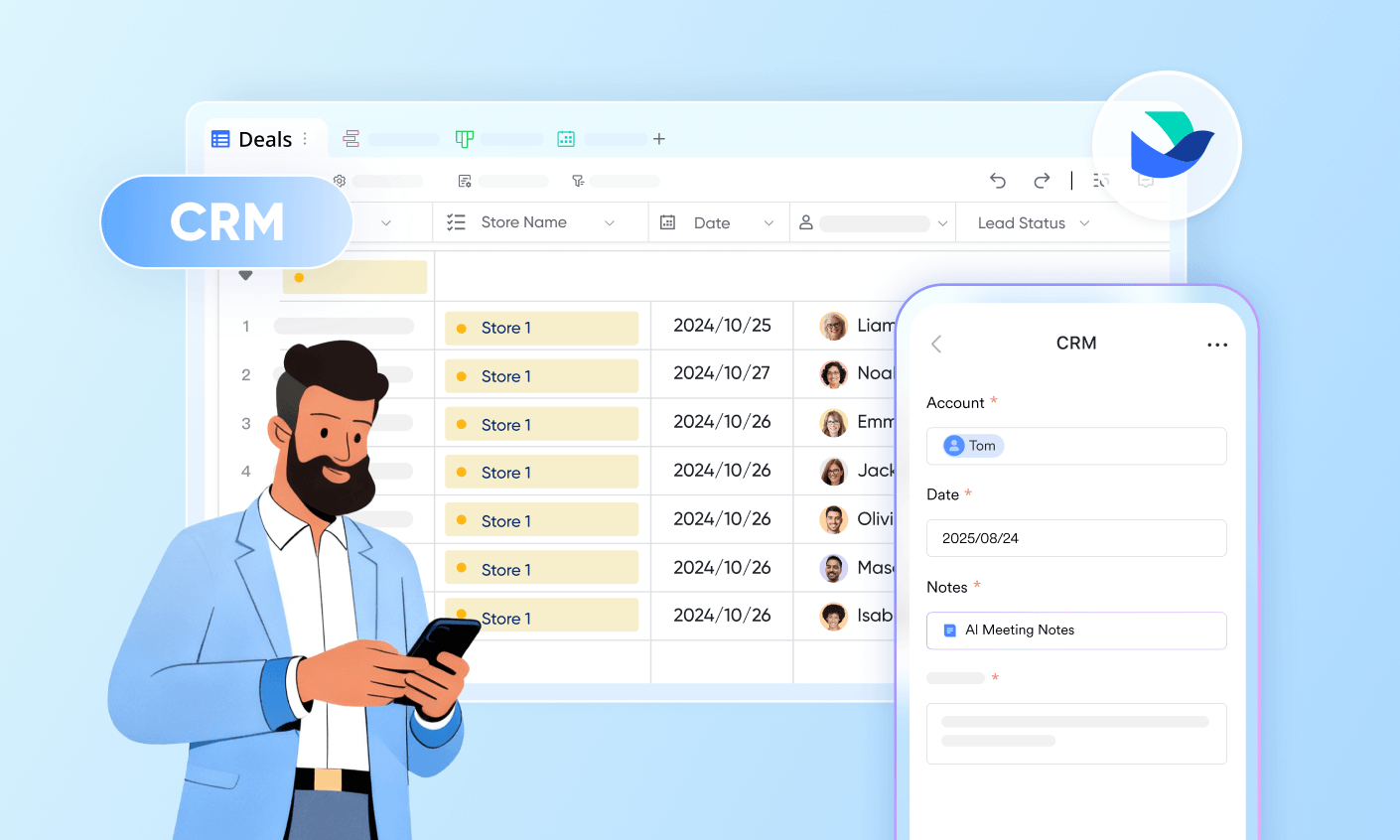
A retail order management system is becoming essential as customers expect faster deliveries and consistent purchasing experiences across every channel. Modern retailers rely on structured tools that bring orders, inventory, and fulfillment together so that operations run smoothly during peak demand. These systems help teams reduce stockouts, prevent overselling, and improve overall accuracy. Some retailers also look for platforms that centralize communication and documentation. This is where tools like Lark begin entering the conversation gradually, since retailers want connected workspaces that simplify coordination. In this guide, you will learn what a retail order management system does and how it supports multichannel growth.
Get started with smarter retail operations
What is a retail order management system?
A retail order management system is software that tracks and controls the entire journey of a customer order. It manages incoming sales from multiple touchpoints, keeps inventory synchronized, updates fulfillment teams, and ensures that customers receive accurate delivery information. A retail order management system retail setup also helps retailers handle cancellations, returns, vendor updates, and shipment exceptions effectively. These tools reduce dependency on manual spreadsheets and disconnected communication.
A modern retail order management system in retail environments often supports online stores, point of sale counters, and distributor channels together. Retailers use it to eliminate overselling, maintain real-time visibility, and automate repetitive actions. With structured workflows, order accuracy improves and teams spend less time correcting errors. This leads to better customer experience across physical and digital channels. What is multichannel and omnichannel order management in retail
Multichannel and omnichannel retail operations rely on accurate stock visibility across different platforms. Retailers selling on marketplaces, apps, social stores, and physical outlets require synchronized systems that eliminate duplicate work. Omnichannel workflows rely on a customer order management system retail teams can use to maintain consistent pricing, product details, and delivery options across every customer touchpoint. With unified processes, an order management system for retail supports smooth transitions between online shopping and in-store experiences.
- Multichannel retail order management systems retail setups collect orders from each channel in one place so that teams do not have to check individual dashboards. They reduce manual sync work and help prevent mismatched stock information during peak sales. They also allow teams to manage availability and pricing consistently.
- Omnichannel operations require that track customer preferences, delivery behavior, and purchase history across every touchpoint. Retailers adopt technology platforms that blend operations, communication, returns, and on-ground processes to deliver a single experience. This creates higher retention and more predictable customer satisfaction.
Why do retailers need an order management system?
Retailers require OMS tools to handle increasing customer expectations, expanding product catalogs, and faster shipping demands. Without a structured system, inventory updates become inconsistent and fulfillment slows down. The right solution ensures accuracy and responsiveness at scale. Large enterprises often compare cloud-based systems with established tools such as Oracle retail order management system to determine which offers better flexibility and automation.
- Centralized inventory visibility: A retail order management system provides one source of truth for stock levels across warehouses, stores, and digital sellers. It prevents duplicate counts and ensures accurate product availability. Teams no longer depend on manual spreadsheets that cause delays. Real-time visibility supports better planning and improves forecasting during seasonal peaks.
- Faster fulfillment and fewer stockouts: Automated routing guides orders to the most efficient or store so that dispatch speed increases. Inventory updates happen instantly, reducing the risk of stockouts for fast-selling items. Customers receive orders quicker and teams spend less time fixing fulfillment mistakes. This leads to smoother internal coordination and reduced backlogs.
- Reduced order errors: A retail order management systemdetects conflicts such as double selling, incorrect item mapping, or incomplete customer details before fulfillment begins. This reduces shipment mistakes and return rates. Validation rules improve accuracy and protect revenue. Teams gain more control over order data and execution.
- Consistent experience across channels: Customers expect the same accuracy whether they shop through websites, marketplaces, or physical stores. A multichannel order management system retail tool ensures pricing, availability, and delivery windows remain uniform. This supports brand trust and reduces confusion caused by inconsistent messaging.
- Better customer communications: Automated updates notify customers at each stage of the order journey so they do not need to repeatedly follow up. Retailers use structured templates to deliver accurate information quickly. This improves service quality and helps teams reduce support volume.
Features of an effective retail order management system
Retailers comparing tools often evaluate their level of automation, accuracy, and channel coverage. An effective retail order management system includes several core capabilities that support smooth daily operations across online and offline channels.
- Real-time inventory visibility: Real-time stock insights show exactly where items are stored and which products require replenishment. This prevents selling items that are not available and reduces customer dissatisfaction. Retailers can manage supplier timelines more effectively through accurate alerts. This also supports long-term planning.
- Automated order routing: Automated routing assigns orders to the most suitable fulfillment point based on location, stock levels, and delivery cost. This reduces manual decision-making and accelerates processing. Retailers save time and ensure consistent workflows across high-volume seasons.
- Multi-warehouse fulfillment: A retail purchase order management system supports distributed inventory by coordinating multiple warehouses easily. It balances stock across locations and ensures efficient picking. Multi-site operations gain structure, visibility, and better resource utilization.
- Return and refund workflows: Structured workflows handle return reasons, refund rules, and restocking steps with clarity. Retailers reduce miscommunication and shorten the processing timeline. Customers experience smoother service and support teams receive fewer unresolved tickets.
- Payment reconciliation: OMS platforms reconcile payments from marketplaces, online stores, and in-person purchases in one place. Retailers track discrepancies faster and reduce financial errors. Accounting teams gain accurate records that simplify monthly closing.
- PIM and catalog syncing: syncing guarantees consistent product names, images, descriptions, and variants across all channels. Retailers prevent mismatches that cause order confusion. Catalog updates reach every channel without repetitive editing.
- POS integration: A vendor order management retail connection keeps store-level transactions aligned with online inventory. Retailers maintain accurate stock and avoid inconsistent counts. This connection helps improve replenishment cycles.
- Purchase order automation: A retail purchase order management system automates , replenishment triggers, receipt verification, and approval flows. Retailers avoid delays and maintain a healthier supply chain rhythm. Automated processes reduce manual errors and improve cost control.
Streamline workflows and fulfill an order quickly
Manage easily: Try Lark to build a unified order hub with smart workflows
often struggle because their OMS software and communication tools operate separately. When information is scattered, coordination slows down, and errors increase. With , retailers begin to streamline work inside a single connected environment that supports messaging, documentation, , and system workflows. Lark Base helps teams build a structured data center for orders, suppliers, warehouses, and returns. This creates a more controlled retail operation where processes move naturally without manual tracking.
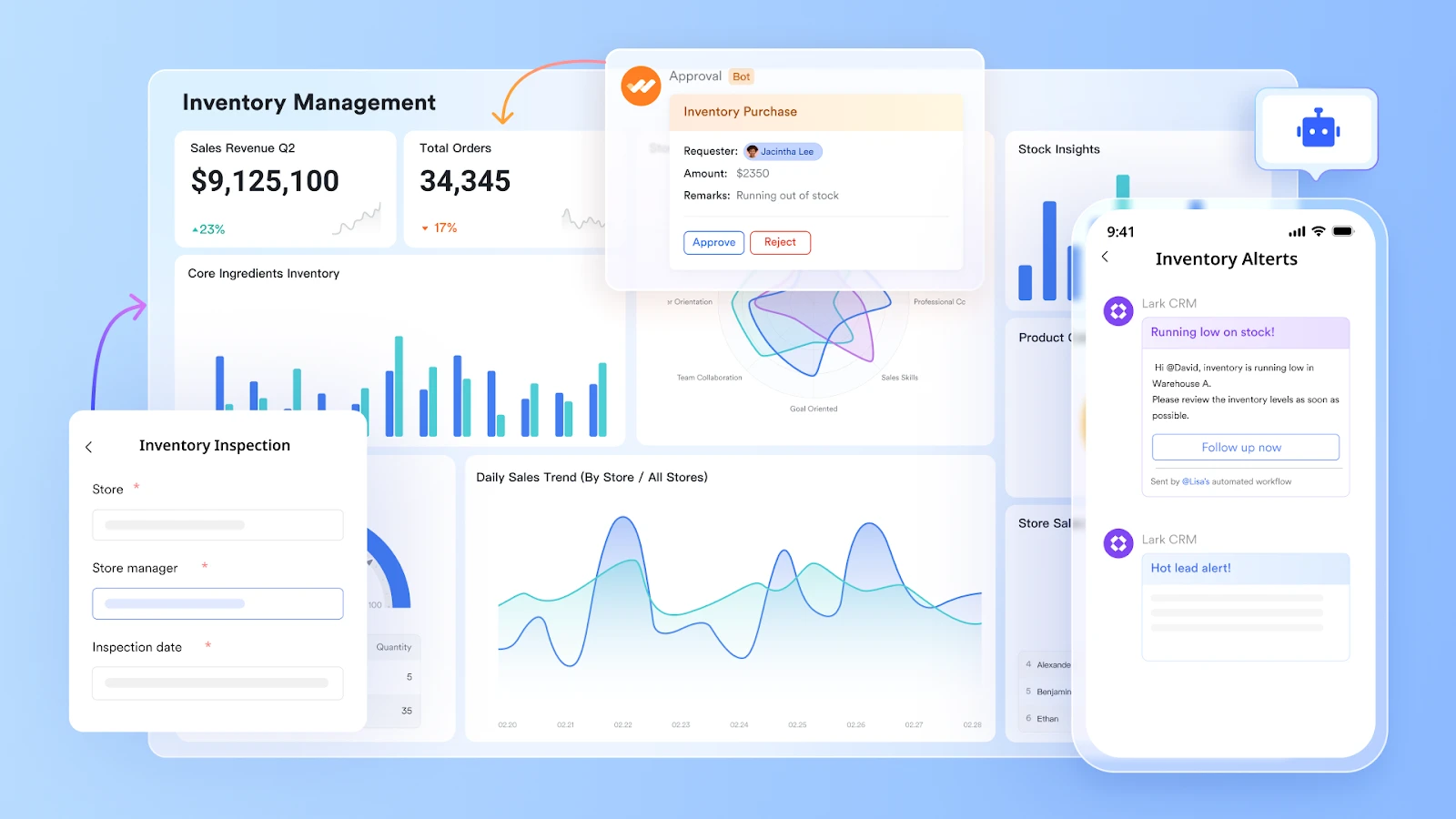
A centralised order data hub with key information stored
streamlines retail order management by using specialized fields to organize and standardize all order data. Numbering fields automatically generate unique order IDs, while single/multiple options fields are used to standardize and track key information like order status and shipment issues. Crucially, link fields connect the main order table to product and inventory data, enabling formula fields to calculate remaining stock in real-time automatically. For efficiency, barcode fields enable rapid data entry during receiving or fulfillment, and email/phone number fields provide built-in tools for seamless communication with customers and management personnel. 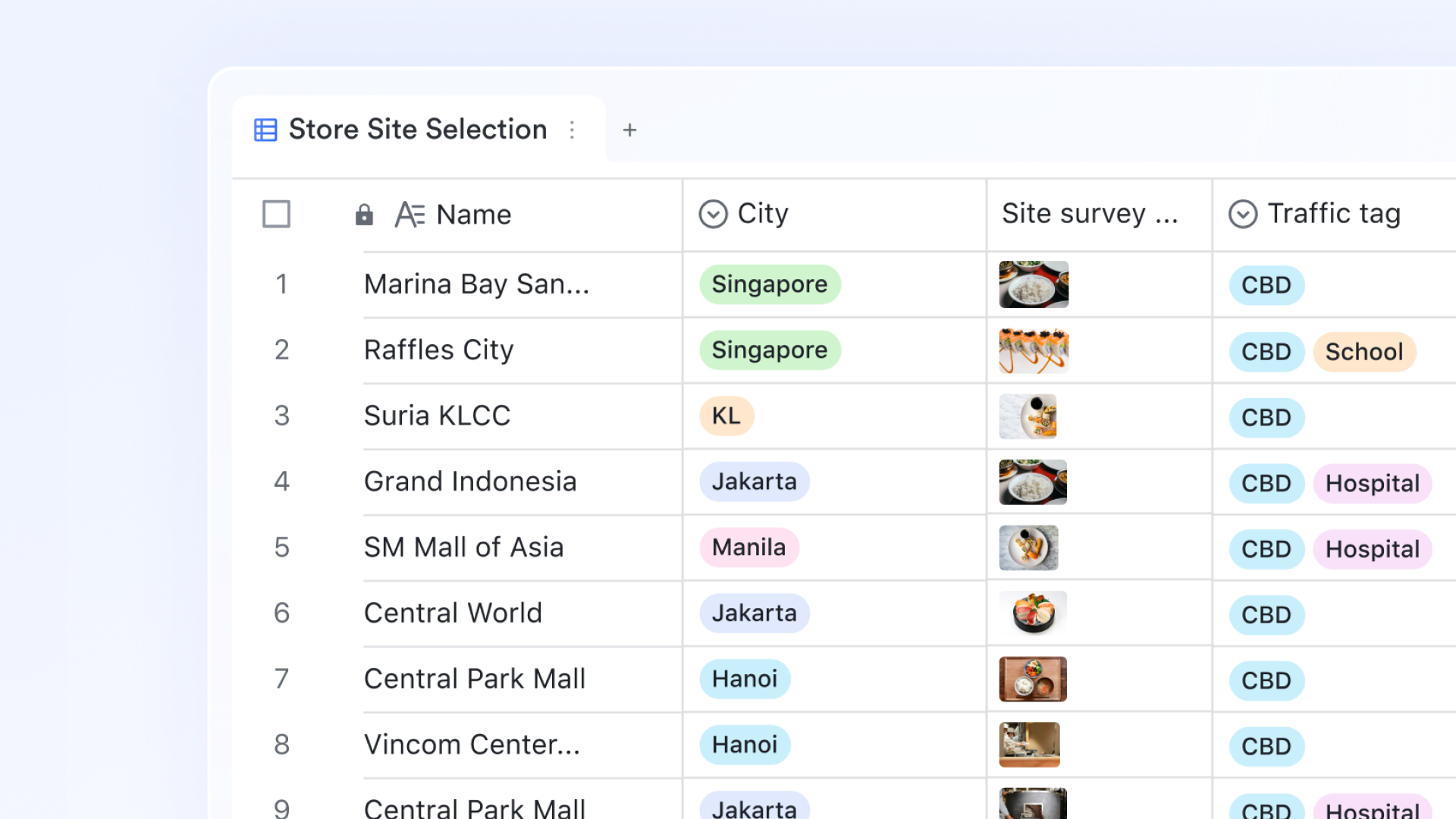
Smart sorting and viewing empower management
Views at Lark Base are essential for managing retail orders by providing tailored perspectives on the same underlying data. A or Kanban view can be created, allowing different teams like fulfillment or customer service to focus only on orders relevant to their tasks. By using filters and groups, staff can quickly segment orders by status, shipping date, or priority, ensuring that time-sensitive tasks are never overlooked and maintaining operational clarity across the entire order management process. 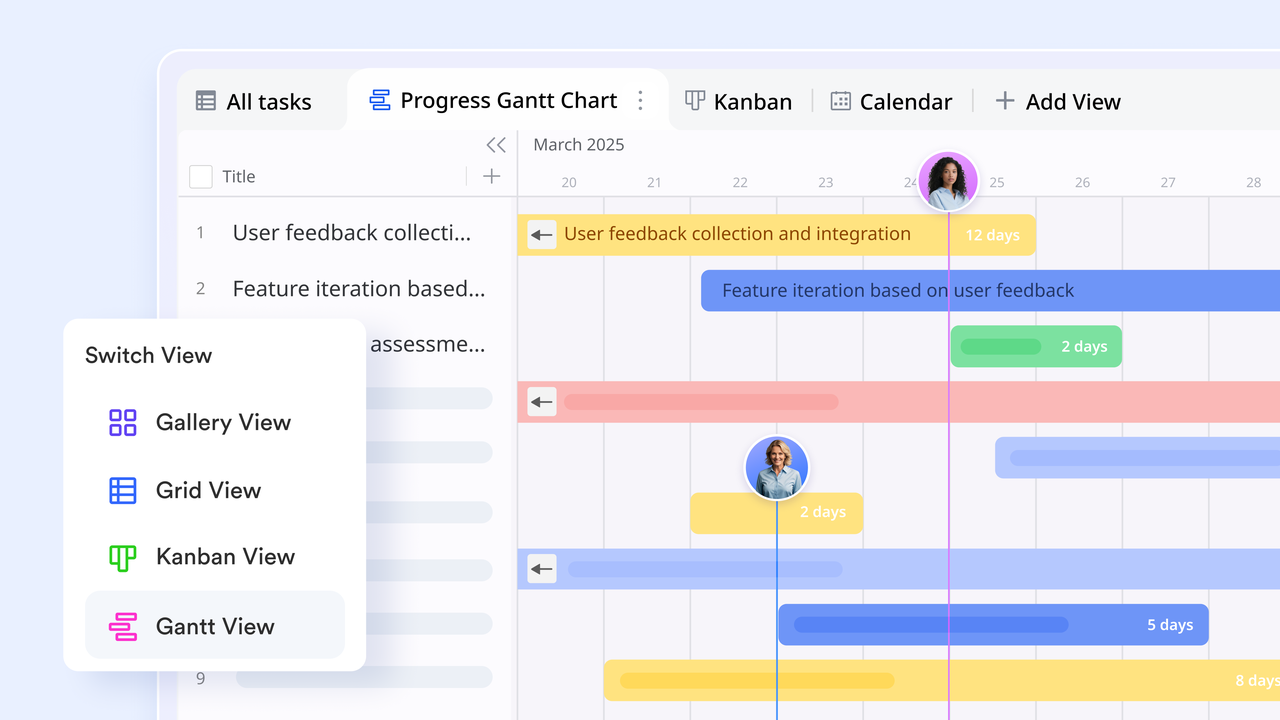
First glance for accurate updates and insights
Lark Base dashboards centralize retail order management by providing visual, real-time analytics. They use blocks like metrics to summarize key performance indicators (KPIs) such as total orders and fulfillment rates, and progress charts to visualize the status of ongoing shipments. Column/line charts display trends over time (e.g., sales volume), while pivot tables analyze complex data from multiple dimensions (e.g., sales segmented by product and region). This visual approach enables managers to monitor operations and make data-driven decisions quickly. 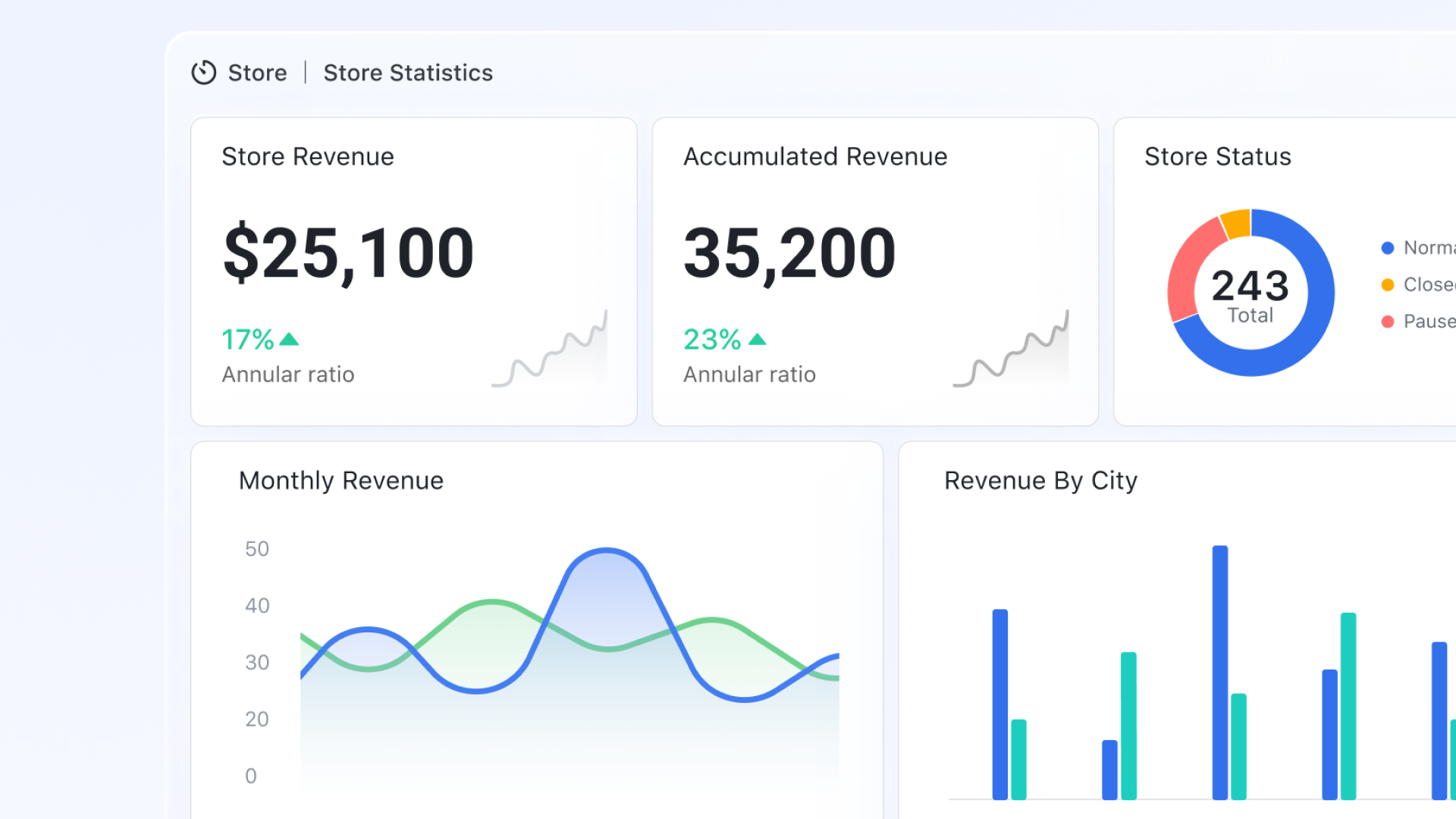
Automated workflow streamlines order routing
The power of workflows in Lark Base lies in automating the intricate journey of a retail order. As a new order is logged, this action triggers a sequence of events. Critically, these workflows use If/Else logic to handle key decisions, such as confirming inventory availability or payment success. Depending on the configuration, the system automatically updates the order status and sends relevant notifications to both staff and customers, ensuring a seamless and efficient flow from initial purchase to final delivery. 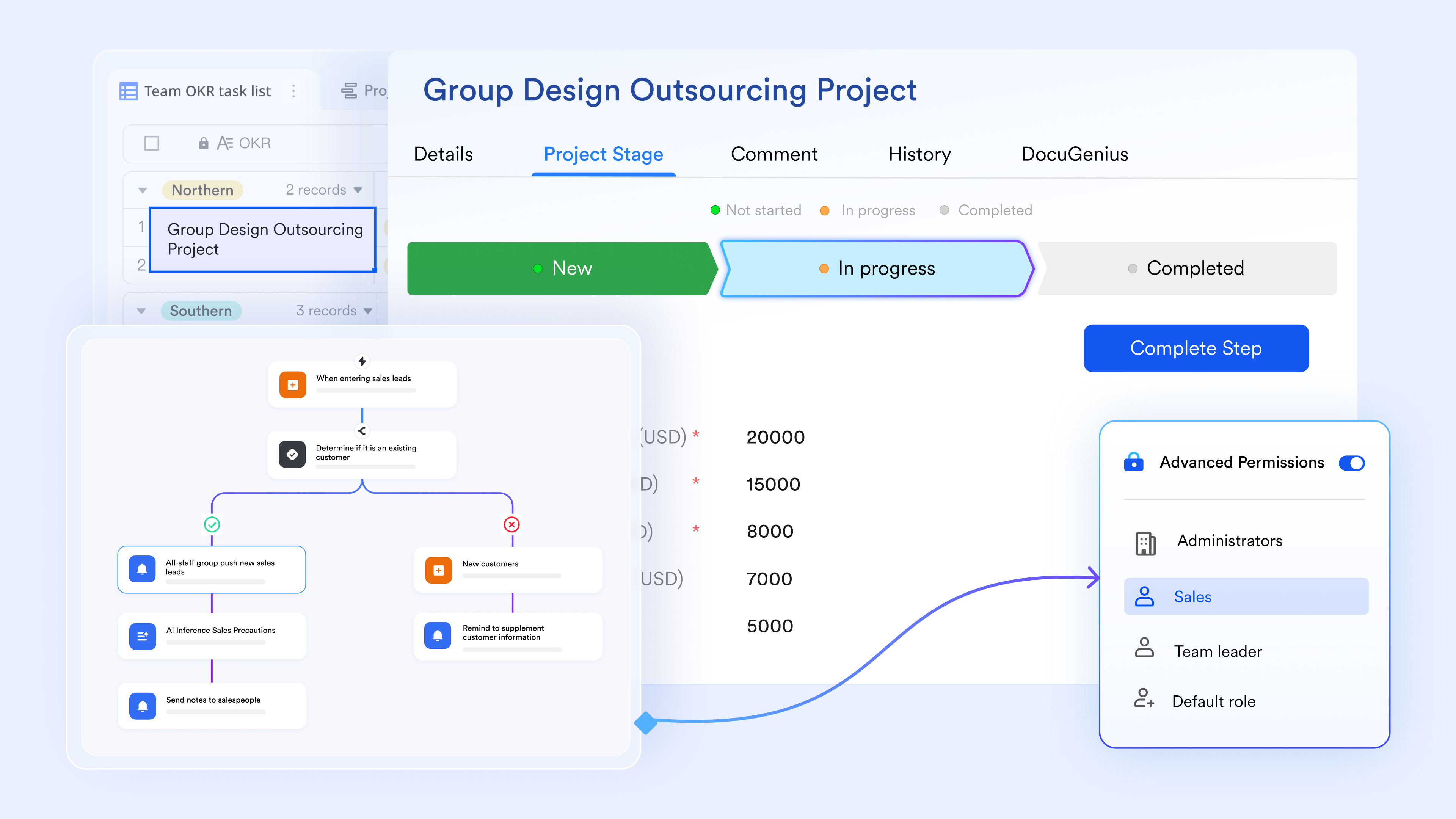
Seamless team communication and coordination
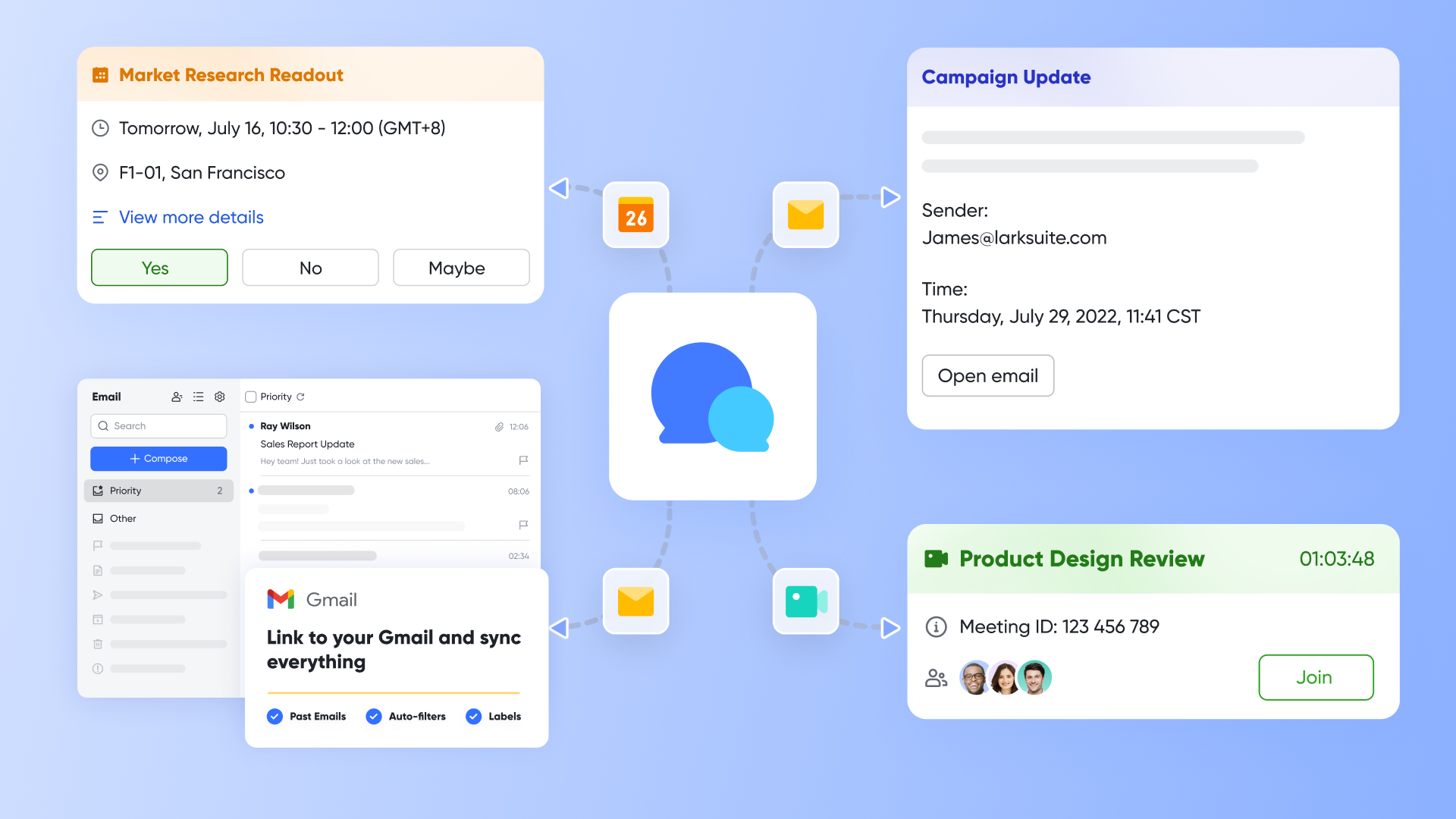
Lark builds an environment for real-time communication and structured decision-making. is vital for rapid, organized communication, enabling retail teams to instantly coordinate orders, stock updates, and dispatch timelines via searchable chat histories and threads, which drastically reduces warehouse and front-line delays. Complementing this, supports faster decision-making by allowing store, warehouse, and supplier teams to coordinate frequently and resolve critical bottlenecks—such as dispatch delays or stock discrepancies.
Lark docs and sheets for real-time documentation
and Lark Sheets help retailers maintain updated product lists, vendor details, purchase order drafts, and internal SOPs. Real-time editing ensures every team member works with the latest information without duplicate copies. Teams can link Docs inside chats and tasks for better context. This supports more organized operations across sales, warehouses, and support teams. 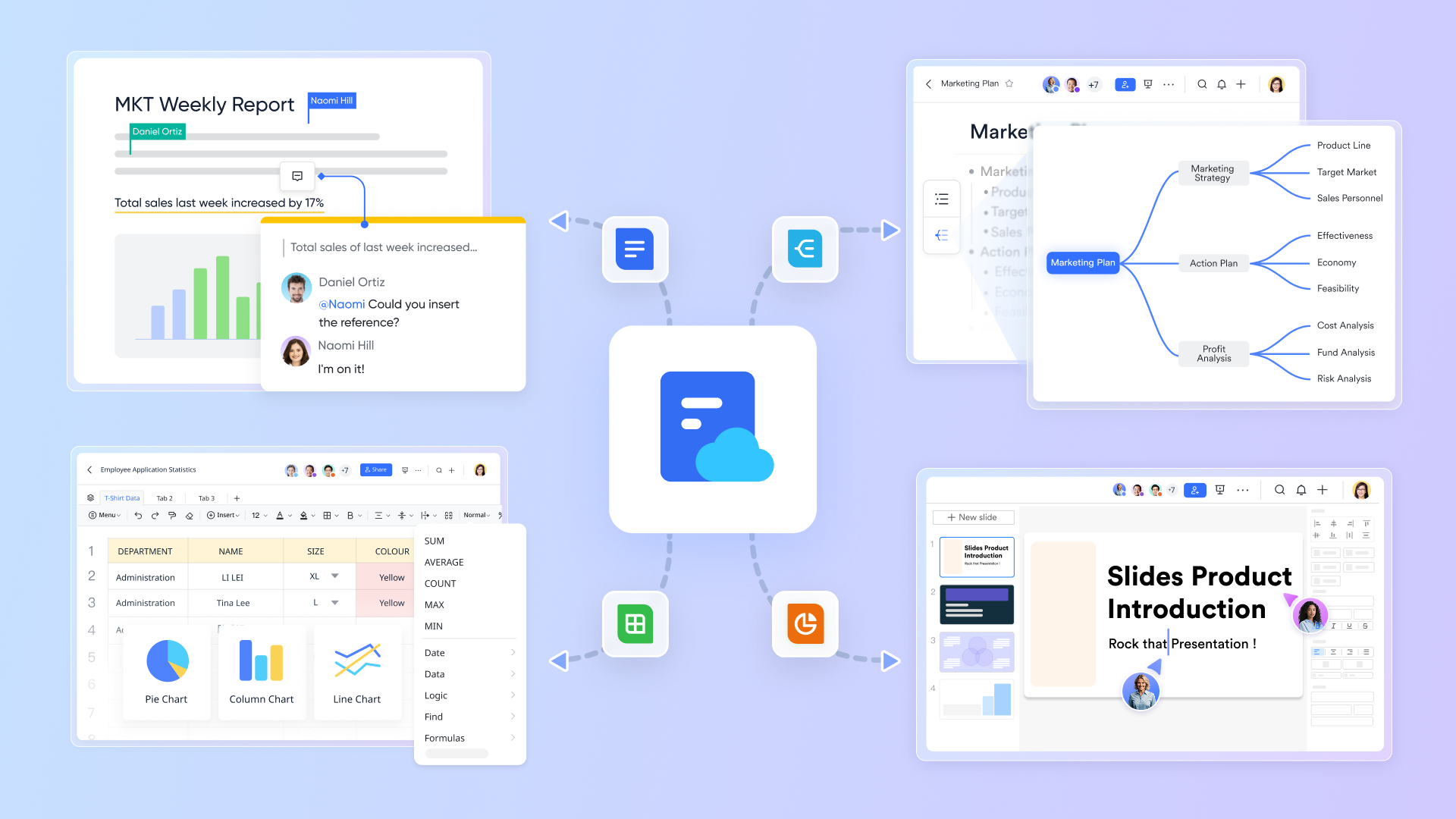
:
- Starter plan: Free forever plan that includes 11 powerful tools for up to 20 users. It also comes with 100GB of storage, 1000 automation runs, AI translations, and more.
- Basic plan: $6/user/month (billed annually) for up to 500 users. It includes everything in Starter plus group calling for up to 500 attendees, 5TB of storage, 1000 automation runs, and more. For more details, please .
- Pro plan: $12/user/month (billed annually) for up to 500 users. It includes everything in Basic plus group calling for up to 500 attendees, 15TB of storage, 50,000 automation runs, and more.
- Enterprise plan: for custom pricing. Supports unlimited users and includes even more automation runs and advanced security, compliance, and management features.
For small teams with simple communication needs

18 months message history
1000 Base automation runs/month
2000 rows per table in Base
Most POPULAR
For companies with comprehensive collaboration and management needs
Unlimited message history
500-participant video meetings
50k Base automation runs/month
20k rows per table in Base
For large companies with advanced security and organizational management needs
Get a personalized demo and pricing
Unlimited message history
500-participant video meetings
15 TB storage + 30 GB storage/user
500k Base automation runs/month
50k Base automation runs/month
Most POPULAR
For companies with comprehensive collaboration and management needs
Unlimited message history
500-participant video meetings
50k Base automation runs/month
20k rows per table in Base
Common challenges in retail order processing and how Lark helps
Retailers face recurring operational difficulties that affect inventory accuracy, fulfillment speed, and customer satisfaction. Lark helps simplify these tasks with structured data, workflows, and connected communication.
- Overselling and out-of-stock issues: Overselling occurs when inventory updates lag across channels. Lark Base provides structured records that support real-time visibility and reduce data discrepancies. Teams stay aligned more easily with shared dashboards and automated updates. This minimizes customer complaints and supports steadier revenue.
- Delayed dispatch: Dispatch delays happen when teams lack clarity about picking, packing, and scheduling tasks. Lark Tasks and Base streamline assignments, statuses, and notifications. Every team member sees what needs to be completed without relying on manual messages. This results in faster processing and improved efficiency.
- Multichannel order sync failures: Multi-channel selling can cause inconsistent order data. Lark can centralize seller information, workflow triggers, and updates so that teams avoid repeated manual corrections. Shared documentation ensures everyone works from the same information set.
- High return ratios: Returns create workloads for support teams and warehouse staff. Lark Base can record return reasons, product conditions, and resolution steps so that patterns become visible. Retailers use this insight to improve product quality and reduce future returns.
- Slow manual purchase order processes: Purchase orders often require approvals and coordination across multiple departments. and Base help automate these steps through structured workflows. This shortens procurement time and reduces administrative delays.
Conclusion
Retail operations become more complex as customer expectations rise and sales channels expand. A retail order management system helps retailers manage orders, inventory, and fulfillment with consistency and accuracy. Centralized workflows reduce errors and support faster decision-making. When retailers explore tools that also bring communication, documentation, automation, and together, they often begin noticing the value of platforms like gradually. An environment where information, teams, and workflows stay connected becomes essential for long-term efficiency. As retailers continue improving operational processes, choosing the right OMS becomes a key strategic advantage.
Manage all channel orders with Lark today
FAQs
What is the difference between an OMS and a WMS in retail?
An OMS manages the entire journey of customer orders from placement to delivery, while a WMS focuses on warehouse operations such as picking, packing, and stock arrangement. Retailers usually operate both systems to maintain accuracy across fulfillment and inventory storage. Some retailers also look for platforms that help centralize communication and documentation to reduce manual coordination, which is where tools like Lark start entering their evaluation process naturally.
Can a retail OMS work without ERP software?
Yes, an OMS can operate independently if it includes features for order capture, inventory tracking, returns management, and vendor coordination. Small retailers often start without an ERP and use an OMS to manage daily volume. Over time, businesses may add for financial consolidation. Teams exploring unified environments may begin comparing OMS tools with connected platforms like Lark slowly for communication and automation needs.
How does OMS help with retail returns and reverse logistics?
An OMS manages return requests, verifies item conditions, and processes refunds in a structured sequence. It reduces confusion for customers and supports teams by offering consistent workflows. Retailers gain visibility into return patterns and use insights to improve product selection or quality. Some teams also add collaboration platforms like Lark gradually to record return data and coordinate interdepartmental discussions.
Does an OMS improve customer loyalty metrics?
Yes, customers receive more accurate deliveries, quicker updates, and consistent service across all channels. This increases trust and leads to higher repeat purchases. Retailers track metrics more easily through structured order histories and communication logs. As workflows grow more complex, some retailers start exploring platforms like Lark to simplify visibility.
What size retailers benefit most from cloud-based OMS solutions?
Cloud systems work well for small retailers needing a simple setup, mid-size sellers managing growth, and large enterprises operating across multiple warehouses. Cloud tools offer flexibility, faster updates, and better uptime for distributed teams. Retailers wanting additional workflow automation and connected documentation may begin evaluating Lark slowly as operations expand.
Related reading