














Sales Revenue Guide: Meaning, Formula & How to Increase It

Ryan Tanner
Product Marketing Specialist
Sep 18, 2026
Ryan Tanner
Sep 18, 2026

16 min read


Sales revenue is the heartbeat of every business—the clearest indicator of how effectively a team turns opportunities into actual income. Whether you're managing sales in a startup or a growing enterprise, tracking sales revenue accurately reveals what drives growth and where leaks occur.
In this guide, we'll explain what sales revenue means, how to calculate it, and how modern teams use Lark to gain real-time visibility, automate follow-ups, and align faster—helping every department contribute to stronger, more predictable revenue performance.

What counts as sales revenue and what doesn't?
Not every inflow of cash reflects your company's true performance. Sales revenue only includes money earned from your core business operations—not one-off gains or investment income. Knowing what qualifies (and what doesn't) ensures you measure growth accurately and make informed decisions.
What counts as sales revenue
- Product sales: Income generated from selling your main products—whether physical goods or digital items—forms the backbone of sales revenue. These sales directly represent how effectively your business converts demand into income.
- Service charges: Fees earned from providing services such as consulting, maintenance, or design also count toward sales revenue. They reflect the ongoing value your team delivers to customers through professional expertise.
- Recurring subscription payments: Revenue from subscriptions or memberships is part of sales revenue because it comes from your core offering. For SaaS or digital platforms, this consistent income stream supports predictable growth and stability.
What doesn't count as sales revenue
- Asset sales: Money earned from selling long-term assets like vehicles, property, or machinery doesn't qualify as sales revenue. These are one-time transactions that fall under non-operating income.
- Dividends: Returns earned from investments in other companies are excluded. They're considered financial income, not a reflection of how your products or services are performing.
- Investment gains: Profits from financial markets or securities are not included in sales revenue. Since they're not tied to your core business activities, they don't indicate real sales performance.
Underatand the equation: Sales revenue formula + simple example
Understanding how to calculate sales revenue is essential for tracking business performance accurately. Whether you sell products, services, or subscriptions, this formula helps you measure how effectively your operations generate income.
Sales revenue formula
Sales Revenue = Units Sold × Selling Price
(+ Service Revenue if applicable)
This formula calculates total income from core business activities. However, for a more accurate figure, businesses should account for discounts, refunds, and returns, which directly reduce gross sales.
Net Sales Revenue = Gross Sales – (Discounts + Returns + Allowances)
A clothing store sells 1,000 jackets at $60 each.
- Gross sales = 1,000 × $60 = $60,000
- Discounts = $2,000
- Returns = $1,000
Net sales revenue = $60,000 – ($2,000 + $1,000) = $57,000
This represents the store's actual income from product sales after adjustments—a key metric for evaluating true performance.
A software company has 400 active subscribers, each paying $25 per month.
- Monthly subscription revenue = 400 × $25 = $10,000
- Annual gross revenue = $120,000
- Refunds and discounts = $3,000
Net sales revenue = $120,000 – $3,000 = $117,000
This shows the real recurring income generated by subscriptions. For SaaS businesses, tracking net sales revenue highlights customer retention, pricing impact, and overall growth stability.
Golden view: Sales revenue isn't just tracked—it's built through execution
Revenue isn't generated by static reports—it's built in the daily actions of your team. Every deal update, customer reply, and internal handoff contributes to the outcome. When teams move fast, communicate clearly, and stay aligned, sales revenue becomes a natural result of consistent execution rather than chance.
Spreadsheets can show what happened; they can't accelerate what's happening now. True revenue growth depends on real-time visibility, automation, and accountability across every department. The faster your team identifies stalled deals, missed follow-ups, or delayed approvals, the quicker those gaps turn into opportunities.
In short, team speed, accuracy, and alignment determine revenue outcomes. When workflows are connected and transparent—as in Lark's unified platform—decisions happen faster, collaboration flows naturally, and every small action compounds into measurable revenue impact.
Action time: Use Lark to manage sales, gain insights, and grow revenue
Sales revenue doesn't increase by chance—it grows through speed, visibility, and alignment. Teams need clear data, fast communication, and seamless execution to turn potential into profit. Lark brings all three together in one connected workspace, helping businesses move from delayed reactions to proactive revenue growth. Here's how each feature drives measurable results.
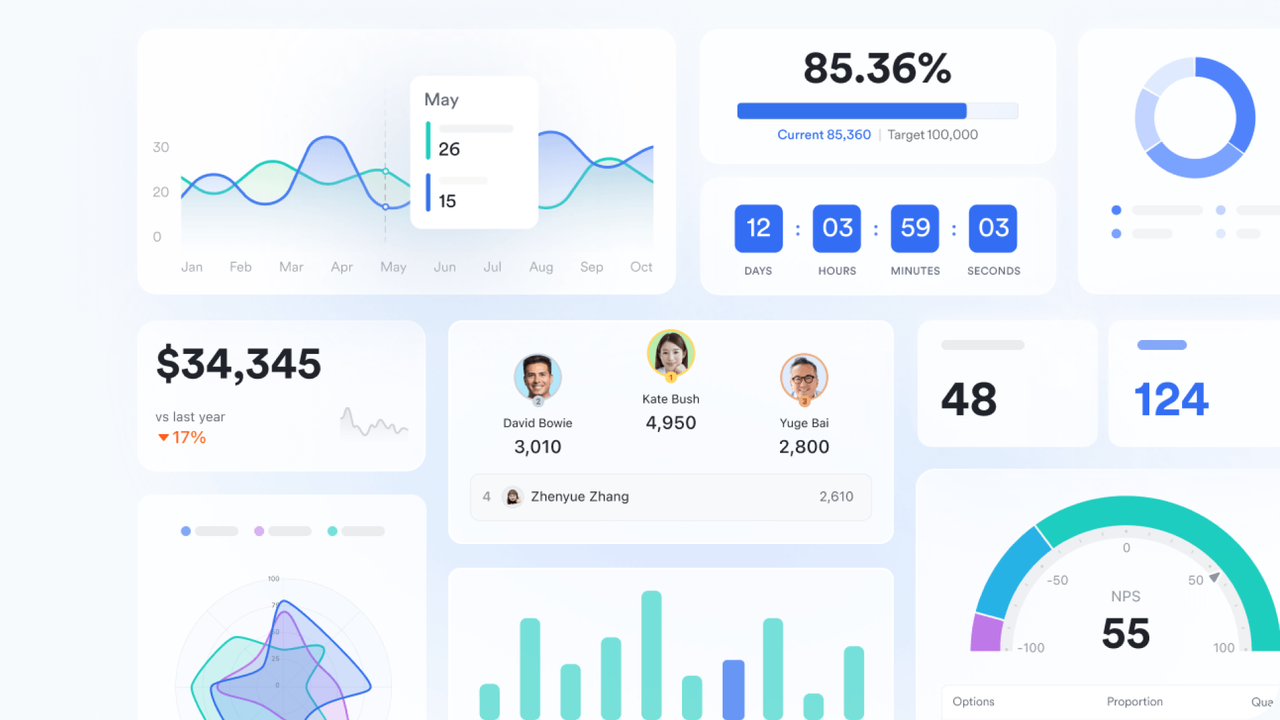
Lark Base dashboards: Real-time revenue visibility and faster action
Revenue drops when teams discover issues too late. Lark Base gives every team a live dashboard showing key sales data—deal value, conversion velocity, renewal timelines, and forecast accuracy—pulled directly from active records. When a KPI changes, teams can click into the exact deals behind the number and respond immediately. For example, if "stalled deals in the negotiation stage" suddenly spike, sales leaders can drill in to identify the cause and fix the messaging that same day—preventing revenue from slipping through cracks.
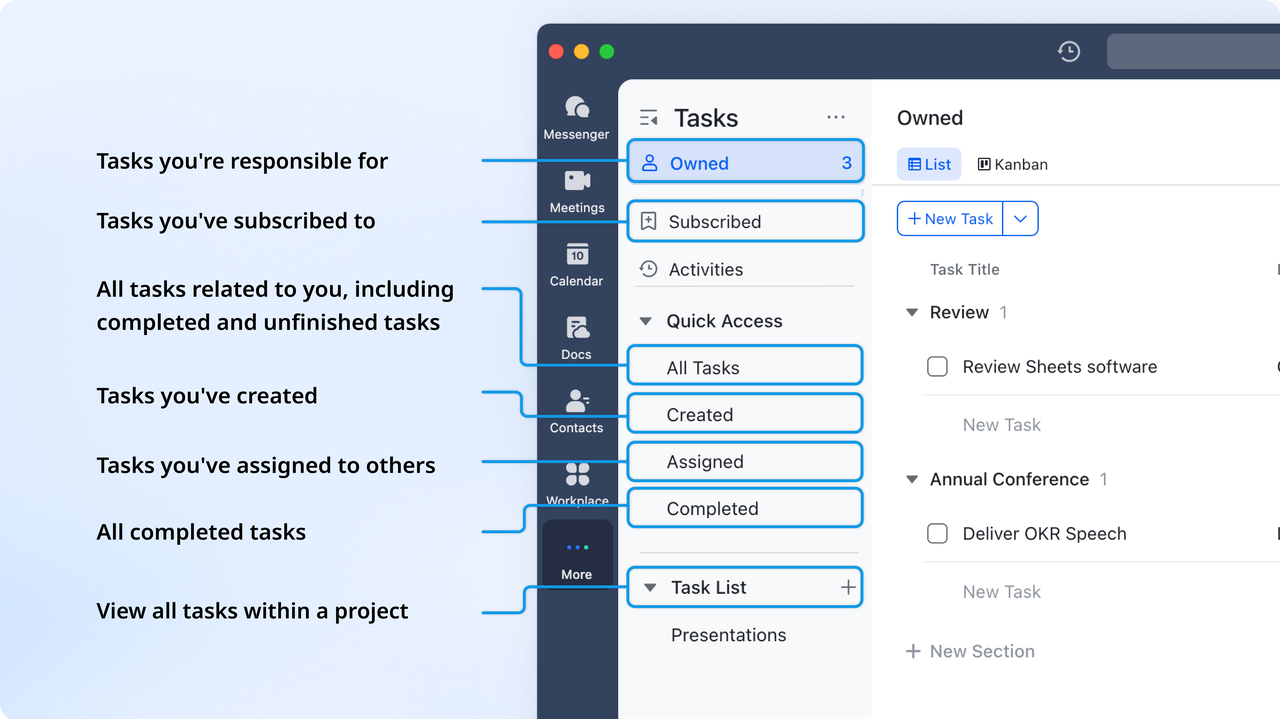
Lark Tasks: No more missed follow-ups that kill deals
Every lost deal has the same root cause—forgotten follow-ups. With Lark Tasks, follow-up reminders, contract check-ins, and renewal prompts trigger automatically based on lead or account status. Owners, deadlines, and priorities keep the pipeline moving without extra admin work. For example, when a buyer opens a pricing sheet twice in a day, Base can trigger a Task for the sales rep to call within the hour—striking while interest is high and increasing conversion chances.
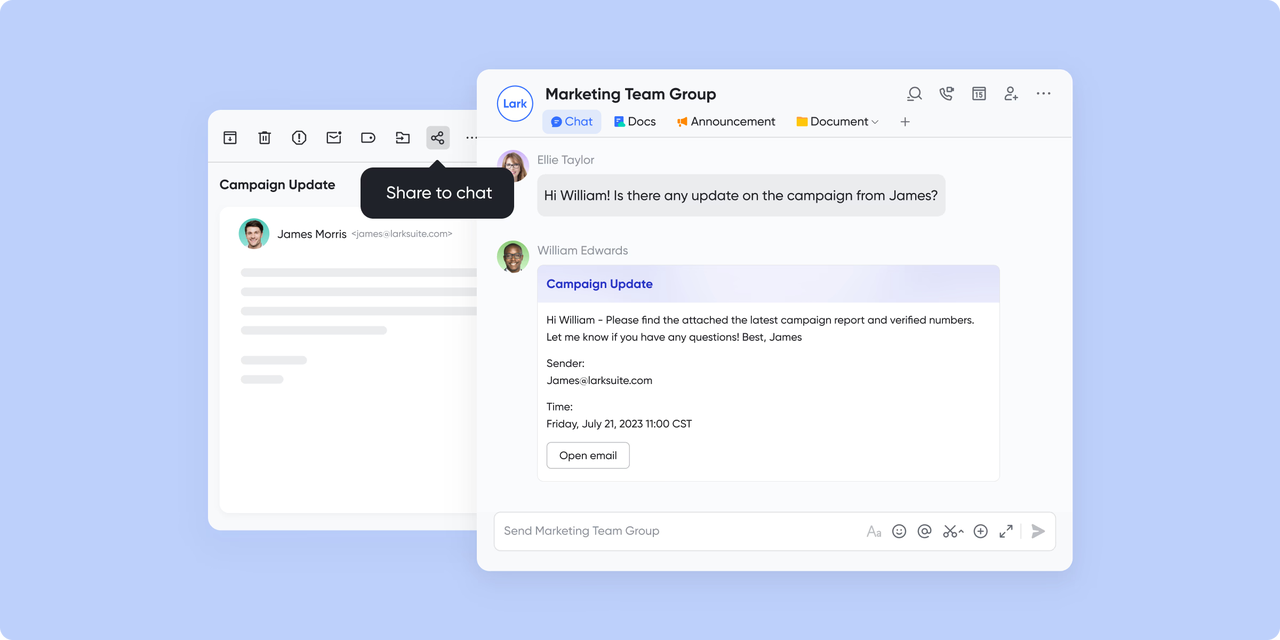
Lark Messenger: Faster internal answers & shorter sales cycles
Buyers move fast—and if your internal team slows down, revenue does too. Lark Messenger keeps conversations in the context of the exact deal, with @mentions connecting reps to product, finance, or legal instantly. Instead of chasing info across email threads, reps get quick approvals and respond to prospects much faster. Example: A customer asks about compliance requirements. The AE tags the security lead in the deal channel and replies within minutes—turning hesitation into confidence and closing momentum.
Lark Meetings: Close revenue faster with live deal collaboration
Negotiations and demos require instant clarity. Magic Share allows sales teams to open contract terms, ROI calculators, or implementation plans directly inside a meeting—while editing live with the customer. No "I'll revise and send later," which slows buyer momentum. Example: A client requests a small discount and onboarding adjustment during the call. The AE updates the slide instantly through Magic Share, gets verbal approval in the same meeting, and moves the deal straight to contract—revenue gained days earlier.

- Starter plan: Free forever plan that includes 11 powerful tools for up to 20 users. It also comes with 100GB of storage, 1000 automation runs, AI translations, and more.
- Pro plan: $12/user/month (billed annually) for up to 500 users. It includes everything in Starter plus group calling for up to 500 attendees, 15TB of storage, 50,000 automation runs, and more.
- Enterprise plan: Contact sales for custom pricing. Supports unlimited users and includes even more automation runs and advanced security, compliance, and management features.
Sales revenue templates to accelerate growth
Data-driven teams don't just monitor numbers—they build systems that connect daily activity to revenue outcomes. Lark's ready-to-use templates make this easier by combining structured data, automation, and visibility. From sales tracking to forecasting, each template helps teams replace spreadsheets with living workflows that drive consistent growth.
Sales tracker template
The Sales Tracker Template helps teams record every deal, discount, and refund in one dynamic Base. It simplifies how you calculate and visualize sales revenue across products, reps, or time periods. With real-time updates and automated summaries, your team can spot trends and act before targets slip.
Retail store inventory & revenue tracking system
Ideal for retail teams, this template links sales data with inventory performance. You can monitor stock levels, item movement, and daily revenue in a single view. By connecting inventory accuracy with sales revenue, it ensures you understand not just what sold—but why.
Monthly revenue report template
The Monthly Revenue Report Template offers a structured way to track recurring income, new sales, and churn. It helps visualize growth month over month while revealing where revenue is rising or stalling. With consistent reporting, leaders can make data-driven adjustments quickly and confidently.
Revenue generation strategies template
Use this template to document, prioritize, and measure revenue-driving initiatives. It helps align marketing, sales, and service efforts under one plan—linking strategy to measurable results. With structured fields for goals, ownership, and timelines, it turns ideas into consistent sales revenue execution.
Revenue forecast models template
This forecasting template lets you project revenue using real inputs like deal volume, conversion rate, and pricing. It supports data-based planning and risk assessment, helping teams prepare for multiple business scenarios. With live calculations, you can adjust assumptions and instantly see revenue impact.
Revenue growth plan template
This template helps you design step-by-step action plans for expanding sales revenue. It combines performance data, growth targets, and team accountability to keep everyone aligned. By turning strategic goals into daily actions, it ensures your growth plan translates into measurable outcomes.
Sales funnel template
A clear funnel is essential for accurate sales revenue forecasting. This template tracks every stage from lead to closed deal—showing where opportunities stall or accelerate. Teams gain visibility into pipeline health, enabling faster responses and smarter revenue predictions.
Why sales revenue drops
Even with strong products and active pipelines, many teams see sales revenue fall unexpectedly. These declines often stem from inefficiencies buried deep in daily workflows—the subtle friction points that slow teams down and reduce conversion potential.
- Poor lead follow-up: Missed or delayed follow-ups are one of the biggest reasons deals go cold. When leads don't receive timely engagement, interest fades, and potential revenue disappears. Consistent follow-up systems and automated reminders are essential to maintain momentum and close faster.
- Pricing inconsistencies: Unclear or frequently changing pricing creates confusion among both sales teams and customers. It undermines trust and makes forecasting unreliable. Standardized pricing documentation ensures accuracy, transparency, and stronger customer confidence—leading to steadier revenue performance.
- Operational delays blocking delivery: When internal bottlenecks delay product delivery or service implementation, payments are postponed, and customer satisfaction suffers. These operational lags directly reduce realized revenue and can even lead to cancellations or missed renewals.
- Disconnected tools making the pipeline invisible: Using multiple unlinked tools for CRM, communication, and reporting makes it difficult to see where deals stand. Without centralized visibility, opportunities slip through the cracks, and leaders can't react quickly to performance changes.
- Manual processes causing slow execution: Manual data entry, follow-ups, and reporting consume valuable time that could be spent on selling. These outdated workflows limit team capacity and slow revenue cycles. Automation frees sales teams to focus on high-value activities that actually drive growth.
Revenue improvement moves you can implement today
Growing sales revenue doesn't always require drastic changes—it often comes down to improving everyday execution. These simple, data-driven actions can help teams close faster, stay proactive, and maintain clear visibility into performance.
- Speed up quote → contract → delivery: Delays between quoting, contracting, and fulfilling an order directly reduce realized revenue. Streamlining these steps—using shared workspaces or automated approval flows—keeps deals moving. The faster you deliver, the quicker revenue is recognized and reinvested into growth.
- Set automated reminders for renewals: Missed renewals are silent revenue leaks. Automated reminders ensure your team re-engages customers before contracts lapse. By staying ahead of renewal cycles, you protect recurring sales revenue and build long-term customer relationships.
- Reallocate effort to high-conversion sources: Not all leads are equal. Reviewing your data to identify which channels or campaigns convert best helps redirect time and resources where returns are highest. This focus increases total sales revenue without expanding budgets.
- Replace spreadsheets slowing revenue visibility: Manual tracking across spreadsheets hides real-time insights and delays decisions. Transitioning to dynamic tools—like Lark Base as well as its built-in dashboard—provides instant visibility into deals, targets, and trends. Better visibility leads to faster reactions and stronger sales revenue performance.
Conclusion
Sales revenue isn't just a number—it reflects how well teams execute, communicate, and respond to change. From understanding what counts as revenue to addressing hidden blockers and improving visibility, every step contributes to growth. With Lark, teams can turn these insights into daily action: tracking deals in real time, automating follow-ups, and collaborating instantly across departments. Instead of scattered spreadsheets, Lark brings everything into one connected workspace—so sales revenue isn't just measured, it's continuously built through faster, smarter teamwork.
FAQs
How do you calculate revenue for subscription businesses?
For subscription-based businesses, sales revenue is calculated as:
Revenue = Monthly Recurring Revenue (MRR) × Subscription Duration.
Include add-ons, upgrades, and usage-based charges, but exclude one-time setup fees. Tracking churn and renewal rates alongside MRR helps teams understand long-term revenue stability and identify opportunities for expansion within existing customer accounts.
Is revenue the same as sales in B2B?
Not always. In B2B, sales usually refer to direct customer transactions, while revenue may also include recurring contracts, maintenance fees, or professional services. Sales revenue is the portion of total revenue generated from selling products or services—the most accurate reflection of a company's performance and market demand in real time.
What's a good revenue growth rate?
A healthy sales revenue growth rate depends on your industry and maturity stage. Startups may target 20–30% monthly growth, while mature businesses often aim for 10–20% annually. Consistent growth driven by customer retention and efficiency improvements—not just aggressive sales—signals a sustainable and scalable business model.
Which KPIs should revenue teams monitor?
Revenue teams should track KPIs like sales revenue, average deal size, conversion rate, churn rate, and customer lifetime value (CLV). Forecast accuracy and pipeline velocity also matter—they show how fast deals move from opportunity to close. Monitoring these metrics ensures every activity directly supports predictable, recurring revenue growth.
Can automation boost sales revenue?
Yes. Automation helps teams increase sales revenue by eliminating manual tasks that slow deal cycles. Automatic follow-up reminders, lead scoring, and real-time reporting ensure no opportunity is missed. With platforms like Lark, sales workflows connect seamlessly, letting teams respond faster, close smarter, and focus on high-value interactions that truly drive revenue.
Related reading
Table of contents
Start using Lark today

Manage all your work in one place
Boost team efficiency by 10x
Save up to 70% on software costs
Table of contents
Start using Lark today
Manage all your work in one place
Boost team efficiency by 10x
Save up to 70% on software costs
Keep reading









2026 Lark Technologies Pte. Ltd.
Headquartered in Singapore with offices worldwide.






Explore: