














The 8 Best CRMs for Event Management in 2026: Boost Your Event Success

Cecilia Lane
Go-to-Market Associate
Sep 8, 2026
Cecilia Lane
Sep 8, 2026

16 min read


The event management industry is a whirlwind of logistics, attendee interactions, and marketing efforts. Successfully orchestrating an event, whether it's a small conference or a large-scale festival, requires juggling countless details. Juggling these details, can be overwhelming, often leading to missed opportunities and stressed-out teams. However, there's a solution that empowers event planners to streamline their processes, enhance attendee experiences, and boost overall event success: Customer Relationship Management (CRM). Using tools that enhance team collaborations will also help to streamline your processes. This article unveils the transformative power of CRM for event management, presenting a curated list of the best CRM solutions to elevate your event planning game. Discover how these tools can revolutionize your approach to events. In this guide, I will recommend these tools:
- Lark: All-in-one event management hub
- Pipedrive: Sales pipeline management
- Cvent: Enterprise event powerhouse
- Glueup: Membership-centric events
- Lasso: Real estate event specialist
- Zoho backstage: Versatile event platform
- Anyroad: Experience-driven insight
- Whova: Engagement-focused event app
What is CRM for event management?
Customer Relationship Management (CRM) is a technology for managing all your company's relationships and interactions with customers and potential customers. It's a system designed to organize, automate, and synchronize sales, marketing, customer service, and technical support. Event management encompasses the planning, execution, and evaluation of gatherings, including conferences, trade shows, webinars, and more. CRM for event management tailors CRM principles to the unique needs of the event industry. It provides a centralized platform for managing attendee data, streamlining marketing campaigns, tracking event logistics, and enhancing overall event experiences. Key features include contact management, ticketing, marketing automation, reporting, analytics tools and post event surveys.

Why event management needs CRM
Event management is complex and can be time consuming, here are some ways a CRM can help.
- Improved organization: A CRM acts as a central hub for all event-related information. Instead of scattered spreadsheets and disorganized contact lists, you can store attendee data, vendor details, speaker information, and logistical details in a single, easily accessible system. This streamlined organization saves time, reduces errors, and ensures everyone on your team has access to the information they need. A shared document can help your team stay organized and aligned during the planning process.
- Enhanced communication: Effective communication is crucial for successful event management. A CRM enables you to communicate with attendees, speakers, sponsors, and staff through targeted email campaigns, personalized messaging, and automated notifications. You can segment your audience based on their interests and send them tailored information about relevant sessions, networking opportunities, and event updates. Centralizing communication through a CRM ensures consistent messaging and reduces the risk of miscommunication. Tools for instant messaging can help teams communicate in real time.
- Streamlined marketing: A CRM empowers you to create and execute targeted marketing campaigns to attract attendees and promote your event. You can segment your audience based on demographics, interests, and past event attendance, and then create personalized email sequences, social media ads, and landing pages. A CRM also allows you to track the effectiveness of your marketing campaigns and optimize your strategy based on real-time data.
- Increased efficiency: Event management involves numerous repetitive tasks, such as registration, ticketing, and follow-up communication. A CRM automates these tasks, freeing up your time to focus on more strategic activities. Automated workflows can handle registration confirmations, ticket delivery, thank-you emails, and feedback surveys, reducing manual effort and improving efficiency. Automation of repetitive tasks, allows event managers to work more efficiently.
- Better reporting and analytics: A CRM provides valuable insights into event performance and attendee behavior. You can track key metrics such as registration numbers, attendance rates, session popularity, and attendee feedback. This data allows you to evaluate the success of your event, identify areas for improvement, and make data-driven decisions for future events. Detailed analytics can help to make informed decisions in the future.
- Improved customer/attendee satisfaction: By centralizing attendee data and communication, a CRM enables you to provide personalized experiences that increase attendee satisfaction. You can track attendee preferences, interests, and past interactions to tailor event content, networking opportunities, and post-event communication. Personalizing each interaction builds stronger relationships and creates a more memorable event experience. Using data to create events tailored to attendees will increase attendee satisfaction.
The best CRMs for event management at a glance
In-depth reviews of the top 8 CRMs
1. Lark: All-in-one event management hub
Overview
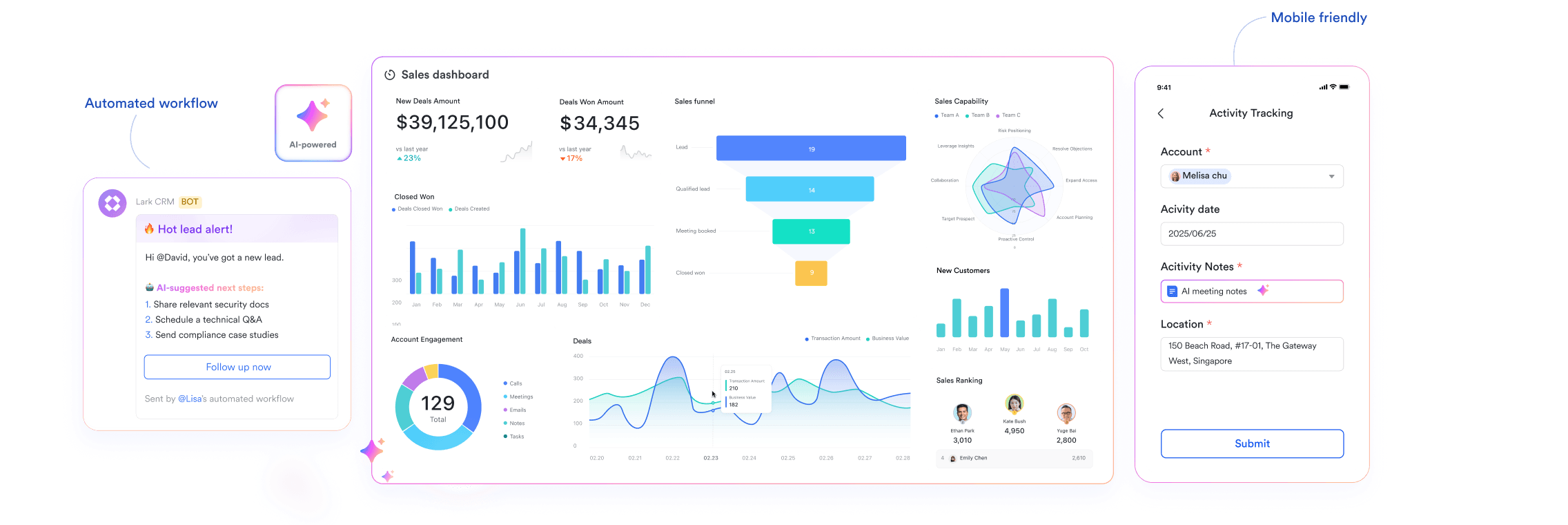
Lark enhances CRM functionality by providing a comprehensive collaboration platform that unifies crucial communication and productivity tools. With features like team messaging, video conferencing, and cloud storage, it streamlines event management and fosters collaboration, making it an ideal solution for businesses seeking to optimize their event workflows. Lark’s cloud-based design supports real-time collaboration and customer management, suited for fast-paced event teams working both remotely and on-site.
Key features
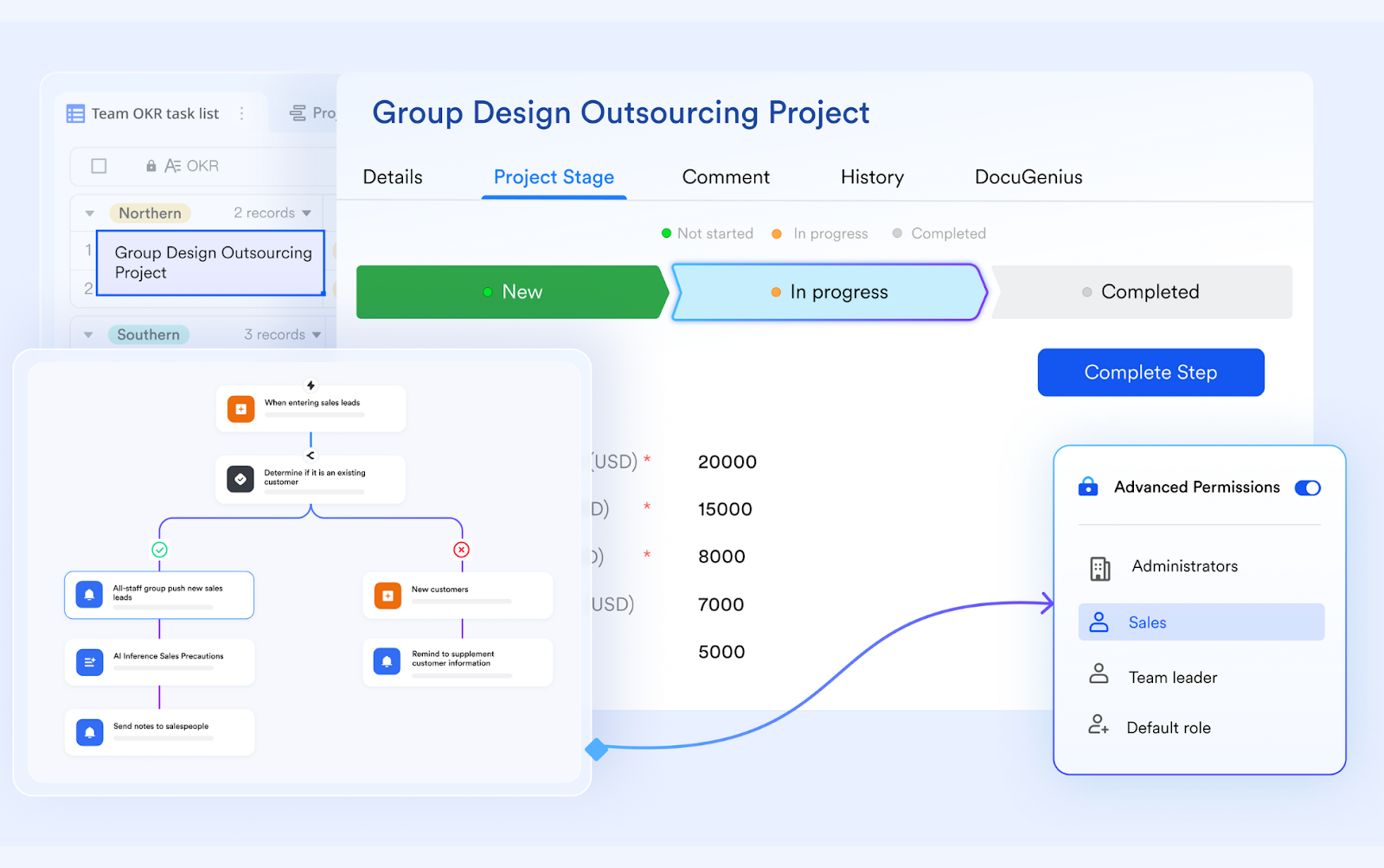
Build flexible event workflows, no code needed
Lark Base lets you build and modify event workflows visually—without any coding. Teams can easily adapt attendee registration stages, automate data entry for vendor information, and set up approval processes for speaker contracts. This kind of flexibility is especially valuable for event organizers looking to simplify CRM management.
Streamline event management with timely alerts and faster approvals
With Lark's automation features, teams automatically receive real-time alerts for new registrations, follow-ups with sponsors, or urgent approvals for budget changes. This ensures that critical tasks don’t get overlooked, even during busy event seasons or when teams are spread across multiple locations.
Enhance event success with data-driven insights
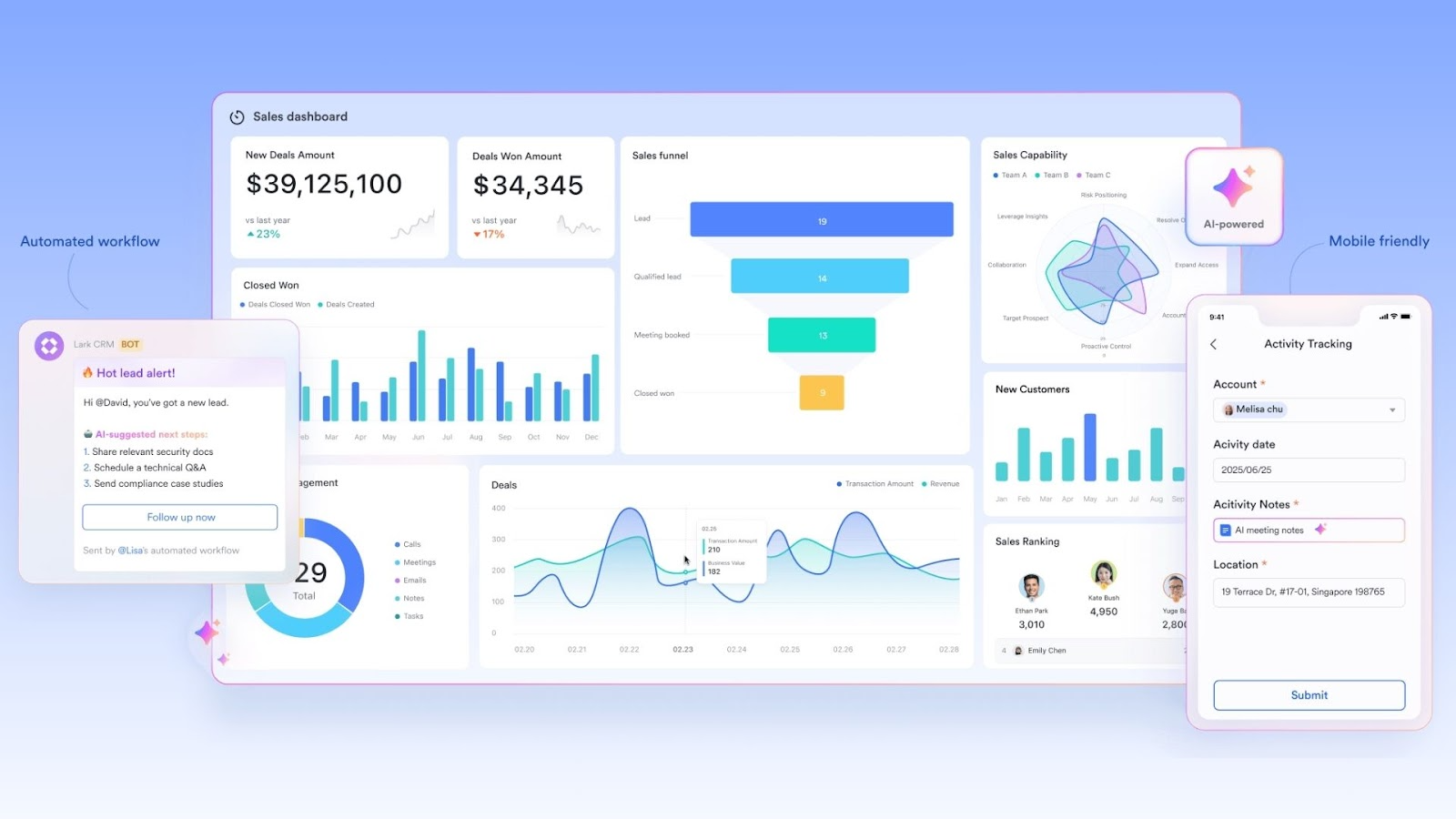
AI-powered session popularity analysis, attendee engagement prediction, and next-step suggestions help teams prioritize high-potential opportunities and improve attendee experience. In a diverse and fast-paced event environment, this results in smarter planning and less time wasted on manual sorting. Lark’s intelligent data management is particularly well-suited for businesses searching for the best CRM for event management to enhance event performance.
Drive smarter decisions with live event performance visibility
Lark Base offers customizable dashboards that empower event teams to effortlessly track registrations, sponsorship deals, and attendee progress, increasing event conversion efficiency. Team leaders get immediate insights into event progress, trends, and bottlenecks, empowering better decisions on the fly.
Keep events moving wherever you are
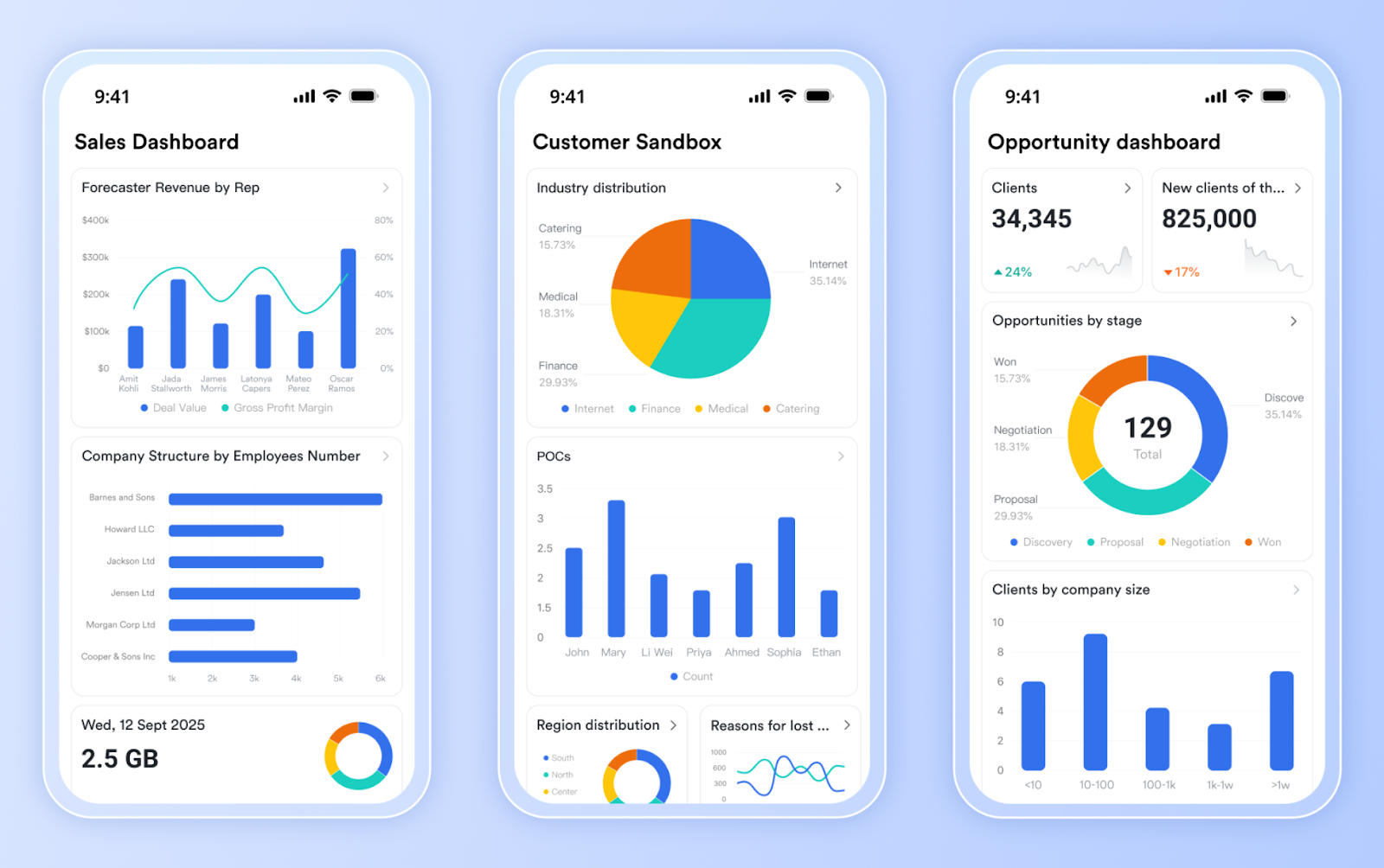
Lark’s full-featured mobile CRM lets you manage attendees and approve vendor contracts anytime, anywhere—whether you’re on-site, visiting venues, or traveling between events. Besides, Lark’s intelligent calendar helps teams coordinate meetings and deadlines across different time zones, preventing schedule conflicts with international speakers or attendees.
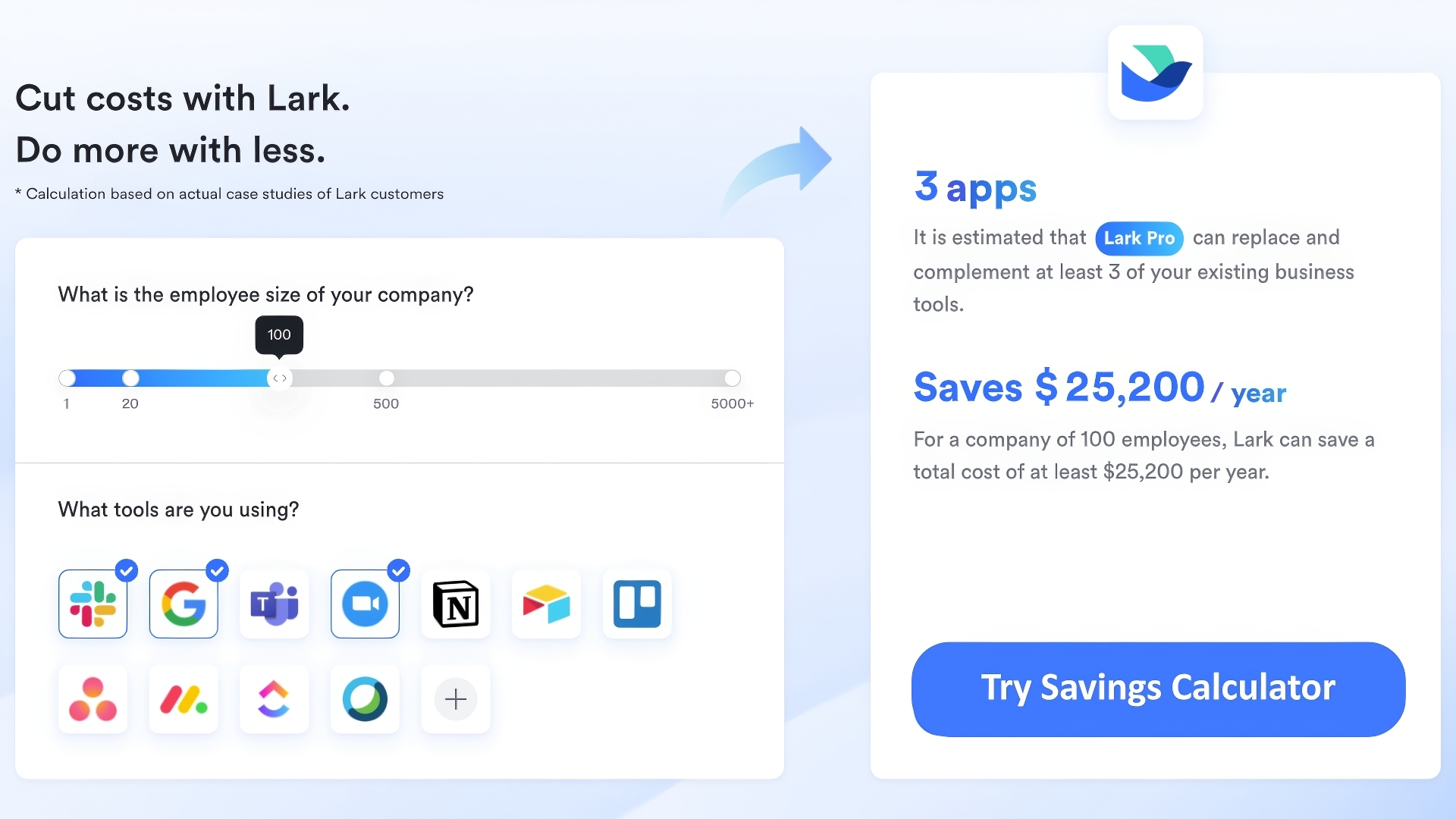
- Starter plan: Free forever plan that includes 11 powerful tools for up to 20 users. It also comes with 100GB of storage, 1000 automation runs, AI translations, and more.
- Pro plan: $12/user/month (billed annually) for up to 500 users. It includes everything in Starter plus group calling for up to 500 attendees, 15TB of storage, 50,000 automation runs, and more.
- Enterprise plan: Contact sales for custom pricing. Supports unlimited users and includes even more automation runs and advanced security, compliance, and management features.
Reviews
Users praise Lark for its ease of use, comprehensive feature set, and seamless integration.
Best for
All-in-one solution for events of any size and for teams that value collaboration and streamlined communication. It is best for companies that want to create custom solutions for event management.
2. Pipedrive: Sales pipeline management
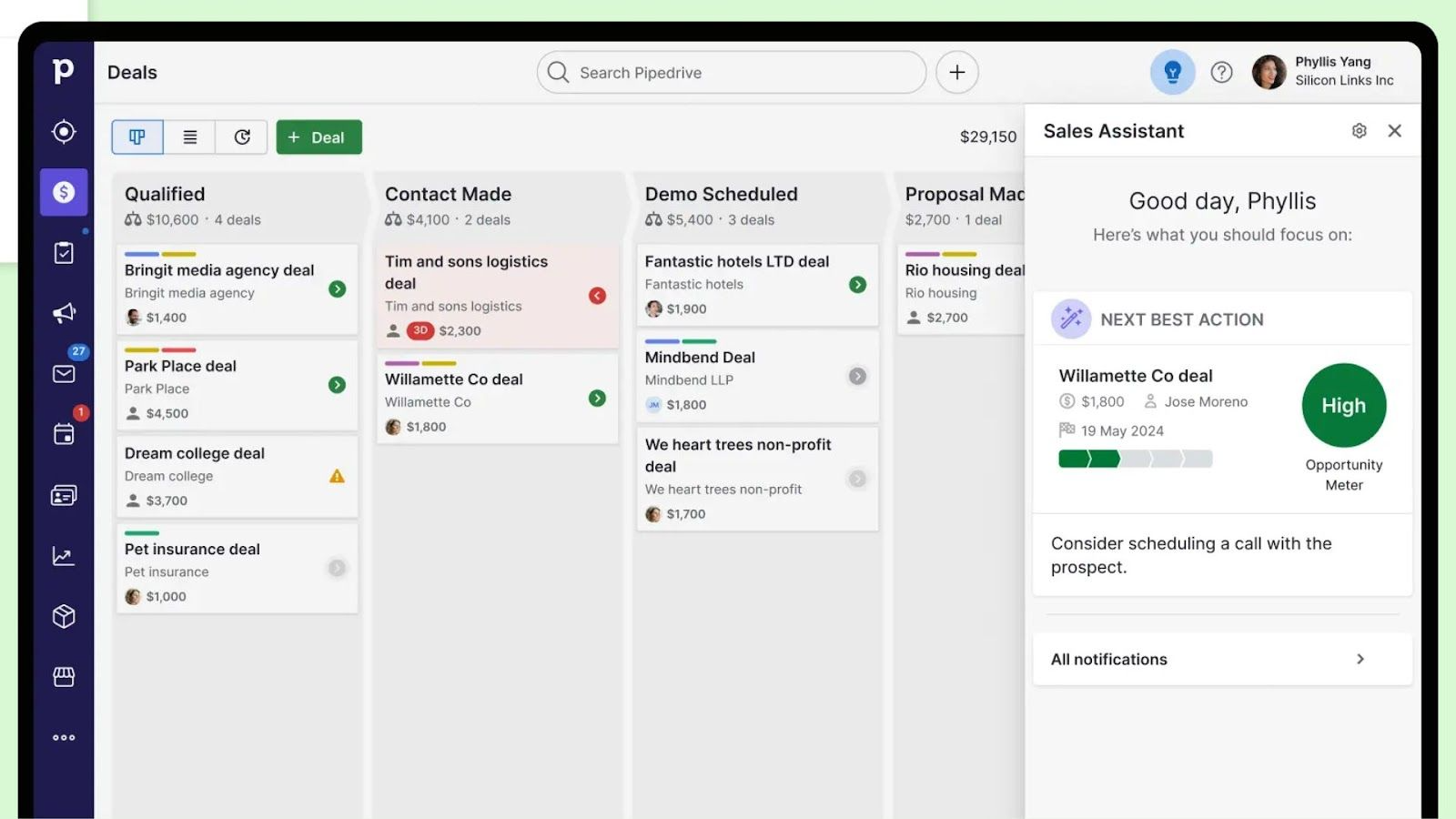
Image source: pipedrive.com
Overview
Pipedrive is a sales-focused CRM designed to help businesses visualize their sales processes and manage leads effectively. It excels at pipeline management, making it a solid choice for events where sponsorship acquisition and exhibitor sales are crucial. Its intuitive interface and robust reporting features make it easy to track progress and identify areas for improvement in the sales cycle. For event organizers looking to boost their revenue streams, Pipedrive provides a structured approach to managing potential sponsors and exhibitors.
Key features
Sales pipeline management, contact tracking, email integration, deal tracking, activity reminders.
Limitations
While strong on the sales side, Pipedrive lacks event-specific features such as ticketing and attendee management. Its marketing automation capabilities are also less advanced compared to dedicated event management platforms.
Price
Starting at $14.90/user/month
Reviews
Users appreciate Pipedrive for its ease of use, clear visual interface, and focus on sales. Many find it particularly helpful for managing complex sales cycles and tracking key performance indicators.
Best for
Sales-focused events, lead generation, sponsorship tracking, exhibitor sales.
3. Cvent: Enterprise event powerhouse
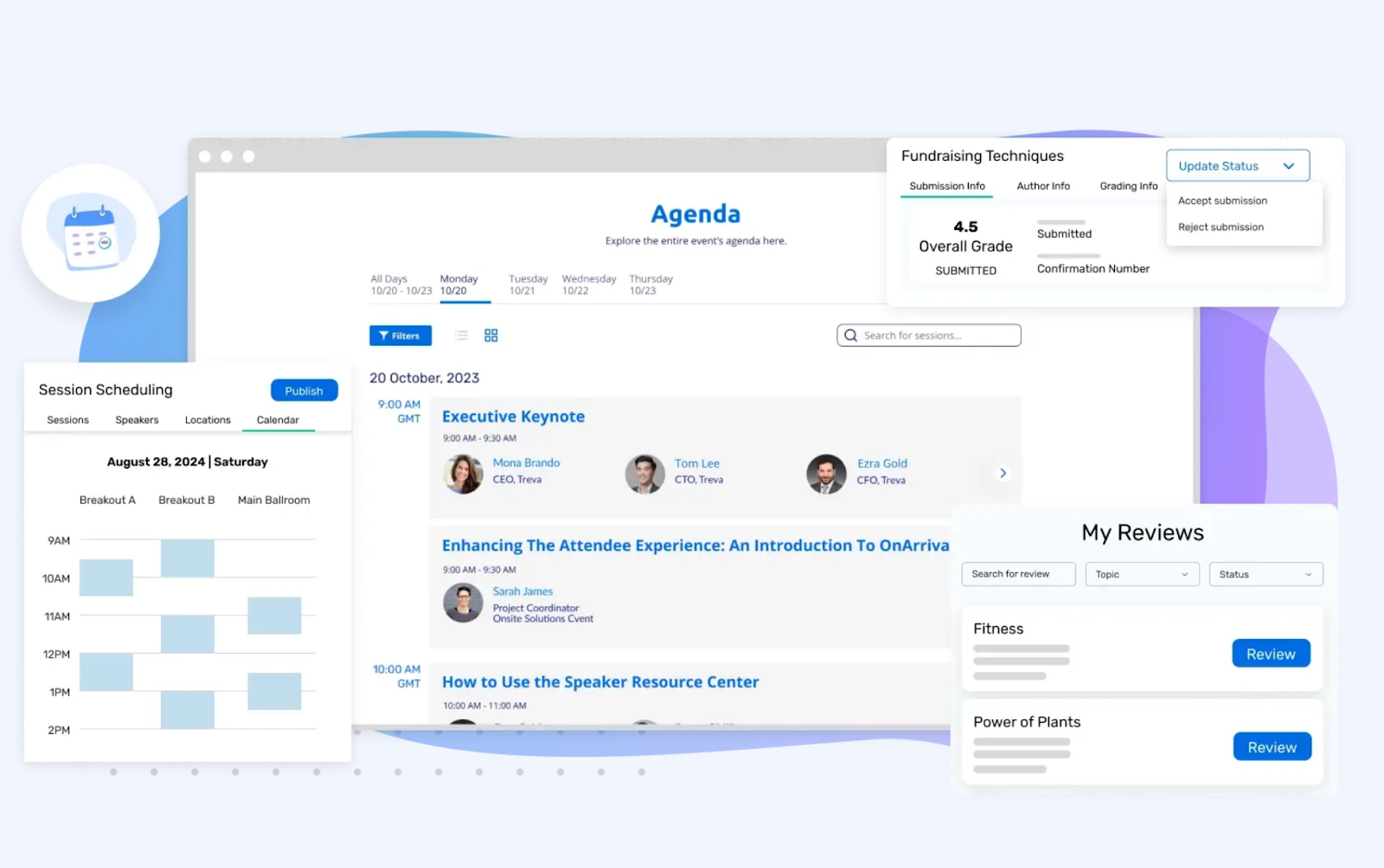
Image source: cvent.com
Overview
Cvent is a comprehensive event management platform built for large-scale events and enterprises. It offers a vast array of features, from venue sourcing and online registration to on-site solutions and mobile event apps. Cvent is designed to handle the complexities of large conferences, trade shows, and corporate events, providing tools for every stage of the event lifecycle. Its robust reporting and analytics capabilities provide valuable insights into event performance, enabling organizers to optimize their strategies and maximize ROI.
Key features
Venue sourcing, event registration, marketing automation, on-site solutions, mobile event app, budget management, speaker management.
Limitations
Due to its extensive feature set, Cvent can be complex to implement and use, particularly for smaller teams or simpler events. The cost can also be a barrier for some organizations.
Price
Contact Sales
Reviews
Cvent is highly regarded for its comprehensive feature set and ability to handle the most demanding event requirements. Users praise its scalability and robust reporting capabilities.
Best for
Large conferences, trade shows, complex event logistics, corporate events.
4. Glueup: Membership-centric events
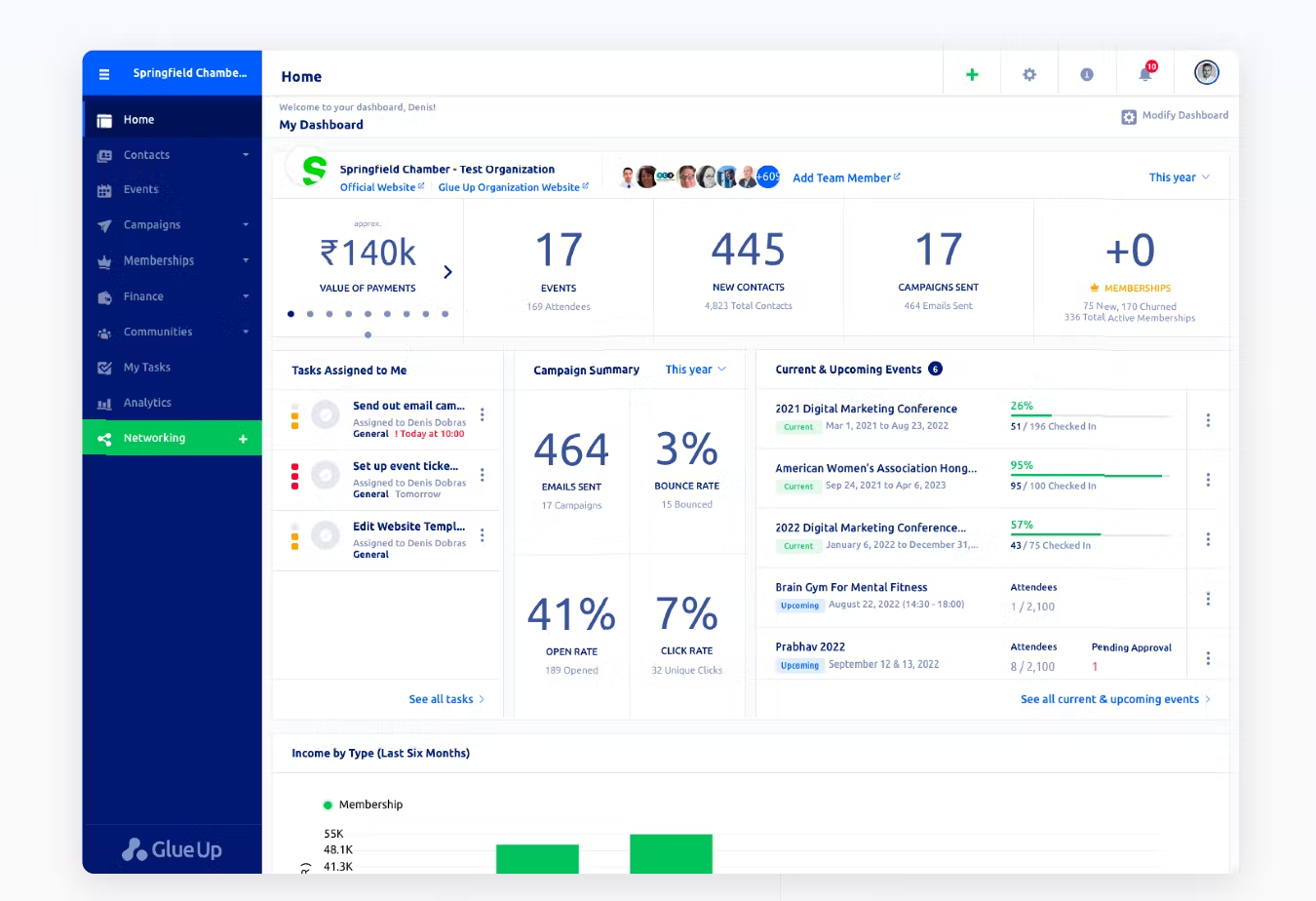
Image source: glueup.com
Overview
Glue Up is an all-in-one platform tailored for membership-based organizations, associations, and event-driven communities. It combines CRM, event management, email marketing, and mobile app functionalities into a single platform. Glue Up is designed to streamline membership management, automate event processes, and enhance engagement within communities. It provides a centralized hub for managing member data, promoting events, and facilitating communication.
Key features
Membership management, event ticketing, email marketing, mobile event app, CRM, finance management.
Limitations
While Glue Up offers a wide range of features, it may not be as specialized in certain areas as dedicated CRM or event management platforms. For very large or complex events, some users may find its capabilities to be somewhat limited.
Price
Contact Sales
Reviews
Users appreciate Glue Up for its comprehensive feature set, ease of use, and ability to streamline membership management and event planning.
Best for
Membership-based organizations, associations, recurring events, community building.
5. Lasso: Real estate event specialist
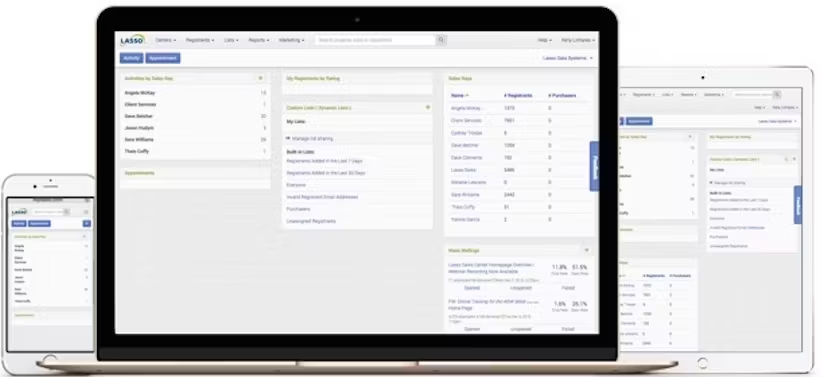
Image source: lasso.io
Overview
Lasso CRM is specifically designed for the new home building industry, providing tools for managing leads, nurturing prospects, and tracking sales. While its focus is narrow, it can be highly effective for real estate developers and builders who host events to showcase their properties and generate leads. Lasso helps to automate follow-up communication, track engagement, and convert prospects into buyers.
Key features
Lead management, email marketing, sales automation (specifically for new home sales), prospect tracking, reporting and analytics.
Limitations
Lasso's event management capabilities are limited to lead capture and follow-up, making it unsuitable for general event planning or events outside the real estate industry.
Price
Contact Sales
Reviews
Lasso is praised for its real estate-specific features and ability to generate qualified leads for new home sales.
Best for
Real estate events, property showcases, lead nurturing for home buyers.
6. Zoho backstage: Versatile event platform
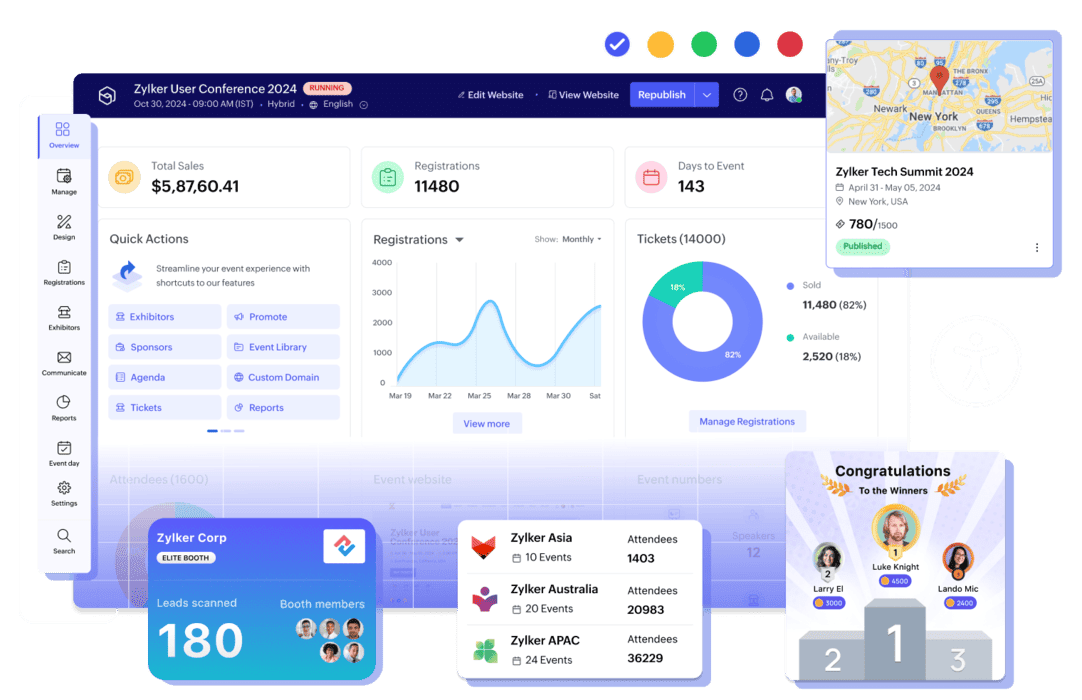
Image source: zoho.com
Overview
Zoho Backstage is an event management platform that is part of the Zoho suite of business applications. It provides a range of tools for creating event websites, managing registrations, engaging attendees, and running virtual or hybrid events. Zoho Backstage integrates seamlessly with other Zoho apps, such as Zoho CRM and Zoho Marketing Automation, providing a unified solution for managing events and customer relationships.
Key features
Event website builder, ticketing, attendee engagement, on-site check-in, virtual event platform, reporting and analytics.
Limitations
While Zoho Backstage offers a good balance of features and affordability, some users may find its interface less intuitive than other platforms.
Price
$0.83 /attendee/month
Reviews
Users appreciate Zoho Backstage for its affordability, ease of use, and integration with other Zoho apps.
Best for
Hybrid events, virtual events, conferences, small to medium-sized businesses.
7. Anyroad: Experience-driven insight
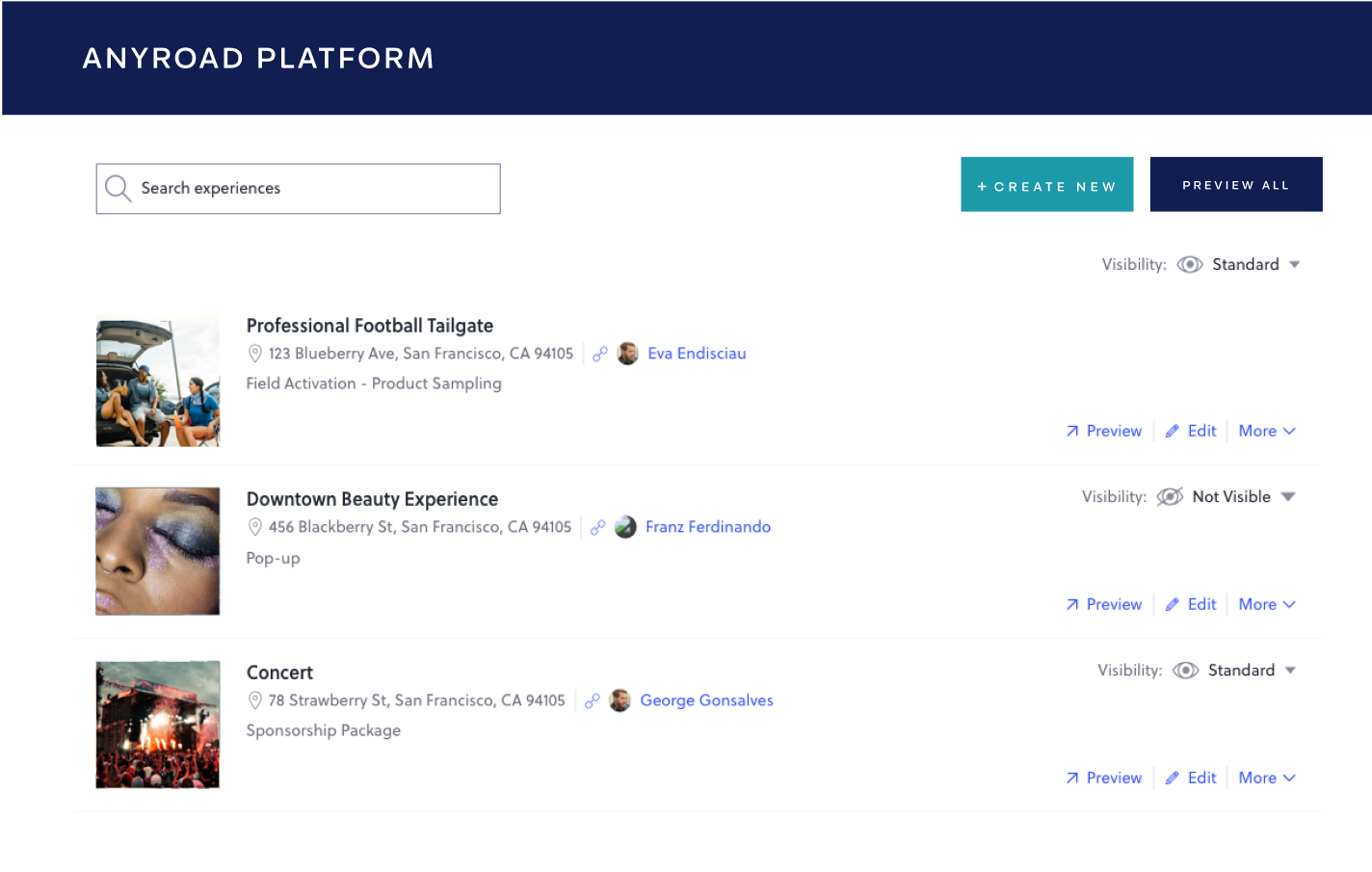
Image source: anyroad.com
Overview
AnyRoad is an experience management platform that helps businesses design, manage, and measure the impact of their experiences. It is particularly well-suited for experiential events, tours, workshops, and other interactive activities. AnyRoad provides tools for collecting customer feedback, tracking engagement, and generating actionable insights to optimize experiences and drive business results.
Key features
Experience management, data collection, customer insights, feedback surveys, reporting and analytics.
Limitations
AnyRoad's focus is primarily on data collection and analysis, requiring integration with other platforms for full-fledged event management.
Price
Contact Sales
Reviews
AnyRoad is valued for its focus on data and actionable insights, enabling businesses to create more engaging and impactful experiences.
Best for
Experiential events, tours, workshops, data-driven event optimization.
8. Whova: Engagement-focused event app
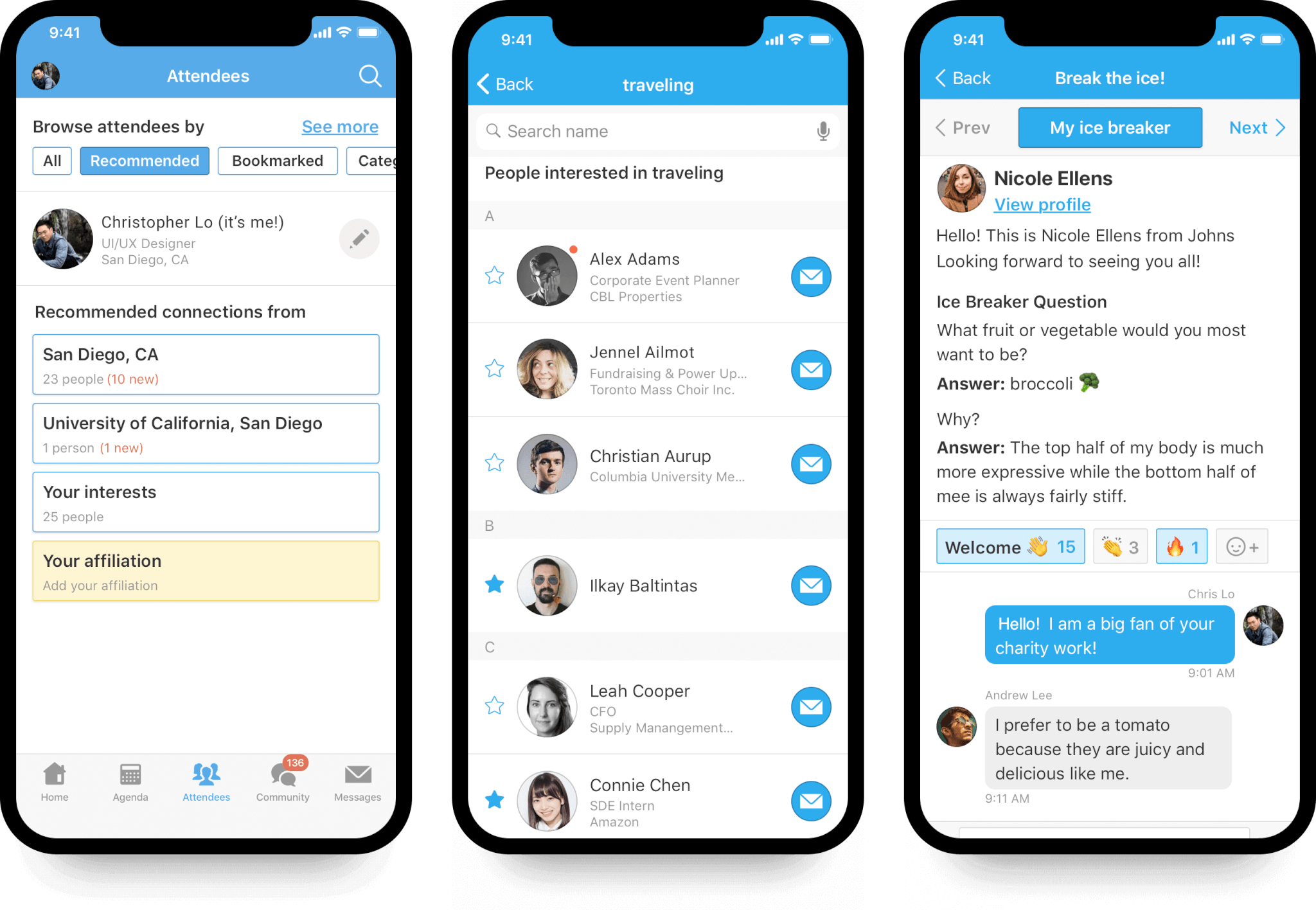
Image source: whowa.com
Overview
Whova is an award-winning event app designed to enhance attendee engagement and networking. It provides a range of features, including personalized agendas, interactive maps, social networking, and gamification. Whova helps event organizers create a more immersive and engaging experience for attendees, fostering connections and driving participation.
Key features
Event app, networking, attendee engagement, sponsor promotion, personalized agendas, interactive maps, gamification.
Limitations
Whova is primarily a mobile app, lacking some of the broader CRM features needed for comprehensive event management.
Price
Contact Sales
Reviews
Whova is highly rated for its engagement features, user-friendly interface, and ability to create a more connected and interactive event experience.
Best for
Conferences, trade shows, networking events, boosting attendee interaction and engagement.
The future of CRM for event management
The landscape of event management is constantly evolving, driven by technological advancements and changing attendee expectations. As we look ahead, the role of CRM in event management is poised to become even more strategic and integral. Here are some key trends that will shape the future:
- Ai-powered personalization: Artificial intelligence (ai) will enable event organizers to deliver highly personalized experiences to attendees. CRM systems will leverage ai to analyze attendee data, predict preferences, and recommend relevant sessions, networking opportunities, and content. This level of personalization will drive engagement and satisfaction.
- Enhanced data analytics: CRMs will provide more sophisticated data analytics capabilities, offering deeper insights into event performance, attendee behavior, and roi. Event organizers will be able to use these insights to optimize their strategies, improve event design, and make data-driven decisions.
- Seamless integration with event technologies: CRMs will seamlessly integrate with other event technologies, such as event apps, ticketing platforms, and on-site solutions. This integration will create a unified ecosystem, streamlining data flow and providing a holistic view of the event lifecycle.
- Emphasis on sustainability: As sustainability becomes a growing concern, CRMs will play a role in helping event organizers reduce their environmental impact. Features such as paperless registration, digital event materials, and carbon footprint tracking will become increasingly common.
- Virtual and hybrid event management: CRMs will continue to evolve to support virtual and hybrid events, providing tools for managing online attendees, facilitating virtual networking, and delivering engaging digital experiences.
- Blockchain technology: Blockchain may offer more secure and transparent ticketing and attendee management, potentially reducing fraud and improving trust.
Conclusion
In the fast-paced world of event management, a CRM is no longer a luxury, but a necessity. By centralizing data, streamlining communication, and automating key processes, a CRM empowers event organizers to deliver exceptional experiences, maximize roi, and build lasting relationships.
The best CRM for your event management needs depends on your specific requirements, budget, and team size. From the comprehensive features of event to the engagement-focused whova, there's a solution for every event. For those seeking an all-in-one platform that combines CRM functionality with robust collaboration tools, Lark stands out as a customizable and versatile option.
Ultimately, the right CRM can transform your event planning process, enabling you to focus on what truly matters: creating memorable and impactful events. Leveraging the right tools can greatly improve your efficiency and allow you to deliver exceptional experiences.
FAQs
Why is a CRM important for event management?
A CRM centralizes attendee data, automates communication, and streamlines event processes, leading to better organization, improved attendee experiences, and increased efficiency. It allows for personalized interactions and data-driven decision-making, essential for successful events.
What features should I look for in a CRM for event management?
Key features include contact management, event registration, email marketing, reporting and analytics, and integration with other event tools. Automation capabilities, mobile access, and customization options are also important considerations.
Can lark be used as a CRM for event management?
Yes, Lark offers a customizable platform that can be adapted for event management. Its base feature allows you to build custom workflows, manage attendee data, and automate communication, making it a versatile solution for teams seeking an all-in-one platform.
What are the benefits of using lark for event management?
Lark provides a unified workspace for communication, collaboration, and data management, streamlining event planning and execution. Its mobile accessibility, automation capabilities, and customizable workflows can significantly improve team efficiency and attendee engagement.
Related reading
Table of contents
Start using Lark today

Manage all your work in one place
Boost team efficiency by 10x
Save up to 70% on software costs
Table of contents
Start using Lark today
Manage all your work in one place
Boost team efficiency by 10x
Save up to 70% on software costs
Keep reading









2026 Lark Technologies Pte. Ltd.
Headquartered in Singapore with offices worldwide.






Explore: