The relationship between PMO and project management is the difference between a collection of individual efforts and a high-performing engine of growth. While project management focuses on the successful delivery of specific goals, the PMO (Project Management Office) ensures those goals align with the broader corporate strategy. This synergy allows organizations to move beyond mere execution, creating a culture of standardized excellence where resources are optimized, risks are mitigated before they escalate, and every initiative contributes to the bottom line. This guide explores how to balance governance with agility to maximize your project ROI.
Key takeaways: PMO and project management
1. PMO and project management serve different but complementary purposes.
2. The effectiveness of a PMO depends on its operating model.
3. A well-run PMO reduces friction rather than adding bureaucracy.
4. Most PMO project management conflicts stem from disconnected tools and metrics.
5. Modern PMOs succeed by linking governance directly to execution.
What a PMO really does in project management
At its heart, the acts like the central nervous system for a company's big ideas. It isn't just a "police force" meant to enforce boring rules; it's actually there to provide the support system project managers need to win. This means picking out the best tools, setting up a shared way of working, and looking at past wins and losses to predict what will happen next.
Think of the project management officer as a bridge builder. They take the big, sometimes vague dreams of the CEOs and turn them into a clear list of projects. Their job is to make sure that being "on time and under budget" actually matters because the project is tied to a real company goal. Without this bird's-eye view, teams often work incredibly hard on projects that don't actually help the company grow, a problem known as "project drift."
3 types of PMOs and their impact on project delivery
Not every PMO operates the same way. Depending on your company culture, the PMO might act as a gentle advisor or a strict commanding officer. Here is how the three main models affect your daily :
The Supportive PMO (The coach)
Think of this as an on-demand library. They provide the templates, the training, and the "lessons learned" from old projects, but they don't tell you how to run your show. They offer guidance without the grip, making them a favourite for creative or highly independent teams.
This model works well in organizations that value autonomy, creativity, or experimentation. Because teams are not constrained by rigid rules, they can adapt quickly and tailor their approach to different project needs. However, the downside is limited consistency. Without required standards, leadership may find it harder to compare performance across projects or identify risks early.
The Controlling PMO (The referee)
A controlling PMO introduces structure and consistency across projects. It defines standard methodologies, reporting formats, and tools that teams must follow. Regular status updates, documentation requirements, and governance checkpoints are part of daily project delivery.
This approach improves visibility and predictability. Leadership can more easily track progress, compare projects, and spot issues before they escalate. For teams, the trade-off is reduced flexibility. While the rules help maintain order, they can feel restrictive if processes are too rigid or not well aligned with actual project needs.
The Directive PMO (The commander)
A directive PMO takes full ownership of project delivery. It assigns project managers, controls resource allocation, and decides which projects move forward. This model ensures strong alignment with organizational strategy and is common in highly regulated or large-scale environments.
When executed well, it delivers clear priorities and efficient use of resources. However, it requires a highly capable PMO. Without experienced leadership, this centralized control can create delays, bottlenecks, and reduced responsiveness to change.
PMO workflows that actually help project managers
When a PMO is working well, it doesn't just add more meetings to your calendar, it clears the path so you can run faster. By handling the "high-level" logistics, the PMO allows project managers to focus on their specific deliverables without getting bogged down in company-wide politics or resource wars.
Here are three workflows where a PMO truly adds value:
- Intake and prioritization of project requests: Without a "gatekeeper," teams often suffer from "yes-man" syndrome, where every new idea becomes a top priority. The PMO creates a standardized intake process, scoring every request against business value and available budget. This ensures that project managers are only working on initiatives that have been vetted and approved, protecting them from a revolving door of low-value tasks.
- across multiple projects: One of the biggest headaches in project management is fighting for the same expert's time. The PMO views the entire organization as a single pool of talent. By managing resource allocation at the portfolio level, they ensure that the "rockstar" developer isn't accidentally assigned to three different "priority one" projects at the same time.
- Risk and dependency visibility at the portfolio level: A project might look green on your but if it relies on a deliverable from a separate team that is currently six weeks behind, you're actually in the red. The PMO tracks these "hidden" dependencies across the entire company. By seeing how Project A connects to Project B, they can flag risks weeks before they actually derail your schedule.
Eliminate project drift with a unified platform
Where PMO and project management often clash
While a PMO and a project manager should be on the same team, their different perspectives often lead to a "tug-of-war" between following the rules and hitting the deadline. When these two sides aren't in sync, the friction can actually slow down the very projects the PMO was created to protect.
Here are five common areas where PMO and project management often clash:
- Governance overload and slow approvals: When a PMO requires multiple "gate" reviews and signatures for every minor change, it creates a bottleneck. Project managers who need to move fast often find themselves sitting on their hands while waiting for a governance board to meet, turning an into a slow-moving bureaucracy.
- Reporting that adds work but little insight: One of the biggest complaints from delivery teams is being asked to fill out massive status reports that no one seems to read. If the PMO demands manual data entry into spreadsheets instead of pulling live data from the work itself, project managers spend more time "talking about the work" than actually doing it.
- Misaligned success metrics: A project manager might be focused on "shipping the feature," but the PMO might be tracking "adherence to documentation standards." When these goals conflict, project managers are forced to choose between satisfying the PMO's checklist and satisfying the client's needs.
- The "one-size-fits-all" methodology trap: A PMO might mandate a strict for every project, even if a team is working on a high-uncertainty software build that requires an Agile mindset. Forcing a team into a process that doesn't fit their work style leads to poor morale and subpar results.
- Lack of real-world technical context: Friction occurs when the project manager office makes resource or timeline decisions without understanding the technical complexity. If a PMO reallocates a key engineer based only on "headcount" data, they may inadvertently break a project's technical foundation because they didn't realize that a specific person held unique architectural knowledge.
Close the gap between your strategy and real actions
Meet Lark: Streamline PMO and project management workflows
As one of the most versatile , replaces fragmented spreadsheets, disconnected workflows, and siloed chats with a unified, live ecosystem. Instead of wasting time on manual reporting, the PMO project manager office can use these robust features to maintain high-level governance while empowering teams to move faster.
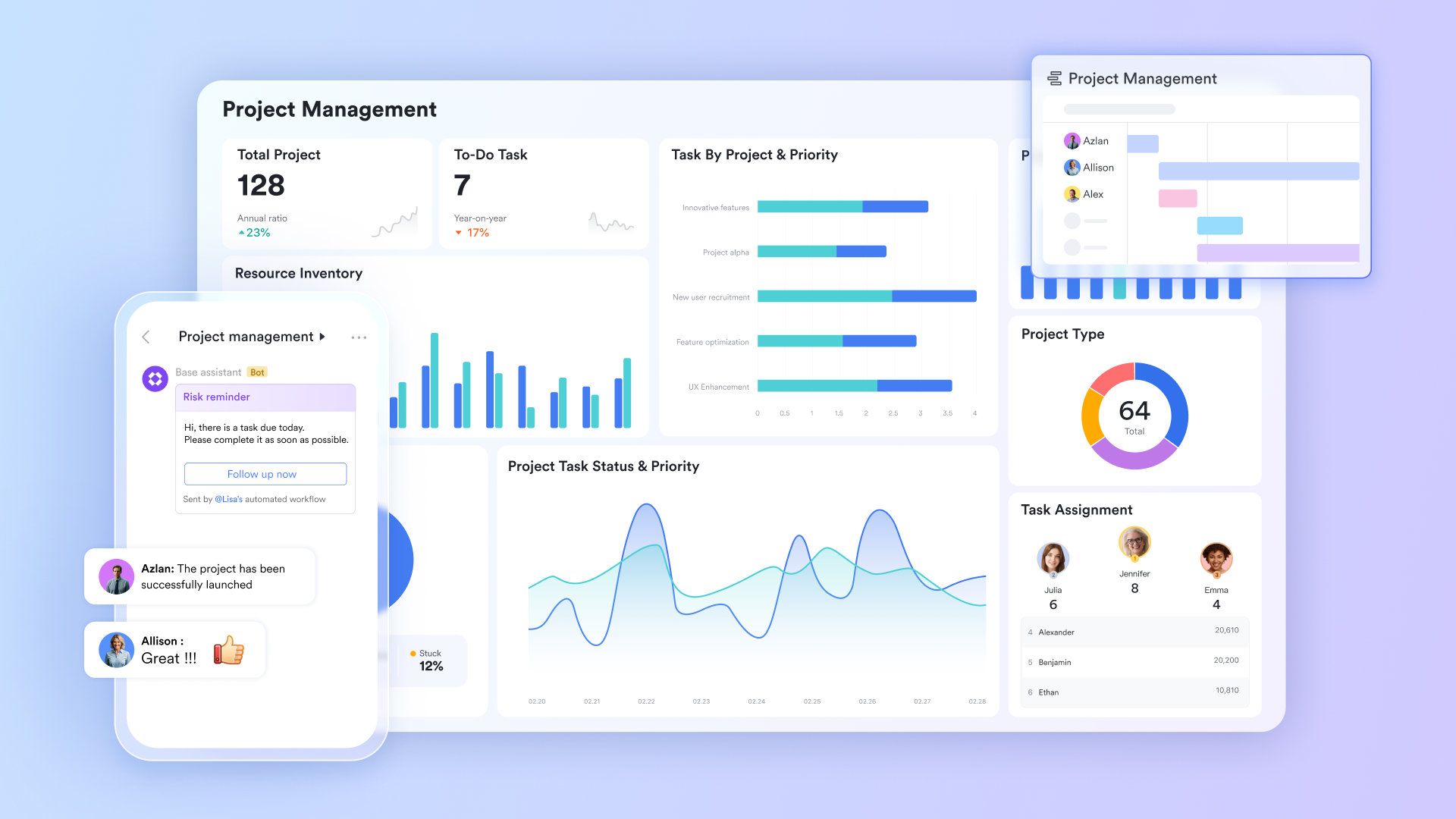
Portfolio governance in one hub
empowers PMOs by providing a single source of truth, replacing fragmented spreadsheets with dynamic Gantt, Kanban, Grid views, and dashboards. With fields like "Link" and "Lookup", a PMO can link high-level strategic goals to specific project milestones and individual tasks. It also streamlines governance through that automate notification, task routing, and status updates with conditional logic. With granular permission controls, it ensures high-level security while boosting cross-team transparency.
Cross-project accountability and execution
Lark Tasks ensures that governance directives aren't just discussed in meetings but are actually executed. It enables teams to break down complex into sub-tasks, assign clear ownership, and track progress via dashboards and timelines. With custom fields for priority and built-in Task Assistant, it ensures that every action item is captured, notified, and visible. 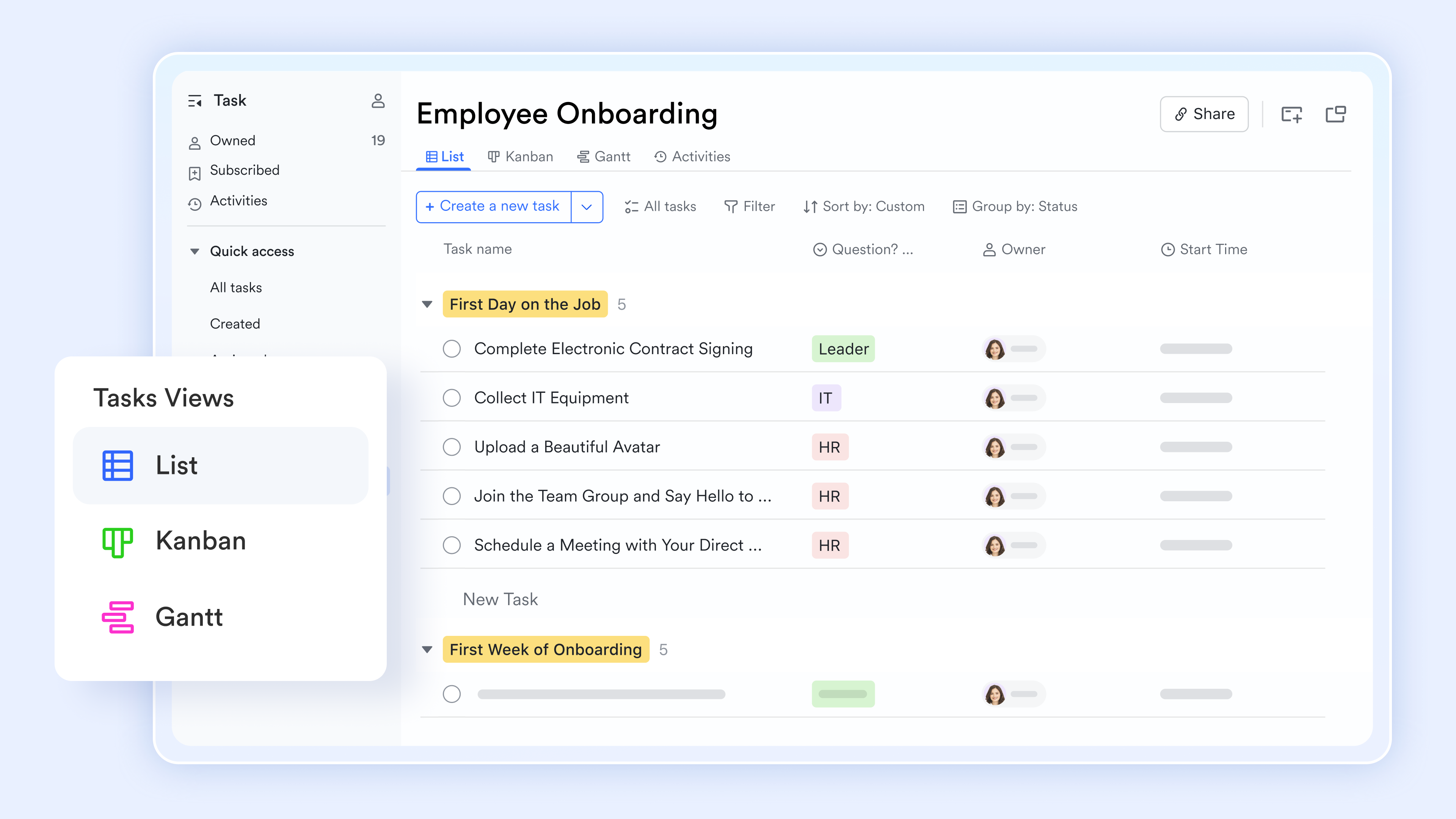
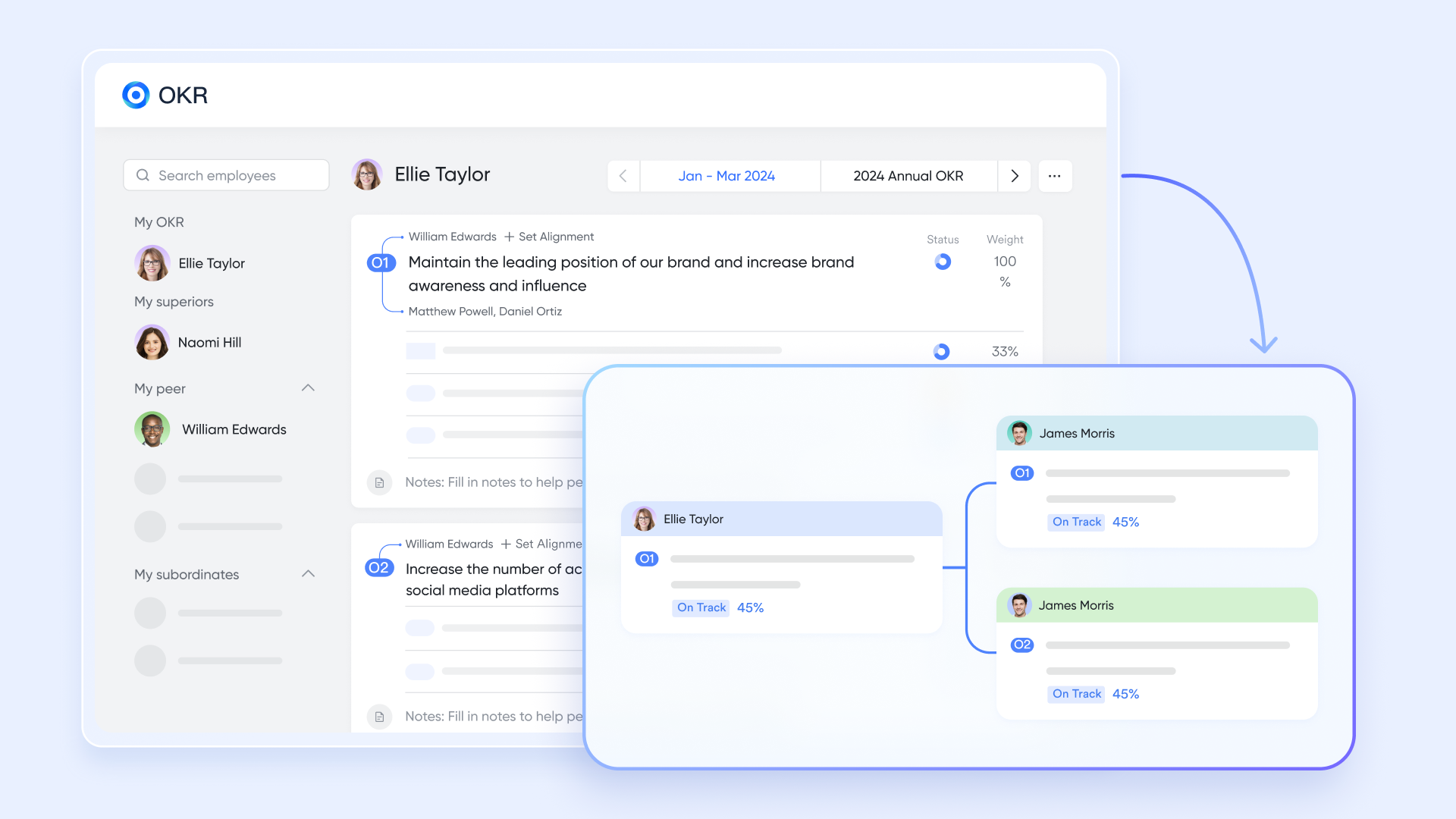
Project goal alignment in one framework
bridges the gap between high-level strategy and daily project execution through a goal-setting framework. By aligning individual and team objectives with the organization's mission, it ensures every project delivers measurable business impact rather than just completing tasks. It facilitates real-time progress tracking and agile adjustments, helping PMOs maintain focus on high-priority initiatives while fostering a culture of accountability.
Contextual decision-making and cross-checking
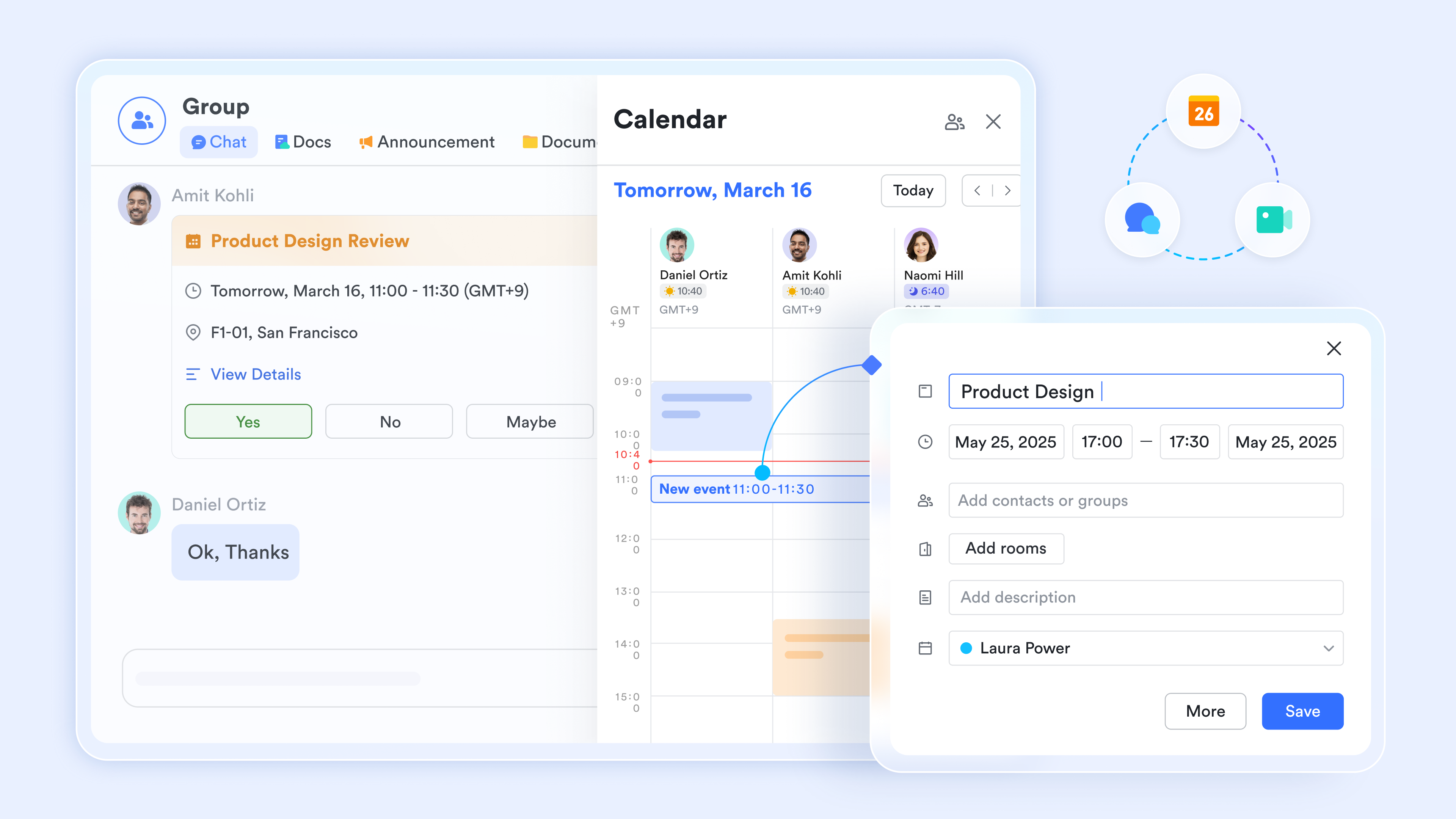
Communication is often where the project context goes to die. keeps all PMO discussions tied directly to the work being performed, eliminating the need for long, confusing email chains. You can easily share every doc or Base record into the . If a project management officer has a question about a specific risk, they can create a thread and @ stakeholders for deep discussions and decisions, ensuring no context is lost during handoffs.
:
- Starter plan: Free forever plan that includes 11 powerful tools for up to 20 users. It also comes with 100GB of storage, 1000 automation runs, AI translations, and more.
- Pro plan: $12/user/month (billed annually) for up to 500 users. It includes everything in Starter plus group calling for up to 500 attendees, 15TB of storage, 50,000 automation runs, and more.
- Enterprise plan: for custom pricing. Supports unlimited users and includes even more automation runs and advanced security, compliance, and management features.
For small teams with simple communication needs

18 months message history
1000 Base automation runs/month
2000 rows per table in Base
Most POPULAR
For companies with comprehensive collaboration and management needs
Unlimited message history
500-participant video meetings
50k Base automation runs/month
20k rows per table in Base
For large companies with advanced security and organizational management needs
Get a personalized demo and pricing
Unlimited message history
500-participant video meetings
15 TB storage + 30 GB storage/user
500k Base automation runs/month
50k Base automation runs/month
Most POPULAR
For companies with comprehensive collaboration and management needs
Unlimited message history
500-participant video meetings
50k Base automation runs/month
20k rows per table in Base
5 ways to measure success in PMO and project management
To know if your PMO and project management strategy are actually working, you have to look at two different types of scoreboards. A project manager might celebrate because they finished on time, but if that project didn't actually help the company grow, the PMO hasn't done its job.
Here is how to measure success from the ground floor to the executive suite:
- vs. project-level metrics: On the ground, success is measured by the "Triple Constraint": stayed on schedule, stayed under budget, and met the requirements. However, at the PMO level, success is measured by strategic contribution. The PMO asks: "Of the 20 projects we finished this year, how many directly increased our revenue or reduced our costs?" This shift from output (doing things) to outcome (doing the right things) is the ultimate sign of a mature PMO.
- Leading indicators executives should watch: Don't just wait for a project to fail to react. Smart PMOs track "Leading Indicators" as early warning signs that tell you trouble is coming. These include resource over-allocation (if your team is at 110% capacity, quality will drop soon) and milestone volatility (how often are deadlines shifting by a few days?). Tracking these in a live tool like Lark allows executives to step in and help before a project turns "red."
- Continuous improvement loops: A successful PMO is a learning machine. Success is measured by how much faster and more accurately the team works over time. This is tracked through "Velocity Trends" and "Retrospective Action Completion." If the same mistakes keep happening in every project, the PMO's feedback loop is broken.
- The "Predictability" score: One of the most underrated measures of success is how close your estimates are to reality. If your PMO consistently predicts that a project will take six months and it actually takes six months, your governance is working. High predictability leads to higher executive trust and better long-term planning.
- (The NPS for PMOs): Finally, ask the project managers and department heads: "Is the PMO making your life easier or harder?" If the internal satisfaction score is low, even the best metrics won't save the PMO from being viewed as a bureaucratic hurdle rather than a business partner.
When organizations should rethink their PMO model
Even a perfectly designed project manager office can eventually become a bottleneck as a company grows or the market shifts. Governance isn't a "set it and forget it" function; it must evolve alongside the team it supports. If your PMO feels more like an anchor than a sail, it might be time for a structural pivot toward a more integrated approach.
Here is how to recognize when your model needs a reboot:
- Signs the PMO is slowing delivery: The clearest warning sign is the rise of "Shadow PMOs" when individual departments start building their own tracking systems because the official process is too slow. If your project managers are spending more than 20% of their week just updating status reports, your governance has officially become a hurdle. Shifting these workflows into a unified workspace can eliminate this manual burden.
- When to redesign rather than remove the PMO: Total removal is rarely the answer because projects still need alignment. Instead, consider a redesign if you have "high-quality data but low-quality decisions." Moving from a "Controlling" to a "Supportive" model allows you to maintain oversight through shared dashboards while giving teams the autonomy to move faster.
- Aligning PMO structure with business strategy: Your PMO should mirror your company's goals. If your strategy is "Innovation and Speed," a directive PMO with rigid 12-month roadmaps will fail. You need a decentralized, agile setup where naturally between planners and doers.
- The "value vs. compliance" audit: Periodically ask: "Are we measuring what matters or just what's easy to track?" A successful PMO ensures that the tools used to track work actually help complete the work. When your documentation and live in the same place, compliance becomes a byproduct of the work rather than an extra chore.
- Modernizing the toolstack: Sometimes the "model" isn't broken, but the technical infrastructure is. If your team is struggling to keep up with manual updates in legacy software, moving to an all-in-one platform like Lark can often fix the friction without needing to overhaul your entire reporting structure.
Conclusion
Finding the right balance between PMO and project management is less about control and more about connection. When governance exists only as reports, reviews, and isolated tools, it naturally feels heavy. When it is closely tied to how teams actually plan, communicate, and deliver work, it becomes a source of clarity and momentum. A strong PMO does not slow projects down. It helps teams focus on the work that matters most, reduces uncertainty, and improves predictability across the portfolio.
As organizations scale, the gap between strategy and execution often widens. Closing that gap requires visibility that flows naturally from daily work, not after-the-fact reporting. This is where modern, unified workspaces begin to play a role. By bringing planning, execution, and communication into one environment, platforms like help PMOs maintain oversight without adding friction. Over time, this approach turns governance into a support system, helping project teams deliver real with confidence.
Build a high-performance PMO with Lark
FAQs
What is PMO in project management?
A PMO () is a centralized department that sets and maintains the standards for project execution across an organization. It ensures that all projects align with high-level business goals, optimizes how resources are shared, and provides the tools and methodologies needed to help individual project managers succeed.
Are PMO and Project Manager the same?
No. A Project Manager is responsible for the "boots on the ground" delivery of a specific project. A PMO focuses on the "big picture" strategy, governance, and the overall health of the entire project portfolio. Think of the Project Manager as the driver and the PMO as the GPS.
What is a PMO salary?
Salaries vary by region, but a project management officer typically earns between $90,000 and $150,000 USD annually. Because the role requires a mix of technical project expertise and high-level strategic planning, it often commands a higher premium than entry-level or mid-level project management positions.
What are the 4 P's of PMO?
The 4 P's are People (managing talent and roles), Process (standardizing methodologies), Portfolio (selecting the right projects), and Together, these pillars ensure the PMO provides actual business value rather than just administrative oversight.
Related reading