A program management office (PMO) serves as the strategic heartbeat of an organization, ensuring that complex initiatives don't just finish on time, but actually drive the business forward. In an era where companies must balance rapid innovation with operational stability, the PMO provides the necessary framework to manage interdependencies across multiple projects. This guide explores the essential program management office roles and responsibilities, various organizational structures, and the best practices for building a PMO that delivers measurable impact.
What is a PMO?
To define the program management office clearly, it is important to look beyond basic . A program management office, or PMO, is a centralized function that sets standards, governance models, and best practices for managing programs and projects across an organization. Its role is to create consistency, visibility, and control over how work is planned and delivered.
Unlike a traditional project management office that focuses on individual projects, a program management office PMO oversees groups of related projects that together form a program. This program-level view helps organizations manage shared dependencies, resources, and risks more effectively. A strong program management office setup includes defined roles, standardized processes, common tools, and clear decision-making authority.
In an , this setup often aligns software development, infrastructure upgrades, and security initiatives under a unified roadmap. Whether operating as a strategic or enterprise program management office, the objective remains the same. It provides a reliable source of truth that connects execution with long-term business goals.
3 common types of PMOs
Not every program management office structure is the same. Organizations typically choose a model based on how much control and influence the PMO needs to have over delivery. A well-designed project management office program aligns governance with business needs while avoiding unnecessary overhead.
- Supportive PMO: Acts as a consultant, providing templates, program management office tools, and best practices without enforcing strict control.
- Controlling PMO: Requires compliance with specific and methodologies. They provide the program management office services needed to ensure projects stay within the lines.
- Directive PMO: Takes full control. The project manager program management office team reports directly to the PMO, ensuring total alignment across the enterprise.
Why organizations invest in a program management office
The role of program management office teams has shifted from "administrative" to "strategic." Companies invest in a PMO to solve the "silo" problem. Without a centralized office, departments often compete for the same resources, leading to burnout and failed deadlines. A high-functioning PMO ensures resource optimization, , and most importantly, strategic alignment. With a clear program management office definition in place, leadership can ensure that every project investment directly supports the company's broader vision.
See how strategic PMOs scale execution
Program management office roles and responsibilities
The role of a program management office is multifaceted. To function effectively, the office requires a blend of leadership and technical expertise. Key program management office responsibilities include:
- Standardization: Establishing the program management office best practices and methodologies that all teams must follow.
- Resource management: Allocating talent and budget across various programs to prevent bottlenecks.
- Governance: Setting up the decision-making framework and audit trails for compliance.
- Strategic reporting: Providing the "news" and that executives need to make informed pivots.
Common PMO methodologies
Selecting the right methodology is a critical decision for long-term PMO success. A PMO program management office must align its approach with company culture, regulatory needs, and delivery speed expectations. The methodology chosen shapes how teams plan, execute, and measure outcomes.
- Agile: is well-suited for environments where change is constant and speed matters. It is commonly used in IT program management office settings where requirements evolve over time. Work is delivered in short cycles, allowing teams to learn and adjust quickly. This approach improves flexibility and stakeholder feedback. It works best when teams are empowered, and collaboration is strong.
- Waterfall: Waterfall follows a linear and highly structured approach to delivery. It is often used in large-scale infrastructure, construction, or medical office management programs where compliance and sequencing are critical. Each phase must be completed before the next begins. This creates predictability and clear documentation. It is most effective when requirements are stable and well defined upfront.
- Hybrid: Hybrid combines elements of to balance flexibility with control. Teams may use Agile practices for development while maintaining fixed reporting, budgets, and timelines for leadership. This approach supports innovation without losing governance. It is commonly adopted in organizations transitioning between traditional and modern delivery models.
7 key steps to building a high-performance PMO
Building a high-performance PMO requires more than defining processes and templates. It involves aligning people, priorities, and execution with business strategy. The following steps outline how organizations can establish a PMO that drives consistent delivery and long-term value.
Step 1: Define the mandate
The first priority is to define program management office goals and secure explicit executive buy-in to ensure the PMO has the authority to drive change. Establishing a clear charter prevents "scope creep" within the office itself and aligns the PMO's mission with the organization's overarching business strategy.
Step 2: Assess current state
Conduct a thorough audit of existing workflows to identify systemic gaps in project delivery and . By understanding where projects currently fail or stall, you can tailor your program management office structure to solve real-world bottlenecks rather than theoretical problems.
Step 3: Secure leadership
Appoint a dedicated head of the PMO who possesses a deep understanding of program management office roles and responsibilities. This leader must be a skilled diplomat and strategist capable of navigating corporate politics while mentoring the project manager office team.
Step 4: Standardize tools
Modernize your infrastructure by moving away from fragmented program management office news shared via email and toward integrated program management office tools. Centralizing data in a single platform like Lark ensures that every stakeholder has access to real-time updates and a single source of truth.
Step 5: Establish governance
Develop a formal decision-making framework to determine how projects are prioritized, funded, and greenlit. Effective governance ensures that the role of program management office teams is to steer resources toward high-impact initiatives rather than simply reacting to the "loudest" stakeholder.
Step 6: Train the team
Rolling out new standards requires a comprehensive training program to ensure every team member understands the updated methodologies and reporting requirements. Continuous education fosters a culture of excellence and ensures that program management office best practices are applied consistently across all departments.
Step 7: Measure and iterate
Define specific KPIs such as budget variance, resource utilization, and time-to-market to tangibly prove the PMO's . Regularly reviewing these metrics allows you to refine your program management office functions and adapt to the evolving needs of the enterprise.
Program management office tools: Beyond static dashboards
Modern PMOs are moving away from static spreadsheets. An office requires real-time data to manage global teams. Today's must support automation, , and "living" documents that update as work happens.
Unify program management and communication
Top choice: Experience a modern program management office in Lark
In the high-stakes environment of a program management office (PMO), the difference between strategic success and operational failure often lies in the tools used to bridge the gap between vision and execution. provides a unified "Work OS" that addresses the most common pain points in through the following specialized solutions. Let's dive in and see how it balances teamwork and project management effectively.
Proactive risk management within a centralised console
Reactive firefighting, waiting for risks to materialize before acting, leads to budget overruns and project failure. To maintain control, teams need real-time visibility and automated alerts to catch issues before they escalate. is a versatile, low-code platform that empowers PMOs to build custom project management solutions tailored to their specific needs. By using custom Lark Forms for data collection, automated workflows for task delays, and interactive dashboards for real-time visualization, Lark Base enables a proactive approach. This allows the PMO to maintain project momentum and identify potential risks instantly, which is a hallmark of successful integrated project management. 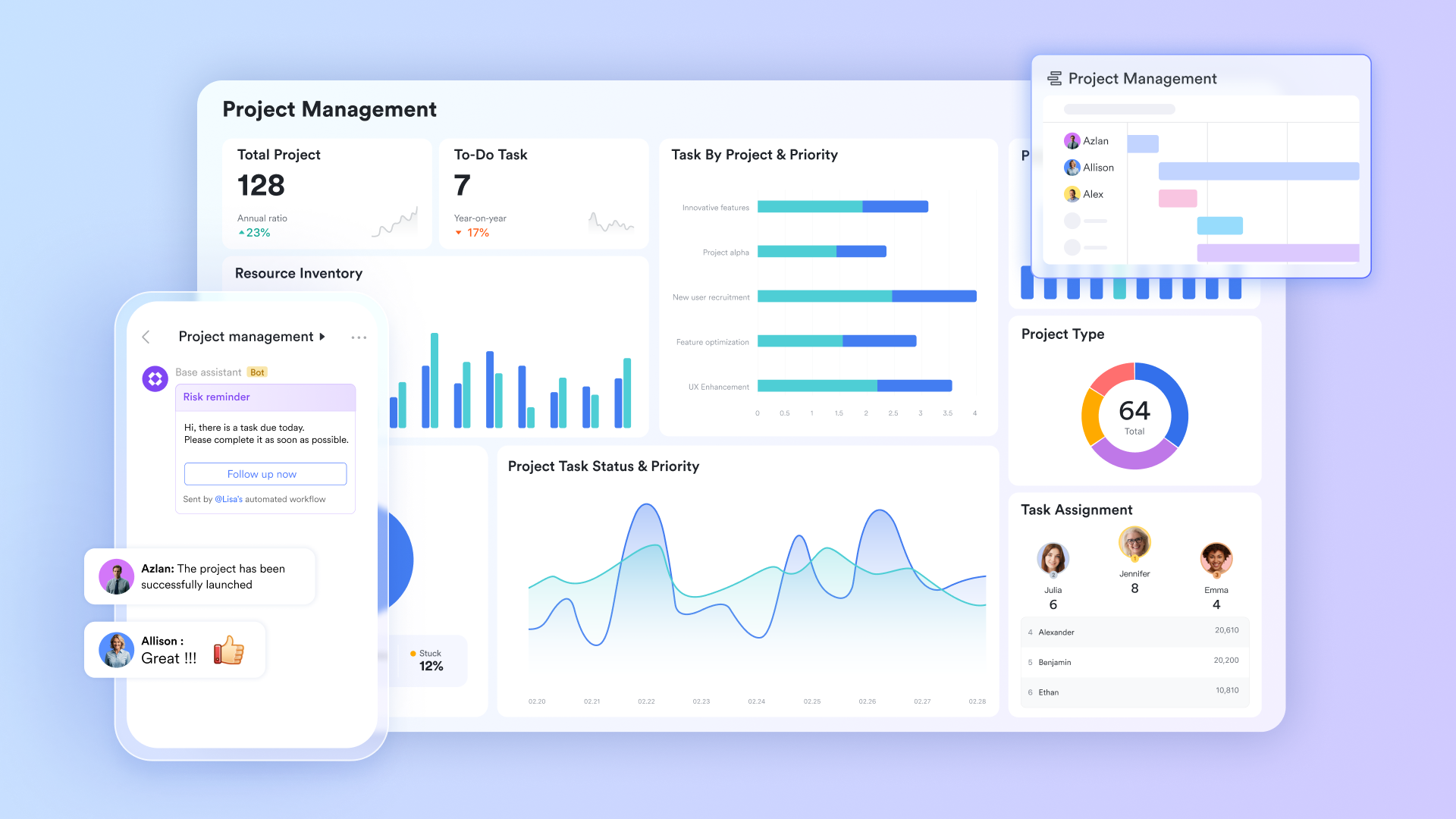
Bridging strategy and execution with clear OKRs
A successful project start hinges on establishing crystal-clear, measurable objectives that are perfectly aligned with the company's overarching strategy. However, project teams often struggle to translate abstract, high-level goals into tangible tasks, leading to diluted effort and confusion. Lark OKR empowers PMOs to establish project-level objectives and key results that are transparent and accessible to the entire team. By seamlessly linking these high-level OKRs directly to the dashboards, Lark creates a clear line of sight, allowing every team member to see precisely how their day-to-day work contributes to the overall mission. 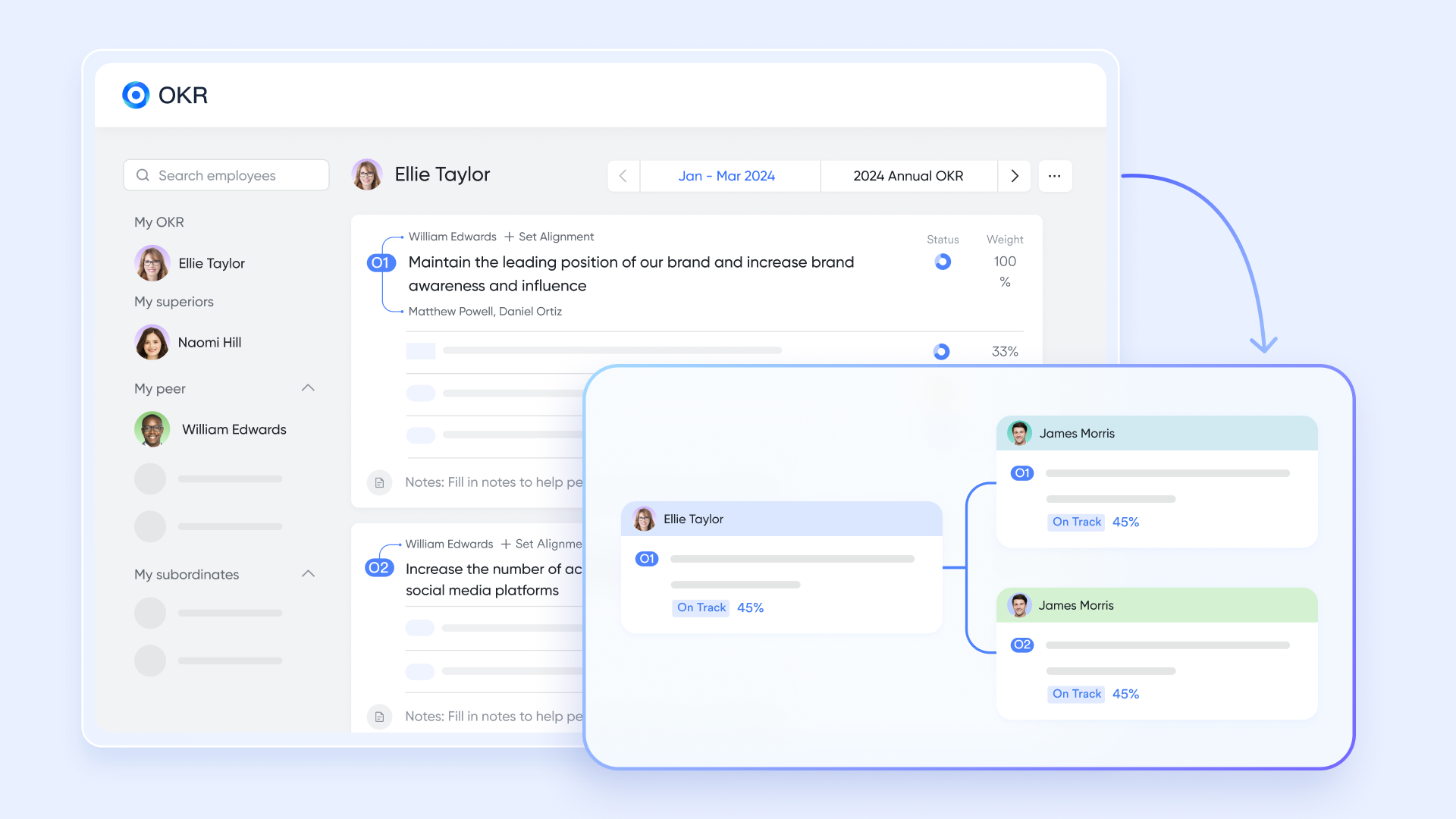
Unified communication and coordination hub
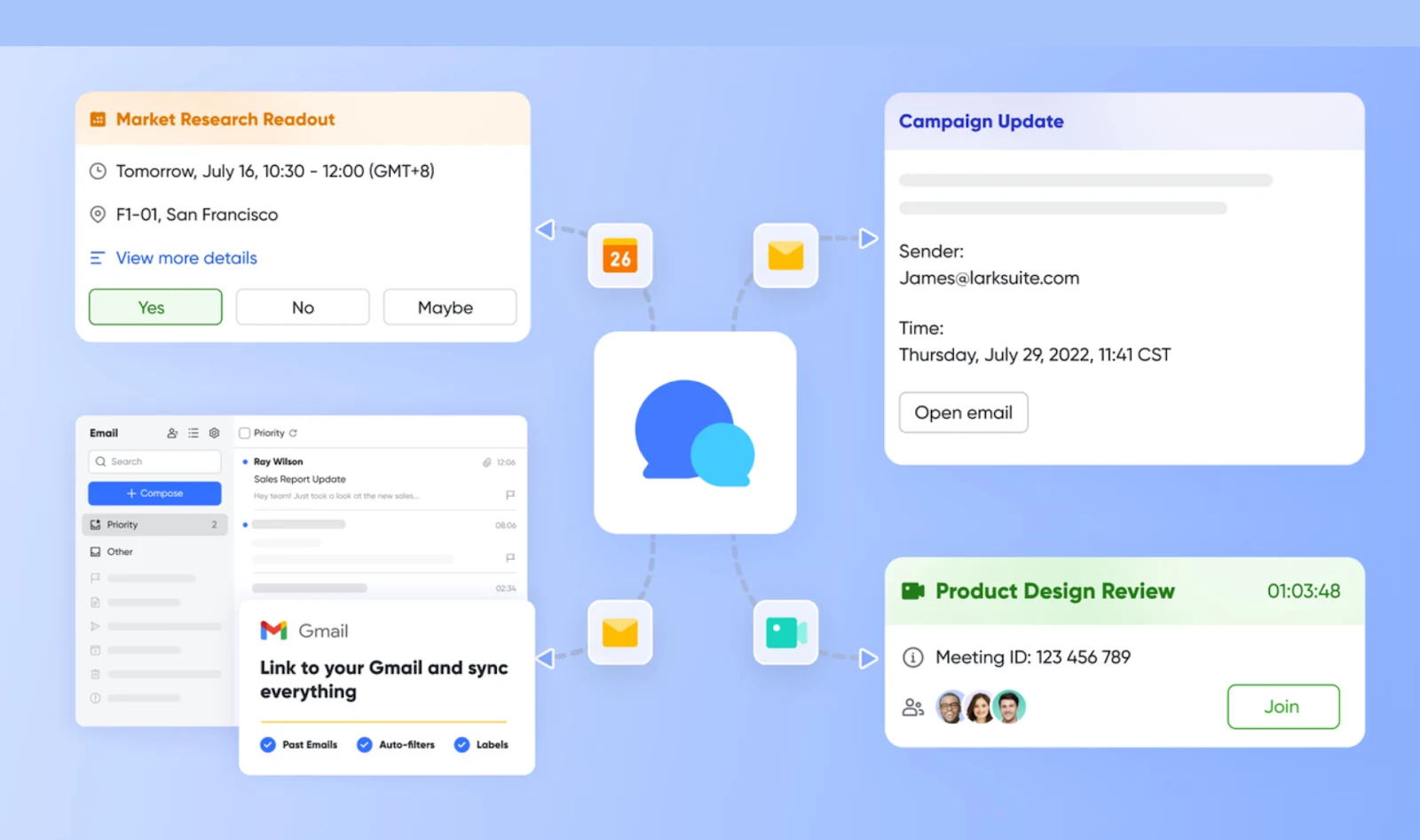
Fragmented communication channels where decisions are buried in endless email threads or lost in noisy chat apps are a major drain on project efficiency and a direct threat to unified project management. serves as a central, unified hub for all project-related communication, rising above these challenges through tight unification with , , and . This allows teams to discuss tasks within dedicated threads, share mail attachments in chat, and schedule meetings on a shared calendar. Because all communication is automatically organized and searchable, project decisions remain contextualized and readily accessible, fostering the transparent environment necessary for success.
Document collaboration platform and a shared knowledge hub
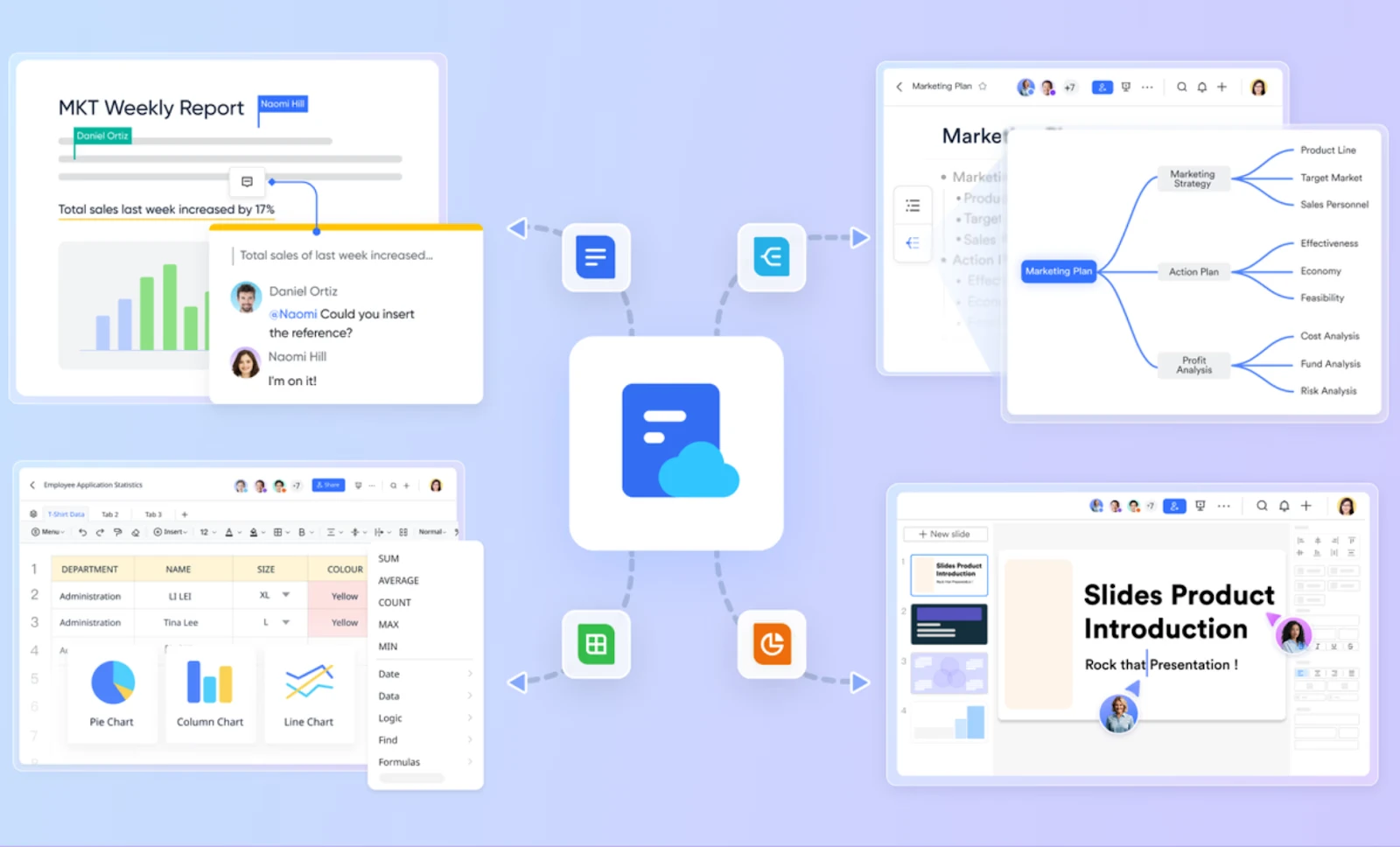
In many organizations, project documents and templates are scattered across disparate drives and individual computers, making it difficult for teams to locate the "single source of truth." This fragmentation leads to the use of outdated materials and a lack of consistency in execution. and provide a centralized repository for all project-related knowledge. Teams can create shared documents for and build comprehensive knowledge bases that capture best practices. This consolidation ensures that every team member has access to the most up-to-date resources, promoting efficiency and consistency across the entire program.
Streamlined requests and approval workflows
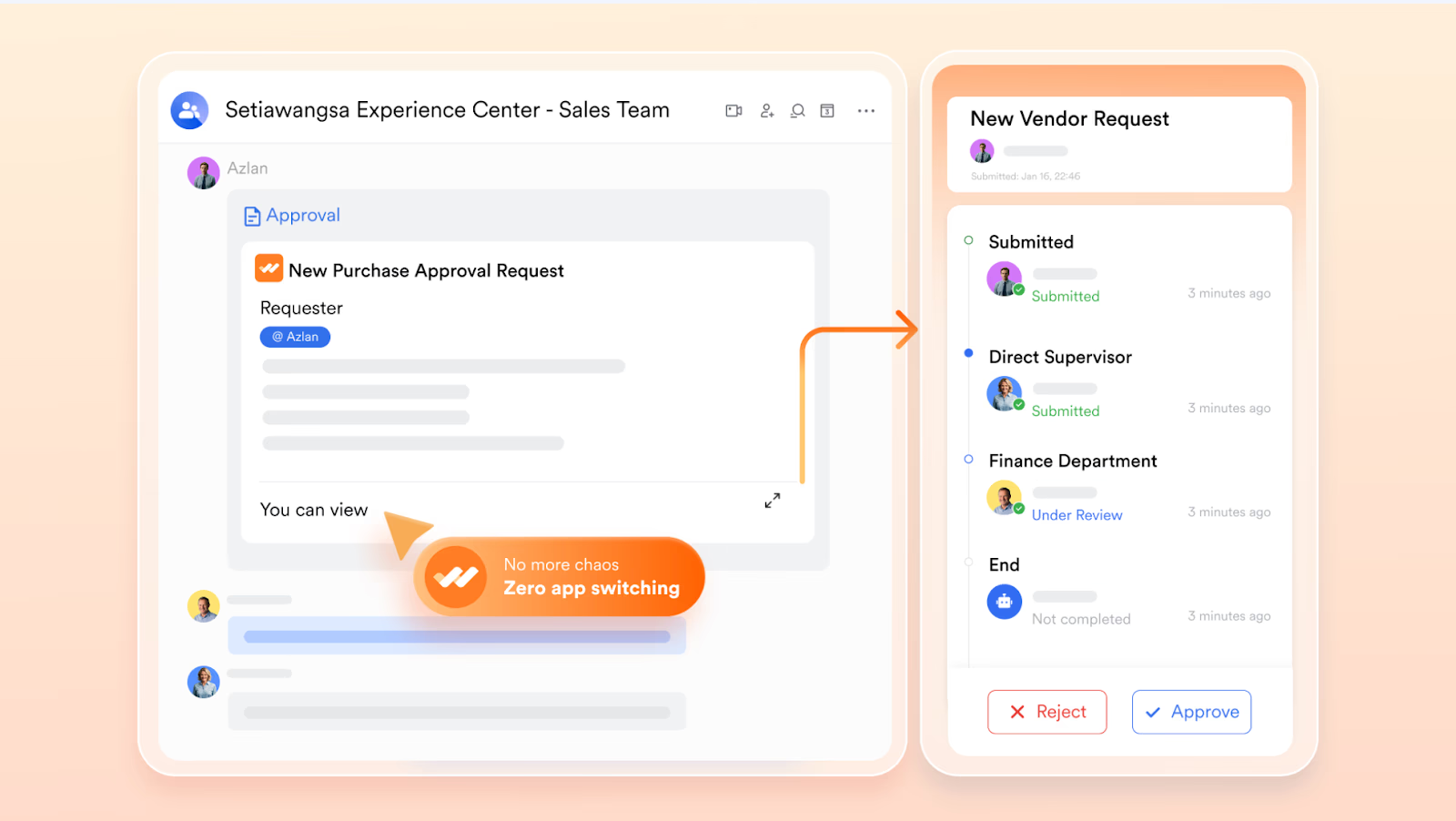
Manual approval processes are often the primary bottleneck in project workflows, relying on slow email chains or cumbersome paper forms that increase the risk of errors and missed deadlines. eliminates these delays by automating and streamlining the entire request cycle. PMOs can design for budget requests, contract reviews, and change orders, complete with automated notifications and real-time status tracking. This ensures that critical decisions are made quickly and transparently, supporting the smooth and seamless flow of work required in a modern enterprise.
:
- Starter plan: Free forever plan that includes 11 powerful tools for up to 20 users. It also comes with 100GB of storage, 1000 automation runs, AI translations, and more.
- Pro plan: $12/user/month (billed annually) for up to 500 users. It includes everything in Starter plus group calling for up to 500 attendees, 15TB of storage, 50,000 automation runs, and more.
- Enterprise plan: for custom pricing. Supports unlimited users and includes even more automation runs and advanced security, compliance, and management features.
For small teams with simple communication needs

18 months message history
1000 Base automation runs/month
2000 rows per table in Base
Most POPULAR
For companies with comprehensive collaboration and management needs
Unlimited message history
500-participant video meetings
50k Base automation runs/month
20k rows per table in Base
For large companies with advanced security and organizational management needs
Get a personalized demo and pricing
Unlimited message history
500-participant video meetings
15 TB storage + 30 GB storage/user
500k Base automation runs/month
50k Base automation runs/month
Most POPULAR
For companies with comprehensive collaboration and management needs
Unlimited message history
500-participant video meetings
50k Base automation runs/month
20k rows per table in Base
Program management office best practices for long-term maturity
Achieving long-term PMO maturity requires consistency, adaptability, and a focus on continuous improvement. Strong PMOs evolve beyond setup and governance to become strategic enablers of business value. The following best practices help organizations build resilience and scale program management capabilities over time.
- Prioritize : Effective PMOs rely on clear visibility into resource availability and demand. Data-driven capacity planning helps balance workloads across teams and prevents burnout before it becomes a risk. It ensures that high-priority initiatives are staffed appropriately without overloading key contributors. Over time, this improves delivery reliability and team sustainability. Mature PMOs treat resource planning as an ongoing discipline rather than a one-time exercise.
- Invest in continuous professional development: PMO effectiveness depends heavily on the skills of its people. Regular training on emerging methodologies such as hybrid Agile or keeps teams current and adaptable. Learning initiatives also improve engagement and retention. A culture of development allows the PMO to evolve alongside business needs. This investment pays off through better decision-making and execution quality.
- Implement a living knowledge base: Long-term maturity requires learning from both success and failure. A centralized knowledge base captures lessons learned, post-project reviews, and proven practices. Unlike static documentation, this repository is updated continuously as new insights emerge. It helps teams avoid repeating mistakes and accelerates onboarding. Over time, it becomes a trusted reference point for consistent execution.
- Focus on outcome-based metrics: Mature PMOs move beyond measuring delivery speed alone. Outcome-based metrics focus on business impact, value creation, and return on investment. This shift helps leadership understand whether programs are delivering meaningful results. It also encourages teams to prioritize work that supports strategic goals. Measuring outcomes strengthens the PMO’s role as a strategic partner.
- Standardize through automation: Manual reporting and approvals slow down execution and reduce visibility. while reducing administrative effort. Tools like Lark support automated status updates, approvals, and real-time reporting without adding process friction. This allows PMO teams to focus more on strategy, risk management, and alignment. Automation has become a foundation for scalable and sustainable PMO operations.
Conclusion
A well-designed program management office plays a critical role in turning strategy into consistent execution at scale. As organizations grow, managing interdependent initiatives without a centralized structure becomes increasingly difficult. A mature PMO brings clarity by aligning priorities, standardizing delivery, and ensuring resources are focused on the work that matters most.
The most effective PMOs evolve beyond governance and reporting. They become strategic partners that guide investment decisions, surface risk early, and measure outcomes rather than activity. This shift requires the right structure, skilled leadership, and that support real-time visibility. Platforms like help modern PMOs connect planning, execution, and communication in one environment, reducing friction without adding bureaucracy. When supported by the right systems, a program management office becomes a long-term driver of operational discipline and business impact rather than a reactive control function.
Build a scalable program management office with Lark
FAQs
What is the difference between a PMO and a project office?
A project office typically focuses on managing a single project and its immediate deliverables. A program management office operates at a higher level, overseeing multiple related projects and shared resources. It focuses on alignment, governance, and long-term value rather than . As complexity increases, tools like Lark help PMOs maintain visibility across initiatives without relying on manual reporting.
What skills matter most for PMO leaders today?
Modern PMO leaders need strong strategic thinking, stakeholder management, and data interpretation skills. Technical knowledge of methodologies is important, but communication and decision-making matter more. Leaders must translate executive goals into execution frameworks that teams can follow. Platforms such as Lark support this by making progress, risks, and priorities visible in real time.
How do PMOs manage competing priorities across business units?
PMOs manage competing priorities by using standardized evaluation criteria and centralized visibility. This allows leadership to compare initiatives based on impact, risk, and resource demand. Clear governance prevents louder teams from overriding strategic priorities. With unified tools like Lark, PMOs can track dependencies and capacity across departments more effectively.
When should an organization transition from a PMO to an EPMO?
An organization should consider moving to an enterprise program management office when initiatives span multiple business units or regions. At this stage, alignment and portfolio-level visibility become more important than individual project control. An EPMO focuses on enterprise-wide outcomes and . Using platforms like Lark helps support this transition without increasing operational complexity.
Related reading