














Program Management vs Project Management: Key Differences Explained

Ryan Tanner
Product Marketing Specialist
Sep 18, 2026
Ryan Tanner
Sep 18, 2026

17 min read


Modern teams thrive when they can balance agility with structure—turning big visions into measurable outcomes. Two key disciplines—program management and project management—often overlap but serve distinct purposes. While project management focuses on specific deliverables, program management ensures these projects collectively achieve broader business outcomes.
Understanding the distinction between the two is essential for leaders looking to balance strategic alignment with execution excellence. This guide explores program management vs project management, breaking down their goals, governance, and real-world applications—and showing how Lark's unified workspace helps teams seamlessly manage both from planning to performance.

What is project management?
Project management is the structured discipline of planning, executing, and delivering a defined output within a specific timeframe, budget, and scope. Each project has a clear objective—whether it's launching a new product, developing a marketing campaign, or upgrading internal systems. A project manager oversees resources, schedules, risks, and stakeholder expectations to ensure timely and quality delivery.
The core focus of project management is outputs—the tangible results produced by the project. It operates on a single, well-defined scope, often independent of other initiatives. Project management tools like Gantt charts, milestone trackers, and Kanban boards are commonly used to visualize progress.
In modern organizations, Lark simplifies project management through Lark Tasks for assigning work, Lark Calendar for milestone tracking, and Lark Messenger for instant collaboration. These connected tools ensure every project team stays aligned, informed, and accountable from start to finish.

Image source: unsplash.com
What is program management?
Program management is the coordinated management of multiple related projects aimed at achieving a shared strategic outcome. Unlike project management, which centers on individual deliverables, program management focuses on outcomes—the long-term business benefits derived from successfully aligned projects.
A program manager oversees interdependencies, resources, risks, and benefits realization across several projects, ensuring they collectively move the organization toward its strategic goals. They balance scope, prioritize resources, and guide project managers to maintain alignment with broader objectives.
Using Lark Base, organizations can create relational tables linking various projects within a program, track shared KPIs via Lark Sheets, and align goals with Lark OKR. With Lark Messenger and Lark Meetings, communication between project and program teams flows effortlessly, ensuring transparency from the tactical to the strategic level.
Image source: unsplash.com
Program management vs project management: Key differences
Both disciplines share common principles but differ in scale, scope, and focus. Here's how they compare across key dimensions.
Outputs vs outcomes: The defining difference
The most critical distinction between program management vs project management lies in outputs vs outcomes.
- Project management outputs are tangible—like launching a product or implementing software.
- Program management outcomes are strategic—like improving customer satisfaction, increasing efficiency, or driving sustainability.
A program ensures that multiple projects collectively create measurable business impact, not just completed deliverables.
Managing interdependencies and benefits realization
Programs coordinate inter-project dependencies, ensuring that resources, risks, and timelines align. They emphasize benefits realization, meaning the tangible and intangible advantages derived once all projects are completed. This continuous oversight transforms multiple initiatives into a cohesive effort that advances organizational strategy.
How should you balance them: program vs project management
Choosing between project management and program management depends on the scale, complexity, and strategic intent of your initiatives. Understanding when to treat work as individual projects versus combining them under a unified program helps organizations allocate resources effectively and achieve measurable business value.
When to manage initiatives as independent projects
Independent project management works best when the goal is specific, time-bound, and self-contained. If a task has a clear deliverable, a defined scope, and minimal dependency on other initiatives, it should remain a standalone project.
For instance, launching a new company website, implementing a marketing campaign, or rolling out a departmental software tool are all ideal candidates for project-level management. Each has a fixed timeline, defined objectives, and limited cross-functional dependencies.
Using Lark Tasks and Lark Calendar, project managers can assign work, set milestones, and monitor progress in real time. Lark Messenger and Lark Meetings further simplify coordination between team members, ensuring that each output is delivered efficiently and on schedule.
When to scale up into a program
As organizations evolve, multiple projects often start to share resources, risks, or outcomes. This is when scaling into program management becomes essential. When initiatives are interdependent—such as sharing data, budgets, or strategic goals—managing them under one umbrella program ensures alignment and consistency.
For example, a company pursuing digital transformation might have several parallel projects: upgrading their CRM software, implementing data analytics, and conducting employee digital training. Each project produces valuable output, but together they contribute to one strategic outcome—enhanced operational efficiency and customer experience.
In such cases, Lark Base helps program managers link related projects through relational databases, while Lark Sheets aggregates progress and KPIs into real-time dashboards. Lark OKR connects these initiatives to company-wide goals, ensuring that every project contributes to shared outcomes.
Organizational maturity and leadership alignment
The shift from project management to program management also depends on an organization's maturity and governance capability.
- Emerging organizations typically focus on managing single projects efficiently—prioritizing deadlines, costs, and quality.
- Mature organizations adopt a program management approach to drive strategic alignment, optimize resource utilization, and oversee long-term benefits realization.
Strong leadership alignment is key. Executives and program managers must maintain visibility across departments, standardize reporting, and evaluate cumulative benefits rather than isolated results. As for that consideration, Lark Approval streamlines the automated approval workflow, while Lark Docs & Wiki centralizes governance policies and lessons learned—critical elements of program maturity.
Transitioning from multiple siloed projects to a unified digital program
Imagine a global company running three disconnected initiatives:
- A website redesign project handled by marketing.
- A CRM upgrade managed by sales operations.
- A customer analytics project led by the data team.
Individually, each project succeeds—but collectively, they lack synergy. Leadership struggles to see the full customer journey, data remains fragmented, and duplicated resources drive up costs.
By transitioning these into a unified digital transformation program, the organization gains visibility, efficiency, and alignment.
- Lark Base links project data in one dashboard.
- Lark Tasks and Calendar keep execution synchronized.
- Lark Sheets display shared KPIs like conversion rate or customer satisfaction.
- Lark OKR connects all three to the strategic outcome: improving the customer experience.
This transformation demonstrates the value of program management vs project management—moving from isolated success to unified impact.
How Lark supports program and project management
Managing multiple projects under one program requires structure, visibility, and coordination across teams. Lark brings every layer of work—from planning and execution to governance and reporting—into a single connected workspace. Each product plays a unique role in helping organizations move seamlessly from outputs to outcomes, ensuring transparency from the smallest task to the largest strategic initiative.
Lark Base: Structuring projects and programs
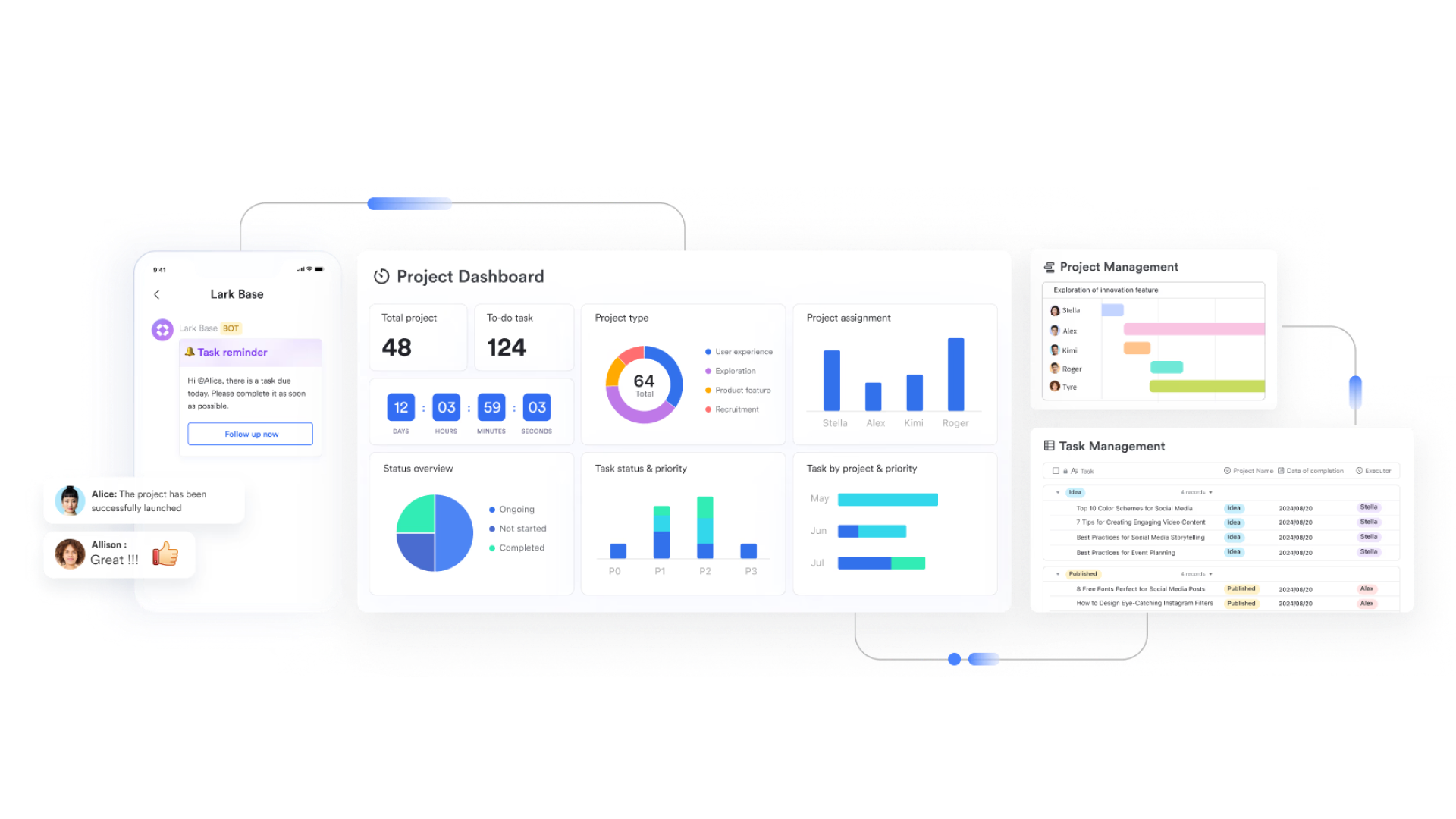
With Lark Base, managers can organize all projects and programs in dynamic relational tables that connect data across multiple initiatives.
- How it works: A program manager creates a Base table with fields like "Project Name", "Owner", "Timeline", "Status", "Budget", and "Linked Program Goal." Each project lead can update progress directly, giving program managers a consolidated view of performance and dependencies.
- Example: When a new task is completed, the update appears instantly in the central program Base, allowing leadership to monitor progress and resource alignment in real time.
- Additional features: Managers can automate record updates with triggers, link data across tables for cross-project visibility, and create filtered views for different stakeholder levels.
Lark Tasks: Driving execution and monitoring progress
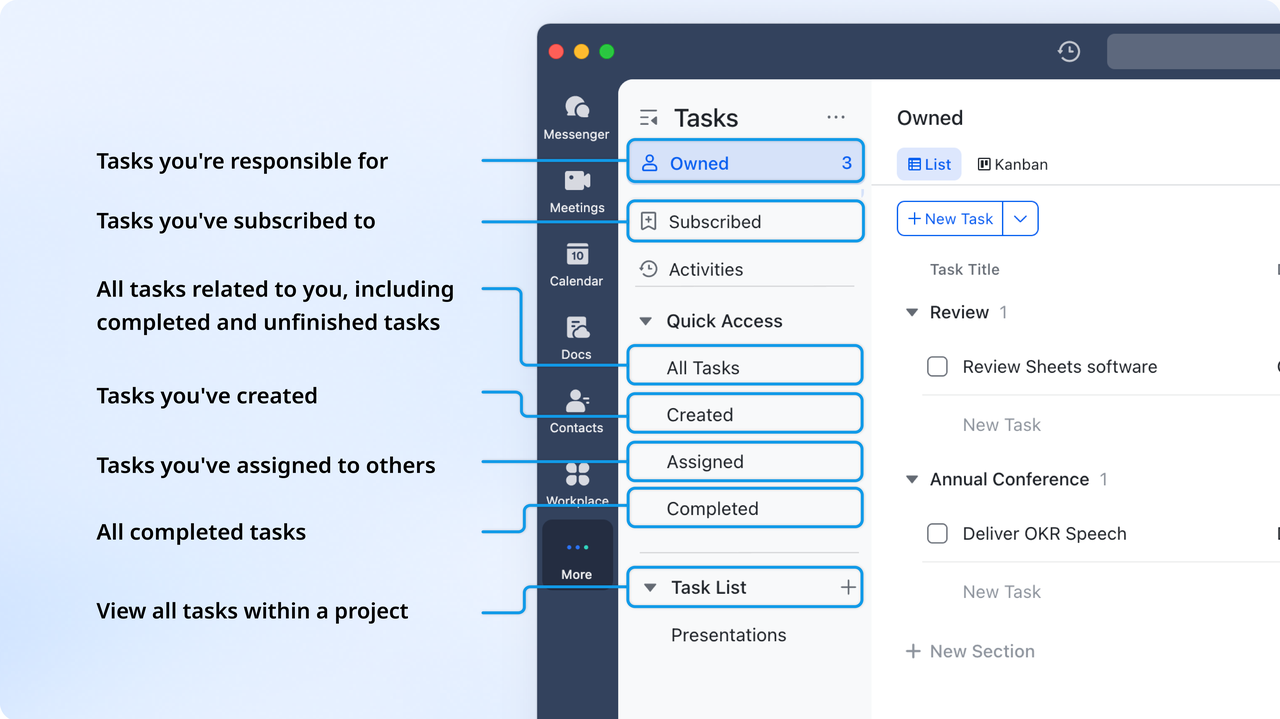
Lark Tasks brings clarity and accountability to execution, ensuring every deliverable stays on track.
- How it works: Teams create task lists tied to project objectives, assigning owners, deadlines, and priority levels. Managers can track completion rates and blockers at a glance.
- Example: A project lead creates a "Marketing Campaign" task list, assigns subtasks for content creation and approvals, and monitors their progress.
- Additional features: Set recurring tasks and enable progress tracking through Kanban or list views.
Lark Messenger: Real-time communication between teams
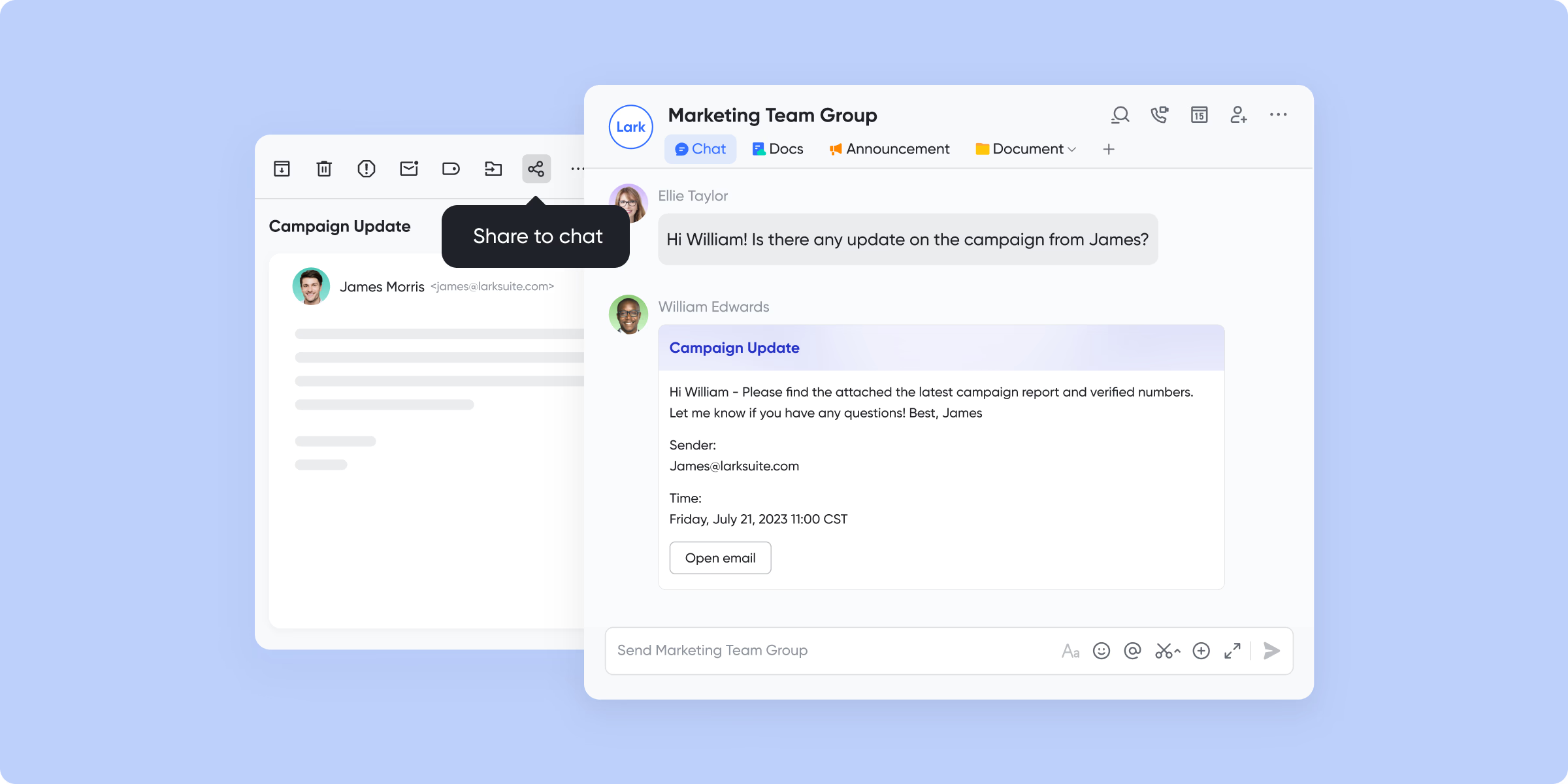
Lark Messenger keeps project and program teams connected through instant chats, topic-specific groups, and in-message file sharing.
- How it works: A program lead can create a dedicated "Program Channel" where all project managers discuss updates, share files, and tag team members for quick decisions.
- Example: When a project encounters a budget constraint, the project manager pings the finance head in Messenger, and they resolve it immediately—no waiting for weekly syncs.
- Additional features: Use message threads for topic-specific discussions, pin critical updates for visibility, and integrate task creation directly from messages.
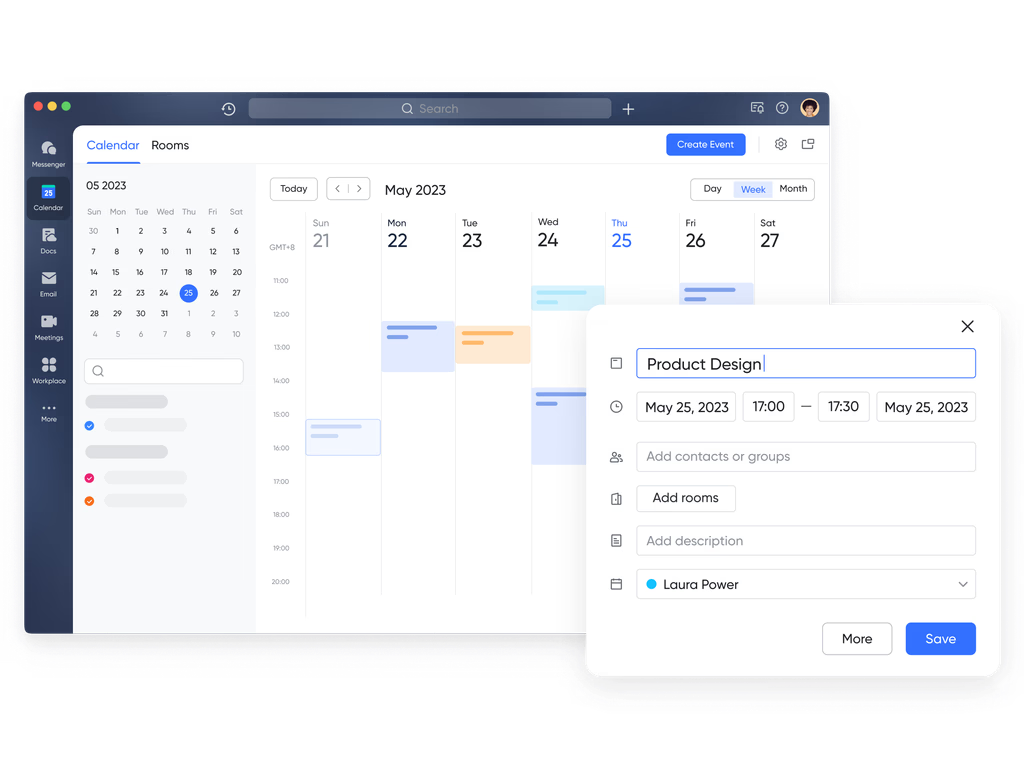
Lark Calendar: Aligning milestones across projects
With Lark Calendar, all project and program timelines can be viewed in one shared space, making it easier to identify overlaps and critical dependencies.
- How it works: Each project adds key milestones—kickoffs, deliverables, and reviews—to a shared program calendar. Program managers can then visualize collective timelines and adjust schedules proactively.
- Example: If one project's deadline shifts, it's instantly visible on the program calendar, allowing others to adapt without misalignment.
- Additional features: Add color-coded project calendars, view dependencies with reminders, and embed event links to Tasks or Meetings for seamless coordination.
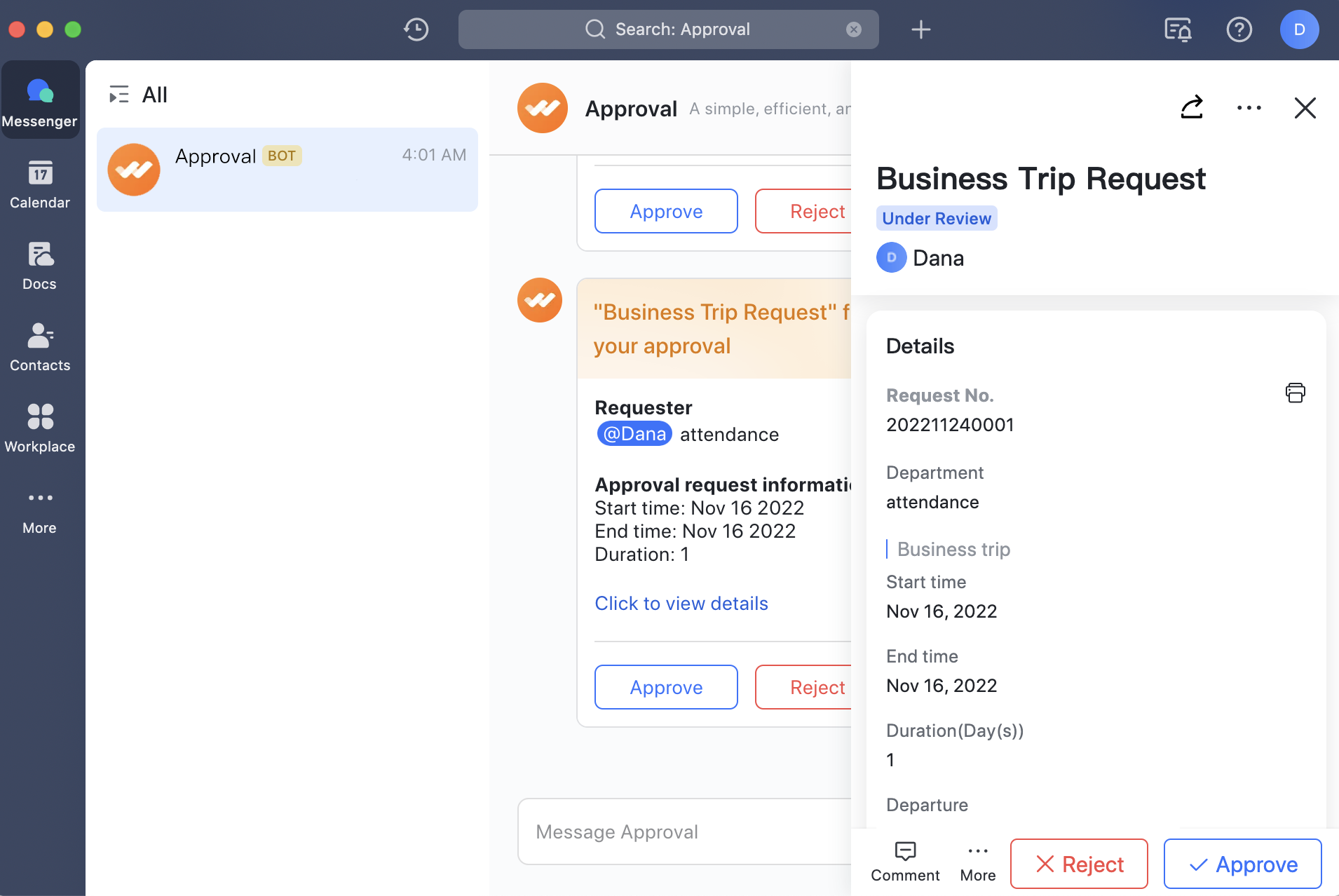
Lark Approval: Automating decision workflows
Lark Approval helps program managers streamline multi-level decision-making—whether it's budget approvals, change requests, or milestone validations.
- How it works: Teams create approval flows based on project hierarchy. Submissions route automatically to the right managers or executives for review.
- Example: When a project requests additional funding, an automated approval flow triggers notifications for finance and leadership, ensuring quick, traceable decisions.
- Additional features: Customize multi-step approval chains, set conditional logic, and track approval histories for governance and audit readiness.
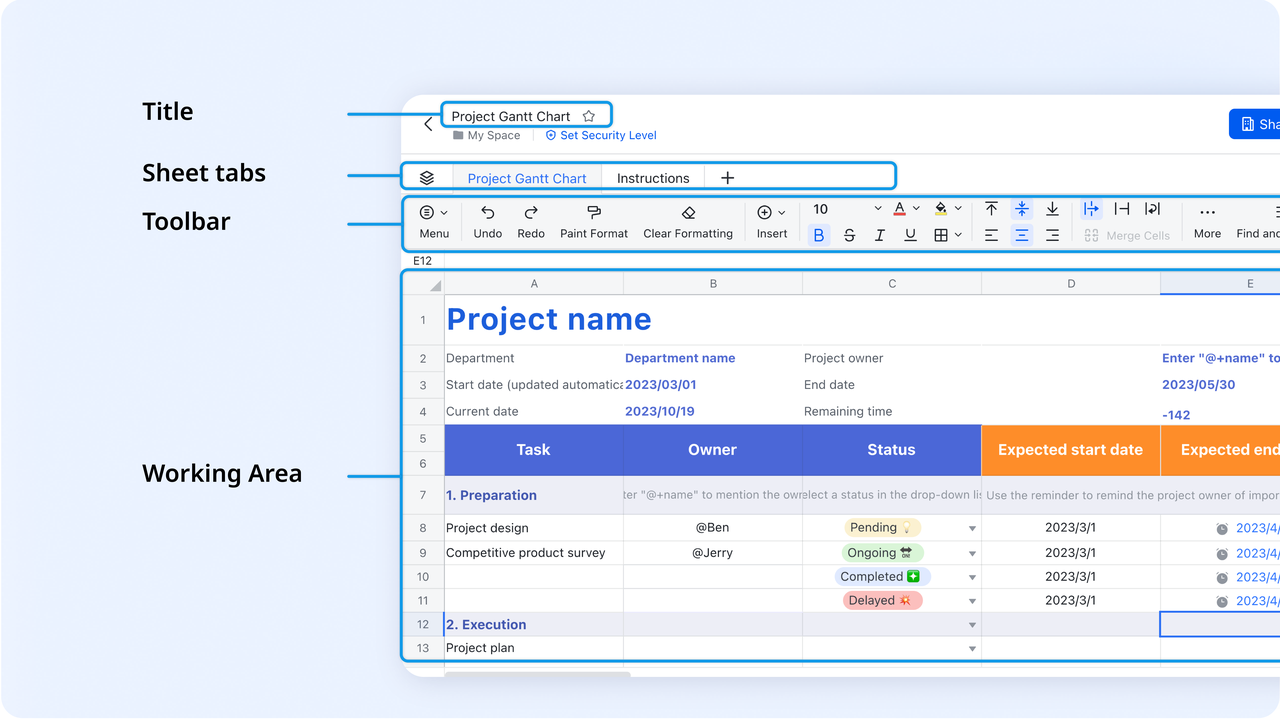
Lark Sheets: Tracking KPIs, budgets, and performance
With Lark Sheets, managers can analyze performance data, track KPIs, and manage budgets using real-time linked data from Lark Base.
- How it works: Program leads maintain sheets with metrics like "Budget Used", "Completion Rate", and Data automatically updates from Base, ensuring consistency without manual input.
- Example: A team uses Lark Sheets to monitor campaign spending and resource allocation across projects, ensuring financial discipline and timely delivery.
- Additional features: Create formula-based reports, link multiple tables for consolidated analytics, and use conditional formatting to highlight risks or delays.
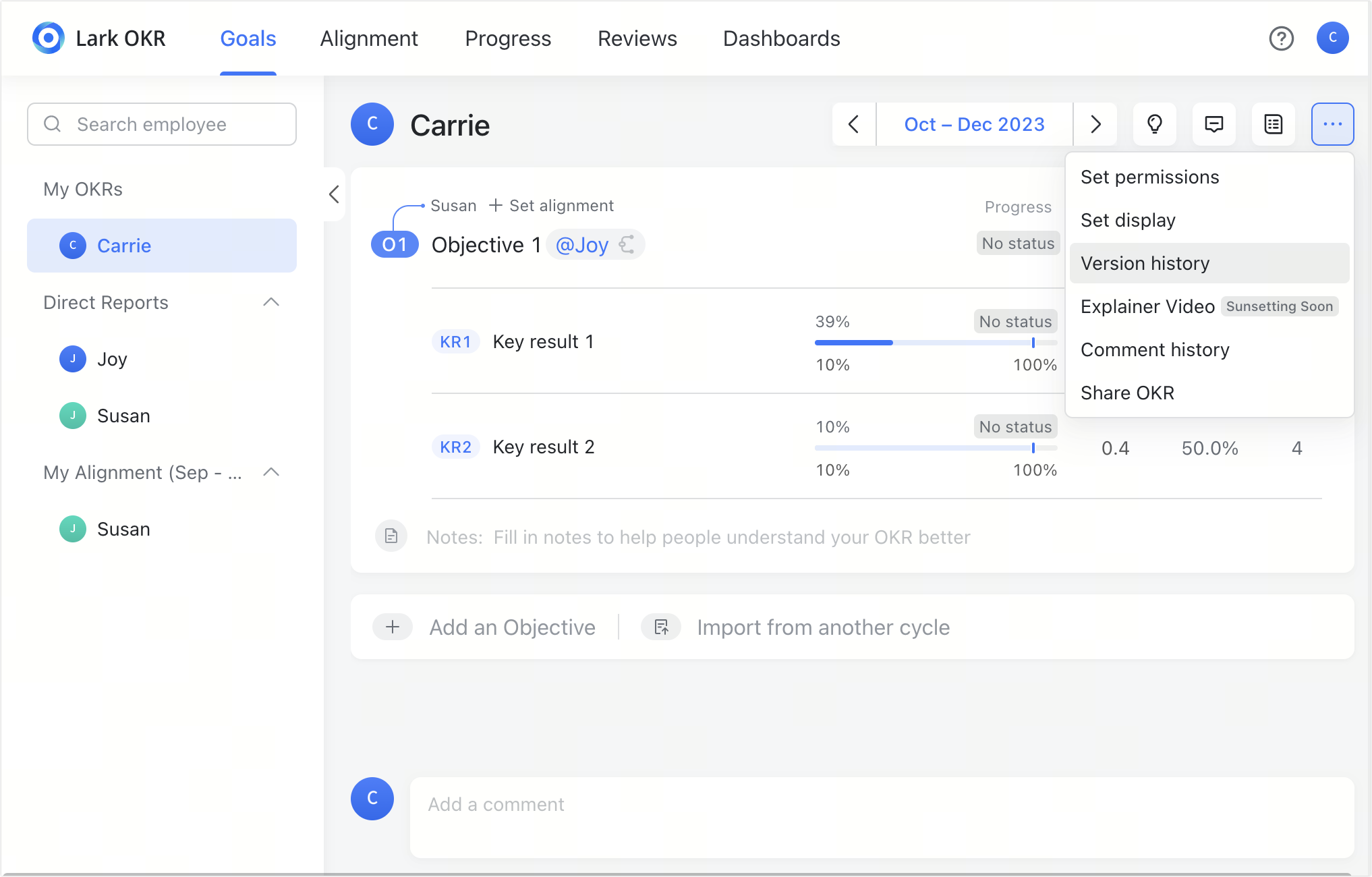
Lark OKR: Connecting project outputs to strategic outcomes
Lark OKR bridges daily work with organizational strategy, ensuring every task and project contributes to measurable goals.
- How it works: Teams set OKRs linked to program objectives—each project updates progress, which rolls up to overall outcomes.
- Example: A sustainability program uses Lark OKR to align all related projects—energy optimization, waste reduction, and awareness campaigns—under one strategic goal, showing progress in real time.
- Additional features: Visualize goal progress through graphs, align individual OKRs with company-level outcomes, and automate reminders for goal updates.
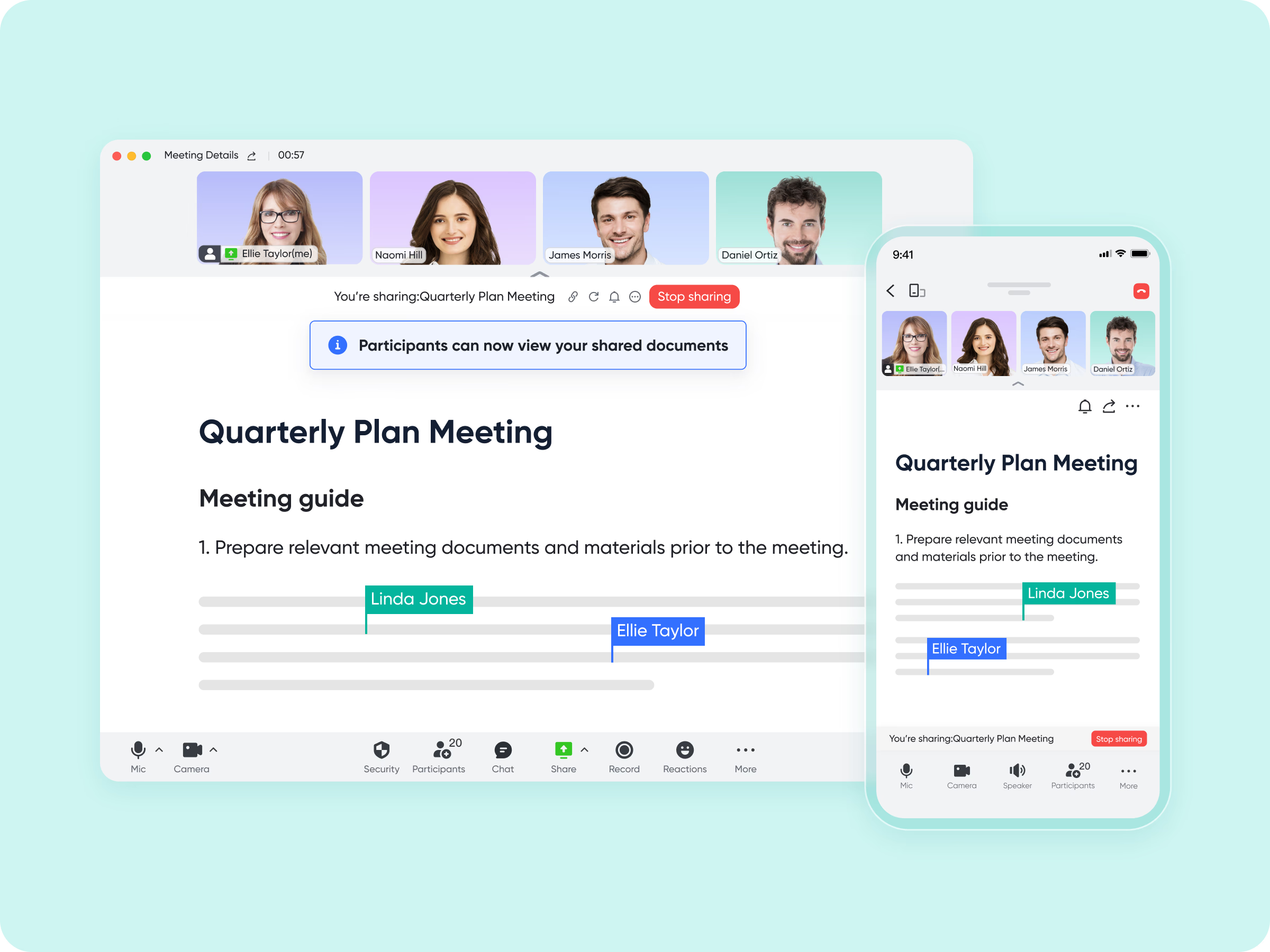
Lark Meetings & Lark Mail: Streamlining coordination and reporting
- How it works: Teams schedule recurring syncs in Lark Calendar and join via Meetings, where they can share live Docs. Important summaries or reports can be distributed instantly through Lark Mail.
- Example: During a bi-weekly program review, managers share project progress in real time through Lark Meetings and follow up with a summary email—all without switching tools.
- Additional features: Record meetings for future reference, auto-generate meeting notes, and use smart email templates to standardize program-wide updates.
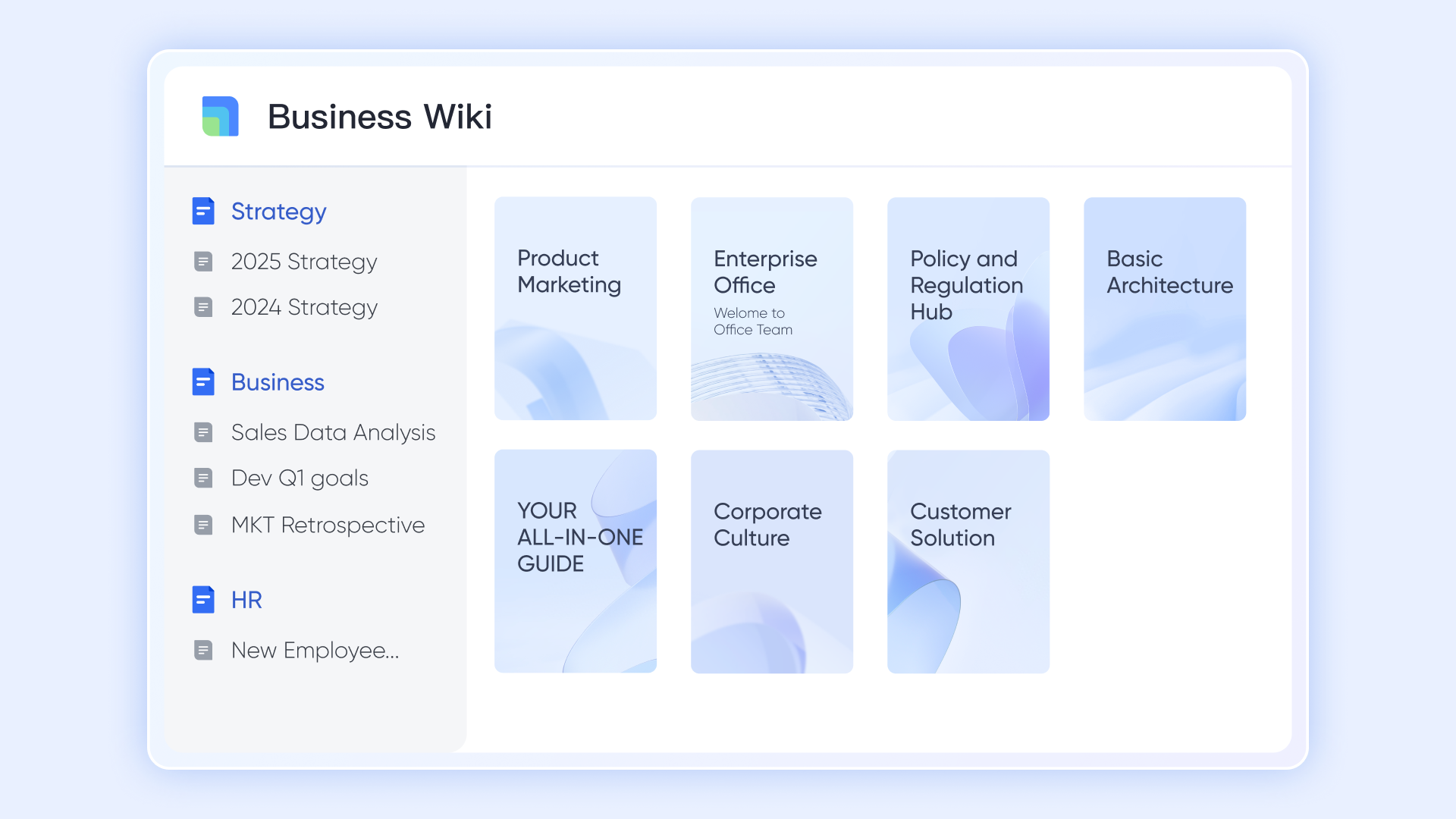
Lark Docs & Wiki: Centralizing governance and knowledge
Lark Docs & Lark Wiki serve as the knowledge backbone for both projects and programs. From documentation to governance policies, everything stays searchable and shareable.
- How it works: Teams create project documentation in Lark Docs and organize policies, templates, and learnings in Wiki spaces. Access permissions ensure the right stakeholders see the right content.
- Example: After project completion, teams document lessons learned in a shared Wiki page—helping future programs avoid repeating past mistakes.
- Additional features: Enable collaborative editing with version history, insert live data from Base or Sheets, and embed Docs directly into Tasks or meetings for instant context.
- Starter plan: Free forever plan that includes Sheets, Docs, Base, and 8 other powerful tools for up to 20 users. It also comes with 100GB of cloud storage, 1000 automation runs, AI translations, and more.
- Pro plan: $12/user/month (billed annually) for up to 500 users. It includes everything in Starter plus group calling for up to 500 attendees, 15TB of storage, 50,000 automation runs, and more.
- Enterprise plan: Contact sales for custom pricing. Supports unlimited users and includes even more automation runs and advanced security, compliance, and management features.
Example scenario: Coordinating a corporate sustainability program
A large enterprise is running multiple sustainability projects aimed at reducing environmental impact and promoting green operations. These include initiatives such as waste reduction, energy optimization, and employee awareness campaigns—each led by different teams but contributing to one overarching sustainability goal.
- A company runs multiple sustainability projects: The sustainability program consists of three interrelated projects—minimizing waste in production, implementing smart energy systems, and conducting internal awareness drives. Each project operates with its own team, timeline, and deliverables, but all share the same strategic outcome: advancing the company's ESG objectives.
- How a program manager uses Lark Base to oversee all three projects: The program manager creates a Lark Base workspace linking all three initiatives through relational tables. Each table tracks project milestones, budgets, KPIs, and responsible leads. Approvals for new initiatives or policy changes are streamlined using Lark Approval, while progress is aligned with Lark OKR to ensure every project contributes to measurable sustainability goals.
- How project managers track milestones in Lark Tasks: Each project manager uses Lark Tasks to assign responsibilities, set deadlines, and monitor deliverables. Task updates automatically reflect in Lark Calendar, helping teams stay coordinated. Lark Messenger keeps communication transparent, allowing real-time updates between departments and the central sustainability office.
- How leadership views overall progress through Lark Sheets dashboards: Executive leadership uses Lark Sheets to review consolidated performance dashboards showing waste reduction percentages, energy savings, and engagement metrics. These visual insights enable data-driven decisions and quick identification of lagging areas. Combined with Lark Meetings, leaders can discuss results, adjust priorities, and ensure the program stays on track toward its ESG target.
Together, these tools demonstrate how Lark connects project-level execution with program-level strategy. Every team—from operations to leadership—works within one unified digital environment, ensuring that sustainability outcomes are delivered with clarity, accountability, and measurable impact.
Conclusion
Understanding the difference between program management vs project management is key to balancing execution and strategy. Projects deliver defined outputs within timelines and budgets, while programs align multiple projects to achieve long-term outcomes. In short, projects drive change; programs drive transformation. Lark unites both through tools like Tasks, Calendar, Base, Sheets, and OKR, giving teams visibility from task-level details to strategic objectives—helping organizations move from delivering outputs to realizing meaningful outcomes within one connected workspace.
FAQs
Is program management higher than project management?
Yes, program management is generally considered a higher-level discipline than project management. While project management focuses on completing specific deliverables, program management oversees multiple related projects to ensure they collectively achieve strategic business outcomes. Program managers coordinate resources, dependencies, and risks across projects, providing a broader, outcome-focused perspective.
Can a program exist without projects?
Typically, a program is defined by its constituent projects. Programs are designed to deliver strategic outcomes by coordinating multiple interrelated projects. Without projects, a program would lack operational activities that drive measurable results. However, in some cases, a program can include ongoing initiatives or operational streams rather than discrete projects, as long as they collectively contribute to a strategic objective.
How do program managers measure success differently from project managers?
Project managers define success by outputs—ensuring that tasks are completed, deliverables are met, and projects are delivered on time, within scope, and on budget. In contrast, program managers measure success by outcomes—evaluating whether the collective results of multiple projects drive broader organizational objectives like increased revenue, improved efficiency, or enhanced customer satisfaction. While project management focuses on execution precision, program management emphasizes benefits realization and long-term strategic impact, ensuring that every completed project contributes to sustainable business value.
Can Lark be used as both a project and a program management tool?
Absolutely. Lark provides a unified digital workspace that enables organizations to manage both project execution and program oversight seamlessly. Teams can use Lark Tasks to assign and track work, Lark Calendar to manage milestones, and Lark Messenger for instant collaboration. At the program level, leaders can leverage Lark Base to connect multiple projects, Lark Sheets to monitor KPIs, Lark Approval to ensure governance, and Lark OKR to align initiatives with strategic goals. Together, these tools provide complete visibility—from individual tasks to organizational outcomes—bridging execution and strategy within one connected platform.
Related reading
Table of contents
Start using Lark today

Manage all your work in one place
Boost team efficiency by 10x
Save up to 70% on software costs
Table of contents
Start using Lark today
Manage all your work in one place
Boost team efficiency by 10x
Save up to 70% on software costs
Keep reading







2026 Lark Technologies Pte. Ltd.
Headquartered in Singapore with offices worldwide.






Explore: