














The Companies That Survive This Decade Will Look Nothing Like the Ones That Led the Last One

Jessica O
Product Demand Generation Specialist
Sep 18, 2026
Jessica O
Sep 18, 2026


5 min read


The rules of competition in Southeast Asia are being rewritten. Not gradually. Not theoretically. Right now, in your industry, in your market, against competitors who did not exist five years ago and who are not slowing down.
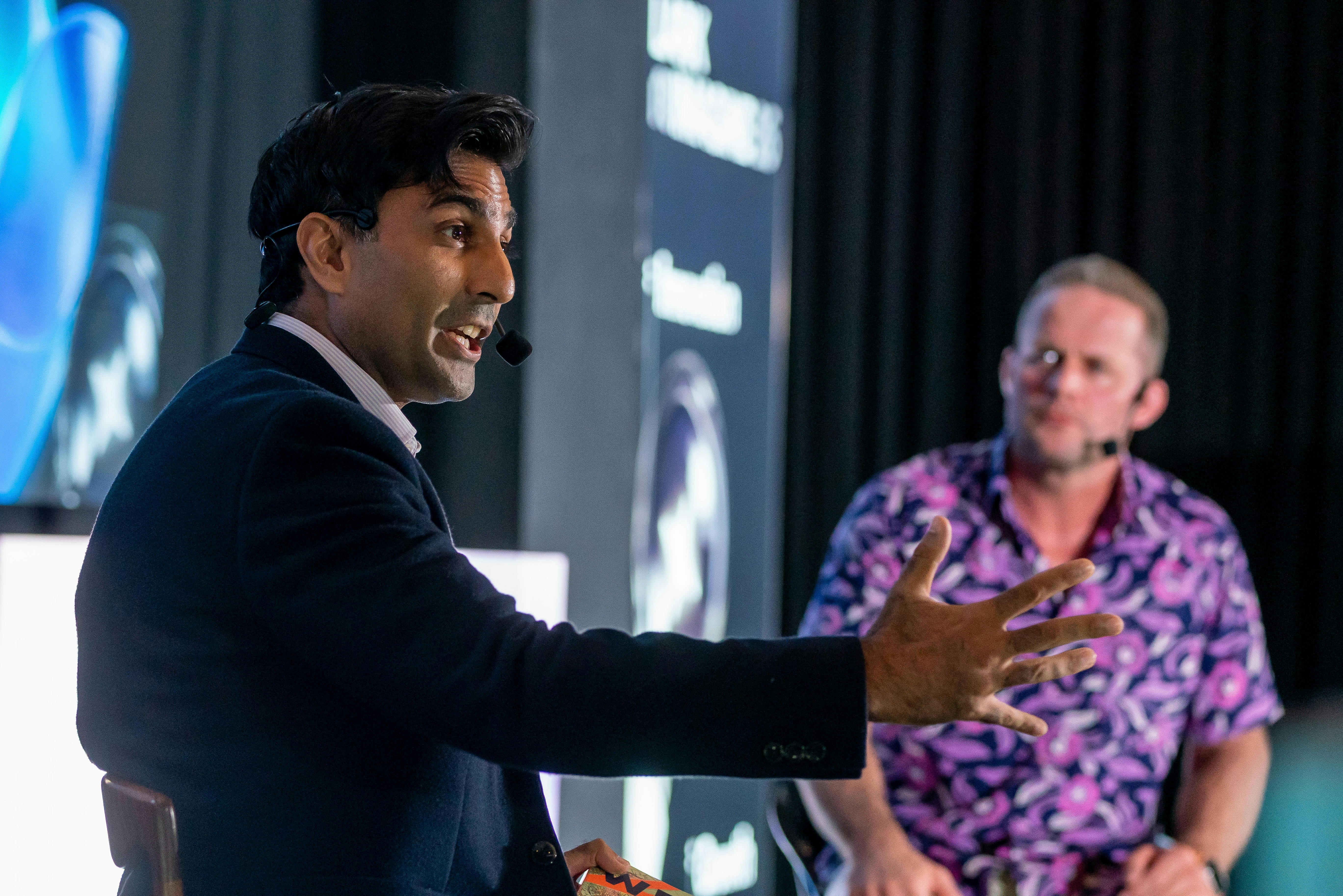
At Reimagine 2026, nearly 300 leaders across the region gathered to confront this reality. What surfaced was not a set of trends to monitor. It was a verdict: organizations still operating on outdated structures, outdated assumptions, and outdated software are not just falling behind. They are becoming structurally incapable of catching up.

The pressure you are feeling today is the smallest it will ever be
China's outward FDI stock sits at less than 20% of GDP. The United States is at roughly 40%. Japan is close to 45%. By that measure, investment into this region is not at its peak. It has barely started. The competitors reshaping retail, F&B, logistics, and financial services across Southeast Asia today are operating well below their structural capacity.
AI follows the same curve. The models disrupting operations right now are the least capable your industry will ever face. Every 12 months, the baseline shifts. The organizations calibrating their readiness against today's competitive environment are solving for a problem that will look trivial in two years.
This is the trap. The pressure is real enough to feel manageable, but it is accelerating faster than most planning cycles can track. By the time the full weight of it is visible, the window to restructure has already closed.
The playbook most organizations are running has already expired
Asia Pacific now contributes 60% of global growth in purchasing power parity terms. The region has not just grown. It has fundamentally changed in who is competing here, how fast they move, and where pressure originates.
And yet most organizations are still running on operating models, management frameworks, and software built for a different version of this market. Built when competition was more local, supply chains more predictable, and the pace of change was something annual planning cycles could absorb. That context is gone. The structures remain.
For the first time, that is a choice, not a constraint. The capital, technology, and organizational models purpose-built for this market now exist here. APAC is no longer borrowing infrastructure designed for someone else's reality. Which means every organization still defaulting to what it has always run on is doing so in a market where competitors are actively building for where things are going. Inertia is not a neutral position. In a market moving this fast, it is a decision to lose ground.
Winning organizations are not moving faster by accident. They are built for it.
When pressure increases, the instinct is to push harder, hire more, add tools. That instinct is not wrong. What is wrong is attempting it inside a structure that was never designed to carry that load. Speed without the right architecture does not compound. It breaks.
The organizations pulling away share one characteristic: their operating model and their technology are not two separate systems managed by separate teams. They are one system, built together, so that information flows without fragmentation, decisions happen without unnecessary handoffs, and execution compounds instead of stalls.
ZUS Coffee scaled to Malaysia's largest coffee chain in under five years, at speed, without breaking, because its operating infrastructure was built ahead of demand. Growth compounded because the structure was designed to carry it. iMotorbike moved fast by removing the dependency on technical teams entirely, collapsing the gap between identifying a problem and resolving it. AirAsia, having scaled into complexity without that foundation, discovered the cost: it had to carve out a separate 900-person unit just to recover the organizational speed it had gradually lost. Not to grow faster. To get back to functional.
The lesson is not that these companies worked harder. It is that their structure multiplied them.
Most structures do the opposite, and most leaders have normalized that friction as the cost of doing business. It is not. It is the cost of the wrong design.
AI deployed on a broken operating model does not fix it. It makes the damage harder to see.
The question most organizations are asking about AI is how to deploy it. That is the wrong starting point. The right question is whether the organization underneath is coherent enough for AI to actually work.
AI deployed on top of undefined processes does not improve them. It accelerates them, produces outputs that look like progress, and buries the structural problem deeper while the dashboard looks fine. This is not a hypothetical risk. It is the most common failure pattern in enterprise AI adoption today, and it is precisely why so many AI initiatives generate activity but not advantage.
The organizations getting real returns do the opposite. Carro did not launch an AI transformation program. They identified one gap, no visibility into why customer service agents were or were not converting, and built a system to close it. Managers moved from reviewing calls monthly to coaching weekly. Manual review dropped from 100% to 40%. Performance improved not because AI was powerful, but because the process underneath was clear enough to be worth improving.
That is the standard. AI as a nervous system for a well-designed operation. Not a solution layered on top of one that isn't.
The organizations that are not moving are not standing still. They are falling behind.
The most dangerous position right now is a functioning organization that believes it has time.
Stable performance is not a signal that the structure is working. It is often a signal that the gap has not yet become visible. Kawan Lama Group did not see a crisis. They saw friction. Decisions slowing. The distance between how fast the organization could move and how fast the market was moving, quietly growing. Nothing broke. But everything started to lag, and lag, left unaddressed, becomes the kind of structural decay that takes years and significant cost to reverse.
The operating model that got your organization here will not get it to the next stage. That is not a criticism. It is a structural reality every high-growth organization eventually confronts. The difference between the ones that navigate it and the ones that do not is almost always timing. Leaders who restructure before urgency forces them to retain options. The ones who wait do it under pressure, at greater cost, with fewer degrees of freedom.
The window is open. It will not stay that way.
Southeast Asia is not waiting for a single disruption moment. The shift is already happening, sector by sector, quarter by quarter, in the widening gap between organizations designed for this environment and those still running on assumptions built for a different one.
For the first time, organizations here do not have to default to models designed for a different market. The tools, the infrastructure, and the organizational models built for this reality exist right now. The question is not whether to act. It is whether your organization acts while it still has the luxury of doing so on its own terms.
The companies that lead Southeast Asia's next decade are making that decision today. The ones that don't will find themselves, years from now, trying to restructure at scale under pressure they could have seen coming, in a market that did not wait and competitors that did not slow down.
This is the first in a series unpacking the macro forces reshaping the region, the operators rebuilding how they work, and what it means for organizations navigating this shift in practice.
Table of contents
Start using Lark today

Manage all your work in one place
Boost team efficiency by 10x
Save up to 70% on software costs
Table of contents
Start using Lark today
Manage all your work in one place
Boost team efficiency by 10x
Save up to 70% on software costs
Keep reading
When Anyone Can Be the One Who Fixes It
People who had never written a line of code. Teams whose jobs had nothing to do with technology. But when Mr D.I.Y. asked its employees "what would you fix if you could?", 33 teams across 14 departments built real, working solutions. What happened next quietly changed how an entire organization thinks about innovation.



2026 Lark Technologies Pte. Ltd.
Headquartered in Singapore with offices worldwide.






Explore: