














When Anyone Can Be the One Who Fixes It

Jessica O
Product Demand Generation Specialist
Sep 18, 2026
Jessica O
Sep 18, 2026

10 min read


It tends to start the same way. Someone staring at a problem they've worked around for years, finally asking: why are we still doing it this way?
Mr D.I.Y. is one of Southeast Asia's largest home improvement retailers, operating across 15 countries, more than 5,000 stores, and over 55,000 employees. At that scale, inefficiency doesn't stay contained. A workaround that one team patches together becomes the standard that ten thousand people inherit. A manual process that works at 10 stores quietly breaks at 2,000. And the people who know what's broken are rarely the ones with the authority to fix it.
For many companies, the answer is to escalate. Submit a request. Wait for IT. Hope the fix arrives before the problem grows.
Mr D.I.Y.'s approach was simpler: give the people closest to the work the tools to solve it themselves.
Do IT Yourself
Together with Lark, Mr D.I.Y. launched the Efficiency Pioneer Competition with a straightforward challenge put to employees across every level of the business: you know your work better than anyone. What would you fix if you could?
No prior technical background required. No development queue to join. Every employee had access to the same tools and the same starting point, regardless of their role or the market they worked in. The only real requirement was a problem worth solving.
Eighty employees signed up. Thirty-three teams formed across fourteen departments, Visual Merchandising, Logistics, Maintenance, Marketing, and more. Most had no prior IT background. All of them had something they wanted to change.
The Results Spoke for Themselves
Thirty-three teams built real, working solutions. Three stood out for the scale of their impact.
Visual Merchandising faced a visibility problem that no spreadsheet could fix. Verifying that thousands of stores were displaying products correctly meant manually reviewing photos submitted by staff across the region, slow, inconsistent, and impossible to scale. Their solution was an AI-powered visual inspection tool that checks submitted photos against brand guidelines automatically, cutting manual inspection workload by 70%.
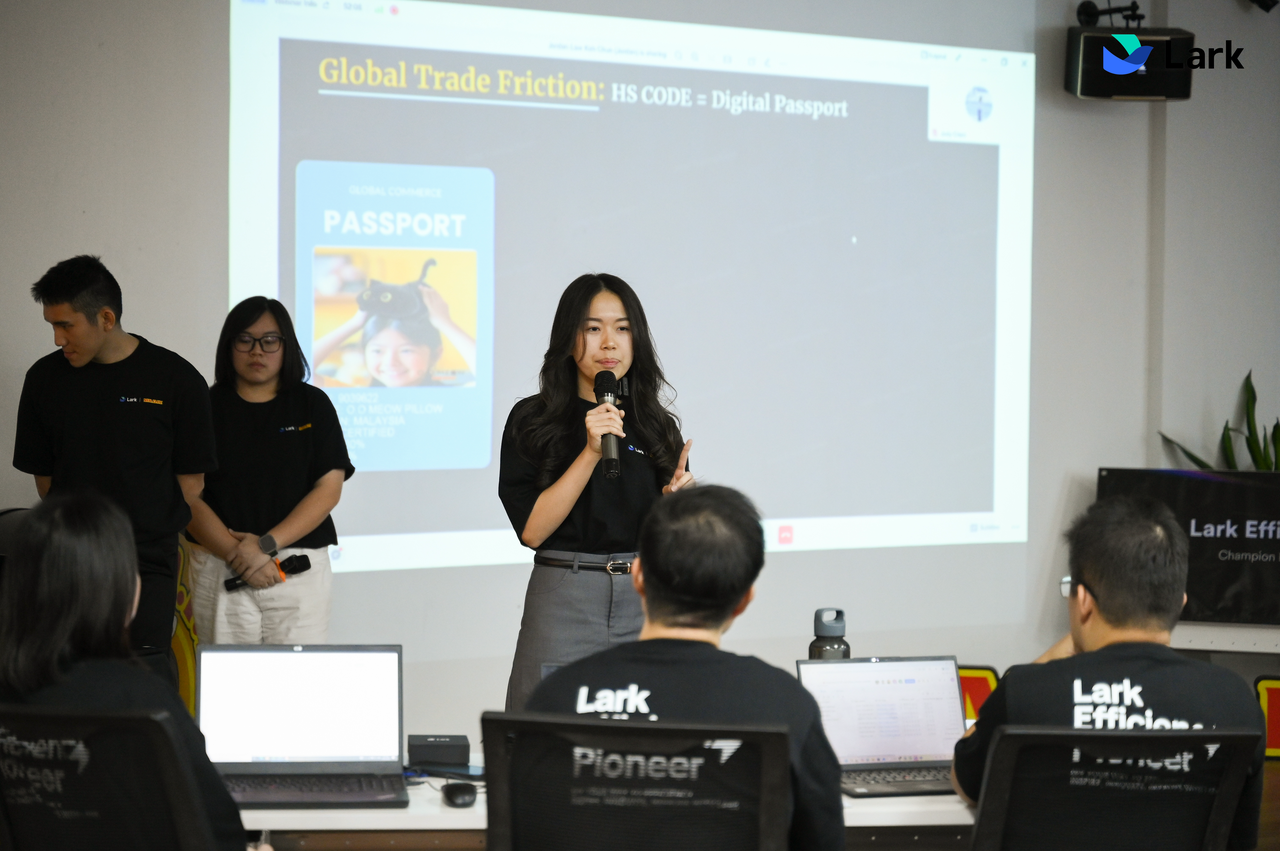
Global Trade & Product Compliance was buried in the complexity of cross-border trade. Managing Harmonized System (HS) codes across markets meant wading through thousands of emails and Excel files, with no reliable source of truth and no margin for error across that many borders. Their solution was a centralized HS Code Management System, a single ticketing engine that replaced manual correspondence, enforced compliance checks, and gave every stakeholder real-time visibility across all 56,000+ SKUs. With full process history logged automatically, team leads can now trace and recall past decisions remotely.
Maintenance was caught across Google Forms, Sheets, emails, and WhatsApp just to route repair requests and chase confirmations across thousands of store locations. Tickets are now managed through a centralized database, automating everything from work order creation to the quotation process. With detailed lookups and unique numbering, this eliminates manual errors and significantly improves arrangement efficiency, cutting ticket processing time by 80%.
Three departments. Three problems. Three solutions built by people whose job was never supposed to be building software.
What the Numbers Don't Fully Capture
The efficiency gains are significant. But something less measurable shifted too.
Mr D.I.Y.'s tagline, "Always Low Prices," isn't just a customer promise. It's an operational discipline. Shie Haur, CEO of MDIH Singapore, has spoken about how that commitment to keeping prices low demands a constant internal drive toward efficiency, one that has to run through every level of the business, not just leadership. What stood out to him about the competition wasn't just the quality of the solutions. It was the energy behind them. Some of the most compelling ideas came from store and operations teams, people embedded in the daily reality of the business, not the ones typically expected to lead innovation.
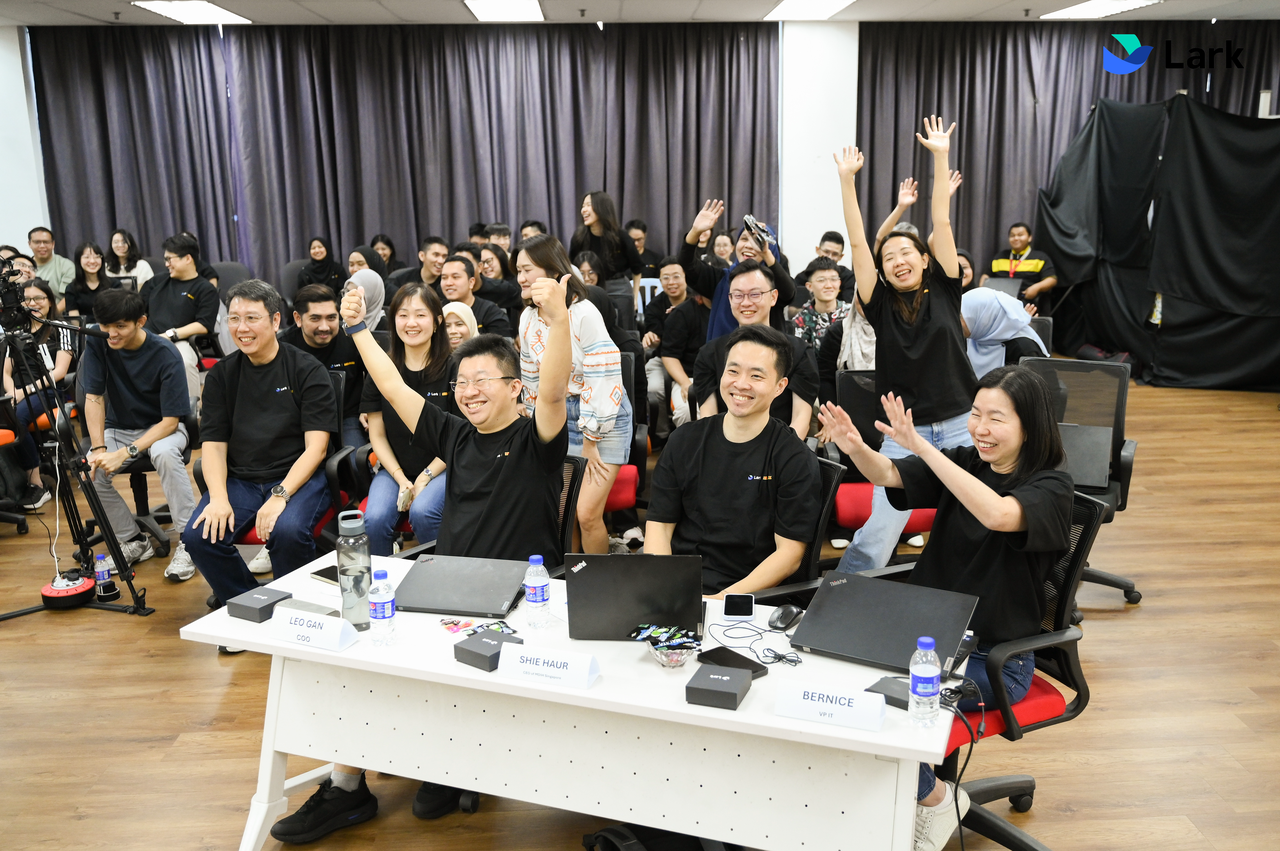
That's the part that's hard to put in a metric. When people across an organization feel equipped to act on the problems they see every day, solutions don't wait for a development cycle. They get built by the people who need them most.

What This Means at Scale
One Visual Merchandising tool doesn't just save hours in one market. Validated in Malaysia, the potential to replicate that impact across every market is already in motion. One compliance system doesn't just clean up one team's inbox. It sets the foundation for how the entire organization could manage cross-border operations at scale.
And these are just three teams out of thirty-three.

Employees across departments and markets. If a meaningful share of them develop the habit of spotting a problem and building a fix, the compounding effect goes well beyond individual efficiency gains. It changes how the entire organization responds to change, at every level, across every market, without waiting for solutions to arrive from the top.
The Two Things That Made It Possible
None of this happens without two things working together.
The first is culture. An organization that genuinely believes the person closest to the problem is often best placed to solve it, and acts on that belief by giving people permission to experiment, room to iterate, and recognition when it lands.
The second is tools. Technology that makes building accessible to people without technical backgrounds. Not platforms that require months of training, but ones that lower the barrier enough that a merchandising manager can deploy an AI inspection tool and a logistics coordinator can build a compliance system, without writing a single line of code.
Culture without tools creates ambition that goes nowhere. Tools without culture create features that nobody adopts. Together, they create the conditions for innovation to happen consistently, from the ground up, across every market.
The Question Worth Sitting With
The competition began with one question asked of employees across the business:
"What if the solution starts with us?"
Thirty-three teams answered it by building something real. The question now is how many more organizations are willing to create the same conditions, and how many people are already carrying the answer, waiting for the chance to act on it.
Table of contents
Start using Lark today

Manage all your work in one place
Boost team efficiency by 10x
Save up to 70% on software costs
Table of contents
Start using Lark today
Manage all your work in one place
Boost team efficiency by 10x
Save up to 70% on software costs
Keep reading




2026 Lark Technologies Pte. Ltd.
Headquartered in Singapore with offices worldwide.






Explore: