


Types of Sales: Strategies, Examples, and How Teams Can Work Smarter

Ryan Tanner
Product Marketing Specialist
Aug 5, 2026
Ryan Tanner
Aug 5, 2026

15 min read


Sales come in many forms—from inside and outside sales to B2B, B2C, and eCommerce—each requiring its own rhythm, tactics, and tools. Knowing which types of sales fits your business is key to shaping the right strategy and connecting with customers effectively. Today's sales operations go far beyond cold calls or scripted pitches; they're driven by insight, collaboration, and technology that help teams focus on relationships and results. The right setup brings structure to your process, clarity to your goals, and momentum to your pipeline—no matter whether you're handling complex enterprise deals or fast-turn retail sales. Let's dive deeper into the main types of sales and how each can shape your business strategy. We'll also outline the main types of sales jobs across inside, outside, channel, and enterprise teams to help you identify which structure fits your organization best.

The 8 main types of sales
Sales models vary depending on how teams engage customers, manage deals, and structure their approach. Understanding the different types of sales helps businesses align strategies with buyer behavior and market needs. Here's a breakdown of the main sales models, their defining traits, and real-world examples to show how each one works in practice.
- Inside sales: Inside sales involve managing customer relationships remotely through phone, email, or CRM tools. This type of sales job emphasizes automation, personalized outreach, and quick follow-ups. It's ideal for digital-first businesses like SaaS companies, where efficiency and data tracking drive performance. Typical different types of sales jobs here include SDRs, account executives, and customer success managers who collaborate closely through digital channels.
- Outside sales: Outside sales focus on in-person client interactions, relationship building, and negotiation. This model suits industries that rely on trust and high-value transactions, such as real estate or industrial equipment. The best sales strategies here involve consistent follow-ups, field visits, and long-term relationship management.
- B2B (business-to-business) sales: B2B sales involve selling products or services to other businesses. These types of sales strategies require multiple decision-makers, longer sales cycles, and customized proposals. Success depends on understanding client operations and delivering measurable ROI. Examples include enterprise software vendors or logistics providers.
- B2C (business-to-consumer) sales: B2C sales target individual consumers, focusing on emotional appeal and convenience. The process is faster and often influenced by marketing and digital engagement. Brands in retail, hospitality, or streaming platforms rely heavily on sales promotions and customer experience to increase conversions. Common types of sales promotions include discounts, bundles, limited-time offers, and loyalty incentives that encourage repeat purchases and brand engagement.
- Enterprise sales: Enterprise sales deal with large-scale, customized solutions for major organizations. These deals are complex and involve high stakes, multi-level approvals, and ongoing support. Teams use consultative sales training programs to develop the strategic communication and negotiation skills needed for success. They also invest in various types of sales training programs—covering enterprise negotiation, strategic account management, and customer success alignment—to, to strengthen deal management capabilities.
- eCommerce sales: eCommerce sales happen online, allowing customers to browse and purchase products digitally. This type of sales funnel focuses on automation, personalization, and conversion optimization. Brands use tools like CRM integrations and performance analytics to improve online customer experiences. Across models, common types of sales funnels include awareness-to-purchase, free-trial-to-pay, and subscription renewal funnels that map the buyer's journey efficiently.
- Channel sales: Channel sales rely on third-party partners, resellers, or distributors to expand reach. These different types of sales are designed to scale efficiently while maintaining brand consistency. Strong collaboration, training, and shared performance metrics are essential for managing partner relationships effectively.
- Consultative sales: Consultative sales center on understanding a customer's pain points and providing tailored solutions. Rather than pushing a product, reps act as advisors, offering insights that solve real problems. This type of sales strategy works well in industries like technology, professional services, and marketing consulting. Popular types of sales training include discovery techniques, value-based selling, negotiation skills, and presentation mastery—all vital for consultative success.
Common sales strategies for each model
Teams should also prepare for common types of sales objections—price, timing, authority, and fit—and use CRM workflows to manage rebuttals effectively.
Key challenges across different types of sales
Each type of sales from inside to enterprise comes with its own set of operational and coordination challenges. As teams scale and processes grow more complex, visibility, communication, and consistency often become difficult to maintain. Below are some of the most common obstacles that can limit sales performance and growth if not properly managed.
- Lead management inefficiency: When multiple sales reps handle overlapping deals, it becomes difficult to track progress and maintain clarity. Without a centralized CRM or automation system, leads can easily fall through the cracks. This inefficiency often results in lost opportunities and slower conversions.
- Communication gaps: Sales and marketing teams frequently work in silos, leading to misaligned goals and inconsistent messaging. Without integrated tools, valuable insights about customer behavior and campaign performance remain disconnected. This gap weakens collaboration and reduces overall sales effectiveness.
- Slow decision-making: Approvals, pricing reviews, and customer follow-ups can stall when teams depend on manual processes. The lack of workflow automation causes unnecessary delays and missed deadlines. Streamlining communication and task routing can significantly speed up sales cycles.
- Inconsistent reporting: Manual data entry often leads to incomplete or inaccurate performance metrics. When dashboards and reports aren't unified, teams lose visibility into what's actually working. Consistent, real-time reporting is essential for identifying trends and improving strategies.
- Scaling complexity: As organizations grow, managing larger teams, multiple regions, and diverse sales channels becomes increasingly challenging. Maintaining collaboration and accountability across departments requires connected tools. Scalable systems help ensure visibility and efficiency even as sales volume expands.
Practice on your own: Use Lark to manage different types of sales
Managing sales effectively, whether inside, outside, B2B, or eCommerce—requires visibility, automation, and real-time collaboration. Lark brings all of these elements together within a connected workspace, helping sales teams track performance, manage customers, and make data-driven decisions. Every feature in Lark supports a different stage of the sales process, ensuring that teams can adapt seamlessly across multiple sales models.
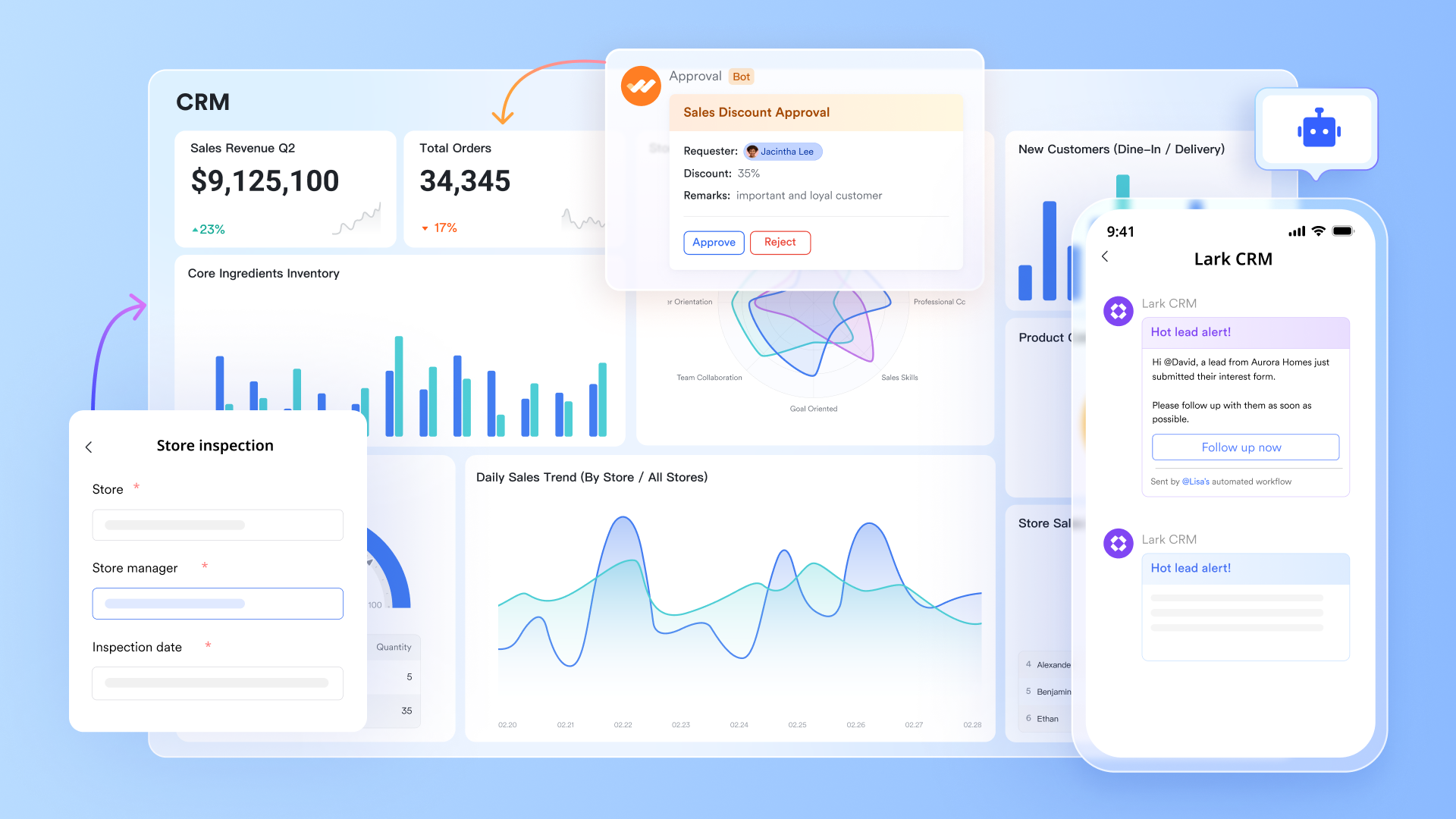
Dashboard to gain full visibility into sales performance: Lark's dashboards give teams and managers a comprehensive overview of sales performance at every level from individual reps to regional groups. Teams can track client satisfaction scores, revenue trends, and deal progress in real time. This centralized visibility helps identify high-performing products, pinpoint underperforming areas, and make informed strategic adjustments quickly.
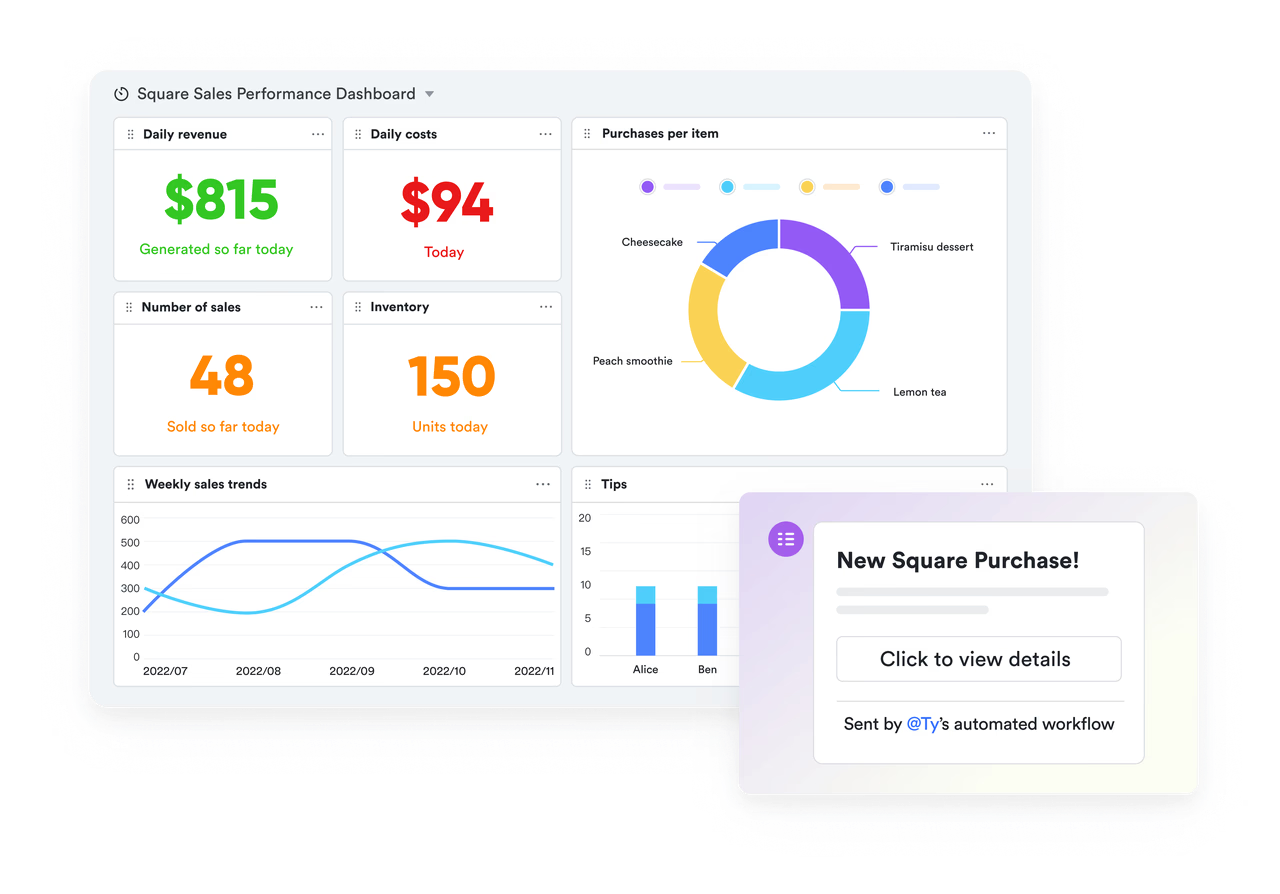
Real-time inventory management: For sales models connected to physical products or eCommerce, Lark simplifies inventory management through live tracking. Teams can monitor stock levels, inbound and outbound quantities, and annual growth trends without switching tools. Real-time visibility helps prevent overselling, ensures timely replenishment, and keeps sales aligned with available supply.
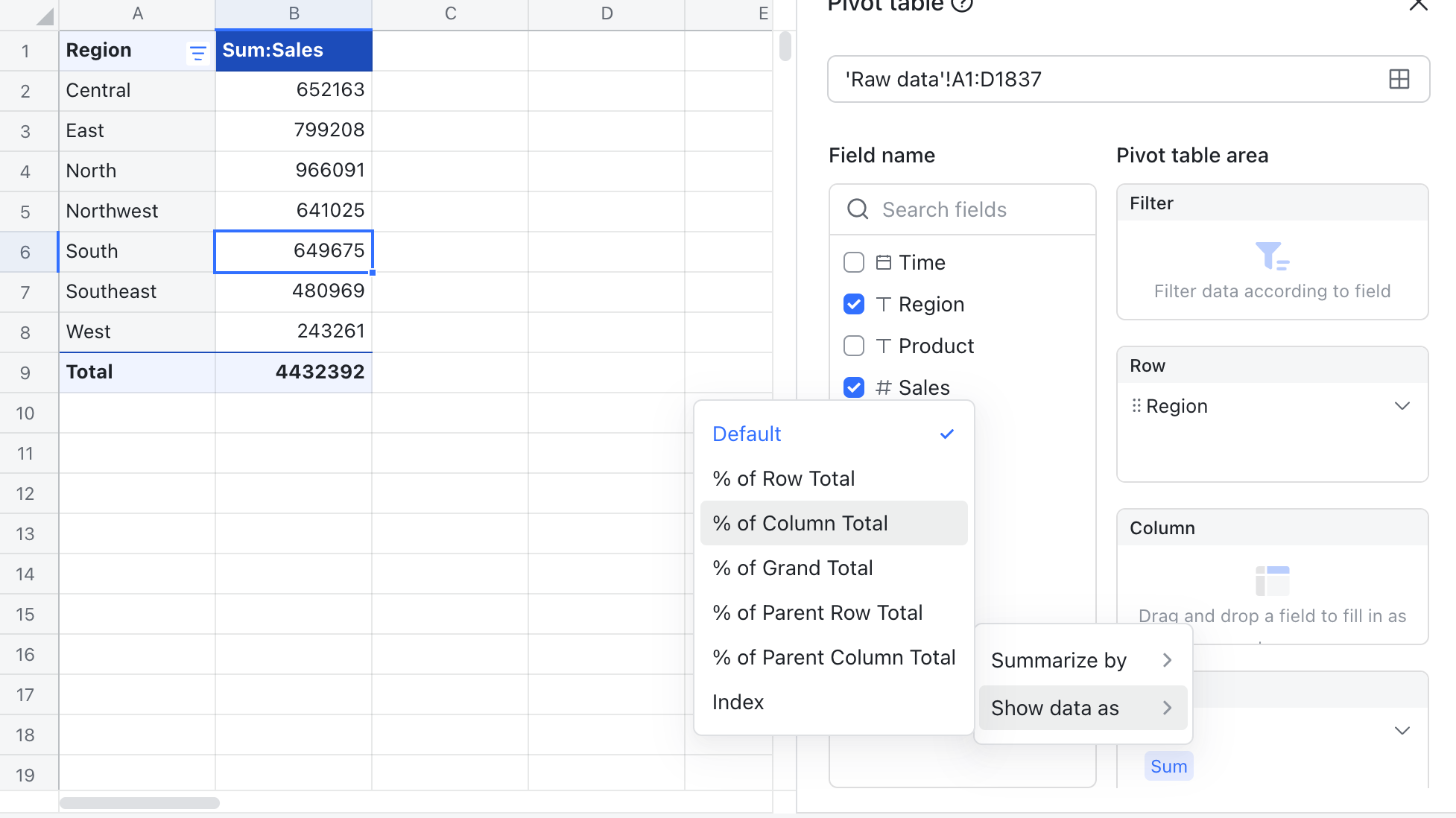
Regional analysis and performance insights: Lark supports in-depth regional analysis by automatically breaking down metrics such as revenue, cost, profit margins, and sales rankings across different territories. Sales leaders can compare performance between regions, identify top-performing markets, and adjust marketing or resource allocation strategies to maximize profitability.
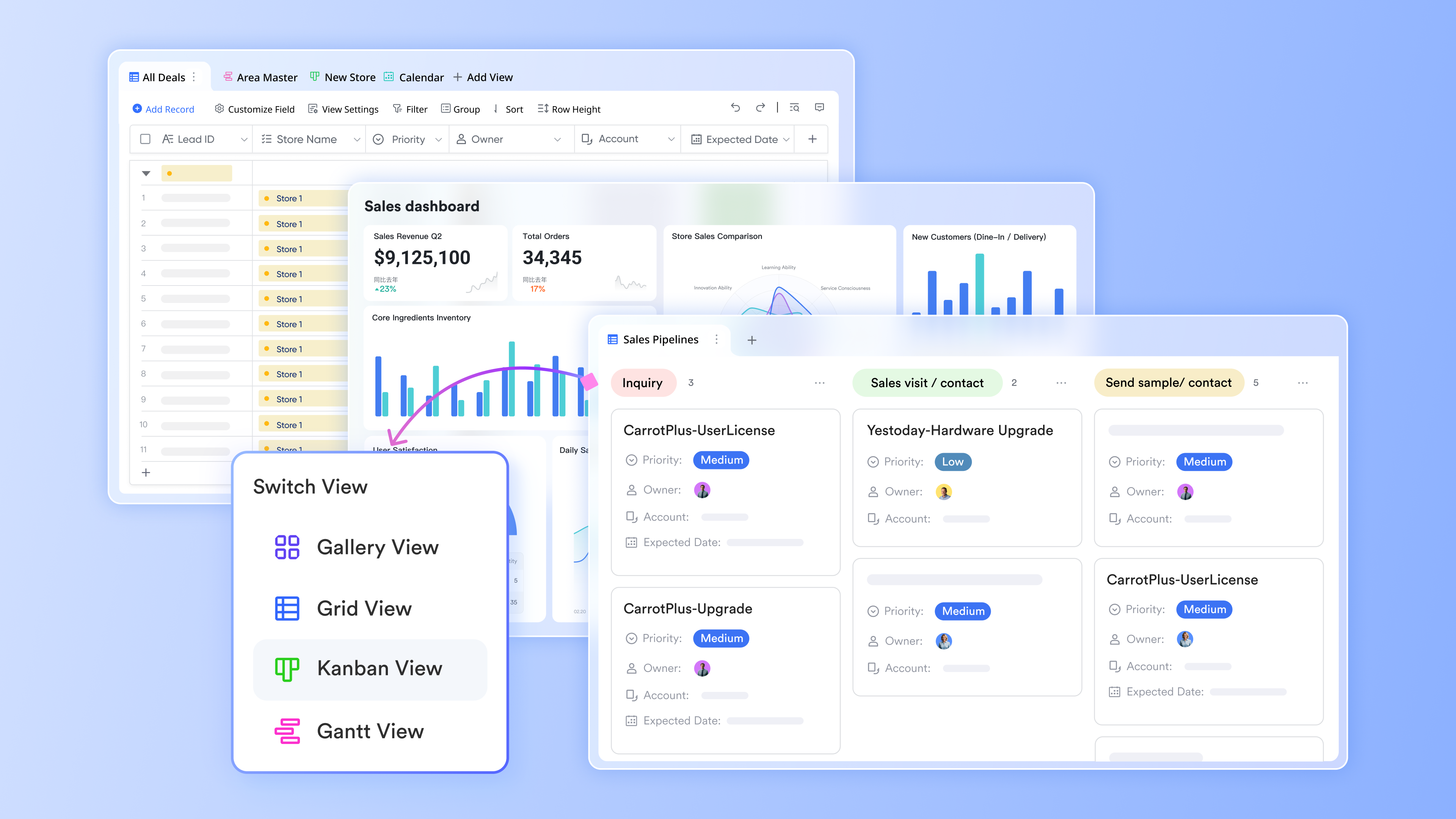
Client database for relationship tracking: With Lark Base, teams can manage a complete client database using views like, Gantt, Grid, and Kanban. Every customer's status, deal stage, and contact information are recorded in one place, making it easy to monitor progress through the pipeline. Sales reps can update client stages directly, while managers can review funnel conversion rates and detect bottlenecks early.
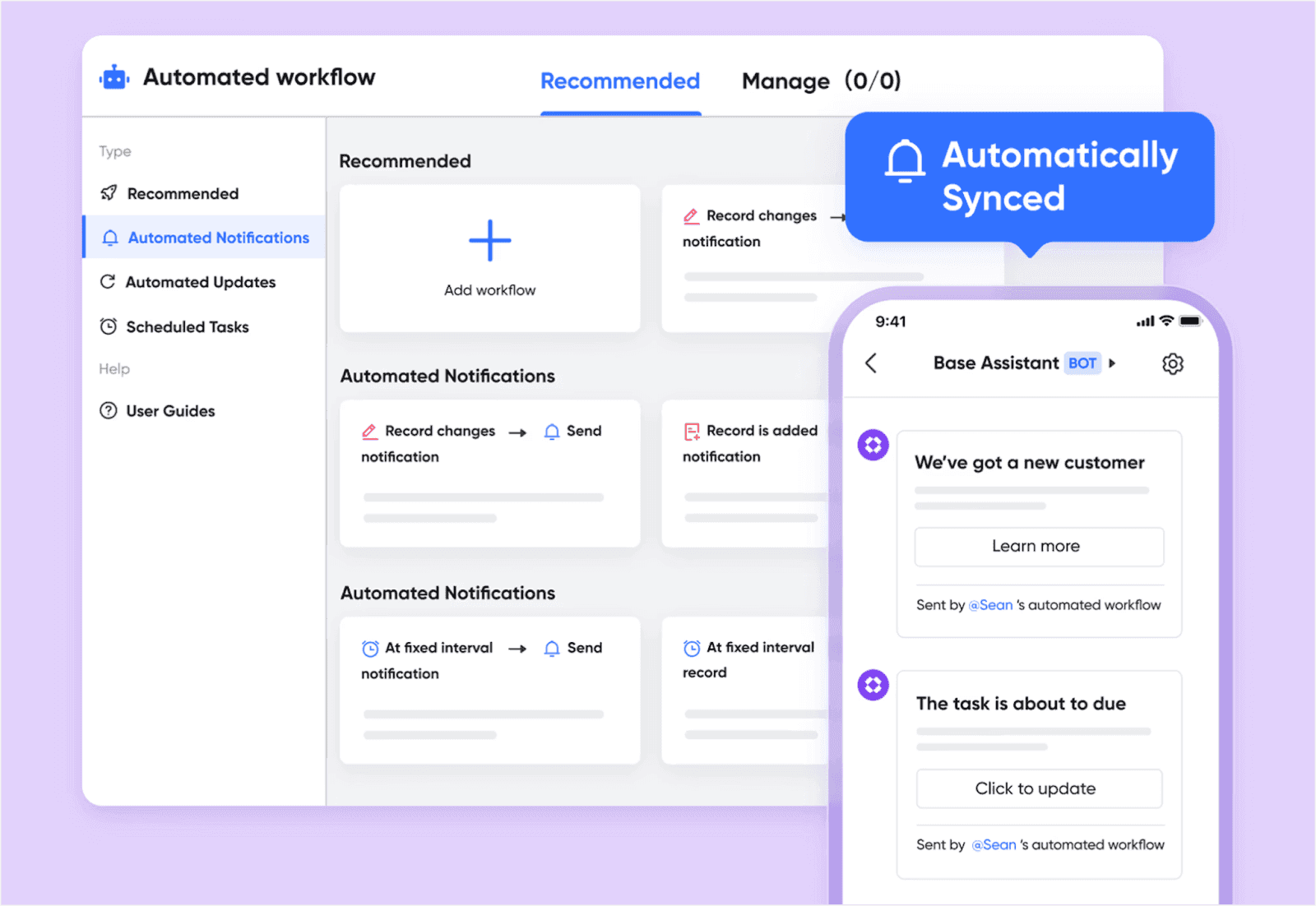
Automated workflows for faster coordination: Automation in Lark automates the routine communication that often slows down sales operations. When a deal stage changes or a customer status is updated, automated workflows instantly notify relevant team members. This ensures follow-ups happen promptly, handoffs between sales and support are seamless, and no lead falls through the cracks.
- Starter plan: Free forever plan that includes 11 powerful tools for up to 20 users. It also comes with 100GB of storage, 1000 automation runs, AI translations, and more.
- Basic plan: $6/user/month (billed annually) for up to 500 users. Includes everything in Starter plus unlimited message history, 5TB storage, 1,000 automation runs, and more. Some users may need to contact sales to purchase.
- Pro plan: $12/user/month (billed annually) for up to 500 users. It includes everything in Starter plus group calling for up to 500 attendees, 15TB of storage, 50,000 automation runs, and more.
- Enterprise plan: Contact sales for custom pricing. Supports unlimited users and includes even more automation runs and advanced security, compliance, and management features.
Bonus: Sales templates to accelerate your team's performance
Optimizing sales processes becomes much easier when teams have ready-to-use frameworks for tracking leads, managing pipelines, and analyzing results. These types of sales templates save time, improve accuracy, and ensure consistency across every stage of the sales funnel. Whether you're handling B2B accounts, eCommerce orders, or daily reports, templates provide a clear structure to keep your workflow organized. Explore these customizable resources to boost efficiency and performance.
Sales tracker template
Sales tracking is a crucial part of any business. It helps you understand your sales performance, identify trends, and make informed decisions to maximize profits. Our Sales tracker template is designed to help you do just that. With this template, you can track various sales metrics such as task status, sales target, actual sales, shipping cost, returns, unit cost, shipping charge, profit target, sales trend, and more. You can also add notes on opportunities and performance for each entry. This comprehensive sales tracking tool is customizable to fit your business needs and can be updated in real-time for accurate tracking.
Sales lead management template
Sales Lead Management template is a comprehensive tool designed to help you track and manage your sales leads. It includes fields for company name, lead source, phone number, company size, and initial requirement. The template is organized by company size, making it easy to prioritise and manage leads based on the potential value they bring to your business.
Daily sales report template
Managing daily sales performance across multiple locations can be a challenging task. With our Daily Sales Report template, you can easily track and analyze sales data from different branches, regions, and managers. This template allows you to input data such as date, month, day, manager, branch, region, gross sales, net sales, target sales, attainment, and other relevant information. By having all this data in one place, you can quickly identify trends, spot issues, and make informed decisions to improve your sales performance.
Sales management system template
The Sales management system template is a comprehensive tool designed to help you manage your sales process more efficiently. It provides a structured way to track and manage sales activities, from lead generation to closing deals. The template includes features such as adding records, configuring fields, filtering, grouping, sorting, and color-coding, making it easy to visualize and manage your sales pipeline.
Sales funnel template
Managing your sales pipeline and tracking deals can be a complex process. That's why we've created this sales funnel template to help you streamline your sales process and effectively manage your deals. With Lark's powerful features, you can easily track the progress of each deal, assign tasks to team members, and monitor the overall performance of your sales team. Whether you're a small business owner or a sales manager in a large organization, this template will provide you with the tools you need to close deals faster and increase your revenue.
Sales targets template
Sales target reports are essential for monitoring and evaluating the performance of sales teams against set targets. This template provides a comprehensive overview of sales achievements, variances, and comments for each quarter. It allows for easy visualization of sales performance trends and helps in identifying areas that need improvement.
E-commerce inventory and sales management template
Keeping track of inventory and sales is a crucial aspect of running an e-commerce business. This template allows you to manage your inbound orders, track the order price, inventory quantity, and average daily sales quantity across multiple online platforms. It's designed to help you maintain an accurate record of your inventory and sales, enabling you to make informed decisions about restocking and sales strategies.
Competitive sales analysis template
The Competitive sales analysis template is designed for competitive analysts to analyze and compare sales data of different companies and products. By inputting data such as units sold, revenue, market share, average sale price, and sales growth, analysts can gain valuable insights into the performance of each company and product over time. This template provides a comprehensive overview of the competitive landscape and helps identify trends and opportunities for growth.
Conclusion
Understanding the different types of sales from inside and outside sales to B2B, B2C, and beyond helps businesses choose the right approach for their goals and customer base. Each model has its strengths, but all share a need for clear communication, visibility, and collaboration to succeed.
Modern sales teams increasingly rely on connected platforms like Lark to unify their efforts, automate workflows, and gain real-time insights across channels. By integrating communication, data, and process management, Lark enables sales professionals to focus on building relationships and closing deals more efficiently. As the sales landscape continues to evolve, adopting the right tools and strategies ensures your team stays agile, productive, and ready to grow in any market environment.
FAQs
How do inside and outside sales differ?
Inside sales are conducted remotely through calls, emails, and digital platforms, focusing on efficiency and automation. Outside sales, on the other hand, rely on face-to-face meetings and relationship building for high-value deals. Both require strong communication but differ in approach and customer interaction.
Which sales type is best for startups?
Startups typically benefit most from inside or B2B sales because they offer scalability, cost-efficiency, and quick feedback loops. These models allow smaller teams to reach wider audiences without large travel budgets. They also integrate easily with digital tools for lead tracking and performance analysis.
How can technology improve the sales process?
Technology enhances sales by automating repetitive tasks, tracking leads, and providing data-driven insights. CRM tools, analytics dashboards, and AI-powered workflows streamline operations and improve team collaboration. This reduces manual work while increasing conversion rates and customer satisfaction.
Can Lark be used to manage different sales models?
Yes, Lark supports all major types of sales by integrating communication, data tracking, and workflow automation in one platform. Teams can manage leads, monitor performance, and collaborate seamlessly across inside, B2B, or eCommerce models. It ensures consistency, visibility, and efficiency across every sales process.
Related reading
Table of contents
Start using Lark today

Manage all your work in one place
Boost team efficiency by 10x
Save up to 70% on software costs
Table of contents
Start using Lark today
Manage all your work in one place
Boost team efficiency by 10x
Save up to 70% on software costs
Keep reading









2026 Lark Technologies Pte. Ltd.
Headquartered in Singapore with offices worldwide.






Explore: