Marketing automation has long been a cornerstone of efficient customer engagement. However, the introduction of artificial intelligence (AI) has redefined what’s possible, moving beyond simple rule-based processes to dynamic, data-driven systems. AI marketing automation uses machine learning and predictive analytics to deliver more relevant experiences at scale, helping businesses better understand customer behavior and optimize their outreach. This article explores the strategic advantages of AI in marketing, identifies common adoption challenges, and outlines key applications, providing a comprehensive guide for navigating this evolving landscape.
How AI transforms traditional marketing automation
Traditional relies on predefined rules: if a customer takes action A, then send email B. While effective for basic tasks, this approach lacks the adaptability required for today's complex customer journeys. AI changes this by bringing intelligence to automation. Instead of rigid rules, AI-driven systems learn from vast , recognize patterns, and make predictions about customer preferences and behaviors.
Consider a retail scenario: a traditional system might send a generic discount email to all customers who abandoned a shopping cart. An AI-powered system, however, observes historical purchasing data, browsing patterns, and even external factors. It might determine that Customer X is highly price-sensitive and is likely to convert with a 15% discount, while Customer Y responds better to personalized product recommendations rather than discounts. This shift from static segmentation to dynamic, allows for precise, individual-level targeting.
Furthermore, AI systems continuously refine their understanding and strategies based on new data, constantly seeking to improve outcomes without constant human oversight. This capacity to learn and adapt makes AI a powerful enhancement to existing automation frameworks.
The strategic benefits of AI in marketing automation
The application of AI in marketing automation offers several compelling strategic benefits that address common pain points for businesses.
Enhanced personalization at scale
Achieving true personalization has historically been a significant challenge. often struggle to tailor messages and offers for every individual customer across all touchpoints without immense manual effort. AI addresses this by processing vast amounts of customer data—from browsing history and purchase patterns to social media activity—to build detailed individual profiles. This allows for hyper-personalization, where marketing messages, product recommendations, and even website experiences are dynamically adjusted for each user in real-time. For example, a travel company using AI can suggest vacation packages based on a customer's past destinations, preferred travel styles, and even recent flight searches, rather than presenting broad, irrelevant options. This level of customized interaction significantly improves customer satisfaction and conversion rates.
Improved operational efficiency
Manual marketing tasks can be repetitive and time-consuming, diverting valuable resources from strategic initiatives. AI streamlines these operations by automating processes such as audience segmentation, A/B testing, content generation, and campaign scheduling. For instance, instead of manually setting up numerous tests for email subject lines, an AI system can run multivariate tests continuously, identify the most effective variations, and automatically apply them across future campaigns. This frees up marketing professionals to focus on creative development, strategic planning, and deeper analysis, rather than the execution of routine tasks. The outcome is not just faster operations, but also more effective ones, as AI can operate at a speed and scale impossible for human teams.
Data-driven decision making
The sheer volume of marketing data available today can be overwhelming. AI excels at analyzing these large datasets, uncovering insights and trends that might otherwise go unnoticed. Through predictive analytics, AI can forecast customer churn, identify potential upsell opportunities, and even predict the optimal time to engage a customer. This empowers with actionable intelligence, allowing them to make decisions based on robust evidence rather than intuition. For example, by analyzing customer journey data, an AI might reveal that customers who interact with a specific blog post and then watch a product demo video are significantly more likely to convert. This insight can then inform content creation and lead nurturing strategies.
Embark on a marketing journey with the superapp Lark
Overcoming key challenges in AI marketing automation adoption
Adopting AI in marketing automation presents opportunities, but it also comes with specific challenges that businesses need to address for successful implementation.
Building a robust data strategy
The effectiveness of AI relies heavily on the quality, accessibility, and governance of data. Many organizations contend with fragmented data sources, inconsistent data formats, or insufficient data volumes. A robust data strategy means creating clear processes for data collection, storage, cleansing, and secure access. Without high-quality data, AI models cannot learn effectively, leading to flawed insights and suboptimal campaign performance. For example, if customer purchase history is incomplete or not properly categorized, an AI system will struggle to make accurate product recommendations, diminishing the personalization benefit. Prioritizing data readiness is a foundational step before scaling AI initiatives.
Addressing skill gaps and team readiness
The shift to AI-powered marketing requires new skill sets within marketing teams. Marketers need to understand how AI algorithms work, how to interpret AI-generated insights, and how to effectively collaborate with AI tools. This often involves upskilling existing team members in areas like data literacy, AI tool proficiency, and strategic thinking around AI capabilities. New roles, such as AI strategists or data scientists focused on marketing, might also become necessary. Without adequate training and a cultural readiness to embrace AI, teams might resist adoption or fail to fully leverage the technology's potential.
Choosing the right tools and platforms
The market for AI marketing solutions is rapidly expanding, offering a wide array of tools for various applications. Navigating this landscape to select platforms that align with business goals, existing systems, and can be complex. It is not just about features, but also about compatibility, scalability, and vendor support. A business might need tools for predictive analytics, content generation, and conversational AI, requiring careful evaluation of how these separate solutions can work together to form a cohesive marketing ecosystem.
Measuring ROI and proving value
Demonstrating a clear for AI marketing automation can be challenging. Unlike traditional campaigns with straightforward metrics, AI’s impact can be diffuse, affecting various parts of the customer journey and long-term customer value. Establishing clear, measurable objectives before implementation is crucial. This involves defining specific KPIs (Key Performance Indicators) for personalization, efficiency gains, conversion rates, and customer lifetime value that AI is expected to influence. Consistent tracking and analysis are necessary to validate the investment and iteratively refine strategies.
Streamline AI adoption, empower teams with Lark
Core applications of AI in marketing automation
AI's versatility allows for its application across numerous marketing functions, fundamentally changing how businesses interact with their customers and manage campaigns.
Customer segmentation and predictive analytics
AI can analyze customer demographics, behavioral data, and transaction histories to create highly refined customer segments that go beyond basic categories. Predictive analytics then uses these segments to forecast future customer actions, such as their likelihood to purchase a specific product, churn, or respond to a particular offer. For instance, an AI might identify a segment of customers who browse high-end items but only purchase during sales events. Marketers can then tailor early-access sale notifications specifically for this group, increasing conversion probability. This foresight allows for proactive and more effective targeting strategies.
Hyper-personalized content and recommendations
AI tools can generate dynamic content and product recommendations in real-time, delivering unique experiences to individual users. This moves beyond simply swapping a name in an email. AI can alter website layouts, suggest relevant articles or videos, and even compose email subject lines and body copy that resonate most with each recipient based on their past interactions and preferences. An e-commerce site using AI for recommendations might show a customer accessories for a recently purchased gadget, alongside complementary products often bought by similar customers, creating a highly relevant shopping experience. This level of customization fosters stronger customer connections and drives engagement.
AI-powered email automation
Email remains a critical marketing channel, and AI significantly enhances its effectiveness. AI can optimize send times by analyzing when individual recipients are most likely to open emails, leading to higher engagement rates. It can also assist in crafting compelling subject lines by predicting which words or phrases will perform best. Beyond optimization, AI enables responsive email sequences that adapt based on recipient behavior—sending follow-up content only if a link is clicked, or offering different incentives if an email remains unopened. For example, an online course provider could use AI to send a series of emails with personalized course recommendations, adjusting the content of subsequent emails based on which courses the recipient clicked on previously.
Lead scoring and sales enablement
AI revolutionizes lead management by assigning scores to leads based on their likelihood to convert. This is far more sophisticated than traditional scoring, as AI considers numerous behavioral and demographic factors, identifying subtle signals of intent. Sales teams can then prioritize high-scoring leads, focusing their efforts where they are most likely to succeed. AI also by providing sales representatives with relevant insights and suggested talking points for each lead, based on their online activity and past interactions. This means a sales rep approaching a prospective client already knows their expressed interests and potential pain points, making the conversation more productive.
Chatbots and conversational AI
Chatbots and conversational AI provide instant, 24/7 customer support and engagement. These AI-driven tools can answer frequently asked questions, guide customers through purchasing processes, and even collect valuable feedback. Advanced conversational AIs can understand natural language, making interactions feel more human-like. For example, a customer service chatbot can quickly direct a user to the right product page, troubleshoot common issues, or initiate a return process, significantly reducing wait times and improving customer satisfaction while freeing human agents for more complex inquiries.
How Lark empowers AI-driven marketing teams
For marketing teams embracing AI automation, effective internal collaboration and knowledge management are paramount. provides a unified platform that addresses these needs comprehensively.
Facilitating cross-functional team coordination
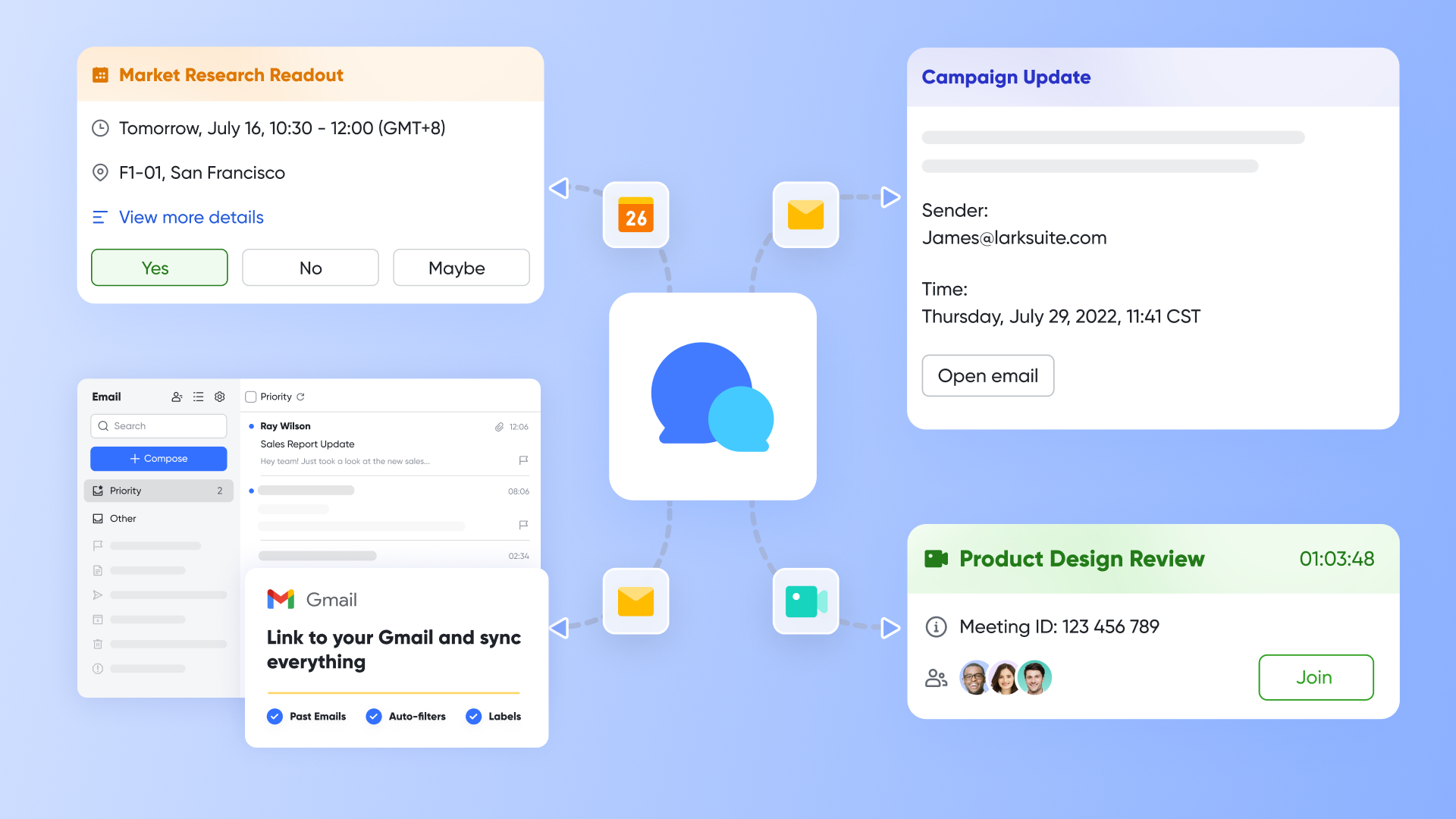
AI marketing automation often involves collaboration between marketing, sales, data analytics, and IT teams. 's all-in-one suite, leveraging and , creates a central hub for these diverse groups to communicate and coordinate. For example, during the planning phase of an AI-driven personalization campaign, marketing and data teams can hold real-time discussions in , and immediately bring in sales for feedback via a Lark Meeting, ensuring everyone is aligned on objectives and execution. This level of streamlined communication helps overcome silos that can hinder complex AI initiatives.
Centralized knowledge management
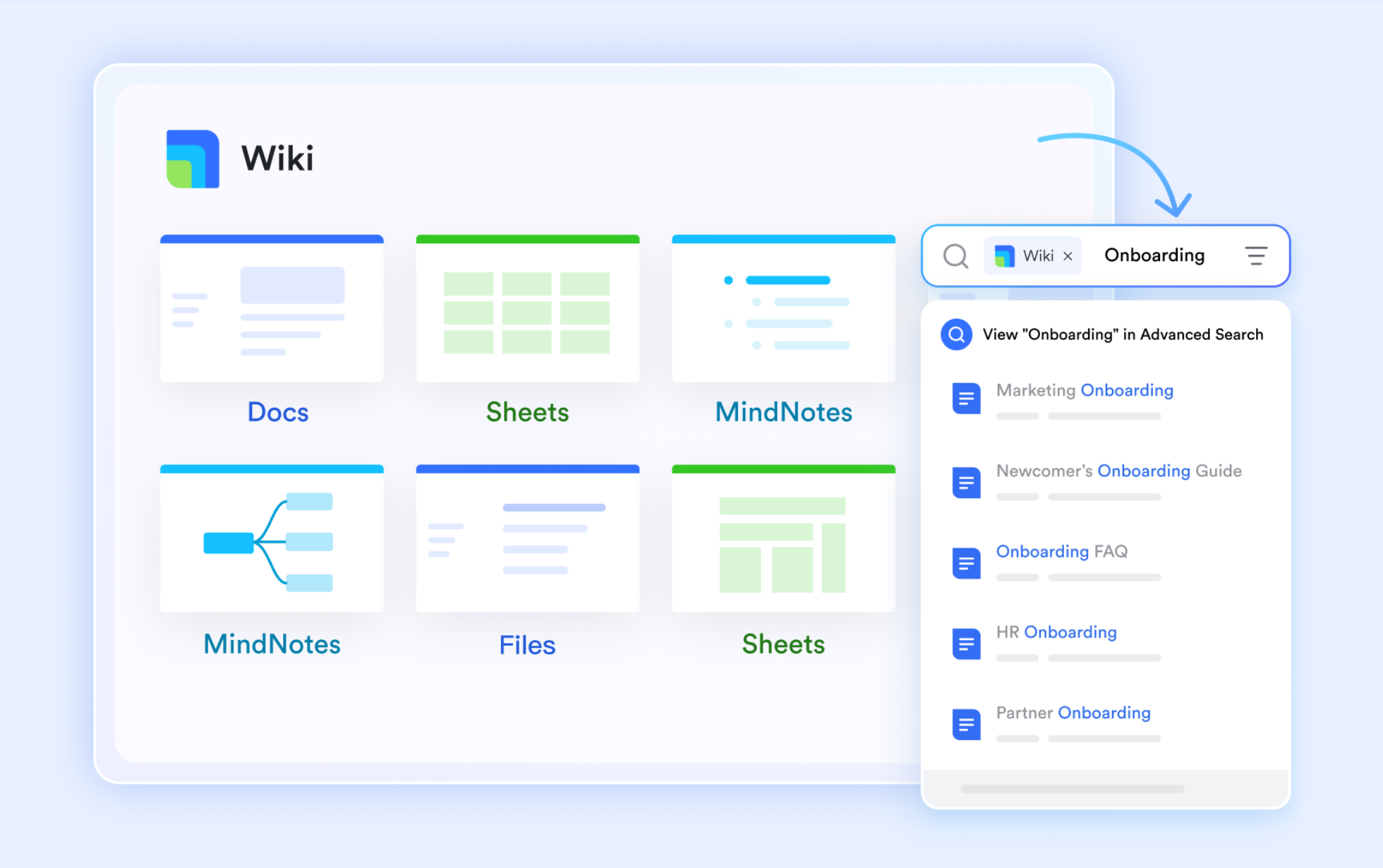
AI best practices, data insights, campaign strategies, and tool usage guidelines are critical assets for any marketing team. Lark's cloud-native & functions serve as excellent repositories for this knowledge. Teams can create dynamic guides in on 'how to leverage AI for lead scoring' or store analytical reports generated by AI tools within a , making them easily searchable and accessible to everyone. This ensures that valuable insights are not lost and that team members can quickly find the information they need to effectively use AI in their daily work.
Streamlining review and approval workflows
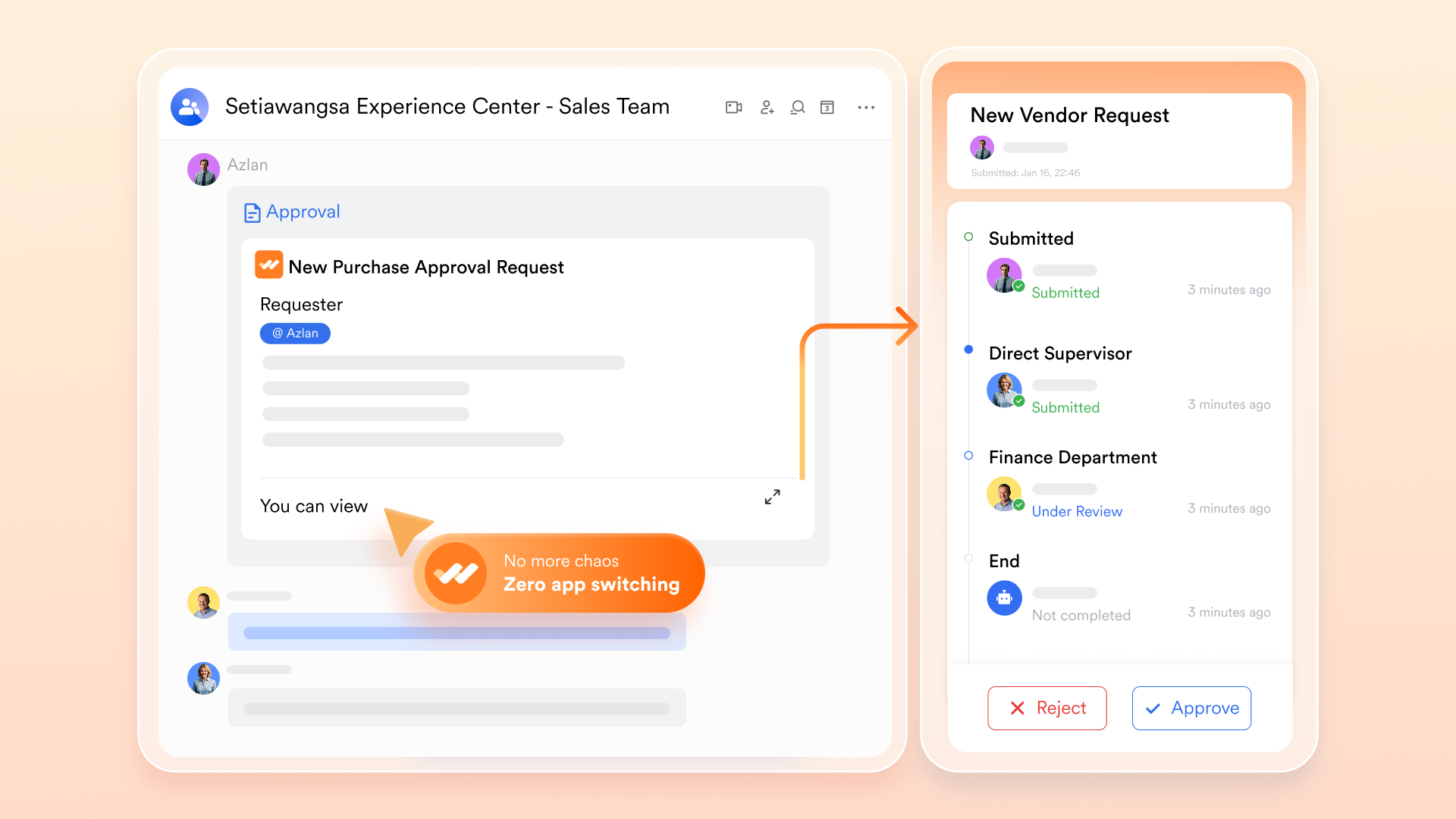
Marketing campaigns, especially those powered by AI, often require multiple rounds of review and approval before launch. Lark's automation tools, including its function, can significantly accelerate these processes. For instance, a marketing team can set up an automated workflow within where AI-generated content or campaign proposals are automatically routed to relevant stakeholders for review. Once approved, the system can automatically transition to the next predefined stage in the campaign launch, reducing delays and ensuring faster campaign deployment and iteration. This allows marketing teams to be more agile and responsive, leveraging AI's speed to its full potential.
Whether you're a small team just getting started or a large enterprise in need of advanced security and unlimited scaling, Lark offers flexible plans designed to grow with your business. Explore the options below to compare features and find the perfect fit for your team's needs and budget.
:
- Starter plan: that includes 11 powerful tools for up to 20 users. It also comes with 100GB of storage space, 1000 automation runs, AI translations, and more. No credit card needed.
- Basic plan: (billed annually) for up to 500 users. It includes everything in Starter and unlimited message history, 5TB of storage space, 1,000 automation runs, and more. Some users may need to to purchase this plan.
- Pro plan: (billed annually) for up to 500 users. It includes everything in Basic plus group calling for up to 500 attendees, 15TB of storage space, 50,000 automation runs, and more.
- Enterprise plan: for custom pricing. Supports unlimited users and includes even more automation runs and advanced security, compliance, and management features.
For small teams with simple communication needs

18 months message history
1000 Base automation runs/month
2000 rows per table in Base
Most POPULAR
For companies with comprehensive collaboration and management needs
Unlimited message history
500-participant video meetings
50k Base automation runs/month
20k rows per table in Base
For large companies with advanced security and organizational management needs
Get a personalized demo and pricing
Unlimited message history
500-participant video meetings
15 TB storage + 30 GB storage/user
500k Base automation runs/month
50k Base automation runs/month
Most POPULAR
For companies with comprehensive collaboration and management needs
Unlimited message history
500-participant video meetings
50k Base automation runs/month
20k rows per table in Base
The future of marketing: Agentic AI and beyond
The evolution of AI in marketing continues at a rapid pace, with "agentic AI" representing a significant upcoming development.
Agentic AI refers to AI systems that can autonomously perform multi-step tasks and interact across various systems and channels with minimal human oversight. Unlike current AI tools that assist humans in specific tasks, agentic AIs will be capable of taking initiative, planning, and executing complex end-to-end. For instance, an agentic AI could potentially identify a new market trend, devise a content strategy to capitalize on it, create the content, schedule its distribution across multiple platforms, and then analyze its performance, making adjustments—all without constant human intervention. This signifies a shift towards highly autonomous marketing systems where human marketers focus more on strategic vision and ethical oversight rather than day-to-day execution.
Looking further ahead, we can anticipate continued advancements in multimodal AI, capable of processing and generating content across text, image, audio, and video, leading to even richer and more interactive personalized experiences. Ethical considerations around data privacy and AI bias will also become increasingly central to development and regulation. The continued evolution will empower marketers to achieve deeper customer understanding and unprecedented levels of campaign optimization, transforming the landscape of digital marketing.
Conclusion
AI marketing automation reshapes marketing with unparalleled personalization, efficiency, and data-driven decisions. Despite adoption challenges, its strategic benefits, from tailored customer journeys to optimized campaigns, are clear. As AI matures, it will empower marketing teams, freeing human creativity for strategic work. Embracing AI is vital for redefining customer connections in our dynamic digital world. To fully empower your AI-driven marketing team and unlock these benefits, consider a unified platform like .
Transform marketing with AI via Lark
FAQs
What is the difference between marketing automation and AI marketing automation?
Marketing automation uses predefined rules to execute repetitive tasks, such as sending welcome emails. AI marketing automation goes a step further by using machine learning and predictive analytics to learn from data, adapt strategies in real-time, and make intelligent decisions without constant human intervention, leading to more personalized and effective outcomes.
How can small businesses start using AI in marketing automation?
Small businesses can begin by focusing on specific pain points. They might start with AI-powered tools for email subject line optimization, basic customer segmentation, or chatbot support for customer service. The key is to begin with manageable projects, collect data, and learn iteratively, rather than attempting a large-scale overhaul immediately.
What are the ethical considerations of using AI in marketing?
Ethical considerations include data privacy, ensuring transparency in AI's decision-making process, avoiding algorithmic bias that could lead to unfair targeting, and maintaining consumer trust. Businesses must prioritize ethical data handling and ensure their AI applications align with regulatory standards and consumer expectations.
How much does AI marketing automation cost?
The cost of AI marketing automation varies widely depending on the complexity of the tools, the scale of implementation, and the vendor. Basic AI features might be included in existing marketing platforms, while advanced, custom AI solutions can involve significant investment in software, data infrastructure, and specialized talent. Many SaaS providers offer tiered pricing, often with free or low-cost starter plans, such as Lark's Free Forever plan for up to 20 users.
How can AI automations (like AI agents) be used in marketing?
AI automations, particularly agentic AI, can perform multi-step marketing workflows autonomously. This includes tasks such as identifying market trends, creating tailored content, scheduling its distribution across various channels, and analyzing performance for continuous optimization. They can manage complex customer journeys from initial engagement through to conversion and retention, adapting strategies in real-time based on live data and predefined objectives. can support this kind of autonomous workflow by helping teams manage recurring tasks such as campaign research, content preparation, follow-up coordination, reporting, and performance review while marketers stay focused on strategy and creative direction.
What tools for AI automation in sales and marketing do you use, and why?
The specific tools used for AI automation in sales and marketing vary widely based on business needs, existing infrastructure, and budget. Common categories include predictive analytics platforms for lead scoring and customer segmentation, AI-powered content generation tools for dynamic messaging, conversational AI platforms for chatbots and virtual assistants, and robust marketing automation platforms that incorporate AI capabilities for campaign optimization. The selection of tools is typically driven by the need to enhance personalization, improve operational efficiency, and gain deeper data-driven insights.
What are the most effective ways to make AI part of marketing automation systems?
The most effective approaches involve a phased strategy. First, ensure a solid data foundation with clean, accessible data. Second, identify specific pain points or areas where AI can deliver clear value, such as optimizing email send times or personalizing product recommendations. Third, begin with pilot projects to test and refine AI applications before scaling. Fourth, focus on upskilling marketing teams to work effectively with AI tools and interpret AI-generated insights. Finally, establish clear metrics to measure the ROI of AI initiatives and continuously iterate based on performance data.
Related Reading