














Top 12 Marketing Tools for Small Businesses in 2026

Matthew Sia
Product Marketing Manager
Sep 18, 2026
Matthew Sia
Sep 18, 2026


10 min read


Effective marketing is a necessity for small businesses. The right marketing strategies can elevate a small business from obscurity to recognition, helping build a loyal customer base and drive sales. However, many small businesses face significant challenges when it comes to marketing, largely due to limited resources, time constraints, and a lack of access to the right tools.
Without the proper marketing tools for small businesses, owners often struggle to create an online presence, connect with their audience, and measure the effectiveness of their campaigns. This article explores essential marketing software that can empower small businesses to overcome challenges, streamline efforts, and thrive in a competitive landscape.
Understanding marketing needs for small businesses
Identifying unique marketing needs
Small businesses have distinct marketing needs that differ from those of larger companies. These needs are shaped by budget constraints, target audiences, and marketing goals. While large corporations can afford extensive marketing campaigns, smaller businesses must prioritize cost-effective strategies to achieve their objectives.
To succeed, small business owners need to understand their marketing challenges. This includes clarity on their target audience, defining their brand identity, and setting specific goals. Whether it’s increasing website traffic, building brand awareness, or generating leads, having a focused strategy is key.
Various marketing types relevant to small businesses
- Digital marketing: This includes online efforts like search engine optimization (SEO), pay-per-click advertising (PPC), and email campaigns. Digital marketing allows small businesses to reach a wider audience without the high costs of traditional advertising.
- Content marketing: Producing quality content helps businesses engage their audience, drive traffic, and establish authority. This can include blog posts, videos, infographics, and more, tailored to the interests of the target demographic.
- Social media marketing: Engaging with customers through platforms like Facebook, Instagram, and LinkedIn is vital. Social media helps small businesses connect personally with customers, share their brand story, and foster community engagement.
- Influencer marketing: Collaborating with influencers can expand a business’s reach. Micro-influencers, in particular, can be cost-effective and create authentic connections with their audience. To get started, small businesses can browse a curated list of the best influencer marketing agencies to find a partner that fits their budget and niche.
Understanding these needs and leveraging various marketing types are crucial for small businesses seeking visibility and growth. Each type serves a specific purpose and can be tailored to meet unique business goals.
The importance of understanding marketing needs
Recognizing and addressing these marketing needs not only aligns efforts but also influences tool selection. By focusing on what resonates with their audience and tackling pain points, small businesses can create targeted campaigns that yield results. This insight empowers entrepreneurs to make informed decisions on resource allocation, ensuring investment in the right marketing management software and strategies.
Criteria for selecting marketing tools
When exploring marketing tools for small businesses, it's essential to consider several criteria to ensure the chosen tools align with business goals and improve operational efficiency. Here are key factors to weigh when selecting marketing software products:
1. Budget constraints
Many small businesses operate within tight budgets, making cost a significant factor in tool selection. Evaluating each tool’s pricing structure is crucial. Look for affordable options that offer good value without sacrificing quality. Many tools feature free or trial versions, allowing small businesses to assess their effectiveness without financial risk.
2. Ease of use and integration
User-friendliness is vital. If a tool is complex or requires extensive training, it may lead to frustration among team members and decreased productivity. Choose tools with intuitive interfaces and strong customer support.
3. Scalability for future growth
As small businesses grow, their marketing needs will evolve. It’s crucial to select tools that can scale with the business. Lark is a good choice for your growing team and it’ll be introduced in detail in the following part. Choosing software that offers additional features or higher-tier plans as the business expands can help avoid frequent tool changes or complicated migrations in the future.
4. Availability of support and resources
A robust support system can make a significant difference when adopting new marketing software platforms. Look for providers offering comprehensive technical support, tutorials, and community resources. User guides and helpful customer service can help teams quickly get up to speed and troubleshoot issues effectively.
By carefully considering these criteria, small businesses can select automated marketing tools that meet their current needs while supporting long-term growth.

Top 12 marketing tools for small businesses
When it comes to the best marketing software for small businesses, one platform truly stands out: Lark. Lark is an all-in-one collaboration and productivity tool designed to streamline communication, project management, and marketing efforts. Here’s why Lark deserves a top spot among marketing platforms for small businesses:
1. Lark
Lark is a versatile all-in-one platform specifically crafted to meet the diverse needs of small businesses. As entrepreneurs juggle multiple responsibilities, Lark integrates various functions into one cohesive environment. Businesses can avoid the fragmentation associated with using multiple marketing software tools. Here’s what makes Lark the best marketing tool for small businesses:
1. Task Management and Productivity Enhancement:
With built-in task management tools, one of Lark’s products, Lark OKR, enables teams to track business goals such as customer engagement, sales growth, and campaign reach. This feature is particularly beneficial for small businesses that may not have access to dedicated project management software. By streamlining task assignments and status updates, Lark empowers teams to focus on execution rather than getting bogged down in administrative tasks.
2. Document Creation and Sharing:
Lark’s cloud-based document editing capabilities enable users to create, edit, and share documents in real-time. Whether drafting marketing plans, brainstorming content ideas, or preparing presentations, teams can collaborate effectively. This functionality ensures that everyone has access to the latest versions of documents, reducing miscommunication and version control issues associated with traditional file-sharing methods.
3. Built-In Calendar and Scheduling:
Lark features an integrated calendar that works seamlessly with its other tools. This functionality allows businesses to manage meetings, set reminders, and keep track of important deadlines all in one place. Teams can easily sync their schedules, making it effortless to plan and coordinate marketing campaigns or content releases.
4. Data Optimization and Analytics:
Lark Base supports data visualization analysis, empowering small businesses to make informed decisions about their marketing strategies. With the ability to integrate data from various sources, Lark provides valuable insights that help businesses understand performance metrics and customer engagement. This feature is vital for optimizing marketing efforts with strategic marketing software.
5. Extensive Integrations:
Designed for flexibility, Lark allows integration with various third-party applications, enabling businesses to customize their workflows according to specific needs. Whether it’s connecting with CRM systems, email marketing tools, or analytics software, Lark offers the adaptability to create a tailored solution that enhances overall business efficiency.
6. User-Friendly Interface:
One of Lark's most appealing aspects is its intuitive user interface. It's improving the web design, designed with usability in mind, allowing both tech-savvy individuals and those less familiar with technology to navigate the platform easily. This accessibility reduces the learning curve, ensuring that all team members can leverage the platform’s features without requiring extensive training. 🌟You can visit Lark Help Centre for all your questions.
7. Affordability:
Lark offers various pricing plans, including a generous free tier, making it a cost-effective solution for small businesses. This affordability allows startups and growing businesses to access top marketing software without straining their budgets, maximizing the effectiveness of their small business marketing automation tools.
Lark takes user security seriously and implements robust measures to protect data. Features like data encryption, secure file sharing, and adherence to various regulations ensure that small businesses can trust that their sensitive information remains protected.
2. Mailchimp
 Image source: freepik.com
Image source: freepik.comCategory: Email marketing tool
Purpose: Mailchimp is designed to create, send, and analyze email marketing campaigns.
Advantages:
- User-friendly interface: Easy to navigate, even for beginners.
- Automated campaigns: Allow for automation of email sequences based on user behavior.
- Comprehensive analytics: Offers detailed reports on open rates, click-through rates, and subscriber engagement.
How businesses can use it: Partnering with an experienced email marketing agency can further optimize these campaigns by leveraging advanced segmentation, automation, and retention strategies proven to maximize engagement and ROI.
3. Hootsuite
 Image source: hootsuite.com
Image source: hootsuite.comCategory: Social media management tool
Purpose: Hootsuite helps businesses manage their social media profiles, schedule posts, and analyze campaign performance.
Advantages:
- Centralized management: Users can monitor multiple social media accounts from one dashboard.
- Scheduling features: Allows for pre-scheduling posts across various platforms.
- Analytics reporting: Provides insights into social media performance, audience engagement, and content effectiveness.
How businesses can use it: Small businesses can leverage SEMrush to optimize their website for search engines, develop content strategies that drive traffic, and understand competitive positioning. They can also work alongside a Local SEO agency to strengthen their visibility in nearby search results and attract more customers from their local area.
4. Canva
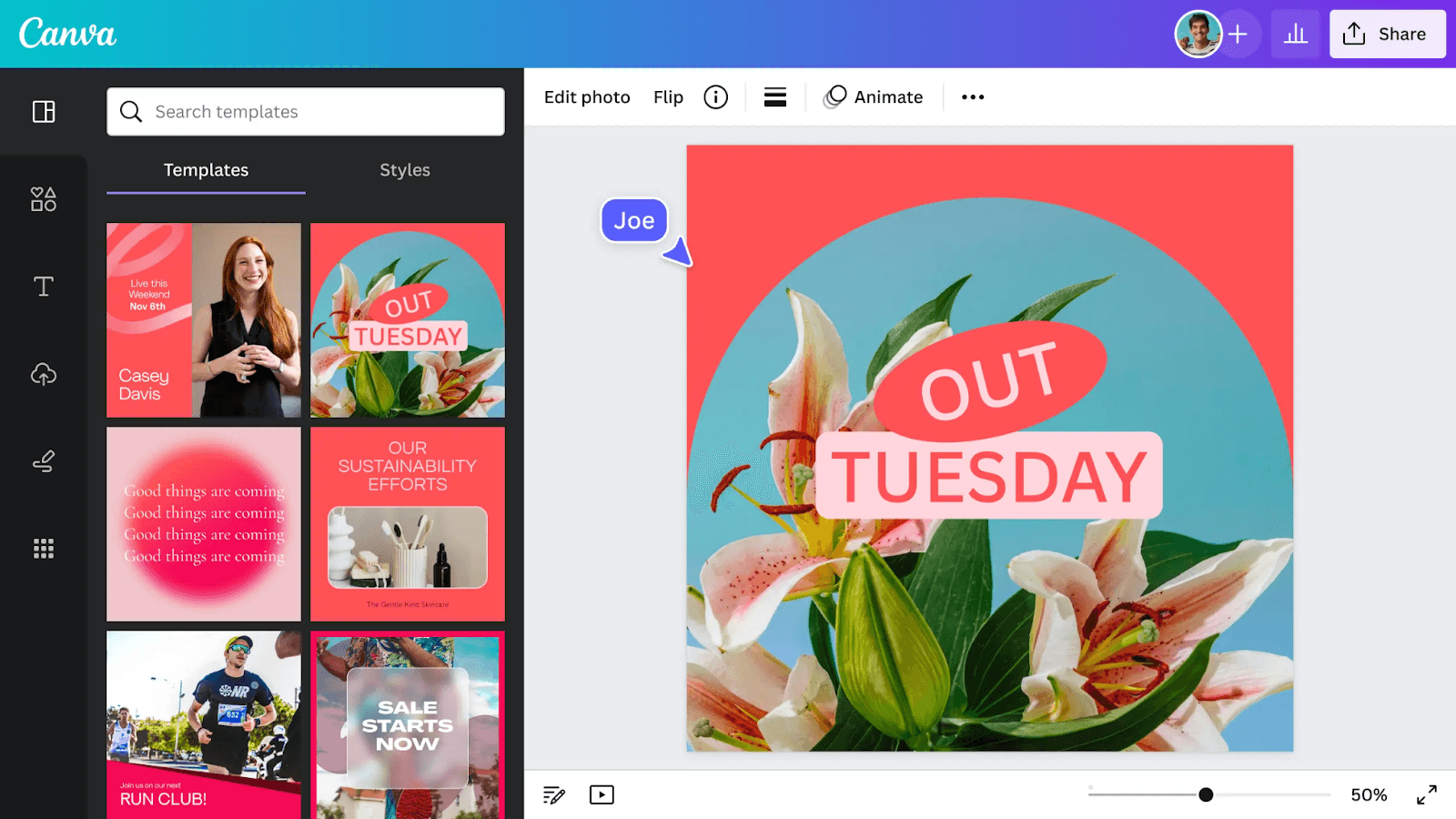 Image source: canva.com
Image source: canva.comCategory: Graphic design tool
Purpose: Canva enables users to create visually appealing graphics for social media, presentations, and marketing materials.
Advantages:
- Templates and resources: Offers a vast library of templates and design elements.
- User-friendly: Intuitive drag-and-drop interface makes it accessible for non-designers.
- Collaboration features: Teams can work on designs together in real-time.
How Businesses Can Use It: Small businesses can use Canva to create professional-quality marketing materials, such as social media posts, flyers, and infographics, without the need for graphic design expertise. Small businesses can make these marketing materials more actionable by adding branded QR codes that connect flyers, brochures, and social campaigns to websites, landing pages, offers, or other digital experiences while keeping the visual identity consistent.
5. SEMrush
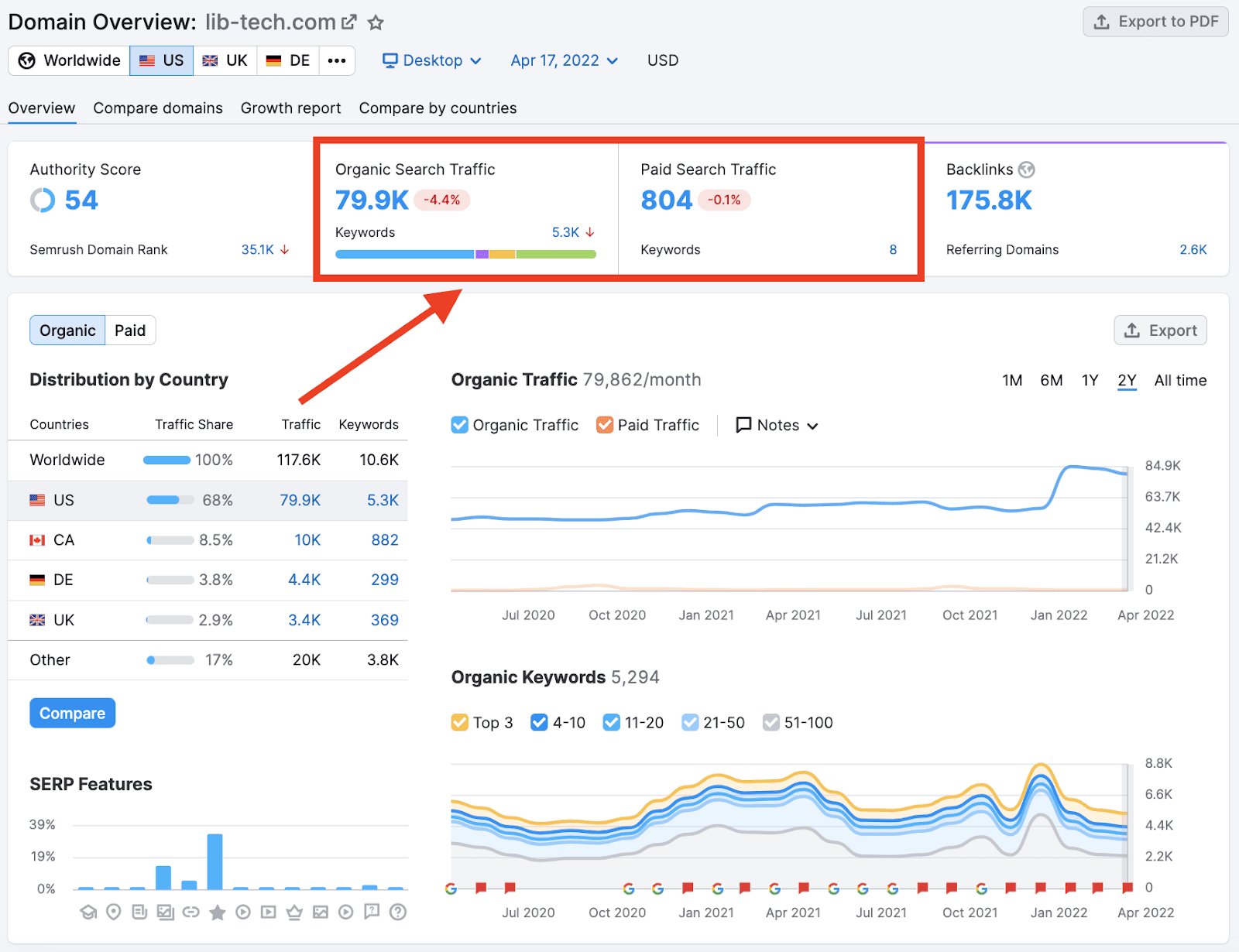 Image source: semrush.com
Image source: semrush.comCategory: SEO and marketing analytics tool
Purpose: SEMrush provides insights into SEO performance, competitor strategies, and keyword research.
Advantages:
- Comprehensive Tools: Covers SEO, PPC, content marketing, and social media analytics.
- Competitor Analysis: Allows businesses to track competitor traffic and keyword strategies.
- Keyword Research: Helps identify high-performing keywords to improve search rankings.
How Businesses Can Use It: Small businesses can leverage SEMrush to optimize their website for search engines, develop content strategies that drive traffic, and understand competitive positioning.
6. Google Analytics
 Image source: google.com
Image source: google.comCategory: Web analytics tool
Purpose: Google Analytics tracks and reports website traffic and user behavior.
Advantages:
- Comprehensive tools: Covers SEO, PPC, content marketing, and social media analytics.
- Competitor analysis: Allows businesses to track competitor traffic and keyword strategies.
- Keyword research: Helps identify high-performing keywords to improve search rankings.
How businesses can use it: Small businesses can leverage SEMrush to optimize their website for search engines, develop content strategies that drive traffic, and understand competitive positioning.
7. Sprout Social
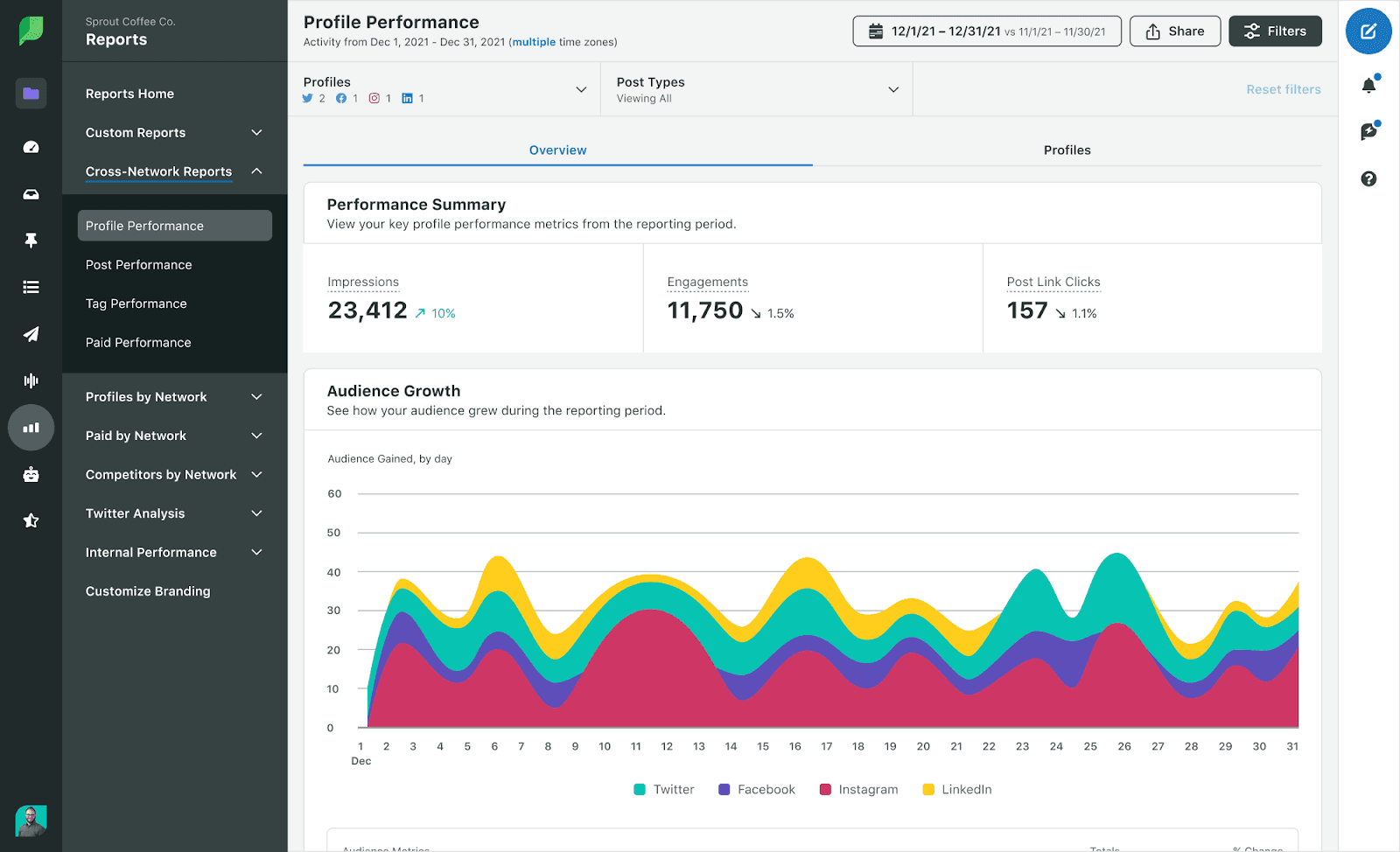 Image source: sproutsocial.com
Image source: sproutsocial.com Category: Social media management tool
Purpose: Sprout Social is designed to help businesses manage their social media presence and engage with their audience.
Advantages:
- Advanced analytics: Offers robust reporting tools to measure social media performance.
- Engagement features: Allows users to manage messages and comments from multiple networks.
- Scheduling and publishing: Simplifies the posting process with scheduling options.
How businesses can use it: Small businesses can utilize Sprout Social to enhance customer engagement on social media, analyze campaign performance, and manage their social media strategy effectively.
8. HubSpot CRM
 Image source: hubspot.com
Image source: hubspot.comCategory: Customer relationship management (CRM) tool
Purpose: HubSpot CRM assists businesses in managing customer interactions and data throughout the customer lifecycle.
Advantages:
- Free version available: Provides essential CRM features at no cost.
- Easy to use: Intuitive interface makes it accessible for all team members.
- Integration capabilities: Connects seamlessly with other marketing tools and platforms.
How businesses can use it: Small businesses can use HubSpot CRM to track leads, manage customer relationships, and automate marketing tasks, allowing for more effective communication and retention strategies.
9. Ahrefs
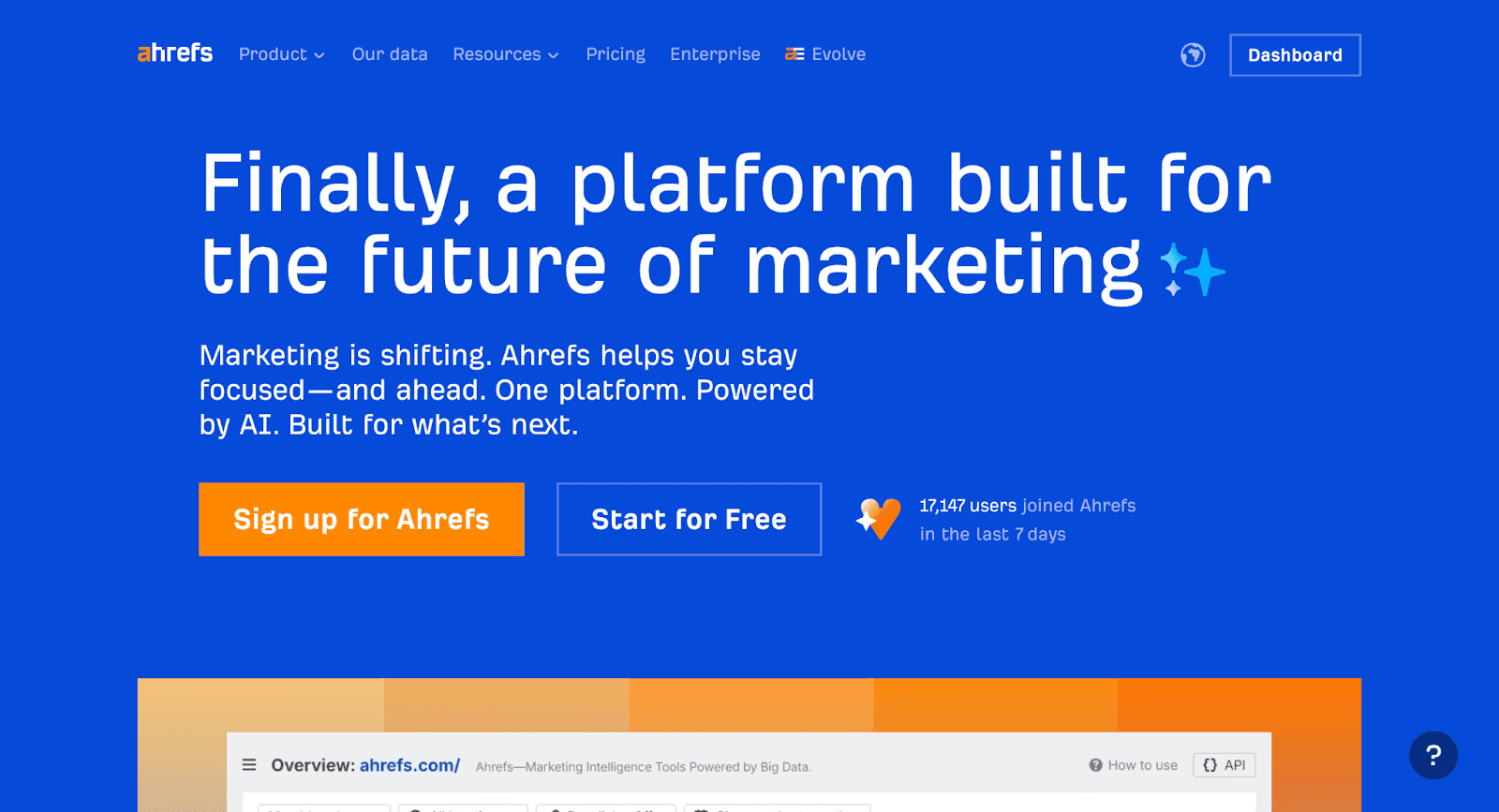 Image source: ahrefs.com
Image source: ahrefs.comCategory: SaaS Marketing Platform
Purpose: Ahrefs helps marketers and businesses boost online brand discoverability using advanced AI and 15+ years of real-world web data, adapting to modern search, social, and AI-driven platforms.
Advantages:
- Comprehensive Brand Visibility: Track presence across AI-generated answers, search engines, and the wider web, including platforms like ChatGPT and Google AIOs.
- Strategic Market Intelligence: Analyze competitors’ traffic, content, backlinks, and keyword strategies to identify opportunities and market gaps.
- AI-Enhanced Content Creation: Leverage AI insights to plan, optimize, and produce content that resonates and ranks without losing creative control.
How businesses can use it: Businesses can centralize digital marketing efforts by tracking their and competitors’ online visibility, optimizing content strategies with AI-driven insights, and managing SEO health efficiently—all from one intuitive platform designed for fast adaptation in evolving digital landscapes.
10. Sendinblue
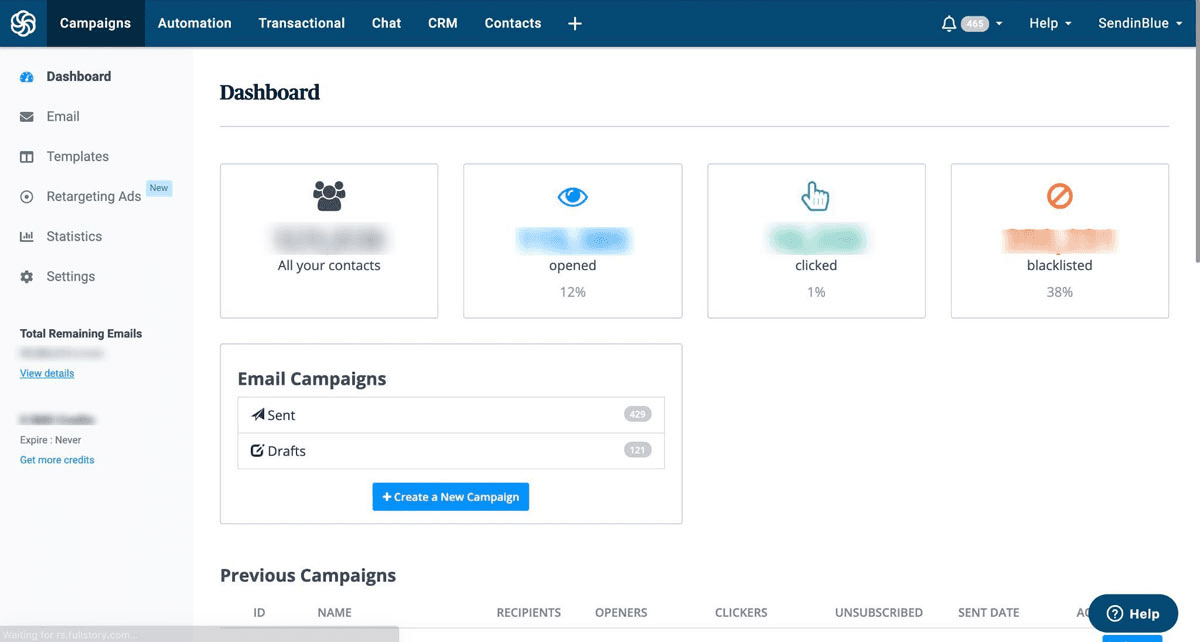 Image source: digidop.com
Image source: digidop.comCategory: Email marketing and marketing automation tool
Purpose: Sendinblue combines email marketing and SMS marketing, providing a comprehensive platform for managing customer communications.
Advantages:
- Multi-channel marketing: Users can send emails, SMS, and manage chat directly through the platform, allowing for an integrated approach to customer outreach.
- Automation features: Sendinblue offers robust automation capabilities, enabling businesses to set up workflows based on user behavior and engagement.
- Cost-effective pricing: It provides competitive pricing plans, including a free tier that allows businesses to send a limited number of emails monthly without any costs.
How businesses can use it: Small businesses can use Sendinblue to create targeted email campaigns for promotions, newsletters, and customer engagement. The platform allows automated follow-ups based on user actions, ensuring timely communication. Additionally, businesses can segment their audience to tailor messages specifically to different groups, enhancing the effectiveness of their marketing efforts.
11. GPTZero
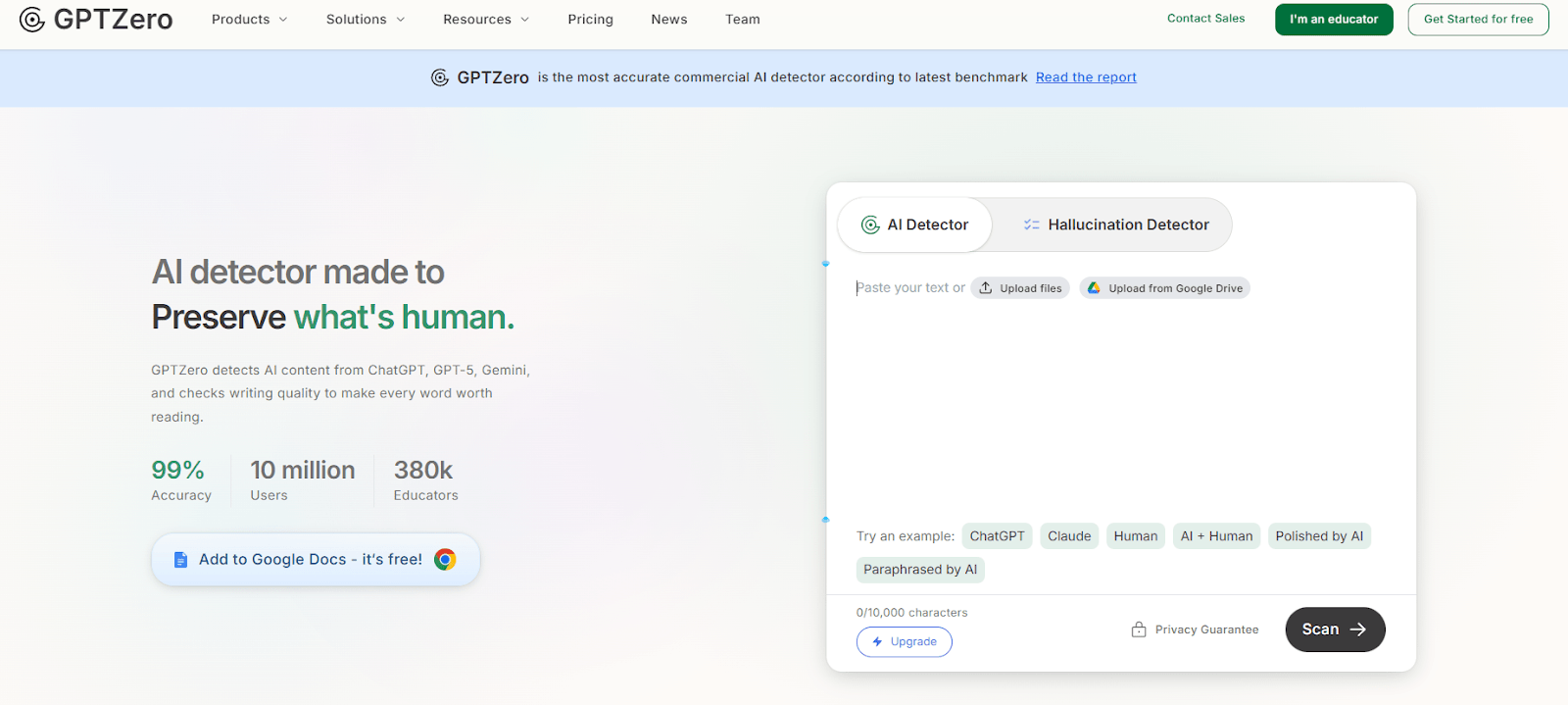
Image source: gptzero.me
Category: AI content detection and writing analysis tool
Purpose: GPTZero is the industry-standard AI detector for identifying AI-generated text and ensuring content authenticity in a landscape dominated by LLMs.
Advantages:
- Multi-model detection: It accurately identifies text generated by ChatGPT, GPT-4, Claude, Gemini, and other major AI models.
- Deep analysis reports: Beyond a simple "AI vs. Human" score, it provides a "burstiness" and "perplexity" analysis, highlighting specific sentences that appear machine-generated.
- Writing reports & Google Docs integration: Offers a unique "Origin" feature that tracks the writing process in real-time, proving human authorship through version history and typing patterns.
- High accuracy for marketing content: Specifically calibrated to distinguish between professional marketing copy and generic AI-produced filler.
How businesses can use it: Small businesses and content teams can use GPTZero to maintain the integrity of their brand voice. By scanning guest posts, SEO articles, or freelancer submissions, owners can ensure their content remains original and won't be penalized by search engines that prioritize "Human-First" helpful content. It is an essential safeguard for maintaining trust with an audience that increasingly values transparency and authentic human connection.
12. Visme
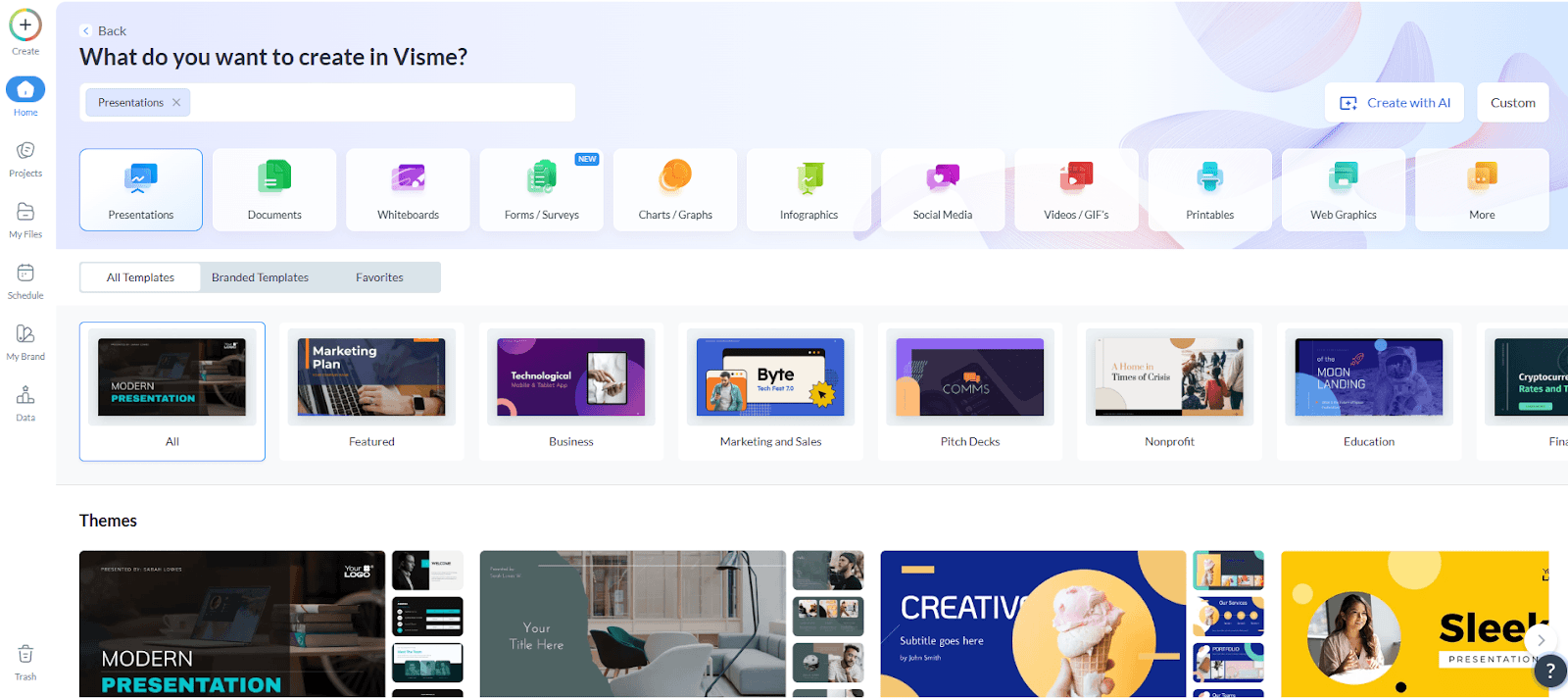
Image source: visme.co
Category: Visual content design platform
Purpose: Visme is designed for non-professionals to create stunning, highly engaging graphics in minutes.
Advantages
- Intuitive interface: Even beginners can effortlessly navigate through the platform.
- Easy drag and drop editor: Edit, improve, and revamp any design in seconds using the easy drag and drop editor.
- Powerful AI features: A comprehensive suite of AI features to accelerate the design process and improve efficiency with just a single prompt.
- Collaborative features: Create and design any project using seamless collaborative features in any remote settings.
How businesses can use Visme: Businesses of all sizes can use Visme’s all-in-one visual content creation suite, including its newly launched AI Sports design tool, to easily create sports-related visuals and design and publish all marketing materials from one place.
The Future of Marketing Tools for Small Businesses
As we look ahead, the landscape of marketing tools for small businesses is rapidly evolving. Emerging trends, such as AI-driven marketing and automation, are reshaping how businesses approach their marketing strategies.
Emerging Trends in Marketing Tools
- AI-Driven Marketing: One prominent trend is the rise of artificial intelligence. AI tools, such as AI image generators, AI image to video tools, are becoming increasingly powerful, enabling small businesses to analyze customer data more effectively and deliver personalized marketing experiences.
- Marketing Automation: Another significant trend is the growing use of small business marketing automation tools such as Lark. These tools help manage repetitive tasks like email campaigns, social media posts, and customer relationship management.
- Data Privacy and Compliance: Future marketing tools will likely include enhanced security features to protect consumer data and ensure compliance with laws such as GDPR.
- Integrative Solutions: There is a growing demand for consolidated marketing platforms. As seen with tools like Lark, businesses are moving toward all-in-one solutions that integrate various functions into a single platform.
Impact on Small Businesses
These trends create both opportunities and challenges for small businesses. Leveraging AI and automation can provide a competitive edge, enabling small businesses to operate more efficiently and respond swiftly to customer needs. However, adopting and adapting to these technologies requires a commitment to ongoing education and flexibility. Small businesses need to remain updated on the latest technologies and be willing to adjust their strategies accordingly.
Lark exemplifies the best marketing tool for small businesses, aligning perfectly with these emerging trends. Its all-in-one platform that integrates communication, project management, and marketing capabilities, making it an invaluable resource for businesses aiming to succeed in a digital age. By incorporating AI-driven features and enhancing collaboration, Lark is positioned to be a game-changer for small businesses navigating the evolving marketing landscape.
Conclusion
In conclusion, adopting the right marketing tools for small businesses is essential for thriving in today’s competitive landscape. With the swift evolution of digital marketing, small businesses must assess their current strategies and explore effective tools like Lark, which streamline operations and enhance marketing efforts.
By embracing automation, AI-driven insights, and integrated solutions, businesses can boost their marketing strategies and foster strong customer relationships. I encourage you to evaluate the top marketing software discussed in this article and consider how they can benefit your business.
As you think about your marketing toolkit, remember that Lark not only facilitates collaboration and productivity but also positions you for future success.
Related Reading
Table of contents
Start using Lark today

Manage all your work in one place
Boost team efficiency by 10x
Save up to 70% on software costs
Table of contents
Start using Lark today
Manage all your work in one place
Boost team efficiency by 10x
Save up to 70% on software costs
Keep reading








2026 Lark Technologies Pte. Ltd.
Headquartered in Singapore with offices worldwide.






Explore: