


Monday vs Jira: Navigating the Best Choice for Your Team's Workflow

Matthew Sia
Product Marketing Manager
Aug 5, 2026
Matthew Sia
Aug 5, 2026

20 min read


Selecting the right project management tool is a critical decision for any team. The right platform can accelerate workflows and improve clarity, while the wrong one can create frustration and hinder progress. When it comes to this important choice, the Monday vs jira debate consistently emerges as a key consideration. These two platforms are both powerful, but they come from different worlds and serve distinctly different core philosophies.
This analysis provides a clear and detailed Monday.com vs jira comparison. It goes beyond a simple feature list to explore the real-world implications of choosing one platform over the other. The discussion will also address a common challenge many teams face: the gap between specialized power and seamless collaboration. For teams seeking a unified environment, we will introduce a third path that integrates the best of both approaches.
What is Monday.com?
Monday.com is a flexible Work Operating System (Work OS) designed to help teams build custom workflow applications and manage all aspects of their work in one visual platform. It functions as a centralized, customizable digital workspace that powers teams to run projects and processes with confidence.
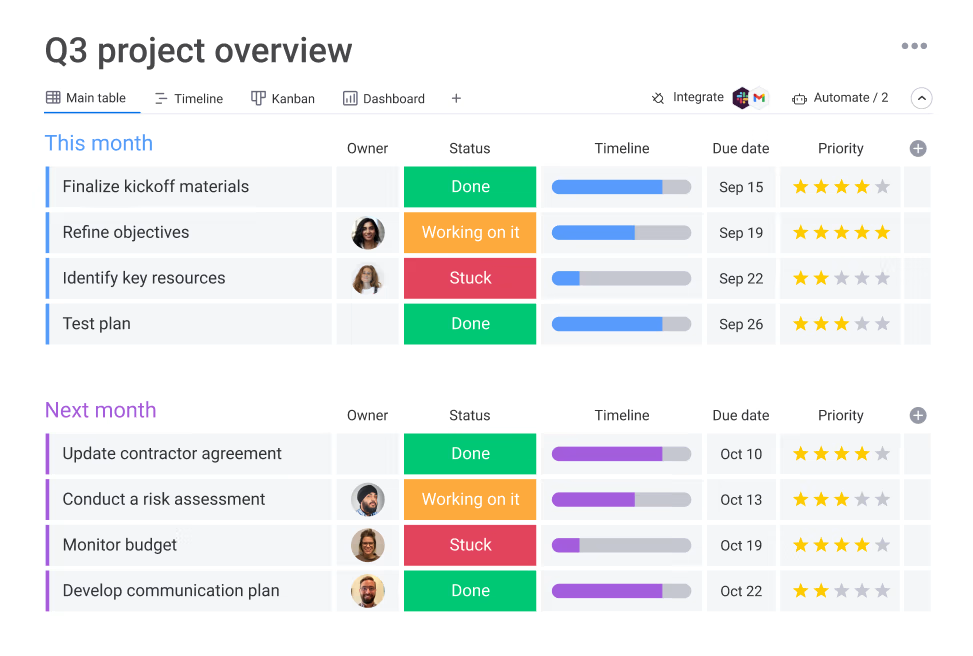
Image source: monday.com
- Core purpose and design: The platform is built around the concept of visual, customizable "boards" which act as the core for managing tasks, projects, and even entire departments. Its interface is known for being user-friendly, colorful, and intuitive, emphasizing ease of use with drag-and-drop functionality. This design philosophy aims to create an engaging experience that teams actually enjoy using.
- Key features: Monday.com provides a suite of tools to visualize work in different ways, including Kanban, Gantt, calendar, and timeline views. It offers robust automation to reduce repetitive manual tasks and dashboard capabilities for real-time insights into key metrics and progress. The platform is also highly integrative, connecting with popular tools like Slack, Google Drive, and Adobe Creative Cloud to create a cohesive workflow.
- Target audience: While versatile, Monday.com is particularly popular with business and operational teams such as marketing, sales, operations, and HR. Its no-code customization makes it accessible for non-technical users to adapt the platform to their specific needs, from managing marketing campaigns to tracking sales pipelines.
What is Jira?
Jira is a powerful project and issue-tracking software developed by Atlassian, originally designed for software development and agile teams. It has evolved into a robust platform that serves as a single source of truth for development work, helping teams plan, track, and release software.
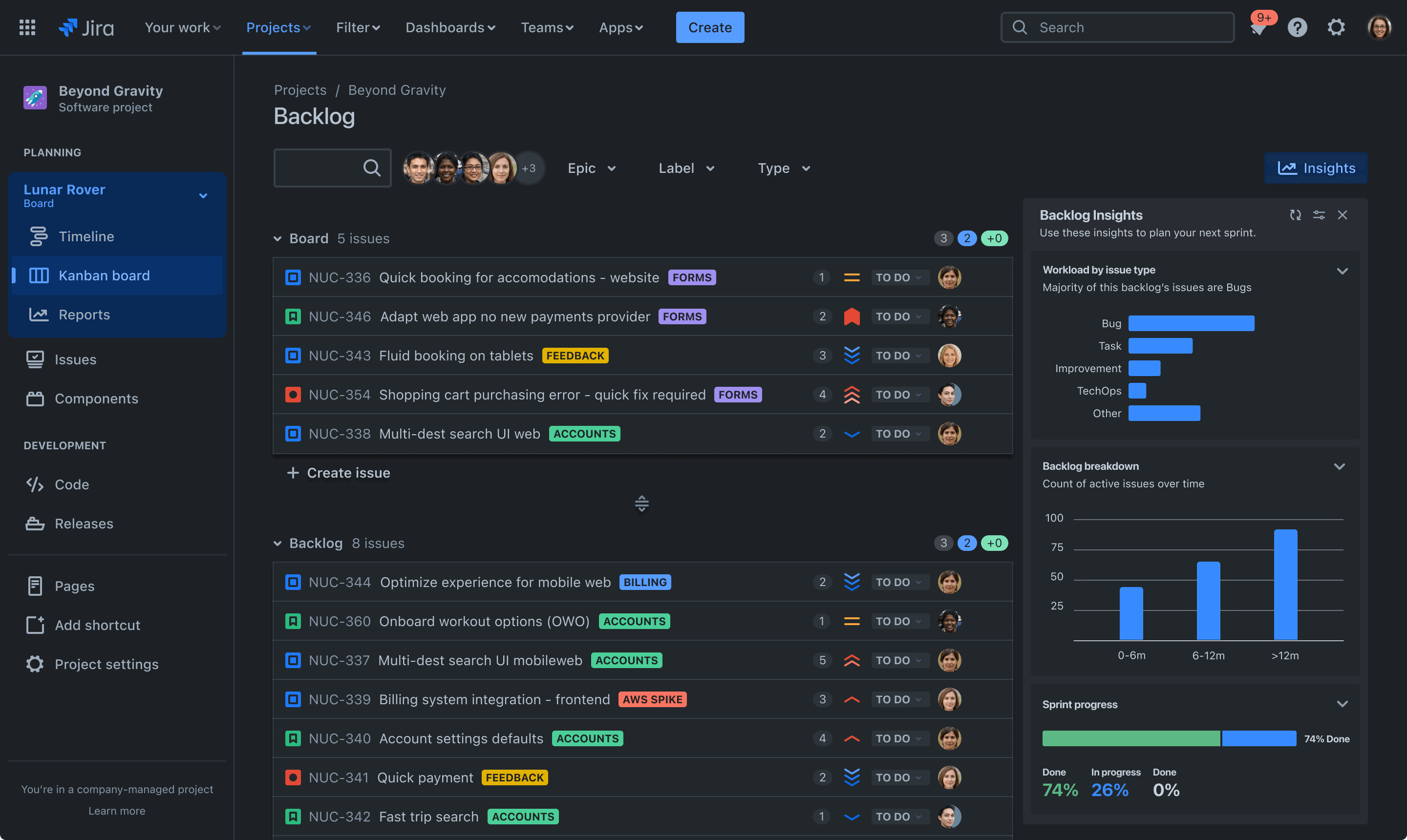
Image source: atlassian.com
- Core purpose and design: Jira's foundation is built on managing "issues," which can represent anything from software bugs and user stories to individual tasks. It natively supports agile methodologies like Scrum and Kanban, providing dedicated boards for sprint planning, backlog grooming, and tracking work through customizable workflows. The platform is known for its depth and flexibility, which can come with a steeper learning curve, especially for non-technical users.
- Key features: Jira offers powerful, customizable workflows that can be tailored to complex development lifecycles. It provides advanced reporting and analytics with out-of-the-box reports like burn-down charts and velocity tracking, offering deep insights into team performance. A key strength is its extensive integration ecosystem, particularly with developer tools like GitHub, GitLab, Bitbucket, and Confluence, creating a seamless trace from code commit to deployment. Furthermore, Jira incorporates AI capabilities (Atlassian Intelligence) to help with tasks like generating summaries, creating reports using natural language, and predicting project risks.
- Target audience: Jira is the industry benchmark for software development, IT, and agile engineering teams. Its terminology and structure are inherently built for developers, making it a powerful choice for teams that practice Scrum or Kanban and need to manage complex software projects.
Core features and functionality compared
To provide a clear visual representation of their core differences, the following table offers an at-a-glance overview of Monday.com and Jira across key functional dimensions. This is followed by an in-depth analysis of critical capabilities, revealing the tangible impact these functional differences have in real-world work scenarios.
A quick glance of features: Monday.com vs Jira
Project visualization and management
Jira's interface is dominated by its agile boards. Scrum and Kanban boards are the default views, perfect for tracking issues, stories, and bugs through a development pipeline. This is a highly efficient system for software teams but can feel foreign to those unfamiliar with agile methodology.
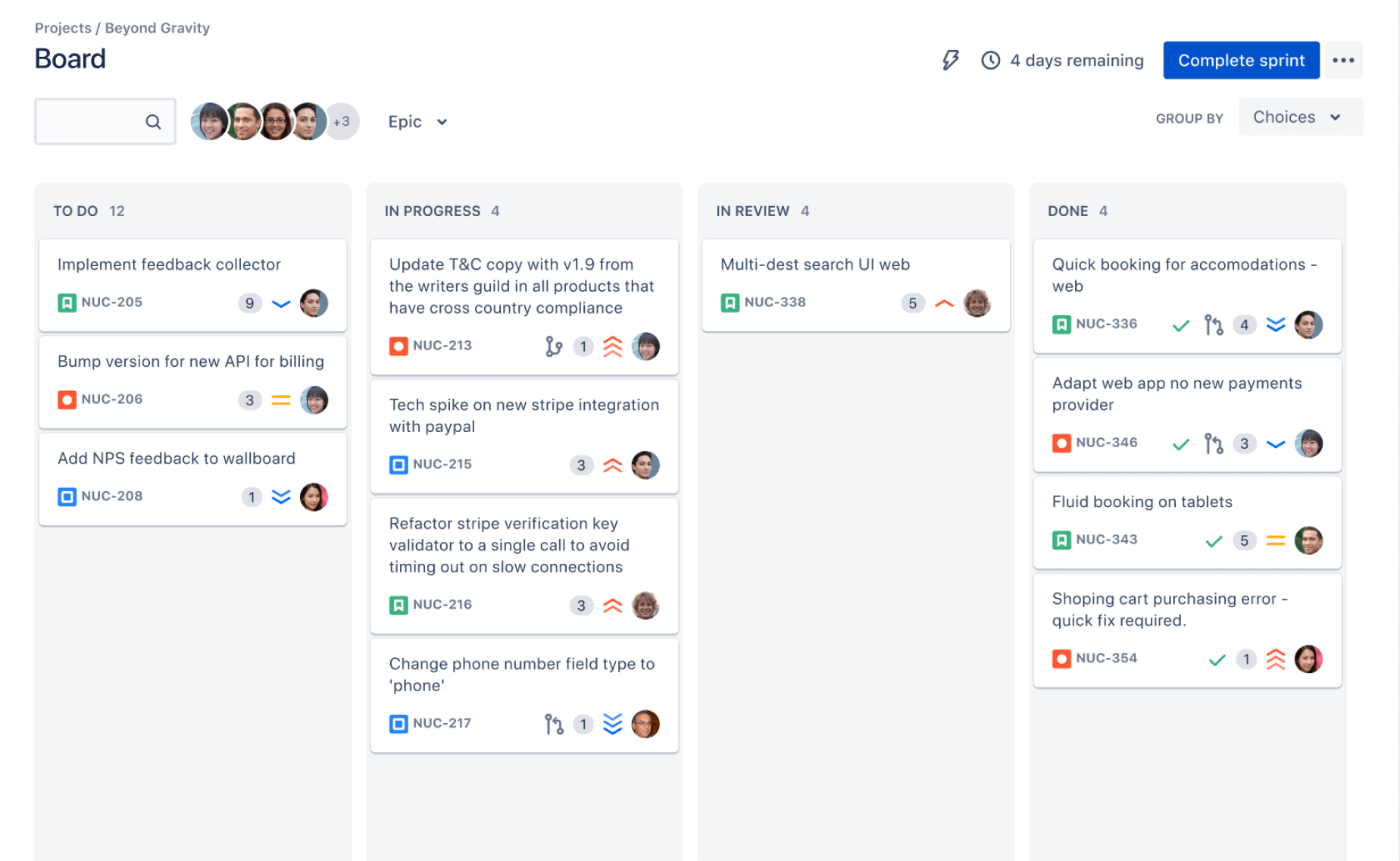
Image source: atlassian.com
Monday.com uses a highly visual and colorful table-based layout as its primary view. It can be easily adapted into Gantt charts, timeline views, and kanban boards. This flexibility makes it easier for business teams to see project status at a glance without learning new project management frameworks.
Customization and workflow capabilities
Jira provides incredibly powerful workflow customization. It allows administrators to define detailed, multi-step processes for different issue types. This is essential for enforcing a specific development lifecycle, such as code review and QA testing protocols. This power comes with complexity, often requiring technical knowledge to set up effectively.
Monday.com focuses on no-code customization. Teams can use building blocks to create automations that handle task assignments, status updates, and notifications. The platform is designed for business users to modify their workflows without needing help from a developer or system administrator.
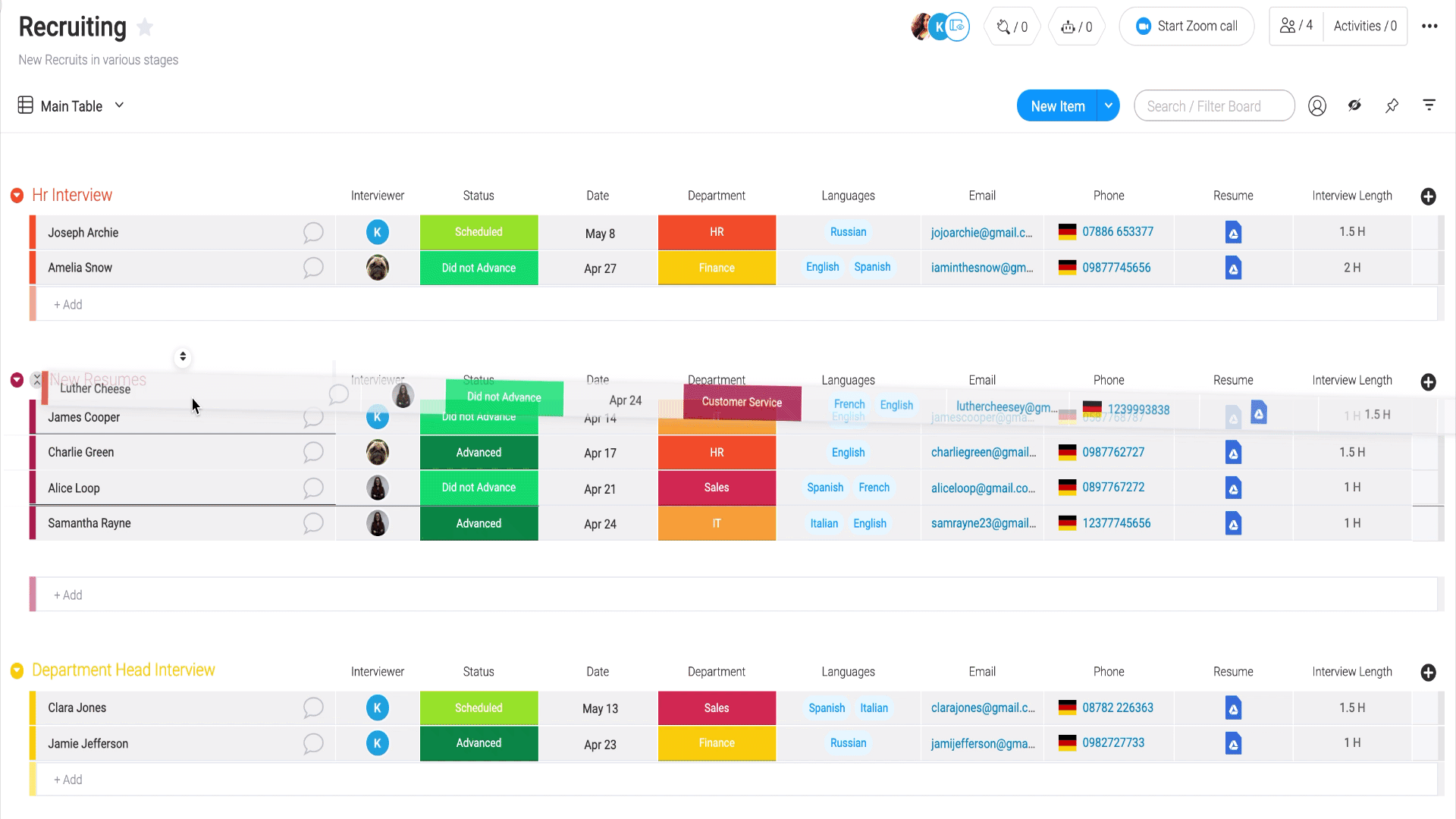
Image source: monday.com
Reporting and analytics features
Jira offers advanced reporting tailored to software development. Teams can generate sprint burndown charts, velocity reports, and cumulative flow diagrams. These metrics are vital for agile teams to measure their performance and predict their capacity.
Monday.com provides strong reporting capabilities focused on business intelligence. Its dashboards can pull data from various boards to create high-level overviews of project progress, resource allocation, and time tracking. This helps managers and teams track key performance indicators across multiple projects.
Integrations and ecosystem
Both platforms boast extensive integration ecosystems. Jira integrates deeply with other developer tools like Bitbucket, Confluence, and a wide range of code repositories and DevOps applications. Its marketplace is rich with add-ons for software development.
Monday.com connects with a broad array of popular business applications, including Slack, Google Drive, Salesforce, and Zoom. This allows teams to connect their project management to their communication, file storage, and customer relationship management tools.
Ease of use and the team learning curve
Jira is known for its steep learning curve. Its interface is dense with features specific to software development. For developers, this is a benefit. For team members in marketing, finance, or design, navigating Jira can be confusing and inefficient. The initial setup and ongoing configuration typically require a technical point person.
Monday.com wins significant points for its user-friendly design. The interface is visually intuitive, which helps new users get started quickly. The barrier to entry is low, and teams can often build their first project boards and begin working with minimal training. This ease of use promotes faster adoption across an entire organization.
The long term impact on productivity is clear. A tool that is difficult to use can slow down collaboration and create resistance among team members. A platform that is easy to understand helps teams focus on their work, not on figuring out the software.

Pricing and total cost of ownership analysis
However, the true cost of any tool involves more than its subscription fee. For Jira, organizations must consider the potential need for a dedicated administrator to configure and maintain the system. The time invested in training non-technical team members can also represent a significant hidden cost. For Monday.com, while the setup is generally faster, teams may find themselves paying for additional integrations to connect their project management with communication apps or detailed document storage. These subscription costs for other required tools can add up, increasing the total cost of ownership.
When evaluating cost, it is wise to consider the entire software ecosystem needed for your team to function effectively, not just the price of a single application.
Ideal use cases: Which tool fits your team?
Choosing between Monday.com and Jira is less about which tool is "better" and more about which tool is a better fit for your team's primary function, processes, and people. A platform that is perfect for one department can become a source of friction for another. The following breakdown will help you match the tool to the team.
Jira: Undisputed choice for software development and agile teams
Jira's DNA is engineered for the world of software development. Its entire structure, terminology, and feature set are built to support agile methodologies and the complex software development lifecycle.
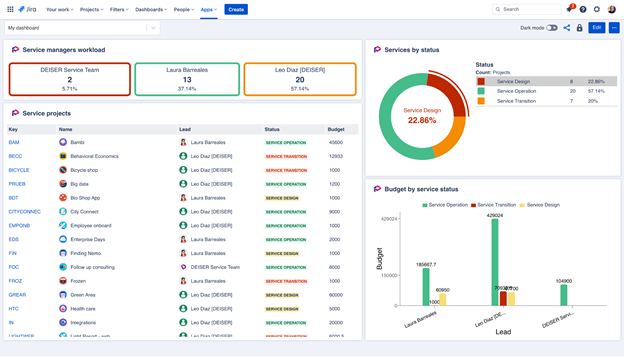
Image source: atlassian.com
Complex sprint and release management: For teams practicing Scrum, Jira provides an unrivaled environment. It allows for detailed sprint planning, backlog grooming, and tracking work through customizable workflows that can include steps like "Code Review," "QA," and "Ready for Deployment." This level of detail is essential for managing the pace and quality of software releases.
- In-depth bug and issue tracking: At its core, Jira is an issue tracker. It excels at allowing developers to log, categorize, prioritize, and assign bugs. Features like linked issues, subtasks, and detailed comment threads create a comprehensive audit trail for every problem, which is critical for maintaining code quality and facilitating root cause analysis.
- Advanced agile reporting: Jira offers reports that are vital for agile teams to inspect and adapt their processes. Sprint burndown charts show the remaining work in a sprint, velocity charts track the amount of work completed per sprint, and cumulative flow diagrams help identify bottlenecks. These metrics are not just data; they are the language of agile continuous improvement.
- Developer-centric ecosystem: Jira integrates natively with a developer's toolkit, including code repositories like Bitbucket and GitHub, CI/CD pipelines, and documentation tools like Confluence. This creates a seamless traceability from a code commit to the user story it implements.
Bottom line: If your team's main output is code and its primary framework is Scrum or Kanban, Jira is a powerful, logical, and industry-standard choice. It provides the structure and depth that engineering teams require.
Monday.com: built for business and operational teams seeking clarity
Monday.com targets teams whose work may not follow a strict agile framework but still requires structure, visibility, and efficiency. It translates complex projects into intuitive, visual workflows that are accessible to all team members, regardless of technical skill.
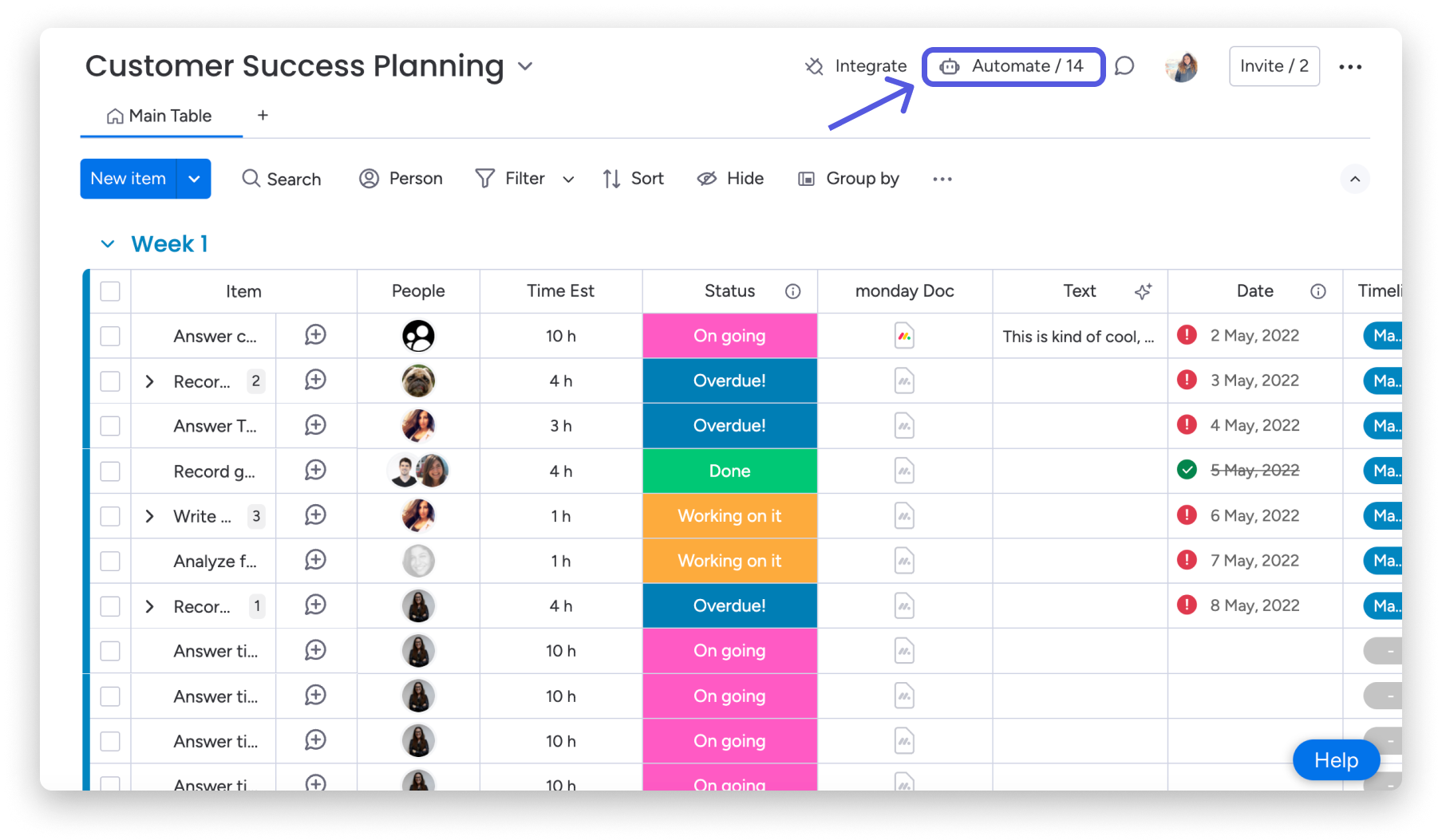
Image source: support.monday.com
- Marketing campaign and creative project management: Marketing teams can use Monday.com to plan entire campaigns, track deliverables from ideation to publication, and manage content calendars. The visual boards and timeline views make it easy to see how different pieces fit together and avoid conflicts or delays.
- Sales pipeline and CRM management: Sales teams can customize a board to act as a visual sales pipeline, tracking leads from first contact to closed deal. They can automate follow-up reminders, assign tasks to team members, and use dashboards to get a real-time view of team performance and forecasts.
- HR and operations processes: From tracking candidate applications during recruitment to managing employee onboarding checklists, Monday.com's flexibility shines. Operational teams can build workflows for budget approval, event planning, or inventory management, ensuring nothing falls through the cracks.
- No-code customization for rapid adaptation: A key advantage for these teams is the ability to build and modify their workflows without relying on developers or IT support. This empowers teams to adapt the tool to their evolving needs quickly and fosters widespread adoption because the platform is easy to understand and use.
Bottom line: If your team is in marketing, sales, HR, or operations and needs a visual, flexible, and user-friendly system to manage projects and processes, Monday.com is an excellent fit. It reduces the learning curve and puts the power of customization in the hands of the business users.
However, many modern organizations are built around hybrid teams that require close collaboration between technical and non-technical members. This is where the sharp divide between Jira and Monday.com can become a significant problem. Using both tools creates silos, while forcing one tool on everyone creates friction. This dilemma highlights the need for a platform designed not just for task management, but for seamless collaboration across different functions.
How a unified platform combines the best of both worlds
When choosing between Monday.com and Jira, teams often face a compromise between the specialized depth of a tool and the fluidity of team collaboration. Monday.com offers a user-friendly visual interface for a wide range of business teams, while Jira provides powerful agile project management capabilities for development teams. What makes Lark unique is that it doesn't simply layer these two functionalities together. Instead, it creates a unified workspace where "the whole is greater than the sum of its parts" through its native features. This is evident in the following core functionalities:
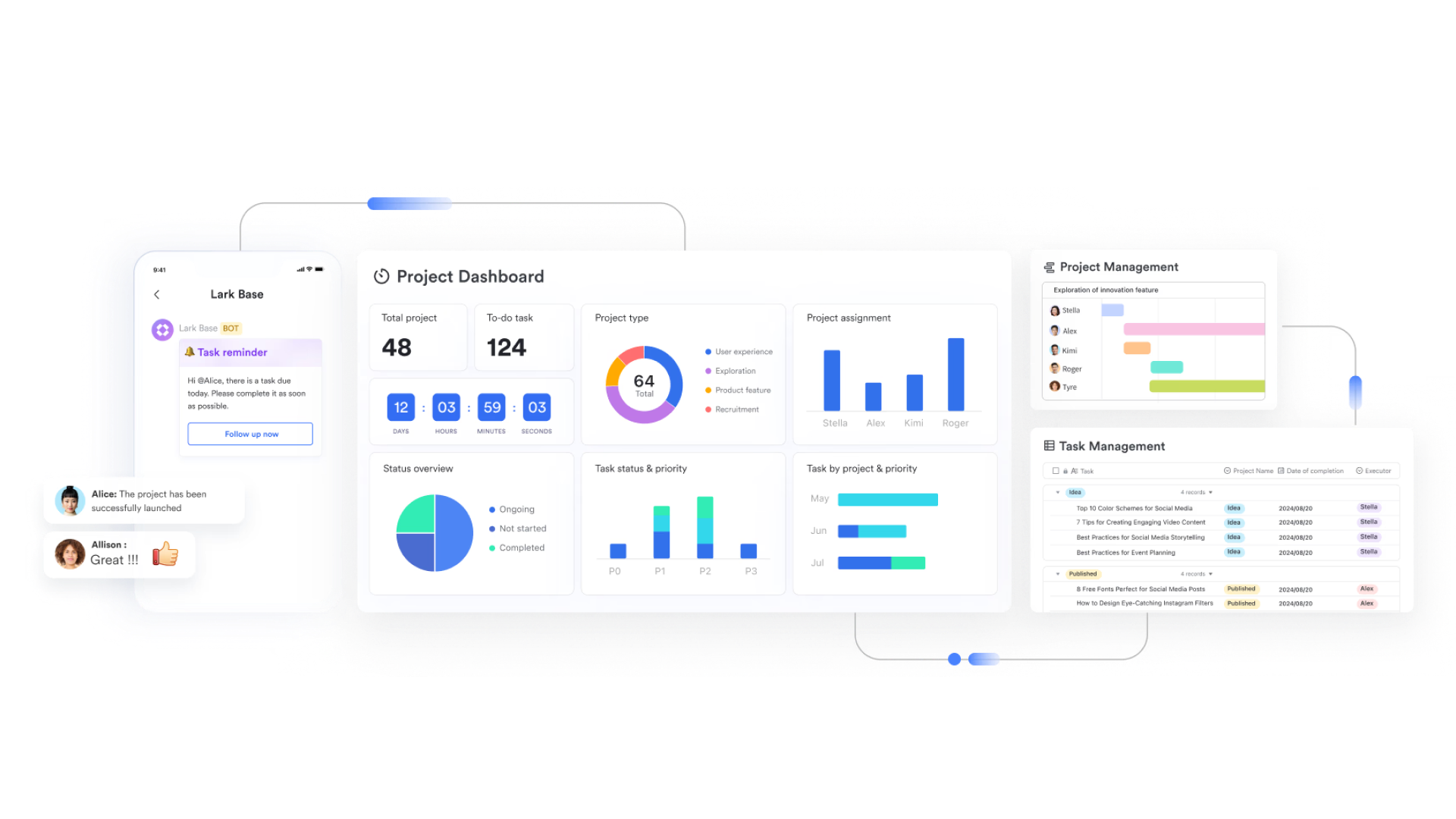
📊 Lark Base: Integrating data management and collaboration
While Monday.com excels at visual work management and Jira boasts powerful issue tracking, Lark Base goes a step further. It is not just a database or spreadsheet; it is a dynamic data hub connected to real-time communication contexts.
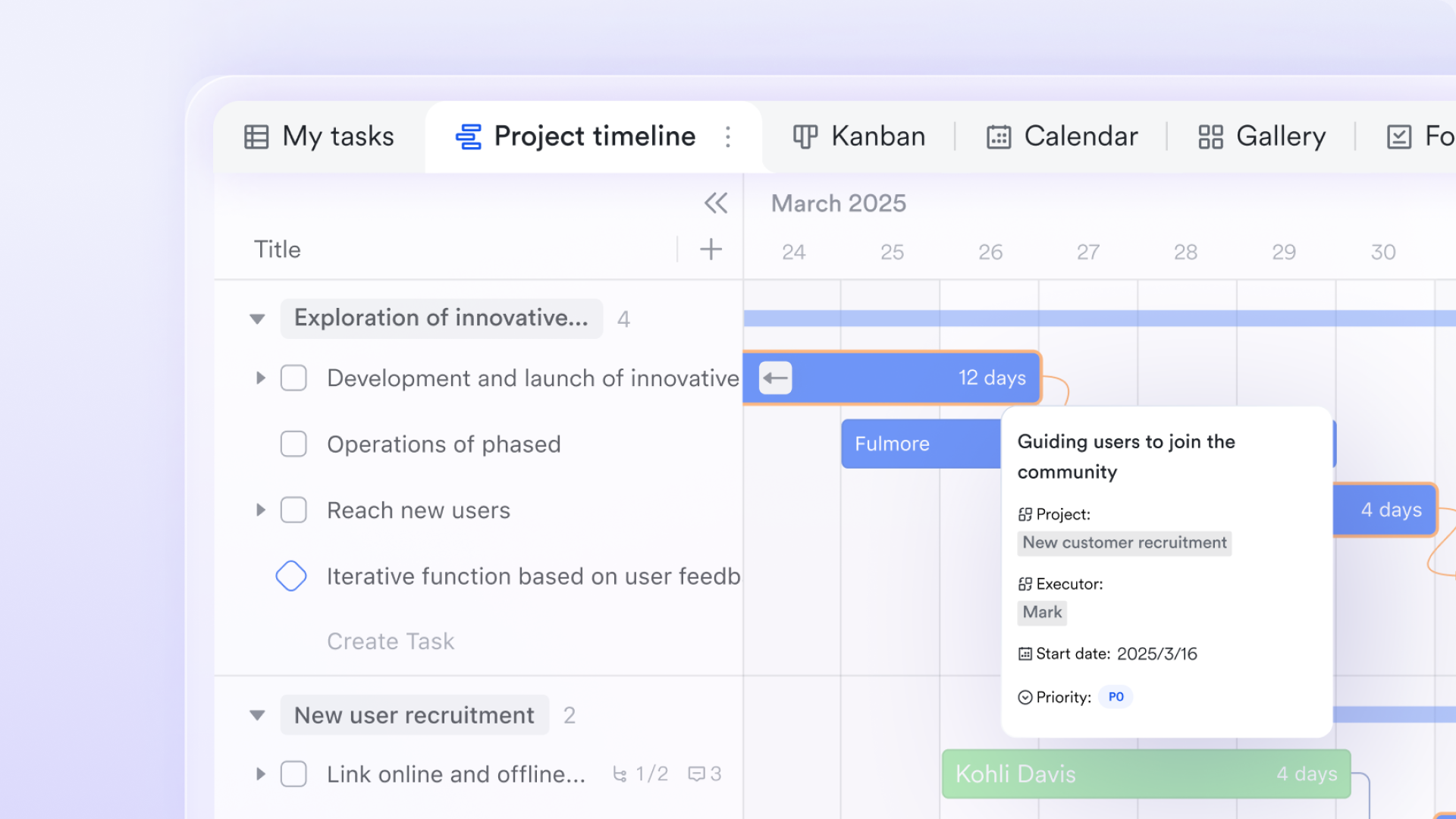
- Transcending static databases: Unlike Monday.com, which often requires upgrading to higher-tier plans to unlock multiple views and advanced features, Lark Base natively supports various views like Grid, Kanban, and Gantt charts, along with powerful cross-table calculation capabilities. This means a single team can manage project progress using a Kanban view while coordinating schedules with a Gantt chart within the same Base, with all data perfectly synchronized.
- Bridging Jira's collaboration gap: Jira is powerful for handling complex workflows, but its built-in documentation capabilities are limited. In Lark, any data record in a Base can be directly linked to a Lark Docs. Team members can engage in deep discussions and content creation within the Doc. This solves the problem of information fragmentation common in Jira, where details can be scattered across Confluence, chat tools, and issue descriptions.
💬 Lark Messenger: Communication directly drives execution
The core of both Monday.com and Jira is task management, while communication relies on external tools like Slack or Teams. Lark Messenger is revolutionary because it turns communication itself into the starting point for creating work items, completely eliminating the efficiency loss from app switching.
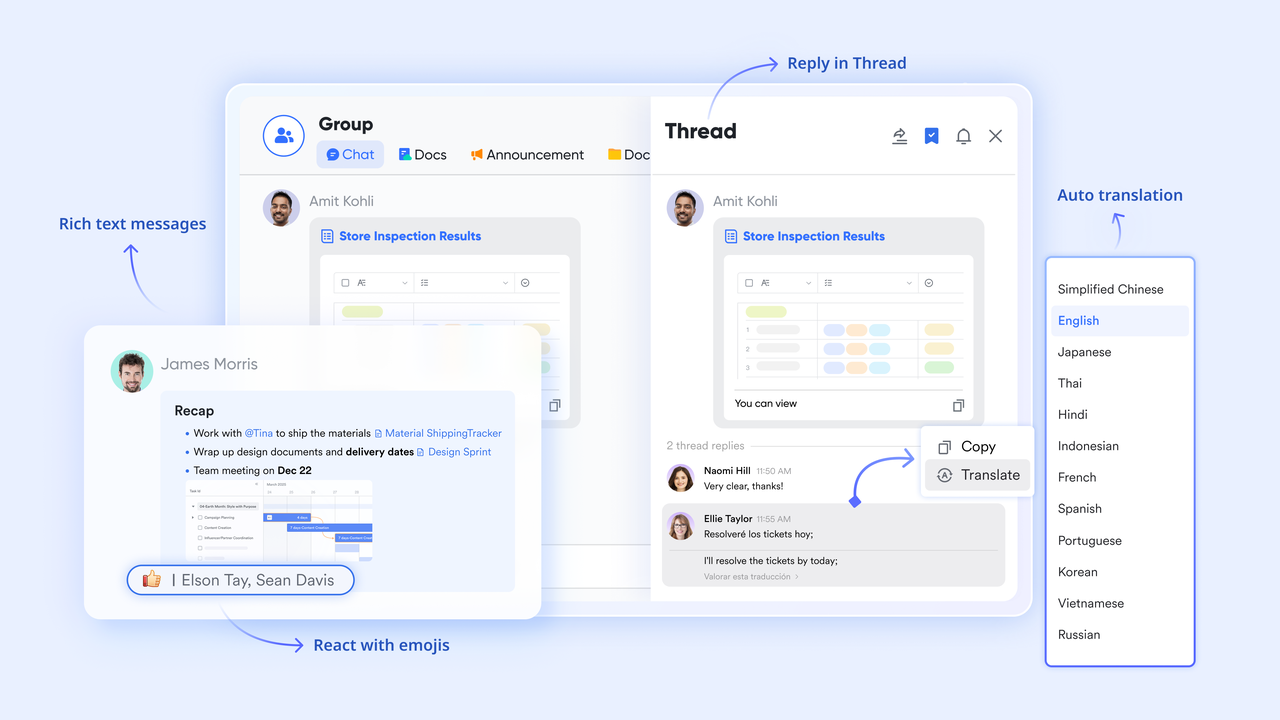
- Seamless task creation: During a discussion about project requirements, any chat message can be directly converted into a Lark Task or a record in a Base. This newly created task automatically retains the context of the original conversation, with assignees and participants clearly identified. In contrast, the common workflow with Monday.com or Jira involves a disruptive context switch to manually create tasks in the project management platform after discussing them in a chat app.
- Focused conversation threads: Unlike sifting through decision records in a noisy group chat, Lark Messenger allows users to create focused conversation threads for specific topics. This is particularly useful for tracking discussions around a complex task (similar to an Epic in Jira). All related communications, files, and decisions are consolidated in one place, making it easy for any team member to revisit them, ensuring critical information isn't lost in the relentless flow of general chat.
💡 Flexible task views & clear task organization
Lark Tasks provides flexible ways to view your task list, helping you organize and review work based on different scenarios and focus areas.
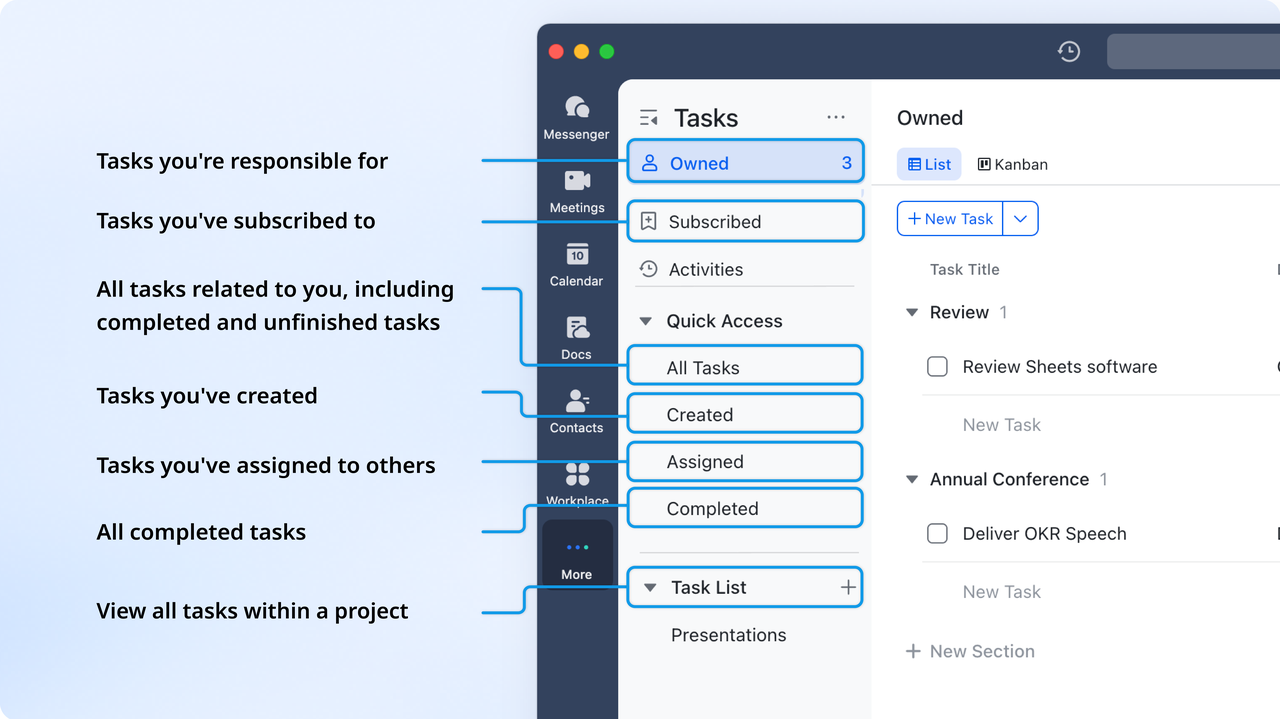
- Multi-dimensional filtering & sorting: You can quickly filter tasks by status or create complex custom filters using properties like start time or due date for precise searching. The task list also supports sorting by time fields, allowing you to easily focus on the most urgent or recently updated items.
- Custom grouping & fields: For tasks you are responsible for or tasks within a specific list, Lark Tasks supports custom grouping. You can create new groups based on project phase, priority, or other logic, and drag tasks between these groups to align task management with your actual workflow. Furthermore, you can configure which fields are displayed in the task list, choosing to show information like assignee, priority, or tags, and adjust their display order to create a highly personalized task board.
Pricing:
- Free plan: Includes 11 powerful products, supporting up to 20 users, 100 GB storage, 1,000 automation runs and unlimited AI translation in chats, docs and email.
- Basic plan: Starts at $6/user/month, supporting teams with over 20 users. Includes 1,000 runs/month for workflows and automations, 2,000 rows in a single Base table, 5TB storage, unlimited Open API calls, and 10 SSO apps.
- Paid plans: Starts at $12/user/month, supporting up to 500 users. Includes unlimited message history, 50,000 automated Base workflow executions per month.
- Enterprise plan: Contact sales for custom pricing. Supports unlimited users and includes even more automation runs and advanced security, compliance, and management features.
Conclusion
The choice between Monday.com and Jira is ultimately a choice of specialization. Jira remains a powerful and almost default choice for dedicated software development teams that live and breathe agile processes. Monday.com is an excellent and user-friendly platform for business teams that need visual project tracking and robust no-code automation.
However, for modern teams that value deep collaboration over isolated functionality, a new approach is needed. The future of work is integrated, not fragmented. Tools that connect communication, tasks, and documents in a single environment reduce friction and unlock productivity. Lark represents this third path. It offers a unified platform that connects teams and streamlines their workflow. It avoids the compromises of the Monday vs Jira debate by providing a cohesive space where both technical and non-technical team members can work together effectively.
When making your decision, consider not only the features but the connections between them. Choose a platform that connects your team, not just one that manages their tasks. The right tool should make collaboration effortless, turning individual effort into collective achievement.
FAQs
Is Monday cheaper than Jira?
The pricing for both tools is complex and depends on the required features. Monday.com's paid plans start from approximately $9 per user/month, while Jira's standard cloud plan starts around $8.6 per user/month. Therefore, Jira's entry-level paid plan can be slightly cheaper, though direct comparison is difficult as the included features differ.
Who is Jira's biggest competitor?
While Monday.com and Asana are strong competitors in general project management, a notable emerging alternative is Lark. Lark offers an integrated suite combining messaging, scheduling, and collaborative docs in one platform, providing a unified workspace that appeals to teams seeking to consolidate their tool stack. For software development teams specifically, PingCode remains a major competitor in certain markets.
Is Monday a good tool for project management?
Yes, Monday.com is widely regarded as a good tool, particularly for its user-friendly and visual interface, customization options, and powerful automation. It is an excellent choice for business teams like marketing, sales, and operations, though it may have limitations for very large or complex software development projects.
Who is Monday.com's biggest competitor?
Asana is often highlighted as a primary competitor in reviews and direct comparisons, with both platforms vying for similar markets in team collaboration and work management. For its CRM-related features, Lark is also mentioned as a strong alternative, offering an integrated suite of collaboration tools.
Related reading
Table of contents
Start using Lark today

Manage all your work in one place
Boost team efficiency by 10x
Save up to 70% on software costs
Table of contents
Start using Lark today
Manage all your work in one place
Boost team efficiency by 10x
Save up to 70% on software costs



2026 Lark Technologies Pte. Ltd.
Headquartered in Singapore with offices worldwide.






Explore: