Project management today often feels like navigating a maze, especially when it comes to keeping track of every single requirement. Teams frequently find themselves tangled in a web of shifting priorities, incomplete specifications, and fragmented communication. This is where a Requirements Traceability Matrix (RTM) becomes an indispensable tool. It's more than just a document; it's a strategic asset that links your project's initial vision to its final delivery. This article moves beyond simply presenting a generic template of a requirement traceability matrix; we'll explore how to integrate an RTM strategically into your workflows to achieve genuine traceability and ensure your projects meet their goals with confidence.
The illusion of traceability: Why your current RTM might be giving you a false sense of security
Many teams rely on traditional methods, often a spreadsheet, for their Requirements Traceability Matrix. While a basic might seem like a quick solution, it often creates a false sense of security. Imagine a scenario where your team uses a static Excel sheet to track requirements. A new feature request comes in, and a team member updates their local copy, but forgets to share the latest version. The QA team then tests against an outdated requirement, leading to rework and missed deadlines. This common pitfall highlights the core issue: manual updates are prone to errors, data silos emerge, and "" becomes an illusion. The matrix exists, but its information is not always current or universally accessible, leading to gaps in understanding and potentially significant project risks. Without real-time updates and built-in links to design, development, and testing artifacts, your RTM risks becoming a historical artifact rather than a living, dynamic tool for project success and compliance.
Beyond the spreadsheet: Building an agile requirements traceability system with built-in workflows
Moving past the limitations of static spreadsheets means embracing a dynamic, coordinated approach to requirements traceability. This involves weaving your RTM directly into your agile development workflows. Consider a product development team working on a new mobile application:
- Integrating requirements management with : Instead of maintaining a separate RTM spreadsheet, they integrate their requirements management directly with their task management system. When a user story is defined, it's linked to specific functional requirements in their RTM.
- Automating progress reflection and status updates: As developers pick up tasks related to that user story, their , updating the requirement's status. When the QA team writes test cases, these are also linked to the same requirements.
- Achieving real-time visibility and adaptability: This built-in system provides into the status of each requirement, from initial concept through development and testing. This approach not only ensures that every requirement is accounted for but also adapts quickly to changes, providing a clear, up-to-date picture of project progress and any potential impact from modifications. It's about creating a living ecosystem of project information, rather than a series of disconnected documents.
Streamline your RTM with Lark's workflows
Exploring various requirements traceability matrix templates
While the ideal RTM exists as part of a built-in system, understanding the foundational templates is a great starting point for many teams. These templates often serve as a blueprint, adaptable to different project scales and complexities. For instance, a basic might focus on mapping requirements to test cases, proving compliance for simpler projects. More detailed templates can expand to include links to design specifications, source code, and user documentation, which are crucial for complex software development. There are also specialized templates for specific scenarios, such as those geared towards regulatory compliance in fields like healthcare or finance, or visual RTMs that use diagrams and to illustrate relationships between requirements and other project artifacts. Regardless of the format, these templates provide a structured framework, helping teams to systematically document and track requirements throughout the project lifecycle.
Template suggestions for RTM illustration:
Requirements & bug management
This template offers a unified approach to project quality, connecting planning with . It enables teams to directly link reported bugs to the requirements they impact, which accelerates root cause analysis and improves accuracy. By connecting requirements, identified issues, and their resolution status, teams can better prioritize fixes that deliver the most significant value to business objectives and user experience.
Gantt chart for requirement management
This template provides a clear visual representation of how requirements progress through their various stages—planning, development, testing, and release—over a defined timeline. It maps individual requirements against schedules, key milestones, and interdependencies, making it easier to identify potential delays or resource conflicts early in the process. By combining scheduling with traceability, teams gain a more comprehensive understanding of how modifications to requirements influence the overall project delivery timeline.
Requirements gathering
The requirements gathering template assists teams in consolidating business needs, user expectations, and technical restrictions into a clear, organized format. It prompts stakeholders to articulate goals, priorities, and acceptance criteria at the project's outset, thereby minimizing confusion later on. By structuring information from the beginning, teams can more effectively link each requirement to subsequent design, development, and testing phases as the traceability matrix evolves.
Business requirements document
This template is designed to translate broad business objectives into concrete, actionable requirements for project teams. It clarifies the project's scope, identifies key stakeholders, defines underlying assumptions, and establishes success criteria, ensuring everyone involved shares a consistent understanding from the start. By setting clear expectations for what constitutes "success" early on, this template helps align development and testing efforts directly with desired business outcomes.
How a requirements traceability matrix template supports your project goals
An RTM template, whether basic or highly detailed, serves as a foundational tool that directly supports your project goals by bringing structure and clarity to the often-complex world of requirements. Firstly, it acts as a comprehensive checklist, ensuring that every single requirement, from the grand vision down to the minutiae, is captured and considered. This systematic approach drastically reduces the risk of overlooking critical functionalities or inadvertently missing stakeholder expectations. For example, if a project aims to launch a new e-commerce platform, the RTM would list everything from "secure payment gateway" to "user-friendly product search." By visually mapping these requirements to design, development, and testing phases, the template provides , guiding the team towards successful execution. This structured documentation also facilitates better communication across departments. When everyone refers to the same, clearly defined set of requirements within the RTM, misunderstandings decrease, and collaboration improves, ultimately streamlining the entire project lifecycle and keeping it aligned with the overarching business objectives.
Key components of an effective requirements traceability matrix
An effective Requirements Traceability Matrix is built upon several core components, each playing a crucial role in maintaining clarity and ensuring comprehensive tracking throughout a project. These components act as interconnected data points, allowing for a complete picture of each requirement's journey.
- Requirement ID and description: Each requirement should have a unique identifier for easy reference and a clear, concise description outlining what needs to be achieved. For instance, "REQ001: Implement secure user login via email and password."
- Source of requirement: Identifying where a requirement originated (e.g., "Customer Interview with CEO," "Market Research Study," "Regulatory Document XYZ") helps in understanding its priority and rationale.
- Status: Tracking the current state of a requirement (e.g., "Proposed," "Approved," "In Progress," "Tested," "Completed," "Deferred") provides real-time visibility into its progression. A quick glance at this column should tell you if a requirement is moving forward or encountering blockers.
- Links to design documents: This component establishes a connection to the architectural and design specifications that address the requirement. This might be a link to a specific section in a design document, a wireframe, or a technical specification.
- Test case IDs: Crucially, the RTM links requirements to specific test cases designed to verify their implementation. For example, "TEST005: Verify successful login with valid credentials." This ensures that every requirement is tested and validated before project completion.
- Validation status: Beyond just linking to test cases, this indicates whether a requirement has passed its associated tests and been formally validated, providing confidence that the implemented solution meets the original need. By diligently populating these fields, teams can create a robust and actionable RTM that serves as a single source of truth, facilitating efficient project management, quality assurance, and compliance checks.
Enhance your RTM with Lark
From vision to validation: How executives leverage built-in RTMs for strategic oversight and compliance confidence
For executives, a robust, coordinated Requirements Traceability Matrix extends far beyond mere project tracking. It transforms into a that provides critical insights for high-level decision-making, risk management, and, crucially, demonstrating regulatory compliance. Imagine a CEO needing to report to a board of directors on a new product's development, especially in a regulated industry like healthcare. Instead of sifting through fragmented reports from various departments, a built-in RTM allows them to quickly see that all compliance requirements have been addressed, validated, and linked to specific features and tests. This transparency not only builds confidence among stakeholders but also significantly de-risks the project. For example, if an external auditor queries a specific regulatory requirement, executives can, with a few clicks, trace that requirement directly through its implementation and testing phases, demonstrating a clear audit trail. This level of oversight ensures that projects are not just completed, but are aligned with overarching business objectives and adhere to all necessary legal and industry standards. It's about providing the executive team with the confidence that the vision is being met, and the organization is protected from potential compliance gaps.
Optimizing your RTM: Best practices for dynamic teams
An RTM is a living document, and its effectiveness hinges on continuous maintenance and team engagement. To truly optimize your RTM and ensure it remains a valuable asset for dynamic teams, consider these best practices:
- Maintain an up-to-date RTM: Regularly review and update your RTM. This means reflecting any changes in requirements, design, or testing immediately. Consider setting up automated reminders or triggers to prompt updates. For instance, if a requirement status changes from "" to "Tested," the RTM should automatically reflect this.
- Foster team collaboration around the RTM: The RTM shouldn't be the sole responsibility of one individual. Encourage all team members – product managers, developers, QA testers, and business analysts – to actively engage with it. Tools that allow for can be invaluable here. A product manager might add a new requirement, a developer links it to their code, and a QA tester attaches relevant test cases, all within the same coordinated environment.
- Leverage automation to reduce manual effort: Manual updates are the enemy of an optimized RTM. Explore integration options that automate the linking of requirements to tasks, code commits, and test results. For example, if a task management system marks a task as complete, an automation rule could automatically update the status of the linked requirement in the RTM. This not only saves time but also significantly reduces the likelihood of errors and ensures data consistency. By adopting these practices, your RTM evolves from a static record to a dynamic, collaborative tool that actively supports your team's agility and project success.
How Lark helps streamline your requirements traceability
Lark's built-in suite offers a powerful platform to move beyond traditional RTM limitations and establish a truly dynamic requirements traceability system. It brings together essential tools that facilitate every stage of the requirements lifecycle:
Centralized hub for requirements
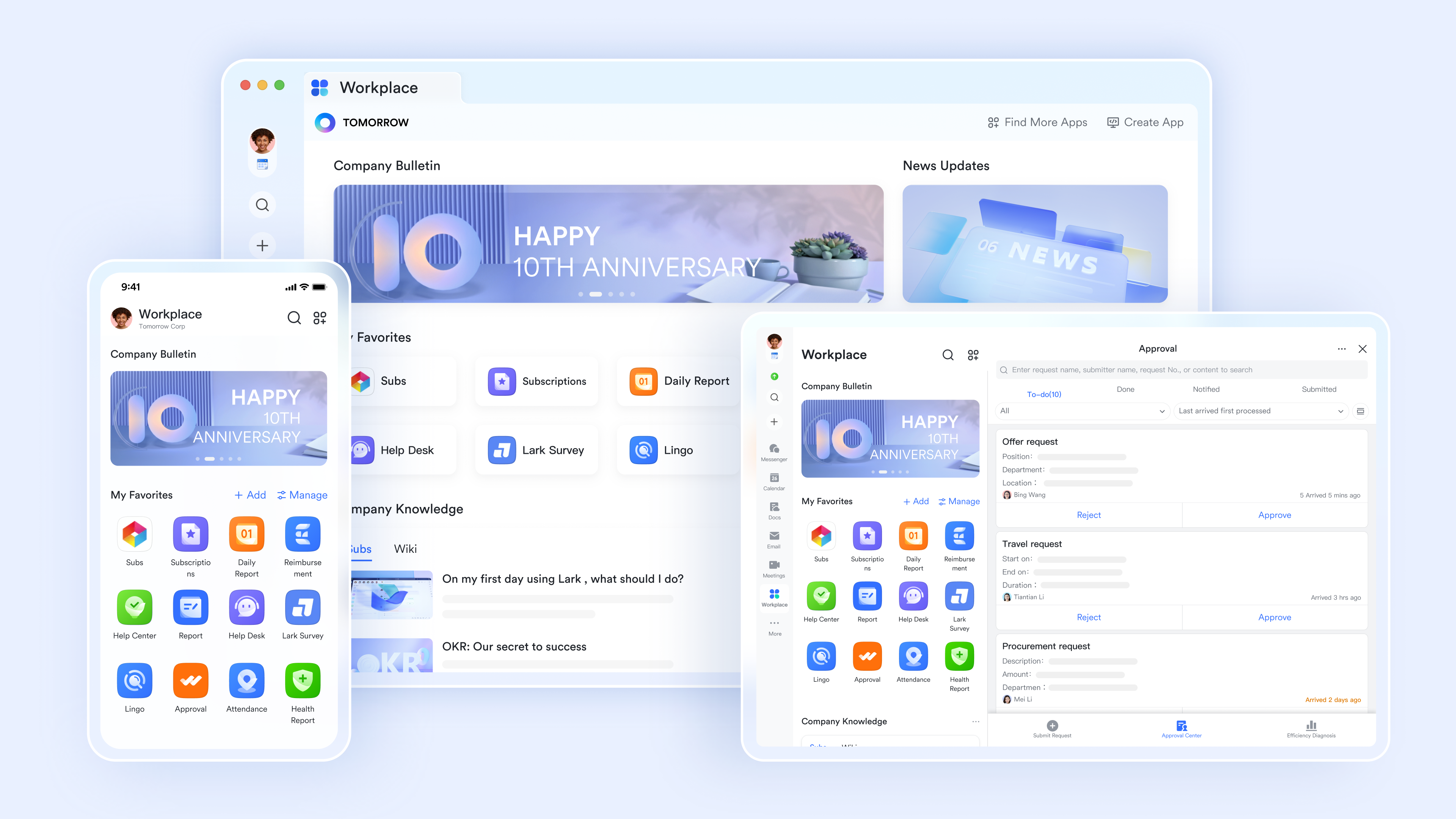
With Lark Docs, Sheets, and Wiki, your team can establish a single, accessible source of truth for all project requirements. Instead of scattered files, all requirements, specifications, and related discussions reside in a unified workspace. For example, you can create a dedicated Wiki page for each major feature, detailing its requirements in a structured , and linking it directly to tasks in .
Streamlined workflow automation
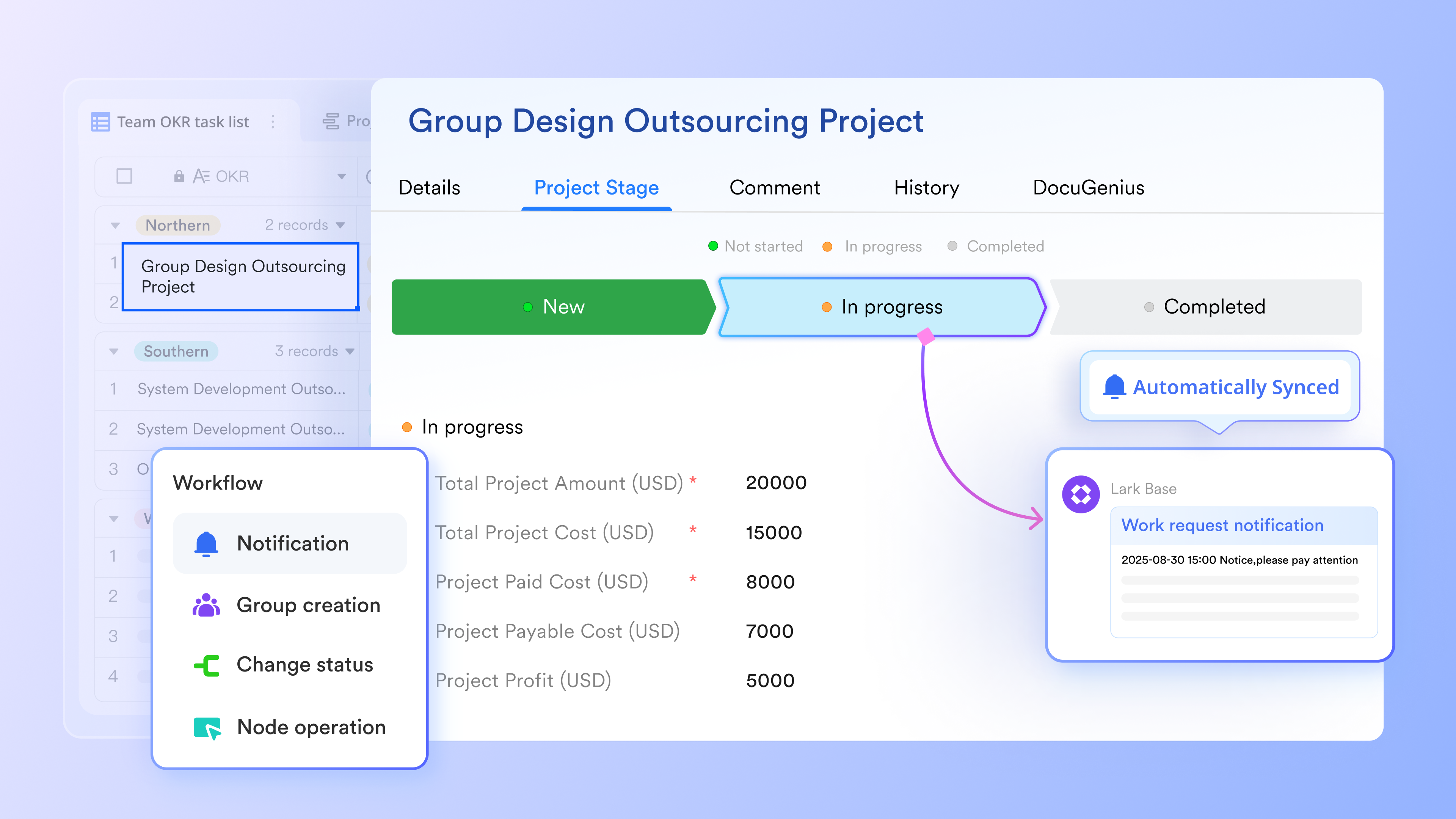
and Automation features are game-changers for managing RTM processes. You can set up automated workflows for requirement review and approval, ensuring that changes are formally acknowledged before implementation. Imagine an automation that triggers an approval request to relevant stakeholders whenever a high-priority requirement is modified, or automatically notifies the QA team once development on a feature linked to specific requirements is complete. This drastically reduces manual oversight and accelerates the approval cycle.
Enhanced cross-functional collaboration
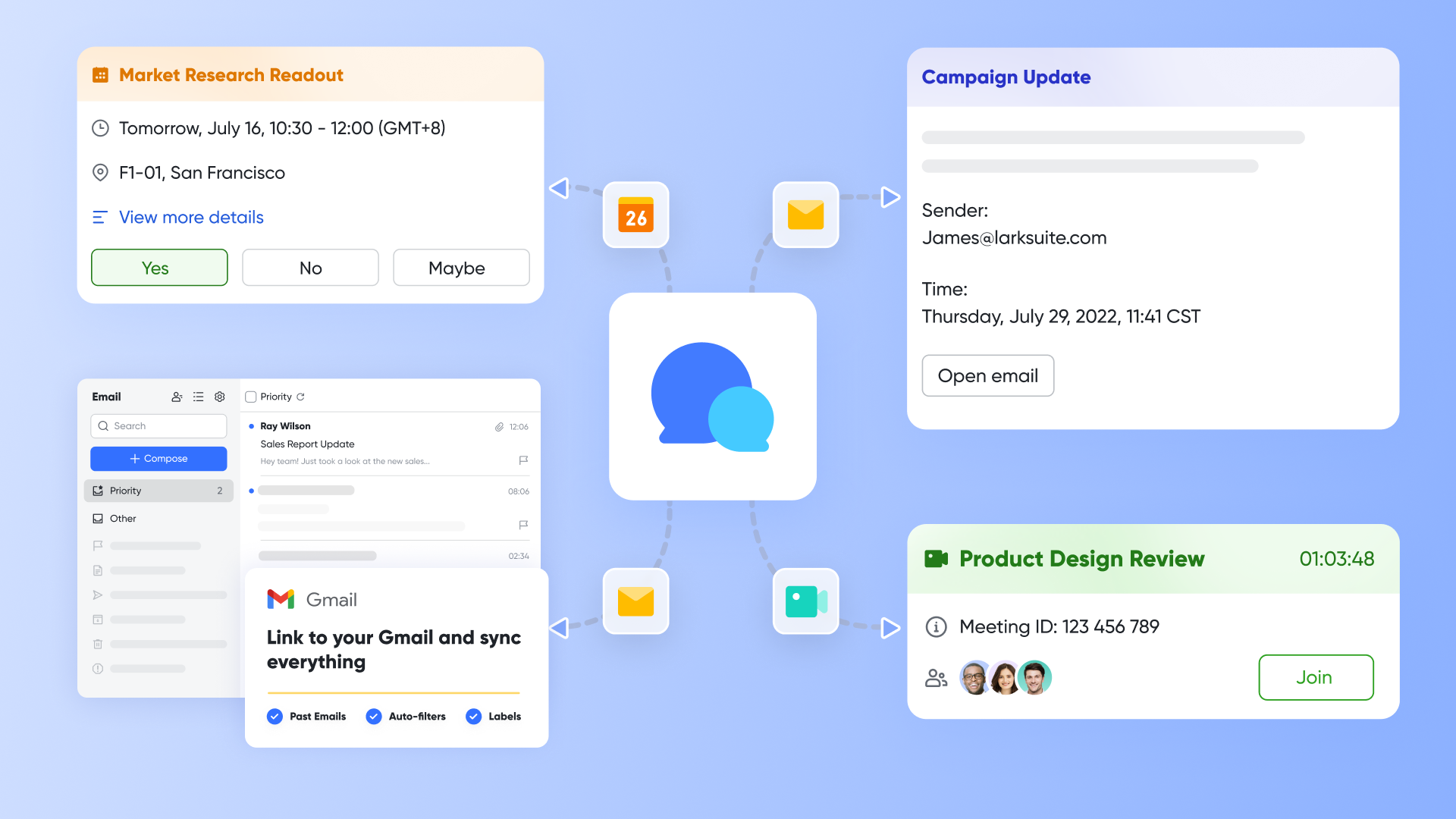
& , and real-time co-editing capabilities in Lark Docs make communication and collaboration around requirements effortless. Product, development, and QA teams can discuss requirements, clarify ambiguities, and make decisions within the context of the requirement itself. For instance, during a video meeting, team members can simultaneously edit a requirement document, leaving comments and resolving questions in real-time, ensuring everyone is on the same page without the delays of email chains or separate communication apps. By leveraging Lark's comprehensive capabilities, teams can transform their approach to requirements traceability, making it more efficient, collaborative, and ultimately, more reliable for project success.
:
- Starter plan: that includes 11 powerful tools for up to 20 users. It also comes with 100GB of storage space, 1000 automation runs, AI translations, and more. No credit card needed.
- Pro plan: (billed annually) for up to 500 users. It includes everything in Starter plus group calling for up to 500 attendees, 15TB of storage space, 50,000 automation runs, and more.
- Enterprise plan: for custom pricing. Supports unlimited users and includes even more automation runs and advanced security, compliance, and management features.
For small teams with simple communication needs

18 months message history
1000 Base automation runs/month
2000 rows per table in Base
Most POPULAR
For companies with comprehensive collaboration and management needs
Unlimited message history
500-participant video meetings
50k Base automation runs/month
20k rows per table in Base
For large companies with advanced security and organizational management needs
Get a personalized demo and pricing
Unlimited message history
500-participant video meetings
15 TB storage + 30 GB storage/user
500k Base automation runs/month
50k Base automation runs/month
Most POPULAR
For companies with comprehensive collaboration and management needs
Unlimited message history
500-participant video meetings
50k Base automation runs/month
20k rows per table in Base
Conclusion
Effectively managing project requirements is a cornerstone of successful delivery in today's complex landscape. We've seen that relying solely on static templates, while a starting point, often creates a false sense of security. True traceability stems from a built-in, dynamic approach that weaves requirements directly into your daily workflows. By embracing this mindset and leveraging the right tools, teams can move beyond mere documentation to achieve real-time visibility, foster enhanced collaboration, and ensure every requirement is met with precision. This not only de-risks projects but also empowers executives with strategic oversight and confidence in compliance. Ready to transform your requirements traceability? Explore how can unify your team, streamline your workflows, and elevate your project success. The future of project management lies in these interconnected systems, transforming how we define, track, and validate our project's vision into reality.
Explore how Lark can elevate your project success
FAQs
What is the primary purpose of a requirements traceability matrix?
The primary purpose of an RTM is to ensure that all project requirements are met and verified throughout the project lifecycle. It links requirements to design elements, development tasks, and test cases, providing a clear audit trail and reducing the risk of overlooked or unaddressed requirements.
How often should an RTM be updated?
An RTM should be updated continuously as requirements evolve, design decisions are made, development progresses, and testing is executed. In agile environments, this means frequent, sometimes daily, updates to reflect the current state of each requirement.
Can an RTM be used for non-software projects?
Absolutely. While commonly associated with software development, RTMs are valuable for any project where detailed requirements need to be tracked and validated. This includes construction, product development, marketing campaigns, and even organizational change initiatives.
What are the risks of not using an RTM?
Without an RTM, projects face significant risks, including scope creep, missed requirements, difficulty in verifying completeness, challenges in demonstrating compliance, increased rework, and potential project failure due to a lack of clear oversight and communication.
How does an RTM contribute to project success?
An RTM contributes to project success by ensuring all requirements are accounted for, providing clear visibility into project progress, facilitating better communication among stakeholders, reducing risks, and ultimately helping to deliver a product or service that meets its intended purpose and stakeholder expectations.
Related reading