Modern projects move fast, involve many stakeholders, and face tight deadlines and growing compliance demands. One of the most common reasons things go wrong is simple: teams lose sight of what they originally planned to build. Requirements get scattered across documents, design choices drift, and testing no longer clearly ties back to business goals. Over time, the final output can feel disconnected from the original vision. A requirements traceability matrix (RTM) helps prevent this.
Instead of acting like a static spreadsheet, it serves as a working map that links each requirement to design, development, and testing activities. Tools like Lark can support this process by keeping everything connected and easier to update.
What a requirements traceability matrix really is
A requirements traceability matrix is a structured way to track every project requirement from the moment it is defined through the phases of design, development, testing, and delivery. At its simplest, it is a table that shows how each requirement connects to related tasks, documents, and test cases, helping teams see the in one place.
To understand the meaning of the requirement traceability matrix, think of it as a bridge between business goals and technical execution. It ensures that what stakeholders ask for is what developers build and what testers validate.
In practice, the requirement traceability matrix in testing plays a critical role by linking each requirement directly to one or more test cases. This makes it easy to confirm coverage, identify gaps, and quickly trace failed tests back to the original business need. Over time, the matrix becomes a reliable reference point for audits, reviews, and .
Why teams struggle without a traceability matrix
Without a clear system for linking requirements to delivery and testing, teams often rely on scattered documents and memory. This lack of structure makes it hard to maintain requirements traceability, especially as projects grow in size and complexity.
- Missed requirements: When teams don't use a consistent requirements traceability matrix template, can be overlooked during development or testing. This leads to features being shipped incompletely or not aligned with what stakeholders originally requested.
- Scope creep: Without a clear requirement traceability matrix format, it becomes difficult to see which changes are tied to approved requirements. As a result, extra features and revisions slip into the project, expanding timelines and budgets.
- Audit failures: In regulated environments, teams must show how each requirement was implemented and validated. Without a traceability structure, producing audit evidence becomes slow, manual, and often unreliable.
- Rework and cost overruns: When problems are found late, teams have to revisit design, development, and testing. This repeated effort increases costs and delays delivery, putting overall project success at risk.
Learn how to streamline requirement tracking workflows
4 types of traceability matrices you should know
Understanding the different types of traceability helps teams choose the right structure and level of detail for their projects. A clear sample of a requirement traceability matrix can also make it easier to see how these approaches work in real scenarios.
- Forward traceability: This approach as it moves into design, development, and testing. It ensures that every business need is actively implemented and verified in later project stages.
- Backward traceability: Backward traceability works in the opposite direction, linking test cases or deliverables back to their original requirements. This helps teams confirm that nothing was built without a clear business purpose.
- Bi-directional traceability: This method combines forward and backward views, enabling teams to move between requirements and outcomes in either direction. It provides the most complete visibility and supports strong impact analysis when changes occur.
- Regulatory-driven traceability: In , teams often follow a template of a requirement traceability matrix tailored to industry standards. This structure makes it easier to demonstrate coverage, validation, and approval during audits and reviews.
Requirements traceability matrix examples
Using multiple real-world scenarios helps teams understand how a requirements traceability matrix (RTM) adapts to different project types. While the structure of an RTM stays consistent, how it is applied can vary based on goals, risks, and stakeholders.
Scenario 1: New software feature launch
In a typical product launch, the business team defines requirements such as user onboarding improvements, performance benchmarks, and security controls. Each requirement is assigned a unique ID and documented clearly.
These requirements are linked to design mockups, backend and frontend development tasks, and multiple test cases. For example, a performance requirement might be tied to load-testing scripts and monitoring metrics. This linkage allows teams to track readiness and ensures no requirement reaches release without validation.
Scenario 2: Regulatory compliance project
In compliance-driven projects—such as GDPR, HIPAA, or SOC 2 initiatives—traceability becomes critical. Requirements often originate from regulatory documents rather than internal stakeholders.
Each compliance requirement is mapped to policy updates, system changes, approval records, and audit evidence. The RTM allows compliance teams and auditors to quickly verify that every regulation has been addressed, implemented, tested, and formally approved, reducing .
Scenario 3: Agile sprint-based development
In agile environments, requirements frequently take the form of user stories. An RTM helps teams maintain clarity as stories move across sprints.
Each user story is linked to sprint tasks, acceptance criteria, test cases, and defects. When stories are split, deferred, or reprioritized, the matrix reflects these changes. This helps product owners ensure backlog items are fully implemented and prevents unfinished or partially tested work from slipping into releases.
Scenario 4: System migration or platform upgrade
During system migrations—such as moving from legacy software to a new platform—teams face high risk and complexity. Requirements may include data accuracy, feature parity, performance thresholds, and rollback readiness.
An RTM helps map old system functions to new system components, migration scripts, validation tests, and user acceptance testing. This makes it easier to confirm that nothing critical is lost during the transition and that business continuity is preserved.
Scenario 5: Client-driven enterprise projects
In large client projects, requirements often come from contracts, statements of work, or formal change requests. An RTM ensures transparency between delivery teams and clients.
Each client requirement is linked to deliverables, milestones, testing evidence, and sign-offs. This helps manage scope changes, resolve disputes, and provide clear progress reporting throughout the engagement
Scenario 6: Bug fixes and enhancement tracking
RTMs are also useful beyond new development. For bug fixes and enhancements, teams can link reported issues to root causes, fixes, regression tests, and release versions. This approach improves accountability and ensures that fixes are validated properly before deployment, reducing repeat issues and customer dissatisfaction.
How to create a requirements traceability matrix
Creating a requirements traceability matrix starts with setting a clear foundation for how your team will track, link, and review requirements across the project lifecycle. Instead of treating it as a one-time document, think of it as a living system that evolves with every design change, development update, and test result. When built thoughtfully, it becomes a single source of truth that improves visibility, accountability, and confidence in project delivery.
Step 1: Collect and organize requirements
Start by gathering all business, technical, and compliance requirements from documents, meetings, and stakeholders. Assign a unique ID to each requirement to easily track it . This creates a clear foundation for traceability.
Step 2: Define traceability links
Decide what each requirement should be connected to, such as , development tasks, test cases, and defects. These links ensure you can track the implementation and validation of every requirement.
Step 3: Build your matrix structure
Create a structured table with columns like requirement ID, description, owner, linked tasks, test case ID, and status. This format helps teams view progress and accountability at a glance.
Step 4: Map relationships
Connect each requirement to its corresponding tasks, designs, and test cases. This step ensures that no requirements are missed and that every deliverable is traceable back to a business need.
Step 5: Review and maintain
Regularly update the matrix throughout development and testing. Review it after changes, before releases, and during audits to keep information accurate and reliable.
Discover better methods to track and align requirements
Requirements traceability matrix template
A requirements traceability matrix template provides a ready-made structure that helps teams start tracking requirements without having to build everything from scratch. It standardizes how information like requirement IDs, linked tasks, test cases, and status updates is recorded across the project. Using a consistent template also makes collaboration, reviews, and audits smoother, since everyone works from the same clear and familiar format.
Requirements & bug management
The requirements and template brings planning and quality tracking into one streamlined workflow. It allows teams to link reported issues directly back to the requirements they affect, making root cause analysis faster and more accurate. By keeping requirements, defects, and resolution status connected, teams can prioritize fixes that have the greatest impact on business and user goals.
Gantt Chart for Requirement Management
The for requirement management template helps teams visualize how requirements move through planning, development, testing, and release over time. It maps each requirement to timelines, milestones, and dependencies, making it easier to spot delays or resource conflicts early. By combining scheduling with traceability, teams gain a clearer view of how requirement changes affect overall project delivery.
Requirements gathering
The requirements-gathering template helps teams capture business needs, user expectations, and technical constraints in a single, clear, organized space. It encourages stakeholders to define goals, priorities, and acceptance criteria early, reducing confusion later in the project. By structuring information from the start, teams can more easily link each requirement to design, development, and testing activities as the traceability matrix takes shape.
Business requirements document
The business requirements document template helps translate high-level business goals into clear, actionable requirements for project teams. It outlines scope, stakeholders, assumptions, and success criteria, so everyone shares the same understanding from the start. By defining what “success” looks like early, this template makes it easier to align development and testing work with real business outcomes.
Modern solution: Try Lark for requirement traceability management
brings requirement traceability management out of static documents and into a connected, real-time workspace. Instead of switching between tools for documents, tracking, and communication, in one shared environment. This makes it easier to link requirements to tasks, tests, and discussions as work progresses. Over time, Lark helps maintain a clear, up-to-date view of how each requirement moves from idea to delivery.
Two-way link fields for testable relationships
In a traceability matrix, you must link business requirements to technical specifications and test cases. The two-way link function in lets you connect records across tables. When you link a "Functional Requirement" to a "Test case," Lark automatically creates a back-link in the testing table. This ensures that if a test fails, you can instantly trace it back to the original requirement, and vice versa, maintaining a closed-loop . 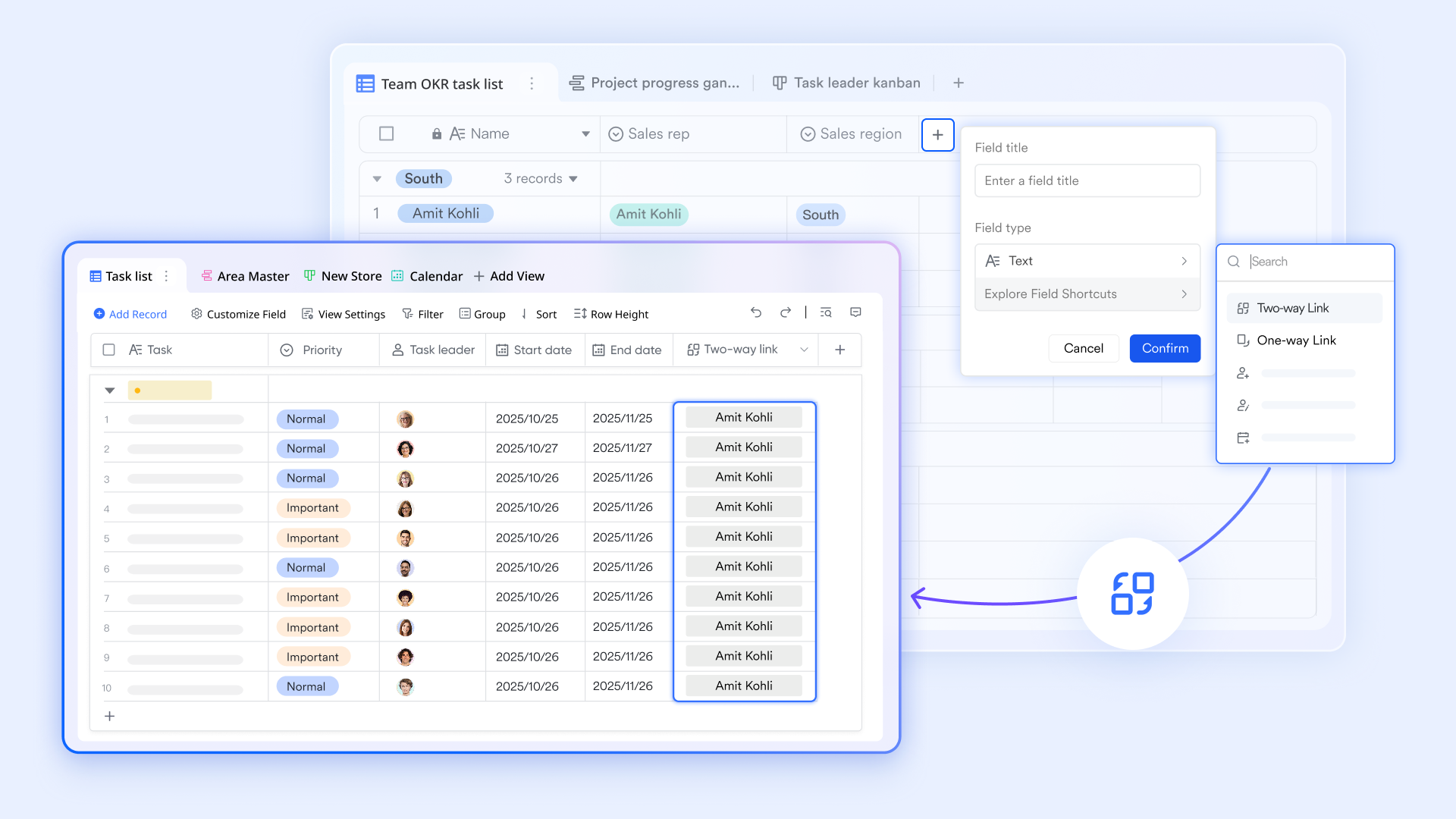
Lookup and rollup fields for data management
To monitor the health of your requirements, you need more than just a link; you need data. Lookup fields let you pull specific information (such as "Testing Status") from a linked test case into your main requirements table. Rollup fields go further by performing calculations, such as "Percent of Test Cases Passed." These functions allow to see the real-time "Traceability Score" of a project. 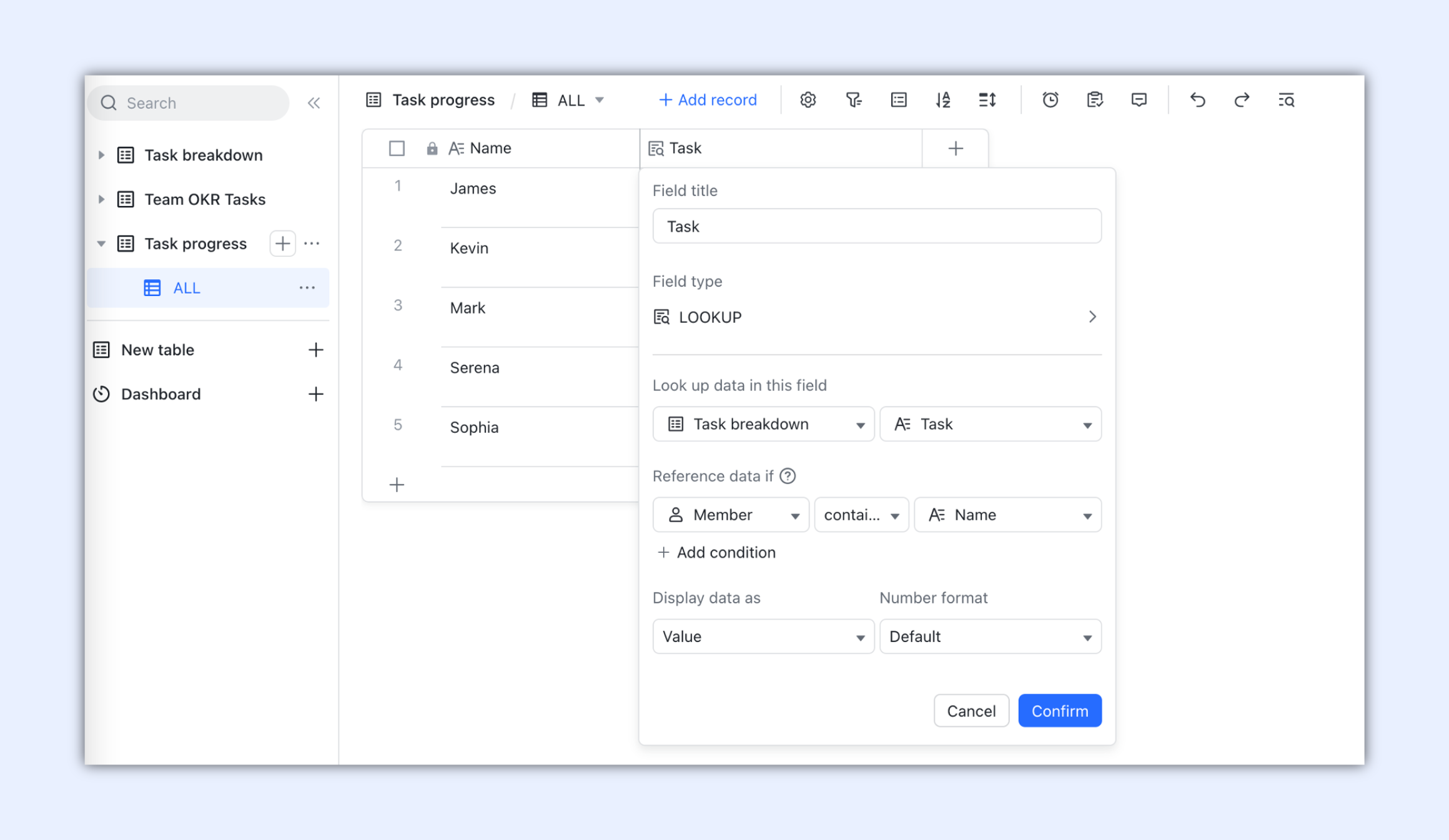
Automated "When a record updates" triggers
Requirement volatility is a major risk in complex projects. Using Lark Base automation, you can set a trigger for "When a record updates," specifically for the "Requirement Status" or "Scope" fields. If a requirement is modified, the system can automatically send an actionable message card to the project lead in . This ensures that stakeholders are notified the moment a change occurs, without manual delay. 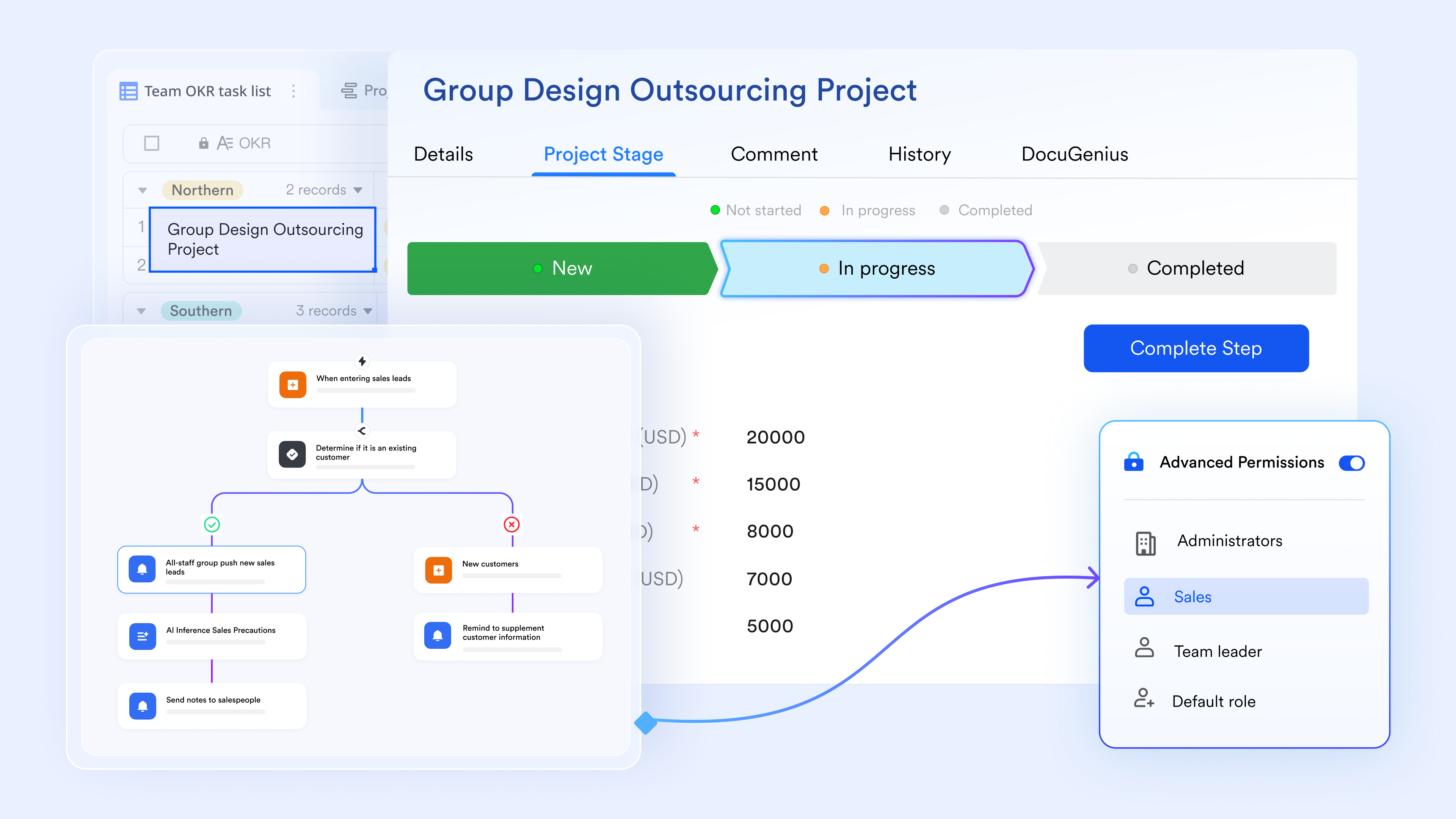
Advanced permissions for safety control
Requirements often involve sensitive intellectual property or regulatory data. Lark's advanced permissions function allows for granular control at the table, field (column), and record (row) levels. You can set specific roles where "Business analysts" can edit requirements, but "Developers" can only view them. This ensures that the "Source of Truth" for your requirements is protected from accidental changes while remaining visible to the teams who need to implement them. 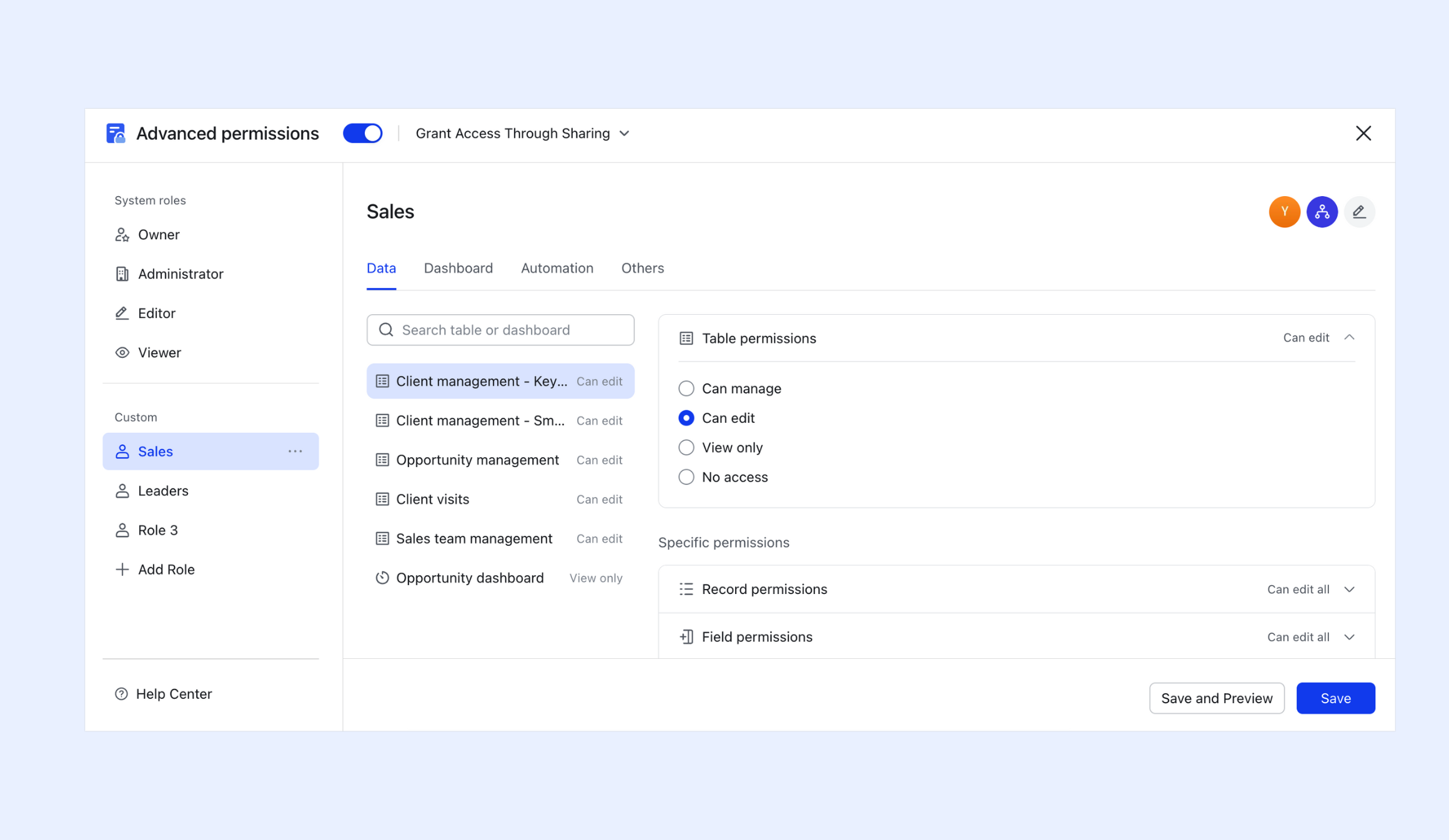
:
- Starter plan: Free forever plan that includes 11 powerful tools for up to 20 users. It also includes 100GB of storage, 1,000 automation runs, AI translations, and more.
- Pro plan: $12/user/month (billed annually) for up to 500 users. It includes everything in Starter, plus group calling for up to 500 attendees, 15 TB of storage, 50,000 automation runs, and more.
- Enterprise plan: for custom pricing. Supports unlimited users and includes even more automation runs and advanced security, compliance, and management features.
For small teams with simple communication needs

18 months message history
1000 Base automation runs/month
2000 rows per table in Base
Most POPULAR
For companies with comprehensive collaboration and management needs
Unlimited message history
500-participant video meetings
50k Base automation runs/month
20k rows per table in Base
For large companies with advanced security and organizational management needs
Get a personalized demo and pricing
Unlimited message history
500-participant video meetings
15 TB storage + 30 GB storage/user
500k Base automation runs/month
50k Base automation runs/month
Most POPULAR
For companies with comprehensive collaboration and management needs
Unlimited message history
500-participant video meetings
50k Base automation runs/month
20k rows per table in Base
Best practices to maintain a requirements traceability matrix
Maintaining a requirements traceability matrix is not just about setting it up once, but about keeping it accurate and useful as the project evolves. Simple, consistent habits help teams ensure the matrix remains a reliable source of truth rather than a forgotten document.
- Keep IDs consistent: Use a standard naming or numbering system for every requirement from day one. This makes it easier to , link related tasks and tests, and avoid confusion across teams and tools.
- Avoid over-documentation: Focus on capturing information that supports decision-making and traceability. Adding too many fields or unnecessary details can make the matrix harder to maintain and discourage regular updates.
- Assign clear ownership: Make one person or role responsible for keeping each requirement up to date. Clear accountability ensures changes are reviewed, approved, and reflected in the matrix without delays.
- Automate wherever possible: Use tools and integrations to automatically update status, links, or notifications. Automation reduces manual work and helps keep the matrix accurate in real time.
- Review weekly: to scan for missing links, outdated statuses, or untested requirements. Frequent reviews help catch issues early before they grow into bigger problems.
Conclusion
A well-built requirements traceability matrix brings clarity, control, and confidence to every stage of a project. Linking business goals to design, development, and testing, it helps teams avoid missed requirements, reduce scope creep, and stay prepared for audits and change. Throughout this guide, we've explored what an RTM really is, the types available, how to create and maintain one, and how real-world teams apply it to keep work aligned and visible. The key takeaway is simple: traceability works best when it is treated as a living system rather than a one-time document.
With the right structure and habits, your matrix becomes a single source of truth that supports better decisions and smoother delivery. If you're looking to move beyond static spreadsheets and manage requirements in a more connected, real-time way, explore how can support your traceability workflow and team collaboration.
Try Lark to achieve high traceability across projects
FAQs
What is the purpose of the RTM?
The main purpose of an RTM is to ensure every business requirement is linked to design, development, and testing activities. It provides a clear traceability matrix for requirements so teams can confirm full coverage and alignment. Tools like Lark help keep these links visible and easy to update as the project evolves.
What is the difference between RTM and RACI?
An RTM focuses on tracking requirements and their related tasks and tests, while RACI defines who is responsible, accountable, consulted, and informed. A requirements example shows how work is connected, not just who owns it. Lark can support both views by combining requirement tracking with role-based collaboration.
What KPIs should teams track using a matrix?
Common KPIs include requirement coverage, test pass rate, defect-to-requirement ratio, and change frequency. Using a template of a requirement traceability matrix makes it easier to standardize how these metrics are captured. In Lark, teams can surface these indicators in shared dashboards or linked records.
How often should a traceability matrix be reviewed?
A traceability matrix should be reviewed regularly, especially after changes to requirements, major milestones, or test cycles. Frequent reviews help ensure links stay accurate and risks are spotted early. With Lark, teams can make these updates collaboratively in real time rather than waiting for formal review meetings.
Related reading