At this stage, artificial intelligence has a strong impact on industries such as healthcare and fintech. Other areas, such as logistics, e-commerce, and law, also benefit from this technology. Roughly 88% of businesses today use artificial intelligence in at least one business function. Still, there is a key question that arises: should companies invest in developing artificial intelligence solutions or acquire ready-made solutions from external providers? Who provides the best enterprise ?
In enterprise environments, that smart tools have improved the speed of their work a lot, though real-world productivity gains from AI typically hover around 30%, according to this article . This blog aims to discuss in-house artificial intelligence development, best practices, and the implementation in 2026. Whether you are a technology enthusiast, an entrepreneur, or a developer, we at Artjoker will help you understand the importance of artificial intelligence infrastructure through actionable insights, well-researched examples, and expected trends.
Master your IT team's tasks effortlessly with Lark
The future of AI in software development
The past two years have been revolutionary for the entire IT industry: artificial intelligence has affected and transformed nearly every aspect of product development. Investments in smart technologies are on the rise: over 92% of companies plan to invest more in artificial intelligence over the next three years. Last year’s international GitHub survey showed that more than 97% of IT professionals use artificial intelligence in one way or another in their work. Many of them rely on an or agencies from the list of top AI development companies for enterprise implementation in 2026. The survey included software engineers, programmers, software designers, data science specialists, and many other professionals.
However, the survey also revealed a persistent trend: despite the undeniable benefits of using artificial intelligence in development, the adoption of artificial intelligence tools at the company level is progressing rather slowly. The overwhelming majority of respondents (59–88%) across all markets reported that their companies either “actively encourage” or “allow” the use of these technologies. This represents a clear growth opportunity for the for enterprise implementation in 2026. We can identify the following trends for the next 2-3 years:
New bottlenecks in projects
Faster coding with artificial intelligence will expose issues at other stages of development, such as testing, security, and deployment. Companies will need to invest in automating these processes to avoid slowing down overall development speed. In other words, all stages of the software development lifecycle will need to be balanced. After all, you can always count on help from the best companies for enterprise AI implementation in 2026.
A strong focus on metrics and control
As interest in the technology grows, organizations will increasingly use Software Engineering Intelligence (SEI) platforms to analyze and measure the effectiveness of artificial intelligence adoption and . This will make it possible to track AI’s impact on code quality, development speed, and alignment with business goals.
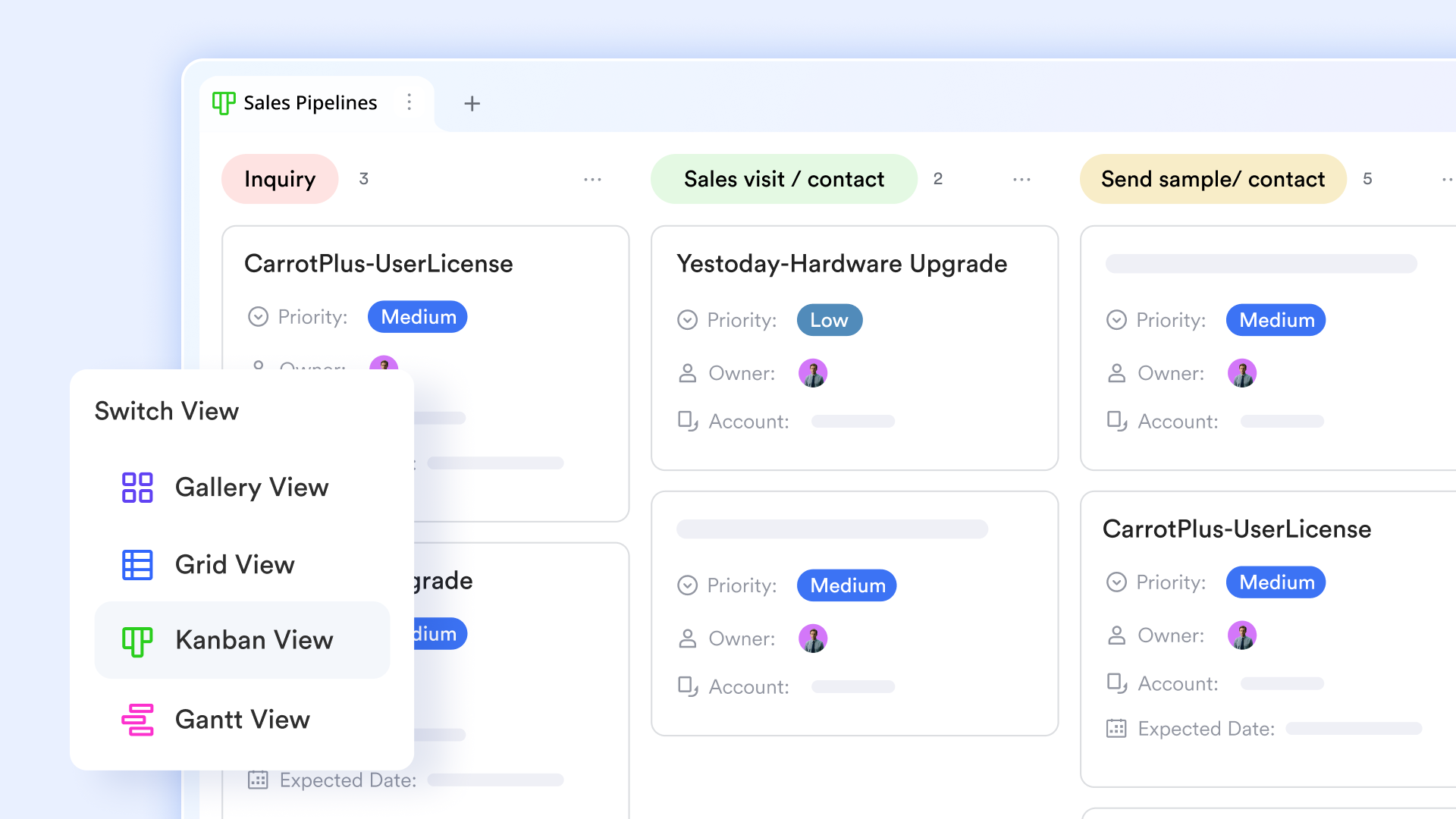
For cross-functional rollouts, teams may also need lightweight visibility that goes beyond code-level analytics. No-code tools like Lark Base can turn spreadsheets into interactive dashboards, automate recurring workflows, and present progress in Kanban/Gantt views—helping leaders track adoption and delivery in real time.
Security as a priority
As AI’s role expands, cybersecurity will come to the forefront. Smart tools will be widely used to analyze application behavior and identify vulnerabilities, while attackers will also use artificial intelligence to carry out attacks. As a result, companies will actively invest in advanced security solutions from the for enterprise artificial intelligence implementation. Security teams will start using artificial intelligence to detect and neutralize threats.
AI will not replace developers
Despite its powerful capabilities, artificial intelligence will never be able to fully replace developers. Software creation involves not only writing code, but also design, testing, debugging, and communication. These tasks require creative thinking and human interaction, which are still beyond AI’s reach. Developers, in turn, will be able to shift their focus from routine coding to creating truly unique products.
EXPERT OPINION, D.Bakanov
Technology is evolving too quickly to predict the future with certainty—today, almost any idea has a chance to take off. If you have an idea for an IT product that could change the future of your business, or if you want to discuss a specific development request, don’t waste time—contact WEZOM for a consultation right now. Artjoker’s team will be happy to share its own experience with AI, help you navigate challenging issues, and suggest optimal solutions.
Explore an all-in-one solution with AI functions
Top-6 companies you can trust for your Al development
We have selected these five leading enterprise AI implementation companies based on expert and customer feedback.
Artjoker
Artjoker is a full-cycle AI and software engineering company operating across the US and international markets. This agency has already built several robust smart agents and voice chatbots. Their software is largely based on ML–driven decision systems. They combine rapid prototyping and deep tech expertise.
Accenture
Accenture is a global powerhouse in smart consulting. The company mainly covers such areas as fintech, healthcare, and the public sector. They are partners of some well-known artificial intelligence model providers. The team delivers scalable artificial intelligence solutions for complex business environments.
IBM Consulting
IBM Consulting is among the top artificial intelligence implementation providers in 2026. It has over 10 years of experience in IT and software engineering. The company managed to successfully integrate smart solutions into existing IT ecosystems. Fintech, supply chain, and data analytics benefit most from their services.
Radixweb
With more than 25 years of experience, Radixweb delivers custom software and enterprise smart solutions. Several thousand digital transformation projects in their portfolio prove their skills. They typically mix agile development with architecture-driven design. Radixweb promises long-term ROI for clients.
Addepto
Addepto specializes in smart consulting and data engineering services. The company collaborates with well-known brands to develop advanced analytics platforms and custom ML or artificial intelligence systems that generate clear, measurable business value.
Avenga
is a global IT and digital transformation consultancy specializing in enterprise-scale software engineering and AI-powered solutions. With a presence across North America, Europe, and Asia, this agency has delivered complex system integrations, cloud migrations, and intelligent automation platforms for Fortune 500 clients and fast-growing mid-market companies. Their approach emphasizes data engineering, API-first architectures, and modular microservices that scale with business demands. They combine strategic consulting capabilities with hands-on development teams, ensuring technology decisions align with long-term business objectives rather than short-term technical trends.
GoGloby
GoGloby is an Applied AI Engineering partner built for a problem most AI development vendors don't actually solve: not greenfield "AI-accelerated development," but safe AI adoption inside established, business-critical codebases that boards are now pushing to modernize. Instead of staffing a generic project team, GoGloby forward-deploys a single embedded AI Solutions Architect who arrives with three things built in — the Agentic SDLC (a disciplined, Claude-driven development process installed from day one), a secure AI development environment (Claude Enterprise governs the team's usage; Claude on the client's own AWS, Amazon Bedrock, or Google Cloud Vertex AI keeps the codebase in their infrastructure), and a Performance Dashboard that gives engineering leaders board-ready, sprint-by-sprint proof of Claude-attributed velocity without any code access. Only around 4% of GoGloby's curated outbound pipeline clears its four-stage vetting funnel, and an Architect is typically embedded within four weeks. Clients across FinTech, HealthTech, and vertical B2B software — including Hasbro, Deel, and EverCommerce — report 30-40% lower engineering costs and measured velocity acceleration against their own baseline.
Note: Implementation partners are only one part of the equation. Many enterprises pair external expertise with an internal collaboration and workflow platform to keep requirements, decisions, and delivery aligned end-to-end. Among all sectors embracing enterprise AI, financial technology requires the most specialized approach. From banking systems to digital payments, companies increasingly rely on a trusted to build intelligent, compliance-ready solutions that align with both business goals and industry regulations.
Enabling enterprise AI implementation with a unified work platform
Enterprise AI implementation is not only a technical challenge—it’s also an execution challenge. Teams need a consistent way and effective to capture requirements, align stakeholders, document decisions, assign owners, and track outcomes across functions.
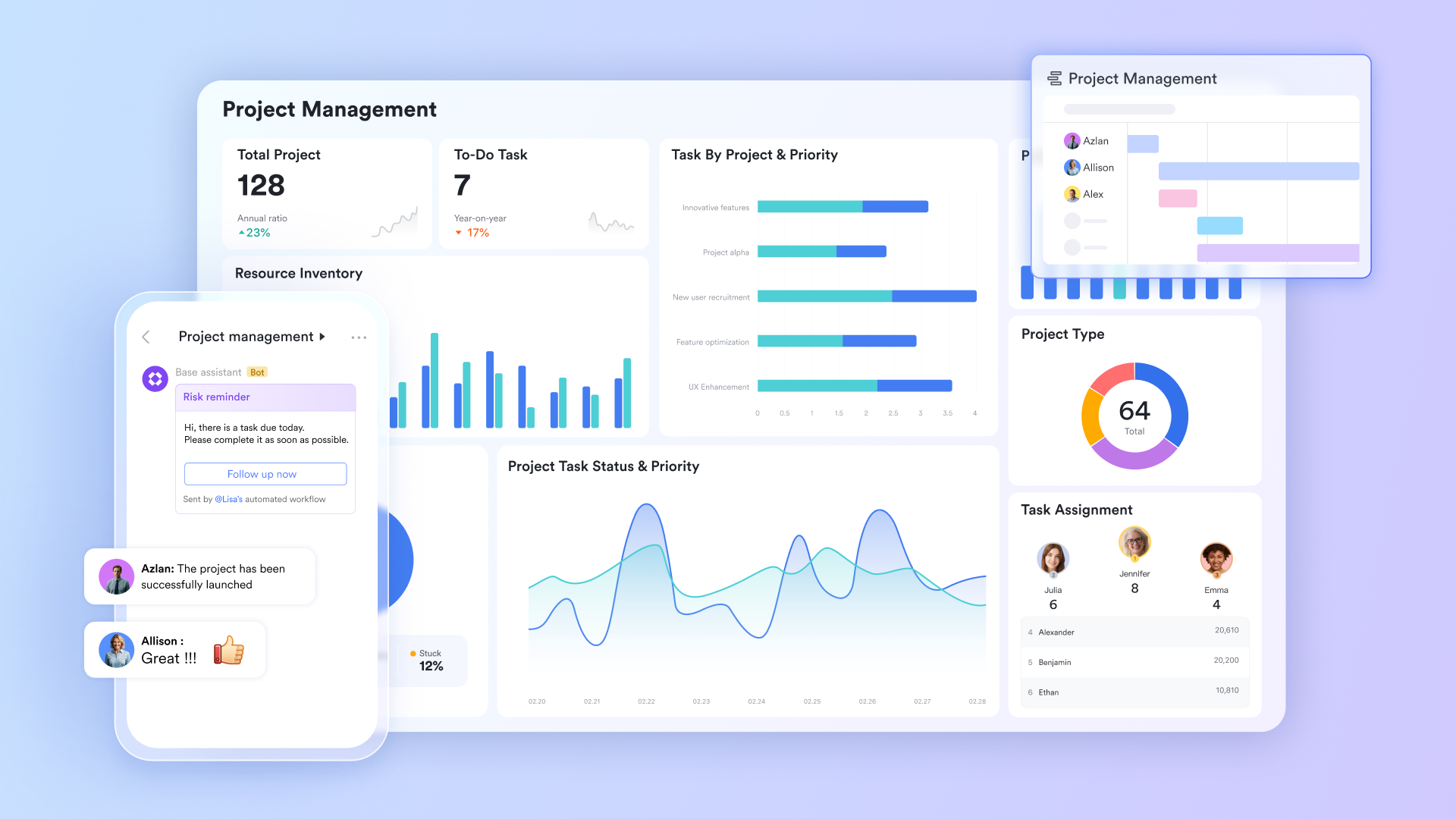
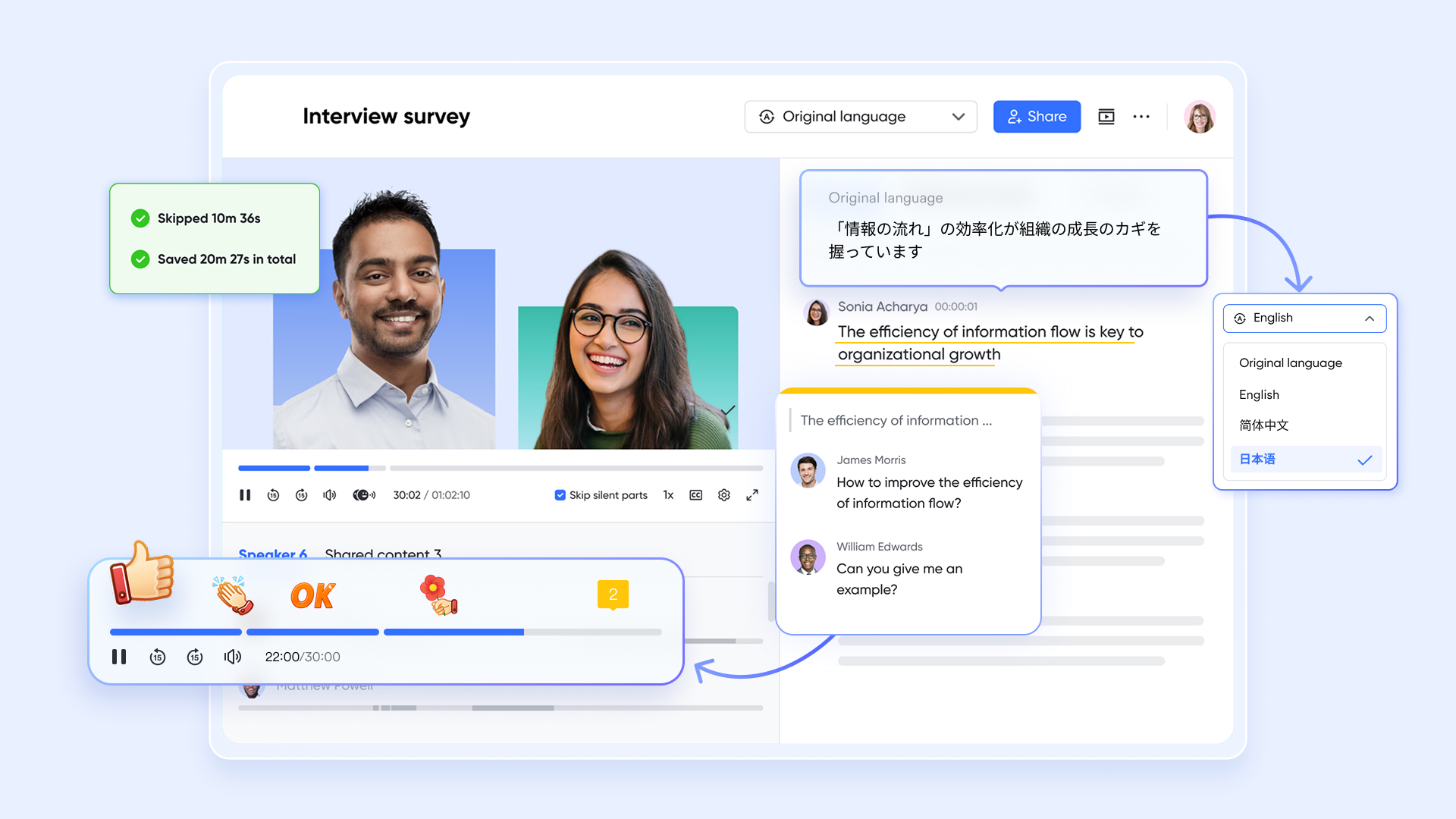
Lark positions itself as an all-in-one workspace that includes chat, docs, meetings, minutes, calendar, approvals, and a no-code platform in one place. For example, Lark Minutes automatically transcribes video meetings into searchable transcripts that teams can view, search, and collaborate on—making it easier to catch up asynchronously and keep decision context.
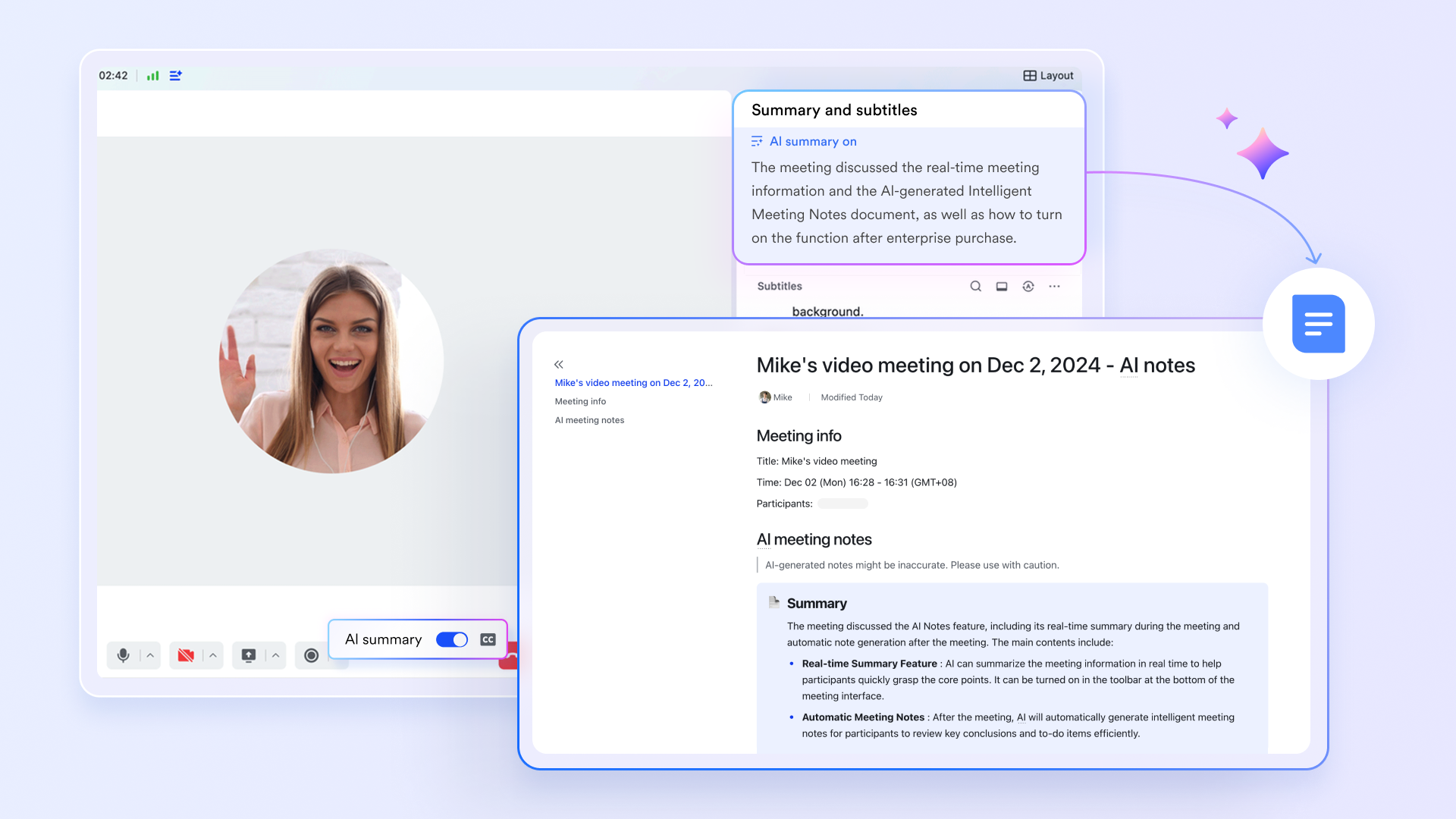
For teams that don’t want to spend time writing follow-ups, Lark AI Meeting Notes can generate meeting summaries and action items, with outcomes flowing into the tools where work happens (for example, sharing notes in group chats and syncing tasks to calendars). This reduces coordination overhead and helps teams move from discussion to delivery faster.
To measure adoption and delivery beyond pure engineering metrics, Lark Base can turn spreadsheets into interactive dashboards, visualize progress in multiple views (e.g., Kanban and Gantt), and automate routine workflows. This gives leaders real-time visibility while helping teams standardize execution and governance during AI rollout.
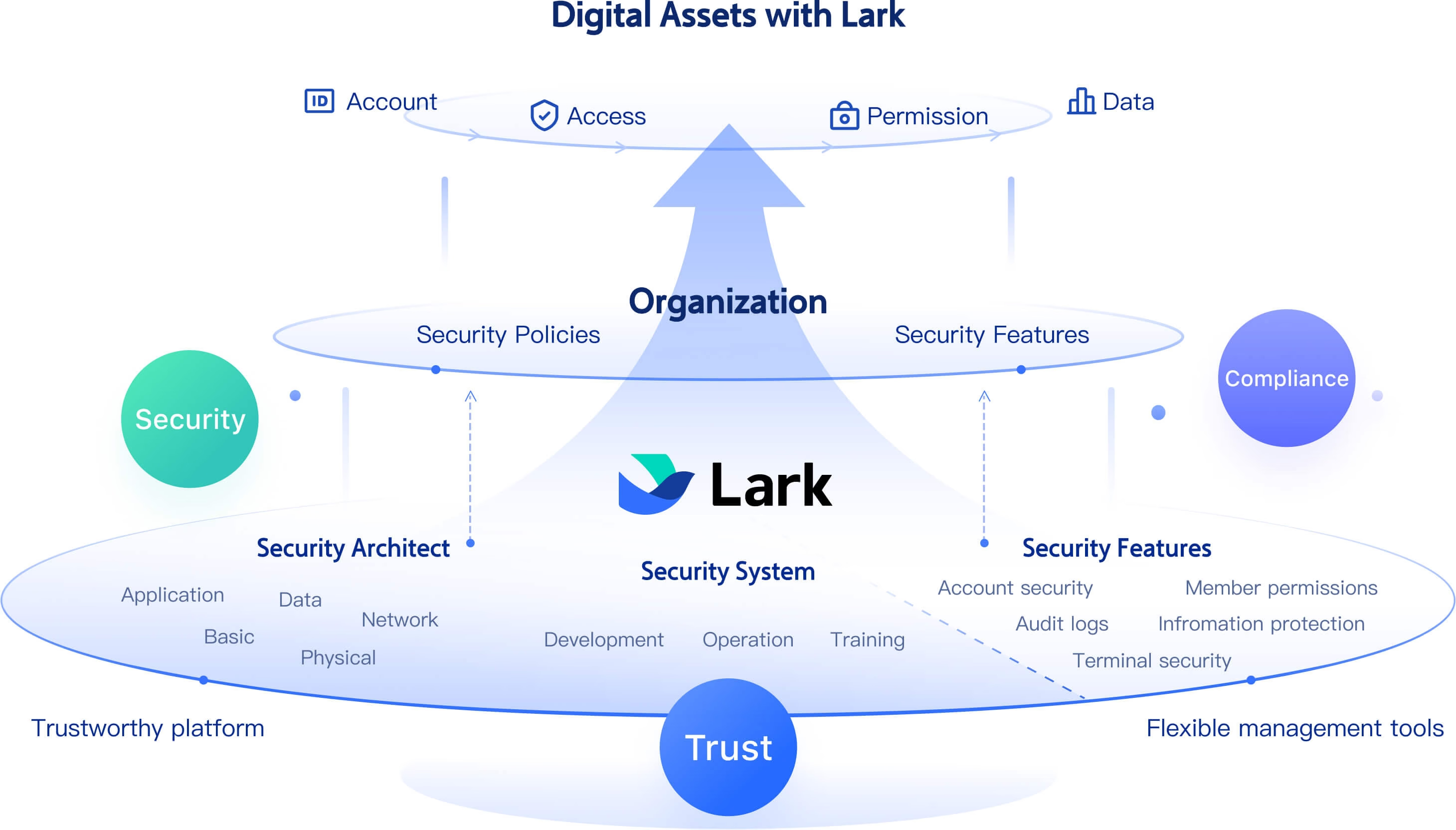
Security is also a collaboration and governance problem: As more AI workflows touch customer data and internal knowledge, organizations need centralized access controls and compliant tooling. Lark highlights enterprise-grade security and compliance certifications such as ISO/IEC 27001, SOC 2, SOC 3, PDPA, and GDPR.
For small teams with simple communication needs

18 months message history
1000 Base automation runs/month
2000 rows per table in Base
Most POPULAR
For companies with comprehensive collaboration and management needs
Unlimited message history
500-participant video meetings
50k Base automation runs/month
20k rows per table in Base
For large companies with advanced security and organizational management needs
Get a personalized demo and pricing
Unlimited message history
500-participant video meetings
15 TB storage + 30 GB storage/user
500k Base automation runs/month
50k Base automation runs/month
Most POPULAR
For companies with comprehensive collaboration and management needs
Unlimited message history
500-participant video meetings
50k Base automation runs/month
20k rows per table in Base
Conclusion
If you are thinking about starting your journey in artificial intelligence development, consider partnering with Artjoker. From high-quality datasets to resources for training AI/ML models, these experts can accelerate your progress and set you up for success. Dive into the future of innovation — start building your own artificial intelligence today.
In parallel, standardizing how decisions, documentation, and execution are managed internally can make AI adoption easier to scale—many teams use a unified workspace like Lark to connect meetings, docs, workflows, and reporting in one place.
FAQs
Should enterprises build AI solutions in-house or partner with external providers?
It depends on your timeline, internal expertise, and risk tolerance. Building in-house can offer deeper control and long-term differentiation, but often requires significant hiring, infrastructure, and governance. Partnering with experienced AI implementation companies can accelerate delivery—especially for complex integrations, data engineering, and production-grade deployment—while your internal teams focus on strategy, adoption, and operating the solution.
What are the biggest bottlenecks when scaling AI in software development?
Even if AI speeds up coding, teams often hit new bottlenecks in testing, security, deployment, and cross-team coordination. Decision context can get scattered across chats, meetings, and documents, slowing execution. Many organizations address this by standardizing workflows for documentation, ownership, and follow-up so AI-driven speed gains aren’t lost in handoffs.
How can teams ensure meetings and decisions translate into real execution?
A common failure point is that outcomes from discussions don’t reliably become tasks, deadlines, and shared documentation. Using tools that capture meeting content, summarize decisions, and assign action items can reduce manual follow-ups and improve accountability. For example, Lark Minutes supports searchable meeting transcripts, and Lark AI Meeting Notes can generate summaries and action items that flow into chats and calendars—helping teams move from discussion to delivery faster.
What should enterprises look for in secure, scalable AI rollout operations?
Beyond model performance, enterprises need strong governance: access control, auditability, compliance readiness, and predictable processes for handling sensitive data. This includes both technical security controls and collaboration-layer governance (who can see what, how long data is retained, how approvals work). Platforms like Lark emphasize enterprise-grade security and compliance certifications (e.g., ISO/IEC 27001, SOC 2, SOC 3, PDPA, GDPR), which can support organizational requirements during AI adoption.
Related reading