














Lean Software Development: A Practical Guide for Teams

Ryan Tanner
Product Marketing Specialist
Sep 18, 2026
Ryan Tanner
Sep 18, 2026

14 min read


Why do so many software projects fail? It's not usually a lack of skill, but wasted effort, poor prioritization, and features that never create real value. Lean software development offers a distinct approach—one built on minimizing waste, prioritizing customer needs, and continually improving.
Instead of chasing speed, lean helps teams deliver smarter. Today, tools like Lark make these principles practical by streamlining workflows, aligning priorities, and cutting bottlenecks. This guide explores how lean software development empowers teams to work with clarity, efficiency, and purpose—turning big ideas into successful outcomes without the usual chaos.

Why lean matters in software development
In today's fast-paced digital landscape, even skilled teams often run into common traps. Projects get over-engineered with unnecessary complexity, products swell with features few people actually use, and release cycles stretch so long that by the time updates ship, customer needs have already changed. The result? Wasted effort, rising costs, and frustrated users.
Lean software development offers a way out of this cycle. By emphasizing faster delivery, continuous feedback, and waste reduction, lean helps teams focus on what truly matters—delivering value to customers. Instead of trying to do everything, teams prioritize the features and improvements that make the biggest impact.
What makes this practical is how visible and manageable lean workflows can become with the right project management tools. For example, with Lark Base Kanban boards, teams can map out tasks, track progress, and instantly spot bottlenecks. This clarity turns abstract lean principles into tangible practices, helping teams release faster, stay aligned, and avoid the pitfalls of over-engineering.
Core principles of lean software development
Understanding lean software development principles is the first step to putting this robust methodology into practice. Each principle comes from lean manufacturing roots but has been adapted through modern manufacturing software development services to address the unique challenges of software. Together, they form the backbone of lean software development methodology, guiding teams toward efficiency, customer focus, and continuous improvement.
- Eliminate waste: Waste in software often takes the form of unused features, duplicated work, or endless documentation that no one reads. By cutting out what doesn't directly create customer value, teams free up time and resources for what truly matters. In practice, this means constantly questioning whether a feature solves a real problem—or whether it's just adding complexity.
- Build quality in: In lean, quality isn't something you tack on at the end. Instead, it's woven into every stage of development. Automated testing, coding standards, and peer reviews ensure fewer bugs and less rework later. This proactive approach reduces costs, speeds up delivery, and boosts confidence in every release.
- Create knowledge: Software development is a learning process, not just a production line. Continuous feedback loops—through user testing, retrospectives, and analytics—help teams learn what works and what doesn't. The more teams experiment and measure, the smarter and more effective their decisions become.
- Defer commitment: The lean management software development mindset avoids locking teams into big, irreversible decisions too early. Instead, teams keep options open until the correct data or feedback is available. This flexibility reduces the risk of costly mistakes and makes it easier to adapt when customer needs shift.
- Deliver fast: Shorter release cycles mean quicker learning and faster value for customers. Instead of waiting months for a launch, teams using the lean software development methodology deliver in smaller increments. Each release provides an opportunity to gather feedback, validate assumptions, and maintain momentum.
- Respect people: Lean recognizes that developers, testers, and designers are not just resources—they're problem solvers. Respecting people means empowering them to make decisions, encouraging collaboration, and valuing creativity. When teams feel trusted, they take ownership of their work and contribute at a higher level.
- Optimize the whole: Focusing on isolated silos—such as just the development team or just QA—creates bottlenecks and inefficiencies. Lean encourages teams to optimize the entire system, from idea to delivery. This holistic view ensures smoother handoffs, better collaboration, and a stronger end product.
Every one of these lean software development principles can be brought to life with the right tools. For example, Lark Base supports workflow visualization, Tasks streamline responsibility, Docs and Wiki capture knowledge, Sheets organize data, and automated workflows cut repetitive tasks. With these capabilities, Lark helps teams translate lean theory into practical daily habits, making lean software development not just a methodology—but a way of working.
Lean methodology in practice: How teams use it
The true strength of the lean software development methodology is that it adapts to different roles within a team, ensuring everyone contributes to reducing waste and maximizing value.
- Development teams: Development teams often find themselves overwhelmed by long backlogs, technical debt, and constant bug fixes. By applying lean software development principles, they focus only on the most valuable backlog items, integrate testing early, and reduce time lost on rework. This makes development cycles shorter, cleaner, and more predictable.
- Product managers: Product managers utilize lean principles to cut through the noise and identify what customers truly need. Instead of approving every feature request, they prioritize based on data and feedback, ensuring only high-value functionality reaches production. This customer-first approach answers the common question: what is lean software development really about? It's about creating meaningful impact, not endless features.
- QA teams: They bring lean thinking into quality assurance by adopting shift-left testing. This means they test earlier in the pipeline, which prevents costly defects from slipping into later stages. By aligning with the lean management software development mindset, QA professionals create a culture where quality is built in, not patched later.
- Customer support teams: Customer support teams also benefit from lean practices. Automating repetitive tasks—such as ticket assignment or status updates—frees them to focus on solving complex customer issues. This not only increases efficiency but also builds stronger customer trust.
Across all these roles, collaboration tools help turn lean into daily practice. For example, teams using Lark Docs for specifications, Tasks for accountability, and Messenger for real-time updates can easily put lean theory into action.
How Lark supports lean software development end to end
Lark isn't just a collection of separate tools—it's an integrated platform designed to make lean software development practical. By combining project tracking, communication, automation, and knowledge-sharing in one place, it helps teams eliminate waste, collaborate more effectively, and continuously improve. Here's how each feature supports lean principles in daily workflows.
- Lark Base: Streamline flow and eliminate process waste
Lark Base serves as the central hub for project data and task management. Its Kanban board view gives teams a clear visual of workflows, making it easy to spot bottlenecks and keep projects flowing. With pre-built templates for sprint planning and project management, teams don't have to reinvent the wheel—they can launch lean workflows quickly and customize them to fit their process.
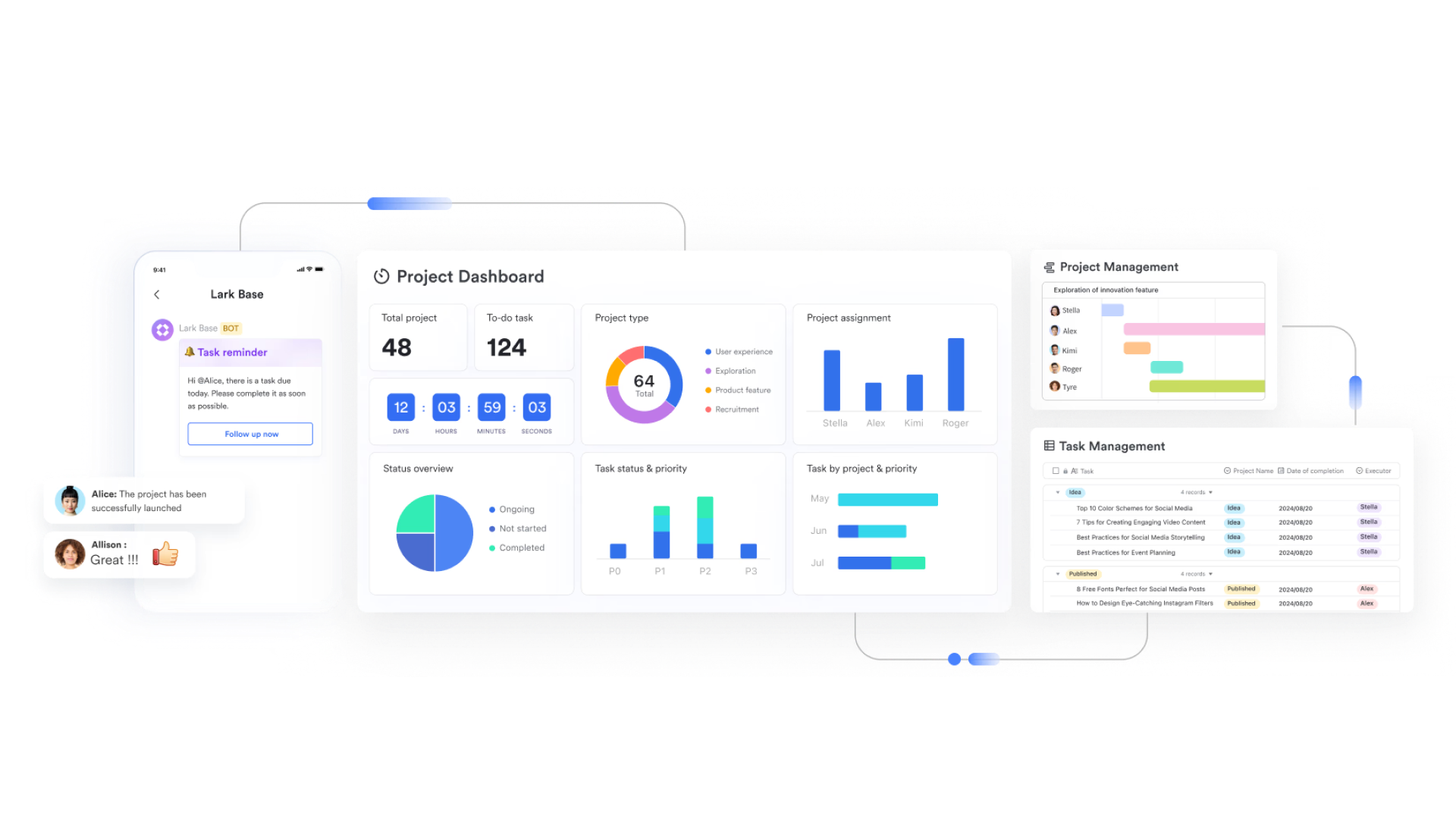
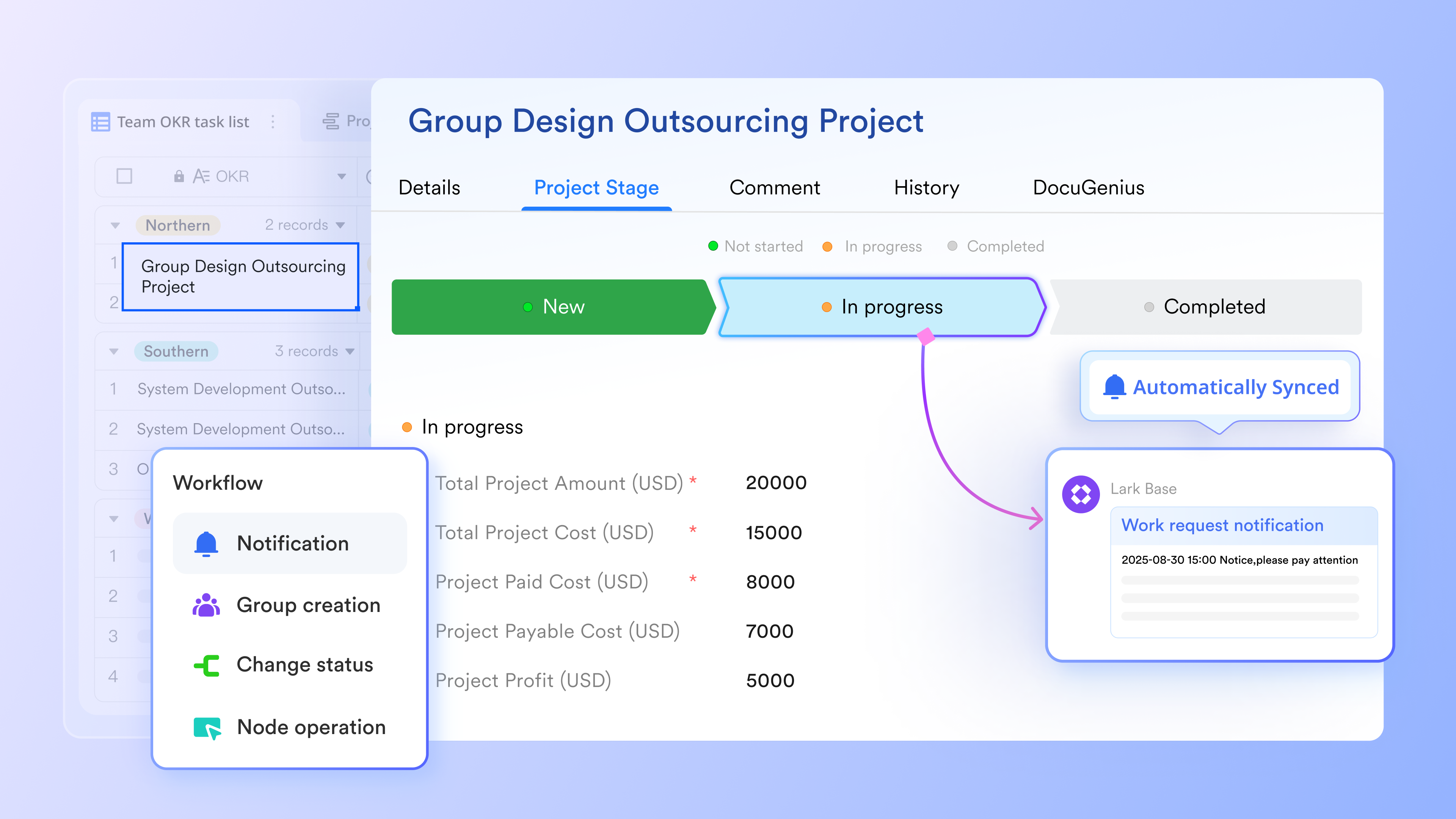
Repetitive manual updates are one of the biggest sources of waste in software projects. Lark's automation engine allows teams to set up triggers and actions—like updating task status or sending notifications when a step is complete. This eliminates busywork, reduces errors, and frees the team to focus on meaningful, value-driven work.
- Lark Tasks: Strengthen ownership and reduce rework
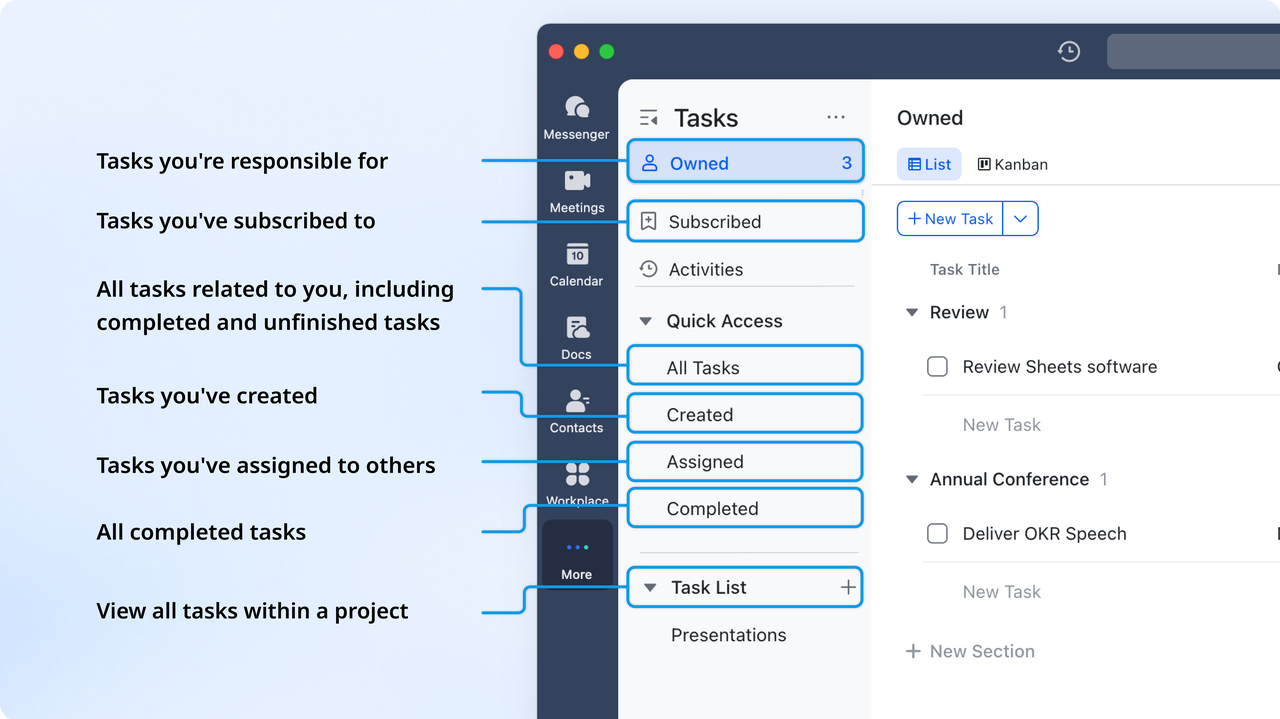
In lean development, accountability prevents delays and rework. With Lark Tasks, every item has a clear owner and a due date, ensuring that nothing slips through the cracks. Tasks can even be created directly from a chat or a document, embedding ownership rights where collaboration happens. This level of clarity empowers developers to stay focused and deliver on time.
- Lark Messenger & Meetings: Remove blockers with instant communication
Lean emphasizes removing blockers quickly, and Lark makes this seamless. Teams can chat in Messenger, escalate to a video call in a single click, and resolve issues in real time—all without switching apps. This reduces waiting time, accelerates decision-making, and ensures that project flow isn't stalled by unanswered questions.
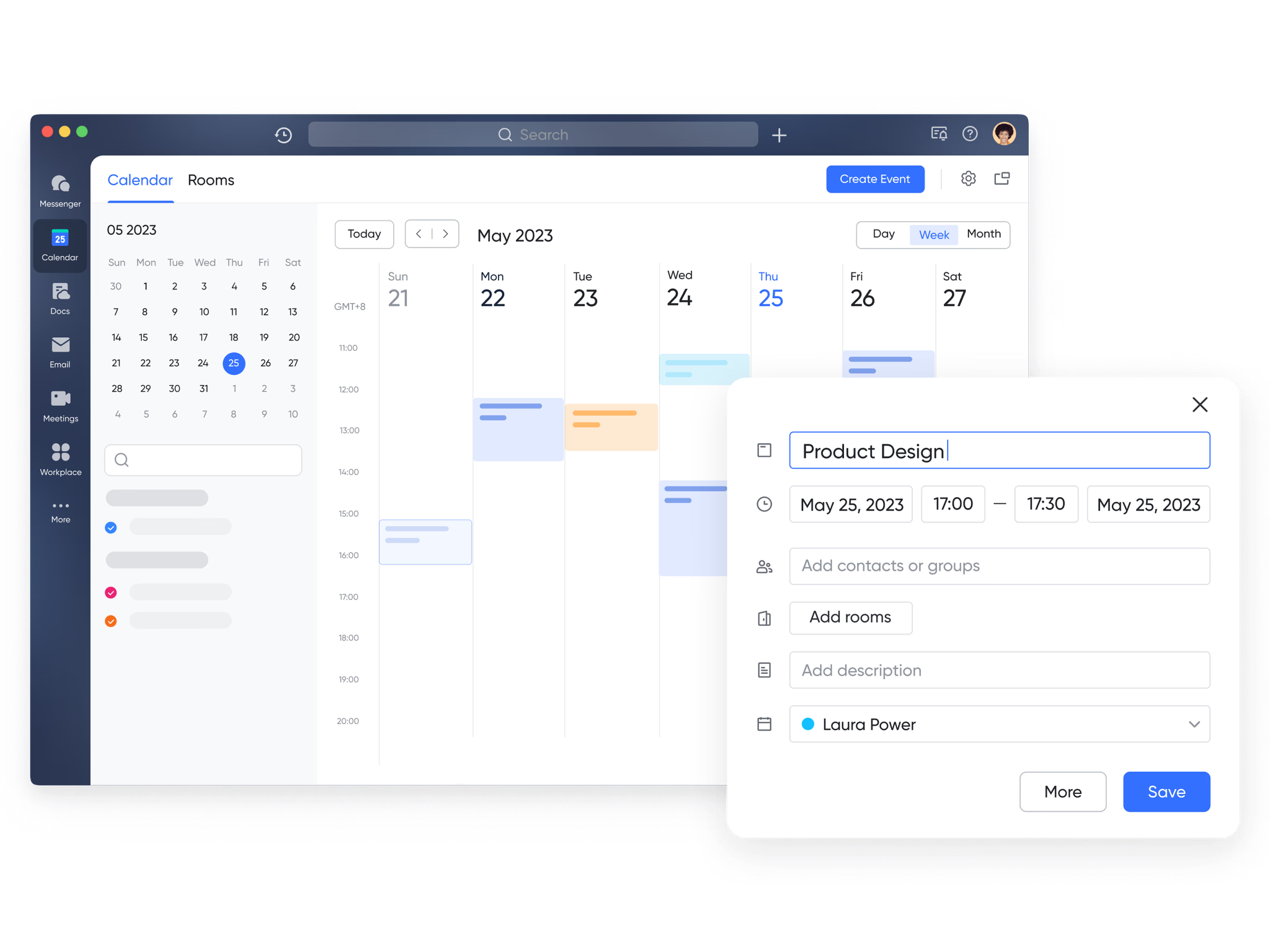
- Lark Calendar: Align milestones for continuous delivery
Continuous improvement requires visibility of key milestones. With Lark Calendar, teams can schedule sprint reviews, retrospectives, release dates, and more in one shared view. Everyone stays aligned on critical deadlines, and lean ceremonies become part of the rhythm of work instead of an afterthought.
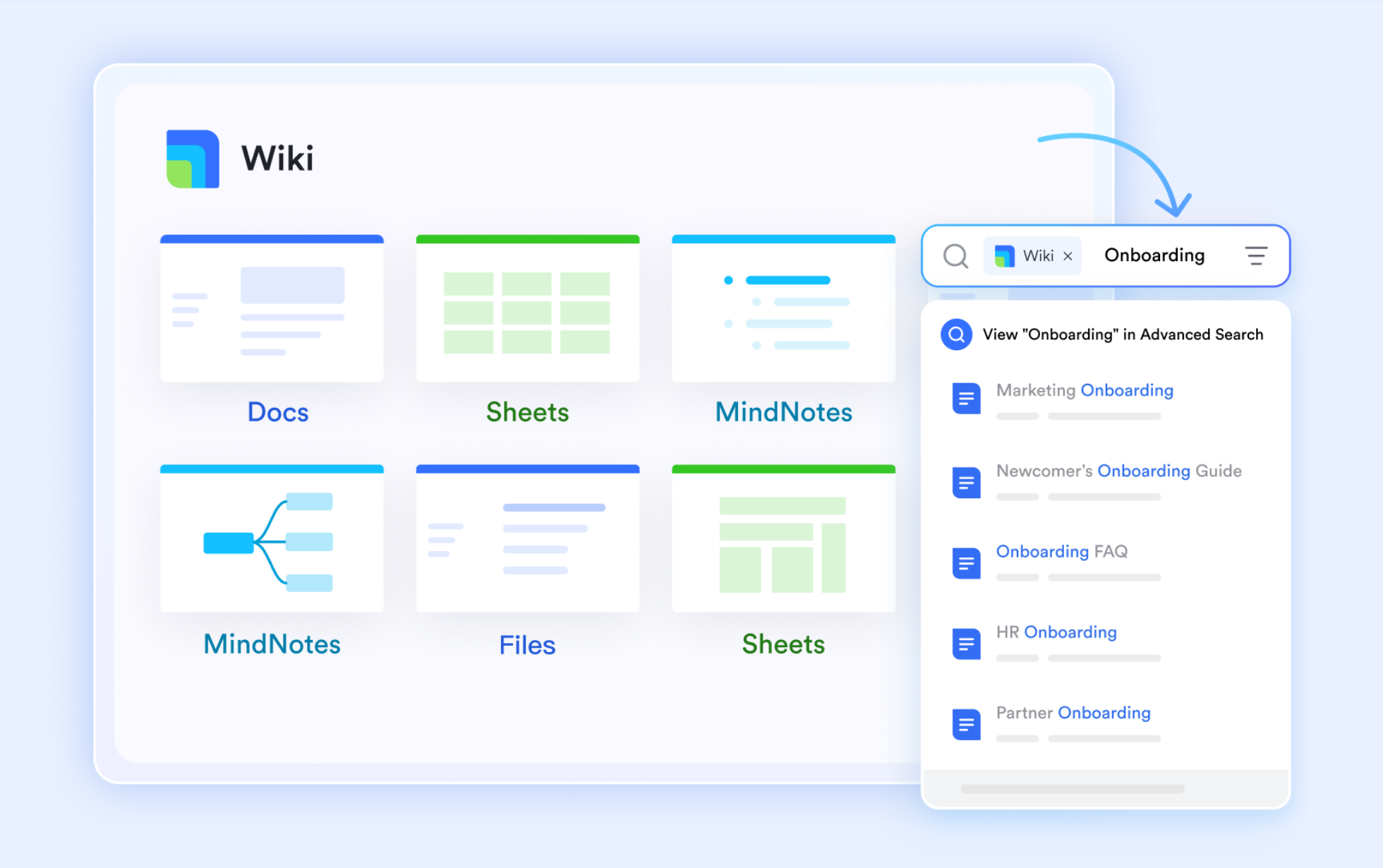
- Lark Docs & Wiki: Build a culture of shared learning
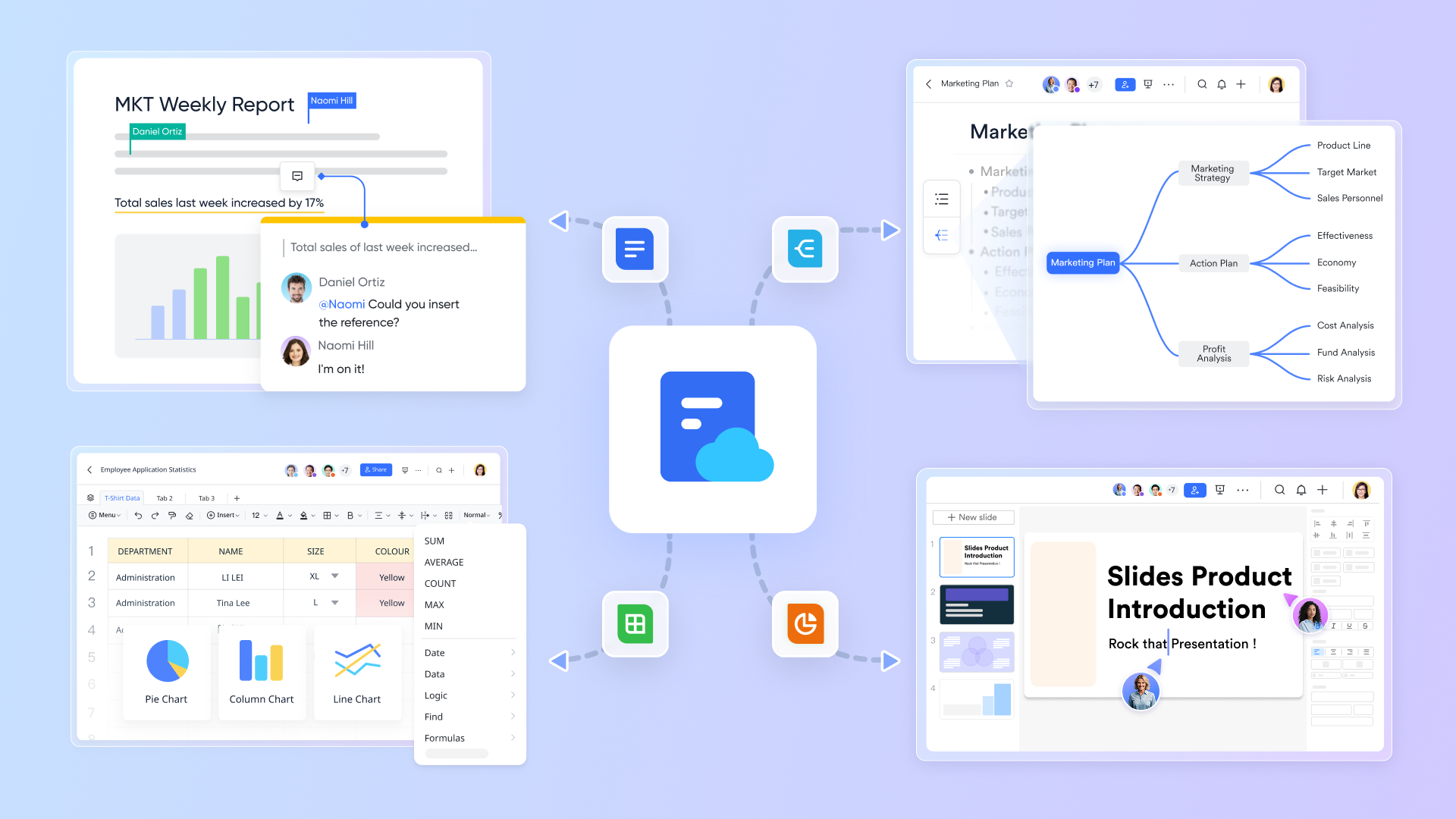
Lean teams thrive on shared learning. Lark Docs and Wiki provide a central, searchable hub for project knowledge, from technical documentation to meeting notes. This reduces duplication of effort and ensures new team members can get up to speed quickly. It supports a culture of learning and makes improvement a natural part of the workflow.
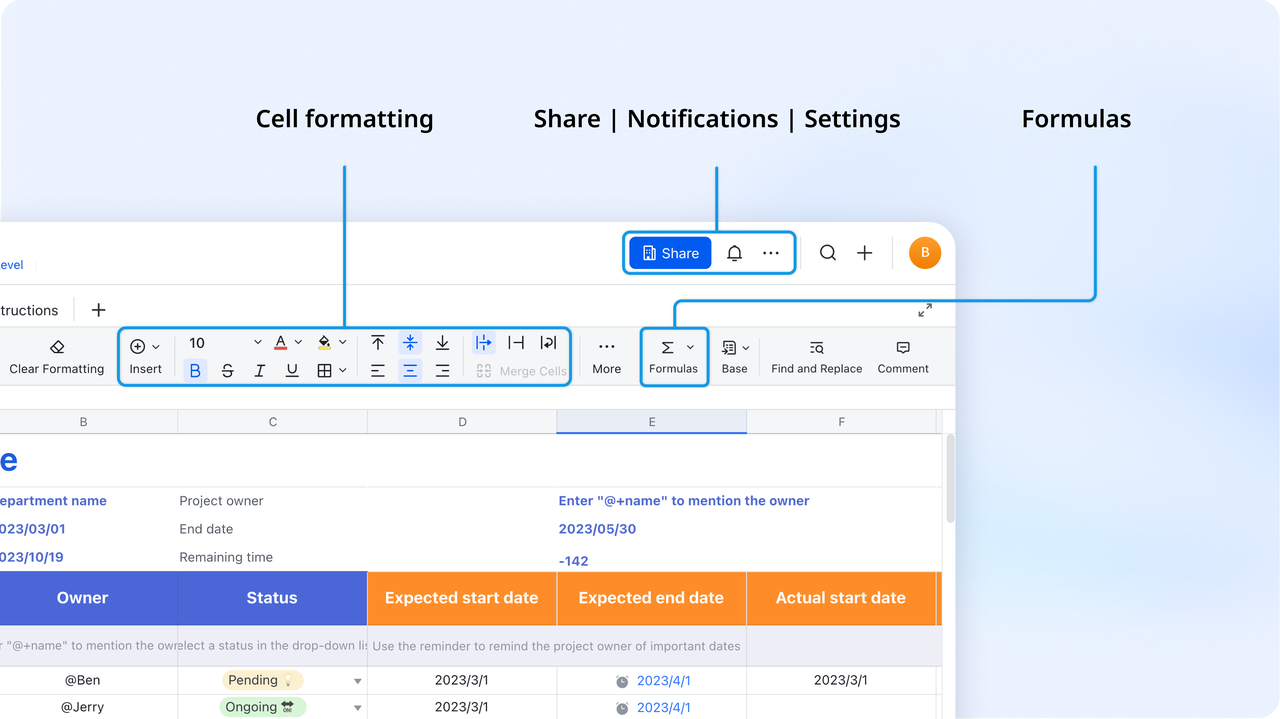
- Lark Sheets: Measure performance to drive improvement
In lean, measurement drives improvement. Lark Sheets lets teams build custom dashboards that track KPIs like cycle time, throughput, and defect rates. Because Sheets connects directly to Base, you can visualize progress in real time and measure how effectively value is being delivered. These insights help teams continuously optimize their process.
- Starter plan: Free forever plan that includes 11 powerful tools for up to 20 users. It also comes with 100GB of storage, 1000 automation runs, AI translations, and more.
- Pro plan: $12/user/month (billed annually) for up to 500 users. It includes everything in Starter plus group calling for up to 500 attendees, 15TB of storage, 50,000 automation runs, and more.
- Enterprise plan: Contact sales for custom pricing. Supports unlimited users and includes even more automation runs and advanced security, compliance, and management features.
Challenges and how to overcome them with Lark
Implementing lean software development isn't always smooth sailing, especially for teams new to the methodology. The transition from traditional workflows takes discipline, clear priorities, and reliable ways to measure progress. Lark's integrated platform helps address these common hurdles, turning lean principles into everyday practice:
- Maintaining discipline → Automated workflow keeps tasks on track: Discipline is usually the first challenge teams run into when adopting lean. Manual updates and repetitive check-ins can lead to missed steps and a breakdown in consistency. Lark's automated workflow takes care of this by updating tasks automatically and sending reminders when actions are due. This creates a built-in structure that keeps everyone accountable and turns lean practices into part of the daily rhythm.
- Scaling lean across teams → Base dashboards unify cross-team workflows: Lean may work well with a single team, but scaling it across departments or large organizations can create silos. Different tools and processes make it hard to see the big picture. With Lark Base dashboards, all workflows are brought into one shared view, giving leaders and team members a unified source of truth. This alignment helps identify dependencies and ensures that everyone is moving toward the same goals.
- Unclear priorities → Docs + Wiki align goals with execution: In fast-moving environments, priorities can shift or get lost altogether, leading to wasted effort on low-value tasks. Lean requires everyone to know exactly what creates customer value. Lark's Docs and Wiki act as a shared knowledge hub where goals, specs, and user stories are documented and easy to access. With clear visibility, teams stay aligned, make better decisions, and focus on the work that really matters.
- Tracking performance → Sheets visualize KPIs like cycle time and defect rates: Continuous improvement in lean depends on reliable data. But tracking metrics manually—like cycle time, throughput, or defect rates—can be a burden. Lark Sheets connects directly to project data to automatically create dashboards that visualize these KPIs in real time. This makes it easier for teams to measure progress, spot bottlenecks, and make targeted improvements without the extra busywork.
Lean vs Agile vs other methodologies
Teams often compare lean to other approaches, asking: What is lean software development in contrast to Agile, Waterfall, or Six Sigma? The answer lies in their core focus.
- Lean vs Agile: Lean emphasizes reducing waste, cutting unnecessary processes, and delivering customer value as efficiently as possible. Agile focuses on adaptability, iterative sprints, and embracing change when requirements evolve. Both share similarities, but Lean is about trimming excess, while Agile is about flexibility and responsiveness. Together, they can even complement one another.
- Lean vs Waterfall: Traditional Waterfall follows a rigid, step-by-step process where requirements, design, and testing happen in strict sequence—Lean breaks away from this by enabling iterative work, shorter cycles, and quicker feedback. Applying lean software development principles here ensures faster learning, reduced risk, and more opportunities to adapt midstream.
- Lean Six Sigma: Combining lean with Six Sigma creates a hybrid model. Lean reduces waste and inefficiency, while Six Sigma focuses on data-driven quality improvements. In enterprises, this blend aligns with lean management software development, delivering both speed and precision while maintaining high standards.
The advantage today is flexibility. With tools like Lark Base, teams don't need to choose just one methodology. They can visualize workflows on Kanban boards for lean, organize sprints for Agile, or manage structured processes with Sheets for Waterfall—all in the same environment.
Examples of lean software development in real projects
Theory becomes more powerful when we see how it plays out in practice. These examples show how the lean software development methodology helps teams of all sizes work smarter.
- Startup example: A small startup builds its MVP by applying lean principles to avoid wasted effort. Instead of creating a bloated product, they focus on must-have features, gather early user feedback, and pivot quickly when needed. This is a clear demonstration of what lean software development is—a framework for delivering value quickly without unnecessary overhead.
- Enterprise example: Large organizations often struggle with duplicated work and siloed teams. By applying lean management software development, they centralize knowledge, share workflows, and reduce redundancy across departments. The result is not just cost savings, but a more aligned and collaborative culture that scales.
- DevOps example: Lean also fits seamlessly into DevOps. By automating CI/CD pipelines, teams deliver faster, catch bugs earlier, and continuously improve deployment processes. This aligns perfectly with lean software development principles like building quality in and delivering fast.
To accelerate adoption, tools like Lark provide pre-built Kanban boards and workflow templates. Whether it's a startup testing an MVP, an enterprise aligning cross-functional teams, or a DevOps team optimizing automation, these templates make it easier to embed lean into daily operations without reinventing the wheel.
Benefits of lean software development
Adopting the lean software development methodology goes beyond cutting waste—it transforms how teams deliver value and collaborate. Here are the key benefits teams can expect:
- Faster release cycles: One of the core advantages of lean software development is the ability to deliver value to customers more quickly. By removing waste and focusing only on essential features, teams can shorten development cycles and get products to market faster. This reflects one of the key lean software development principles: speed without sacrificing quality.
- Reduced costs: The lean software development methodology emphasizes efficiency, helping teams avoid wasted time, duplicate work, and unnecessary features. As a result, companies save money while ensuring resources are directed toward customer value. It's a smarter way to manage budgets in today's competitive software landscape.
- Improved collaboration: A major part of what is lean software development is its focus on breaking down silos and encouraging cross-functional teamwork. Developers, designers, and product managers work side by side, reducing delays and miscommunication. Lean management software development relies on this collaboration to keep projects aligned and flowing smoothly.
- Greater customer satisfaction: Lean is all about delivering value from the customer's perspective. By prioritizing feedback loops and iterative delivery, teams ensure that features truly meet user needs. This customer-first mindset leads to higher satisfaction and stronger long-term relationships.
- Continuous improvement culture: Lean software development principles encourage teams to constantly reflect, measure, and optimize their process. Retrospectives, metrics, and incremental changes help teams evolve over time. This culture of continuous improvement ensures software products and teams never stand still.
With Lark Base dashboards, teams measure throughput, cycle times, and customer value delivered. Data-driven insights make lean management software development practical day-to-day. With Lark Base, teams can track KPIs like throughput and cycle time, making it easier to connect effort with real value delivered. This visibility helps lean software development principles move from theory into practice.
Conclusion
Lean software development isn't just a methodology—it's a mindset that helps teams stay laser-focused on value, eliminate inefficiencies, and adapt faster in a constantly evolving digital world. By embracing lean principles, software teams shift from "doing more" to "doing what matters," turning every sprint, release, and iteration into a step toward meaningful progress.
With Lark's unified platform, putting these principles into practice becomes seamless. From Kanban-style Base templates to automated workflows, shared Docs and Wiki, and real-time communication tools, Lark empowers teams to streamline operations and align effortlessly. The result? Less waste, faster delivery, and a work culture grounded in collaboration and continuous improvement.
So whether you're a fast-moving startup or a large enterprise aiming for efficiency and innovation—start your lean software development journey with Lark today and see how simplicity drives smarter results.
FAQs
What tools are most commonly used for lean software development?
Teams often use tools like Kanban boards, task trackers, and collaboration platforms to support lean software development principles. These tools help visualize work, limit bottlenecks, and maintain a steady flow of value delivery. With platforms like Lark Base, teams go beyond bare boards—integrating analytics, automation, and real-time collaboration to ensure lean methodology runs smoothly.
Can lean software development be applied outside IT?
Yes, absolutely. While the lean software development methodology was first adopted in the IT industry, its principles—reducing waste, continuous improvement, and maximizing value—apply across various industries. Marketing, HR, and even manufacturing teams have successfully adapted lean approaches to improve efficiency. Tools like Lark extend lean beyond software by offering templates and automation that work across departments.
How does lean software development impact team culture?
Lean software development isn't just about process—it reshapes how teams think and work. It fosters a culture of collaboration, accountability, and experimentation. Instead of focusing on output, teams prioritize customer value and learning. With platforms like Lark Base, progress is transparent, feedback loops are faster, and teams naturally adopt a culture of continuous improvement.
How is lean software development applied in startups vs enterprises?
In startups, lean software development is often embraced to stay agile—teams move fast, test ideas quickly, and adapt based on feedback. In enterprises, lean requires more structure but helps large teams cut waste and align on delivering customer value. Lark Base supports both: startups benefit from lightweight, flexible templates, while enterprises can leverage automation, reporting, and scalability without losing agility.
Related reading
Table of contents
Start using Lark today

Manage all your work in one place
Boost team efficiency by 10x
Save up to 70% on software costs
Table of contents
Start using Lark today
Manage all your work in one place
Boost team efficiency by 10x
Save up to 70% on software costs
Keep reading







2026 Lark Technologies Pte. Ltd.
Headquartered in Singapore with offices worldwide.






Explore: