














The Best CRM Software for Hotels in 2026: Top Tools Compared

Matthew Sia
Product Marketing Manager
Sep 18, 2026
Matthew Sia
Sep 18, 2026

22 min read


Choosing the best CRM software for hotels is a critical decision for any hotelier aiming to thrive in today's competitive landscape. The right tool moves beyond a simple database, acting as the central nervous system for your guest relationships. It empowers you to deliver memorable experiences that encourage repeat bookings and foster lasting loyalty.
This guide provides a detailed comparison of leading hotel CRM software options. We will explore their key features and how they cater to different needs, helping you identify the perfect solution to elevate your guest service and drive your hotel's revenue. Here is a quick overview of our top selections for the best hotel CRM software available in 2025:
1. Lark: An all-in-one collaboration platform with built-in CRM capabilities
2. Salesforce: A highly customizable enterprise CRM with AI-powered insights
3. Revinate: A hotel-specific platform focused on guest marketing and retention
4. HubSpot: An intuitive all-in-one platform with a powerful free CRM tier
5. Cendyn: A comprehensive hospitality-specific CRM and customer data platform
6. Cloudbeds: An all-in-one hospitality management suite with built-in CRM
7. Zoho CRM: A versatile and scalable CRM with strong automation capabilities
8. Pipedrive: A visual sales-focused CRM with pipeline management tools
What is a hotel CRM and why is it essential?
A hotel Customer Relationship Management (CRM) system is a technology suite designed to manage all your hotel's interactions with current and potential guests. At its core, it is a centralized database that stores guest information, enabling personalized service and targeted marketing.
Think of it as the key to shifting from transactional stays to relationship-based hospitality. Instead of a guest being forgotten after check-out, a hotel CRM system ensures they are remembered. It tracks their preferences, history, and feedback, allowing you to welcome them back with a tailored experience that feels both personal and seamless.
Key benefits of using a specialized CRM for your hotel
Implementing a dedicated CRM for hospitality brings transformative advantages that directly impact your bottom line and guest satisfaction scores.
- Deliver consistently personalized guest experiences
A specialized CRM platform enables the creation of comprehensive guest profiles that track preferences and interaction history across all touchpoints. This centralized knowledge base allows for the delivery of tailored services that make guests feel recognized and valued. The system ensures that personal preferences are consistently acknowledged throughout the guest journey, fostering stronger emotional connections and encouraging repeat visits.
- Cultivate long-term guest loyalty and retention
Advanced CRM systems support the development of structured loyalty programs that automatically recognize and reward repeat guests. The platform can track guest value over time and trigger appropriate rewards and recognition at key touchpoints. This systematic approach to relationship management transforms occasional visitors into dedicated brand advocates, significantly enhancing lifetime customer value through meaningful, automated engagement strategies.
- Execute precision marketing with intelligent automation
Modern CRM solutions provide powerful segmentation capabilities combined with automated workflow tools. These features enable marketing teams to create highly targeted campaigns based on detailed guest attributes and behaviors. The system's automation capabilities ensure timely, relevant communication while maintaining personalization at scale, resulting in improved campaign performance and more efficient use of marketing resources.

Must-have features in the best hotel CRM software
When evaluating options for the best CRM software for hotels, it is essential to prioritize capabilities that directly support personalized guest experiences and operational excellence. The right system should function as a central hub for all guest-related activities.
- Centralized guest profiles and interaction history
A comprehensive CRM must offer a unified database that seamlessly consolidates guest contact details, stay history, preferences, and all communication touchpoints. This single source of truth is fundamental for delivering consistent and personalized service. The platform should enable real-time updates and easy access for authorized team members, ensuring that every department operates with the same complete information.
- Automated marketing and communication workflows
Look for systems with robust automation tools that streamline guest outreach. The platform should facilitate the creation of personalized email sequences for various guest journeys, such as pre-arrival messages, post-stay follow-ups, and targeted promotional campaigns. Advanced systems provide intuitive, no-code workflow builders that allow for the automation of complex communication sequences without requiring technical expertise.
- Dynamic guest segmentation and list management
Effective targeting requires sophisticated segmentation capabilities. A powerful CRM enables the creation of dynamic guest segments based on a wide range of criteria, including stay history, preferences, and engagement levels. This functionality allows for highly focused marketing initiatives and ensures that communications are relevant to specific guest groups, thereby increasing campaign effectiveness and return on investment.
- Seamless integration with core operational systems
A critical feature is the ability to integrate deeply with your Property Management System (PMS) and other critical platforms. This integration ensures that booking data, staying information, and guest details flow automatically between systems, eliminating manual data entry and reducing errors. Beyond PMS connectivity, the ideal platform should offer an ecosystem for connecting with other tools, creating a unified operational environment that breaks down information silos.
- Advanced reporting and performance analytics
Data-driven decision-making is supported by comprehensive analytics. The CRM must include a customizable dashboard that tracks key performance indicators related to guest loyalty, marketing campaign success, and revenue from returning visitors. The system should provide clear views that help measure the impact of your guest relationship strategies and identify opportunities for improvement.
- Built-in collaboration and task management
Beyond traditional CRM functions, modern platforms incorporate tools that facilitate team coordination. The ability to assign tasks, share guest notes, and manage follow-up actions within the same environment enhances operational efficiency. This integrated approach ensures that insights from guest data directly translate into coordinated team actions, streamlining service delivery and internal workflows.
Comparing the 8 best CRM software for hotels
To help you make an informed choice, here is a detailed look at some of the top CRM software for hotels on the market.
1. Lark: An all-in-one collaboration platform with built-in CRM capabilities
As one of the best Google Workspace alternatives, Lark is an all-in-one collaboration platform that integrates CRM functionalities with team productivity tools. It is designed to streamline workflows by unifying communication, task management, and customer data in a single interface. This makes it particularly suitable for hotels aiming to enhance internal coordination while managing guest relationships. By reducing the need to switch between multiple apps, Lark helps teams save time and maintain a centralized view of guest interactions and internal tasks.
📊 Lark Base: Building a 360-degree guest view
Lark Base, as a powerful no-code database, serves as the core data hub of the hotel CRM. It goes far beyond simply storing information; it allows you to build a dynamic, comprehensive guest profile.
- Deepen guest insights: You can create a comprehensive profile for each guest, recording not only basic contact information and history but also using custom fields to precisely capture preferences (e.g., preferred room type, pillow type, food allergies), special occasions (e.g., birthdays, anniversaries), and past complaints with resolutions. For instance, if a guest previously reported poor soundproofing, Base can log this. During their next booking, it can automatically alert the front desk to prioritize assigning a quiet room, making the guest feel valued.
- Empower revenue management: By integrating with systems like Square for payments and sales, Base can automatically sync sales data from various channels hourly. You can use this to visualize the most popular services or packages and identify the most valuable guest segments, thereby optimizing pricing strategies and product mix to directly enhance the hotel's RevPAR.
- Optimize operational collaboration: You can create service ticket flows with Base. For example, when a guest submits a maintenance request via a form, Base can automatically create a record in the table, instantly notify engineering staff via an automated workflow, and track the entire resolution process, ensuring every issue is properly followed up.
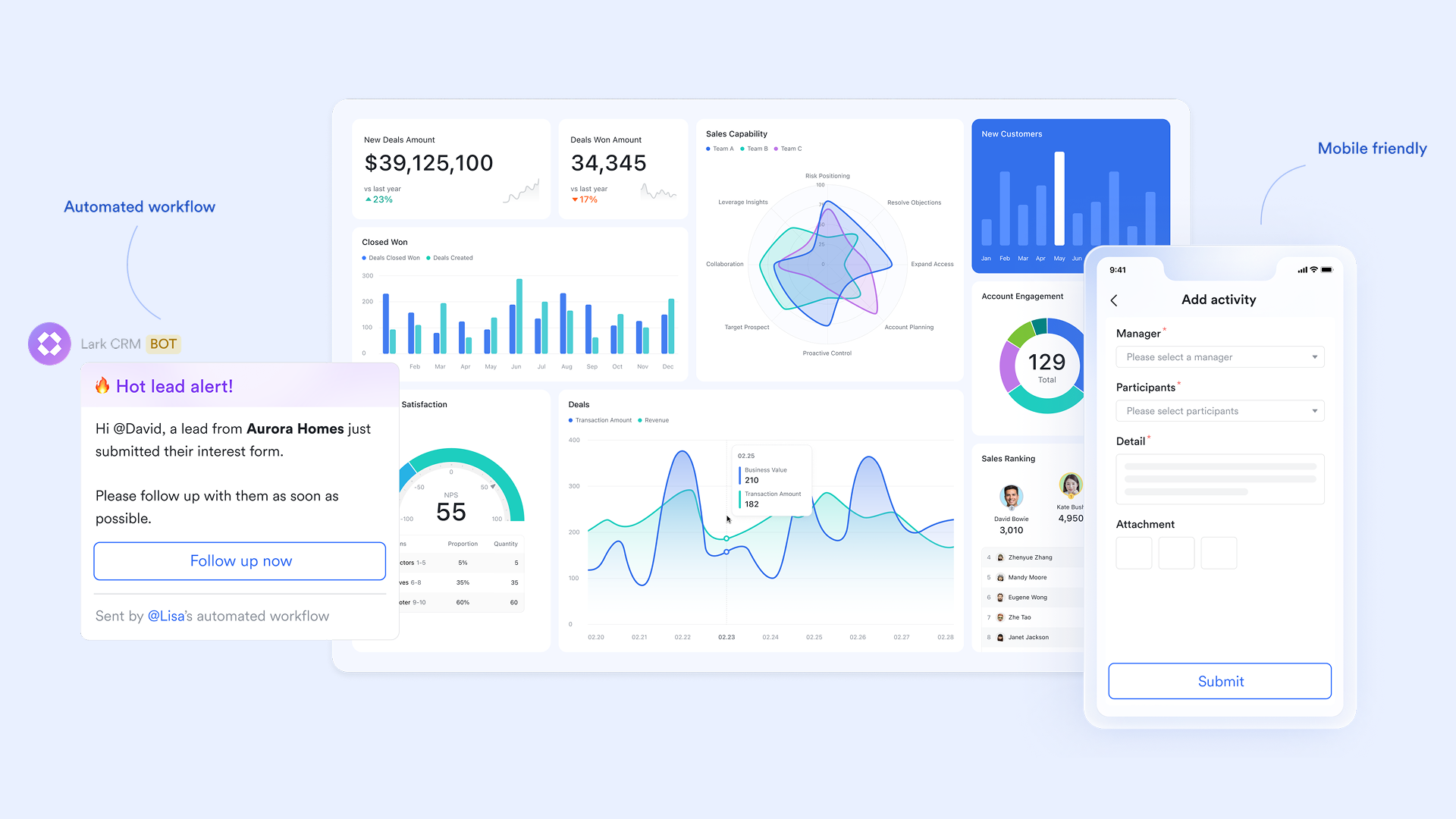
💬 Lark Messenger & Lark Docs: Enabling seamless, contextual communication
Lark Messenger ensures that communication revolving around guest information is instant and contextual, while Lark Docs is the ideal platform for collaboratively developing service plans and consolidating knowledge.
- Break down departmental silos: Imagine when a VIP guest arrives, the front desk staff can instantly create a temporary group chat in Lark Messenger including relevant personnel from the front desk, housekeeping, and concierge. Team members can share the guest's real-time needs directly in the chat, such as "Guest requests an extra pillow." Housekeeping can immediately address it and confirm completion in the chat, eliminating the need for phone calls and repeated verification.
- Ensure service consistency: For important group reception plans or complex guest service requirements, teams can use Lark Docs for collaborative editing. All relevant members see the latest version, preventing service errors due to inconsistent information. Docs can also be linked to a Messenger group chat, preserving all discussions and decision-making processes for easy traceability.
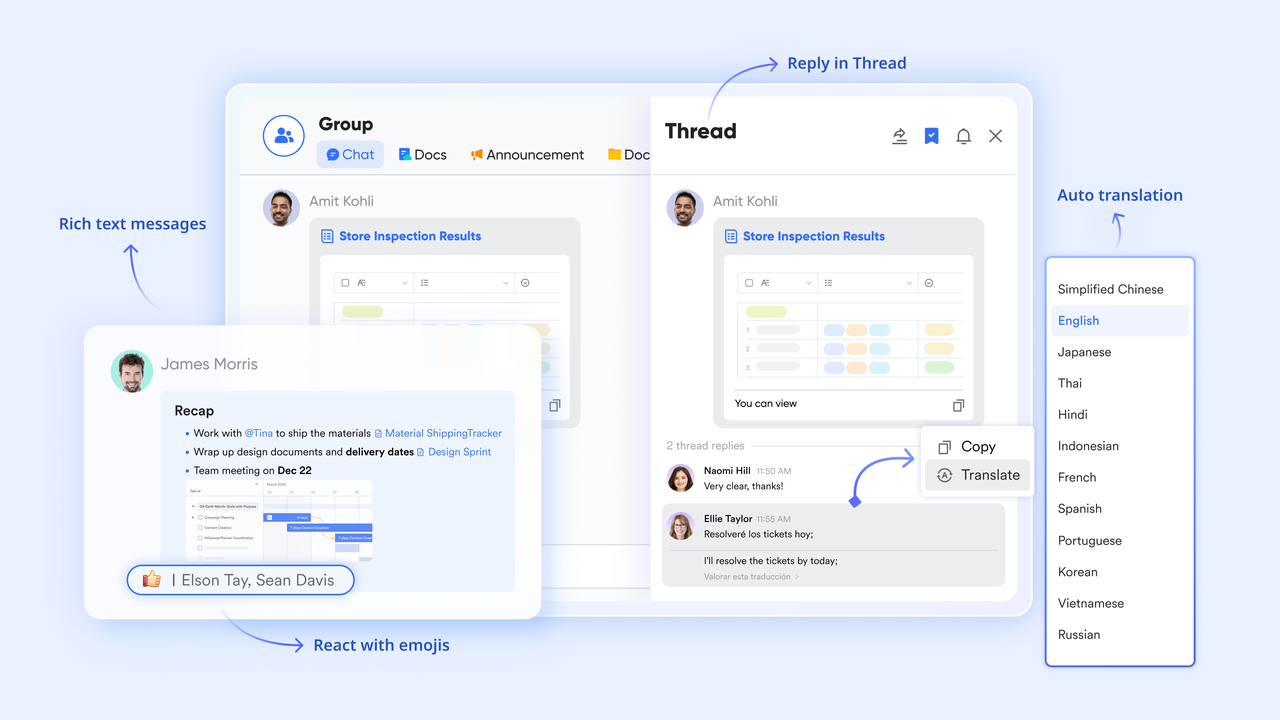
📧 Lark Mail & Lark Approval: Empowering precision marketing and standardized processes
Lark Mail serves as a direct channel for personalized communication between the hotel and its guests, while Lark Approval ensures that internal processes for special approvals or handling unique guest requests are both efficient and compliant.
- Execute precision marketing: Through Lark Mail, you can easily send personalized mail campaigns to specific guest segments (e.g., all business guests who stayed last month), such as reminders for renewing their exclusive corporate rates. Mails can be sent directly from a group chat with one click, improving the efficiency of internal communication and announcement dissemination.
- Standardize special permissions: When the hotel needs to offer a key client a discount outside standard policy or a complimentary service, the salesperson can submit an approval request via Lark Approval. The workflow will automatically route according to pre-set paths to the relevant approver, maintaining flexibility while controlling risk.
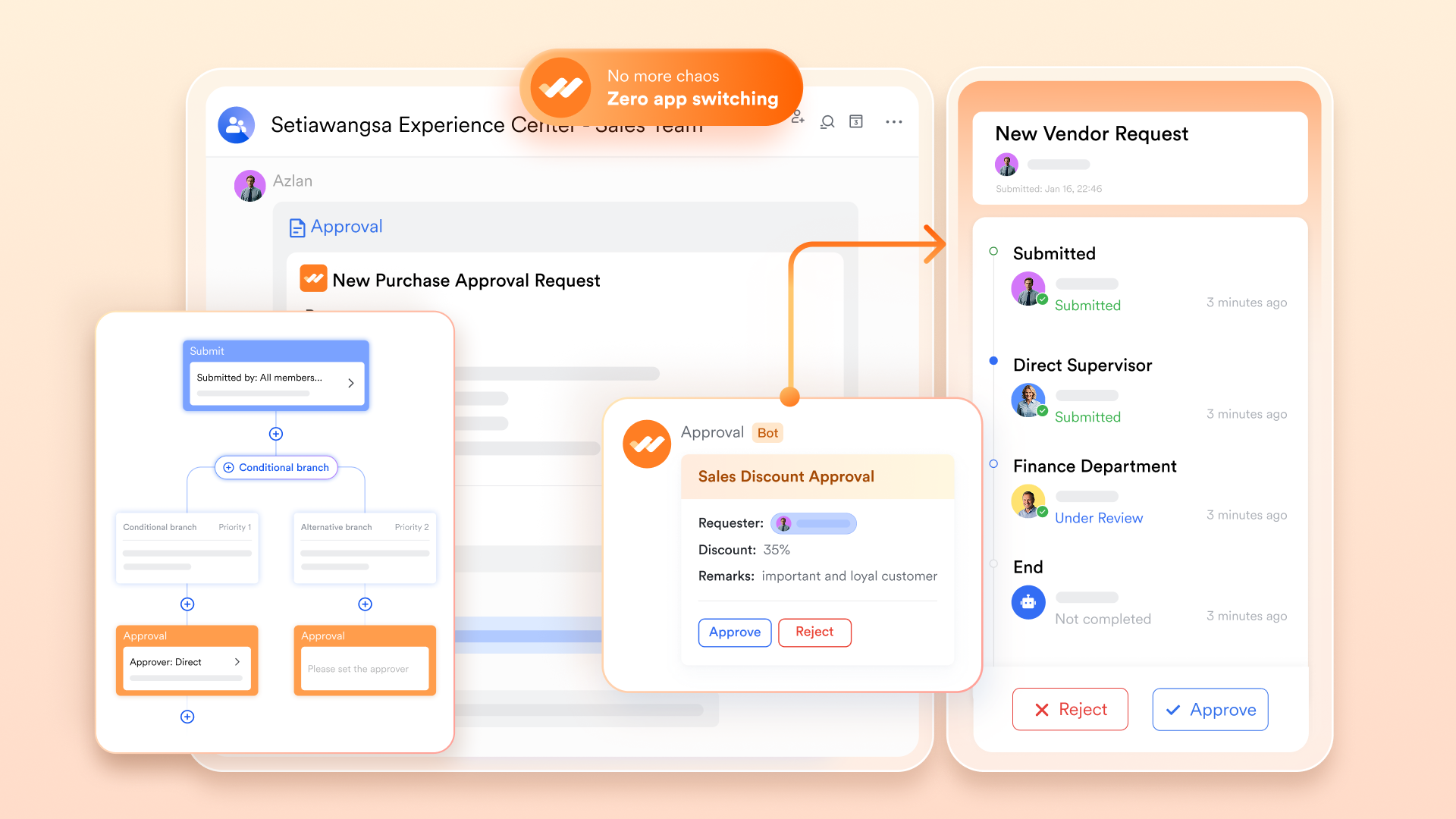
✅ Lark Task & Lark Calendar: Ensuring service completion and proactive planning
Lark Task and Lark Calendar work together to transform insights from the CRM system into concrete, trackable actions.
- Drive service execution: Action items identified during morning briefings for VIP receptions can be directly converted into Lark Tasks, clearly assigned to individuals with set deadlines. For example, creating a task "Prepare birthday surprise for Mr. Zhang in Room 808," assigned to housekeeping staff Xiao Wang, to be completed by 3 PM today. Managers can monitor the progress of all tasks in real-time, ensuring flawless execution.
- Proactive guest engagement: Using Lark Calendar, you can plan and visualize all key dates related to guests. For instance, creating calendar entries for loyal guests' birthdays or anniversaries. The system can trigger reminders in advance, allowing sales or guest relations staff to send personalized greetings or exclusive offers at the right moment, effectively enhancing guest loyalty.
Pricing:
- Free plan: Includes 11 powerful products, supporting up to 20 users, 100 GB storage, 1,000 automation runs and unlimited AI translation in chats, docs and email.
- Paid plans: Starts at $12/user/month, supporting up to 500 users. Includes unlimited message history, 50,000 automated Base workflow executions per month. Companies looking to optimize software spending frequently compare their options against Google Workspace pricing and ClickUp pricing.
- Enterprise plan: Custom pricing.
2. Salesforce: A highly customizable enterprise CRM with AI-powered insights
Salesforce is a powerful, AI-driven CRM platform suited for large hotel chains and enterprises that require deep customization and scalability. It offers a comprehensive suite for marketing, sales, service, and commerce, allowing hotels to build a 360-degree view of their guests. Its flexibility and extensive integration ecosystem make it a robust choice for complex operations that need to manage vast amounts of guest data and sophisticated marketing automation.
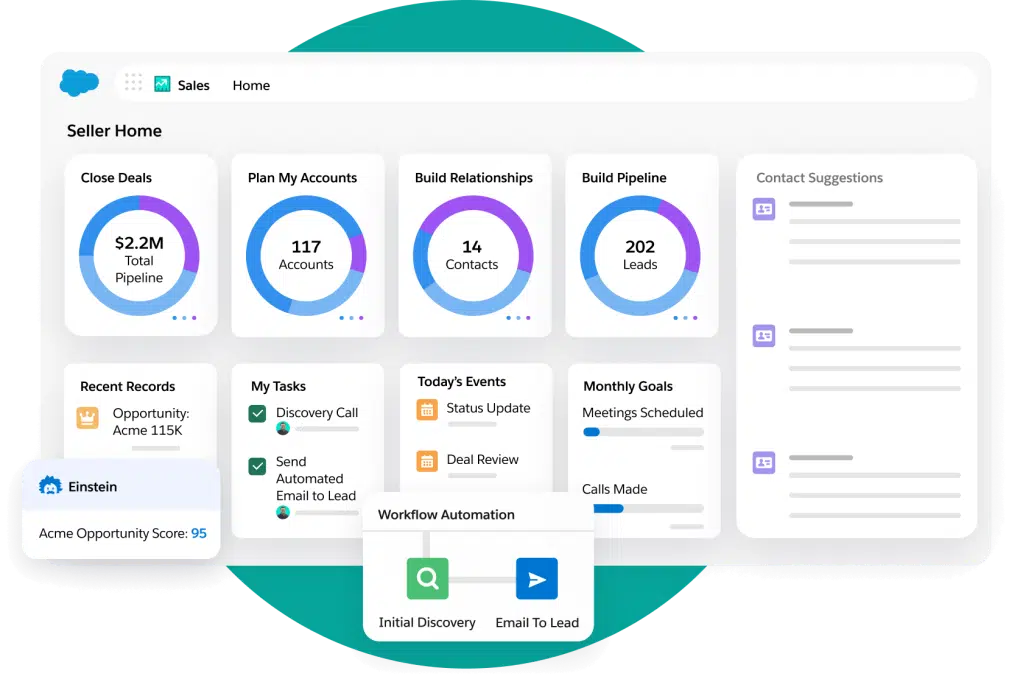
Image source: custify.com
Key features:
- Einstein AI for predictive analytics, lead scoring, and intelligent insights.
- Highly customizable dashboards, reports, and sales pipelines.
- Extensive automation and customization tools for marketing and service workflows.
- Access to a vast marketplace of apps and integrations via AppExchange.
- Unified data platform to consolidate guest information from multiple sources.
Limitations:
- High cost and implementation complexity, often requiring dedicated IT resources or consultants.
- Steep learning curve for non-technical users.
Pricing:
- Starter suites begin at $25 per user/month.
- Higher-tier plans like Pro Suite start at $100 per user/month.
3. Revinate: A hotel-specific platform focused on guest marketing and retention
Revinate is a hotel-specific marketing and CRM platform designed to build 1:1 guest relationships through data-driven email marketing and upselling. It focuses on creating rich guest profiles by integrating with over 45 Property Management Systems (PMS), enabling highly personalized communication. Hotels use Revinate to increase direct bookings, enhance guest loyalty, and drive ancillary revenue through targeted campaigns.
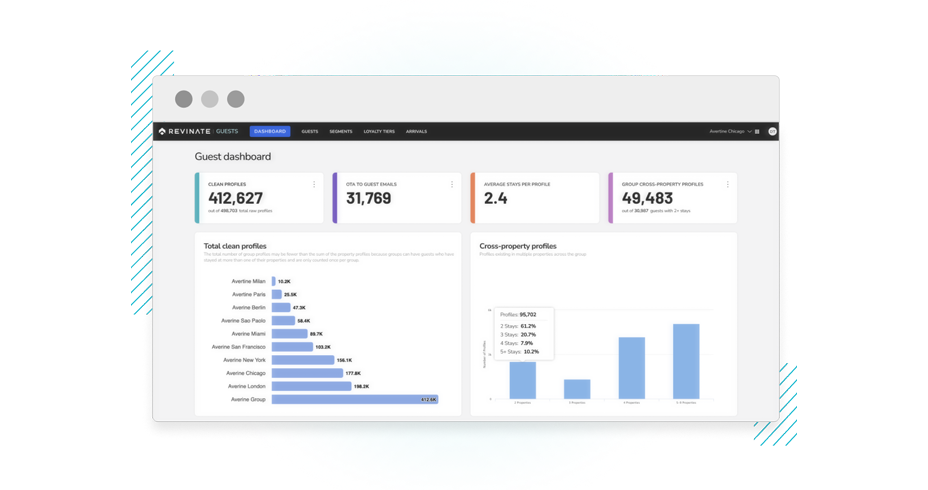
Image source: revinate.com
Key features:
- Deep PMS integrations to build unified and rich guest profiles.
- Advanced segmentation and RFM (Recency, Frequency, Monetary) analysis for targeted campaigns.
- Personalized email marketing and automation across the guest journey.
- Upselling tools with a fixed-fee model instead of commission.
- Dashboard for monitoring list health, guest geography, and booking channels.
Limitations:
- Primarily focused on reputation management and guest feedback.
- Pricing for advanced marketing automation modules tends to be high.
- Occasional data sync delays with certain PMS systems.
Pricing:
- Pricing information is not explicitly listed and requires contacting their sales team.
4. HubSpot: An intuitive all-in-one platform with a powerful free CRM tier
HubSpot is a widely recognized all-in-one growth platform that offers a free CRM at its core, making it an attractive starting point for hotels of all sizes. Its modular hubs for marketing, sales, and service provide flexibility, allowing hotels to scale their capabilities as they grow. The user-friendly interface is a major advantage for teams seeking an intuitive system to manage contacts, marketing campaigns, and customer service without a steep learning curve.
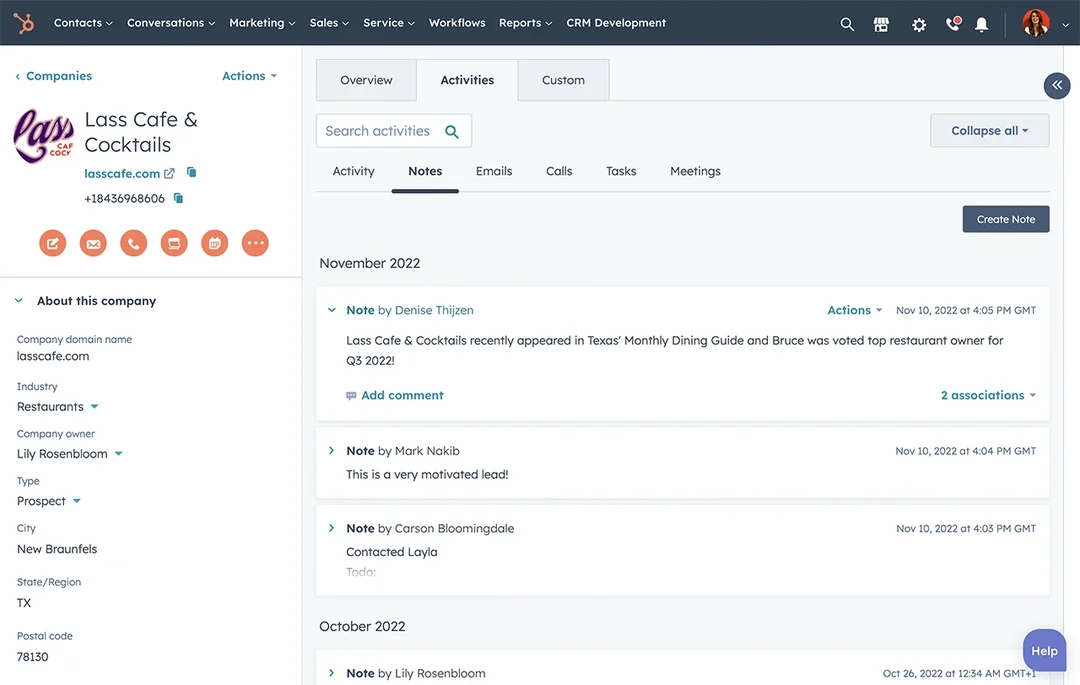
Image source: hubspot.com
Key features:
- A powerful and free core CRM with contact and pipeline management.
- Marketing Hub for email marketing, automation, and lead nurturing.
- User-friendly interface with a gentle learning curve.
- Extensive integrations and a scalable suite of tools.
- Built-in analytics and reporting tools.
Limitations:
- Costs can increase significantly as you add advanced features and contacts.
- The free and lower-tier plans have limited functionality and automation.
Pricing:
- A feature-rich free plan is available.
- Paid plans for Marketing & Sales Hubs start at $20 per seat/month (billed annually).
5. Cendyn: A comprehensive hospitality-specific CRM and customer data platform
Cendyn provides a CRM and customer data platform (CDP) built specifically for the hospitality industry. Its primary goal is to help hotels drive direct bookings, elevate guest connections, and maximize profitability. The platform unifies guest data from over 200 integrations, enabling highly personalized marketing across channels like email, SMS, and WhatsApp. It is a strategic tool for hotels focused on data-driven marketing and guest experience orchestration.
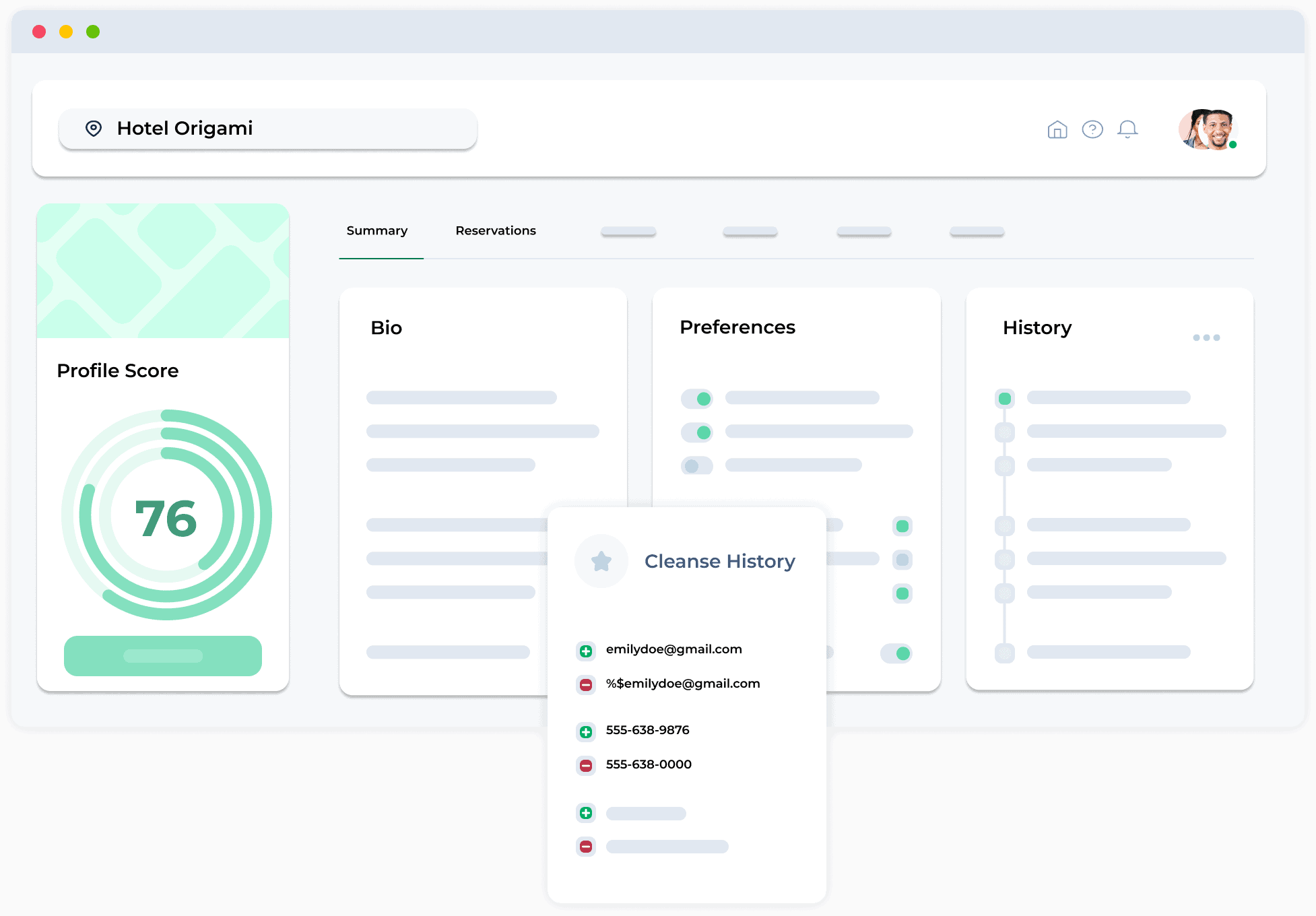
Image source: cendyn.com
Key features:
- Unified guest profiles and a CDP as a single source of truth.
- Marketing automation across the guest journey (pre-stay to post-stay).
- Audience Builder with over 200 filters for precise segmentation.
- Integration with digital marketing channels like Meta and Google.
- KPI manager and dashboards for tracking marketing ROI.
Limitations:
- Complex system configuration requiring specialized training.
- Feature overload for small to medium-sized hotels.
- Customization projects often involve extended implementation timelines.
Pricing:
- Pricing is above the industry average and requires contacting their sales team for a quote.
6. Cloudbeds: An all-in-one hospitality management suite with built-in CRM
Cloudbeds is an all-in-one hotel management platform that combines a Property Management System (PMS), channel manager, booking engine, and built-in CRM tools. This integrated approach is ideal for independent hotels, hostels, and vacation rentals seeking to streamline their entire operation within a single system. Its CRM capabilities focus on enhancing the guest experience through automated communication and increasing direct bookings.
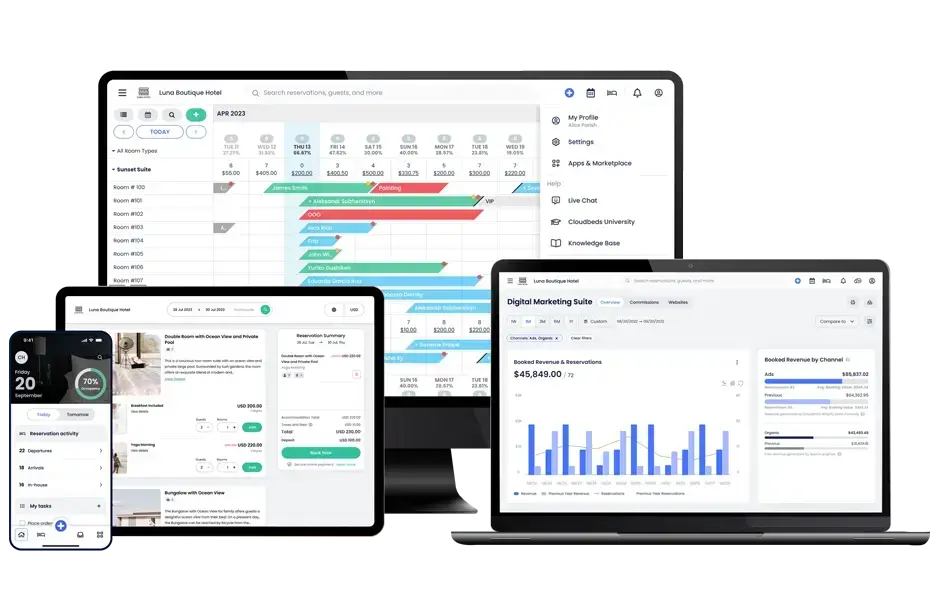
Image source: cloudbeds.com
Key features:
- Integrated PMS, channel manager, and CRM in a single platform.
- Automated pre-arrival and post-stay email communication.
- Tools to grow a guest email list and drive direct bookings.
- Centralized dashboard for operations and guest data.
- A wide range of integrations with other hospitality tools.
Limitations:
- Marketing automation features remain relatively basic.
- Advanced reporting capabilities require additional fees.
- Limited integration support with some regional/local platforms.
Pricing:
- Pricing is above the industry average and requires contacting their sales team.
7. Zoho CRM: A versatile and scalable CRM with strong automation capabilities
Zoho CRM is a comprehensive cloud-based solution that adapts well to the hospitality industry's dynamic needs. Its flexibility allows hotels to manage guest relationships, marketing campaigns, and service requests through a unified platform. The system offers robust automation features that streamline repetitive tasks while maintaining personalized communication with guests. With mobile accessibility and customizable modules, it serves both small properties and growing hotel groups looking for an affordable yet powerful CRM solution.
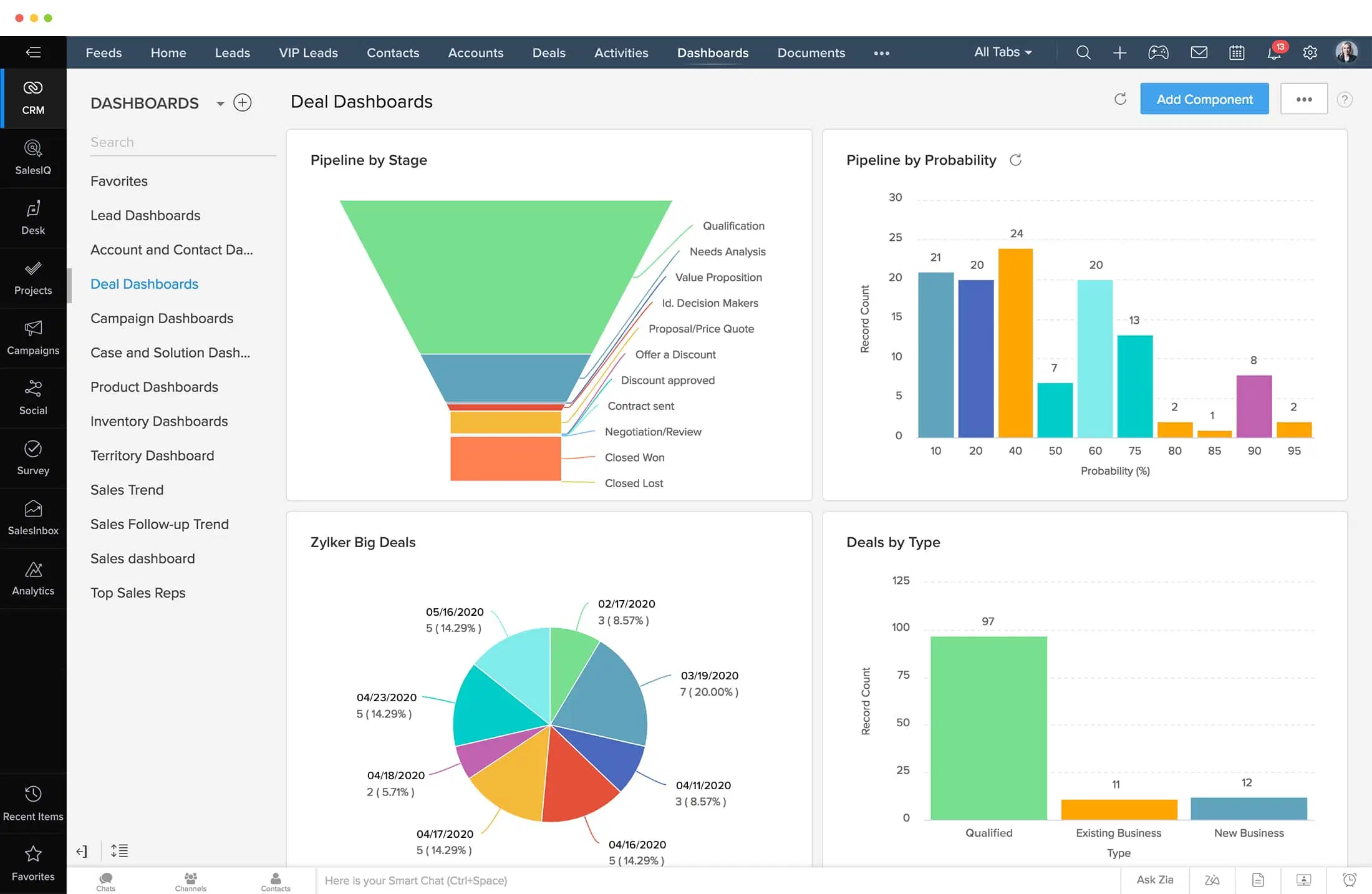
Image source: zoho.com
Key features:
- Multi-channel guest communication management across email, social media, and phone.
- AI-powered sales forecasting and analytics for revenue optimization.
- Customizable automation rules for guest follow-ups and task assignments.
- Integrated inventory management and reporting tools.
- Mobile application with offline capability for on-the-go access.
Limitations:
- Requires significant configuration to adapt to specific hospitality workflows.
- Some advanced features require higher-tier plans or additional purchases.
- Limited hospitality-specific templates compared to specialized hotel CRMs.
Pricing:
- Free version available for up to 3 users.
- Standard plan starts at $14 per user/month when billed annually.
8. Pipedrive: A visual sales-focused CRM with pipeline management tools
Pipedrive is a visual sales-focused CRM that helps teams track deals and manage their sales pipeline effectively. Its intuitive, drag-and-drop interface makes it easy for sales-driven hotel teams, such as those handling group bookings and MICE (meetings, incentives, conferences, and exhibitions), to stay organized and focused on closing deals. It is a practical tool for managing the sales process rather than broad marketing automation.
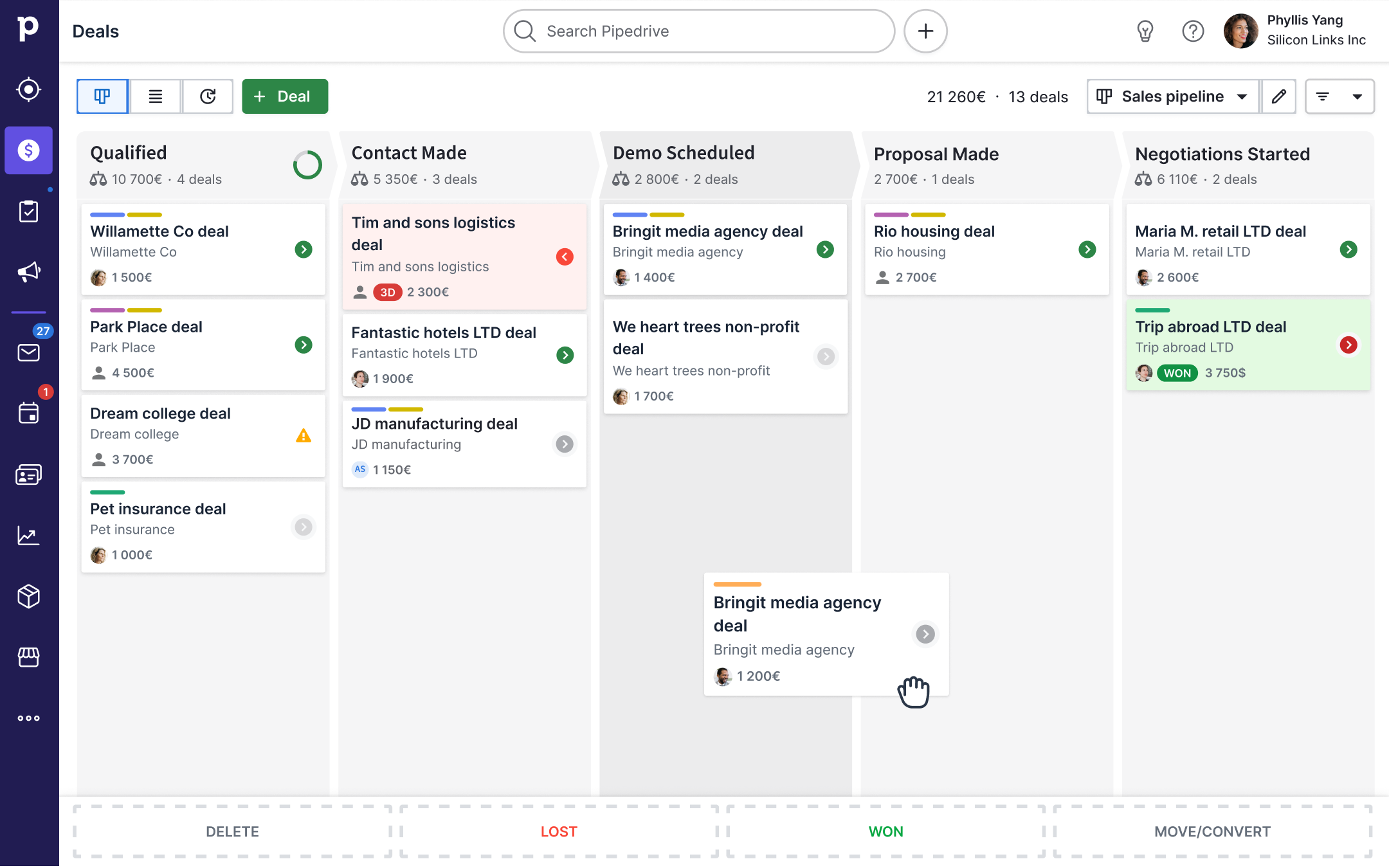
Image source: pipedrive.com
Key features:
- Visual sales pipeline with intuitive drag-and-drop management.
- AI-powered sales and reporting tools.
- Email integration, tracking, and automation sequences.
- Over 500 integrations to connect with existing tools.
- Mobile app for managing deals on the go.
Limitations:
- Its focus is on sales pipeline management, making it less ideal for holistic guest relationship marketing.
- Customer support options are limited in lower-tier plans.
Pricing:
- Essential: $14/user/month for basic pipeline, contact, and calendar management.
- Advanced: $29/user/month for additional email sync and automation.
- Professional: $49/user/month, including AI sales assistant, deeper customer insights, and contract/e-signature features.
- Power: $64/user/month.
- Enterprise: $99/user/month for enhanced security, unlimited reporting and analytics.
How to choose the right CRM for your hotel
Selecting the best CRM software for your hotel is a strategic process. Follow these steps to find a solution that aligns with your goals.
Step 1: Identify your hotel type and size
Your hotel's profile dramatically influences your CRM needs.
- Boutique and independent hotels: Typically, you need a solution that is cost-effective, user-friendly, and quick to implement. Focus on tools with strong marketing automation and easy guest segmentation.
- Hotel groups and chains: You require a system that supports multi-property management, offers robust templates across the portfolio, and ensures a consistent guest experience at all locations. Scalability and deep customization are key.
- Resorts and vacation rentals: Your CRM should handle longer guest stays and a wider range of activities. Look for features that manage on-property spending, activity bookings, and personalized experience packages.
Step 2: Define your budget and key requirements
Be clear about what you can invest, not just in the software but also in implementation and training. Then, create a list of your non-negotiable features. Do you need deep PMS integration? Is automated email marketing your top priority? Ranking your requirements will help you compare options more effectively.
Step 3: Consider ease of use and team adoption
The most powerful CRM is useless if your team does not use it. Prioritize software with an intuitive interface and a short learning curve. Consider the vendor's training resources and support. A system that your staff embraces will deliver a much faster return on investment.
Beyond the tool: Using your CRM as a collaboration hub
A modern hotel CRM system should be more than a passive database; it can be the active center of your hotel's daily operations. The true value is realized when customer data is seamlessly woven into the fabric of your team's communication and workflow.
Many hotels struggle with information silos. The sales team might have crucial details about a guest's preferences that never reach the front desk. A collaborative platform like Lark addresses this by unifying your guest data and team interactions in one place.
How Lark enhances any CRM strategy:
- Unified data with Lark Base: Create a single source of truth for all guest information. Beyond storing basic profiles, you can build custom views to track service recovery cases, manage VIP guest itineraries, and log special requests, all accessible to authorized staff.
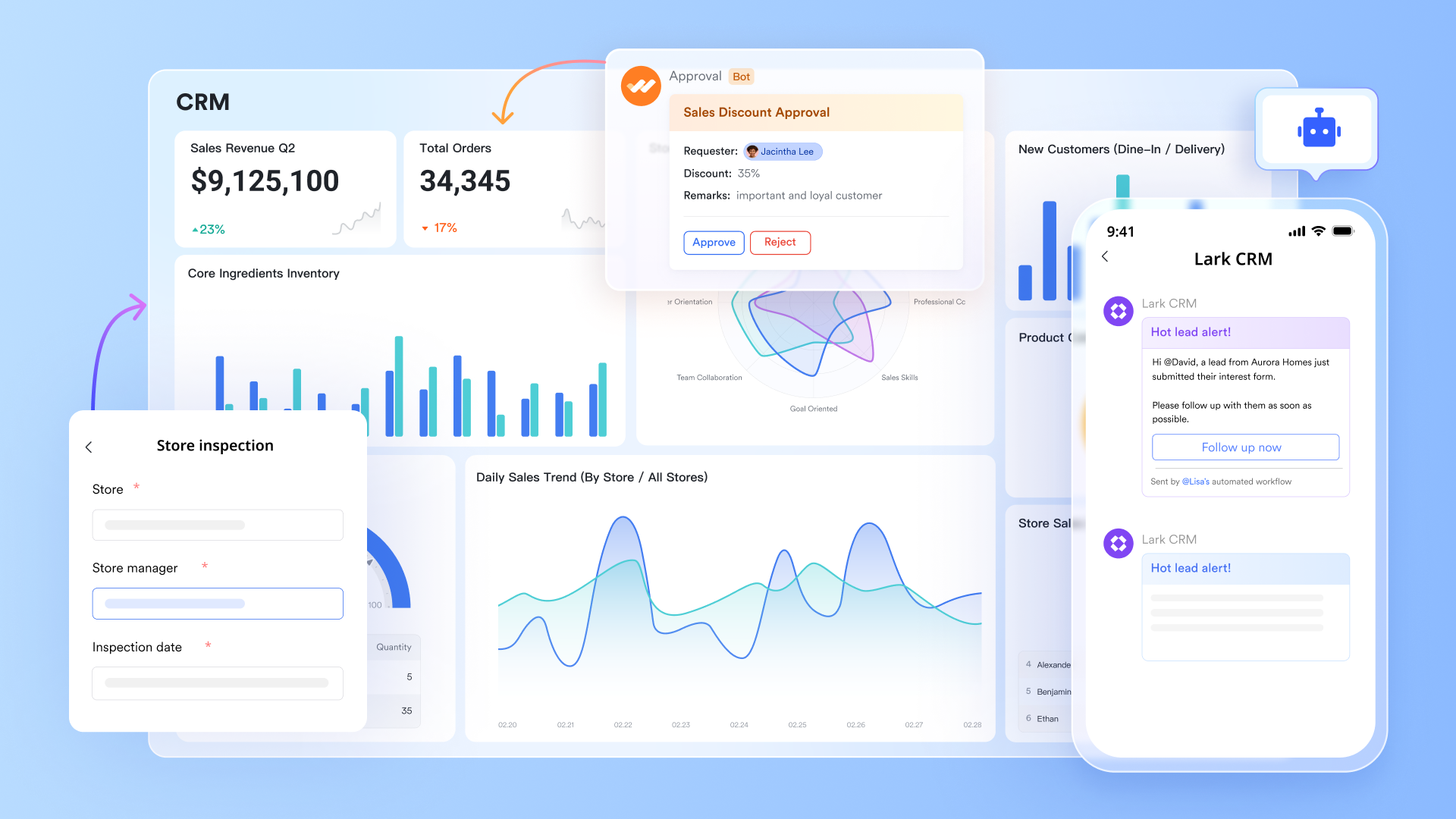
- Contextual communication with Lark Messenger: When a guest asks the concierge for a restaurant recommendation, the team can instantly query the shared guest database in Lark and discuss the best option in a group chat. This eliminates app-switching and speeds up service delivery.
- Automated actions with Tasks: Ensure follow-through on every guest interaction. The system can automatically generate tasks for housekeeping to prepare a room with specific amenities for a returning guest or schedule a reminder for the manager to greet a VIP upon arrival, creating a flawless operational loop.
Conclusion
Investing in the best CRM software for hotels is a decisive step toward building a more guest-centric and profitable business. While specialized tools offer valuable features, the ideal system should do more than manage customer data—it should empower your team to deliver exceptional, coordinated service.
This is where Lark's integrated platform stands out. By combining robust CRM capabilities with seamless collaboration tools, Lark ensures your guest insights translate directly into team action. Imagine having guest preferences automatically shared with relevant departments, or marketing campaigns coordinated in real-time across your entire team.
We encourage you to experience this difference firsthand. Take advantage of Lark's free trial to see how a unified approach can transform not just your guest relationships, but your team's efficiency. Start your journey toward exceptional guest experiences powered by seamless collaboration today.
FAQs
What CRM system do hotels use?
Hotels use various CRM systems based on their size and needs. Large chains often use Salesforce or Oracle for customization, while independent properties prefer all-in-one solutions like Cloudbeds. Other popular options include Revinate for marketing and HubSpot for scalability.
Which is the best hotel management software?
The best software depends on your property type. Cloudbeds and Mews offer excellent all-in-one solutions for independents. Large chains may prefer Oracle Hospitality, while small B&Bs find Little Hotelier ideal. Consider integration capabilities and collaboration features when choosing.
What is CRM in hotel management?
CRM in hotel management involves using technology to manage guest relationships throughout their journey. It centralizes guest data to enable personalized service, automated marketing, and loyalty building. This approach transforms guest information into actionable insights for better experiences.
What is the most commonly used CRM software?
The most commonly used CRM software varies by hotel size. Salesforce dominates among large enterprises, while HubSpot is popular for its accessibility. For hotel-specific solutions, Revinate and built-in CRM tools in platforms like Cloudbeds are widely adopted across the industry.
Related reading
Table of contents
Start using Lark today

Manage all your work in one place
Boost team efficiency by 10x
Save up to 70% on software costs
Table of contents
Start using Lark today
Manage all your work in one place
Boost team efficiency by 10x
Save up to 70% on software costs
Keep reading









2026 Lark Technologies Pte. Ltd.
Headquartered in Singapore with offices worldwide.






Explore: