


Beyond AI Pilots: Four Lessons from Leaders Building AI-First Organizations

Jessica O
Product Demand Generation Specialist
Aug 5, 2026
Jessica O
Aug 5, 2026

7 min read


Artificial intelligence has moved from possibility to practice.
Across Southeast Asia, organizations are experimenting with AI to automate tasks, improve decisions, and work in new ways. Some are already seeing promising results from their first AI initiatives.
But early success creates a new challenge.
How do you move beyond isolated AI initiatives? How do you redesign the way people work around AI? And how do you scale those successes across the business?
These were the questions at the heart of a discussion between Carro COO Zi Yong Chua and StoreHub Chieftain and co-founder Wai Hong Fong at Lark Reimagine 2026.
Their businesses are different. Their starting points were different. Yet many of the lessons they shared were remarkably similar.
Whether they were discussing hiring, customer operations, or workflow design, their experiences pointed to four common lessons for leaders looking to scale AI across their organizations.
Missed the session? Watch the full conversation here:
loading...
Lesson 1: AI removes constraints, not just manual work
AI creates value not only by making existing work faster, but by removing constraints that once shaped how the business operated.
At Carro, the challenge wasn't a shortage of customer conversations. The company already had tens of thousands of customer interactions every month. The limitation was that manually reviewing every conversation simply wasn't practical. Managers could see conversion outcomes, but had limited visibility into why customers purchased, why they didn't, or how agents handled each interaction.
By transcribing and analyzing every conversation, AI made it possible to understand every customer interaction rather than relying on samples. Information that had previously been too expensive and time-consuming to analyze became something the business could continuously learn from and act on.
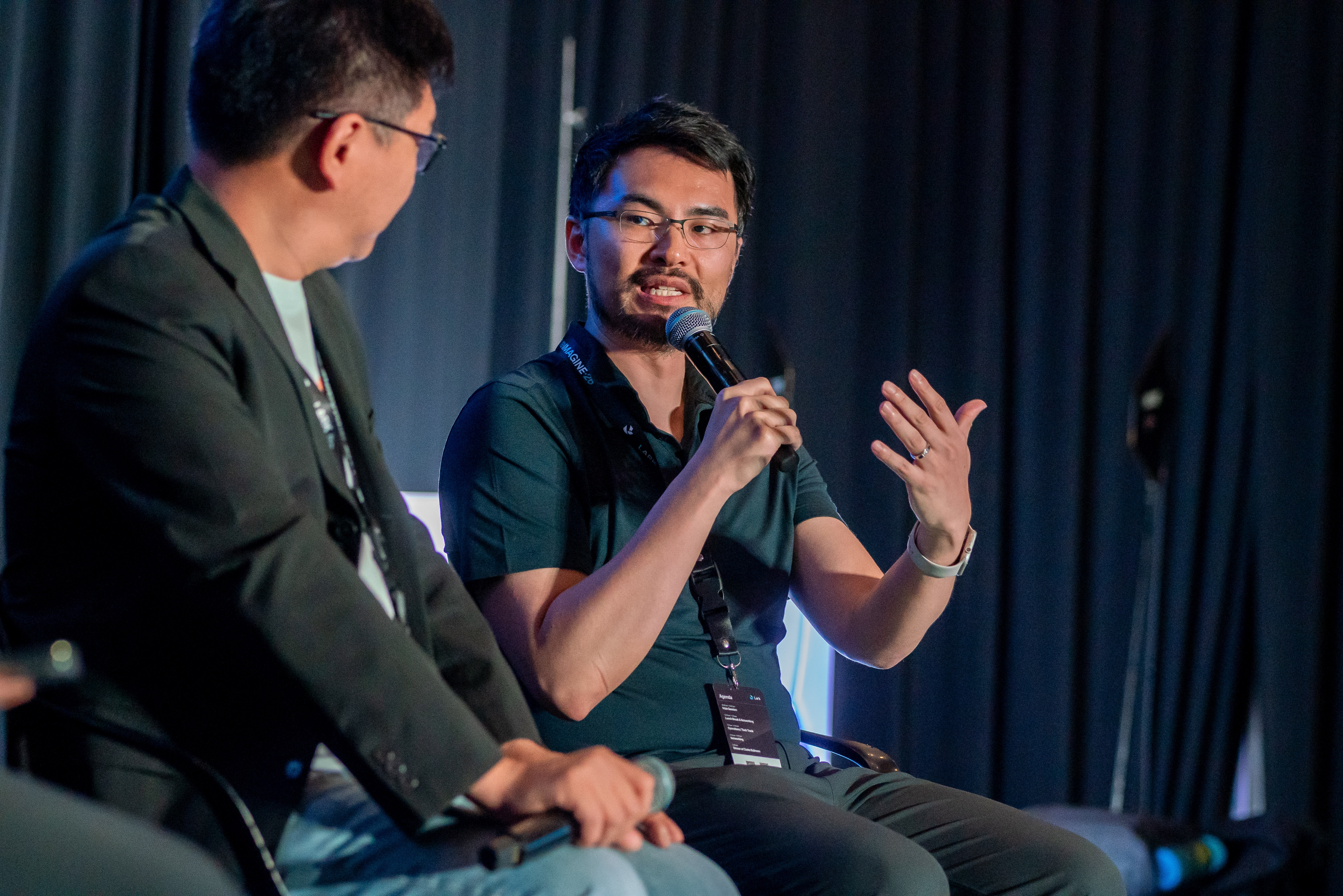
StoreHub faced a different challenge. A lean recruitment team was processing around 10,000 job applications in a single month, and candidates often waited weeks before hearing back.
Rather than accepting those limitations, Wai Hong experimented with AI himself. He built an AI agent in a single day to screen CVs and application responses, then built another the following day to evaluate short video interviews.
His conclusion was simple:
"The only way an organization can be AI-first is if leadership understands what is possible."
That understanding goes beyond technology. Every operating model is built around assumptions about what is too expensive to review, too slow to build, or too labor-intensive to scale. As AI removes those constraints, leaders have an opportunity to rethink how work gets done.
Lesson 2: Adoption begins with trust, not automation
A capable AI system doesn't automatically become one that employees trust.
Employees need confidence that AI will support their work before they are willing to rely on it.
Carro experienced this during the development of its loan approval workflow. Dealers submitted lengthy, unstructured documentation that employees reviewed before deciding whether applications should be approved, rejected, or escalated.
The first AI workflow, built in Lark Base, did not replace employees. Instead, it generated recommendations while keeping the final decision with a human reviewer through a dedicated "Human Check" step.
The workflow remained in this form for approximately six months.
During that period, employees compared AI recommendations with their own decisions and gradually built confidence in the system before it became part of their everyday workflow.
Only then did Carro integrate the workflow into its dealer management system. As trust increased, the proportion of applications requiring manual review fell from 100% to around 40%.
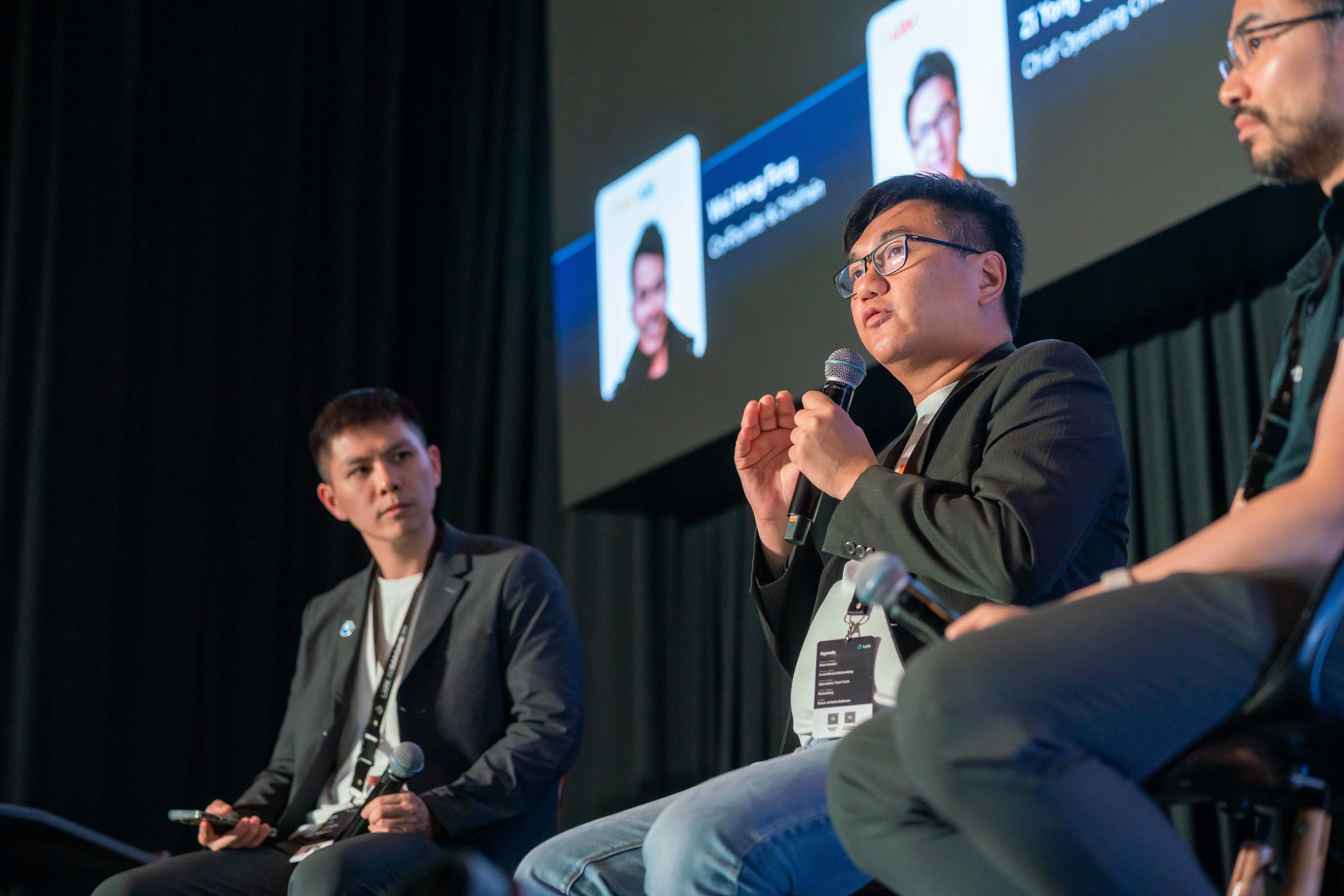
Those six months were not a delay. They were part of the adoption process.
Employees need confidence that AI will support their work before they are willing to rely on it. Giving them opportunities to experiment with AI, experience its outputs firsthand, and understand when human judgment remains important helps build that trust.
As Zi Yong explained, employees need opportunities to experiment with AI, experience its outputs firsthand, and build confidence over time.
The lesson isn't to automate everything from day one. It's to build trust first, then increase automation as confidence grows.
Lesson 3: Redesign the workflow before automating it
Many organizations begin AI projects by identifying repetitive tasks and asking where AI can fit into the existing process.
That approach can improve efficiency, but it often preserves the same handoffs, approvals, and process constraints that made the workflow inefficient in the first place.
A better question is:
"If AI existed when we designed this process, would we build it the same way?"
StoreHub applied this thinking to merchant onboarding.
The traditional onboarding journey involved setting up menus, training merchants, and guiding them through a structured onboarding process before they completed their first transaction.
Rather than automating each individual step, the team questioned whether every step was still necessary.
Customers could instead interact conversationally, provide information more naturally, and complete onboarding in a way that better matched how they actually worked.
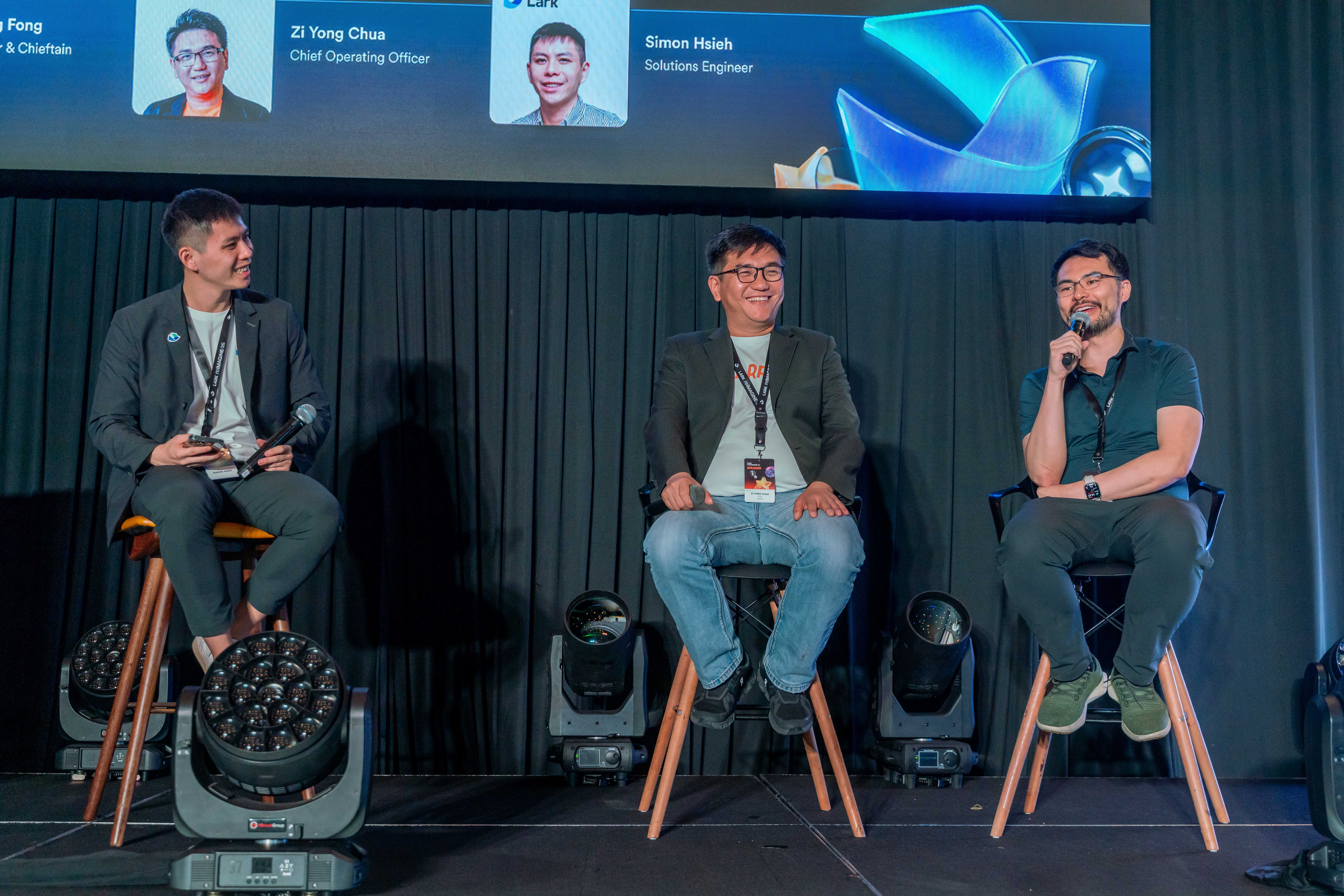
Carro saw a similar shift in customer operations.
Before AI, reviewing every customer conversation simply wasn't feasible. Once every interaction could be analyzed automatically, managers no longer needed to wait for monthly reviews to identify coaching opportunities. AI surfaced issues continuously, allowing coaching to happen weekly whenever conversations indicated missed actions or opportunities.
AI changed not only what managers could see, but when they could act.
Organizations don't become AI-first by automating yesterday's processes. They become AI-first by redesigning work around capabilities that didn't previously exist.
Lesson 4: Build governance alongside AI
Every workflow redesign changes how information is accessed, how decisions are made, and where accountability sits.
As AI begins retrieving information, making recommendations, or taking actions, governance can no longer be treated as a separate compliance exercise. It becomes part of the workflow itself.
At Carro, guardrails are built into the infrastructure supporting its AI agents. This includes protecting systems against prompt injection and unauthorized access to company data, particularly when agents connect directly to internal data sources through APIs. Access is deliberately bounded to reduce the risk of unauthorized data access, particularly when agents connect directly to internal systems through APIs.
Carro also keeps people involved in the workflow rather than allowing AI to replace the entire workflow. Human reviewers remain responsible for checking the system’s output, while controls around how the AI is used limit its reach within the process.
These guardrails are built into the infrastructure and workflows supporting its AI agents, providing the confidence needed to scale AI responsibly.
As these systems become more deeply connected across business processes, governance provides the confidence organizations need to scale responsibly.
Guardrails are not barriers to innovation. They are what make innovation sustainable.
AI transformation begins after the pilot
A successful AI pilot proves that the technology works.
Building an AI-first organization proves that the business can work differently.
The experiences shared by Carro and StoreHub show that lasting transformation depends on more than deploying new models or introducing new tools. It requires leaders to rethink what is possible, employees to develop trust in AI, workflows to be redesigned around new capabilities, and governance to evolve alongside automation.
Technology starts the conversation. Organizational change determines whether AI creates lasting business value.
The competitive advantage won't come from adopting the latest model first.
It will come from redesigning how people, workflows, and AI operate together.

Table of contents
Start using Lark today

Manage all your work in one place
Boost team efficiency by 10x
Save up to 70% on software costs
Table of contents
Start using Lark today
Manage all your work in one place
Boost team efficiency by 10x
Save up to 70% on software costs
Keep reading

When Anyone Can Be the One Who Fixes It
People who had never written a line of code. Teams whose jobs had nothing to do with technology. But when Mr D.I.Y. asked its employees "what would you fix if you could?", 33 teams across 14 departments built real, working solutions. What happened next quietly changed how an entire organization thinks about innovation.



2026 Lark Technologies Pte. Ltd.
Headquartered in Singapore with offices worldwide.






Explore: