













Best CRM for Travel Agencies: 10 Tools Every Agent Needs

Ryan Tanner
Product Marketing Specialist
Sep 18, 2026
Ryan Tanner
Sep 18, 2026

20 min read


The travel industry is built on relationships. From a client's first inquiry to their final booking confirmation, every interaction shapes trust and loyalty. With competition rising and customer expectations higher than ever, spreadsheets or scattered emails are no longer enough. This is where a CRM for travel agency teams becomes essential—helping agents manage client data, bookings, itineraries, and follow-ups in one place.
Today's leading travel agencies are moving beyond basic tools or Excel trackers to modern CRM platforms designed for efficiency and personalization. The right CRM centralizes information, automates routine tasks, and improves communication. In this guide, we'll explore the 10 best CRM systems for travel agencies in 2025:
- Lark: A modern CRM solution for growing travel agencies
- Freshsales CRM: Best for automation
- Zoho CRM : Best for affordability
- TravelWorks: Best for travel-specific booking management
- Salesforce CRM: Best for enterprise travel firms
- HubSpot CRM: Best free CRM for travel agencies
- Keap (Infusionsoft): Best for small agency marketing
- Pipedrive CRM: Best for sales pipeline tracking
- EngageBay: Best integrated SMB CRM
- Microsoft Dynamics 365: Best for large-scale global agencies
What is a CRM for travel agencies?
A CRM system for travel agency teams is software designed to manage customer relationships, bookings, and sales pipelines. Unlike general business CRMs, it caters to the travel industry's unique workflows—tracking client preferences, automating reminders for flights and tours, and organizing itineraries.
Traditional spreadsheets and email folders can only go so far. They're prone to errors, duplicate entries, and missed follow-ups. In contrast, a CRM for a travel agency ensures every client interaction—from a quote request to a post-trip feedback survey—is logged, automated, and actionable.
The main goals:
- Improve customer experience with personalized service.
- Boost repeat bookings and referrals.
- Streamline operations for agents handling multiple clients simultaneously.
Benefits of using a CRM system for travel agencies
Adopting a CRM system for travel agency operations delivers tangible benefits:
- Centralized client information: Store past trips, seat preferences, and special requests in one database.
- Streamlined booking workflows: Track the full journey from inquiry to ticketing without juggling multiple tools.
- Automated reminders: Schedule payment alerts, flight updates, or visa deadlines to avoid costly delays.
- Improved communication: Keep agents, vendors, and clients on the same page with shared records.
- Analytics & reporting: Monitor sales performance, customer lifetime value, and package popularity to guide business growth.
Take a glance at 10 best CRM for travel agencies in 2026

Full list of 10 best CRM for travel agencies in 2026
1. Lark: A modern CRM solution for growing travel agencies
In a competitive travel market, agencies need more than just a traditional CRM—they need a workspace where client management and team collaboration happen together. That's where Lark stands out. Unlike standard CRM systems that focus only on leads and pipelines, Lark combines CRM workflows, communication, and automation in a single platform. From managing bookings and approvals to drafting itineraries and following up with clients, everything is centralized. This makes it an ideal CRM for travel agency teams looking to streamline operations and deliver exceptional customer experiences.
Lark Base: Custom databases and real-time tracking
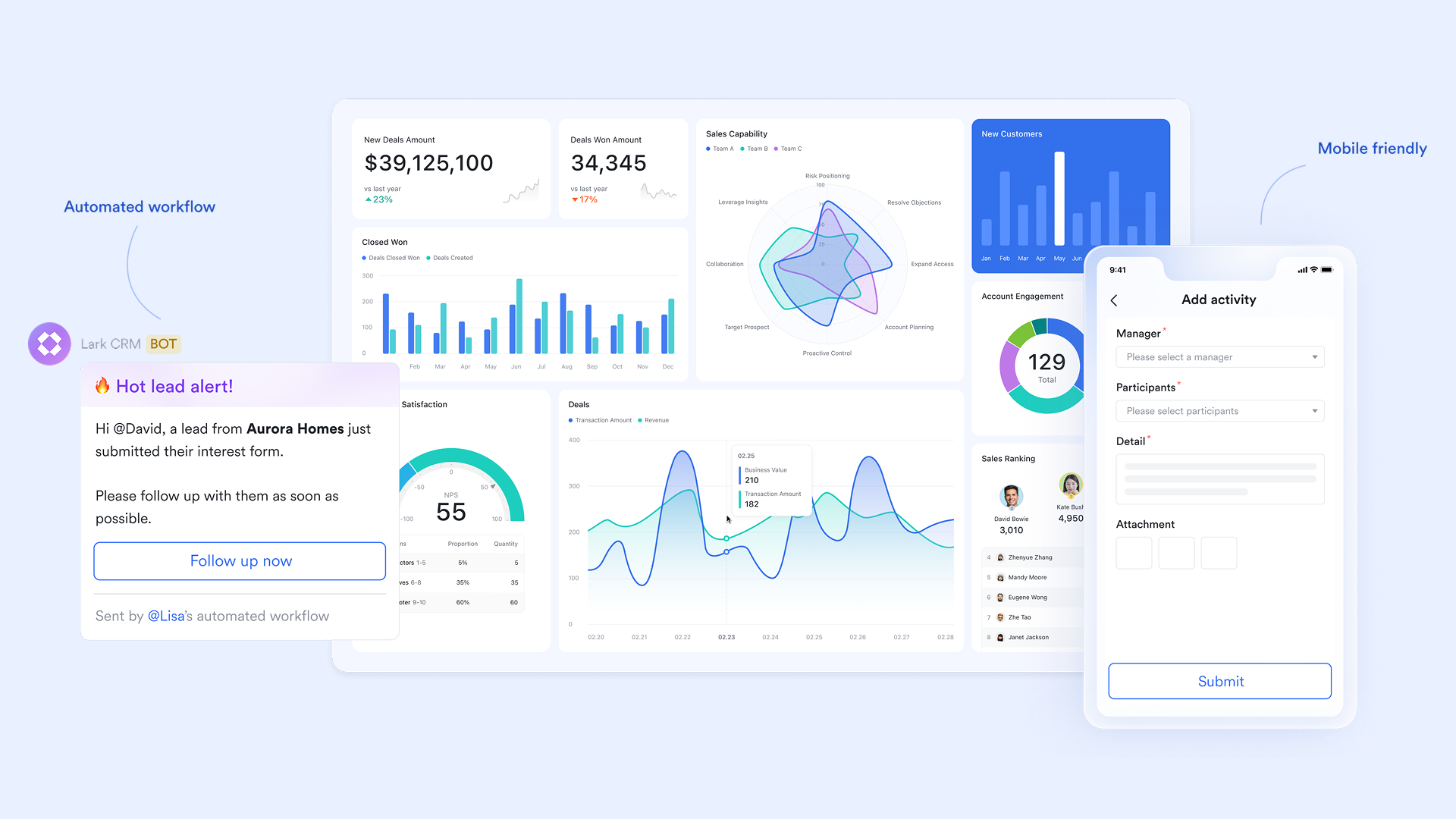
Lark Base acts as the foundation of CRM workflows. Agencies can build a custom database for travelers, itineraries, bookings, and payment statuses. For example, a mid-size agency can track hundreds of ongoing trips, shifting views between Kanban boards (to monitor booking stages), calendar views (to see departures), or timelines (to plan seasonal promotions). The built-in dashboards let managers instantly identify popular packages, sales trends, or client preferences, enabling smarter upselling and marketing campaigns.
Lark Approval: Automating travel-specific requests
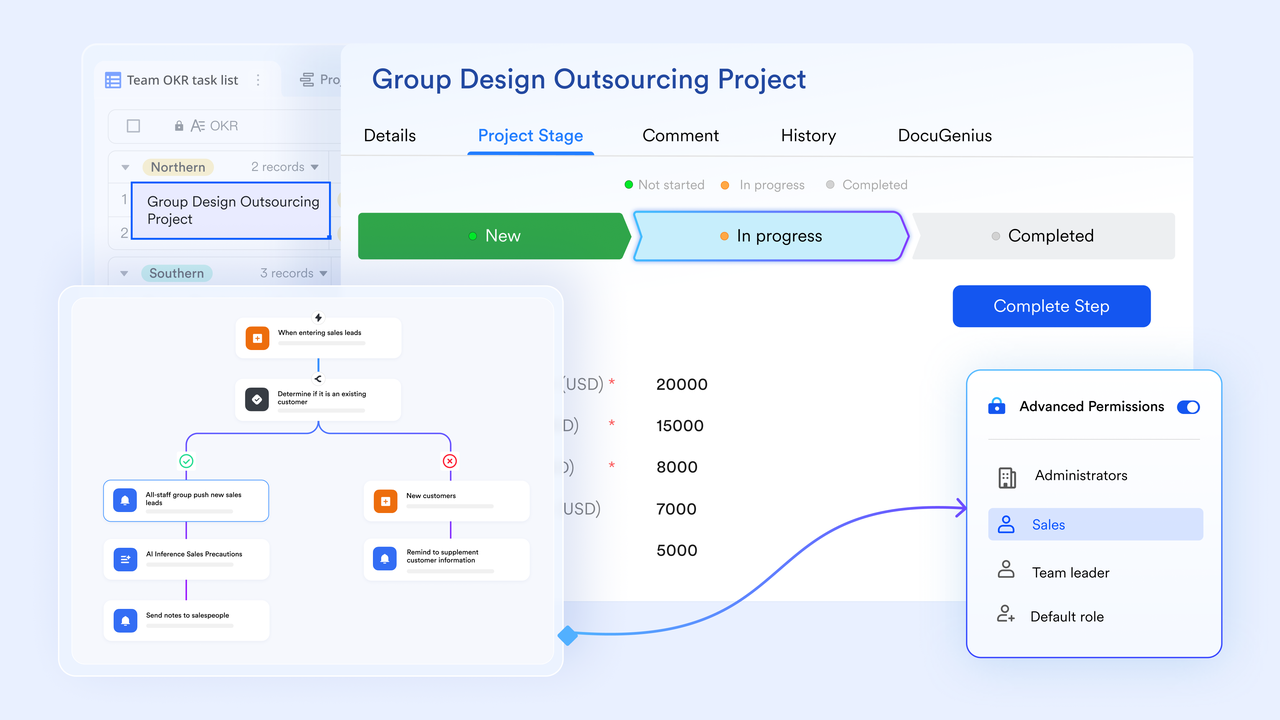
Travel agencies often deal with refunds, discounted packages, and vendor contract approval—all of which take time when handled manually. With Lark Approval, agencies can automate these workflows. For instance, if a client cancels a tour, the system can instantly route the refund request to a manager, log it in Lark Base, and notify the finance team—all without email back-and-forth. This reduces delays, builds customer trust, and saves hours of administrative work.
Lark Docs & Lark Wiki: Collaborative itinerary building
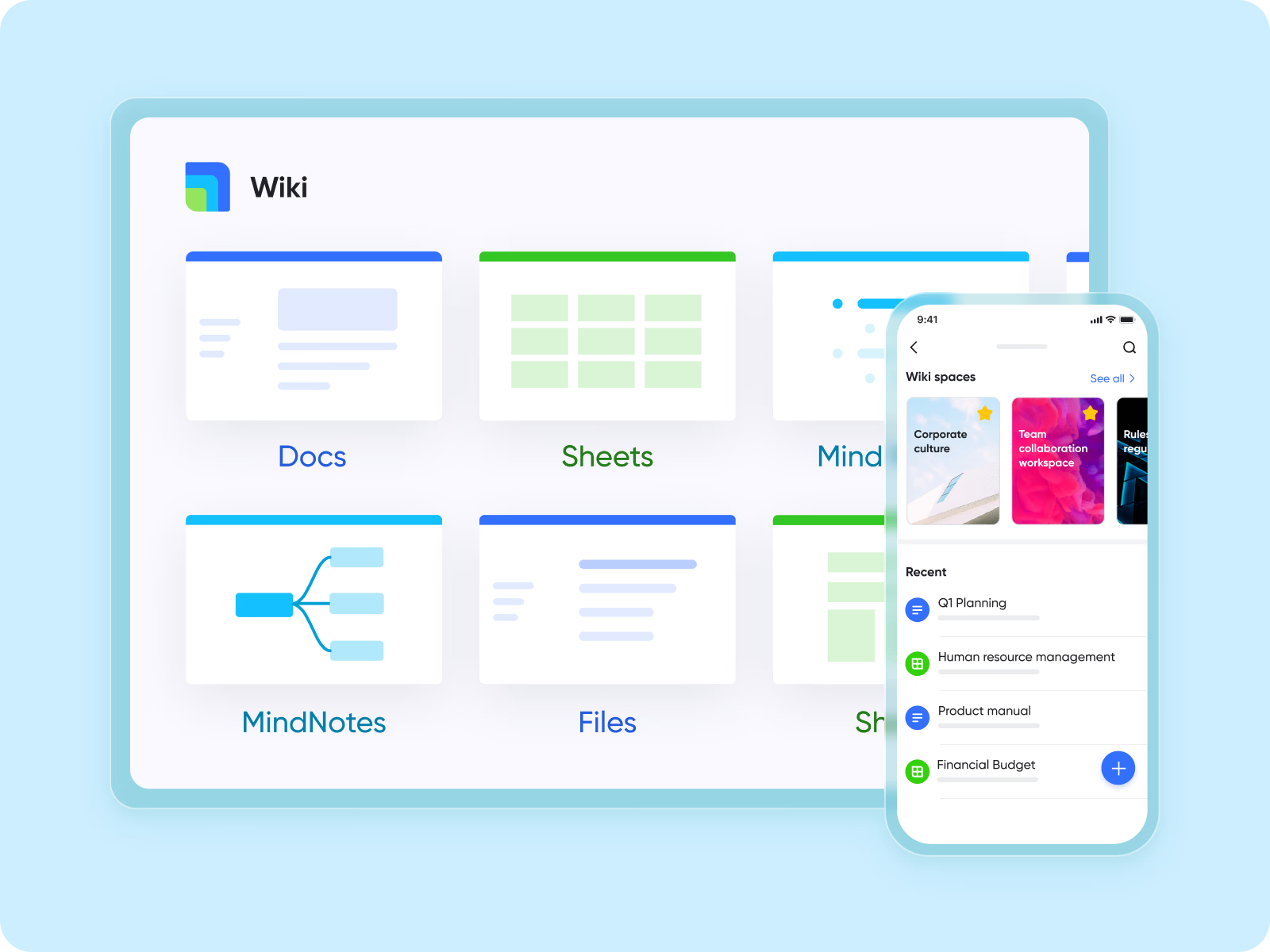
Travel is all about details. With Lark Docs and Lark Wiki, teams can draft itineraries collaboratively, embed checklists, and link directly to booking databases. Imagine a scenario where one agent drafts a 10-day Europe package, while another adds visa requirements and flight details in the same document. Agencies can also maintain a Wiki library of reusable templates for tours, visa checklists, or onboarding guides—ensuring staff consistency and faster turnaround for clients.
Lark Calendar: Scheduling with synced reminders
Agencies juggle departures, client consultations, vendor meetings, and follow-ups. With Lark Calendar, every event is centralized and synced across teams. For example, once a client books a safari trip, the Calendar can auto-schedule a payment reminder two weeks before departure, while also blocking time for the agent's check-in call. These reminders reduce missed deadlines and improve the client experience.
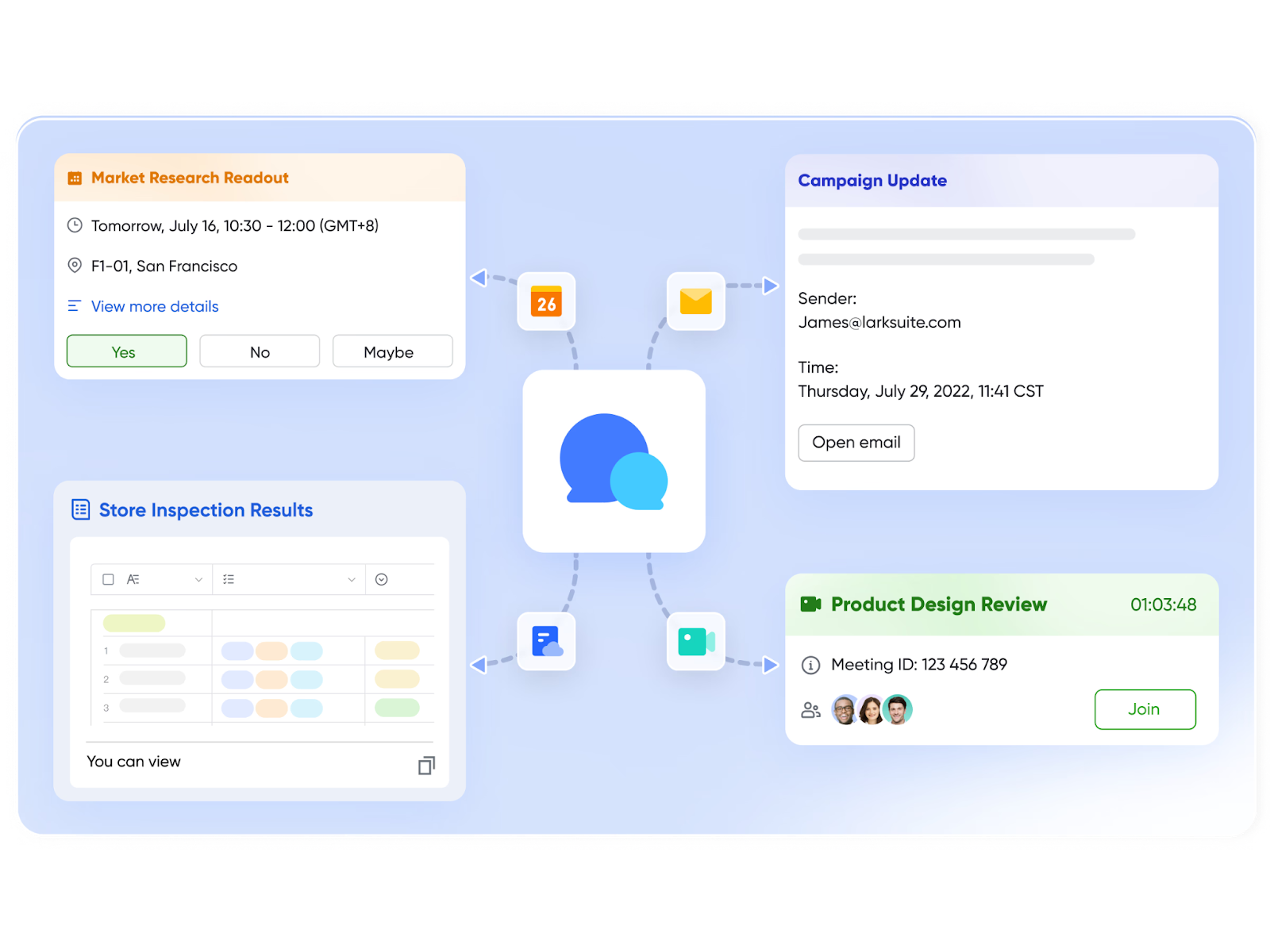
Lark Messenger & Lark Meetings: Instant communication with clients and vendors
Customer relationships often hinge on real-time communication. Lark Messenger allows agents to instantly chat with clients or vendors, pin important deal updates, and share documents directly in . For instance, a client asking for last-minute changes to their itinerary can receive an updated Lark Doc via Messenger within minutes. For bigger discussions, Lark Meetings provides secure video calls with features like screen sharing and Magic Share, enabling agencies to present travel packages live to clients or negotiate with overseas partners.
- Starter plan: Free forever plan that includes 11 powerful tools for up to 20 users. It also comes with 100GB of storage, 1000 automation runs, AI translations, and more.
- Pro plan: $12/user/month (billed annually) for up to 500 users. It includes everything in Starter plus group calling for up to 500 attendees, 15TB of storage, 50,000 automation runs, and more.
- Enterprise plan: Contact sales for custom pricing. Supports unlimited users and includes even more automation runs and advanced security, compliance, and management features.
Why it fits travel agencies: Lark is more than a collaboration tool — it doubles as a CRM system by combining client tracking, communication, and approvals in one platform.
Best for: Agencies that need CRM plus collaboration in one workspace.
2. Freshsales CRM: Best for automation
For travel agencies that handle a large number of leads, inquiries, and follow-ups, automation is the key to staying efficient. Freshsales CRM, part of Freshworks, is built with automation at its core, making it an excellent choice for agencies that want to minimize manual work. It helps teams respond faster, manage leads systematically, and ensure no client slips through the cracks.
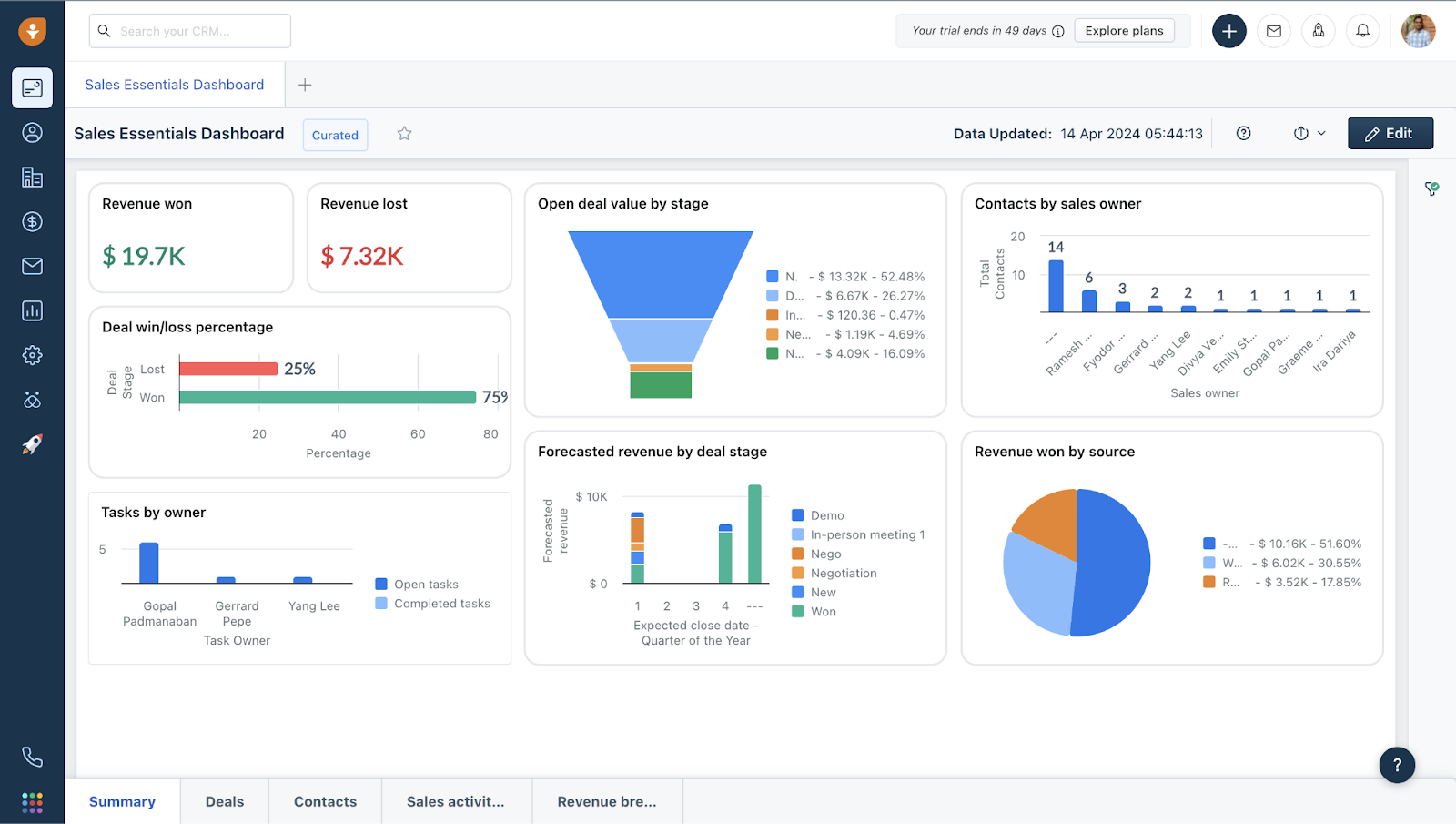
Image source:freshworks.com
Key features:
- AI-powered lead scoring: Helps agencies prioritize hot leads, like clients actively searching for holiday packages.
- Sales automation workflows: Automates tasks like sending welcome emails, assigning leads, or updating deal stages.
- Built-in phone and email: Agents can call or email clients directly from the CRM, logging all interactions automatically.
- Pipeline management: Visual deal pipelines make it easy to track bookings, upsells, and cross-sells.
- Customizable reports & analytics: Provides insights into conversion rates, response times, and top-performing packages.
Pricing: Starts at $15/user/month.
Why choose Freshsales: Ideal for agencies that want a hands-off system handling repetitive tasks so agents can focus on building client relationships.
Best for: Agencies with high lead volumes that need structured automation.
3. Zoho CRM: Best for affordability
For small and mid-sized travel agencies working with tight budgets, Zoho CRM offers a cost-effective yet capable solution. It provides a broad set of features at entry-level pricing, making it attractive for agencies that need client management without overspending. Zoho's scalability also means that as your agency grows, you can unlock more advanced features gradually.
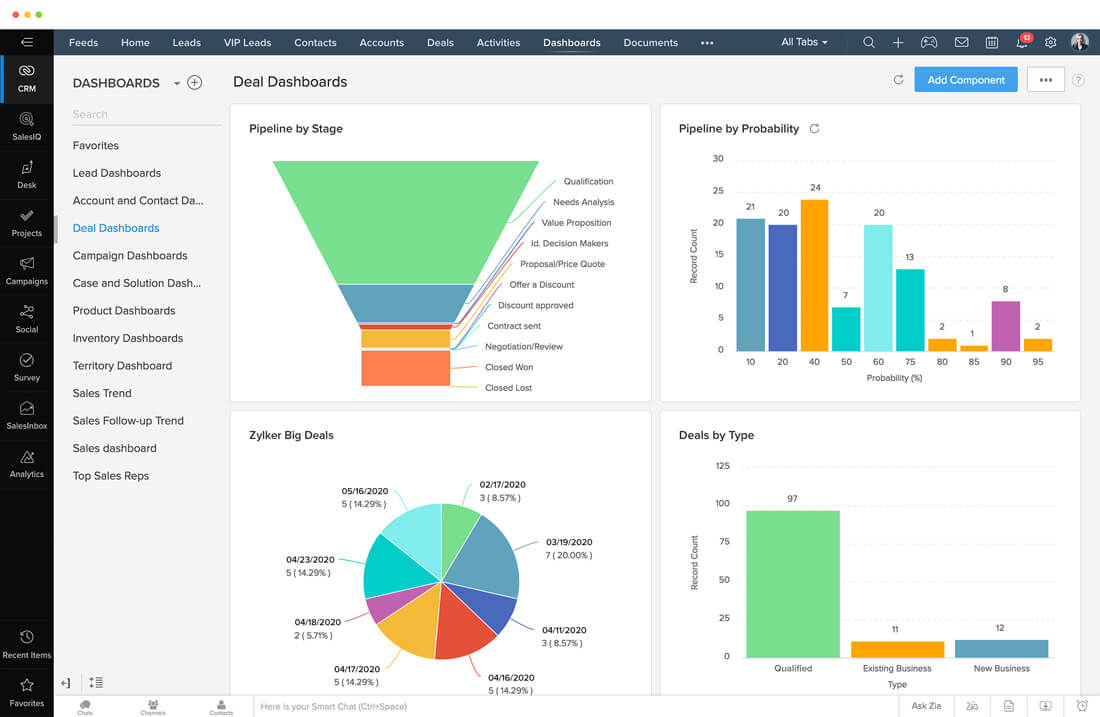
Image source: zoho.com
Key features
- Contact and deal management: Store traveler details, track bookings, and manage sales pipelines.
- Multichannel communication: Email, phone, social, and chat support built into the CRM.
- Workflow automation: Automate repetitive tasks like sending booking confirmations or payment reminders.
- Sales forecasting: Predict revenue from upcoming tours and seasonal campaigns.
- Reports and dashboards: Track conversion rates, popular destinations, and sales performance.
Pricing: Free plan available; paid plans start at $14/user/month.
Why choose Zoho CRM: It strikes the right balance between affordability and functionality, perfect for agencies that need more than spreadsheets but aren't ready for enterprise-level tools.
Best for: Startups and mid-sized travel agencies that need a budget-friendly, easy-to-use CRM.
4. Travelworkssolution: Best for travel-specific booking management
Unlike generic CRMs, Travelworkssolution is designed specifically for travel agencies. It combines traditional CRM functions with booking and accounting tools, making it a one-stop solution for agencies that need to manage both customer relationships and travel operations. This industry-specific approach makes it especially valuable for agencies handling complex itineraries or working with multiple suppliers.
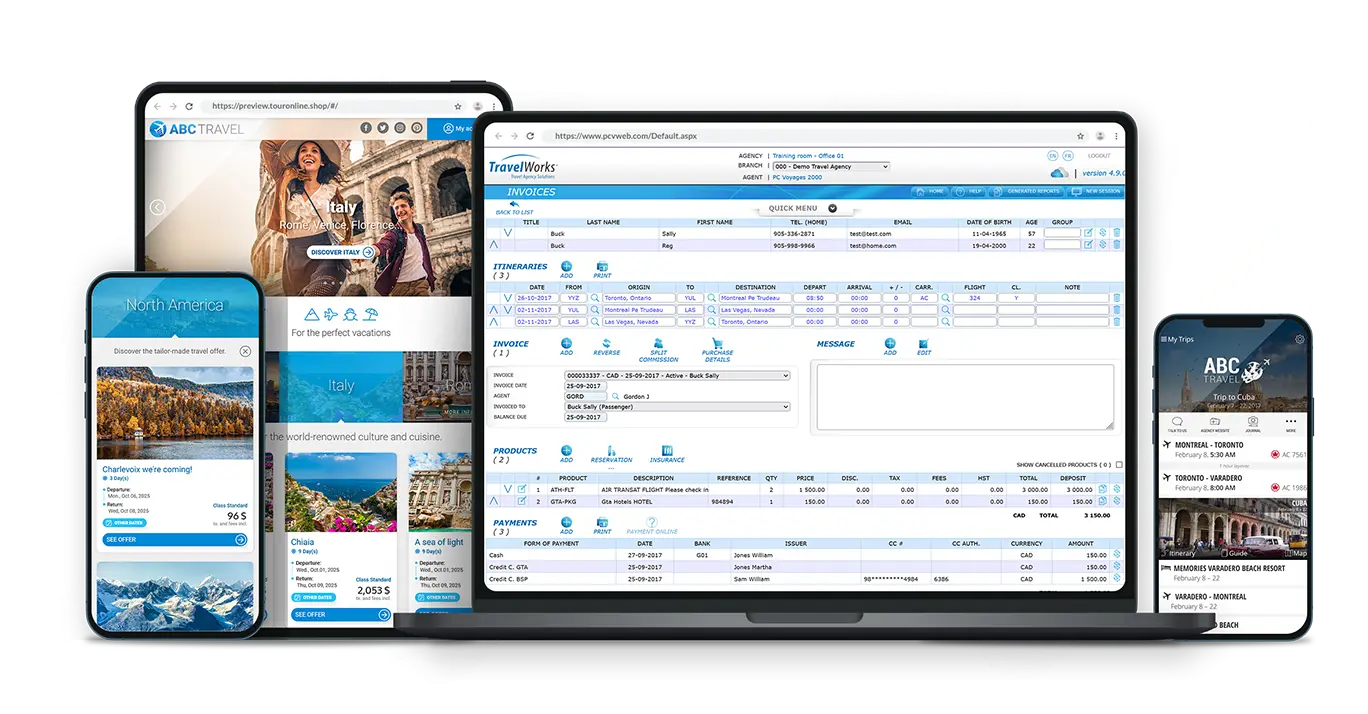
Image source:travelworkssolution.com
Key features
- Reservation management: Centralize flight, hotel, and tour bookings in one platform.
- Itinerary builder: Create detailed travel itineraries, including transport, accommodation, and activities.
- Supplier management: Track and manage contracts, rates, and relationships with travel vendors.
- Integrated accounting tools: Manage invoices, commissions, and payments directly in the system.
- Customer database: Store traveler profiles, preferences, and past booking history for personalized service.
Pricing: Custom pricing based on agency size and needs.
Why choose TravelWorks: It eliminates the need for separate booking and CRM tools, helping agencies run end-to-end travel operations more efficiently.
Best for: Travel agencies that want CRM plus booking management in a single platform.
5. Salesforce CRM: Best for enterprise travel firms
When it comes to managing large-scale, complex travel operations, Salesforce CRM stands out as the industry heavyweight. Built for enterprises, it can handle thousands of clients, global teams, and compliance-heavy processes. For multinational travel agencies or enterprise tour operators, Salesforce provides unmatched customization and advanced analytics, though it comes with higher costs and implementation complexity.
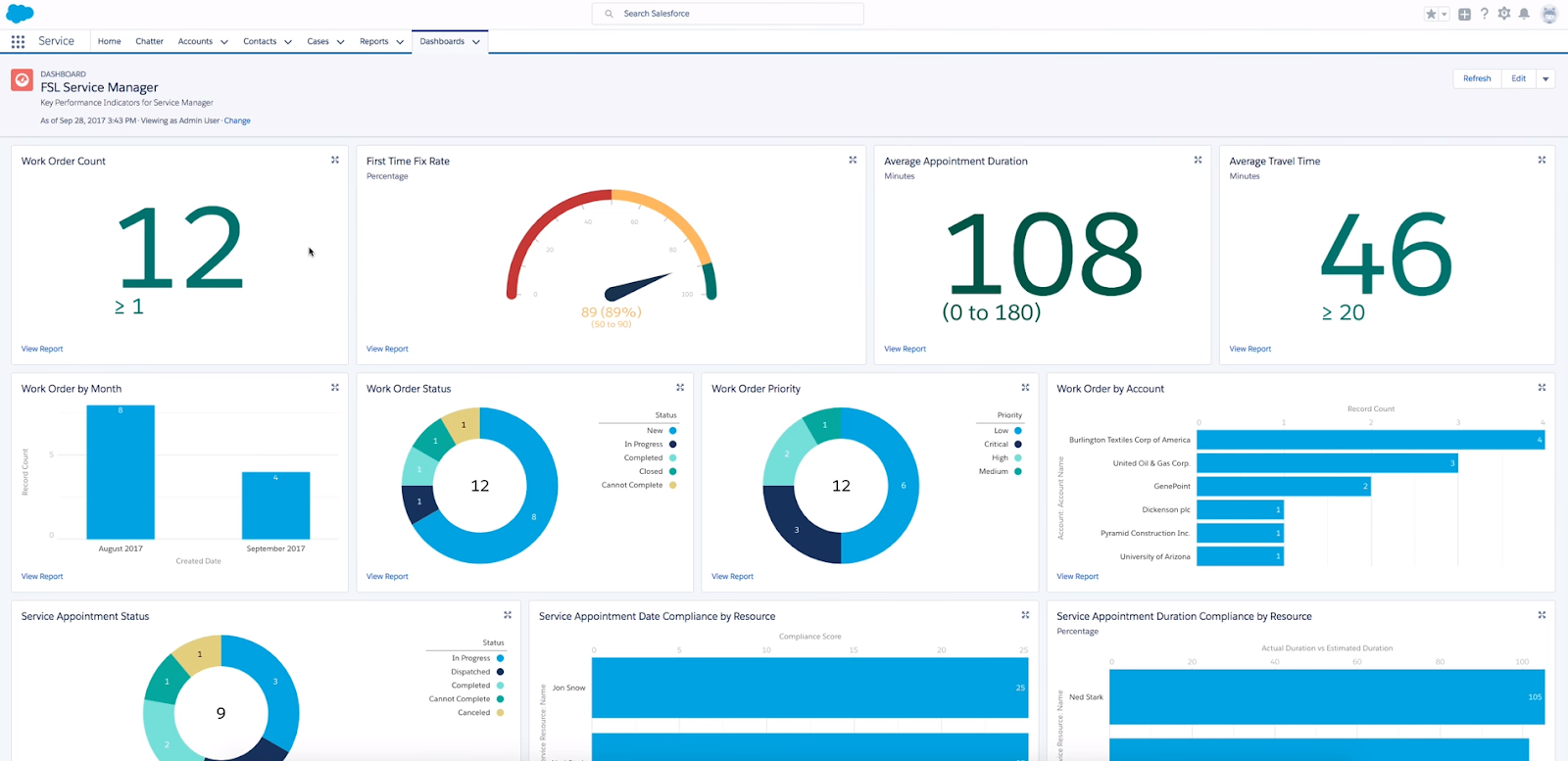
Image source: salesforce.com
Key features
- Advanced customization: Tailor workflows, fields, and dashboards to fit enterprise-scale travel operations.
- AI-powered insights (Einstein AI): Predict booking trends, upsell opportunities, and seasonal travel demand.
- Multi-region team support: Manage global teams, currencies, and regulatory compliance seamlessly.
- Extensive partner ecosystem: Integrate with travel booking engines, marketing tools, and financial platforms.
- Enterprise-grade reporting & analytics: Deep visibility into performance, customer journeys, and ROI.
Pricing: Starts at ~$25/user/month, with advanced features increasing costs significantly.
Why choose Salesforce CRM: It's the most powerful option for travel firms that need deep customization, robust analytics, and global scalability.
Best for: Large travel enterprises managing global clients, high-volume bookings, and multi-office operations.
6. HubSpot CRM: Best free CRM for travel agencies
For small travel agencies or startups just beginning their digital journey, HubSpot CRM offers one of the best free platforms in the market. It's simple, intuitive, and provides the essential tools needed to manage clients, pipelines, and communications without upfront costs. Agencies can start free and scale up with paid add-ons as their business grows.
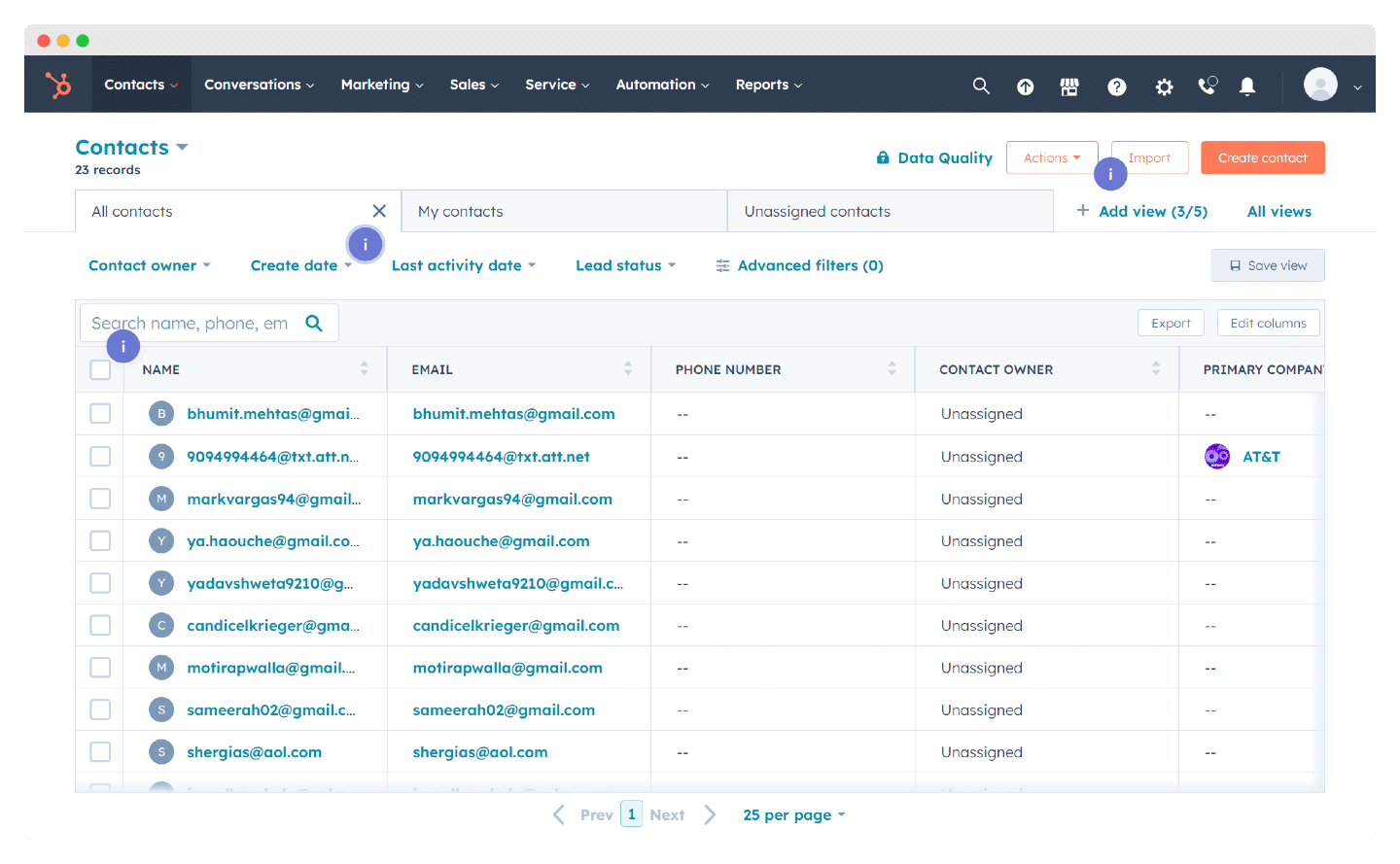
Image source: hubspot.com
Key features
- Contact and lead management: Store traveler details, inquiries, and booking preferences.
- Pipeline tracking: Visualize trips in progress, from initial inquiry to confirmed bookings.
- Email marketing integration: Send promotional offers, trip updates, and follow-up reminders directly from the CRM.
- Activity tracking: Log calls, emails, and meetings for each client automatically.
- Customizable dashboards: Monitor sales, client engagement, and booking performance at a glance.
Pricing: Free forever plan; paid add-ons (like Marketing Hub and Sales Hub) start from ~$18/month.
Why choose HubSpot CRM: It's the perfect starting point for agencies that want basic CRM features without the cost barrier, with room to expand later.
Best for: Small travel agencies and startups that want a free, easy-to-use CRM.
7. Keap: Best for small agency marketing
For smaller travel agencies that rely heavily on marketing campaigns and repeat business, Keap is a strong contender. It combines CRM features with built-in marketing automation, making it easier for agencies to nurture leads, promote seasonal packages, and stay connected with past travelers.
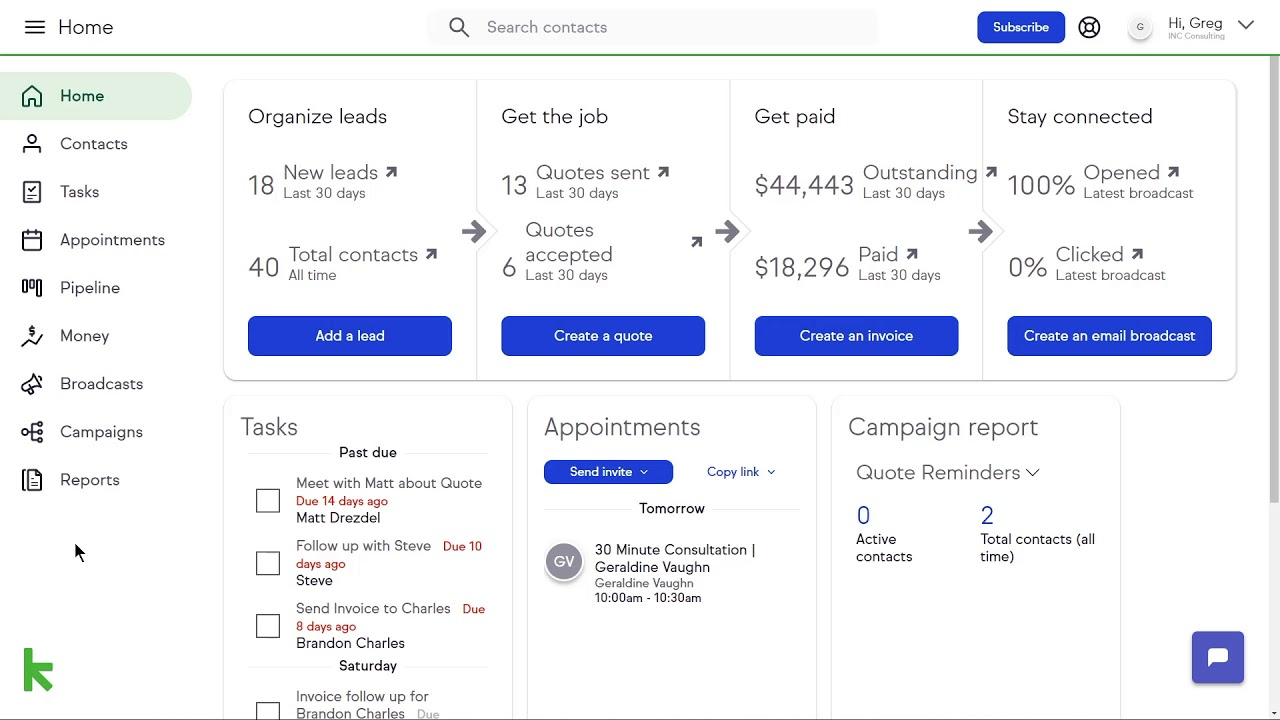
Image source: keap.com
Key features of Keap CRM
- Email campaign automation: Send personalized travel offers, payment reminders, and post-trip surveys automatically.
- Pipeline and deal management: Track bookings, upsells, and client interactions in a visual pipeline.
- Appointment scheduling: Allow clients to book consultation calls or package discussions directly with agents.
- Payment integration: Accept payments for deposits, packages, or add-ons within the CRM.
- Marketing & sales reporting: Measure campaign ROI, conversion rates, and top-performing packages.
Pricing: Starts at ~$129/month, with tiered options based on contacts and features.
Why choose Keap: It's perfect for agencies that need marketing-heavy workflows, ensuring leads are nurtured from first inquiry to repeat bookings.
Best for: Small travel agencies that want a CRM and marketing automation tool in one.
8. Pipedrive CRM: Best for sales pipeline tracking
For travel agencies that thrive on structured sales pipelines and want full visibility into their client journey, Pipedrive CRM is an excellent option. It's designed to keep pipelines organized, ensuring that every inquiry moves smoothly from interest to booking. Its simplicity and visual approach make it easy for travel agents to manage deals without getting lost in complexity..
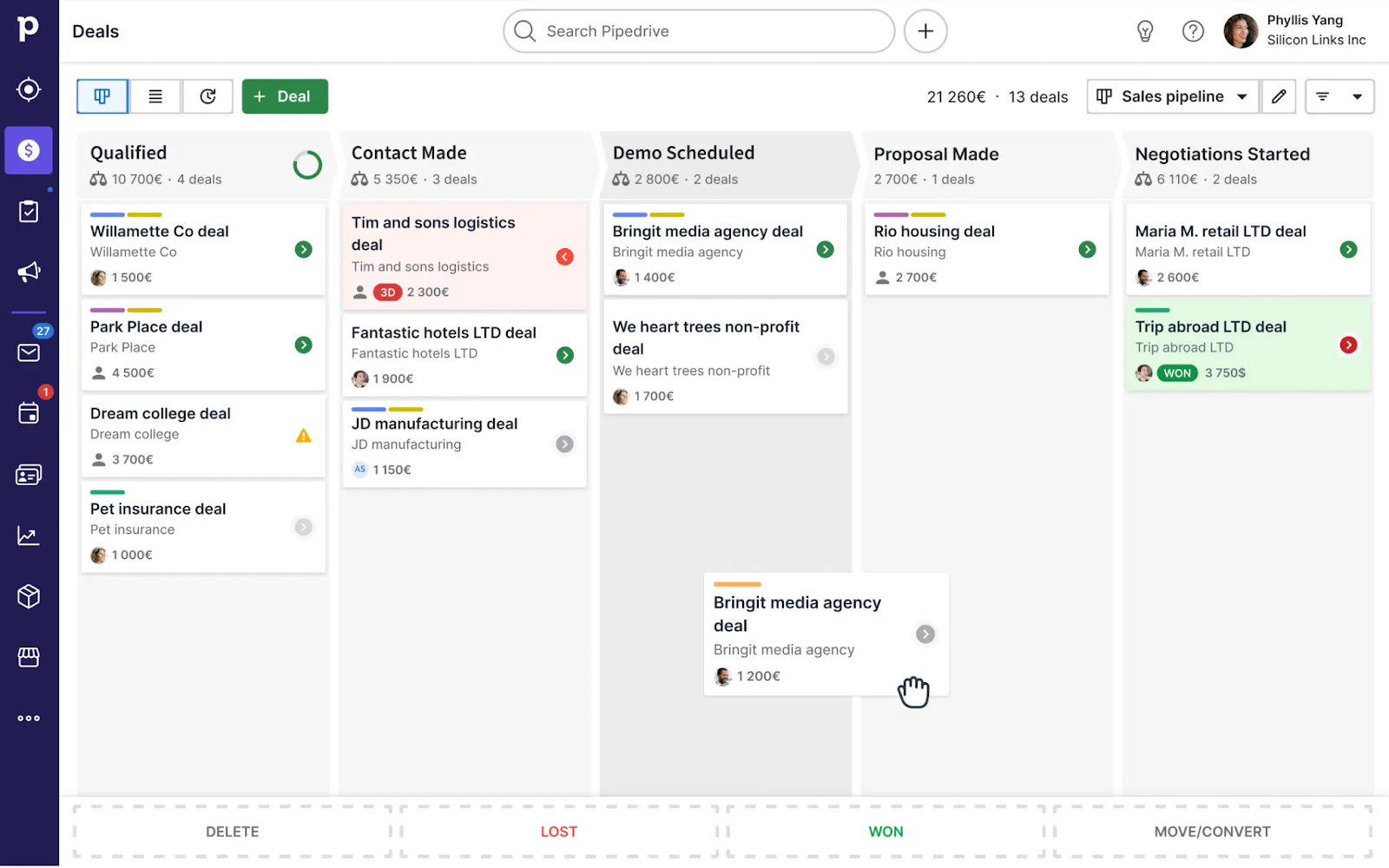
Image source: pipedrive.com
Key features
- Visual pipeline management: Track client journeys across stages like inquiry, proposal, negotiation, and confirmed booking.
- Activity reminders: Set follow-ups for calls, emails, or client meetings so no deal is forgotten.
- Email integration: Sync emails with clients directly into the CRM for a complete communication history.
- Customizable fields: Adapt pipelines for group tours, seasonal offers, or niche packages.
- Reporting & forecasting: View conversion rates, upcoming revenue, and agent performance.
Pricing: Starts at ~$14.90/user/month.
Why choose Pipedrive CRM: It's ideal for travel firms that want a straightforward, pipeline-focused CRM without unnecessary extras, helping teams focus on closing more bookings.
Best for: Agencies that want clear pipeline visibility and sales tracking
9. EngageBay: Best all-in-one SMB CRM
For small and mid-sized travel agencies looking for a complete suite of sales, marketing, and support tools, EngageBay delivers strong value. It's designed to eliminate the need for juggling multiple platforms by combining CRM, marketing automation, helpdesk, and reporting into one easy-to-use system. For agencies that want everything under one roof at an affordable price, EngageBay is a standout choice.
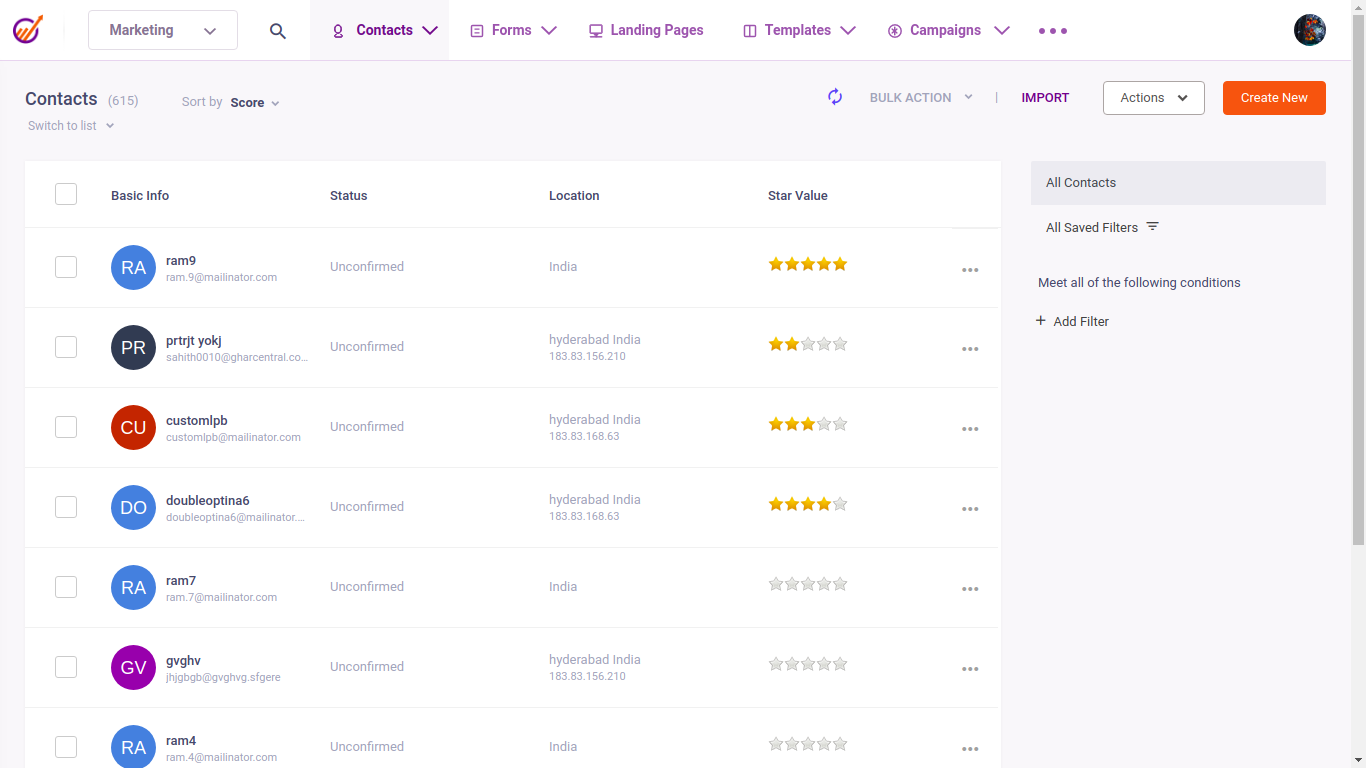
Image source: engagebay.com
Key features
- Integrated CRM: Manage traveler data, inquiries, and bookings in one place.
- Marketing automation: Run email campaigns promoting seasonal packages or discounts.
- Helpdesk & ticketing: Track customer service issues like refund requests or itinerary changes.
- Sales pipelines: Visualize trip bookings and track progress across stages.
- Custom dashboards & reports: Monitor agency performance, sales trends, and client retention.
Pricing: Free plan available; paid plans start at ~$13.79/user/month.
Why choose EngageBay: It offers an affordable all-rounder solution that helps agencies manage both sales and customer experience in a single tool.
Best for: SMB travel agencies needing an all-in-one platform with CRM + marketing + support.
10. Microsoft Dynamics 365: Best for large-scale global agencies
For global travel firms managing thousands of clients, multiple branches, and complex operations, Microsoft Dynamics 365 offers enterprise-grade CRM and ERP capabilities. It goes beyond traditional CRM by connecting sales, marketing, finance, and operations into a single ecosystem, making it ideal for large-scale agencies with global ambitions.
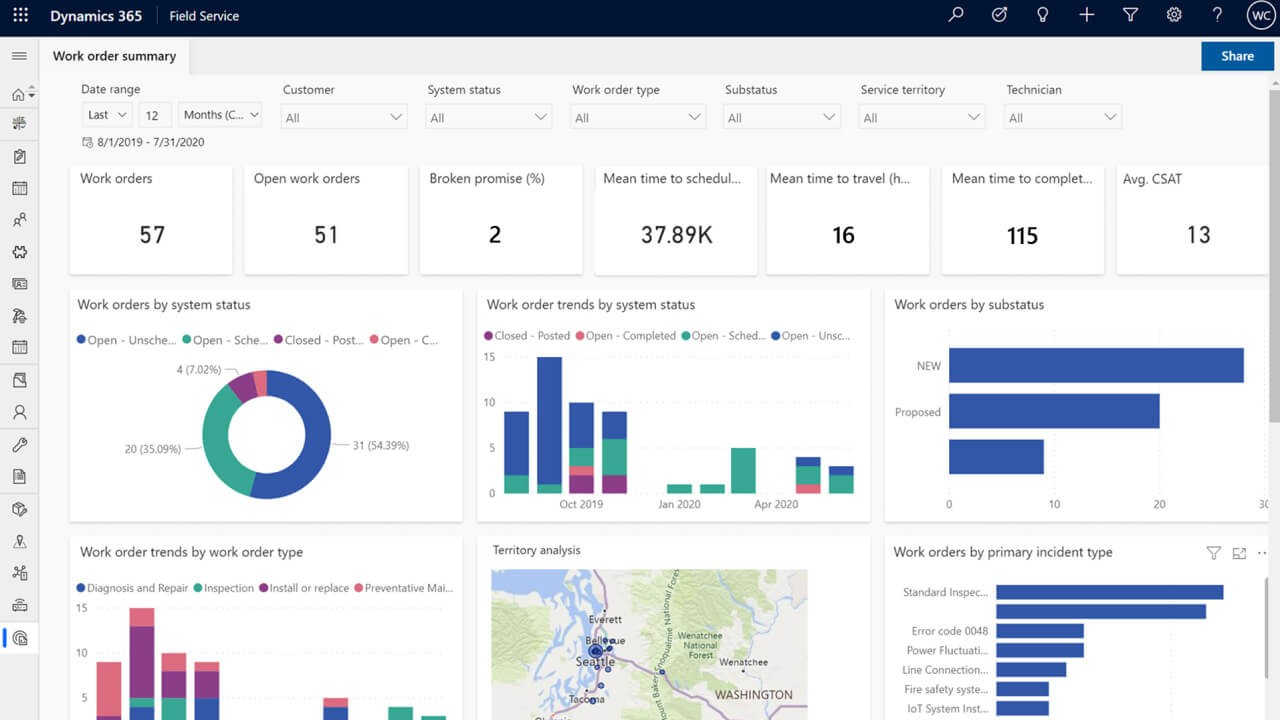
Image source: microsoft.com
Key features:
- Enterprise CRM + ERP integration: Manage clients, vendors, finances, and supply chains together.
- AI-driven insights: Forecast travel demand, track seasonal trends, and optimize resources.
- Multi-language & multi-currency support: Serve international travelers and manage global branches with ease.
- Marketing & sales modules: Run targeted campaigns and track leads through advanced pipelines.
- Compliance & security: Robust tools for handling sensitive traveler data and meeting global regulations.
Pricing: Starts from ~$65/user/month, with enterprise modules priced higher.
Why choose Microsoft Dynamics 365: It's built for scale, offering deep integration across business functions—perfect for agencies with international clients and complex processes.
Best for: Large multinational travel agencies that need a unified CRM and operations management platform.
What should travel agencies avoid when choosing a CRM?
While there are many CRM options in the market, not every tool will fit the unique needs of a travel agency. Choosing the wrong system can create more bottlenecks than benefits. Here are some common mistakes travel agencies should avoid when selecting a CRM:
- Picking a generic CRM without travel-specific workflows
Generic CRMs may cover contact management but often lack support for itineraries, group bookings, or vendor coordination. Travel agencies should look for tools that allow customization or provide ready-made templates tailored to the travel sector.
- Ignoring scalability for future growth
A CRM that works for a five-person team may quickly fall short as the agency expands. Agencies should ensure the platform can handle larger volumes of clients, more complex workflows, and additional integrations without requiring a complete system switch.
- Overlooking integration with booking/payment tools
Without integration with booking engines, payment gateways, or GDS systems, agencies risk wasting time on manual updates. A good CRM should connect seamlessly with these systems or at least allow flexible customization.
- Not training staff to use automation features
Even the most advanced CRM is ineffective if staff don't know how to use it. Travel agencies must invest in training teams on how to automate reminders, follow-ups, and client communications to unlock the full benefits of the system.
Why Lark is different from traditional CRMs
Most traditional CRMs focus primarily on leads, pipelines, and sales data. While these features are valuable, they often leave travel agencies juggling multiple external tools for communication, itinerary planning, or team collaboration. This fragmented approach slows down operations and reduces efficiency.
Lark takes a different path. It's not just a CRM—it's a collaboration-first platform that combines client tracking, communication, and workflow automation in one workspace. Travel agencies can:
- Customize workflows in Lark Base to manage travelers, itineraries, bookings, and payment status, with views like Kanban or Timeline for better trip planning.
- Collaborate seamlessly with Messenger, Docs, and Meetings, ensuring that client itineraries, contracts, and updates are shared in real time.
- Automate approvals and follow-ups using Lark Approval and Base, reducing manual work for refunds, vendor contracts, or trip changes.
- Save costs with a free forever plan for small agencies and affordable upgrades as the team grows—far less expensive than most traditional CRMs.
This makes Lark a scalable, all-in-one solution that adapts to the unique demands of modern travel agencies.
Conclusion
In 2025, a CRM for travel agencies is no longer optional—it's a competitive necessity. From capturing client inquiries to delivering detailed itineraries, the right CRM ensures smoother operations, stronger client relationships, and more repeat bookings. While many CRMs focus solely on sales or bookings, agencies today need tools that also support collaboration and communication.
That's where Lark shines. By combining CRM-style client tracking with built-in messaging, approvals, and automation, Lark helps travel agencies move beyond fragmented systems into a unified workspace. For agencies seeking CRM + collaboration in one place, Lark stands out as the top choice.
FAQs
Can a CRM help manage group bookings and tours?
Yes, many travel CRMs are built to handle group bookings where multiple travelers are tied to a single itinerary or package. This ensures smoother management of flights, hotels, and activities under one booking ID. Travel agencies save time by centralizing payments and trip details in one place. With Lark Base, agencies can build a group booking database, track individual traveler preferences, and share itineraries through Docs or Wiki for clients and staff.
Do travel CRMs integrate with booking engines and GDS systems?
Modern CRMs often allow direct integrations or custom APIs to connect with booking engines and Global Distribution Systems (GDS). This ensures real-time updates on flight availability, hotel reservations, or tour packages. Without this integration, agents risk double entry or errors. Lark supports customizable workflows and API connections, helping agencies sync booking data with client records for a streamlined experience.
Is there a free CRM for travel agencies?
Yes, platforms like HubSpot and Zoho offer free CRM plans, but they often limit features or storage. Free CRMs are ideal for smaller agencies just starting out, giving them a chance to manage clients without heavy costs. However, most require upgrades for automation or reporting. Lark's free forever plan covers up to 20 users and includes Base, Docs, Calendar, and automation runs, making it one of the most powerful free options for travel agencies.
Can CRM software automate payment reminders and follow-ups?
Absolutely—automation is one of the biggest advantages of modern CRM software. Agencies can set up workflows that send reminders for deposits, outstanding balances, or upcoming trip deadlines. This reduces manual effort and ensures no payment is overlooked. With Lark Base and Approval, agencies can schedule automated payment reminders, route invoices for approvals, and even trigger alerts in Messenger for timely follow-ups.
Which CRM is best for small travel agencies?
Small agencies need an affordable, easy-to-use CRM that still supports essential features like client tracking, pipeline management, and communication. Overly complex enterprise CRMs can slow them down instead of helping. Lark is ideal for small travel teams, offering an affordable entry point with built-in collaboration, approvals, and automation—plus the ability to scale as the agency grows.
Related reading
Table of contents
Start using Lark today

Manage all your work in one place
Boost team efficiency by 10x
Save up to 70% on software costs
Table of contents
Start using Lark today
Manage all your work in one place
Boost team efficiency by 10x
Save up to 70% on software costs
Keep reading









2026 Lark Technologies Pte. Ltd.
Headquartered in Singapore with offices worldwide.






Explore: