IT organizations today operate under constant pressure to deliver innovation while controlling costs, risks, and technical debt. As digital initiatives expand across cloud, security, and modernization efforts, leaders need a structured way to evaluate which initiatives deserve investment and which should be retired. This is where it portfolio management becomes a strategic discipline rather than an administrative task.
At its core, portfolio management in IT focuses on aligning technology investments with measurable business outcomes. Instead of managing projects in isolation, organizations evaluate them as a collective portfolio that reflects priorities, risk tolerance, and long-term goals.
What is IT portfolio management?
IT portfolio management is the structured practice of overseeing and optimizing all technology investments across an organization, including projects, applications, infrastructure, and services. Instead of managing initiatives in isolation, portfolio management in IT evaluates them collectively to ensure they align with , risk tolerance, and financial goals. By answering the question of what IT portfolio management is, organizations gain a clearer view of where technology spending delivers value and where it creates redundancy or risk. This holistic approach allows leaders to prioritize initiatives based on impact, cost, and strategic relevance rather than urgency alone.
From an operational perspective, project portfolio management and work together within a broader portfolio framework. Projects drive change and innovation, while applications represent long-term assets that require ongoing optimization. Using , portfolio management software and specialized portfolio management tools, organizations can compare initiatives, balance resources, and apply consistent governance. This enables more informed decision-making, stronger business IT alignment, and sustained value from technology investments over time.
Optimize your IT portfolios in an easy way
5 reasons why IT portfolio management matters today
In today's digital-first environment, organizations face increasing pressure to deliver innovation while controlling costs, risks, and operational complexity. Technology investments are no longer limited to standalone projects but span applications, infrastructure, security, and transformation initiatives. IT portfolio management provides a structured approach to evaluate these investments collectively, ensuring that limited budgets and resources are directed toward initiatives that deliver the highest business value.
- Budget optimization: Budget optimization is one of the strongest drivers for adopting portfolio management in IT. By viewing all initiatives in a single portfolio, leaders can clearly see where money is being spent and which investments generate measurable returns. IT portfolio management tools help identify overlapping systems, underperforming projects, and unnecessary maintenance costs. This visibility allows organizations to reallocate funding from low-value initiatives to high-impact strategic priorities. Over time, this disciplined approach improves financial efficiency and investment confidence.
- Risk visibility: As IT environments grow more complex, risks related to security, compliance, and technical debt increase. IT portfolio management software improves risk visibility by assessing initiatives collectively rather than in silos. Leaders can compare risk exposure across projects, applications, and infrastructure initiatives using consistent criteria. This makes it easier to prioritize mitigation efforts and avoid surprises that can disrupt operations. strengthens organizational resilience.
- Business-IT alignment: Business IT alignment ensures that technology investments directly support organizational goals. Through it project portfolio management, initiatives are evaluated based on their contribution to revenue growth, efficiency, or compliance objectives. This alignment reduces conflicts between business leaders and IT teams. When priorities are clear, decision-making becomes faster and more objective. As a result, technology acts as a strategic enabler rather than a support function.
- Resource balancing: Resource balancing focuses on the effective use of people, time, and skills across the portfolio. Portfolio management in IT highlights overallocated teams and underutilized capabilities. By redistributing workloads and timelines, organizations can avoid burnout and delivery delays. Balanced also improves predictability and project success rates. This creates a healthier and more sustainable IT operating model.
- Governance improvement: Strong governance is essential for managing complex IT portfolios. IT portfolio management framework practices establish standardized processes for approvals, reviews, and . These controls reduce shadow IT and ensure compliance with internal and external regulations. Improved governance increases accountability across teams and provides leadership with greater confidence in technology decisions.
5 key components of an IT portfolio
An effective IT portfolio is made up of multiple interconnected components that together represent the organization's technology landscape. Each component requires ongoing evaluation to ensure it continues to deliver value and align with strategic priorities. By structuring portfolios around these components, organizations gain clearer visibility, stronger governance, and better decision-making across their IT investments.
- Application portfolio: The application portfolio includes all software systems used to support business processes. evaluates applications based on cost, usage, performance, and technical health. This helps organizations identify legacy systems that are expensive to maintain or no longer meet business needs. Rationalizing the application portfolio reduces complexity and improves security. Over time, it enables more efficient and modern IT environments.
- Infrastructure initiatives: Infrastructure initiatives cover hardware, networks, cloud platforms, and data center investments. These initiatives often involve high costs and long lifecycles, making portfolio oversight essential. IT portfolio management tools help assess scalability, reliability, and alignment with future demand. Centralized visibility ensures infrastructure investments support long-term business growth. This reduces the risk of overbuilding or underprovisioning.
- Digital transformation projects: Digital transformation projects focus on innovation, automation, and customer experience improvements. Portfolio management in IT ensures these initiatives align with strategic objectives rather than operating as isolated experiments. Consistent evaluation helps organizations prioritize transformation efforts with the highest potential impact. This increases adoption success and returns on investment. Structured oversight also prevents duplication of digital efforts.
- Security programs: Security programs protect systems, data, and users from evolving threats. Including them in its portfolio management highlights their strategic importance rather than treating them as reactive expenses. ensure security investments address the most critical vulnerabilities first. This approach strengthens compliance and reduces the likelihood of major incidents. Security has become an integral part of portfolio decision-making.
- Innovation pilots: Innovation pilots allow organizations to explore emerging technologies and new ideas. Portfolio management in IT ensures these pilots are tracked, measured, and governed effectively. Successful pilots can be scaled across the organization, while low-value experiments are discontinued early. This balance encourages innovation without sacrificing financial discipline. Over time, innovation becomes a repeatable and controlled process.
Step-by-step IT portfolio setup process
Setting up an effective IT portfolio requires a structured and repeatable approach rather than ad hoc decision-making. A clear process helps organizations gain full visibility into their technology landscape, evaluate initiatives objectively, and align investments with strategic goals. By following a defined portfolio management framework, teams can move from fragmented oversight to disciplined, execution focused project portfolio management that supports long-term value creation.
Step 1: Inventory all IT initiatives
The first step is to build a complete and accurate initiatives across the organization. This includes projects, applications, infrastructure upgrades, security programs, and innovation efforts. Using portfolio management software helps centralize this information as a single source of truth. Comprehensive visibility eliminates blind spots and uncovers hidden or duplicated initiatives. Without this foundation, effective portfolio management in IT is not possible.
Step 2: Categorize by business impact
Once initiatives are inventoried, they must be categorized based on their business impact. Categories may include revenue growth, operational efficiency, regulatory compliance, or innovation. Portfolio management IT practices ensure that each initiative is clearly linked to strategic objectives. This step helps stakeholders understand why initiatives exist and how they contribute to business outcomes. Clear categorization simplifies prioritization and communication.
Step 3: Apply scoring model
A scoring model introduces objectivity into portfolio decisions. IT project portfolio management commonly uses weighted criteria such as strategic alignment, expected ROI, risk level, and effort. By applying consistent scoring across initiatives, organizations reduce bias and subjective decision-making. This approach makes trade-offs more transparent and defensible. Scoring models also support ongoing portfolio optimization.
Step 4: Prioritize funding
Funding decisions are made based on portfolio rankings and strategic importance. IT portfolio management tools help leaders compare initiatives side by side and allocate budgets accordingly. High-value and high-impact initiatives receive priority funding, while low-value efforts are deferred or retired. This disciplined approach improves financial efficiency and investment confidence. Prioritization ensures resources are focused where they matter most.
Step 5: Monitor performance
Portfolio management does not end once funding is approved. Continuous monitoring is essential to ensure initiatives remain aligned with goals. IT portfolio management software tracks KPIs such as cost, risk, progress, and resource utilization. Regular reviews allow organizations to adjust priorities as conditions change. Ongoing monitoring turns IT portfolio management into a living, adaptive process rather than a one-time exercise.
Improve portfolio visibility today
How Lark improves portfolio decision-making
Effective IT portfolio management depends on the quality, consistency, and transparency of decisions made across initiatives. As portfolios grow in size and complexity, leaders need more than static reports to evaluate trade-offs between value, risk, and urgency. improves portfolio decision-making by combining structured data, real-time visibility, and in one environment, allowing PMOs and executives to prioritize initiatives based on objective criteria and shared context rather than fragmented information or subjective judgment.
Visual pipeline views for leadership
Leadership needs to see the "flow" of value, which is why Lark offers Gird, Kanban, Gantt views, and Gallery views that act as a visual pipeline. A "Portfolio Pipeline" Kanban board can show initiatives moving from Ideation to security review, funding approval, and execution. This visual approach allows executives to instantly spot "bottlenecks"—such as too many projects stuck in the security phase—and reassign resources to clear the path. 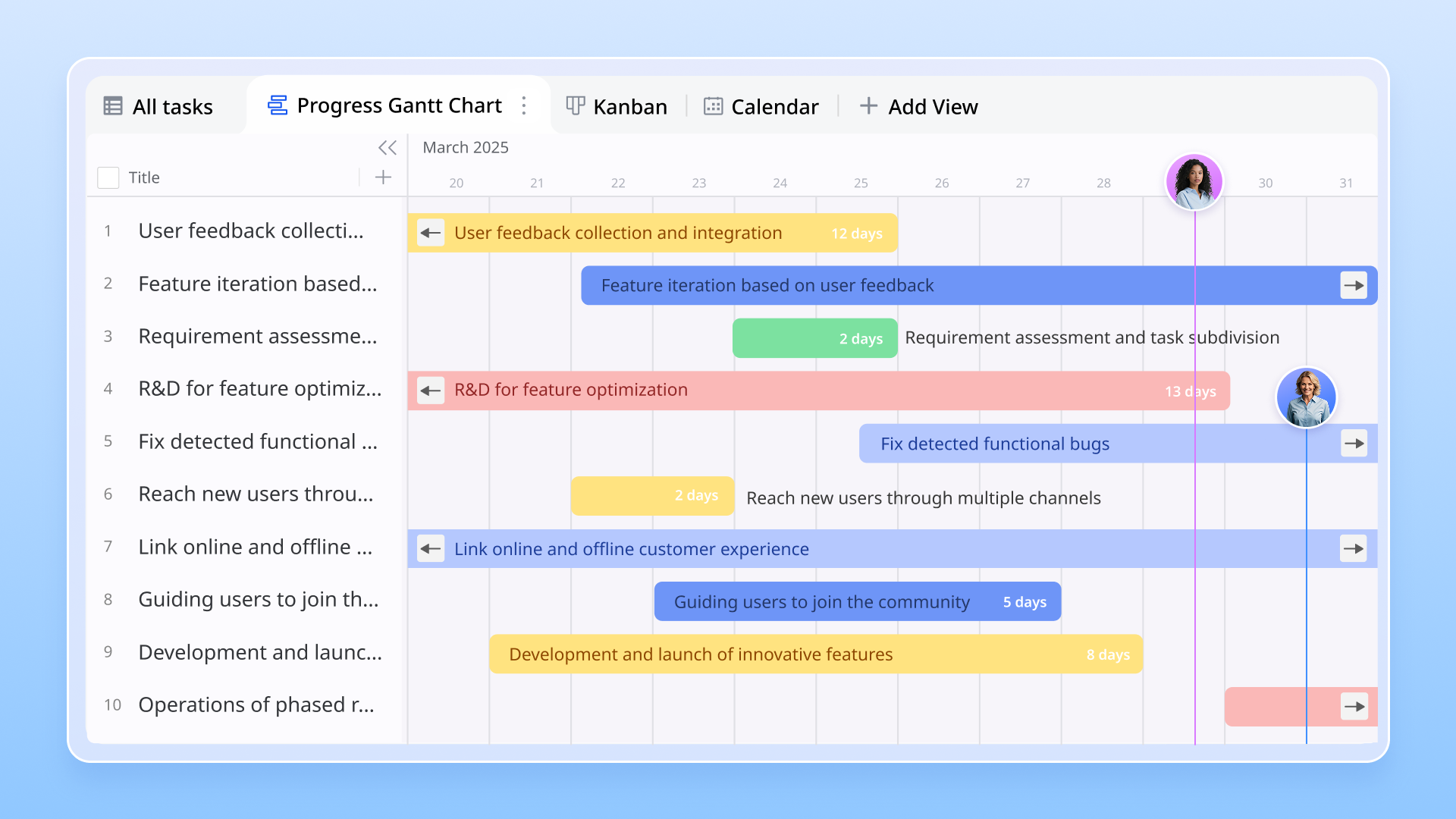
Compare projects by ROI, risk, and urgency
Using one-way and two-way links, Lark allows you to compare disparate projects on a level playing field. You can create a master "Portfolio Comparison" view that pulls data from individual project tables to display a side-by-side analysis of projected ROI, risk scores, and proximity/urgency. This cross-functional visibility ensures that leadership can see the "big picture" impact of choosing one infrastructure upgrade over another, facilitating more balanced resource allocation. 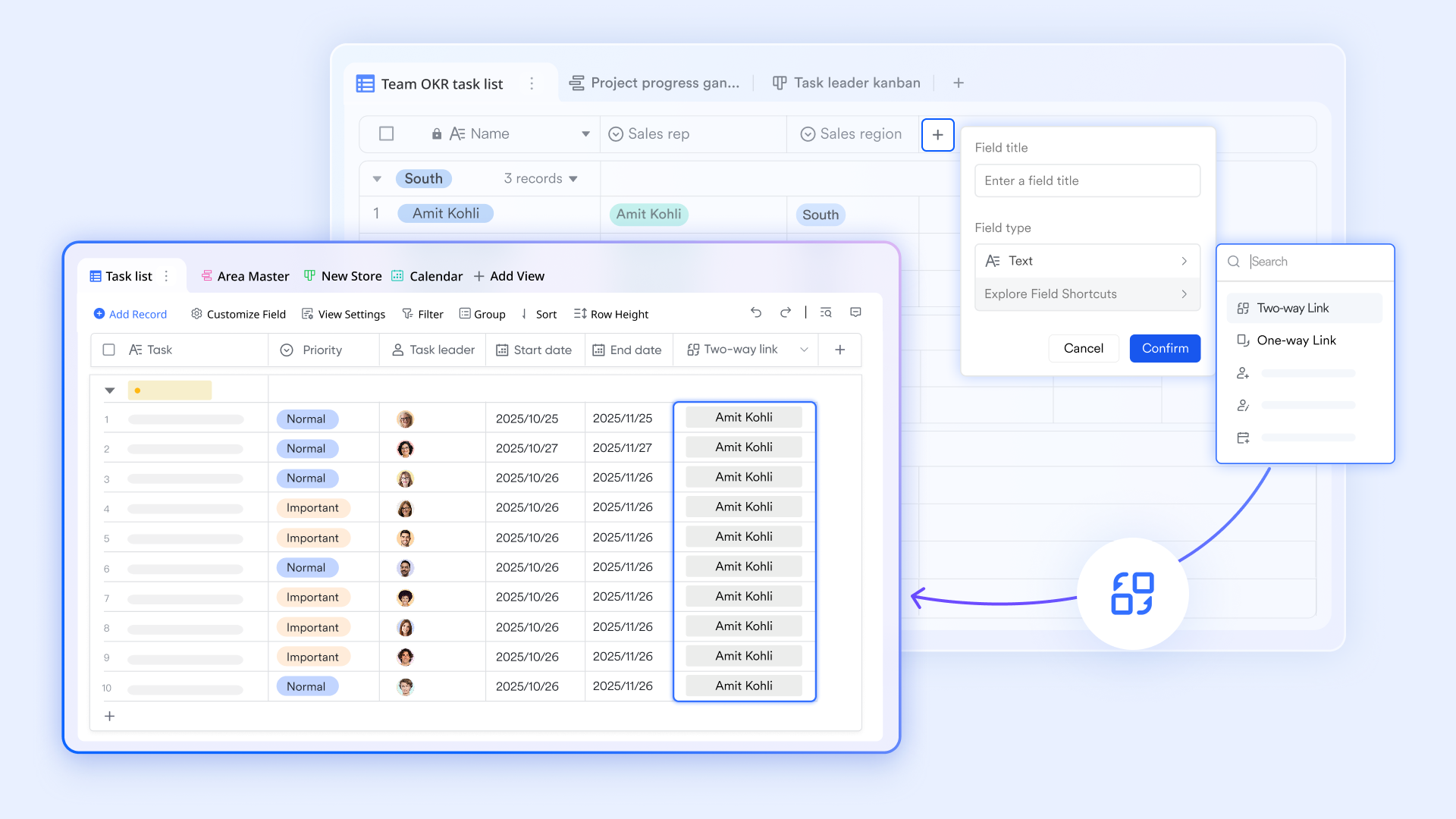
Score initiatives using weighted fields
allows PMOs to move beyond simple "High/Low" priority tags by using formula fields to create a weighted scoring model. You can assign specific "weights" to criteria such as Strategic Alignment (40%), Revenue Potential (30%), and Technical Effort (30%). As team members input raw scores for a new initiative, the system automatically calculates a final "Weighted Priority Score," ensuring that your portfolio is ranked based on objective business value rather than the loudest voice in the room. 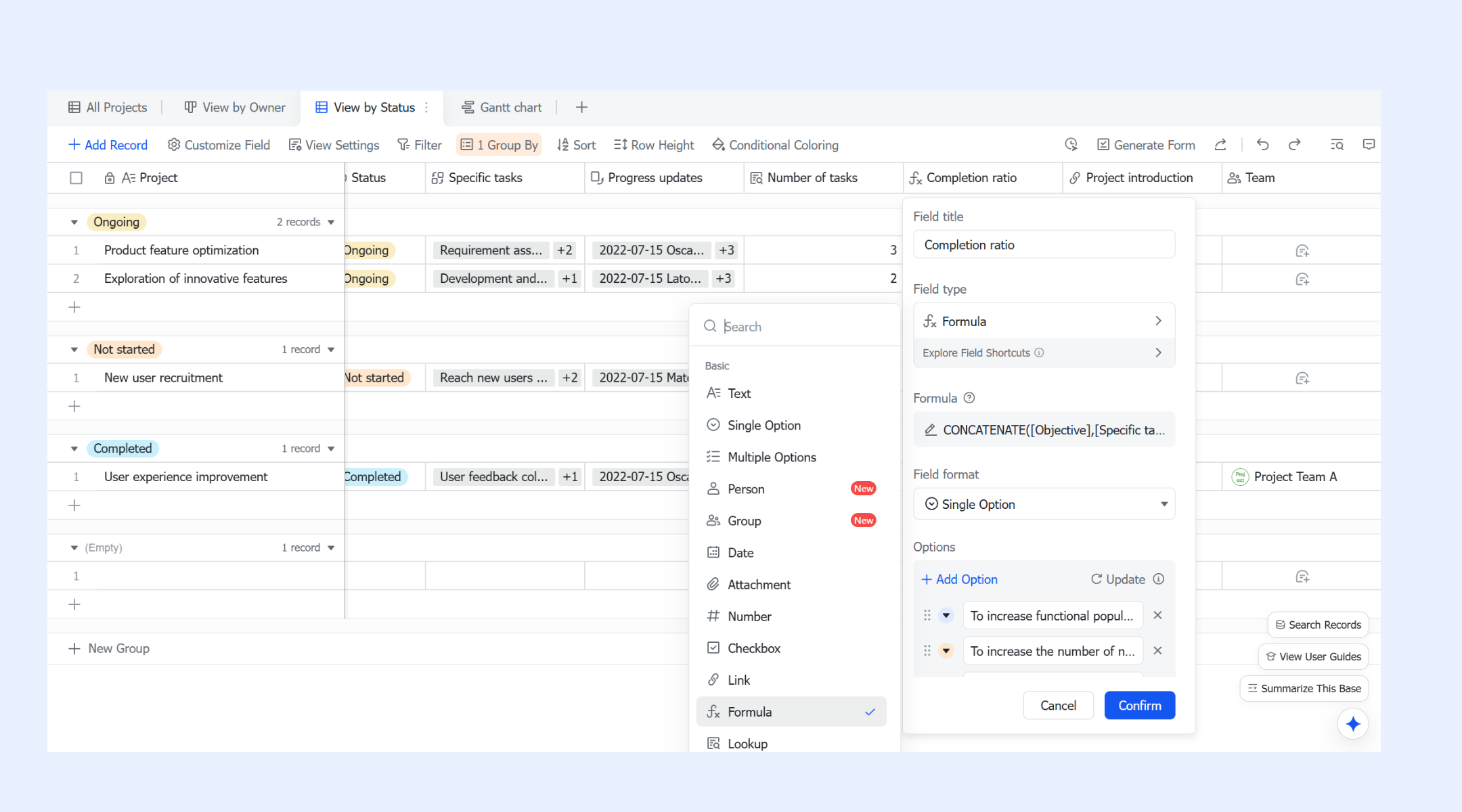
Automated alerts for stalled initiatives
To prevent the "silent death" of projects, Lark Base automation acts as a 24/7 monitor. You can set up a "Stalled Logic" trigger that monitors the Last update field. If a project in the "In Progress" stage hasn't seen an update in 14 days, the system sends an automated alert to the Project Manager and the Portfolio Lead. These proactive nudges ensure that roadblocks are addressed immediately, rather than being discovered weeks later during a monthly review. 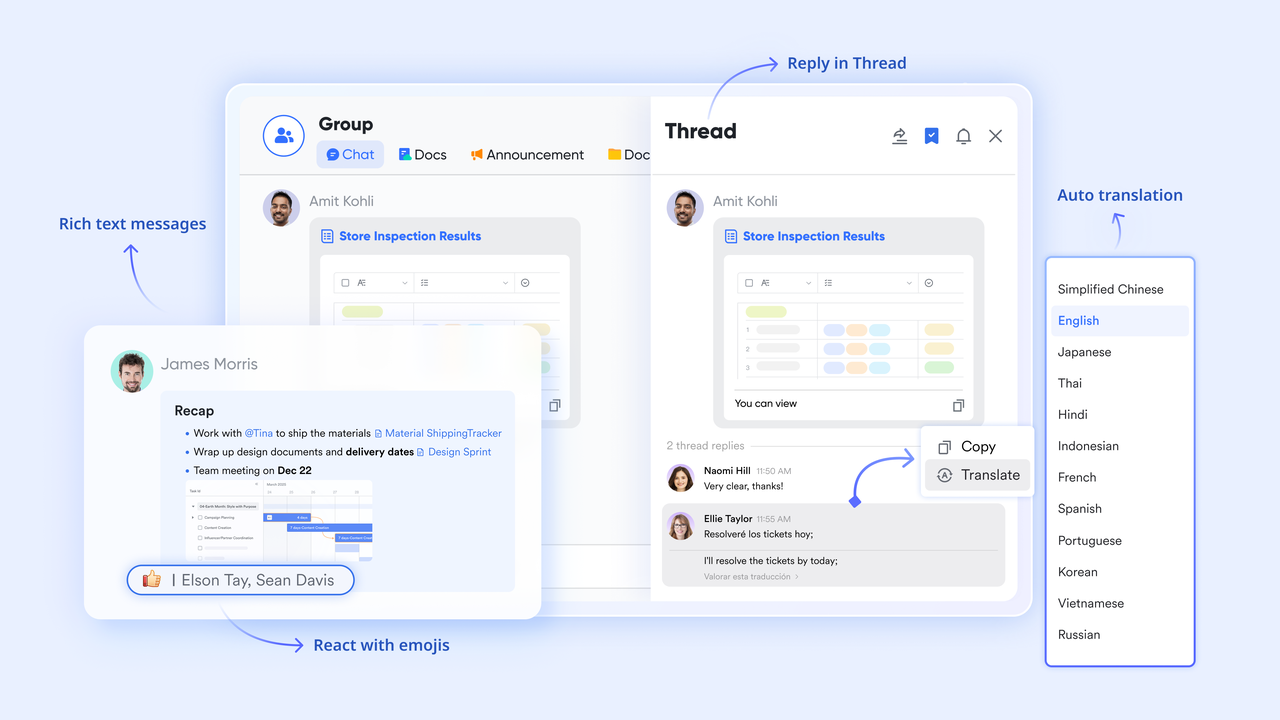
Smart dashboard powers up data monitoring
As a high-level command center, Lark Base dashboards use its 36 different types of blocks to turn data into a visual narrative of organizational health. For example, with metrics and progress blocks, IT leaders can monitor budget utilization and strategic milestones in real-time across the portfolio. Radar charts and pivot tables enable multi-dimensional analysis of project risks and . With slicer filters, managers can instantly drill down from global trends to specific departmental performance, aligning business objectives. 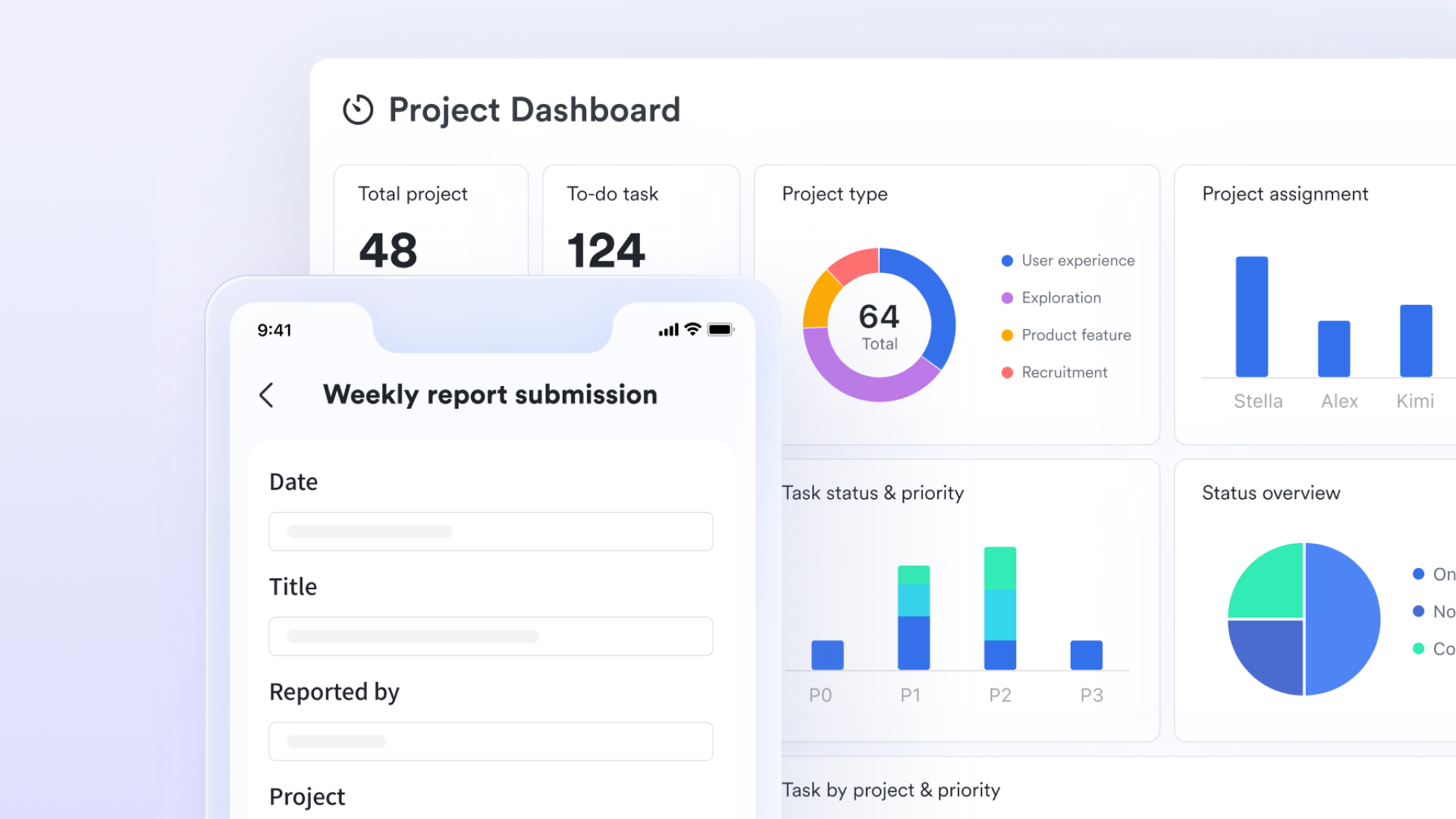
Seamless team coordination via one channel
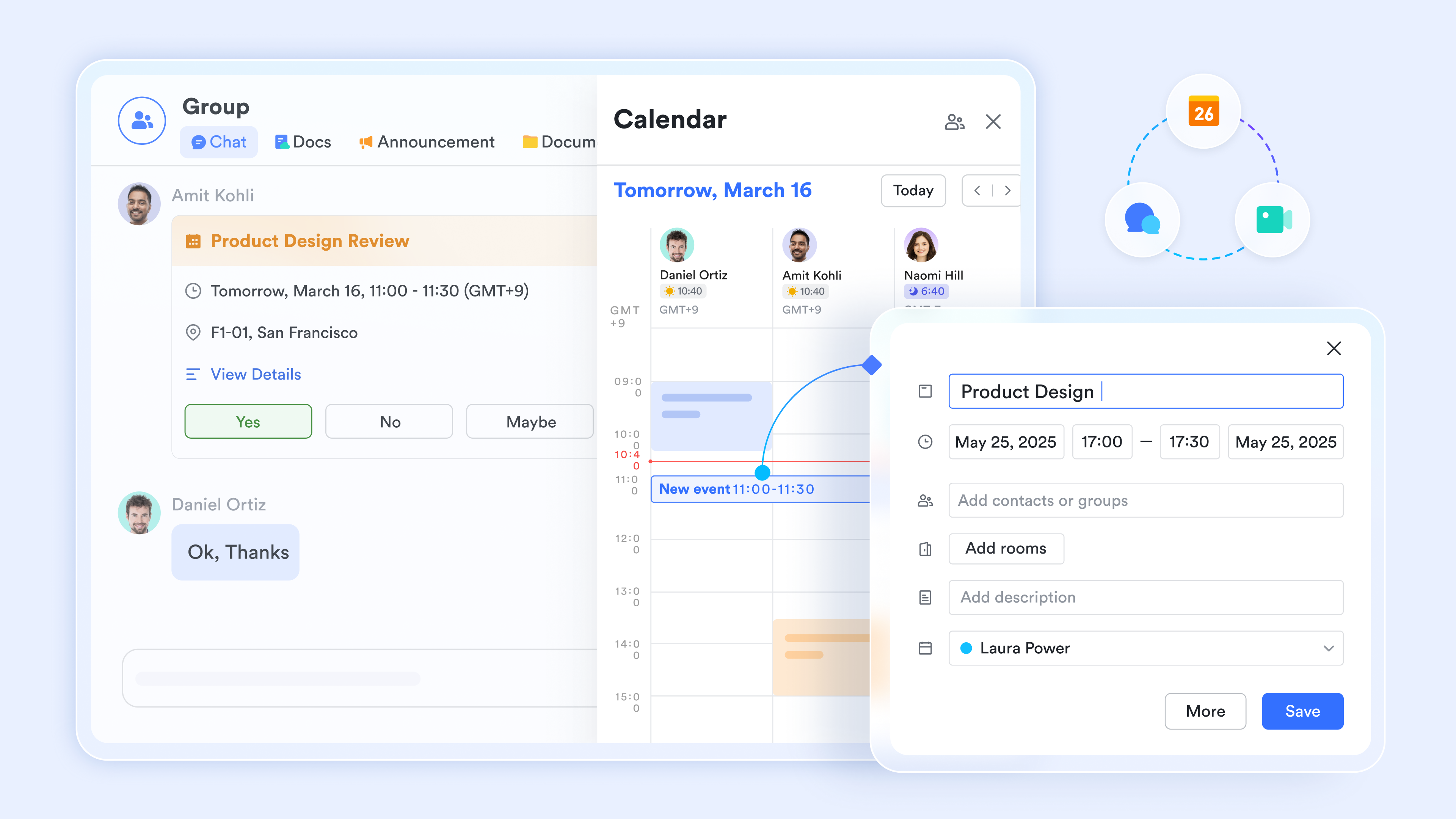
For seamless IT Portfolio Management communication, Lark offers Messenger, Meetings, and Calendar to bridge the gap between strategic discussion and scheduled action. serves as a real-time chatting room, where project threads and groups resolve cross-team dependencies instantly. visualizes resource capacity and centralizes major release milestones into shared public calendars. When critical decisions are needed, bridges the gap, allowing leaders to use Magic Share to co-edit roadmaps and budgets live during the call. In these ways, the Lark ecosystem avoids tool sprawl, keeping the entire technical portfolio aligned, documented, and moving forward.
:
- Starter plan: Free forever plan that includes 11 powerful tools for up to 20 users. It also comes with 100GB of storage, 1000 automation runs, AI translations, and more.
- Pro plan: $12/user/month (billed annually) for up to 500 users. It includes everything in Starter plus group calling for up to 500 attendees, 15TB of storage, 50,000 automation runs, and more.
- Enterprise plan: for custom pricing. Supports unlimited users and includes even more automation runs and advanced security, compliance, and management features.
For small teams with simple communication needs

18 months message history
1000 Base automation runs/month
2000 rows per table in Base
Most POPULAR
For companies with comprehensive collaboration and management needs
Unlimited message history
500-participant video meetings
50k Base automation runs/month
20k rows per table in Base
For large companies with advanced security and organizational management needs
Get a personalized demo and pricing
Unlimited message history
500-participant video meetings
15 TB storage + 30 GB storage/user
500k Base automation runs/month
50k Base automation runs/month
Most POPULAR
For companies with comprehensive collaboration and management needs
Unlimited message history
500-participant video meetings
50k Base automation runs/month
20k rows per table in Base
Common challenges in IT portfolio management
Even with the right intent, many organizations struggle to execute IT portfolio management effectively. As technology environments expand and business demands accelerate, hidden inefficiencies and governance gaps become more visible. Understanding these common challenges helps organizations proactively address issues that limit the effectiveness of portfolio management in IT and prevent strategic misalignment.
- Shadow IT: Shadow IT emerges when teams deploy tools or systems without central oversight. This weakens governance and increases security and compliance risks. In the absence of strong portfolio management, these initiatives remain invisible to leadership. Over time, shadow IT creates duplicated costs and fragmented data. Addressing it requires transparency and standardized approval processes.
- Data silos: Data silos occur when portfolio information is spread across disconnected tools and departments. This limits visibility into costs, risks, and performance. IT portfolio management software helps break down these silos by centralizing data. Without integration, decision-making relies on incomplete or outdated information. Silos undermine trust and collaboration across teams.
- Budget overruns: Budget overruns are a frequent symptom of poor portfolio oversight. When initiatives are approved without consistent evaluation, costs escalate unnoticed. IT portfolio provide real-time visibility into spend versus value. Early detection allows leaders to intervene before overruns become critical. Financial discipline improves portfolio credibility.
- Stakeholder conflicts: Conflicting priorities between IT and business stakeholders can delay decisions. Without a shared framework, debates become subjective and political. Portfolio management in IT introduces objective criteria to resolve conflicts. Clear prioritization reduces friction and accelerates alignment. gain confidence in fair decision-making.
- Legacy systems: Consume resources while limiting agility. IT application portfolio management highlights systems with high cost and low value. These insights support decisions regarding modernization or retirement. Addressing legacy systems frees capacity for innovation. Long-term portfolio health improves as technical debt is reduced.
Best practices for managing IT portfolios
Successful organizations follow proven principles that turn portfolio management into a continuous discipline. These best practices strengthen governance, improve transparency, and ensure technology investments remain aligned with business goals. Adopting these approaches helps organizations maximize the benefits of their over time.
- Review quarterly: Quarterly reviews keep portfolios aligned with evolving business priorities. Regular assessments allow organizations to adjust funding and timelines. IT portfolio management best practices emphasize frequent checkpoints. This prevents outdated initiatives from consuming resources. Reviews support agility and responsiveness.
- Enforce governance models: Strong governance ensures consistency and accountability. IT portfolio standards define approval, reporting, and escalation processes. Clear rules reduce shadow IT and unauthorized spending. Governance also builds trust with executives. Consistency strengthens portfolio credibility.
- Standard scoring criteria: Standardized scoring ensures fair comparison across initiatives. IT project portfolio management relies on consistent metrics such as value, risk, and effort. This reduces bias and emotional decision-making. Clear criteria improve transparency. Decisions become easier to explain and defend.
- Kill low-value projects early: Stopping low-value initiatives frees resources for higher-impact work. Portfolio management in IT encourages early evaluation and decisive action. Continuing weak projects increases opportunity costs. Early termination improves overall portfolio performance. This discipline supports strategic focus.
- Keep executive dashboards simple: Executives need clarity, not complexity. IT portfolio management tools should present key metrics at a glance. Simple dashboards improve understanding and decision speed. Overloading leaders with detail reduces effectiveness. Focused visuals support confident decision-making.
Conclusion
IT portfolio management has become a strategic capability that directly impacts cost control, , and business alignment. As organizations manage growing portfolios of applications, infrastructure, security, and transformation initiatives, treating these efforts as isolated projects is no longer effective. A structured approach to portfolio management in IT provides end-to-end visibility, supports objective prioritization, and ensures technology investments consistently deliver business value. When supported by and regular reviews, portfolio management reduces waste, improves decision quality, and increases organizational agility.
As portfolios scale in size and complexity, organizations increasingly need tools that connect data, collaboration, and execution in one place. Modern IT portfolio management tools help centralize portfolio insights, approvals, and performance tracking while supporting cross-functional alignment. Over time, platforms like are gradually becoming part of these discussions by enabling teams to manage portfolio information and decisions within a unified workspace, helping IT leaders move from planning to execution with greater clarity and confidence.
Take control of IT investments
FAQs
What are the 4 types of portfolio management?
The four types typically include project portfolio management, application portfolio management, infrastructure , and investment portfolio management. Each focuses on a different category of assets. Together, they form a complete portfolio management approach. As organizations mature, integrated platforms like Lark help bring these portfolio views together in one workspace.
What is the difference between PPM and IT portfolio management?
PPM focuses specifically on managing and prioritizing projects. IT portfolio management has a broader scope that includes projects, applications, infrastructure, and services. This wider view supports strategic alignment and long-term planning. Tools such as Lark increasingly support both PPM and portfolio-level oversight in a single environment.
What is the role of IT portfolio manager?
An IT is responsible for evaluating initiatives, prioritizing investments, and enforcing governance standards. They act as a bridge between business strategy and technology execution. Their role ensures resources are allocated based on value and risk. like Lark can support this role by centralizing data and communication.
What KPIs matter most in IT portfolio management?
Common KPIs include return on investment, budget variance, risk exposure, resource utilization, and strategic alignment scores. These metrics help leaders assess portfolio health and performance. Modern it portfolio management software automates KPI tracking and reporting. Over time, solutions such as Lark make these insights easier to access and act on.
Related reading