














Boost Team Performance with the Best Project Management Framework

Ryan Tanner
Product Marketing Specialist
Sep 18, 2026
Ryan Tanner
Sep 18, 2026

14 min read


Choosing the right project management framework can make or break a team's success. With so many tools and methods available, finding one that fits your workflow is key to boosting collaboration and results. In this post, we'll explore how to choose the best project management framework and how Lark supports teams in achieving their goals.
1. Waterfall: Sequential, structured project process
2. Agile: Flexible, iterative work cycles
3. Scrum: Sprint-based team collaboration
4. Kanban: Visual task management system
5. Lean: Efficiency-focused workflow method
6. PRINCE2: Process-driven project governance
7. MoSCoW: Priority-based task categorization
8. Six Sigma: Data-driven quality improvement

What is a project management framework?
A project management framework is a structured approach that guides project management techniques that are planned, executed, and monitored. It defines key elements such as processes, tools, roles, and templates that help teams stay organized and aligned. These frameworks offer a clear structure for managing tasks and timelines while still allowing flexibility to adapt to changing needs.
With Lark, teams can easily implement and customize any project management framework. Its intuitive task boards, shared documents, and real-time communication features make it simple to plan, track, and collaborate—all in one place. This helps teams stay productive and connected from start to finish.
Image source: unsplash.com
Benefits of a structured project management framework
Using a structured project management framework helps teams stay focused, organized, and efficient. It promotes better collaboration and accountability by clearly defining roles and responsibilities, so everyone knows what to deliver and when. Structured processes also mean fewer bottlenecks, smoother workflows, and consistent progress across all stages of a project.
A defined framework ensures clearer reporting and progress tracking, allowing teams to spot issues early and make data-driven decisions. With Lark, these project plans come to life through built-in project management tools like shared dashboards, goal tracking, and automated reminders, which keep everyone aligned and projects running on schedule.
How to choose the right project management framework
Selecting the right project management framework depends on several key factors, including the type of project, team size, goals, and level of flexibility your work requires. For instance, a large enterprise project might benefit from a structured approach like PRINCE2, while a smaller, fast-moving team may prefer Agile or Kanban for adaptability.
There's no one-size-fits-all solution, and that's perfectly fine. The best framework is the one that aligns with your workflow and goals. With Lark, teams can experiment, adapt, and switch frameworks effortlessly. Its flexible tools and integrations make it easy to refine processes until you find what works best for your team.
How Lark helps in selecting the right project management framework
Choosing the right project management framework can feel overwhelming—especially when each approach promises structure, flexibility, or speed in different ways. Lark simplifies this decision by giving teams a single, adaptable workspace where they can experiment with frameworks, compare results, and refine their workflows without disruption.
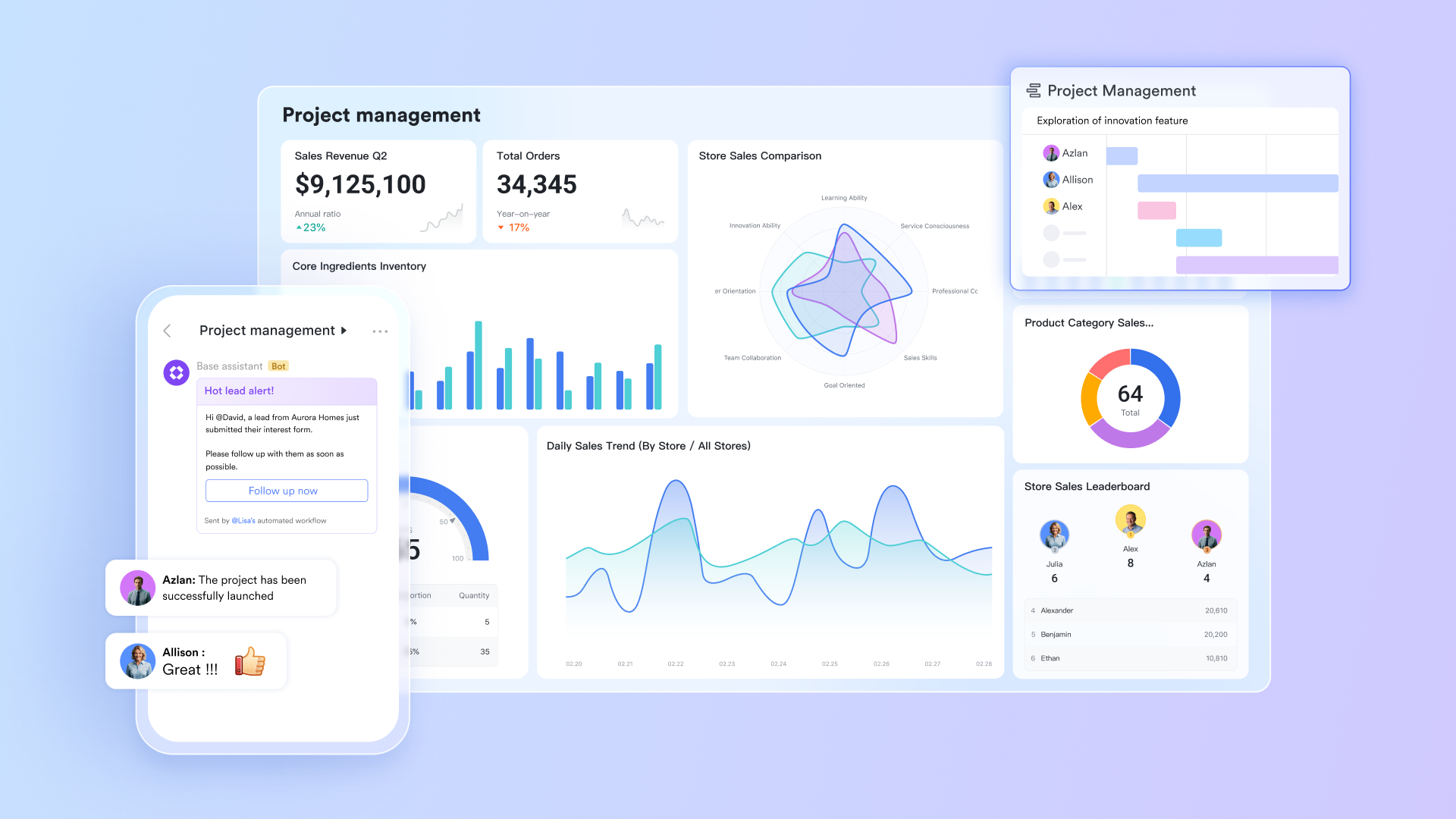
Build and adapt frameworks with ease
With Lark Base, teams can build framework-specific boards—whether it's Agile, Kanban, or Waterfall—and switch between layouts like task lists, Kanban boards, or Gantt charts to see what fits best. For example, an Agile team can run short sprints using task boards, while a marketing team can visualize long-term planning with Gantt timelines—all within the same workspace.
Keep documentation and collaboration in one place
Lark Docs keeps framework guides, policies, and meeting notes centralized, ensuring that every team member understands the chosen process. Meanwhile, Lark Messenger supports real-time collaboration by linking chats directly to tasks and projects—so context, communication, and execution stay connected.
Analyze and improve with data
Once teams begin testing a framework, Lark's analytics and dashboards provide data-backed insights into performance. You can track cycle times, task completion rates, or workload balance across teams to see which approach delivers the best outcomes.
Turn framework testing into measurable growth
Lark doesn't just help you choose a project management framework—it helps you prove which one works best. By combining structure, adaptability, and real-time analytics, Lark turns framework selection from guesswork into a measurable, collaborative process that grows with your organization.
- Starter plan: Free forever plan that includes Sheets, Docs, Base, and 8 other powerful tools for up to 20 users. It also comes with 100GB of cloud storage, 1000 automation runs, AI translations, and more.
- Pro plan: $12/user/month (billed annually) for up to 500 users. It includes everything in Starter plus group calling for up to 500 attendees, 15TB of storage, 50,000 automation runs, and more.
- Enterprise plan: Contact sales for custom pricing. Supports unlimited users and includes even more automation runs and advanced security, compliance, and management features.
Project management frameworks for modern teams
Modern teams have a variety of project management frameworks to choose from, each designed to fit different workflows, goals, and industries. Below is an overview of the most widely used frameworks, their strengths, best use cases, and how Lark enhances their implementation.
Waterfall framework: Step-by-step project planning
The Waterfall framework follows a linear, phase-by-phase approach where each stage must be completed before the next begins. It's ideal for projects with well-defined requirements, clear timelines, and minimal expected changes. This method ensures structure, accountability, and easy progress tracking.
Feature highlights:
- Sequential project stages from start to finish
- Clearly defined roles and deliverables
- Detailed documentation at every phase
- Easy to manage and monitor progress
- Best suited for predictable workflows
Strong points:
- Simple and structured approach
- Clear timelines and milestones
- Easy tracking of project status
- Effective for projects with fixed scopes
Restrictions:
- Limited flexibility for changes
- Not suitable for fast-changing or evolving projects
Agile framework: Flexible iterative approach
The Agile template emphasizes flexibility, collaboration, and iterative progress. Projects are broken into short cycles, or sprints, allowing teams to adapt to changes quickly, respond to feedback, and continuously improve. Agile is ideal for dynamic projects where requirements evolve frequently.
Feature highlights:
- Iterative development in short sprints
- Continuous feedback and improvement
- Collaborative teamwork and communication
- Flexible adaptation to changing requirements
- Focus on delivering customer value
Strong points:
- Highly adaptable to change
- Encourages collaboration and transparency
- Faster delivery of functional results
- Promotes continuous improvement
Restrictions:
- Less predictable timelines
- Requires high team discipline and commitment
Scrum framework: Sprint-based collaboration
The Scrum framework is an Agile methodology that organizes work into short, focused sprints. It emphasizes teamwork, accountability, and continuous improvement, making it ideal for projects that require frequent reassessment and fast delivery of results. Scrum keeps teams aligned and responsive.
Feature highlights:
- Work divided into short sprints or cycles
- Defined roles: Product Owner, Scrum Master, Team
- Daily stand-up meetings for progress updates
- Sprint reviews and retrospectives for improvement
- Focused on delivering incremental value
Strong points:
- Promotes accountability and transparency
- Enables quick adaptation to changes
- Encourages continuous improvement
- Boosts team collaboration and engagement
Restrictions:
- Can be challenging for large teams
- Requires consistent commitment to Scrum practices
Kanban framework: Visual workflow management
The Kanban framework focuses on visualizing work and managing tasks in a continuous flow. It helps teams monitor progress, identify bottlenecks, and optimize efficiency. Kanban is ideal for teams handling ongoing work or projects that require flexibility and transparency.
Feature highlights:
- Visual task boards for workflow tracking
- Limits work in progress to avoid overload
- Real-time updates on task status
- Focus on continuous delivery and improvement
- Easy integration with existing processes
Strong points:
- Enhances workflow visibility
- Improves task prioritization
- Reduces bottlenecks and delays
- Flexible and adaptable to change
Restrictions:
- Less structured than traditional frameworks
- May require discipline to maintain flow
Lean framework: Efficiency-driven approach
The Lean framework focuses on maximizing value while minimizing waste. By streamlining processes, eliminating inefficiencies, and improving resource utilization, Lean helps teams deliver high-quality results faster. It's ideal for projects where efficiency and process optimization are top priorities.
Feature highlights:
- Focus on value creation and waste reduction
- Continuous process improvement
- Streamlined workflows for faster delivery
- Emphasis on team efficiency and productivity
- Data-driven decision making
Strong points:
- Reduces unnecessary steps and resources
- Improves team productivity
- Encourages continuous improvement
- Enhances overall project efficiency
Restrictions:
- Requires strong process discipline
- Less suited for projects needing flexibility in scope
PRINCE2 framework: Structured project governance
The PRINCE2 framework is a process-driven methodology emphasizing governance, clear roles, and detailed documentation. It provides a structured approach to managing projects, making it ideal for large-scale or high-risk initiatives that require strict control and accountability.
Feature highlights:
- Clearly defined project roles and responsibilities
- Stage-by-stage project planning and control
- Detailed documentation and reporting requirements
- Focus on risk management and quality assurance
- Standardized processes for repeatable results
Strong points:
- Strong governance and control
- Clear accountability and responsibilities
- Well-suited for complex projects
- Risk management is integral to the process
Restrictions:
- Can be bureaucratic and rigid
- Requires extensive training and certification
MoSCoW framework: Prioritization made simple
The MoSCoW framework is a prioritization method that classifies tasks into Must, Should, Could, and Won't categories. It helps teams focus on what's most important, ensuring critical features are delivered first. This approach is ideal for projects with limited time or resources.
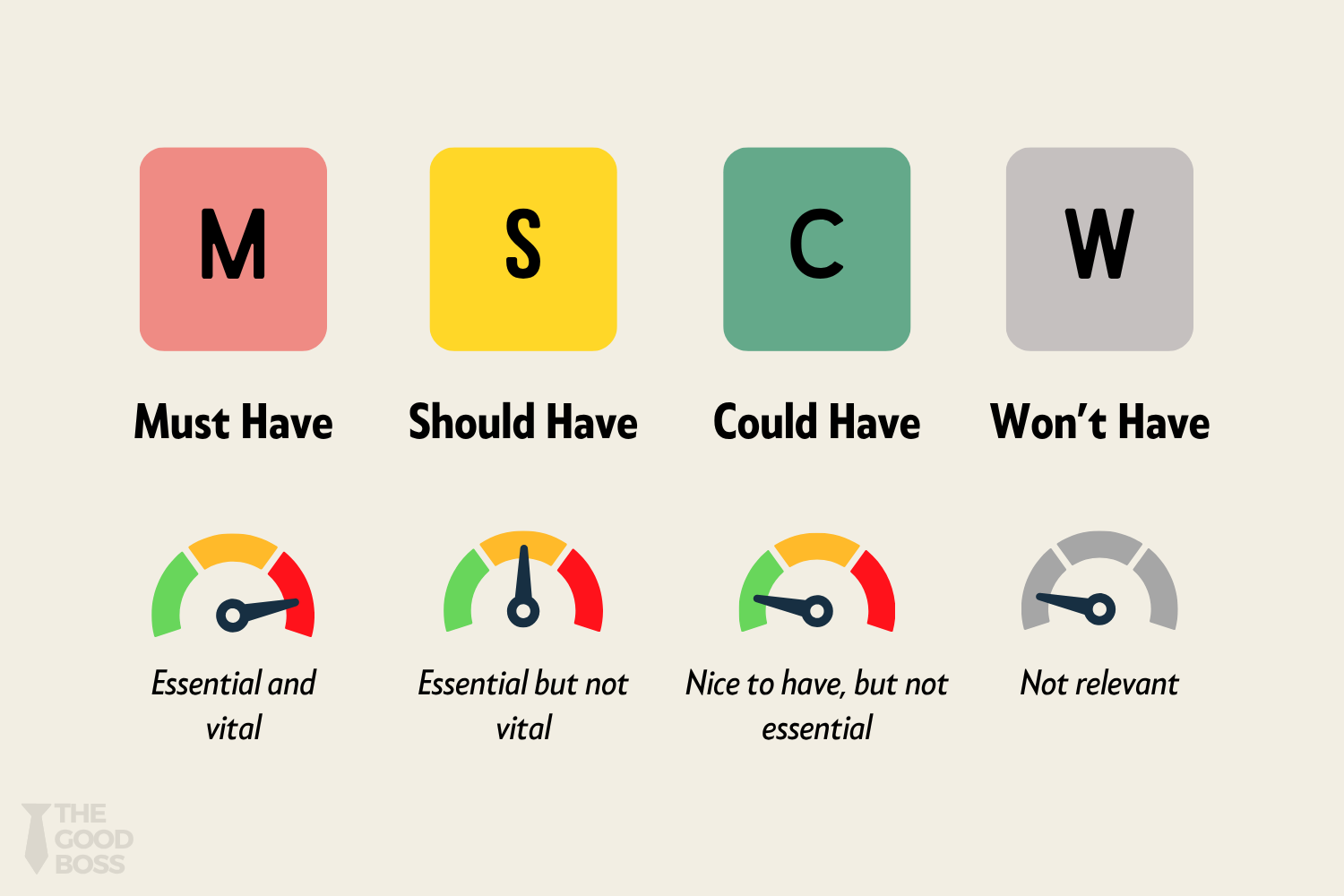
Image source: medium.com
Feature highlights:
- Categorizes tasks by priority levels
- Focuses on delivering essential features first
- Improves decision-making and resource allocation
- Flexible for changing project needs
- Clear communication of priorities to stakeholders
Strong points:
- Helps teams focus on high-impact tasks
- Simplifies project planning and execution
- Enhances clarity and alignment
- Supports time-sensitive projects
Restrictions:
- Less detailed for complex project planning
- Requires team discipline for proper prioritization
Six sigma framework: Data-driven quality
The Six Sigma framework focuses on improving processes by reducing defects and minimizing variation. Using data-driven methodologies, it helps teams enhance quality, efficiency, and customer satisfaction. This framework is ideal for process-intensive projects where precision and consistency are critical.
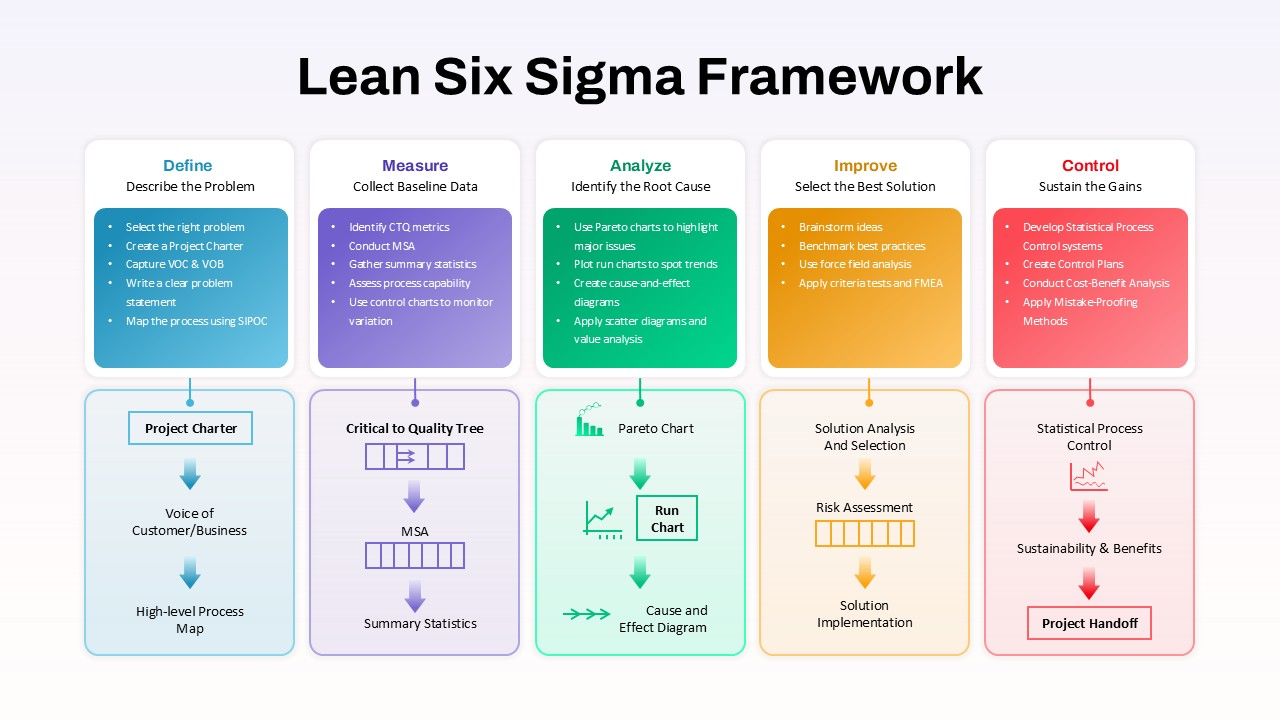
Image source: slidekit.com
Feature highlights:
- Emphasizes defect reduction and quality improvement
- Uses data analysis for decision making
- Structured DMAIC (define, measure, analyze, improve, control) process
- Focuses on process optimization and efficiency
- Enhances customer satisfaction through consistent output
Strong points:
- Data-driven approach ensures accuracy
- Improves process efficiency and consistency
- Reduces errors and waste
- Promotes continuous improvement
Restrictions:
- Can be complex and resource-intensive
- Requires specialized training and expertise
How to implement a project management framework with Lark
Implementing a project management framework becomes simple with Lark. Here's a step-by-step guide:
- Choose a framework: Decide which methodology—agile, waterfall, kanban, or lean—fits your project needs.
- Create a Lark workspace and set roles: Assign team members, define responsibilities, and organize departments within the workspace.
- Use task boards or gantt charts for planning: Visualize workflows, schedule tasks, and track deadlines efficiently.
- Integrate chat, docs, and meetings: Collaborate seamlessly without switching tools, keeping all communication and files in one place.
- Monitor performance using analytics: Track progress, measure productivity, and identify areas for improvement with Lark's reporting features.
By consolidating tasks, communication, and documentation, Lark reduces tool switching and helps teams stay focused, productive, and aligned throughout the project lifecycle.
Bonus: Ready-to-use Lark templates for project frameworks
To make project setup even faster, Lark offers a range of ready-to-use templates for popular project management frameworks. Whether you're managing Agile sprints, planning with Waterfall, or organizing tasks in Kanban, these templates help teams get started quickly with built-in structure and best practices.
Task management template
This task management template is created to assist you in monitoring all your tasks in a single location. It features a task list, a kanban board for status tracking, a gantt chart for progress visualization, and a calendar for tasks. The template enables you to input records, customize fields, filter tasks, arrange tasks into groups, and sort tasks.
Project problem tracker template
The project problem tracker template serves as an all-inclusive resource aimed at assisting teams in recognizing, monitoring, and addressing issues that emerge throughout a project. It features sections for problem details, outcome of the handling process, and attachments related to the tasks.
Requirements & bug management template
The requirements and bug management template serves as an all-encompassing resource designed for managing and monitoring your project's requirements and bugs. It offers an organized method to view and track all bugs within the 'list of bugs' and oversee the progress of each requirement in the 'task kanban.'
Project planning & implementation template
Project planning & implementation template aims to assist you in effectively planning and executing your projects by offering a clear framework for detailing project , goals, and milestones. Lark's advanced capabilities, you can effortlessly collaborate with your team and make sure that everyone remains aligned during the entire project lifecycle.
Conclusion
Project management frameworks provide the structure, clarity, and adaptability that modern teams need to succeed. They help streamline workflows, improve collaboration, and ensure projects are delivered on time and within scope. Choosing the right framework can transform how teams operate, but flexibility is key.
With Lark, teams can implement, customize, and manage any framework effortlessly. Its integrated tools for task management, communication, and analytics make it easy to stay organized and focused. Exploring frameworks with Lark allows teams to work smarter, adapt faster, and achieve better results across all types of projects.
FAQs
What are the key elements of a project management framework?
A project management framework typically includes defined processes, roles, templates, tools, and governance guidelines. With Lark, you can structure all these elements in one place for clarity and consistency.
How does an Agile project management framework differ from Waterfall?
Agile is flexible and iterative, focusing on adaptability and collaboration. Waterfall follows a linear sequence. Lark supports both through customizable boards and timeline views.
Can I use multiple frameworks within the same organization?
Yes. Many teams use different frameworks for various projects. Lark makes this easy by allowing each team to set up its own workspace and workflow style.
What is the best framework for remote teams?
Agile or Kanban frameworks work best for remote or hybrid teams. With Lark's real-time chat, video meetings, and document sharing, remote collaboration becomes seamless.
How can I create a project management framework template?
Start by defining your goals, phases, and tools. Then, standardize them into a reusable model. Lark allows you to save and duplicate templates to maintain consistency across projects.
How can Lark help me choose the right project management framework?
Lark's flexible workspace, visual boards, and analytics allow teams to experiment with multiple frameworks, test workflows, and track performance to find the best fit.
Related reading
Table of contents
Start using Lark today

Manage all your work in one place
Boost team efficiency by 10x
Save up to 70% on software costs
Table of contents
Start using Lark today
Manage all your work in one place
Boost team efficiency by 10x
Save up to 70% on software costs
Keep reading







2026 Lark Technologies Pte. Ltd.
Headquartered in Singapore with offices worldwide.






Explore: