Project risk exists in every initiative, regardless of size, industry, or methodology. From budget overruns to vendor delays, uncertainty influences how plans unfold in real conditions. Many teams acknowledge risk but struggle to manage it systematically. As projects become more cross-functional and time-sensitive, informal approaches no longer hold up.
Modern teams need a more straightforward way to think about project risk, assess its impact, and respond before issues escalate. This guide explains project risk using real examples, structured analysis techniques, and practical tools. It also explores how teams move from static documents to continuous project risk management, with platforms like Lark supporting visibility and collaboration as projects evolve.
What is project risk?
Project risk refers to any uncertain event or condition that can affect a , cost, or quality. These uncertainties may have negative consequences, such as delays or budget overruns, or positive effects, such as cost savings or faster delivery. In practice, most teams focus on downside risk because unmanaged threats tend to compound over time.
In project risk management, risk is defined by two core dimensions: likelihood and impact. A low-probability but high-impact risk can be just as critical as a frequent, low-impact issue. Understanding this balance is central to effective project risk analysis. Risk is not the same as an issue. Risks are potential future events, while issues are problems that have already occurred.
increases when assumptions remain undocumented, dependencies are unclear, or ownership is fragmented. That is why structured approaches like a project risk register and a clear project risk management plan are essential for consistent decision-making.
7 common types of project risk
Every project faces multiple categories of risk. While the exact mix varies by industry, most project management risk scenarios fall into a few recurring patterns. Understanding these categories helps teams identify risks earlier and choose appropriate responses.
- Schedule risk: Schedule risk arises when tasks take longer than expected or dependencies slip. Inaccurate estimates, resource constraints, and external approvals often contribute to delays. Over time, even small slippages compound into missed milestones. In project risk management, schedule risk is often underestimated because teams focus on best-case timelines rather than realistic delivery conditions.
- Cost risk: Cost risk occurs when actual spending exceeds the approved budget. This may result from scope changes, inaccurate forecasts, or price fluctuations. In risk analysis in project management, cost risk is tightly linked to schedule risk, since delays usually increase labor and overhead costs. Without active tracking, cost risk often surfaces too late to correct.
- Scope risk: Scope risk appears when project requirements are unclear, incomplete, or continuously changing. Scope creep introduces unplanned work that strains timelines and budgets. In a project risk register, scope risks should be documented early, especially in projects with and evolving expectations.
- Resource risk: Resource risk relates to the availability and capability of people, tools, or equipment. Key contributors may leave, skills may be overestimated, or shared resources may be reassigned. Project risk management tools help teams visualize resource dependencies, so potential gaps are identified before delivery is impacted.
- Technical risk: Technical risk emerges when systems, integrations, or technologies behave unpredictably. New platforms, untested architectures, or complex dependencies increase this risk. In technology-driven projects, technical risks should be reviewed frequently as part of ongoing project risk analysis.
- Vendor and dependency risk: Many projects rely on third parties for components, services, or approvals. Vendor delays, quality issues, or contract disputes introduce uncertainty outside the team's control. Risk register project management practices often include dedicated fields for vendor ownership and escalation paths.
- Compliance and external risk: , legal constraints, and environmental factors can affect project outcomes. These risks are common in construction, healthcare, finance, and public sector projects. Because they evolve externally, continuous monitoring is essential in any project risk management plan.
Project risk analysis: Turning uncertainty into insight
transforms vague concerns into structured insights that teams can act on. Instead of reacting to problems as they occur, teams use analysis to prioritize effort and allocate resources proactively.
In risk analysis in project management, teams evaluate each risk based on probability, impact, and sometimes detectability or urgency. Qualitative analysis uses relative scales such as low, medium, and high to rank risks quickly. Quantitative analysis applies numerical values to estimate potential cost or schedule impact.
Project risk analysis also reveals patterns. For example, repeated schedule risks across phases may indicate planning issues rather than isolated delays. Without analysis, risks remain disconnected observations. With analysis, they become decision inputs that guide trade-offs and contingency planning.
Effective project risk management software supports this process by automating scoring, visualizing exposure, and updating risk levels as conditions change.
The role of a risk register in project management
A risk register is the foundation of structured project risk management. It centralizes identified risks, their characteristics, and planned responses in one system.
In risk register project management, each entry typically includes a description, category, probability, impact, owner, mitigation plan, and status. This structure ensures accountability and traceability. A well-maintained project risk register supports consistent reporting and decision-making. Risk register in project management practices also improves by presenting risks clearly and concisely.
Project risk examples from real scenarios
Real-world examples help teams understand how project risk appears in practice. These scenarios show how different industries face distinct forms of uncertainty. Each example highlights why structured project risk management and continuous monitoring matter.
- Product launch risk: Product launches often involve tight timelines and . Delays in manufacturing, marketing approvals, or distribution can quickly impact launch dates. Changes in customer demand or competitive moves add uncertainty. Without early project risk analysis, small delays can cascade into missed market opportunities. A clear project risk register helps teams track and respond to these risks.
- IT system migration risk: IT migrations introduce technical, data, and operational risks simultaneously. Legacy system dependencies are often underestimated during planning. Data integrity issues and downtime risks can affect business continuity. A detailed project risk management plan helps sequence activities and define rollback options. Ongoing risk management in project management reduces disruption during execution.
- : Construction projects face regulatory, safety, and environmental risks throughout execution. Permit delays, inspection failures, or regulation changes can halt progress. These risks often sit outside the project team's direct control. Maintaining a risk register in project management ensures compliance risks remain visible. Regular reviews support timely escalation.
- Vendor and supply chain risk: Supply chain dependencies introduce external uncertainty into project timelines. Vendor delays, quality issues, or geopolitical disruptions can impact delivery. Single source suppliers increase exposure. Project management risk assessment helps teams identify critical dependencies early. Continuous monitoring supports contingency planning and alternative sourcing.
Centralize your team's risk management plan.
Action time: Manage project risks with streamlined workflows in Lark
As projects scale, managing risk through spreadsheets and disconnected becomes increasingly tricky. Information fragments, updates lag, and accountability blurs. Modern project risk management software focuses on visibility and action. supports continuous risk management in project management by combining structured data, collaboration, and . It helps teams apply project risk management consistently without adding process overhead.
Centralized risk tracking within one data hub
serves as a single source of truth for all project risks and RAID logs. Using configurable tables, you can replace disconnected spreadsheets with a central hub that tracks every assumption, issue, and dependency. Also, it supports multiple fields, such as "Date", "Progress," "Priority," and "Attachment," giving you full room for risk register and tracking. With role-based views, project managers can see the full technical detail while sponsors see a high-level summary, ensuring that every piece of data stays traceable and current. 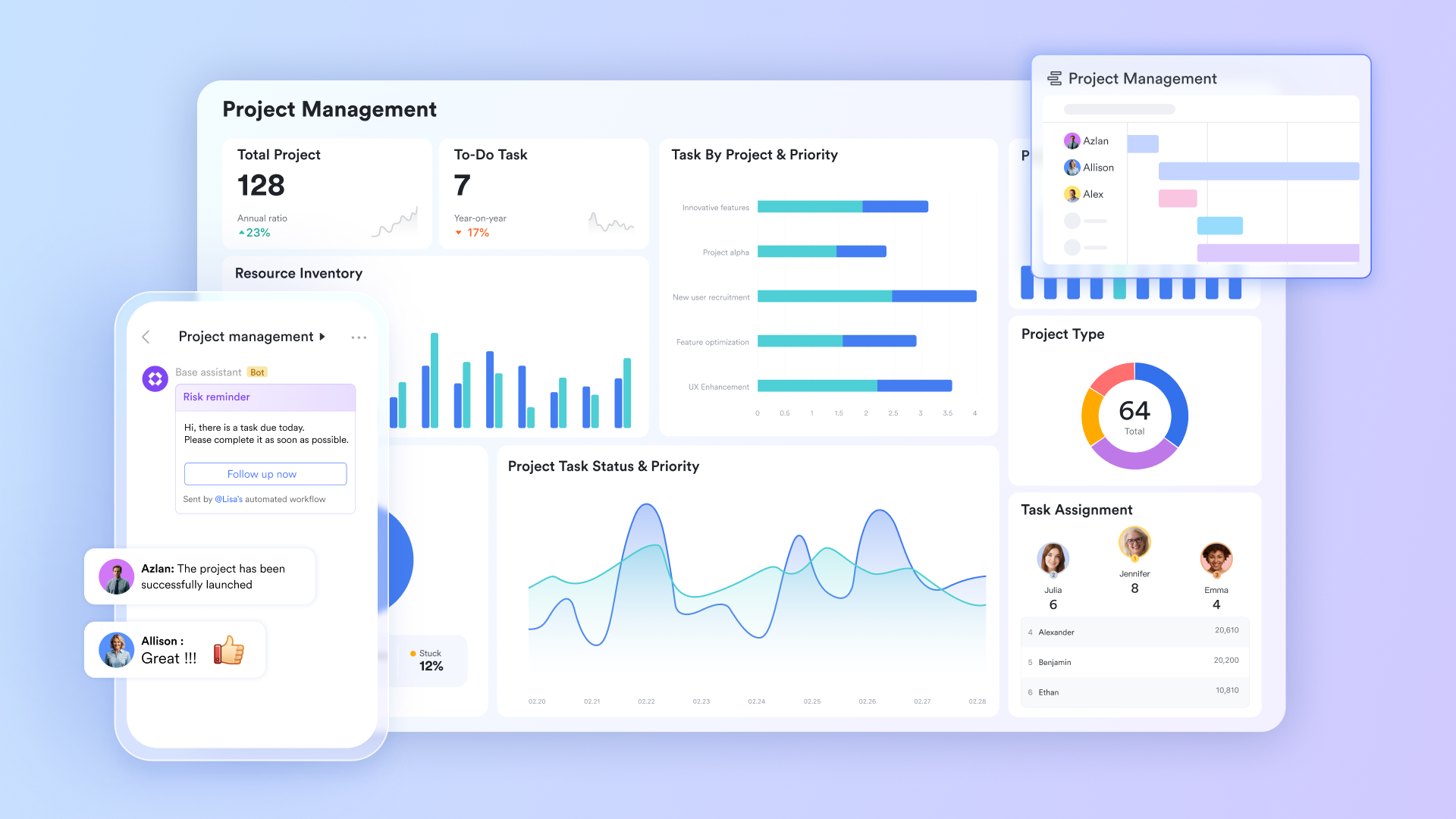
Two-way link fields support risk tracking & SWOT analysis
With two-way link fields, Lark Base tracks project risks through dynamic connections between a risk registry and specific project objectives. This ensures that any update to a risk is automatically reflected across the entire project, providing real-time visibility for all stakeholders. By establishing a labeling system for severity or , teams can categorize and group risks to prioritize mitigation efforts. Additionally, the ability to view detailed impact assessments directly within a task record allows for quick cross-referencing without switching tables. 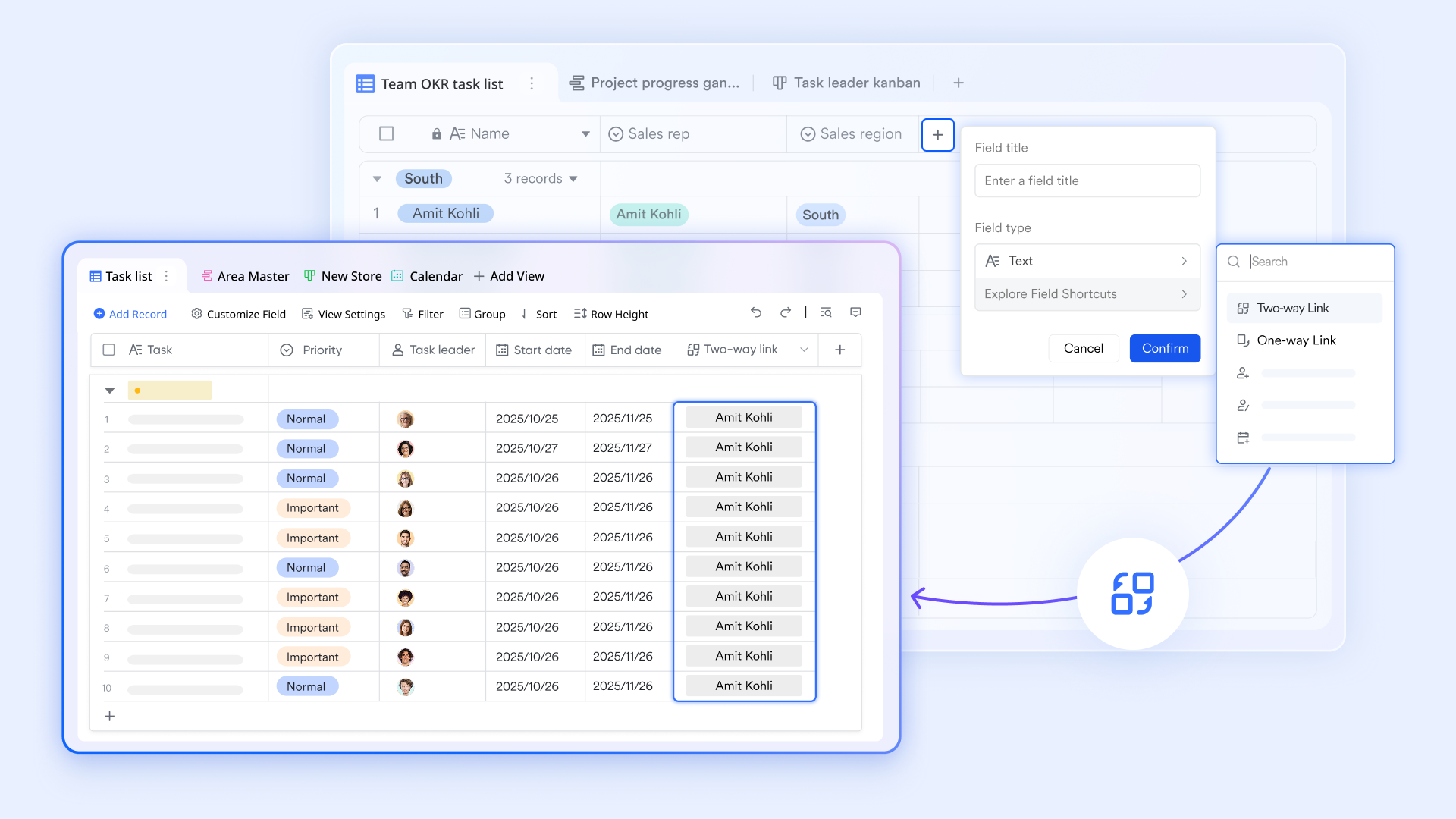
Executive oversight with portfolio roll-up dashboards
Lark provides high-level visibility through native dashboards that aggregate risk data across your entire portfolio. With 36 different types and subtypes of blocks, these dashboards can display Heat Maps, pivot tables, and trend charts that visualize risk exposure by category, owner, or timeframe. This function allows project sponsors and executives to see the total risk landscape across multiple programs on one screen, providing "executive-ready" reports that are always backed by real-time execution data. 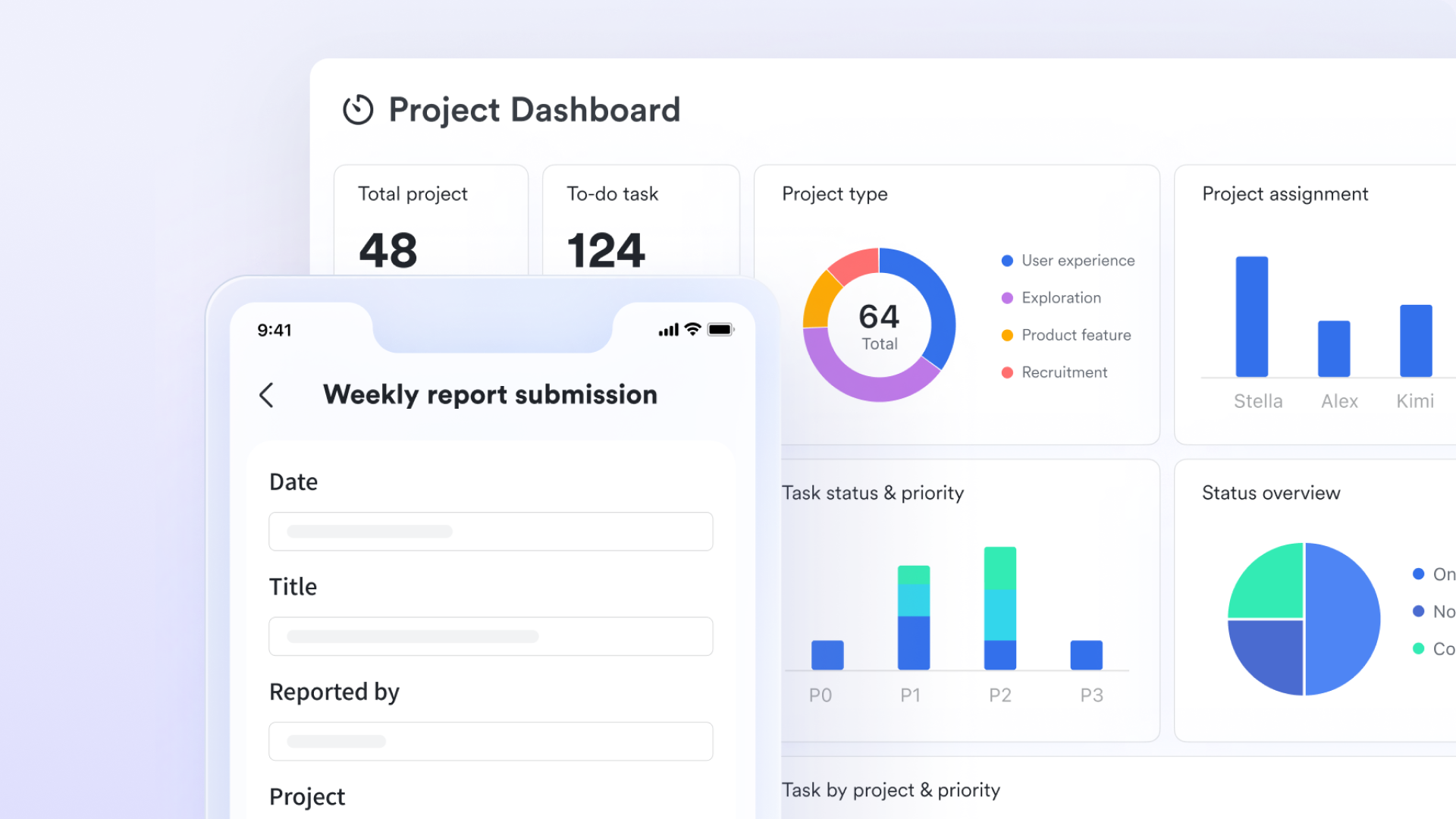
Proactive governance using trigger-based escalations
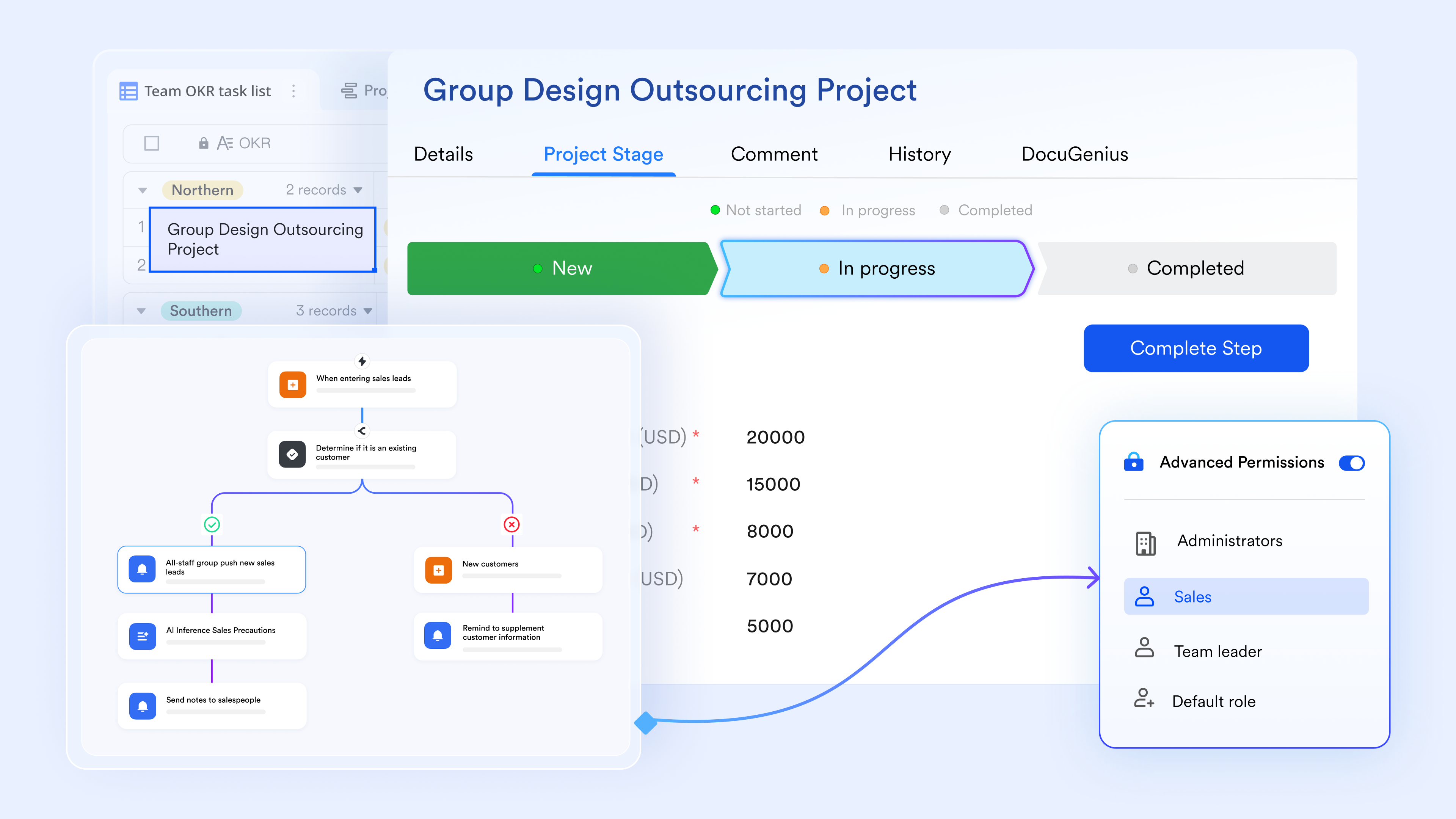
Lark ensures that no critical issue is ignored by using the for governance. You can configure the system to trigger an escalation the moment specific thresholds are met, such as when a risk score reaches "High," a mitigation due date slips, or dependency proximity tightens. These automations send instant alerts via or Lark Mail to the designated owners, ensuring the right people are brought in to solve the problem before it becomes a crisis.
Intelligent intake through AI-powered analysis
Lark streamlines the risk identification process by using built-in AI features to process information. For example, Lark Base AI field shortcuts automatically classify and tag risks based on your descriptions, keeping your registry organized without manual effort. You can provide reference examples to align AI's logic with your specific standards, ensuring high accuracy. With auto-update enabled, these tags and categories refresh instantly whenever content changes, providing a consistently accurate and real-time risk assessment. 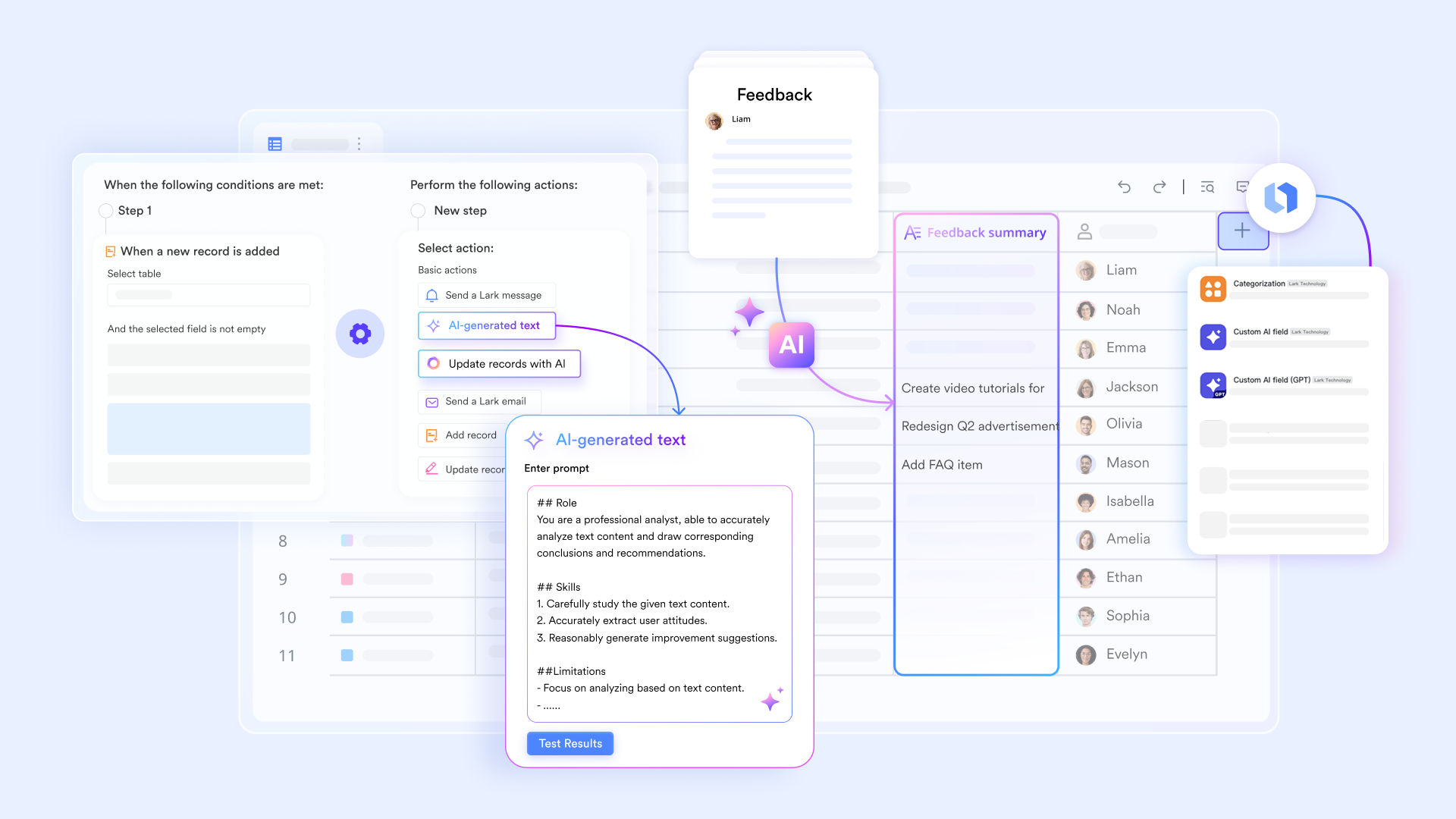
:
- Starter plan: Free forever plan that includes 11 powerful tools for up to 20 users. It also comes with 100GB of storage, 1000 automation runs, AI translations, and more.
- Pro plan: $12/user/month (billed annually) for up to 500 users. It includes everything in Starter plus group calling for up to 500 attendees, 15TB of storage, 50,000 automation runs, and more.
- Enterprise plan: for custom pricing. Supports unlimited users and includes even more automation runs and advanced security, compliance, and management features.
For small teams with simple communication needs

18 months message history
1000 Base automation runs/month
2000 rows per table in Base
Most POPULAR
For companies with comprehensive collaboration and management needs
Unlimited message history
500-participant video meetings
50k Base automation runs/month
20k rows per table in Base
For large companies with advanced security and organizational management needs
Get a personalized demo and pricing
Unlimited message history
500-participant video meetings
15 TB storage + 30 GB storage/user
500k Base automation runs/month
50k Base automation runs/month
Most POPULAR
For companies with comprehensive collaboration and management needs
Unlimited message history
500-participant video meetings
50k Base automation runs/month
20k rows per table in Base
Common project risk management mistakes
Even experienced teams repeat patterns that weaken their approach to project risk.
- Treating the as a one-time task: Many teams create a project risk register during kickoff and never update it. This turns risk management into a formality rather than a control mechanism. Continuous updates are essential. Active registers drive real decisions.
- Assigning risks without owners: Risks without owners rarely receive follow-through. Assigning ownership ensures accountability and action. Owners should have the authority to act. This strengthens risk management in project management.
- Over-documenting and under-acting: Excessive documentation without mitigation creates false confidence. Project risk management should prioritize action over paperwork. Clear next steps matter more than lengthy descriptions.
- Failing to link risks to real work: When risks are disconnected from , mitigation remains abstract. Linking risks to execution ensures responses are timely. This keeps risk management practical.
Even with the best software, project risk management fails when it becomes a static, ignored document. Lark changes this by embedding risk management directly into your daily communication and task execution. Instead of risks sitting in a forgotten folder, they become active, trackable elements of your hospital’s operational flow.
Build your digital risk register today
Project management risk assessment in practice
Project management risk assessment is an ongoing cycle rather than a one-time workshop. Effective teams reassess risk as the project evolves and new information emerges.
- Identifying risks collaboratively: Risk identification works best when it includes diverse perspectives. Project managers, engineers, operations teams, and external partners often see different risks. Collaborative identification ensures the project risk register reflects real conditions rather than assumptions. Workshops, retrospectives, and structured intake forms all support this step.
- Assessing risk exposure across phases: Risk exposure changes as projects move from planning to execution and delivery. Early phase risks often involve scope and feasibility, while later risks focus on quality and adoption. Project management risk assessment should review risks at each . This keeps priorities aligned with reality.
- Reviewing and recalibrating risk levels: As mitigation actions progress, risk levels should be reassessed. Some risks decrease, while others increase due to external changes. Regular reviews keep the risk register in project management accurate. Without recalibration, teams rely on outdated data.
Conclusion
Project risk is not a failure of planning. It is a natural part of executing work in uncertain environments. The difference between successful and struggling projects lies in how consistently risks are identified, analyzed, and managed.
By applying structured project risk analysis, maintaining an active project risk register, and following a clear project risk management plan, teams reduce surprises and improve outcomes. help embed this discipline into daily work.
As projects grow more interconnected, platforms like support continuous risk management in project management by keeping risks visible, owned, and actionable. The goal is not to eliminate uncertainty, but to navigate it with confidence.
Start managing project risks smarter from today
FAQs
What are the 4 types of risk categories?
Risk categories commonly include strategic, operational, financial, and . These groupings help teams organize project management risk in a structured and comparable way. Each category requires different mitigation approaches and review frequency. Using a project risk register helps ensure no category is overlooked during planning or execution. As teams scale, tools like Lark make it easier to track these categories consistently across multiple projects.
Who should take the project risks: the manager or the sponsor?
Project managers usually own the identification, tracking, and day-to-day monitoring of risks. Sponsors are typically responsible for escalation decisions and strategic trade-offs when risks exceed project authority. Clear ownership rules defined in a project risk management plan prevent gaps and delays. Risk register project management practices help document responsibility clearly. Platforms such as Lark support shared visibility so both managers and sponsors stay aligned.
Can agile teams use formal risk registers effectively?
Agile teams can use lightweight project risk registers without slowing delivery. Risks are often reviewed during sprint planning, reviews, and retrospectives rather than formal meetings. This approach supports continuous risk analysis in project management while preserving agility. Real-time updates are more effective than static documents. Collaborative tools like Lark fit well with agile workflows by keeping risk tracking flexible and visible.
How do you measure the success of risk mitigation efforts?
Success is measured by reductions in risk probability, impact, or overall exposure over time. Comparing baseline scores with current assessments supports objective project risk analysis. Fewer escalations and fewer surprise issues indicate effective mitigation. Trends matter more than single data points. software such as Lark helps teams track these changes consistently and review progress with confidence.
Related reading