Enterprise project portfolio management is how large organizations translate strategy into coordinated execution across dozens or hundreds of initiatives. Without a clear portfolio view, even well-run projects compete for the same resources and dilute strategic focus. Enterprise leaders increasingly need visibility, prioritization, and governance that scale without slowing delivery. As portfolios become more dynamic, some teams also begin complementing traditional systems with collaborative execution layers like Lark to keep strategy connected to daily work.
What is enterprise project portfolio management?
The enterprise project portfolio management definition refers to the centralized discipline of selecting, prioritizing, funding, and governing projects and programs across an entire organization. Instead of evaluating initiatives in isolation, enterprises assess them collectively to ensure alignment with strategic objectives, risk tolerance, and available capacity. This approach helps leaders decide which initiatives to start, continue, pause, or stop based on rather than local priorities.
In practice, enterprise project portfolio management (EPPM) leverages to provide a single view of demand, resources, and outcomes across departments and regions. It connects strategy with execution by translating high-level goals into a balanced portfolio of initiatives. As a result, organizations improve transparency, reduce duplication, and focus investment on work that delivers .
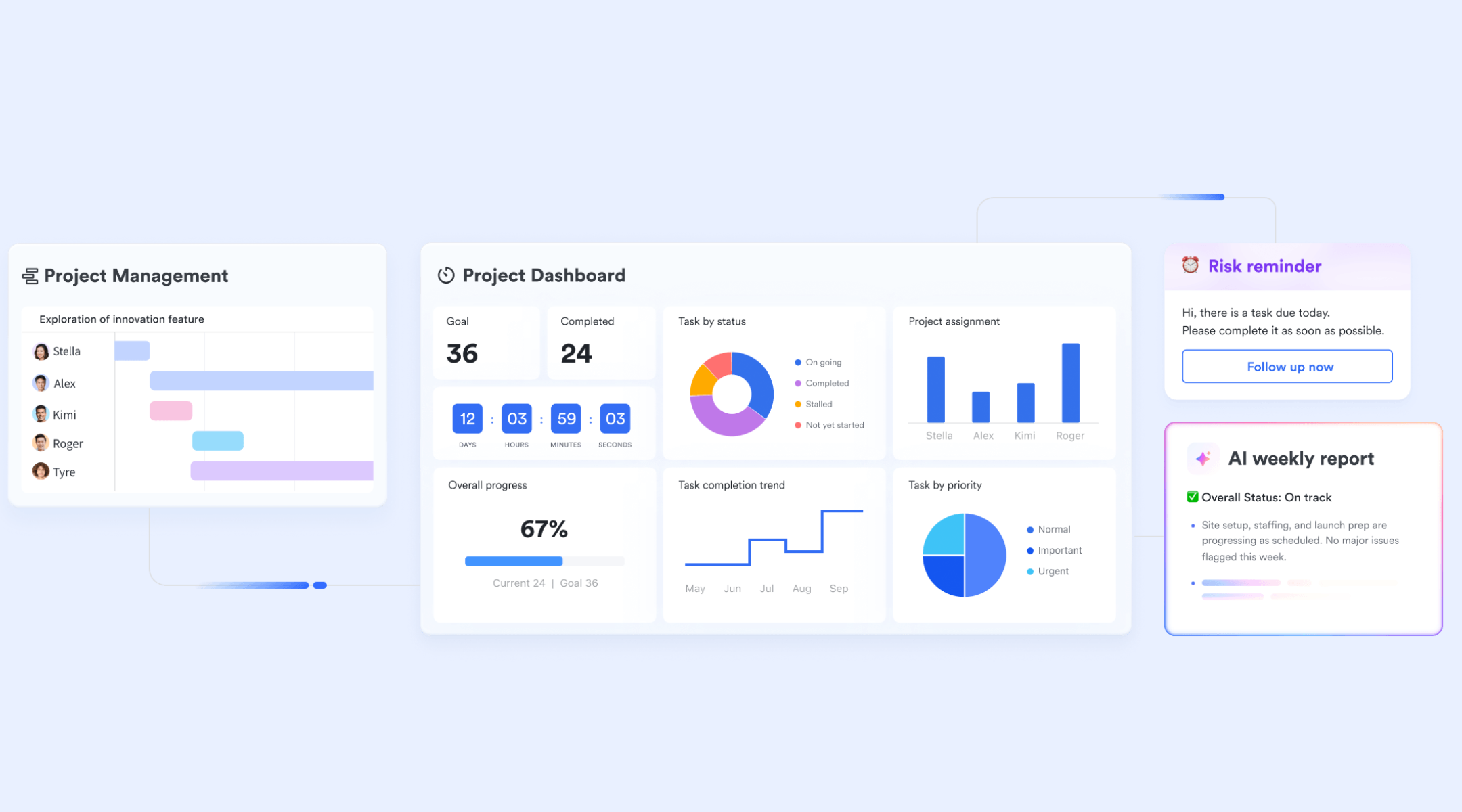
Enterprise project and portfolio management vs traditional PMO
Traditional PMOs primarily focus on project-level delivery, emphasizing schedules, budgets, and compliance with standards. While this improves execution consistency, decisions about which projects to pursue are often made outside the PMO. In contrast, enterprise project and portfolio management expands the scope to include intake, prioritization, and investment decisions before projects even begin. Utilizing allows these high-level decisions to be integrated directly into the team's daily workspace.
With enterprise portfolio and project management, governance shifts from reporting on completed work to actively steering the portfolio as conditions change. Leaders use portfolio data to rebalance priorities, reallocate resources, and manage dependencies across initiatives. This evolution moves organizations from managing projects efficiently to managing enterprise value effectively, which is essential for at scale.
Govern every project portfolio with smart techniques
Core components of an enterprise project portfolio management process
An effective enterprise project portfolio management process provides the structure enterprises need to evaluate, govern, and adapt initiatives at scale. It connects strategic intent with execution reality by ensuring every project enters, moves through, and exits the portfolio deliberately. Rather than relying on annual planning alone, this process supports continuous decision-making across changing conditions. Each component works together to balance value, risk, and capacity across the enterprise.
- Portfolio intake and prioritization: Portfolio intake establishes a formal entry point for new initiatives within enterprise project and portfolio management. Requests are captured consistently, evaluated against shared criteria, and compared objectively. Prioritization frameworks ensure initiatives compete fairly for funding and resources. This reduces political influence and reactive approvals. A structured intake process protects enterprise capacity and focus.
- Strategic alignment and value scoring: Strategic alignment ensures initiatives directly support enterprise objectives. Value scoring models assess financial return, strategic contribution, and risk exposure. In enterprise portfolio and , this makes trade-offs transparent and defensible. Leaders can clearly see which initiatives drive the most value. Alignment reduces wasted investment and fragmented execution.
- Capacity and resource planning: Capacity planning connects portfolio demand with actual resource availability. Enterprises often overcommit without visibility into constraints. This component highlights skill gaps, bottlenecks, and overload risks early. Within enterprise project portfolio management EPPM, realistic planning replaces aspirational commitments. Delivery reliability improves across portfolios.
- Governance and decision cadence: Governance defines how and when portfolio decisions are made. A clear decision cadence replaces ad hoc approvals with predictable review cycles. focus on portfolio health instead of isolated project status. In mature enterprise project portfolio management, governance enables speed rather than creating bureaucracy. Accountability becomes consistent.
- Continuous portfolio optimization: Continuous optimization ensures portfolios evolve as conditions change. Performance, relevance, and risk are reviewed regularly. Low-value initiatives are paused or stopped, freeing capacity for higher-impact work. This component keeps the enterprise project portfolio management process aligned with strategy over time. Adaptability becomes a core strength.
Enterprise project portfolio management software: What matters most
Choosing the right enterprise is critical for enabling informed decisions at scale. Beyond tracking projects, software must surface insights across the entire portfolio. Leaders need visibility, modeling, and governance without slowing execution. The most effective tools support decision-making rather than just reporting.
- Portfolio-level visibility vs project views: Portfolio-level visibility shows how initiatives interact across the enterprise. Leaders see dependencies, cumulative risk, and strategic balance. Project-only views hide systemic issues. Strong enterprise project portfolio management tools provide roll-up insights instantly. Visibility enables proactive portfolio steering.
- Real-time data vs periodic status updates: Periodic status reports create delays between reality and decisions. data enables faster intervention and adjustment. In portfolio management and enterprise project management, timely signals matter more than perfect reports. Live dashboards reduce surprises. Execution stays aligned with strategy.
- Scenario modeling and prioritization: Scenario modeling allows leaders to test decisions before committing resources. Funding shifts, priority changes, and capacity constraints can be evaluated safely. This capability is essential in enterprise project portfolio management software. It reduces risk and increases confidence. Leaders make informed trade-offs.
- Governance without bureaucracy: Too much governance slows delivery, while too little creates chaos. The goal is lightweight, consistent controls. Modern enterprise project portfolio management tools balance structure with flexibility. Governance supports alignment without blocking teams. Speed and control coexist.
Real-world examples of enterprise project portfolio management
Enterprise portfolios exist across industries and functions, but the principles remain consistent. These examples illustrate how enterprise project portfolio management supports strategic execution in different contexts. Each scenario highlights portfolio thinking applied to complex, multi-initiative environments. The focus remains on value, alignment, and adaptability.
- Digital transformation portfolios: Digital transformation portfolios span technology, process, and organizational change. A portfolio approach coordinates initiatives across departments and timelines. Dependencies are managed centrally to reduce risk. Leaders track value realization over multiple phases. Transformation stays aligned with enterprise goals.
- Product and innovation portfolios: Innovation portfolios balance core improvements with experimental initiatives. Enterprise project and portfolio management helps leaders manage risk and investment mix. High-potential ideas receive support without overwhelming resources. Low-value experiments are retired quickly. Innovation becomes intentional and sustainable.
- IT modernization initiatives: IT modernization requires careful sequencing and dependency management. A portfolio view ensures upgrades align with business priorities. Disruptions are minimized through coordinated planning. Within enterprise portfolio and project management, modernization progresses steadily using . Long-term technical debt is reduced.
- Operational excellence programs: Operational excellence portfolios focus on efficiency, quality, and cost reduction. Initiatives compete for limited improvement resources. Portfolio governance ensures sustained impact rather than isolated wins. Continuous improvement aligns with enterprise strategy using . Execution remains disciplined and measurable.
Turn project portfolio decisions into actionable ones
Modern choice: Use Lark to connect strategy and execution across teams
supports enterprise project portfolio management by closing the long-standing gap between strategy formulation and day-to-day execution. Instead of treating portfolio planning, communication, and delivery as separate layers, Lark brings them into a single operating environment. This unified approach helps enterprises maintain strategic alignment while adapting quickly to changing priorities. By combining structured data, collaboration, and , Lark enables portfolios to function as living systems rather than static plans. This makes it especially valuable for organizations managing complex, cross-functional initiatives at scale.
Portfolio management in a single command center
Enterprise project portfolio management depends on centralized visibility across initiatives, resources, and outcomes. serves as a command center, consolidating portfolio data into structured, relational databases. Leaders can create real-time dashboards to monitor portfolio health, budget usage, and strategic KPIs without waiting for periodic reports. Linked records connect projects, teams, milestones, and goals, ensuring changes cascade automatically. Custom portfolio views allow leaders to focus on risk, value, or strategic themes as needed. 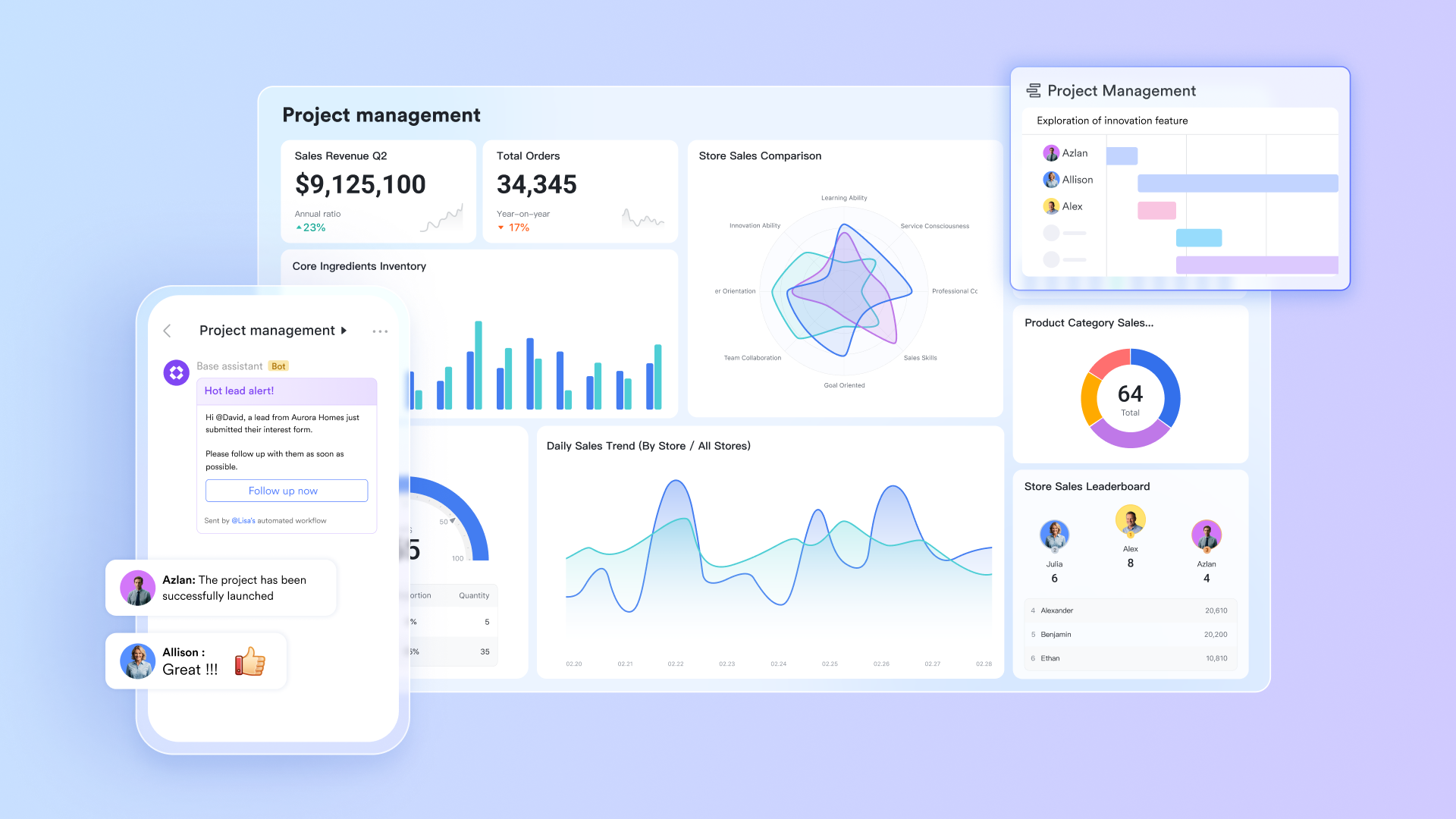
Automated workflows streamline every stage of enterprise projects
To reduce manual errors, Lark Base workflows use conditional branching to automate complex governance. For example, use IF/ELSE nodes to route $100k+ projects for CFO approval while automatically advancing smaller tasks. Switch nodes handle multi-stage routing, instantly notifying different departments like QA or Marketing as a project moves from "Testing" to "Launch." Loop nodes enable batch portfolio management by scanning all active records to send weekly health reports to stakeholders. With these automations, complex enterprise processes are streamlined and efficient. 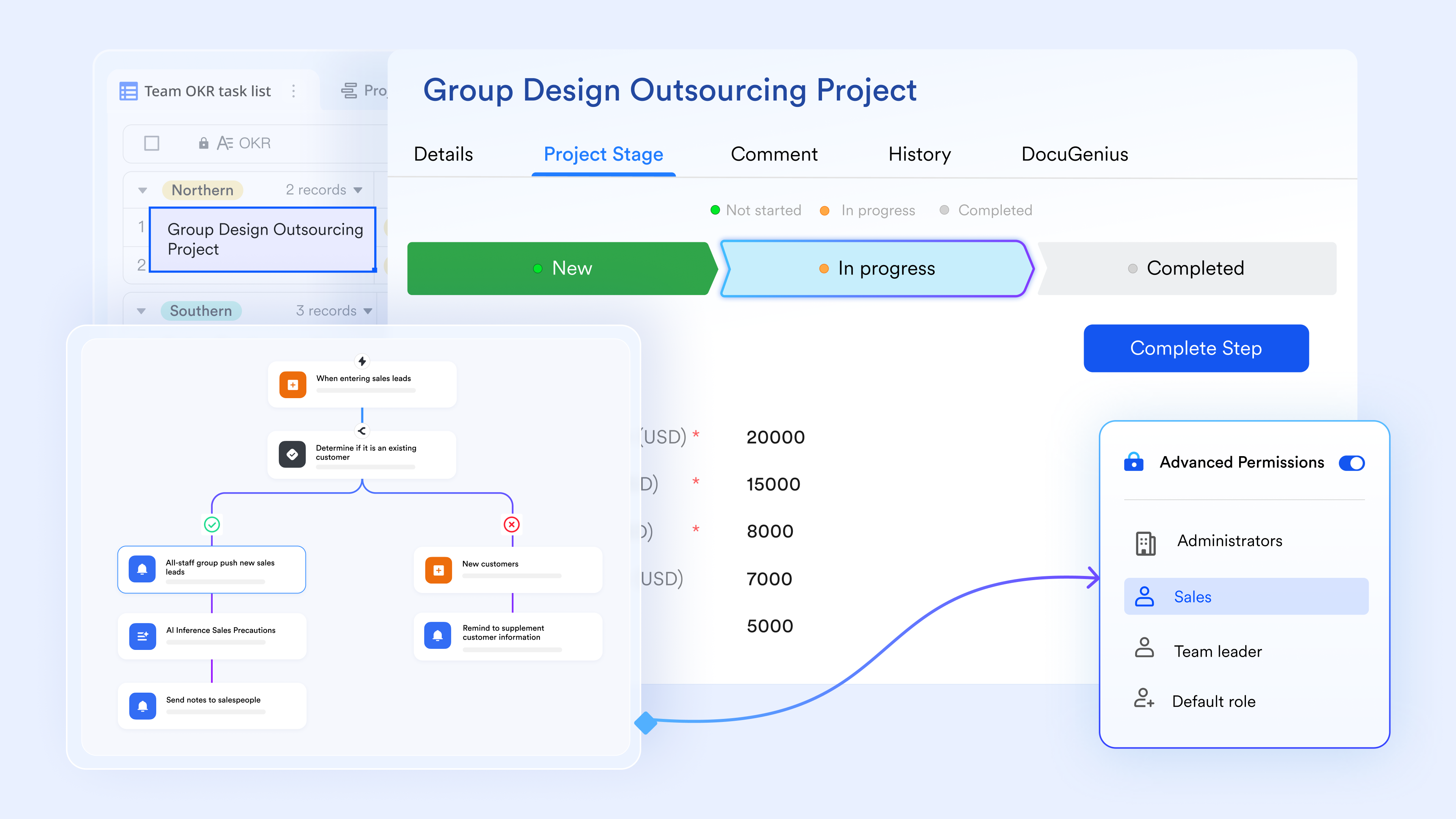
Turning strategic conversations into executable work
One of the biggest challenges in enterprise portfolio and project management is translating decisions into action. accelerates this by turning conversations into executable work. Strategic discussions can instantly create tasks, ensuring decisions do not stall after meetings. Dedicated project and portfolio chats preserve context, creating traceable decision histories. Smart notifications surface only critical updates, while real-time translation supports global teams operating across regions and languages. 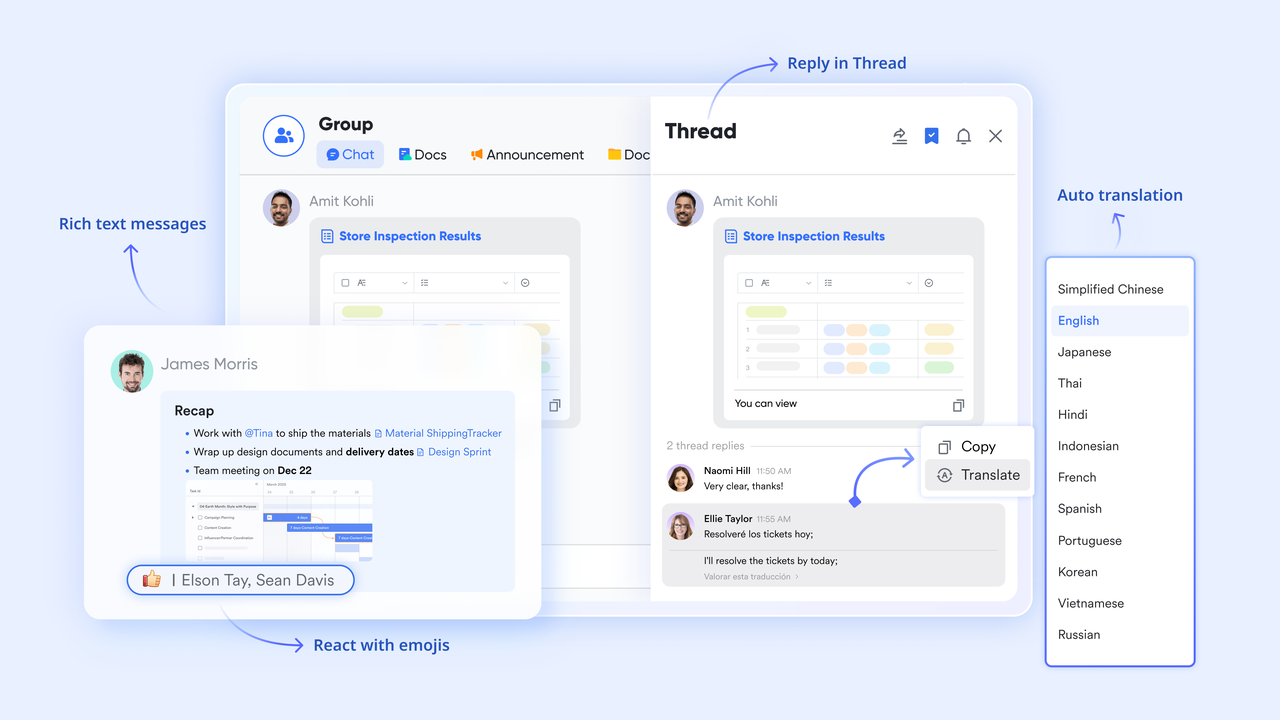
From portfolio intent to automated delivery flows
Lark Tasks helps convert high-level portfolio strategy into repeatable execution workflows. Automated task assignments streamline common processes such as approvals, phase reviews, and governance checkpoints. Clear ownership, deadlines, and dependencies make accountability visible across the portfolio. Real-time Kanban views give managers immediate insight into progress and bottlenecks. This automation reduces manual coordination and keeps large portfolios moving predictably. 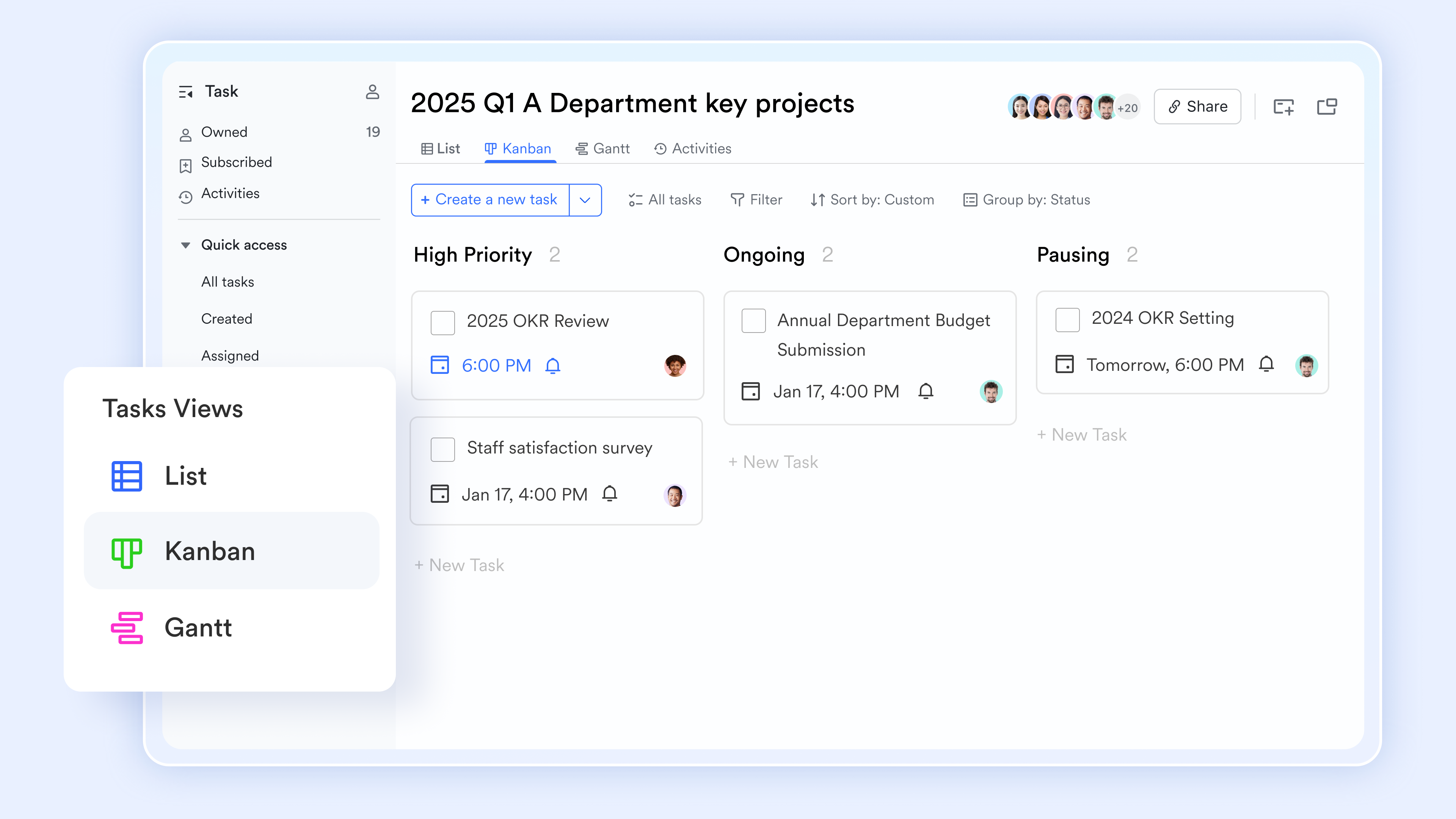
Strategic knowledge that scales across the enterprise
Clear documentation is essential in enterprise project portfolio management, especially across large teams. provides a single source of truth for strategy documents, portfolio plans, and governance standards. Documents remain live and collaborative, with real-time co-authoring and online comments. Embedded chat context allows teams to understand why decisions were made, not just what was decided. Furthermore, you can set permissions to ensure that sensitive strategic knowledge is only accessible to authorized stakeholders. 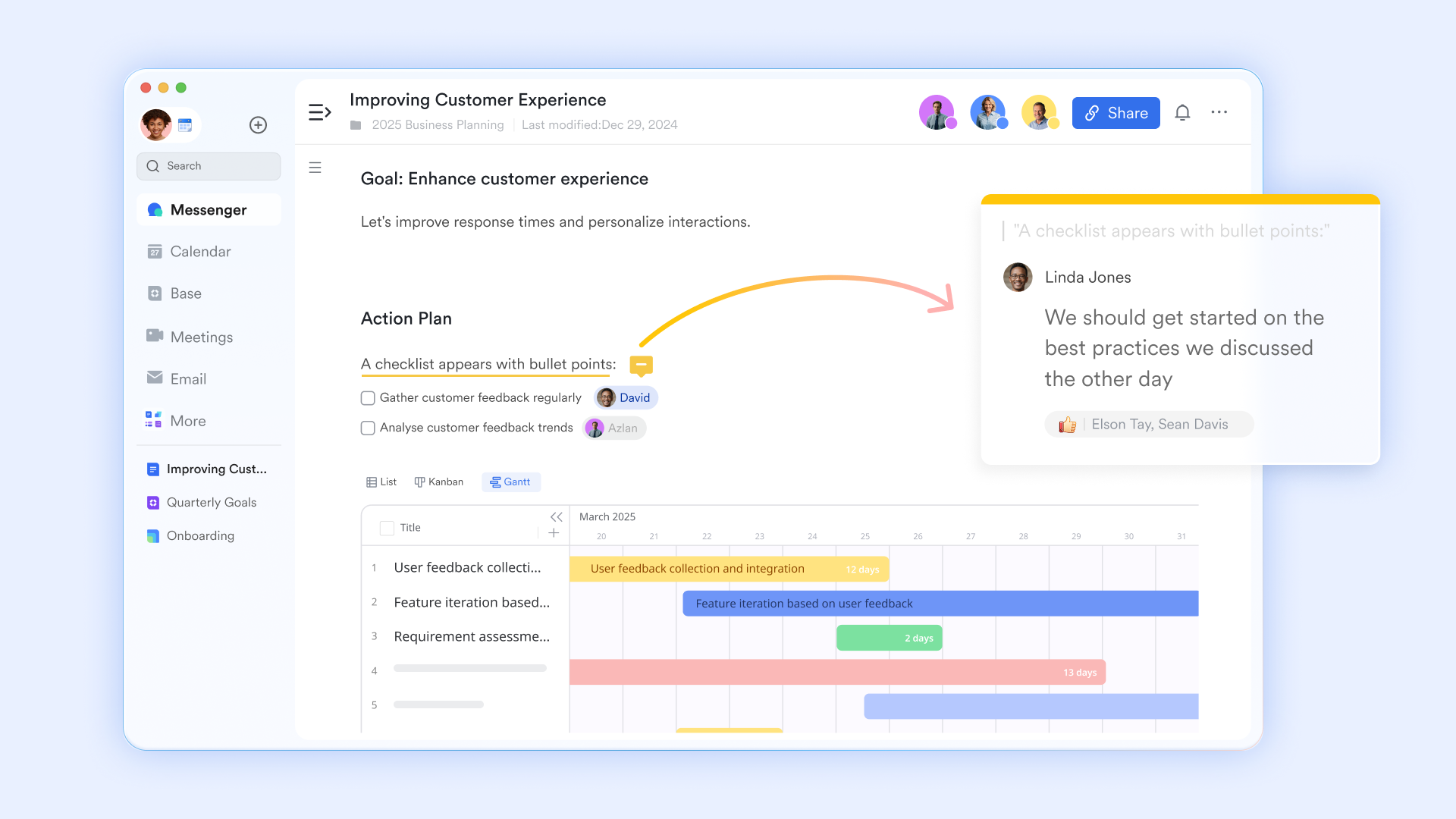
Aligning enterprise cadence from planning to delivery
Enterprise portfolios require a consistent rhythm of reviews, milestones, and decision gates. and align strategic cadence with execution timelines by centralizing portfolio schedules. Tasks sync automatically with calendars, helping teams visualize commitments and capacity. Regular portfolio review meetings supported by AI Meeting Notes ensure decisions and next steps are captured accurately. This synchronization keeps strategy, execution, and communication moving together at enterprise scale. 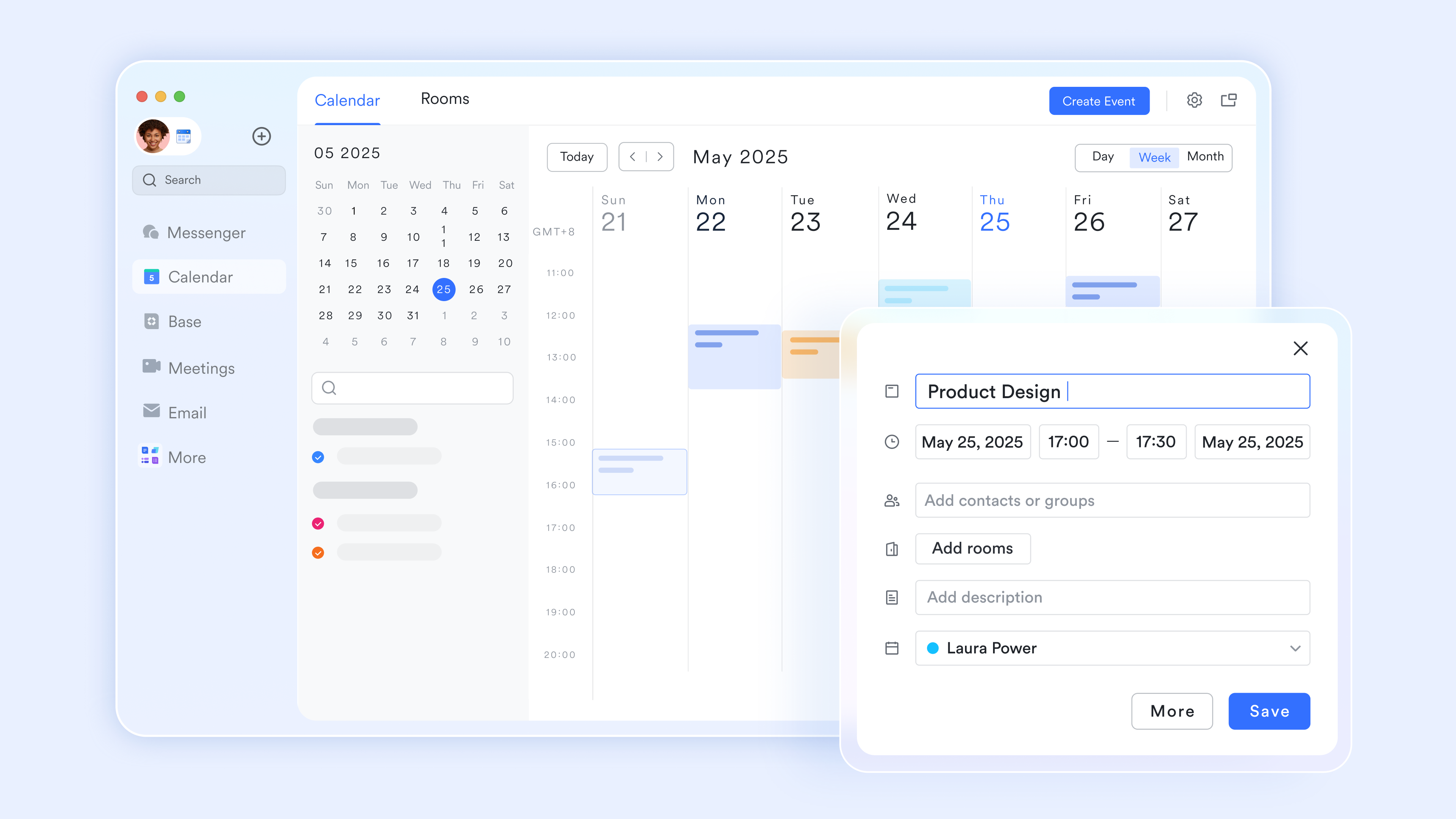
:
- Starter plan: Free forever plan that includes 11 powerful tools for up to 20 users. It also comes with 100GB of storage, 1000 automation runs, AI translations, and more.
- Pro plan: $12/user/month (billed annually) for up to 500 users. It includes everything in Starter plus group calling for up to 500 attendees, 15TB of storage, 50,000 automation runs, and more.
- Enterprise plan: for custom pricing. Supports unlimited users and includes even more automation runs and advanced security, compliance, and management features.
For small teams with simple communication needs

18 months message history
1000 Base automation runs/month
2000 rows per table in Base
Most POPULAR
For companies with comprehensive collaboration and management needs
Unlimited message history
500-participant video meetings
50k Base automation runs/month
20k rows per table in Base
For large companies with advanced security and organizational management needs
Get a personalized demo and pricing
Unlimited message history
500-participant video meetings
15 TB storage + 30 GB storage/user
500k Base automation runs/month
50k Base automation runs/month
Most POPULAR
For companies with comprehensive collaboration and management needs
Unlimited message history
500-participant video meetings
50k Base automation runs/month
20k rows per table in Base
Best practices for enterprise project portfolio management success
Sustained success in enterprise project portfolio management depends on discipline, transparency, and adaptability. As portfolios grow in size and complexity, static planning approaches quickly lose relevance. Leading organizations treat portfolio management as an ongoing capability rather than a one-time governance exercise. These best practices help enterprises maintain alignment between strategy, resources, and execution over time.
- Treat portfolios as living systems: Portfolios should evolve continuously as market conditions, strategy, and capacity change. Treating portfolios as fixed annual plans limits responsiveness. In enterprise project and portfolio management, living systems allow initiatives to be added, paused, or stopped deliberately. This flexibility improves resilience and strategic focus. Continuous adjustment becomes a competitive advantage.
- Revisit prioritization regularly: Priorities shift as new information emerges and assumptions change. Regular reviews prevent outdated initiatives from consuming resources. Within the process, consistent reprioritization ensures alignment with current objectives. This reduces wasted effort and decision friction. Timely reviews keep portfolios relevant.
- Make capacity visible before committing: Commitments should be based on real resource availability, not optimism. Visibility into skills, workload, and constraints is essential. Enterprise portfolio and project management benefits when data informs prioritization decisions. This prevents overcommitment, and delivery reliability improves significantly.
- Connect strategy, execution, and communication: Disconnection between strategy and execution creates misalignment. Effective enterprise project portfolio management integrates planning, delivery, and communication. Stakeholders share context, progress, and decisions transparently. This alignment reduces confusion and rework. Execution stays focused on strategic outcomes.
Conclusion
Enterprise project portfolio management gives organizations the structure they need to turn strategy into coordinated execution at scale. By focusing on portfolio-level prioritization, capacity planning, and continuous optimization, enterprises can ensure resources are invested in initiatives that deliver real business value. A disciplined enterprise project portfolio management process reduces fragmentation, improves transparency, and helps leaders make confident decisions even as complexity grows.
As execution becomes faster and more cross-functional, many organizations look beyond traditional tools to maintain alignment in daily work. Collaboration-first platforms like help bridge the gap between portfolio decisions and team execution by keeping strategy, communication, and work connected. This combination enables enterprises to stay agile without losing governance by implementing workflows that sync high-level goals with individual tasks.
Streamline workflows in project management with Lark
FAQs
What is the difference between SAP PPM and EPPM?
SAP EPPM (Enterprise Portfolio and Project Management) is the overarching solution suite that serves as a single "umbrella" for all SAP project modules, including SAP PS, SAP PPM, and SAP CPM. While SAP PPM specifically focuses on high-level strategic tasks like project selection, prioritization, and portfolio alignment, EPPM integrates these strategic functions with the operational execution, financial tracking, and commercial management provided by the other modules. Essentially, PPM is a single component used for planning and governance, whereas EPPM is the complete end-to-end ecosystem for the entire project lifecycle.
What is the difference between PMO and EPMO?
While both provide governance, a PMO is typically tactical and functional, focusing on standardized execution and delivery within a specific department or program. In contrast, an EPMO (Enterprise Project Management Office) operates at the executive level to ensure that the entire project portfolio across all departments aligns with the company's high-level business strategy. Essentially, a PMO ensures projects are done right, while an EPMO ensures the right projects are chosen for the organization.
What are the 4 types of portfolio management strategies?
Portfolio management strategies are divided into four main types based on control and intent: Active management seeks to beat market benchmarks through frequent, expert-led trading, while passive management tracks existing indices for long-term, low-cost growth. Under discretionary management, a professional has full authority to trade on your behalf, whereas non-discretionary management provides you with expert advice but leaves the final decision for every transaction in your hands.
Can agile teams operate within enterprise project portfolio management?
Agile teams can thrive within enterprise portfolios when governance sets direction instead of dictating delivery. Portfolios define priorities and outcomes, while teams retain over execution. This balance reduces friction between agility and oversight. Transparency is critical to making this work at scale. Over time, organizations often layer on platforms such as Lark to keep agile execution aligned with portfolio intent.
How do enterprises manage interdependencies across portfolios?
Managing interdependencies requires shared visibility across initiatives, teams, and portfolios. Dependency mapping and regular cross-portfolio reviews help surface risks early. Without this visibility, conflicts emerge late and disrupt delivery. Communication gaps often amplify dependency issues. Many enterprises gradually adopt collaboration-first tools like Lark to keep dependency context, discussion, and decisions connected.
When does an organization outgrow traditional EPPM software?
Organizations tend to outgrow traditional EPPM software when it becomes focused on reporting rather than decision-making. Slow updates, rigid , and disconnected execution are common signs. Leaders struggle to translate portfolio decisions into daily action. At this stage, enterprises often complement existing systems with platforms like Lark to bridge strategy, communication, and execution more effectively.
Related reading