














Lean Methodology: Frameworks, Variations, and Real-World Use

Ryan Tanner
Product Marketing Specialist
Sep 18, 2026
Ryan Tanner
Sep 18, 2026

18 min read


Too often, teams burn through hours of work and resources only to realize they've been chasing the wrong priorities. That's where lean methodology comes in—a proven framework designed to maximize customer value while cutting away waste.
Originally born in manufacturing, lean has since found a home in startups, healthcare, software, and beyond. Its flexibility lies in focusing on continuous improvement and efficiency, no matter the industry. Over time, different variations of lean have taken shape, each adapted to unique business needs. And today, with digital tools like Lark, bringing these practices into daily workflows has become smoother and more collaborative than ever.

Origins and evolution of lean methodology
When people ask, "What is lean methodology?" the answer starts in post-war Japan. Toyota pioneered an approach to improve manufacturing efficiency by focusing on eliminating waste and delivering more value to customers with fewer resources. Over time, this mindset spread beyond assembly lines into multiple industries. In the 1990s, healthcare organizations began adopting lean methodology in healthcare to streamline patient care and reduce delays without compromising quality.
Soon after, tech entrepreneurs adapted the same principles into lean startup methodology, emphasizing rapid experimentation and validated learning to build businesses with agility. Meanwhile, corporations seeking higher precision and quality combined lean with data-driven tools, creating the Lean Six Sigma methodology. Today, lean is no longer confined to factories; it has become a versatile framework that empowers teams across sectors to focus on efficiency, customer value, and continuous improvement.
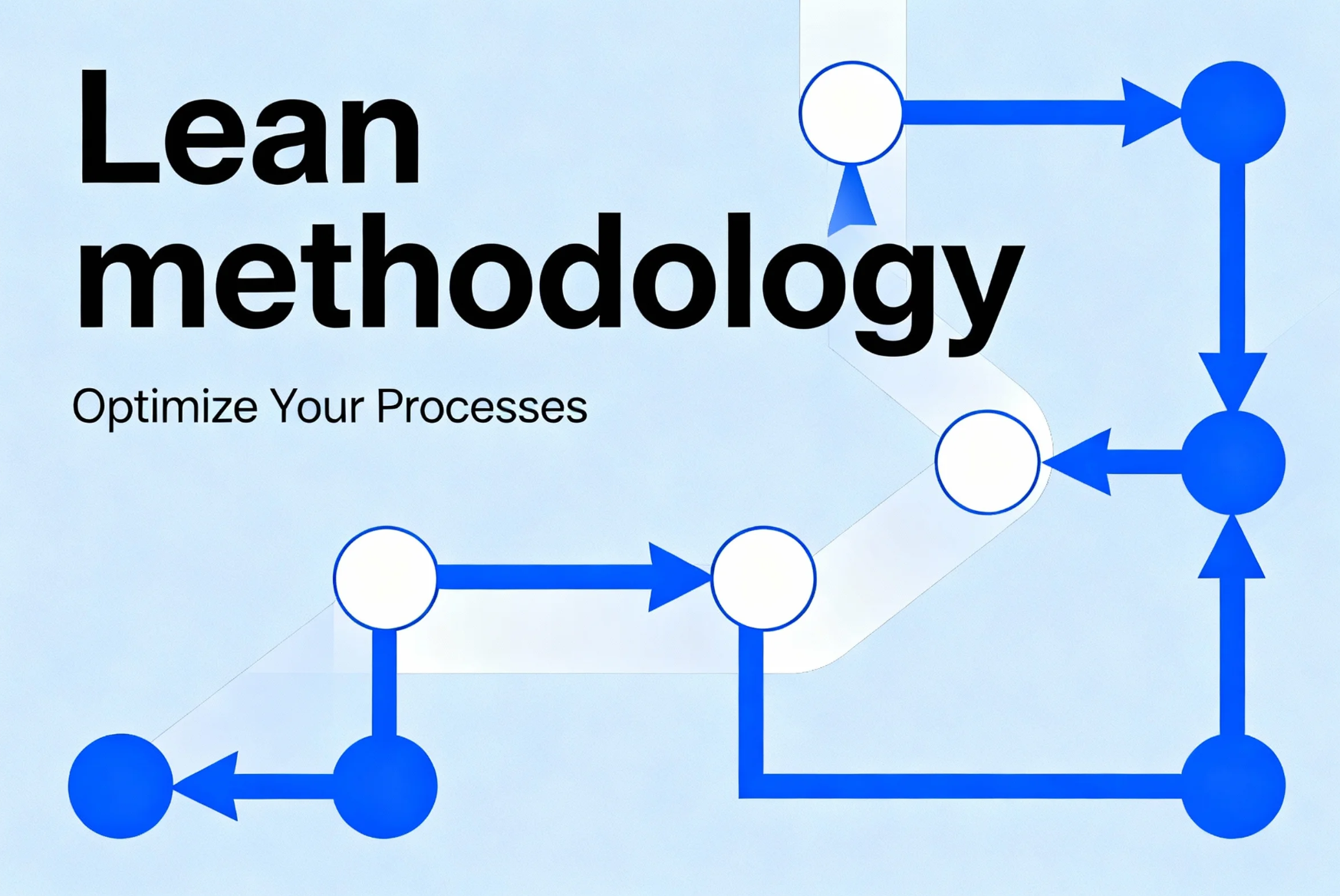
Image source: unsplash.com
The core idea behind lean methodology
The foundation of lean methodology lies in a few guiding principles that shape how teams work, improve, and deliver value. These core ideas include:
- Focus on value delivery: At its core, the lean methodology is about focusing on what truly matters to the customer. Instead of spreading resources across tasks with little impact, teams prioritize activities that directly enhance customer outcomes. This ensures that effort, time, and investment are always tied to meaningful results.
- Continuous elimination of waste: Another pillar is the ongoing elimination of waste—whether that's unnecessary steps in a process, excess inventory, or repeated manual tasks. Waste not only slows down progress but also drains resources that could be better spent elsewhere. By systematically identifying and trimming inefficiencies, organizations become faster, leaner, and more competitive.
- Culture of ongoing improvement: Lean thrives on a mindset of continuous improvement, also known as "kaizen." Teams reflect regularly on what worked, what didn't, and what can be refined. Instead of chasing perfection, they strive for steady progress—small, incremental changes that accumulate over time to achieve long-term transformation.
- Collaboration and transparency: None of this works without collaboration and transparency. Lean encourages teams to share information openly, align on goals, and create visibility across processes so everyone understands how their work connects to customer value. When communication flows freely, silos break down, and teams become more adaptable to change. This level of openness builds trust, speeds up decision-making, and helps organizations stay focused on delivering outcomes rather than getting lost in isolated tasks.
For example, with Lark, teams can connect value streams using Docs, Wiki, and Base boards, ensuring everyone sees how their work contributes to delivering value.
Popular variations of lean methodology
Over time, lean has evolved into different variations tailored for specific industries and needs. Some of the most recognized forms include:
- Lean Six Sigma methodology: This variation combines the waste-reduction mindset of lean with the data-driven rigor of Six Sigma. While lean focuses on speed and efficiency, Six Sigma emphasizes reducing variability and defects. Together, they create a powerful approach that improves both efficiency and quality, enabling organizations to deliver consistent outcomes at lower costs.
- Lean startup methodology: The lean startup methodology brings lean principles into the world of entrepreneurship. Instead of investing years building a product that might miss the market, startups follow the build-measure-learn loop. By launching minimum viable products (MVPs), testing them quickly, and learning from customer feedback, businesses can pivot rapidly and innovate efficiently, avoiding wasted time and capital.
- Lean in healthcare: Healthcare organizations have embraced lean to improve efficiency and patient outcomes. Lean methodology in healthcare focuses on streamlining care delivery, reducing wait times, and eliminating redundant administrative work. By applying lean thinking, hospitals and clinics provide higher-quality care with fewer delays, leading to more satisfied patients and better overall health outcomes.
- Lean in IT and software: When applied to IT and software, lean adapts to practices like agile sprints, CI/CD, and DevOps. Teams use lean principles to shorten release cycles, automate repetitive workflows, and continuously deliver improvements. This ensures that technology solutions evolve quickly in response to user needs, while reducing the risk of bottlenecks and technical debt.
With Lark Base templates and automated workflows, teams can explore any of these variations within a single workspace. This flexibility allows organizations to adopt the lean approach that best fits their unique goals while staying aligned across departments.
Framework used in lean methodology
Lean is powered by practical frameworks that make abstract principles actionable. These tools help teams visualize processes, identify waste, and build habits of efficiency. Some of the most widely used include:
- Value Stream Mapping (VSM): This framework provides a visual overview of the entire workflow, from start to finish. By mapping every step, teams can spot where time, effort, or resources are being wasted. The goal is to create a streamlined process that delivers maximum value with minimal delays.
- Kanban systems: Kanban offers a simple but powerful way to manage tasks visually. By moving work across columns such as "To Do,” "In Progress," and "Done," teams gain real-time visibility into bottlenecks. This makes it easier to balance workloads and keep projects moving smoothly.
- Kaizen events: Kaizen is all about continuous, incremental improvement. Through focused workshops or quick problem-solving sessions, teams tackle inefficiencies step by step. Over time, these small changes compound, creating a culture of ongoing growth and better performance.
- Just-in-Time (JIT): The JIT approach ensures that materials, products, or services are delivered exactly when needed—no earlier, no later. This minimizes inventory costs and prevents overproduction. It requires tight coordination but results in leaner operations and higher responsiveness.
- 5S framework: The 5S system (Sort, Set in order, Shine, Standardize, Sustain) focuses on organizing and maintaining workspaces. A clutter-free environment reduces wasted time searching for tools or information and promotes consistency. It also encourages discipline in daily operations.
With Lark Base Kanban templates and dashboards, these frameworks come to life digitally. Teams can visualize workflows, track improvements, and stay aligned without relying on disconnected tools.
Steps to implement lean methodology successfully
Adopting lean methodology isn't about a one-time shift—it's about building repeatable habits that drive lasting change. The following steps guide teams in putting lean into practice:
- Define customer value clearly: Every lean journey begins with understanding what customers truly value. This clarity prevents teams from investing time and effort in activities that don't directly contribute to outcomes. By anchoring work around customer priorities, organizations stay focused on impact.
- Map the value stream end to end: Value Stream Mapping reveals the entire journey of a product or service from start to finish. It helps identify redundancies, gaps, and inefficiencies that aren't always obvious. Once mapped, teams can see where improvements will have the greatest effect.
- Introduce continuous flow and remove bottlenecks: Lean emphasizes creating smooth, uninterrupted workflows. Bottlenecks slow progress and create frustration, so removing them allows teams to deliver faster and more reliably. Continuous flow also reduces waiting times and improves efficiency across the board.
- Establish pull systems (work on demand): Instead of pushing tasks onto teams, lean advocates for pull systems where work begins only when demand exists. This prevents overproduction and ensures resources are used efficiently. It also helps balance workloads more naturally.
- Build a culture of continuous improvement: Sustainable transformation requires more than tools—it needs a mindset of kaizen, or ongoing progress. Teams should regularly reflect on processes, celebrate wins, and look for opportunities to refine. With this culture in place, minor adjustments compound into significant improvements.
With automated workflows inside Lark Base, teams can operationalize these steps without relying on manual updates. Value streams can be mapped visually on baseboards, recurring tasks can be automated, and real-time dashboards make bottlenecks easy to identify and address. This ensures lean practices don't remain theoretical but become part of everyday workflows, accessible to everyone on the team.
Why Lark is ideal for lean methodology in modern teams
Bringing lean methodology into practice isn't just about knowing the frameworks—it's about having the right tools to support them on a daily basis. Modern teams move fast, and without a unified system, lean principles can easily get lost in silos or manual updates. That's where Lark stands out. By combining communication, workflows, and knowledge in one platform, it helps teams operationalize lean in a way that's both practical and scalable.
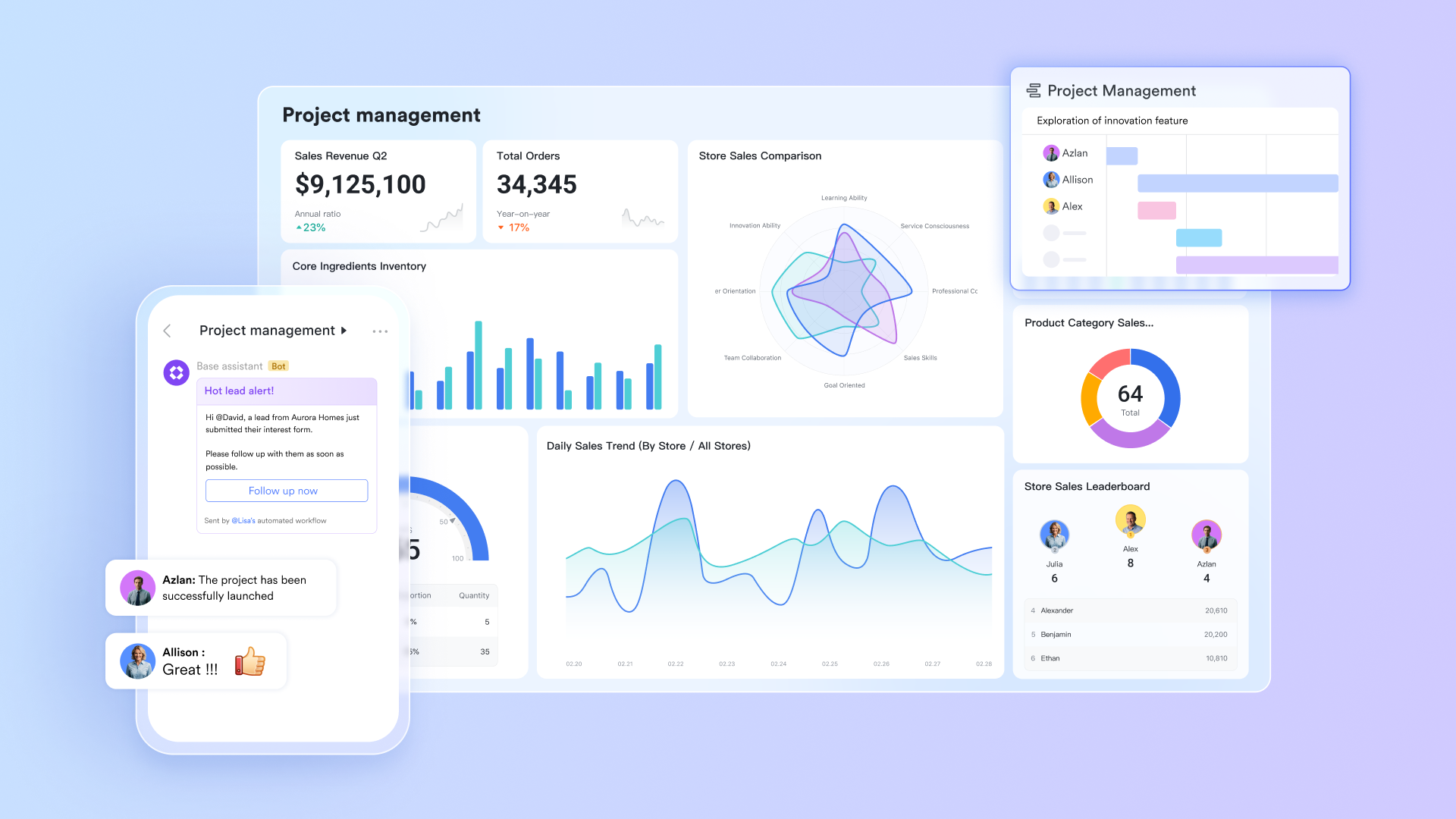
Lark Base: Visualize and automate workflows
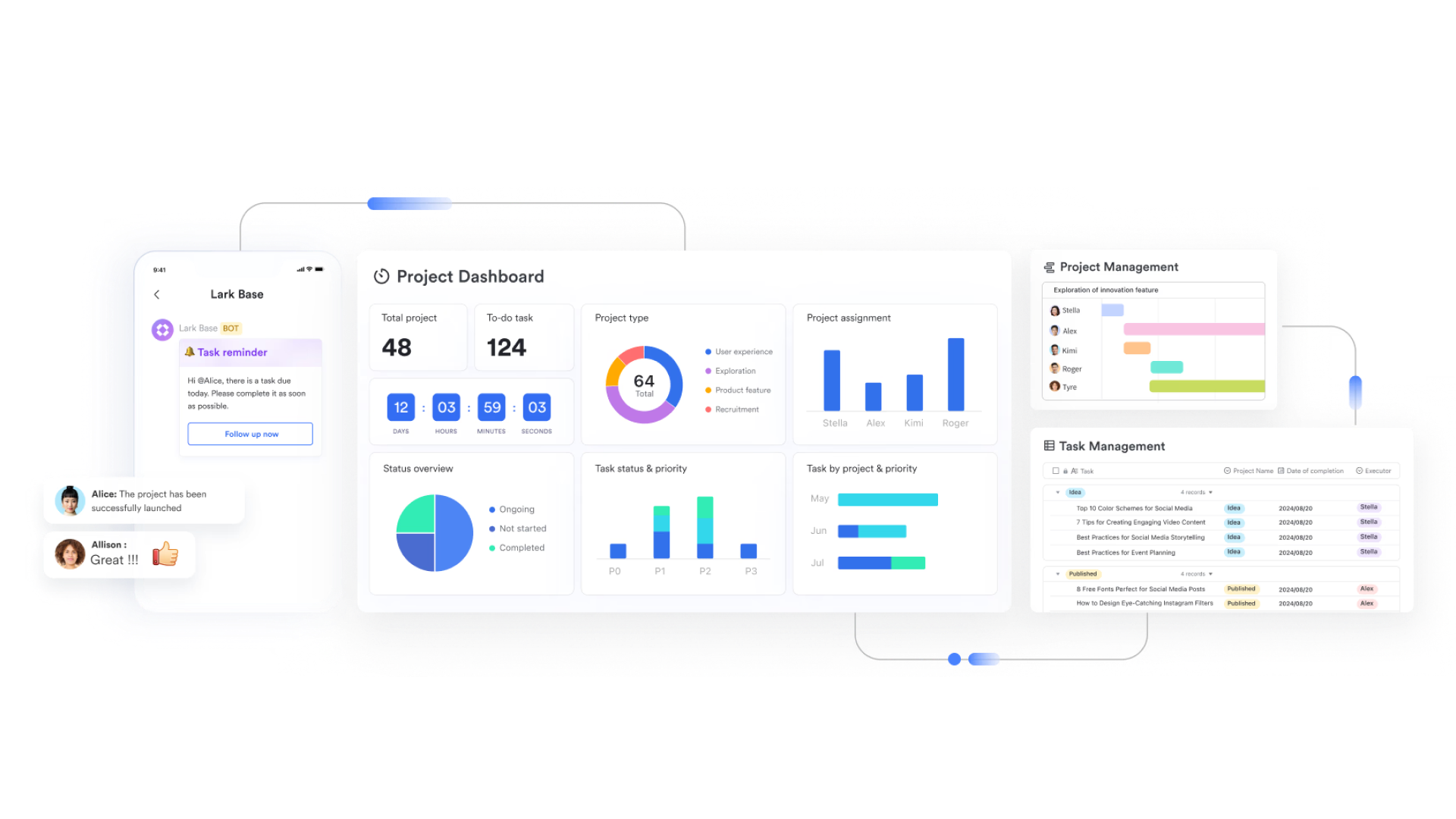
Lark Base acts as the visual engine of lean. Teams can create Kanban-style boards to track work in progress, limiting overload and spotting bottlenecks instantly. Value Stream Mapping (VSM) becomes easier too, as Base allows teams to capture every step of a process and redesign workflows for better efficiency. Custom views and real-time dashboards mean lean practices aren't just theory—they're visible, actionable, and shared across the team.
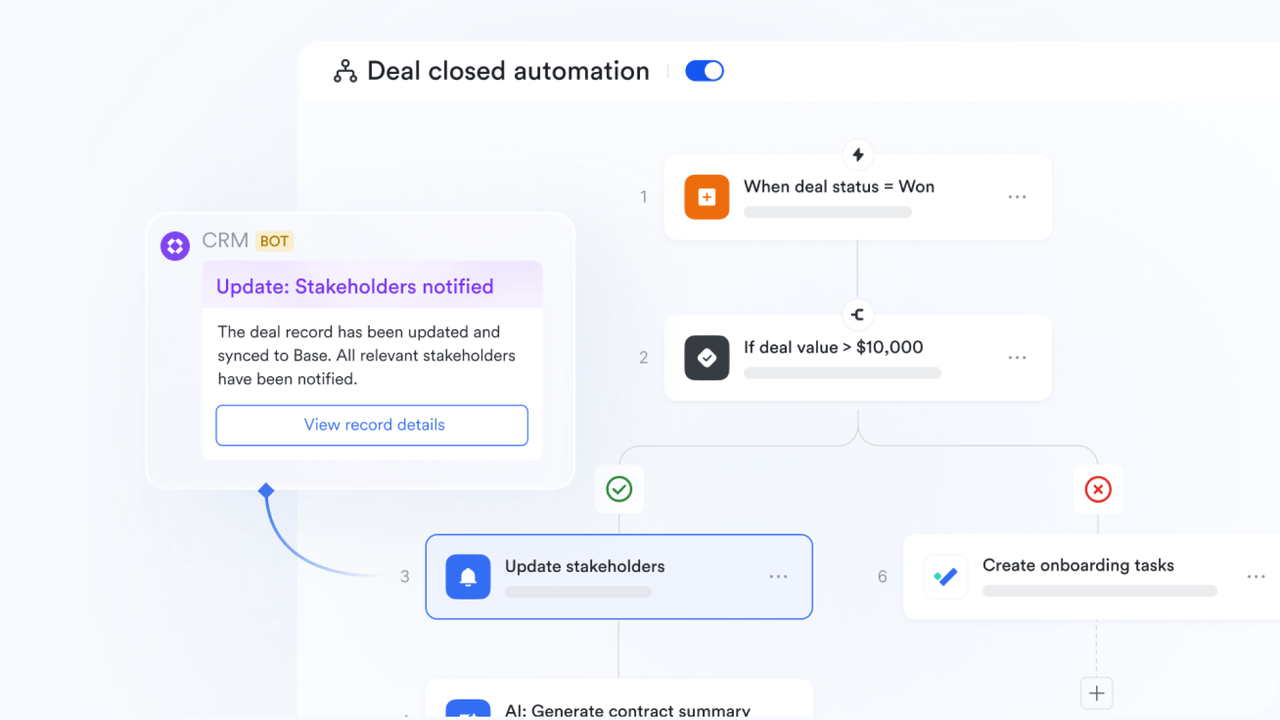
Repetition is one of the most overlooked forms of waste. With Lark's automated workflows, teams can set up reminders, triggers, and approval chains that run on autopilot. This removes the burden of manual follow-ups and ensures that processes keep moving even when people are busy. The result? More time freed for meaningful, value-driven work.
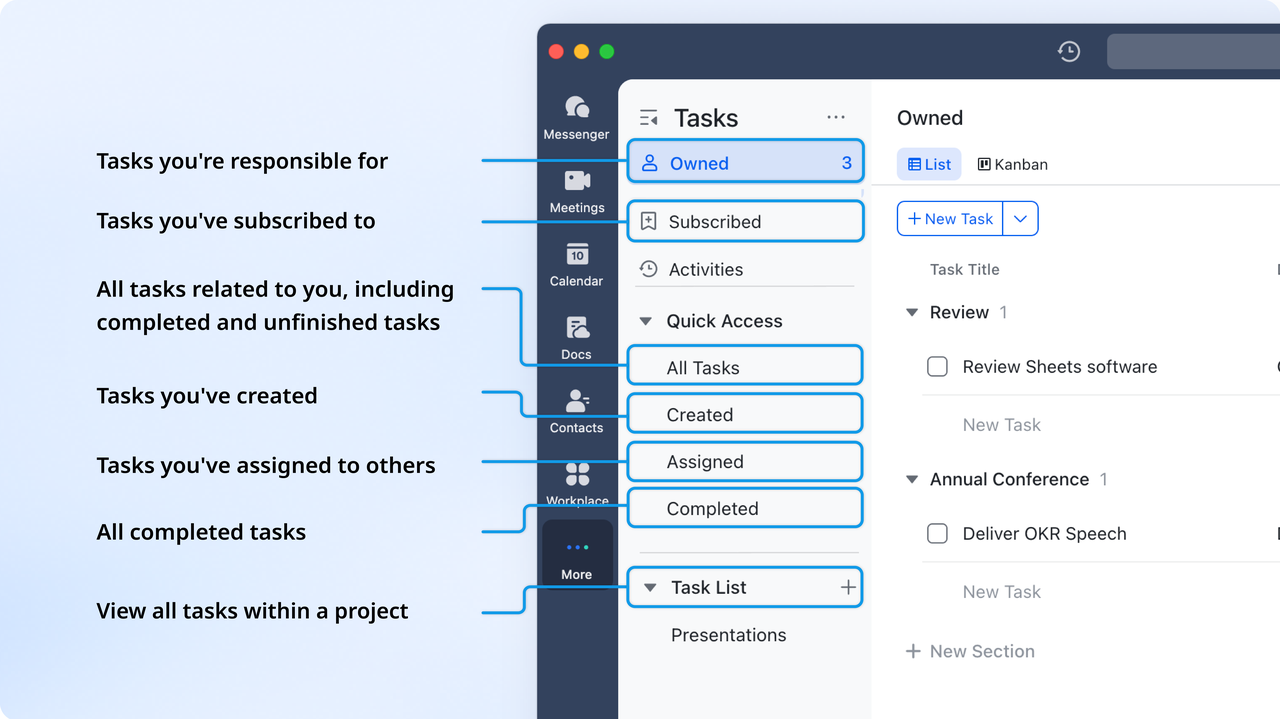
Lark Tasks: Assign responsibilities with clarity
Lean thrives on accountability, and Lark Tasks provides precisely that. Every task is clearly assigned, with deadlines and progress tracking built in. Team members know their responsibilities, and leaders can see where support may be needed.This level of clarity keeps workflows moving and prevents the waste of confusion or duplicated effort.
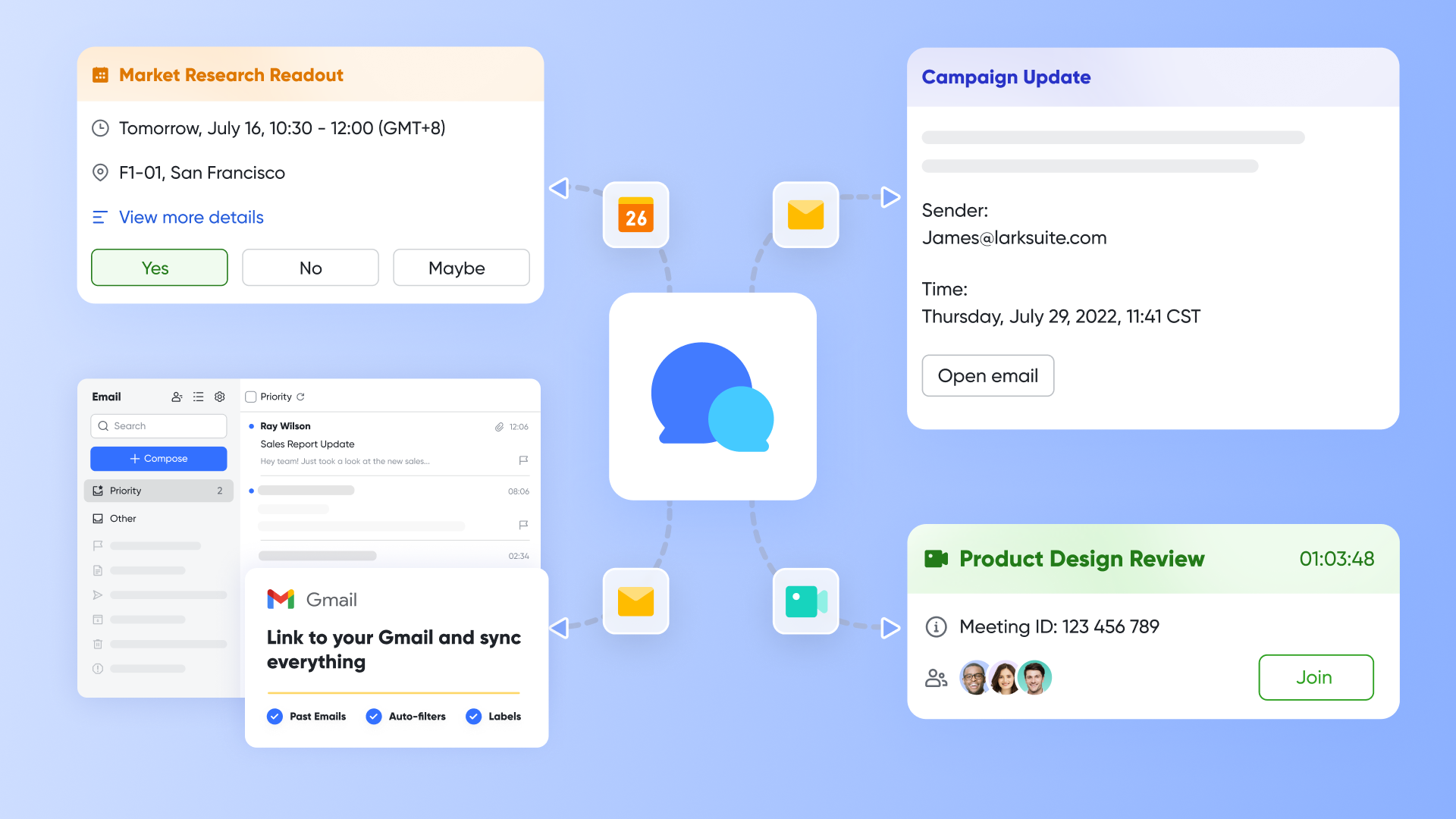
Lark Messenger + Lark Meetings: Ensure fast feedback loops
In lean methodology, delays in communication often translate to wasted time. With Lark's Messenger and Meetings, teams can connect instantly—whether it's for a quick stand-up, a problem-solving huddle, or a customer feedback review. Real-time messaging and video calls reduce waiting, accelerate decision-making, and keep projects aligned with the lean principle of continuous flow.
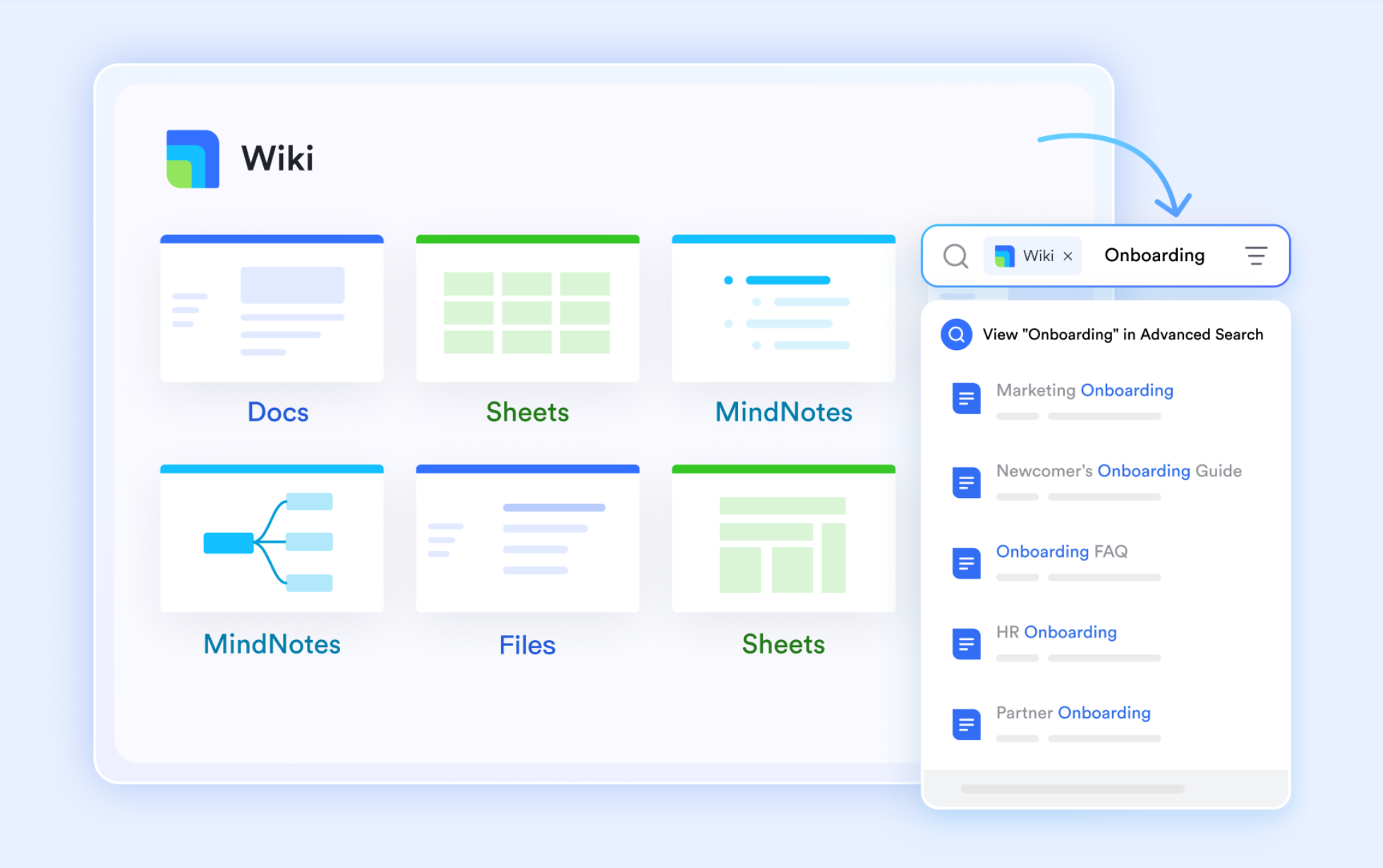
Lark Docs + Lark Wiki: Centralize standards and knowledge
Standardization is at the heart of sustaining lean improvements. With Docs and Wiki, teams create a single source of truth for protocols, processes, and documentation. Instead of hunting through emails or outdated files, everyone has immediate access to the most current information. This minimizes the risk of defects caused by inconsistent knowledge and ensures smoother execution across projects.
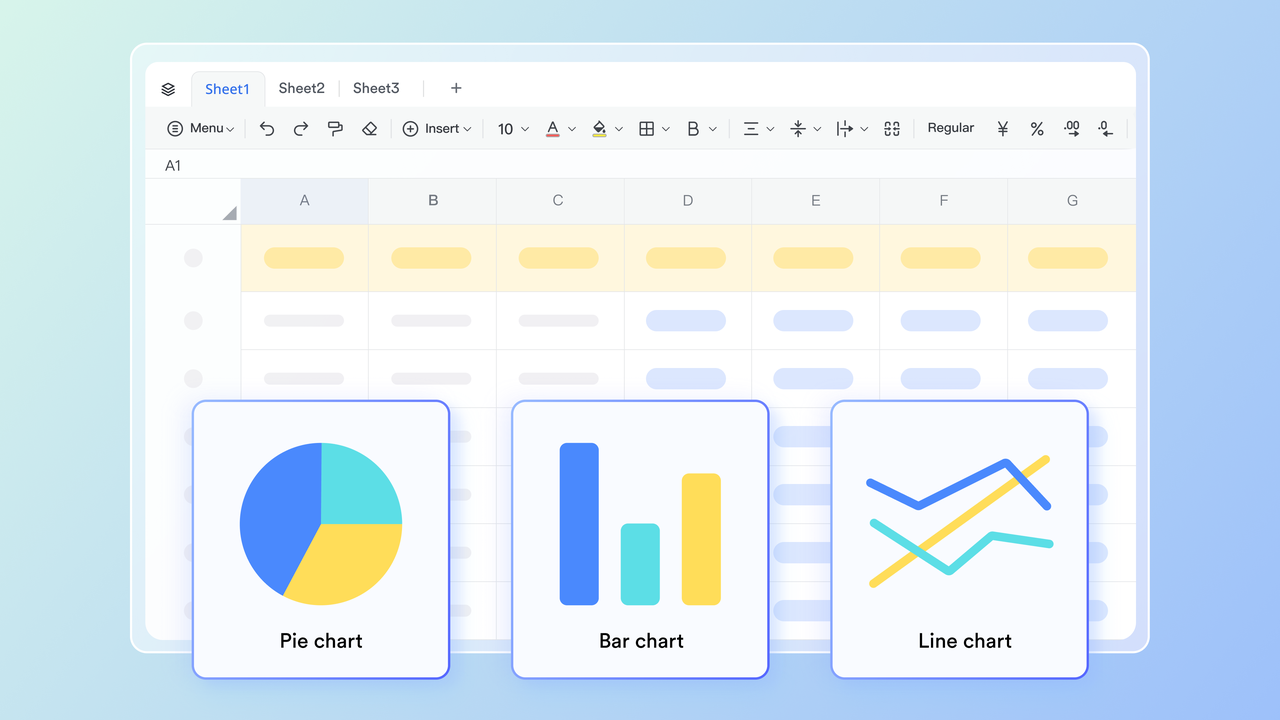
Lark Sheets: Track KPIs and waste reduction
Data is the fuel for improvement in lean methodology. Lark Sheets helps teams monitor KPIs like cycle times, throughput, or defect rates, all in one place. Paired with Base dashboards, Sheets provides insights that make waste visible and measurable. Teams can then act on facts—not assumptions—to continuously refine their workflows.
- Starter plan: Free forever plan that includes 11 powerful tools for up to 20 users. It also comes with 100GB of storage, 1000 automation runs, AI translations, and more.
- Pro plan: $12/user/month (billed annually) for up to 500 users. It includes everything in Starter plus group calling for up to 500 attendees, 15TB of storage, 50,000 automation runs, and more.
- Enterprise plan: Contact sales for custom pricing. Supports unlimited users and includes even more automation runs and advanced security, compliance, and management features.
Benefits of adopting lean methodology
When lean methodology is applied successfully, the impact is felt across performance, people, and outcomes. The key benefits include:
- Faster delivery and reduced waste: By eliminating unnecessary steps and streamlining workflows, teams complete projects more efficiently, resulting in faster delivery and lower waste. At the same time, they conserve resources by avoiding duplication and inefficiency. The result is a leaner, more responsive operation.
- Increased customer satisfaction: Customers directly benefit from lean practices, as they receive products and services that are timely, relevant, and of high quality. Continuous feedback loops ensure offerings stay aligned with evolving needs. This strengthens trust and loyalty over time—whether in a lean startup methodology approach or within large enterprises.
- Improved team collaboration: Lean thrives on collaboration and transparency, ensuring everyone works toward shared goals. When communication is open, silos break down, and teams become more engaged in problem-solving. This fosters a stronger culture of teamwork and accountability across functions, whether in a factory, a hospital applying lean methodology in healthcare, or a software team running agile sprints.
- Scalability across industries and teams: One of lean's greatest strengths is its adaptability across contexts—whether in healthcare, startups, education, or IT. Its principles remain effective regardless of industry size or complexity. From the precision of lean six sigma methodology in large corporations to the agility of startups, lean has proven scalable for organizations aiming for long-term growth.
Unlike standalone systems, Lark unifies communication, workflow, and reporting in one platform. Teams can brainstorm in Docs, align knowledge in Wiki, and manage workflows in Base—all without switching tools. This single workspace not only simplifies lean adoption but also strengthens collaboration, making it easier to sustain improvements at scale across industries, from education and healthcare to software and manufacturing.
Common pitfalls and how to avoid them
Even though lean methodology is straightforward in principle, many organizations stumble during execution. Recognizing these pitfalls early helps teams stay on track:
- Lack of clear customer focus: One of the biggest mistakes is forgetting that lean starts and ends with customer value. Teams sometimes design processes around internal comfort or management metrics rather than what matters most to customers. This leads to wasted time, irrelevant outcomes, and missed opportunities. To avoid this, leaders must constantly ask: Does this initiative add measurable value to the customer experience? If not, it's a distraction.
- Overcomplicating processes: Lean methodology is designed to simplify, but ironically, organizations often over-engineer their approach. They may add extra reporting layers, enforce rigid templates, or treat lean like an exhaustive rulebook. This slows down decision-making and frustrates employees who feel burdened instead of empowered. The key is to keep frameworks lightweight and adaptable, applying only the practices that genuinely improve efficiency.
- Neglecting cultural change: Another pitfall is treating lean as a set of project management tools rather than a cultural shift. Without leadership support and buy-in at every level, lean becomes a temporary initiative instead of a long-term philosophy. Teams must feel safe to share problems, experiment, and challenge the status quo. Building this culture of openness and trust ensures lean principles take root and thrive beyond isolated projects.
- Failing to sustain improvements: Many organizations see quick wins in the early stages of lean but then revert to old habits. Without consistent monitoring, tracking, and reinforcement, initial progress fades. Continuous improvement must be built into everyday routines—through regular retrospectives, performance metrics, and leadership encouragement. Sustaining improvements means treating lean as a cycle, not a one-off project.
- Resistance to transparency: Lean requires visibility—whether through Kanban boards, value stream maps, or shared dashboards. Yet some teams resist this transparency because it exposes inefficiencies or performance issues. When workflows remain hidden, bottlenecks are more complex to identify and resolve, and accountability suffers. Overcoming this resistance involves building trust, celebrating progress, and framing visibility as a collective advantage rather than surveillance.
- Ignoring data-driven decision-making: Lean thrives on facts, not assumptions. Too often, teams make changes without measuring the outcomes, leaving them unsure if the improvement worked. Without KPIs or real-time metrics, Lean loses its edge and risks becoming a matter of guesswork. Organizations must track progress through data—whether it's cycle time, defect rates, or customer satisfaction—and use those insights to drive the next round of improvements.
With Lark Sheets and Base dashboards, teams can make performance metrics visible to everyone in real time. Instead of waiting for manual reports, leaders and employees alike see trends as they happen—whether it's reduced lead times or fewer defects. This transparency keeps improvements from fading, because data provides proof of progress. It also makes accountability easier, sustaining lean success across projects and teams.
Conclusion
The Lean methodology has proven to be versatile, adaptable, and impactful across various industries. From its origins in manufacturing to modern applications in startups, IT, education, and healthcare, it continues to help organizations deliver more value while minimizing waste. Its strength lies in its ability to evolve—whether through the Lean Startup methodology, Lean Six Sigma methodology, or sector-specific practices like Lean methodology in healthcare—while always staying true to its core principles of efficiency and continuous improvement.
With Lark, teams can apply lean consistently in their daily workflows. This makes lean not only easier to adopt but also more sustainable in fast-moving, digital-first environments.
FAQs
What's the difference between lean methodology and lean principles?
Lean principles are the foundational ideas—value delivery, waste elimination, continuous improvement, and transparency—that guide lean thinking and management. Lean methodology is the structured, step-by-step application of these principles through frameworks like Kanban, Value Stream Mapping, and Just-in-Time practices.
How is lean methodology applied in healthcare?
In lean methodology in healthcare, the focus is on reducing patient wait times, improving care pathways, and eliminating redundant administrative tasks. Hospitals and clinics utilize lean principles to optimize resources, streamline workflows, and ensure that patients receive timely, high-quality care.
What is the lean startup methodology?
The lean startup methodology helps entrepreneurs test ideas quickly without overspending. Using the build-measure-learn loop, startups launch minimum viable products (MVPs), gather real feedback, and pivot based on results. This accelerates innovation while reducing risk and waste.
How does lean methodology differ from Agile?
Agile is a project management philosophy that emphasizes iterative development, collaboration, and adaptability. Lean methodology shares similar values but places more emphasis on reducing waste and maximizing value across processes. In practice, many teams use Agile and lean together to improve both delivery speed and efficiency.
What frameworks are part of lean methodology?
Some of the most widely used frameworks include Kanban systems for visualizing tasks, Value Stream Mapping (VSM) for identifying waste, Kaizen events for incremental improvements, Just-in-Time (JIT) for efficiency, and the 5S framework for workspace organization. These tools help teams apply lean in practical, repeatable ways.
What are the benefits of lean methodology?
The benefits include faster delivery, reduced waste, and improved resource utilization. Customers see greater satisfaction because services or products arrive quicker and with higher quality. Teams also enjoy stronger collaboration, transparency, and scalability—whether applying the lean Six Sigma methodology, the lean startup methodology, or sector-specific approaches like the lean methodology in healthcare.
Related reading
Table of contents
Start using Lark today

Manage all your work in one place
Boost team efficiency by 10x
Save up to 70% on software costs
Table of contents
Start using Lark today
Manage all your work in one place
Boost team efficiency by 10x
Save up to 70% on software costs
Keep reading







2026 Lark Technologies Pte. Ltd.
Headquartered in Singapore with offices worldwide.






Explore: