














Lean Principle: The 5 Core Principles Explained

Ryan Tanner
Product Marketing Specialist
Sep 18, 2026
Ryan Tanner
Sep 18, 2026

13 min read


Every business, no matter the industry, faces the same challenge: inefficiency. Wasted time, unused resources, and scattered workflows can quietly drain growth potential. That's where the lean principle comes in—a management approach designed to maximize value while minimizing waste.
Born in manufacturing but now applied across sectors such as healthcare, research labs, and software development, lean thinking helps organizations streamline processes, eliminate unnecessary steps, and focus on what truly matters. Let's dive into the details and discover how these principles can change your workflow differently.

What are lean principles?
Lean principles are the core ideas behind the lean methodology, first developed in the Toyota Production System and now applied far beyond the factory floor. At their heart, these principles aim to maximize value while reducing waste—whether in manufacturing, project management, software, or even lean lab practices. From kanban production control to minimizing setup times, each principle of lean manufacturing emphasizes efficiency, flow, and continuous improvement.
Today, organizations utilize these concepts not only to streamline processes, but also to foster a culture of agility and innovation. In project management tools like Lark Base, lean principles come alive through workflow visualization, smart automation, and progress tracking, which help teams continuously refine the way they work.
Image source: unsplash.com
The five core lean principles explained
The lean methodology is based on five timeless principles that guide organizations toward efficiency, agility, and a customer-centric focus. Here's how each principle works—and how Lark brings it to life:
1. Identify value: Every lean journey begins with defining what customers truly care about. It's not just about what an organization can deliver, but what customers are actually willing to pay for. With Lark Docs and Wiki, teams can capture insights, share research, and document customer needs in one place, making sure that everyone is aligned around a common definition of value.
2. Map the value stream: Once the value is clear, the next step is to trace how that value is created and delivered. This means mapping every process, from idea to delivery, to uncover where waste slows things down. With Lark Base, teams can visualize workflows using flexible boards and databases, making it easier to identify bottlenecks and design more efficient processes.
3. Create flow: Lean emphasizes eliminating disruptions so that work moves smoothly from one step to the next. When flow is established, delays shrink, productivity rises, and teams avoid costly interruptions. Through Lark Base automation, repetitive tasks are handled automatically, reducing manual effort and ensuring that progress continues without unnecessary stoppages.
4. Establish pull: Instead of producing in bulk and pushing tasks forward, lean encourages responding to actual demand. This approach helps reduce overproduction and ensures that resources are used only when needed. With Lark Tasks and Calendar, teams can prioritize assignments, plan sprints, and respond to real-time requests, aligning work with true demand instead of guesswork.
5. Pursue perfection (Kaizen): Lean is never "finished"; it's built on the idea of continuous improvement. By making minor, ongoing refinements, organizations build momentum that leads to long-term excellence. With Lark Sheets, teams can track performance metrics, measure progress, and visualize the impact of improvements, making it easier to sustain a culture of Kaizen across projects.
How lean principles are practiced in the main industries
Lean principles in manufacturing
The principle of lean manufacturing is built around maximizing value while cutting waste, a philosophy rooted in the Toyota Production System. Two practices illustrate this perfectly: Kanban production control, which ensures just-in-time scheduling, and minimized setup times (SMED), which reduces machine changeovers to keep production flexible and efficient. These methods prevent overproduction, reduce inventory costs, and enhance operational efficiency.
The impact is clear: manufacturers adopting these practices see lower costs, better throughput, and reduced waste in materials, labor, and motion. While these ideas were born on the shop floor, they're just as valuable for digital workflows. With Lark Base, teams can design processes that reflect the same streamlined efficiency, helping service and IT teams eliminate digital waste.
Lean principles in software and project management
When applied to digital work, lean thinking evolves into a lean manufacturing principle adapted for software and projects. In lean software development, waste is eliminated by avoiding unnecessary features, excessive documentation, or handoff delays. This helps teams deliver quickly, gather feedback early, and refine their work continuously. Meanwhile, lean project management emphasizes breaking big projects into smaller tasks, streamlining workflows, and reducing "work in progress" to prevent bottlenecks.
The outcome is more efficient project delivery and higher customer value. Lark brings this to life with Base Kanban boards for workflow visualization, Lark Tasks for clear accountability, and Lark Sheets for real-time project tracking. Together, these tools make lean approaches practical for modern teams who want agility without compromising quality.
Lean principles in labs and R&D
In research and development, the lean lab principle focuses on optimizing the journey from hypothesis to discovery. The aim is to optimize experiments, reduce redundancy, and share knowledge more effectively across teams. Instead of repeating tests or wasting time on inefficient setups, labs use lean thinking to design smarter processes and speed upscientific progress.
The benefits are measurable: Faster innovation cycles and improved reproducibility, both of which are crucial for advancing reliable science. Lark supports this with Docs + Wiki for knowledge management, Calendar for coordinating experiments and lab resources, and Base for tracking samples and project milestones. These digital tools help research teams embody lean practices that once transformed factories, now applied to the world of science.
Challenges of applying lean principles & how Lark helps
While the benefits of lean are clear, putting the principles into practice—especially outside of traditional manufacturing—comes with its own set of hurdles. In environments like software development, project management, or R&D, challenges often stem from human behavior, lack of visibility, and the effort required to sustain improvement over time. Here's a closer look at the common obstacles and how Lark helps teams overcome them:
- Resistance to change: One of the biggest challenges lies in changing mindsets. Lean requires people to shift away from old habits and embrace new ways of working. Employees may fear that lean processes will add complexity, reduce autonomy, or even threaten job security. Without buy-in, even the most well-designed lean initiative will stumble. This is similar to how, in manufacturing, kanban production control and minimized setup times are part of the lean principle, yet they still require cultural acceptance to succeed. Strong team collaboration is essential in this process, as open communication and shared commitment help teams adapt to change and sustain lean improvements effectively.
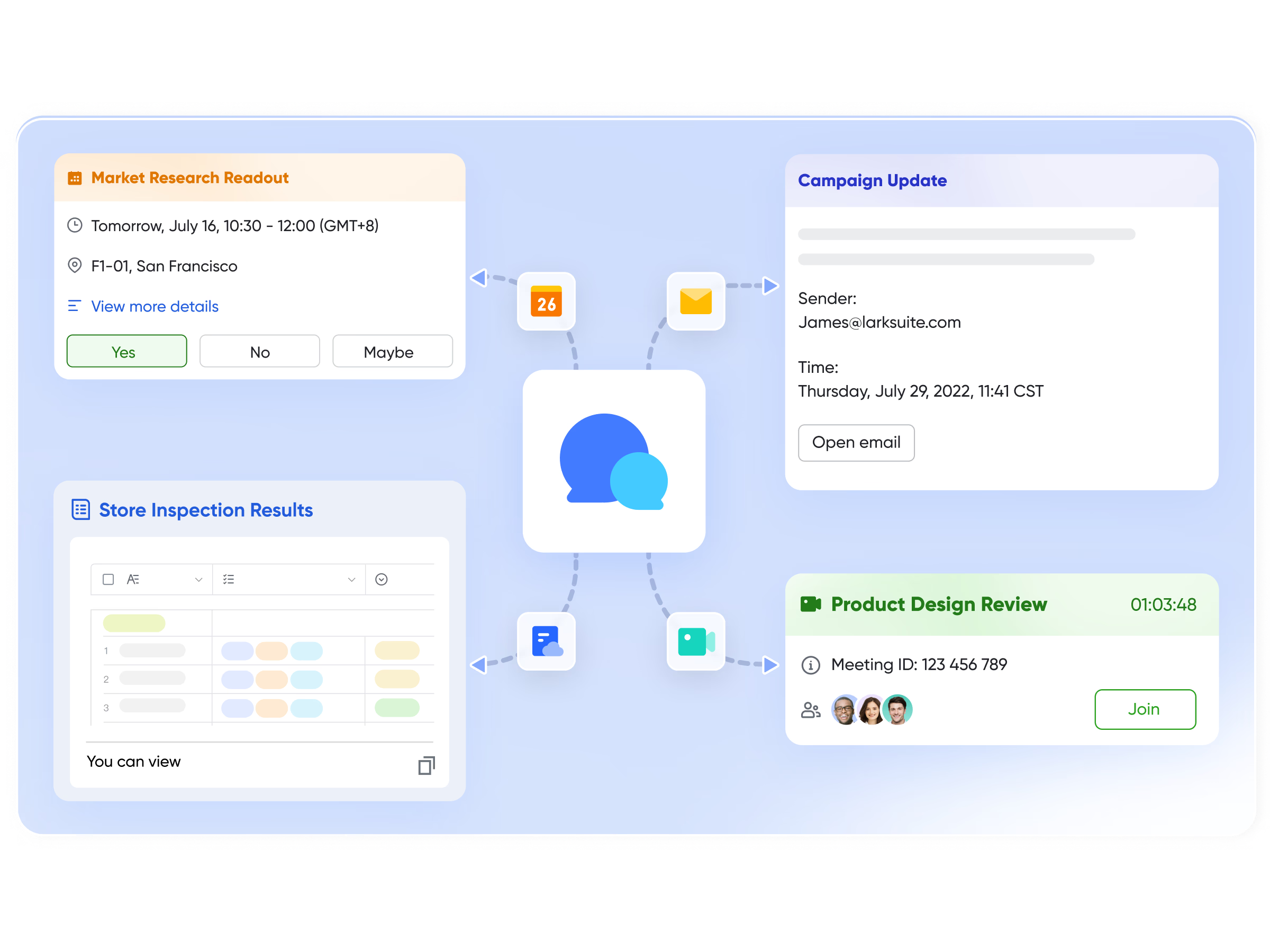
How Lark helps: With Lark Messenger, organizations can make this transition easier. Messenger acts as a central hub for open communication—whether it's leadership explaining the purpose behind changes, managers sharing progress updates, or team members raising concerns. This transparency builds trust, reduces resistance, and makes people feel included in the journey.
- Hard to visualize value streams: In a factory, value streams are tangible—you can literally see the flow of goods on the line. In knowledge work, however, the flow of tasks is invisible. Teams often struggle to identify where projects get stuck, who is waiting on what, or which steps add little to no value. Without this visibility, waste persists unnoticed.
How Lark helps: Lark Base Kanban templates turn invisible workflows into clear, visual boards. Tasks can be moved across stages like "To-Do,” "In Progress," and "Done," making bottlenecks stand out instantly. Just as a physical kanban board streamlines production, Base provides the digital equivalent—helping teams visualize value streams and continuously refine them.
- Maintaining continuous improvement: Lean isn't a one-time fix—it's a culture of Kaizen, or continuous improvement. The challenge is that initial enthusiasm often fades once early wins are achieved. Without consistent tracking and recognition of progress, small incremental changes can often go unnoticed, and teams may lose motivation to continue improving.
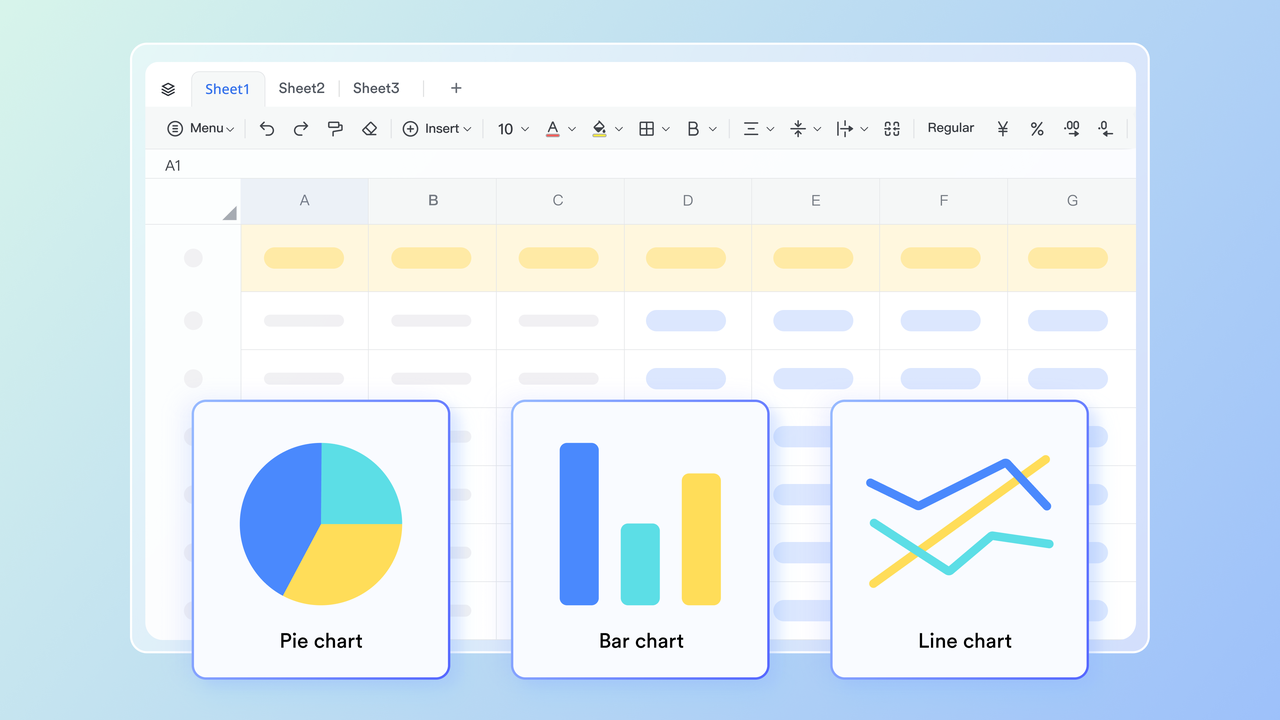
How Lark helps: Lark Sheets allow teams to measure KPIs like cycle time, lead time, or error rates over time. By visualizing trends in pie charts, bar charts, or line charts. In this way, teams can see the real impact of their efforts. This data-driven feedback loop keeps momentum alive, proving that even small changes add up to significant results when tracked and celebrated.
- Scaling lean across teams: Applying lean within a single team is one challenge—spreading it across an entire department or organization is even tougher. Different teams often use different workflows, making it hard to get a unified picture of performance. This can lead to silos, fragmented improvements, and inefficiencies across the organization.
How Lark helps: Lark templates can help overcome this by standardizing processes across teams through shared, customizable frameworks in Lark Base. Teams can use ready-made templates—such as OKR tracking, project management, or process improvement boards—to align goals, monitor progress in real time, and ensure transparency across departments.
- Starter plan: Free forever plan that includes 11 powerful tools for up to 20 users. It also comes with 100GB of storage, 1000 automation runs, AI translations, and more.
- Pro plan: $12/user/month (billed annually) for up to 500 users. It includes everything in Starter plus group calling for up to 500 attendees, 15TB of storage, 50,000 automation runs, and more.
- Enterprise plan: Contact sales for custom pricing. Supports unlimited users and includes even more automation runs and advanced security, compliance, and management features.
Benefits of applying lean principles
- Eliminates waste: Lean focuses on removing non-value-added activities, reducing inefficiencies in processes, and freeing up time for high-impact tasks.
- Speeds up delivery: Streamlined workflows allow teams to deliver products, services, and updates faster, shortening lead times and improving responsiveness to market demands.
- Reduces costs: By optimizing resources and minimizing unnecessary steps, lean practices help organizations lower operational expenses while maintaining quality.
- Enhances customer satisfaction: Faster, more accurate delivery of products and services ensures that customer needs are met consistently, building trust and loyalty.
- Fosters continuous improvement: Lean encourages small, incremental changes that accumulate into significant performance gains, driving long-term operational excellence.
- Improves team collaboration: Clear processes and shared responsibilities reduce confusion, enhance communication, and align teams toward common goals.
- Increases transparency: Lean practices make workflows, bottlenecks, and performance metrics visible, enabling data-driven decision-making and proactive problem-solving.
Conclusion
At their core, lean principles are about creating more value with less waste. Whether it's on the factory floor, in software development, or inside a research lab, they encourage organizations to focus on what matters most, eliminate inefficiencies, and nurture a culture of continuous improvement. This mindset isn't just a methodology—it's a way of working that drives long-term agility and growth.
With modern tools like Lark, these principles move from theory into daily practice. Automation, workflow visualization, and integrated collaboration ensure that lean doesn't stay on paper—it becomes part of how teams operate every single day. By embedding lean principles into their processes, organizations can work smarter, respond more quickly, and establish a foundation for sustained success.
FAQs
Can lean principles apply outside manufacturing?
Yes. Although they originated in the Toyota Production System, lean principles have been successfully adapted to sectors like software development, healthcare, research labs, and project management. The focus remains the same: eliminate waste, streamline processes, and continuously deliver value.
What is the difference between lean principles and Six Sigma principles?
Lean principles emphasize maximizing value and eliminating waste through smoother workflows and continuous improvement. Six Sigma, on the other hand, focuses on reducing defects and improving quality using data-driven analysis and statistical methods. Many organizations combine them as Lean Six Sigma for a balanced approach to efficiency and quality.
How do lean lab principles differ from lean manufacturing?
While the principle of lean manufacturing targets physical processes, such as kanban production control and setup time reduction, lean lab principles focus on optimizing experiments, reducing redundancy, and enhancing knowledge sharing. The goal in labs is to accelerate innovation and ensure reproducibility rather than streamline production lines.
What role does Kanban play in lean principles?
Kanban is a visual scheduling method that helps teams manage workflow, control work in progress, and spot bottlenecks early. It was first used in manufacturing for just-in-time production but is now widely applied in project management, IT, and R&D. In digital platforms like Lark Base, Kanban boards replicate this system, making value streams visible and manageable.
How can lean principles be applied in project management?
In project management, lean principles are applied by breaking down work into smaller tasks, streamlining workflows, and ensuring value is delivered quickly. Using tools like Lark Tasks, Base Kanban boards, and Sheets, teams can visualize progress, manage priorities, and track results in real time—all of which align with Lean's focus on efficiency and continuous improvement.
What are the benefits of following lean principles?
Organizations that apply lean principles enjoy reduced waste, faster delivery of value, lower costs, and higher customer satisfaction. Beyond these tangible results, Lean also fosters a culture of continuous improvement, ensuring that teams don't just solve today's problems but continually evolve to meet future challenges.
Related reading
Table of contents
Start using Lark today

Manage all your work in one place
Boost team efficiency by 10x
Save up to 70% on software costs
Table of contents
Start using Lark today
Manage all your work in one place
Boost team efficiency by 10x
Save up to 70% on software costs
Keep reading







2026 Lark Technologies Pte. Ltd.
Headquartered in Singapore with offices worldwide.






Explore: